Explore Wayground's comprehensive collection of free mercantilism worksheets and printables that help students understand this foundational economic theory through engaging practice problems, detailed explanations, and complete answer keys in convenient PDF format.
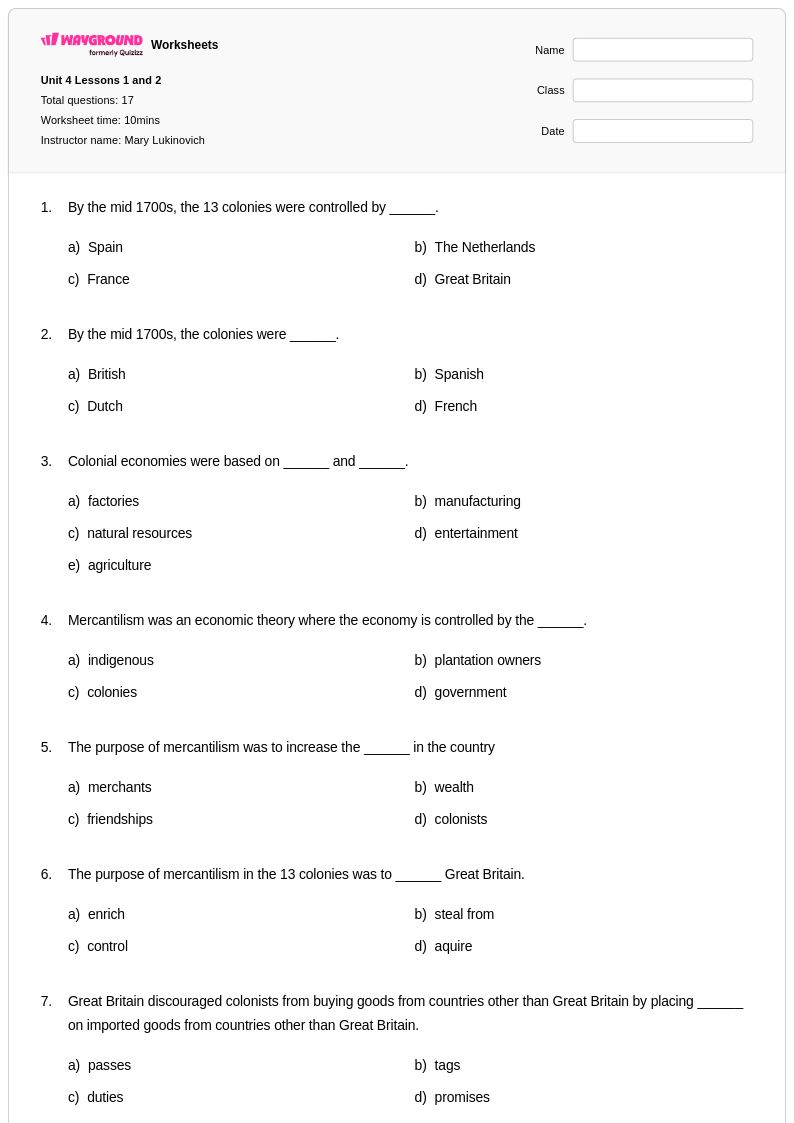
Mercantilism worksheets available through Wayground (formerly Quizizz) provide students with comprehensive practice materials to master this foundational economic theory that shaped global trade from the 16th to 18th centuries. These educational resources strengthen critical thinking skills by engaging students in analyzing the core principles of mercantilism, including the pursuit of favorable trade balances, accumulation of precious metals, and the establishment of colonies as sources of raw materials and markets for finished goods. Students work through practice problems that examine how mercantilist policies influenced European colonial expansion and trade relationships, while answer keys enable independent learning and self-assessment. The printable pdf format ensures accessibility for both classroom instruction and homework assignments, allowing educators to distribute free materials that reinforce understanding of how mercantilism contrasted with later economic theories like free trade.
Wayground (formerly Quizizz) supports social studies educators with an extensive collection of teacher-created mercantilism worksheets drawn from millions of educational resources developed by experienced professionals worldwide. The platform's robust search and filtering capabilities enable teachers to quickly locate materials aligned with specific learning standards and differentiate instruction based on individual student needs. These customizable worksheet collections facilitate comprehensive lesson planning by offering flexible options for skill practice, remediation for struggling learners, and enrichment activities for advanced students. Available in both printable and digital formats, including downloadable pdf versions, these mercantilism resources seamlessly integrate into diverse teaching environments while maintaining the academic rigor necessary for developing students' understanding of historical economic systems and their lasting impact on modern global trade relationships.
FAQs
How do I teach mercantilism to students who struggle with abstract economic concepts?
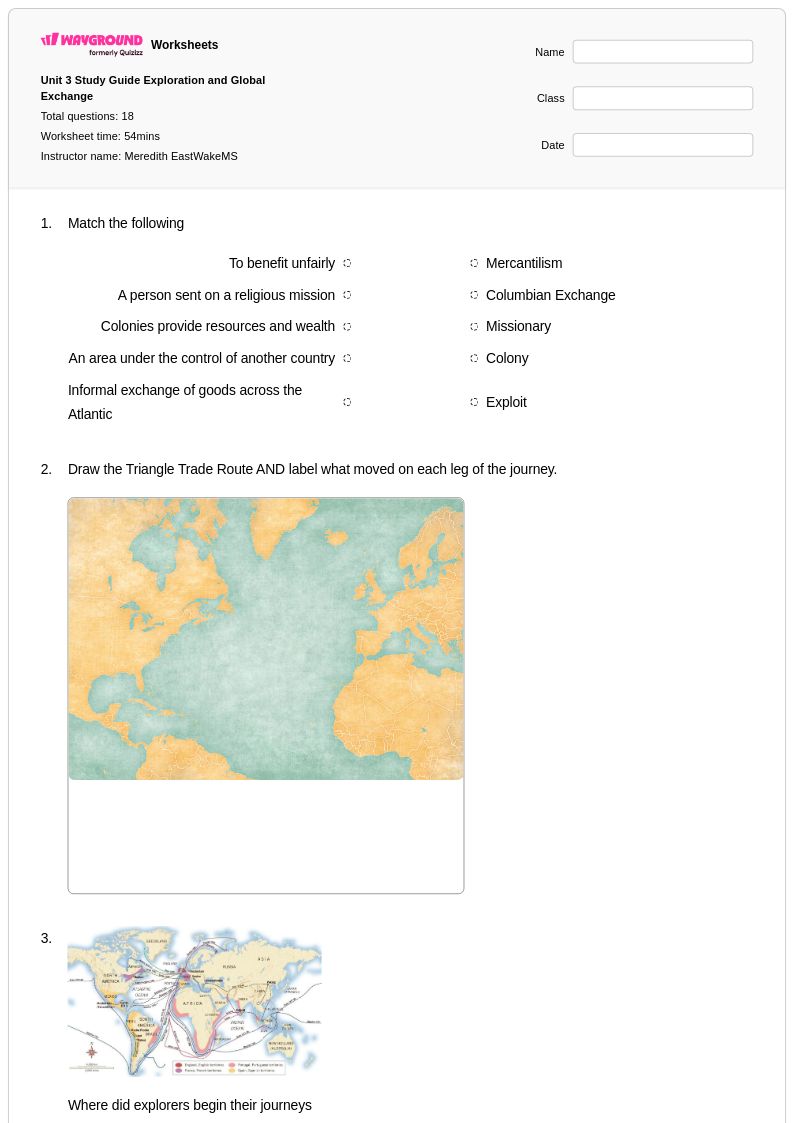
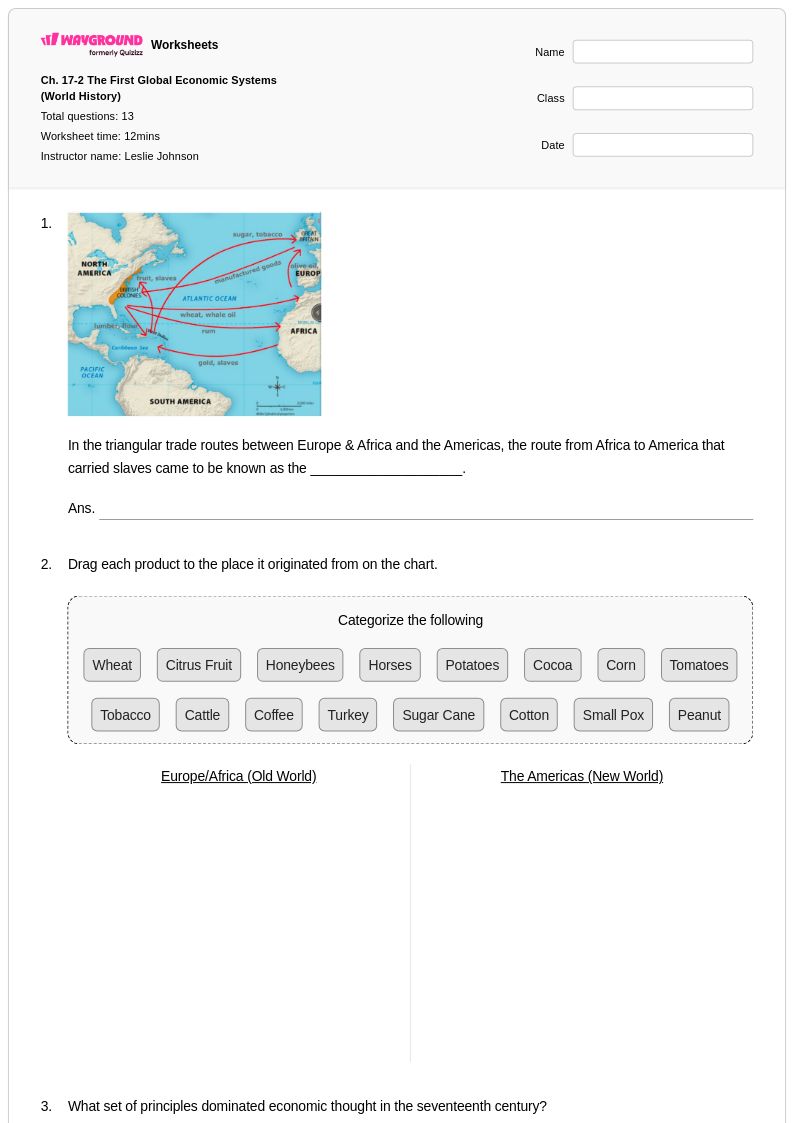
Anchor the concept in concrete historical examples before introducing theory. Start with the triangle trade or British navigation acts to show mercantilism in action, then work backward to the core principles: favorable trade balances, gold and silver accumulation, and colonial resource extraction. Once students can identify these elements in a historical scenario, they are ready to define and analyze mercantilism as a system.
What exercises help students practice understanding mercantilist policies?
Effective practice tasks include analyzing primary source documents such as colonial trade laws, completing cause-and-effect charts that connect mercantilist policies to colonial expansion, and comparing trade balance scenarios to determine which outcome a mercantilist government would favor. These exercises move students beyond memorization and into application of the theory's core logic.
What mistakes do students commonly make when learning about mercantilism?
The most common error is conflating mercantilism with general trade or capitalism. Students often fail to recognize that mercantilism is a zero-sum framework where one nation's gain requires another's loss, which is the key distinction from free trade theory. Another frequent misconception is treating colonies purely as geographic acquisitions rather than understanding their specific economic function as suppliers of raw materials and captive markets for finished goods.
How do I use mercantilism worksheets to compare economic theories in class?
Structure the comparison around a central question: how does each theory define national wealth? Mercantilism equates wealth with the stock of precious metals and a trade surplus, while free trade theory links wealth to specialization and mutual benefit. Worksheets that ask students to sort policy examples by economic theory or evaluate historical debates between mercantilist and free-trade thinkers work well for this kind of comparative analysis.
How can I use Wayground's mercantilism worksheets in my classroom?
Wayground's mercantilism worksheets are available as printable PDFs, making them straightforward to distribute for in-class work or homework assignments, and in digital formats that support technology-integrated learning environments. Teachers can also host the materials as a quiz directly on Wayground, enabling students to complete and self-assess work online. Wayground supports individual student accommodations including extended time, read-aloud, and reduced answer choices, which can be configured per student without disrupting the rest of the class.
How does mercantilism connect to European colonialism, and how do I teach that link?
Mercantilism is the economic engine behind European colonial expansion from the 16th through 18th centuries. Under mercantilist logic, colonies served two essential functions: they supplied raw materials that the home country converted into finished goods, and they acted as controlled markets for those goods, keeping the trade balance favorable. Teaching this connection works best through policy analysis tasks where students examine specific colonial trade regulations and identify the mercantilist principle each one enforces.