Free Printable Minimal Pairs Worksheets for Grade 3
Explore Wayground's free Grade 3 minimal pairs phonics worksheets and printables that help students distinguish between similar-sounding words through engaging practice problems and comprehensive answer keys.
Explore printable Minimal Pairs worksheets for Grade 3
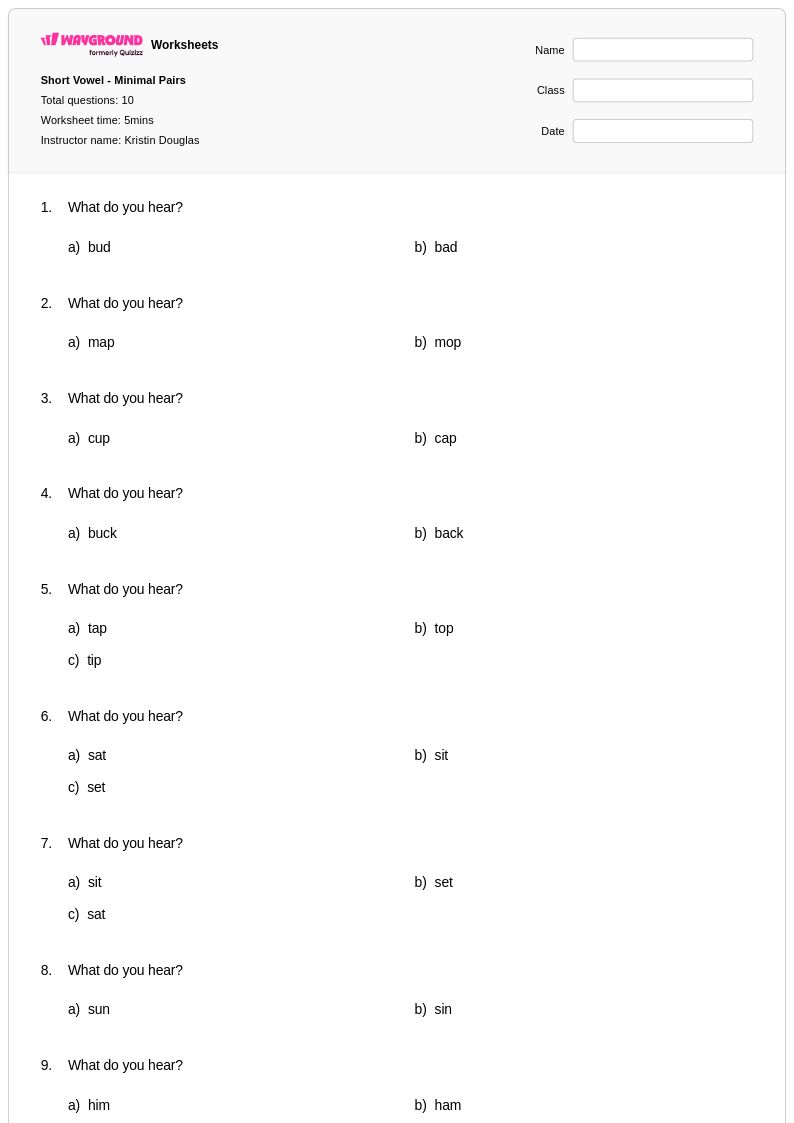
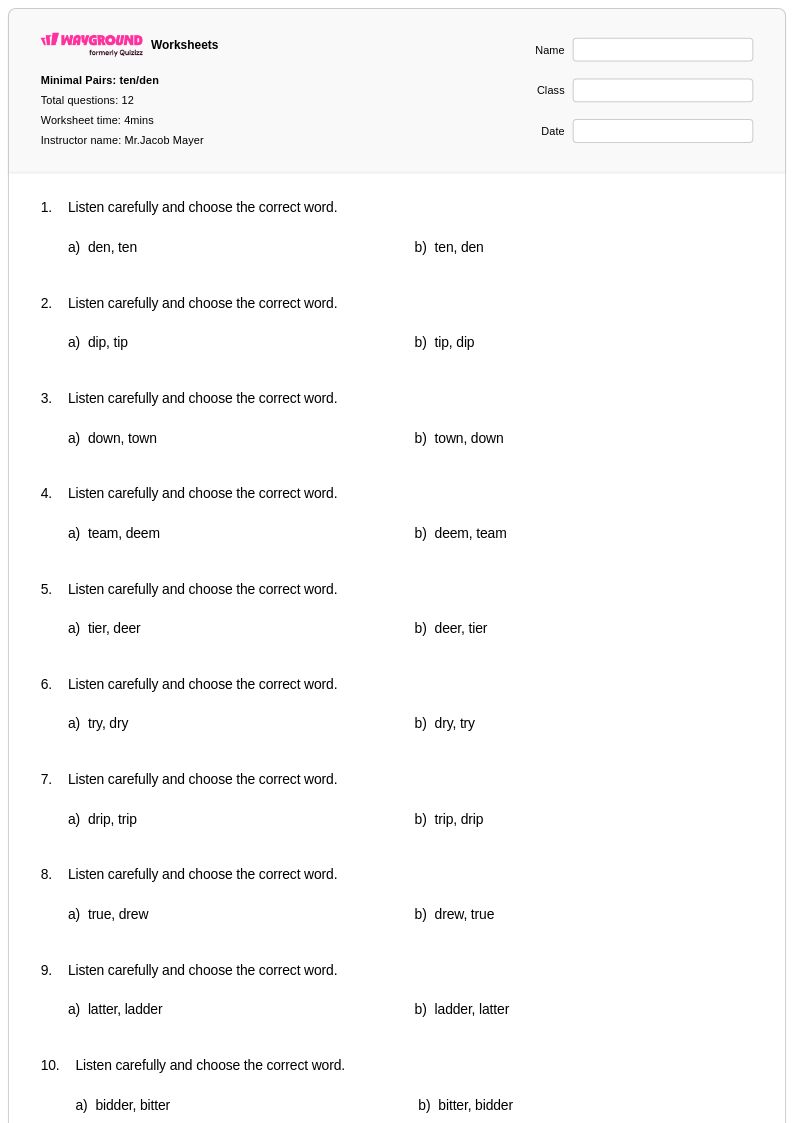
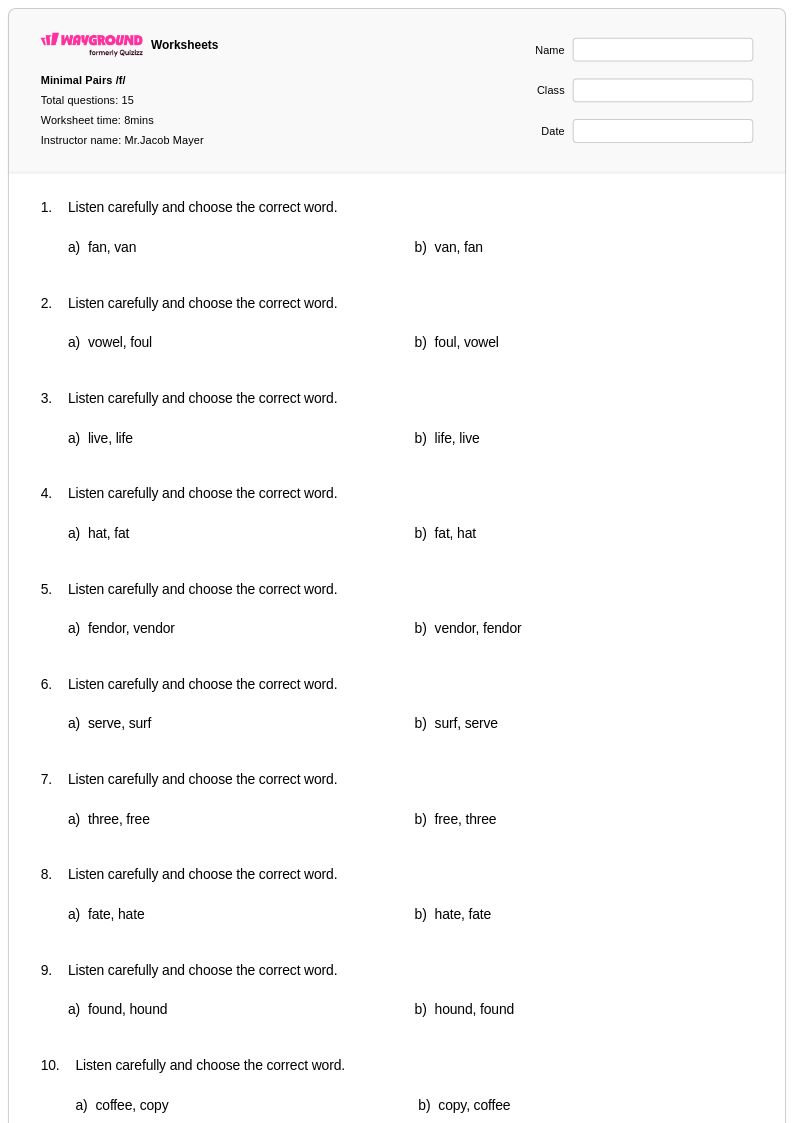
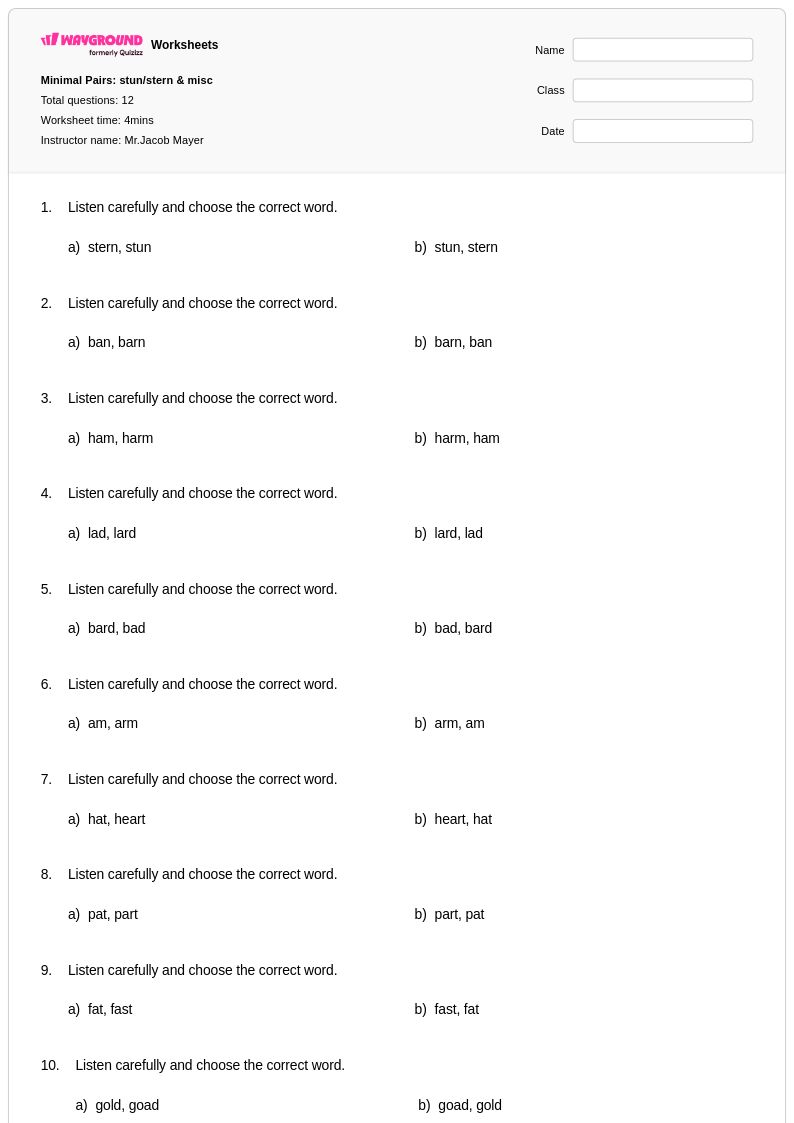
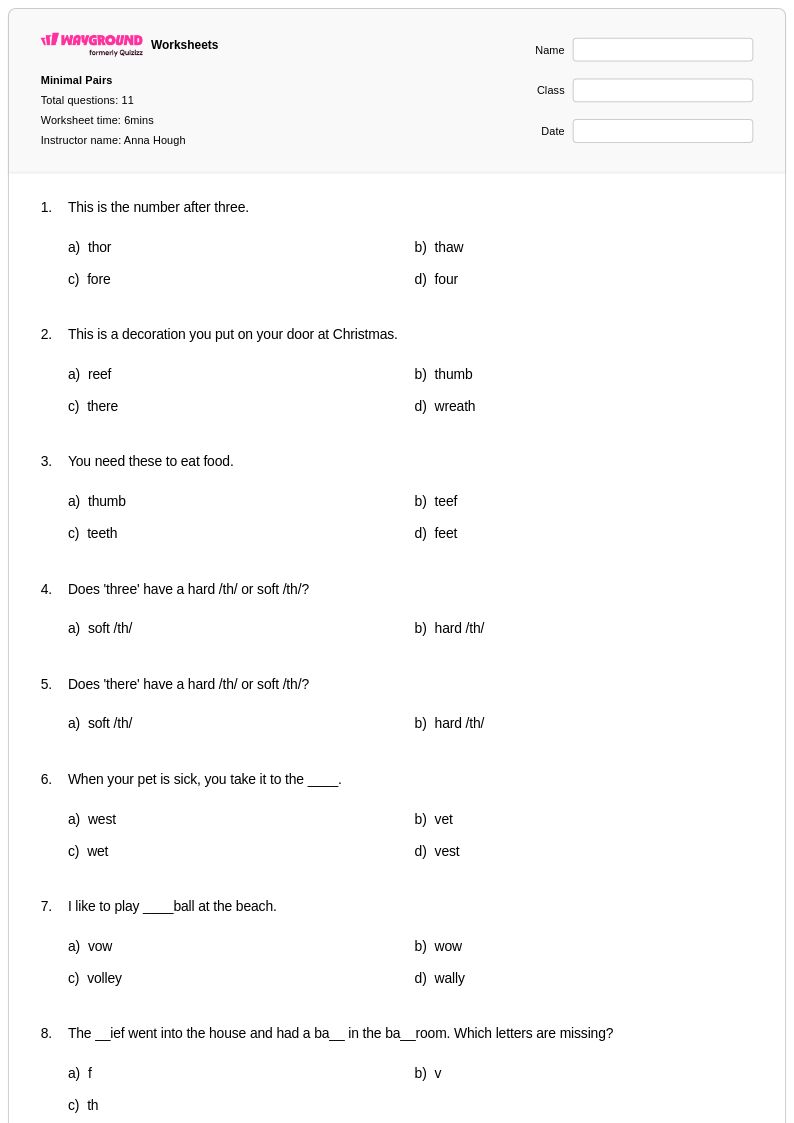
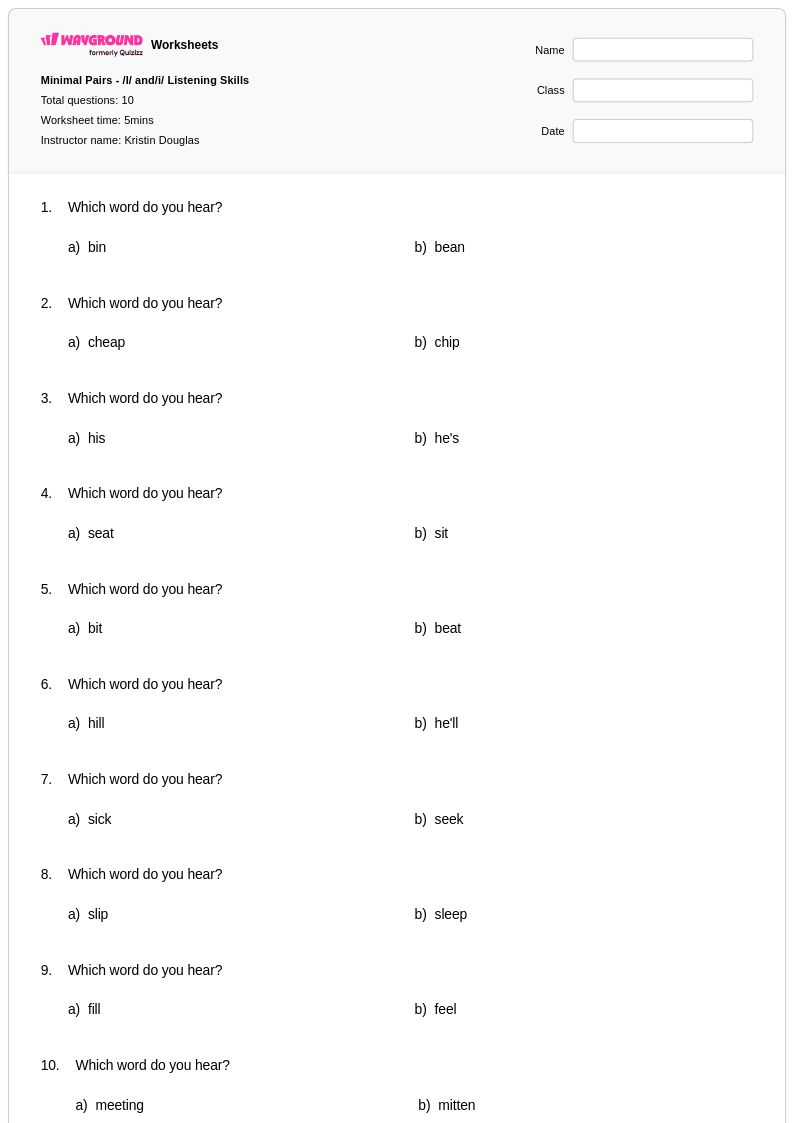
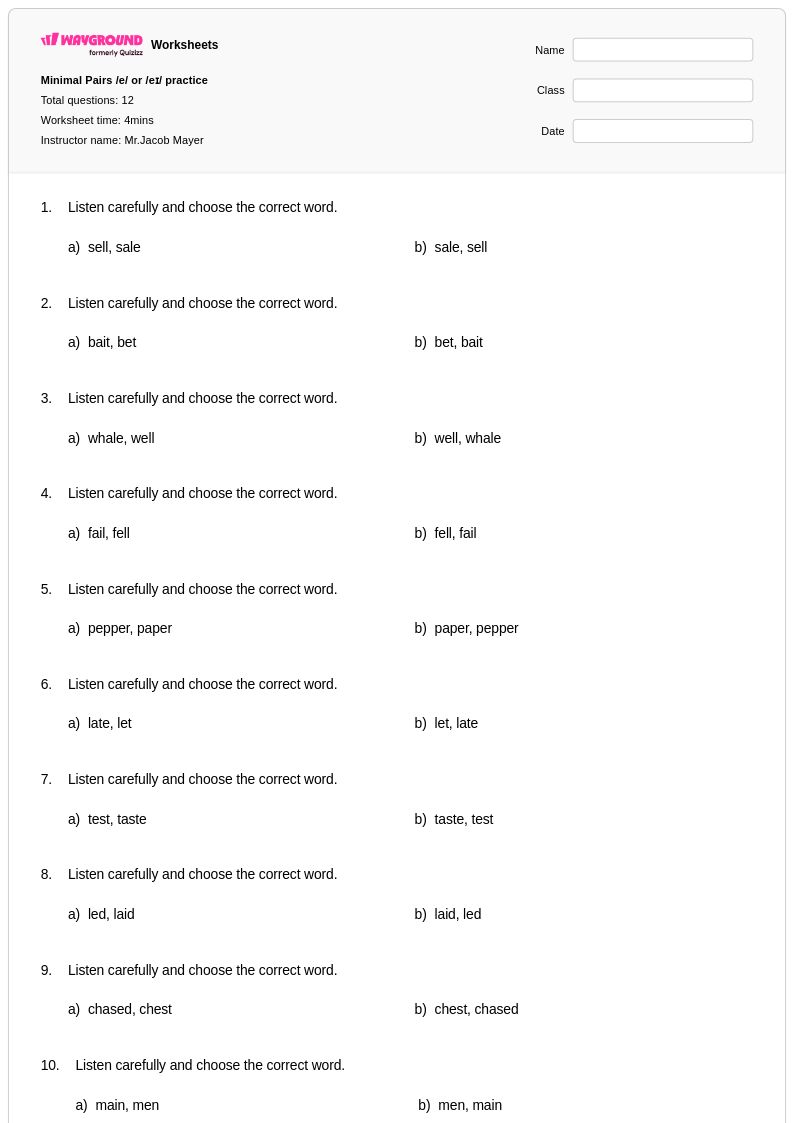
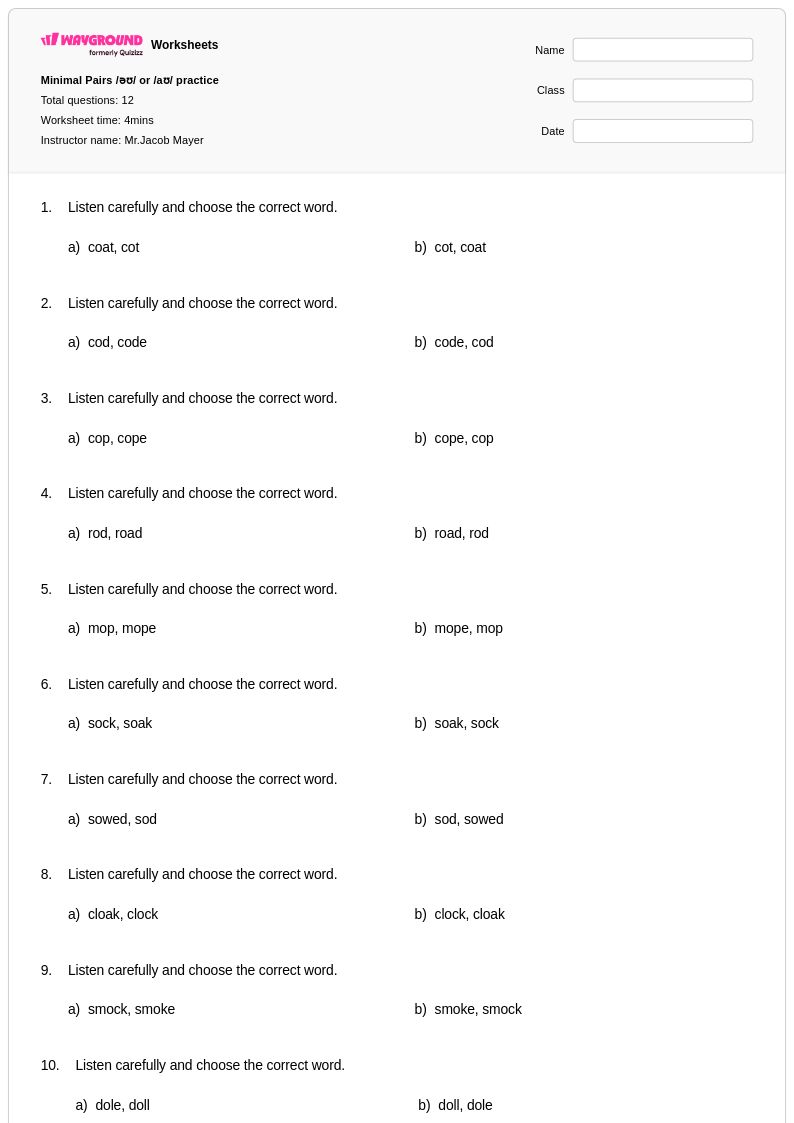
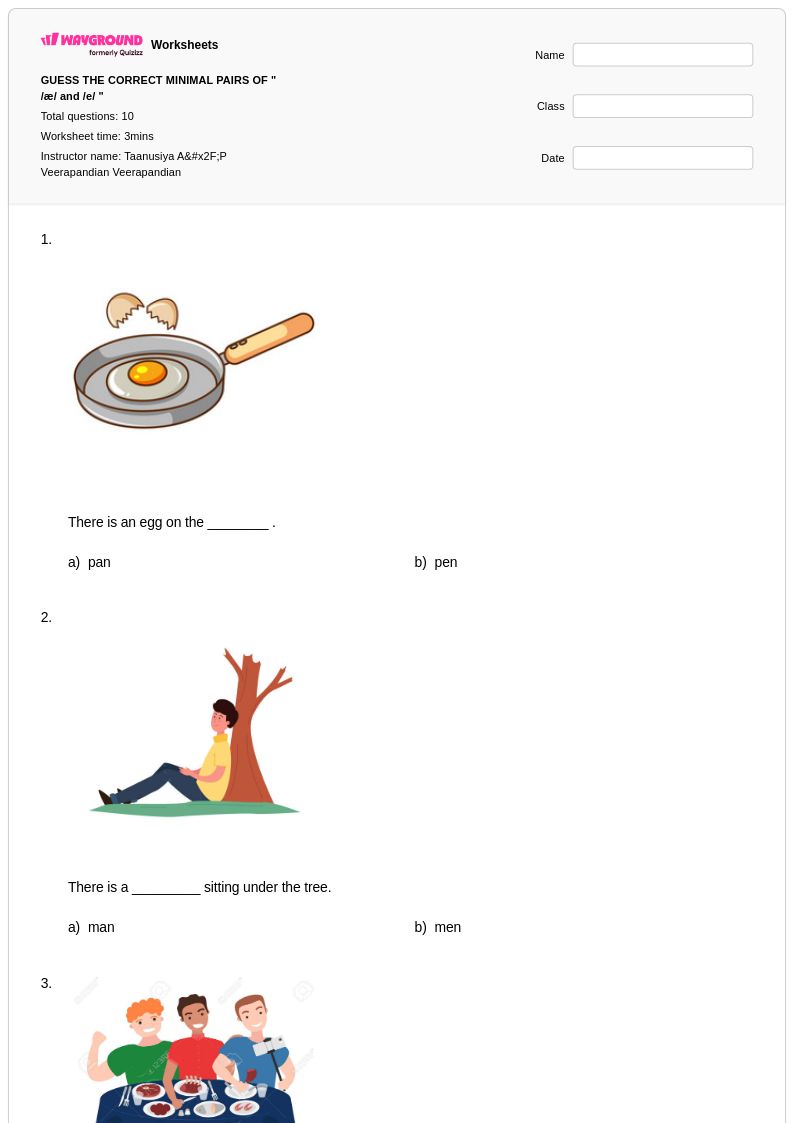
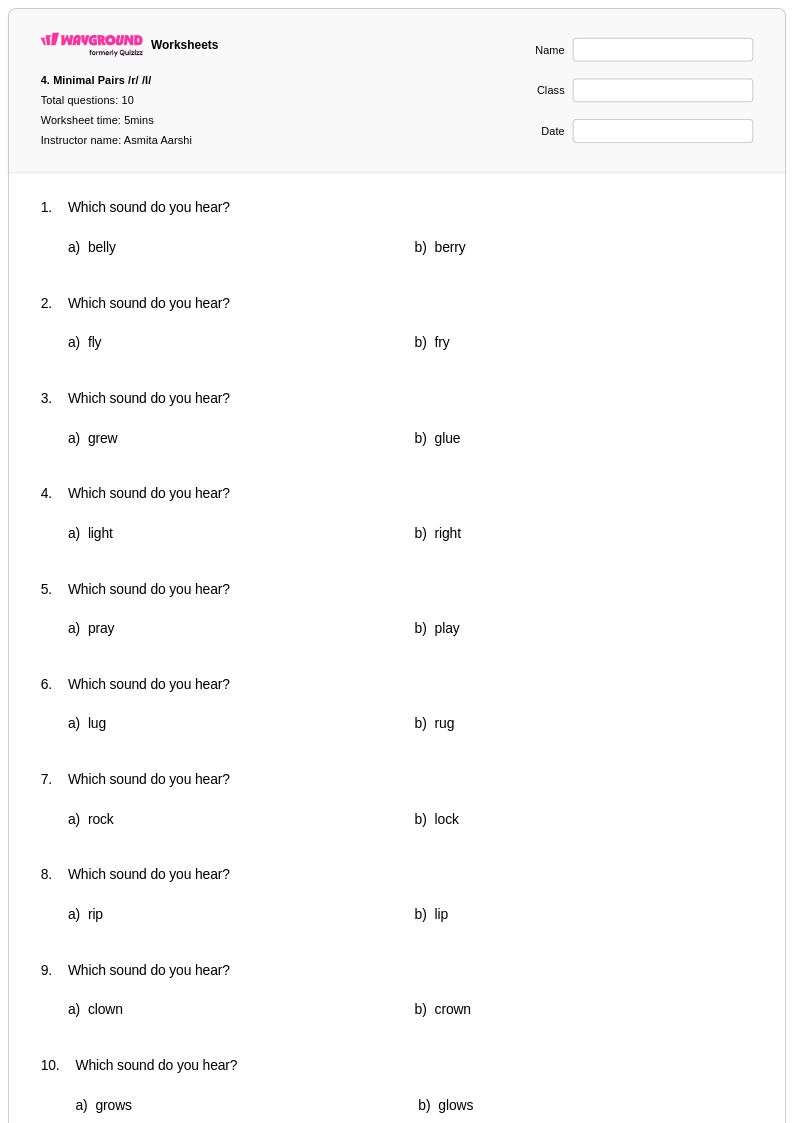
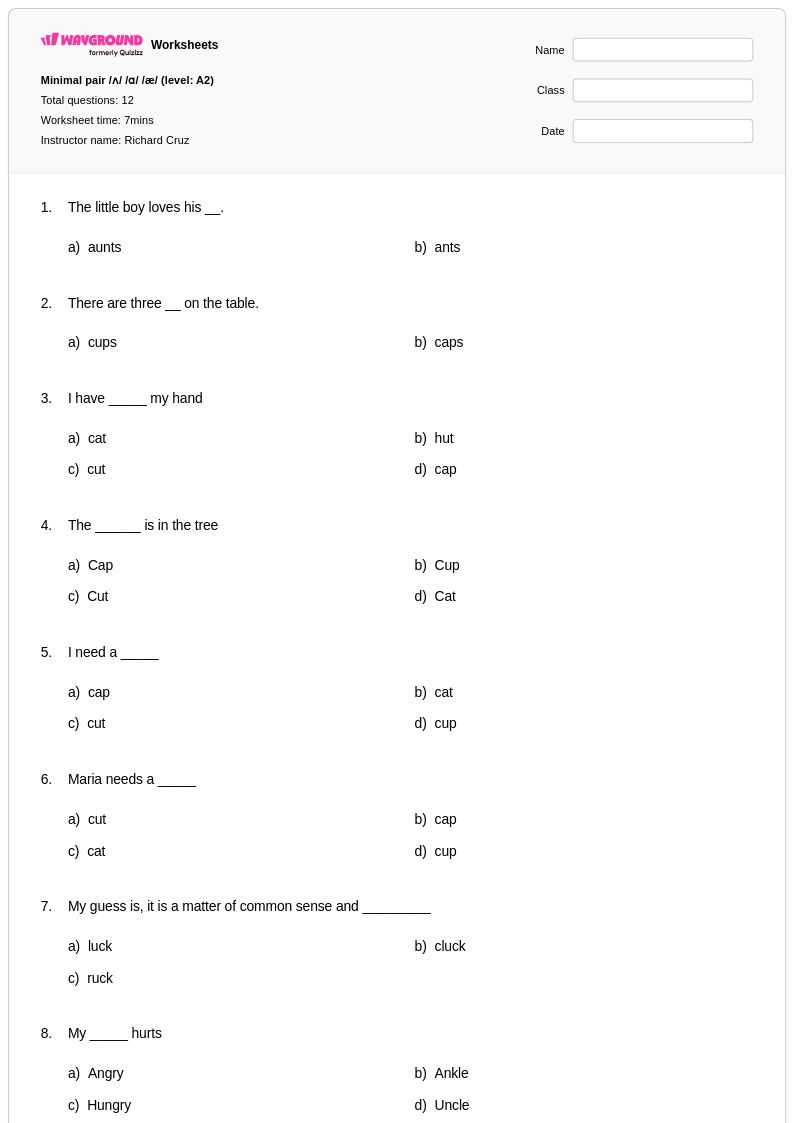
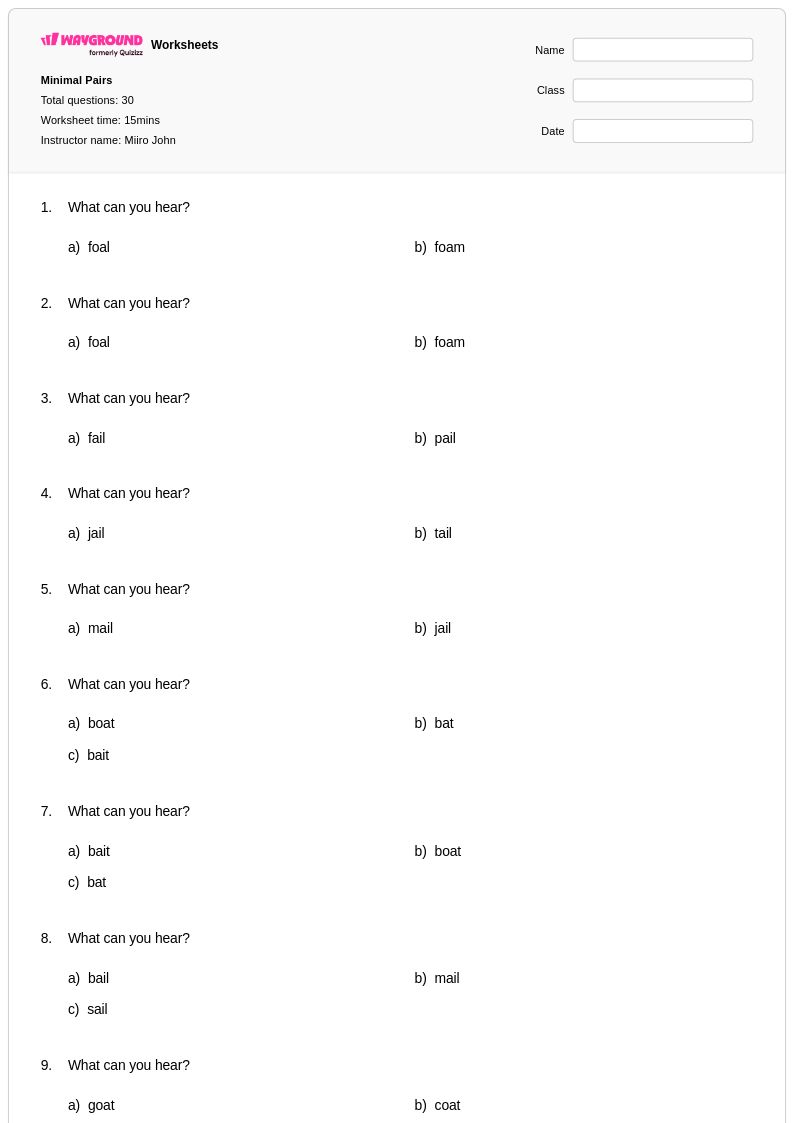
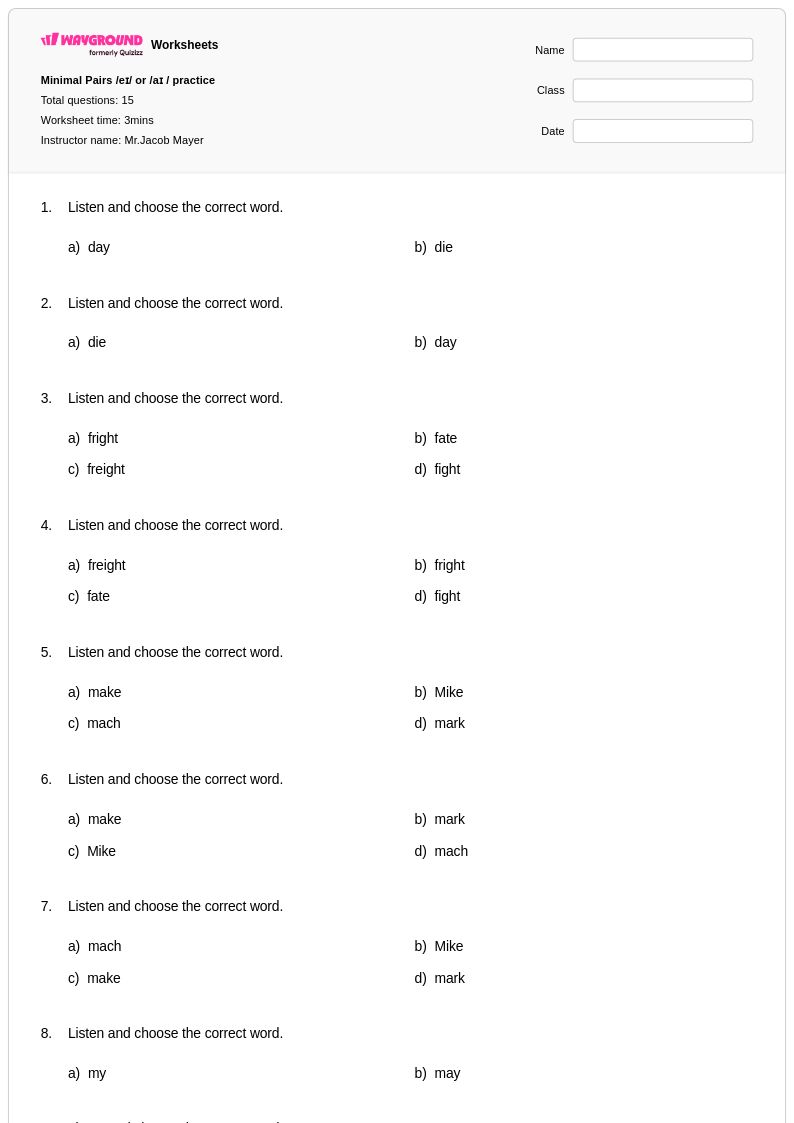
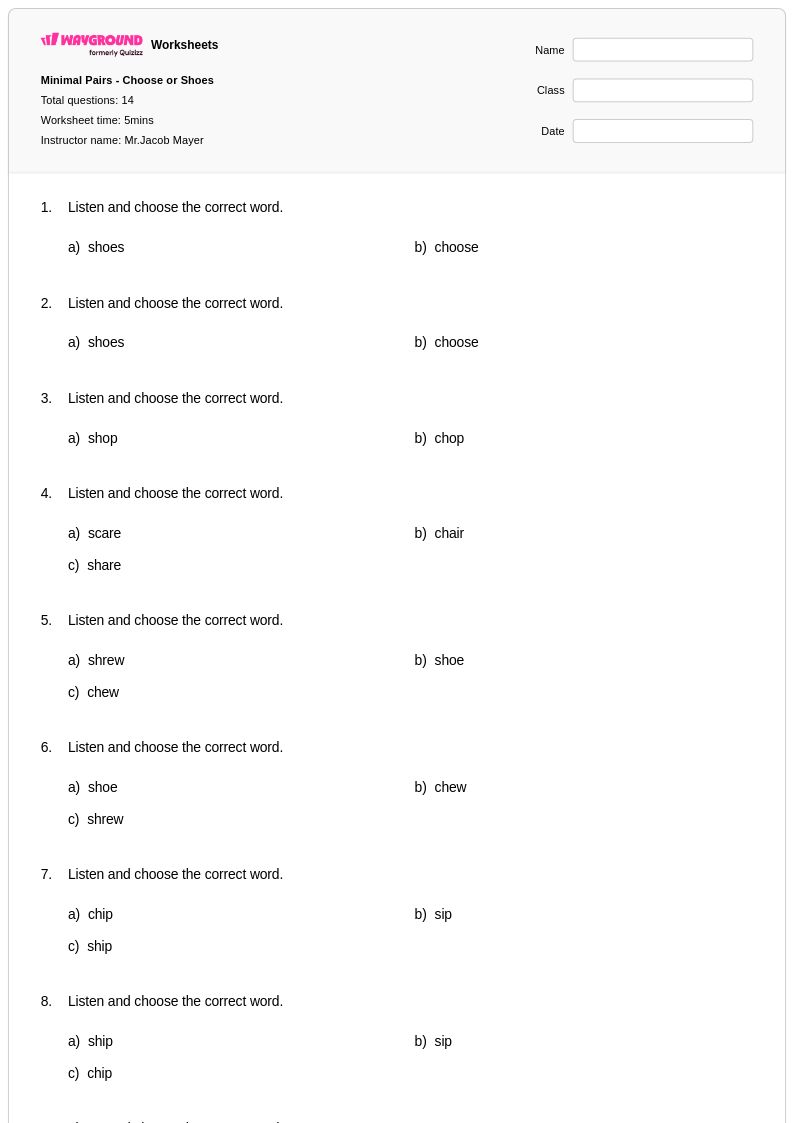
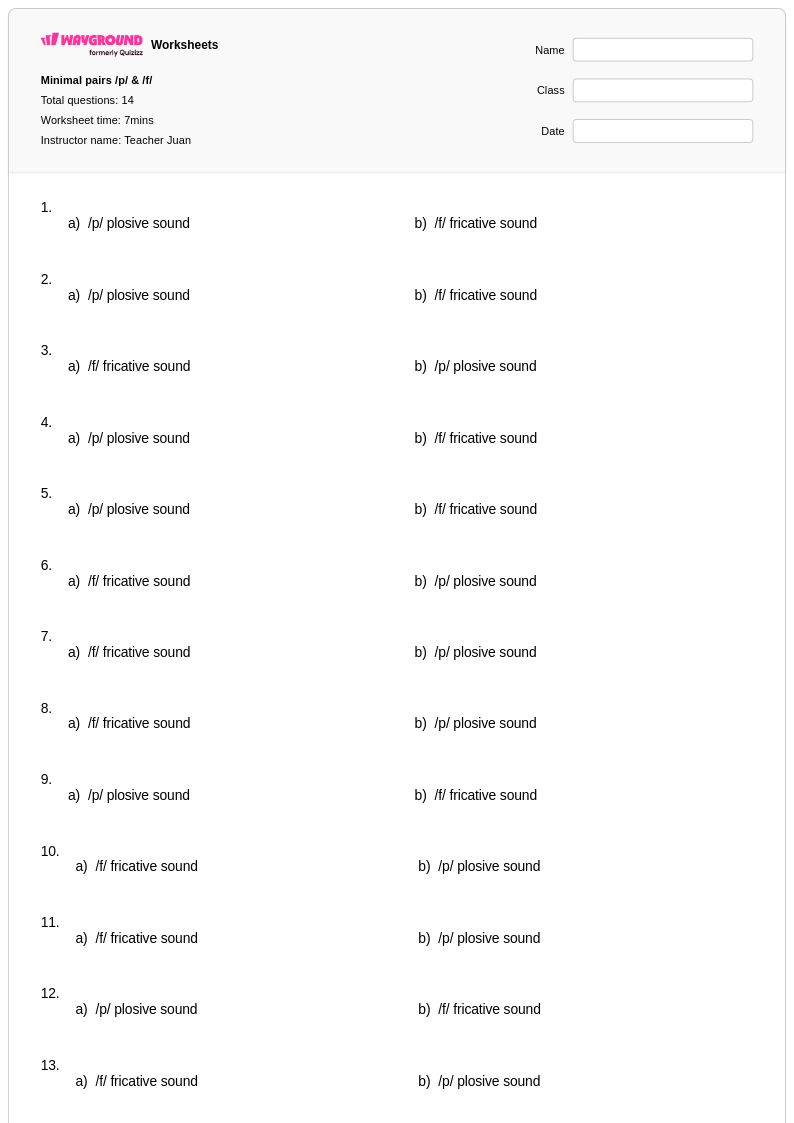
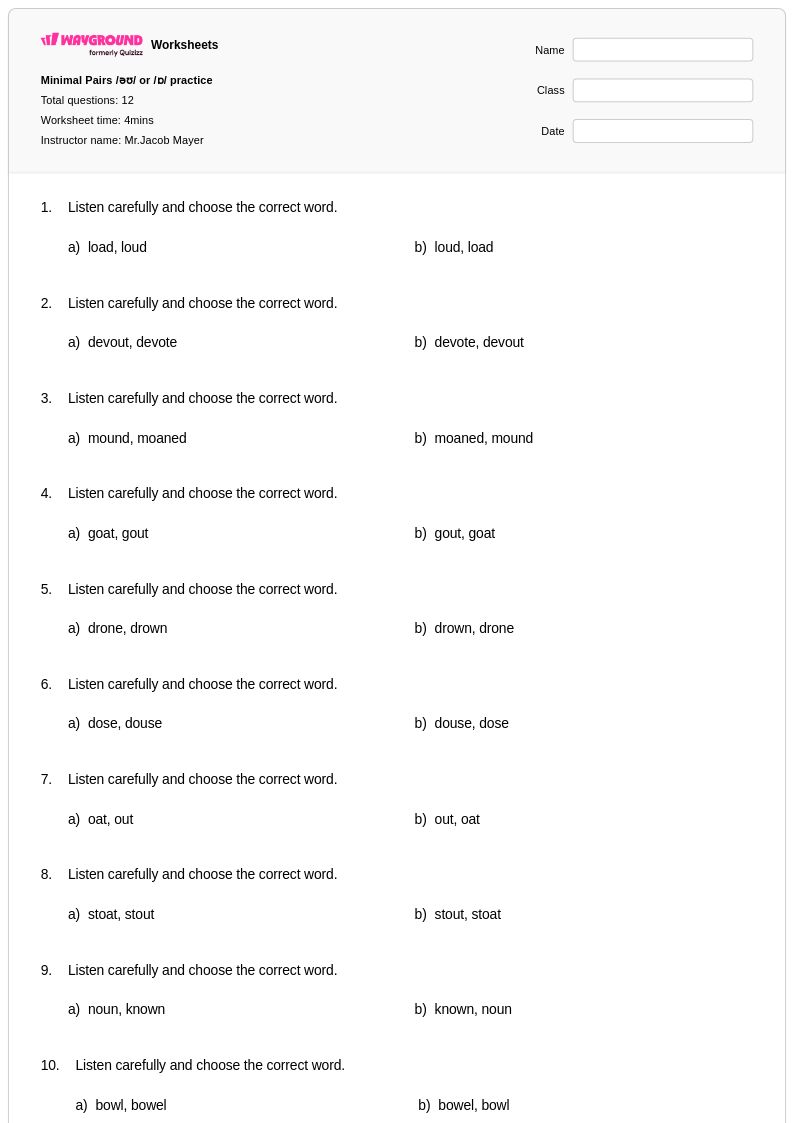
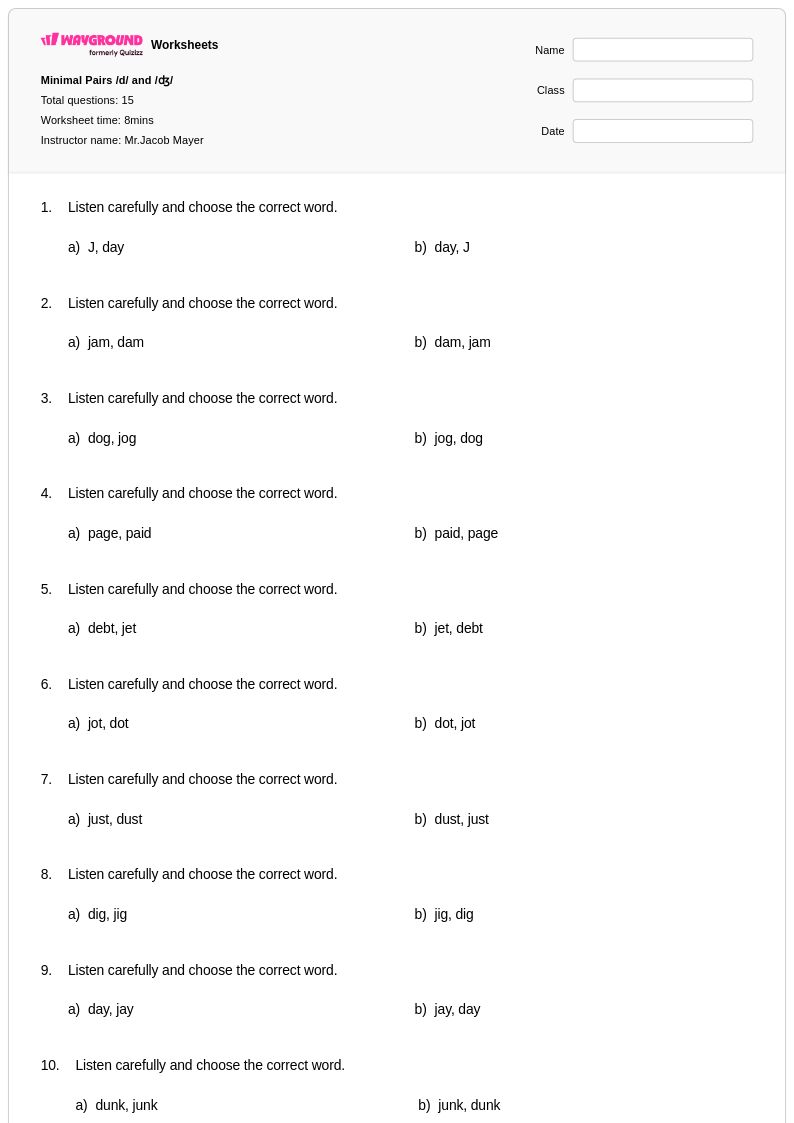
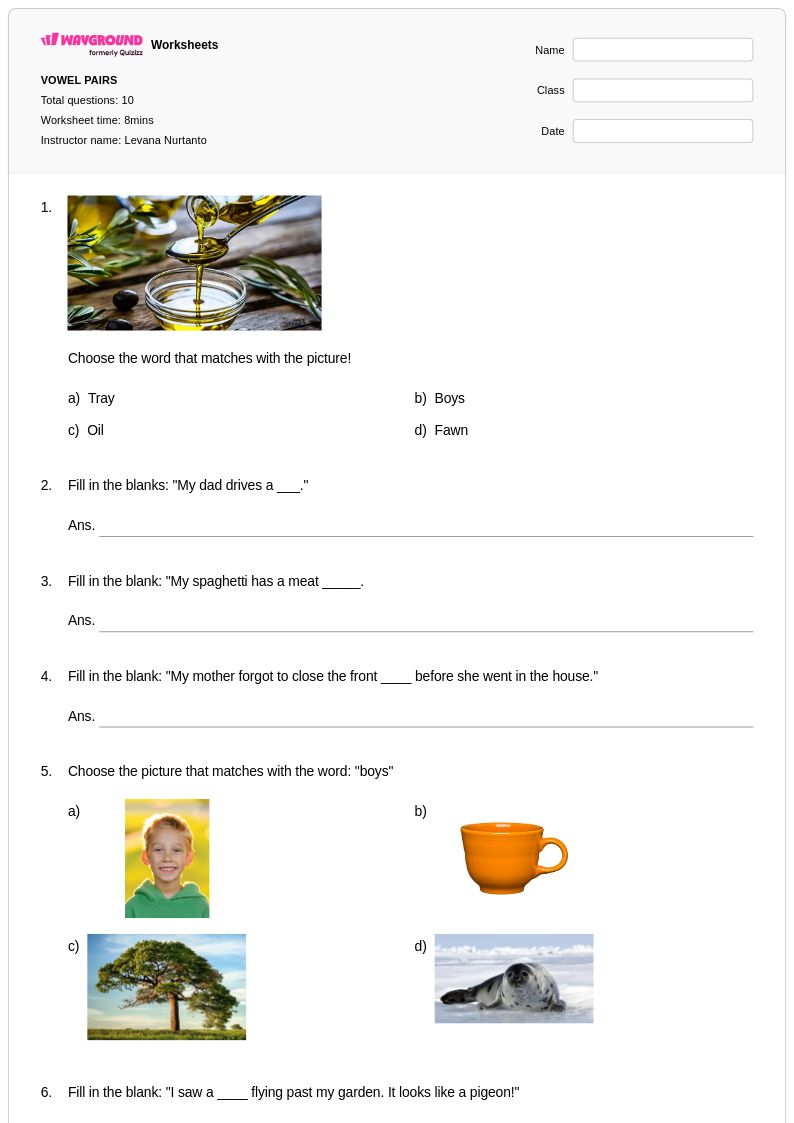
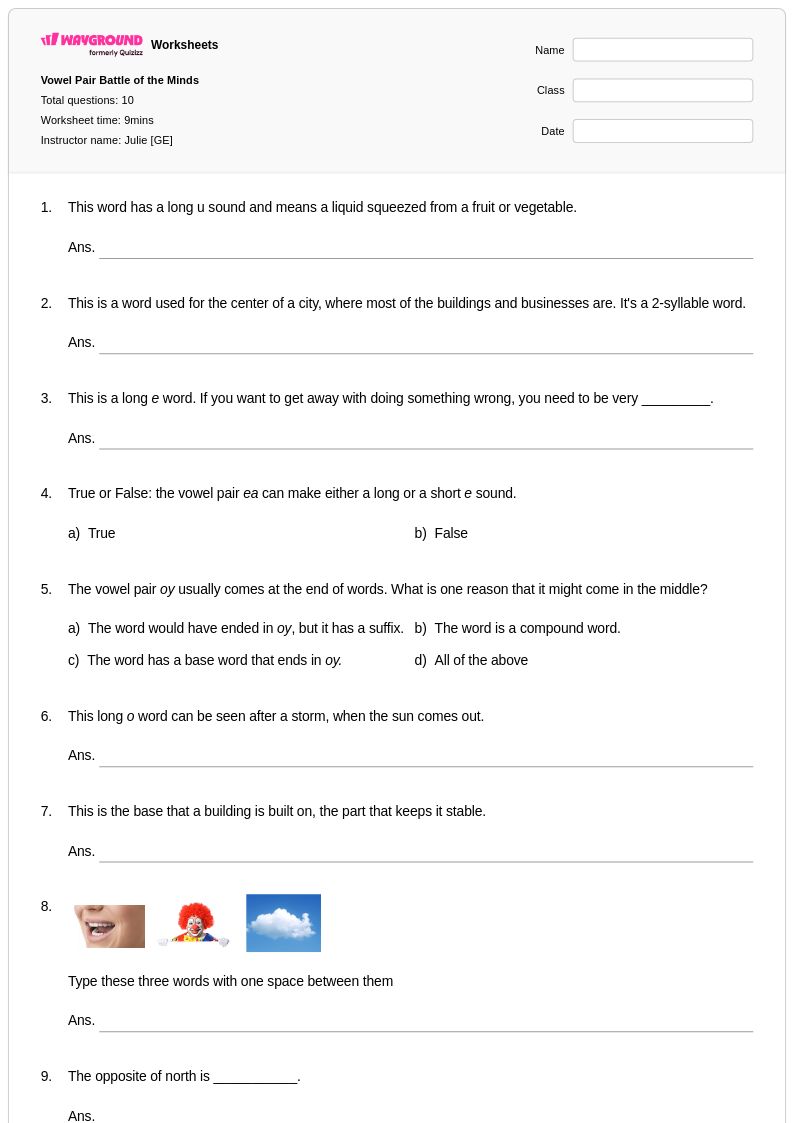
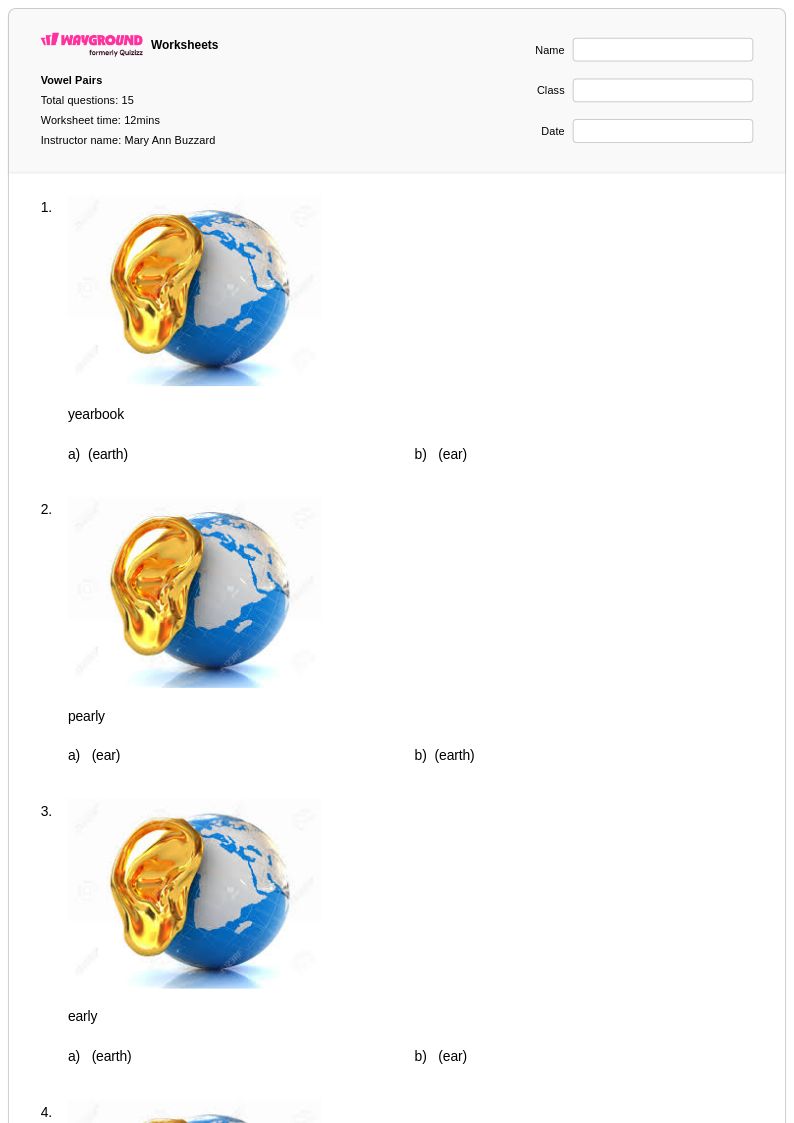
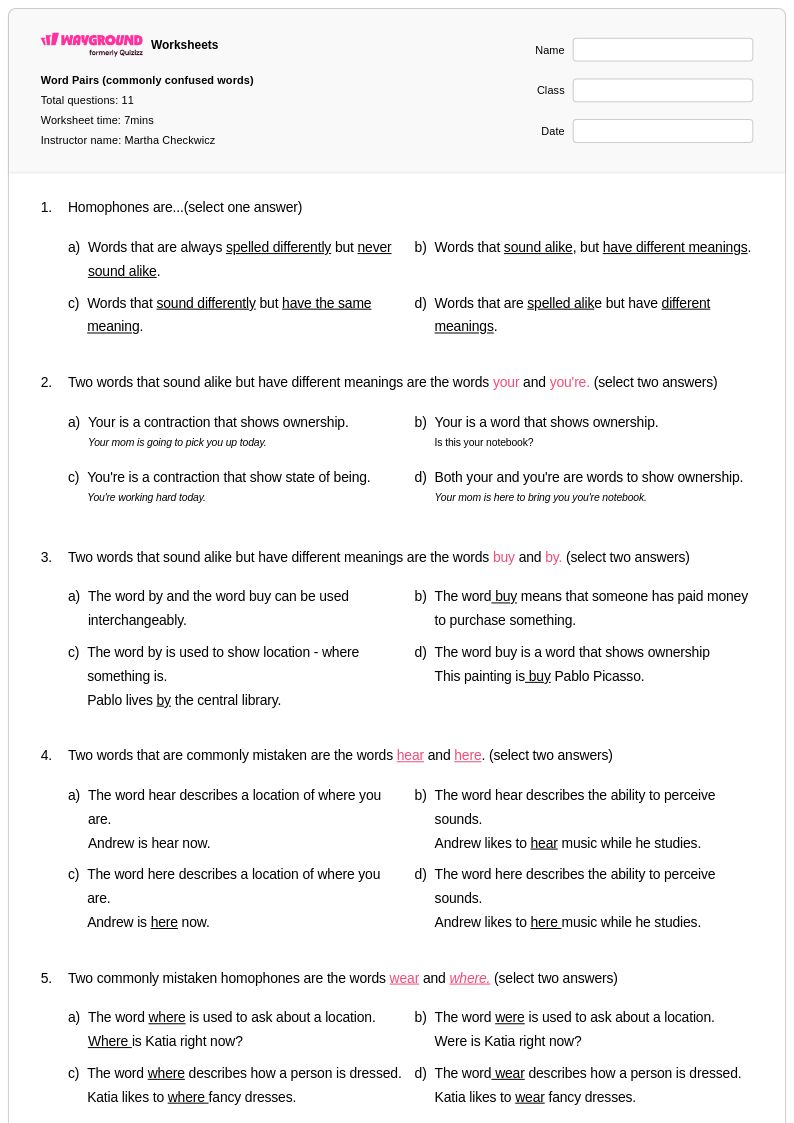
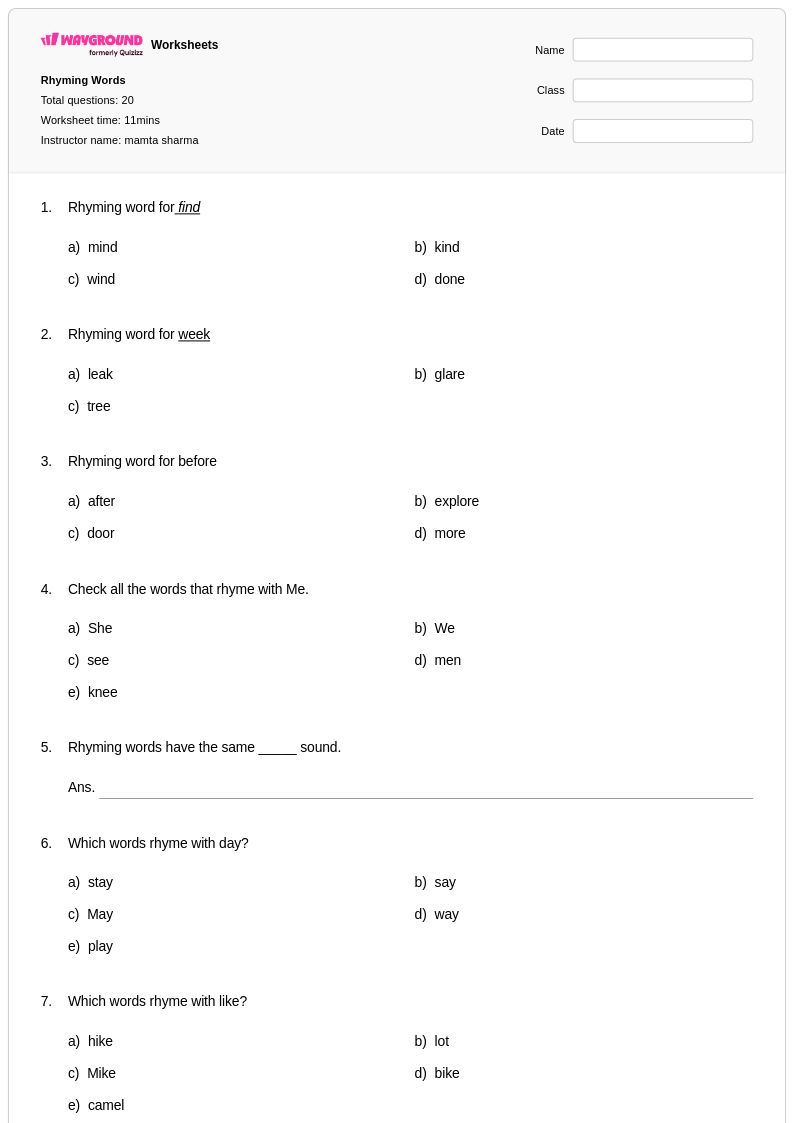
Minimal pairs worksheets for Grade 3 students available through Wayground (formerly Quizizz) provide targeted phonics instruction that helps young learners distinguish between words that differ by only one sound, such as "bat" and "pat" or "ship" and "sheep." These comprehensive practice problems strengthen critical listening skills and phonemic awareness by challenging students to identify, compare, and contrast similar-sounding words that often cause confusion in reading and spelling. Each worksheet collection includes carefully structured exercises with answer keys that guide students through systematic exploration of consonant and vowel substitutions, building their ability to recognize subtle sound differences that impact word meaning. The free printable resources offer varied activities including picture matching, word sorting, and sentence completion tasks that reinforce proper pronunciation patterns while developing foundational literacy skills essential for Grade 3 reading proficiency.
Wayground (formerly Quizizz) supports educators with an extensive library of millions of teacher-created minimal pairs resources that can be easily located through robust search and filtering capabilities, allowing instructors to find materials perfectly aligned with their phonics curriculum standards. The platform's differentiation tools enable teachers to customize worksheets for diverse learning needs, providing both printable pdf formats for traditional classroom use and digital versions for interactive learning experiences. These flexible resources streamline lesson planning by offering ready-to-use materials for whole-group instruction, small-group remediation, and individual enrichment activities, while comprehensive answer keys facilitate efficient assessment and immediate feedback. Teachers can seamlessly integrate these minimal pairs worksheets into their phonics instruction to address specific sound discrimination challenges, support struggling readers, and reinforce critical auditory processing skills that form the foundation for advanced reading development.
FAQs
How do I teach minimal pairs to students who struggle with phonemic awareness?
Start by isolating the target sound contrast through listening activities before moving to print — have students clap, tap, or hold up cards when they hear a specific phoneme. Once students can distinguish sounds aurally, introduce minimal pair word cards and progress to reading and spelling tasks. Pairing auditory discrimination with visual support helps students internalize the contrast more reliably than print-only instruction.
What kinds of exercises help students practice minimal pairs effectively?
Effective minimal pairs practice includes listen-and-circle tasks, same-or-different judgment drills, fill-in-the-blank sentences with picture clues, and sorting activities that group words by their distinguishing phoneme. These exercise types build both receptive and productive awareness — students first recognize the contrast, then apply it in context. Worksheets that target one phoneme contrast at a time prevent confusion and allow for focused, measurable skill development.
What mistakes do students commonly make when working with minimal pairs?
The most common error is conflating vowel sounds that are perceptually close in the student's first language or dialect, such as confusing /ɪ/ and /iː/ in pairs like 'ship' and 'sheep.' Students also frequently rely on context guessing rather than phonemic discrimination, which masks the underlying confusion. Teachers should watch for inconsistent performance across oral versus written tasks, as a student may read a pair correctly but still not distinguish them in speech.
How can I use minimal pairs worksheets to support English language learners?
For ELL students, prioritize phoneme contrasts that do not exist in their home language, as these represent the highest-friction points for accurate perception and production. Minimal pairs worksheets that pair text with images reduce language load and allow students to focus on the phonemic contrast rather than vocabulary comprehension. Supplementing written practice with audio modeling — either teacher-read or recorded — significantly increases the effectiveness of minimal pairs instruction for non-native speakers.
How do I use Wayground's minimal pairs worksheets in my classroom?
Wayground's minimal pairs worksheets are available as printable PDFs for direct classroom handout use and in digital formats for technology-integrated instruction, including the ability to host them as a quiz on Wayground. Each worksheet includes a complete answer key, allowing teachers to provide immediate feedback without additional preparation. The platform's search and filtering tools let teachers quickly locate worksheets targeting specific phoneme contrasts — such as vowel length, voiced versus voiceless consonants, or initial versus final position — so practice stays precisely targeted to student need.
How do minimal pairs worksheets support spelling and reading development?
When students can reliably distinguish phoneme contrasts aurally, they are better equipped to map those distinctions onto grapheme patterns in spelling and decoding. Minimal pairs practice reinforces that small sound differences carry meaning, which strengthens phoneme-grapheme correspondence and reduces spelling reversals or substitutions. This auditory precision is foundational for reading accuracy, particularly in English where vowel contrasts like /æ/ and /ɛ/ ('bad' versus 'bed') are common sources of decoding error.