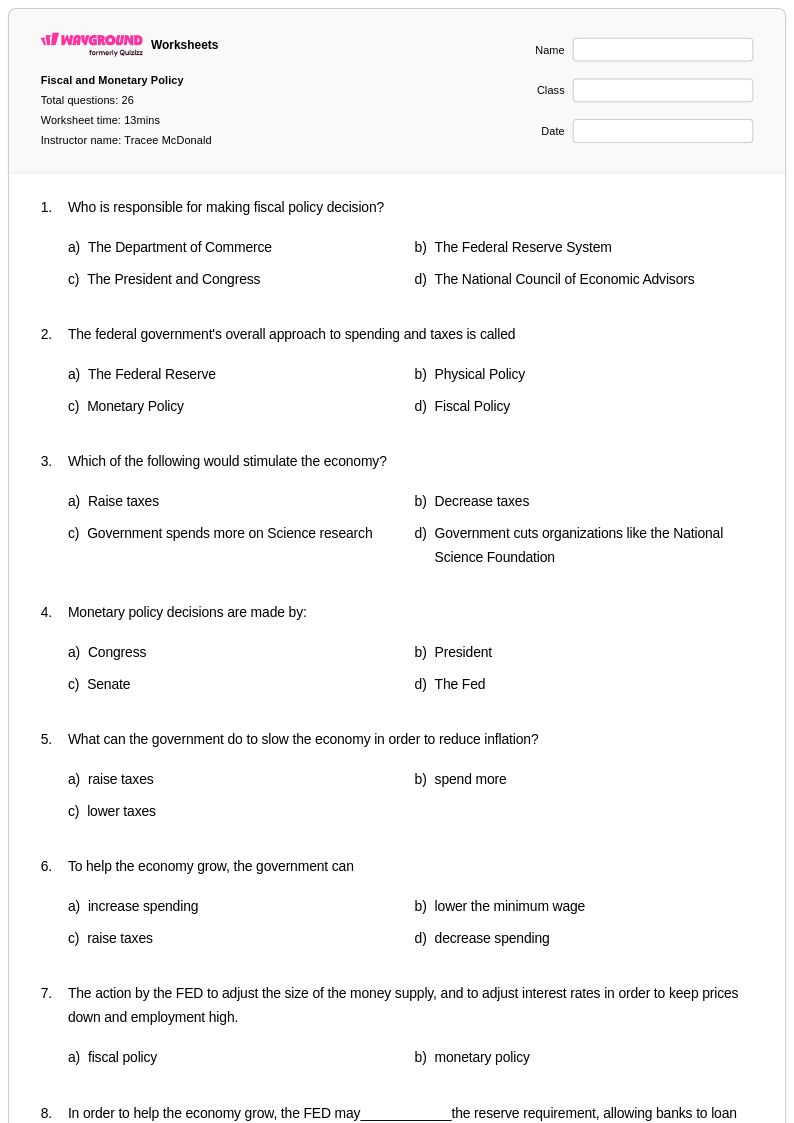
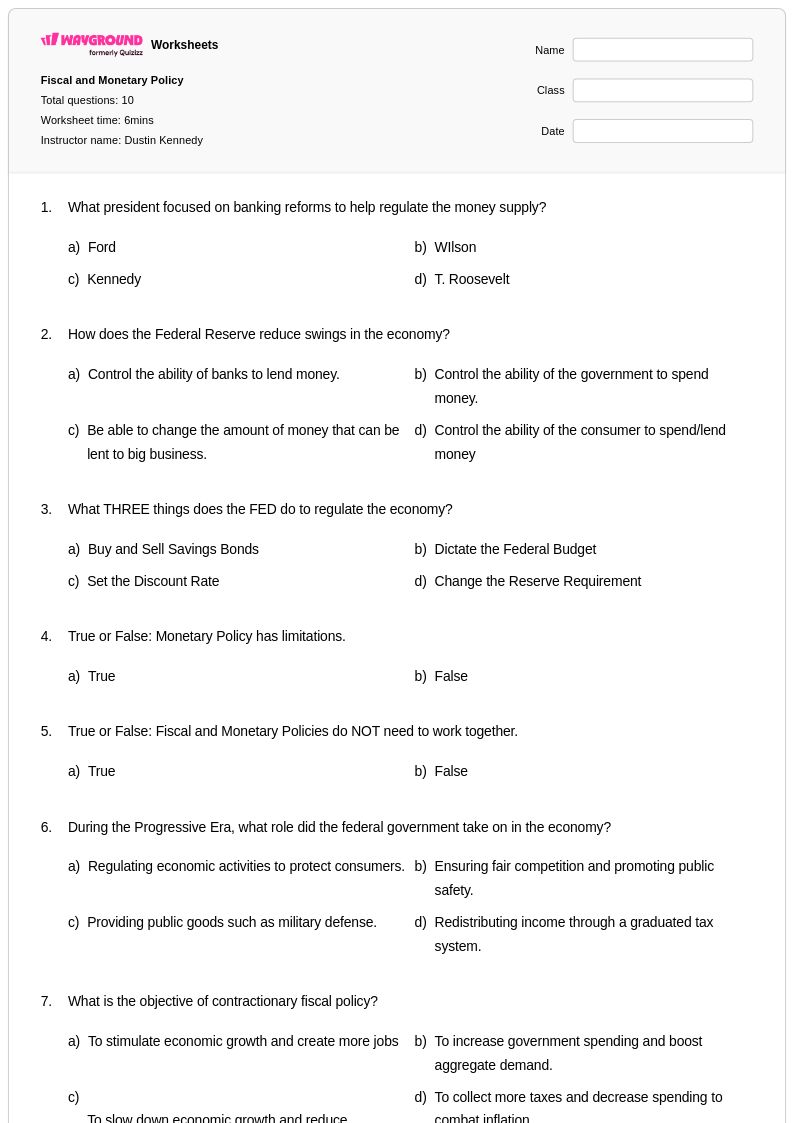
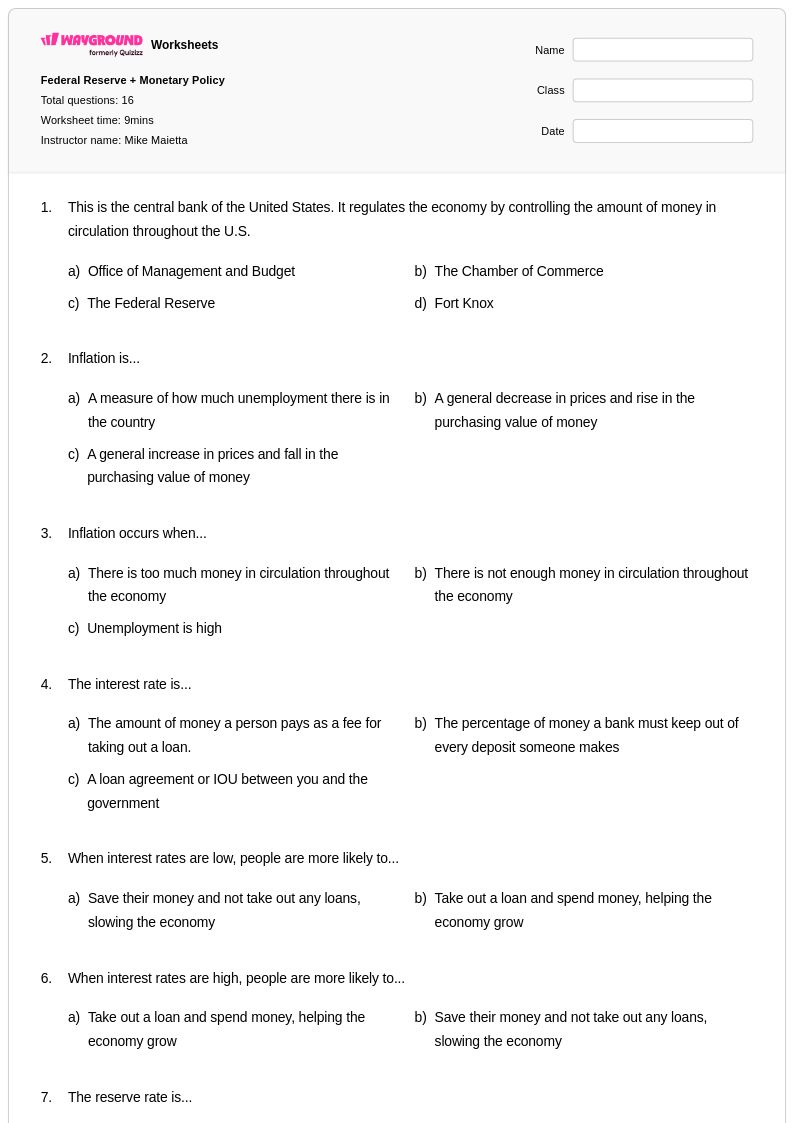
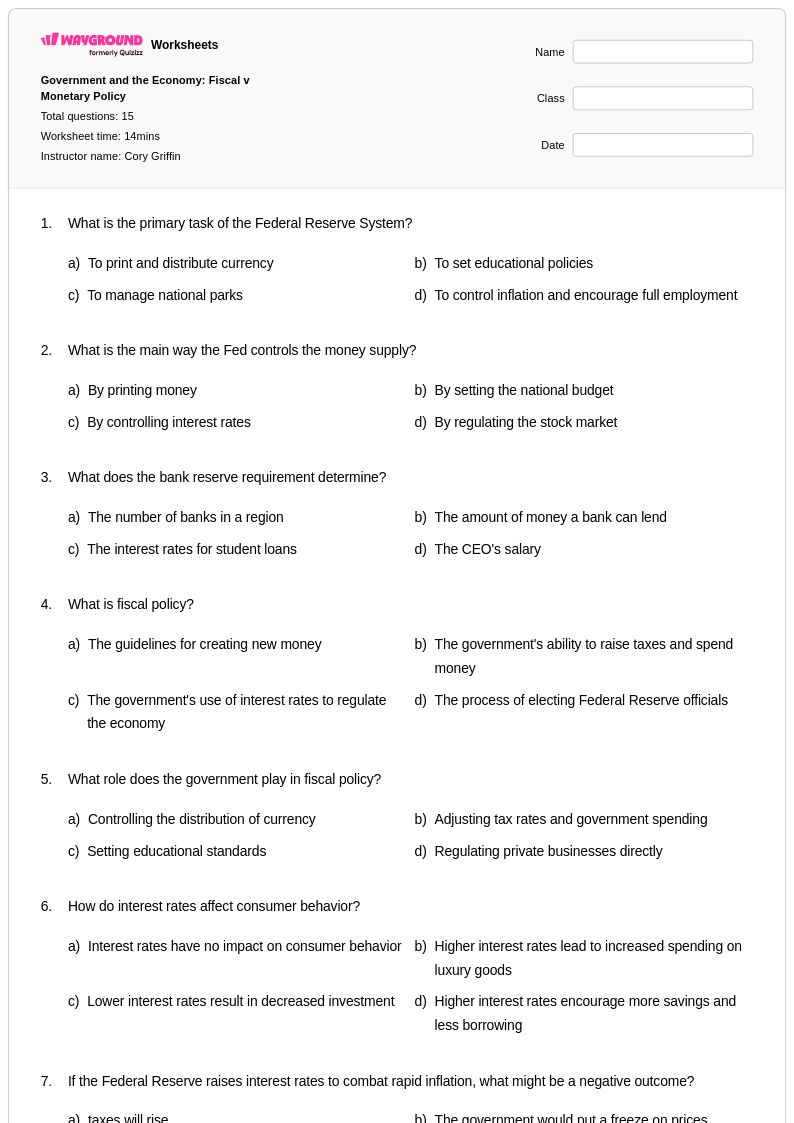
Free Printable Monetary Policy Worksheets for Grade 11
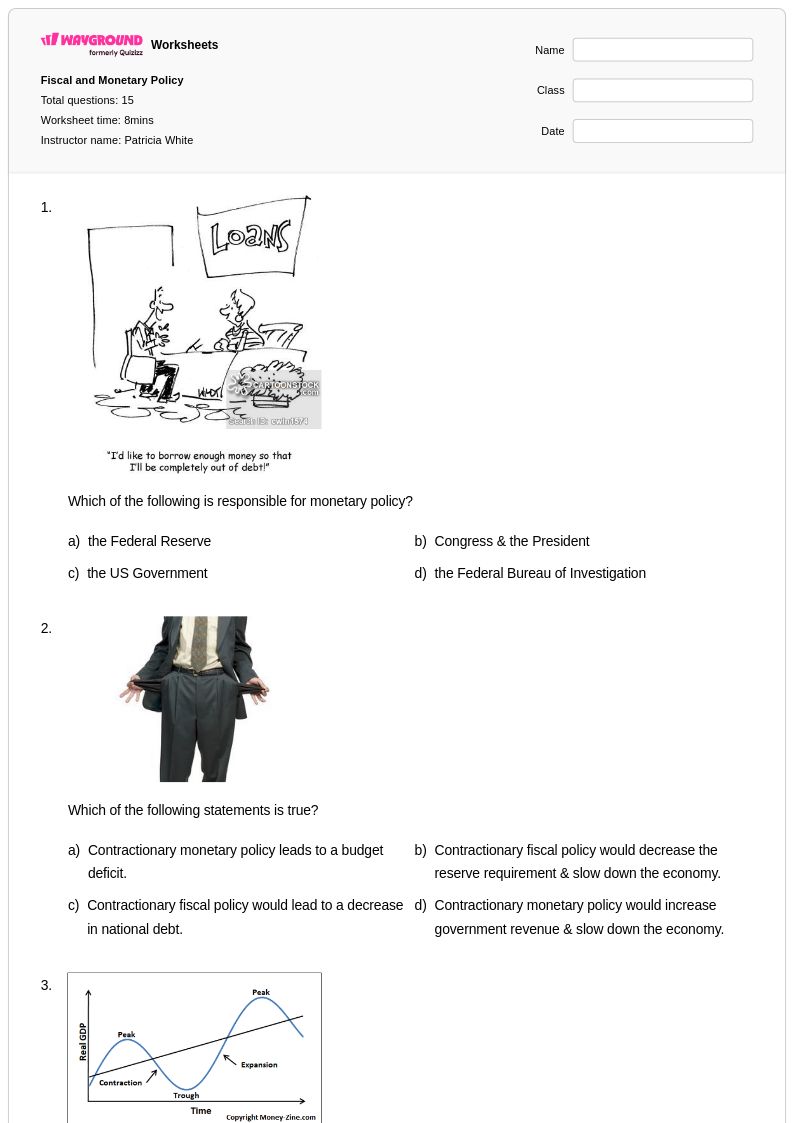
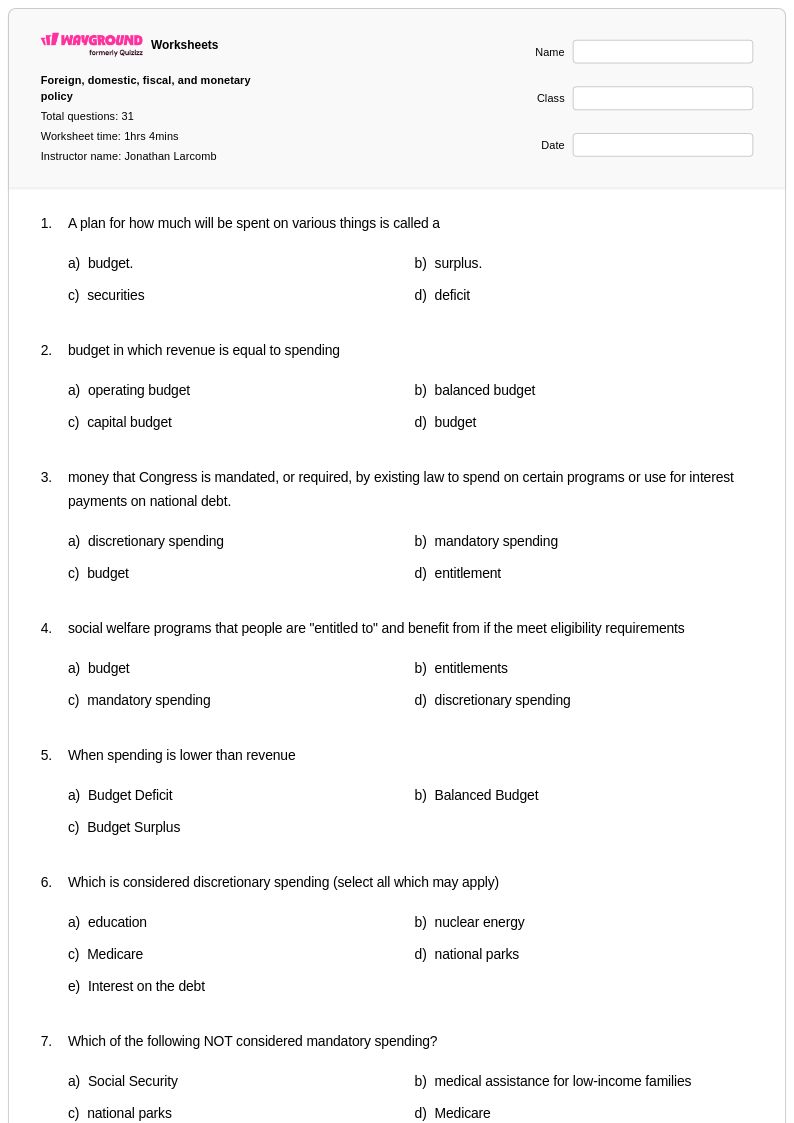
Grade 11 monetary policy worksheets from Wayground help students master economic concepts through comprehensive printables, practice problems, and answer keys that explore central banking, interest rates, and fiscal controls.
Explore printable Monetary Policy worksheets for Grade 11
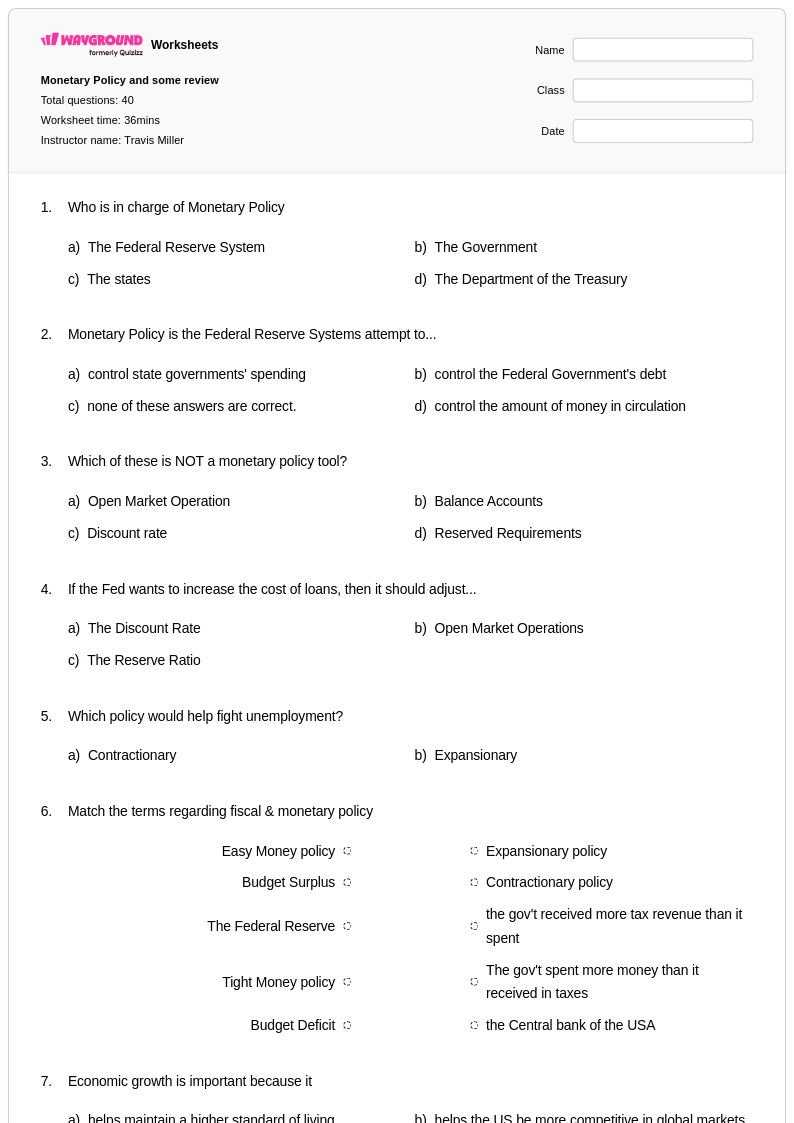
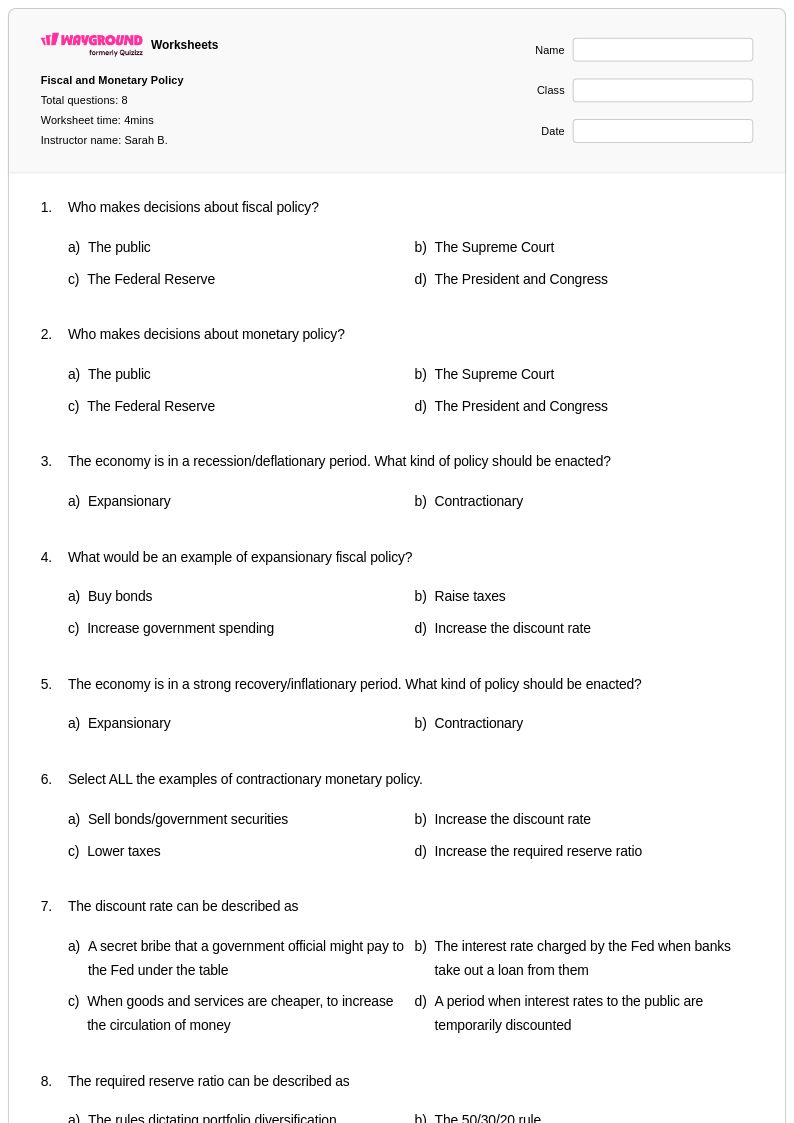
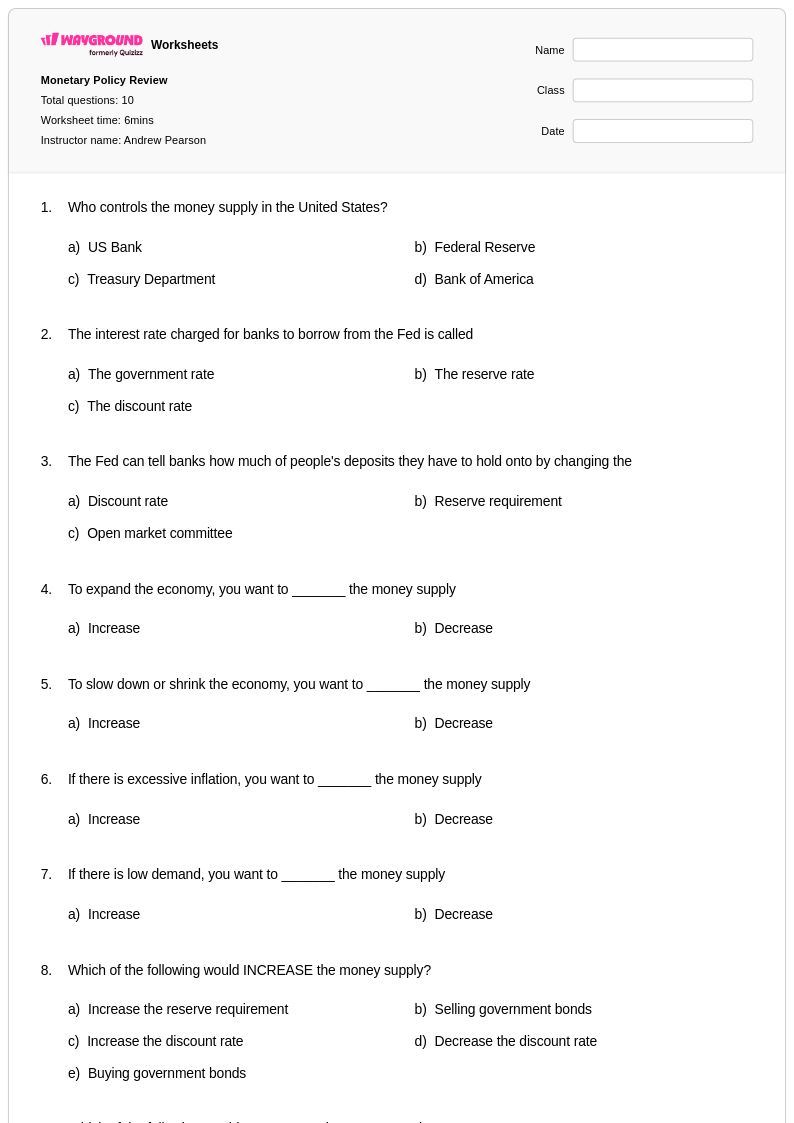
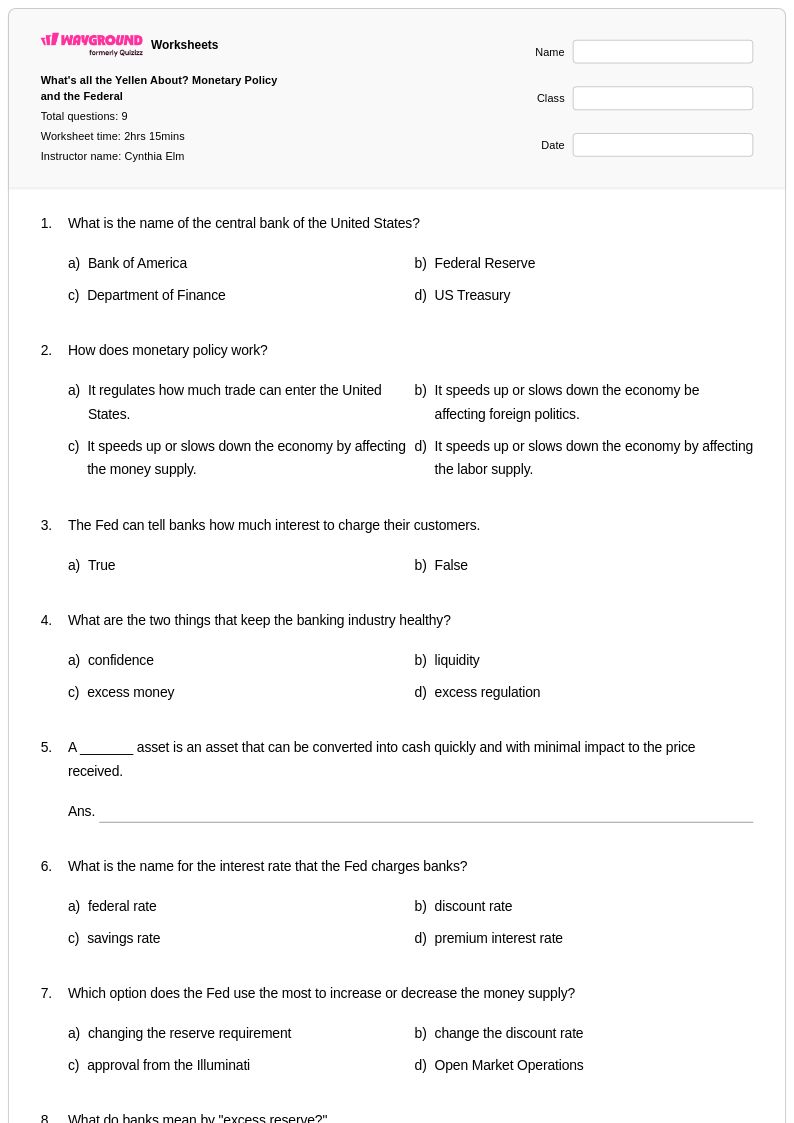
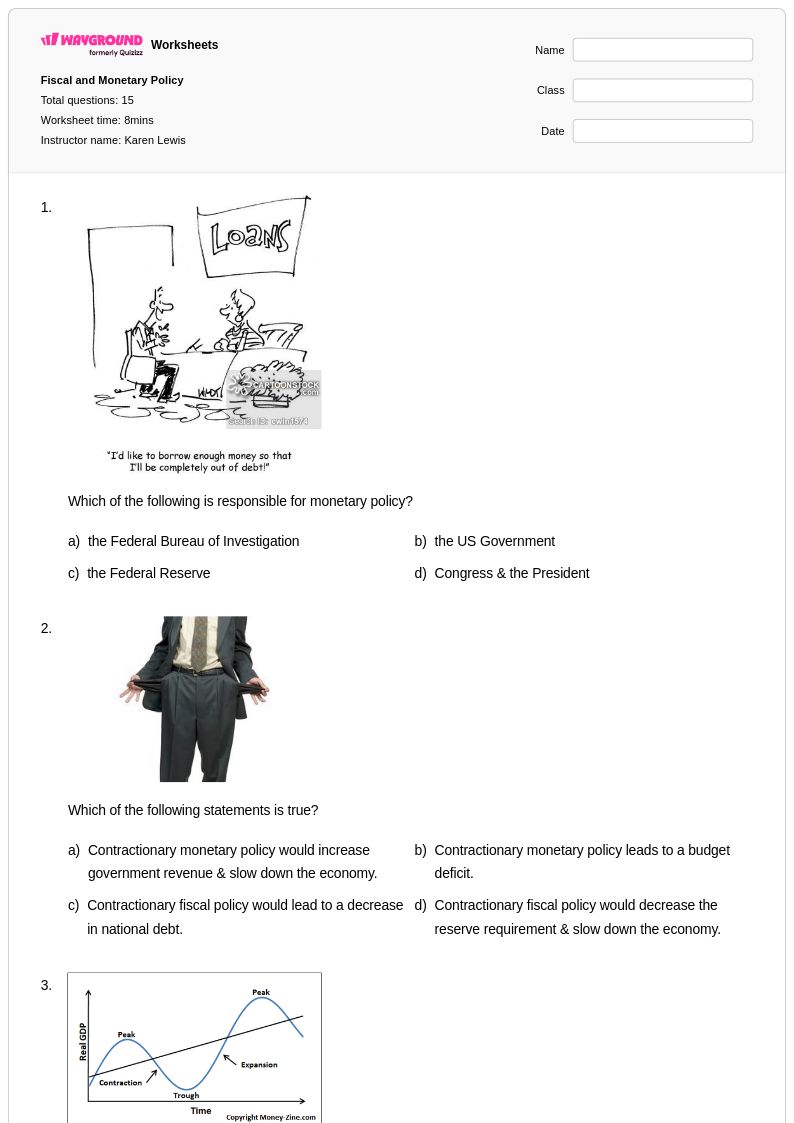
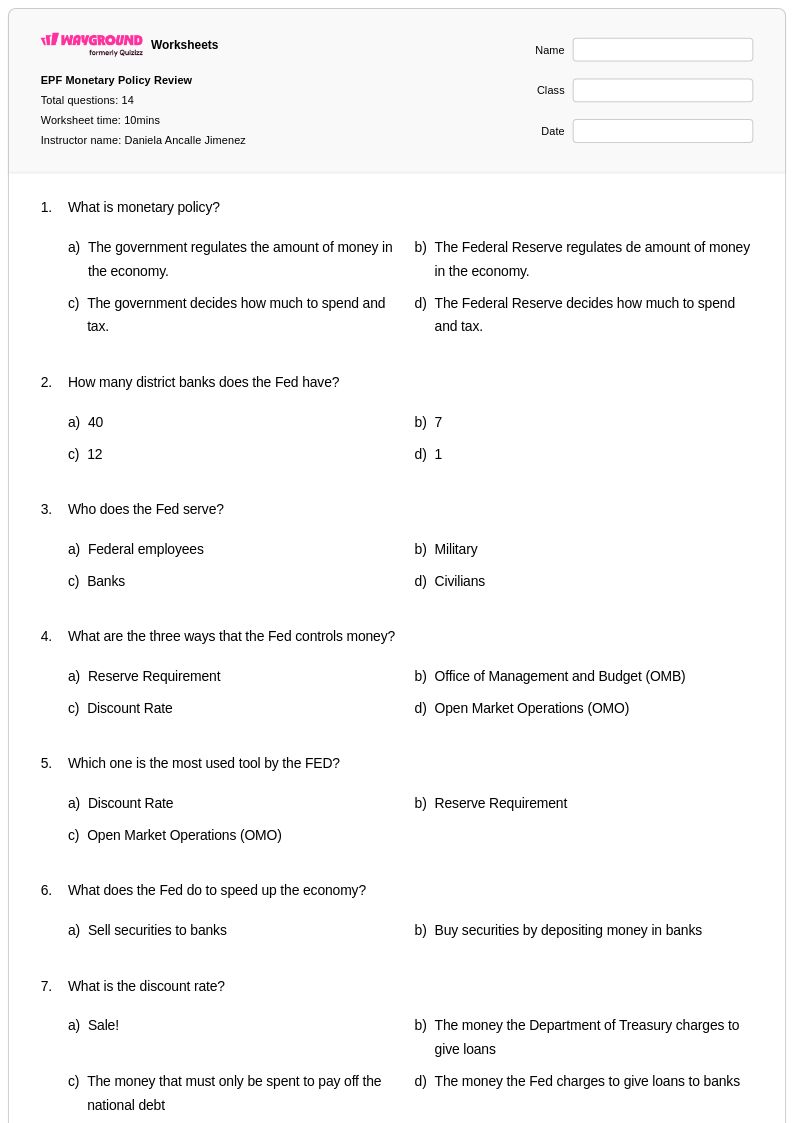
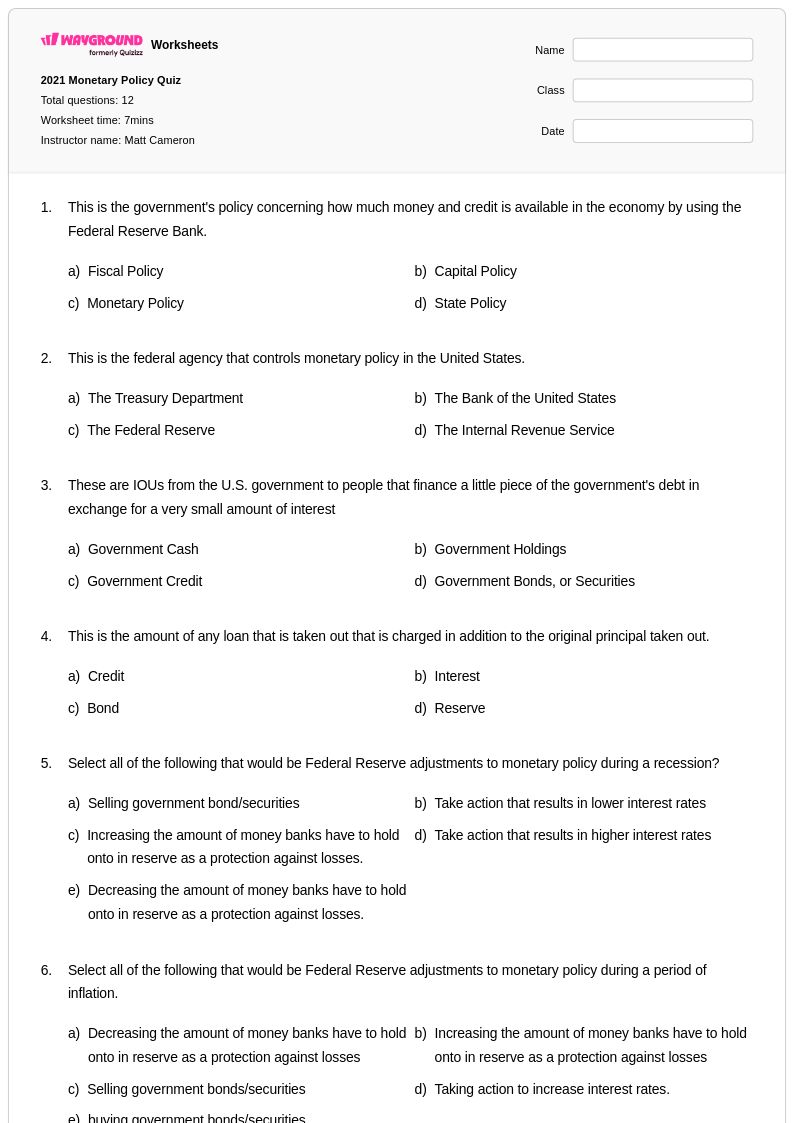
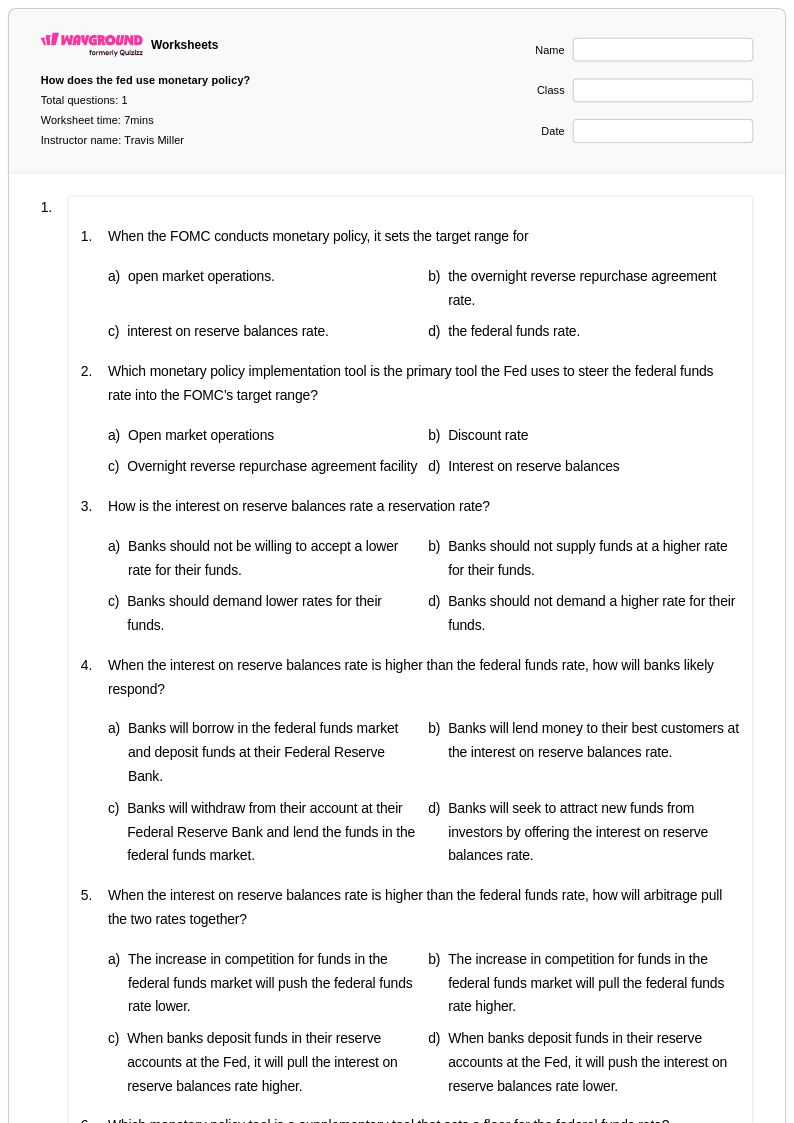
Monetary policy worksheets for Grade 11 students available through Wayground (formerly Quizizz) provide comprehensive coverage of central banking functions, interest rate mechanisms, and macroeconomic stabilization tools. These educational resources strengthen students' understanding of how the Federal Reserve and other central banks influence economic conditions through money supply adjustments, discount rate changes, and open market operations. The worksheets include practice problems that challenge students to analyze real-world scenarios involving inflation control, unemployment reduction, and economic growth management. Each resource comes with detailed answer keys that help students verify their understanding of complex concepts like quantitative easing, reserve requirements, and the transmission mechanisms of monetary policy. These free printables are designed to build critical thinking skills while reinforcing theoretical knowledge through practical applications and case study analysis.
Wayground (formerly Quizizz) supports educators with an extensive collection of teacher-created monetary policy resources that streamline lesson planning and enhance student engagement. The platform's millions of worksheets include standards-aligned materials that can be easily filtered by difficulty level, specific monetary policy tools, or learning objectives. Teachers benefit from robust differentiation tools that allow customization of content complexity, enabling both remediation for struggling students and enrichment opportunities for advanced learners. The flexible format options include downloadable pdf versions for traditional classroom use and interactive digital formats that facilitate immediate feedback and progress tracking. These comprehensive resources help educators effectively address diverse learning needs while providing consistent skill practice opportunities that reinforce understanding of monetary policy's role in modern economic systems.
FAQs
How do I teach monetary policy to high school economics students?
Start by grounding students in the Federal Reserve's dual mandate of price stability and maximum employment, then build outward to specific tools like the federal funds rate, reserve requirements, and quantitative easing. Use real-world examples such as Fed rate decisions during inflation surges or recessions to make transmission mechanisms tangible. Pairing direct instruction with structured practice problems helps students connect abstract policy decisions to concrete economic outcomes like employment levels and inflation rates.
What worksheets help students practice expansionary vs. contractionary monetary policy?
Scenario-based practice problems are particularly effective for this topic — students should be given economic conditions (e.g., rising inflation or rising unemployment) and asked to identify which policy stance is appropriate and which tools the Fed would deploy. Worksheets that walk through the full transmission mechanism, from a rate change to its effect on borrowing, spending, and output, reinforce both conceptual understanding and analytical reasoning. Answer keys that explain the reasoning behind each step, not just the correct answer, deepen comprehension.
What mistakes do students commonly make when learning about monetary policy?
The most common misconception is confusing monetary policy with fiscal policy — students frequently conflate the Federal Reserve's role with that of Congress or the Treasury. A second persistent error is assuming that interest rate changes produce immediate economic effects, when in reality transmission lags can span several months to over a year. Students also tend to oversimplify the Fed's dual mandate, treating price stability and maximum employment as always complementary rather than sometimes in tension with each other.
How can I use monetary policy worksheets to support students at different skill levels?
For students who are struggling, reduce the cognitive load by focusing on one tool at a time (e.g., just the federal funds rate) before introducing the full range of instruments. Advanced students benefit from tasks that require them to evaluate trade-offs, such as analyzing how aggressive rate hikes designed to curb inflation may simultaneously suppress employment. On Wayground, teachers can apply individual accommodations including reduced answer choices, extended time, and read-aloud support, allowing differentiation without disrupting the rest of the class.
How do I use Wayground's monetary policy worksheets in my classroom?
Wayground's monetary policy worksheets are available as printable PDFs for traditional classroom use and in digital formats for technology-integrated or remote learning environments. Teachers can also host worksheets as quizzes directly on Wayground, enabling real-time student responses and automated grading. Each worksheet includes a detailed answer key, so these materials work equally well as guided practice, independent work, or review assignments.
How do I explain quantitative easing to students who are new to economics?
Frame quantitative easing as the Fed's tool of last resort when cutting interest rates alone is not enough to stimulate the economy. Explain that the Fed purchases large quantities of government securities and other assets from banks, injecting money directly into the financial system to lower long-term interest rates and encourage lending. A simple analogy is that the Fed is essentially adding fuel to a car that has already been given all the gas the standard engine can take — it is an unconventional measure used when conventional tools have reached their limits.