Free Printable Moon Phases Worksheets for Kindergarten
Wayground's free kindergarten moon phases worksheets help young learners explore lunar cycles through engaging printables, practice problems, and activities with complete answer keys in PDF format.
Explore printable Moon Phases worksheets for Kindergarten
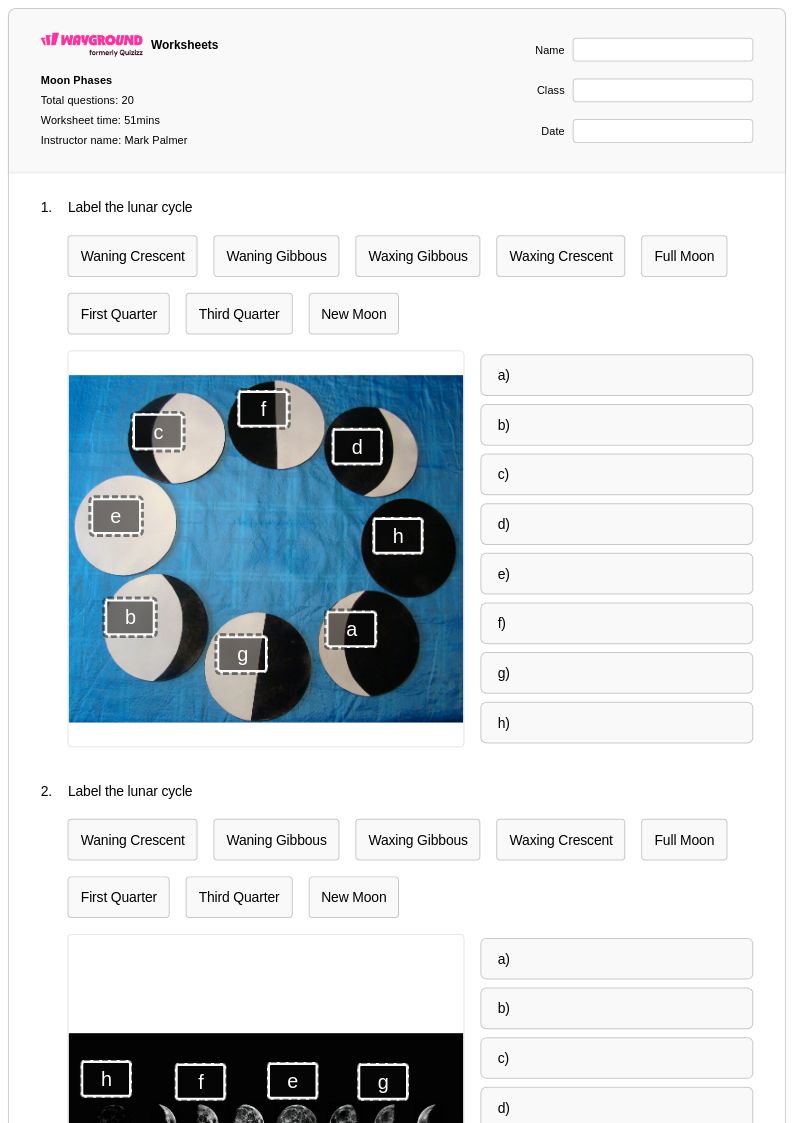
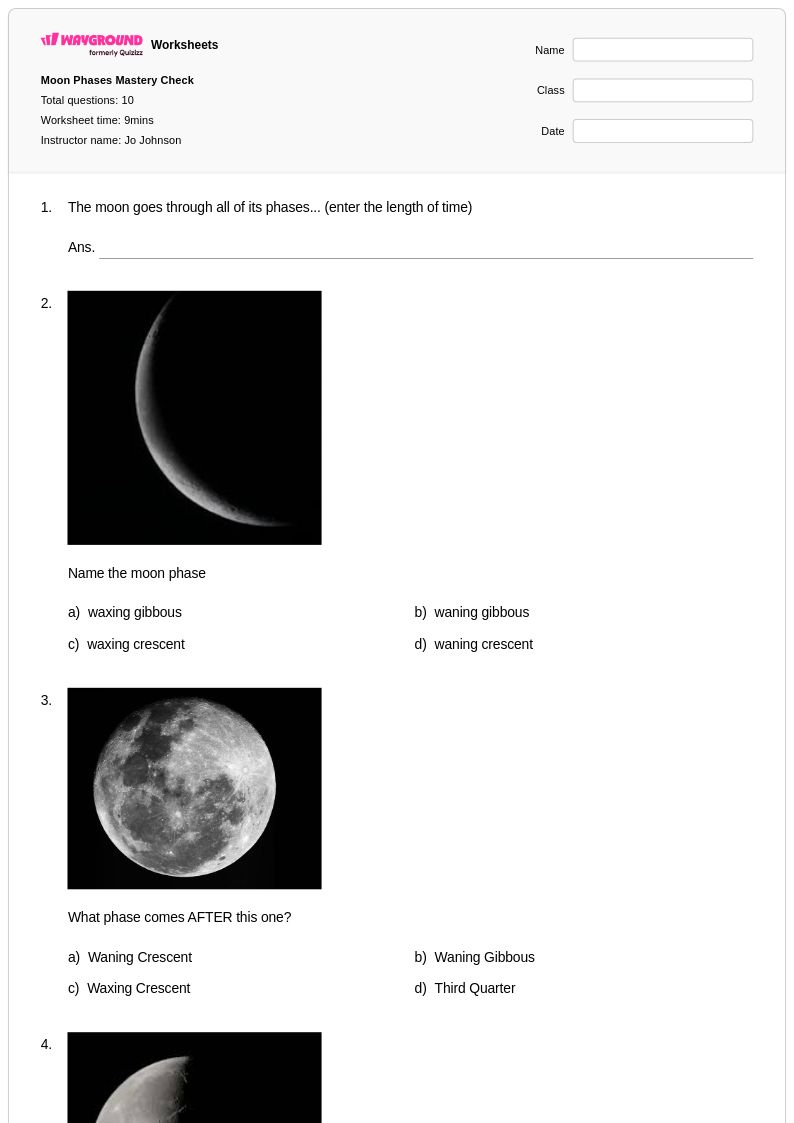
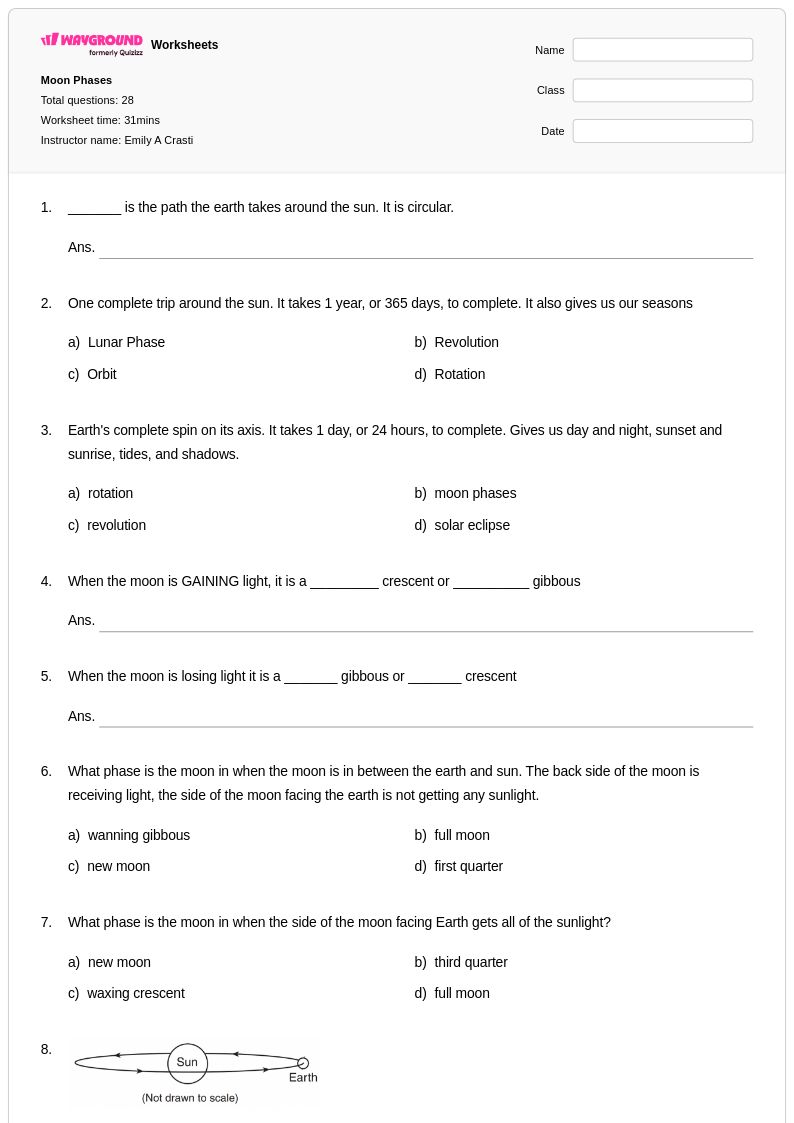
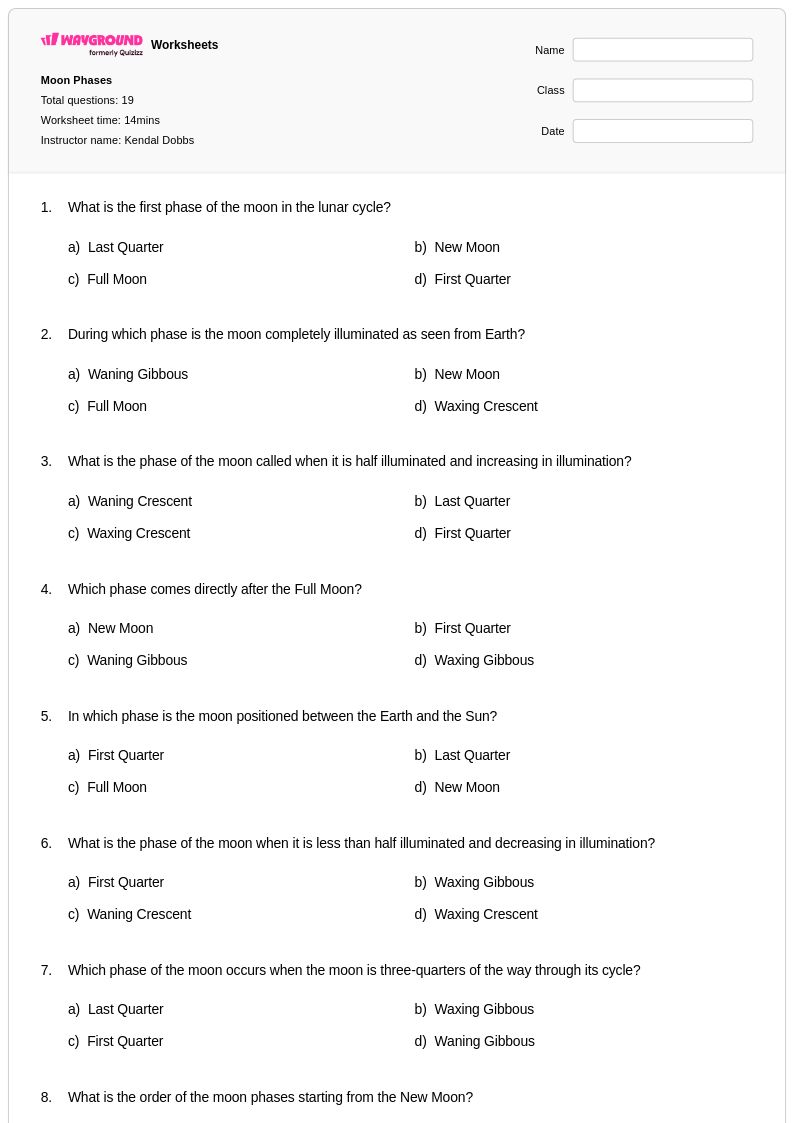
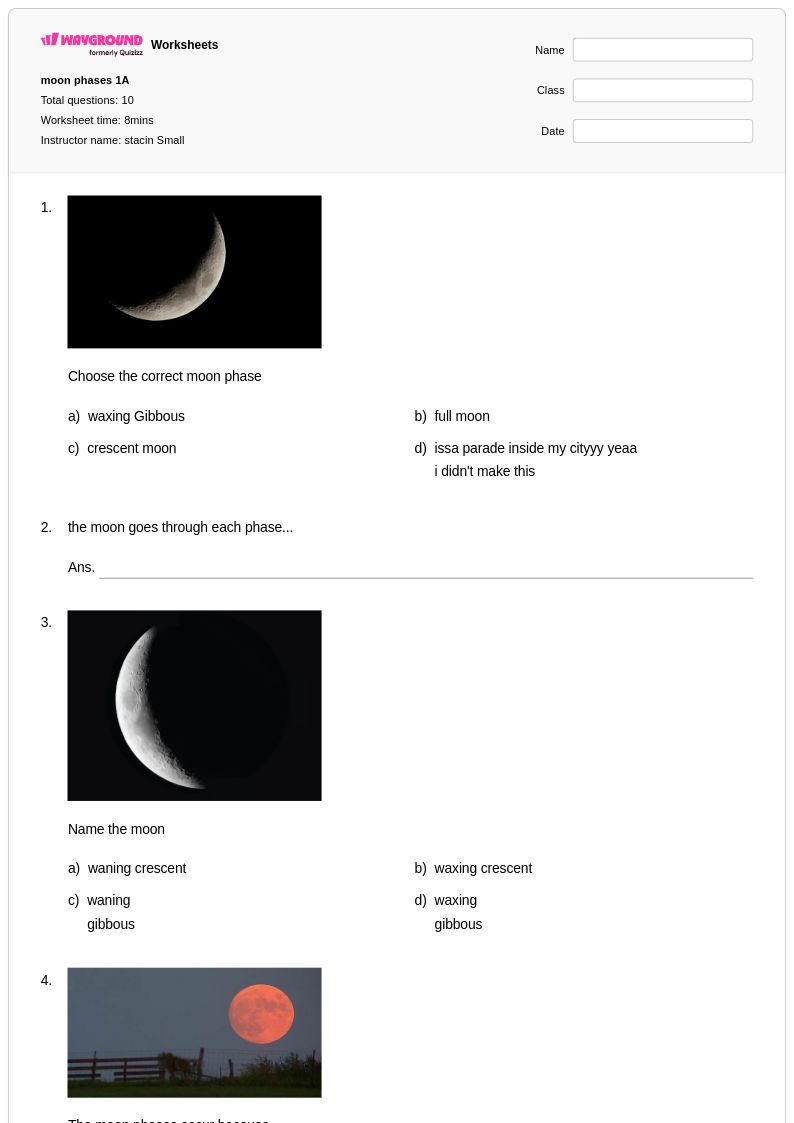
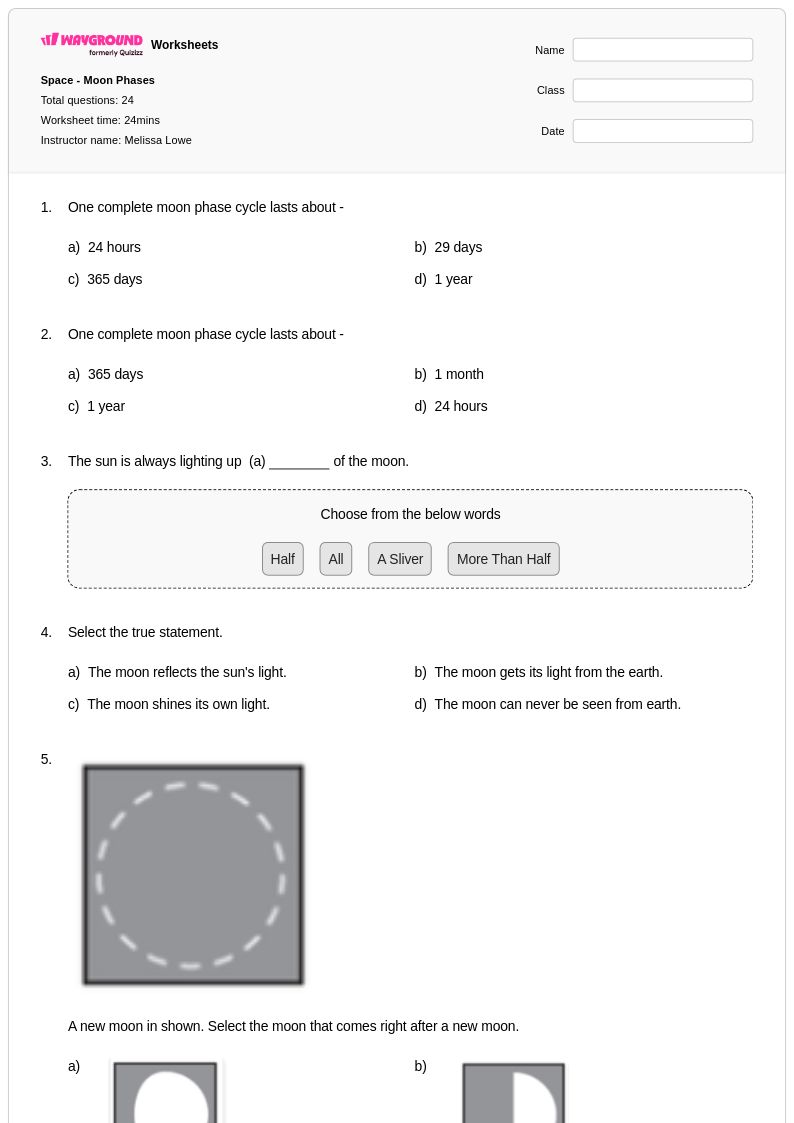
Moon phases worksheets for kindergarten provide young learners with engaging, hands-on activities that introduce the fundamental concept of how the moon changes appearance throughout the month. These carefully designed educational resources help students develop early observation skills, pattern recognition, and basic scientific vocabulary as they explore the different shapes the moon displays in our night sky. Wayground's collection of kindergarten moon phases materials includes free printables that feature simple illustrations, coloring activities, and basic sequencing exercises that make this complex astronomical concept accessible to five and six-year-old students. Each worksheet comes with a comprehensive answer key to support accurate instruction, and the pdf format ensures easy printing and distribution for classroom or home learning environments where young scientists can practice identifying and ordering the primary lunar phases.
Wayground, formerly Quizizz, empowers educators with an extensive library of millions of teacher-created moon phases resources specifically curated for kindergarten-level instruction in earth and space science. The platform's robust search and filtering capabilities allow teachers to quickly locate age-appropriate materials that align with early childhood science standards, while built-in differentiation tools enable customization based on individual student needs and learning styles. Teachers can seamlessly switch between printable pdf versions for traditional paper-based activities and interactive digital formats that engage tech-savvy young learners, making lesson planning more flexible and responsive to diverse classroom environments. These comprehensive worksheet collections support targeted skill practice, provide opportunities for remediation when students need additional reinforcement, and offer enrichment activities for advanced learners ready to explore more complex aspects of lunar observation and celestial patterns.
FAQs
How do I teach moon phases to students?
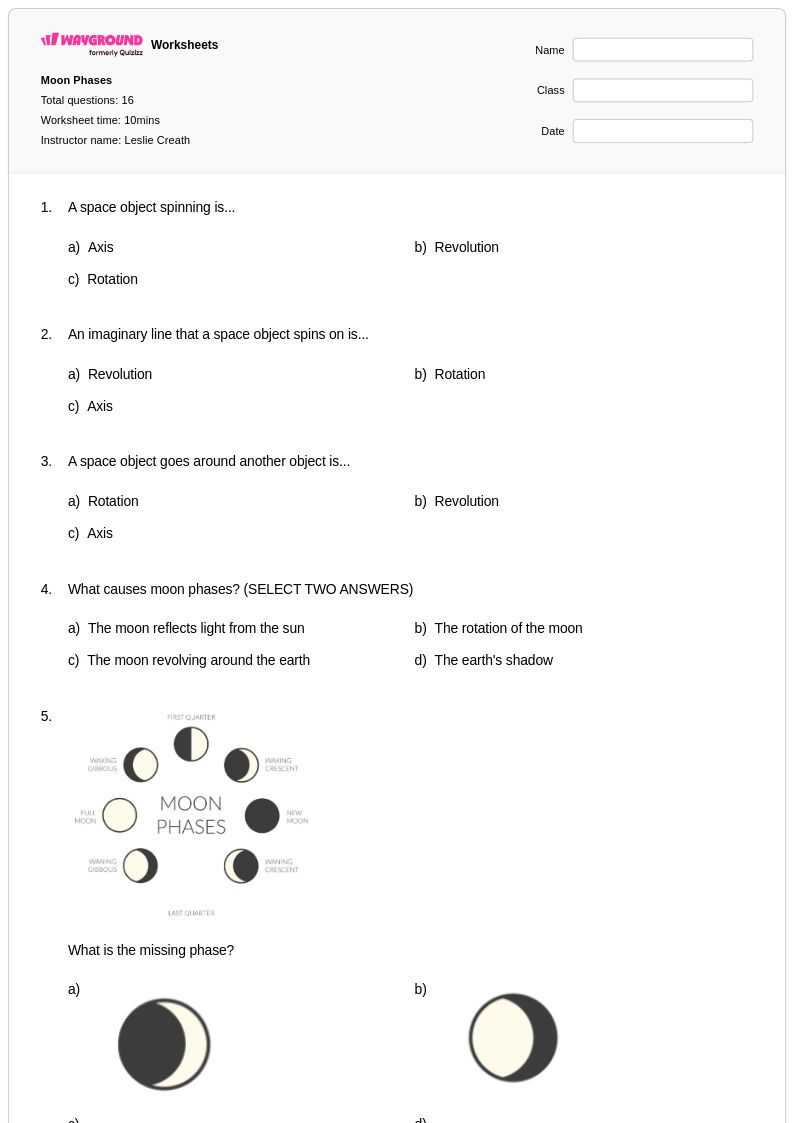
Start by grounding students in the relationship between the Earth, moon, and sun before introducing phase names. Use physical models, such as a lamp and a ball, to simulate how sunlight illuminates different portions of the moon as it orbits Earth. Once students understand the geometry, introduce the eight primary phases in sequence from new moon to waning crescent, reinforcing each with diagram labeling and sequencing activities. Connecting lessons to real nightly sky observations significantly improves retention.
What exercises help students practice identifying moon phases?
Diagram labeling exercises, phase sequencing tasks, and observation logs are the most effective practice formats for moon phases. Labeling diagrams requires students to connect visual representations of illuminated portions to phase names, while sequencing tasks reinforce the predictable 29.5-day lunar cycle. Observation logs that ask students to sketch and record the moon over several nights connect classroom learning to direct scientific experience, deepening conceptual understanding.
What mistakes do students commonly make when learning moon phases?
The most common misconception is that moon phases are caused by Earth's shadow falling on the moon, which confuses lunar phases with lunar eclipses. Students also frequently mix up waxing and waning, or confuse crescent and gibbous phases. Another persistent error is assuming the moon only rises at night, which misunderstands its orbit. Explicit instruction on the moon's position relative to both Earth and the sun, supported by diagram work, directly addresses these errors.
How do I use moon phases worksheets in my classroom?
Moon phases worksheets on Wayground are available as printable PDFs for traditional classroom use and in digital formats for technology-integrated learning environments, and can also be hosted as a quiz directly on Wayground. Printable versions work well for guided notes, homework, or stations activities, while digital formats allow for self-paced independent practice. The included answer keys let students self-check their work or allow teachers to use the materials for quick formative assessment.
How can I support struggling students when teaching moon phases?
For students who struggle with moon phases, reducing cognitive load is essential. Start with just the four primary phases before introducing all eight, and use visual anchors like consistent color-coding for waxing versus waning. On Wayground, teachers can apply accommodations such as reduced answer choices and read-aloud support to individual students, making digital moon phases activities more accessible without singling anyone out in the classroom.
How do moon phases connect to broader science standards?
Moon phases connect directly to Earth and space science standards that require students to understand patterns in the solar system, predictable astronomical phenomena, and the relationship between celestial bodies. The 29.5-day lunar cycle is a concrete, observable example of periodic patterns in nature, which also ties to broader crosscutting concepts like patterns and cause and effect. Including real-world observation components strengthens alignment with science practice standards related to data collection and analysis.