
20 P
4th
11 P
4th
10 P
4th
13 P
4th
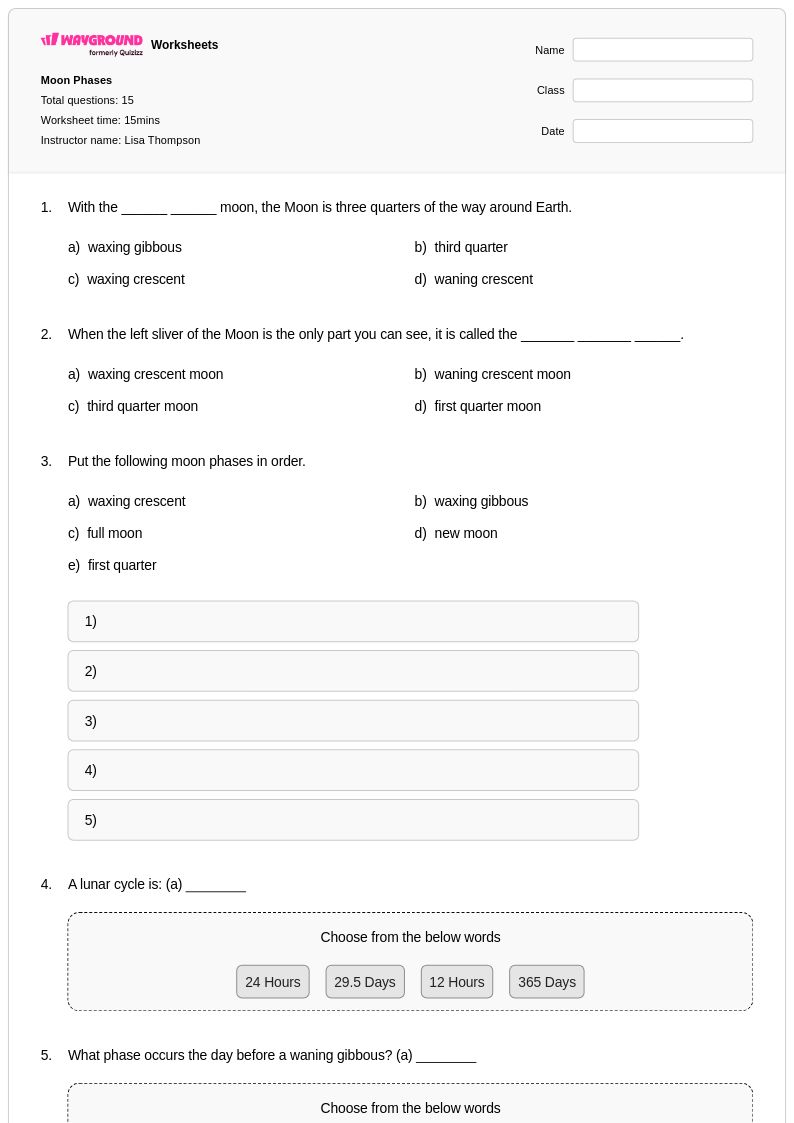
15 P
4th - Uni
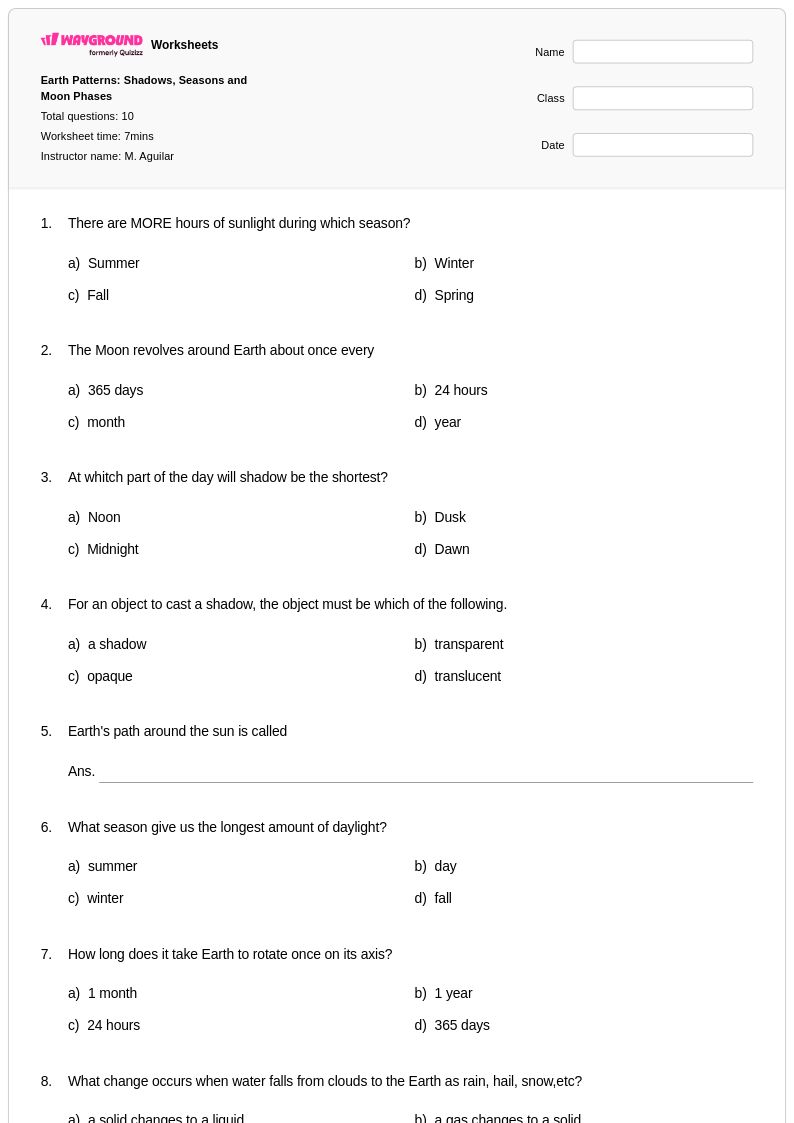
10 P
4th
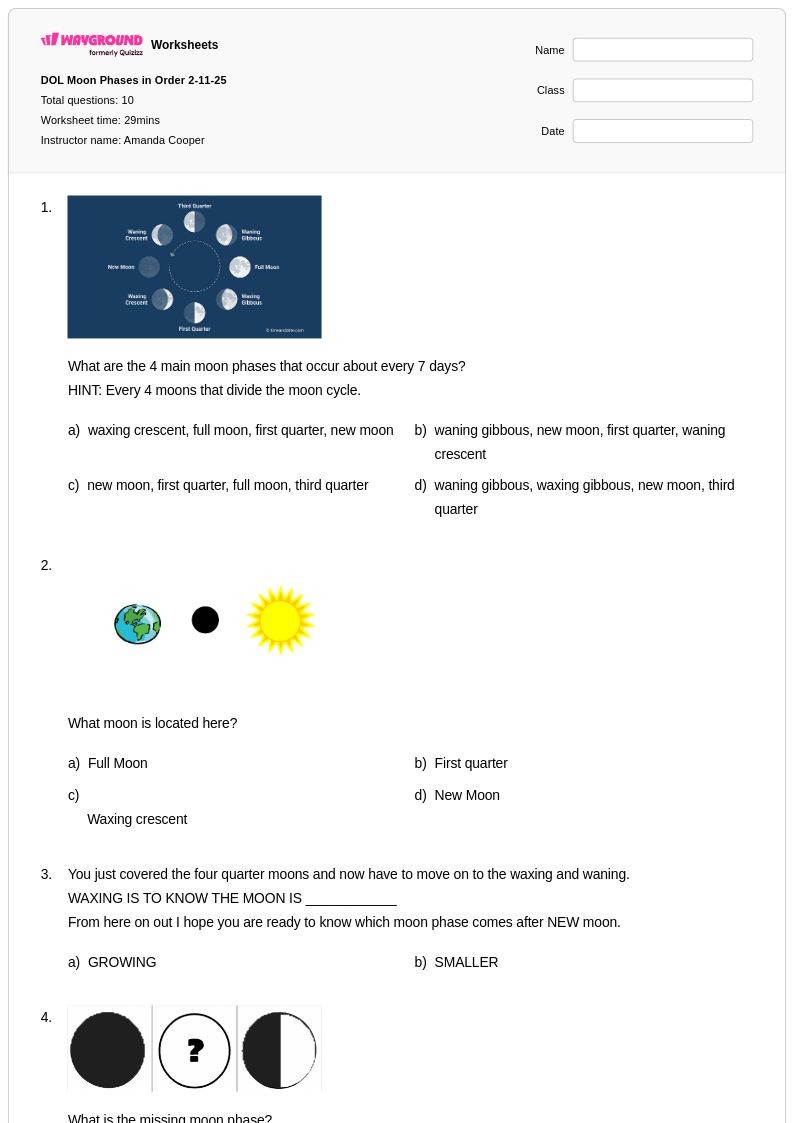
10 P
4th
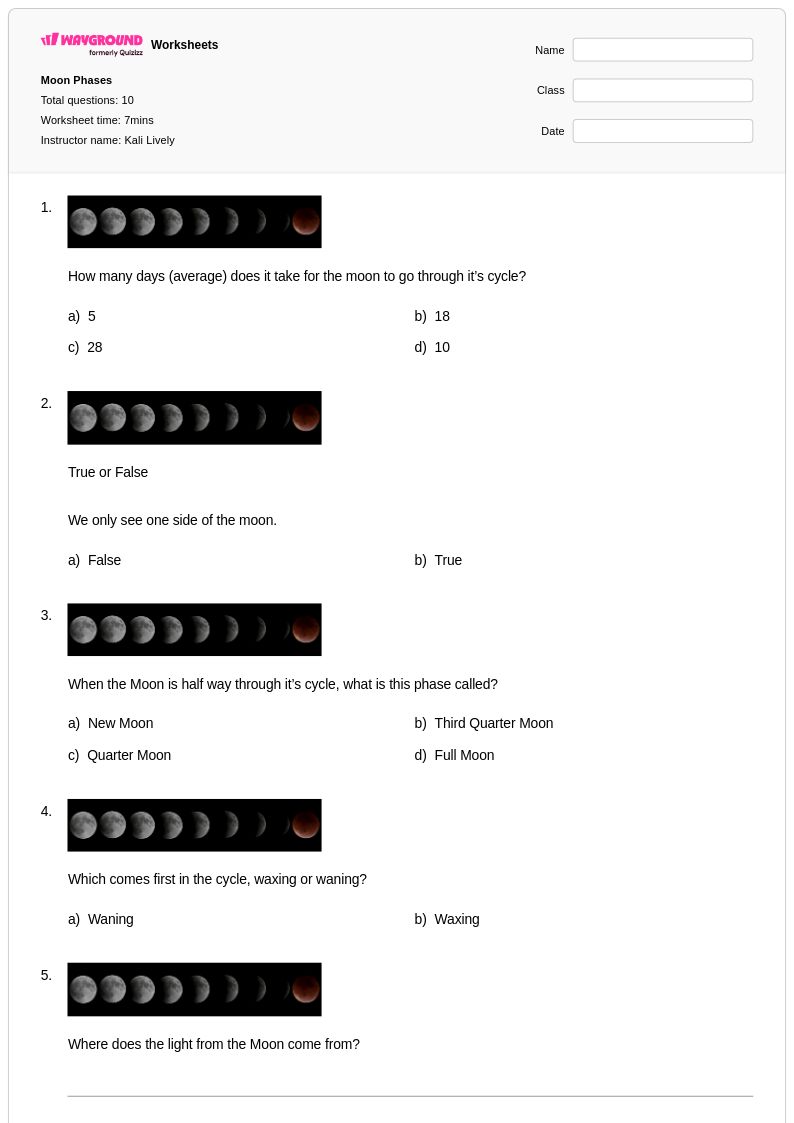
10 P
4th
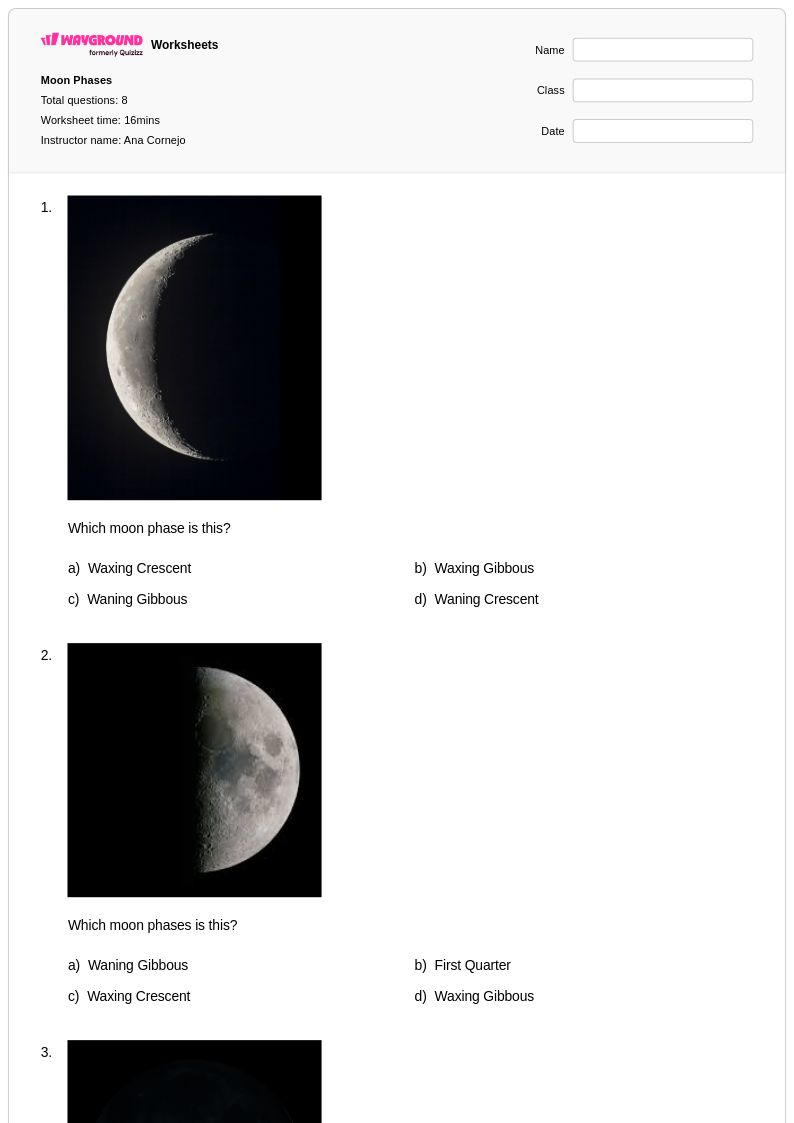
8 P
3rd - 4th
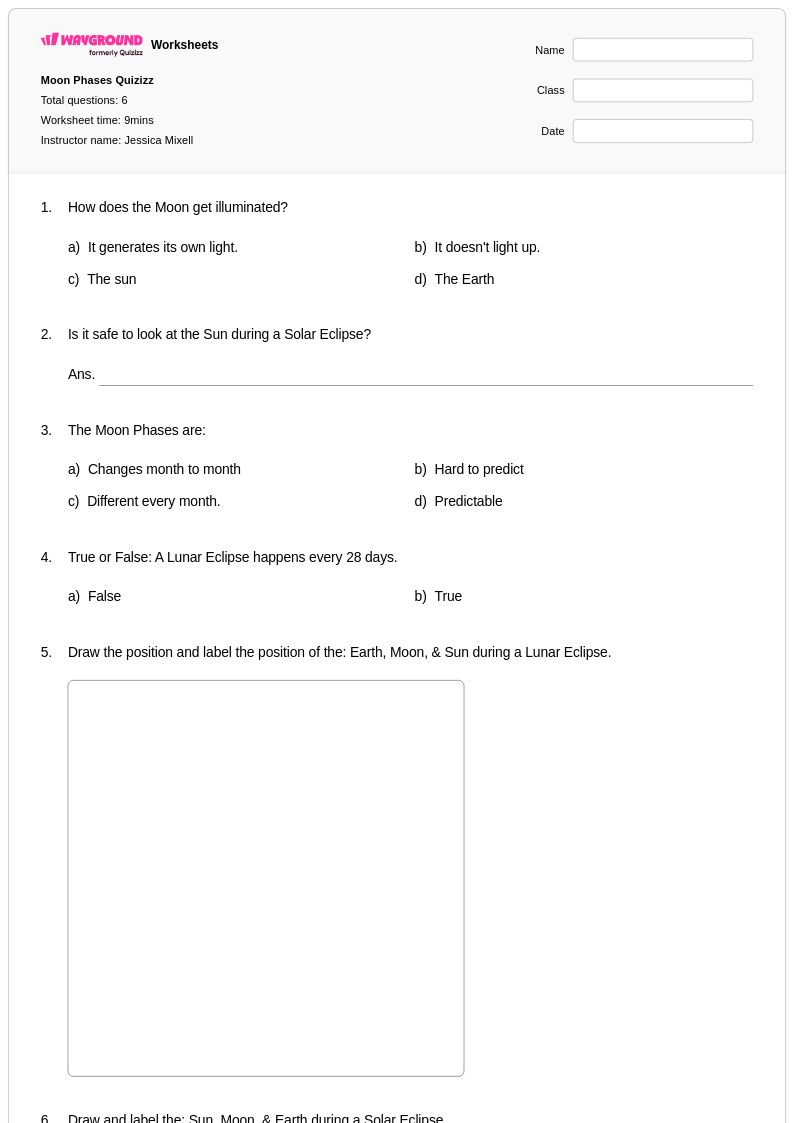
6 P
4th
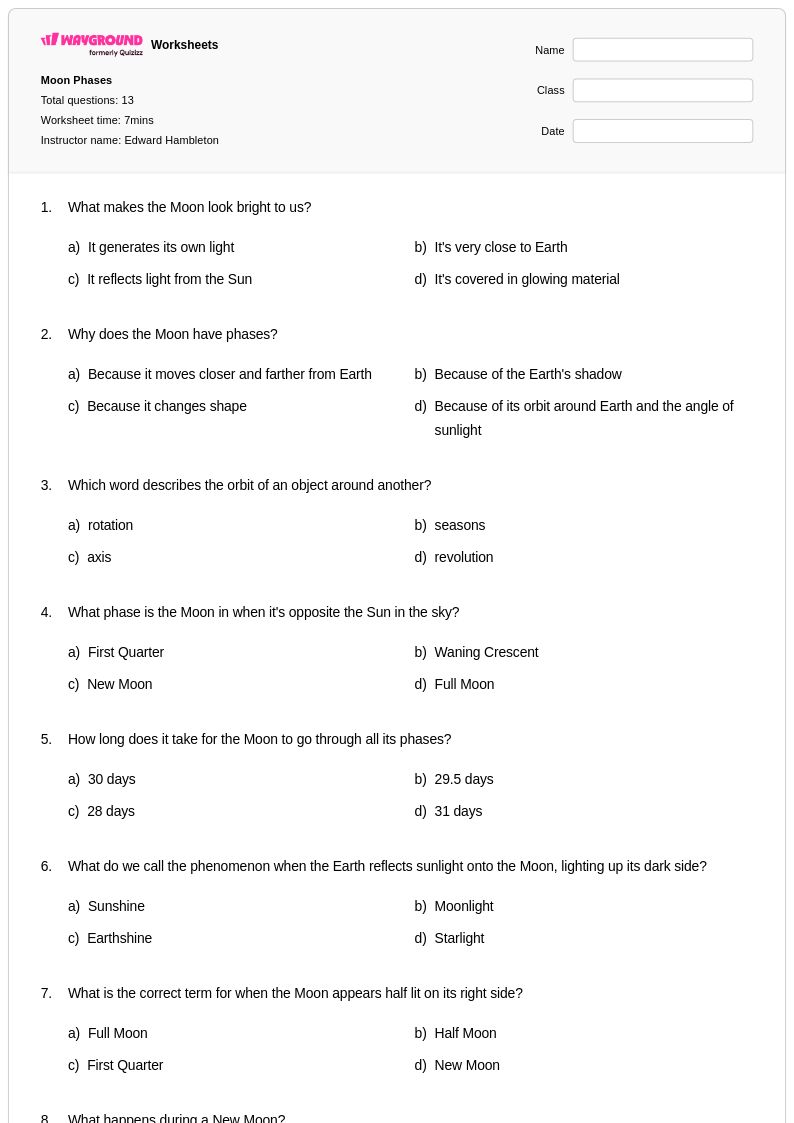
13 P
4th
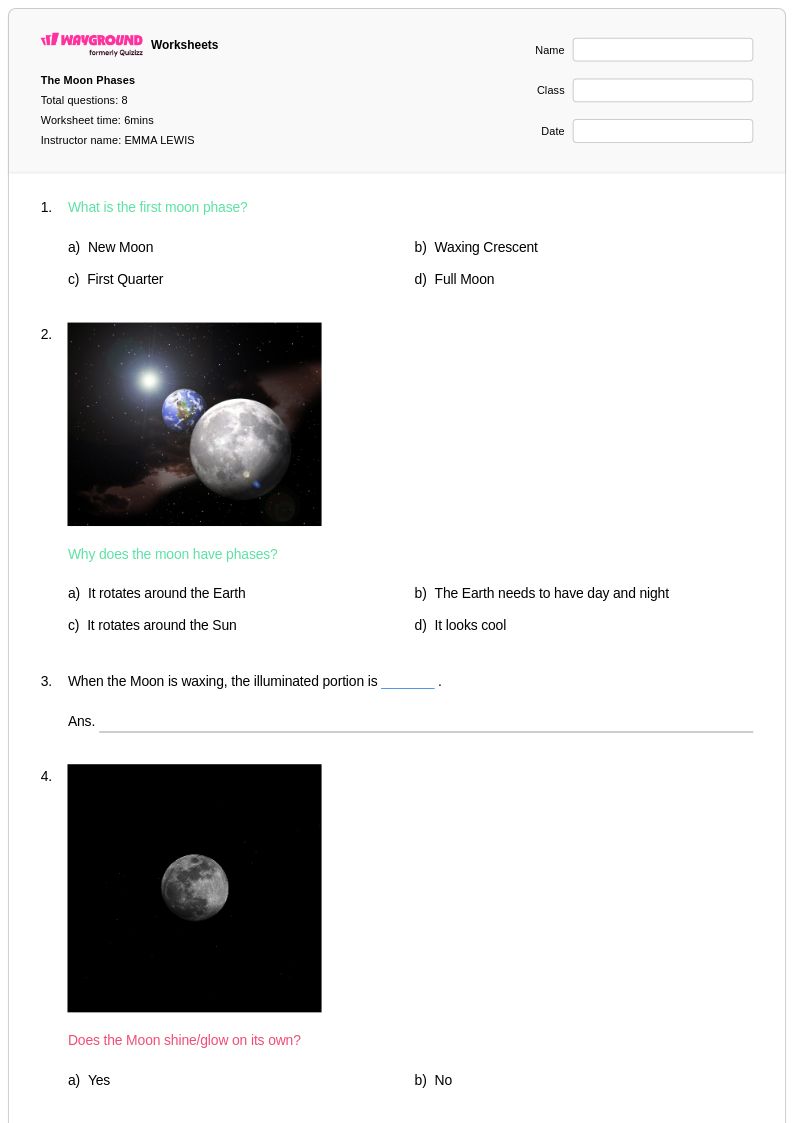
8 P
3rd - 5th
13 P
3rd - 5th
11 P
4th
17 P
4th
17 P
4th - 5th
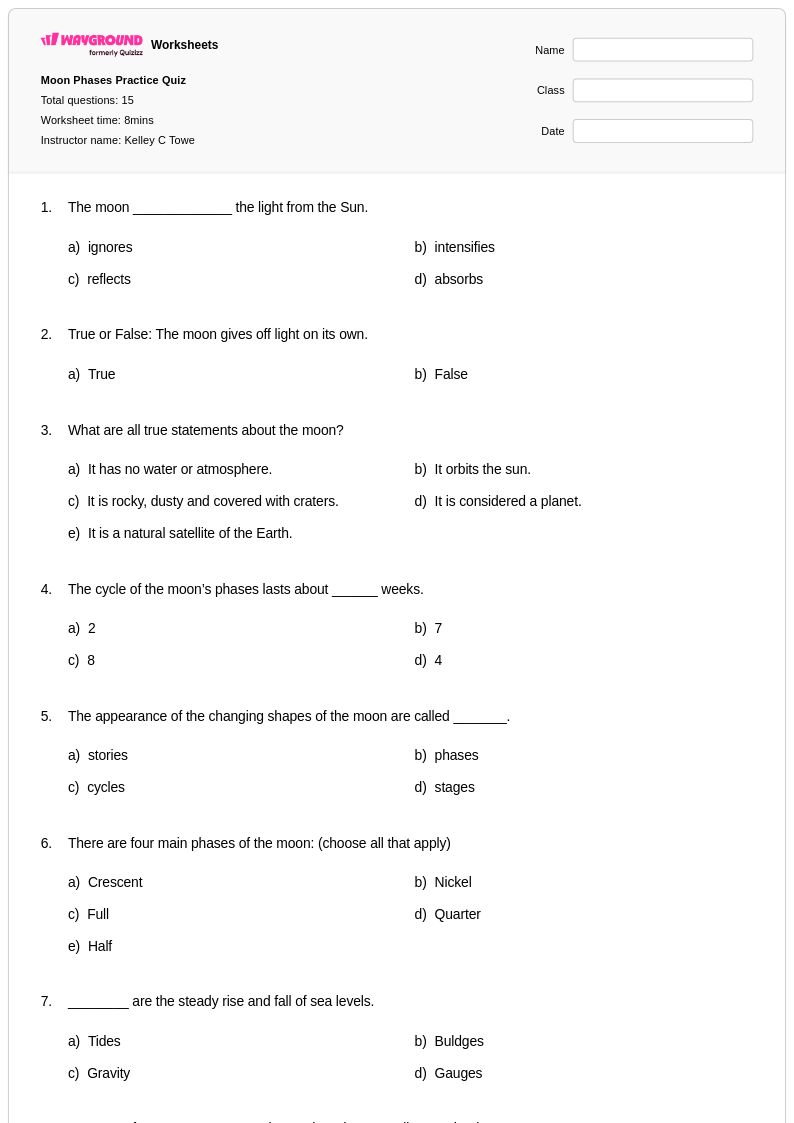
15 P
4th
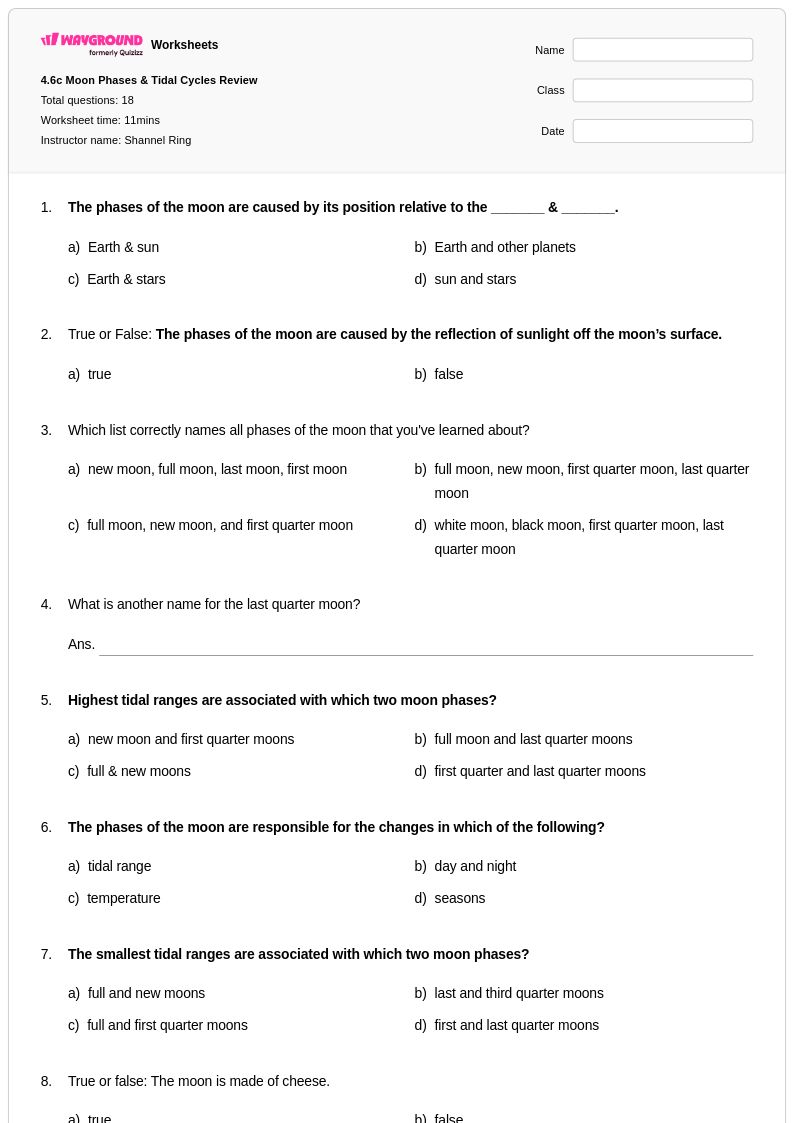
18 P
4th
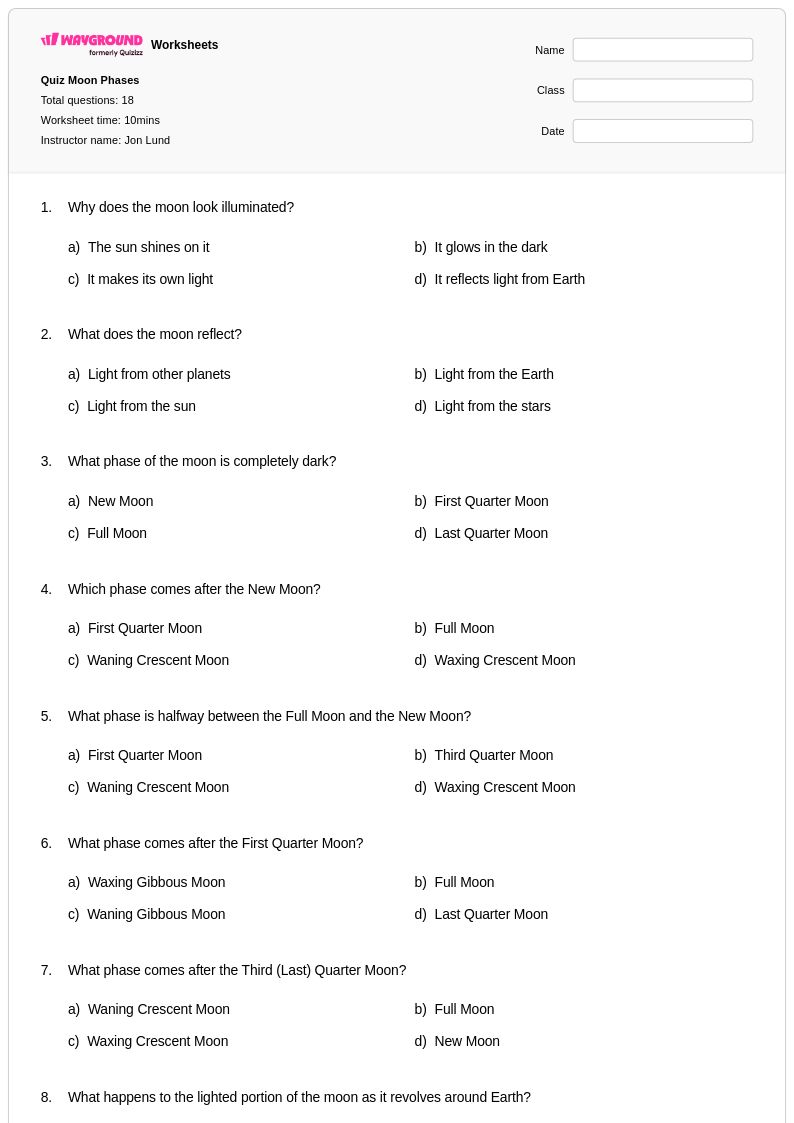
18 P
4th

10 P
4th
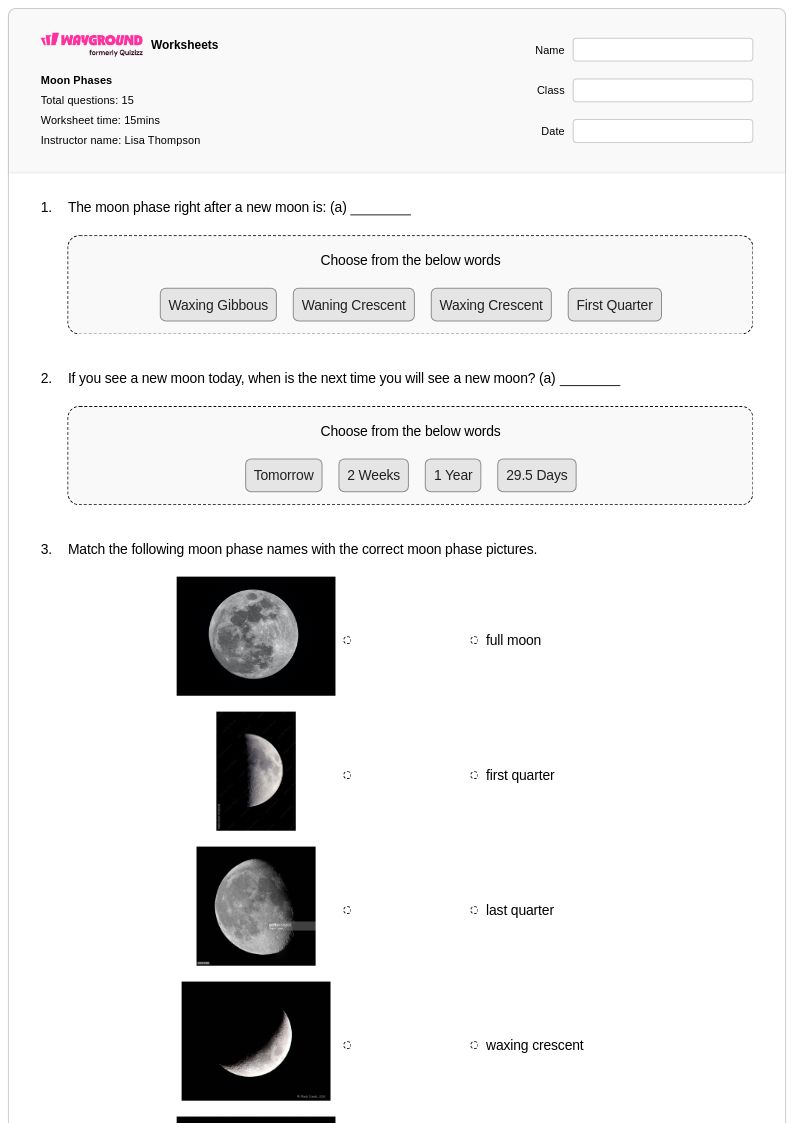
15 P
4th - Uni
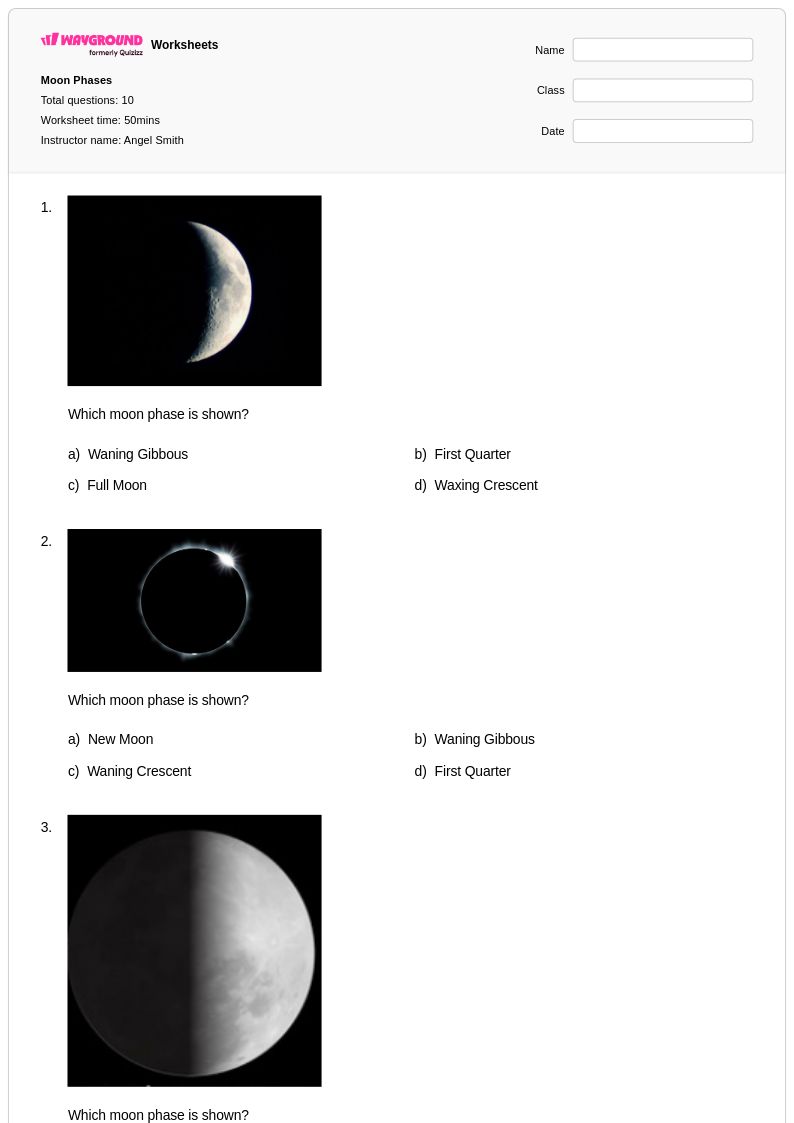
10 P
4th
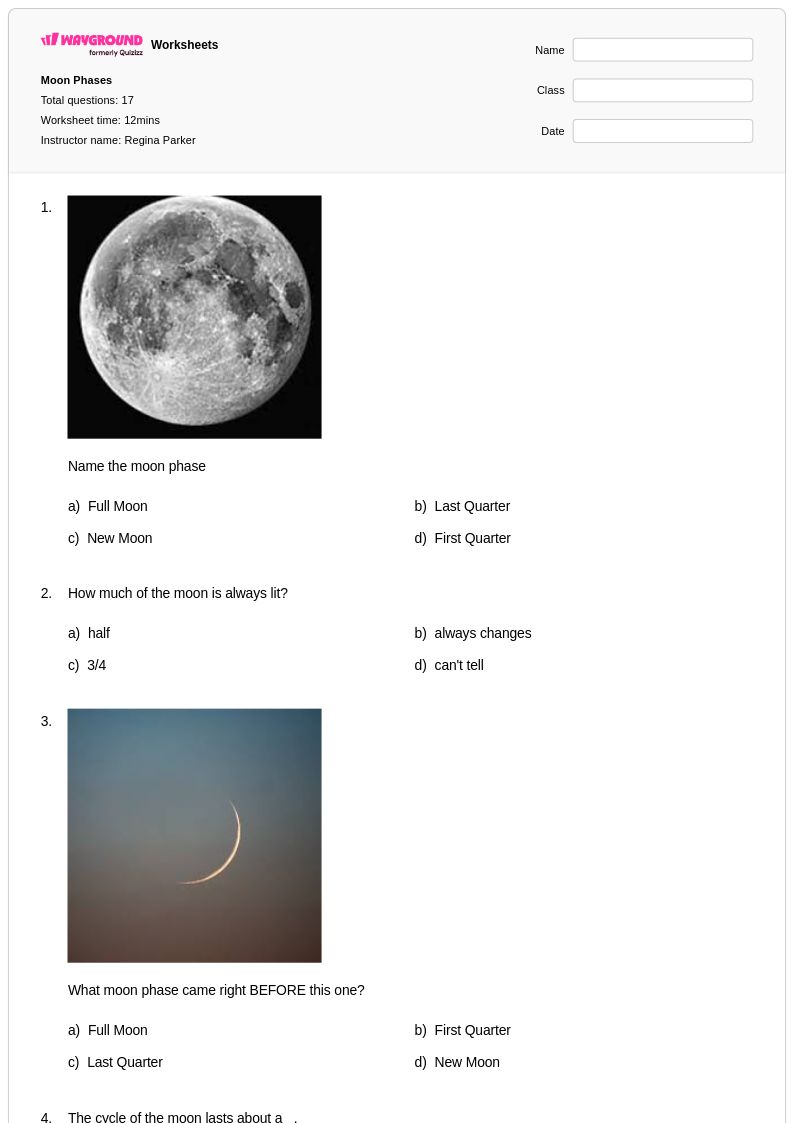
17 P
4th
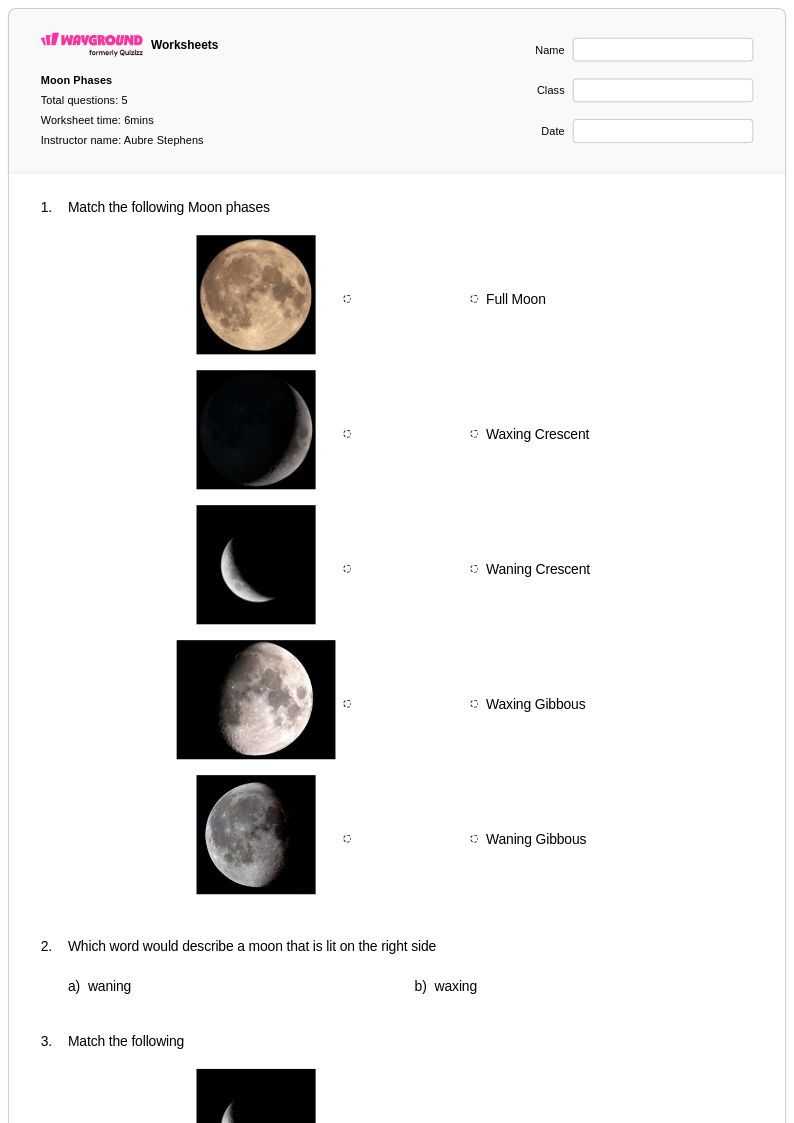
5 P
4th - 12th
Przeglądaj Moon Phases arkusze ćwiczeń według ocen
Przeglądaj inne arkusze tematyczne dla grade 4
Explore printable Moon Phases worksheets for Grade 4
Grade 4 moon phases worksheets available through Wayground provide comprehensive coverage of lunar cycle concepts that fourth-grade students need to master in their Earth and space science curriculum. These carefully designed educational materials help students develop critical observational skills while learning to identify and sequence the eight distinct phases of the moon, from new moon through waxing crescent, first quarter, waxing gibbous, full moon, waning gibbous, third quarter, and waning crescent. Each worksheet focuses on building foundational understanding of how the moon's appearance changes over approximately 28 days due to its orbital position relative to Earth and the sun. The practice problems included in these printables challenge students to apply their knowledge through activities such as drawing moon phases, predicting upcoming lunar appearances, and analyzing real-world moon observation data. Teachers can access complete answer keys for efficient grading and assessment, with all materials available as free pdf downloads that support both classroom instruction and independent study.
Wayground's extensive collection of moon phases worksheets draws from millions of teacher-created resources, ensuring educators have access to diverse, high-quality materials that align with state science standards for elementary Earth and space science education. The platform's robust search and filtering capabilities allow teachers to quickly locate worksheets that match their specific instructional needs, whether focusing on basic phase identification, lunar cycle timing, or more advanced concepts like tidal relationships. These digital and printable resources support effective differentiation strategies, enabling teachers to provide appropriate challenge levels for students with varying abilities and learning styles. The flexible customization tools help educators modify worksheets for remediation purposes or create enrichment activities for advanced learners, while the dual availability in both interactive digital formats and traditional pdf printables ensures seamless integration into any classroom technology environment. This comprehensive approach to moon phases instruction helps teachers efficiently plan engaging lessons that build lasting scientific understanding through structured skill practice and systematic concept reinforcement.
FAQs
How do I teach moon phases to students?
What exercises help students practice identifying moon phases?
What mistakes do students commonly make when learning moon phases?
How do I use moon phases worksheets in my classroom?
How can I support struggling students when teaching moon phases?
How do moon phases connect to broader science standards?