
20 Q
6th
15 Q
6th - 8th
21 Q
6th
35 Q
6th - 8th
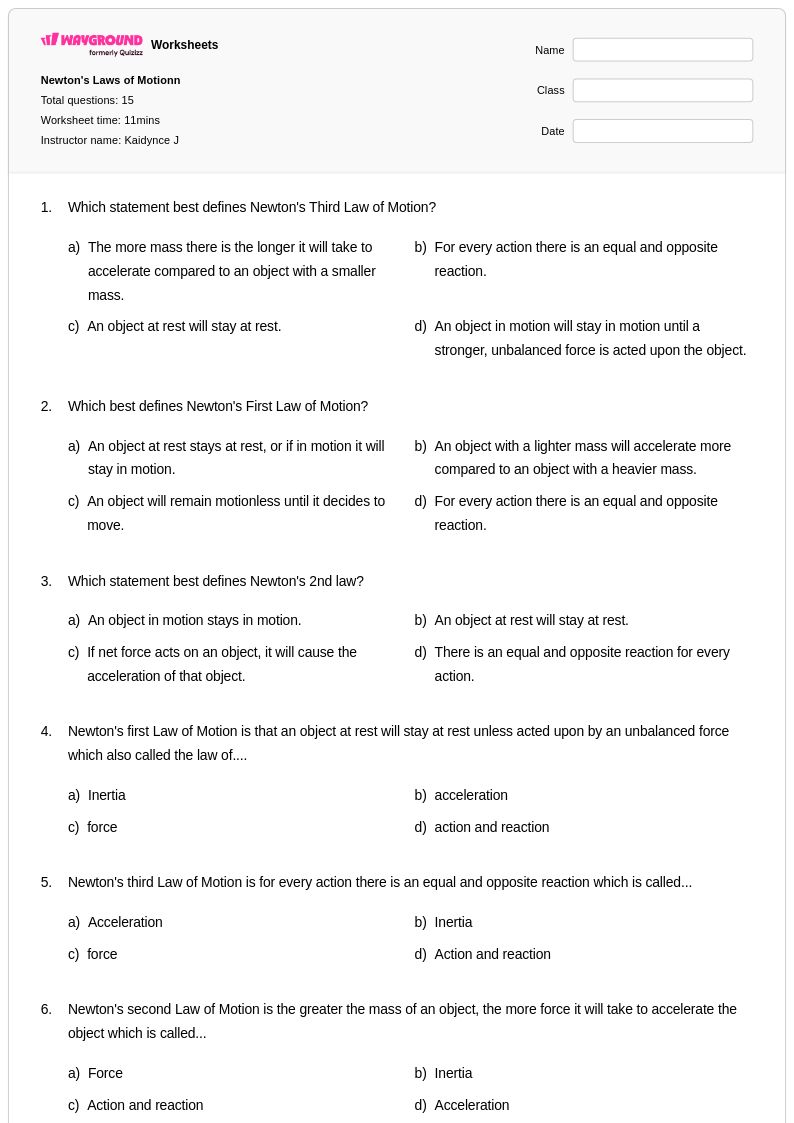
15 Q
6th - 8th
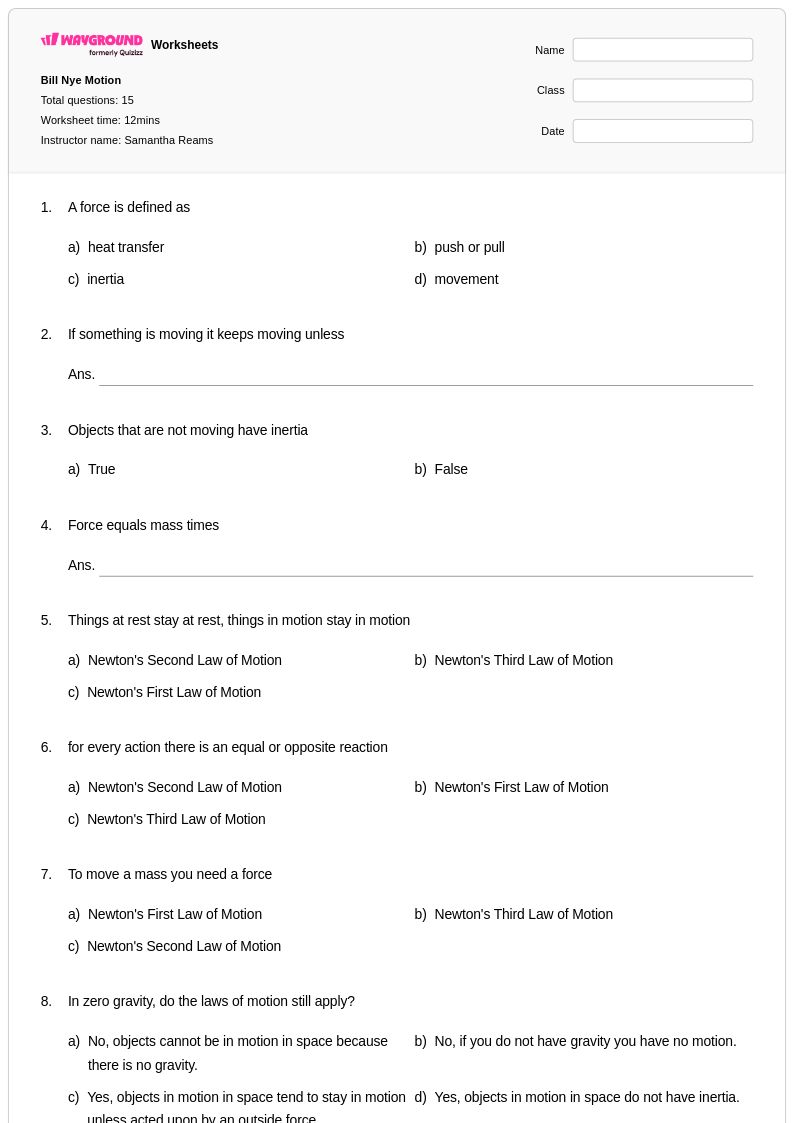
15 Q
6th
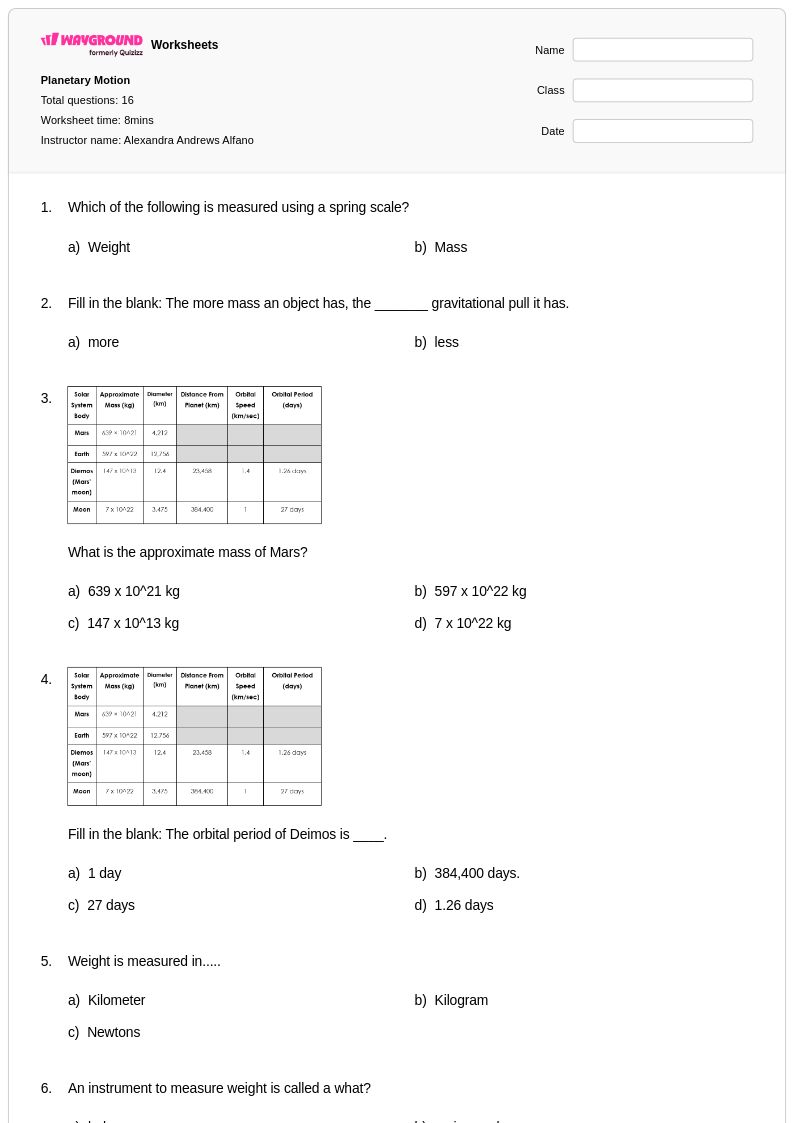
16 Q
6th
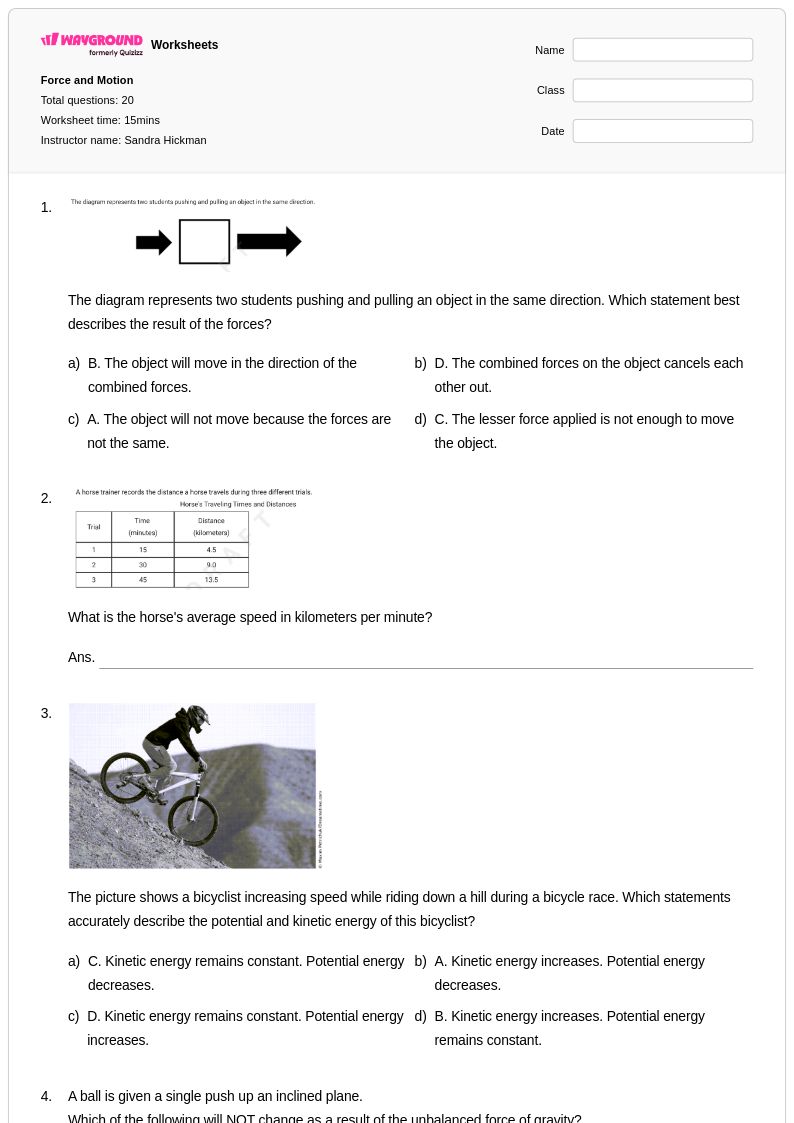
20 Q
6th
20 Q
6th - 8th
26 Q
6th
10 Q
3rd - 6th
20 Q
6th
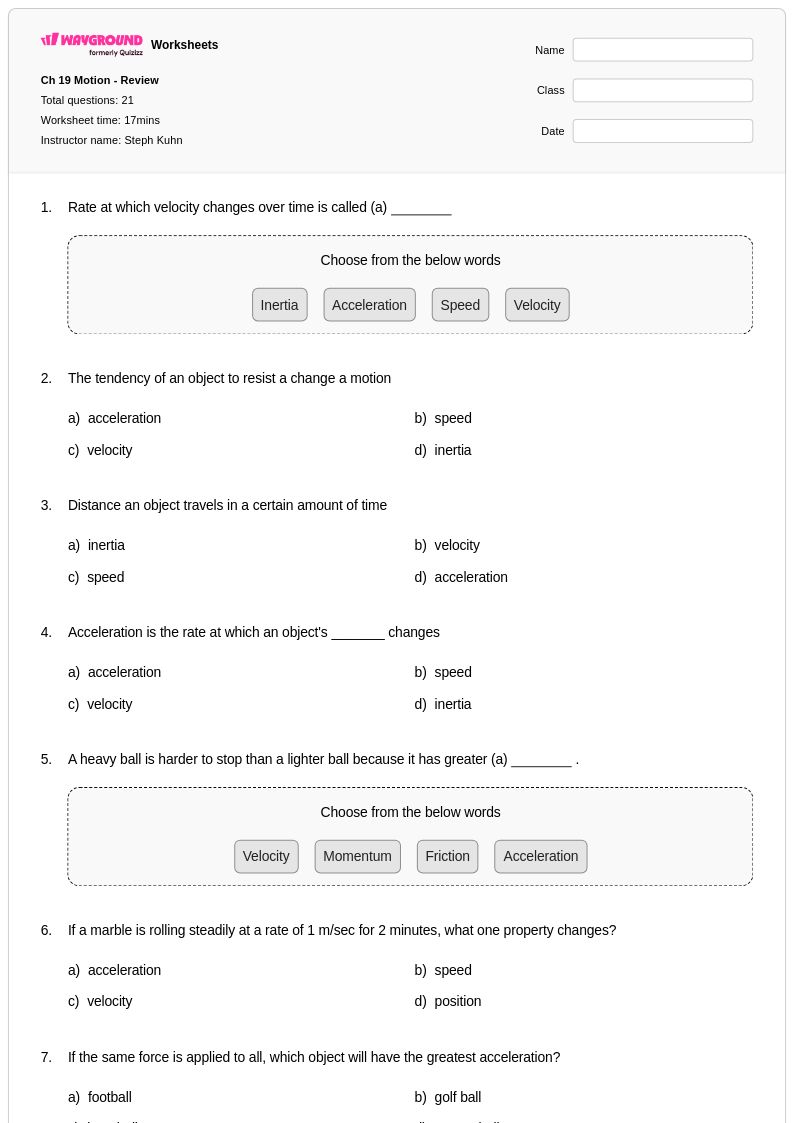
21 Q
4th - 6th
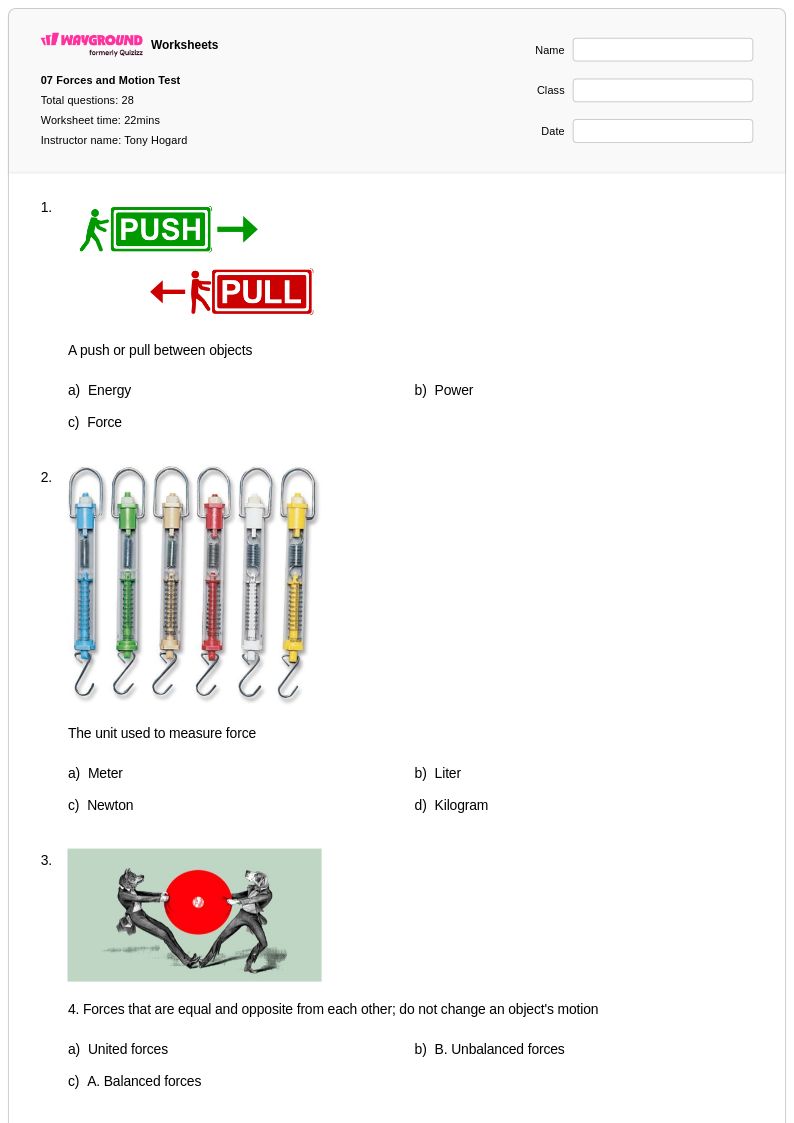
28 Q
6th
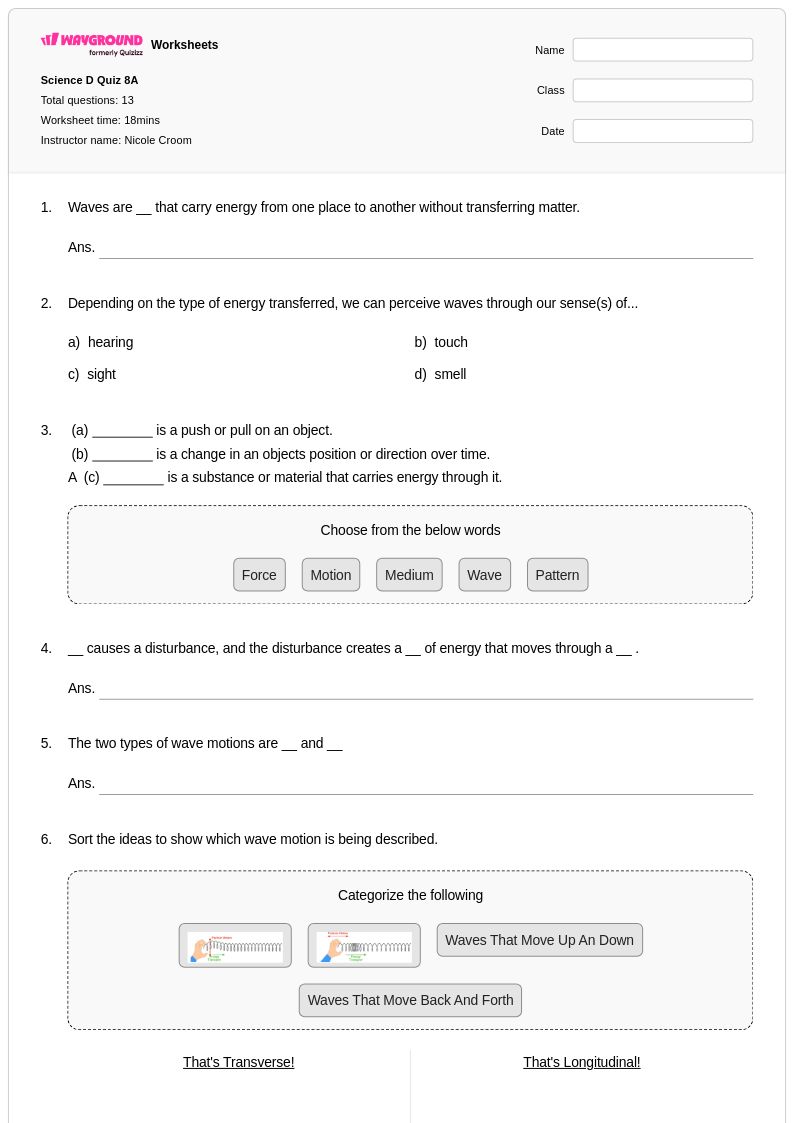
13 Q
6th
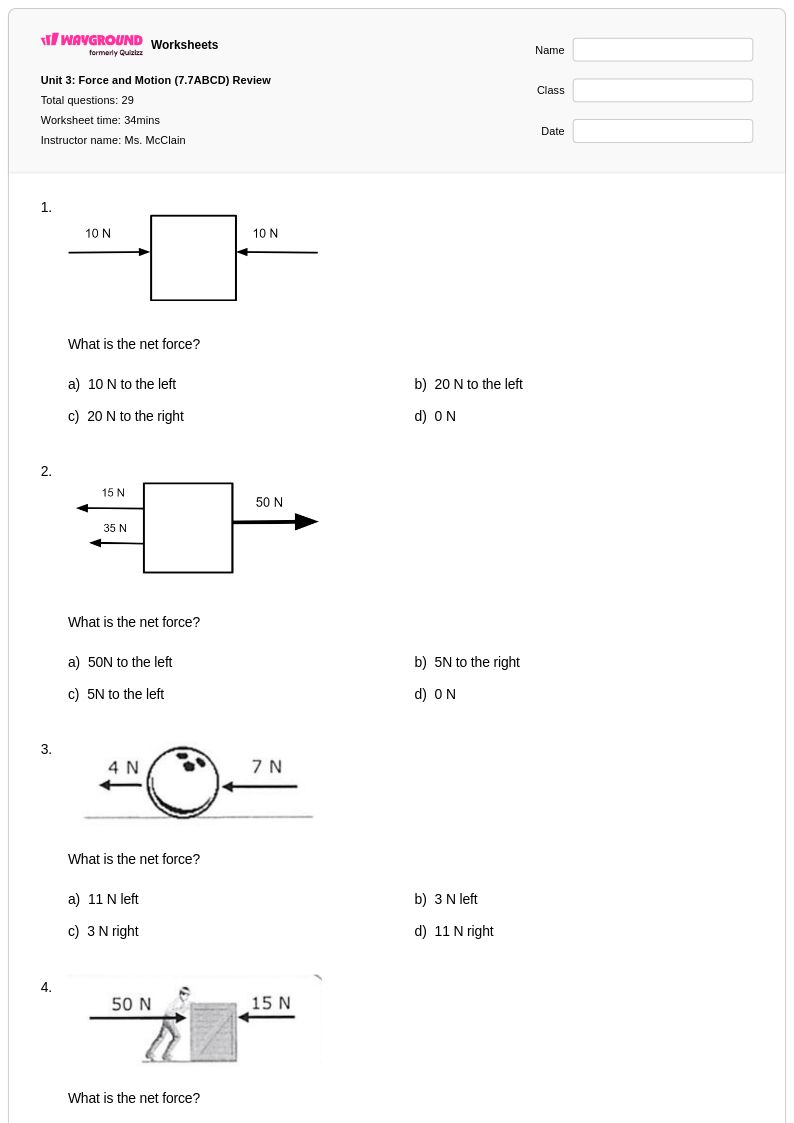
29 Q
6th - 8th
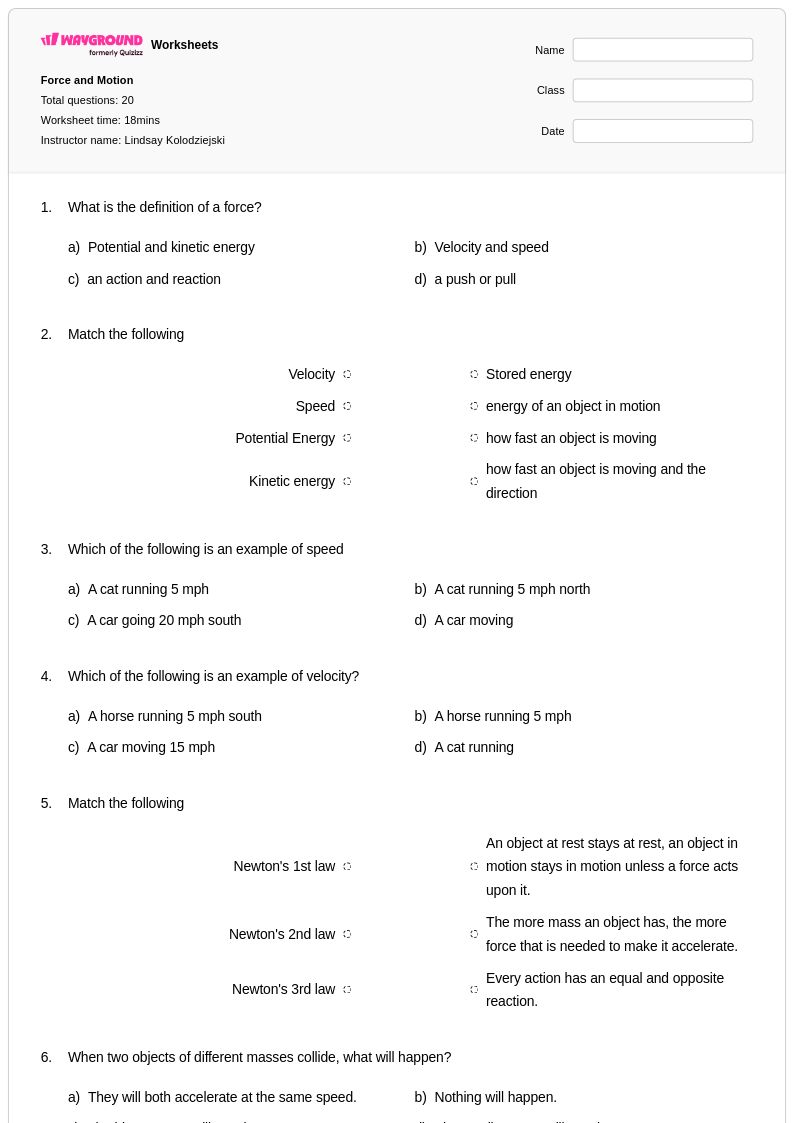
20 Q
6th
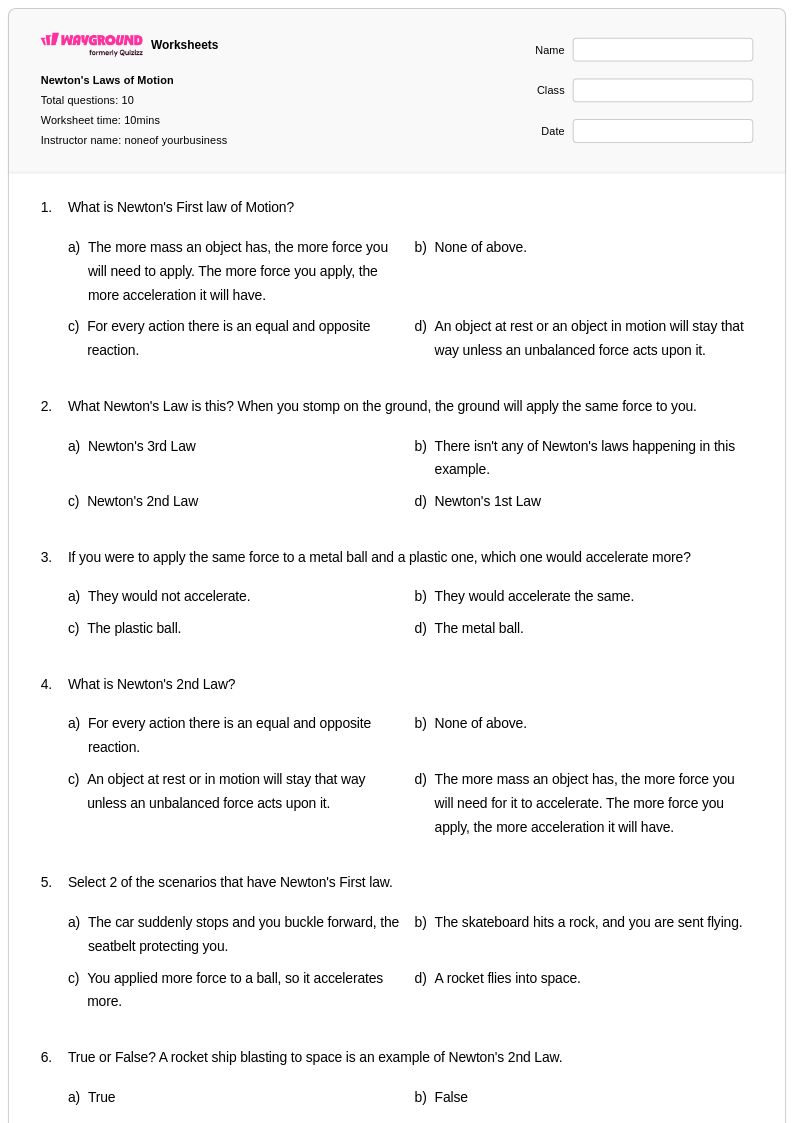
10 Q
6th
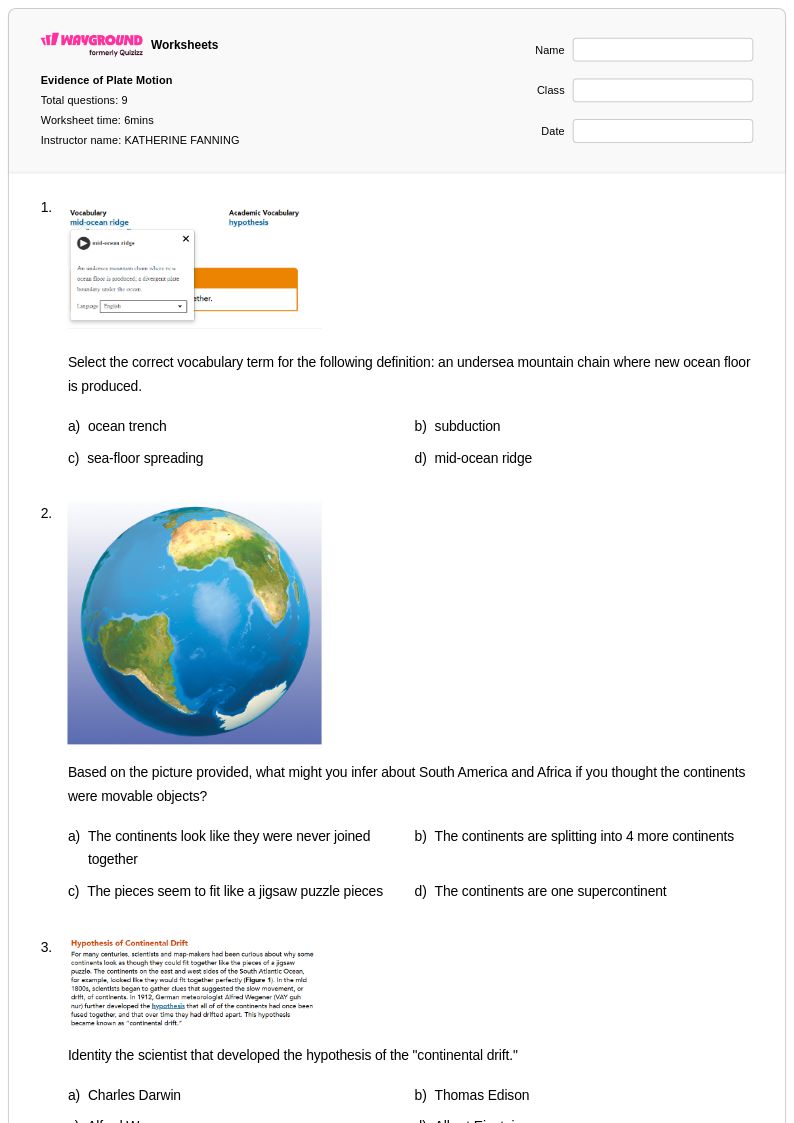
9 Q
6th
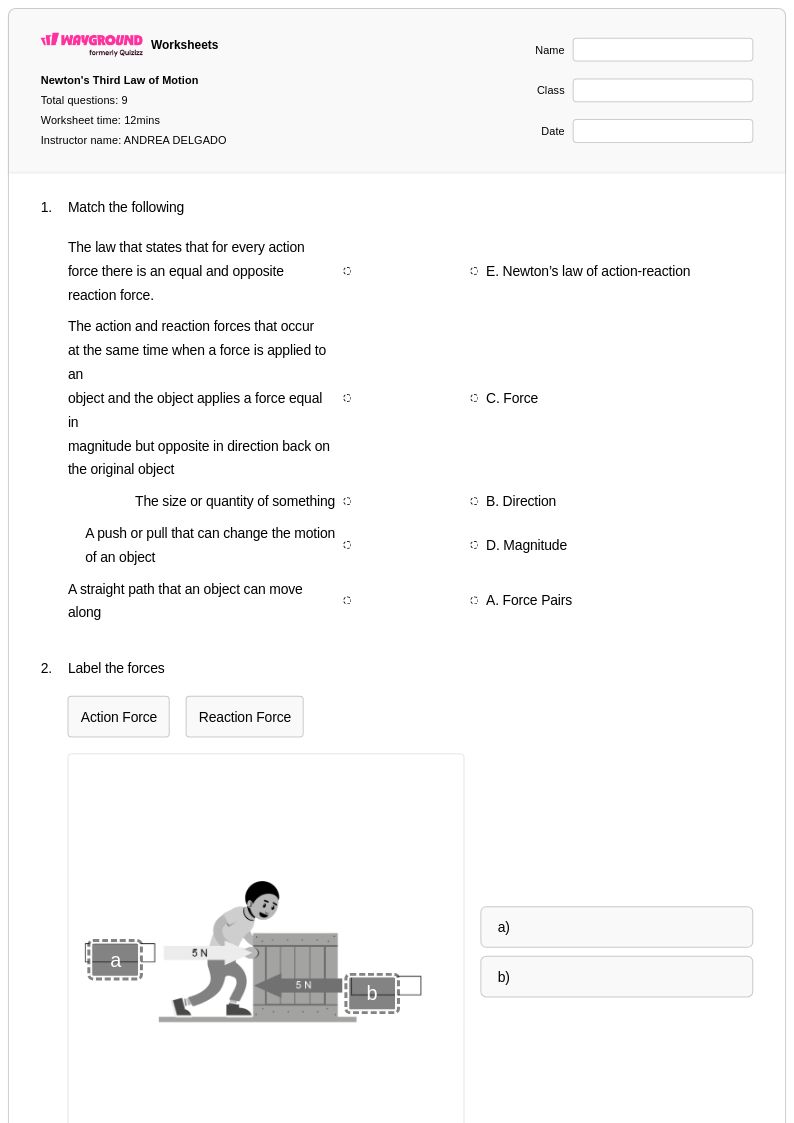
9 Q
6th - 8th
52 Q
6th
10 Q
6th
19 Q
6th - 8th
9 Q
6th - 8th
Explore Multiple Representations of Motion Worksheets by Grades
Explore Other Subject Worksheets for grade 6
Explore printable Multiple Representations of Motion worksheets for Grade 6
Multiple representations of motion worksheets for Grade 6 physics provide students with essential practice in analyzing and interpreting how objects move through space using various visual and mathematical formats. These comprehensive worksheet collections through Wayground (formerly Quizizz) strengthen students' ability to read and create position-time graphs, velocity-time graphs, motion diagrams, and data tables that describe the same moving object from different perspectives. Students develop critical thinking skills as they translate between these representations, identifying patterns in motion data and connecting mathematical relationships to real-world scenarios. Each worksheet includes detailed answer keys and step-by-step solutions, making these free printables valuable resources for both independent practice and guided instruction, with practice problems that progressively build complexity in motion analysis.
Wayground (formerly Quizizz) empowers educators with millions of teacher-created multiple representations of motion worksheets specifically designed for Grade 6 physics instruction. The platform's robust search and filtering capabilities allow teachers to quickly locate resources that align with specific learning standards and match their students' diverse skill levels. These differentiation tools enable seamless customization of worksheet difficulty, ensuring appropriate challenges for remediation and enrichment activities across varied learning needs. Available in both printable pdf formats and interactive digital versions, these worksheet collections support flexible lesson planning whether teachers need quick skill practice sessions, comprehensive assessment preparations, or targeted interventions for students struggling with motion concepts. The extensive library ensures educators have consistent access to high-quality materials that reinforce the connections between graphical, numerical, and diagrammatic representations of motion.