Free Printable Work and Power Worksheets for Grade 6
Grade 6 work and power worksheets from Wayground provide free printables and practice problems with answer keys to help students master fundamental physics concepts through hands-on learning activities.
Explore printable Work and Power worksheets for Grade 6
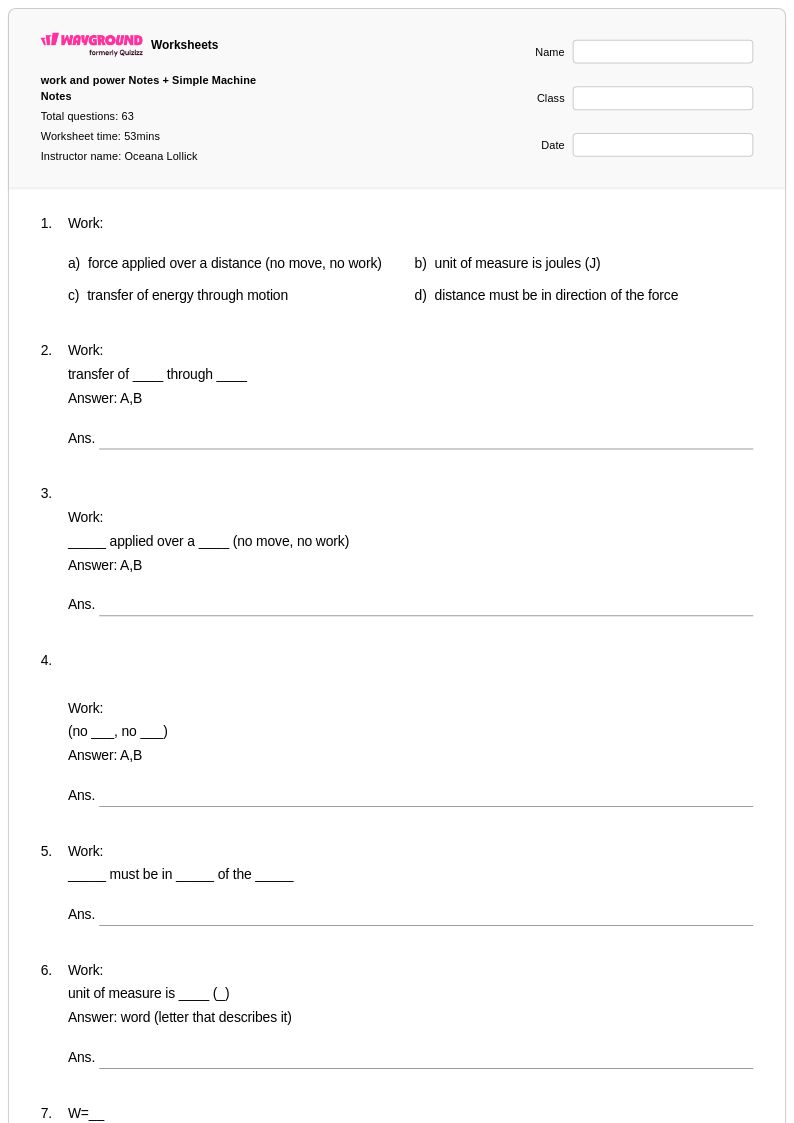
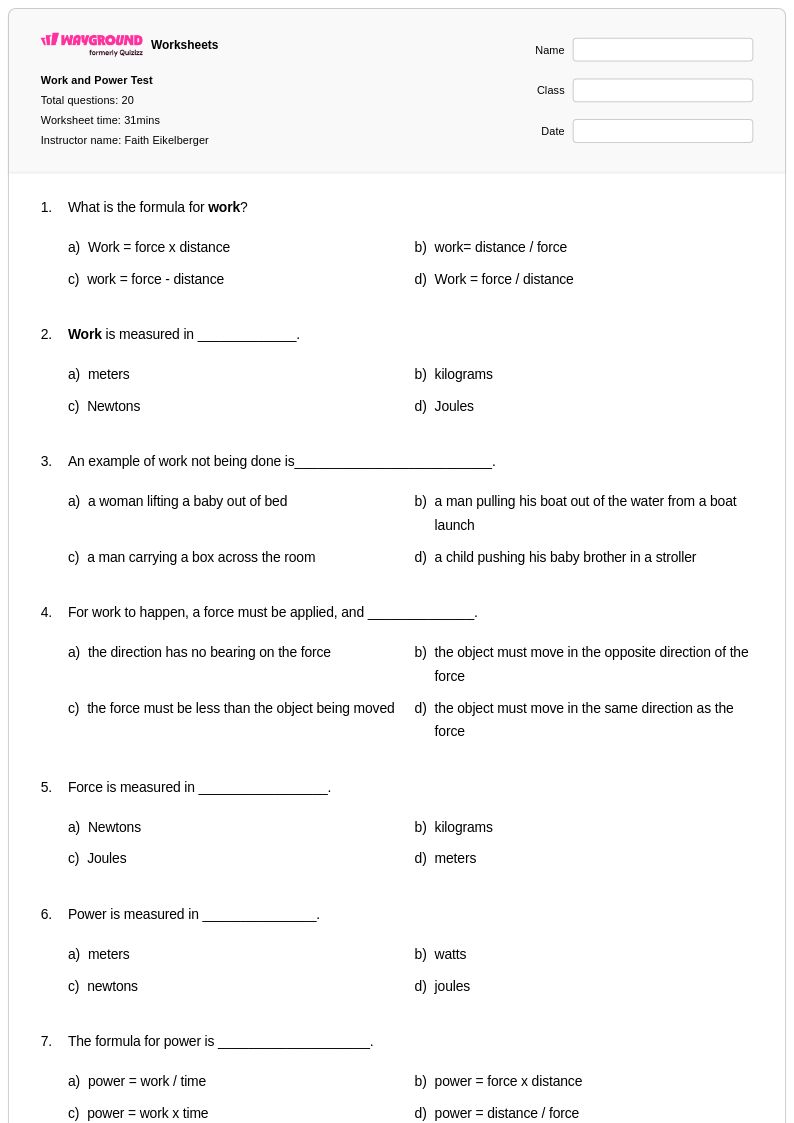
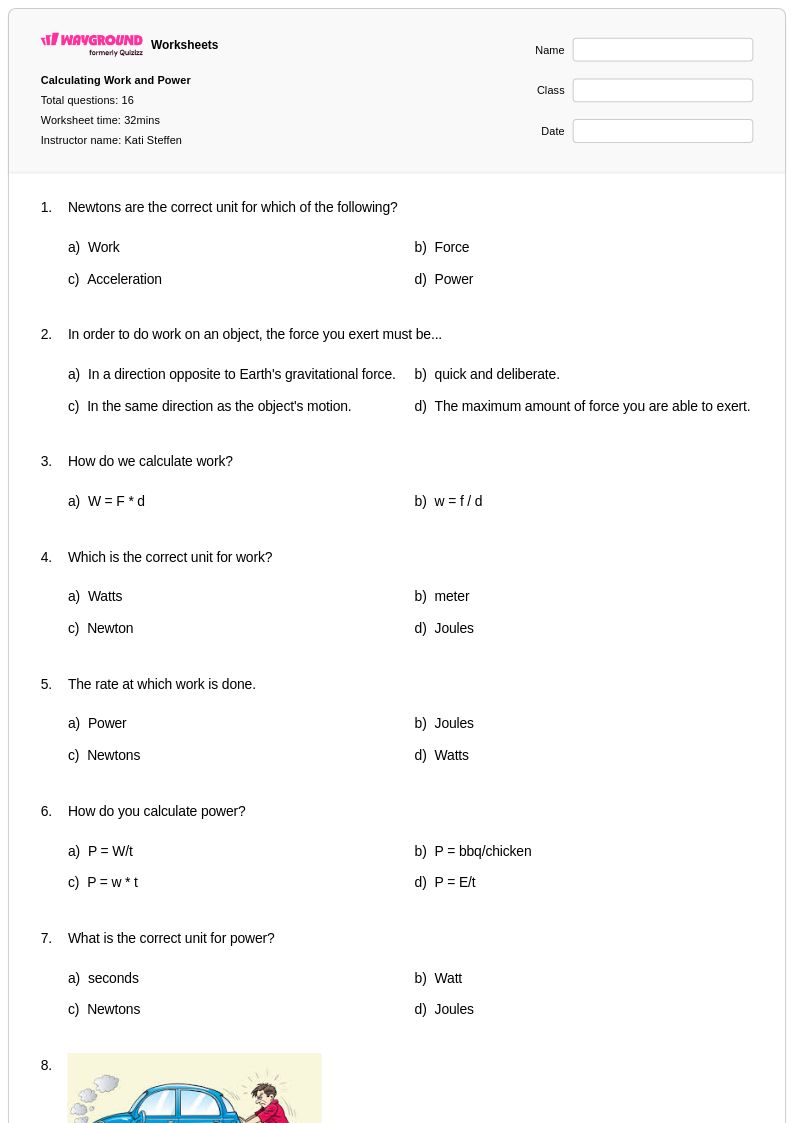
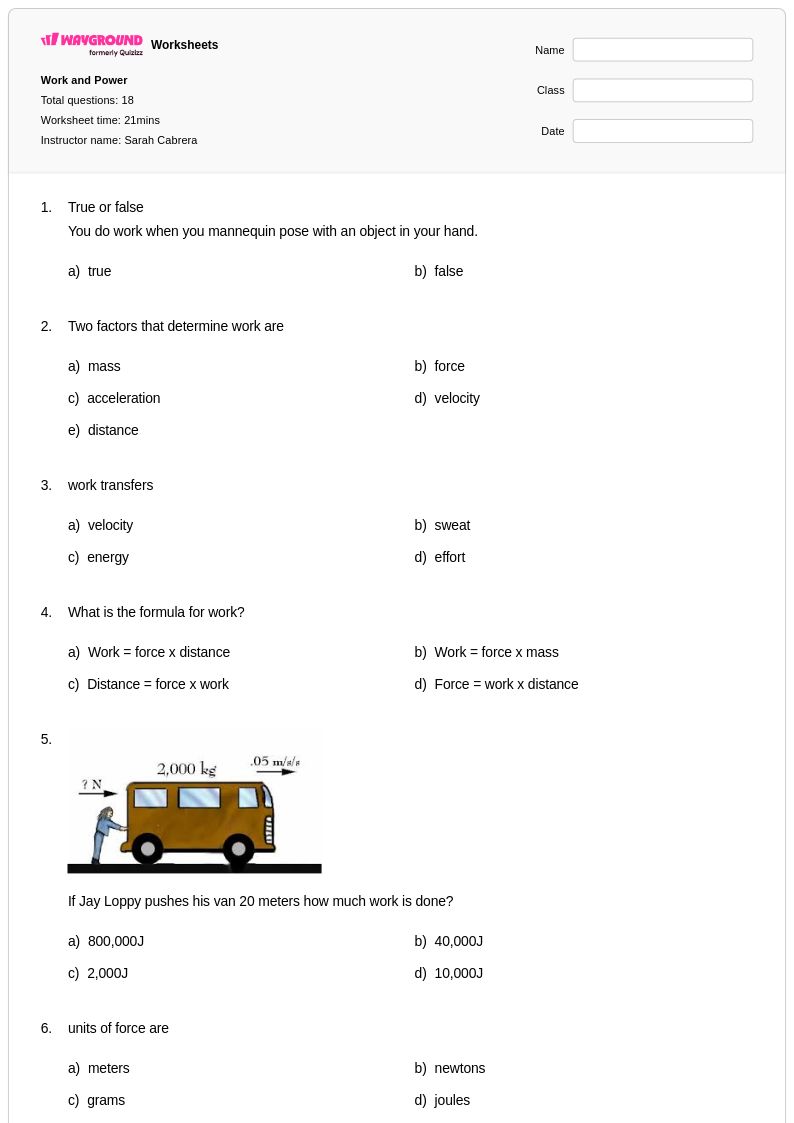
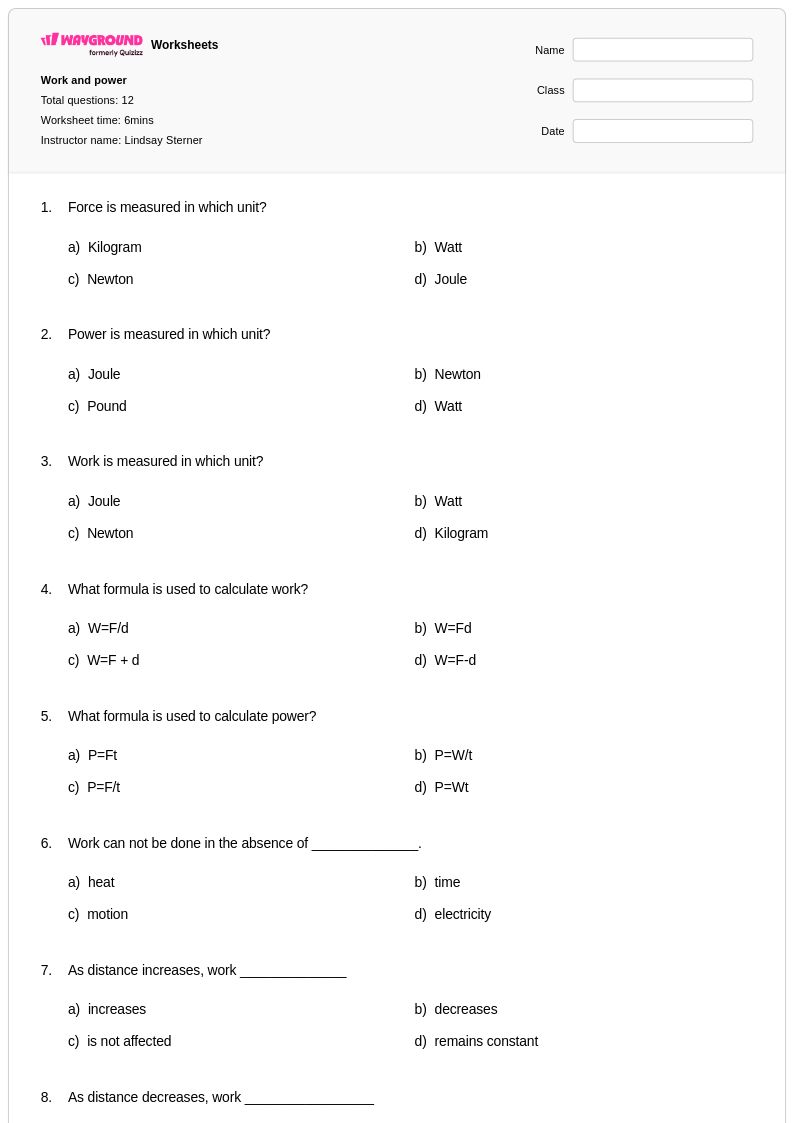
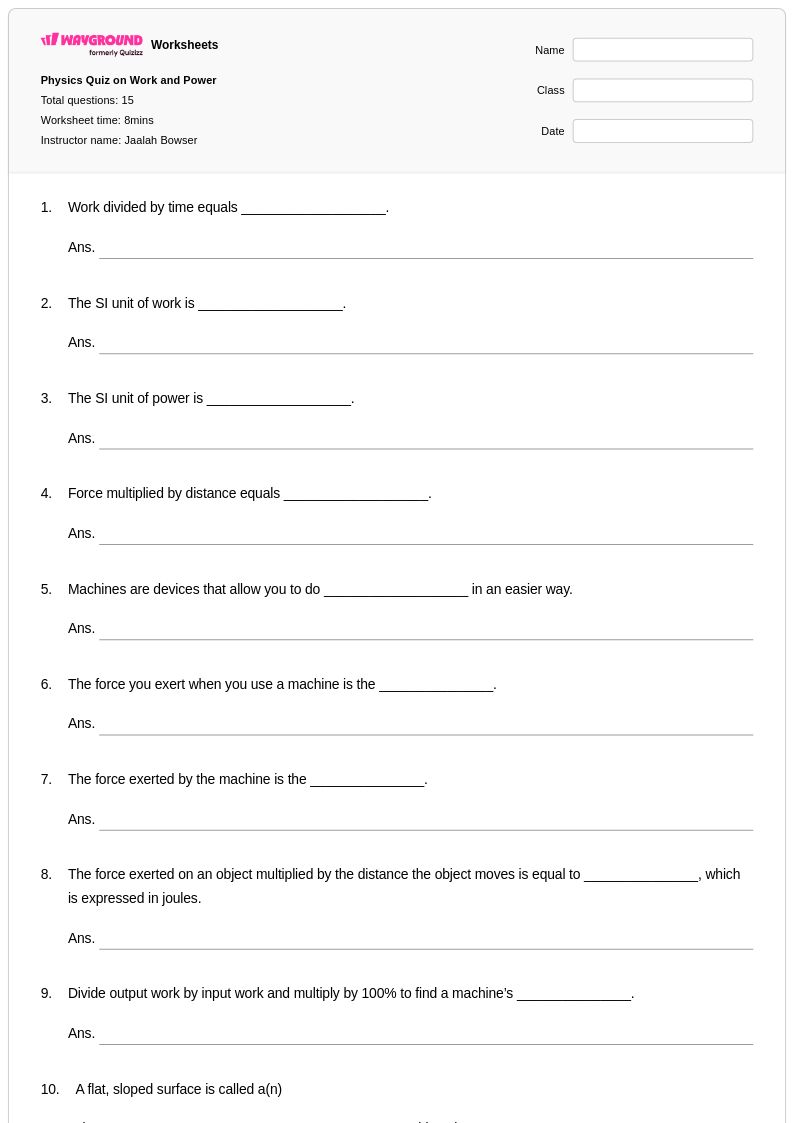
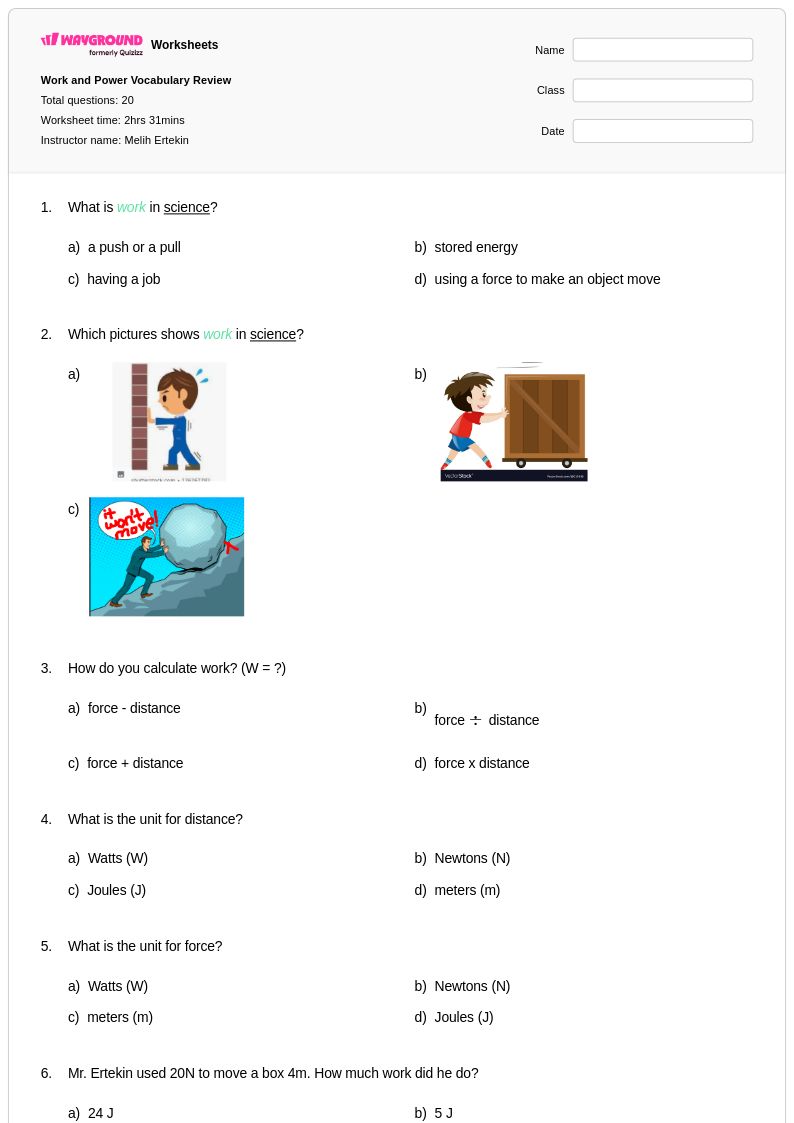
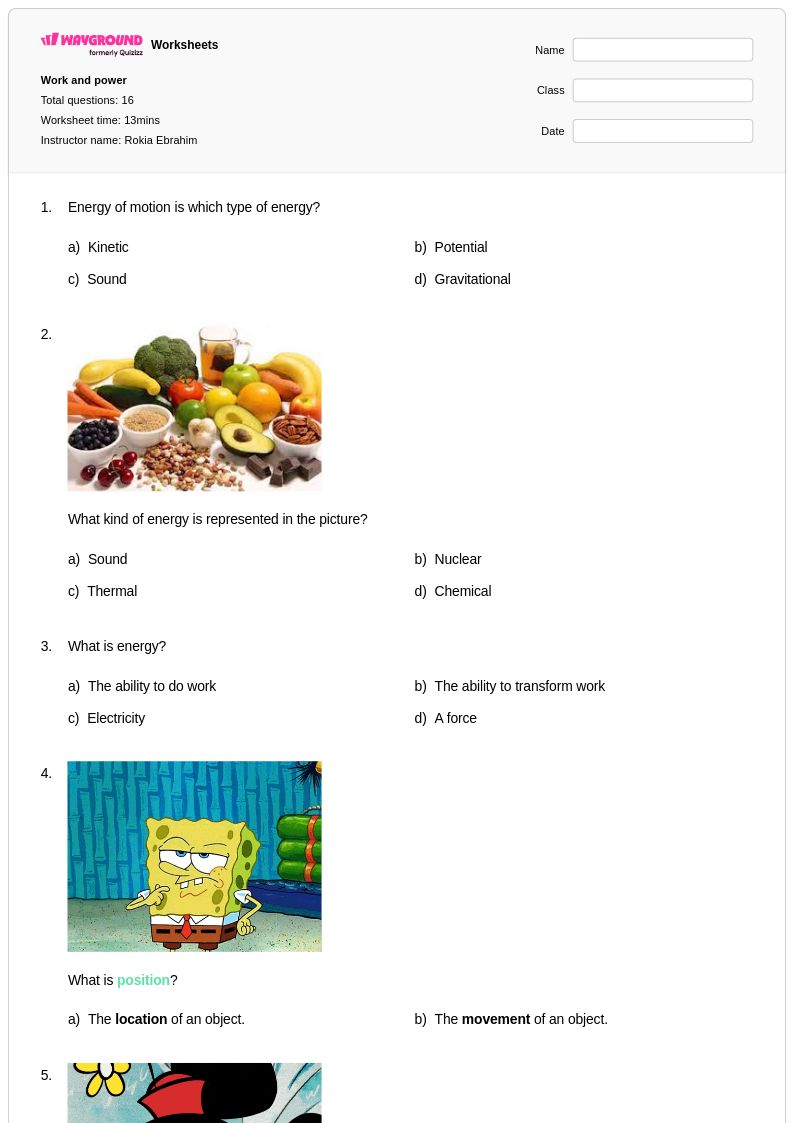
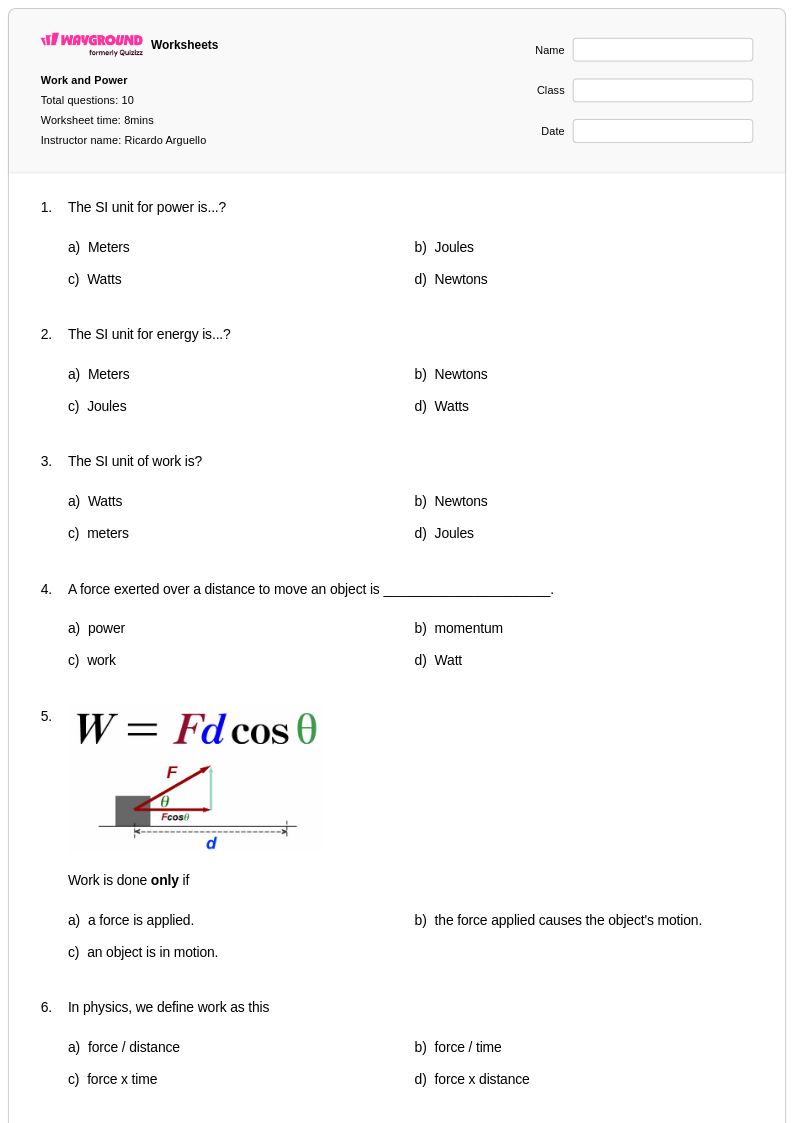
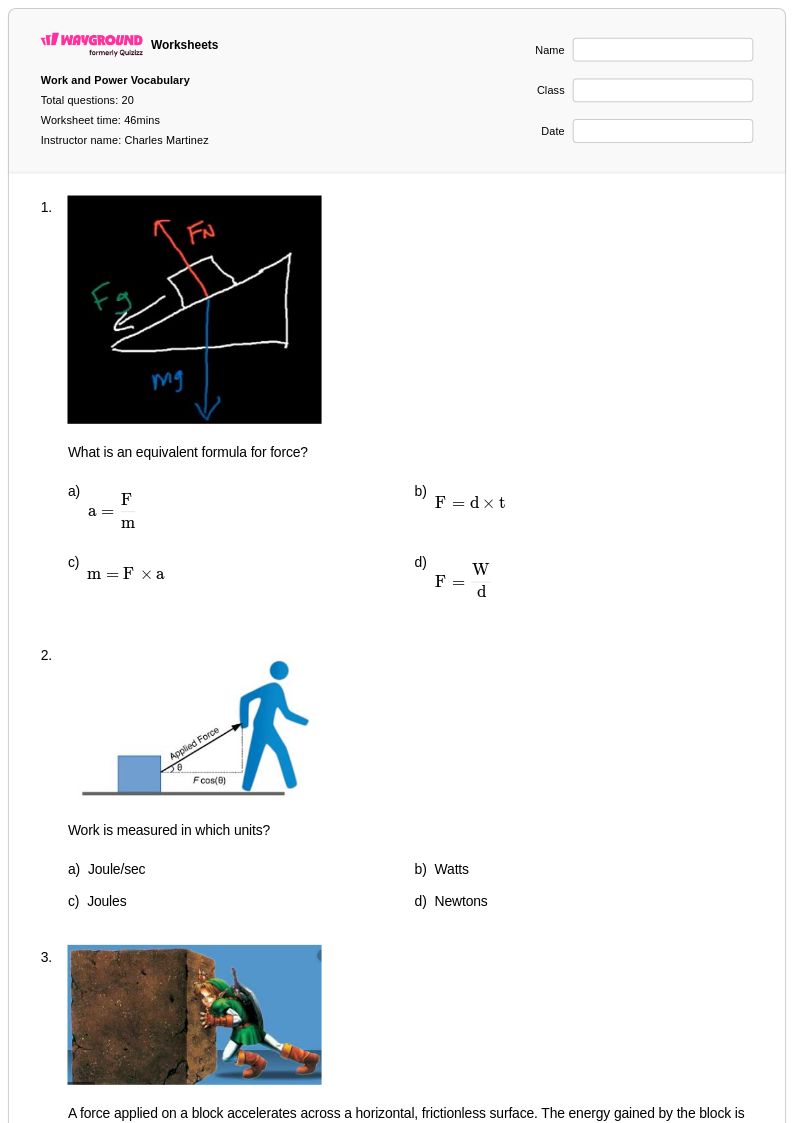
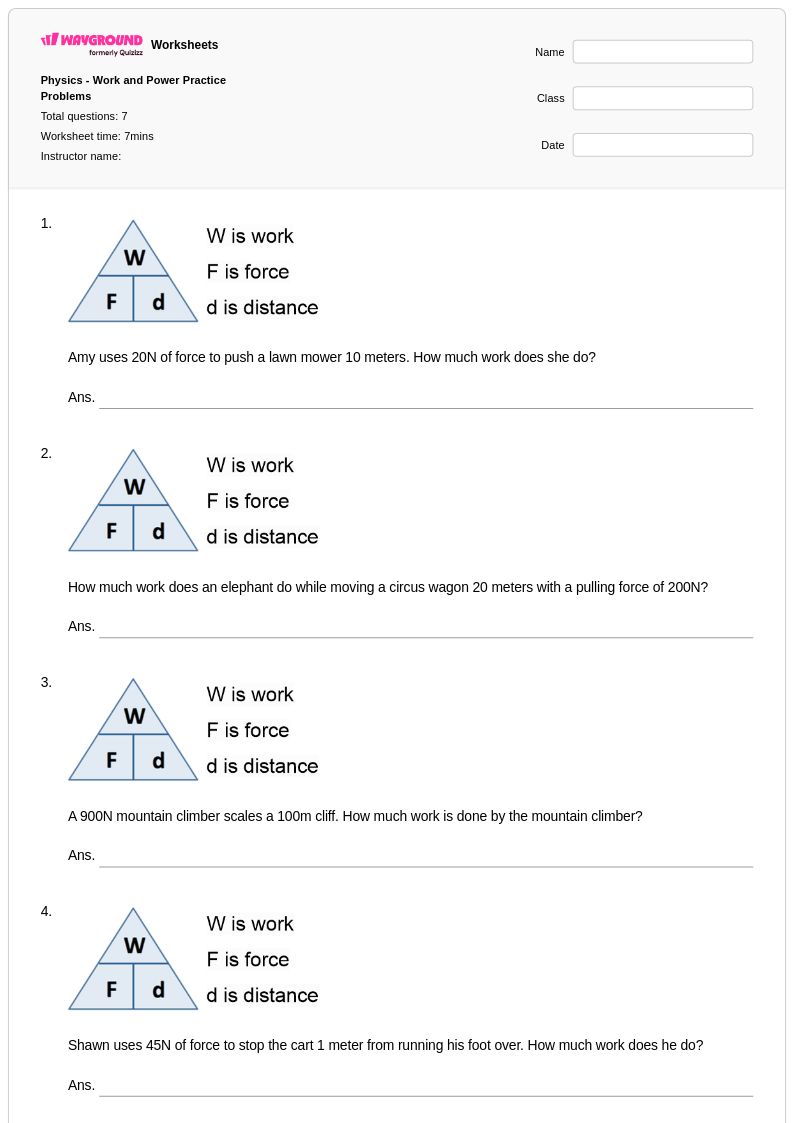
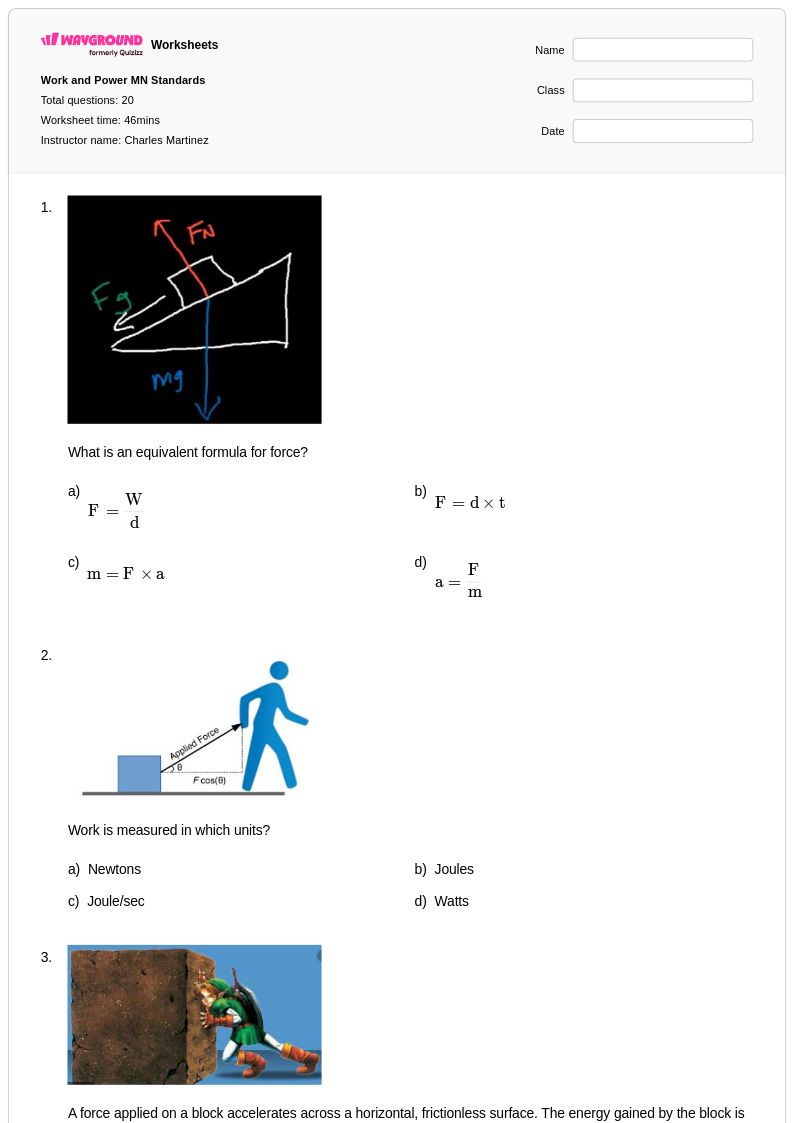
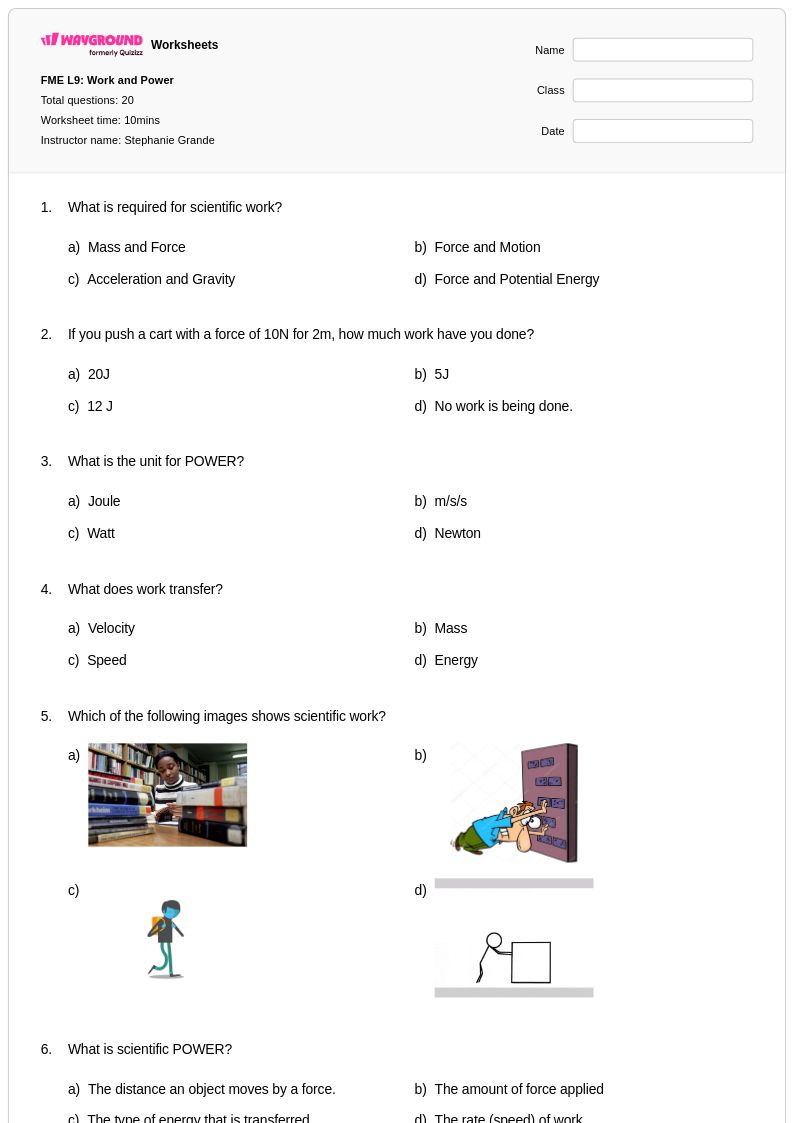
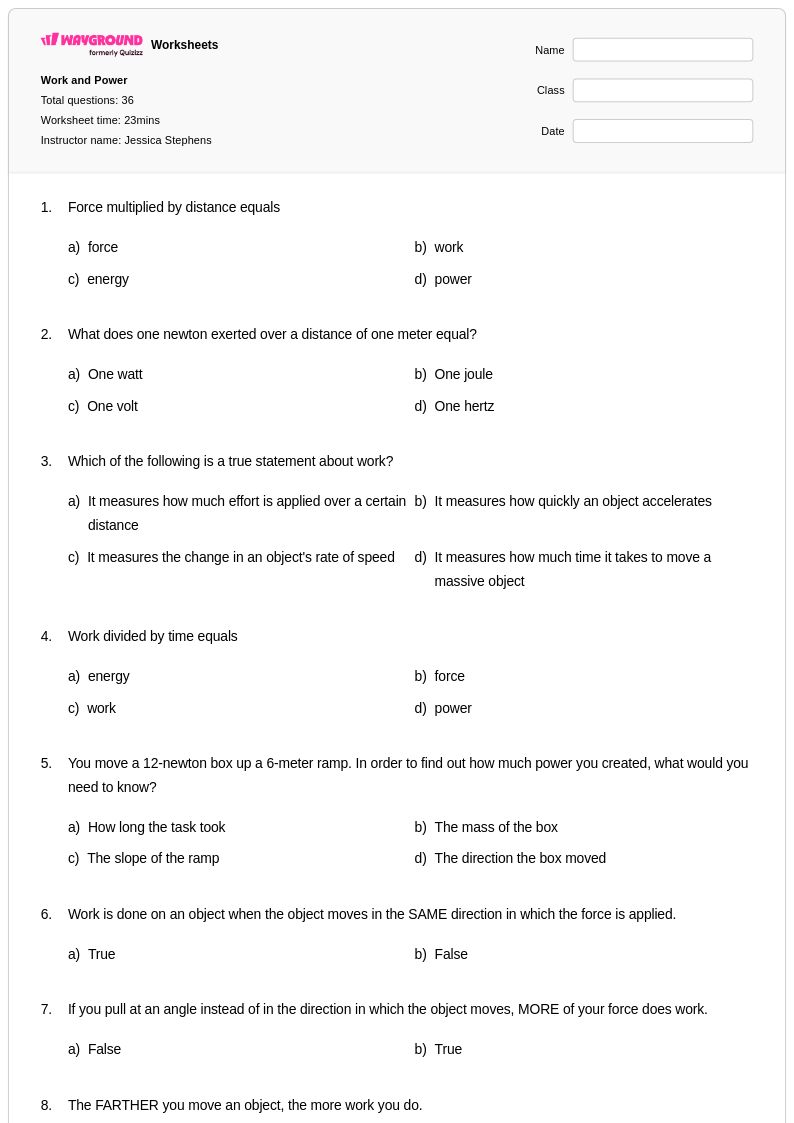
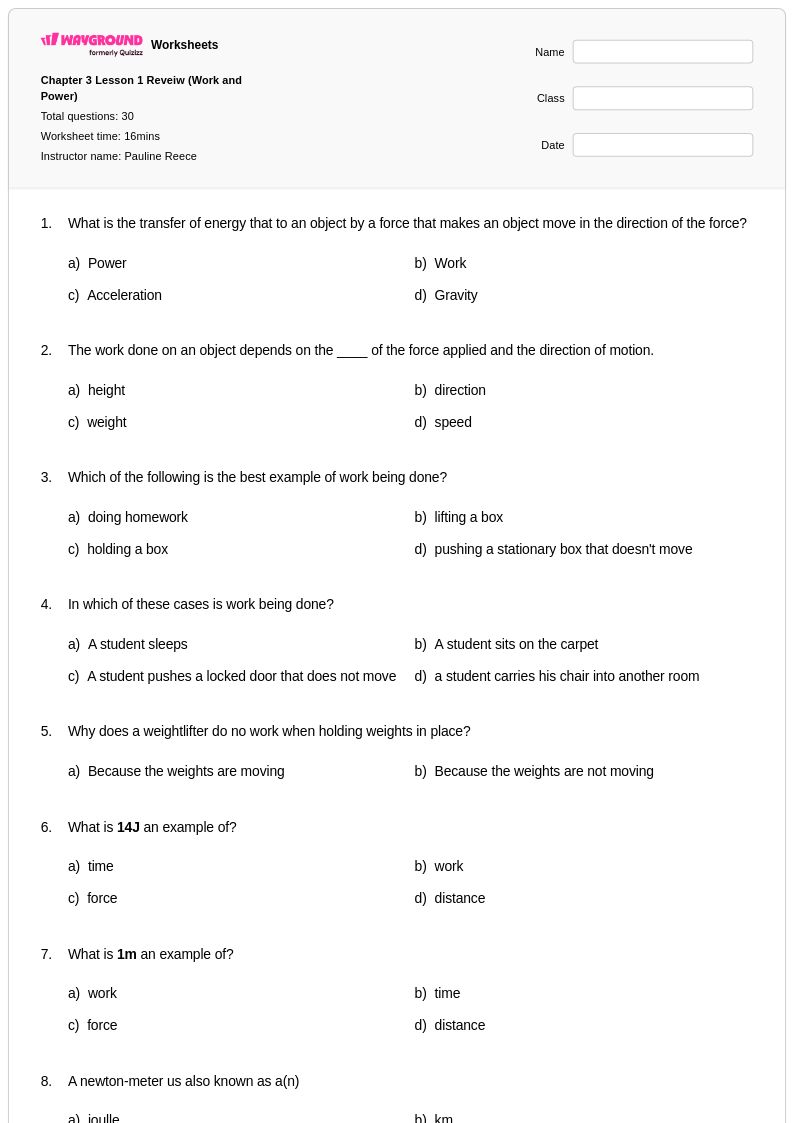
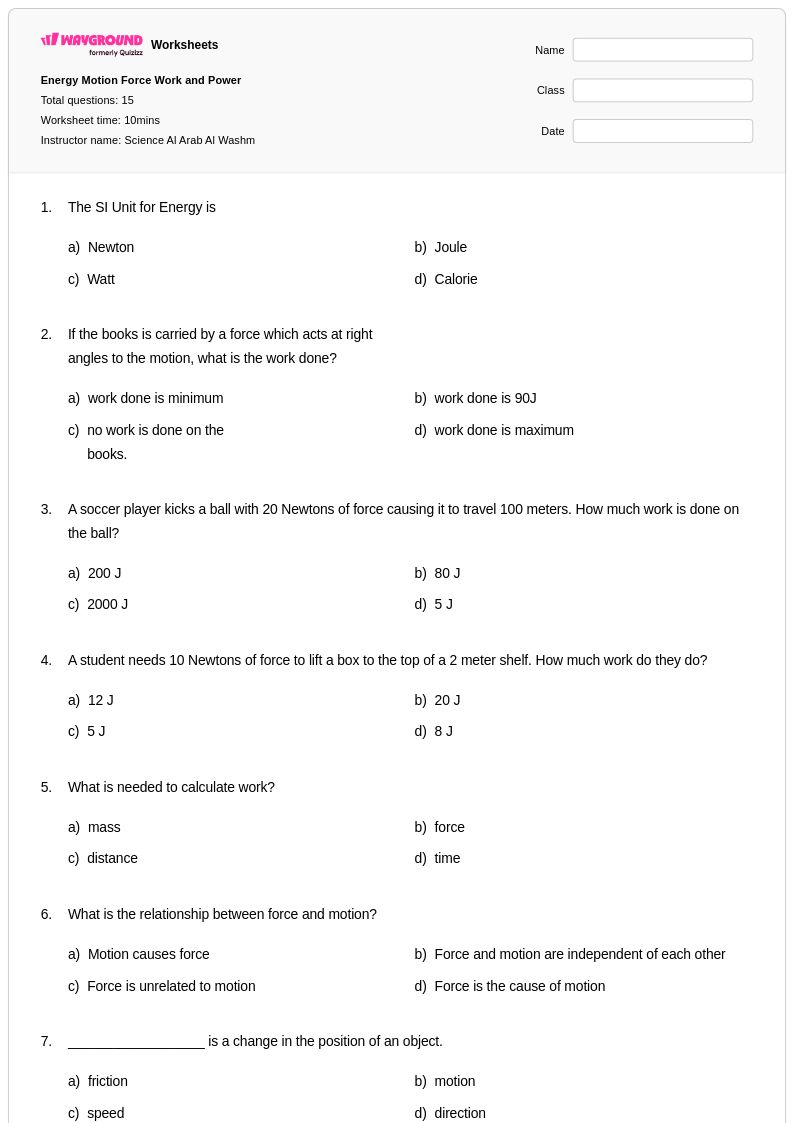
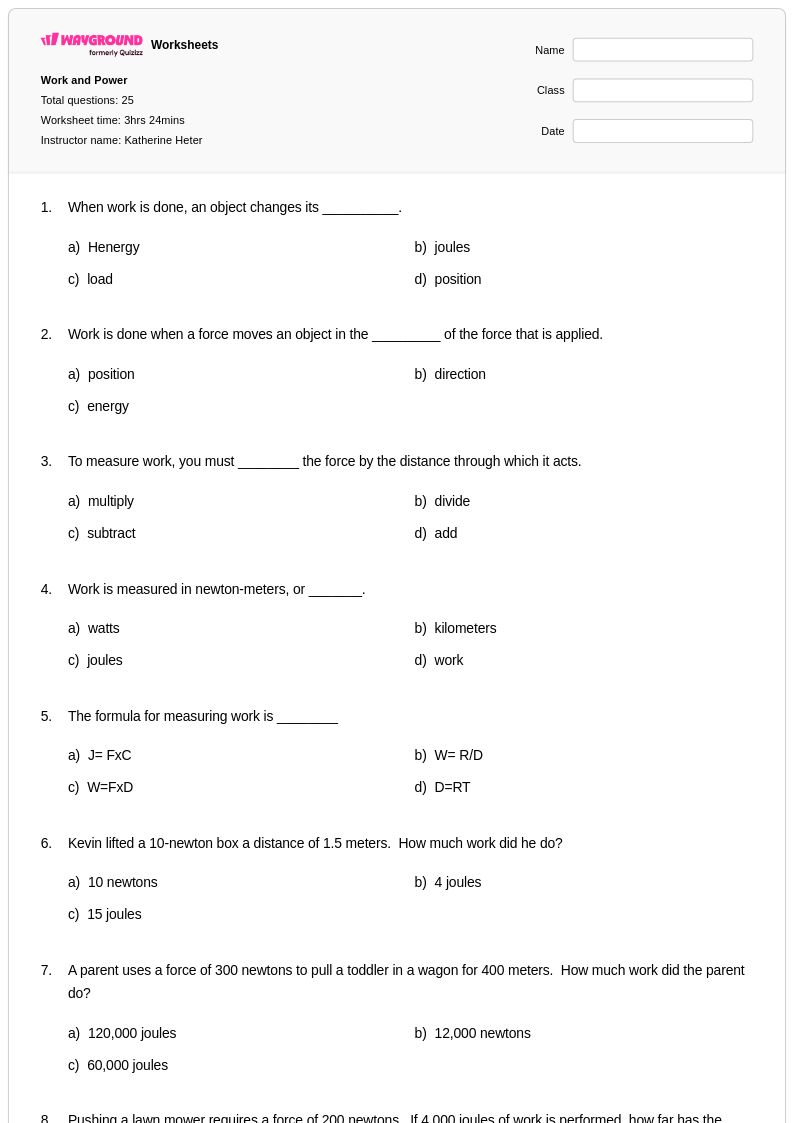
Work and power worksheets for Grade 6 students available through Wayground (formerly Quizizz) provide comprehensive practice with fundamental physics concepts that introduce young learners to mechanical energy principles. These educational resources help students develop critical thinking skills as they explore how force applied over distance creates work, measured in joules, and how the rate of doing work defines power, measured in watts. Students engage with practice problems that require them to calculate work using the formula W = F × d and determine power relationships in real-world scenarios like lifting objects, moving furniture, or operating simple machines. Each worksheet collection includes detailed answer keys that enable students to check their understanding independently, while the free printable format allows teachers to distribute materials easily for classroom activities, homework assignments, or assessment preparation.
Wayground (formerly Quizizz) supports educators with an extensive library of millions of teacher-created work and power worksheet resources that streamline lesson planning and enhance physics instruction at the Grade 6 level. The platform's robust search and filtering capabilities allow teachers to quickly locate materials aligned with specific curriculum standards and learning objectives, while built-in differentiation tools enable customization for students with varying ability levels and learning needs. Teachers can access these worksheets in both printable pdf format for traditional classroom use and digital formats for interactive learning experiences, making it simple to adapt instruction for different teaching environments. This comprehensive collection serves multiple pedagogical purposes, from introducing new concepts and providing guided practice to supporting remediation for struggling learners and offering enrichment opportunities for advanced students ready to explore more complex applications of work and power principles.
FAQs
How do I teach work and power in physics?
Start by grounding work in the relationship between force and displacement, making clear that work only occurs when a force causes movement in the direction of that force. Once students are comfortable with the work formula (W = Fd), introduce power as the rate at which work is done (P = W/t), connecting it to real-world examples like motors, engines, and athletes. Using worked examples before moving to independent problem sets helps students build conceptual understanding before tackling calculations.
What practice problems help students get better at work and power calculations?
Students benefit most from a progression that starts with single-variable problems, such as finding work given force and displacement, before advancing to multi-step problems involving power, time, and energy transfer. Including problems with real-world contexts, such as calculating the power output of a person climbing stairs or the work done by a machine lifting a load, helps students connect formulas to physical meaning. Mixed practice sets that require students to identify which formula to apply are especially effective for building fluency.
What mistakes do students commonly make when calculating work and power?
One of the most frequent errors is ignoring the directional component of work, specifically failing to account for the angle between force and displacement when using W = Fd cos(θ). Students also frequently confuse work with effort, assuming that holding a heavy object or pushing against an immovable wall constitutes work. Mixing up units is another common issue, particularly conflating watts and joules or forgetting to convert time to seconds when calculating power.
How do I help students understand the difference between positive and negative work?
Positive work occurs when the force applied and the displacement are in the same direction, meaning energy is transferred into the object. Negative work occurs when force opposes displacement, such as friction slowing a moving object, meaning energy is removed from the system. Using diagrams and free-body representations alongside calculation practice helps students visualize why direction matters and reinforces the sign conventions before they encounter them in more complex energy problems.
How can I use Wayground's work and power worksheets in my classroom?
Wayground's work and power worksheets are available as free printable PDFs for traditional classroom distribution and in digital formats for technology-integrated environments, giving teachers flexibility for in-person, remote, or hybrid instruction. Teachers can also host the worksheets as a quiz directly on Wayground, enabling real-time tracking of student responses. Each worksheet includes a complete answer key, making them suitable for guided practice, independent study, or homework assignments without additional preparation.
How do I differentiate work and power practice for students at different ability levels?
For students who struggle, begin with scaffolded problems that provide the formula and walk through unit identification before requiring full independent calculation. Advanced students benefit from multi-step problems that combine work, power, and energy transfer concepts or require them to derive unknown variables. On Wayground, teachers can apply individual accommodations such as reduced answer choices or extended time to specific students, allowing the same assignment to serve the full range of learners without singling anyone out.