
11 Q
6th - 7th
19 Q
4th - Uni
12 Q
4th - Uni
12 Q
4th - Uni
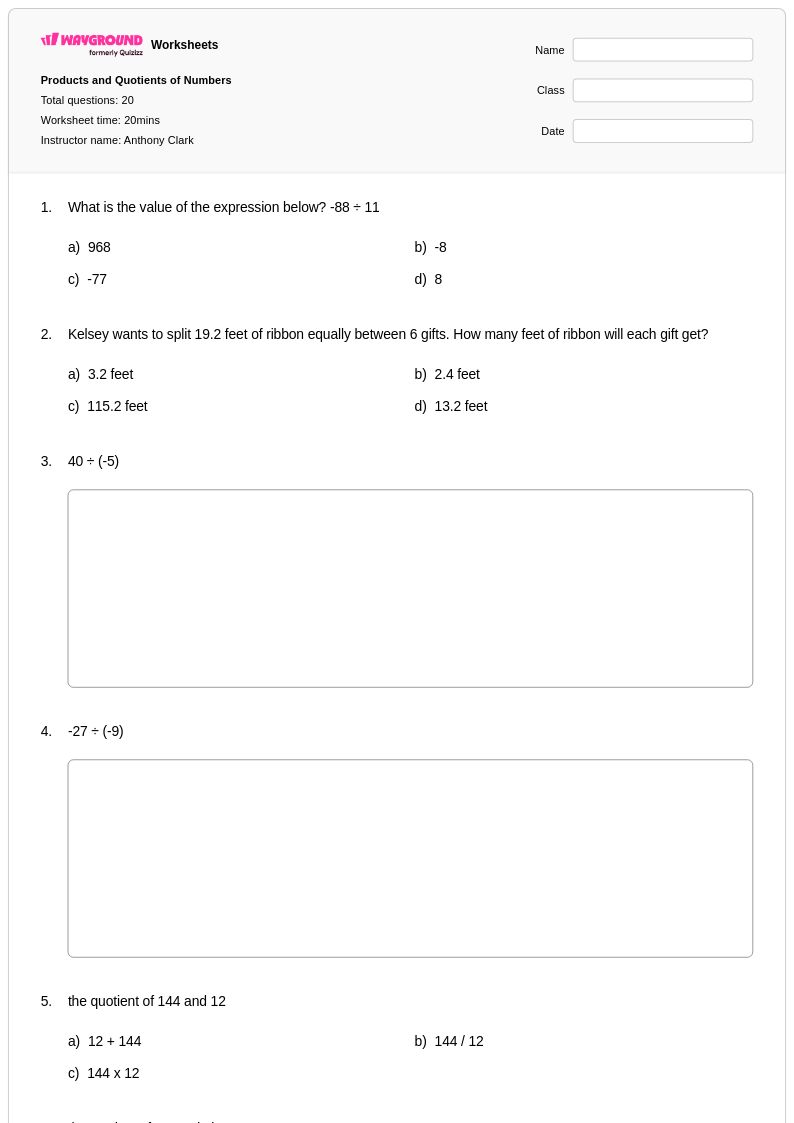
20 Q
5th - Uni
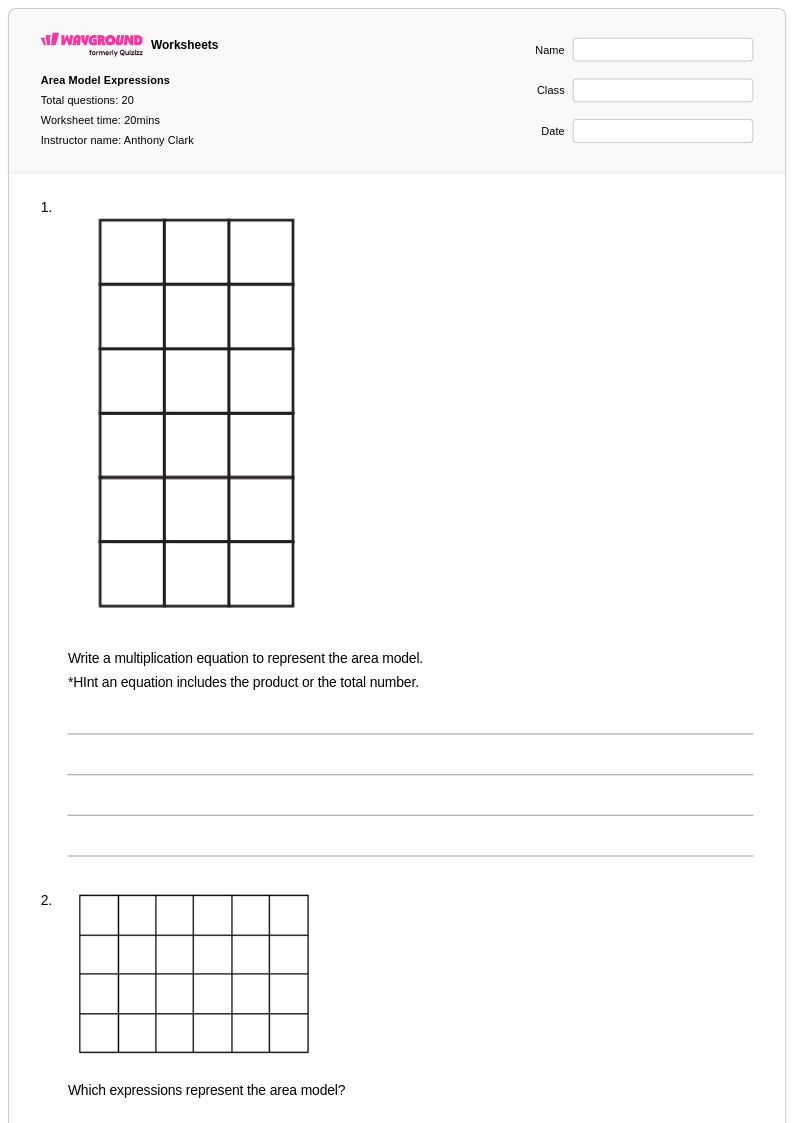
20 Q
4th - Uni
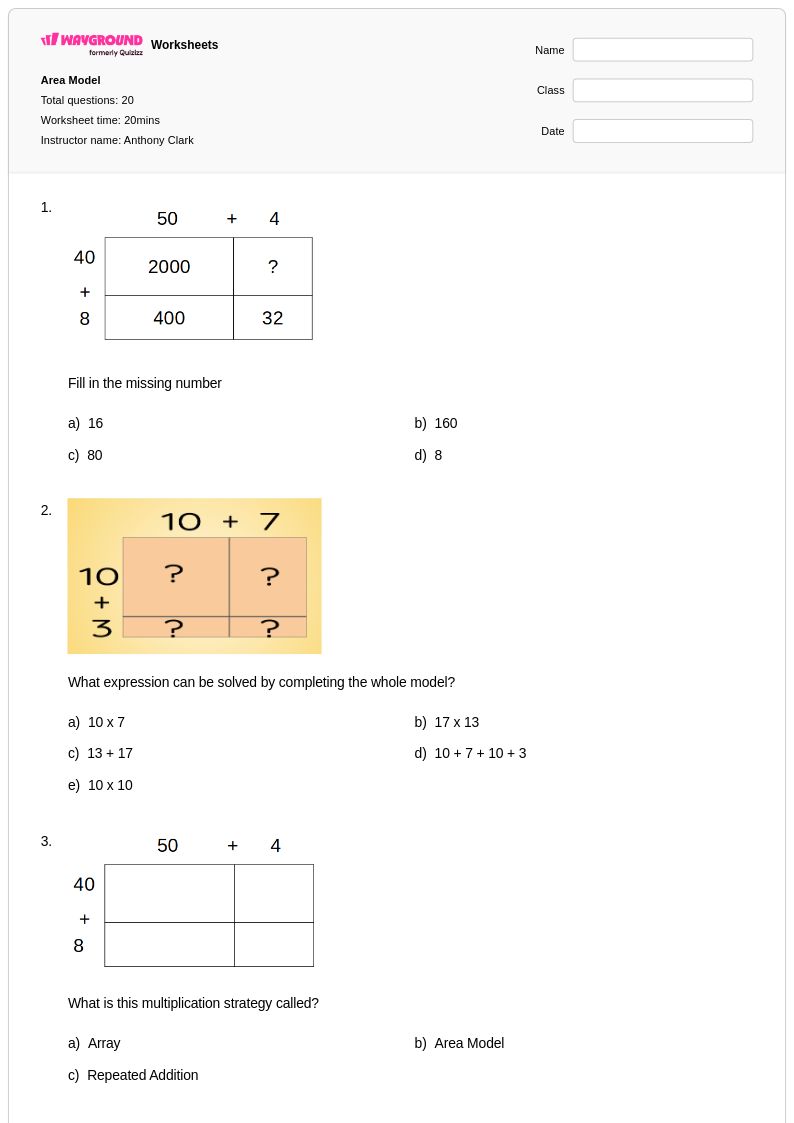
20 Q
4th - Uni
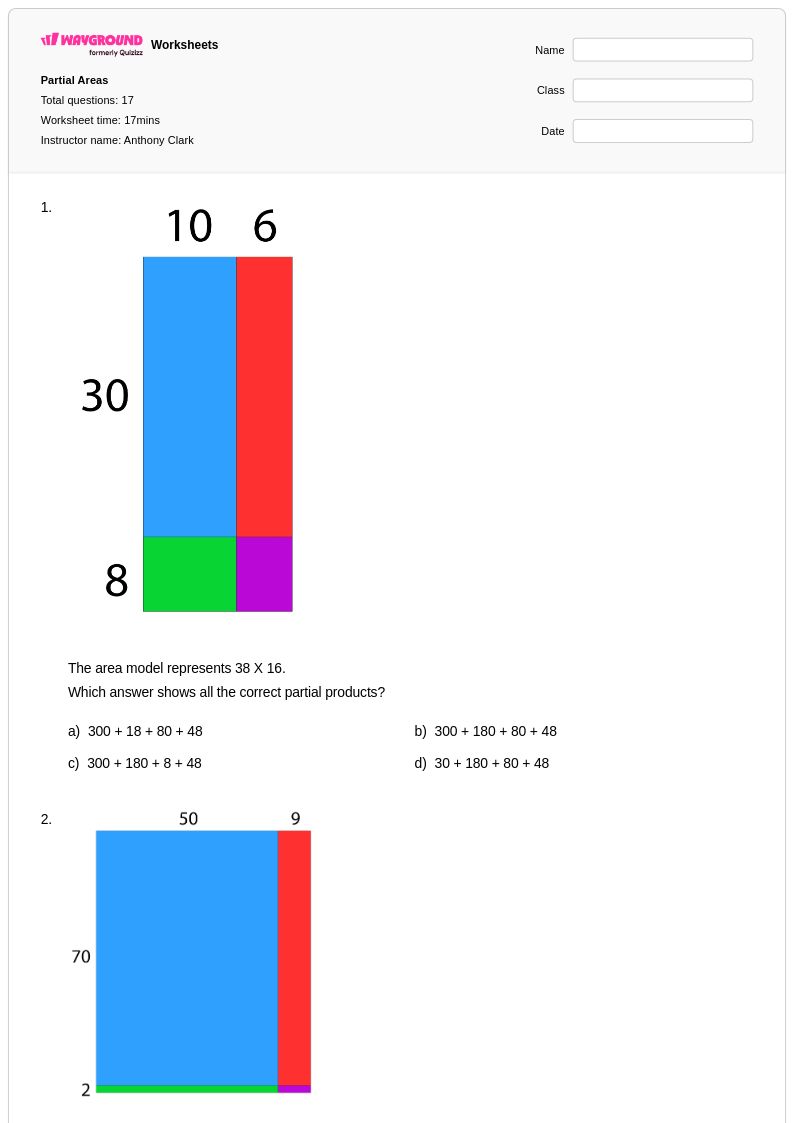
17 Q
4th - Uni
15 Q
4th - Uni
15 Q
4th - Uni
20 Q
4th - Uni
20 Q
3rd - Uni
20 Q
4th - Uni
20 Q
4th - Uni
20 Q
5th - Uni
15 Q
5th - Uni
15 Q
5th - Uni
20 Q
5th - Uni
10 Q
4th - Uni
19 Q
4th - Uni
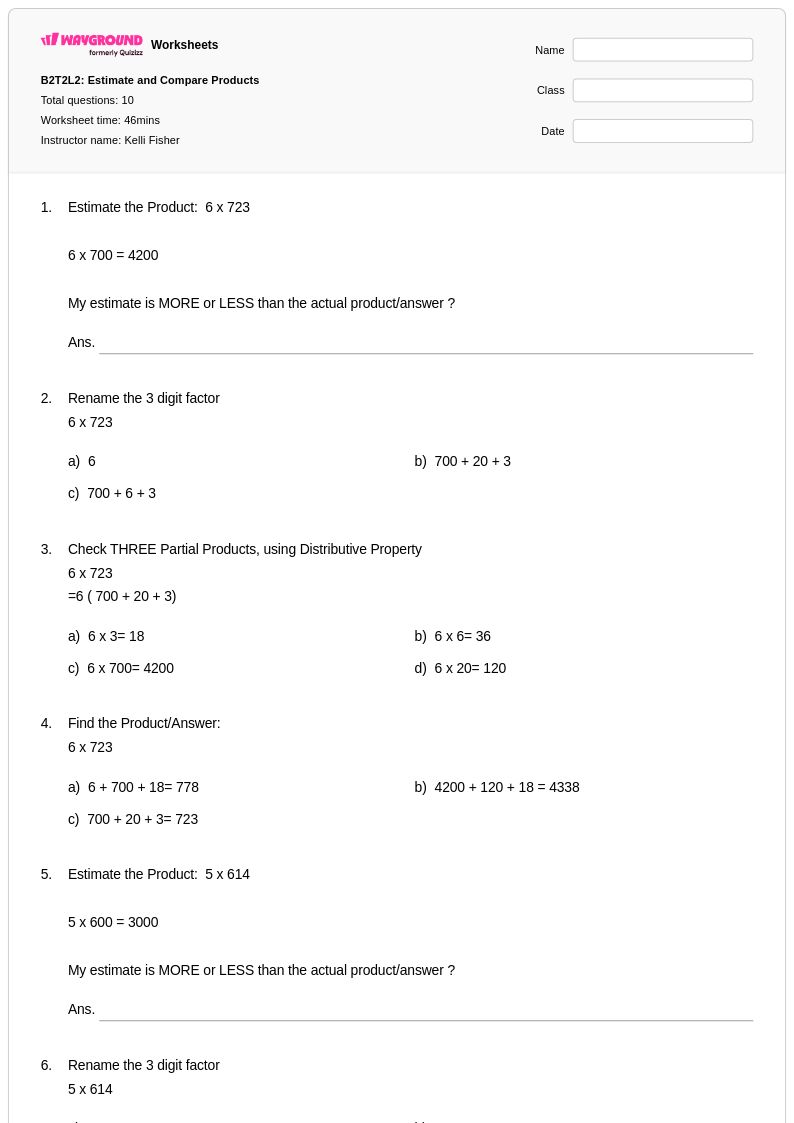
10 Q
4th - 7th
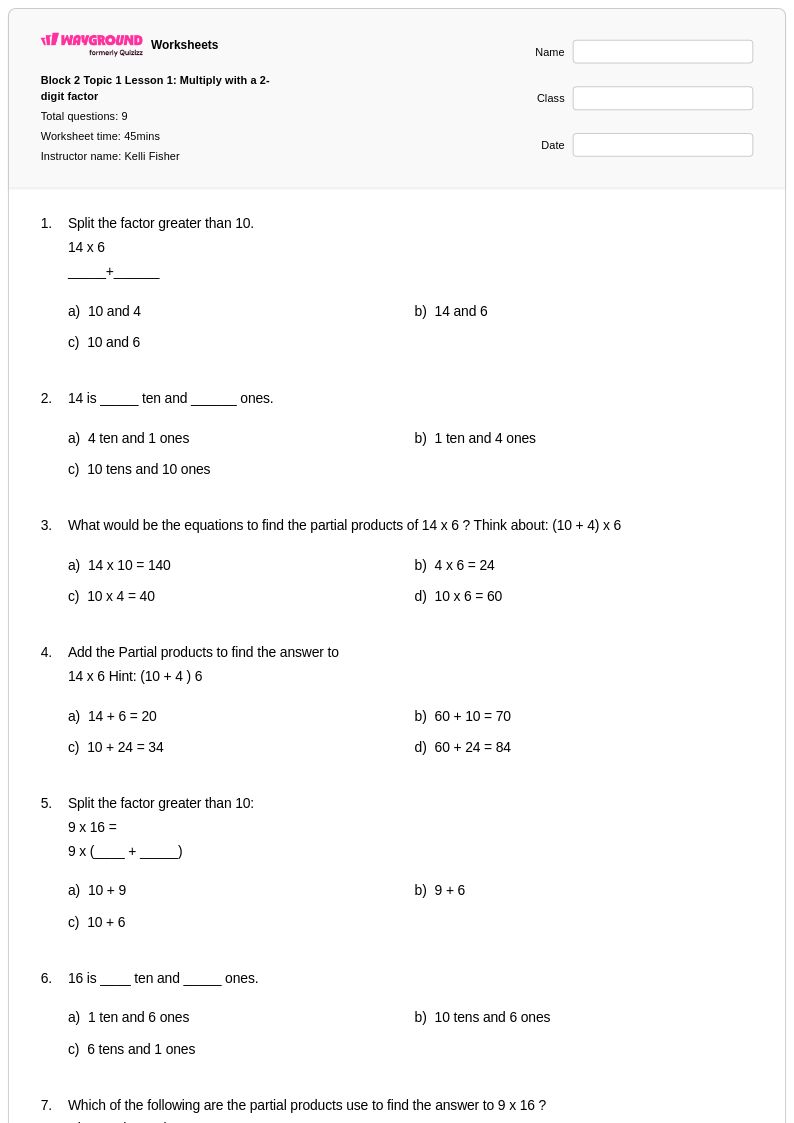
9 Q
5th - 8th

10 Q
6th - Uni
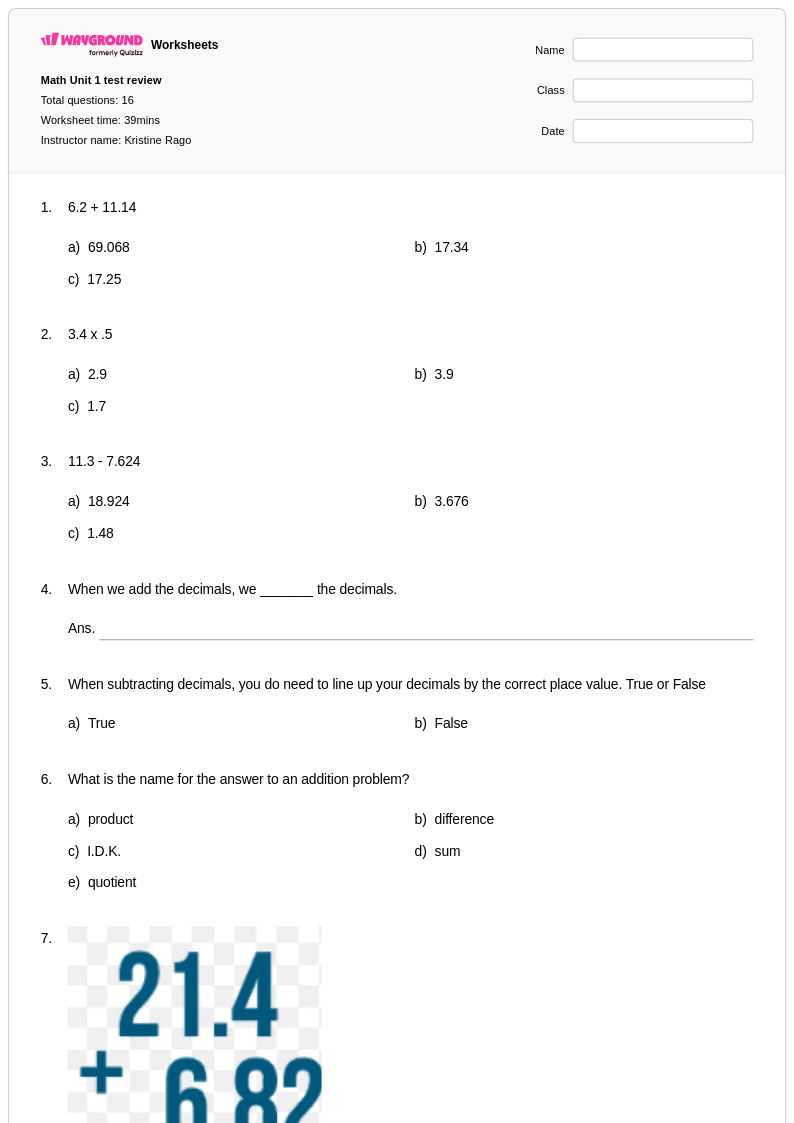
16 Q
6th
Explore Other Subject Worksheets for grade 6
Explore printable Multiplication and Partial Products worksheets for Grade 6
Multiplication and partial products worksheets for Grade 6 students through Wayground (formerly Quizizz) provide comprehensive practice with this essential computational strategy that breaks down complex multiplication problems into manageable components. These carefully designed worksheets help students master the partial products method by decomposing multi-digit numbers into place value parts, multiplying each part separately, and then combining the results to find the final product. Students develop number sense, place value understanding, and computational fluency as they work through practice problems that range from basic two-digit by one-digit multiplication to more complex multi-digit scenarios. Each worksheet collection includes detailed answer keys and is available as free printable pdf resources, making it easy for educators to provide targeted instruction and immediate feedback on student progress with this fundamental multiplication strategy.
Wayground (formerly Quizizz) empowers educators with millions of teacher-created multiplication and partial products resources that can be seamlessly integrated into Grade 6 mathematics instruction. The platform's robust search and filtering capabilities allow teachers to quickly locate worksheets aligned with specific curriculum standards and learning objectives, while differentiation tools enable customization based on individual student needs and skill levels. Teachers can access these resources in both printable pdf format for traditional classroom use and digital formats for technology-enhanced learning environments. This flexibility supports diverse instructional approaches, whether teachers need materials for whole-class instruction, small group remediation, independent practice, or enrichment activities, ensuring that all students receive appropriate challenge and support as they develop proficiency with multiplication strategies and partial products methodology.
FAQs
Why would a 6th grader use a partial products worksheet for multiplication?
What is the goal of partial products practice in 6th grade?
How can I use partial products to diagnose a 6th grader's math difficulties?
How can I use these worksheets for remediation in my 6th-grade class?
How does the partial products concept relate to 6th-grade Common Core standards?