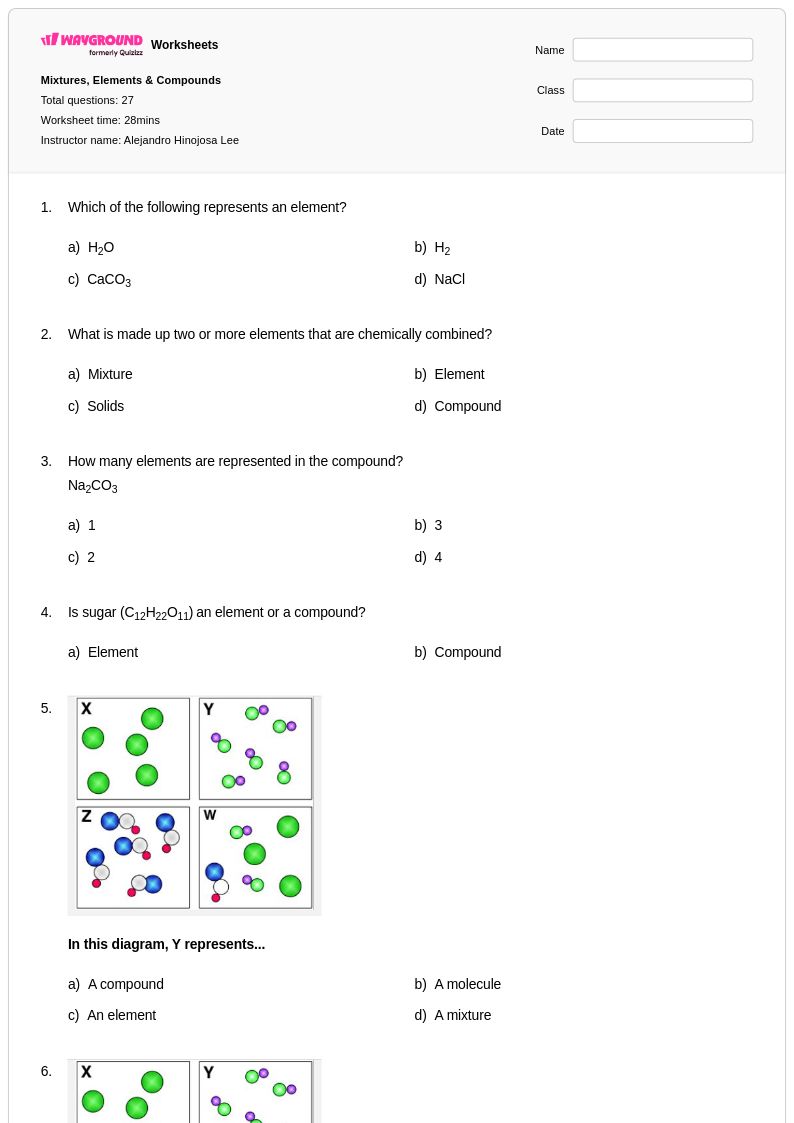
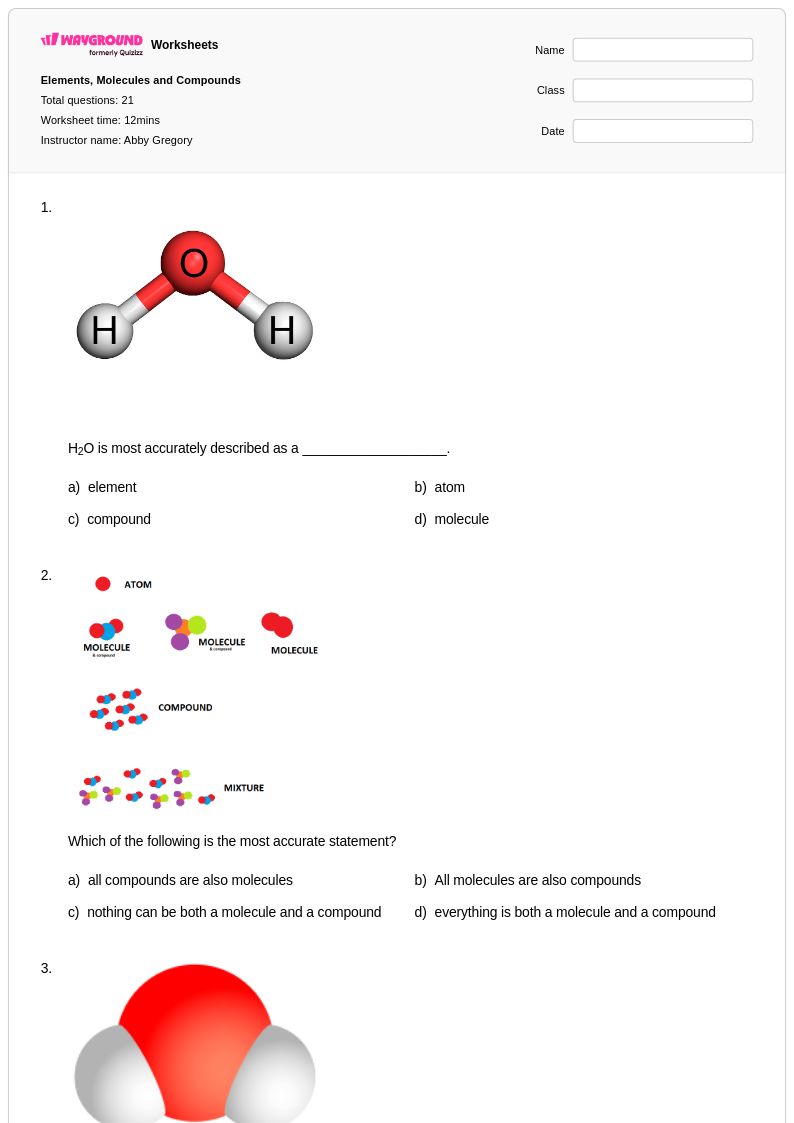
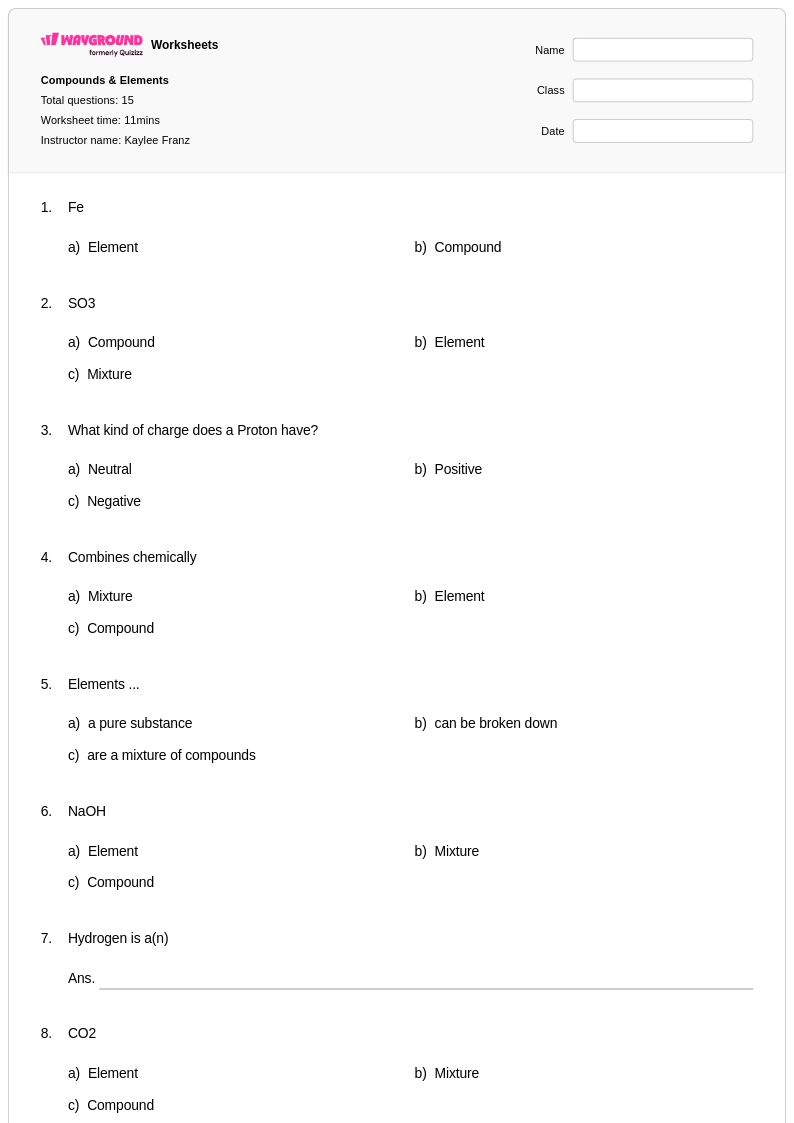
Free Printable Naming Compounds Worksheets for Grade 6
Grade 6 naming compounds worksheets from Wayground help students master chemical nomenclature through engaging printables, practice problems, and comprehensive answer keys for effective chemistry learning.
Explore printable Naming Compounds worksheets for Grade 6
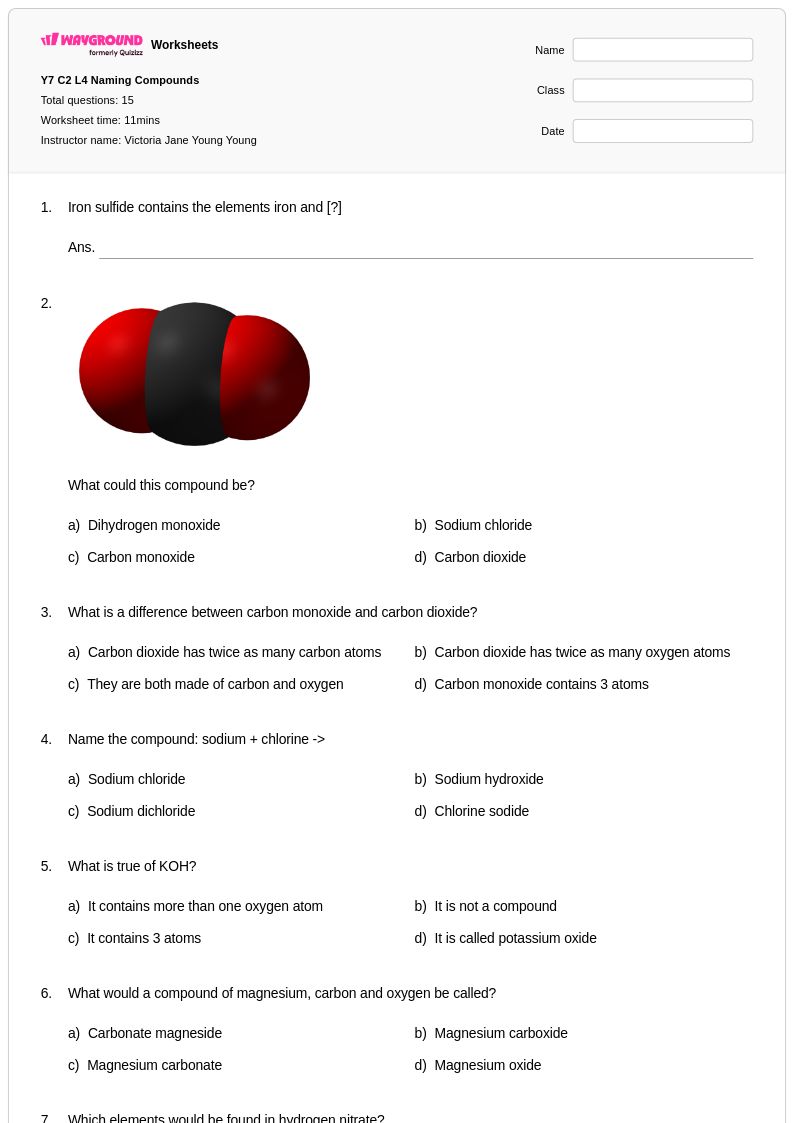
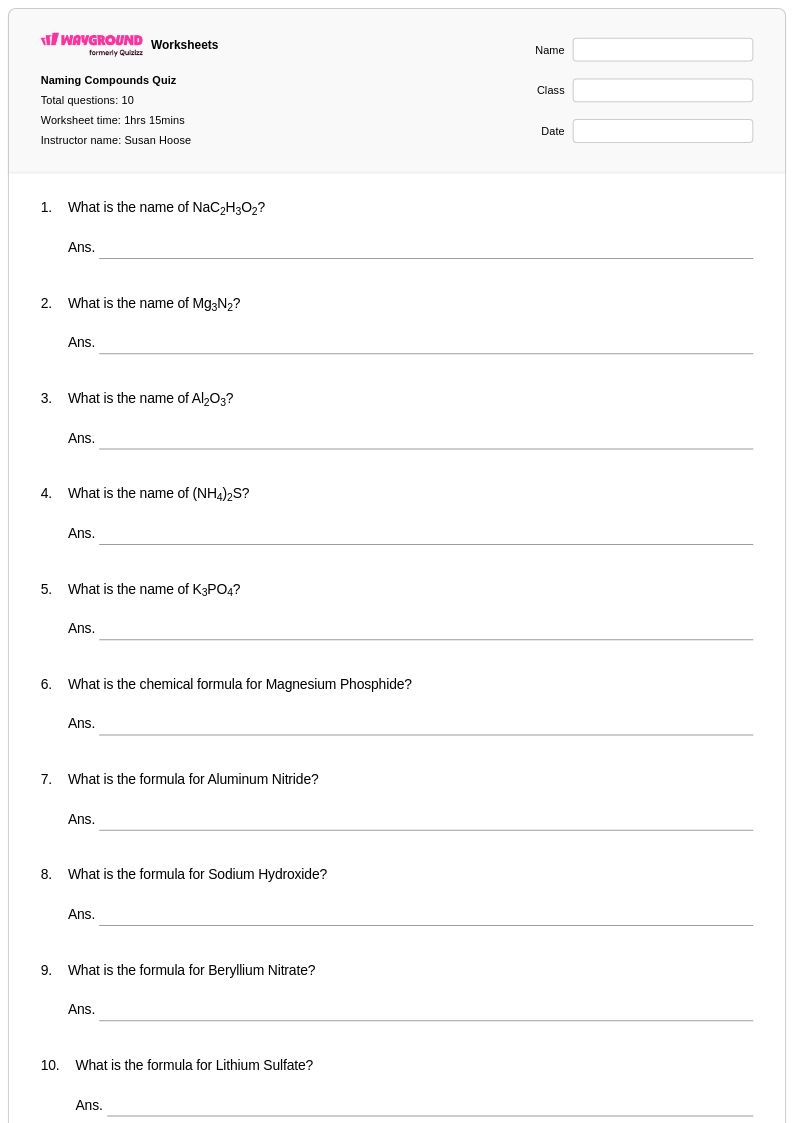
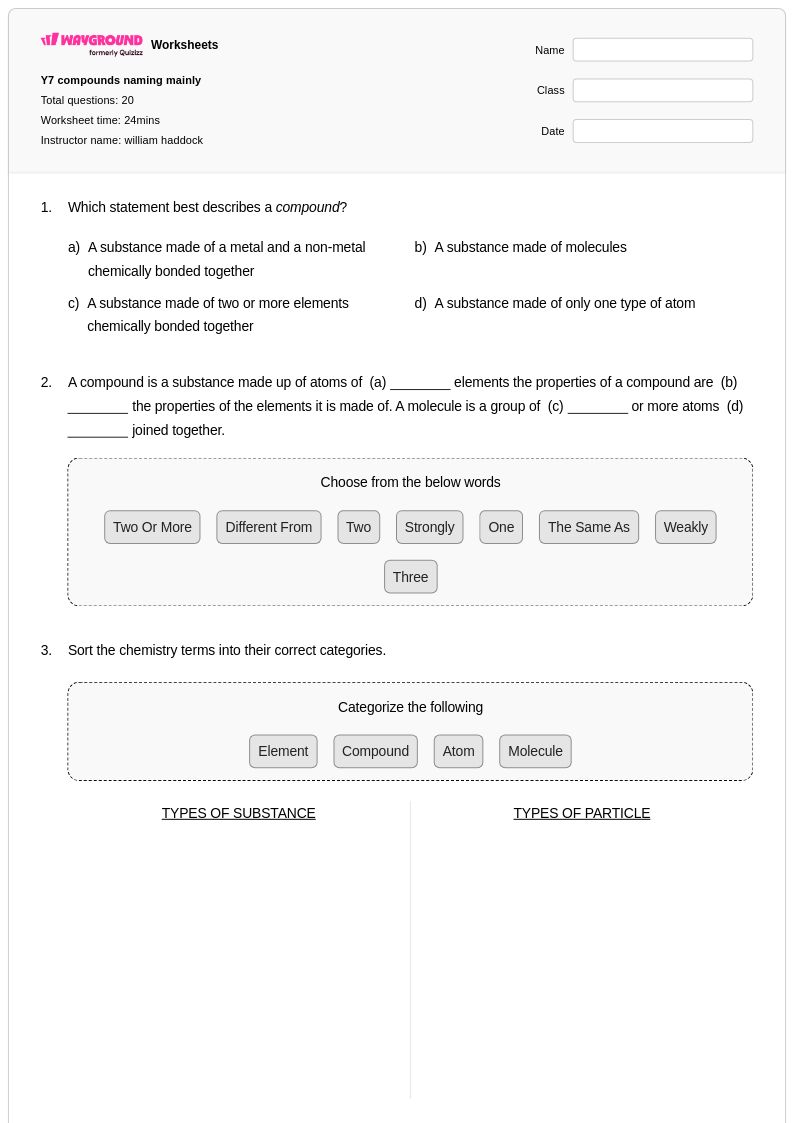
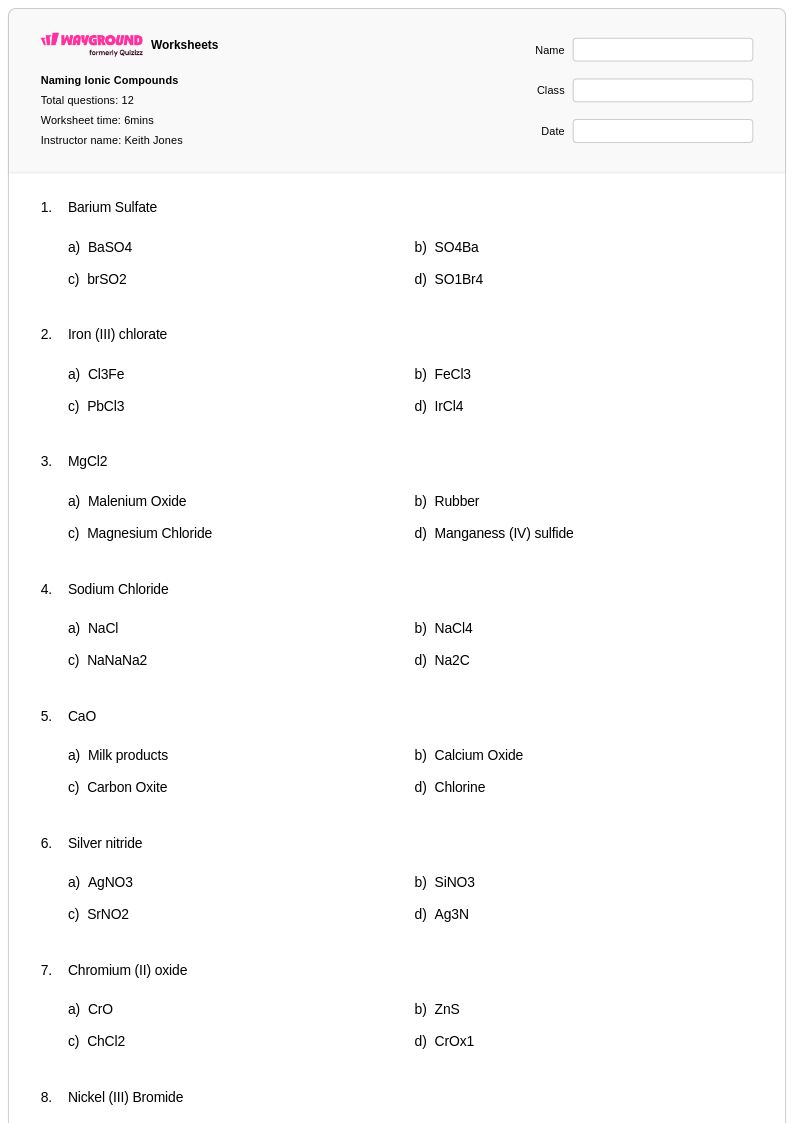
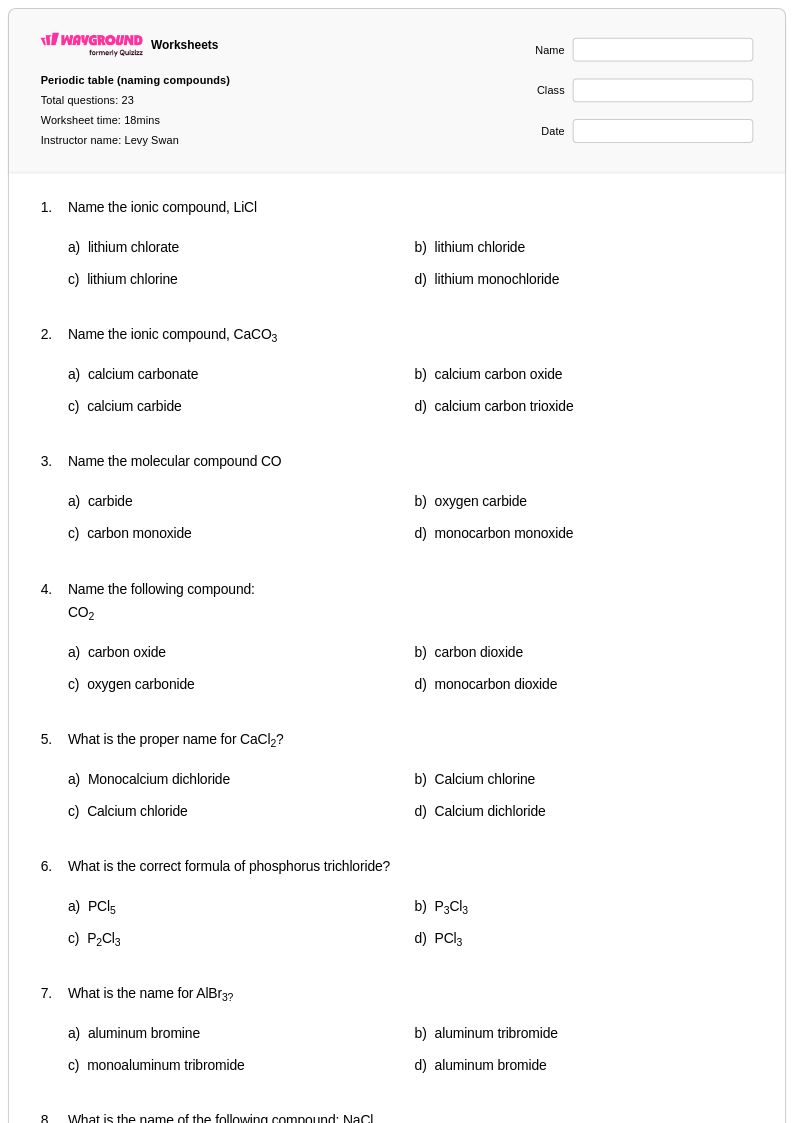
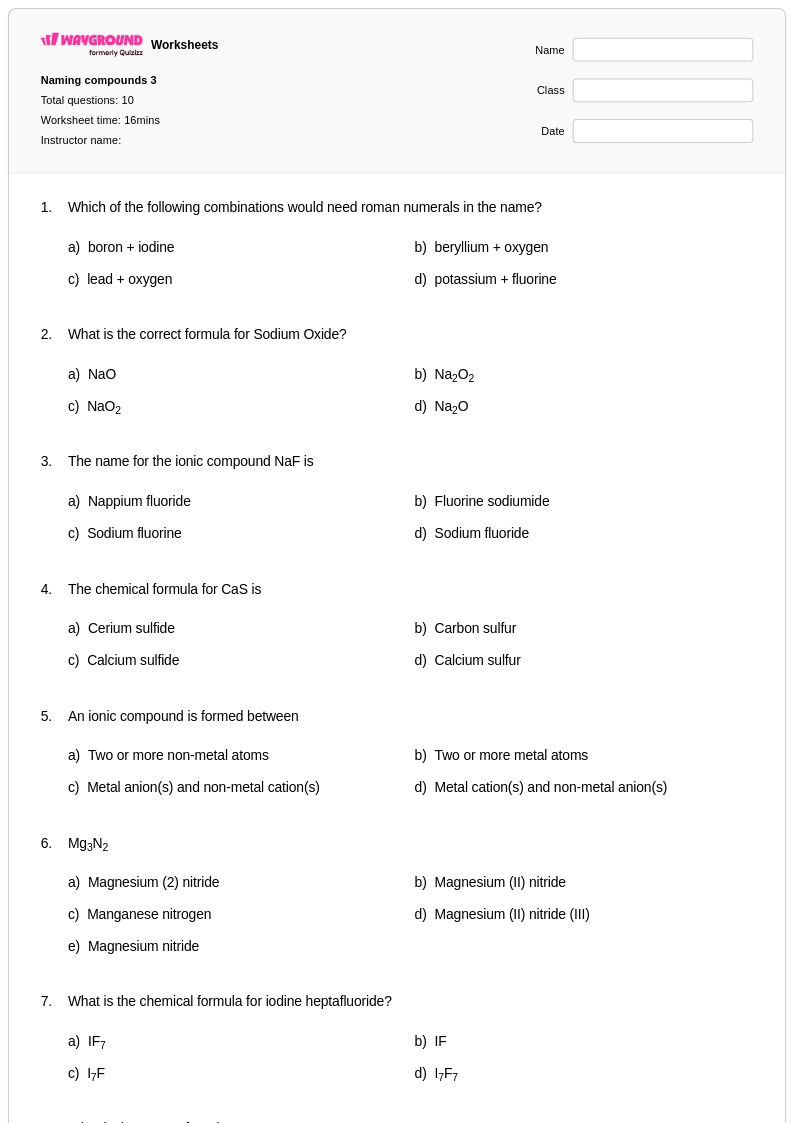
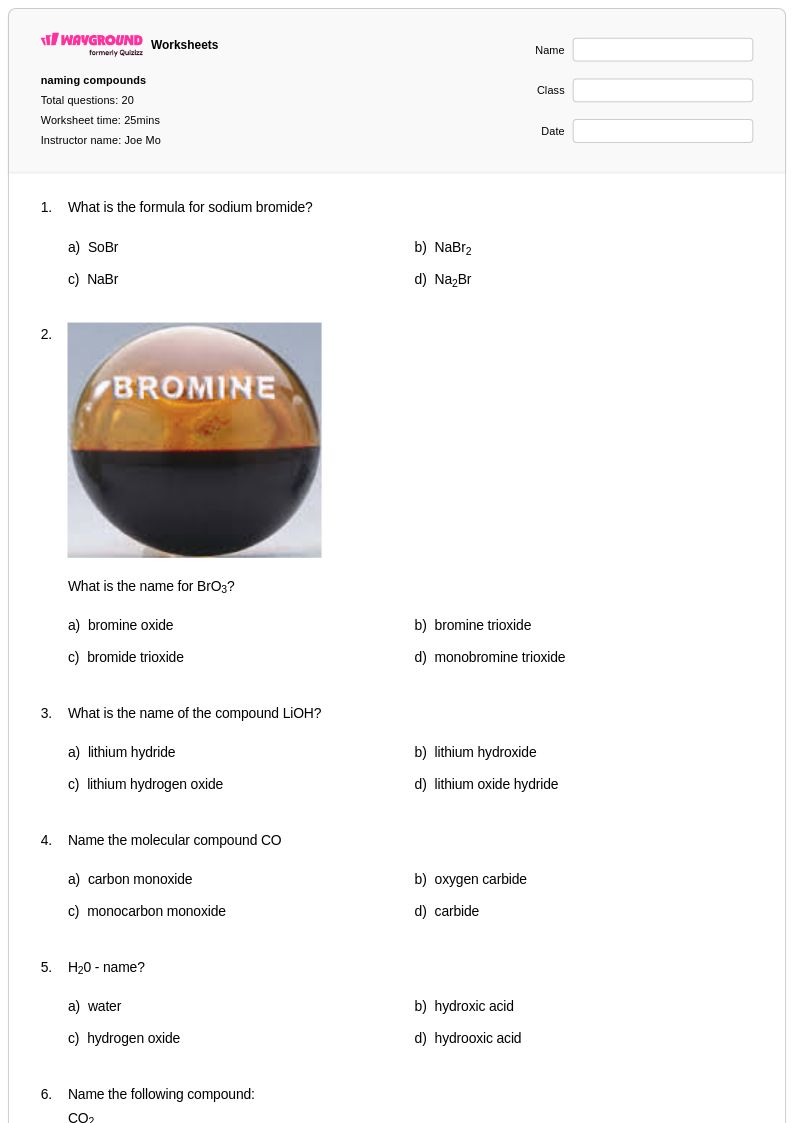
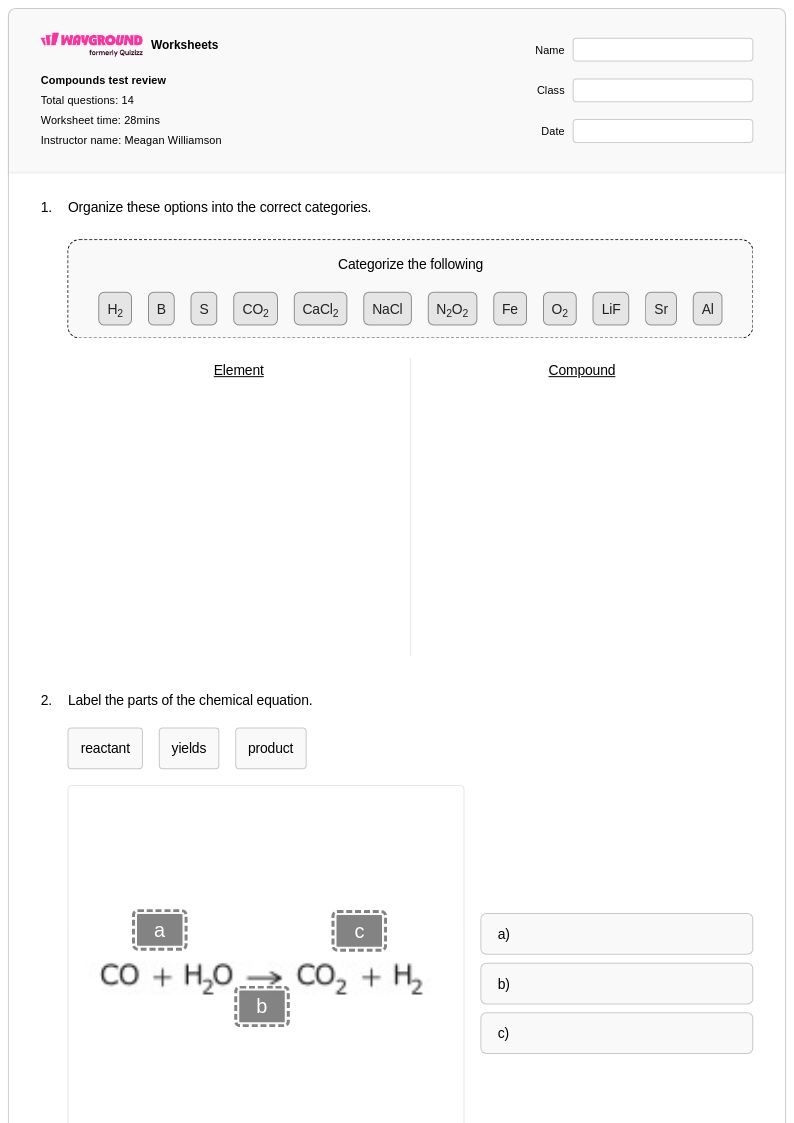
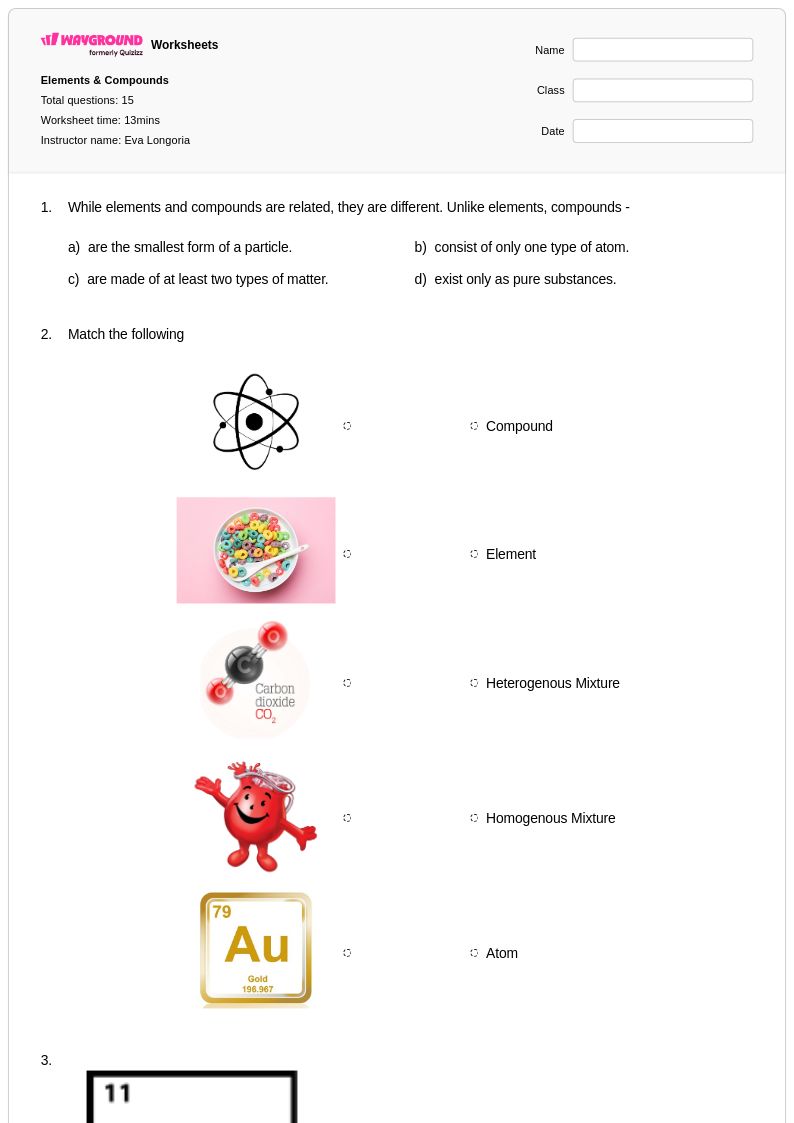
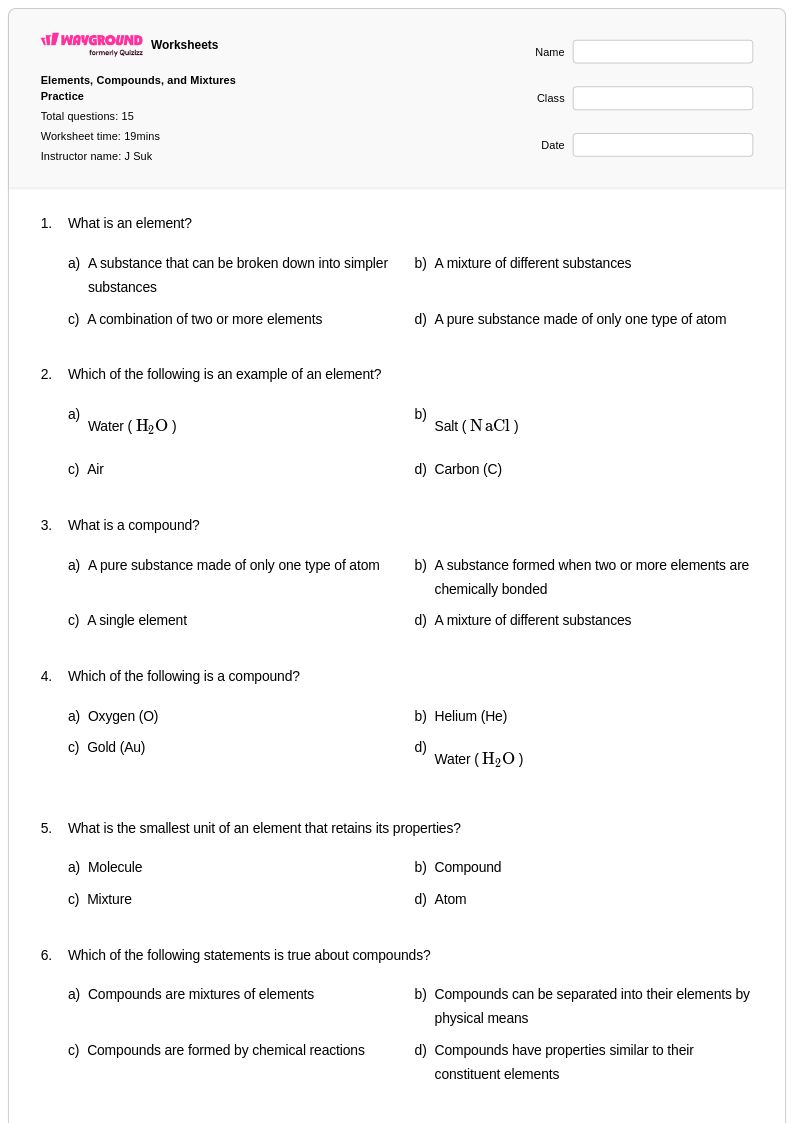
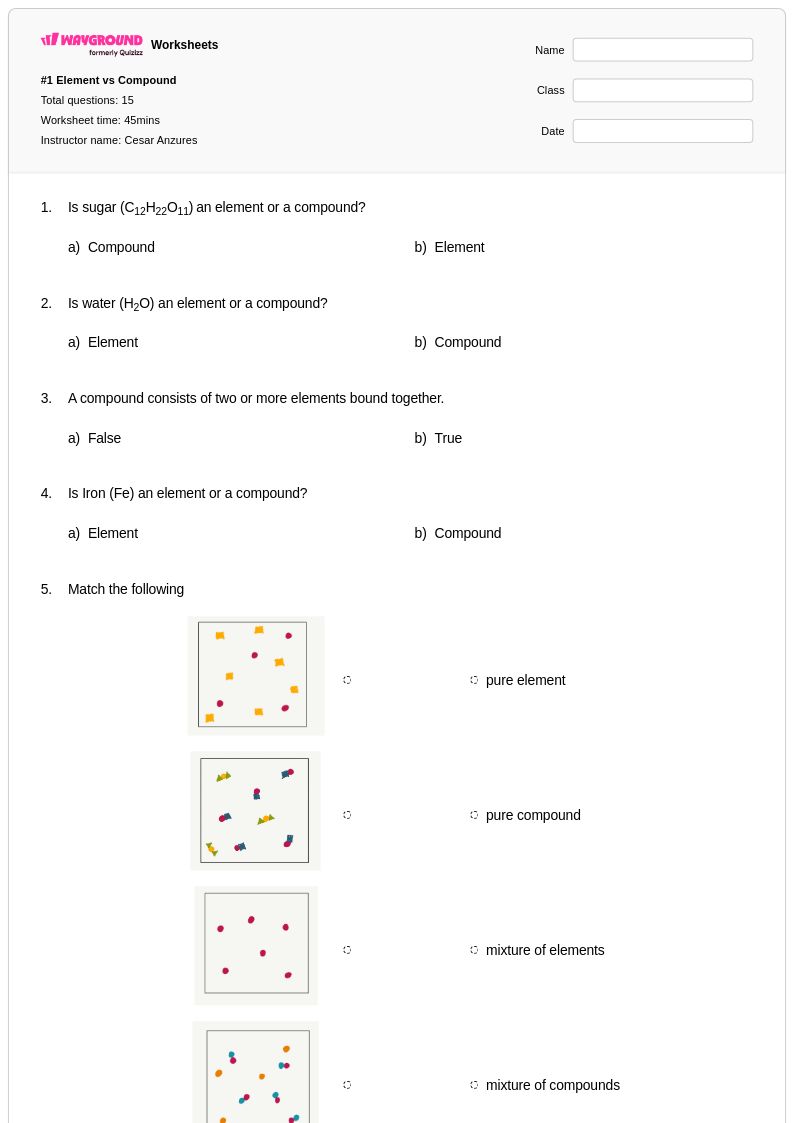
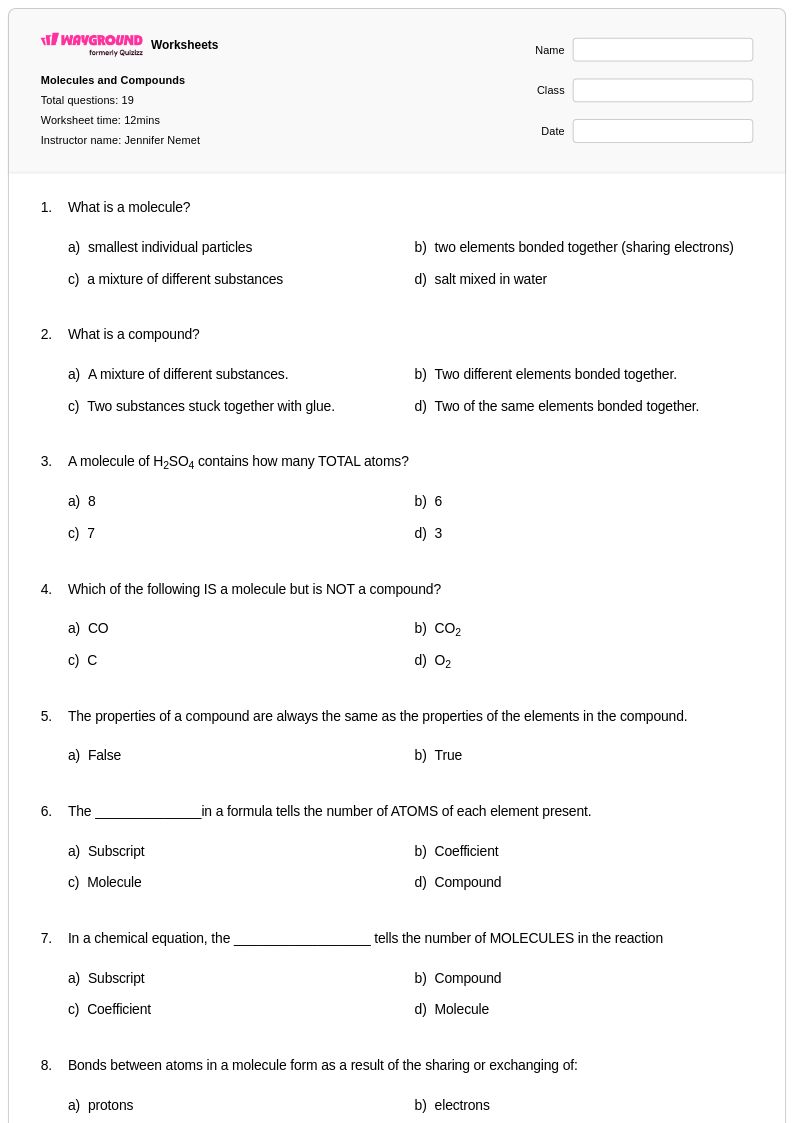
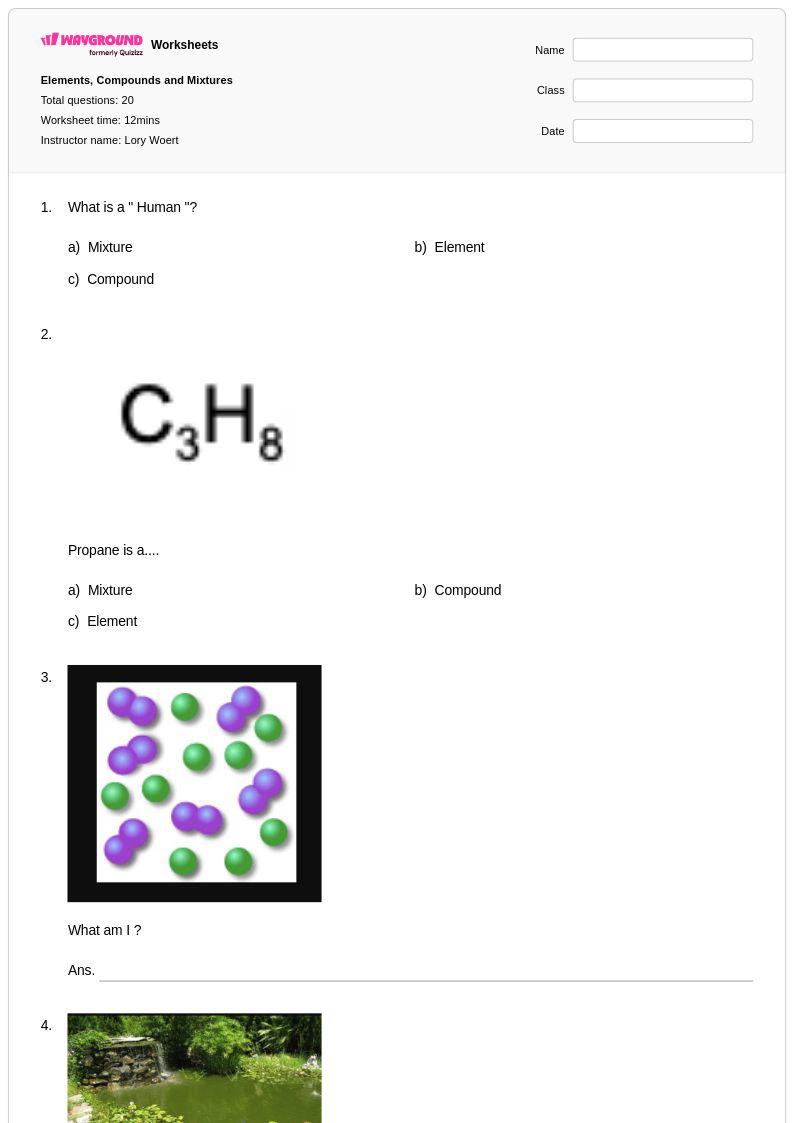
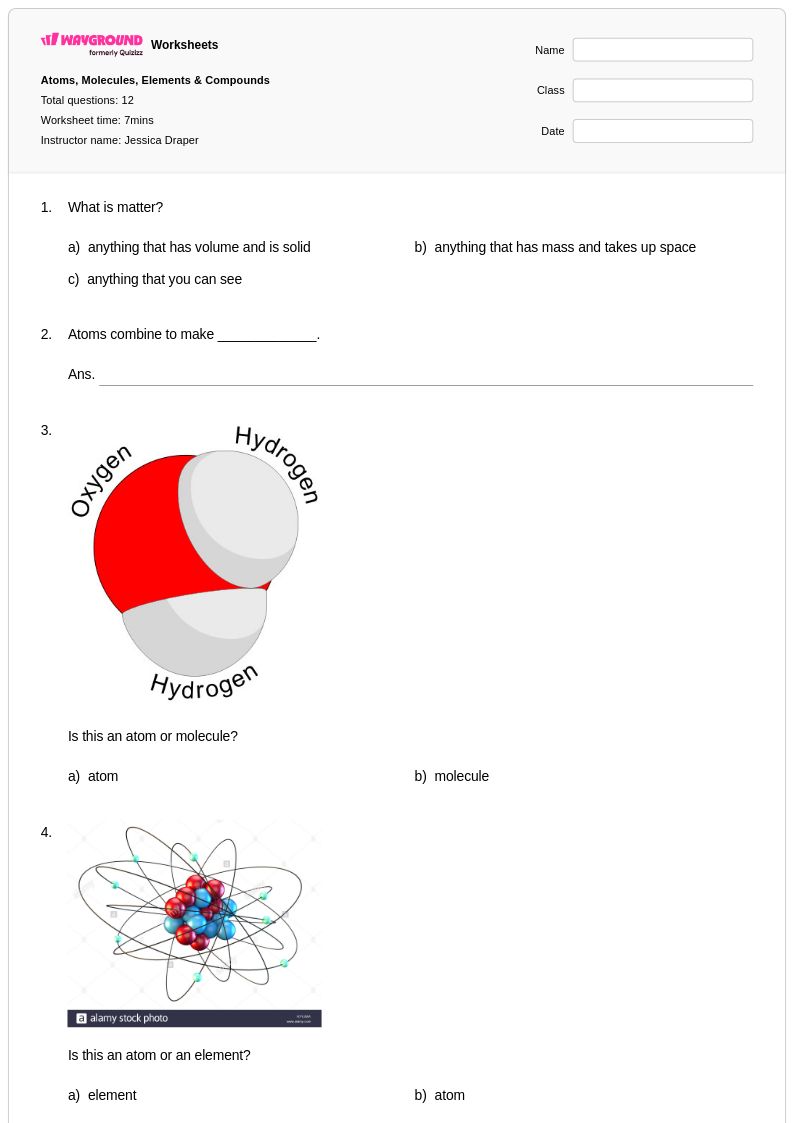
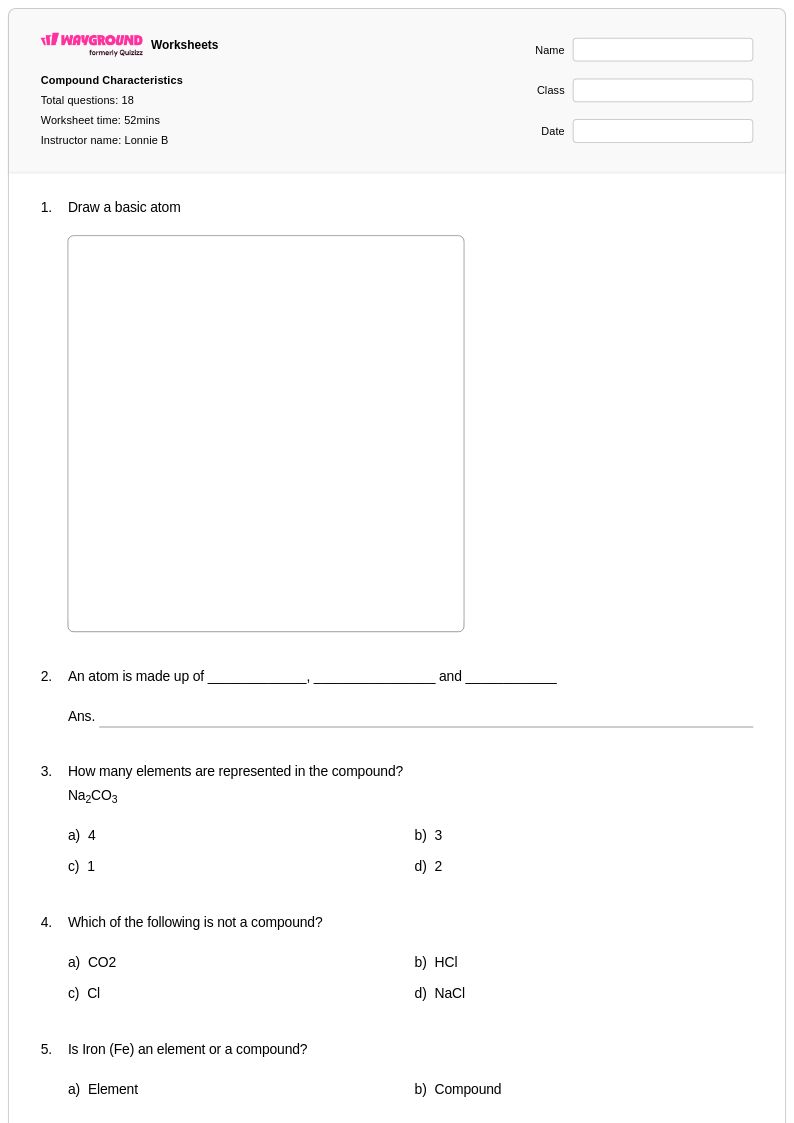
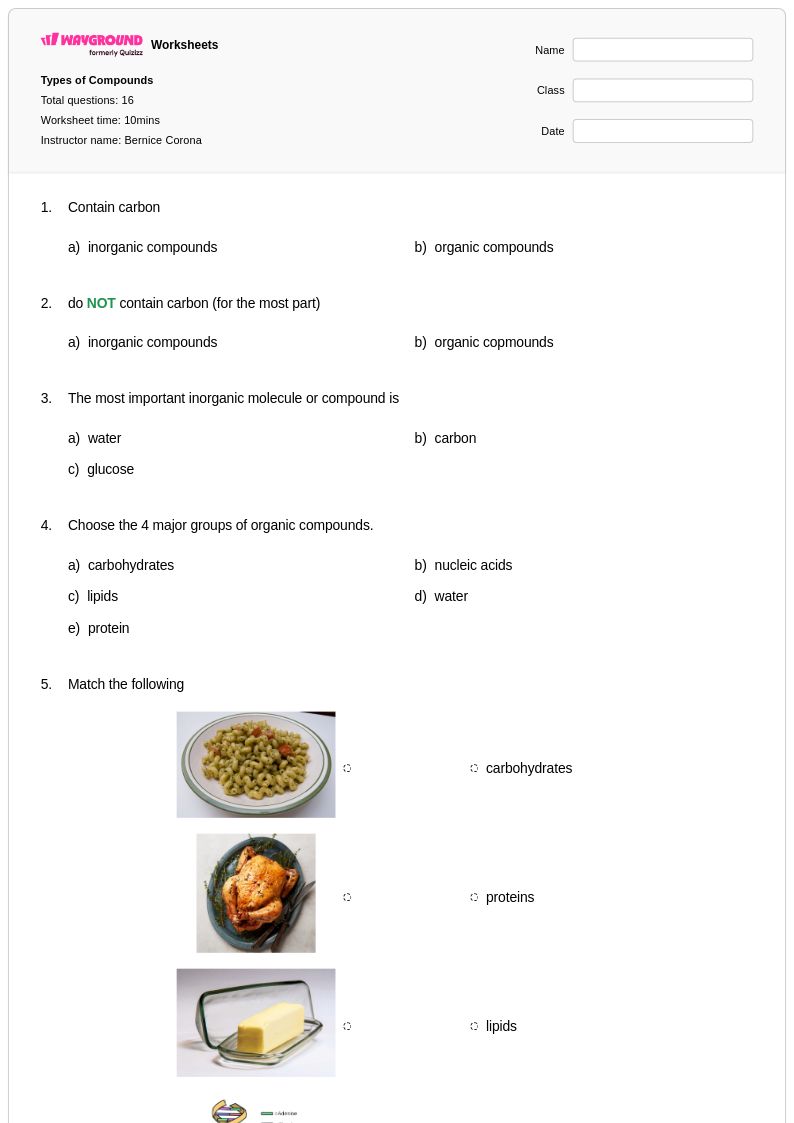
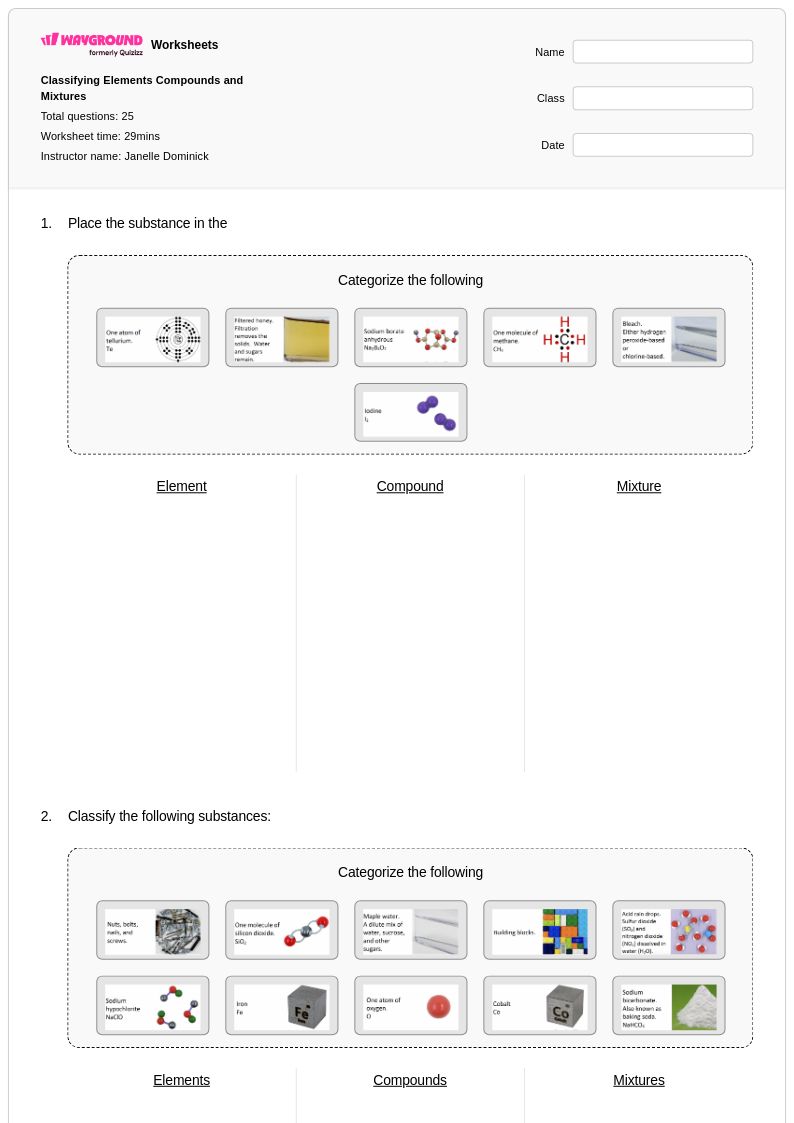
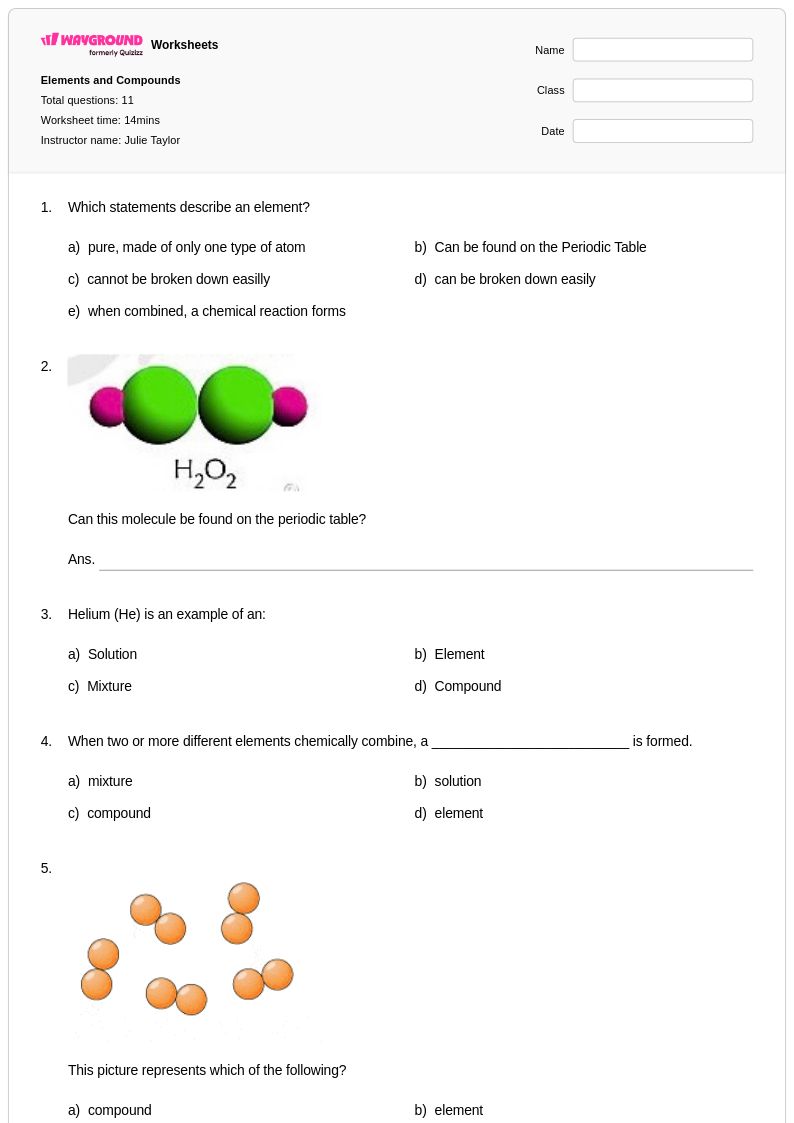
Naming compounds worksheets for Grade 6 students through Wayground (formerly Quizizz) provide essential practice in chemical nomenclature fundamentals that form the foundation for advanced chemistry concepts. These comprehensive worksheets guide sixth-grade learners through the systematic process of identifying and naming ionic compounds, covalent compounds, and simple acids using established chemical naming conventions. Students develop critical thinking skills as they work through practice problems that require them to analyze chemical formulas, determine the types of bonds present, and apply appropriate naming rules. Each worksheet collection includes detailed answer keys that support independent learning and self-assessment, while the free printable pdf format ensures accessibility for both classroom instruction and home study sessions.
Wayground (formerly Quizizz) empowers educators with an extensive library of millions of teacher-created naming compounds resources specifically designed to meet Grade 6 chemistry standards and learning objectives. The platform's robust search and filtering capabilities allow teachers to quickly locate worksheets that align with specific curriculum requirements, whether focusing on binary ionic compounds, polyatomic ions, or molecular compound nomenclature. Advanced differentiation tools enable instructors to customize content difficulty levels and problem types to accommodate diverse learning needs, supporting both remediation for struggling students and enrichment opportunities for advanced learners. Available in both printable and digital formats, including downloadable pdf versions, these resources seamlessly integrate into lesson planning while providing flexible options for skill practice, formative assessment, and targeted review sessions that strengthen students' chemical naming proficiency.
FAQs
How do I teach students to name chemical compounds?
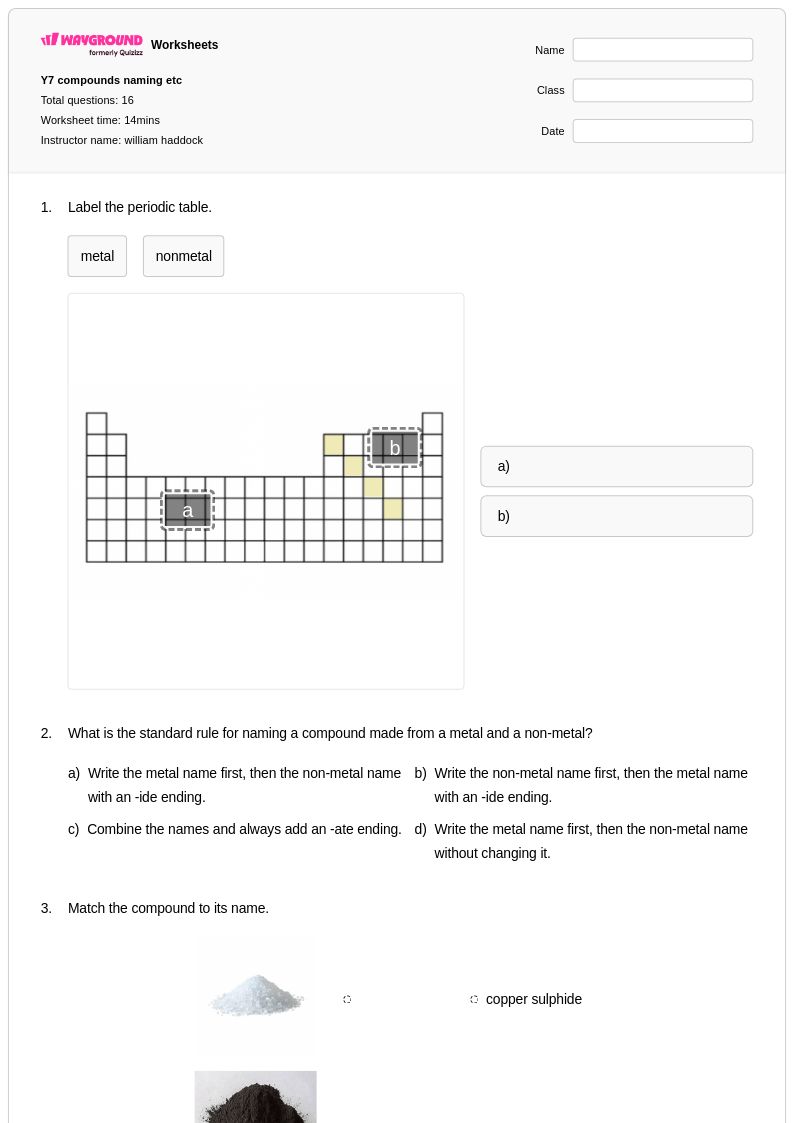
Start by establishing the difference between ionic and covalent compounds, since the naming rules diverge immediately based on compound type. For ionic compounds, teach students to identify the metal cation first, then name the nonmetal anion with an -ide suffix, incorporating Roman numerals for transition metals with variable charges. For covalent compounds, introduce Greek prefixes (mono-, di-, tri-, etc.) to indicate the number of atoms. Building this decision-making framework early prevents students from applying the wrong set of rules to a given compound.
What exercises help students practice naming chemical compounds?
The most effective practice exercises require students to move in both directions: converting chemical formulas into names and writing formulas from names. Start with binary ionic compounds before introducing polyatomic ions, then progress to binary covalent compounds and acids. Worksheets that group compounds by type allow students to build pattern recognition within a category before mixing compound types, which more closely mirrors exam conditions and real-world application.
What mistakes do students commonly make when naming compounds?
The most frequent error is applying ionic naming rules to covalent compounds or vice versa, usually because students skip the step of identifying what type of compound they are working with. Students also commonly forget Roman numerals for transition metals with multiple oxidation states, misname polyatomic ions (especially confusing sulfate with sulfite or nitrate with nitrite), and drop the 'mono-' prefix on the first element of covalent compounds when it is required. Targeted practice that forces compound-type identification before naming helps correct these patterns.
How do I use naming compounds worksheets to support students at different skill levels?
For students who are still building foundational understanding, select worksheets focused on a single compound type, such as binary ionic compounds only, before mixing categories. More advanced students benefit from worksheets that include transition metal compounds, polyatomic ions, and acids together, requiring them to apply the full decision-making sequence. On Wayground, teachers can apply accommodations such as read aloud support or reduced answer choices for individual students who need additional scaffolding, while the rest of the class works through default settings without disruption.
How do I use Wayground's naming compounds worksheets in my classroom?
Wayground's naming compounds worksheets are available as printable PDFs for traditional classroom use and in digital formats for technology-integrated or remote learning environments. Teachers can also host worksheets directly as a quiz on Wayground, enabling automatic grading and immediate student feedback. Each worksheet includes a complete answer key, making them practical for independent practice, homework, or self-paced review sessions.
How do I help students distinguish between naming ionic and covalent compounds?
Teach students to first identify whether the compound contains a metal and a nonmetal (ionic) or two nonmetals (covalent), since this single classification step determines the entire naming approach. A simple flowchart or decision tree posted in the classroom can reinforce this habit until it becomes automatic. Pairing identification practice with naming practice ensures students are not just memorizing rules in isolation but applying them within the correct context.