
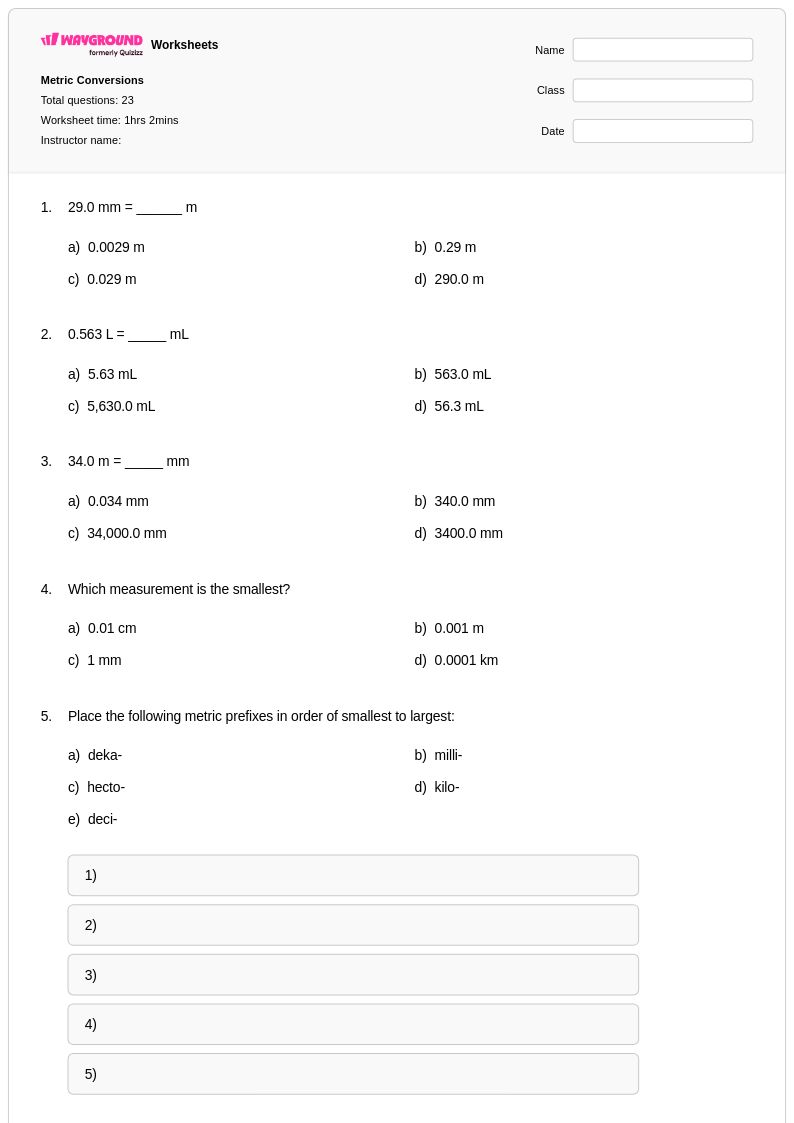
23 T
6th - 8th
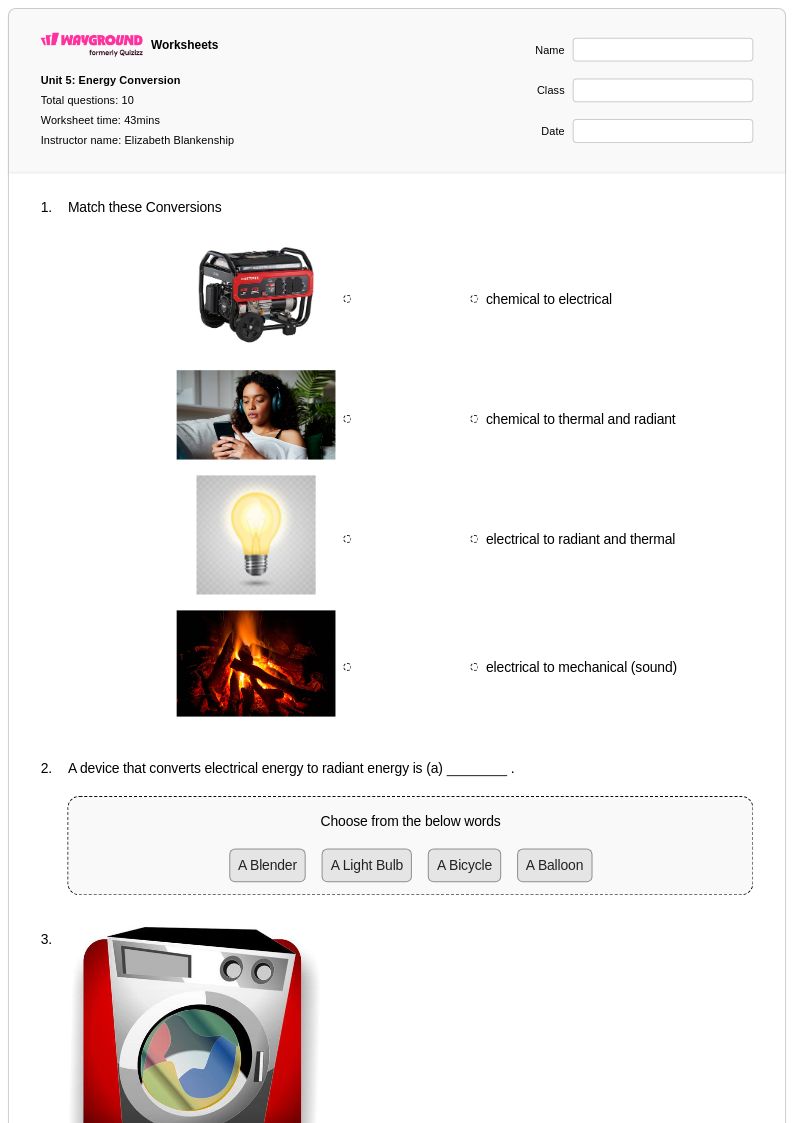
10 T
6th - 8th
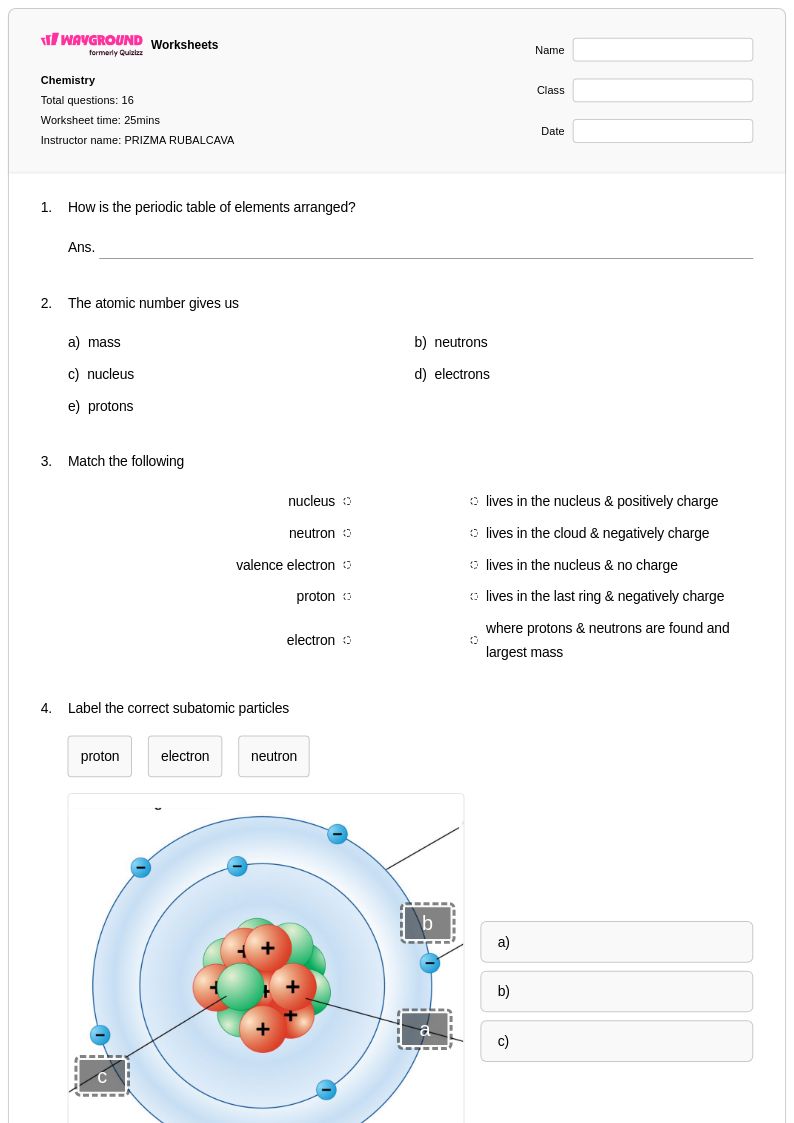
16 T
6th - 8th
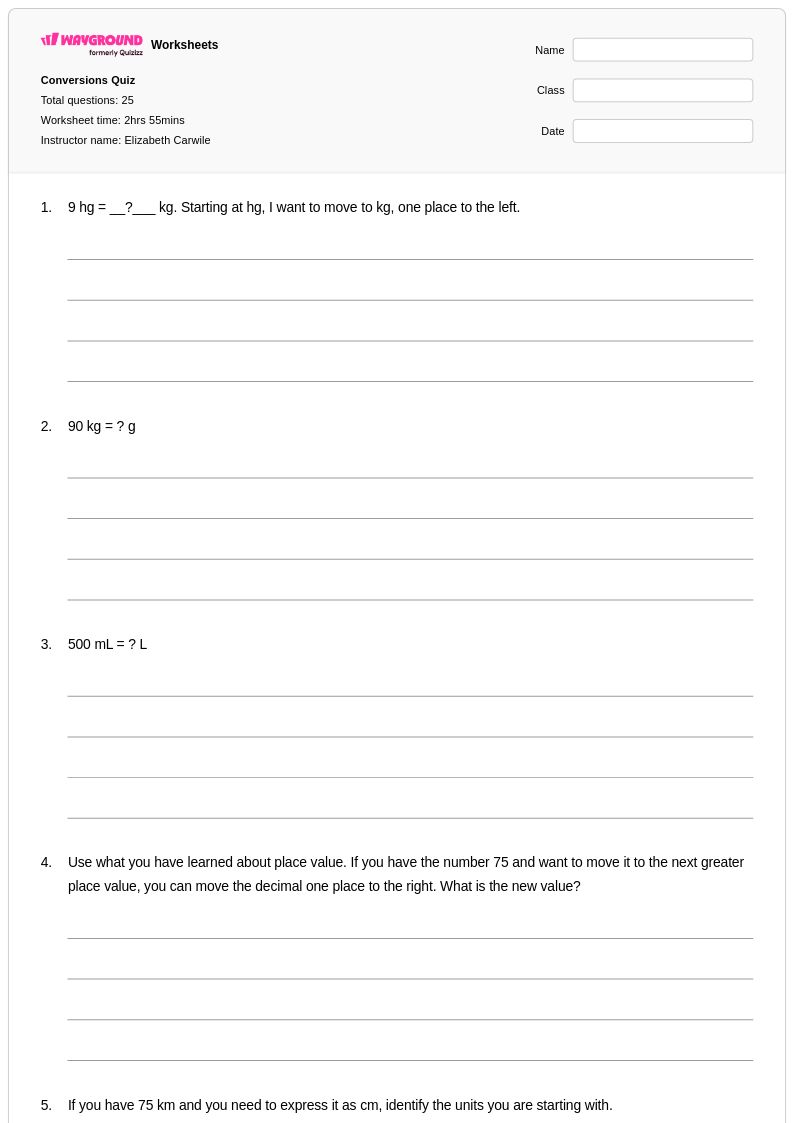
25 T
6th
27 T
6th - 8th
10 T
6th
22 T
6th - 8th
34 T
6th - Uni
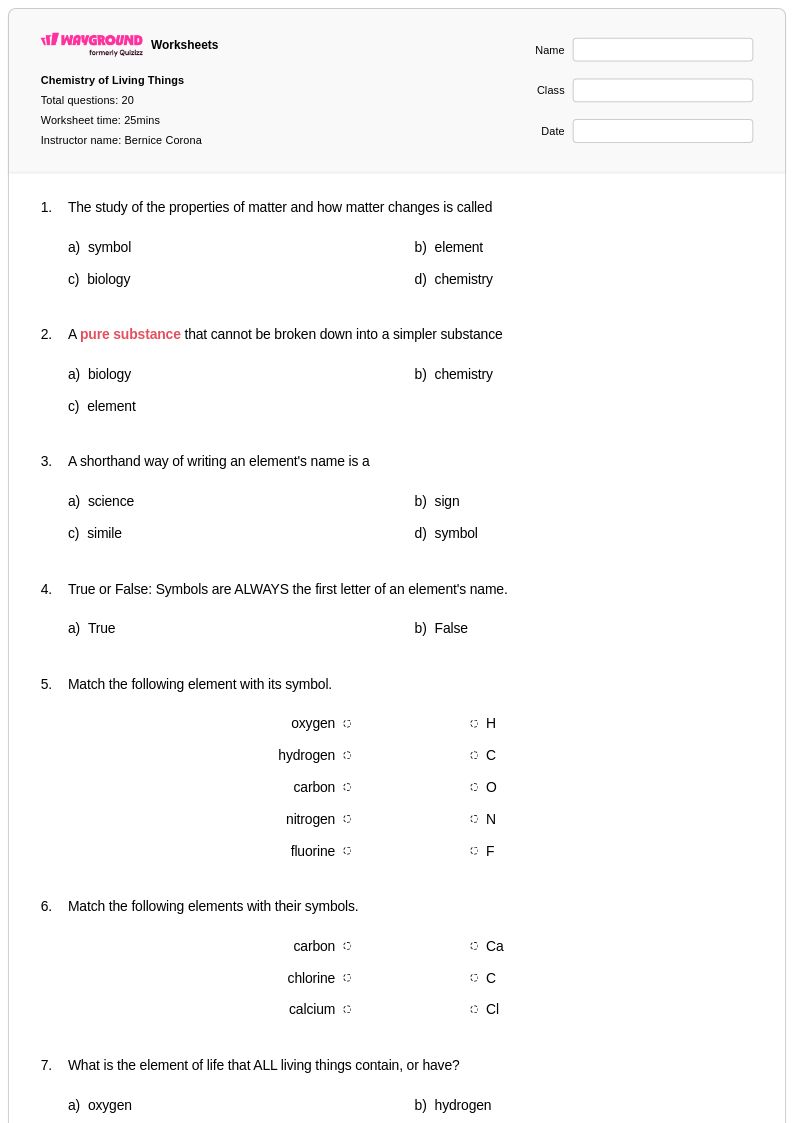
20 T
7th - Uni

22 T
6th
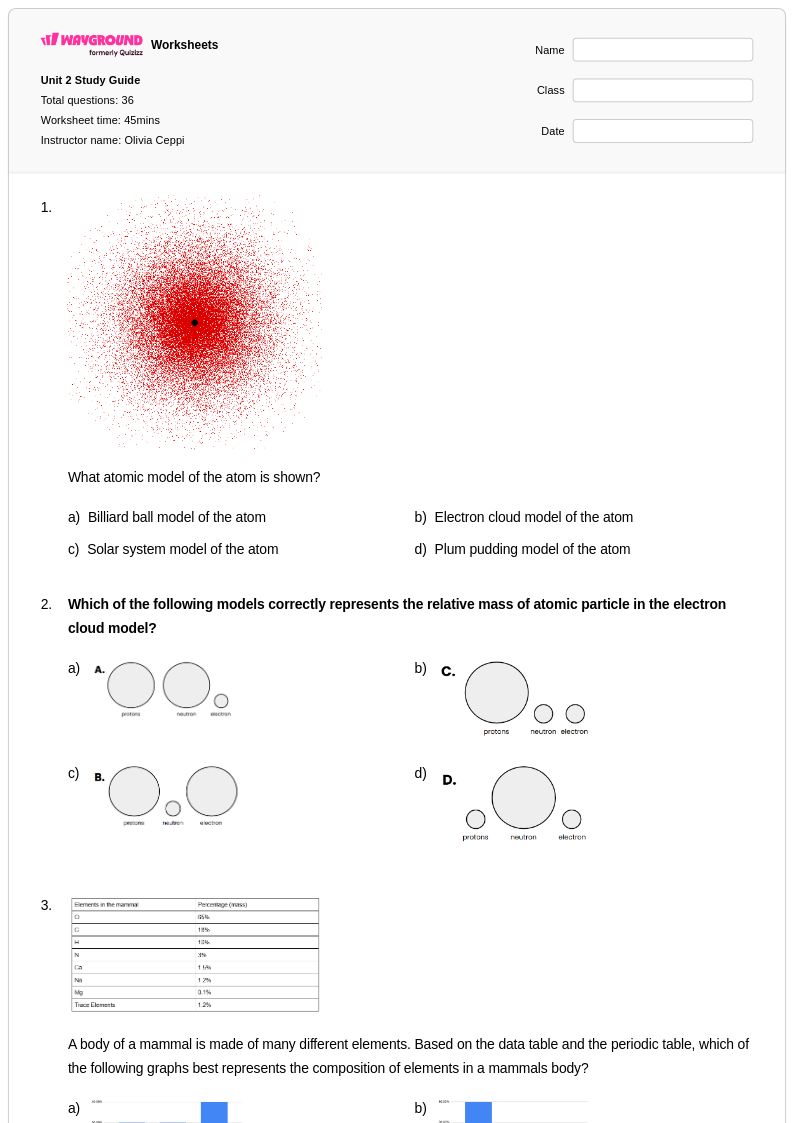
36 T
6th - 8th
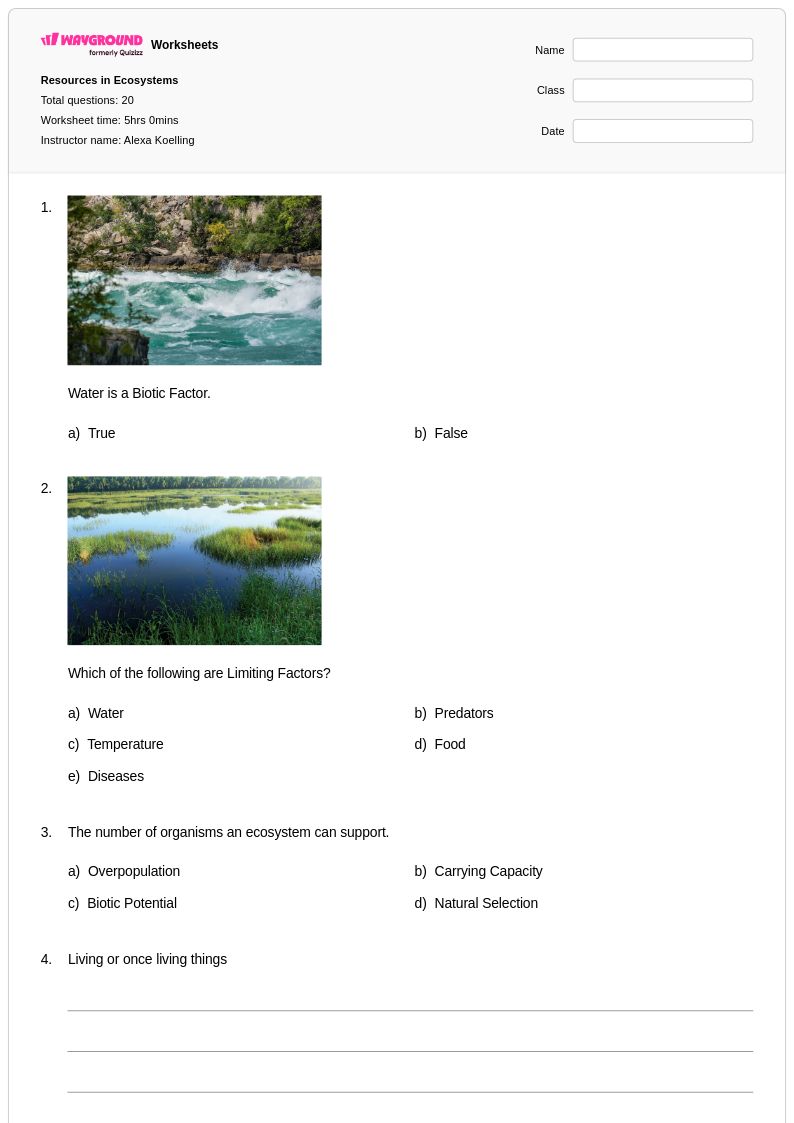
20 T
6th
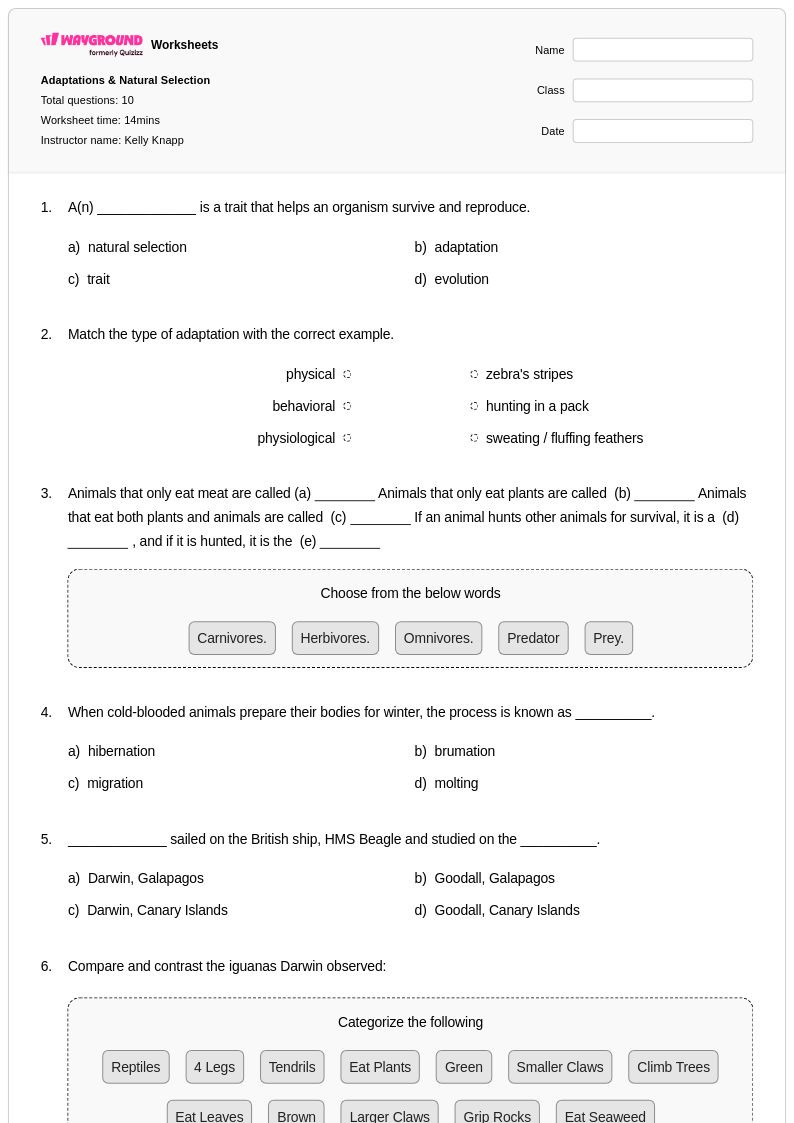
10 T
6th - 8th
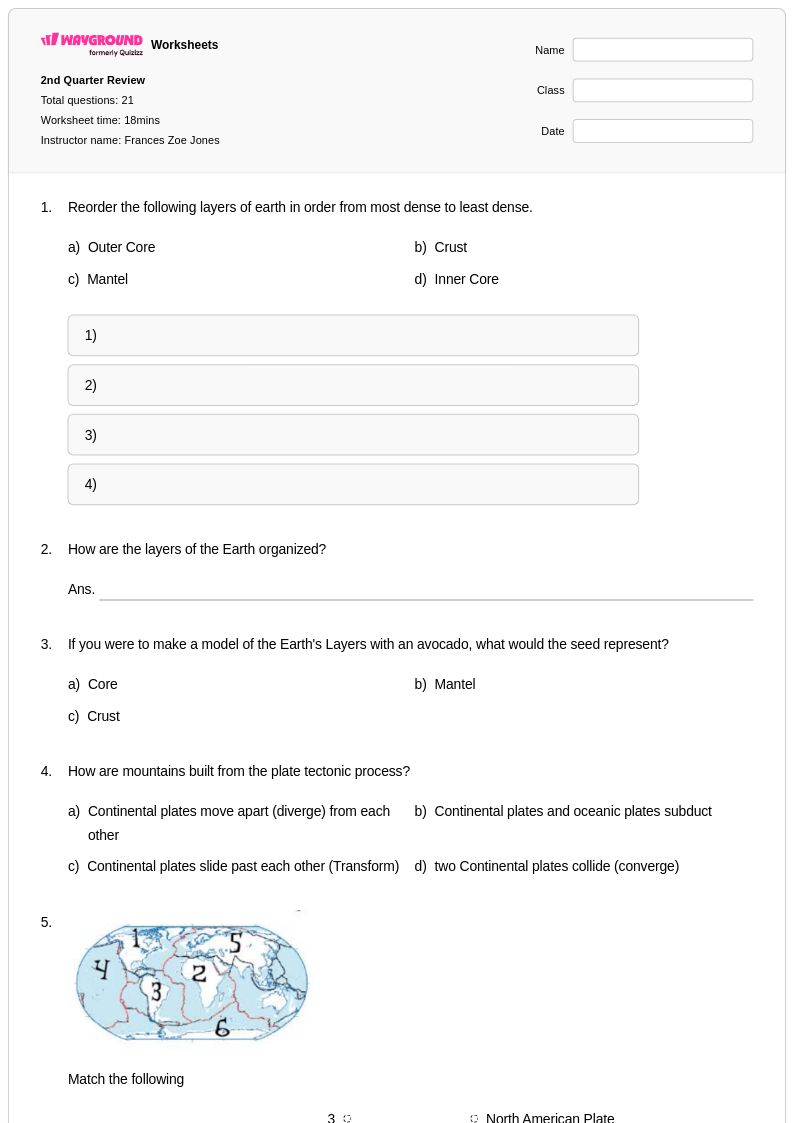
21 T
6th
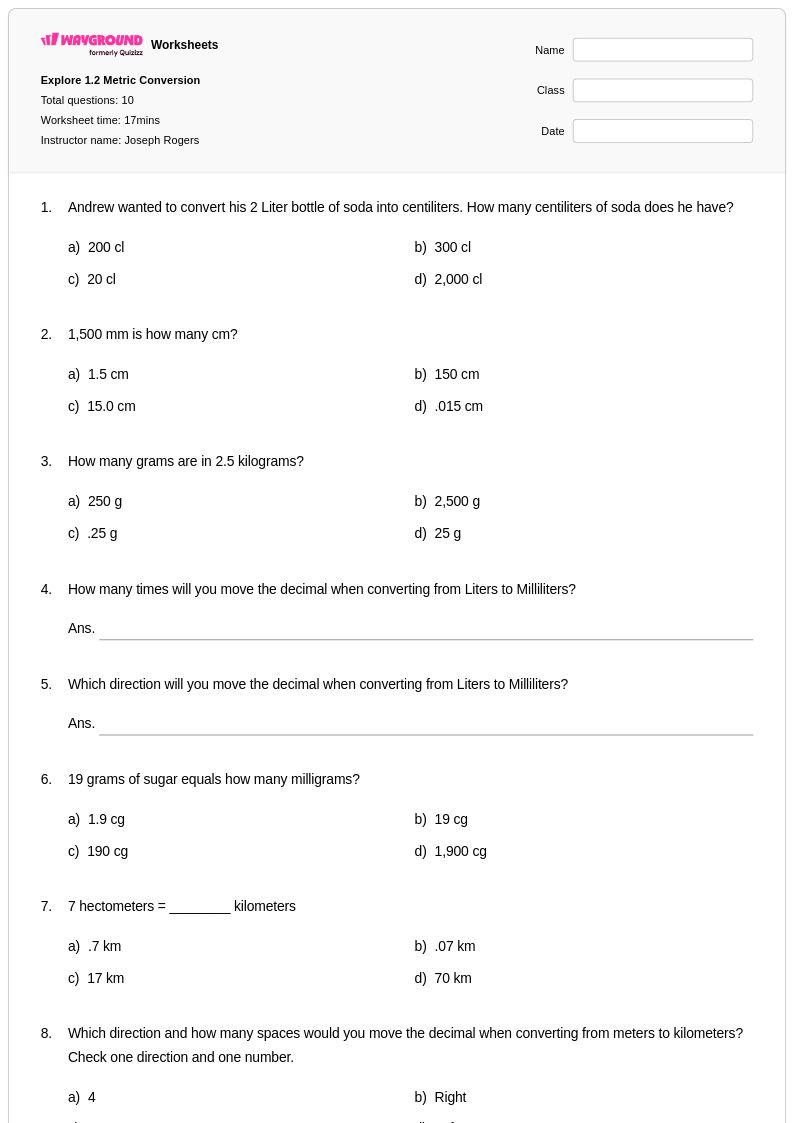
10 T
5th - 7th
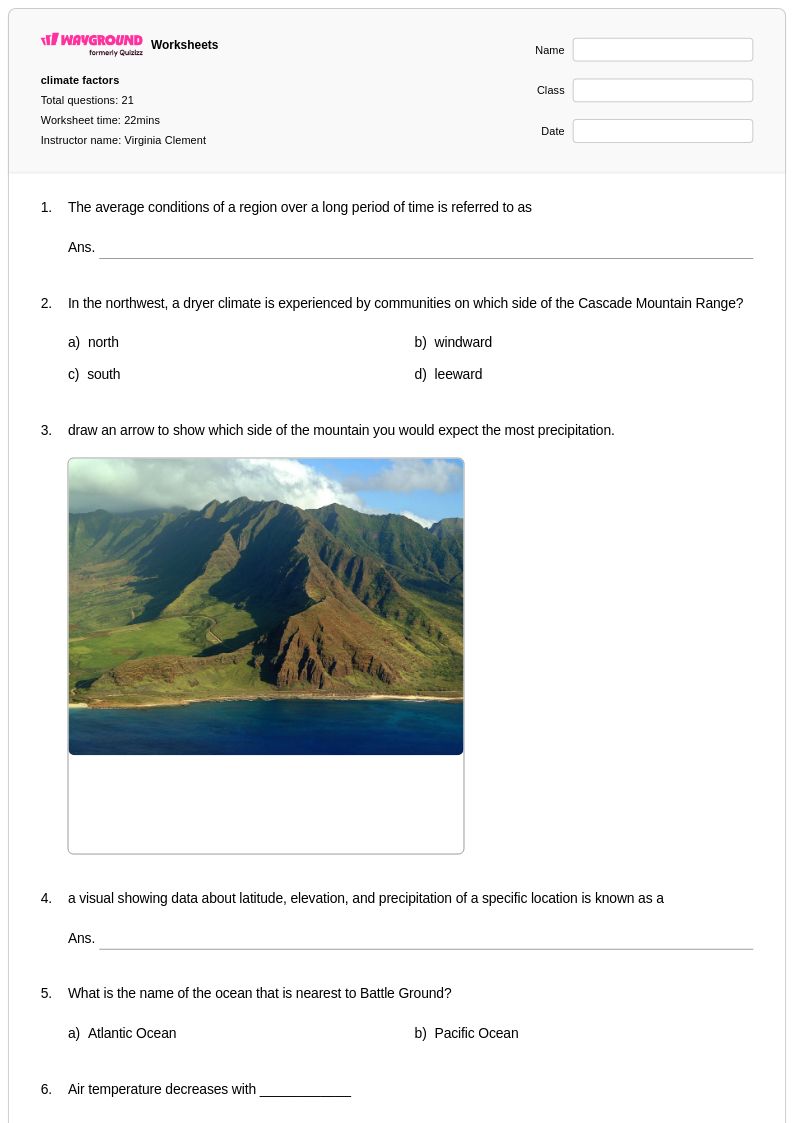
21 T
6th
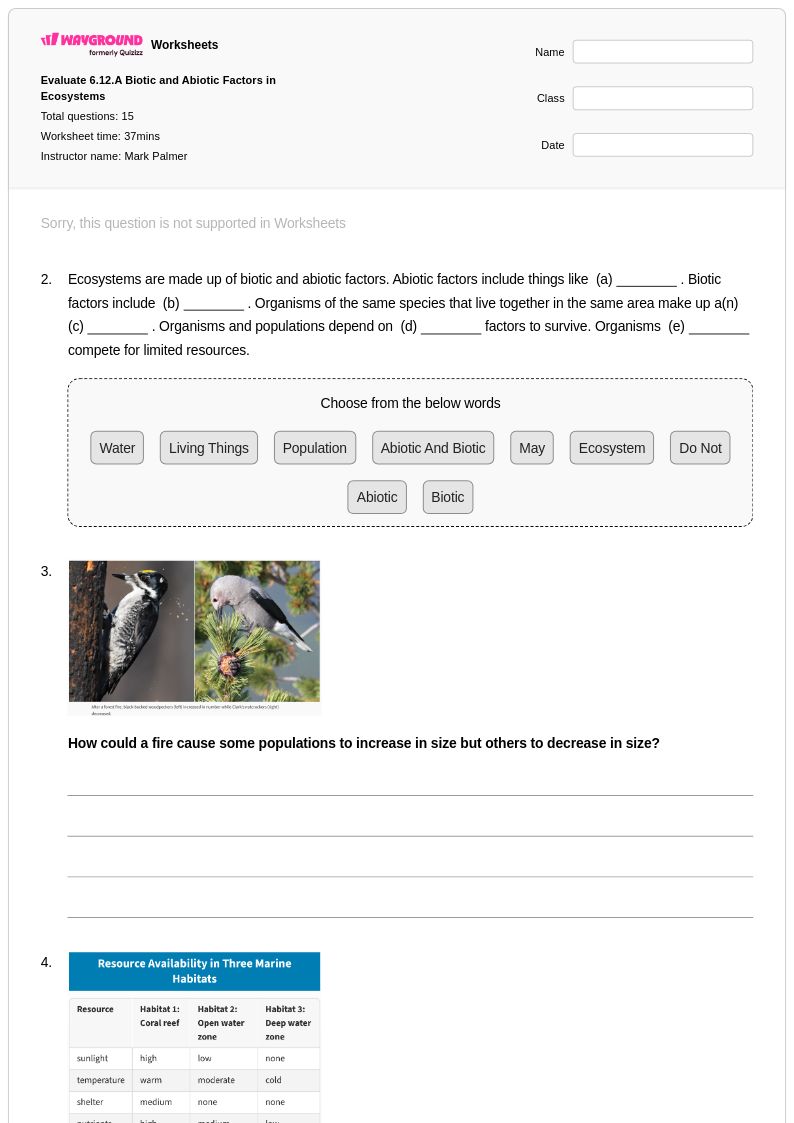
25 T
6th - Uni
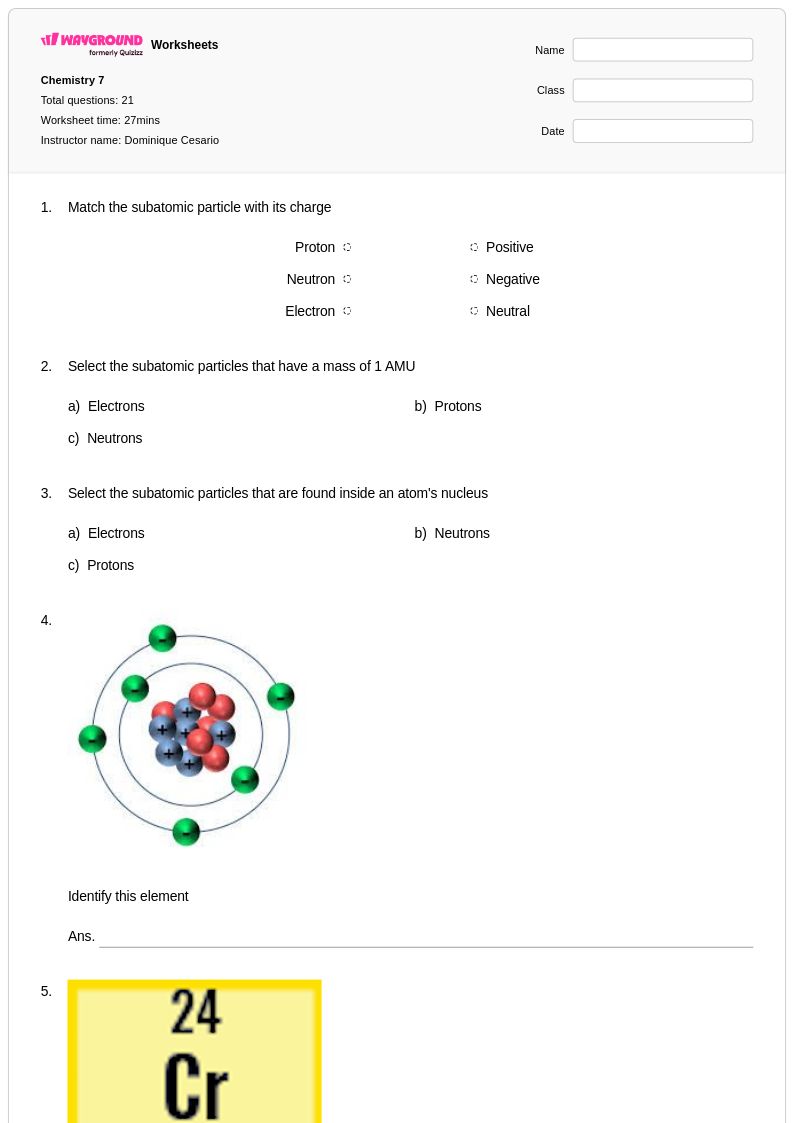
21 T
6th - 8th
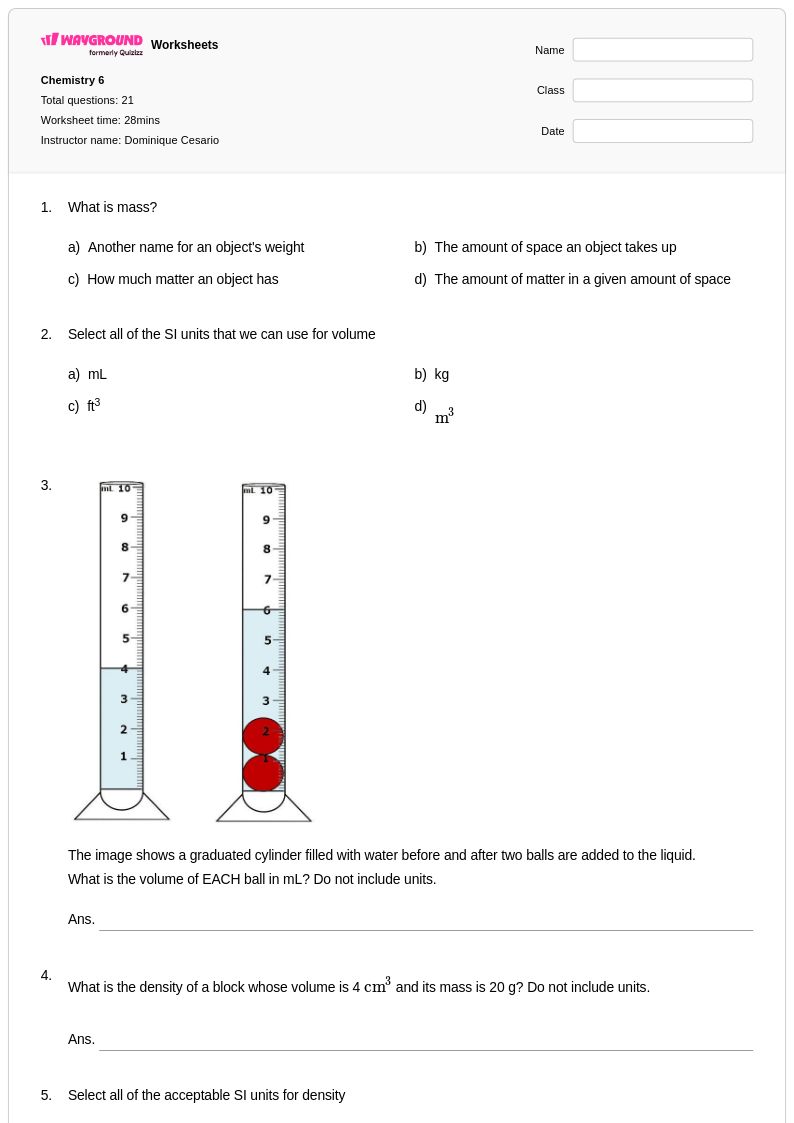
21 T
6th - 8th
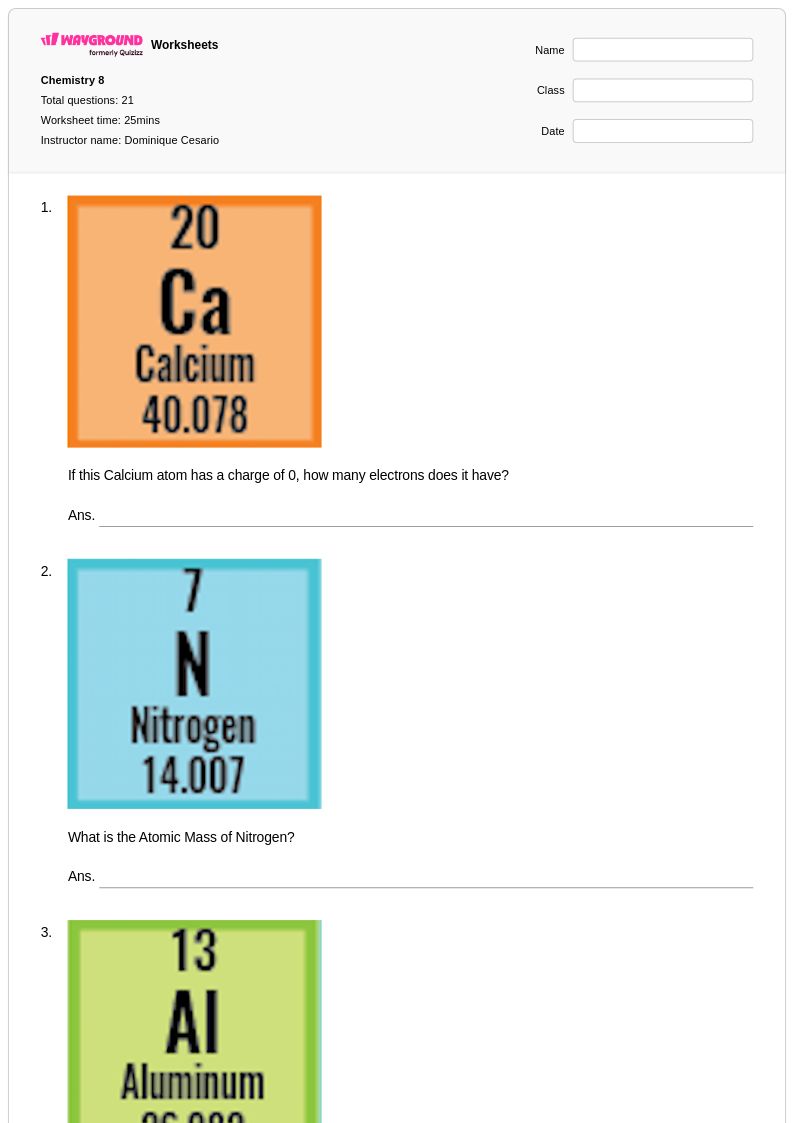
21 T
6th - 8th
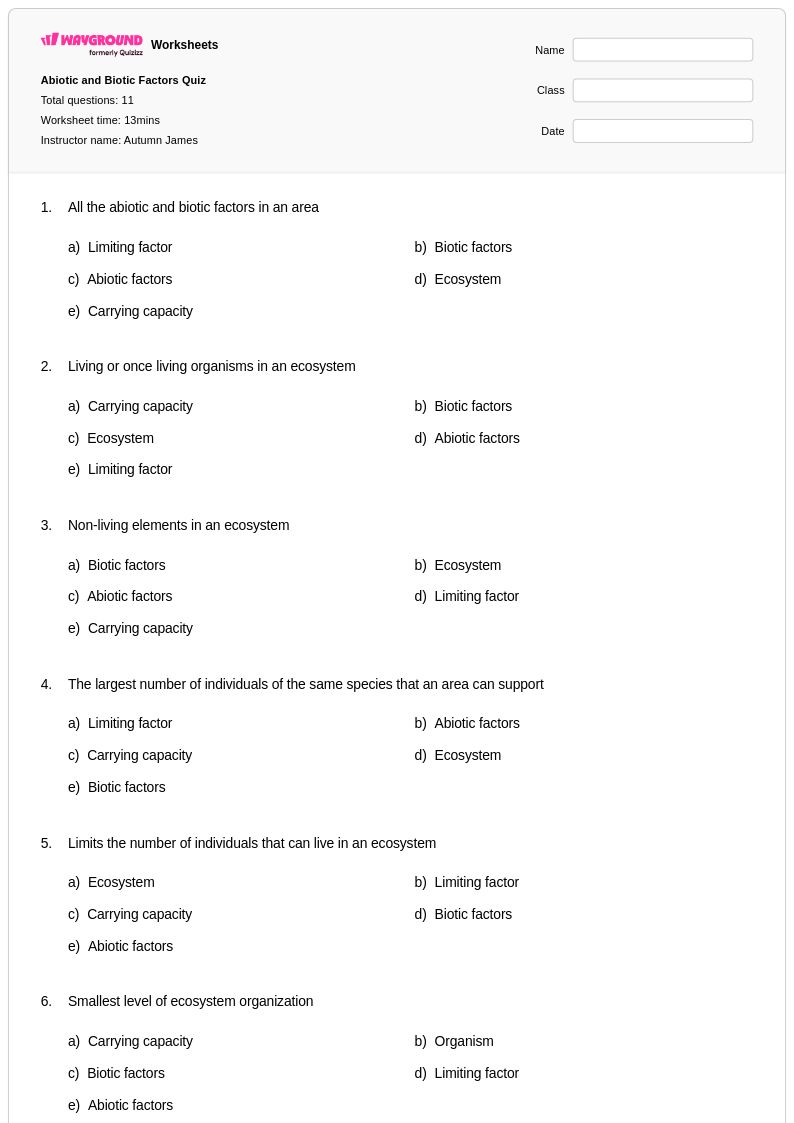
11 T
6th
20 T
6th
13 T
6th
Jelajahi Conversion Factors in Chemistry Lembar Kerja berdasarkan Nilai
Jelajahi Lembar Kerja Mata Pelajaran Lainnya untuk grade 6
Explore printable Conversion Factors in Chemistry worksheets for Grade 6
Conversion factors in chemistry represent a fundamental skill that Grade 6 students must master to build a strong foundation for future scientific learning. Wayground's extensive collection of conversion factor worksheets provides middle school students with systematic practice in dimensional analysis, unit conversions, and proportional reasoning within chemical contexts. These carefully designed worksheets strengthen critical thinking abilities by teaching students to convert between different units of measurement commonly used in chemistry, such as grams to moles, liters to milliliters, and other metric conversions essential for laboratory work and chemical calculations. Each worksheet comes with a comprehensive answer key and is available as a free printable pdf, allowing students to work through practice problems at their own pace while developing the mathematical precision required for chemical problem-solving.
Wayground's platform, formerly Quizizz, empowers educators with access to millions of teacher-created resources specifically focused on conversion factors and other essential chemistry concepts for sixth-grade learners. The platform's robust search and filtering capabilities enable teachers to quickly locate worksheets aligned with state and national science standards, while built-in differentiation tools allow for seamless customization based on individual student needs and learning levels. Teachers can access these resources in both printable and digital formats, including downloadable pdf versions, making them ideal for classroom instruction, homework assignments, remediation support, and enrichment activities. This flexibility supports comprehensive lesson planning by providing educators with ready-to-use materials that can be adapted for various learning environments, from traditional classrooms to remote learning situations, ensuring that all students develop proficiency in this crucial mathematical skill within the chemistry curriculum.