
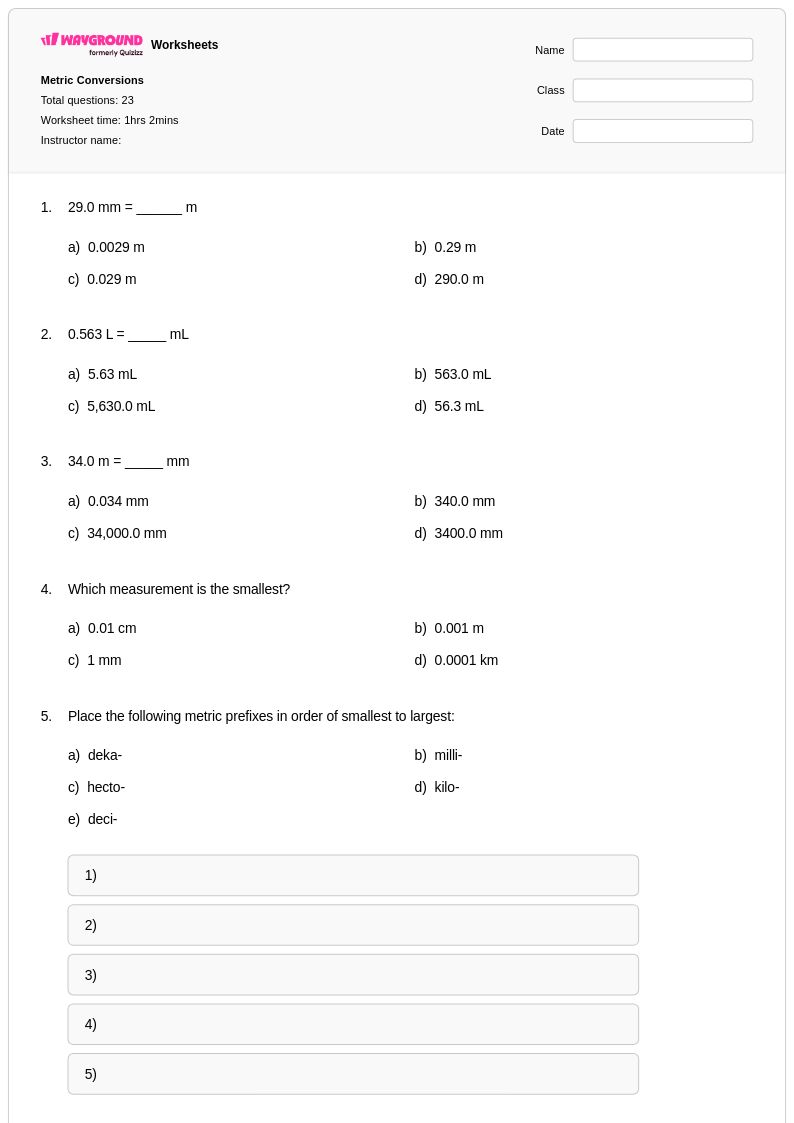
23 T
6th - 8th
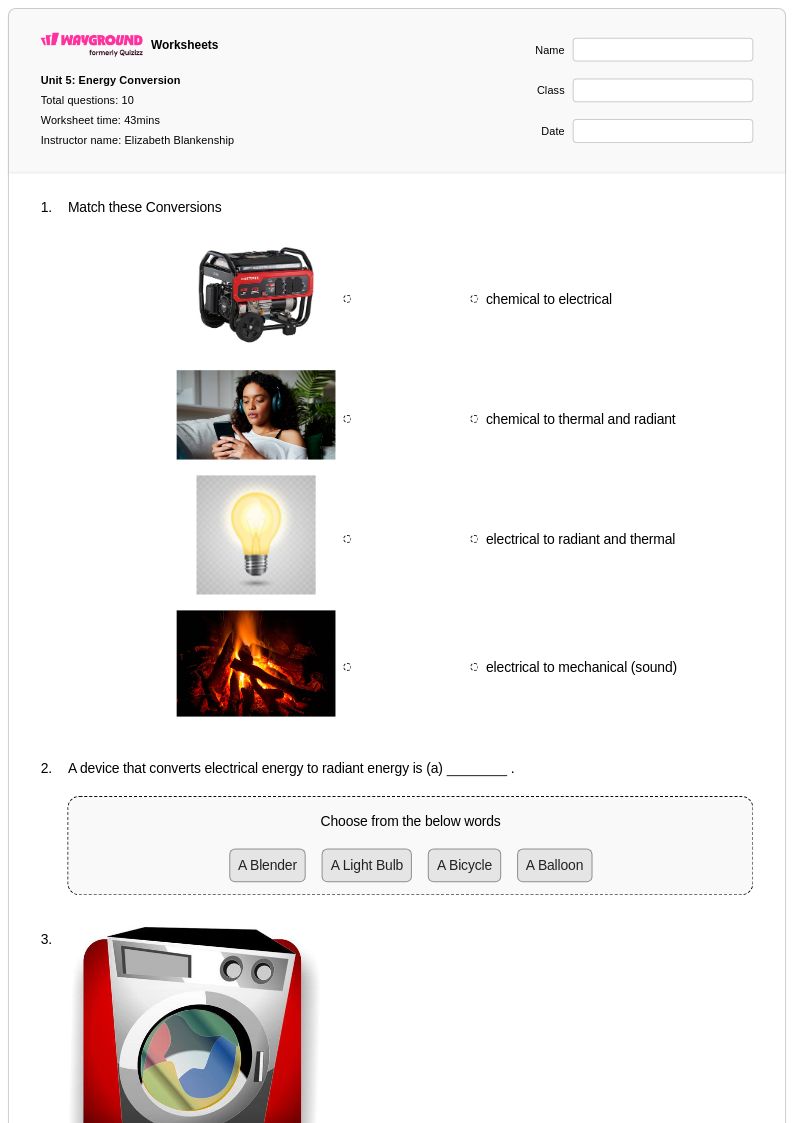
10 T
6th - 8th
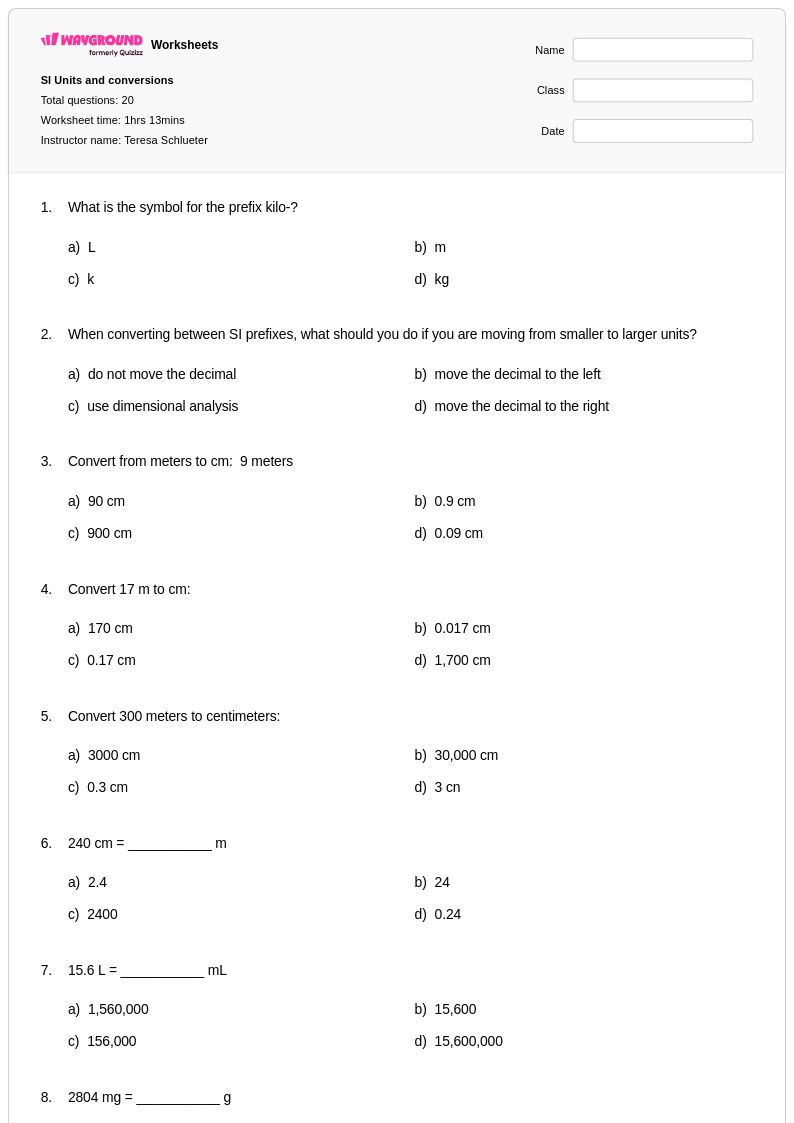
20 T
8th - 9th
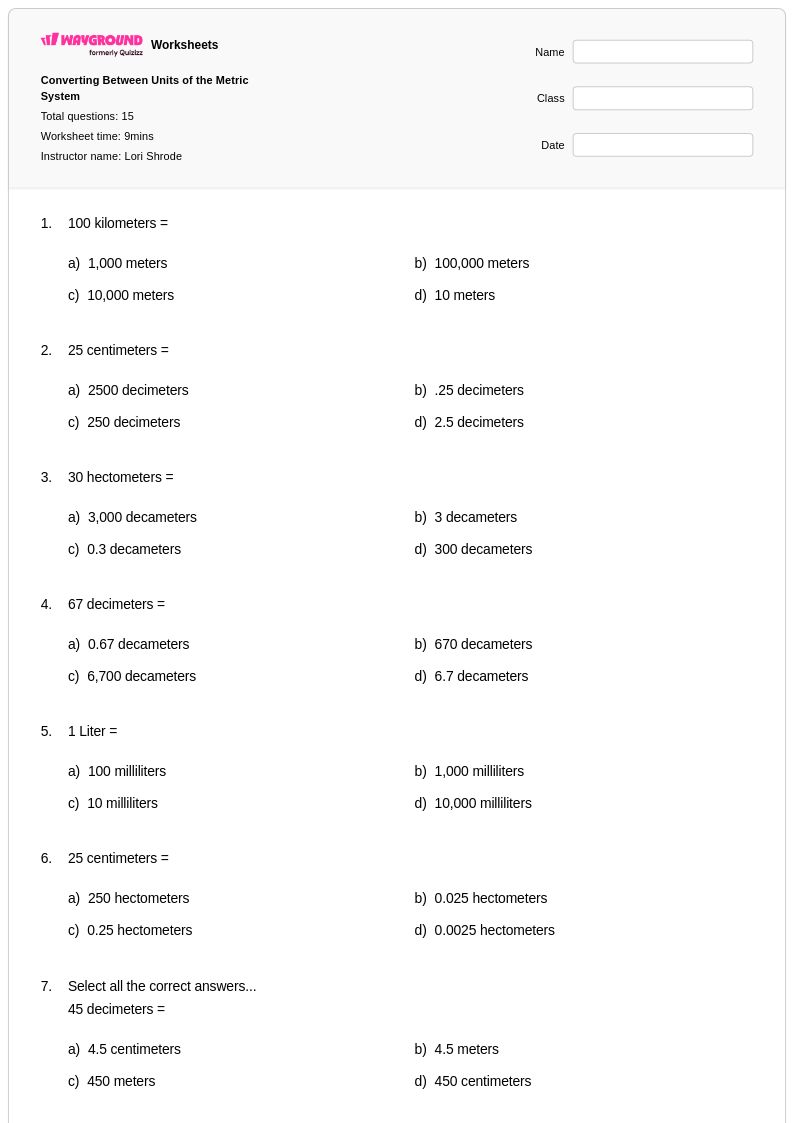
15 T
8th
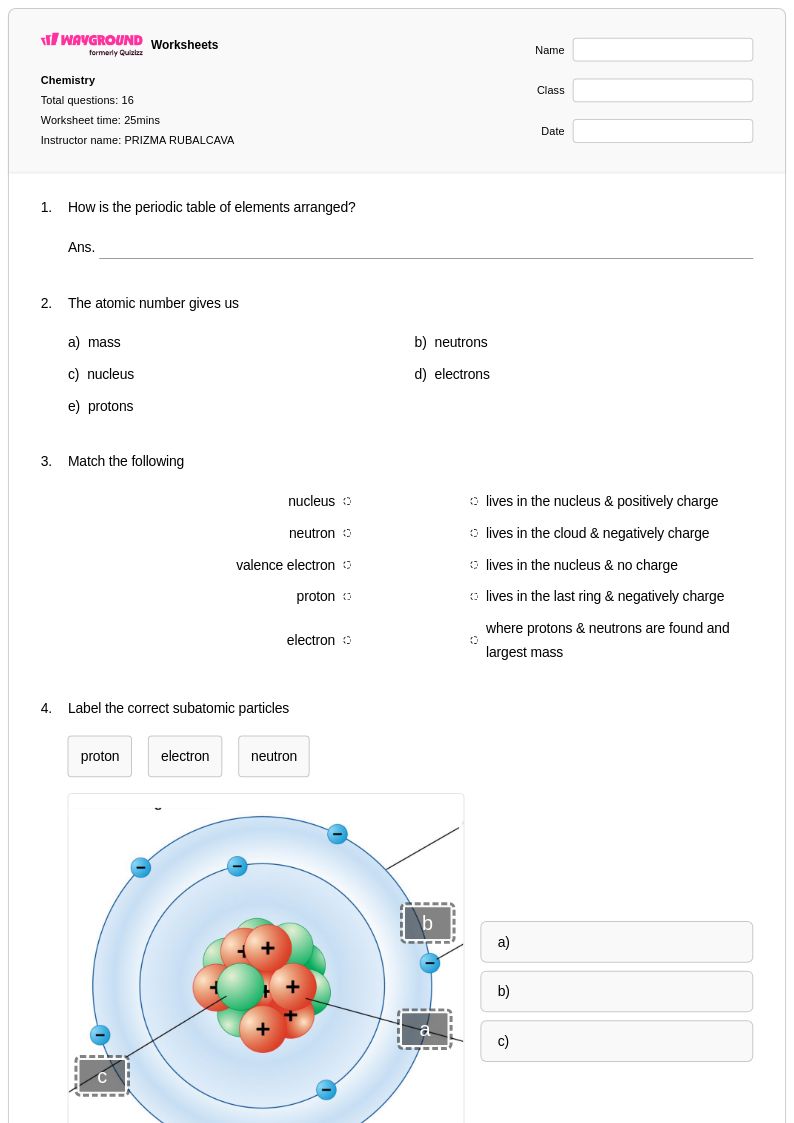
16 T
6th - 8th
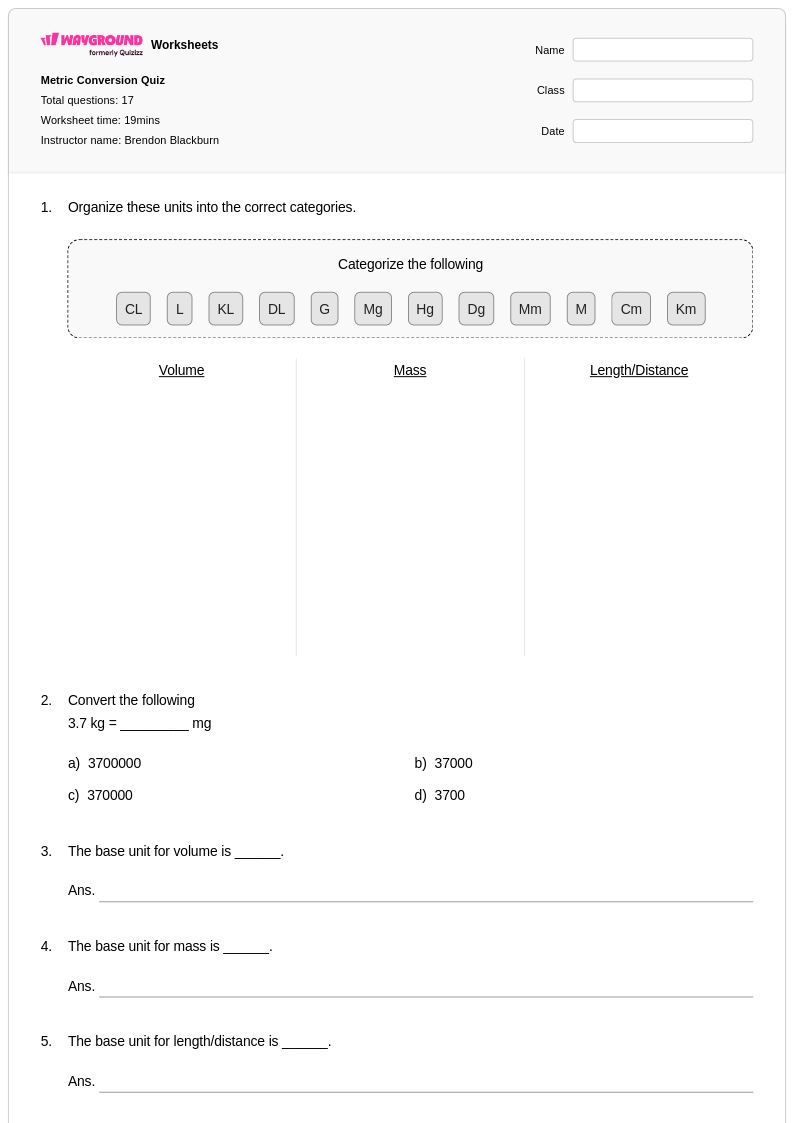
17 T
8th
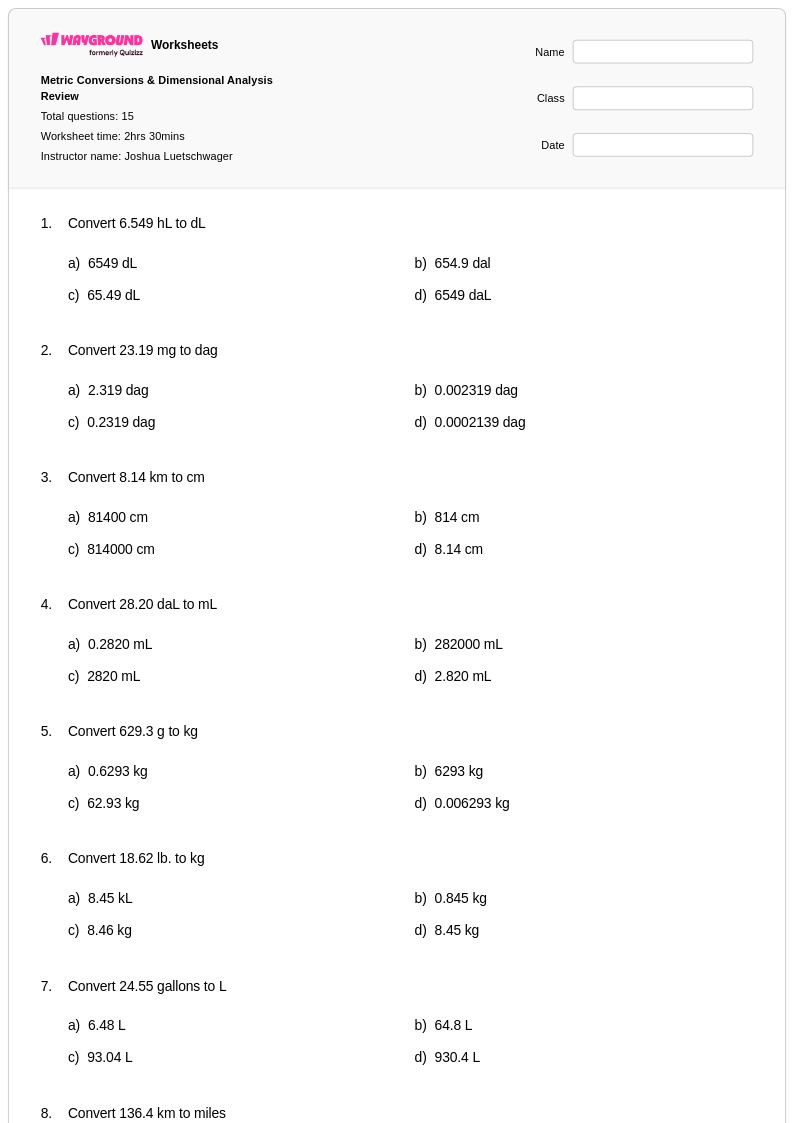
15 T
8th
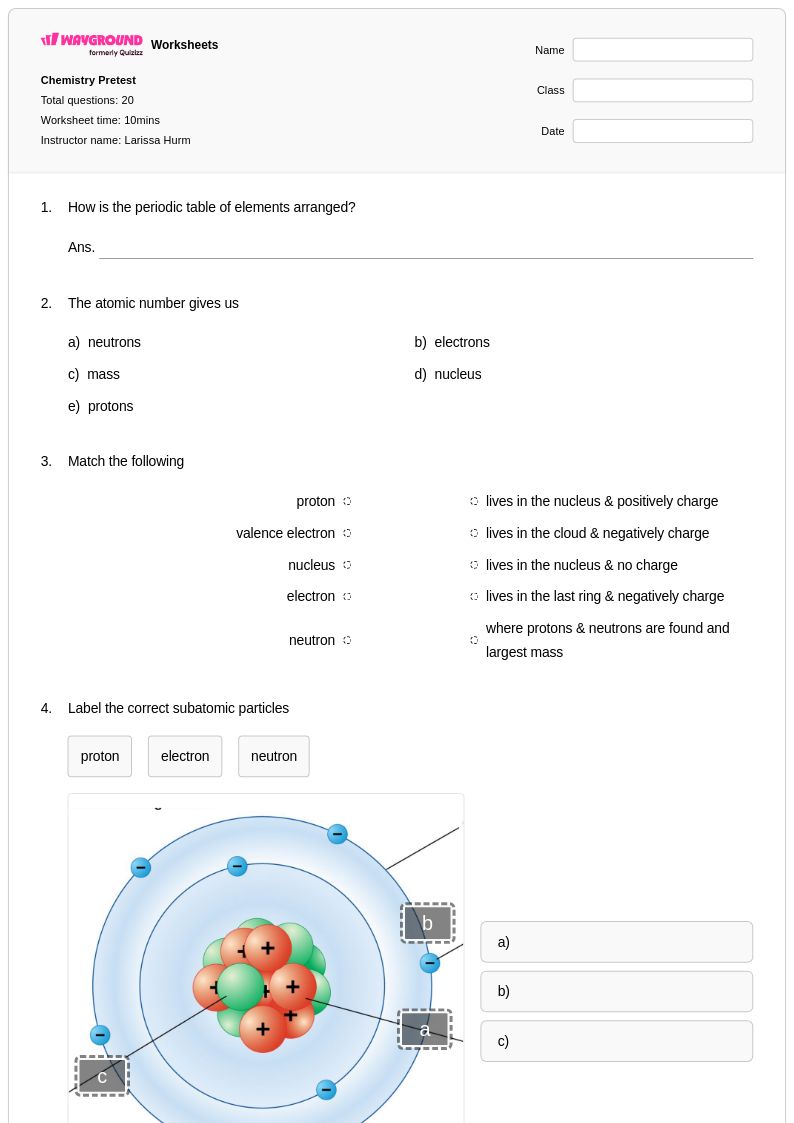
20 T
8th
27 T
6th - 8th
62 T
8th
85 T
8th
15 T
8th - Uni
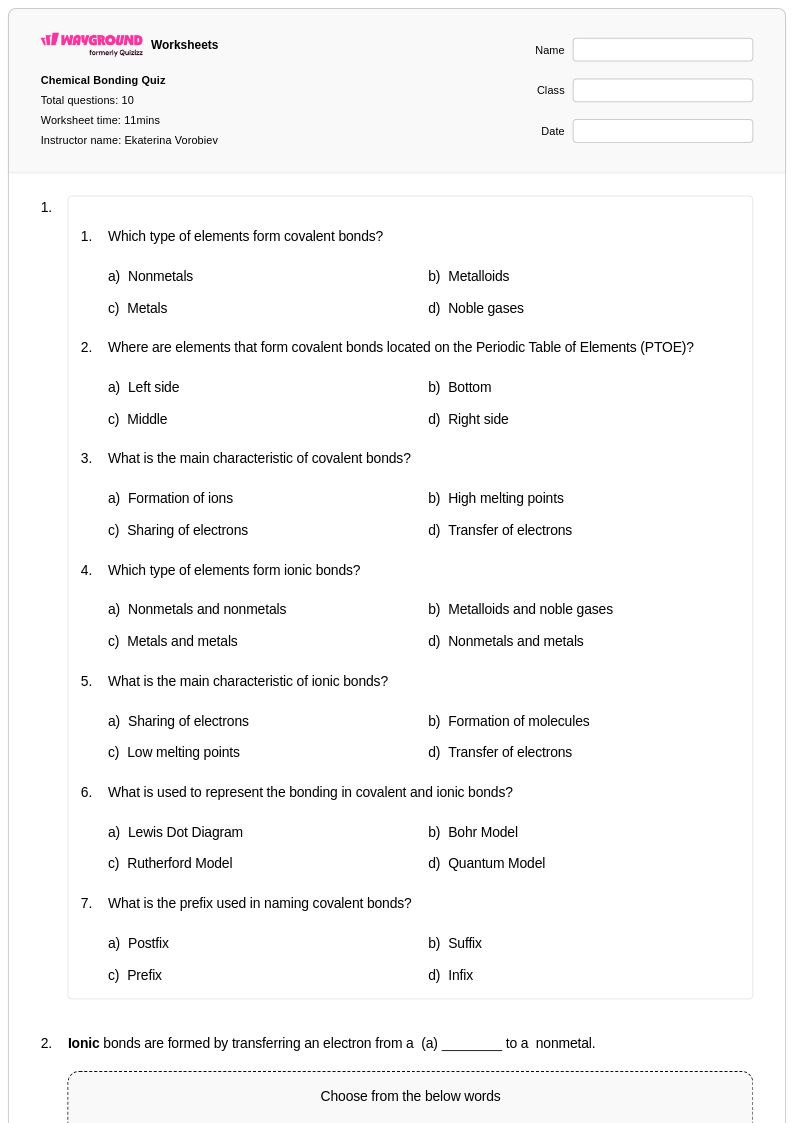
17 T
8th
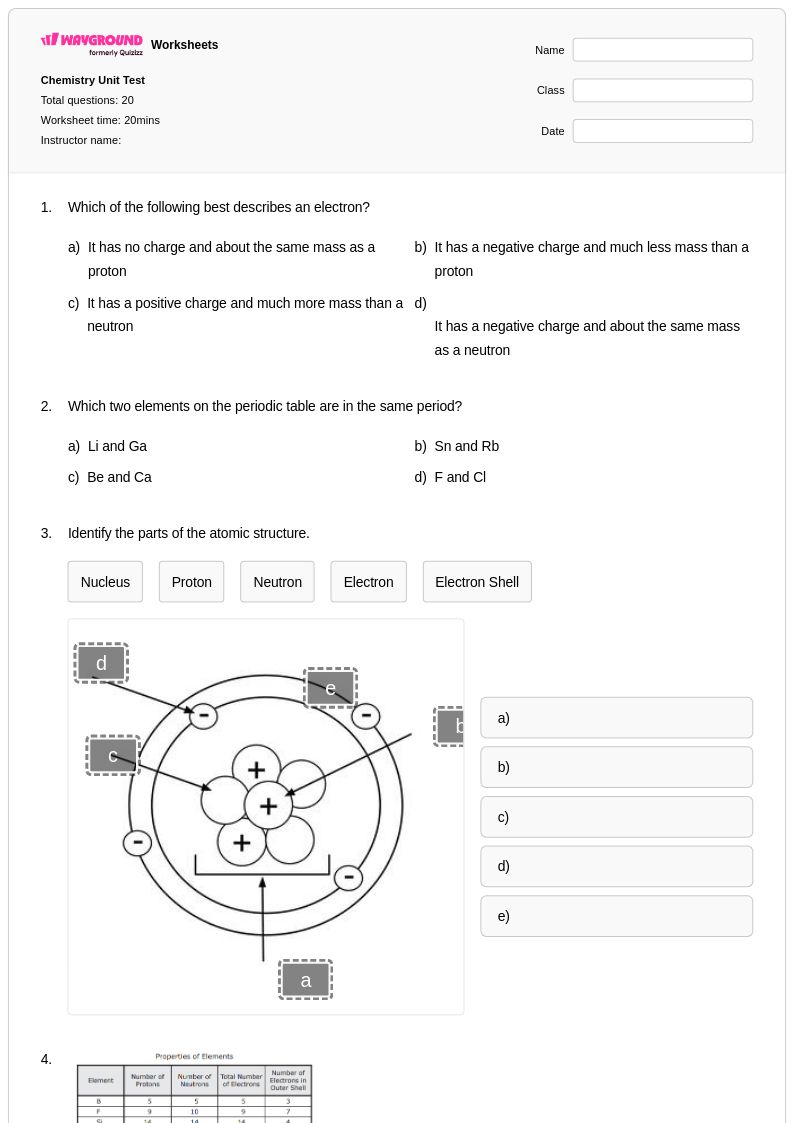
20 T
7th - Uni
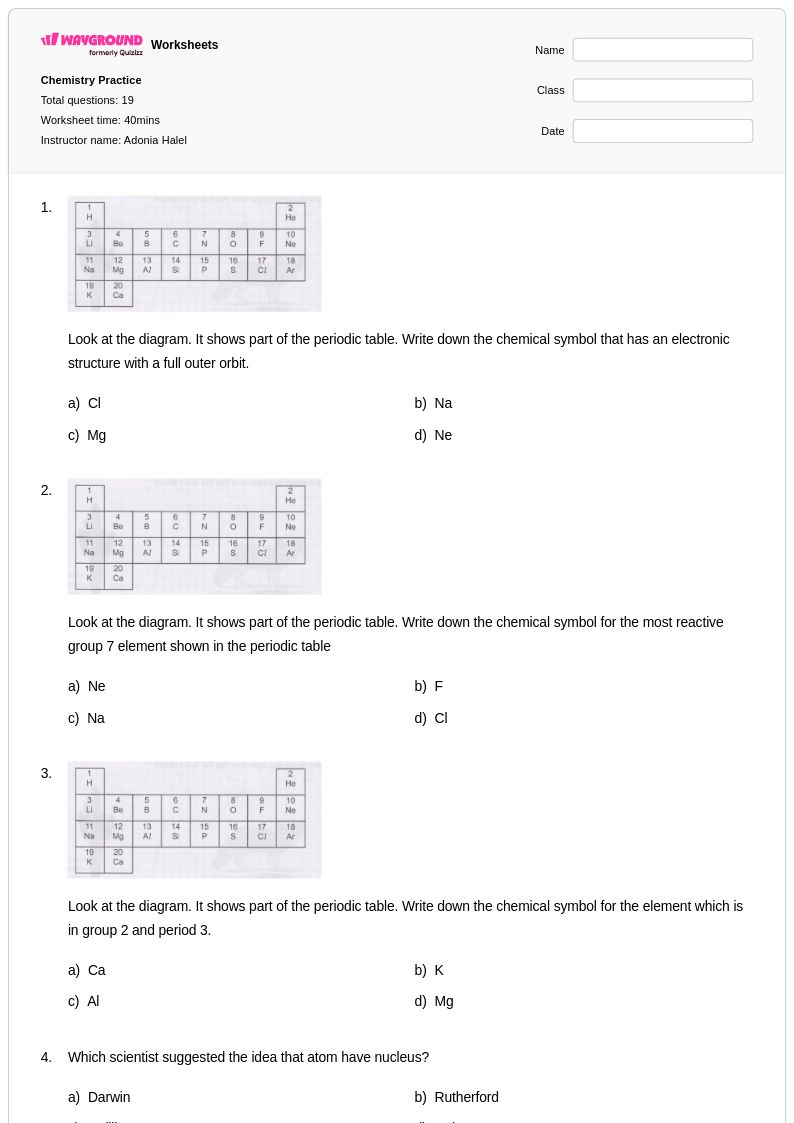
19 T
8th
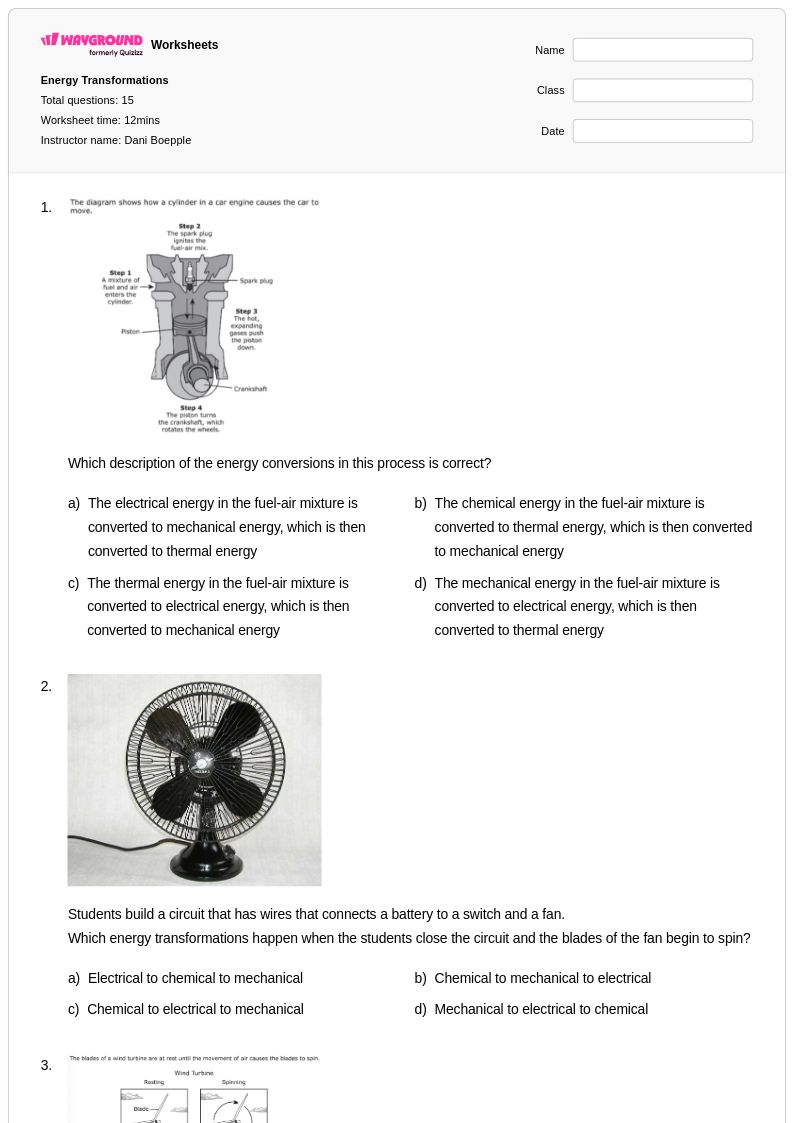
15 T
8th
28 T
8th
16 T
8th
20 T
8th
12 T
8th
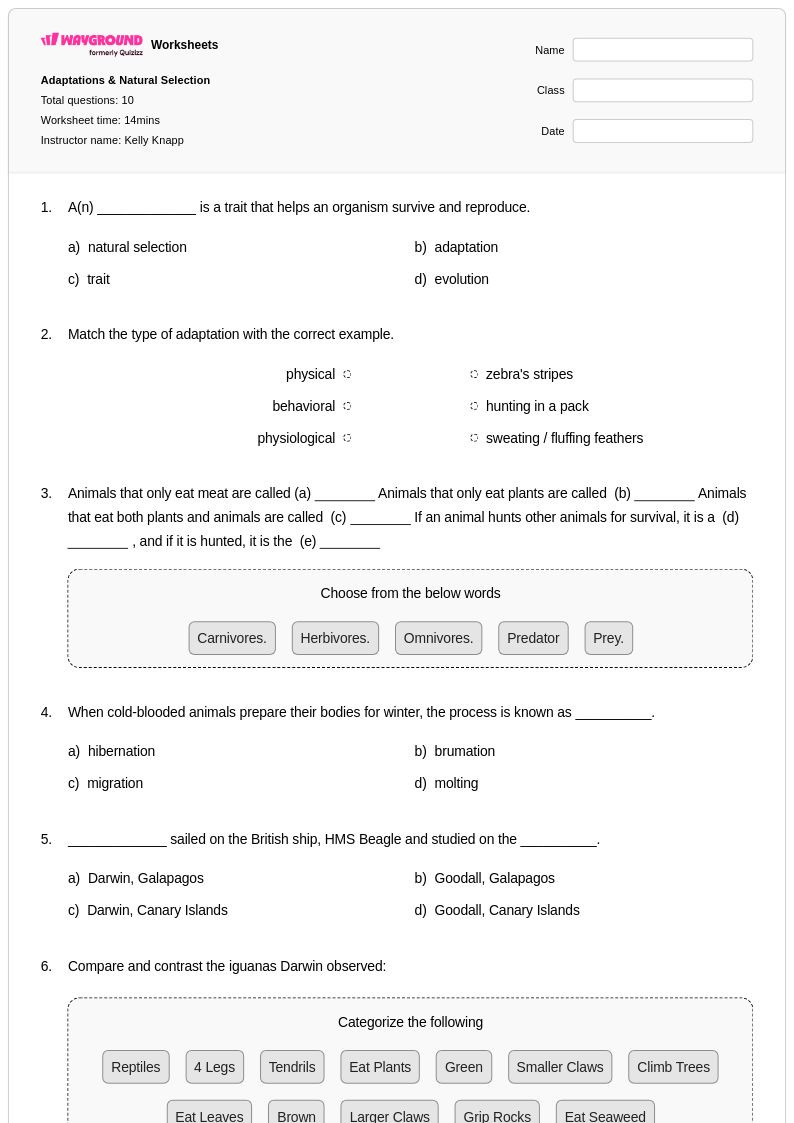
10 T
6th - 8th
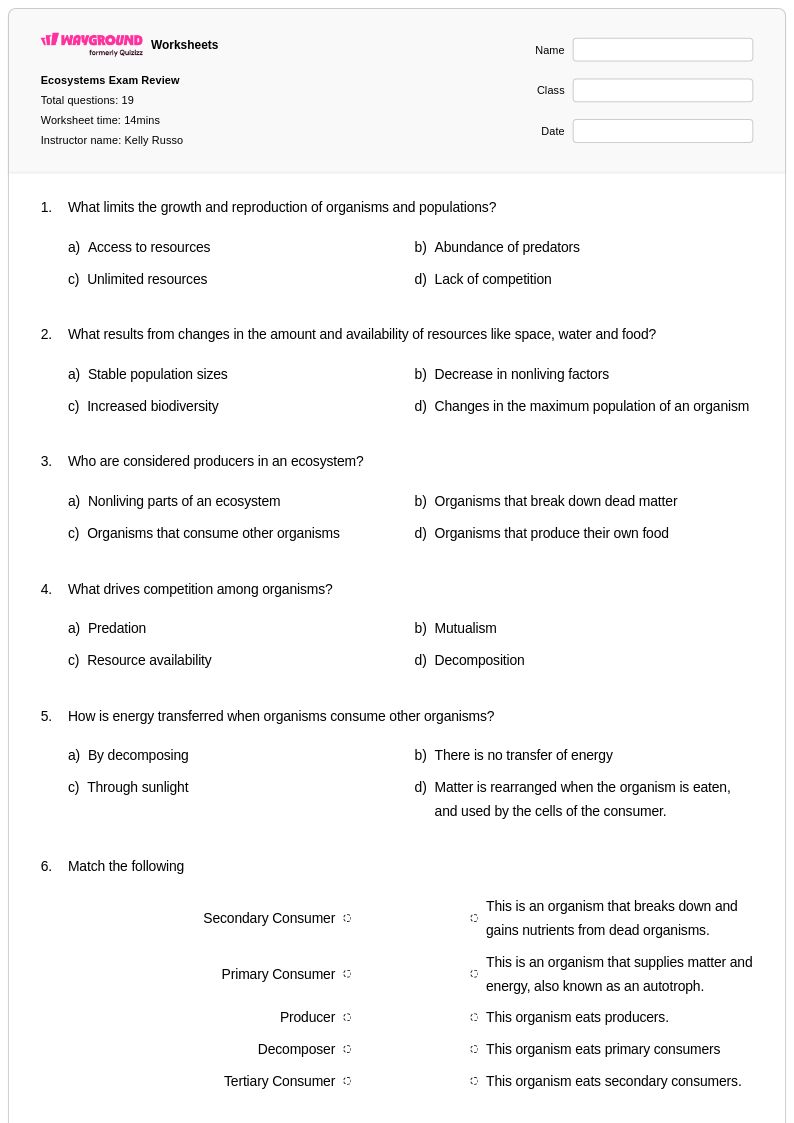
19 T
8th
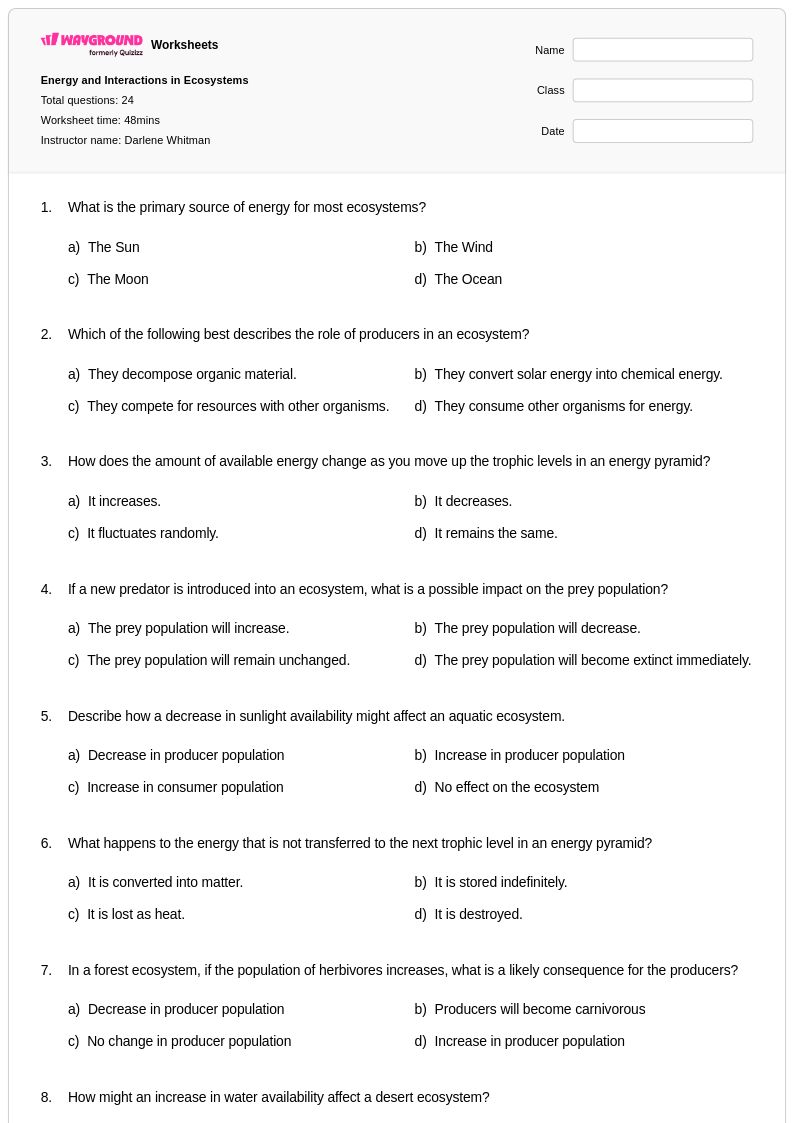
24 T
8th
Jelajahi Conversion Factors in Chemistry Lembar Kerja berdasarkan Nilai
Jelajahi Lembar Kerja Mata Pelajaran Lainnya untuk grade 8
Explore printable Conversion Factors in Chemistry worksheets for Grade 8
Conversion factors in chemistry represent a fundamental skill that Grade 8 students must master to succeed in quantitative problem-solving throughout their scientific education. Wayground's comprehensive collection of conversion factor worksheets provides targeted practice with dimensional analysis, unit conversions, and stoichiometric calculations that form the backbone of chemical computations. These carefully designed resources strengthen students' ability to convert between different units of measurement, work with molar relationships, and apply mathematical reasoning to chemical scenarios. Each worksheet includes detailed answer keys that guide students through step-by-step problem-solving methods, while the free printable format allows for flexible classroom implementation and individual practice. The practice problems progress systematically from basic unit conversions to more complex multi-step calculations, ensuring students develop confidence with this essential chemistry skill.
Wayground's robust platform, formerly known as Quizizz, empowers educators with millions of teacher-created resources specifically designed for chemistry instruction and Grade 8 learning objectives. The advanced search and filtering capabilities enable teachers to quickly locate conversion factor worksheets that align with state and national science standards, while built-in differentiation tools allow for seamless customization based on individual student needs and learning levels. These versatile resources are available in both printable PDF format for traditional classroom use and interactive digital versions for technology-enhanced learning environments. Teachers can efficiently plan targeted instruction, provide remediation for struggling students, offer enrichment opportunities for advanced learners, and assign meaningful skill practice that reinforces dimensional analysis concepts essential for success in high school chemistry and beyond.