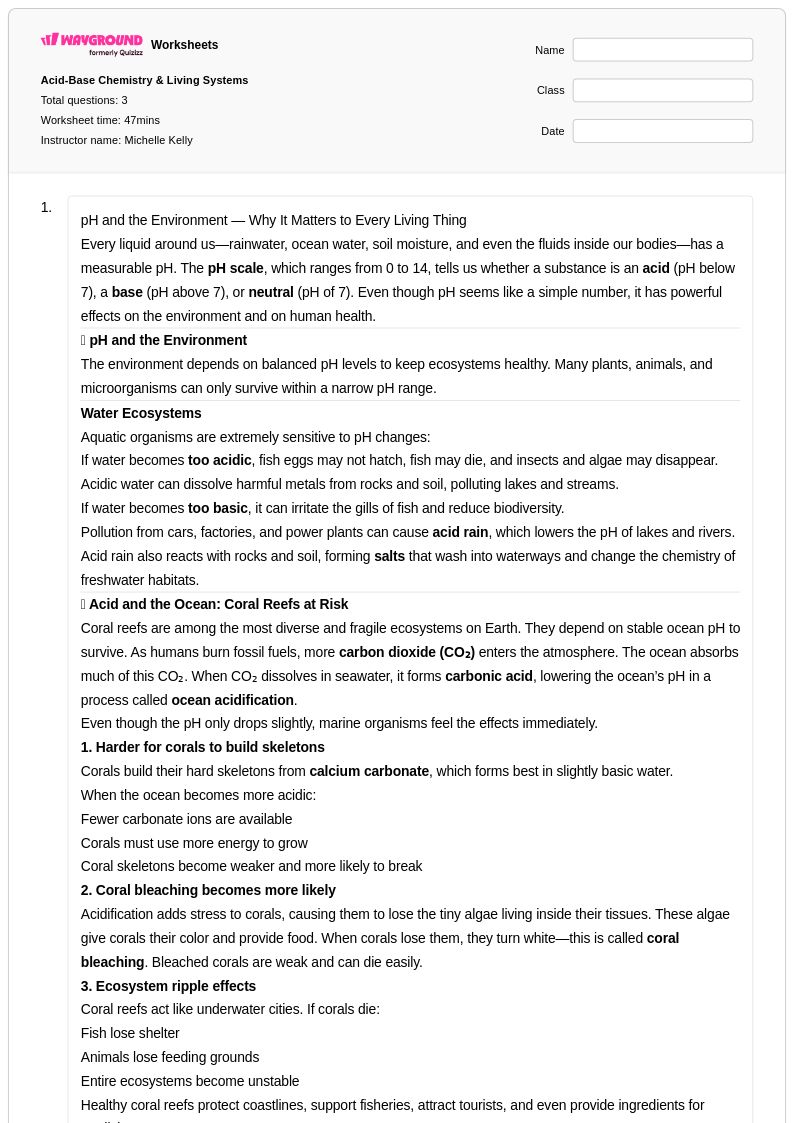
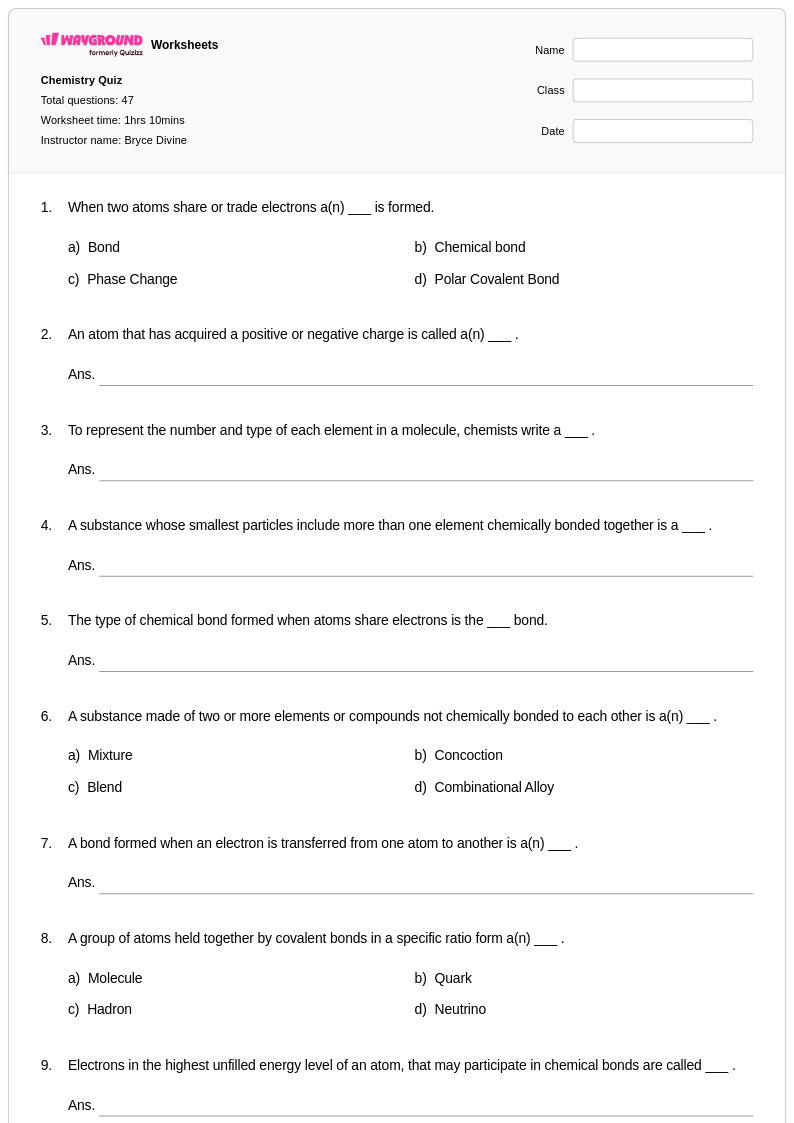
Free Printable Forming Ions Worksheets for Grade 8
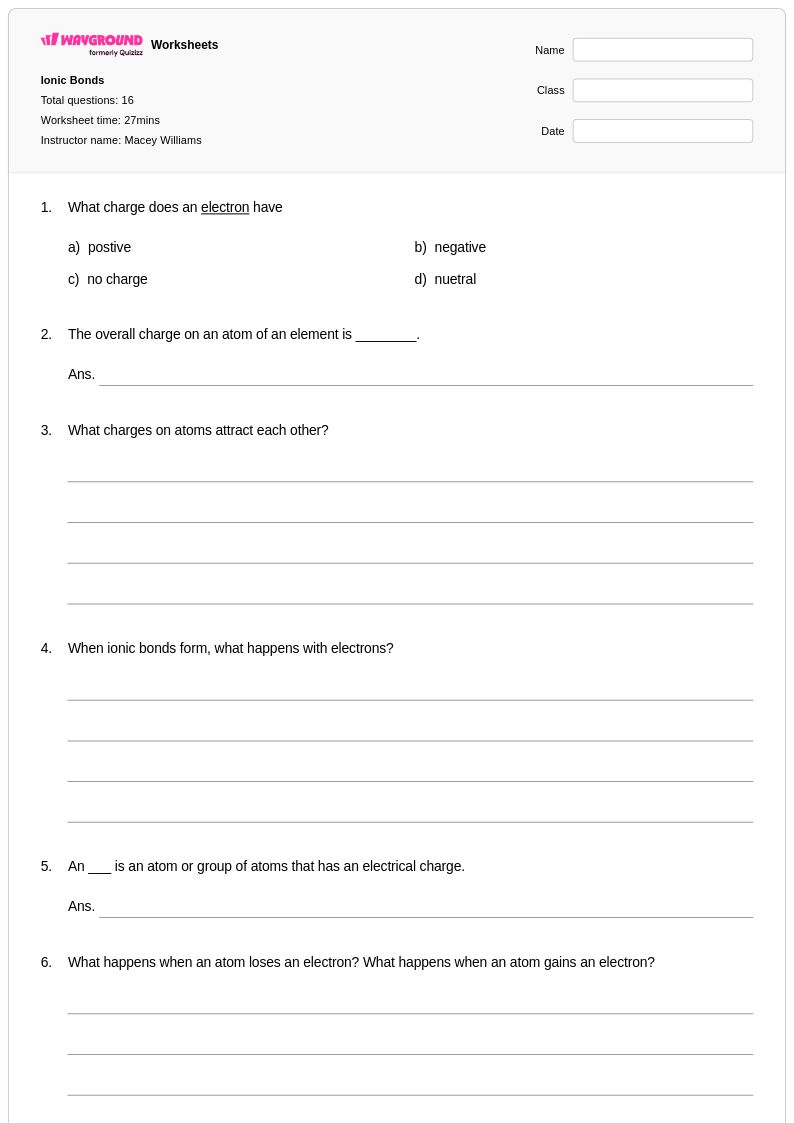
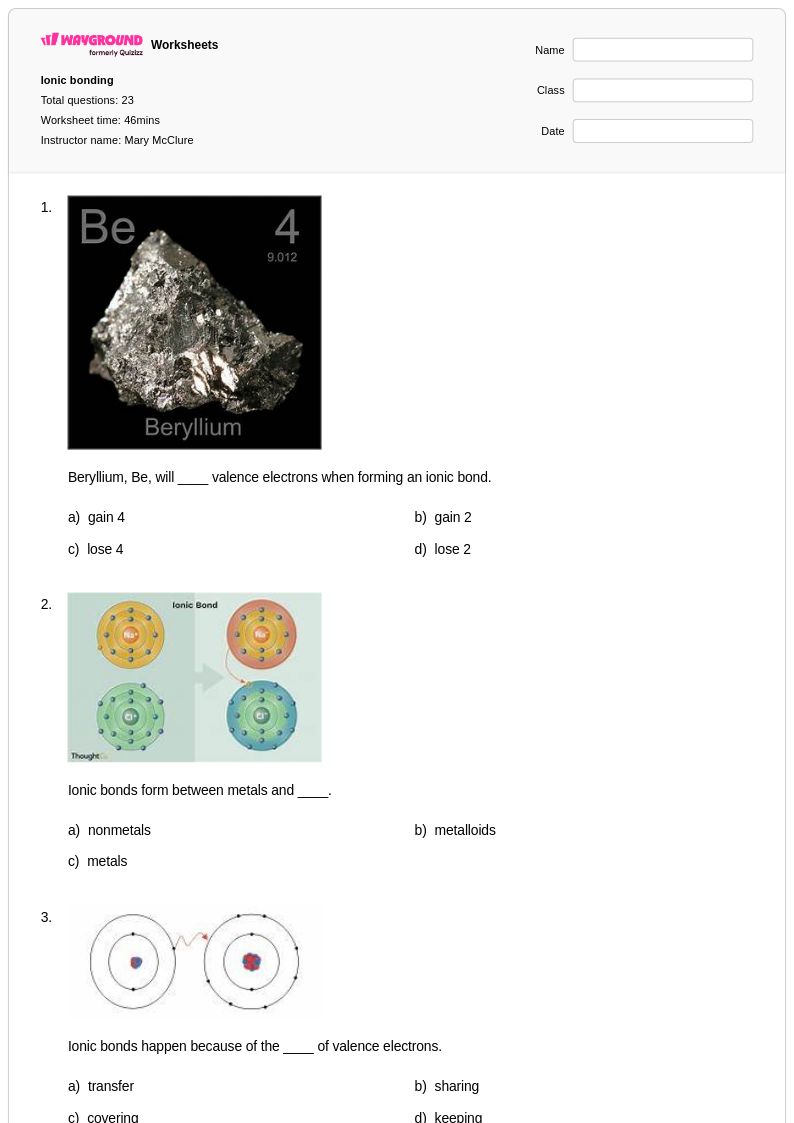
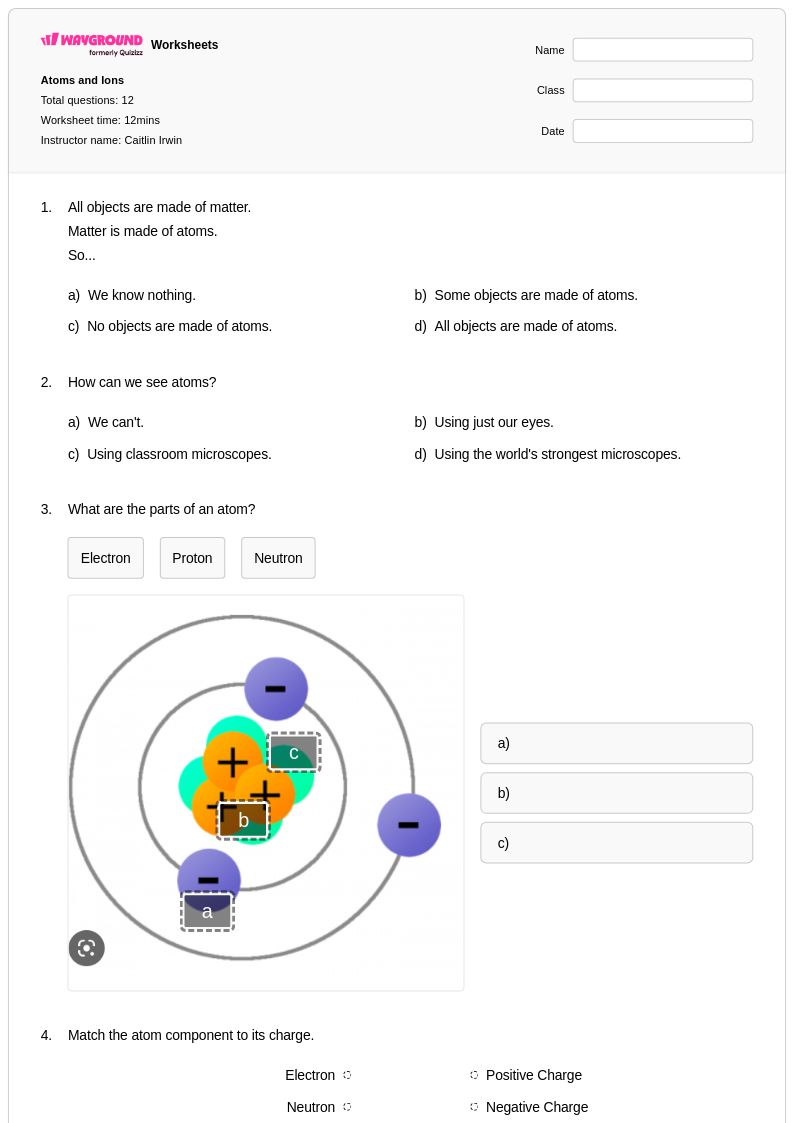
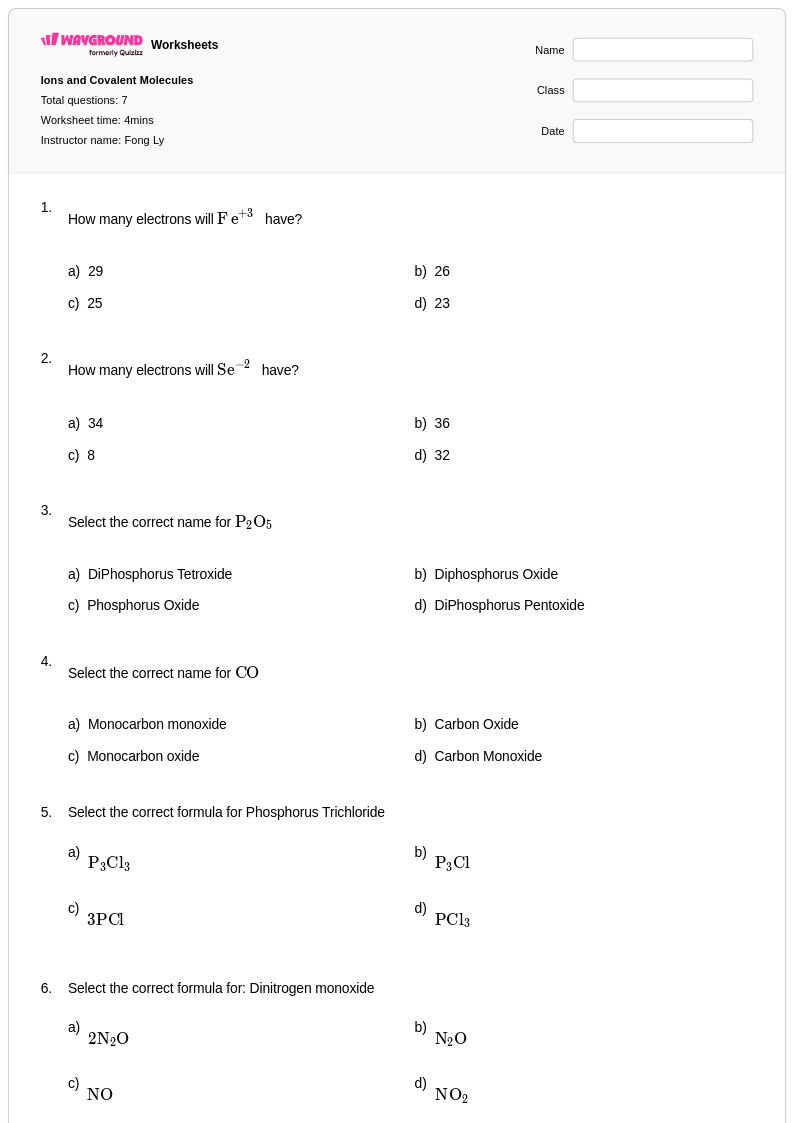
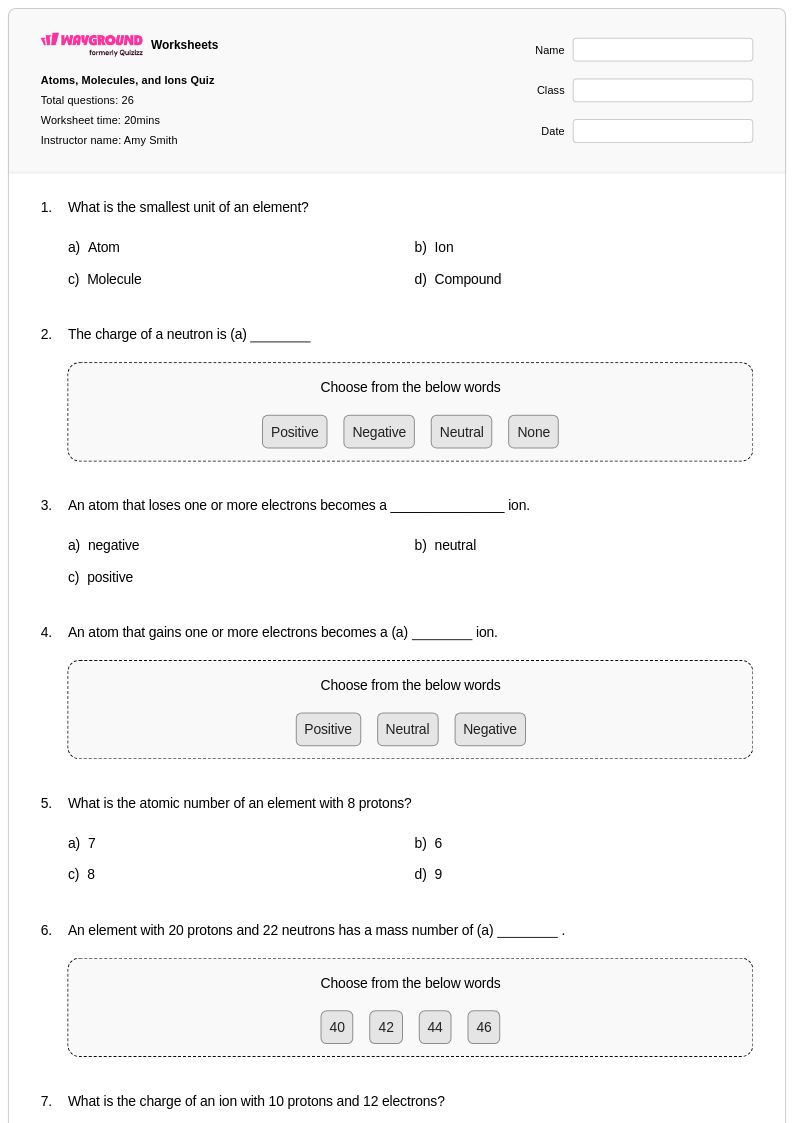
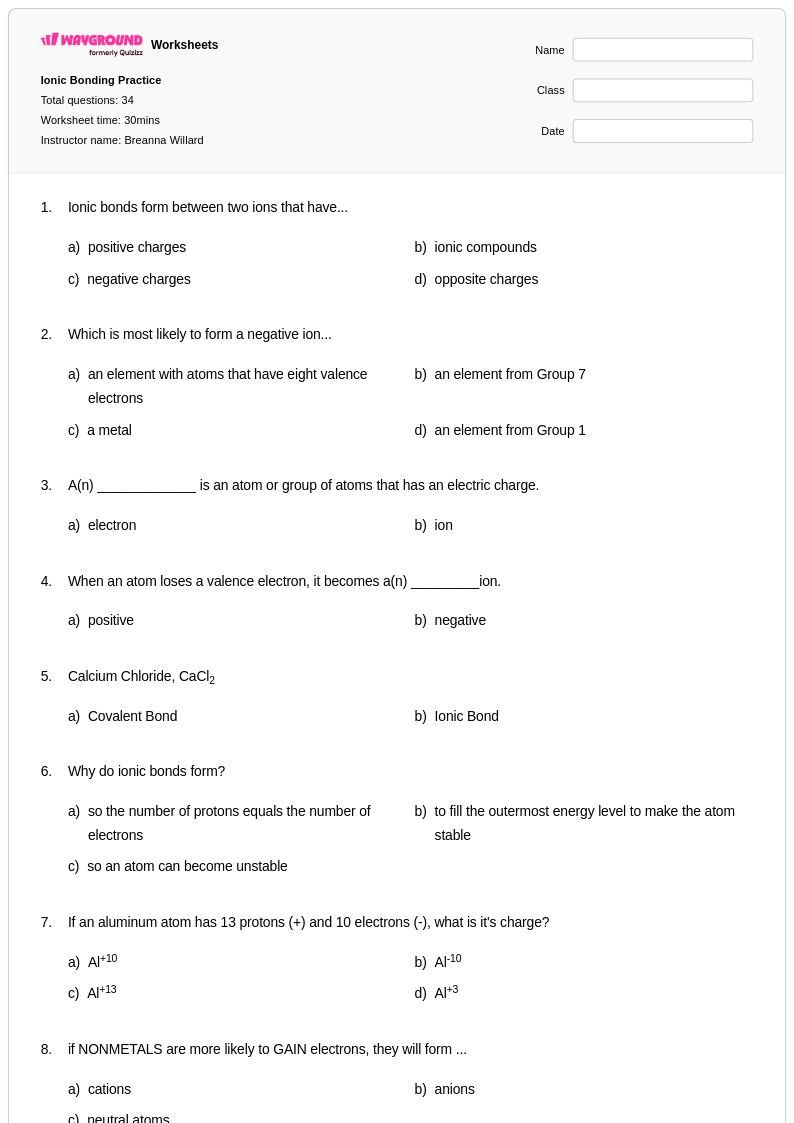
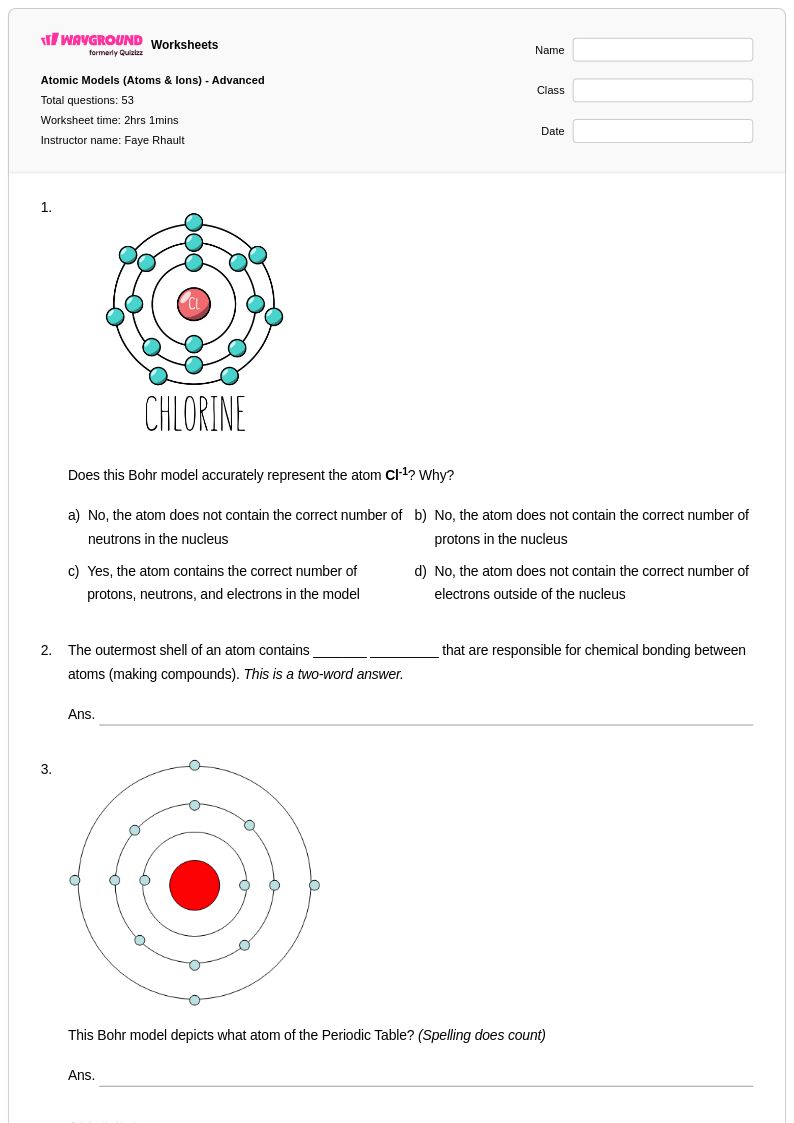
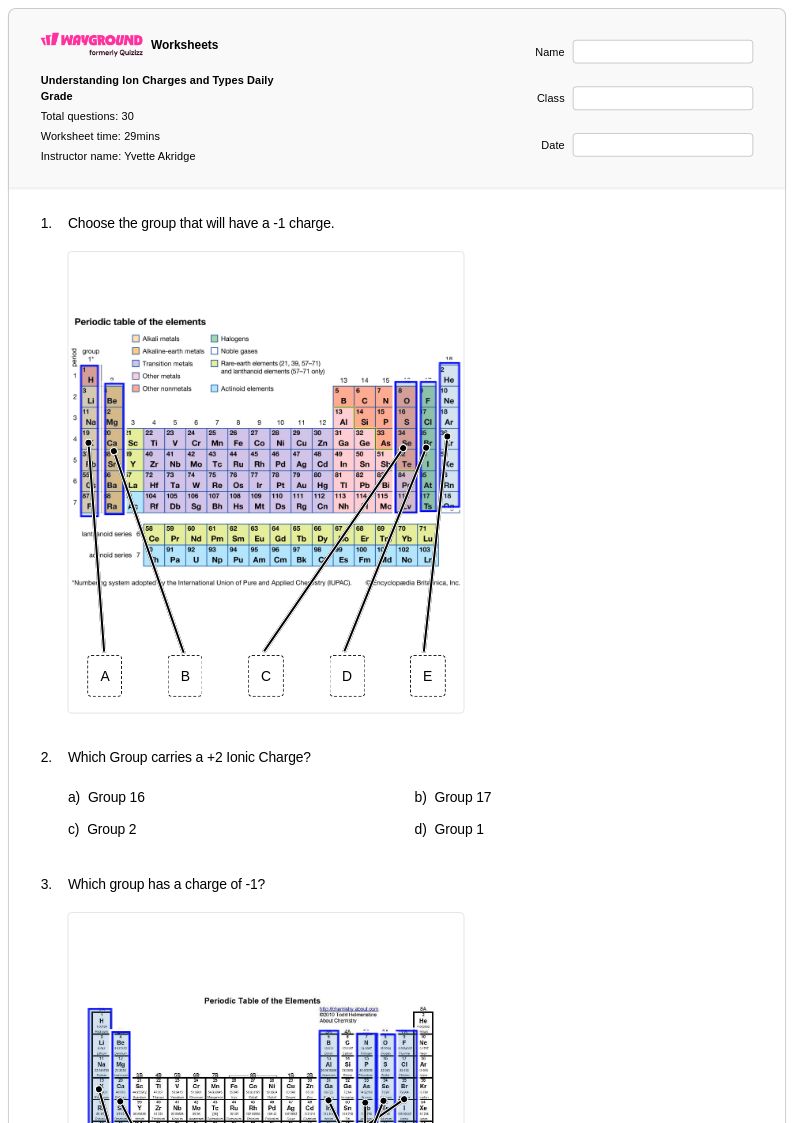
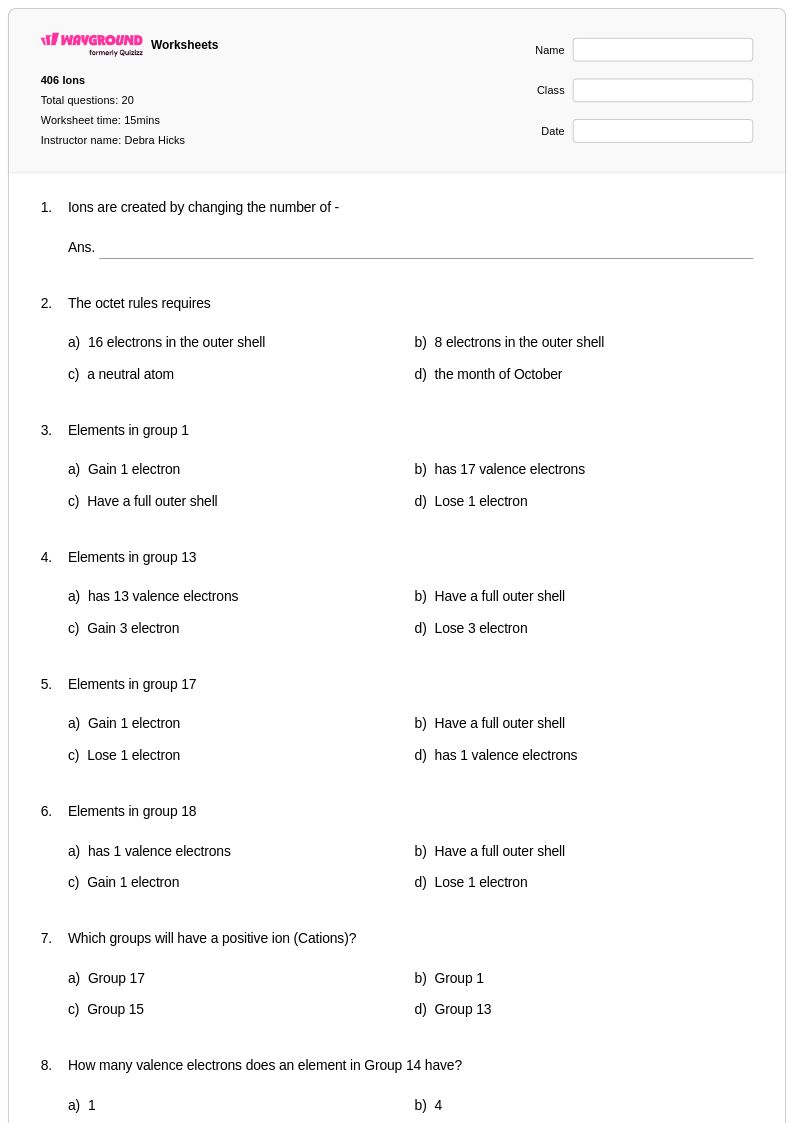
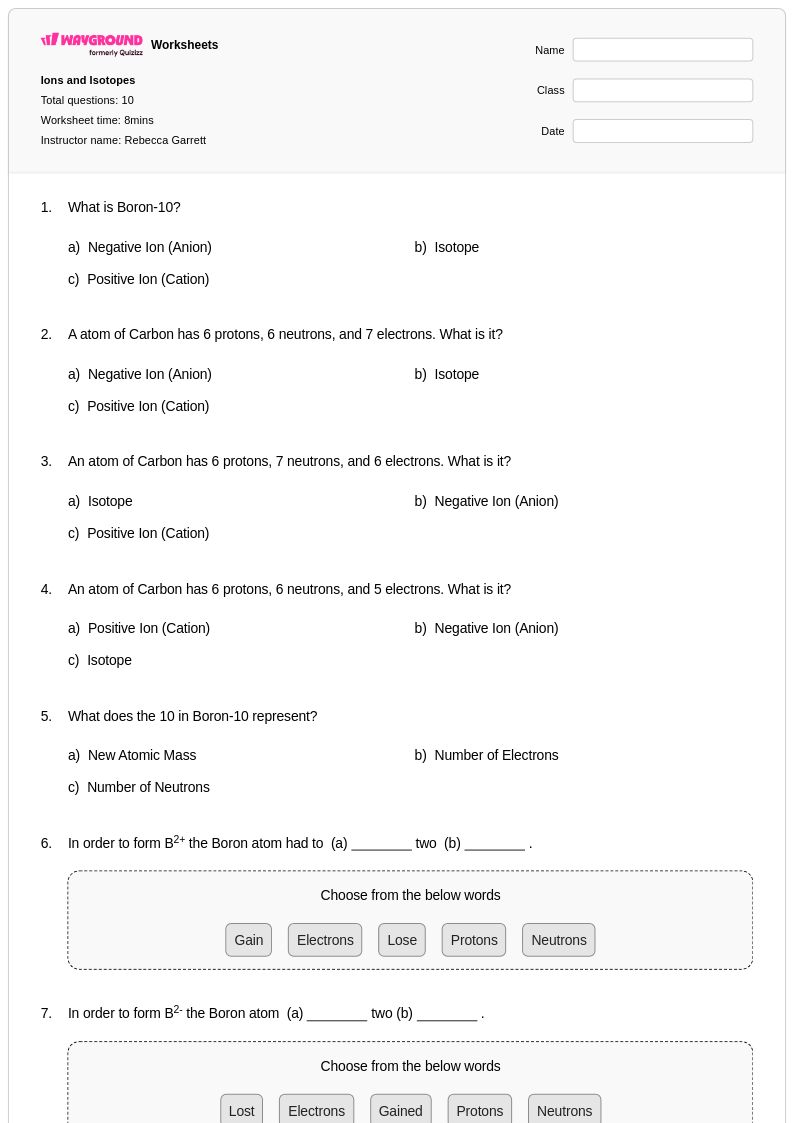
Grade 8 forming ions worksheets offer comprehensive printables and practice problems that help students master how atoms gain or lose electrons to create charged particles, complete with answer keys and free PDF downloads.
Explore printable Forming Ions worksheets for Grade 8
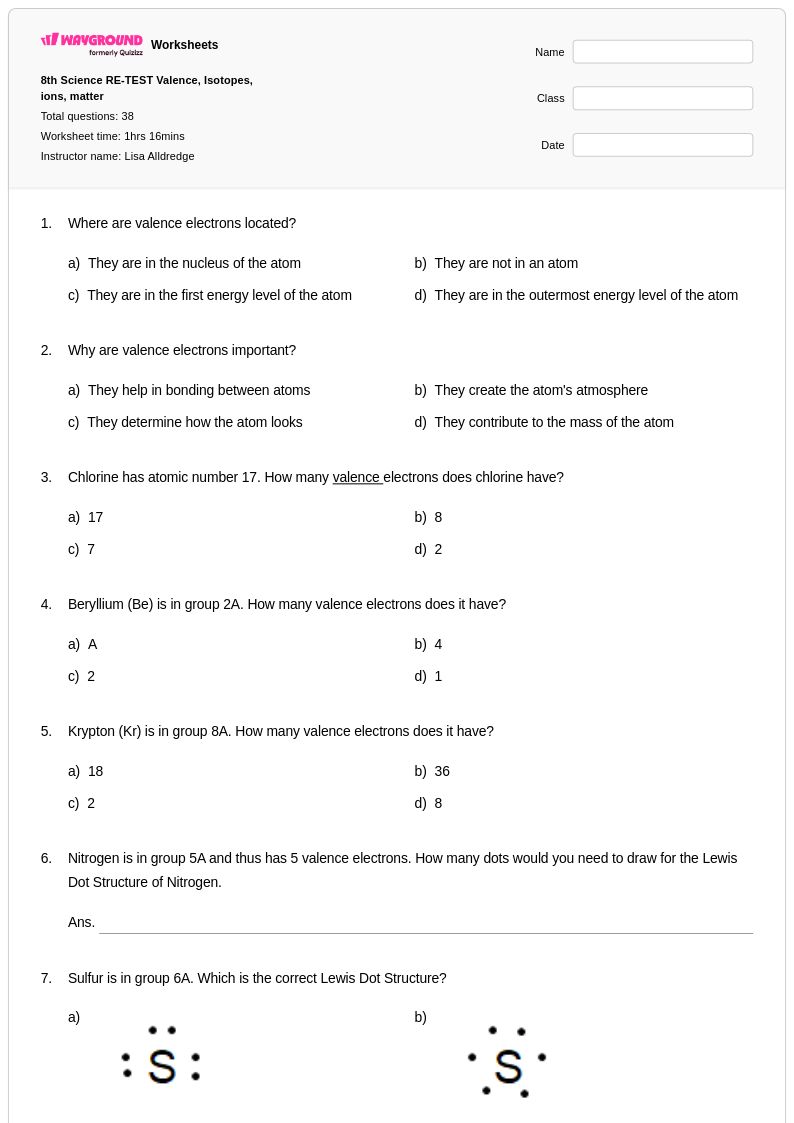
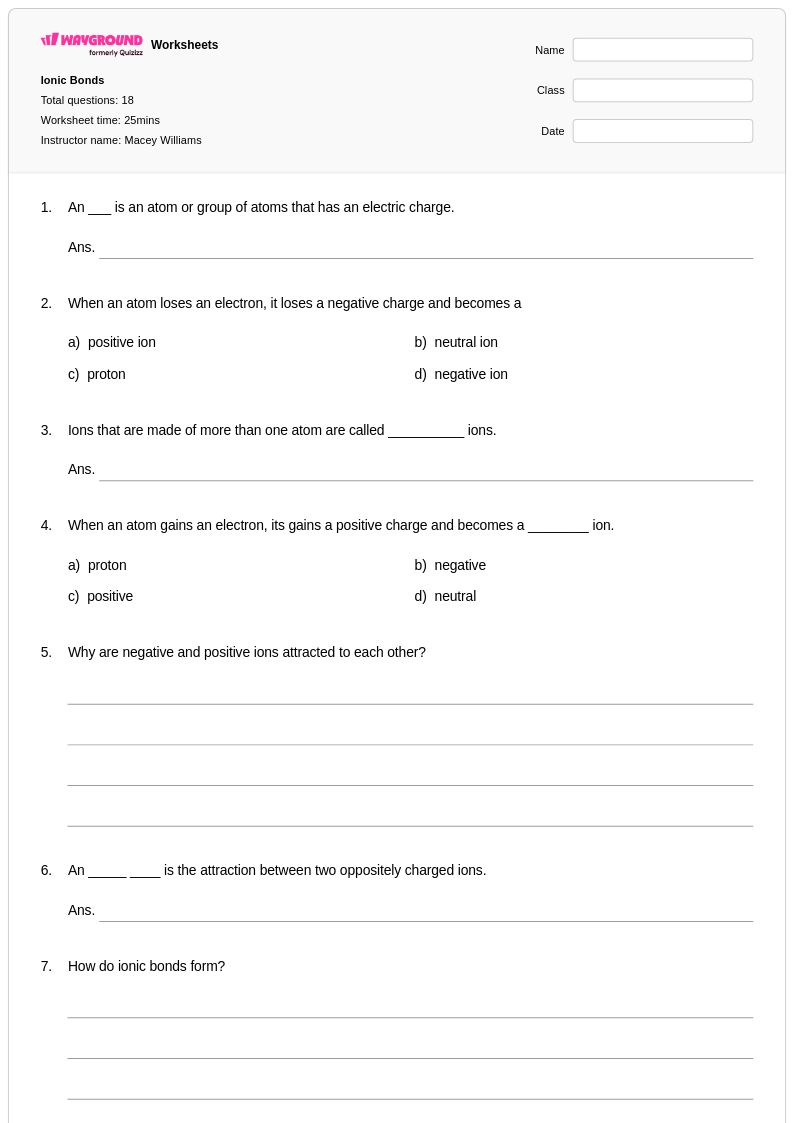
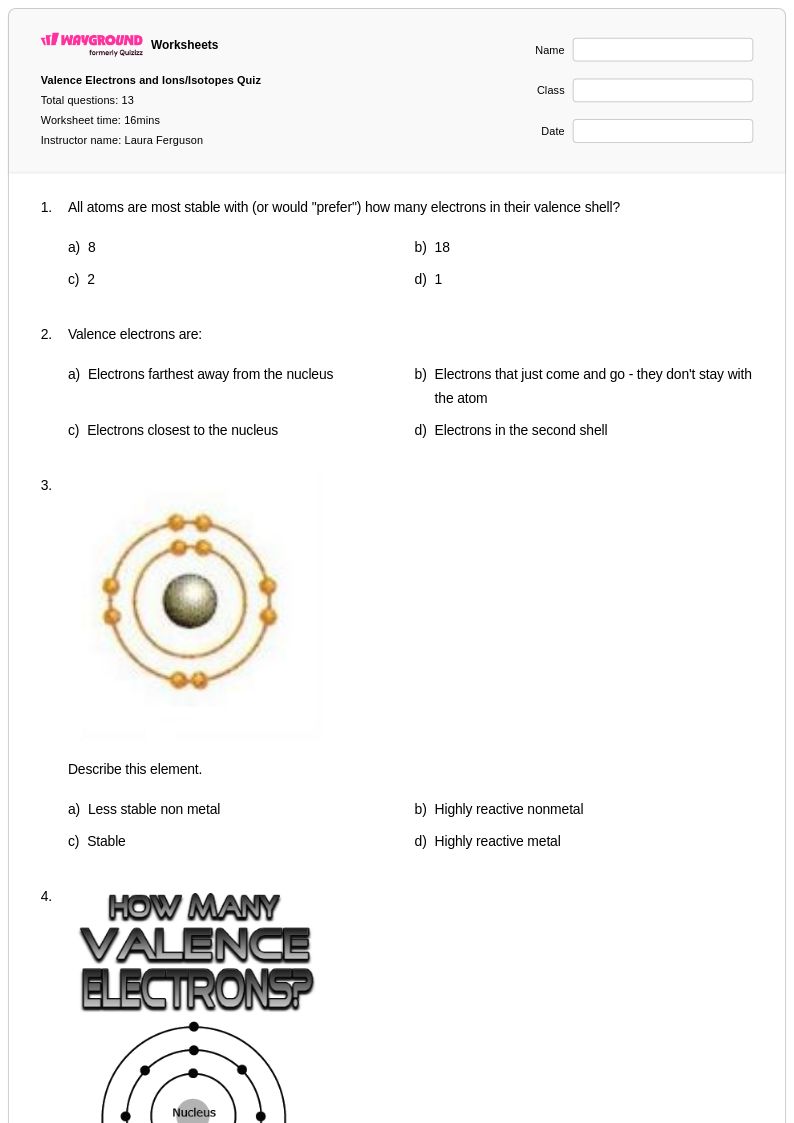
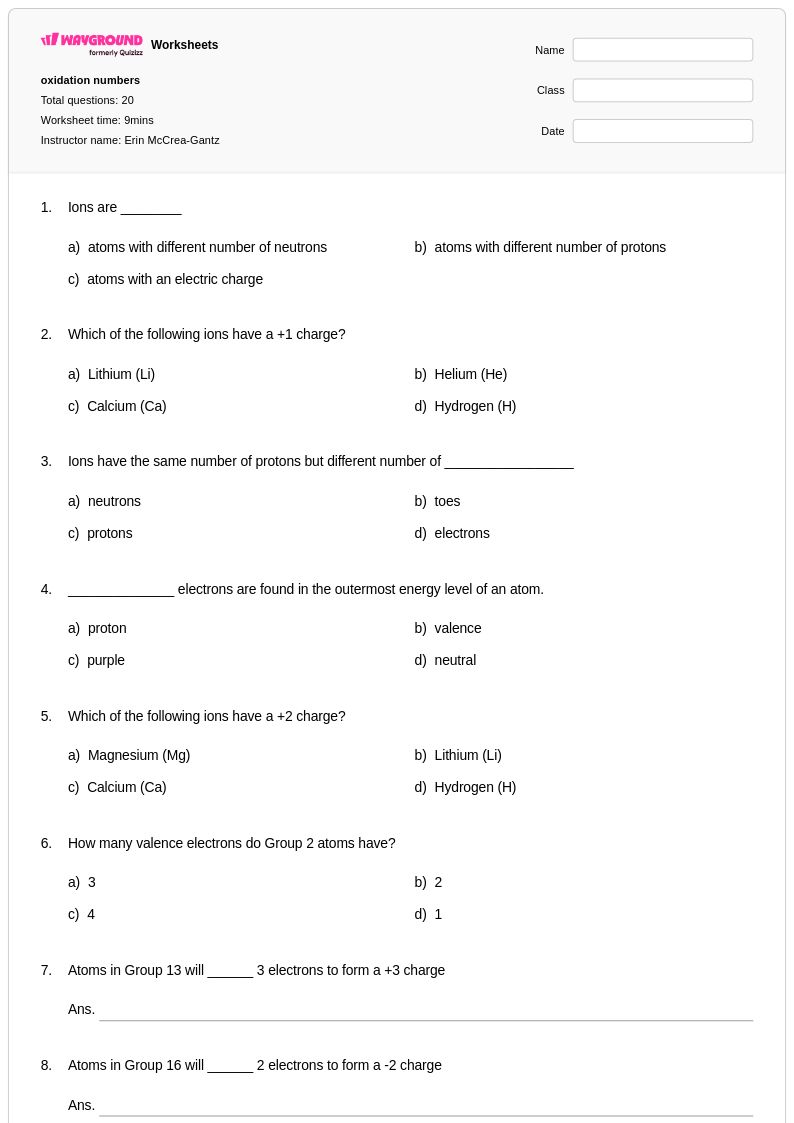
Forming ions represents a fundamental concept in Grade 8 chemistry that bridges atomic structure with chemical bonding and compound formation. Wayground's comprehensive collection of forming ions worksheets provides students with systematic practice in understanding how atoms gain or lose electrons to achieve stable electron configurations. These carefully designed resources strengthen critical skills including identifying the charges of common ions, predicting ionic formation based on periodic table positions, writing electron configurations for ions, and understanding the relationship between atomic structure and ionic behavior. The worksheets feature a variety of practice problems that progress from basic ion identification to more complex scenarios involving polyatomic ions and ionic compound formation, with complete answer keys provided to support independent learning and immediate feedback.
Wayground, formerly Quizizz, empowers educators with millions of teacher-created resources specifically focused on ionic chemistry concepts, offering robust search and filtering capabilities that allow instructors to locate materials perfectly aligned with their curriculum standards and student needs. The platform's differentiation tools enable teachers to customize worksheets for various learning levels within the same classroom, while the flexible format options include both printable pdf versions for traditional assignments and digital formats for interactive learning experiences. These comprehensive features streamline lesson planning by providing ready-to-use materials for initial instruction, targeted remediation for struggling students, and enrichment activities for advanced learners, ensuring that all Grade 8 students can master the essential skill of understanding how and why atoms form ions in chemical reactions.
FAQs
How do I teach students how atoms form ions?
Start by grounding students in atomic structure, specifically the relationship between valence electrons and an element's group number on the periodic table. From there, teach the octet rule as the driving principle: atoms gain or lose electrons to achieve a full outer shell, becoming anions or cations respectively. Using the periodic table as a visual reference helps students predict ionic charges before they practice writing ionic formulas. Connecting ion formation directly to chemical bonding gives students a reason why this concept matters beyond memorization.
What exercises help students practice forming ions?
Effective practice moves from simple to complex: begin with single-element exercises where students determine how many electrons an atom will gain or lose based on its group, then progress to writing ion symbols with correct charges. Problems involving transition metals and polyatomic ions add complexity once the foundational rules are secure. Structured worksheet problems that walk students through each step systematically are especially useful because they build procedural fluency before students tackle multi-step questions independently.
What mistakes do students commonly make when learning about ion formation?
A frequent error is confusing the number of electrons lost or gained with the resulting charge sign — students sometimes write a cation with a negative charge or vice versa. Another common misconception is assuming all elements form ions with the same magnitude of charge, which breaks down with transition metals that have variable oxidation states. Students also regularly conflate atomic number with the number of electrons in an ion, forgetting that ion formation changes the electron count while the proton count stays fixed.
How do I differentiate forming ions instruction for students at different skill levels?
For students who are still building foundational understanding, focus practice on main group elements where ionic charges are predictable from periodic table position before introducing exceptions. More advanced students can explore transition metals, polyatomic ions, and multi-step ionic formula problems. On Wayground, teachers can apply accommodations such as reduced answer choices to lower cognitive load for struggling students, or enable Read Aloud for students who benefit from audio support, without signaling any difference to the rest of the class.
How do I use Wayground's forming ions worksheets in my classroom?
Wayground's forming ions worksheets are available as printable PDFs for traditional classroom use and in digital formats for technology-integrated learning environments, giving teachers flexibility for homework, in-class practice, or test preparation. Teachers can also host the worksheets as a quiz directly on Wayground, enabling interactive student responses alongside automatic grading. Each worksheet includes a complete answer key, which supports both independent student work and efficient teacher review.
How do I help students distinguish between cations and anions?
Teach students a simple memory anchor: cations are positive and the word contains a 't' as in 'take' (electrons are removed), while anions are negative and 'add' electrons. Reinforce this by pairing periodic table position with the type of ion formed — metals on the left side lose electrons to form cations, while nonmetals on the right gain electrons to form anions. Repeated practice identifying ion type before calculating charge helps students build the habit of categorizing before computing.