
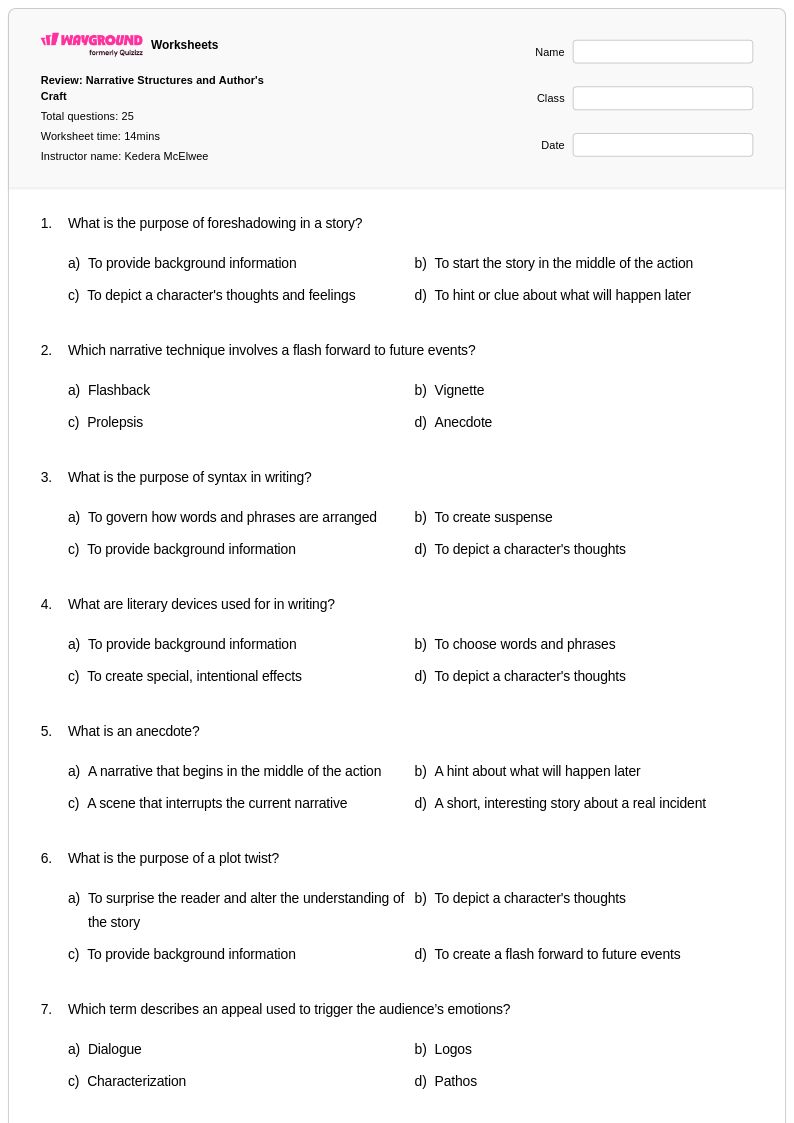
25 Q
10th - Uni
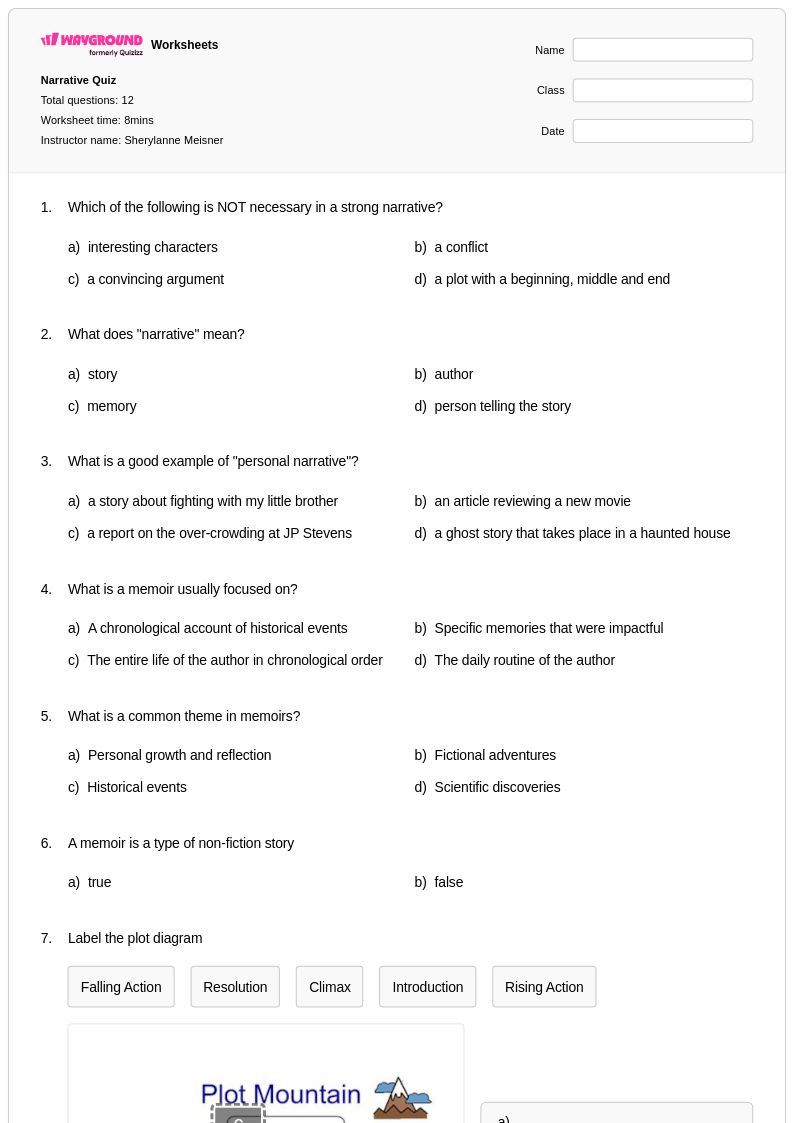
12 Q
9th - 12th
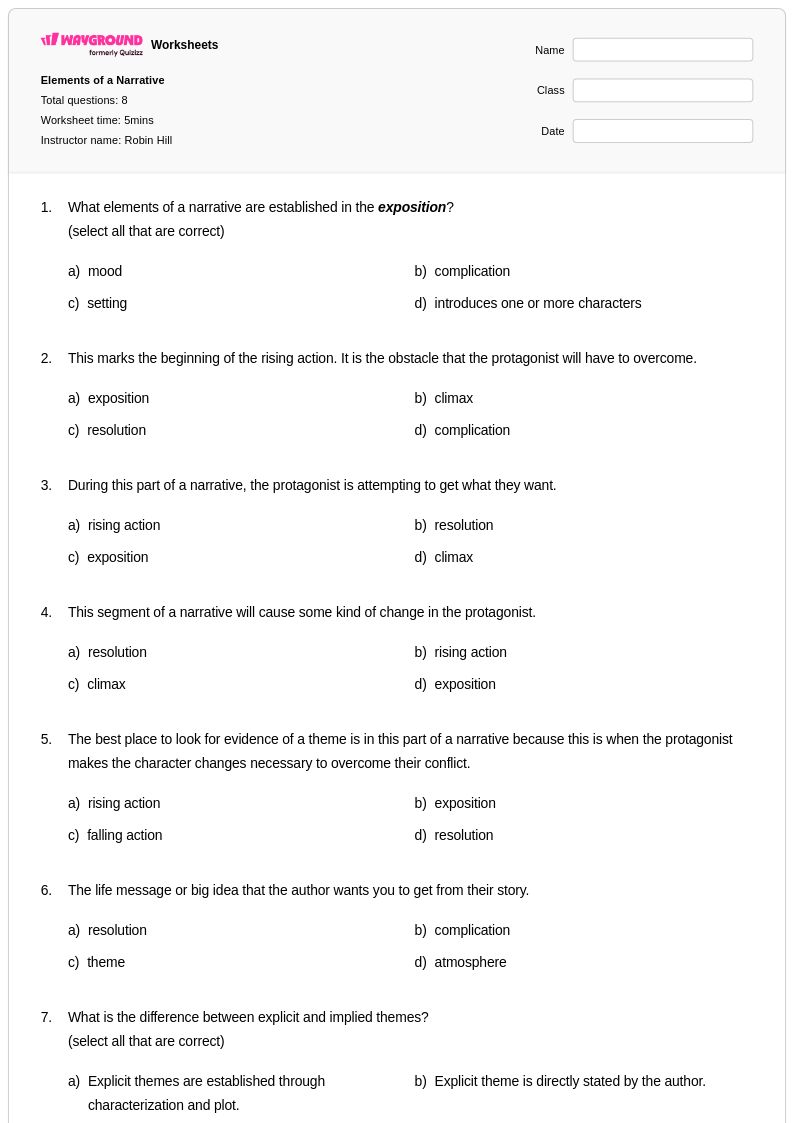
8 Q
10th
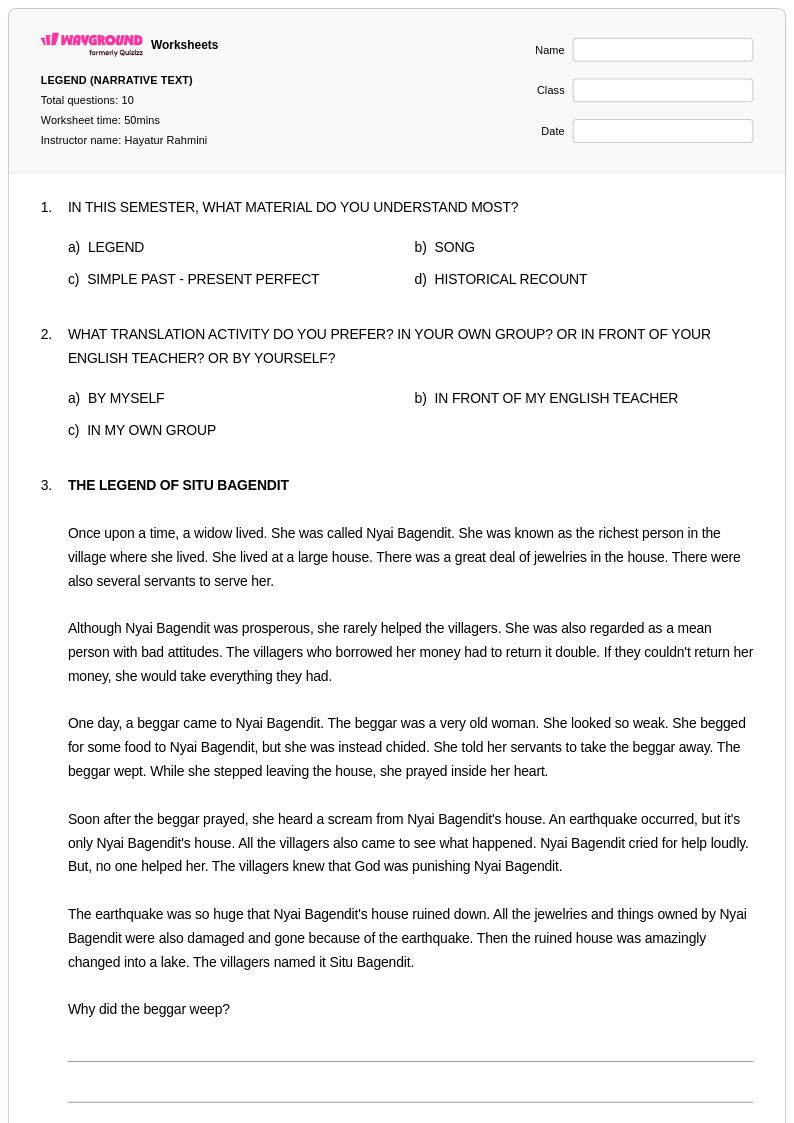
10 Q
10th
21 Q
9th - 12th
6 Q
2nd - Uni
10 Q
10th
6 Q
9th - Uni
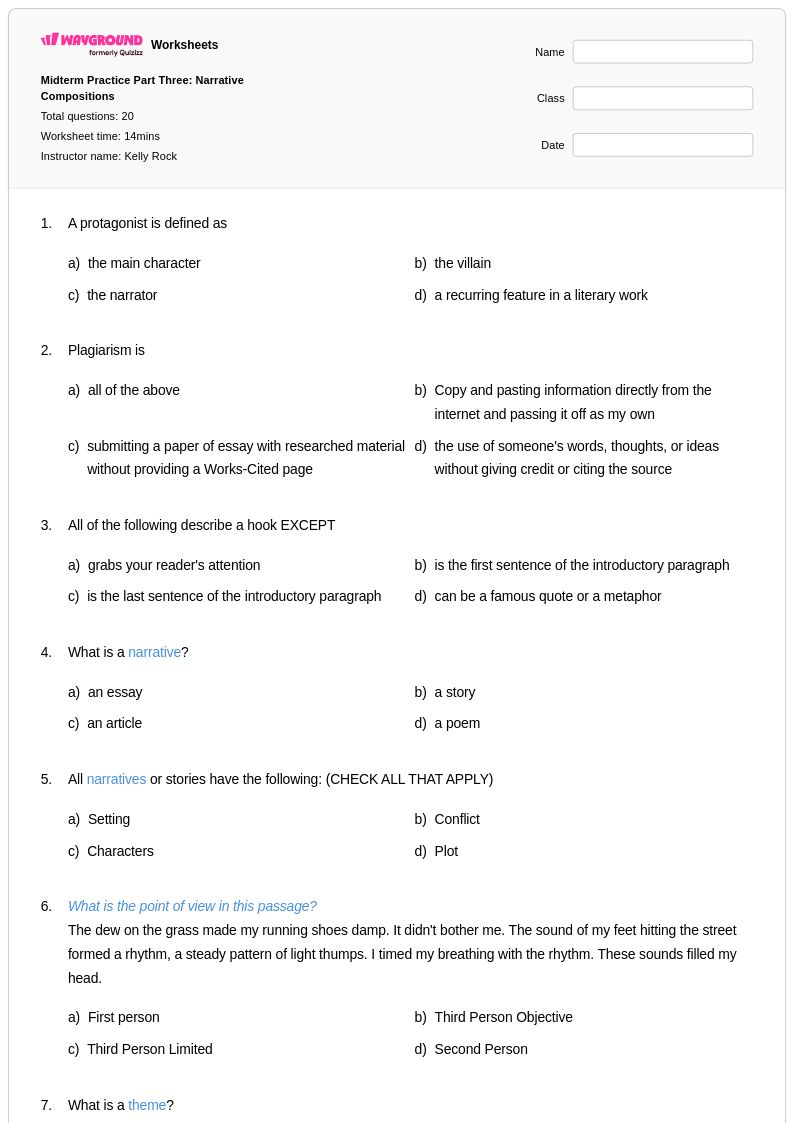
20 Q
9th - 12th
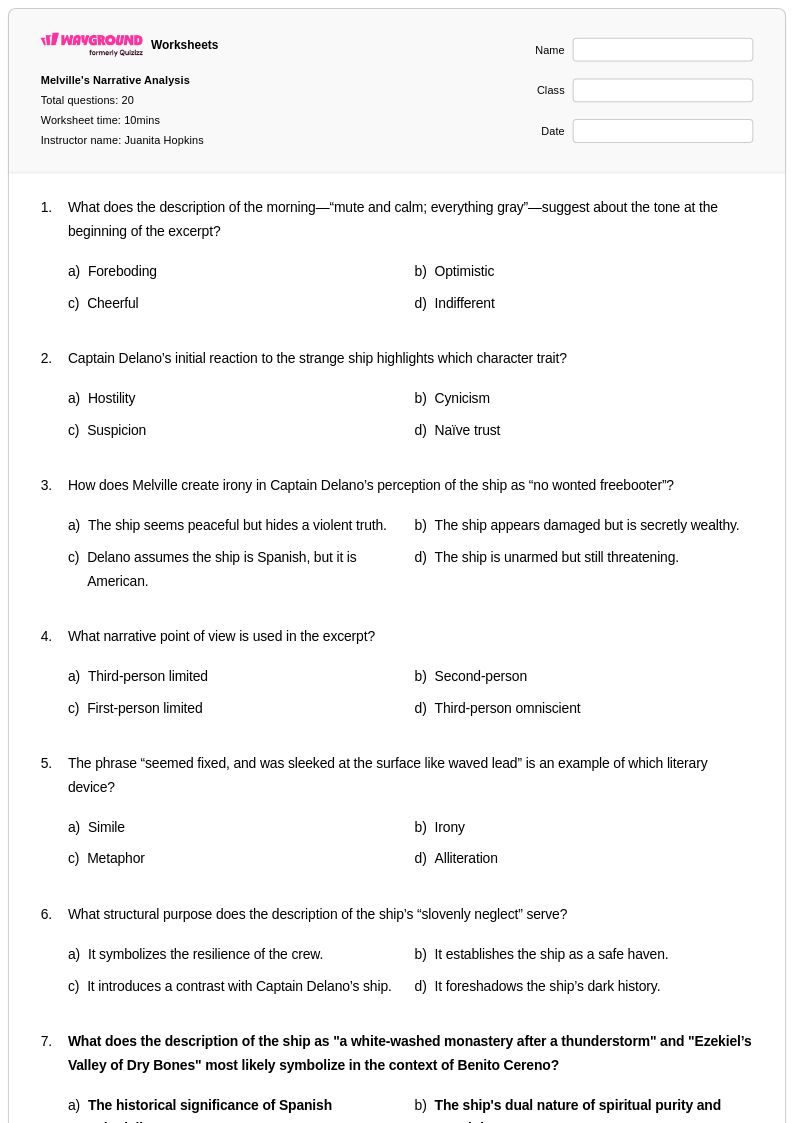
20 Q
10th - Uni
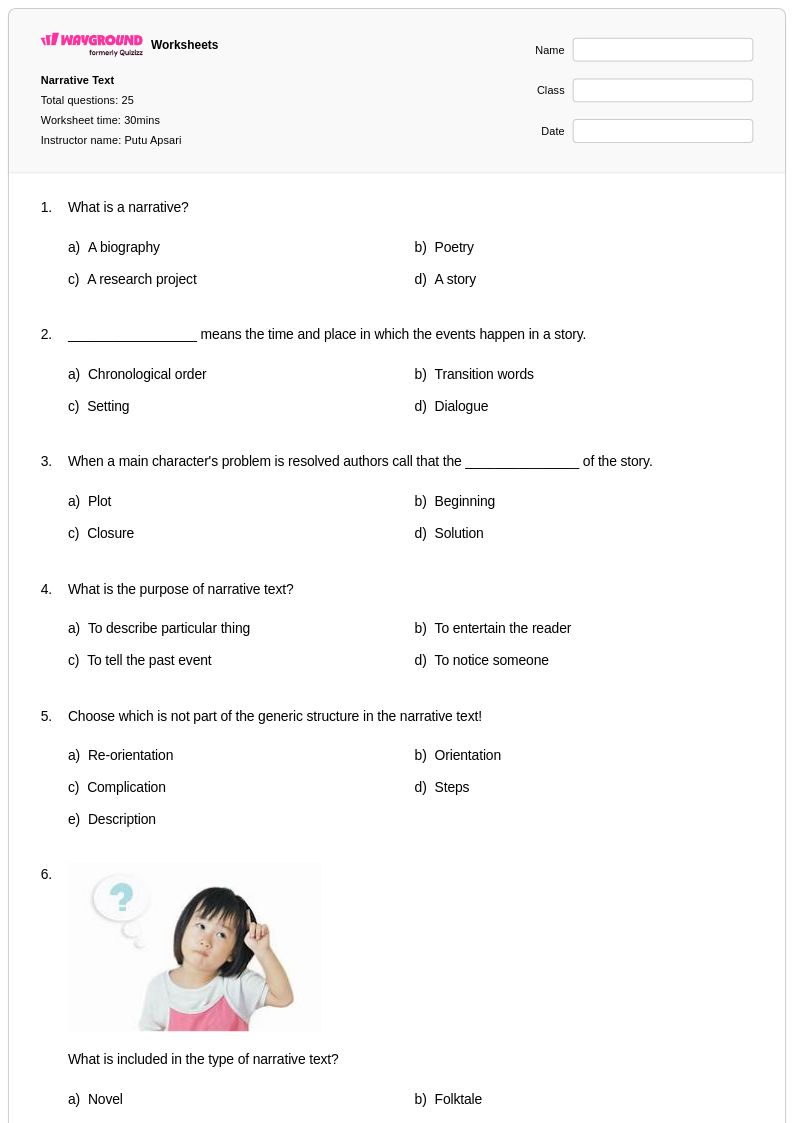
25 Q
10th
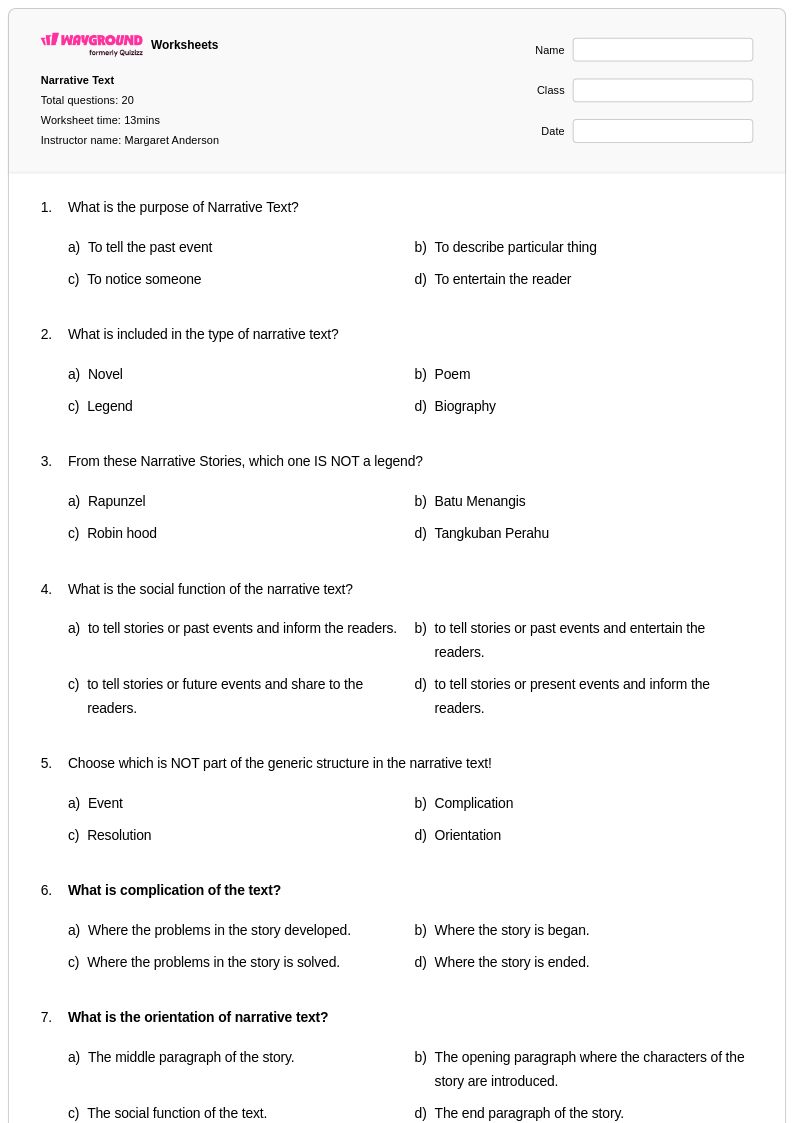
20 Q
10th
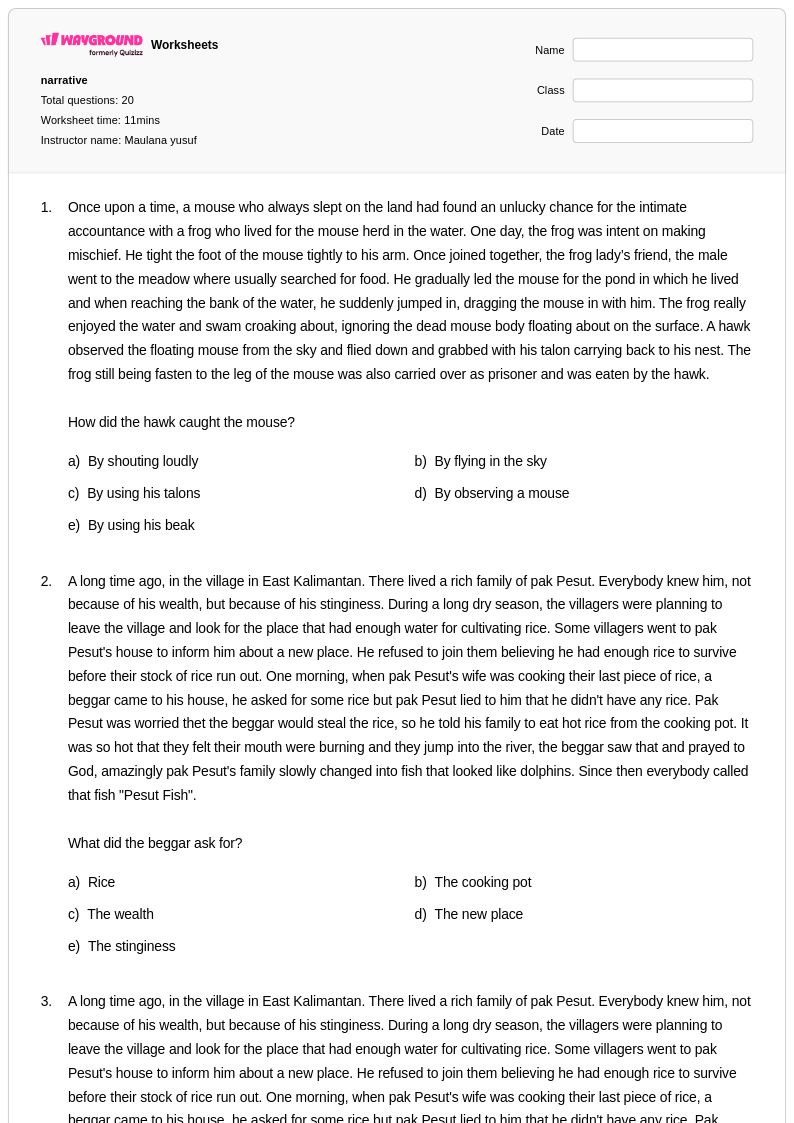
20 Q
10th
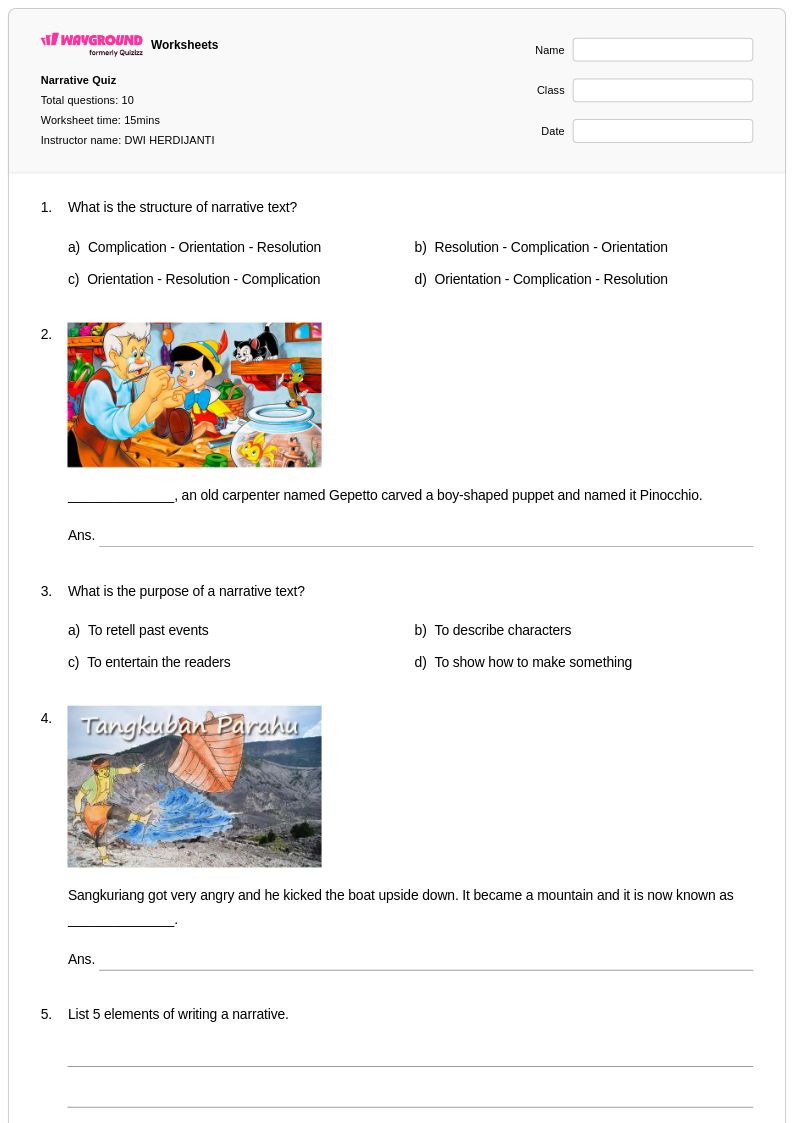
10 Q
10th
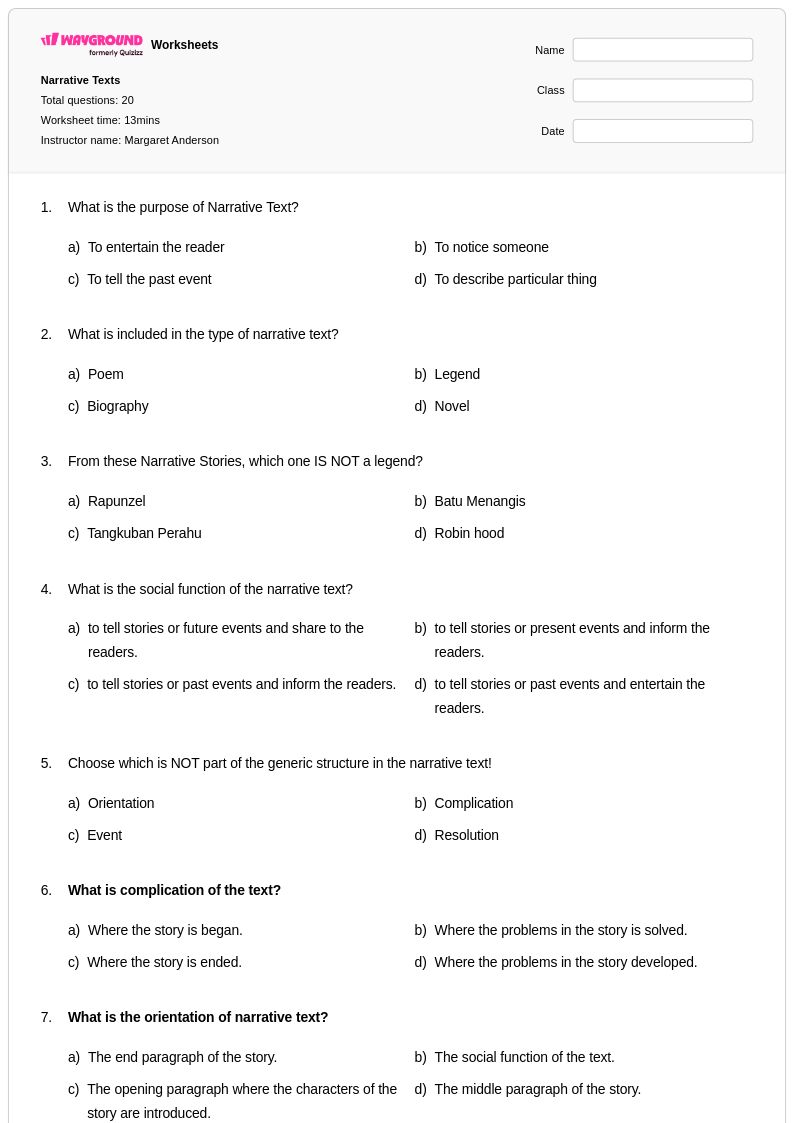
20 Q
10th
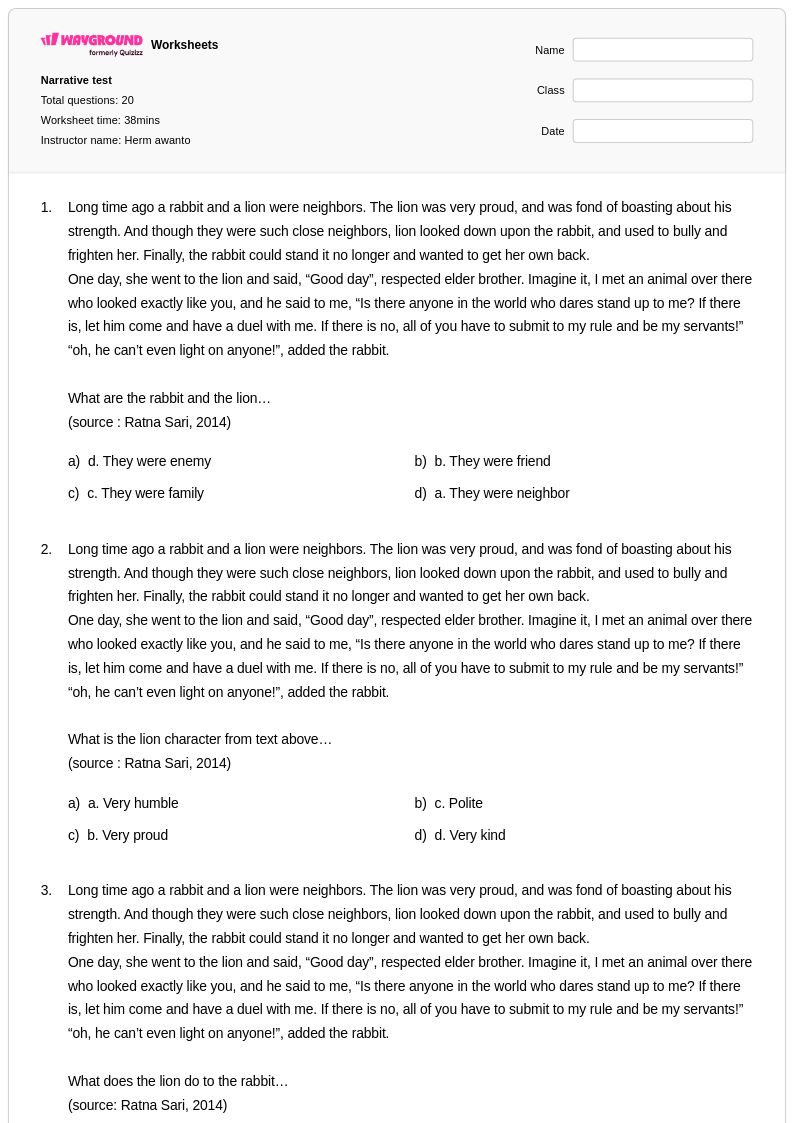
20 Q
10th
15 Q
9th - 12th
20 Q
10th
30 Q
10th

13 Q
10th
16 Q
10th
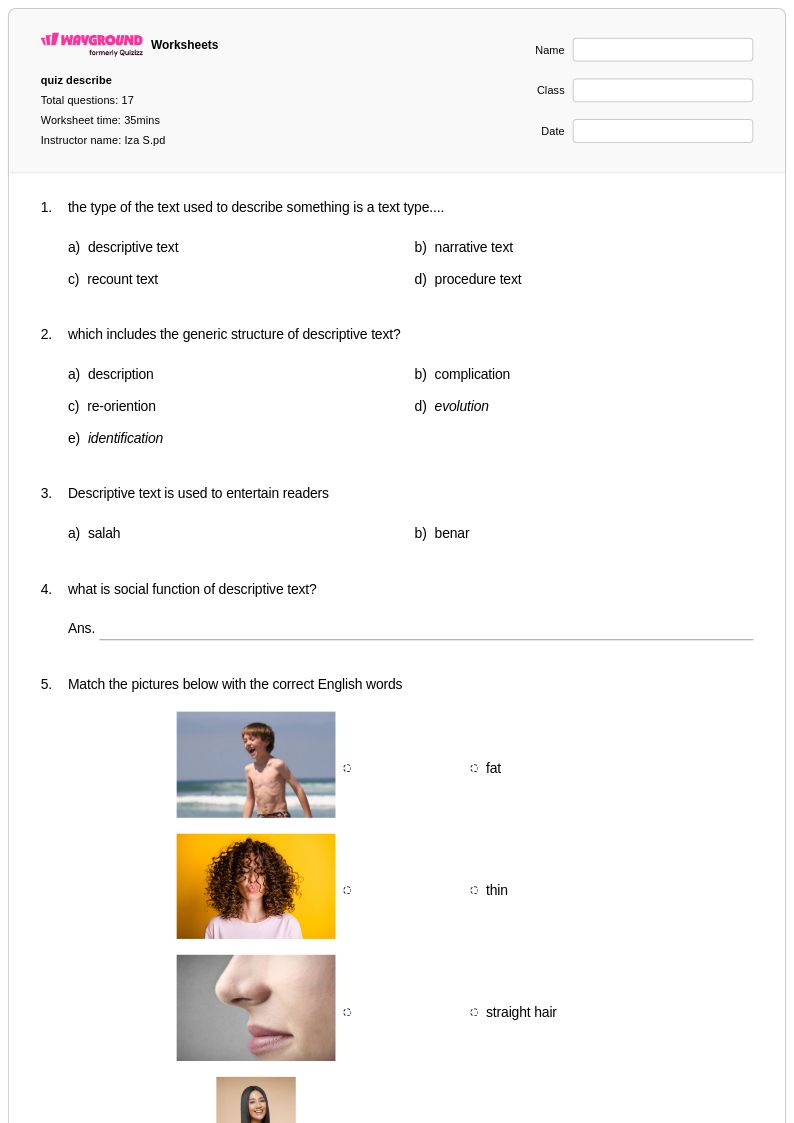
17 Q
10th
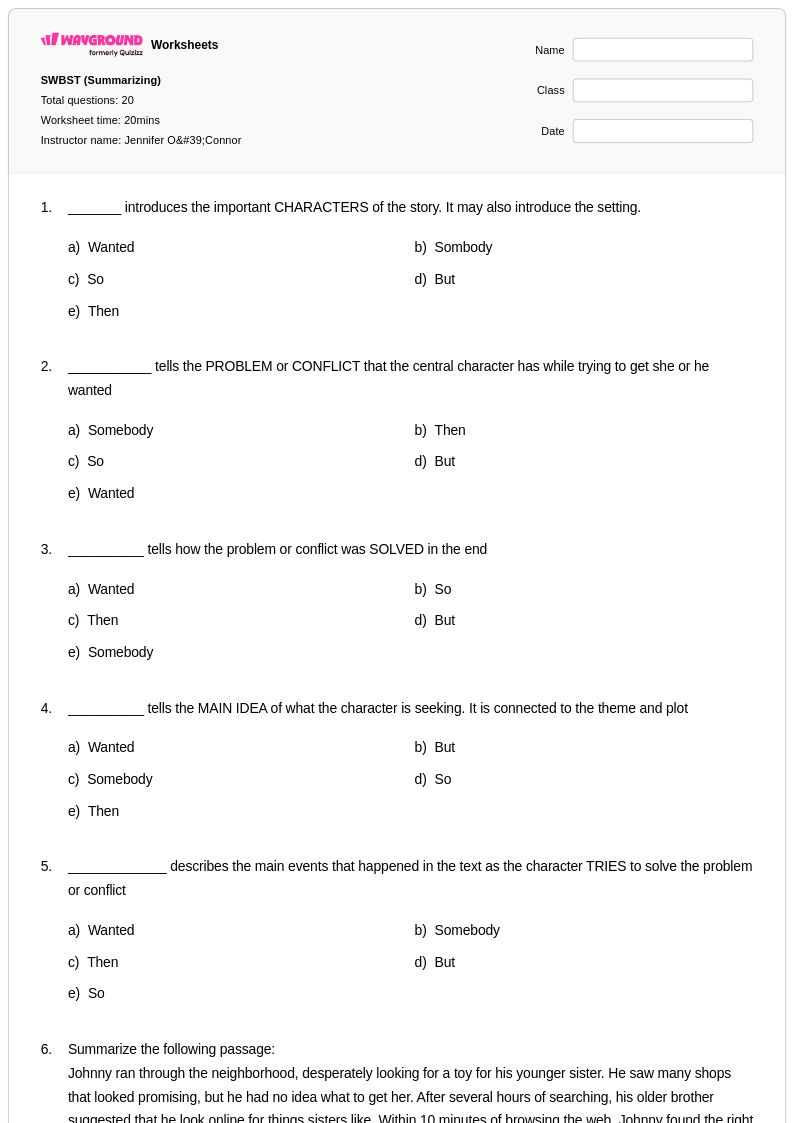
20 Q
9th - 12th
Explore Narrative Planning Worksheets by Grades
Explore Other Subject Worksheets for grade 10
Explore printable Narrative Planning worksheets for Grade 10
Narrative planning worksheets for Grade 10 students available through Wayground (formerly Quizizz) provide comprehensive support for developing sophisticated storytelling skills essential at the high school level. These carefully structured resources guide students through the critical pre-writing phase of narrative composition, helping them organize plot structures, develop complex characters, establish compelling settings, and craft meaningful themes before they begin drafting. The worksheets strengthen fundamental planning abilities including story mapping, character development charts, conflict identification, and timeline creation, all while incorporating advanced narrative techniques appropriate for tenth-grade writers. Students benefit from practice problems that challenge them to think critically about narrative elements, and teachers appreciate the inclusion of detailed answer keys that facilitate efficient assessment and feedback. These free printable resources serve as invaluable tools for building the foundational planning skills that distinguish effective narrative writing from simple storytelling.
Wayground (formerly Quizizz) empowers educators with an extensive collection of millions of teacher-created narrative planning worksheets specifically designed for Grade 10 English instruction. The platform's robust search and filtering capabilities allow teachers to quickly locate resources that align with specific curriculum standards and match their students' diverse learning needs. These differentiation tools enable instructors to customize worksheets for various skill levels within the same classroom, supporting both remediation for struggling writers and enrichment opportunities for advanced students. The flexible format options, including downloadable pdf versions and interactive digital worksheets, accommodate different teaching preferences and classroom technology setups. This comprehensive worksheet collection streamlines lesson planning by providing ready-to-use resources that can be seamlessly integrated into narrative writing units, allowing teachers to focus more time on individualized instruction and meaningful skill practice rather than resource creation.
FAQs
How do I teach narrative planning to students who struggle with story organization?
What exercises help students practice narrative planning before they start writing?
What are the most common mistakes students make when planning a narrative?
How can I use narrative planning worksheets to support students at different writing levels?
How do I use Wayground's narrative planning worksheets in my classroom?
At what point in a writing unit should I introduce narrative planning worksheets?