
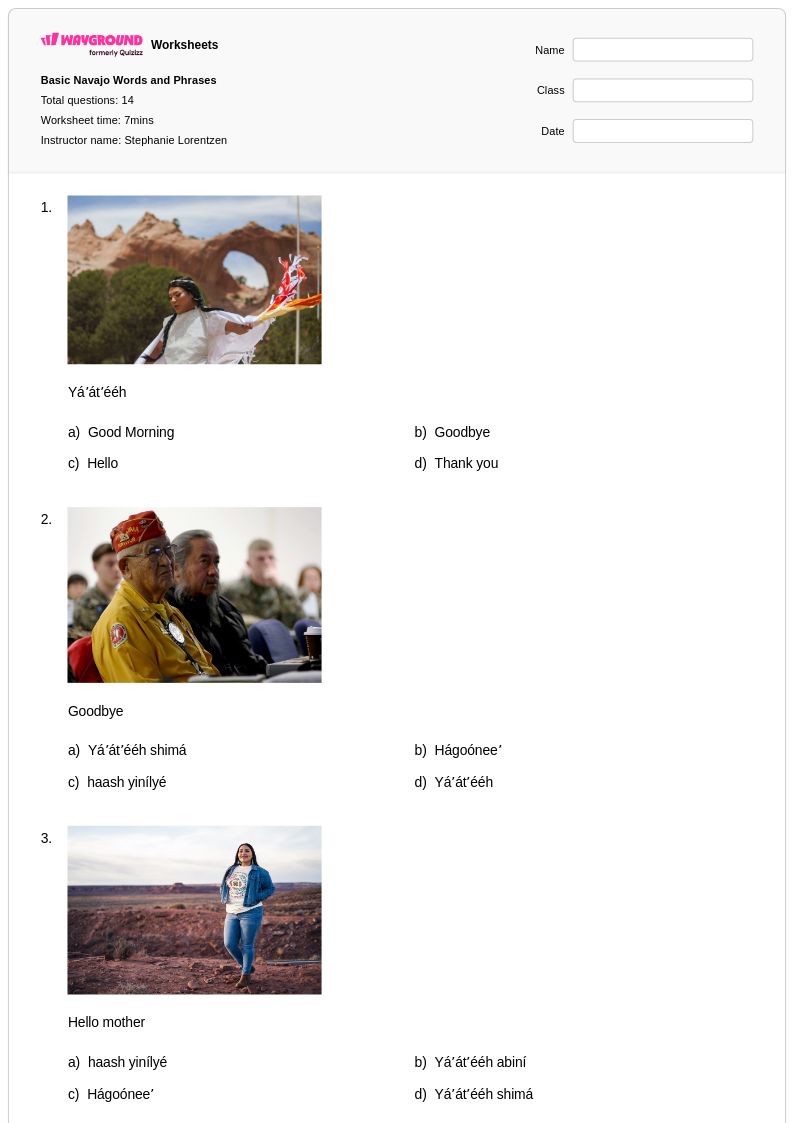
14 Q
1st - 12th
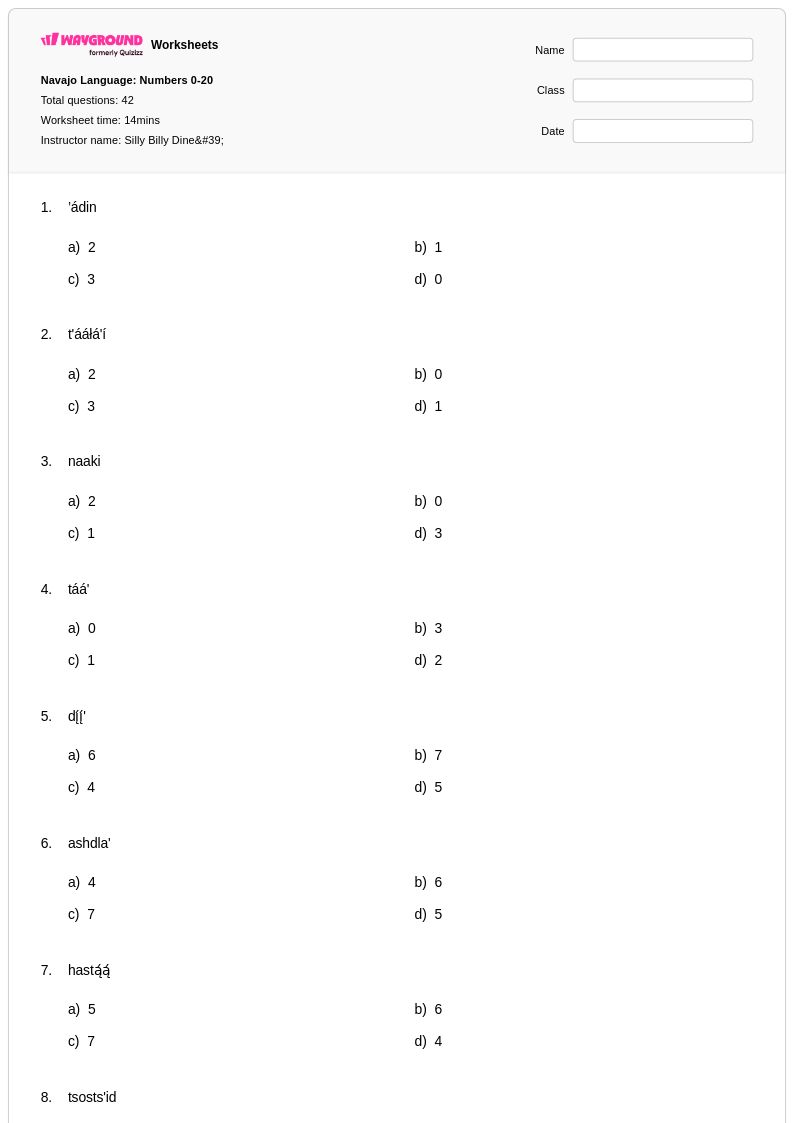
42 Q
KG - 6th
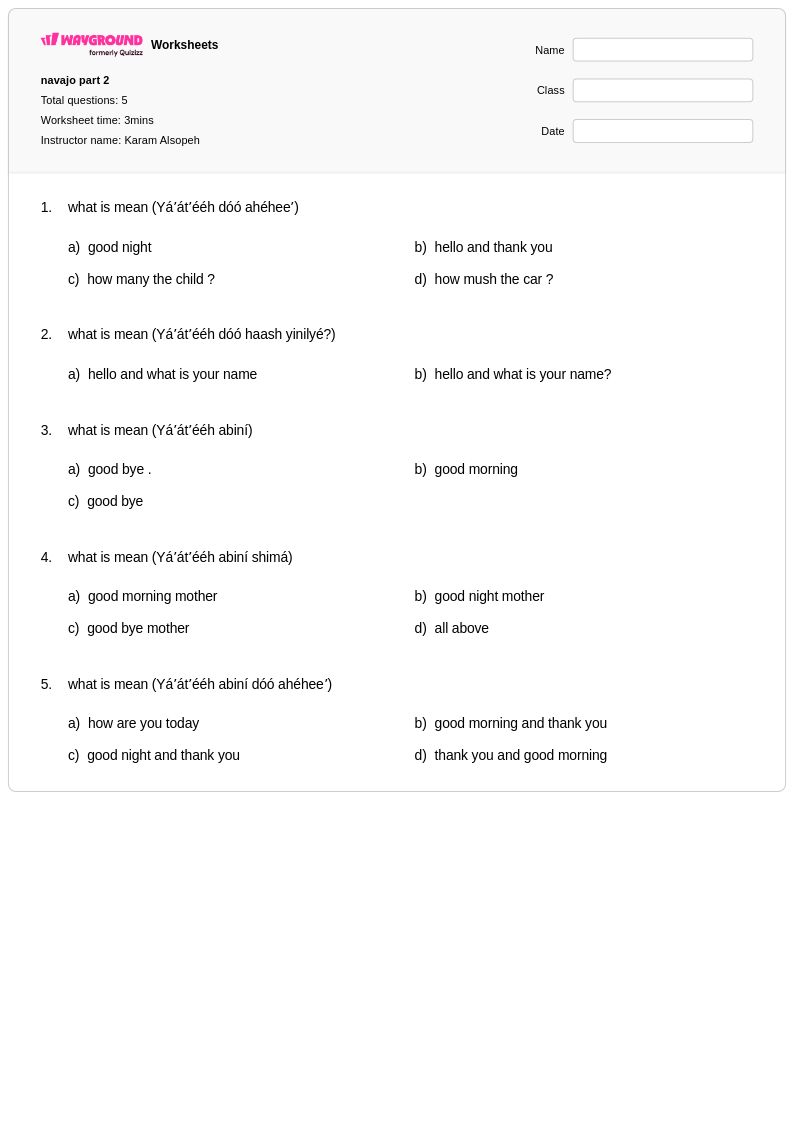
5 Q
1st - 2nd
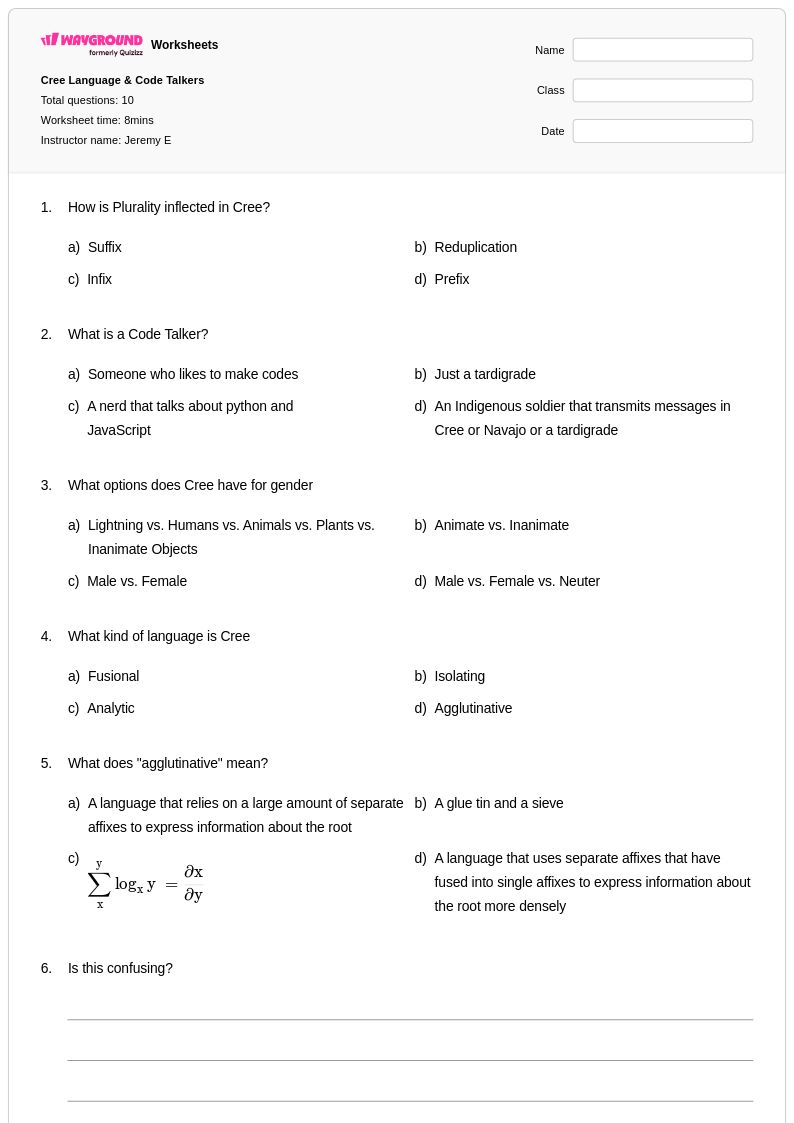
10 Q
KG - 12th
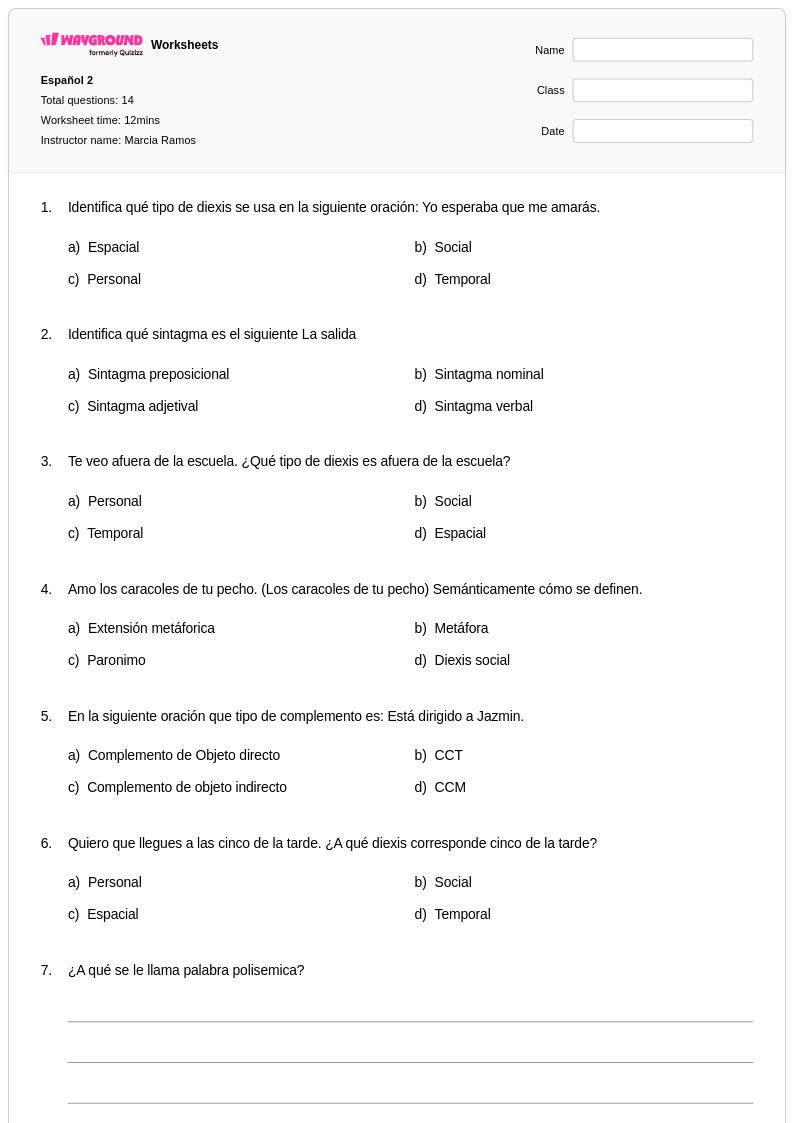
14 Q
1st
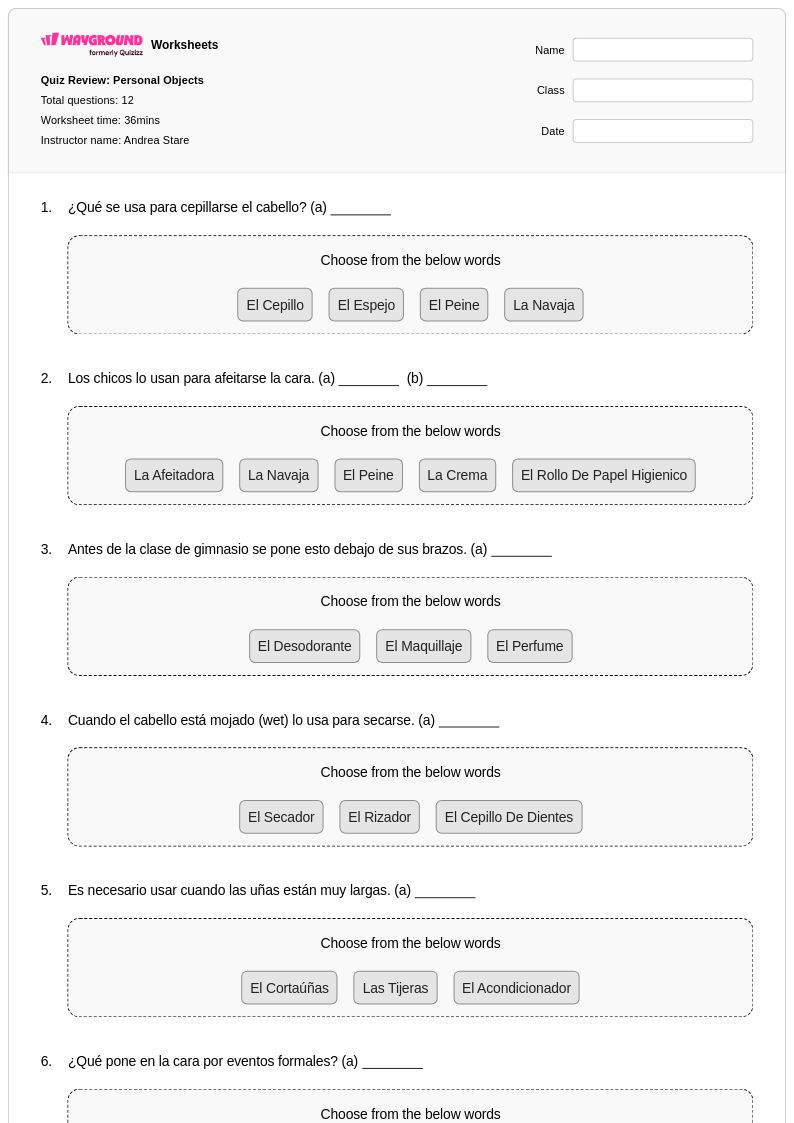
12 Q
1st
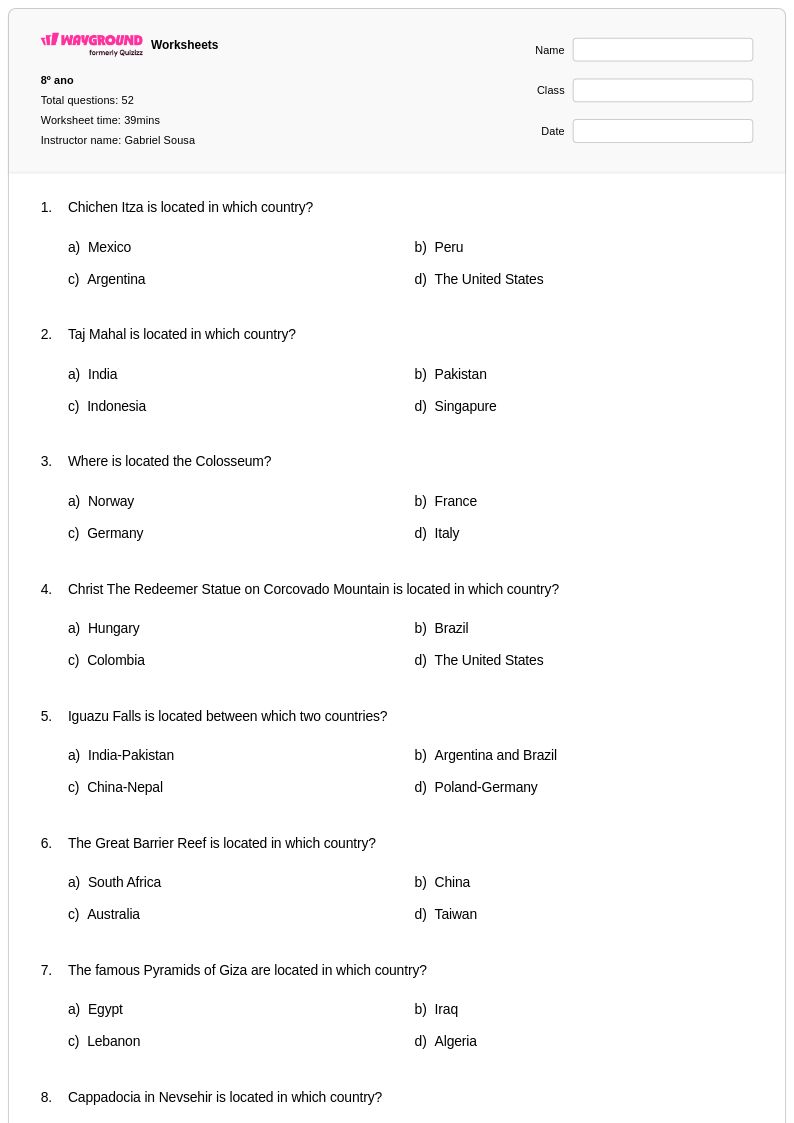
52 Q
1st
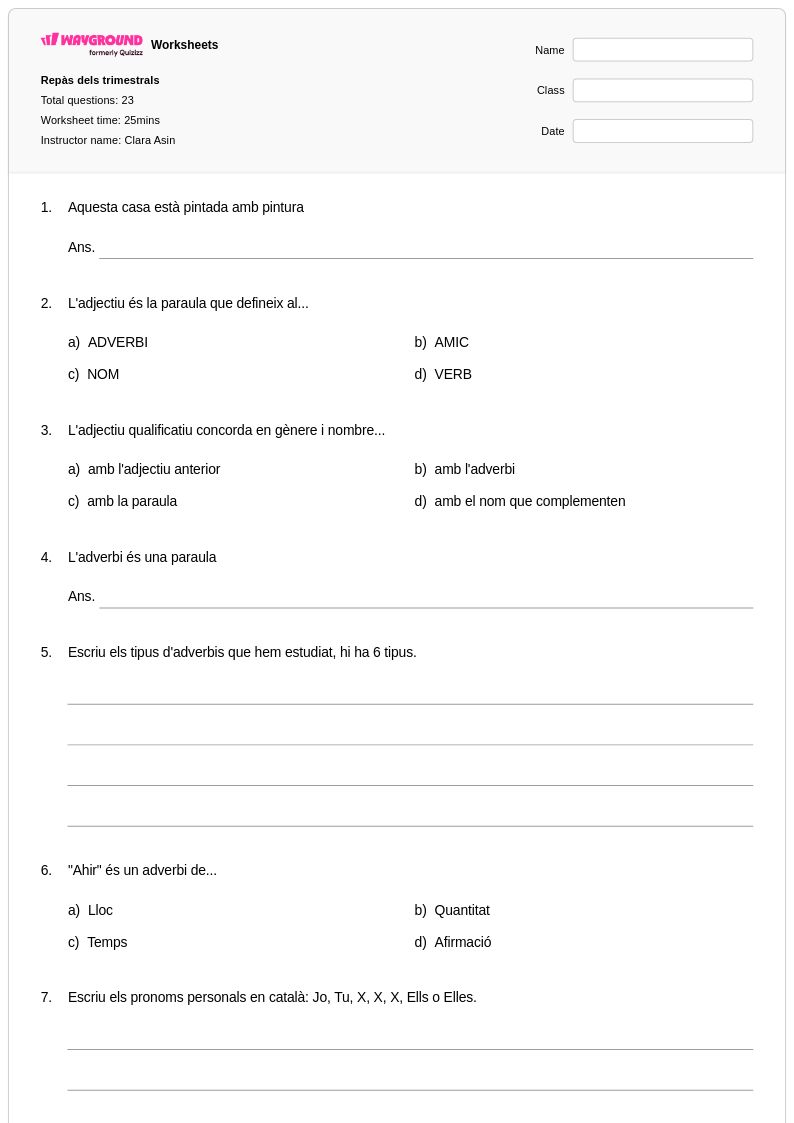
23 Q
1st - 2nd
20 Q
KG - 12th
10 Q
1st
15 Q
KG - Uni
10 Q
1st - 10th
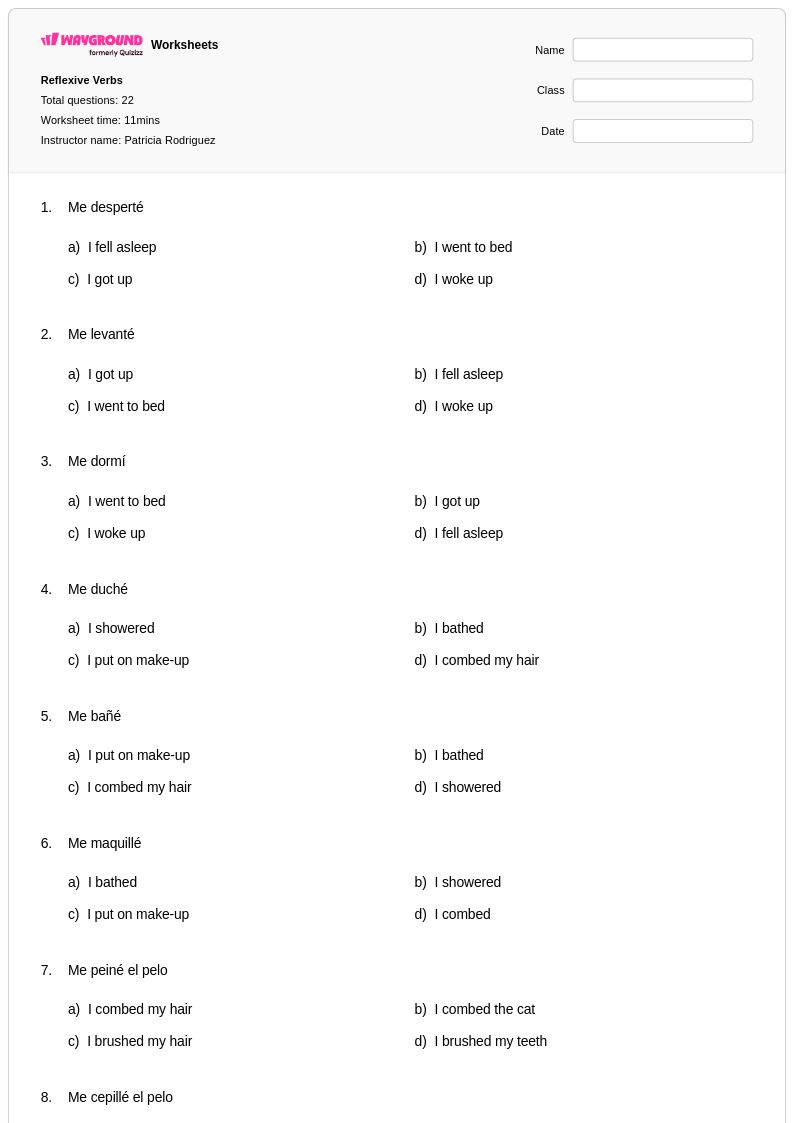
22 Q
KG - Uni
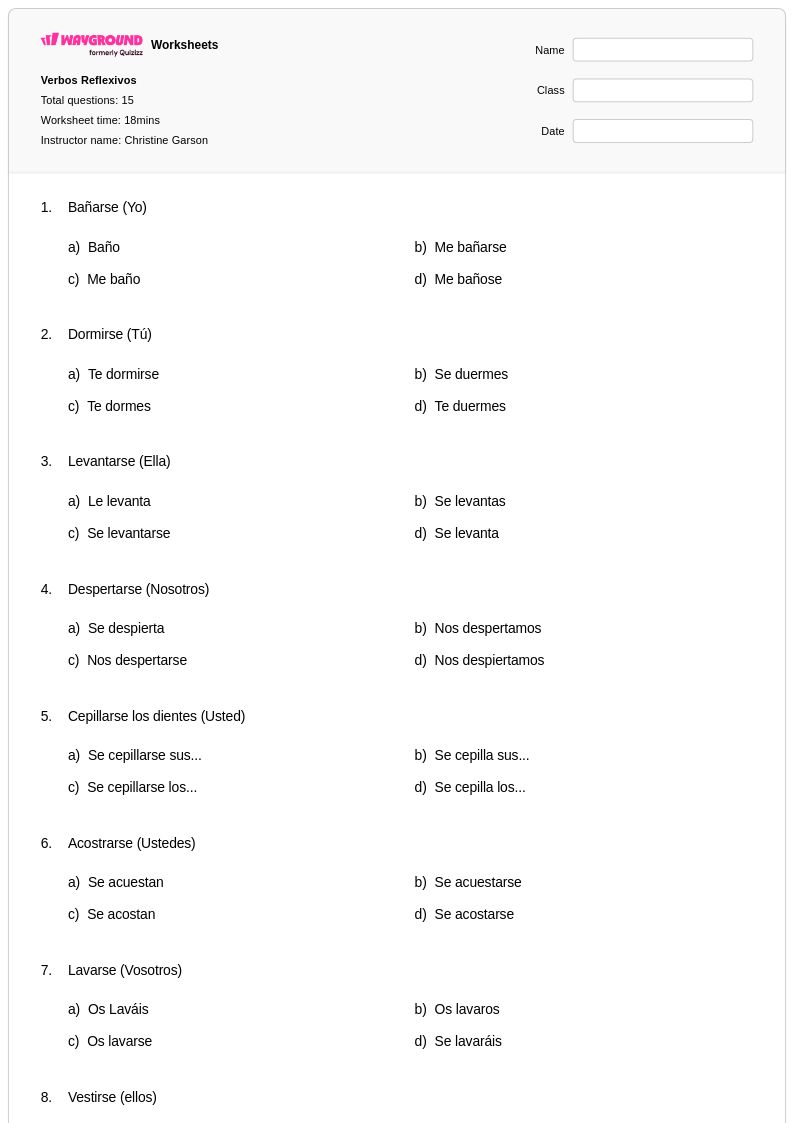
15 Q
KG - Uni
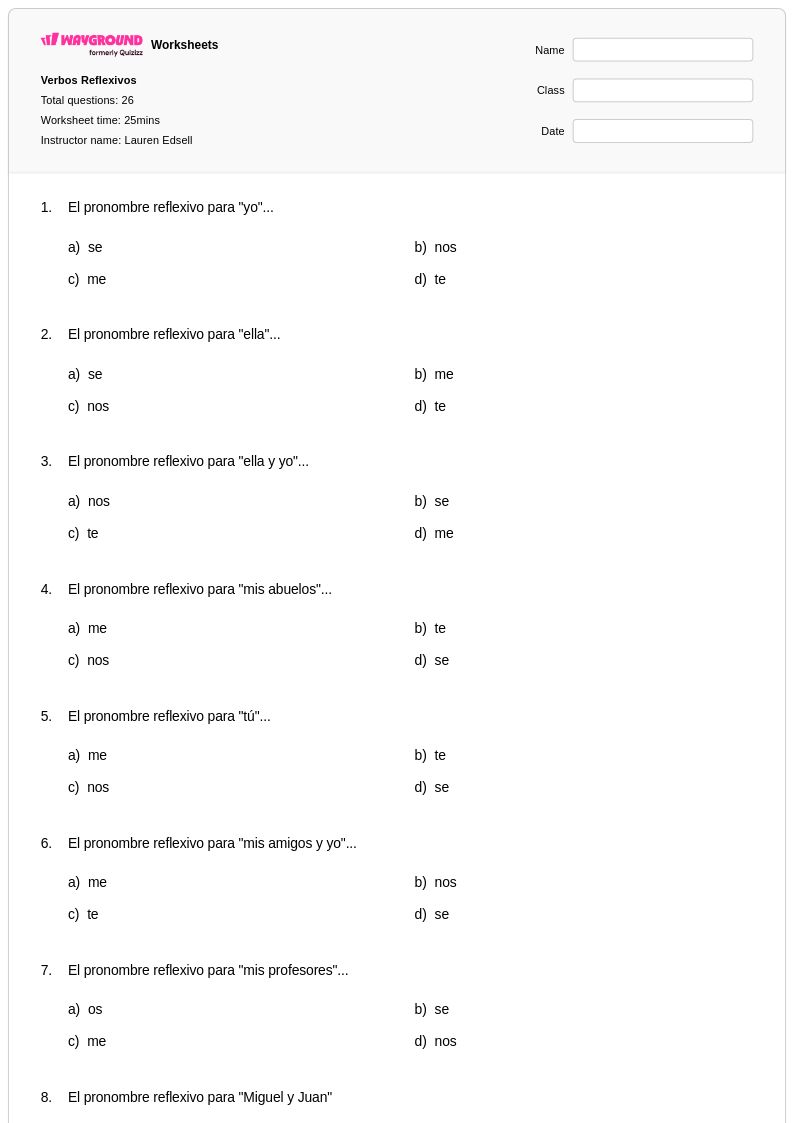
26 Q
KG - 12th
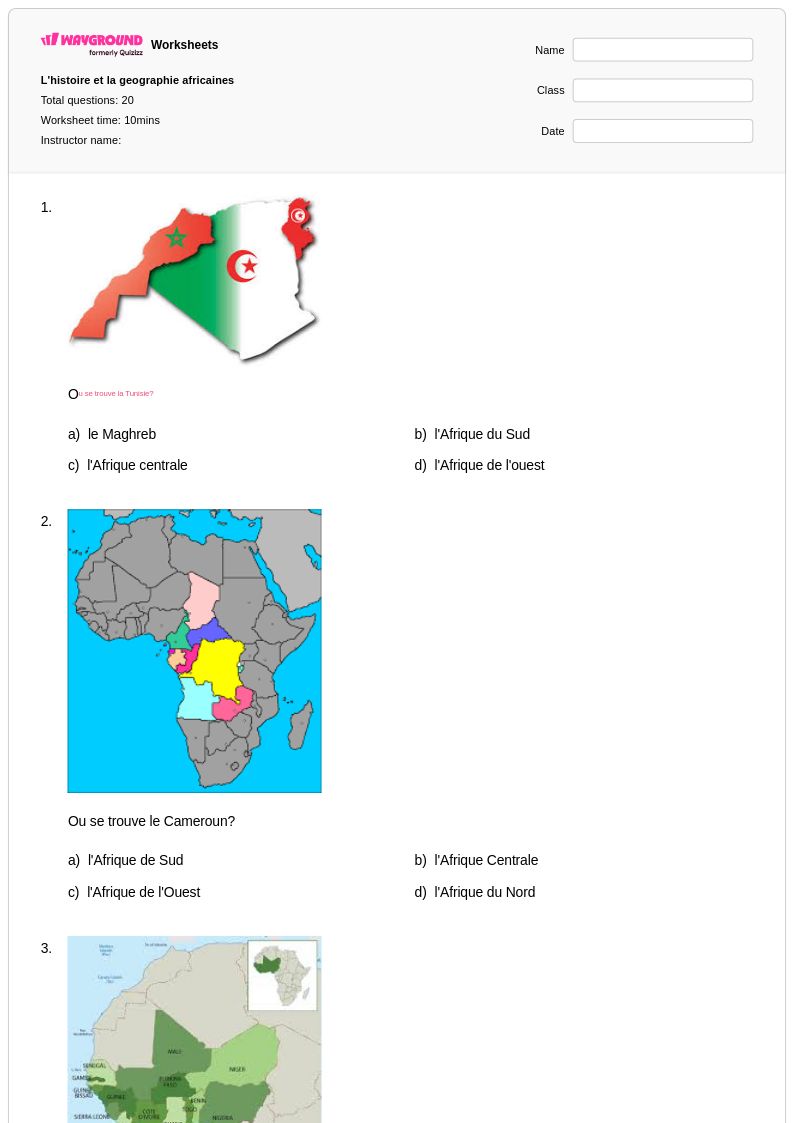
20 Q
KG - Uni
20 Q
1st
60 Q
KG - 12th
23 Q
1st - 12th
16 Q
KG - Uni
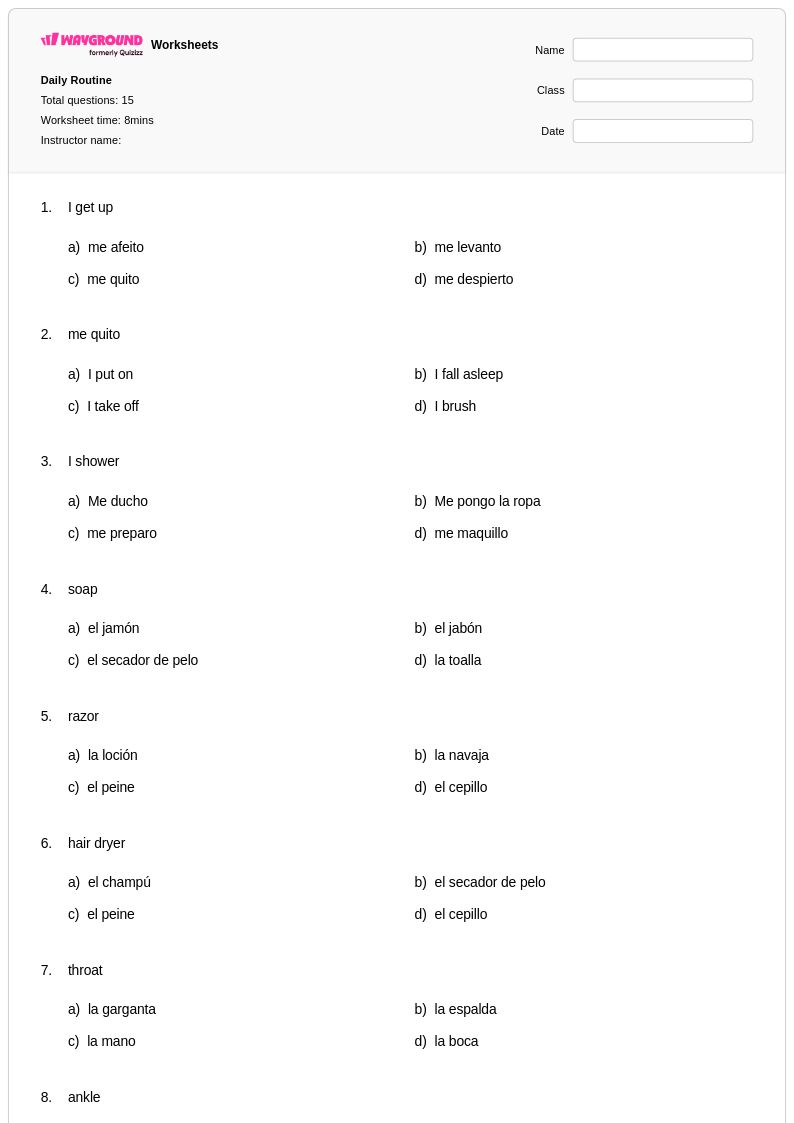
15 Q
KG - Uni
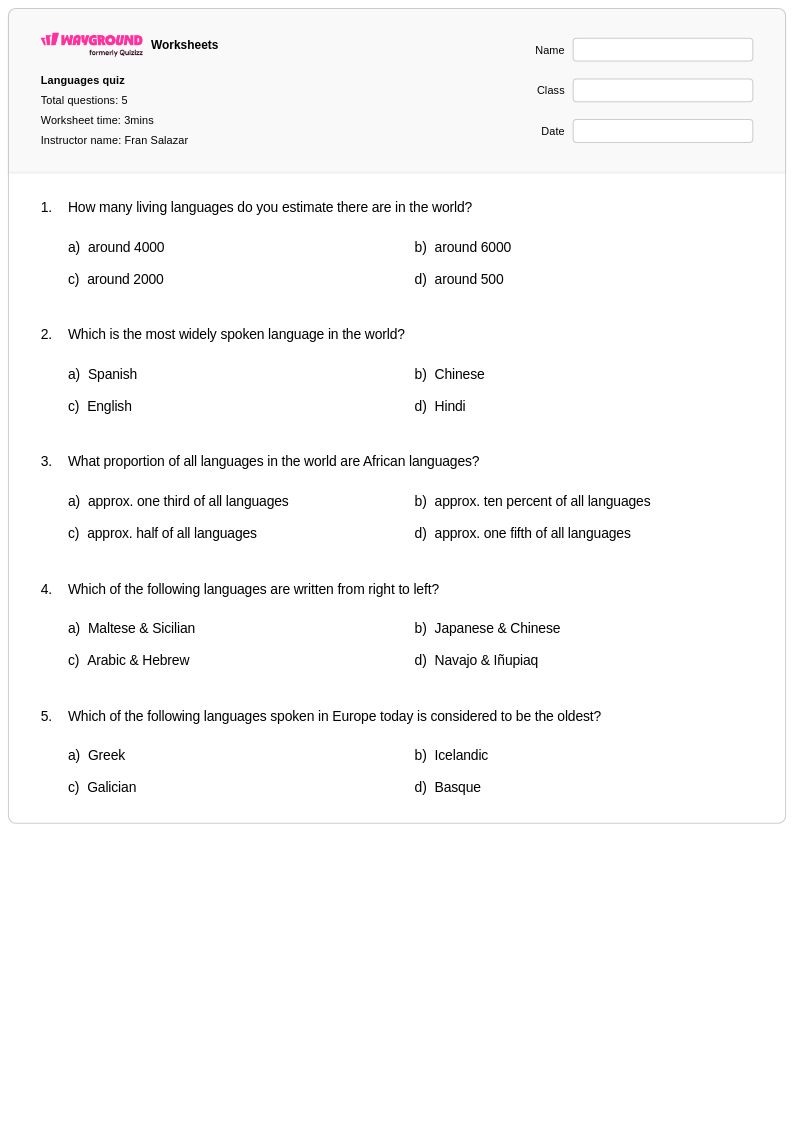
5 Q
1st - 10th
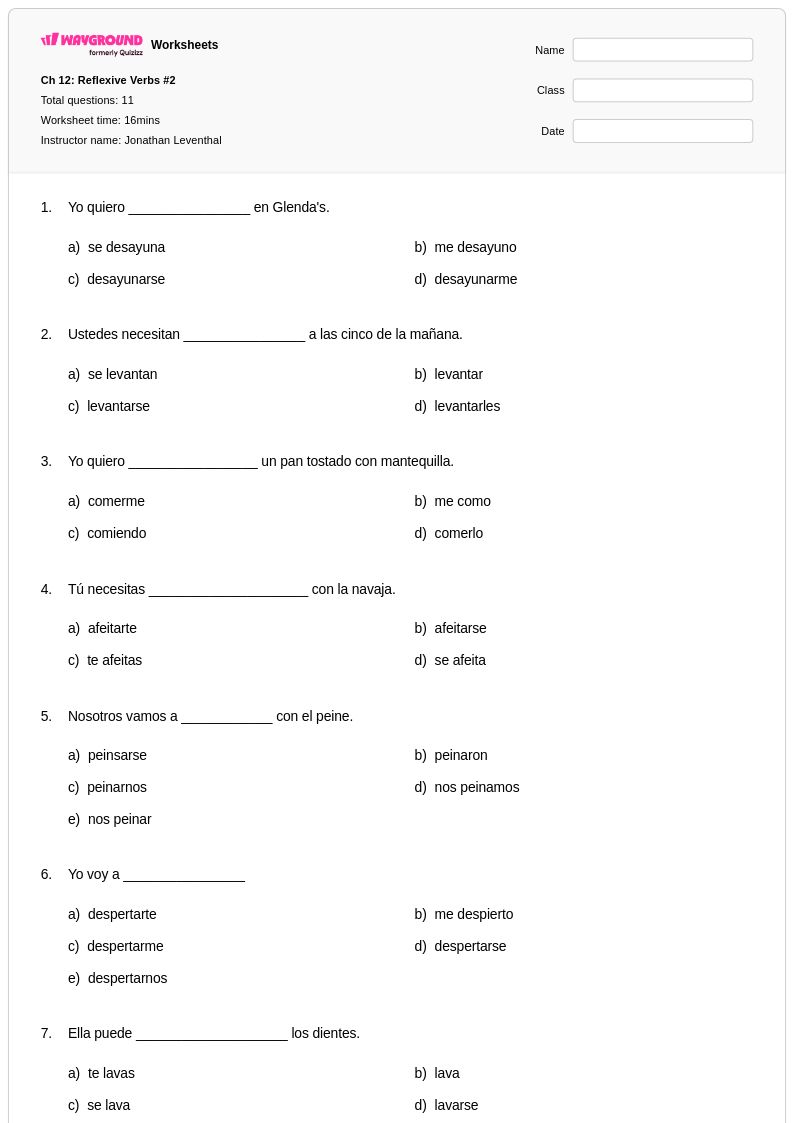
11 Q
KG - PD
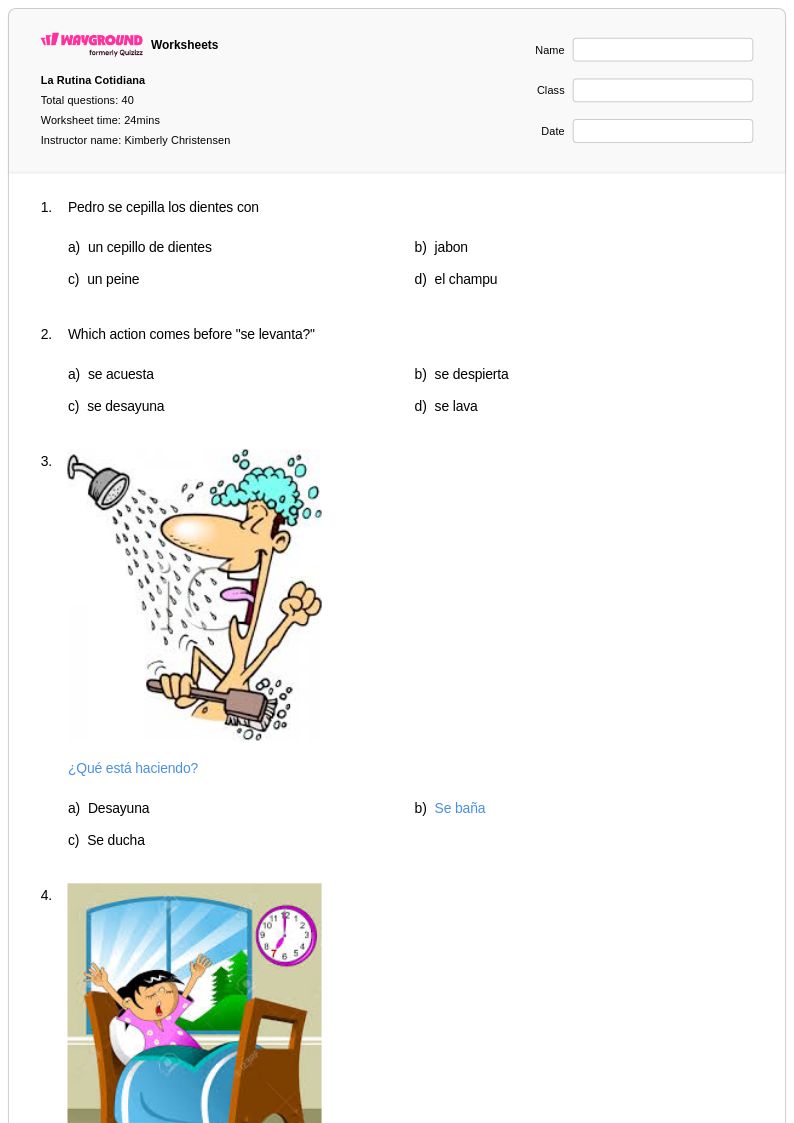
40 Q
KG - 12th
Explore Navajo Worksheets by Grades
Explore Other Subject Worksheets for grade 1
Explore printable Navajo worksheets for Grade 1
Grade 1 Navajo worksheets available through Wayground (formerly Quizizz) provide young learners with an essential foundation in this indigenous language, fostering cultural appreciation and linguistic development from an early age. These carefully designed printables focus on fundamental Navajo language concepts including basic vocabulary, simple greetings, family terms, colors, numbers, and common objects that connect to traditional Navajo life and culture. Each worksheet strengthens key language acquisition skills such as phonetic recognition, visual word association, and cultural context understanding, while building students' confidence in approaching a non-English language system. The comprehensive collection includes practice problems that reinforce pronunciation patterns, visual matching exercises, and age-appropriate activities that honor the cultural significance of the Navajo language, with answer key materials supporting both independent learning and guided instruction in pdf format.
Wayground (formerly Quizizz) empowers educators with millions of teacher-created resources specifically designed to support Grade 1 Navajo language instruction, offering robust search and filtering capabilities that help teachers locate precisely the right materials for their diverse classroom needs. The platform's differentiation tools enable instructors to customize worksheets for varying skill levels within the same grade, ensuring that all students can engage meaningfully with Navajo language concepts regardless of their prior exposure to indigenous languages. Teachers benefit from flexible customization options that allow them to modify existing materials or create supplementary content, while the availability of both printable and digital formats including pdf downloads supports diverse teaching environments and learning preferences. These comprehensive features streamline lesson planning while providing targeted resources for remediation, enrichment, and consistent skill practice, helping educators create culturally responsive learning experiences that honor the Navajo language tradition while meeting contemporary educational standards.
FAQs
How do I teach Navajo language to students who have no prior exposure to it?
What makes Navajo grammar so difficult for English-speaking students to learn?
What exercises help students practice Navajo vocabulary and sentence structure?
What common mistakes do students make when first learning Navajo?
How can I use Navajo worksheets to support students at different proficiency levels?
How do I use Navajo worksheets from Wayground in my classroom?