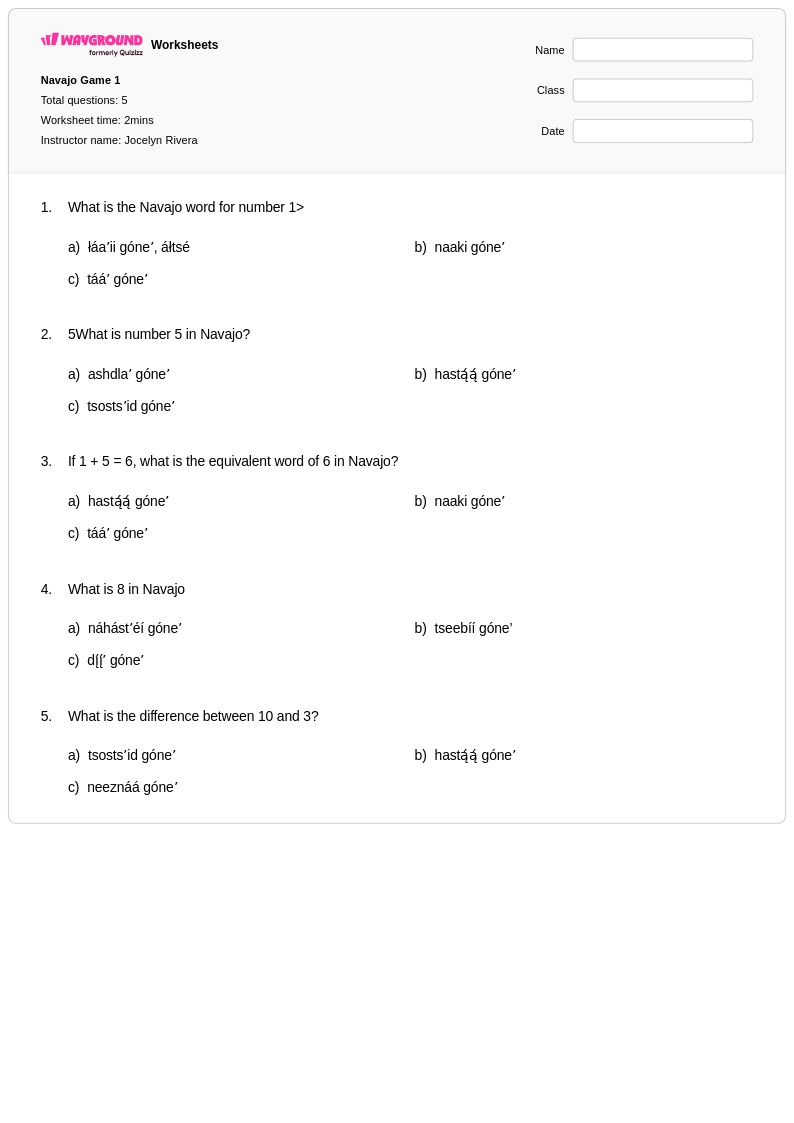
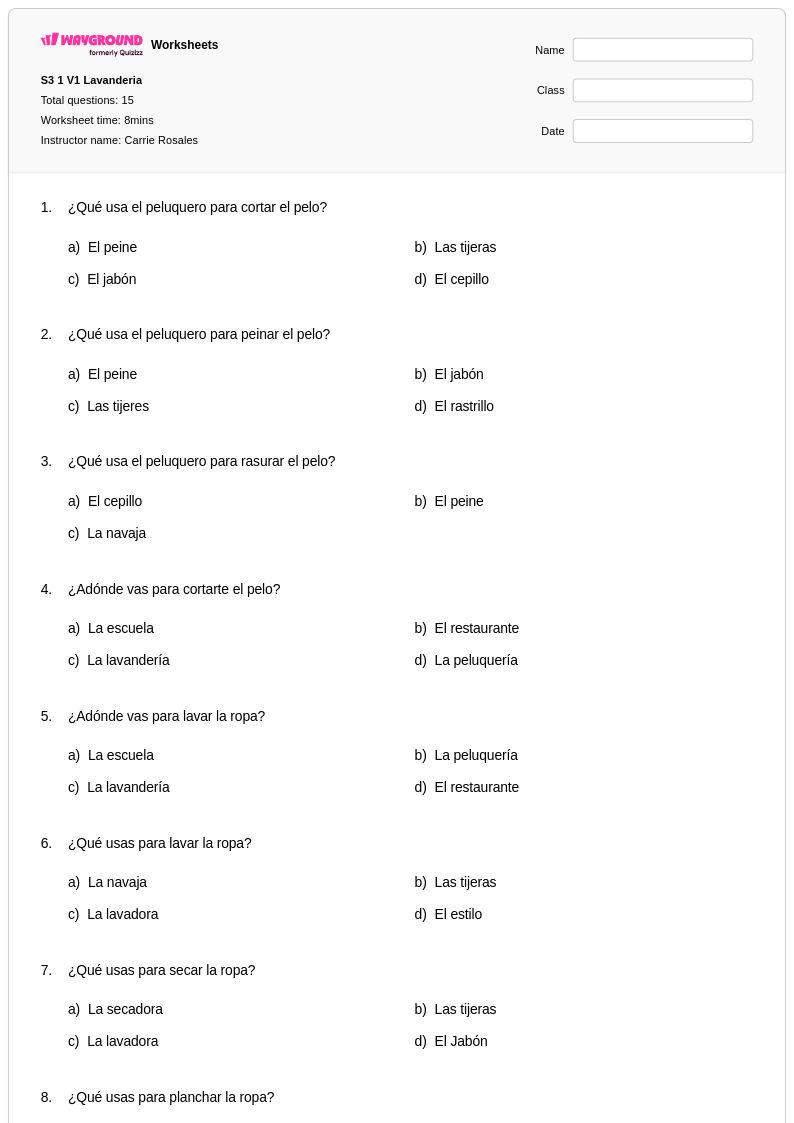
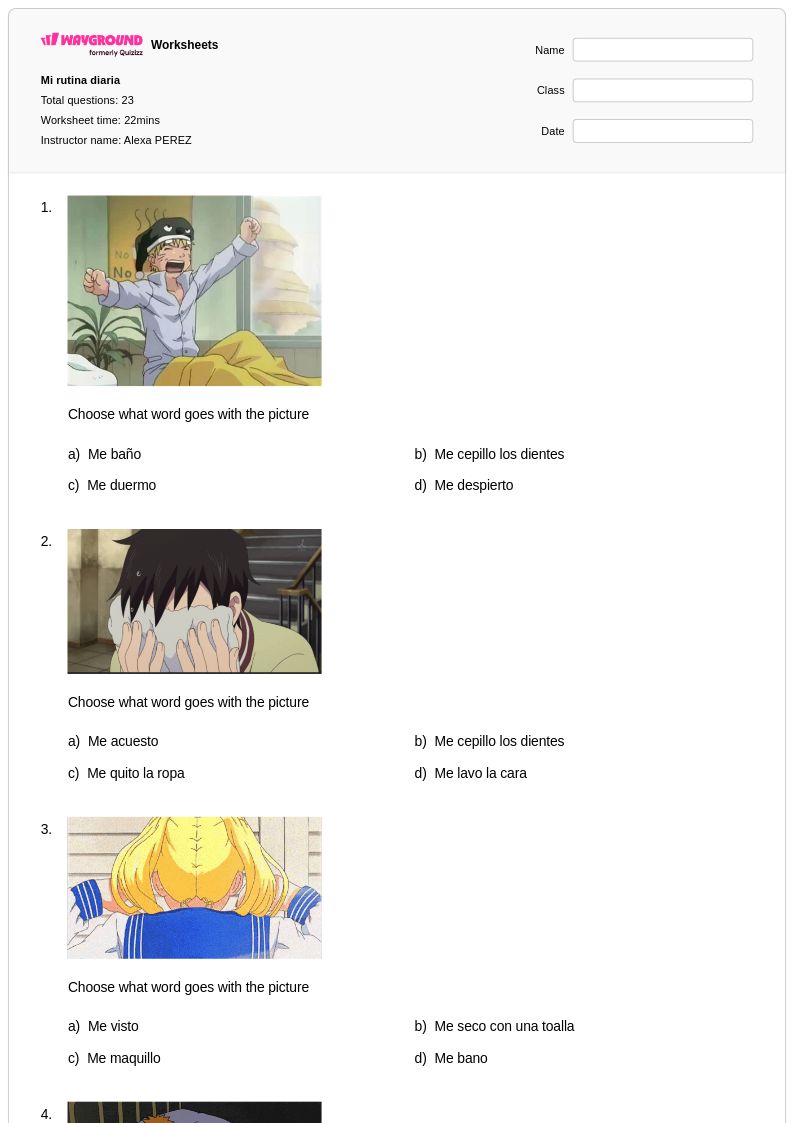
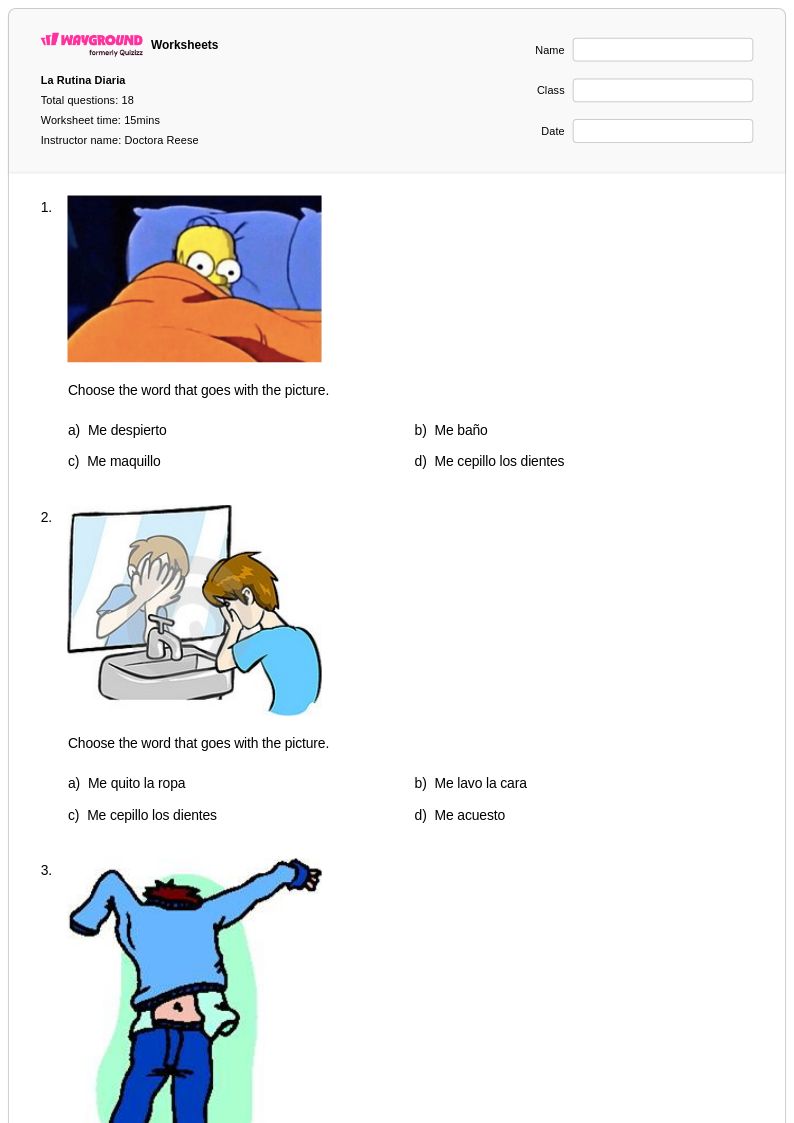
Grade 11 Navajo language worksheets and printables help students develop essential communication skills through comprehensive practice problems, free PDF resources, and detailed answer keys for effective learning.
Navajo language worksheets for Grade 11 students available through Wayground (formerly Quizizz) provide comprehensive resources for advancing proficiency in Diné bizaad, the traditional language of the Navajo Nation. These carefully crafted materials strengthen essential linguistic competencies including complex verb conjugation patterns, advanced vocabulary acquisition, cultural context comprehension, and sophisticated sentence structure formation. Students engage with authentic language scenarios that develop both conversational fluency and academic literacy, while practice problems reinforce grammatical concepts such as aspectual verb systems and postpositional phrases that are fundamental to Navajo linguistic structure. The worksheets include detailed answer keys to support independent learning and are available as free printables in convenient pdf format, enabling consistent skill development both in classroom settings and through individual study sessions.
Wayground (formerly Quizizz) empowers educators with an extensive collection of millions of teacher-created resources specifically designed for indigenous language instruction, offering robust search and filtering capabilities that allow instructors to locate precisely targeted Navajo language materials aligned with cultural preservation standards and academic benchmarks. The platform's differentiation tools enable teachers to customize worksheets according to individual student proficiency levels, accommodating learners who may be heritage speakers alongside those encountering Navajo as a completely new language system. Available in both printable and digital formats including downloadable pdf versions, these resources streamline lesson planning while providing flexible options for remediation, enrichment, and targeted skill practice. Teachers can efficiently adapt materials to address specific learning objectives, whether focusing on traditional storytelling comprehension, contemporary Navajo media literacy, or preparation for advanced cultural and linguistic competency assessments.
FAQs
How do I teach Navajo language to students who have no prior exposure to it?
Start with high-frequency vocabulary tied to cultural context — greetings, family terms, and place names — before introducing grammatical structures. Because Navajo is a verb-heavy language with complex conjugations, building vocabulary first gives students an anchor for understanding how verbs are constructed around subjects and actions. Pairing vocabulary practice with cultural storytelling helps students form meaningful associations rather than rote memorization.
What makes Navajo grammar so difficult for English-speaking students to learn?
Navajo is a polysynthetic, verb-centered language, which means a single verb form can carry the meaning of an entire English sentence through the use of prefixes and classifiers. English speakers tend to struggle most with the elaborate verb system, which encodes not just tense but also the shape, movement, and number of objects being described. Tonal pronunciation adds another layer of difficulty, since the pitch of a syllable can change a word's meaning entirely.
What exercises help students practice Navajo vocabulary and sentence structure?
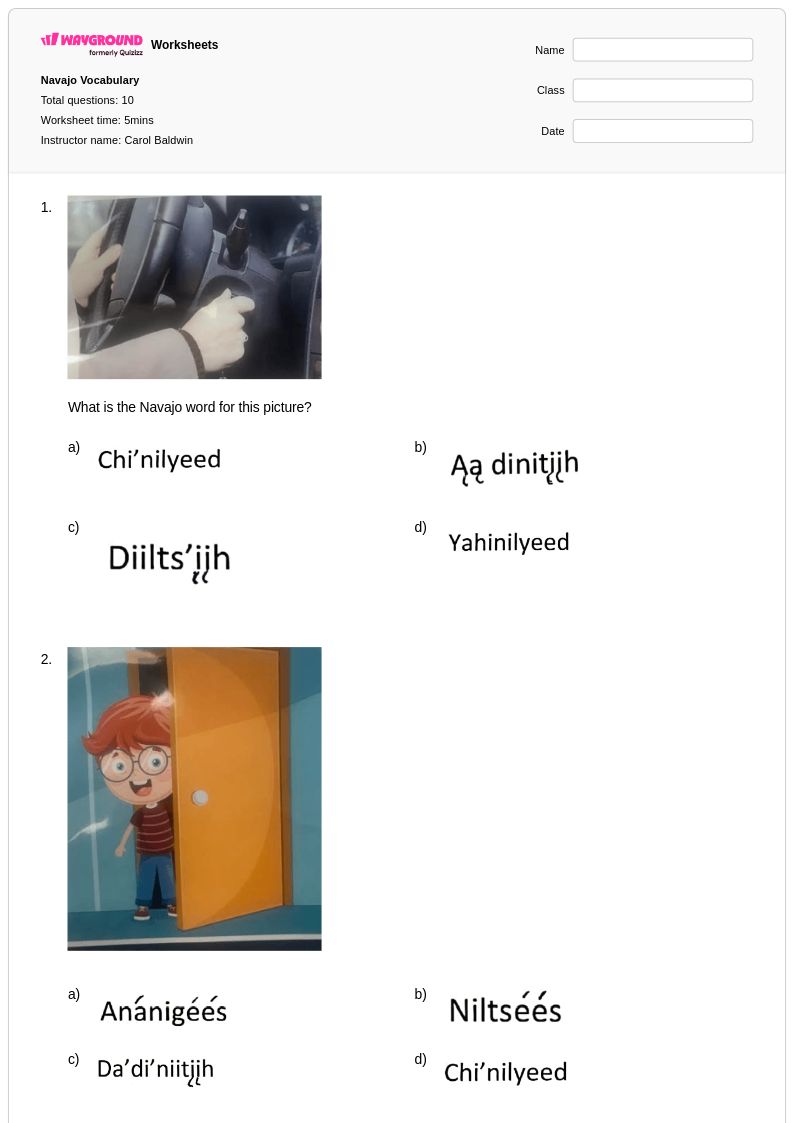
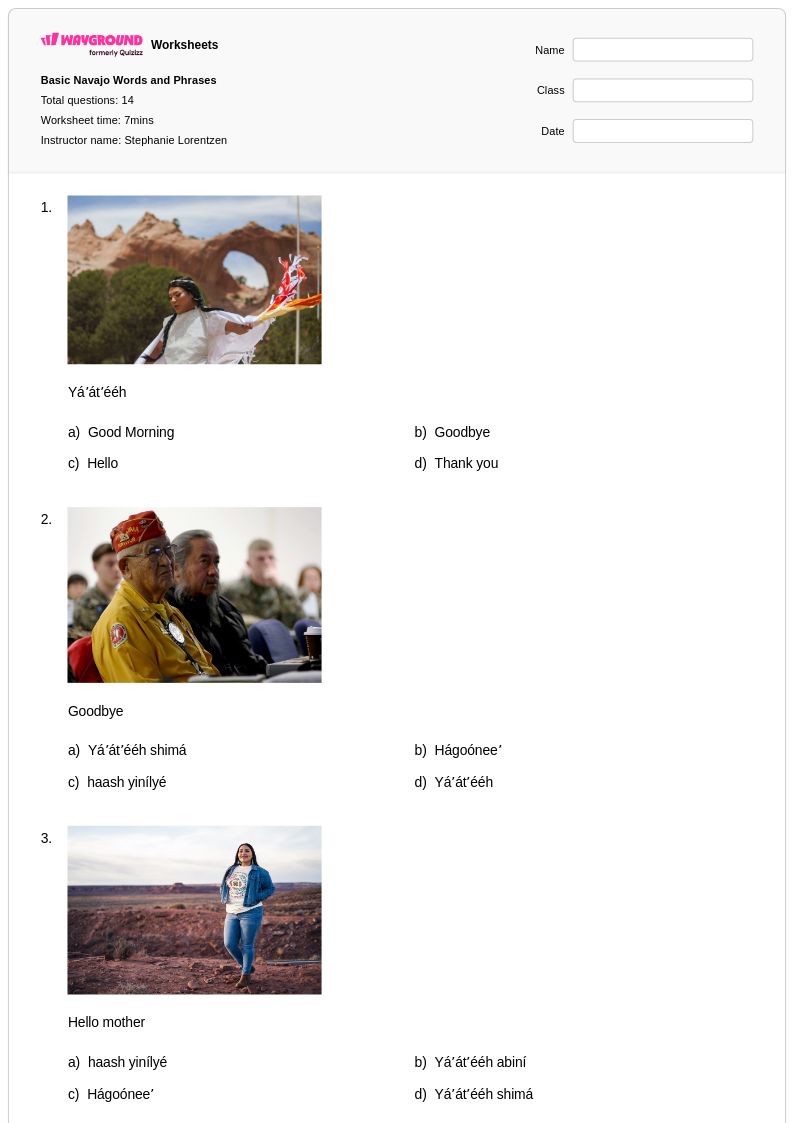
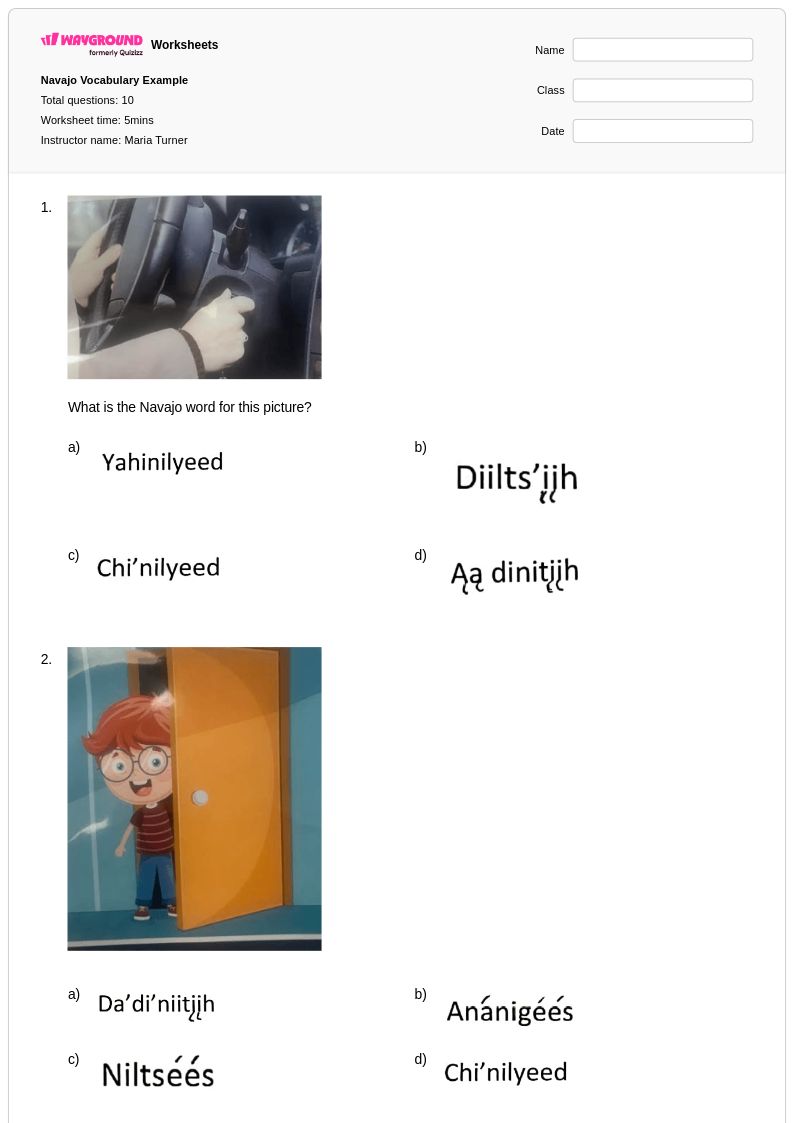
Matching exercises that pair Navajo words with images or English translations are effective for building initial vocabulary, especially for concrete nouns and common verbs. Sentence-building activities that ask students to select the correct verb form based on a given subject and object reinforce understanding of Navajo's complex verb system. Cloze exercises using culturally relevant texts, such as short narratives or traditional descriptions, help students practice grammar in context.
What common mistakes do students make when first learning Navajo?
The most frequent error is applying English sentence structure (subject-verb-object) to Navajo, which follows a subject-object-verb order. Students also commonly ignore tonal distinctions, treating Navajo as a non-tonal language and producing words that carry unintended meanings. Another persistent mistake is treating Navajo verbs as fixed forms rather than understanding that verb stems change based on the shape or animacy of the object involved.
How can I use Navajo worksheets to support students at different proficiency levels?
Beginning students benefit most from vocabulary identification and simple matching tasks that introduce core terms without requiring full grammatical production. Intermediate learners can work with structured sentence frames that guide correct verb selection, while advanced students can engage with open-ended writing prompts or translation exercises using authentic Navajo texts. On Wayground, teachers can apply differentiation settings such as reduced answer choices or read-aloud features to individual students, allowing the same worksheet to serve multiple proficiency levels without creating separate materials.
How do I use Navajo worksheets from Wayground in my classroom?
Navajo worksheets on Wayground are available as printable PDFs for traditional classroom use and in digital formats for technology-integrated or remote learning environments. Teachers can also host worksheets as interactive quizzes directly on Wayground, allowing for real-time student responses and automatic grading. All worksheets include complete answer keys, making them suitable for independent practice, small group instruction, or formative assessment sessions.