
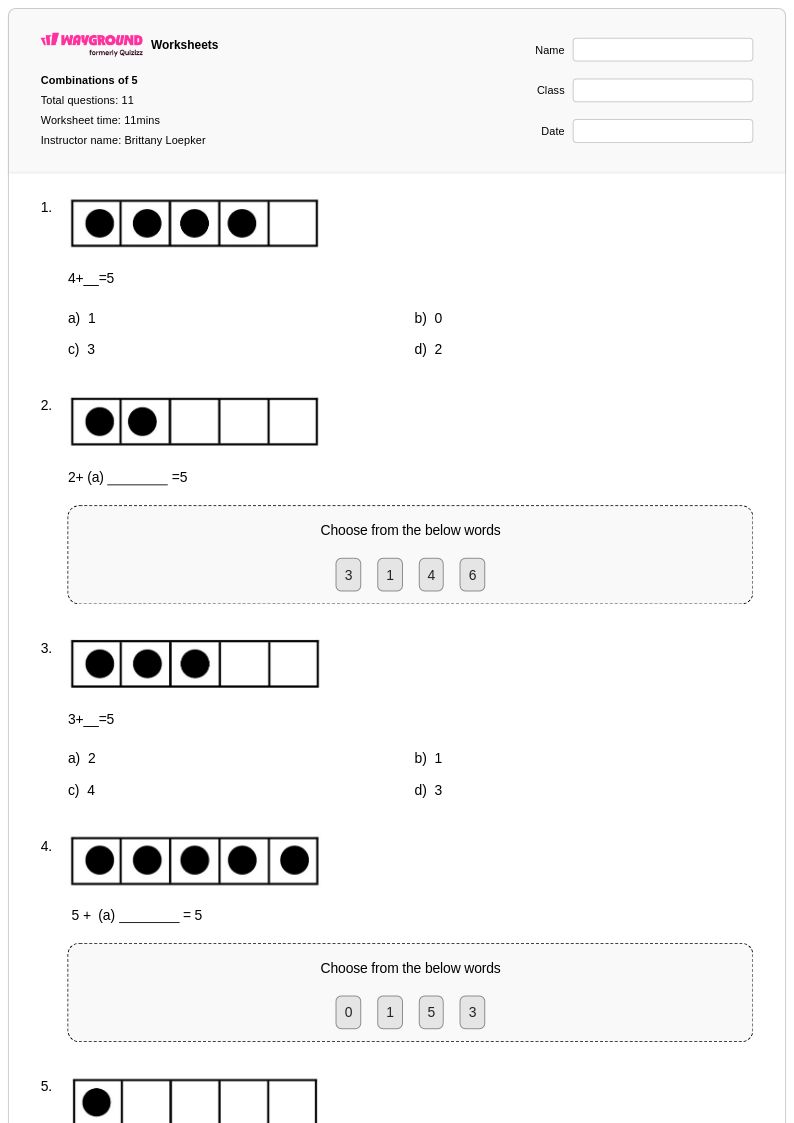
11 Q
1st - 5th
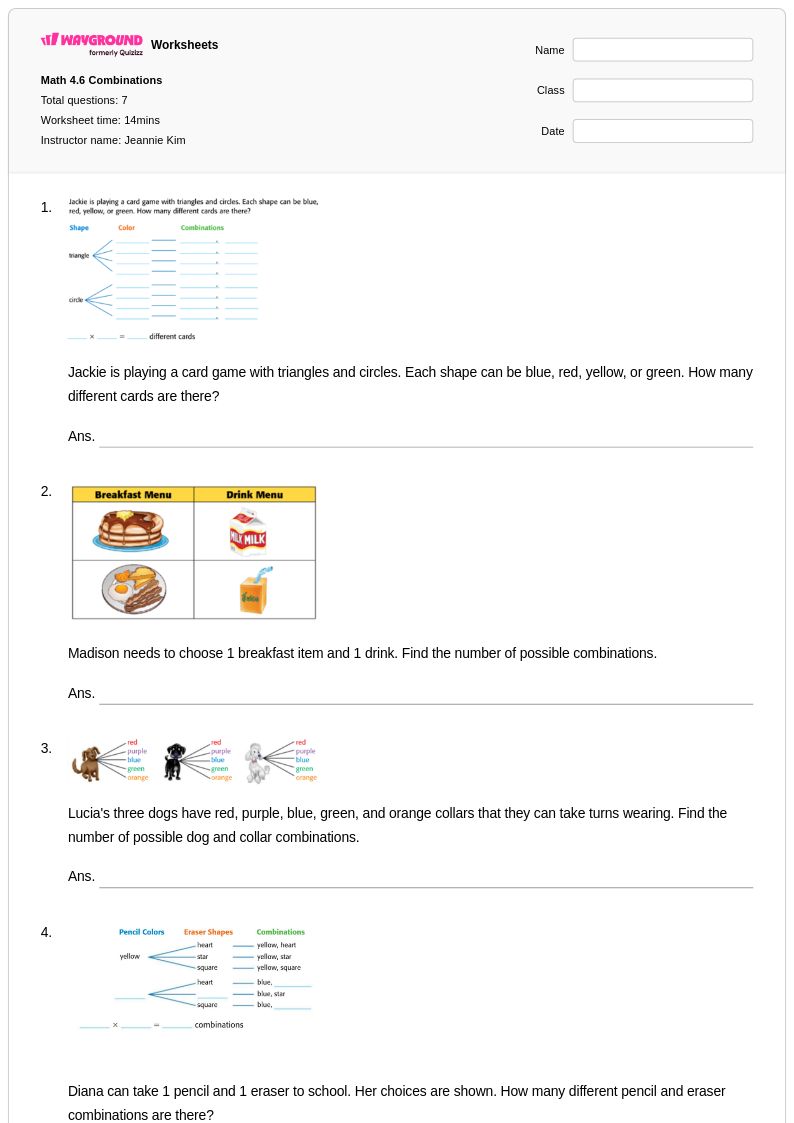
7 Q
3rd
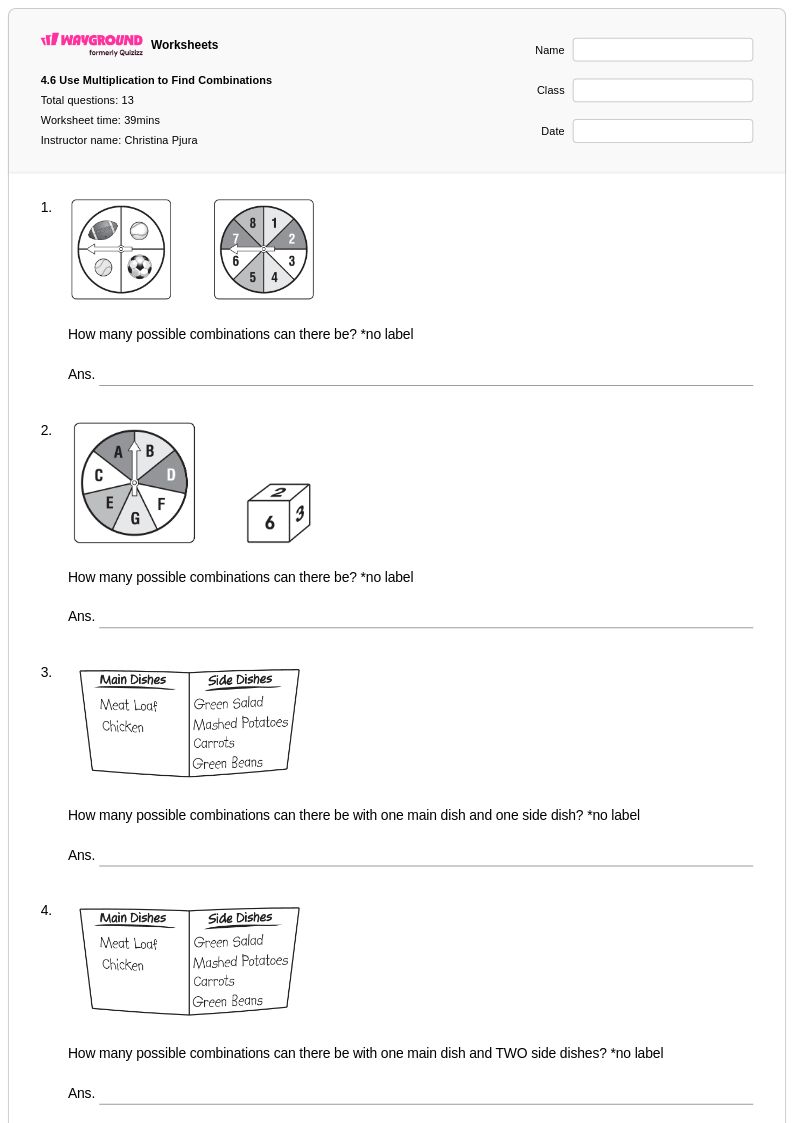
13 Q
3rd
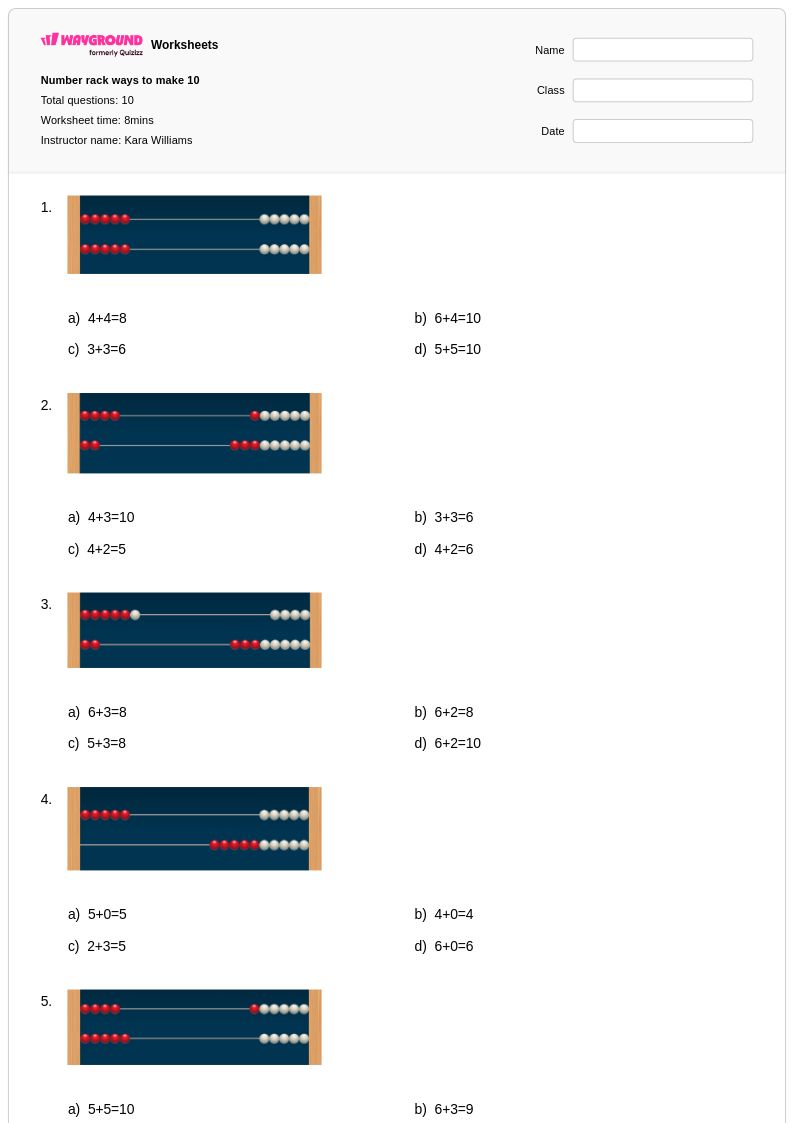
10 Q
1st - 3rd
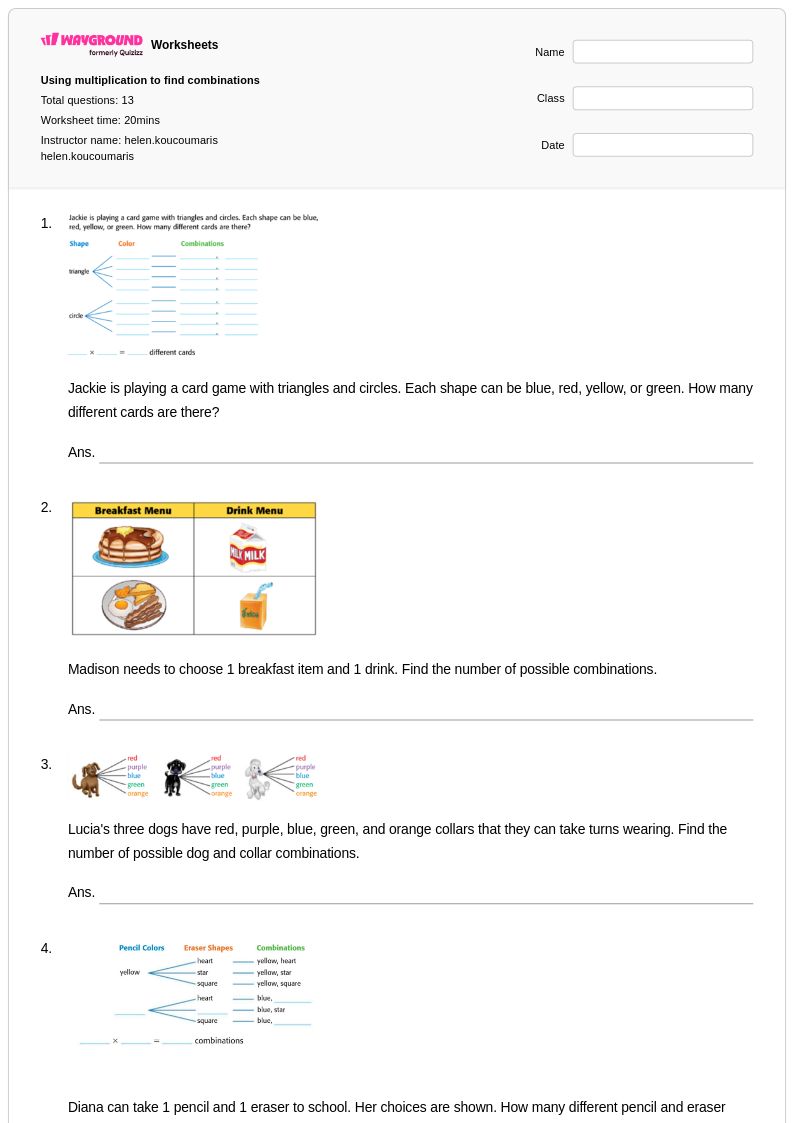
13 Q
1st - 5th
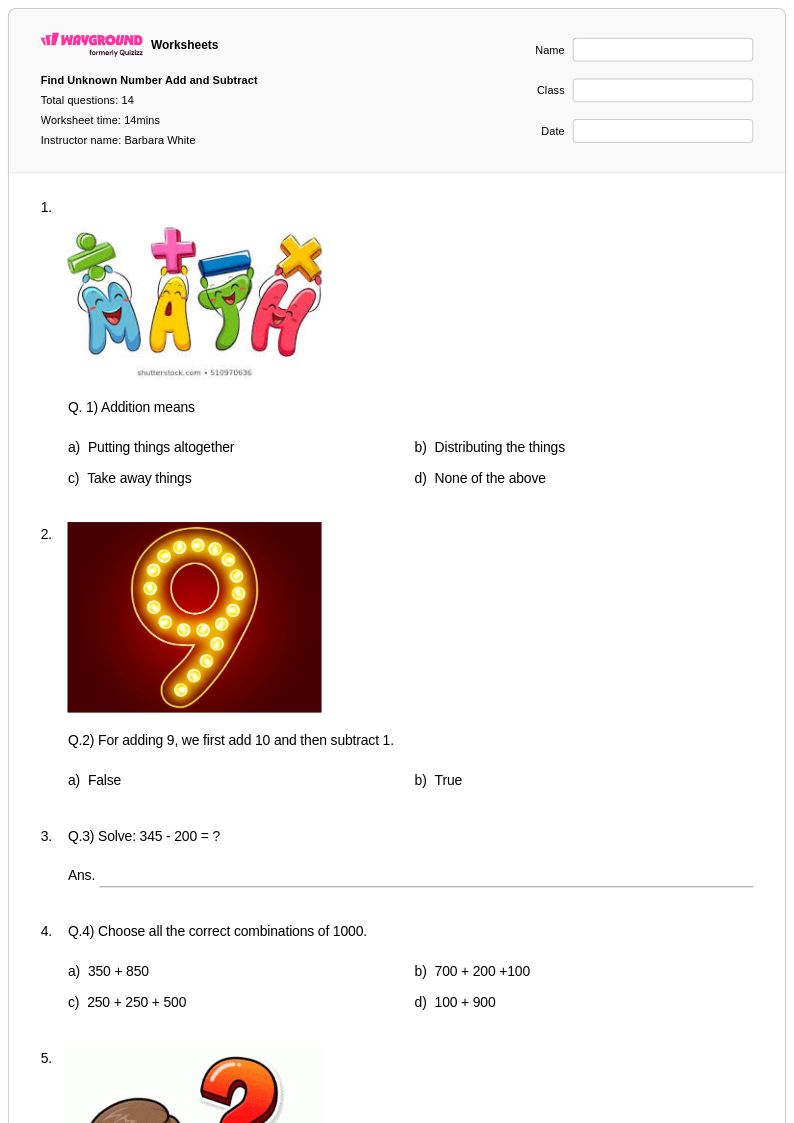
14 Q
3rd
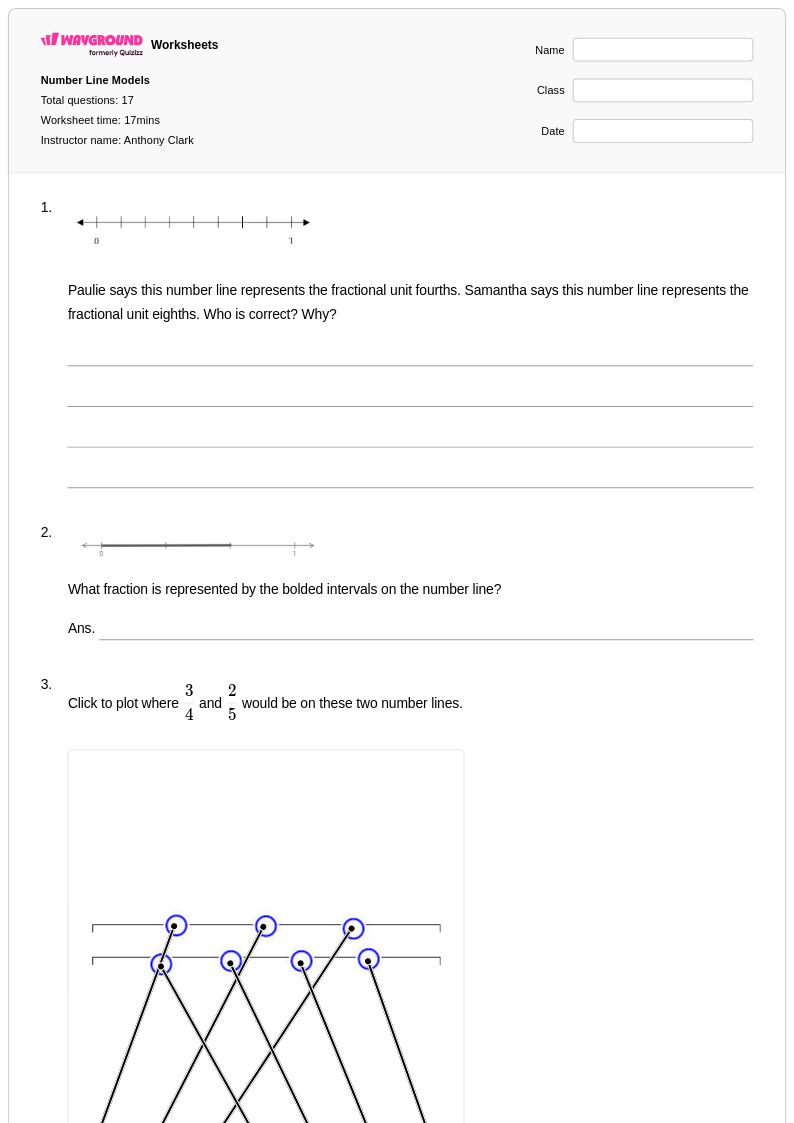
17 Q
3rd - Uni
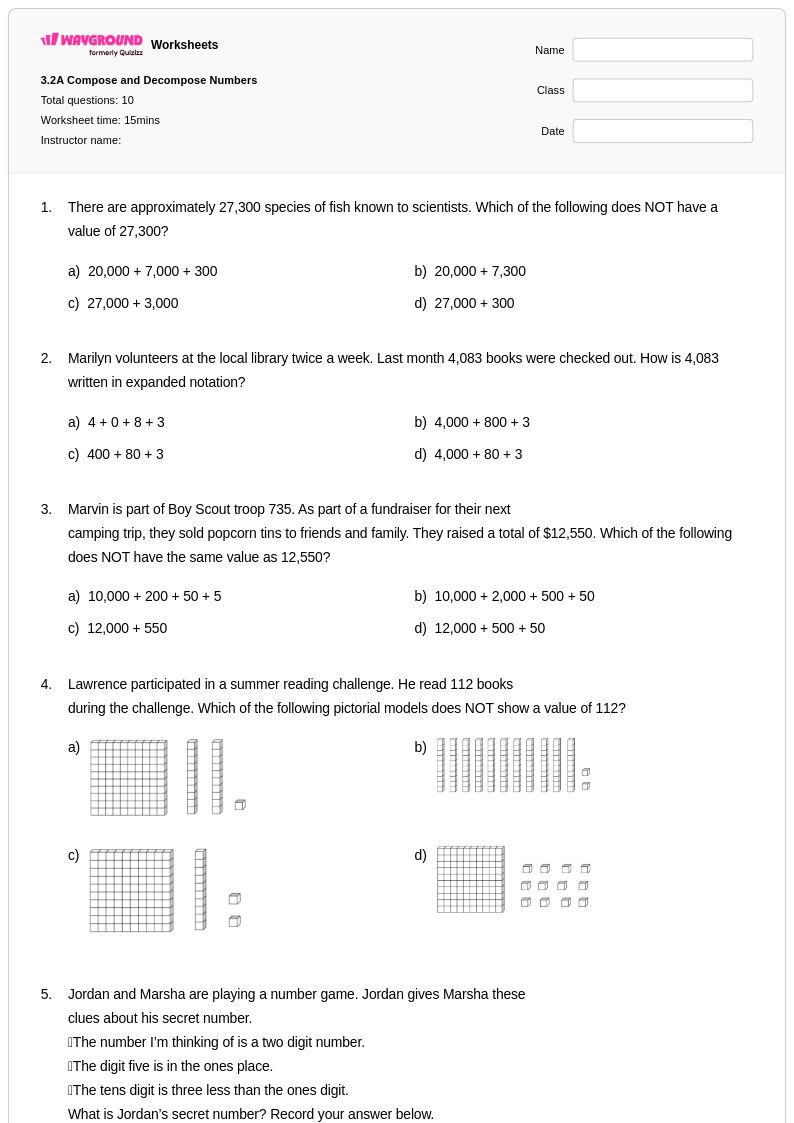
10 Q
3rd
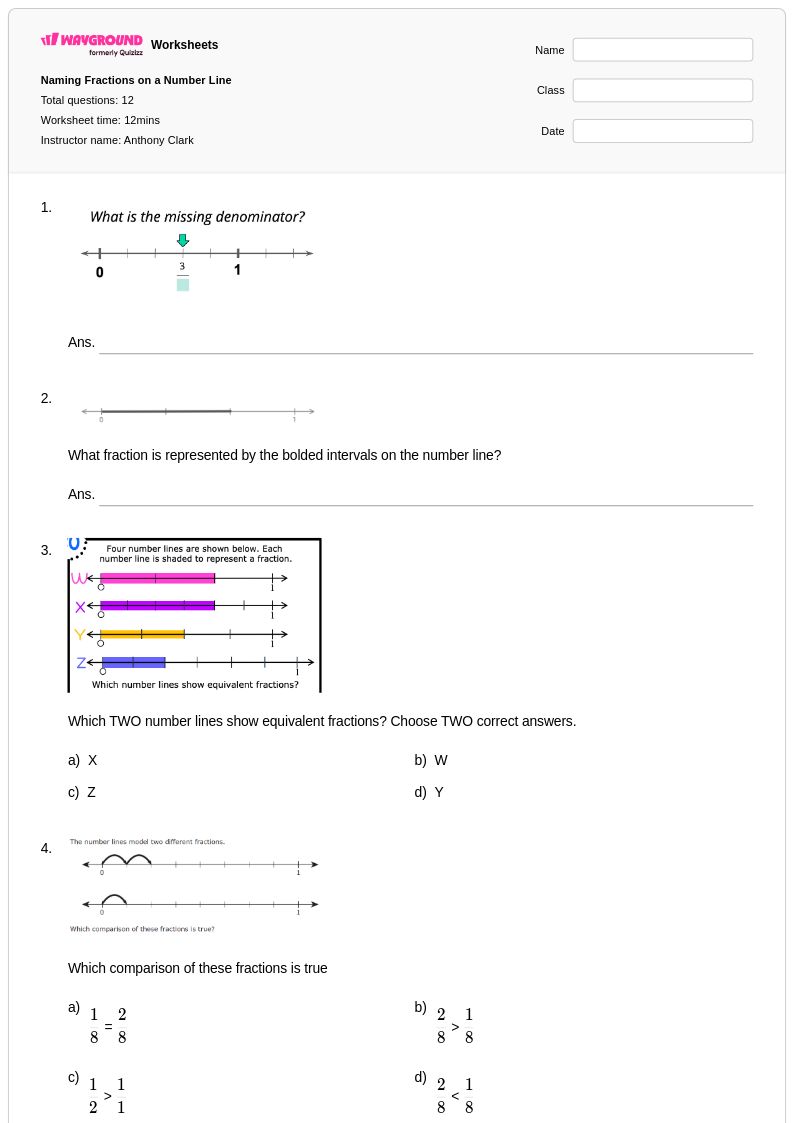
12 Q
3rd - Uni
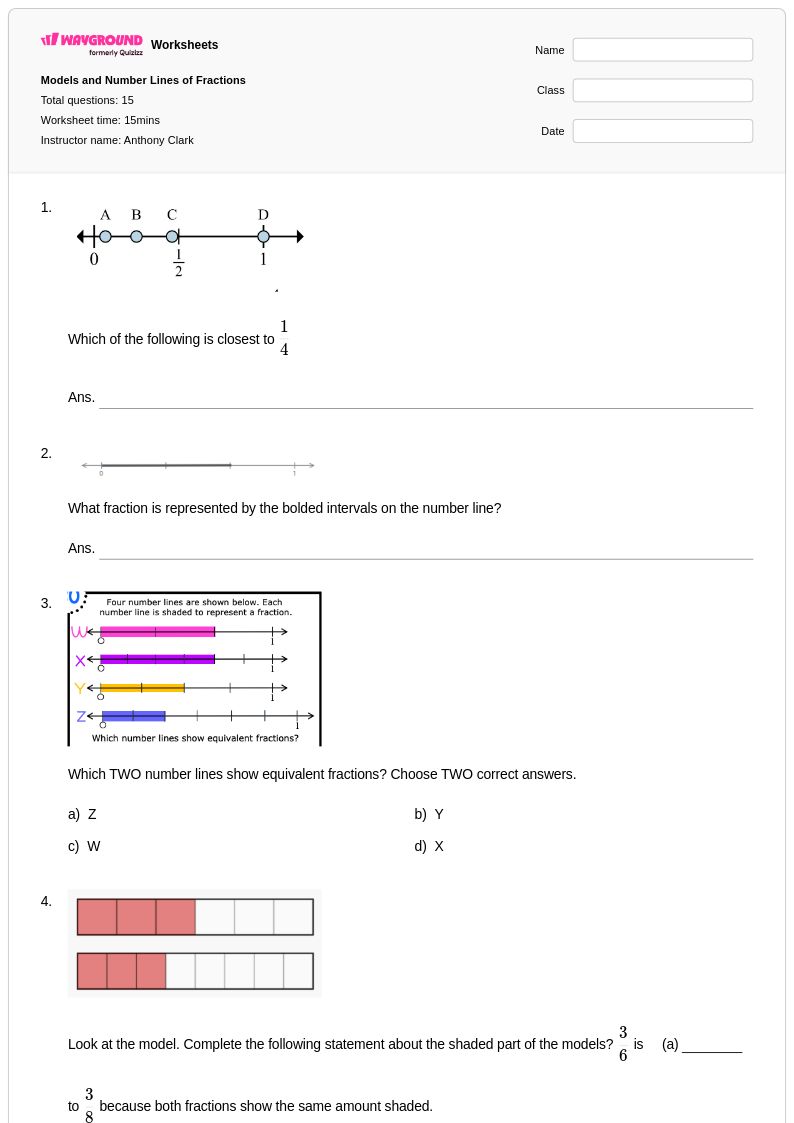
15 Q
3rd - Uni
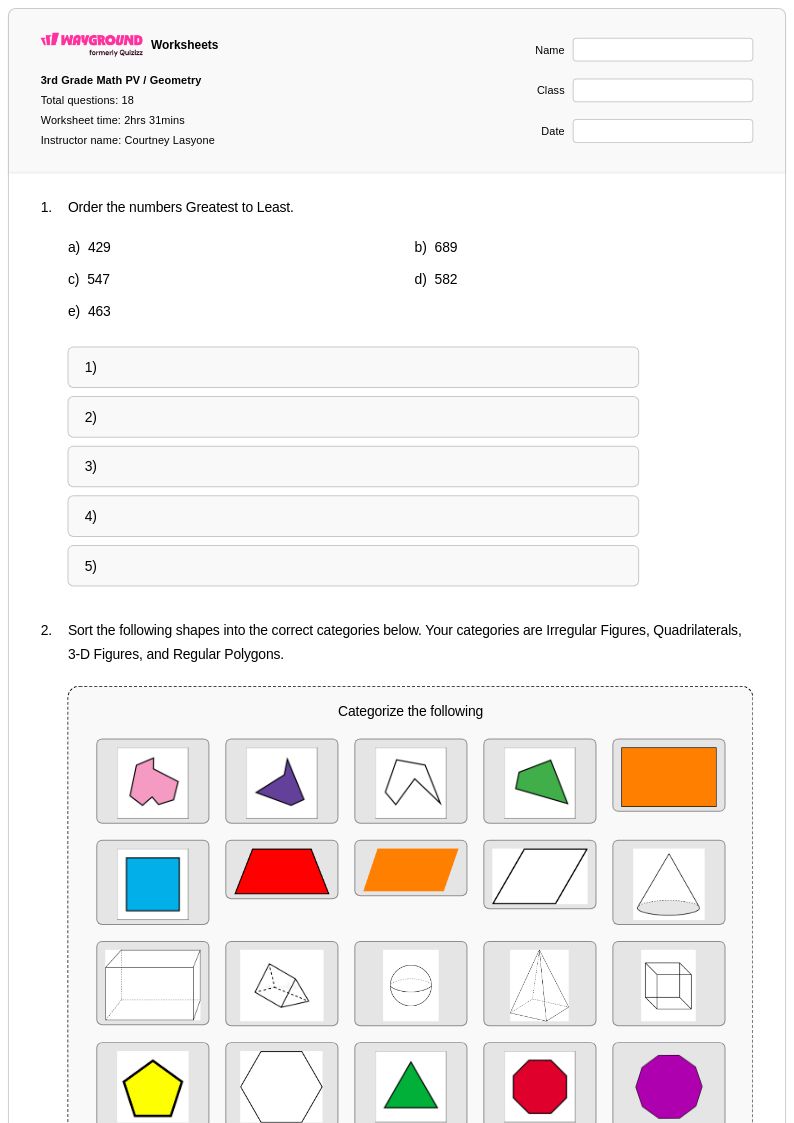
18 Q
3rd
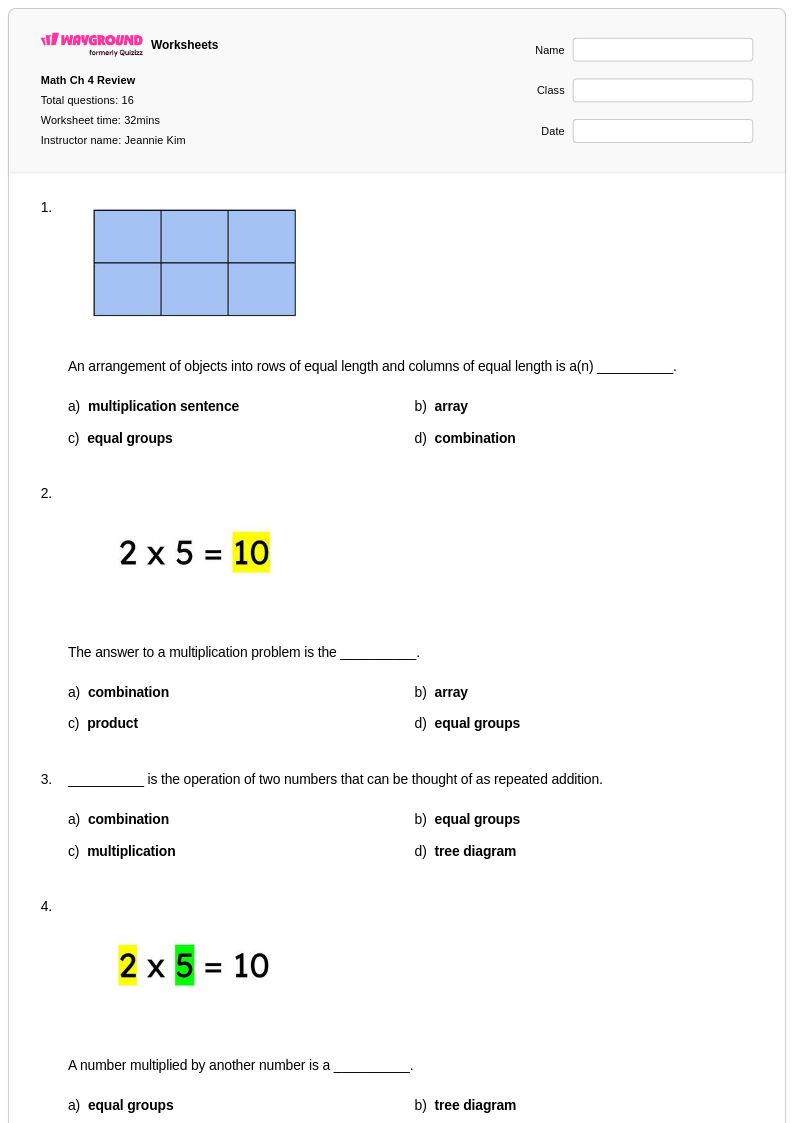
16 Q
3rd
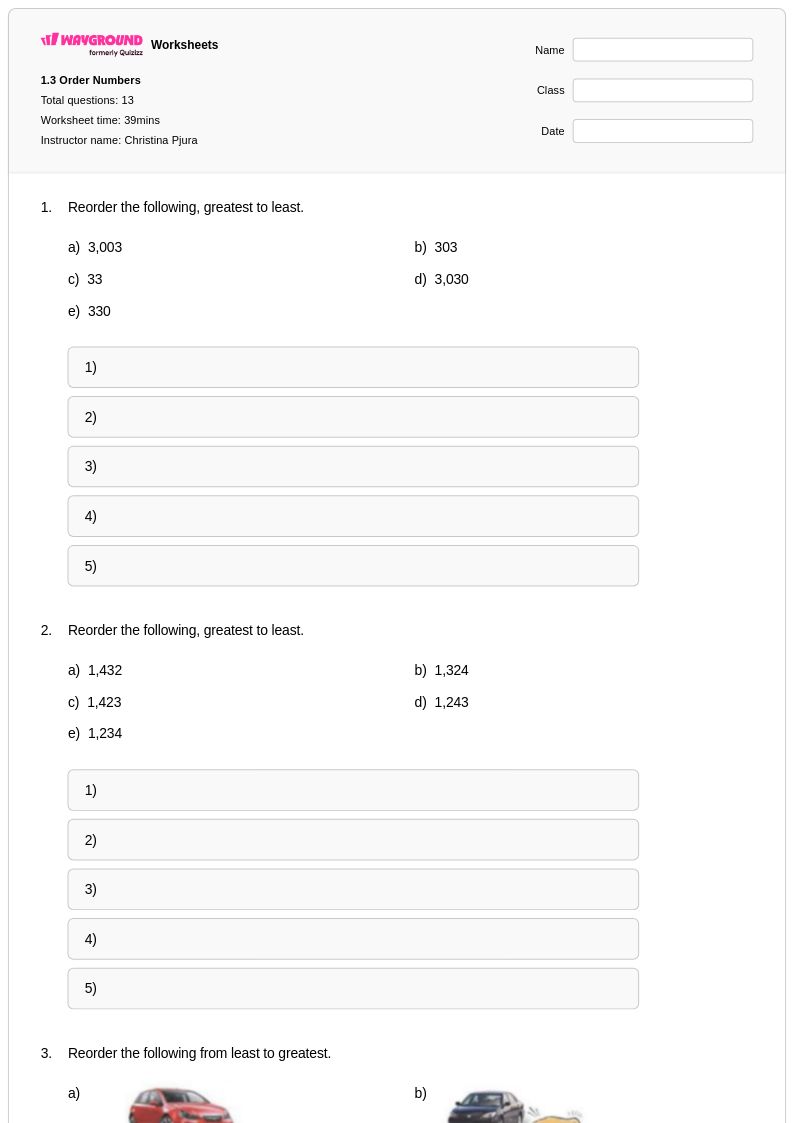
13 Q
3rd
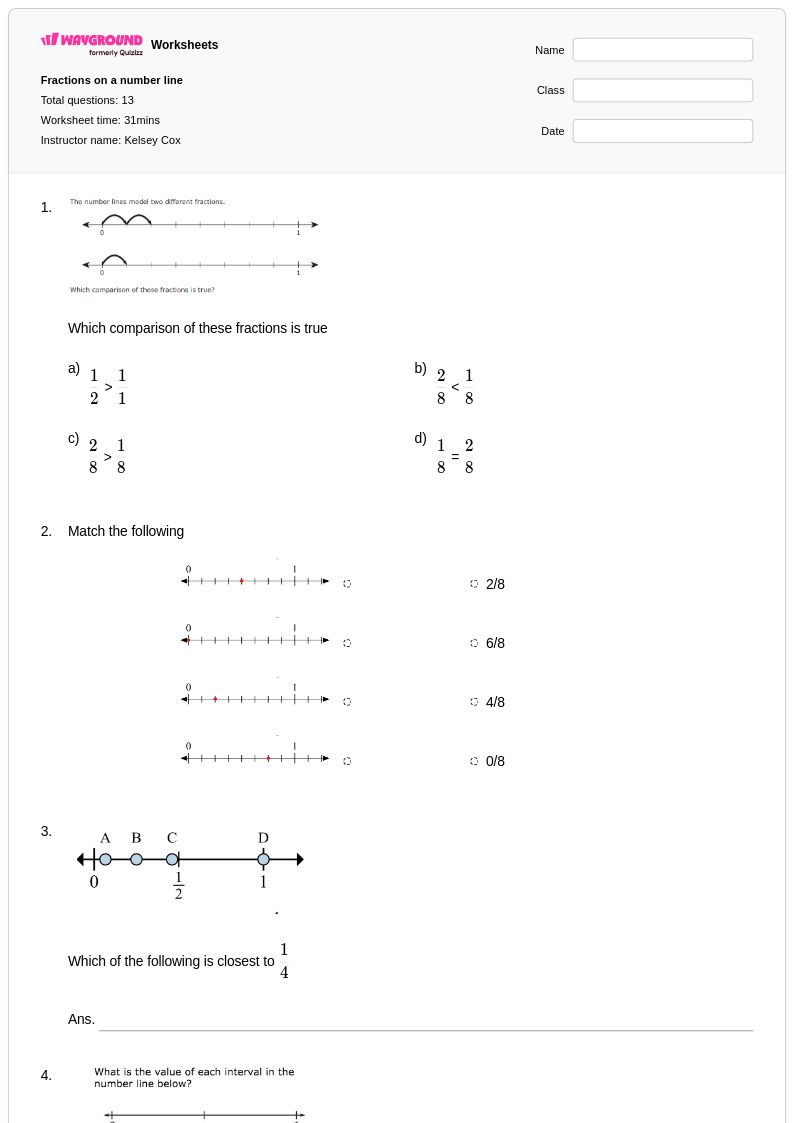
13 Q
3rd
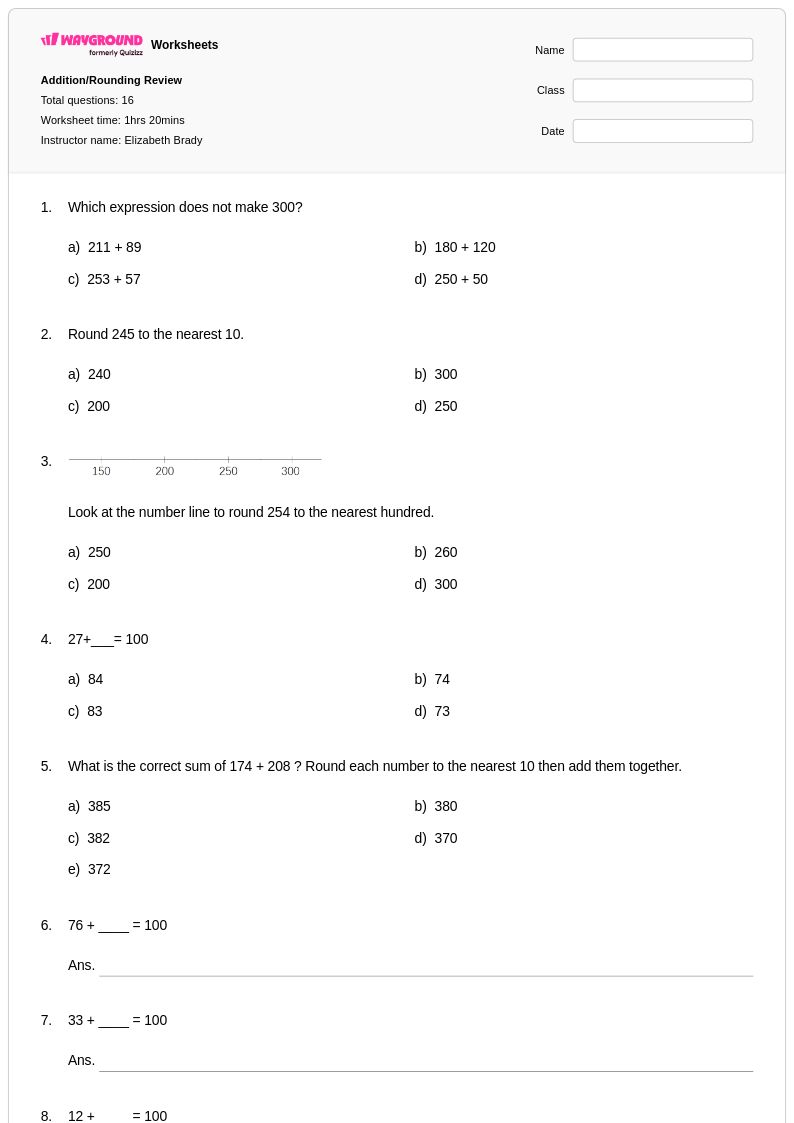
16 Q
3rd
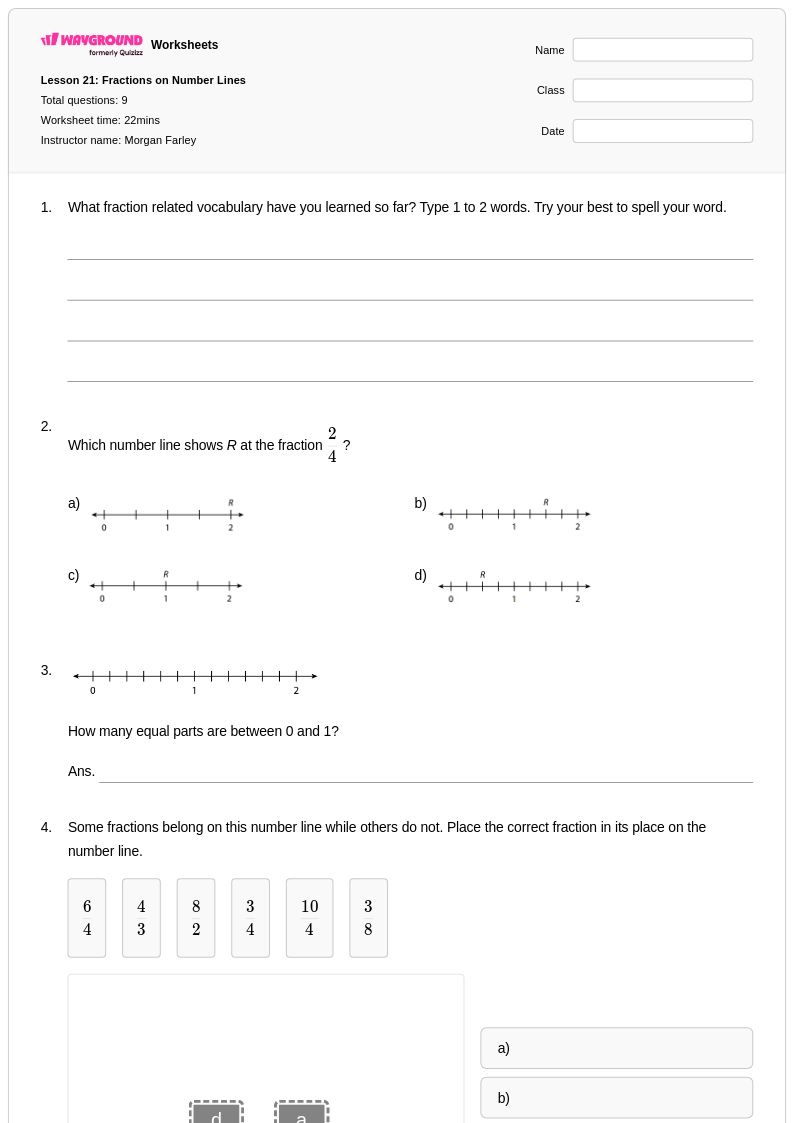
16 Q
3rd
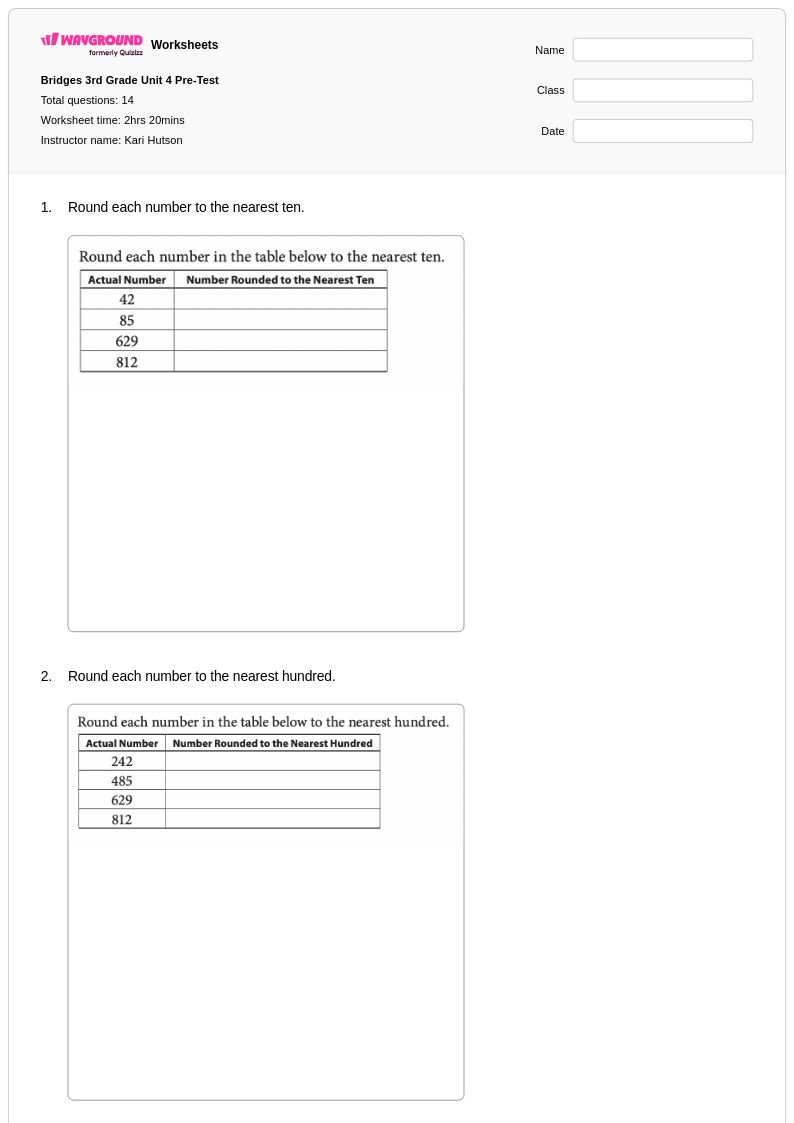
14 Q
3rd
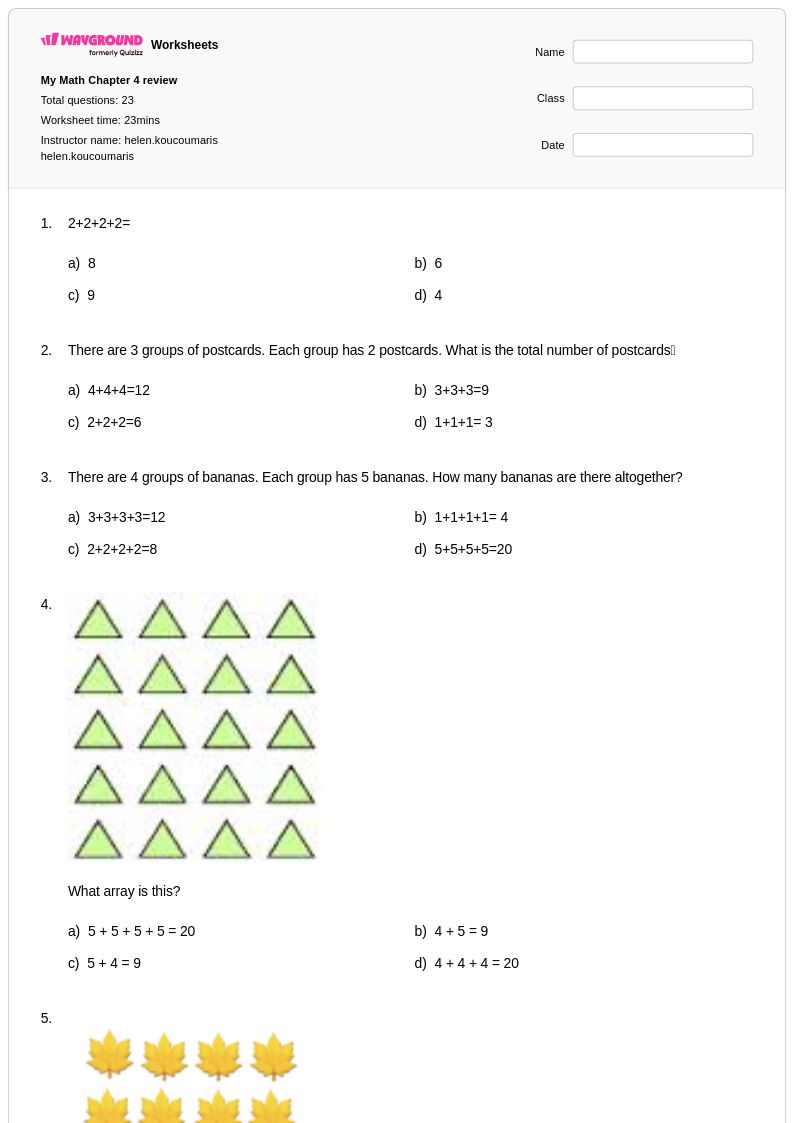
23 Q
1st - 5th
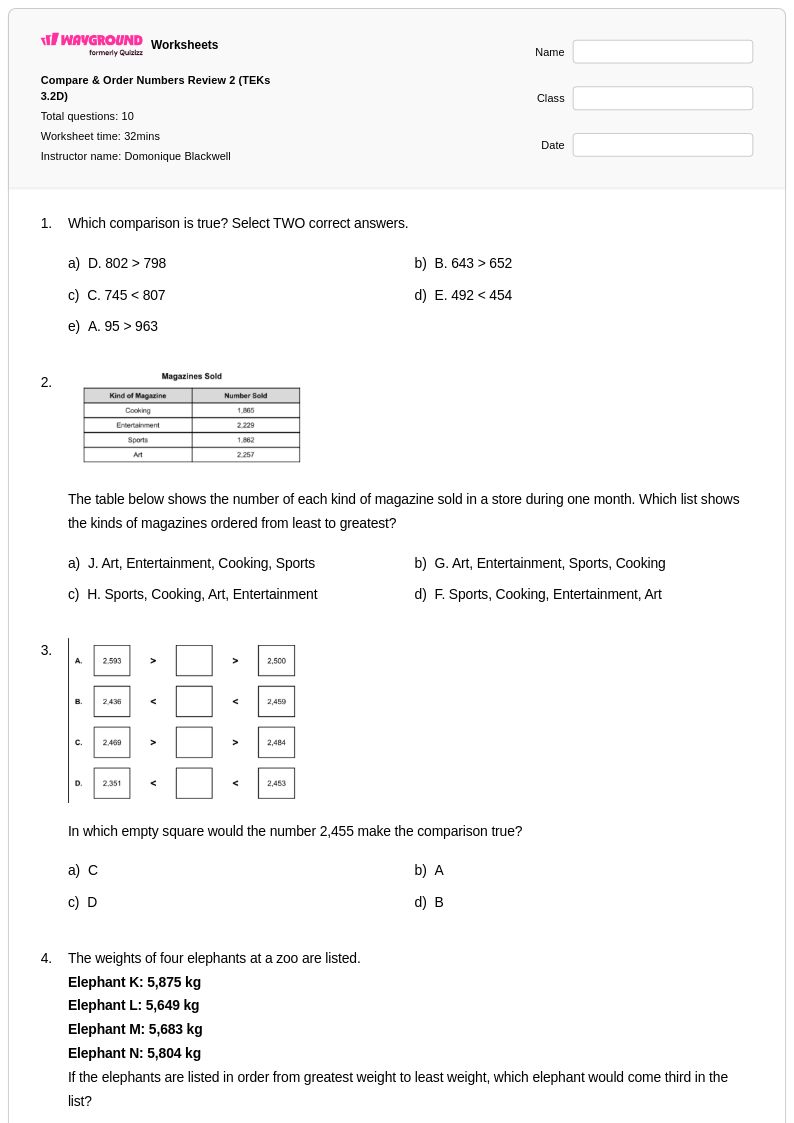
10 Q
3rd
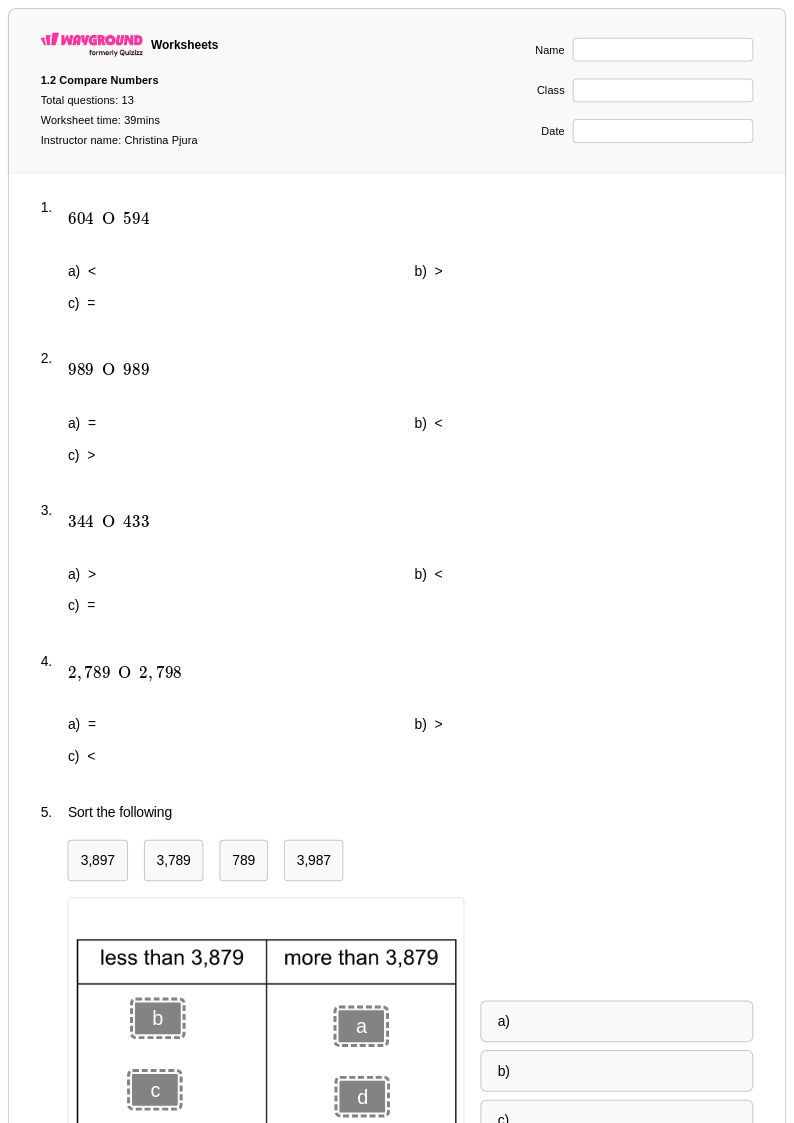
13 Q
3rd
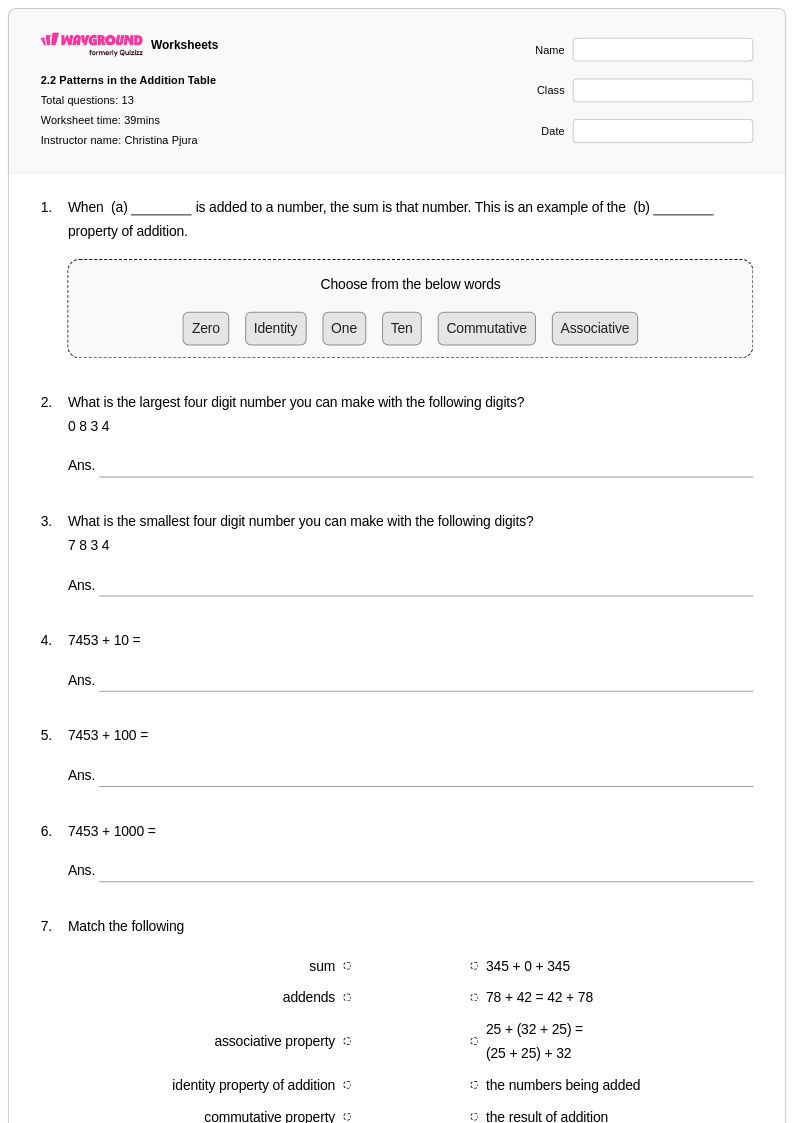
13 Q
3rd
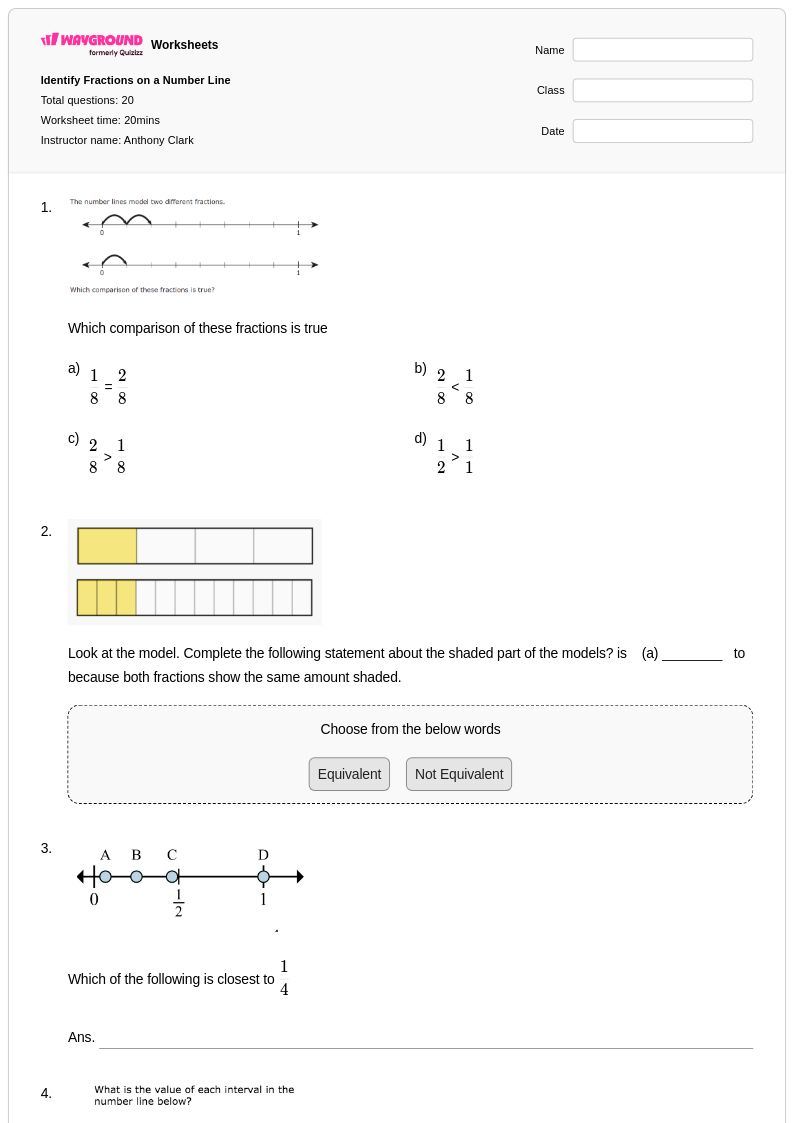
20 Q
3rd - Uni
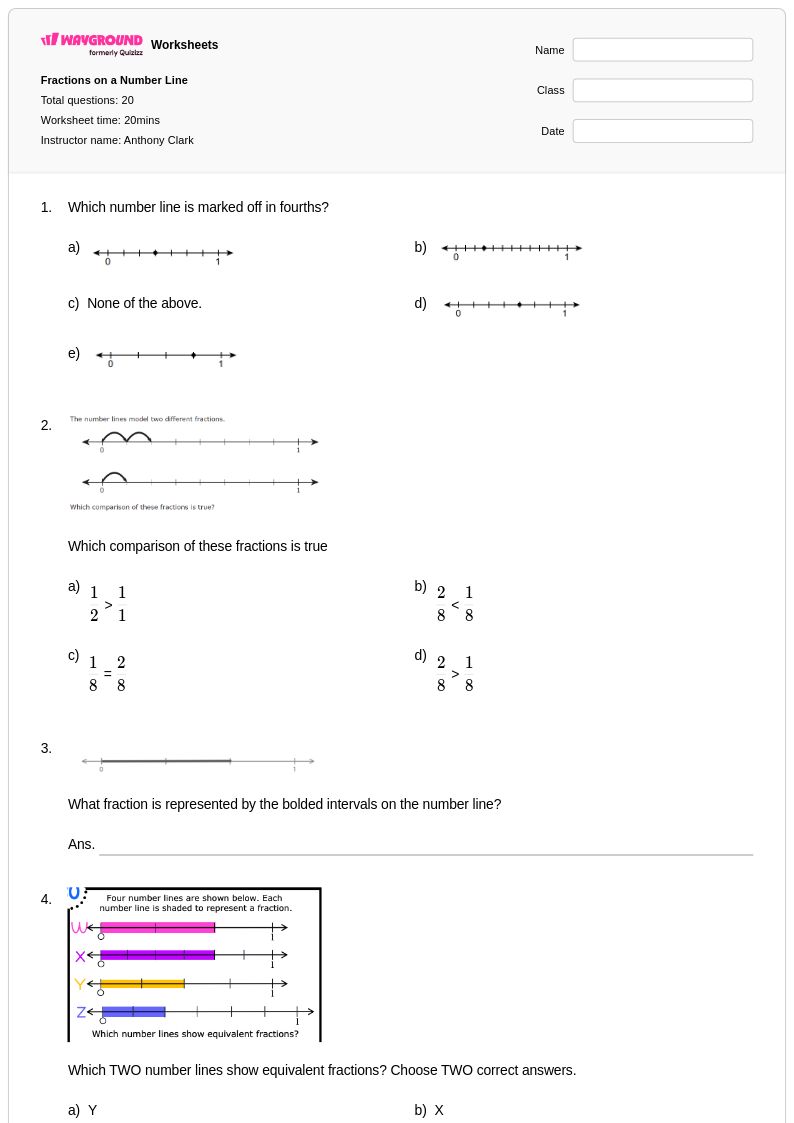
20 Q
3rd - Uni
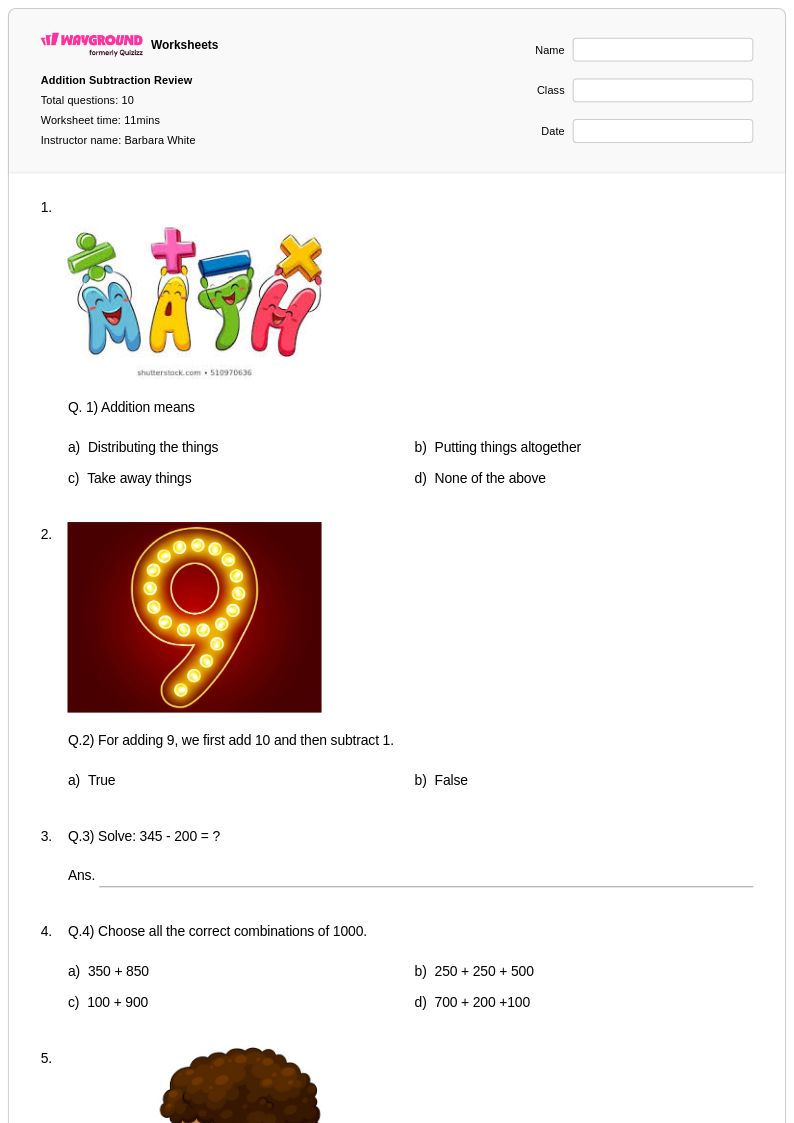
10 Q
3rd
Explore Number Combinations Worksheets by Grades
Explore Other Subject Worksheets for grade 3
Explore printable Number Combinations worksheets for Grade 3
Number combinations worksheets for Grade 3 students available through Wayground (formerly Quizizz) provide comprehensive practice with the fundamental skill of recognizing and creating different ways to compose and decompose numbers. These carefully designed printables help third-grade students develop fluency in understanding that numbers can be formed through various addition combinations, such as recognizing that 8 can be made from 3+5, 4+4, 2+6, or 1+7. The worksheets strengthen critical mathematical thinking by encouraging students to explore multiple pathways to reach the same sum, building number sense and mental math strategies that serve as building blocks for more advanced arithmetic concepts. Each free worksheet includes practice problems that progress systematically from simple single-digit combinations to more complex multi-step challenges, complete with answer keys that support both independent practice and guided instruction in pdf format.
Wayground (formerly Quizizz) empowers educators with access to millions of teacher-created number combinations resources specifically aligned to Grade 3 mathematics standards and learning objectives. The platform's robust search and filtering capabilities allow teachers to quickly locate worksheets that match their students' specific needs, whether for initial skill introduction, targeted remediation, or advanced enrichment activities. These versatile materials are available in both printable and digital formats, enabling seamless integration into any classroom environment while supporting differentiated instruction through customizable difficulty levels and problem types. Teachers can efficiently plan lessons, assess student understanding, and provide focused practice opportunities that help students master the critical concept of number combinations, ultimately building the strong mathematical foundation necessary for success with multiplication, division, and algebraic thinking in later grades.
FAQs
How are number combinations used in Grade 3 math?
What kind of practice connects number combinations to multiplication?
What's a sign a third grader is struggling to apply number combinations?
How can I use this Grade 3 worksheet to support my students?
How does this topic support third-grade math standards?
How can I support students who still need to build addition fluency in Grade 3?