Free Printable Oregon Trail Worksheets for Grade 4
Explore Grade 4 Oregon Trail printables and free worksheets that help students learn about westward expansion through engaging practice problems and activities with complete answer keys.
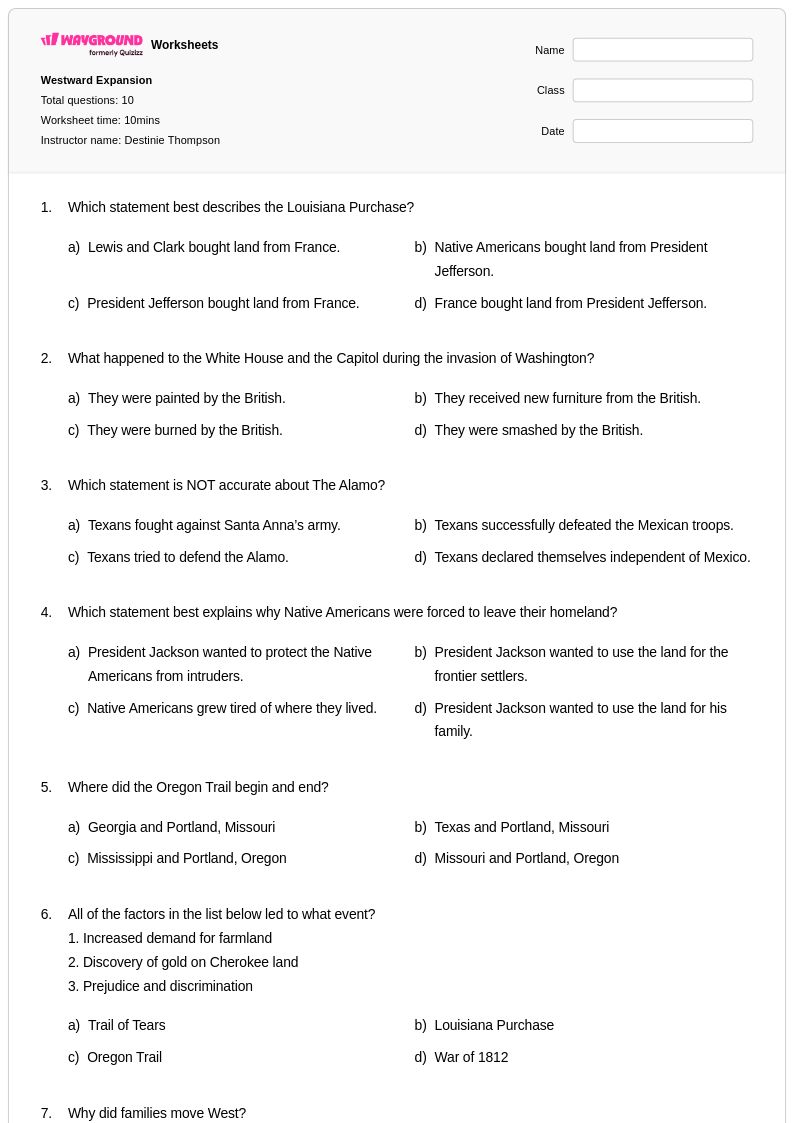
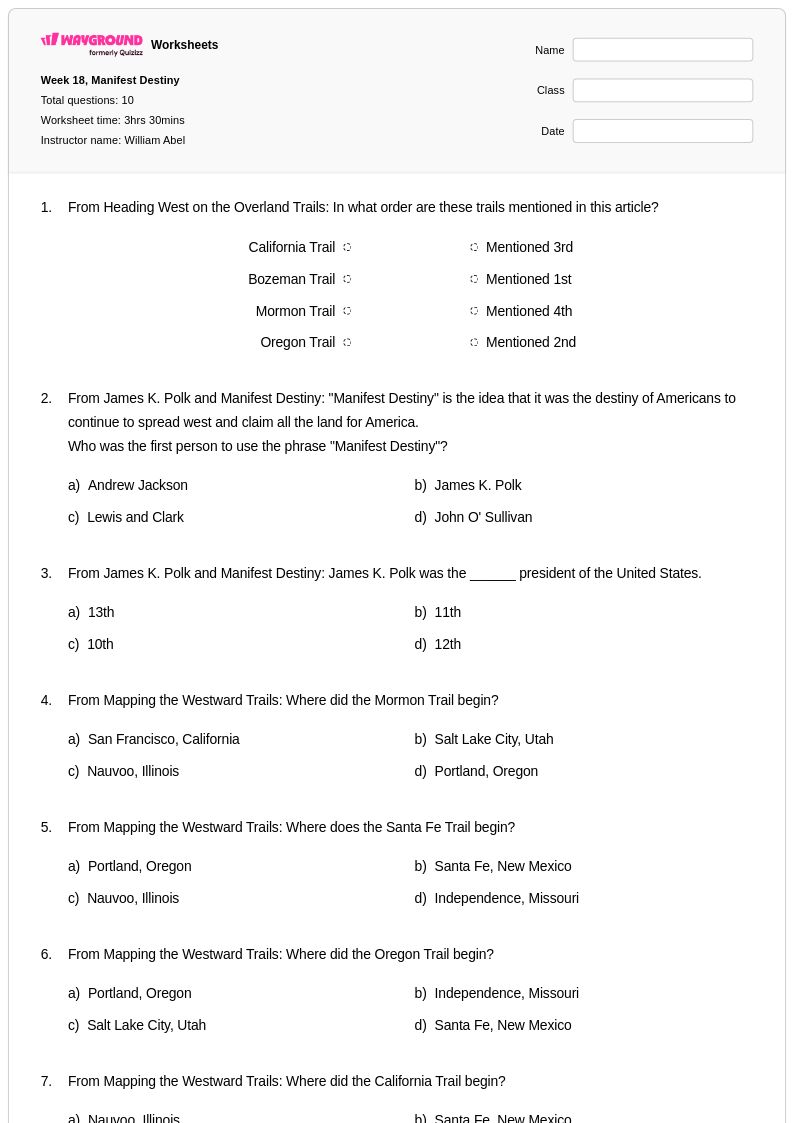
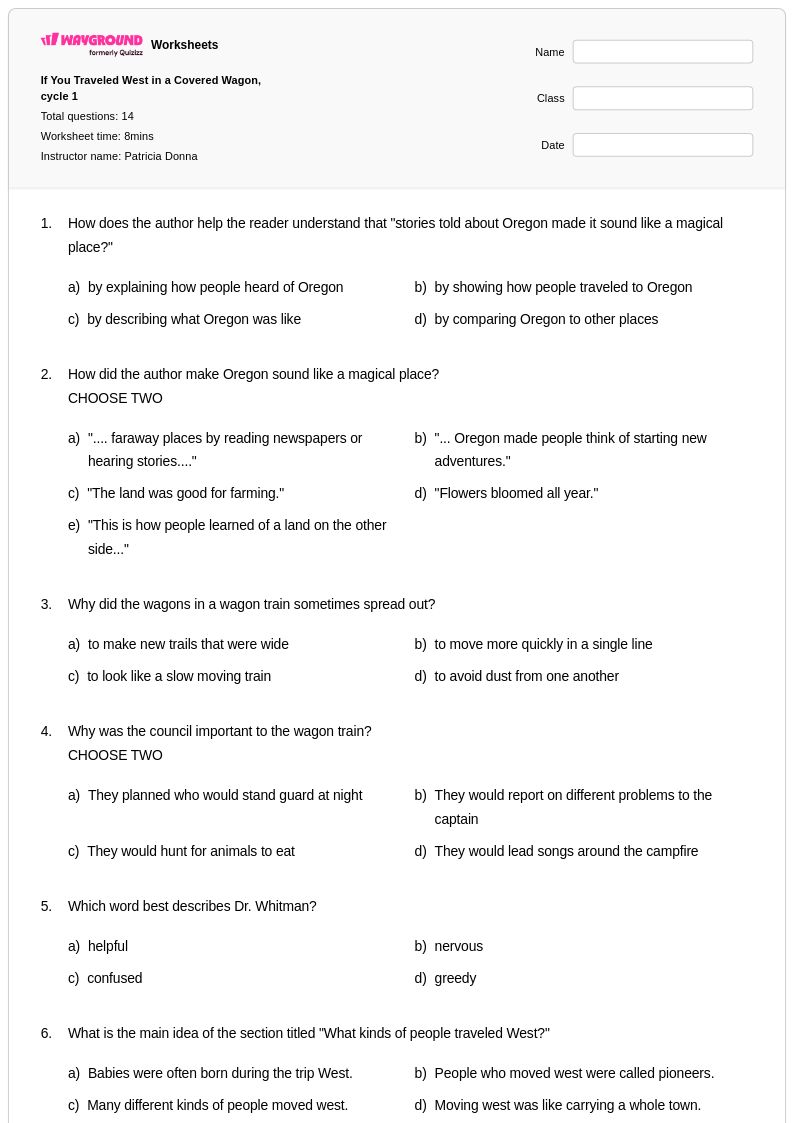
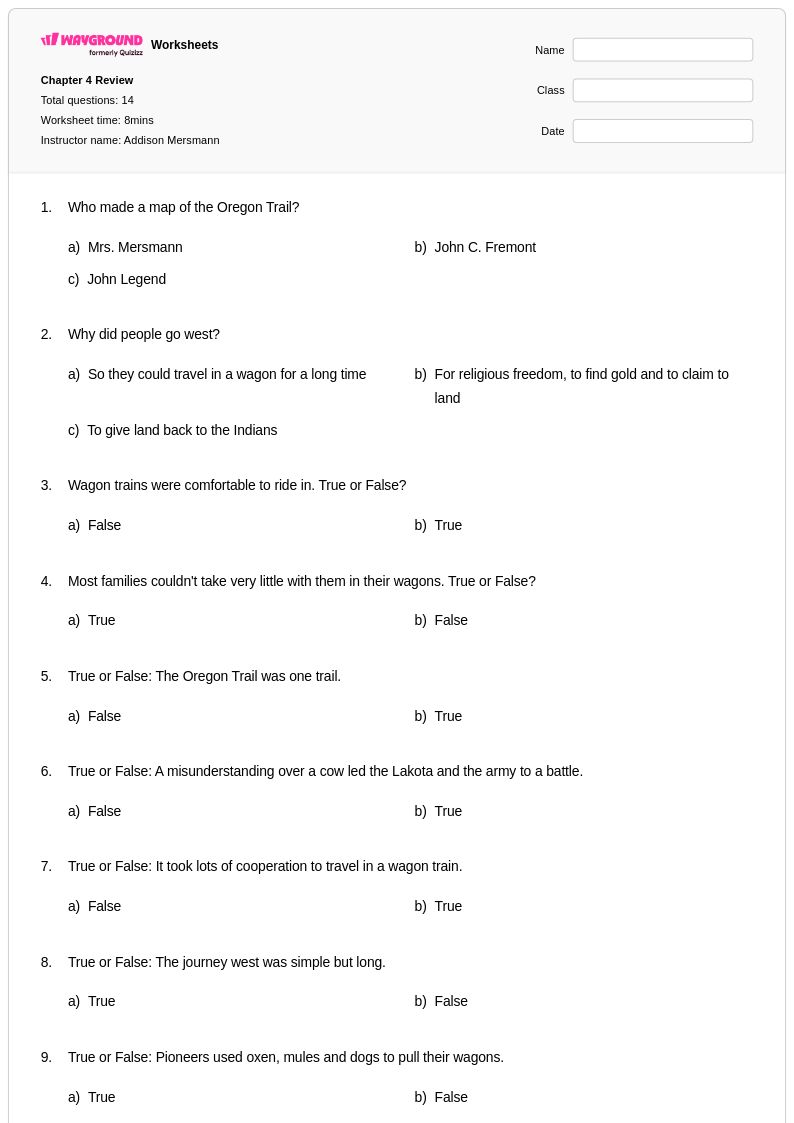
Explore printable Oregon Trail worksheets for Grade 4
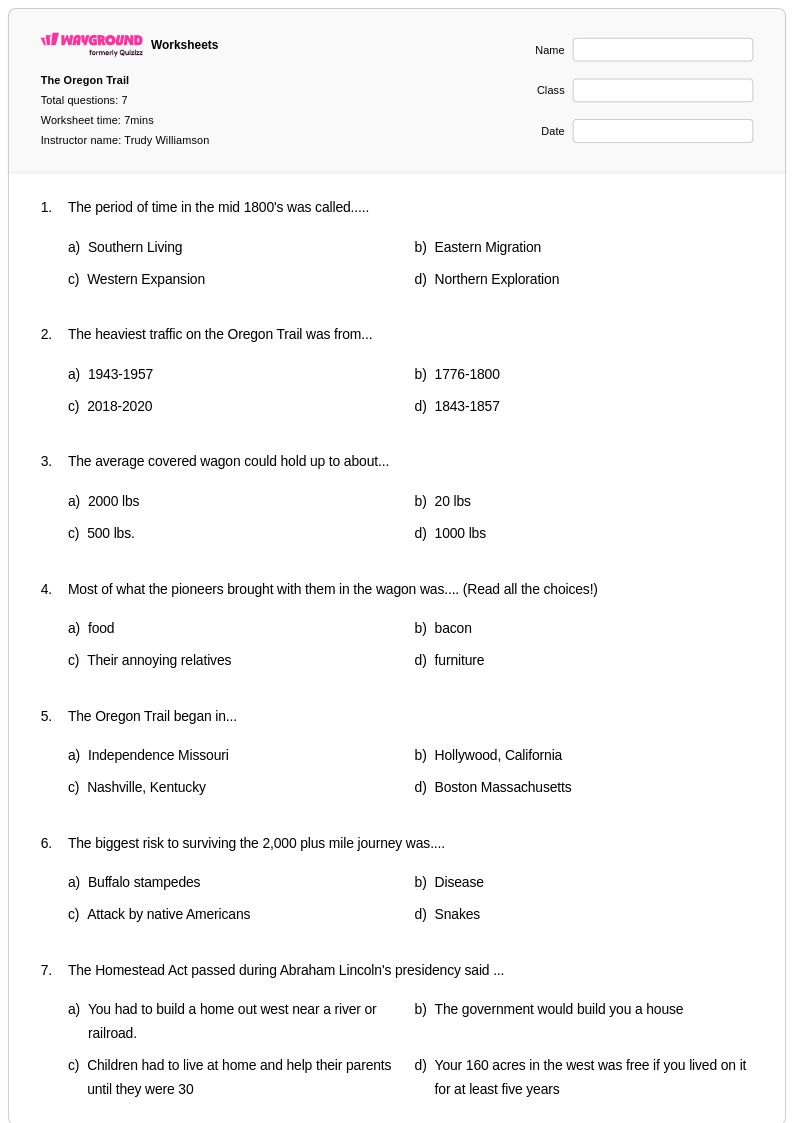
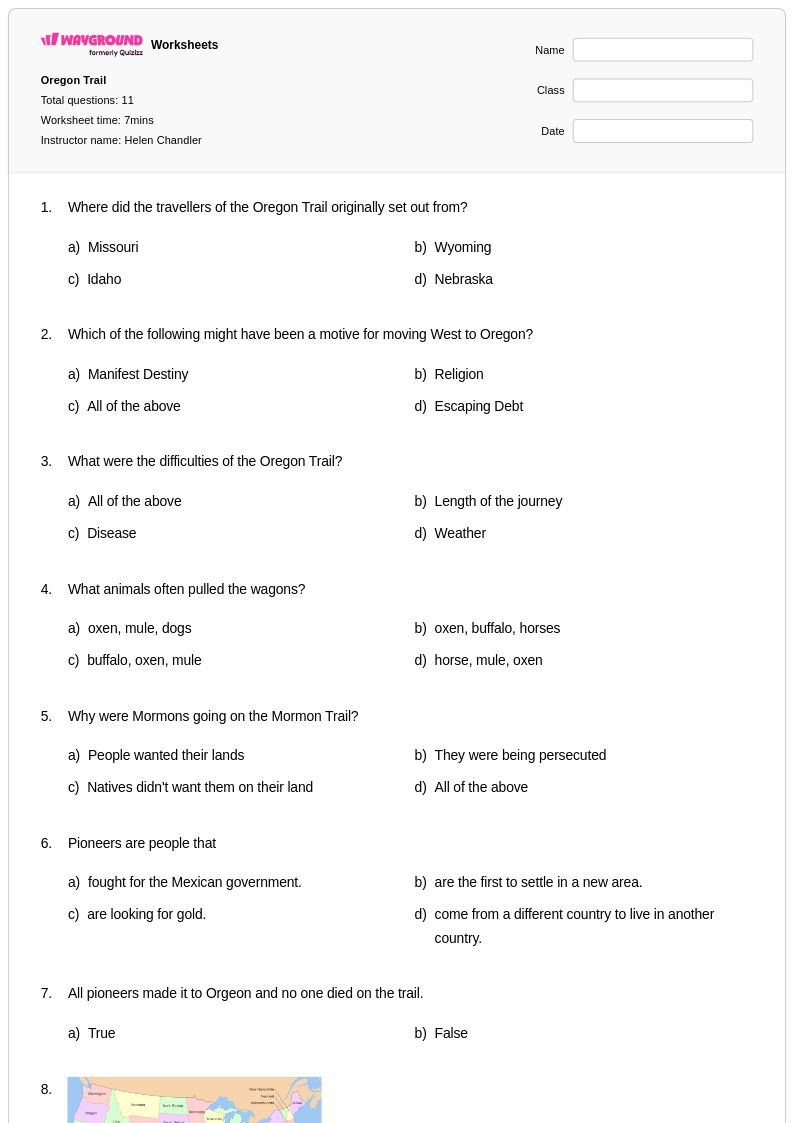
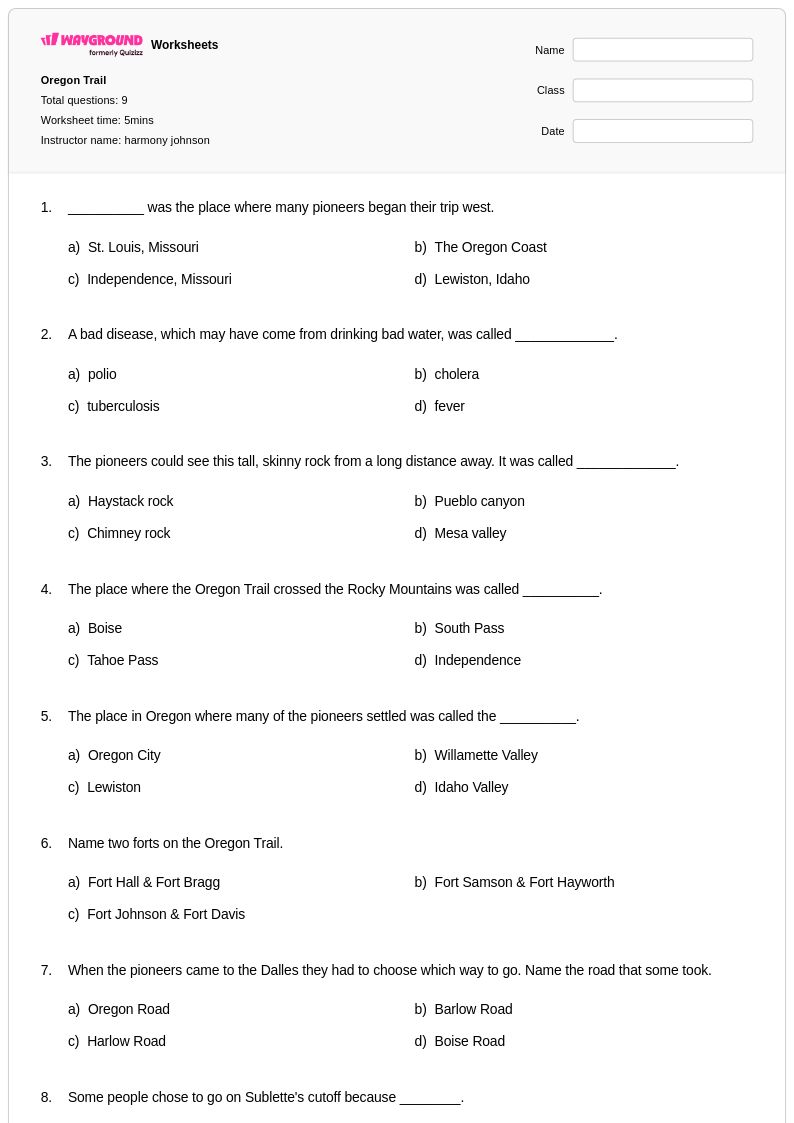
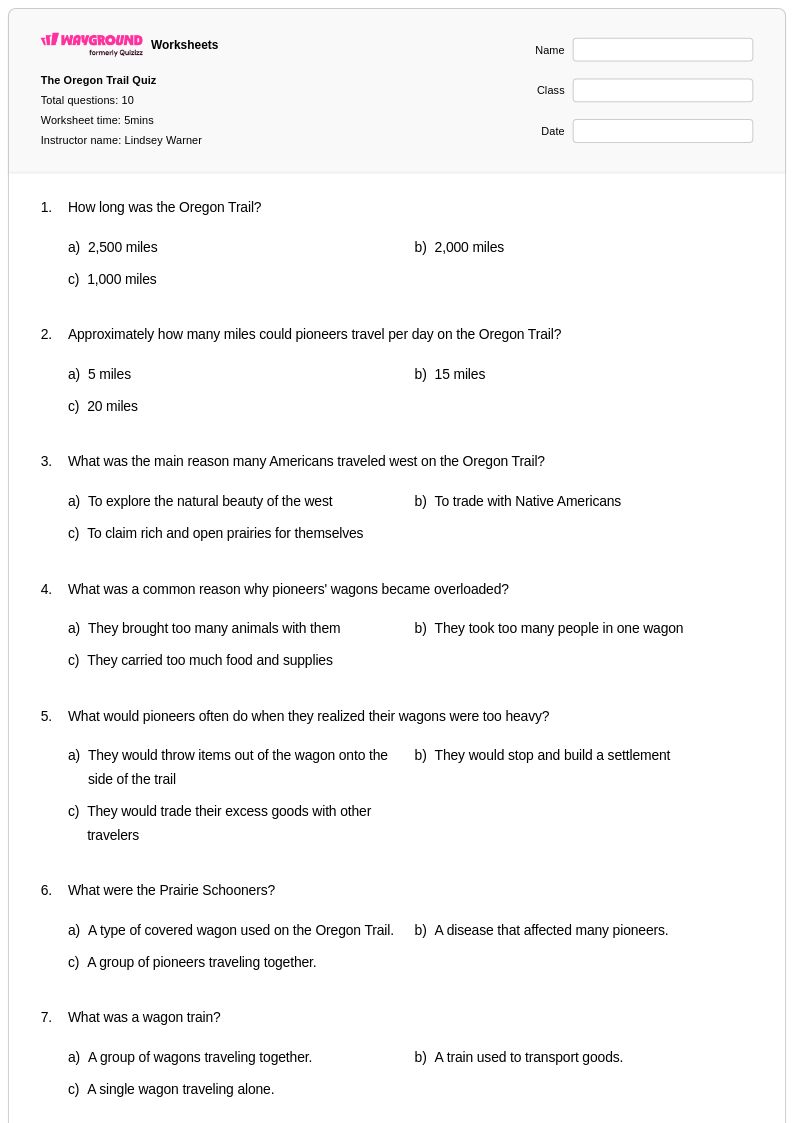
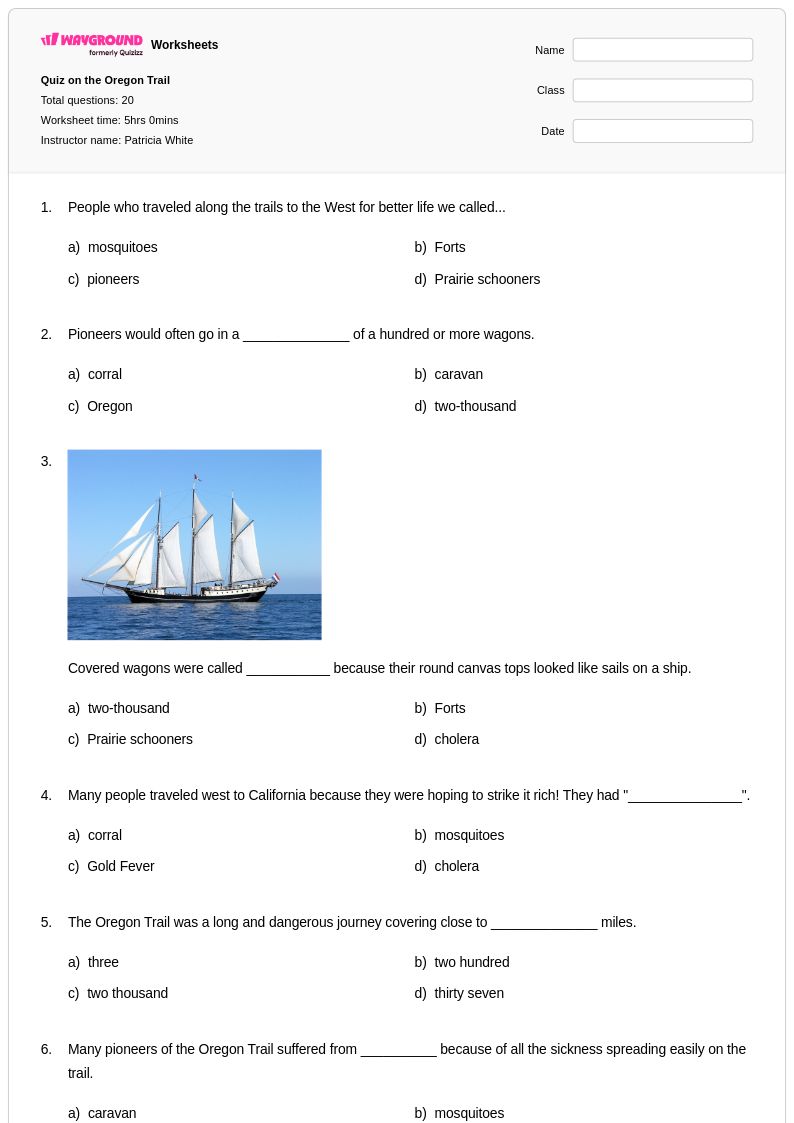
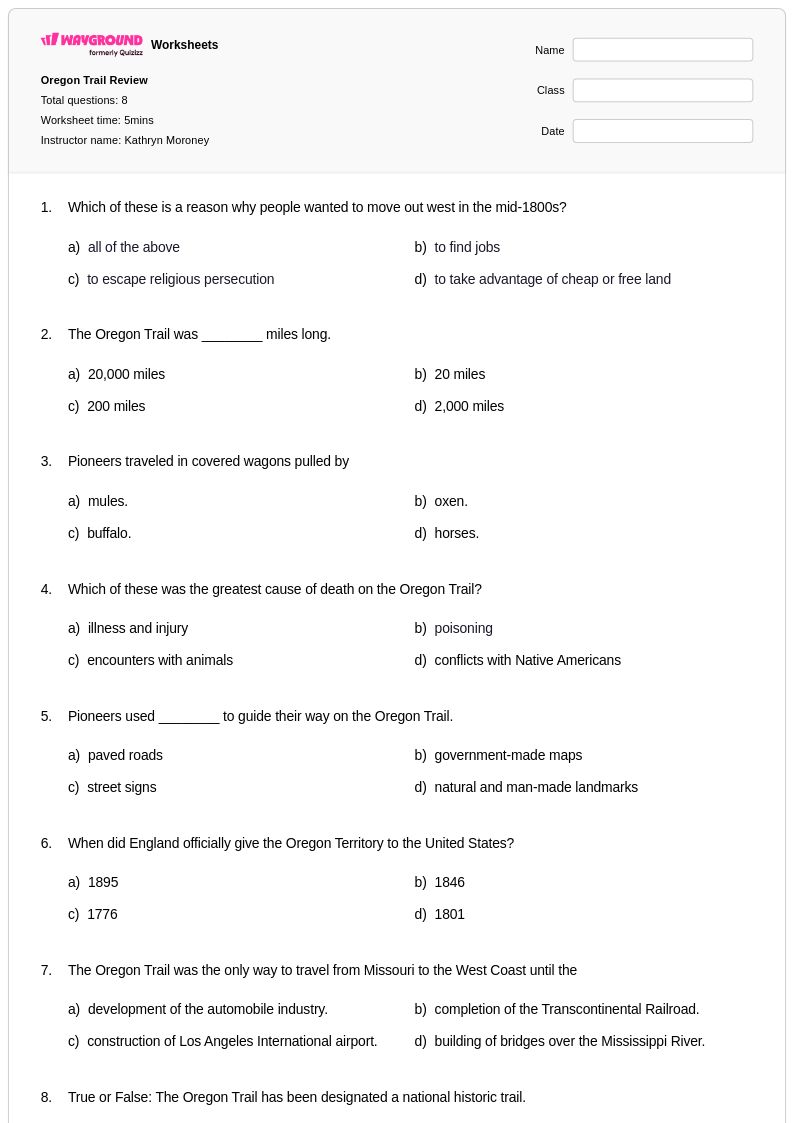
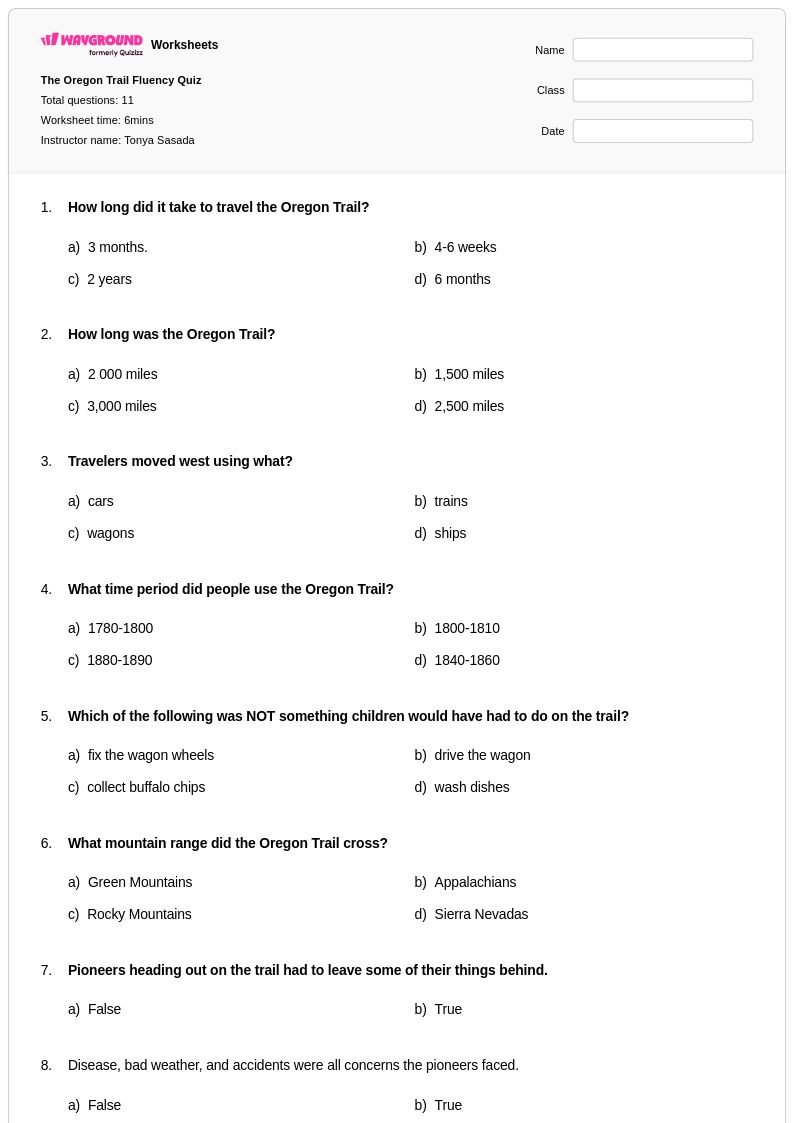
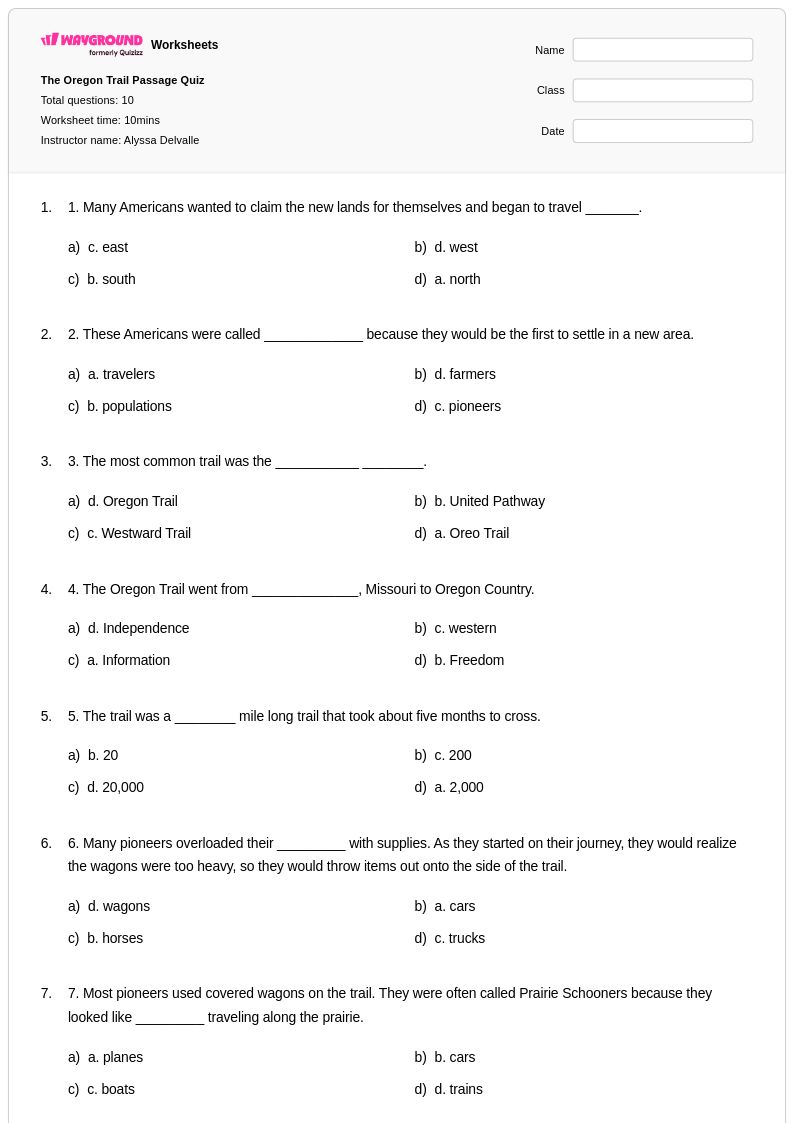
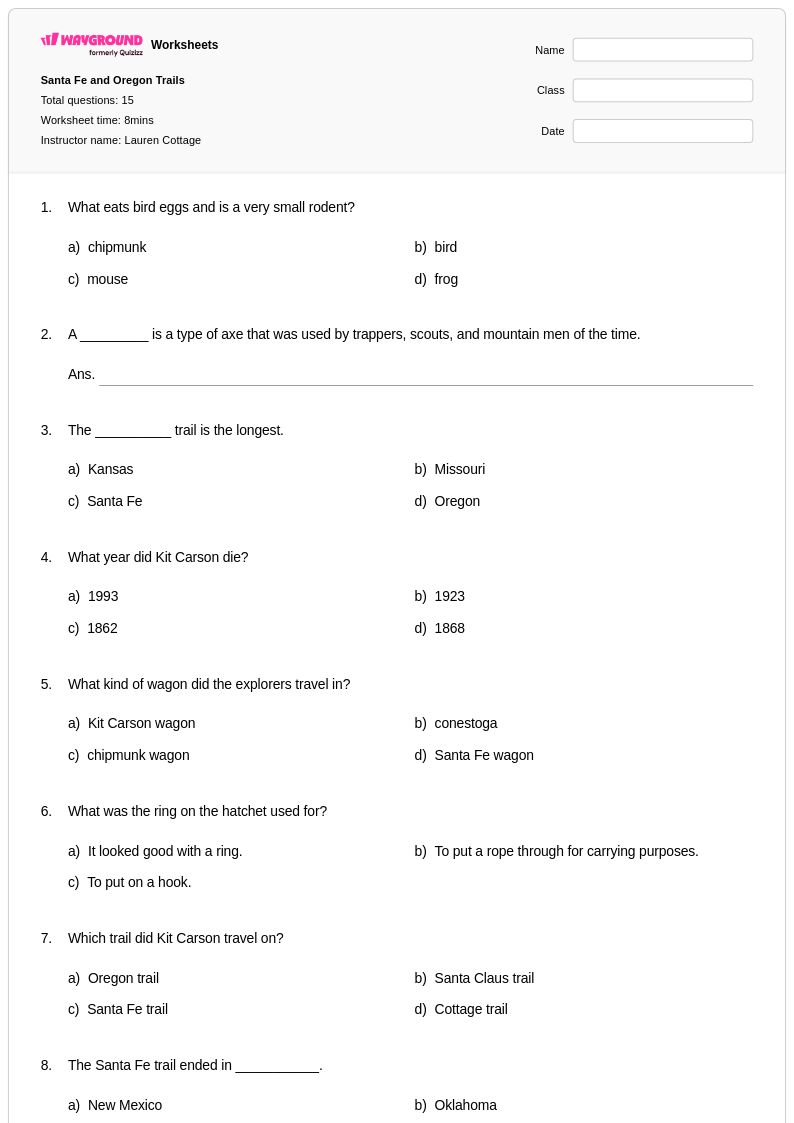
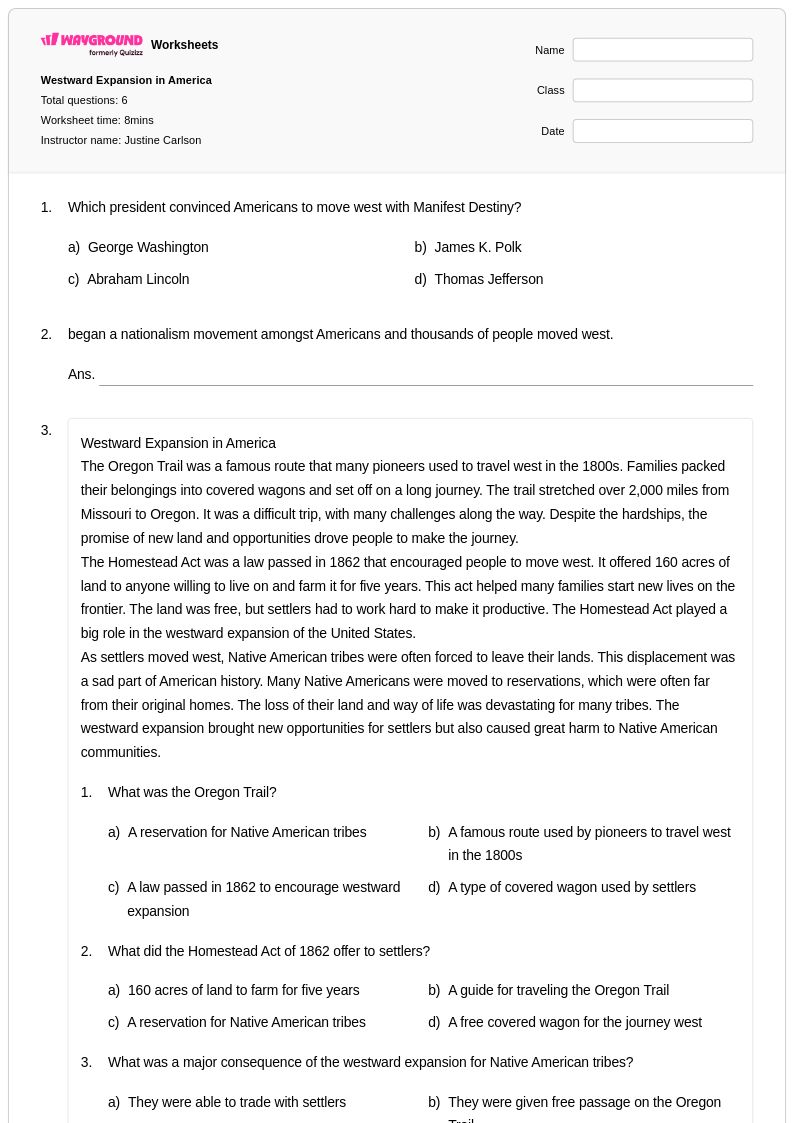
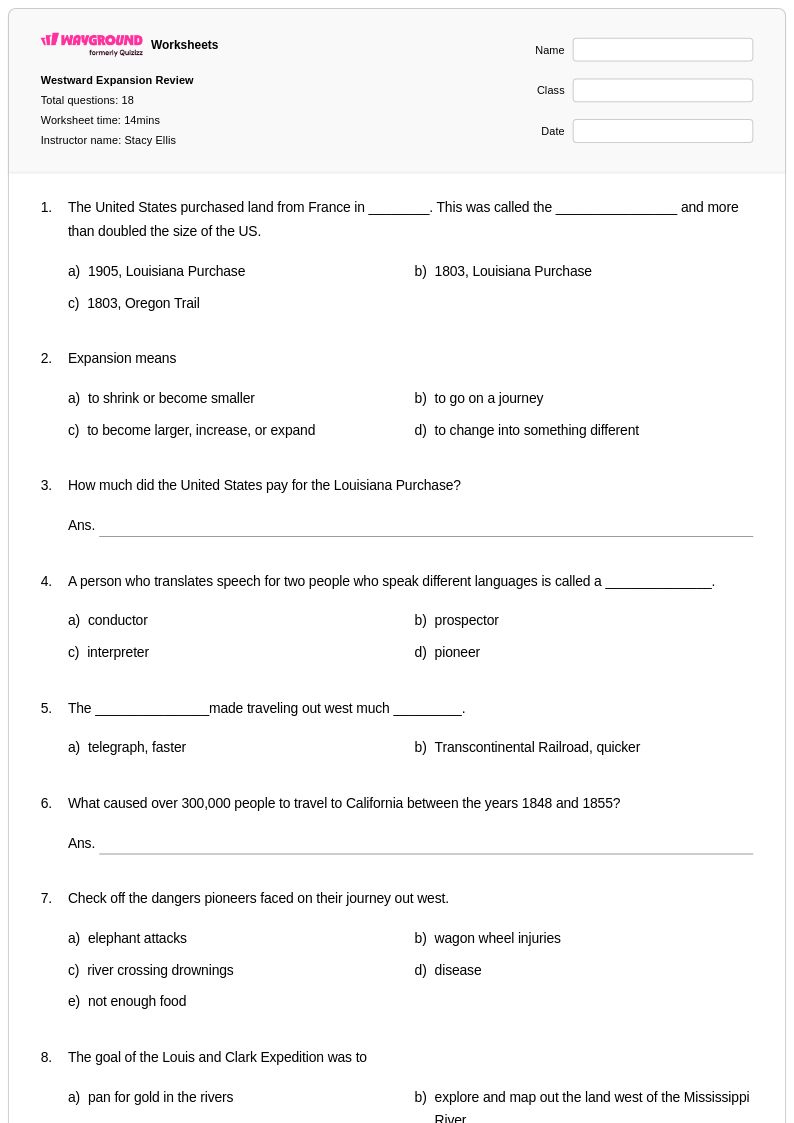
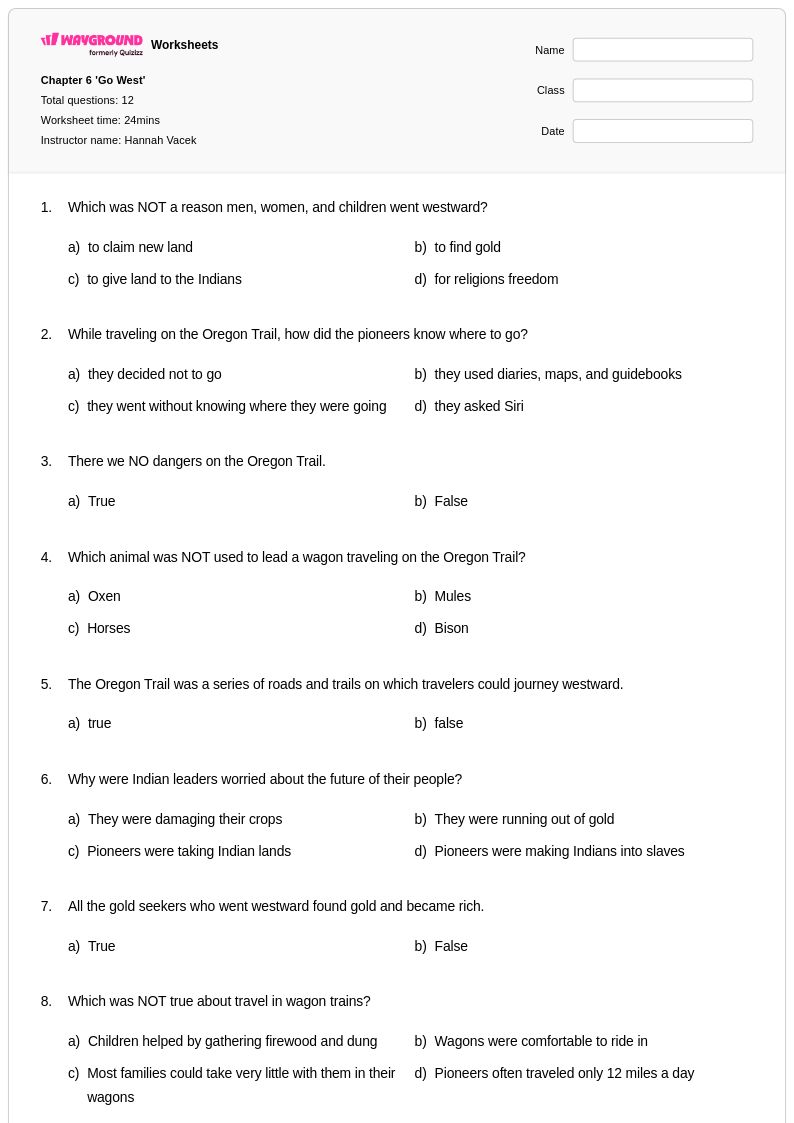
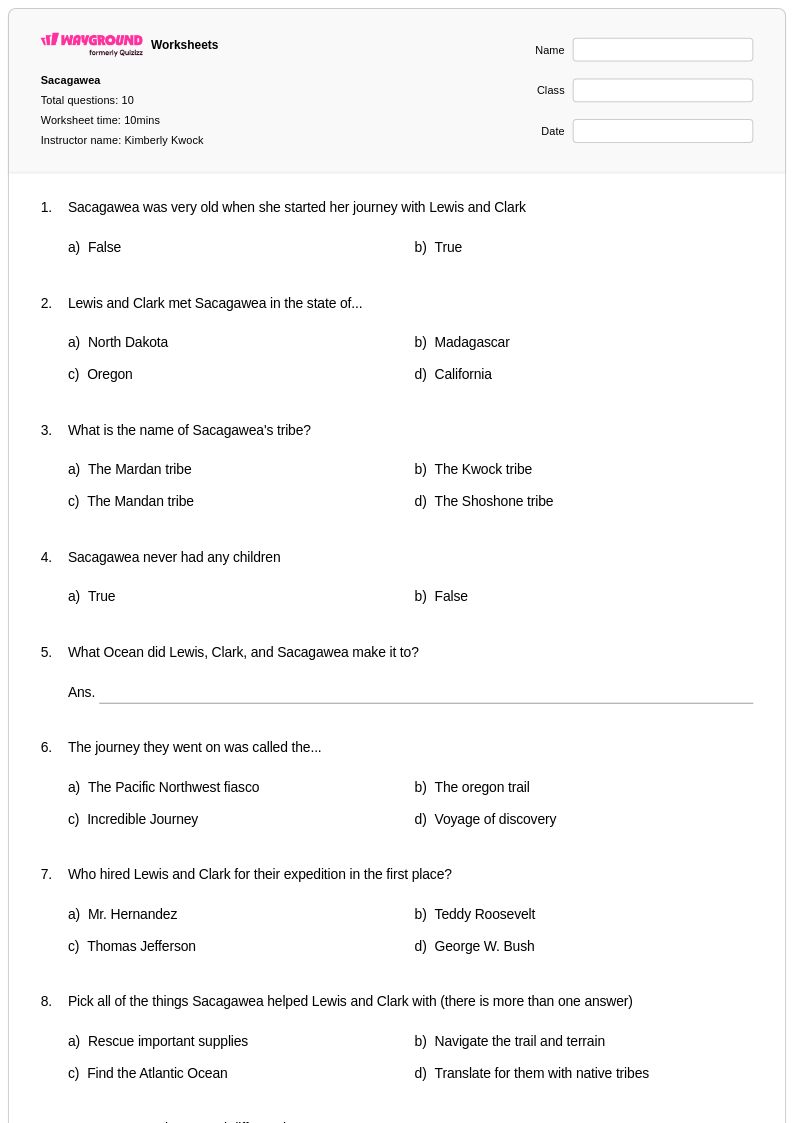
Oregon Trail worksheets for Grade 4 students available through Wayground (formerly Quizizz) provide comprehensive exploration of one of America's most significant westward migration routes. These educational resources help fourth-grade learners understand the challenges, motivations, and experiences of pioneer families who traveled the 2,170-mile trail from Missouri to Oregon Territory between the 1840s and 1860s. Students develop critical thinking skills through practice problems that examine the economic, social, and geographic factors that drove westward expansion, while building historical analysis abilities as they study primary source materials, maps, and diary excerpts from actual trail travelers. Each worksheet collection includes detailed answer keys and is available as free printable PDFs, allowing educators to seamlessly integrate these materials into their U.S. History curriculum while reinforcing essential concepts about manifest destiny, pioneer life, and the transformation of the American frontier.
Wayground (formerly Quizizz) supports educators with millions of teacher-created Oregon Trail resources specifically designed for Grade 4 social studies instruction. The platform's robust search and filtering capabilities enable teachers to quickly locate worksheets aligned with state standards and differentiated for various learning levels, from basic comprehension activities to advanced analytical tasks that challenge students to compare different pioneer experiences or evaluate the trail's impact on Native American communities. These customizable materials are available in both printable and digital formats, including downloadable PDFs, making them ideal for classroom instruction, homework assignments, remediation support, and enrichment activities. Teachers can modify worksheets to meet specific lesson objectives, track student progress through integrated assessment tools, and access comprehensive teaching guides that enhance their ability to bring this pivotal period in American westward expansion to life for their fourth-grade students.
FAQs
How do I teach the Oregon Trail to middle school students?
Teaching the Oregon Trail effectively means grounding students in the push-and-pull factors that drove westward migration in the 1840s–1860s, including economic hardship, Manifest Destiny, and the promise of land. Start with geographic context using map analysis activities so students can trace the 2,000-mile route from Missouri to Oregon. From there, move into primary source documents and firsthand accounts to help students develop historical empathy and understand the human cost of the journey, including the impact on Native American communities along the way.
What are common misconceptions students have about the Oregon Trail?
One of the most persistent misconceptions is that the Oregon Trail was a single, well-marked road — in reality, it was a network of overlapping routes that shifted over time. Students also tend to romanticize the pioneer experience and underestimate the mortality rate, which was driven largely by disease, particularly cholera, rather than conflict. Another common error is conflating the Oregon Trail with other westward routes like the Santa Fe or California Trails, so explicitly distinguishing these routes is important for building accurate geographic and historical understanding.
What activities help students practice their understanding of westward expansion and the Oregon Trail?
Map analysis activities are among the most effective practice tools because they require students to apply geographic reasoning while identifying landmarks, river crossings, and terrain challenges along the route. Timeline construction tasks help students sequence key events and understand cause-and-effect relationships within the broader context of 19th-century American history. Primary source document interpretation exercises build historical literacy by asking students to analyze journal entries, government records, and eyewitness accounts from both pioneers and Native communities.
How do I assess whether students understand the impact of the Oregon Trail on Native American communities?
Look for whether students can move beyond surface-level descriptions and articulate specific consequences, such as the disruption of migration patterns, depletion of buffalo herds, spread of disease, and increasing conflict over land and resources. A strong indicator of understanding is when students can present multiple perspectives, comparing pioneer motivations with the lived experiences of tribes like the Sioux, Pawnee, and Cayuse. Common errors include treating Native American communities as a monolithic group or framing displacement as an inevitable consequence rather than the result of specific policies and decisions.
How can I use Oregon Trail worksheets in my classroom?
Oregon Trail worksheets on Wayground are available as printable PDFs for traditional classroom use and in digital formats for technology-integrated learning environments, including the option to host them as a quiz directly on Wayground. Printable versions work well for guided notes, in-class analysis activities, and take-home review, while digital formats support remote learning and allow for faster feedback. The included answer keys make these resources practical for independent practice, peer review, or teacher-led correction.
How do I differentiate Oregon Trail instruction for students at different reading and skill levels?
For students who struggle with text-heavy primary sources, pairing documents with visual scaffolds like annotated maps or illustrated timelines can reduce cognitive load while preserving the analytical challenge. On Wayground, teachers can enable accommodations such as Read Aloud so questions and content are read to students who need audio support, and Reduced Answer Choices to decrease the number of options displayed for students who need additional scaffolding. These settings can be assigned individually so that differentiated support reaches the students who need it without disrupting the rest of the class.