Free Printable Outdoor and Adventure Activities Worksheets for Grade 11
Grade 11 outdoor and adventure activities worksheets from Wayground provide comprehensive printables and practice problems to help students master safety protocols, navigation skills, and risk assessment through engaging free PDF resources with answer keys.
Explore printable Outdoor and Adventure Activities worksheets for Grade 11
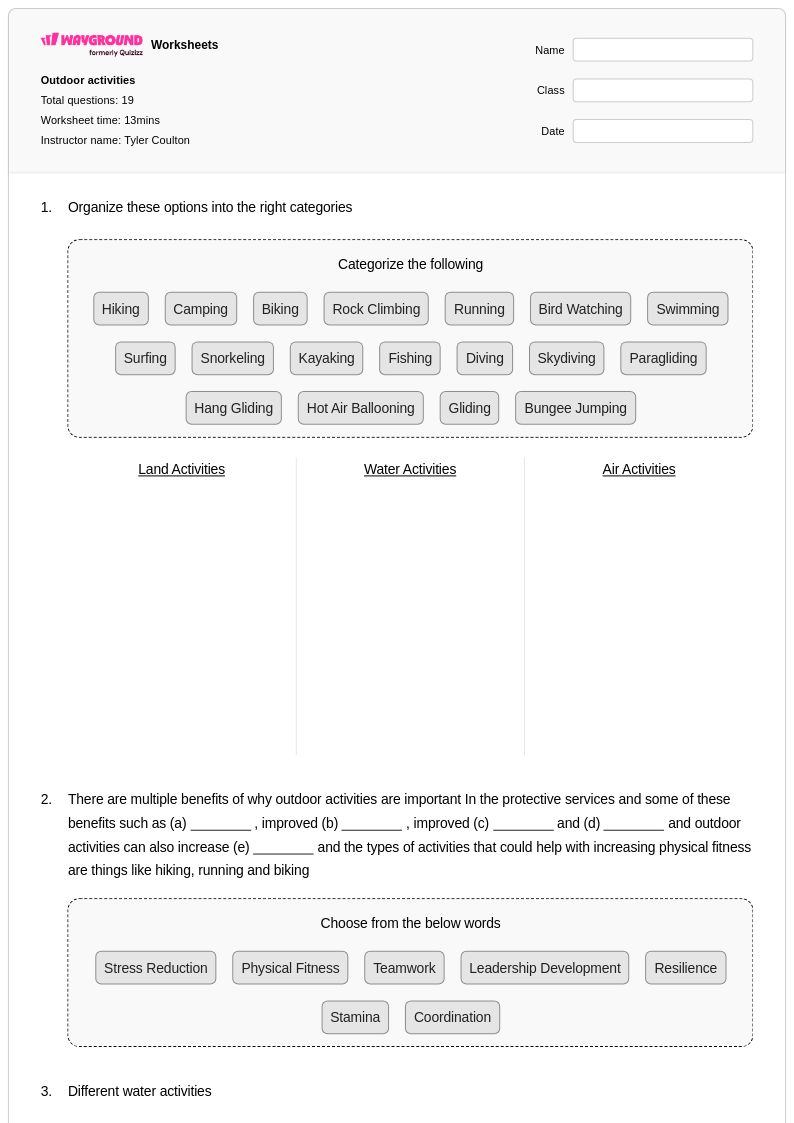
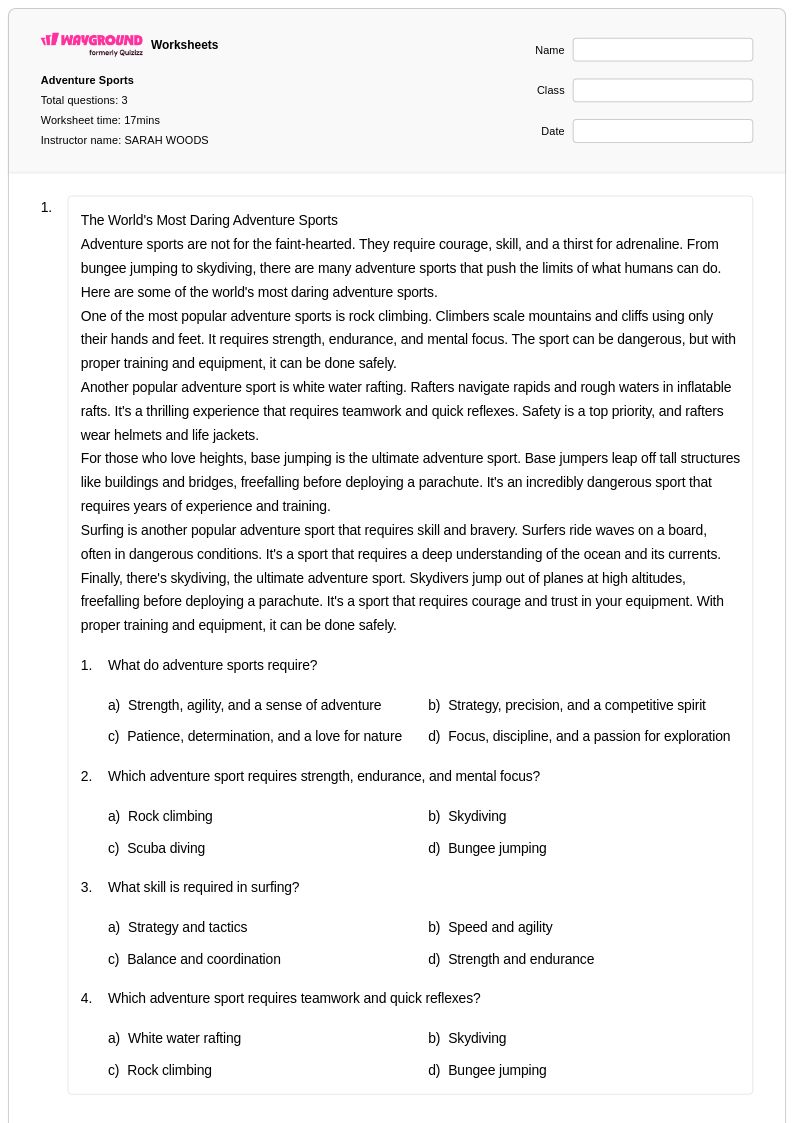
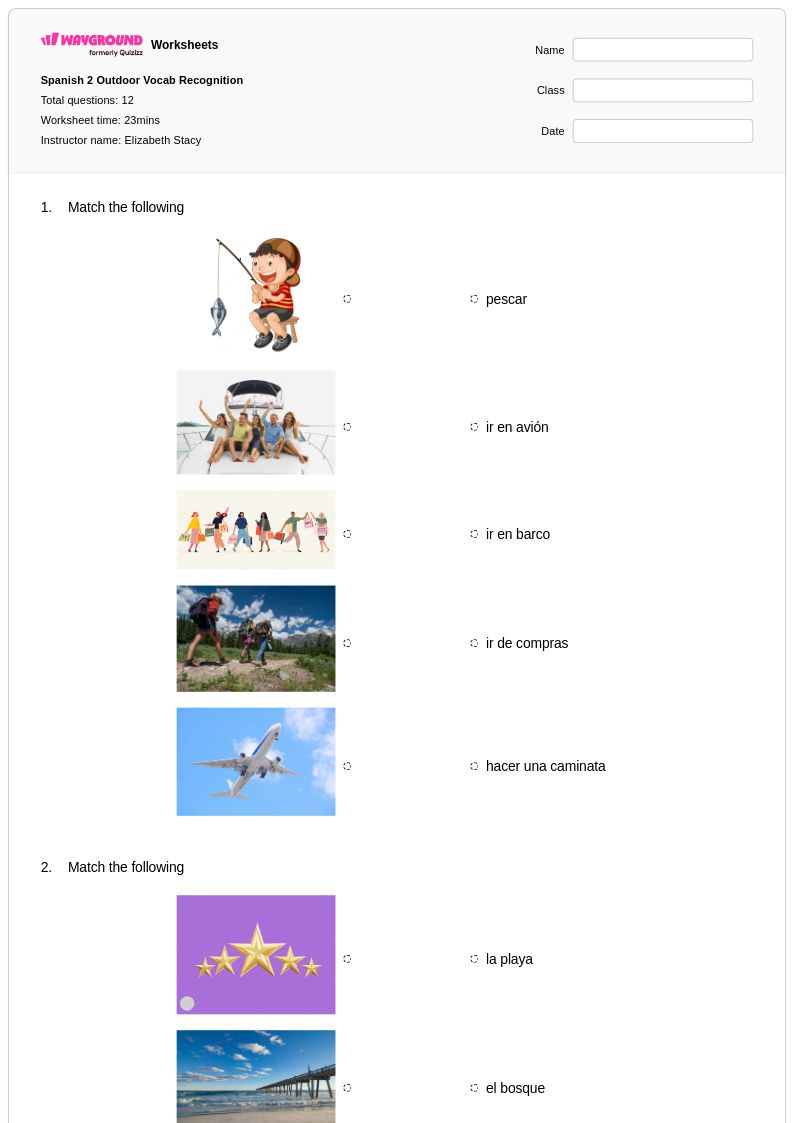
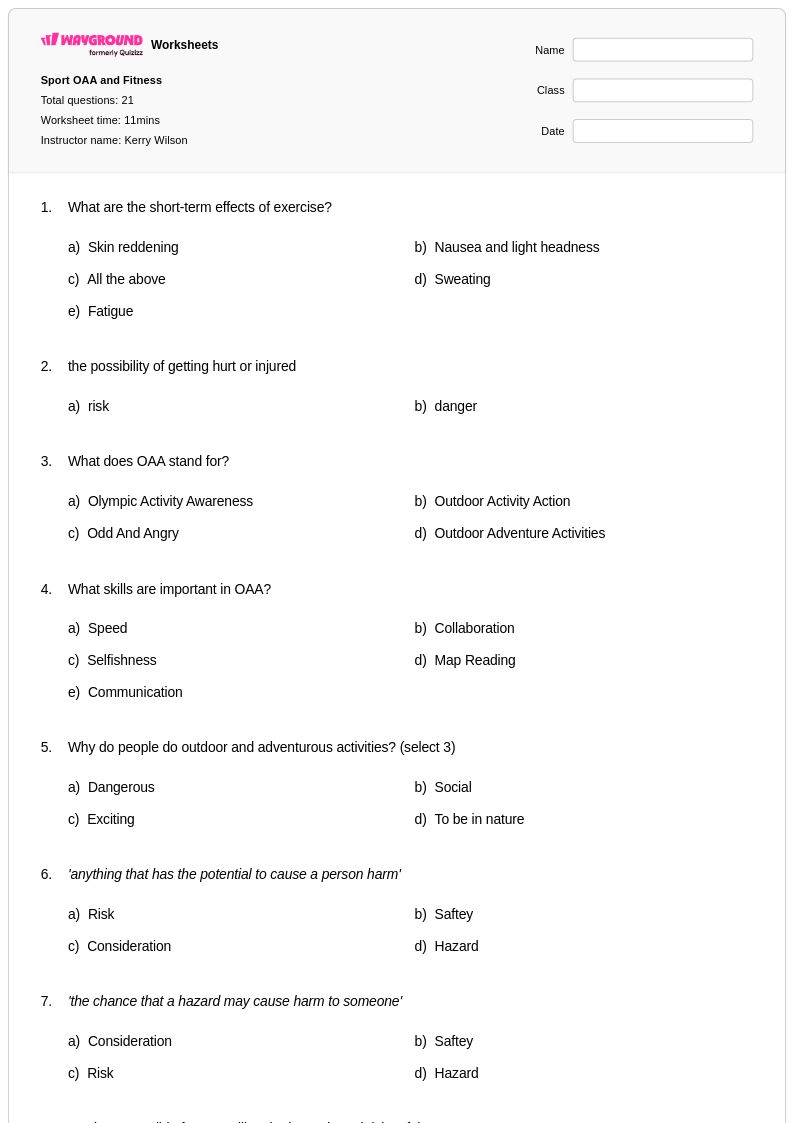
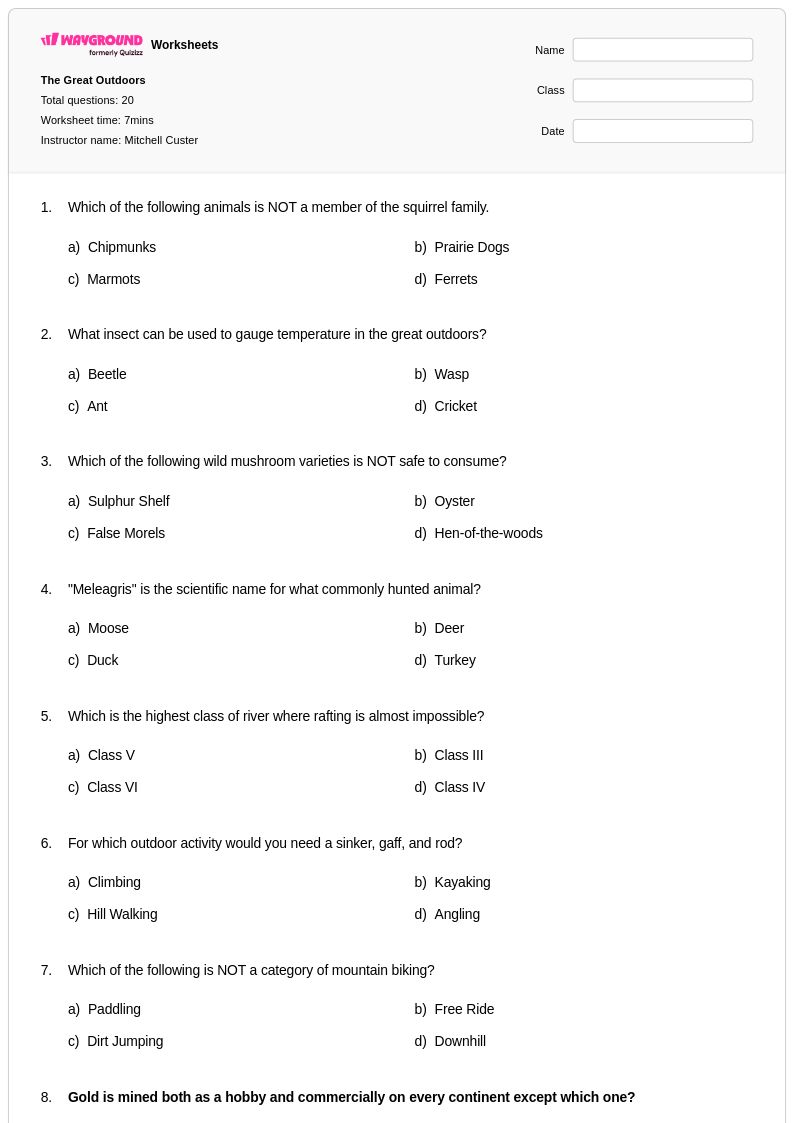
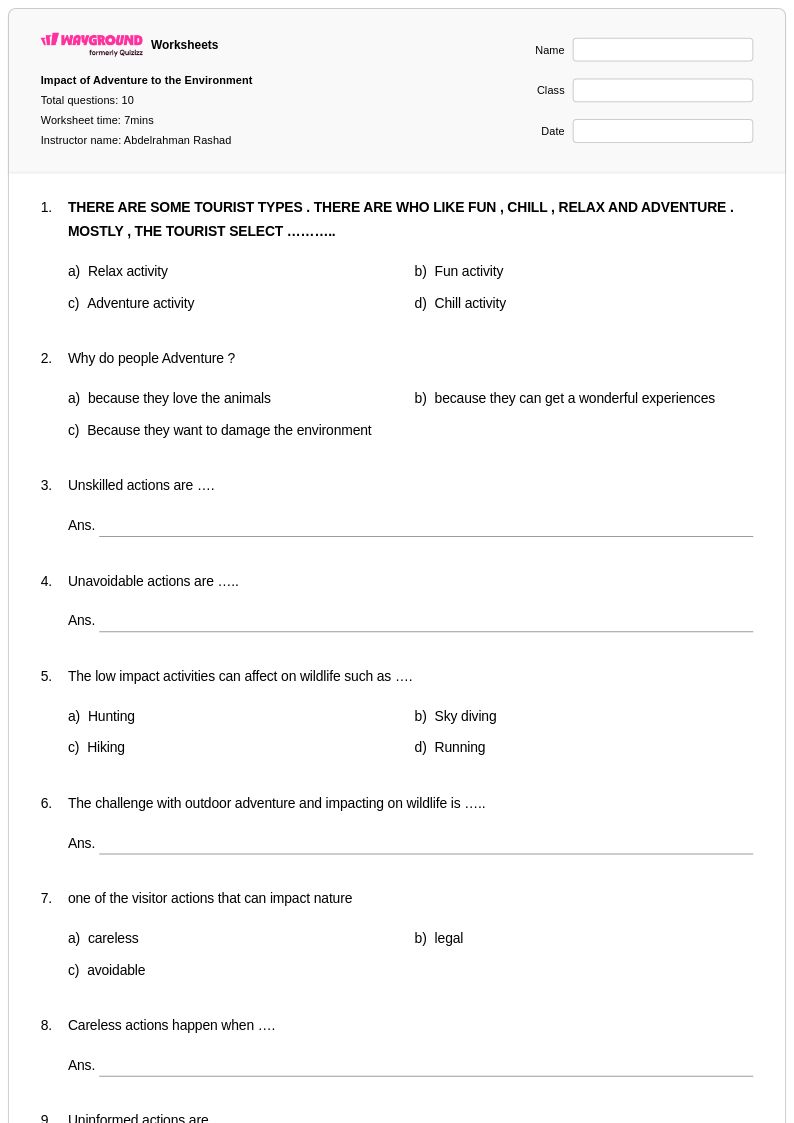
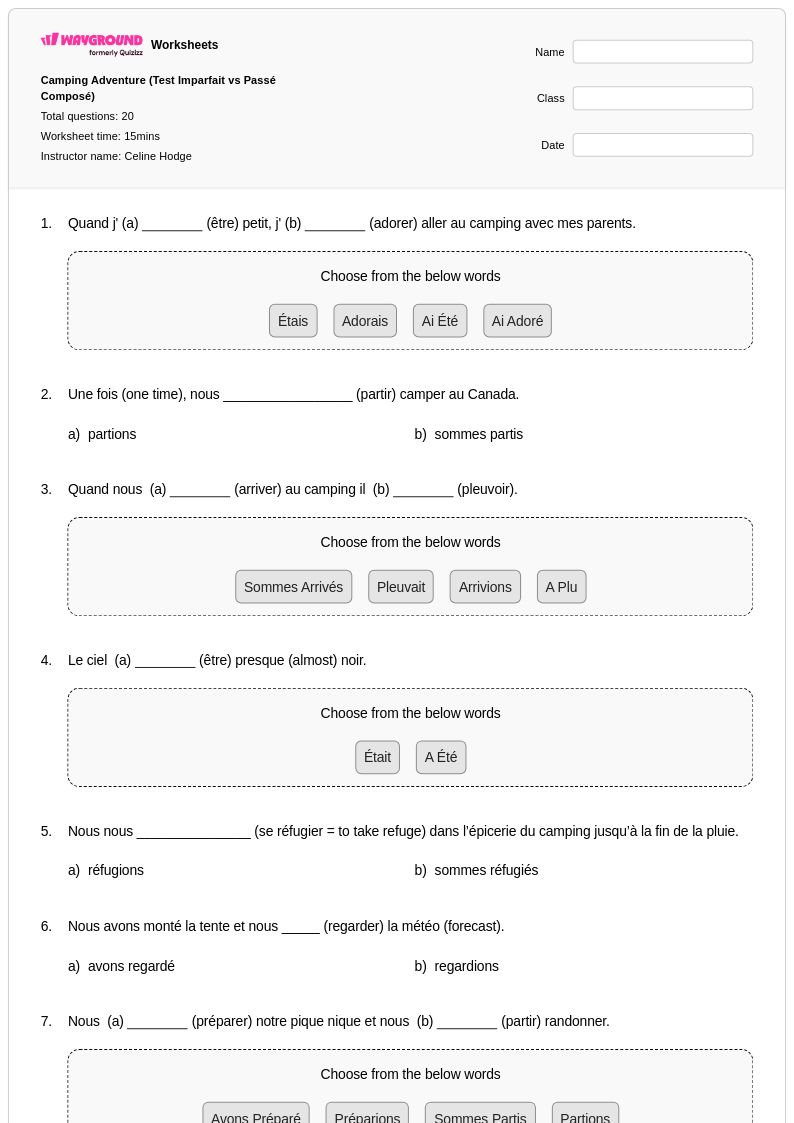
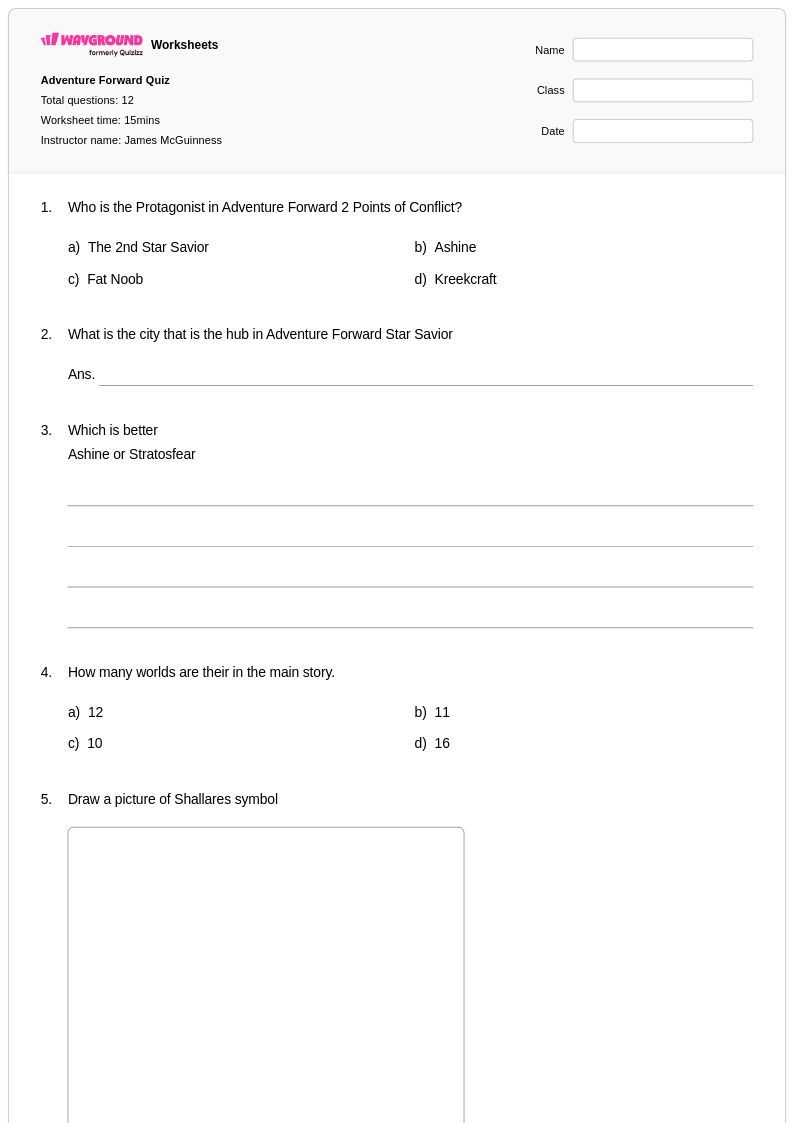
Outdoor and Adventure Activities worksheets for Grade 11 students available through Wayground (formerly Quizizz) provide comprehensive resources that develop critical skills in risk assessment, environmental stewardship, and leadership within challenging outdoor settings. These expertly designed materials strengthen students' abilities to plan and execute adventure activities safely, understand Leave No Trace principles, and analyze the psychological and physiological demands of outdoor pursuits such as rock climbing, wilderness navigation, and backcountry camping. The worksheet collections include detailed answer keys that help students master complex concepts like route planning, weather interpretation, and emergency response protocols, while free printable resources ensure accessibility for all learners. Practice problems embedded throughout these materials challenge Grade 11 students to apply theoretical knowledge to real-world scenarios, from calculating caloric needs for multi-day expeditions to evaluating equipment selection for specific environmental conditions.
Wayground (formerly Quizizz) empowers physical education teachers with millions of teacher-created resources specifically designed for outdoor and adventure education instruction. The platform's robust search and filtering capabilities enable educators to quickly locate materials aligned with curriculum standards and differentiate instruction based on individual student needs and skill levels. Teachers can customize worksheet content to match local outdoor environments and available facilities, while flexible formatting options provide both digital and printable pdf versions to accommodate diverse classroom settings. These comprehensive tools support effective lesson planning by offering scaffolded activities for skill practice, targeted remediation for students struggling with safety concepts, and enrichment opportunities for advanced learners ready to tackle more complex adventure scenarios, ultimately fostering confident and responsible outdoor enthusiasts.
FAQs
How do I teach outdoor and adventure activities in a physical education class?
Teaching outdoor and adventure activities effectively combines classroom instruction with experiential learning. Begin by building foundational knowledge around safety protocols, navigation tools, and environmental awareness before any field experience. Use scenario-based problems — such as analyzing weather patterns, reading topographic maps, or planning a wilderness route — to give students structured practice with real-world decision-making. Connecting theory to practice in the classroom builds student confidence and readiness before they encounter actual outdoor environments.
What skills should students develop through outdoor and adventure activities lessons?
Students should develop a connected set of practical and critical-thinking skills that prepare them for real wilderness scenarios. Core competencies include risk assessment, outdoor navigation using maps and compasses, equipment selection and gear load calculation, environmental awareness, and emergency response planning. Activities like orienteering, camping, rock climbing, and wilderness survival each require students to apply these skills in context, making it essential to teach them as integrated competencies rather than isolated facts.
What exercises help students practice outdoor navigation and wilderness survival skills?
Effective practice exercises for outdoor navigation include topographic map interpretation, compass bearing problems, and route-planning scenarios that require students to evaluate terrain and distance. For wilderness survival, exercises that ask students to prioritize gear selection, identify environmental hazards, or develop step-by-step emergency response plans build applied problem-solving skills. Worksheets that mirror real-world outdoor scenarios are especially valuable because they prepare students for decisions they will actually face in the field.
What mistakes do students commonly make when learning orienteering or map reading?
One of the most common errors is confusing map orientation with compass bearing, leading students to misread their direction of travel relative to true north. Students also frequently struggle to translate scale and contour lines into accurate mental models of terrain elevation and distance. When reading topographic maps, many learners overlook the relationship between contour interval spacing and slope steepness, which can lead to poor route planning decisions. Targeted practice problems that isolate these skills help students recognize and correct these misconceptions before fieldwork.
How can I differentiate outdoor and adventure activities instruction for students at different skill levels?
Differentiation in outdoor education starts with adjusting the complexity of scenarios and the cognitive demands of practice tasks. For students who need additional support, simplify navigation problems to single-step decisions and reduce the number of variables in gear selection exercises. Advanced learners can tackle multi-leg orienteering routes, complex risk assessment scenarios, or wilderness survival plans that require synthesizing multiple skills. On Wayground, teachers can apply accommodations such as reduced answer choices or read-aloud support to individual students, and configure extended time per question, so every learner engages with the content at an appropriate level without singling anyone out.
How do I use Wayground's outdoor and adventure activities worksheets in my classroom?
Wayground's outdoor and adventure activities worksheets are available as both printable PDFs and in digital formats, making them suitable for traditional classroom instruction, computer lab settings, or blended learning environments. Teachers can also host worksheets directly as a quiz on Wayground, enabling real-time student response tracking and self-assessment. Each worksheet includes a comprehensive answer key, which supports efficient grading and allows students to self-assess their understanding of topics like wilderness survival, rock climbing safety, and outdoor navigation.