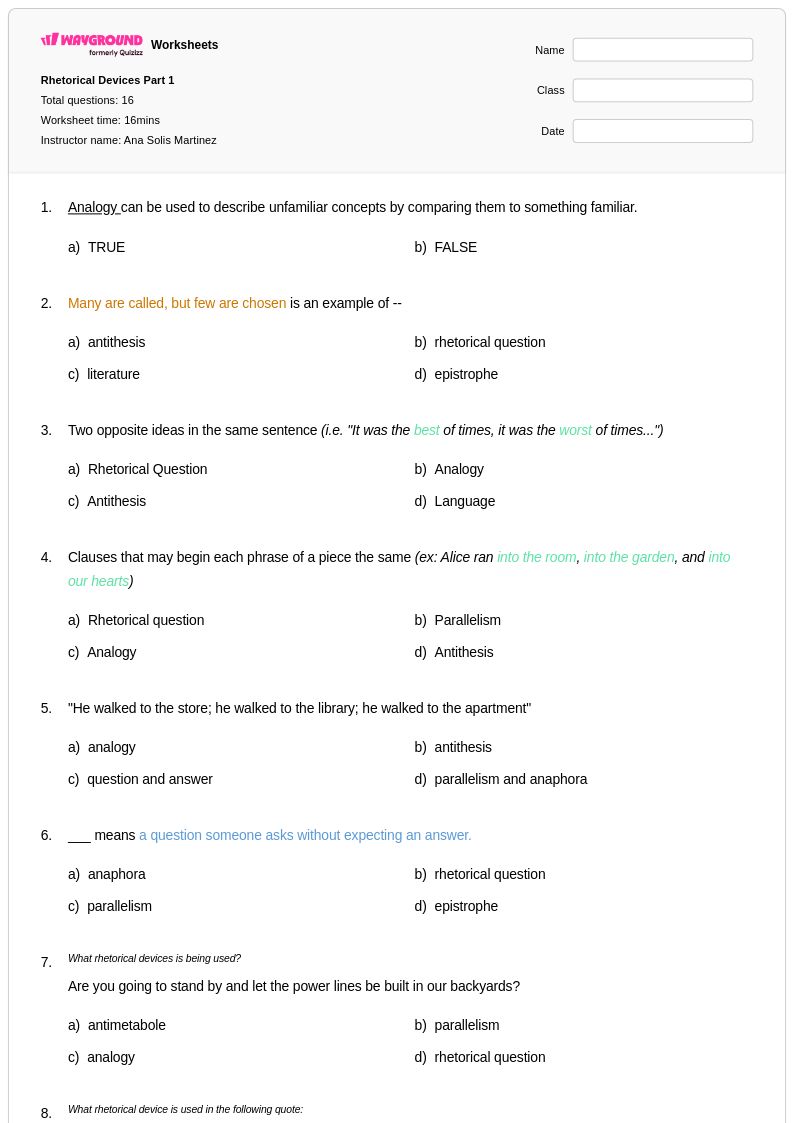
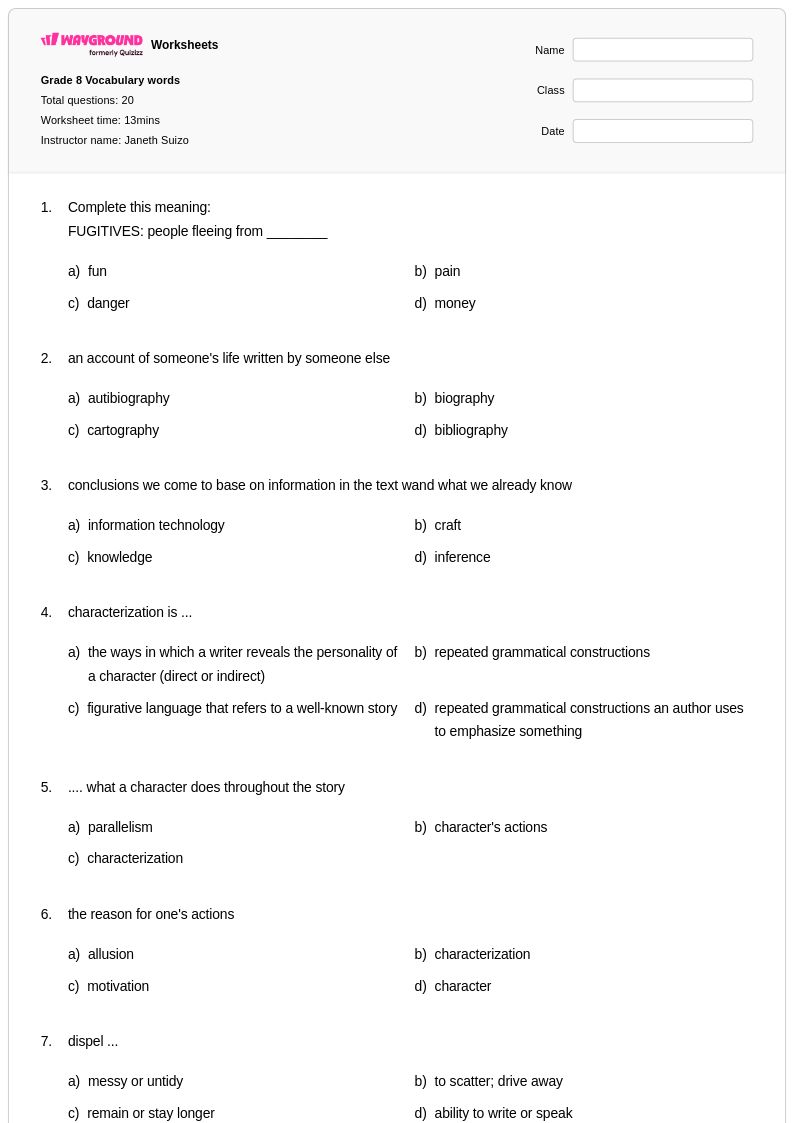
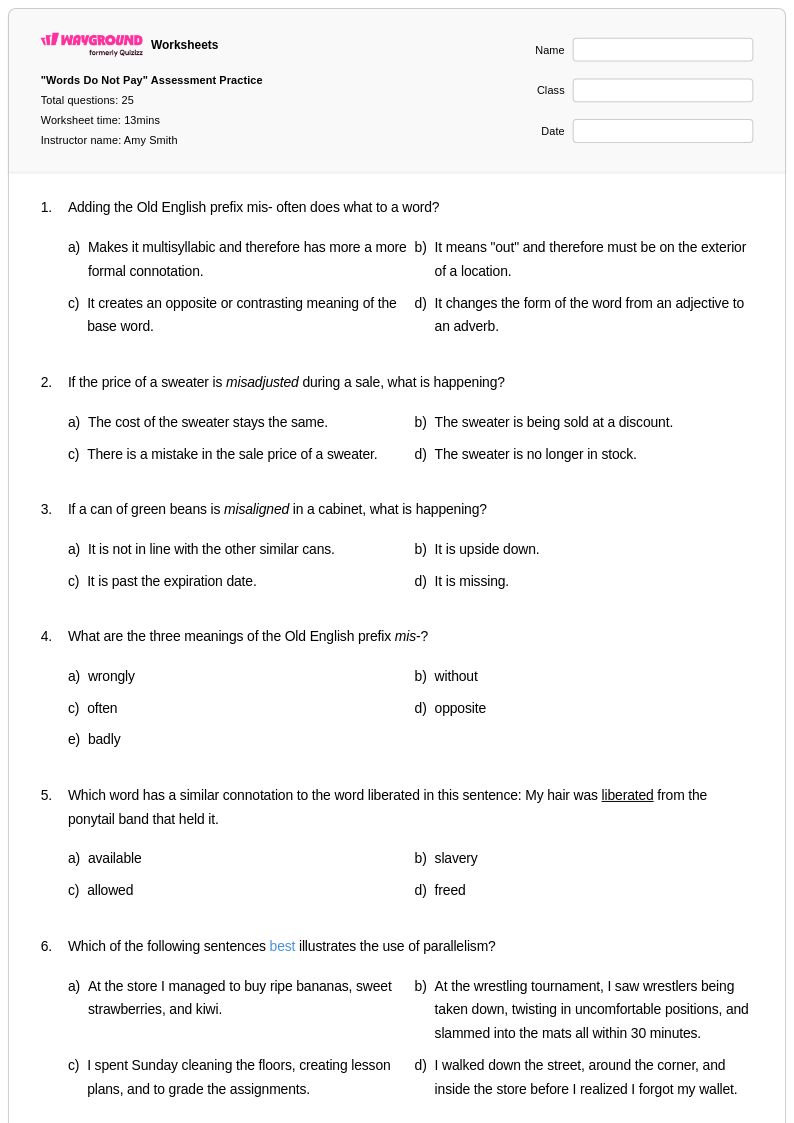
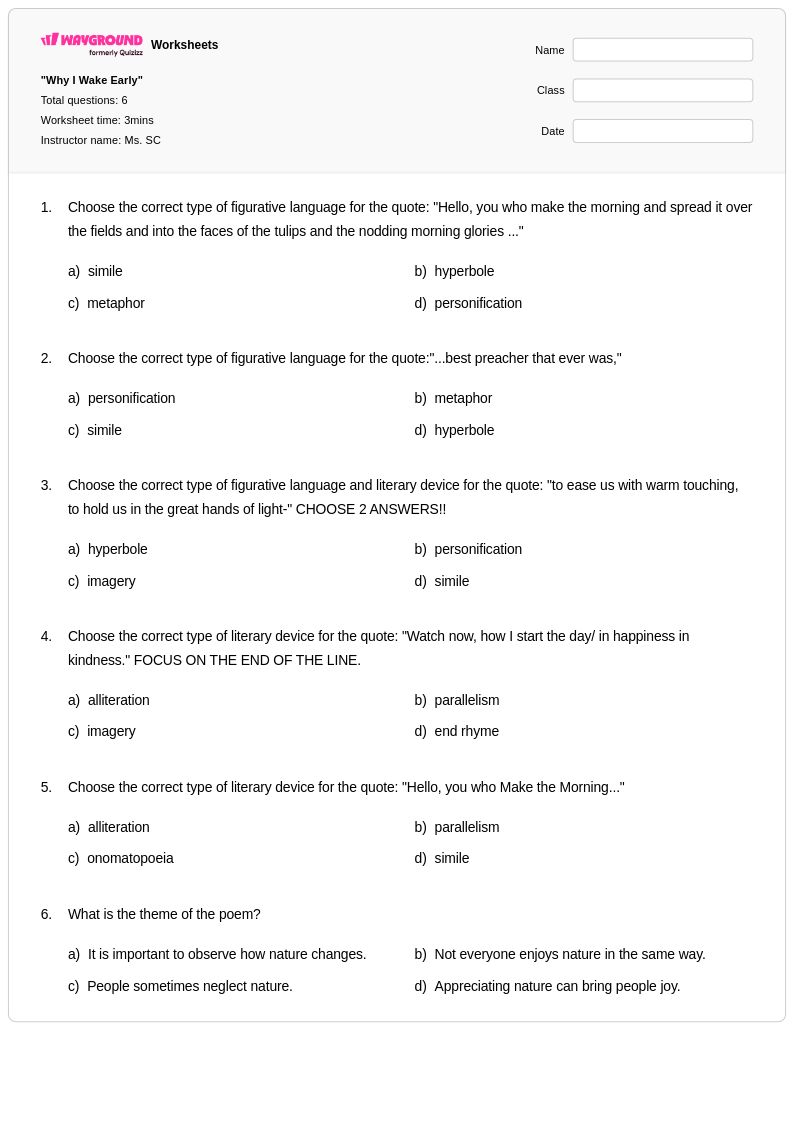
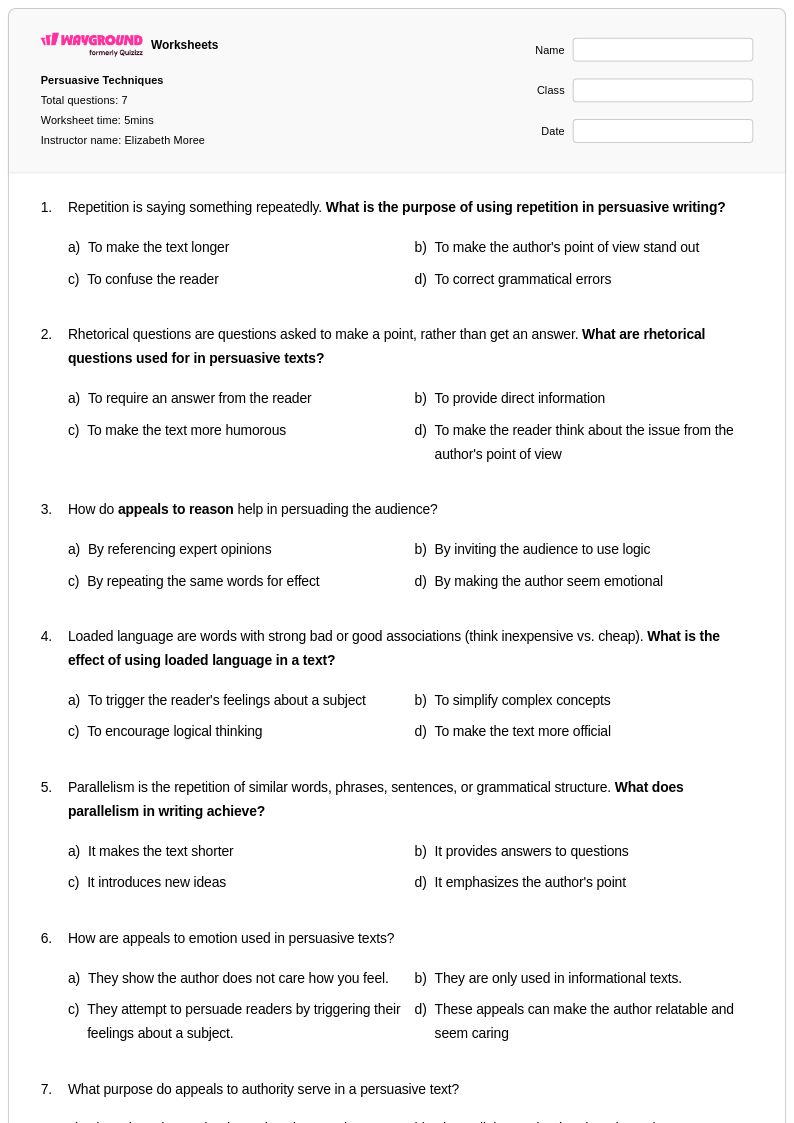
Grade 8 parallelism worksheets from Wayground help students master balanced sentence structures through engaging printables, practice problems, and comprehensive answer keys for effective grammar skill development.
Explore printable Parallelism worksheets for Grade 8
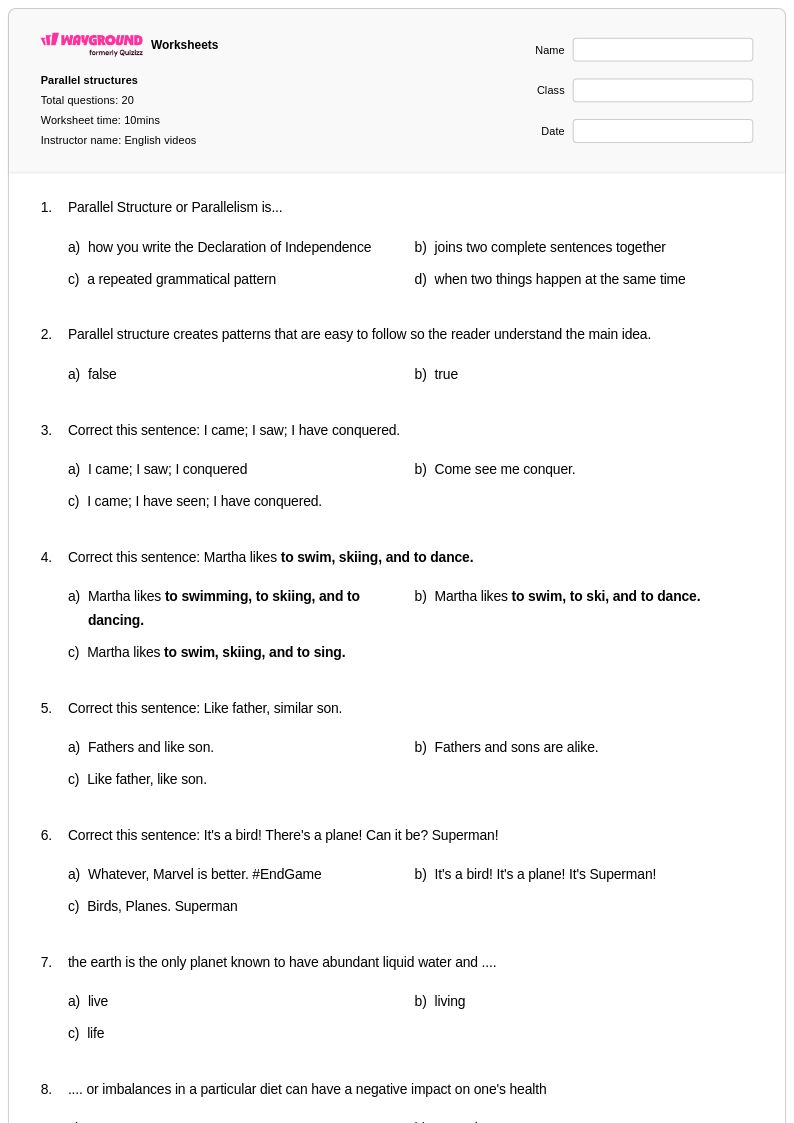
Parallelism worksheets for Grade 8 students through Wayground (formerly Quizizz) provide comprehensive practice in constructing balanced, grammatically correct sentences that maintain consistent structure across coordinated elements. These expertly designed resources help eighth-grade students master the essential skill of creating parallel structure in series, comparisons, and correlative conjunctions, strengthening their ability to write clear, professional prose. The worksheets feature varied practice problems that challenge students to identify faulty parallelism in existing sentences and reconstruct them with proper balance, while comprehensive answer keys allow for immediate feedback and self-assessment. Available as free printables and downloadable pdf formats, these resources systematically build students' understanding of how parallel construction enhances readability and creates more sophisticated writing patterns essential for high school preparation.
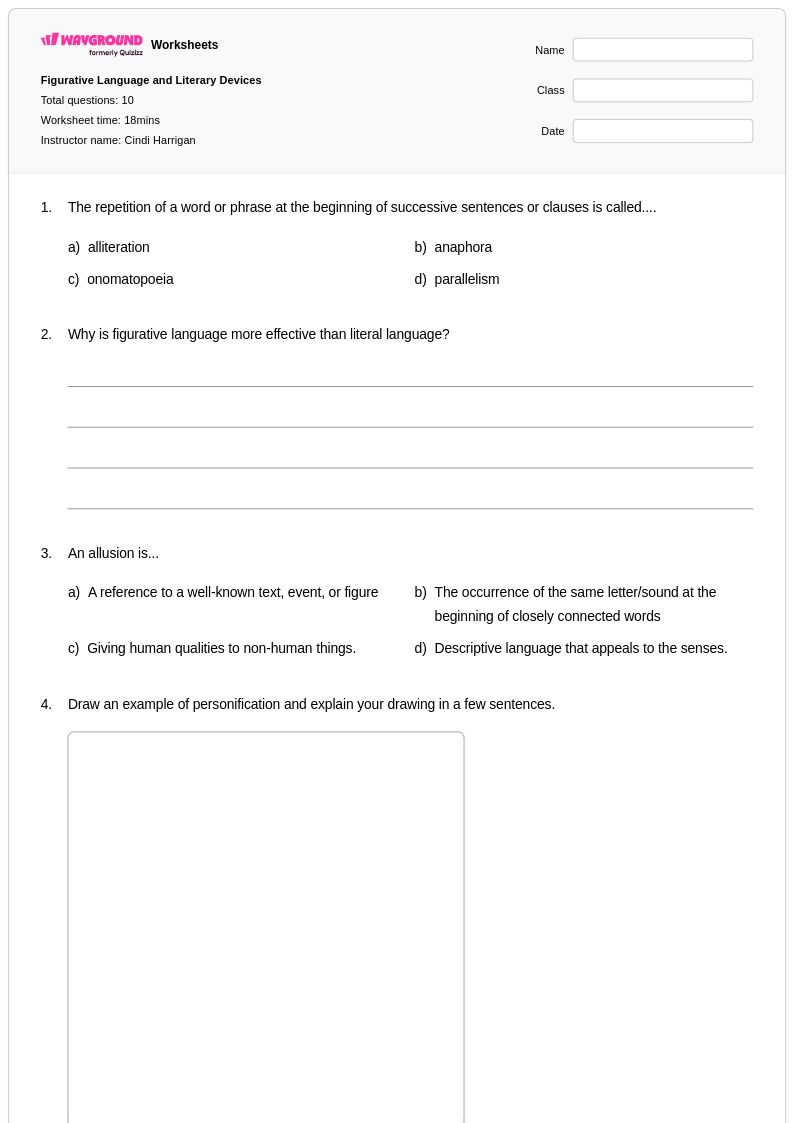
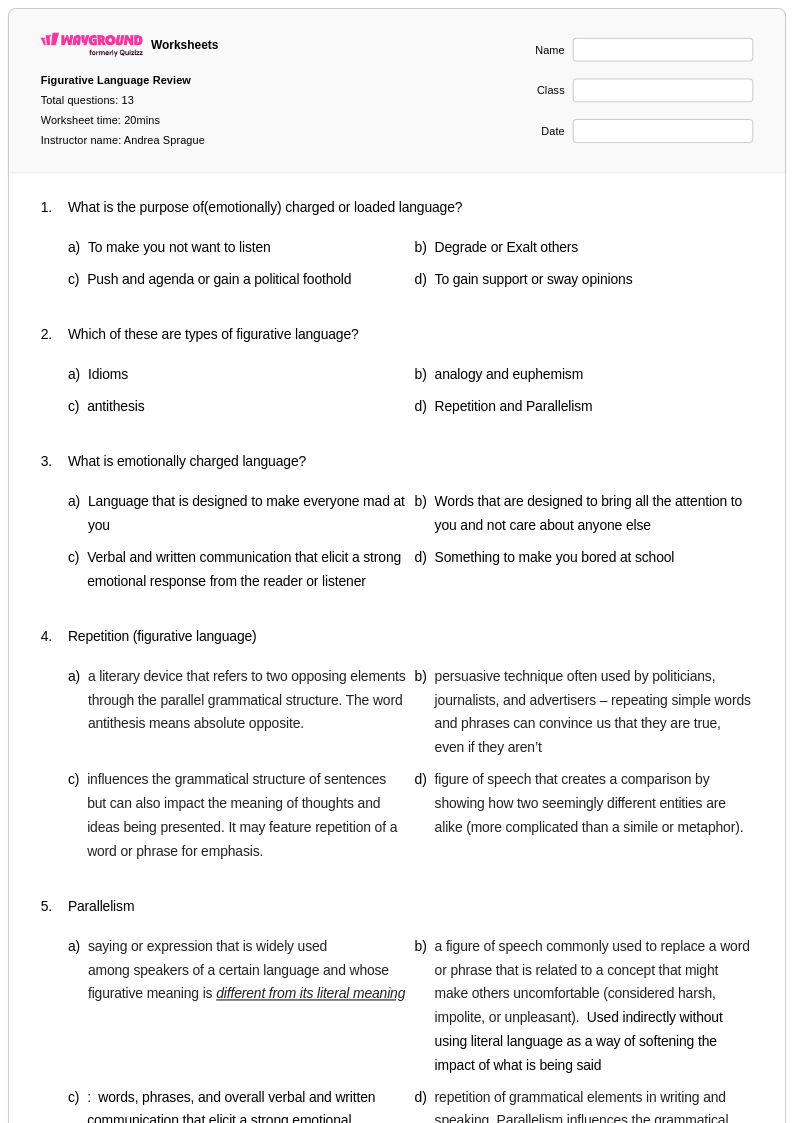
Wayground's extensive collection of parallelism worksheets draws from millions of teacher-created resources, offering educators powerful search and filtering capabilities to locate materials perfectly matched to their Grade 8 grammar instruction needs. The platform's standards-aligned content ensures that parallelism practice connects directly to curriculum requirements, while built-in differentiation tools allow teachers to customize worksheets for diverse learning levels within the same classroom. Whether delivered as printable pdf handouts for traditional practice or integrated into digital lessons for interactive learning, these flexible resources support targeted skill development, remediation for students struggling with sentence construction, and enrichment opportunities for advanced learners ready to tackle complex parallel structures. Teachers can efficiently plan comprehensive grammar units knowing that robust assessment tools and varied practice formats provide multiple pathways for students to master this critical writing mechanic.
FAQs
How do I teach parallelism in writing to my students?
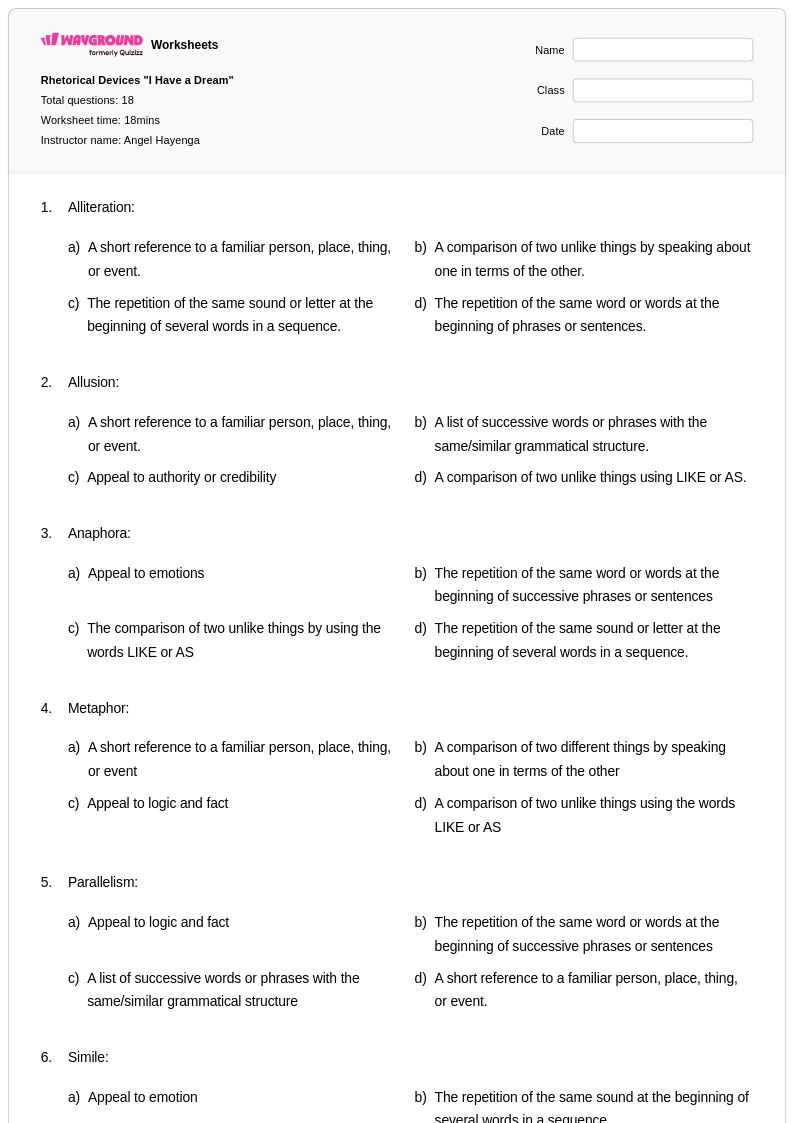
Start by helping students recognize parallel structure in mentor texts before asking them to produce it themselves. Use familiar examples like slogans, song lyrics, or famous speeches ("I have a dream that...") to show how repeating grammatical forms creates rhythm and clarity. Once students can identify the pattern, move into guided practice where they revise faulty sentences, then progress to constructing parallel structures in their own writing. Connecting the concept to coordinating and correlative conjunctions gives students a concrete grammatical anchor for recognizing when parallelism is required.
What exercises help students practice parallel structure?
The most effective practice exercises include identifying faulty parallelism in sentences, rewriting unbalanced constructions, and completing sentence frames that require matching grammatical forms across lists or comparisons. Exercises that isolate specific contexts, such as parallel items in a series, parallel comparisons, and parallel elements joined by correlative conjunctions like "both...and" or "not only...but also," help students build targeted skill before applying parallelism in full paragraphs. Combining error-correction tasks with original sentence construction ensures students can both recognize and produce balanced structures.
What mistakes do students commonly make with parallelism?
The most frequent error is mixing grammatical forms within a list or series, such as pairing an infinitive with a gerund ("She likes to run and swimming"). Students also struggle with correlative conjunctions, often placing them incorrectly so the elements they connect are not grammatically equivalent. Another common pattern is revising only the most obvious mismatch in a sentence while leaving a subtler imbalance intact. Drawing students' attention to the grammatical category of each element in a structure, not just its meaning, helps address all three of these error types.
How do I use Wayground's parallelism worksheets in my classroom?
Wayground's parallelism worksheets are available as printable PDFs for traditional classroom use and in digital formats for technology-integrated instruction, making them flexible for whole-class lessons, small-group work, or independent practice. You can also host the material as a quiz directly on Wayground, which allows you to track student performance and identify who needs additional support with specific parallel structure concepts. Each worksheet includes a complete answer key, so grading is straightforward whether students complete the work on paper or on a device.
How do I differentiate parallelism instruction for students at different skill levels?
For students who are still developing their grammar foundation, start with error identification in simple two-item lists before introducing series or correlative conjunction structures. Advanced learners benefit from applying parallelism in persuasive essays or rhetorical writing, where the stylistic effect is as important as grammatical correctness. On Wayground, teachers can apply accommodations such as read-aloud support, reduced answer choices, or extended time to individual students, allowing the same core worksheet to serve a range of learners without drawing attention to who is receiving support.
At what grade level should students be formally introduced to parallelism?
Most language arts curricula introduce formal parallelism instruction in middle school, typically around grades 6 through 8, when students are writing multi-sentence arguments and need to manage more complex sentence constructions. However, the foundational concept of matching grammatical forms in a list can be introduced informally as early as grade 3 or 4. High school students revisit parallelism in the context of rhetorical devices, AP writing, and standardized test preparation, where recognizing faulty parallelism is a tested skill.