Free Printable Parts of Plants We Eat Worksheets for Grade 2
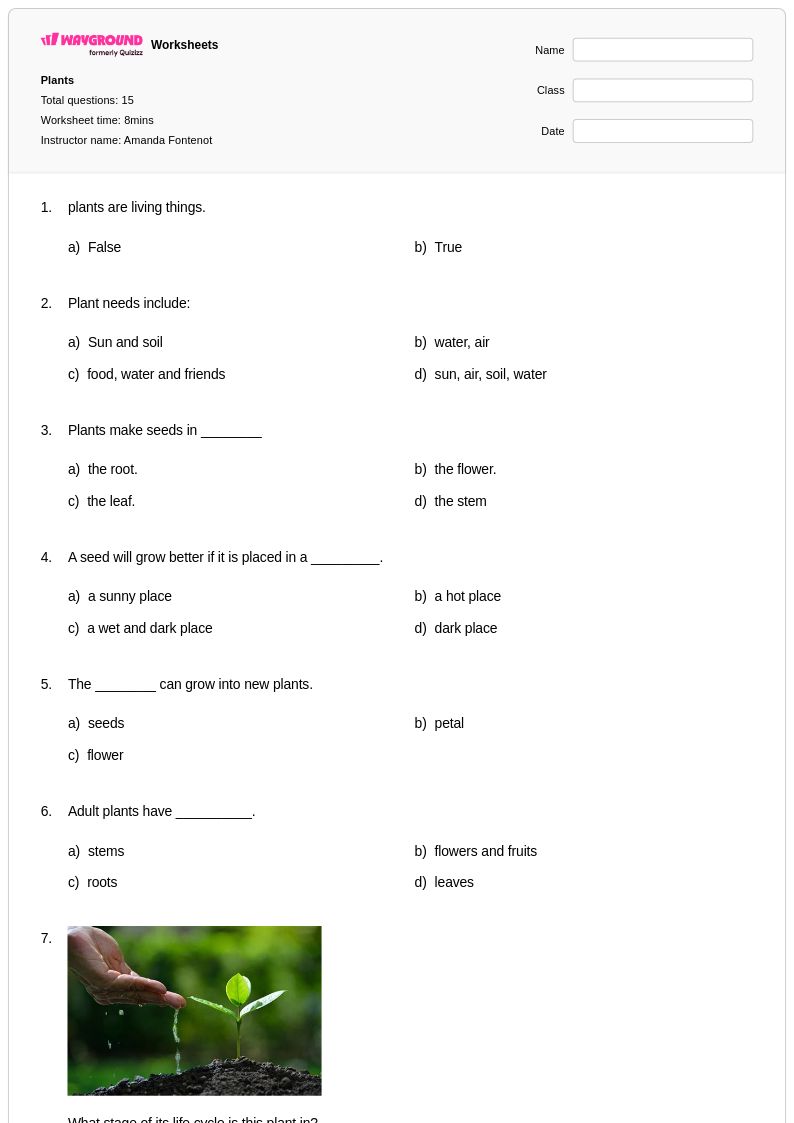
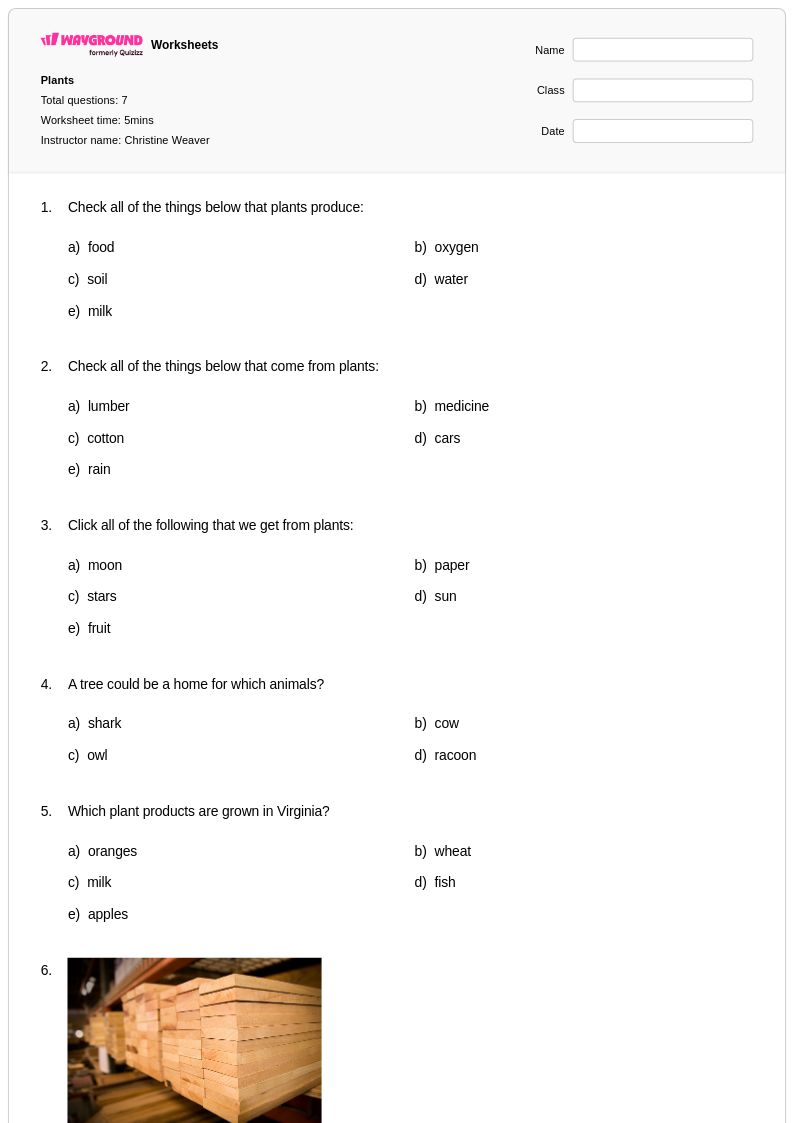
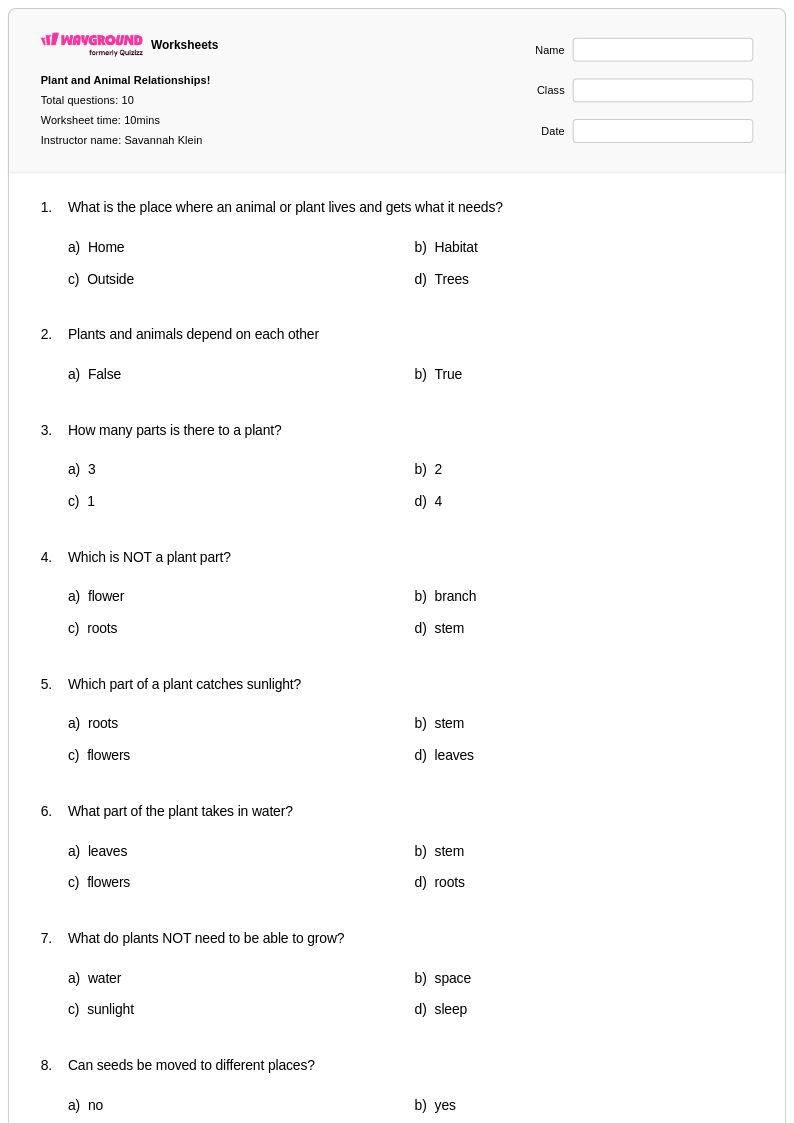
Explore Wayground's free Grade 2 printable worksheets on parts of plants we eat, featuring engaging practice problems and answer keys to help young students identify edible plant parts like roots, stems, leaves, and fruits.
Explore printable Parts of Plants We Eat worksheets for Grade 2
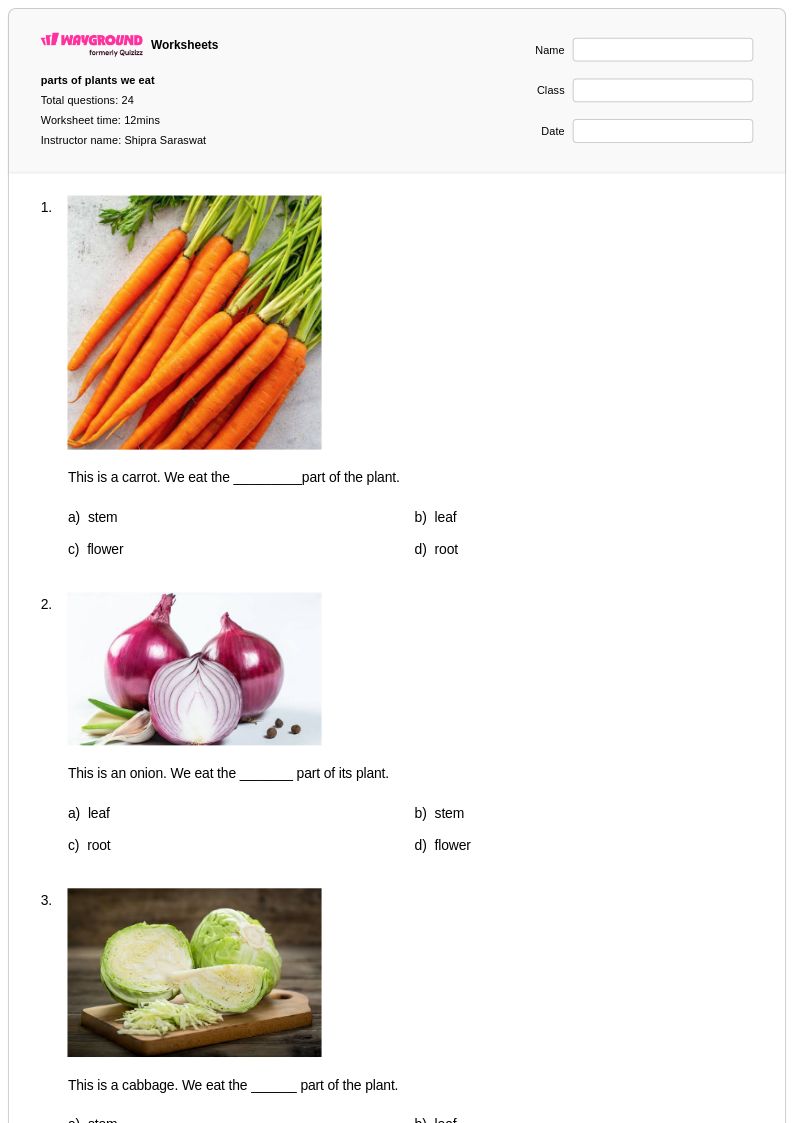
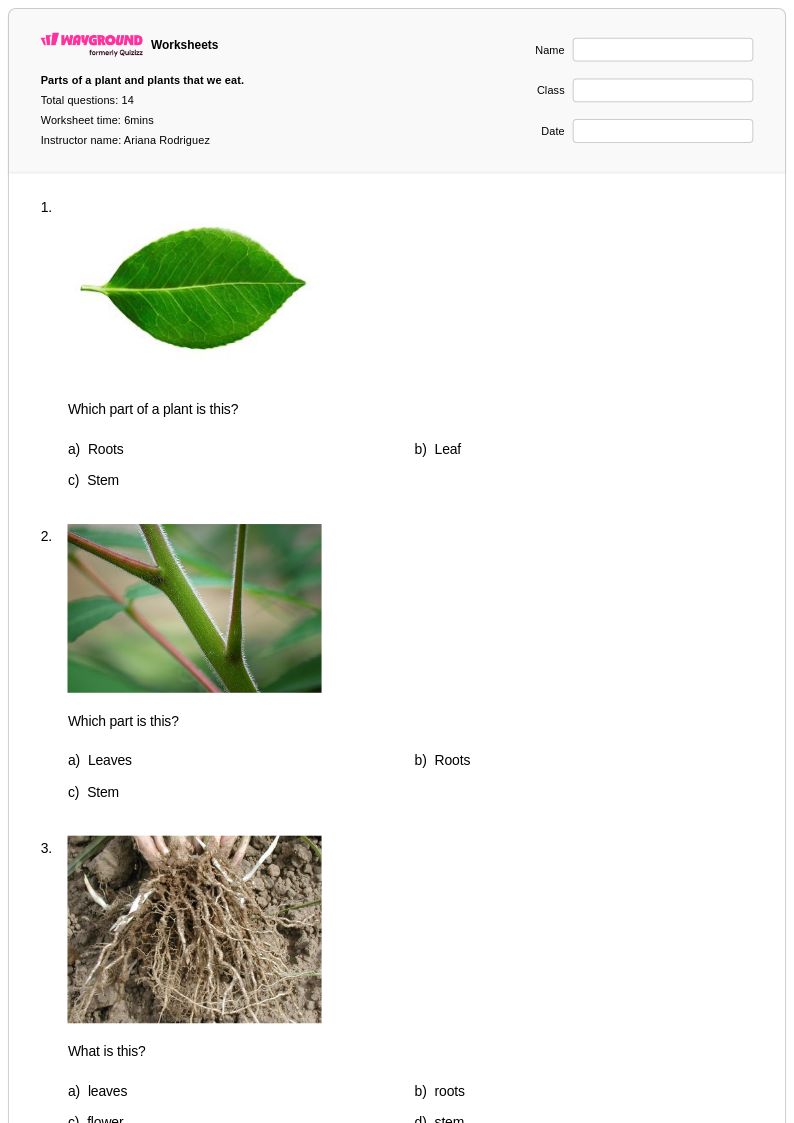
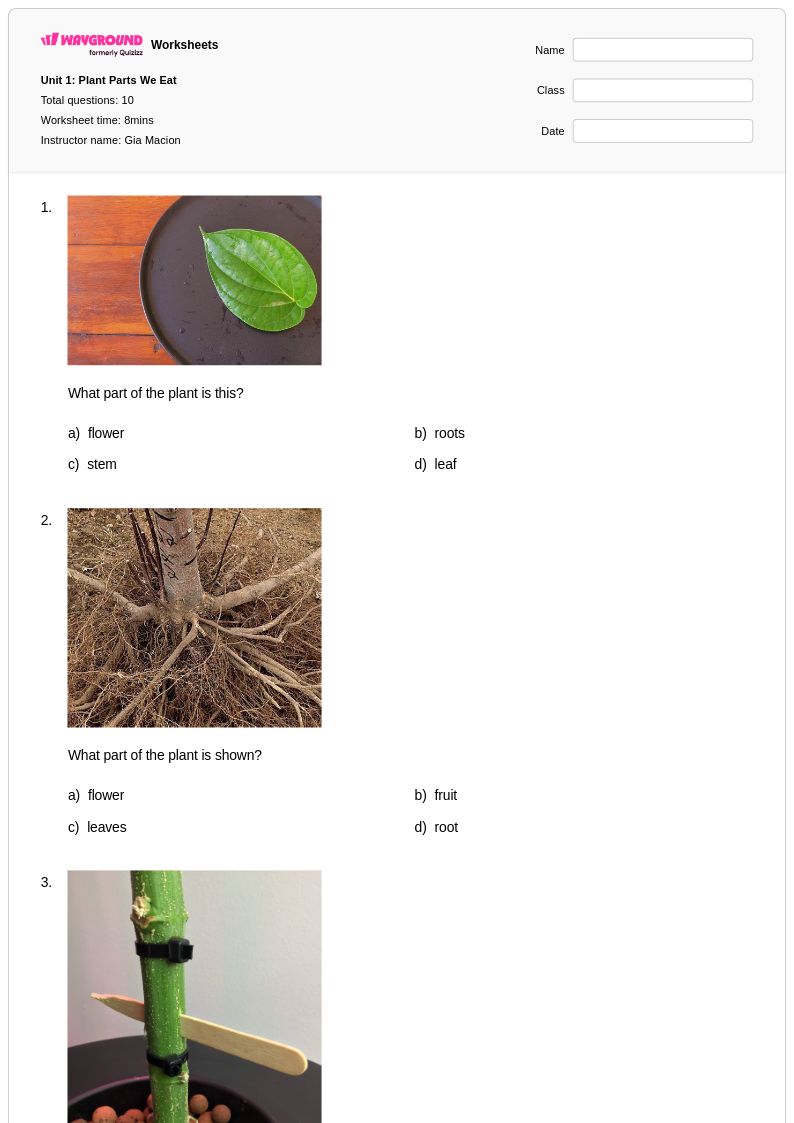
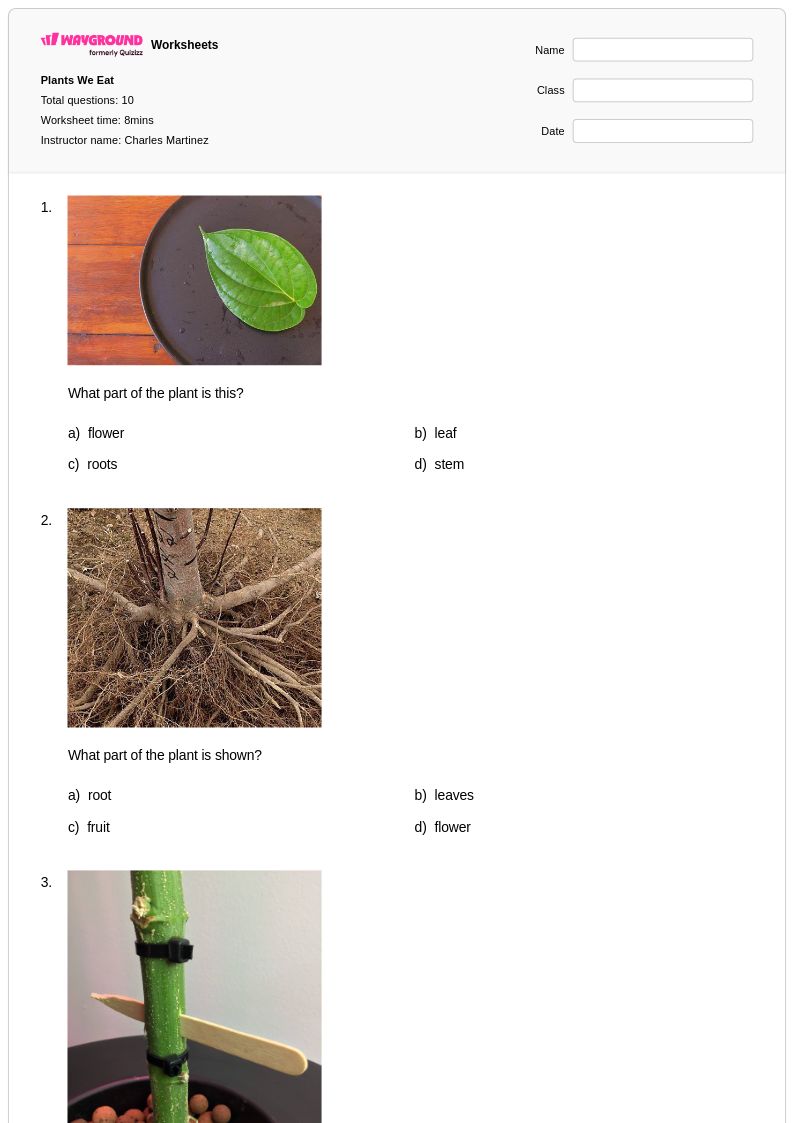
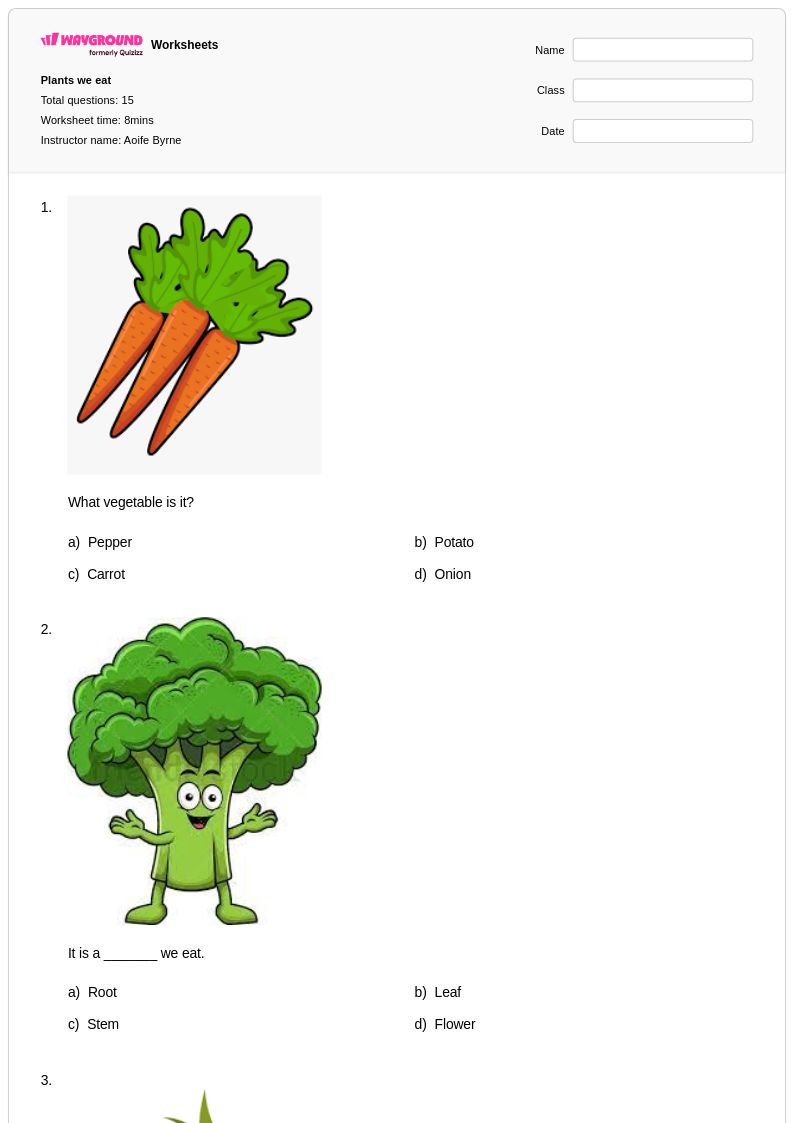
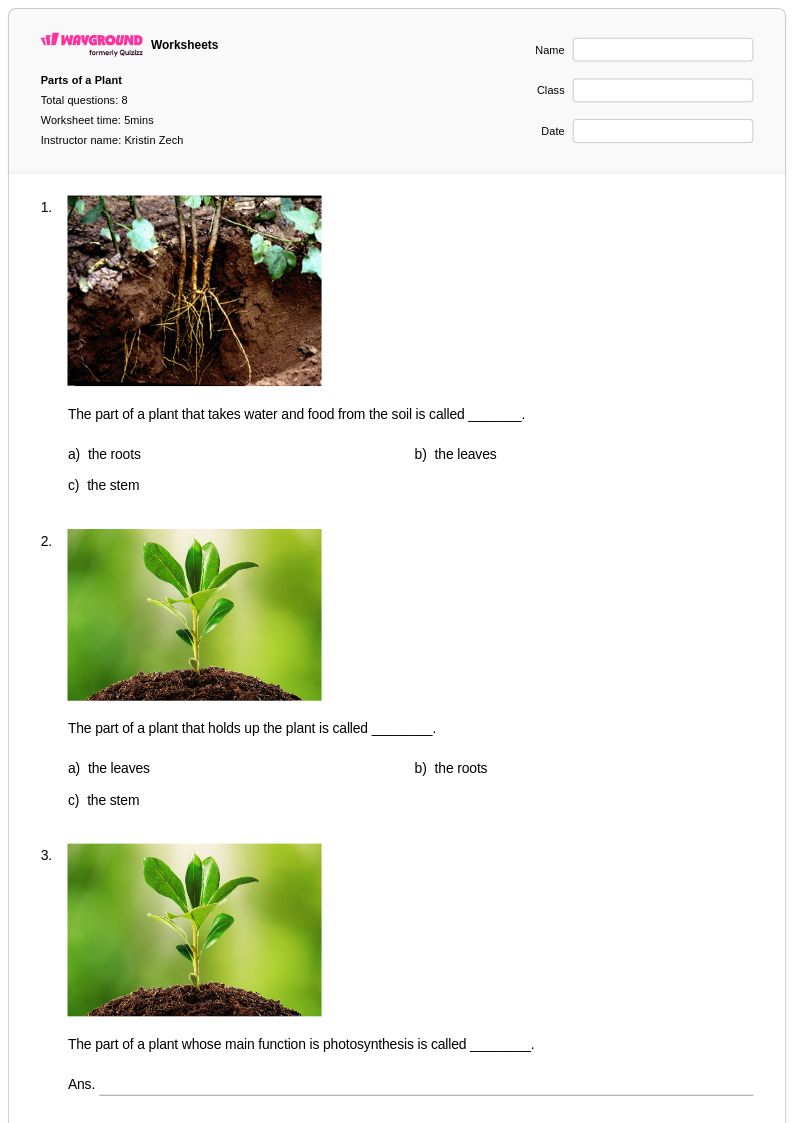
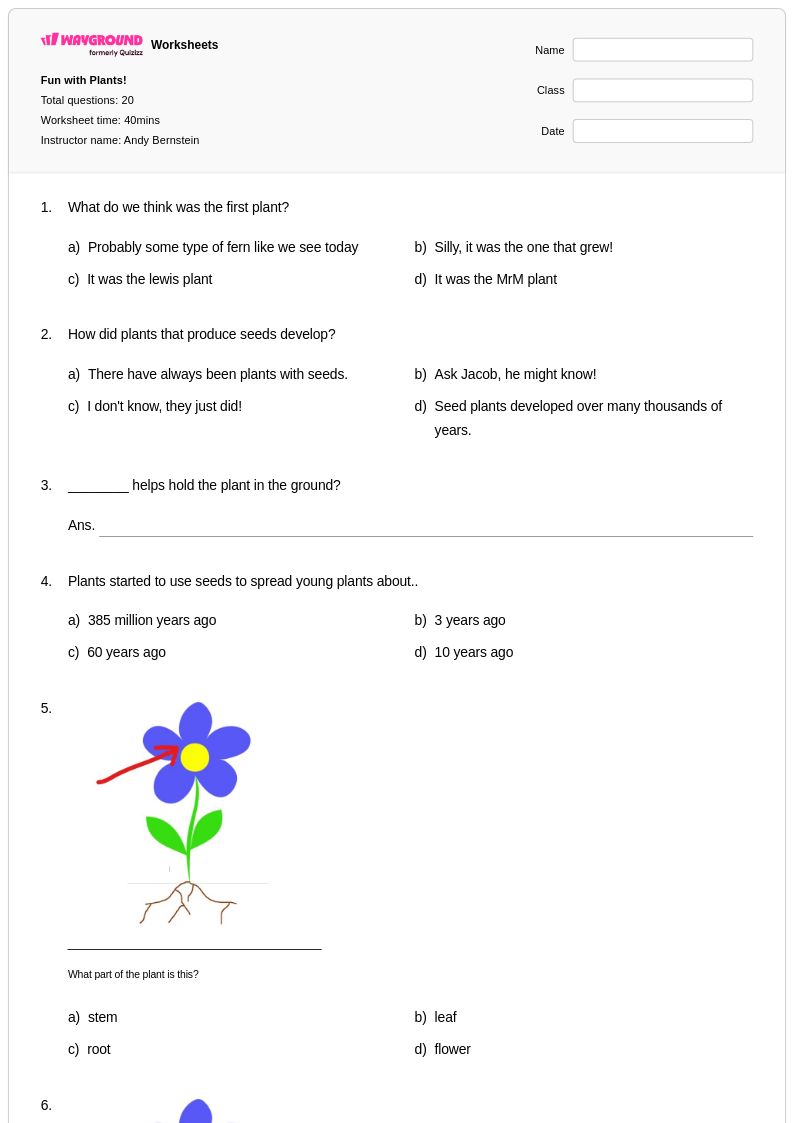
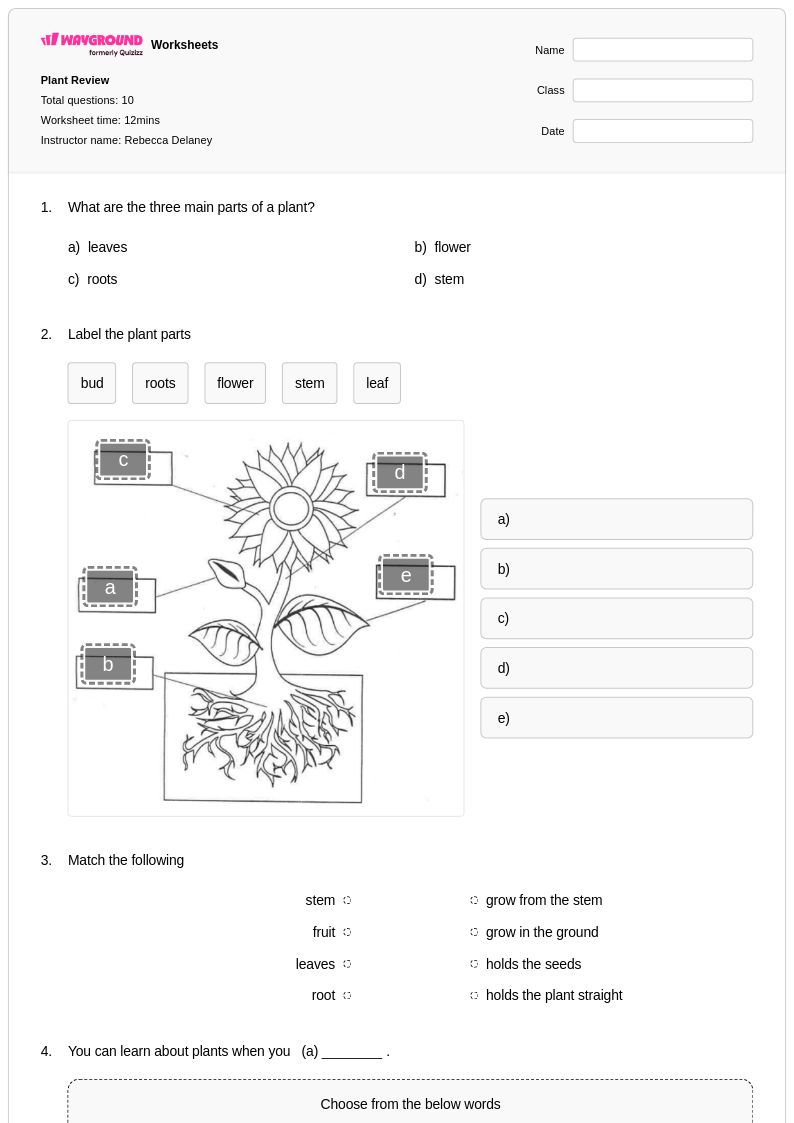
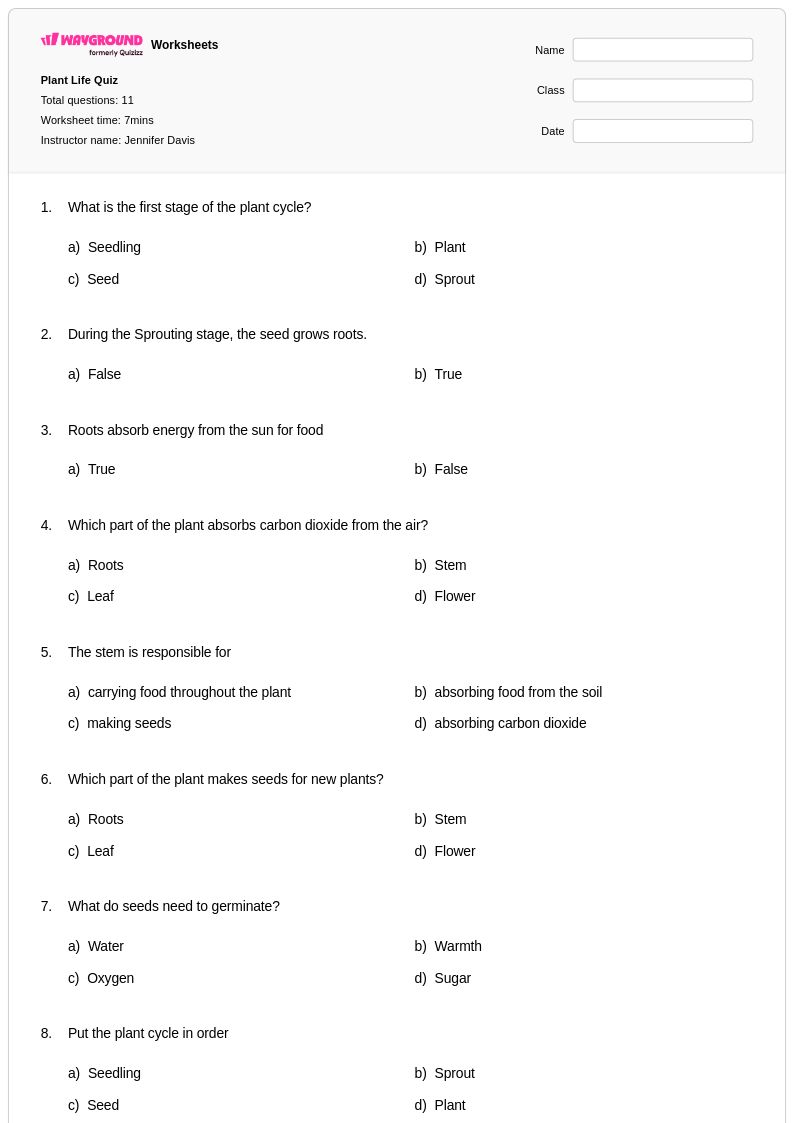
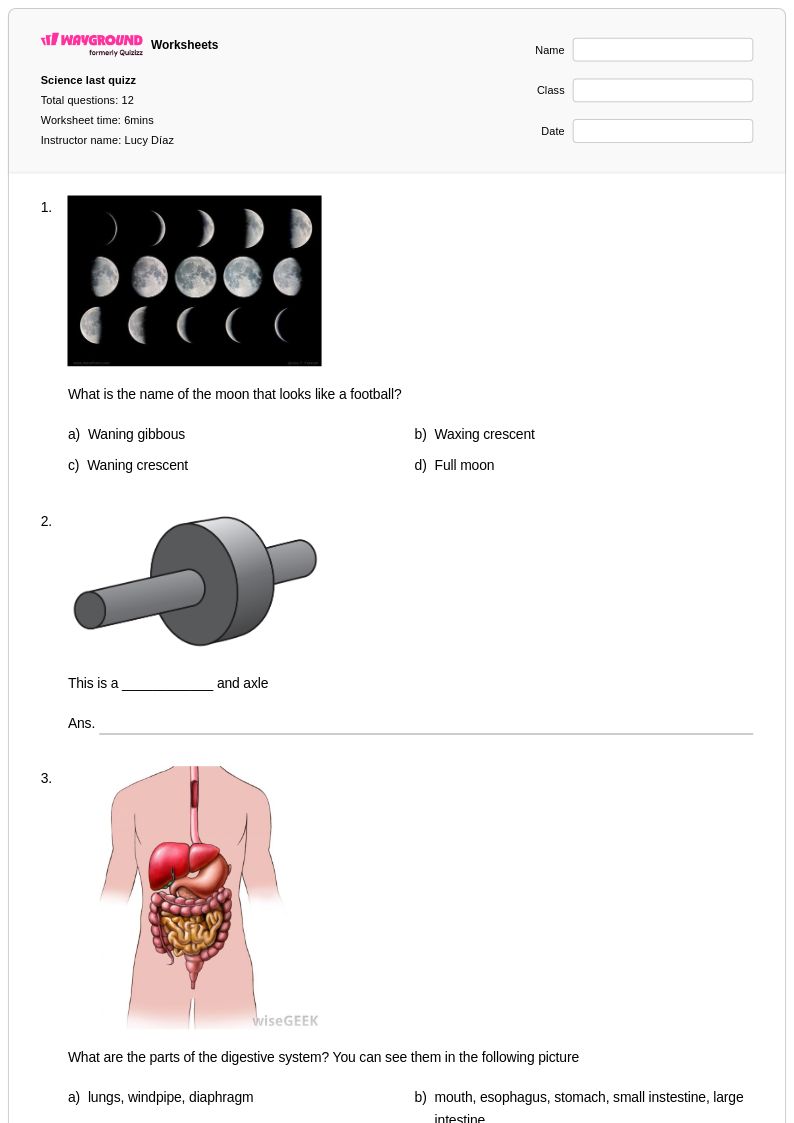
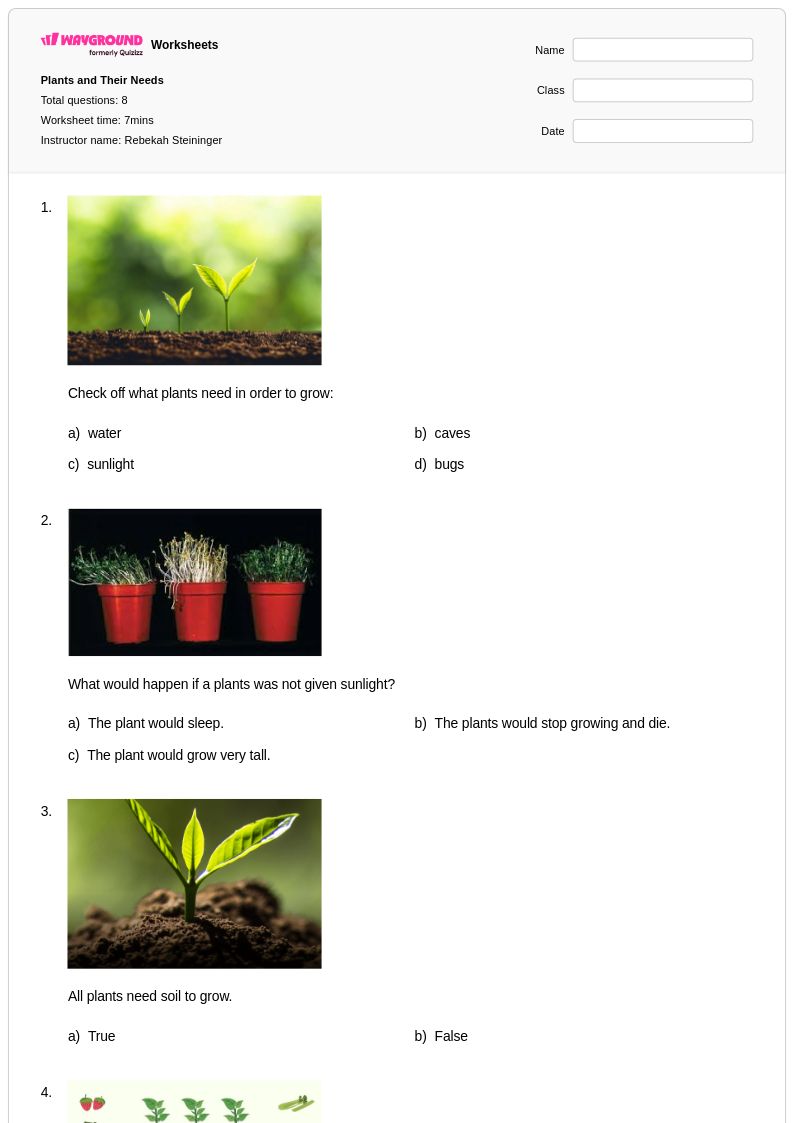
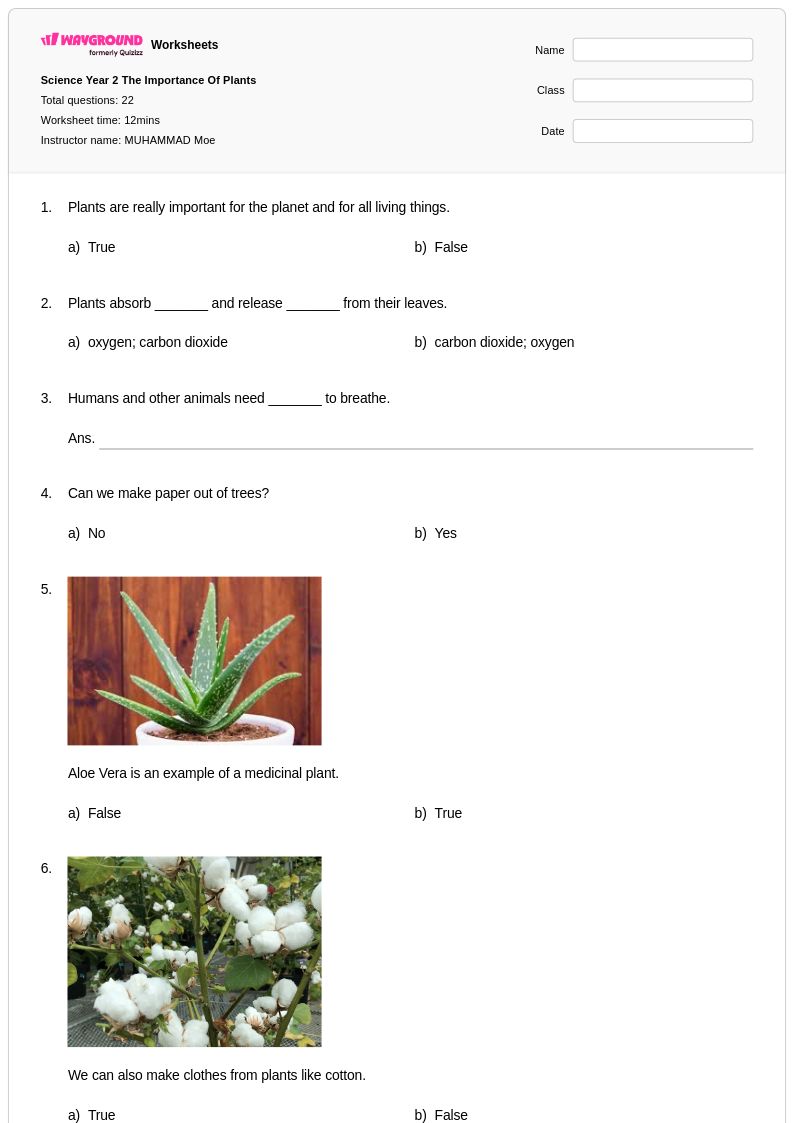
Parts of plants we eat worksheets for Grade 2 students provide an engaging introduction to botanical nutrition and plant biology fundamentals. These carefully designed educational materials help young learners identify and categorize the different plant parts that form essential components of their daily diet, including roots like carrots and radishes, stems such as celery and asparagus, leaves like lettuce and spinach, flowers including broccoli and cauliflower, fruits such as apples and tomatoes, and seeds like beans and corn. The worksheets strengthen critical thinking skills through sorting activities, labeling exercises, and visual identification tasks that connect scientific concepts to real-world experiences. Each printable resource includes comprehensive practice problems that reinforce learning objectives, while accompanying answer keys enable efficient assessment and self-directed learning. These free educational materials are available in convenient PDF format, making them accessible for both classroom instruction and home study sessions.
Wayground, formerly Quizizz, empowers educators with an extensive collection of plant parts worksheets drawn from millions of teacher-created resources that support Grade 2 biology instruction. The platform's robust search and filtering capabilities allow teachers to quickly locate materials that align with specific curriculum standards and learning objectives for elementary plant science education. Advanced differentiation tools enable instructors to customize worksheets according to individual student needs, supporting both remediation for struggling learners and enrichment opportunities for advanced students. The flexible format options include both printable PDF versions for traditional classroom activities and digital formats that integrate seamlessly with modern educational technology environments. These comprehensive resources streamline lesson planning while providing teachers with reliable materials for skill practice sessions, formative assessments, and hands-on learning experiences that make botanical concepts accessible and memorable for young scientists.
FAQs
How do I teach students which parts of plants we eat?
Start by grounding the lesson in foods students already eat, then map each food to its plant part: roots (carrots, radishes), stems (celery, asparagus), leaves (spinach, lettuce), flowers (broccoli, cauliflower), fruits (apples, tomatoes), and seeds (beans, corn). Using real or pictured food samples helps students build concrete associations before moving to classification tasks. Connecting plant anatomy to nutrition gives the concept relevance beyond pure botany.
What exercises help students practice identifying edible plant parts?
Categorization activities work well for this topic: give students a list of common foods and have them sort each into the correct plant part group. Matching exercises that pair food images with labeled plant diagrams reinforce visual recognition alongside vocabulary. Practice problems that include less obvious examples, such as broccoli as a flower or celery as a stem, push students past surface-level recall and build more durable understanding.
What misconceptions do students commonly have about parts of plants we eat?
A frequent error is classifying tomatoes, cucumbers, and peppers as vegetables rather than fruits, since in botanical terms a fruit is any seed-bearing structure that develops from a flower. Students also confuse roots and stems, particularly with foods like potatoes (a stem tuber) or ginger (a rhizome), which grow underground but are not roots. Broccoli and cauliflower are commonly misidentified as leaves or seeds rather than flower heads. Addressing these specific cases directly prevents the misconceptions from becoming fixed.
How do I use Parts of Plants We Eat worksheets in my classroom?
These worksheets work as structured practice after an introductory lesson on plant anatomy, reinforcing classification skills through categorization and labeling tasks. They are available as printable PDFs for traditional classroom distribution and in digital formats for technology-integrated or remote learning environments, and can also be hosted as a quiz on Wayground for interactive student engagement. Complete answer keys are included, making them equally useful for independent student work, guided group activities, or formative assessment checkpoints.
How can I differentiate Parts of Plants We Eat lessons for students at different levels?
For students who need additional support, limit the number of plant part categories covered in a single session and provide visual aids or word banks alongside classification tasks. Advanced learners can be challenged with less familiar examples, such as distinguishing tubers from true roots, or exploring the nutritional differences between eating seeds versus leaves of the same plant. On Wayground, teachers can apply accommodations such as read aloud, reduced answer choices, and extended time to individual students without affecting the rest of the class.
How does learning about edible plant parts connect to broader science standards?
Identifying parts of plants we eat directly supports life science standards related to plant structure and function, as students must understand what each plant part does biologically before they can correctly classify foods. This topic also bridges into nutrition education, since different plant parts, such as roots, seeds, and leaves, contain distinct nutrient profiles. Teachers can extend the concept into ecosystems by discussing which plant parts animals eat and why, creating cross-curricular connections across biology and health science.