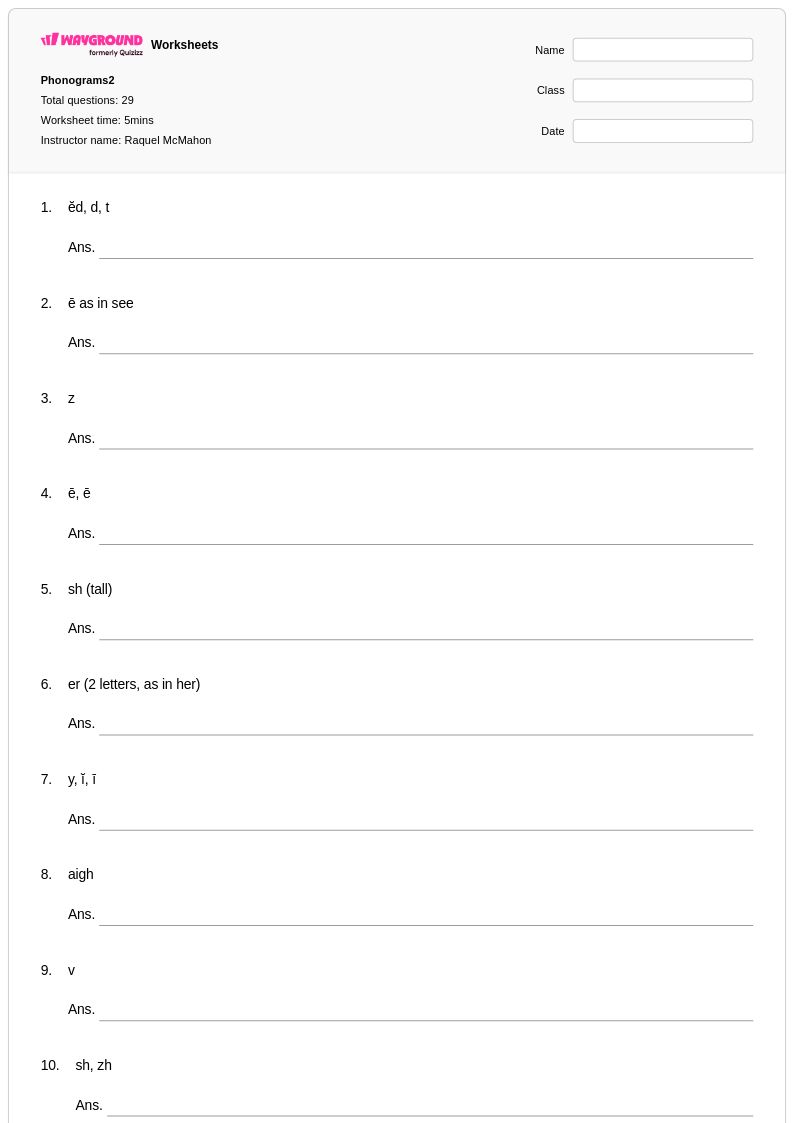
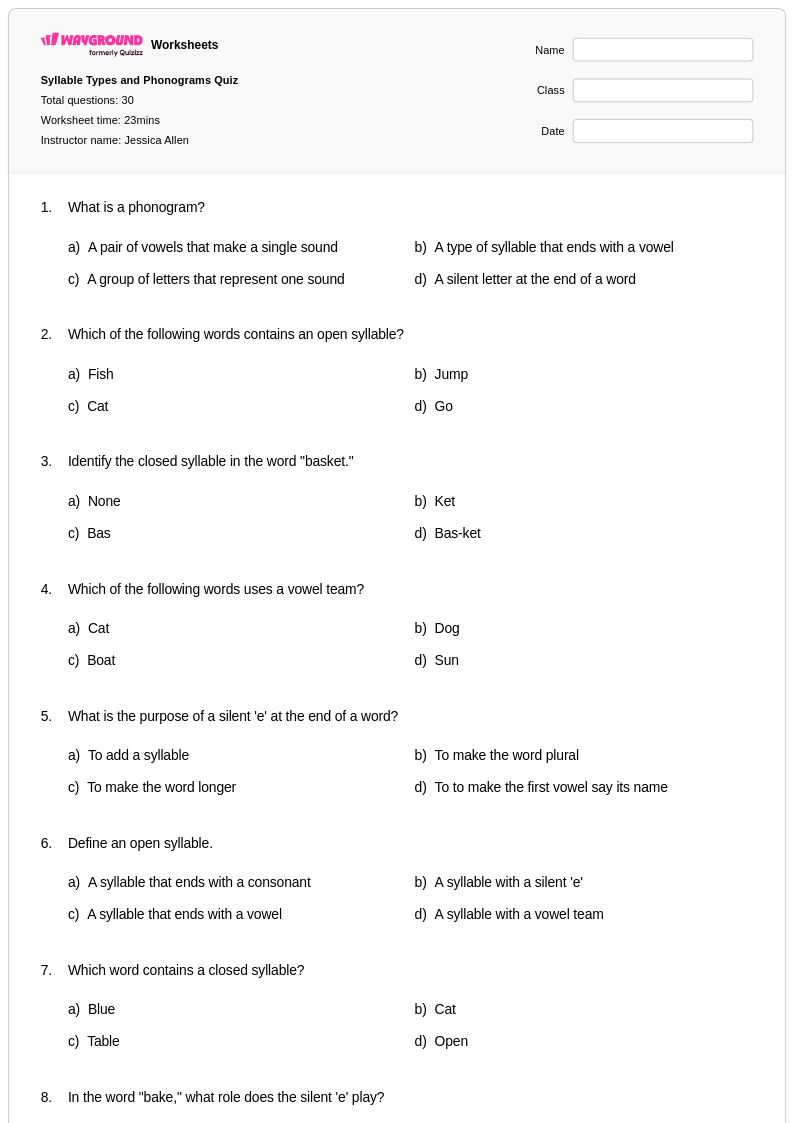
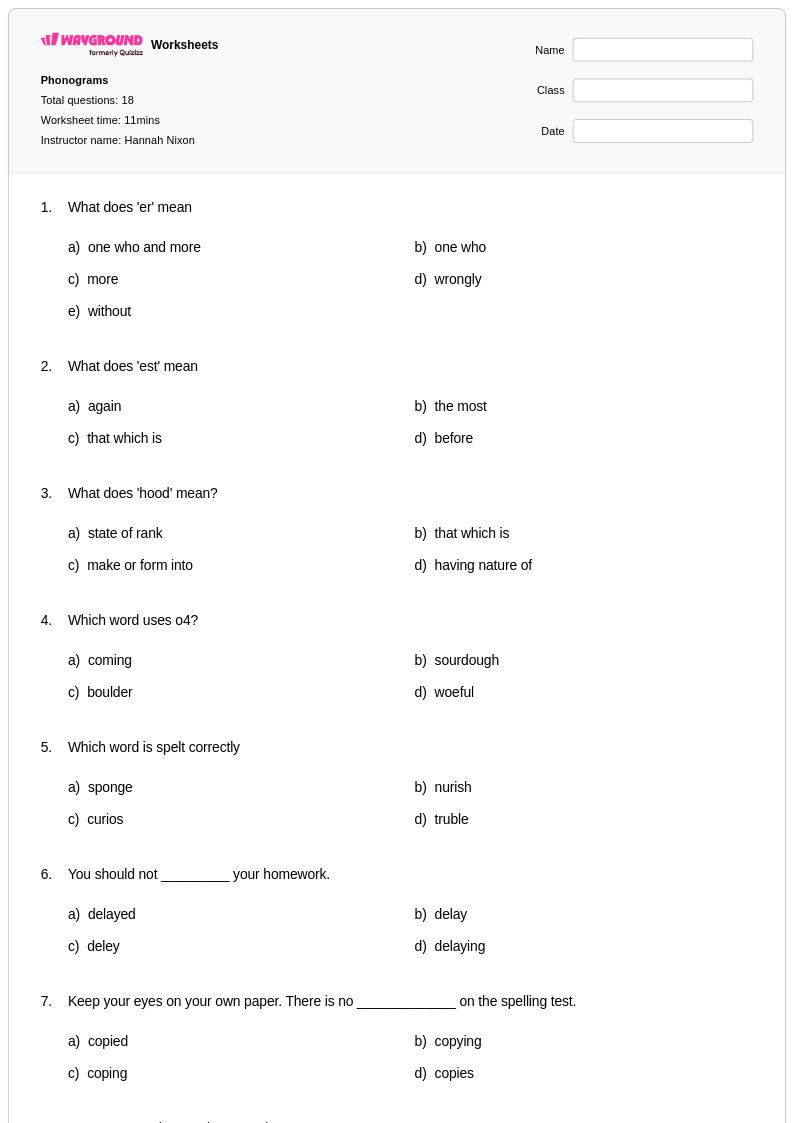
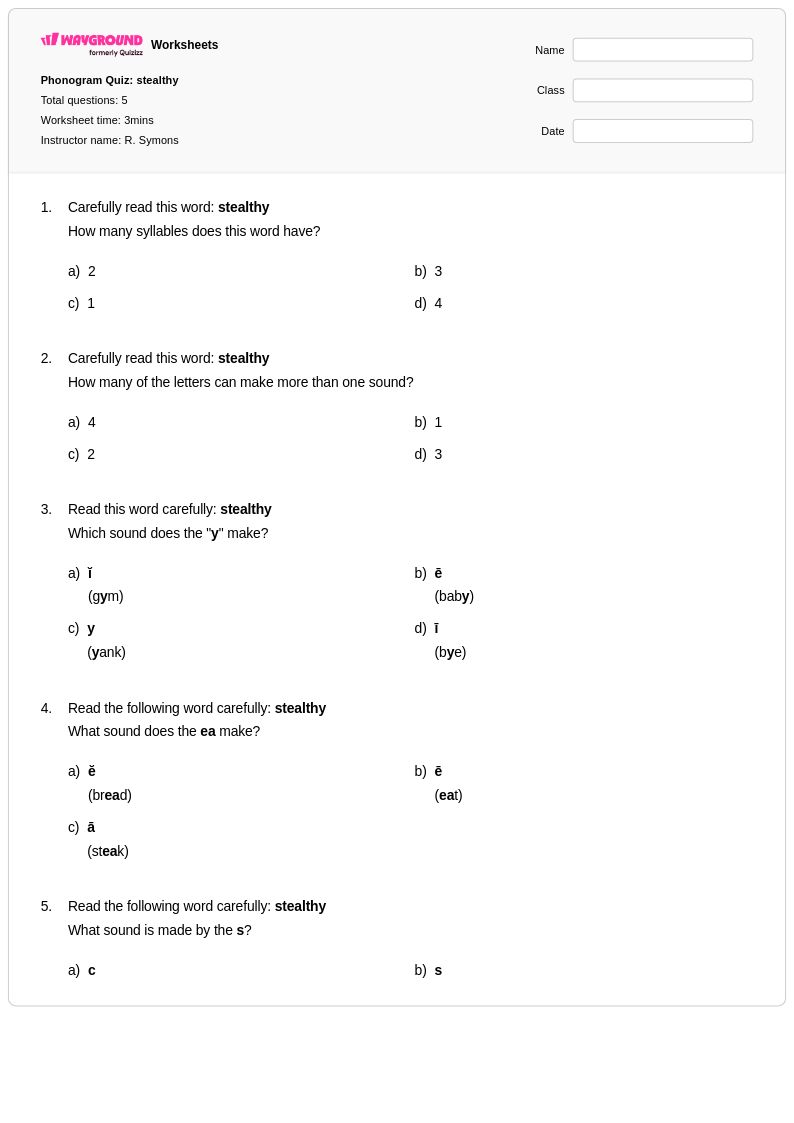
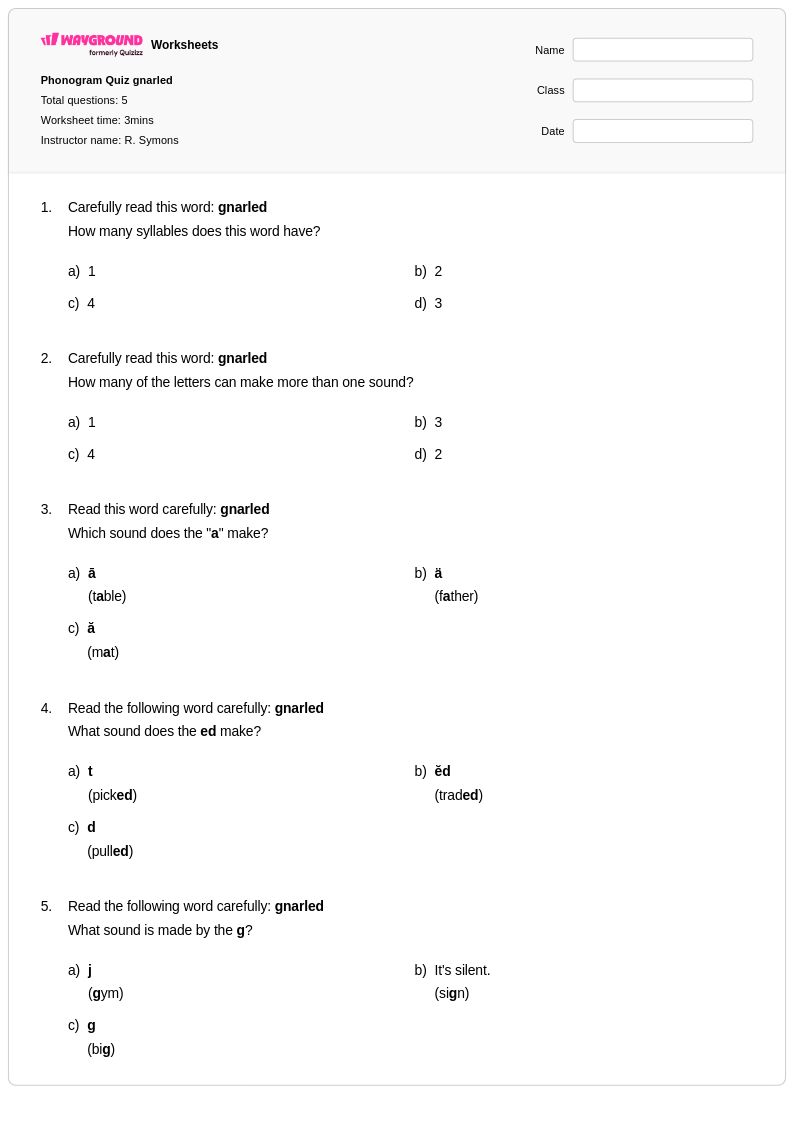
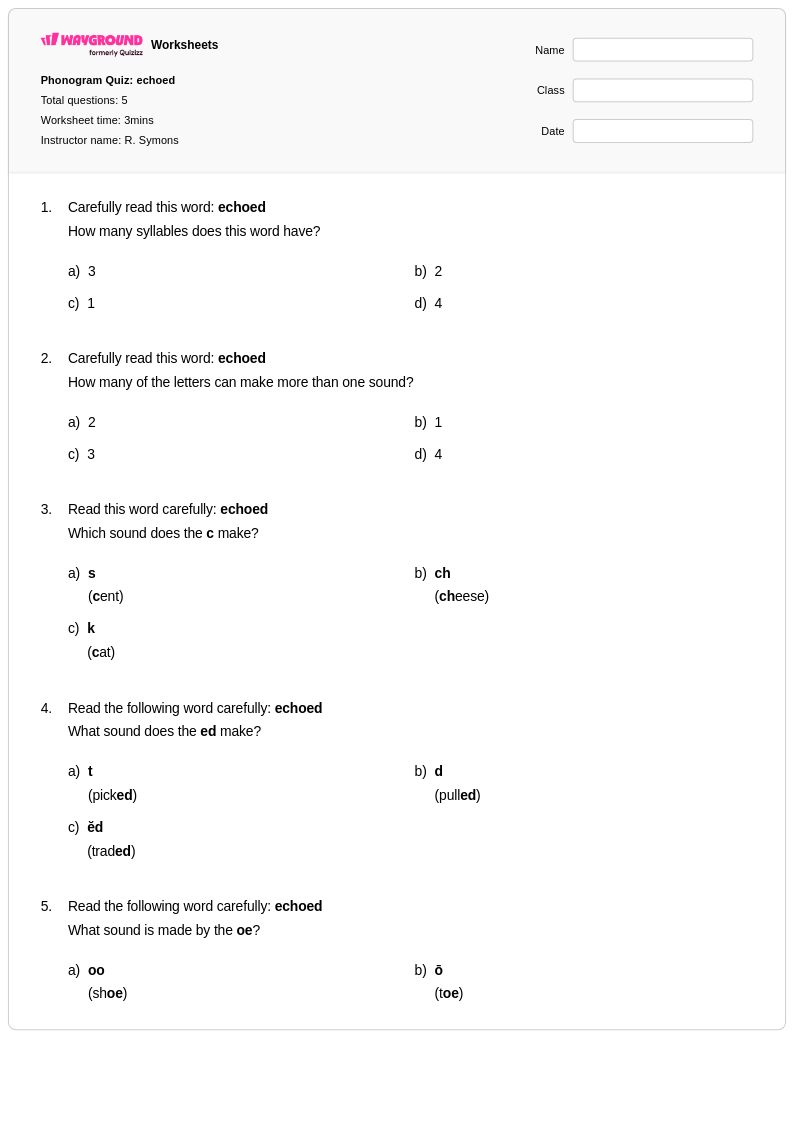
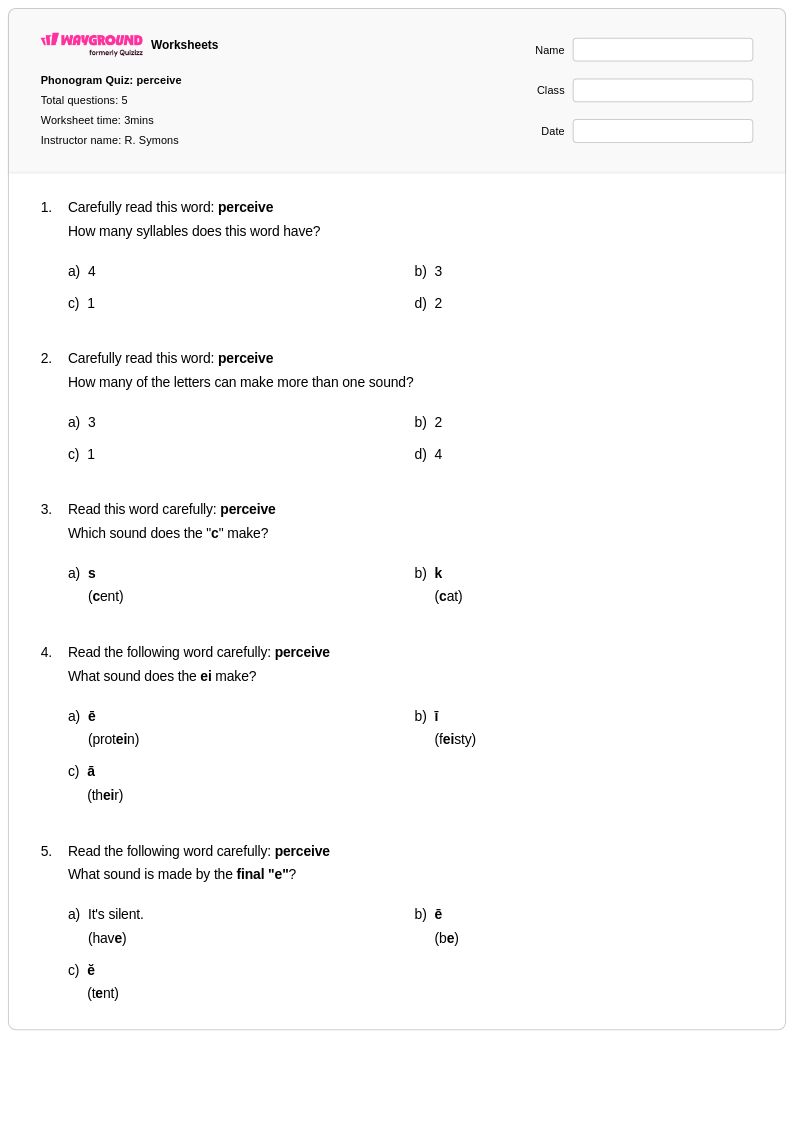
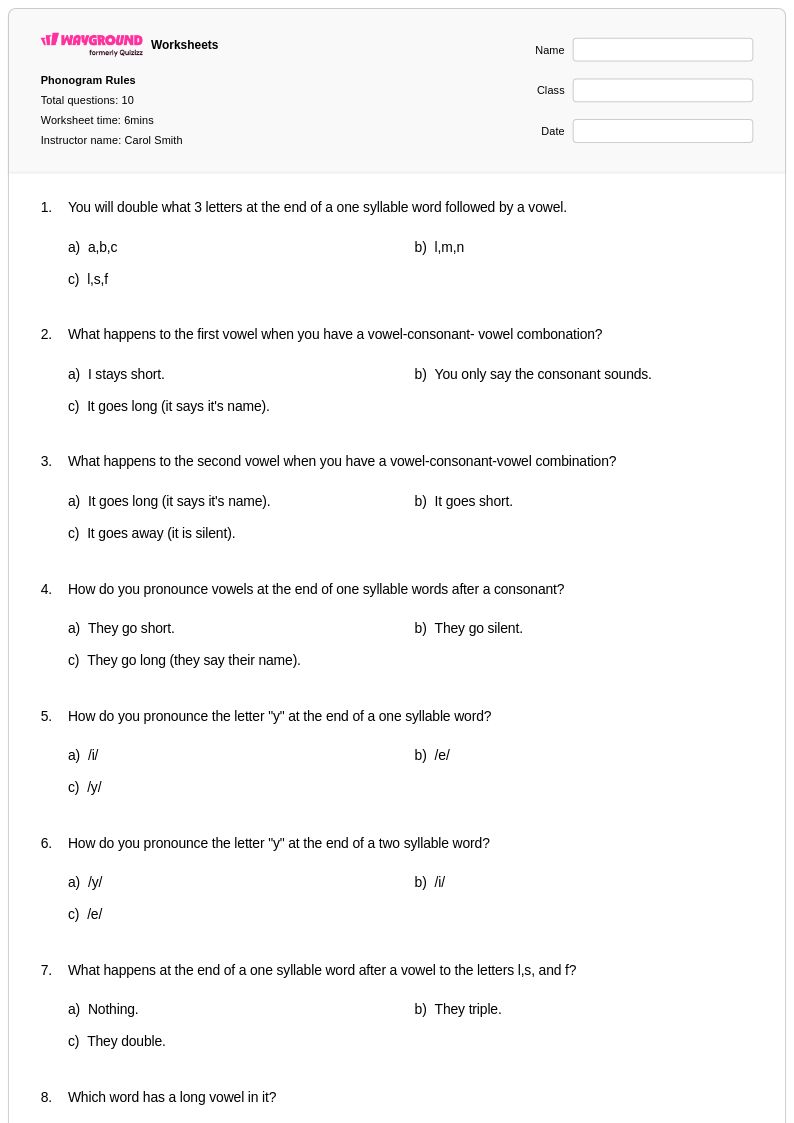
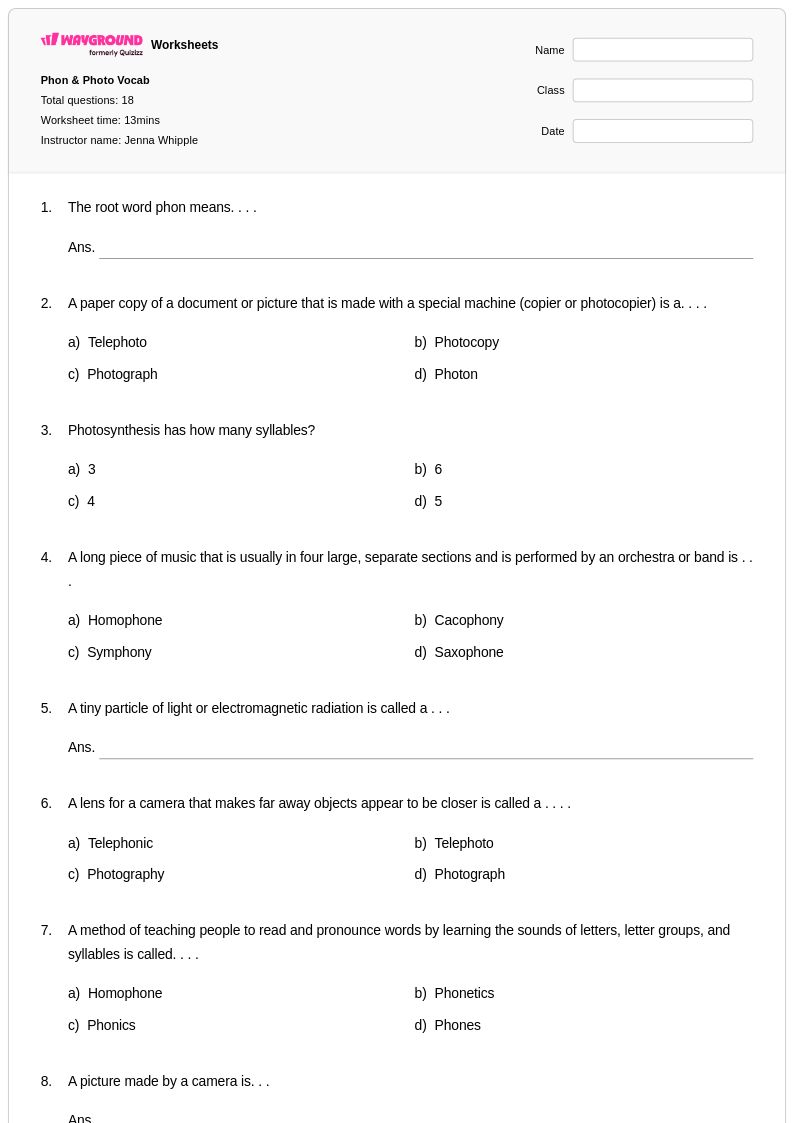
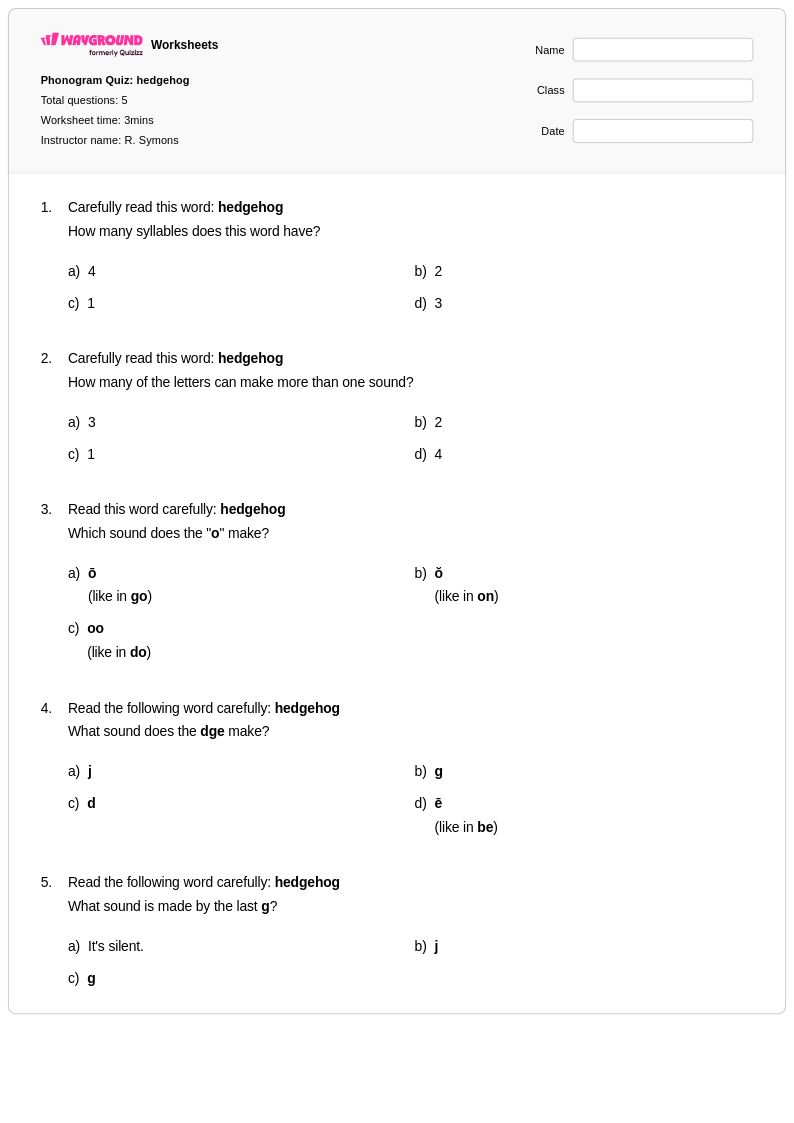
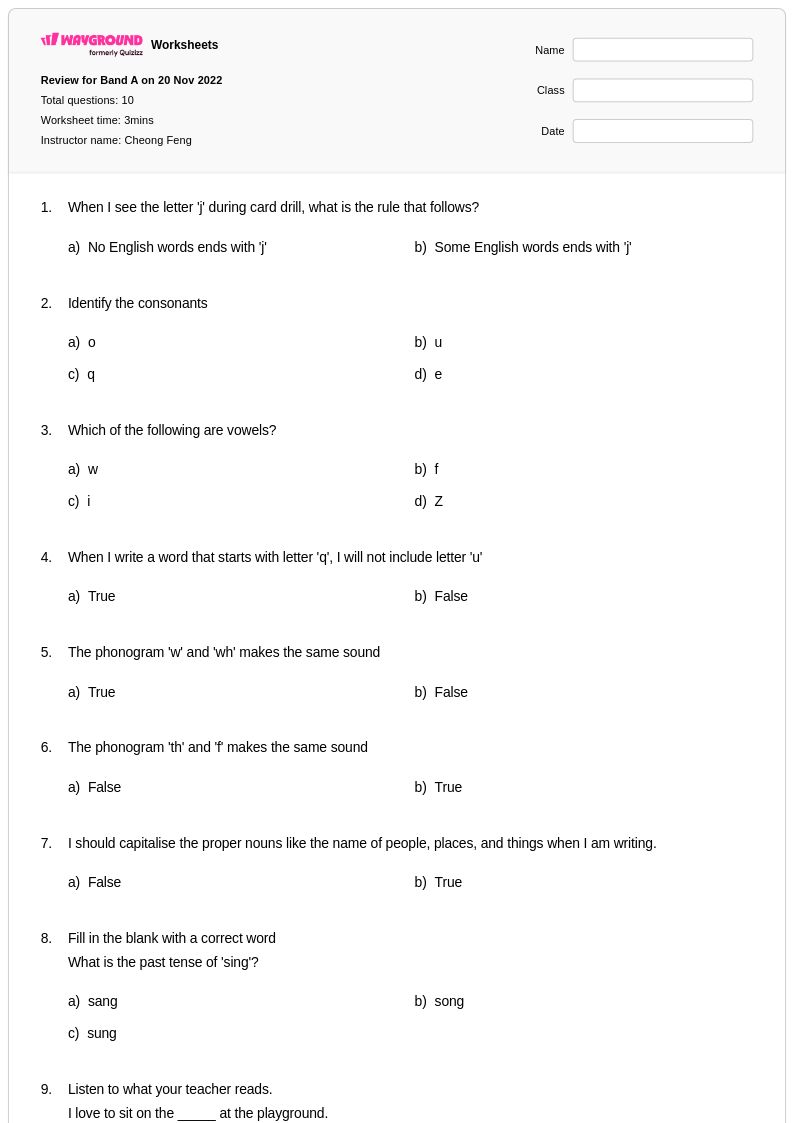
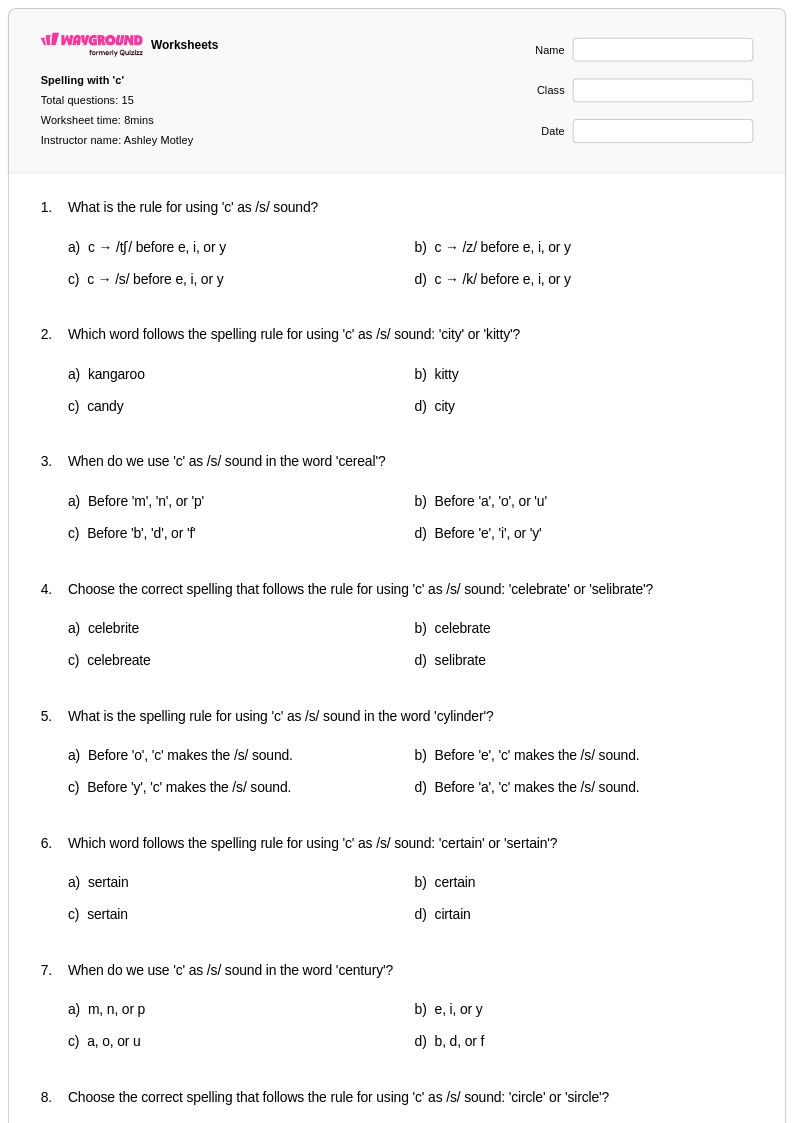
Grade 5 phonograms worksheets from Wayground provide comprehensive printables and practice problems to help students master word patterns and spelling combinations, complete with answer keys and free PDF downloads.
Explore printable Phonograms worksheets for Grade 5
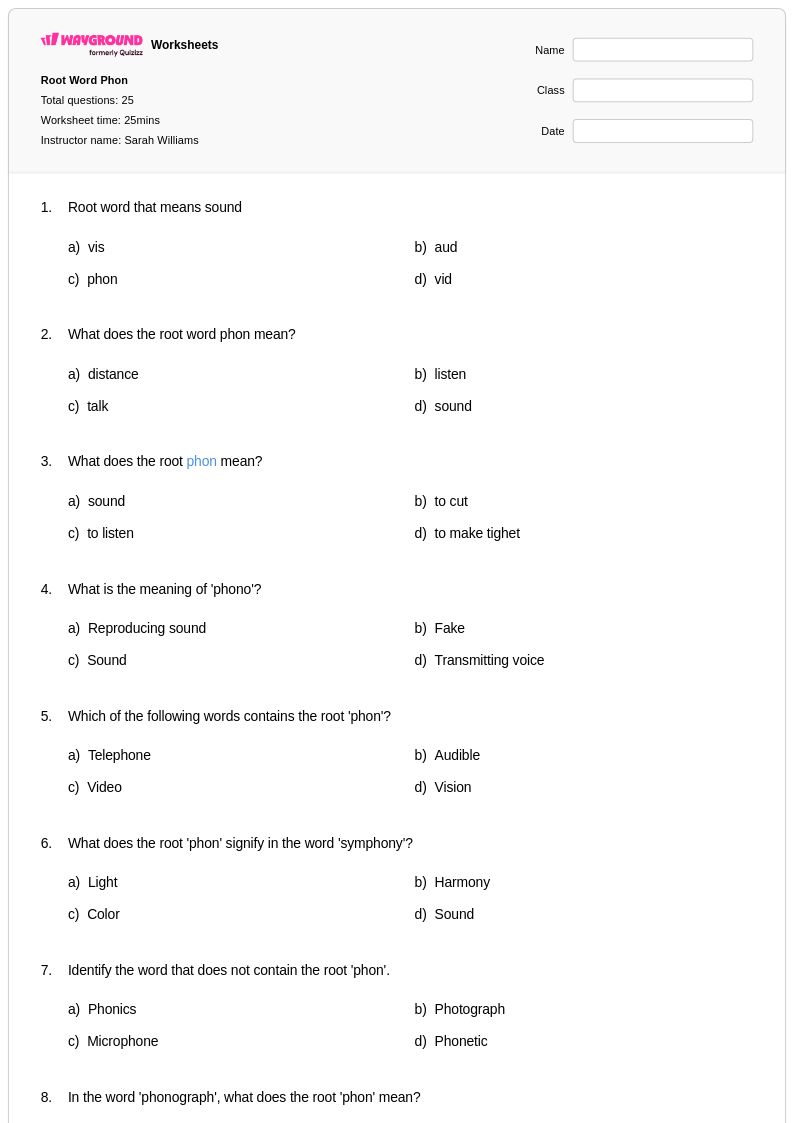
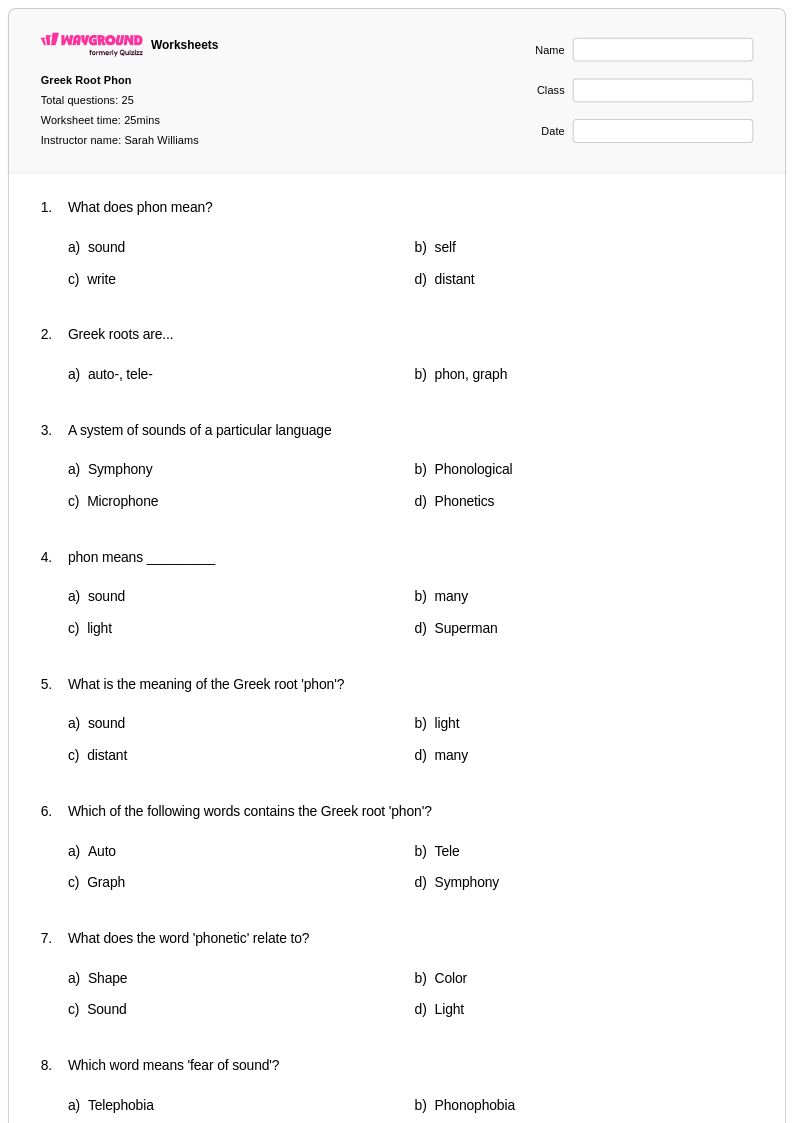
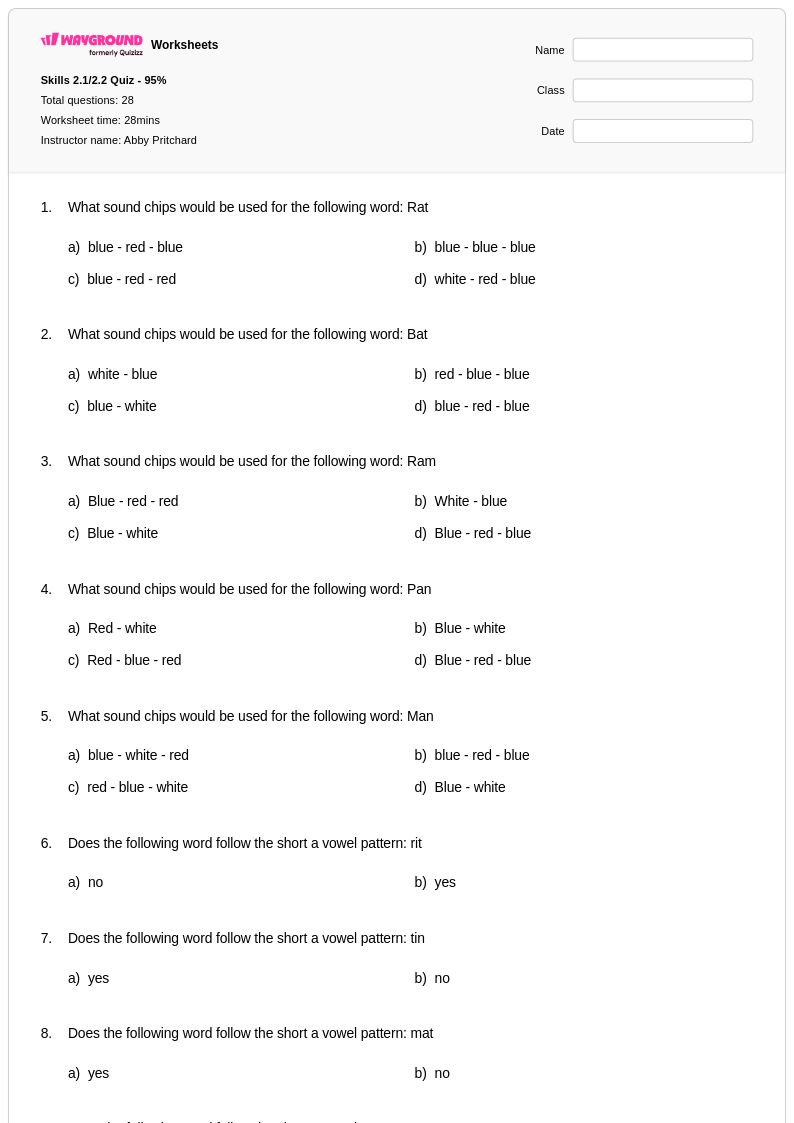
Phonograms worksheets for Grade 5 students available through Wayground (formerly Quizizz) provide comprehensive practice with word families and spelling patterns that form the foundation of advanced reading and writing skills. These expertly designed resources help fifth-grade learners recognize and apply common phonogram patterns such as -ight, -ough, -tion, and -sion, strengthening their ability to decode unfamiliar words and improve spelling accuracy. Each worksheet collection includes systematic practice problems that progress from basic pattern recognition to complex word analysis, complete with detailed answer keys that support both independent learning and teacher-guided instruction. These free printables offer students multiple opportunities to internalize phonogram patterns through varied exercises including word sorting, sentence completion, and creative writing applications, all presented in convenient pdf format for easy classroom distribution.
Wayground (formerly Quizizz) empowers educators with an extensive library of millions of teacher-created phonogram resources specifically curated for Grade 5 instruction, featuring robust search and filtering capabilities that allow quick access to materials aligned with state literacy standards. The platform's differentiation tools enable teachers to customize worksheet difficulty levels, ensuring that both struggling readers and advanced students receive appropriate challenge levels for optimal skill development. These versatile resources are available in both printable and digital formats, including downloadable pdfs, making them ideal for traditional classroom instruction, homework assignments, or remote learning environments. Teachers can efficiently plan phonogram instruction sequences, provide targeted remediation for students who struggle with specific spelling patterns, offer enrichment activities for advanced learners, and create consistent skill practice opportunities that reinforce phonogram mastery throughout the academic year.
FAQs
How do I teach phonograms effectively in the classroom?
Effective phonogram instruction begins with explicit, systematic teaching of high-frequency letter-sound patterns such as -ing, -tion, -ight, and -ough before moving to less common combinations. Teachers should introduce one phonogram at a time, provide abundant examples of that pattern appearing across real words, and use repeated exposure through reading and writing activities. Connecting phonograms to known words helps students recognize patterns as transferable tools rather than isolated memorization tasks.
What exercises help students practice phonogram recognition?
Effective practice exercises include sorting words by phonogram pattern, filling in missing letter combinations, decoding nonsense words that contain target phonograms, and writing original words or sentences using a given pattern. Progressing from simple two-letter combinations to complex multi-syllabic phonograms ensures students build confidence incrementally. Repeated, varied exposure across reading and writing tasks reinforces automatic recognition, which directly supports fluency and spelling accuracy.
What mistakes do students commonly make when learning phonograms?
A common error is over-applying a phonogram pattern to words where it does not fit, such as misspelling words with irregular phoneme-grapheme correspondences like -ough in 'though' versus 'through' versus 'tough.' Students also frequently confuse visually similar phonograms, such as -tion and -sion, or -ight and -ite. Targeted practice that contrasts similar patterns and highlights exceptions helps students build accurate, flexible decoding skills rather than rigid rule-following.
How do phonograms relate to spelling and reading fluency?
Phonograms are recurring letter combinations that represent consistent or semi-consistent sounds, and recognizing them allows readers to decode unfamiliar words by analogy rather than sounding out each letter individually. This pattern recognition significantly increases reading speed and reduces cognitive load. In spelling, phonogram knowledge helps students predict and apply correct letter sequences, reducing errors in words that share common patterns such as -ight words: light, night, fight, and bright.
How do I use Wayground's phonograms worksheets in my classroom?
Wayground's phonograms worksheets are available as printable PDFs for traditional classroom use and in digital formats for technology-integrated learning environments, giving teachers flexibility in how they assign and collect student work. Teachers can also host worksheets as a quiz directly on Wayground, allowing for interactive practice and streamlined review. Each worksheet includes a complete answer key, making it straightforward to use for initial instruction, independent practice, or targeted remediation sessions.
How can I differentiate phonogram instruction for students at different skill levels?
Differentiation in phonogram instruction means providing simpler two-letter pattern practice for emerging readers while challenging advanced students with complex multi-syllabic phonograms and application in context. On Wayground, teachers can apply student-level accommodations such as read aloud support for students who need audio assistance, reduced answer choices to lower cognitive load for struggling learners, and adjustable reading modes with larger fonts or high-contrast themes for accessibility. These settings can be applied to individual students while the rest of the class receives standard materials, and they carry over automatically to future sessions.