
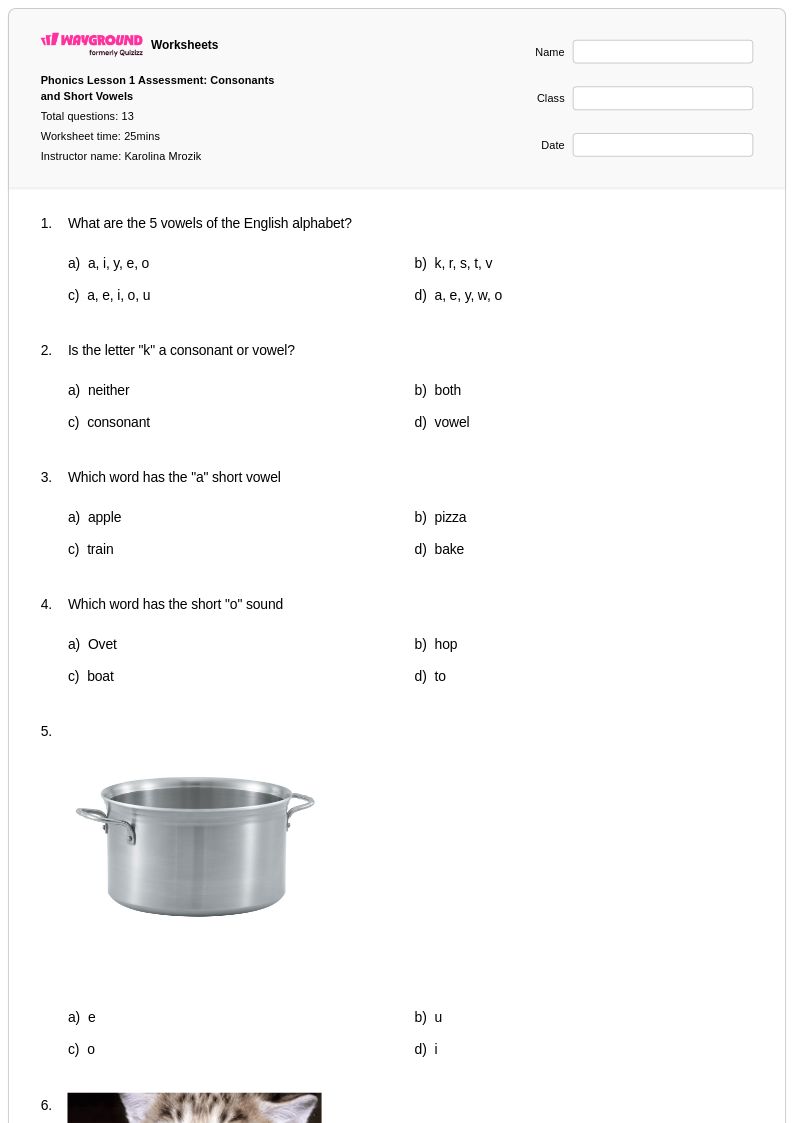
13 Q
3rd - 6th
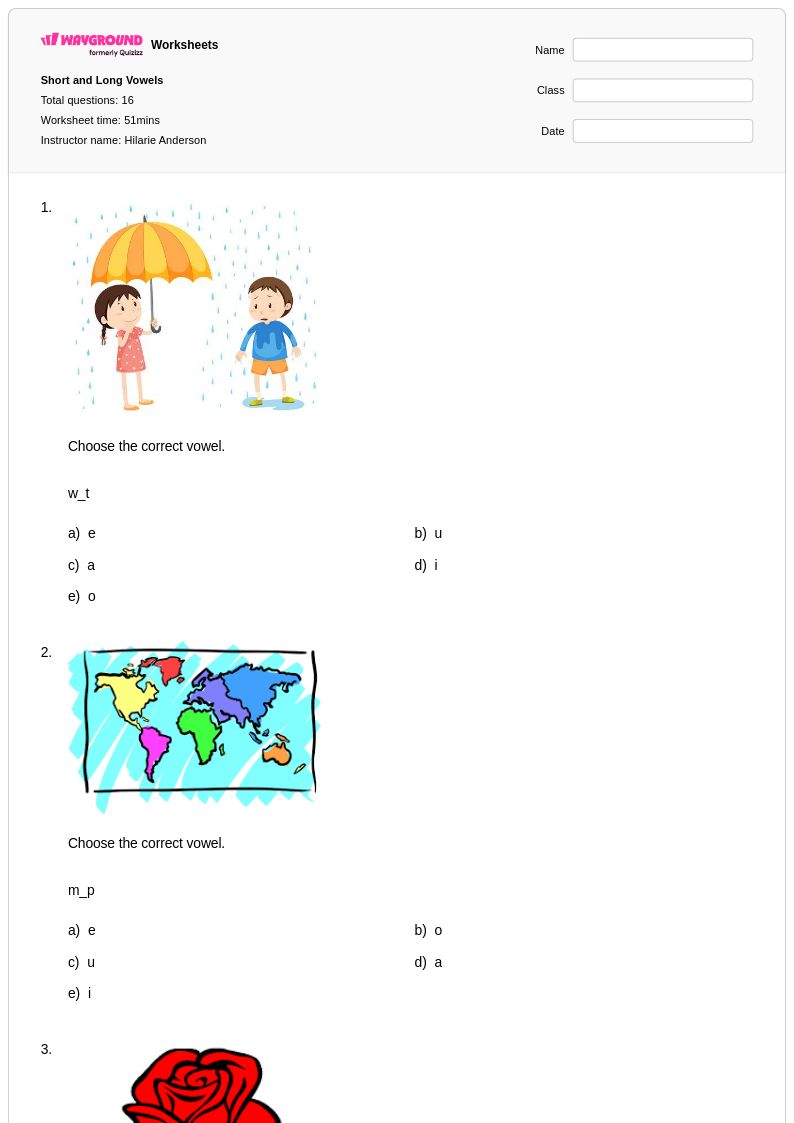
18 Q
1st - Uni
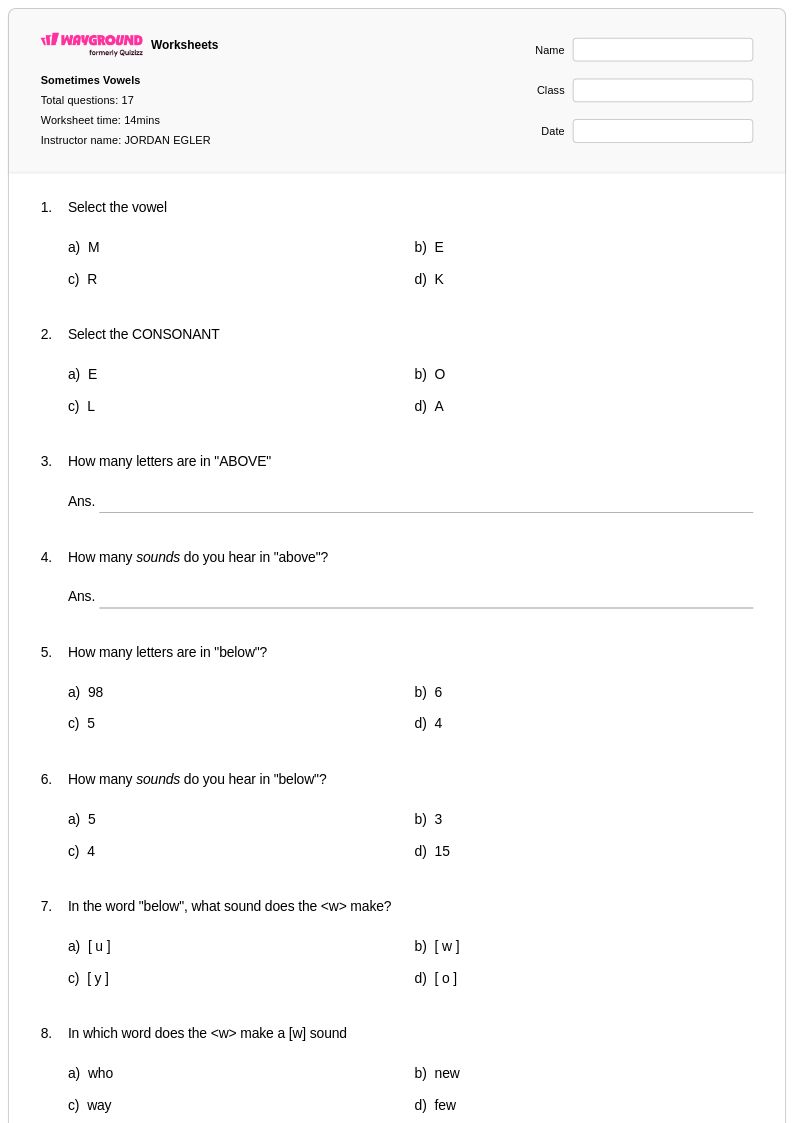
17 Q
2nd - 6th
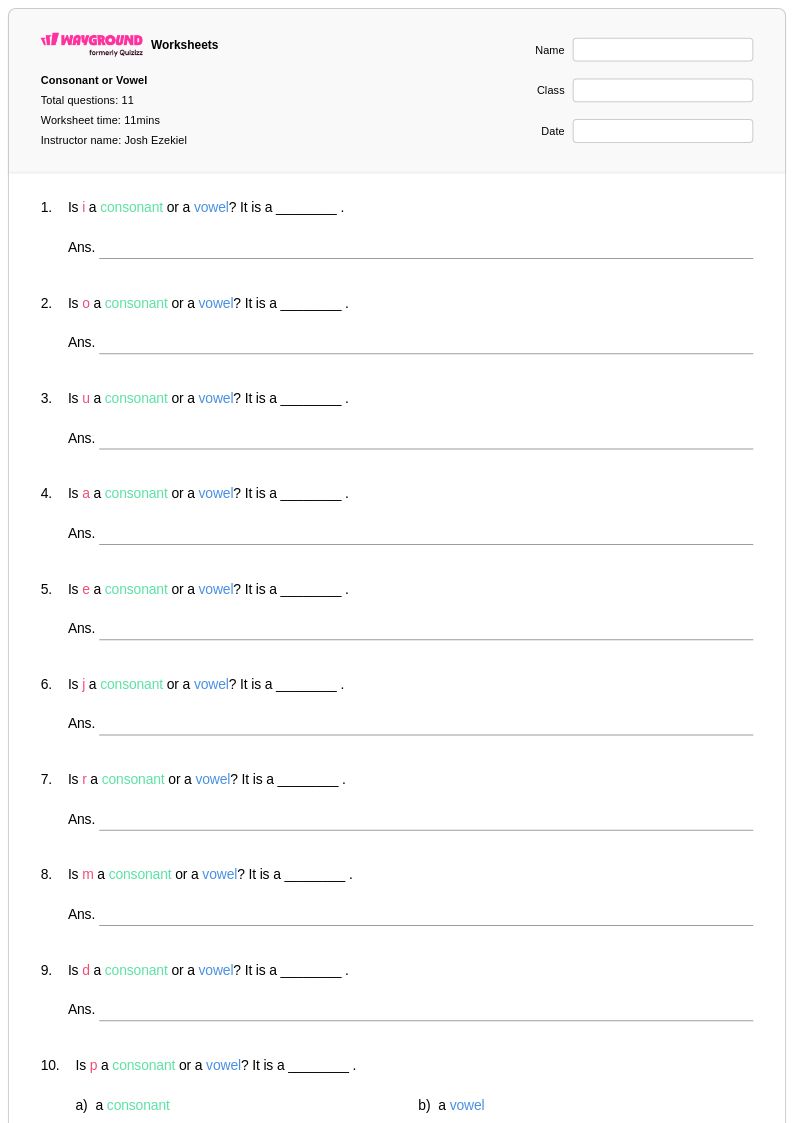
11 Q
1st - 5th
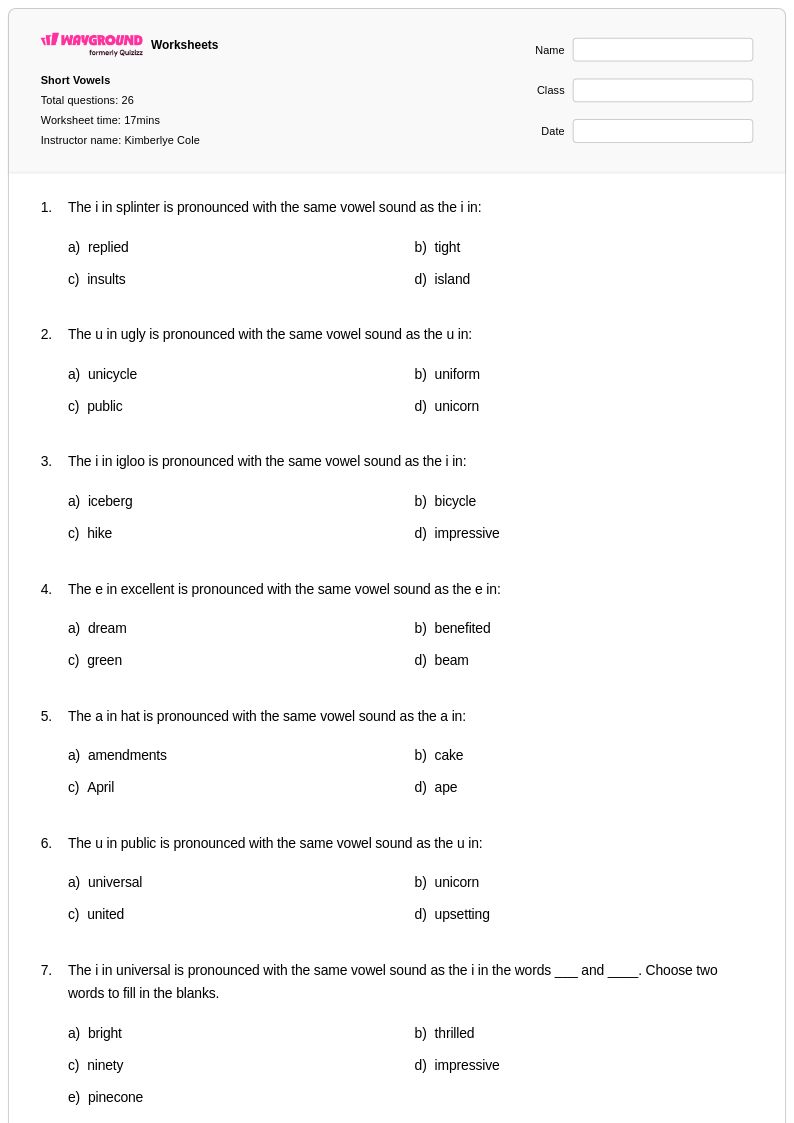
26 Q
5th
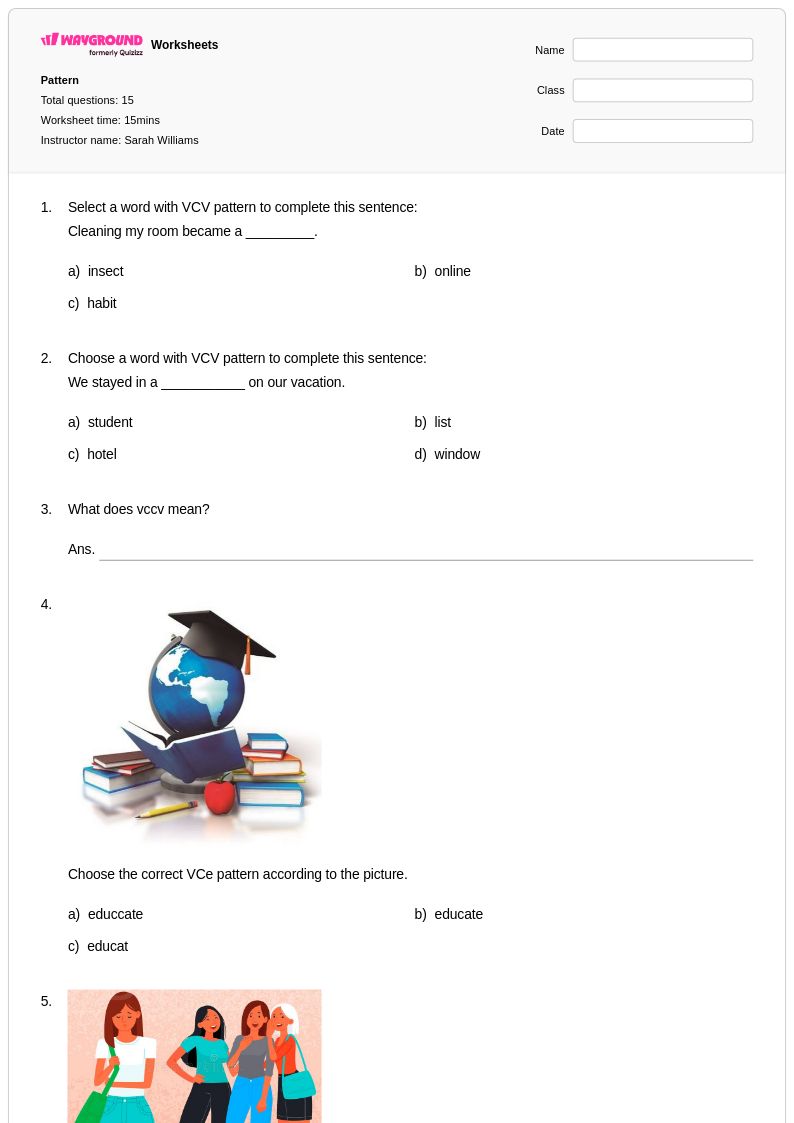
15 Q
4th - Uni
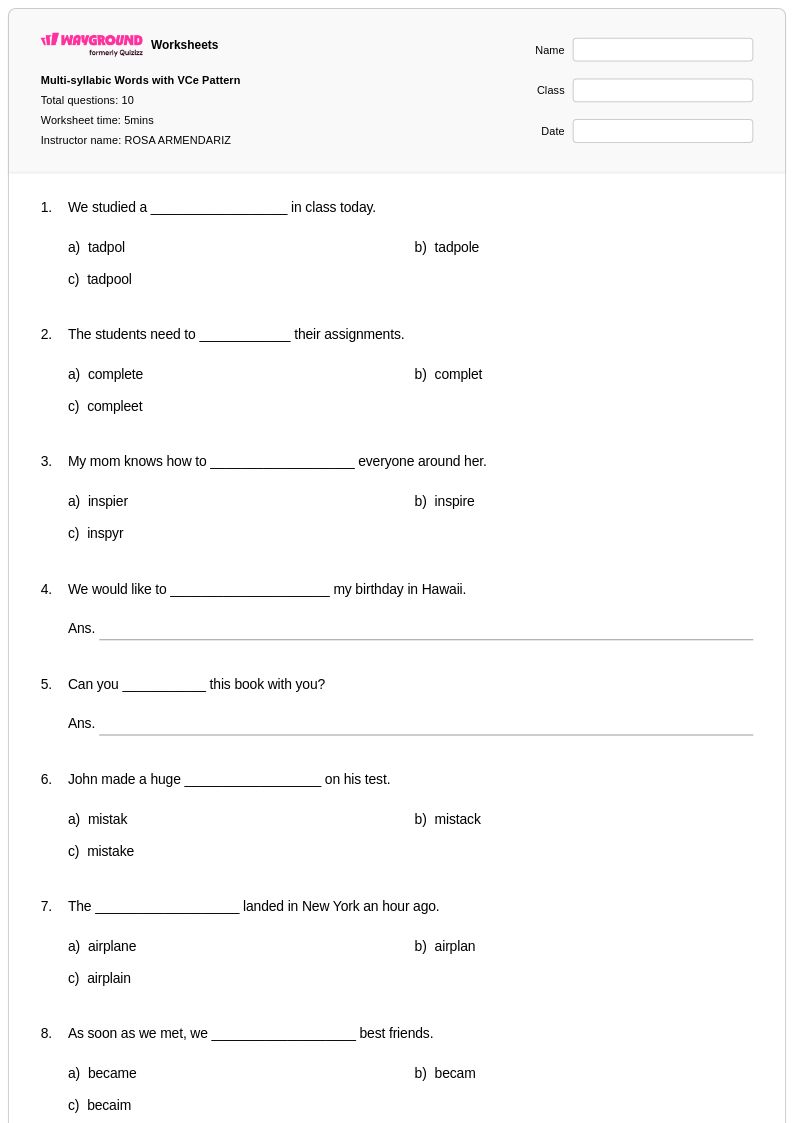
10 Q
KG - 5th
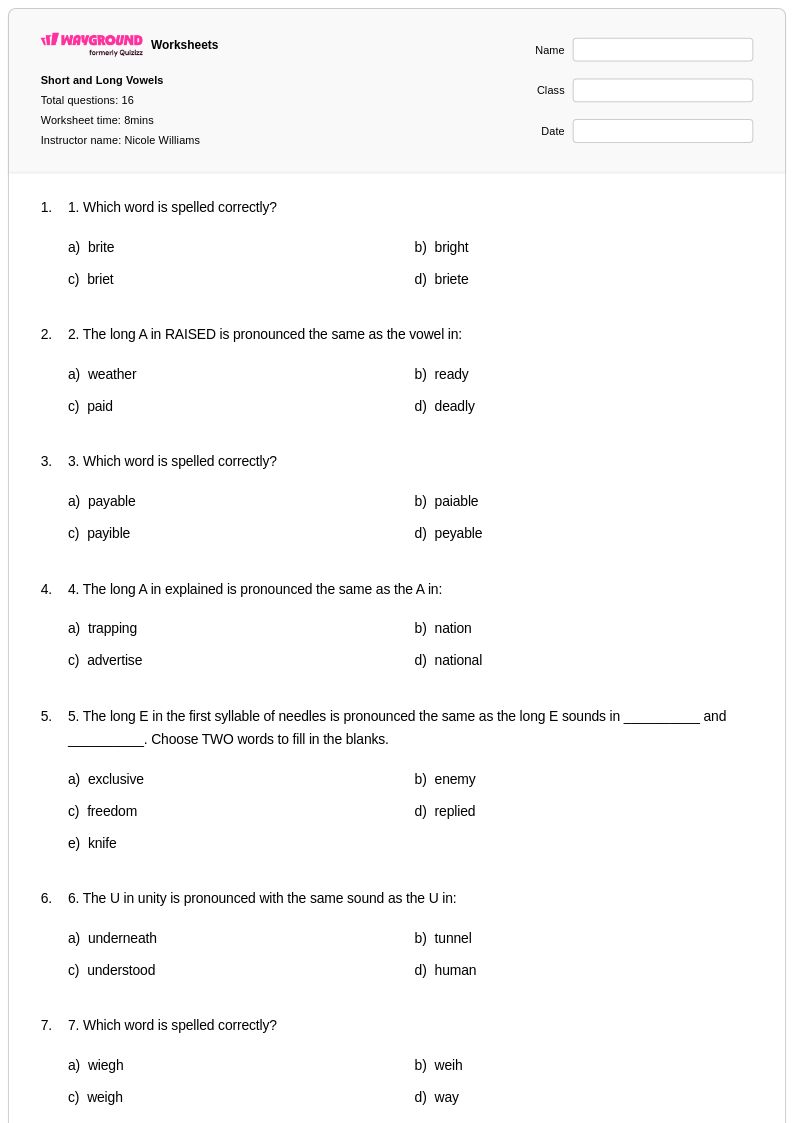
16 Q
5th
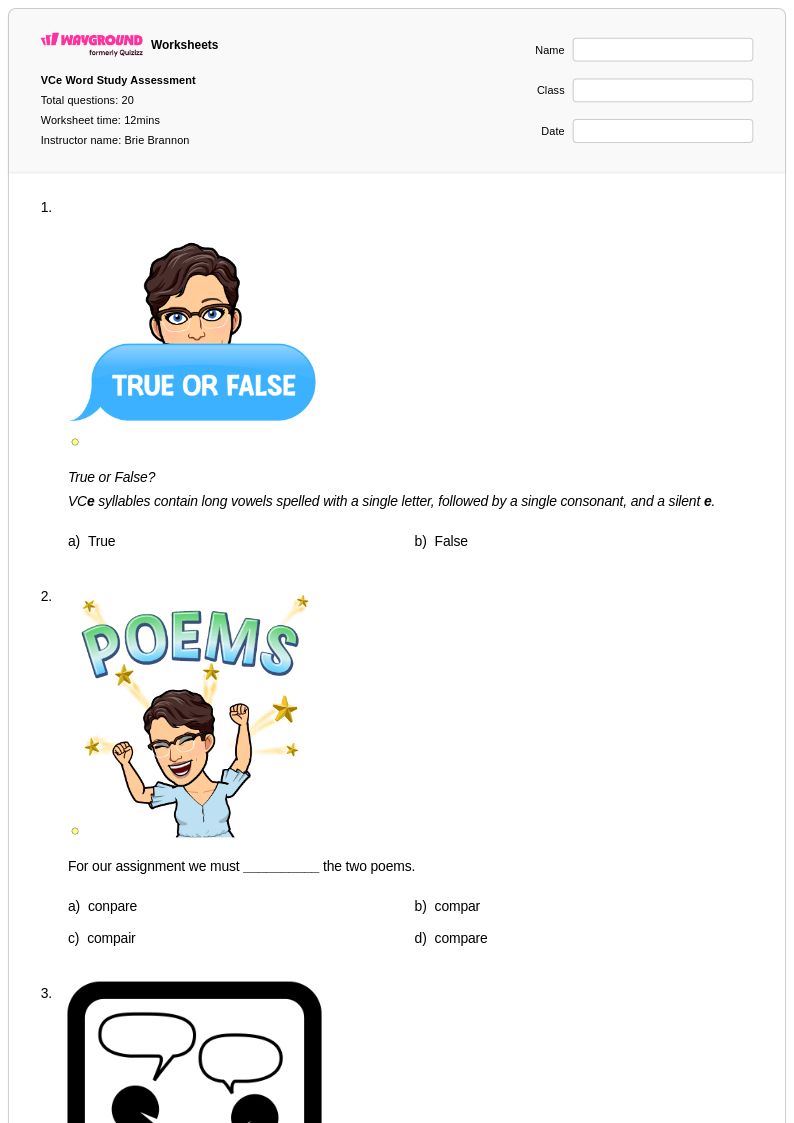
20 Q
4th - 5th

7 Q
1st - 5th
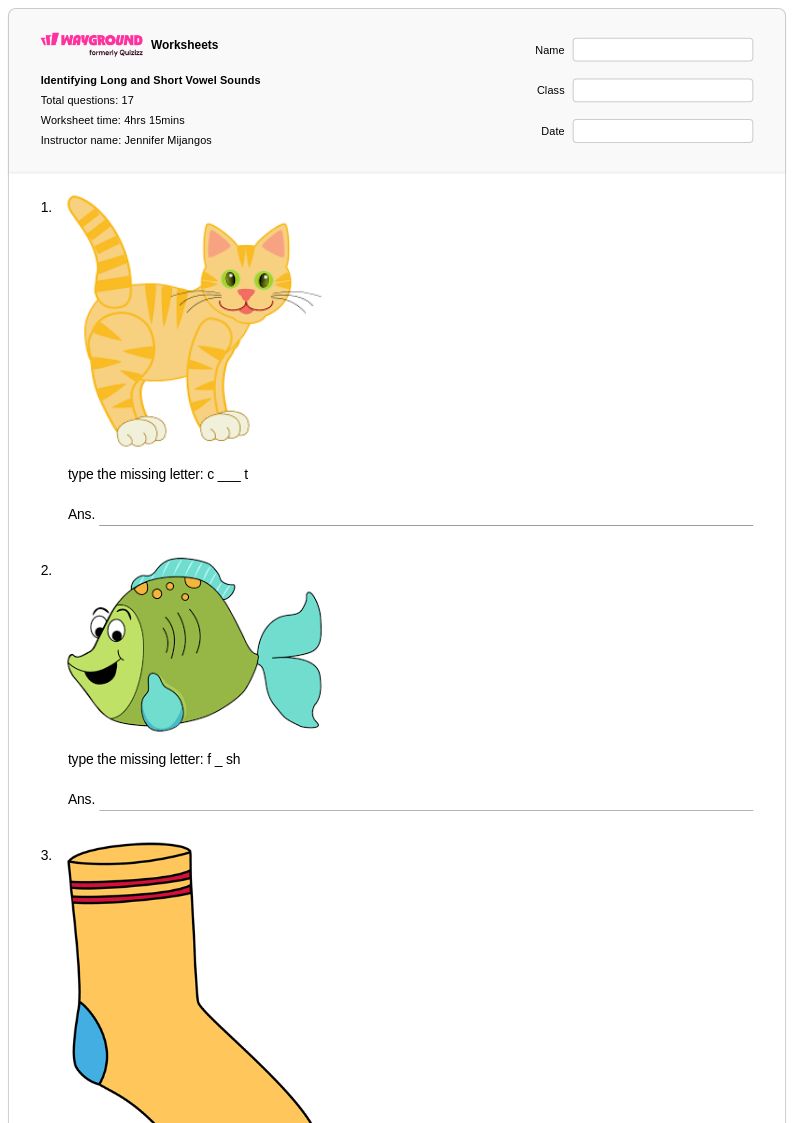
17 Q
1st - 5th
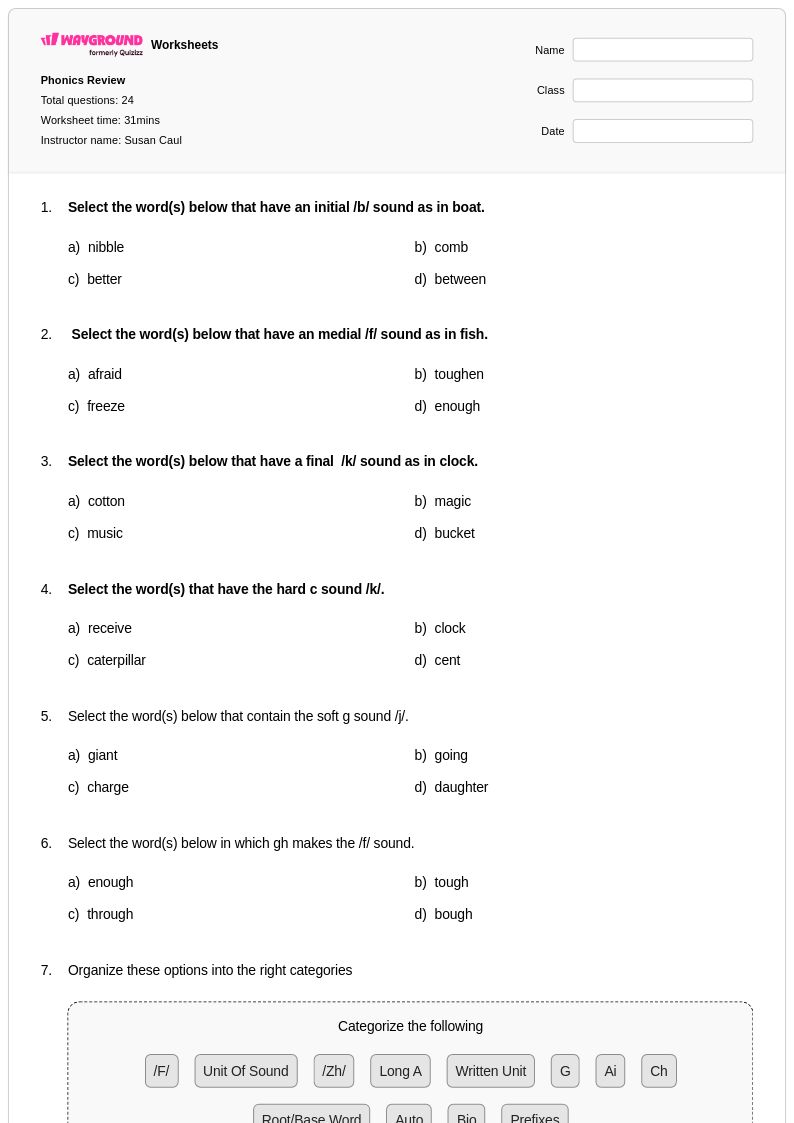
24 Q
5th
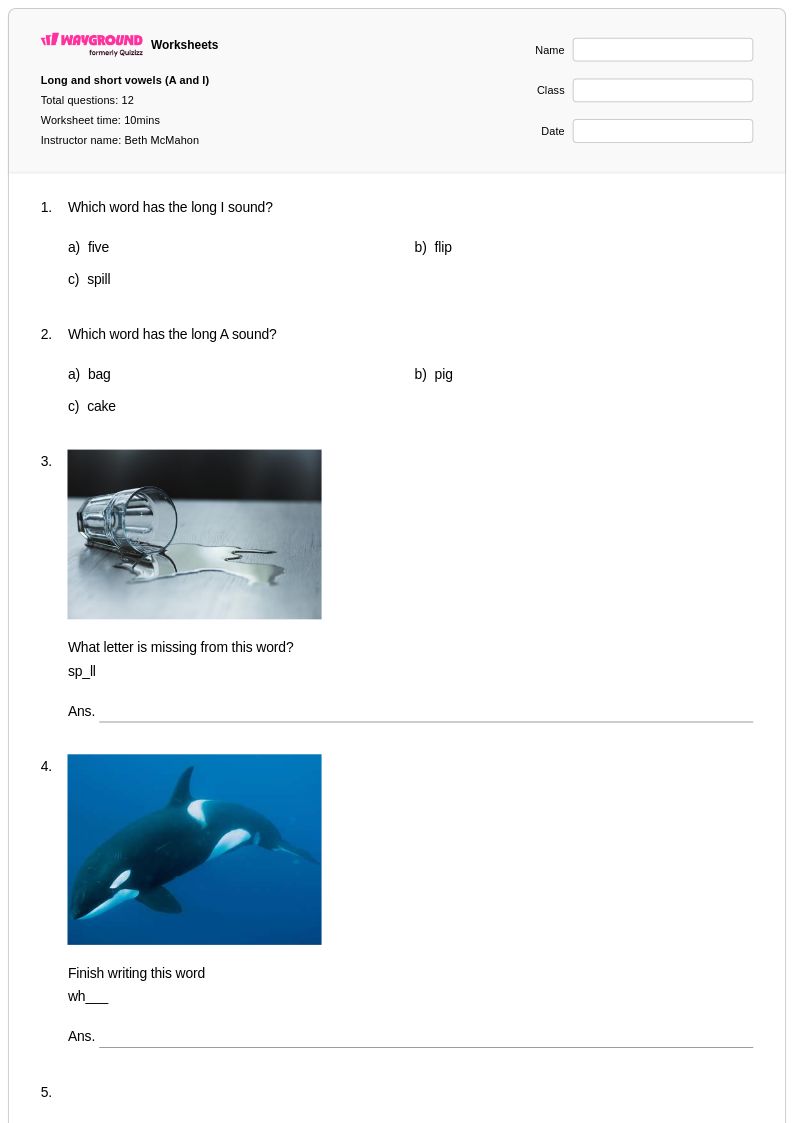
12 Q
4th - 5th
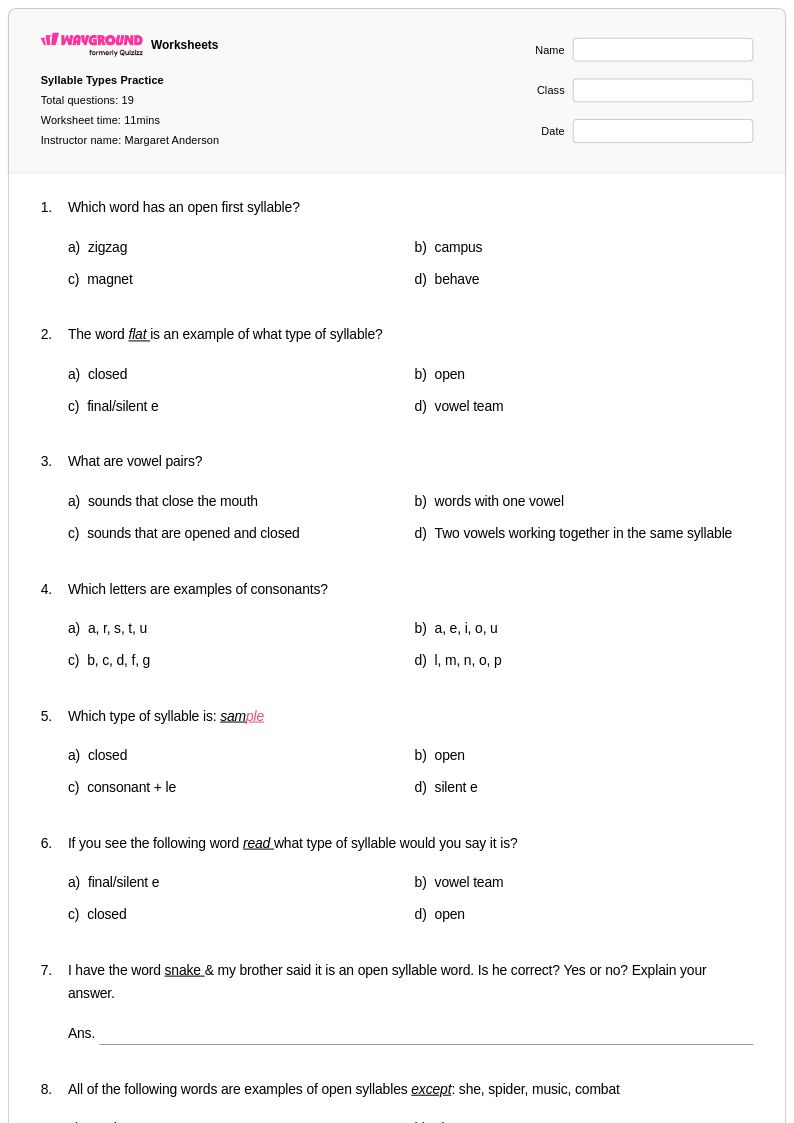
19 Q
5th
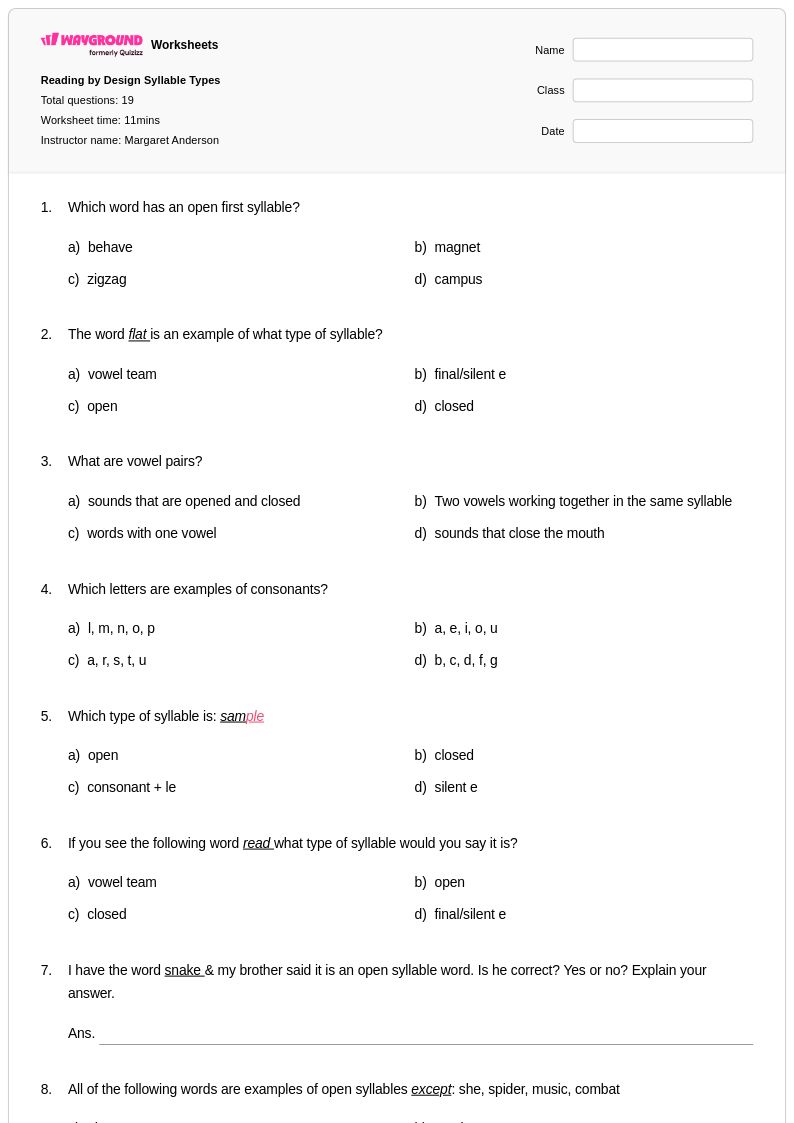
19 Q
5th
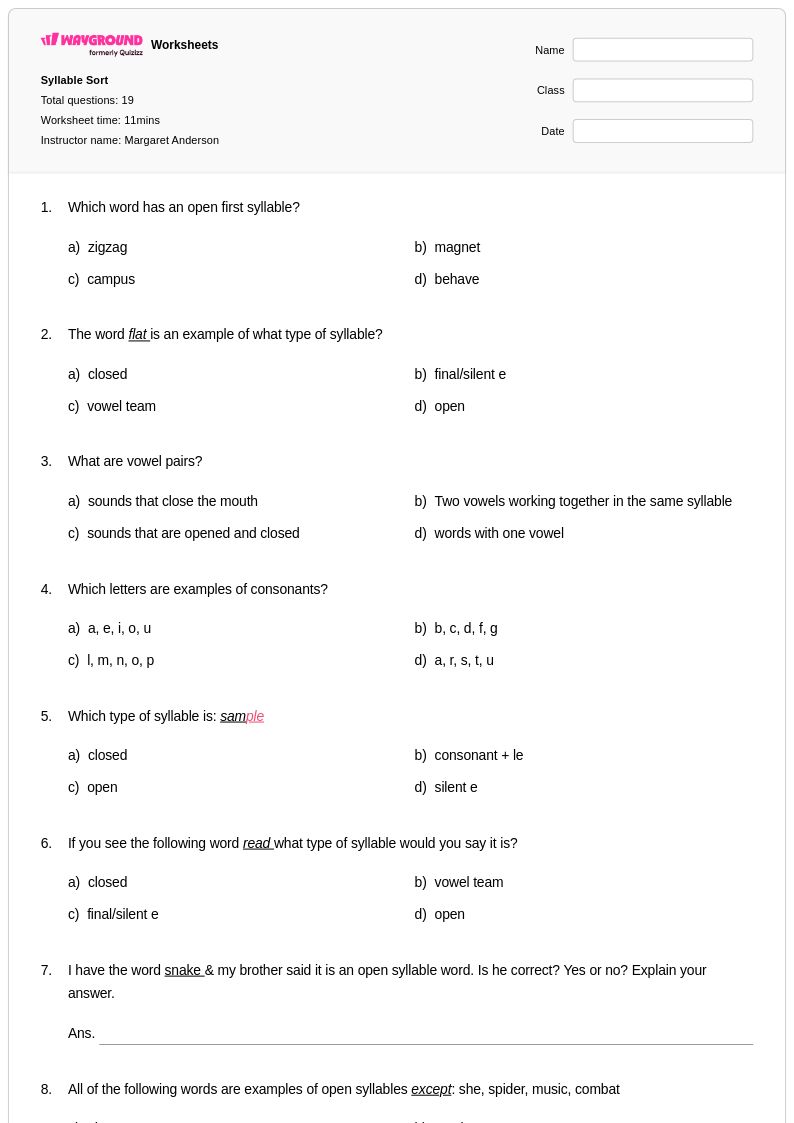
19 Q
5th
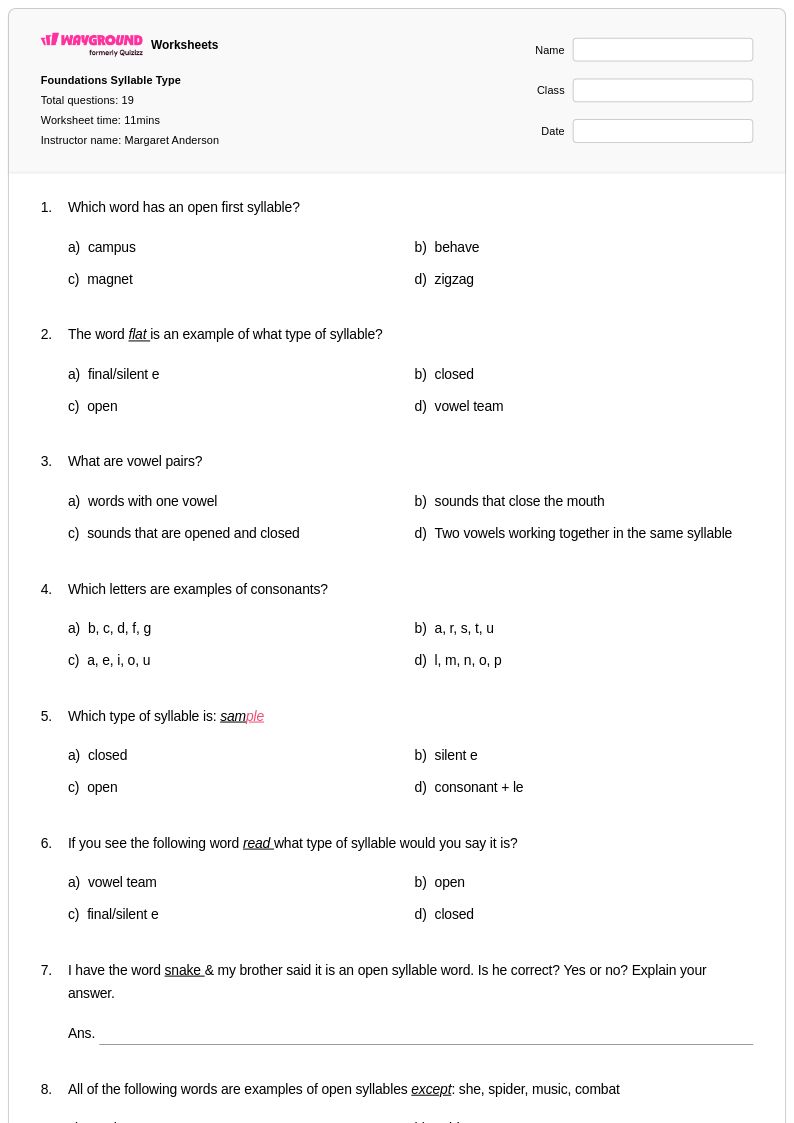
19 Q
5th
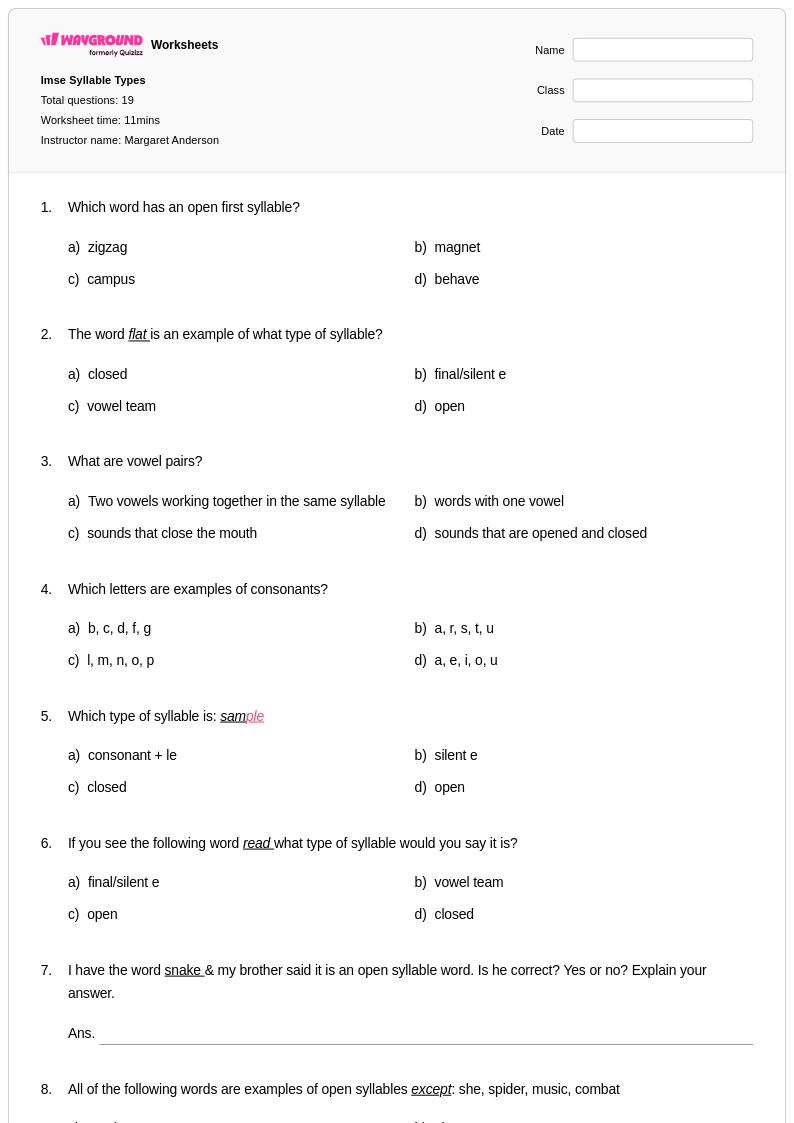
19 Q
5th
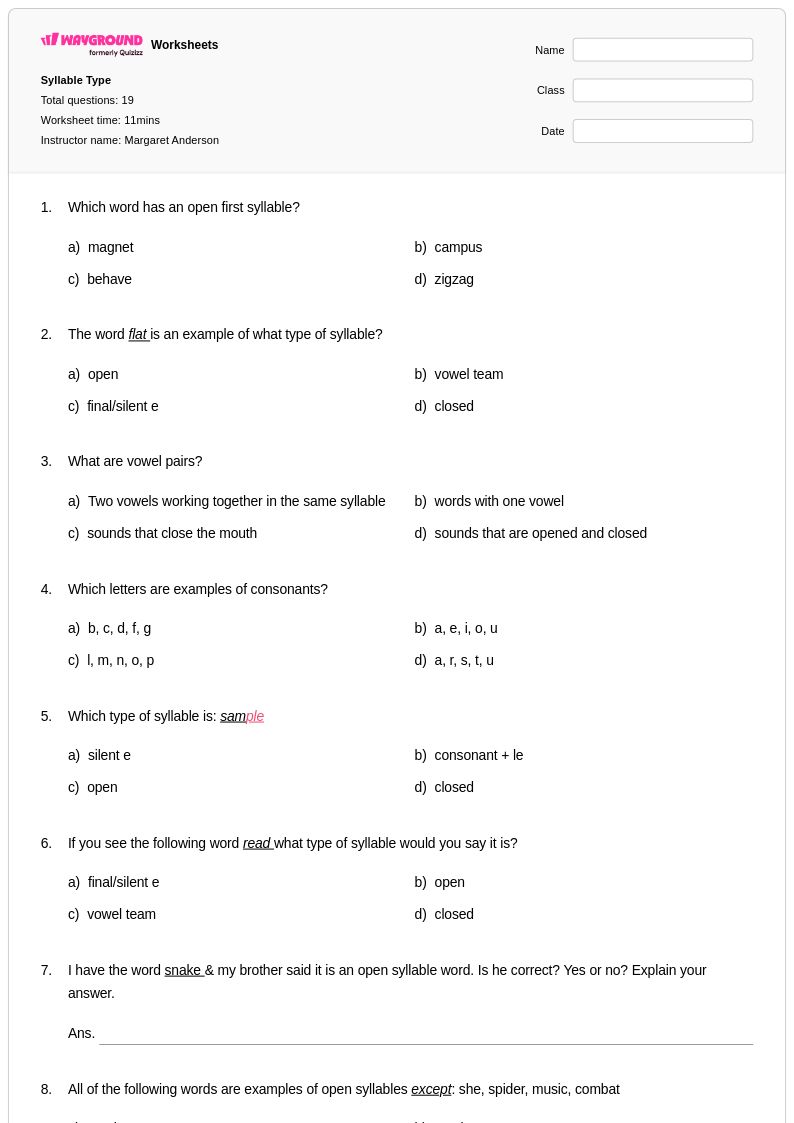
19 Q
5th
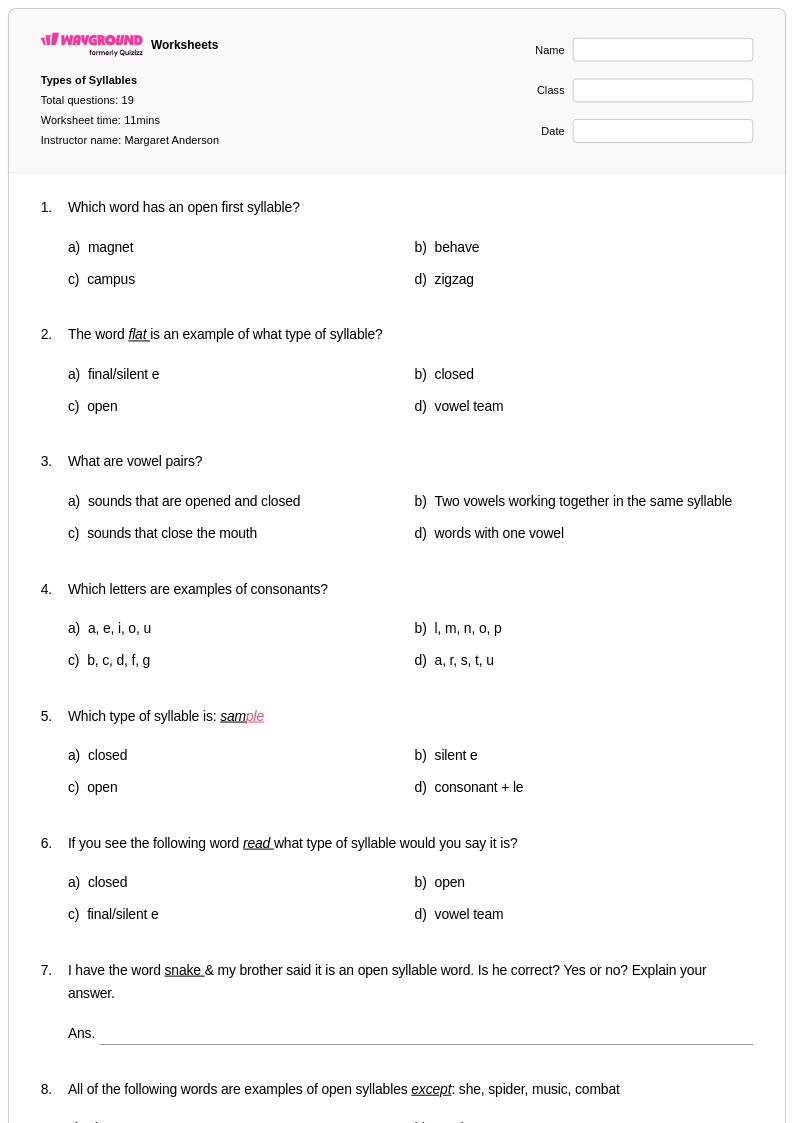
19 Q
5th
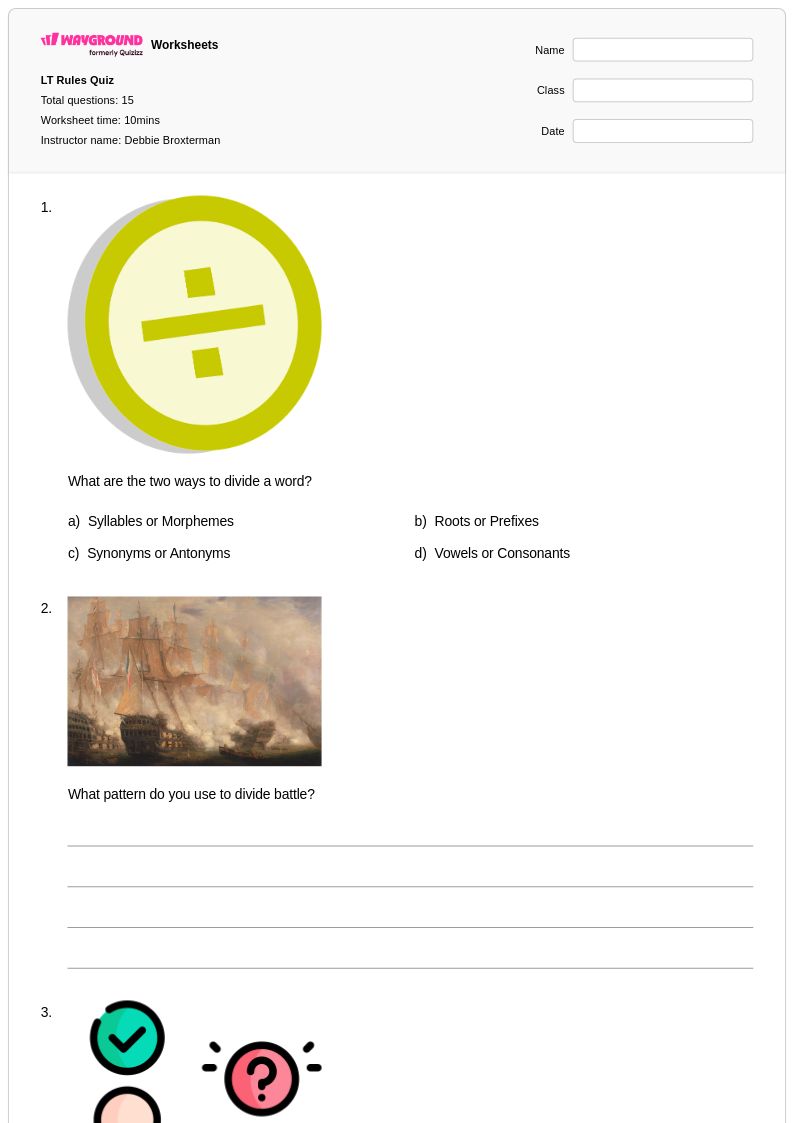
15 Q
5th
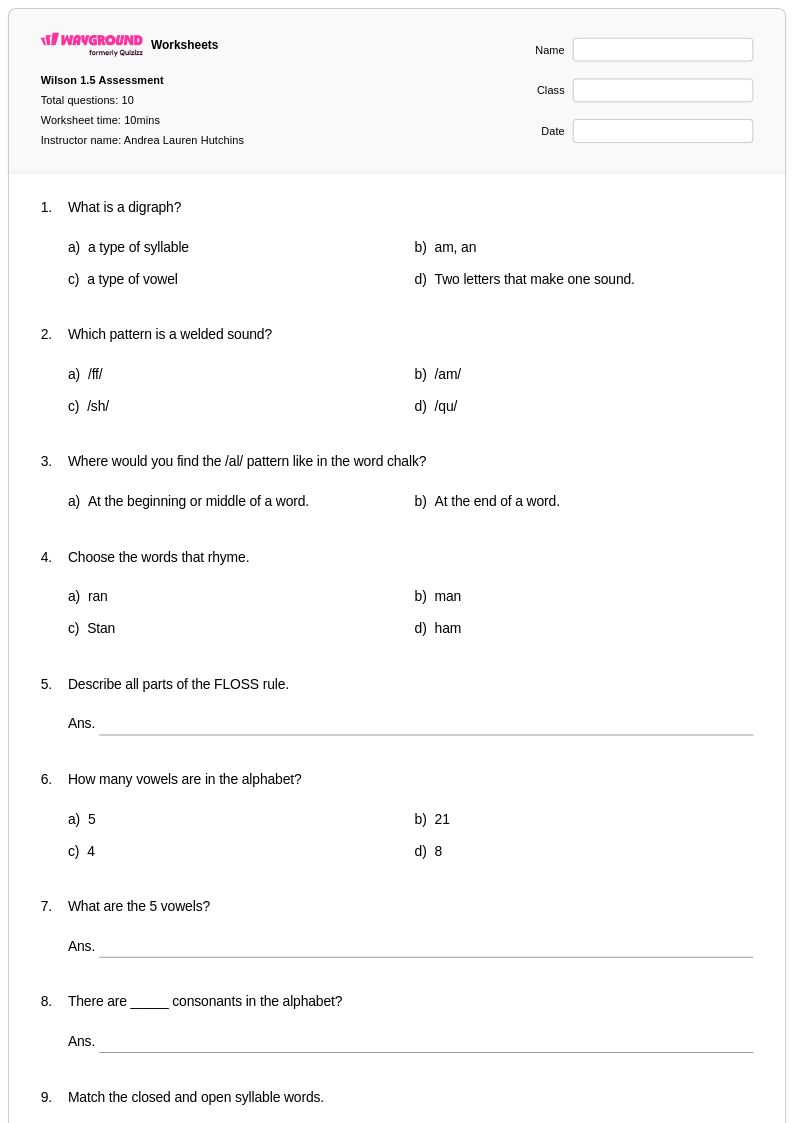
10 Q
1st - 5th
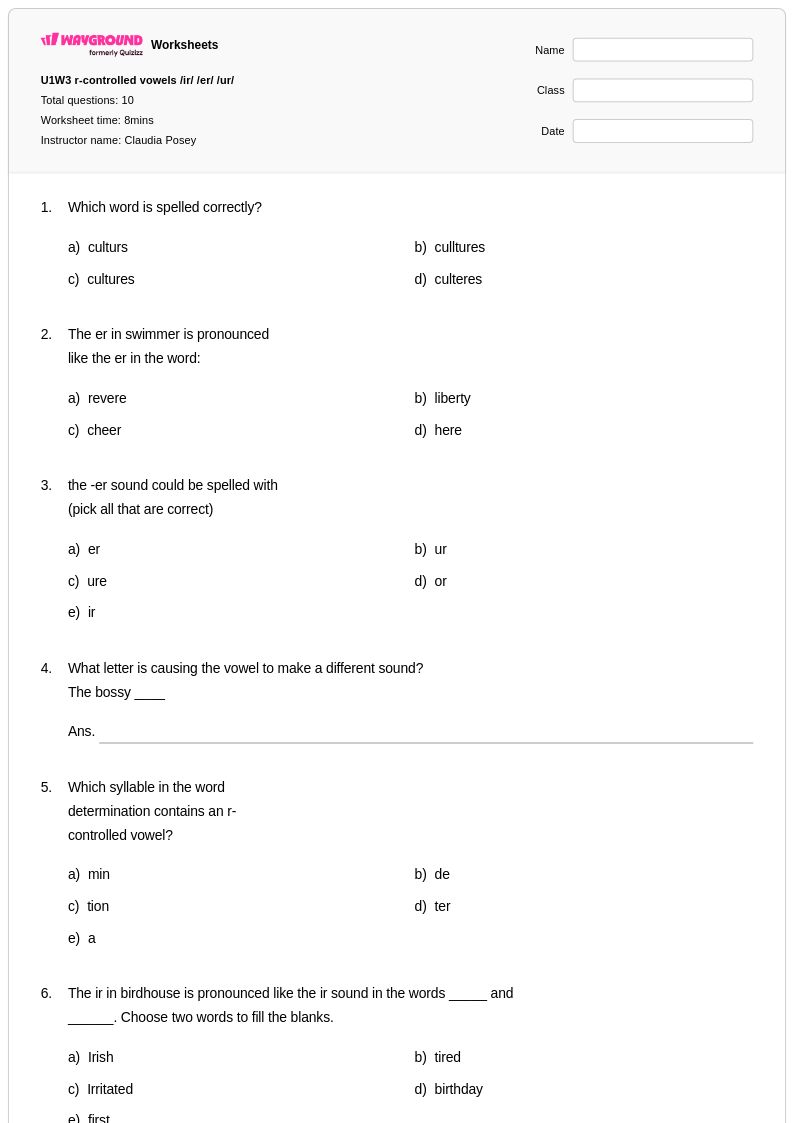
10 Q
4th - 5th
Explore Vowel-consonant-vowel Pattern Worksheets by Grades
Explore Other Subject Worksheets for grade 5
Explore printable Vowel-consonant-vowel Pattern worksheets for Grade 5
Grade 5 vowel-consonant-vowel pattern worksheets through Wayground (formerly Quizizz) provide comprehensive practice materials designed to strengthen students' understanding of this fundamental phonics concept. These educational resources focus on helping fifth graders recognize and decode words that follow the VCV pattern, where the first vowel typically produces a long sound, as seen in words like "spider," "music," and "tiger." The worksheets systematically guide students through identifying syllable breaks, understanding vowel pronunciation rules, and applying decoding strategies to unfamiliar words. Each printable resource includes detailed practice problems that progress from basic pattern recognition to more complex multi-syllabic words, with answer keys provided to support independent learning and immediate feedback. These free pdf materials serve as essential tools for reinforcing phonetic awareness and building reading fluency at the fifth-grade level.
Wayground's extensive collection of teacher-created vowel-consonant-vowel pattern worksheets offers educators access to millions of high-quality resources with robust search and filtering capabilities that streamline lesson planning and instructional delivery. Teachers can easily locate materials aligned with specific phonics standards and customize worksheets to match their students' varied learning needs, whether for remediation support or enrichment activities. The platform's differentiation tools allow educators to modify content complexity, adjust font sizes, and select from both printable and digital formats including downloadable pdfs for flexible classroom implementation. These comprehensive worksheet collections support systematic phonics instruction by providing structured skill practice that helps teachers address individual student needs while maintaining consistent progress monitoring through varied assessment opportunities and progressive difficulty levels.
FAQs
How do I teach the vowel-consonant-vowel pattern to early readers?
What exercises help students practice the vowel-consonant-vowel pattern?
What mistakes do students commonly make with the vowel-consonant-vowel pattern?
How can I differentiate VCV phonics instruction for struggling readers?
How do I use vowel-consonant-vowel pattern worksheets from Wayground in my classroom?
At what reading level should students learn the vowel-consonant-vowel pattern?