Free Printable Physical Change Worksheets for Grade 4
Discover free Grade 4 physical change worksheets and printables that help students explore how matter transforms without changing its chemical composition through engaging practice problems and comprehensive answer keys.
Explore printable Physical Change worksheets for Grade 4
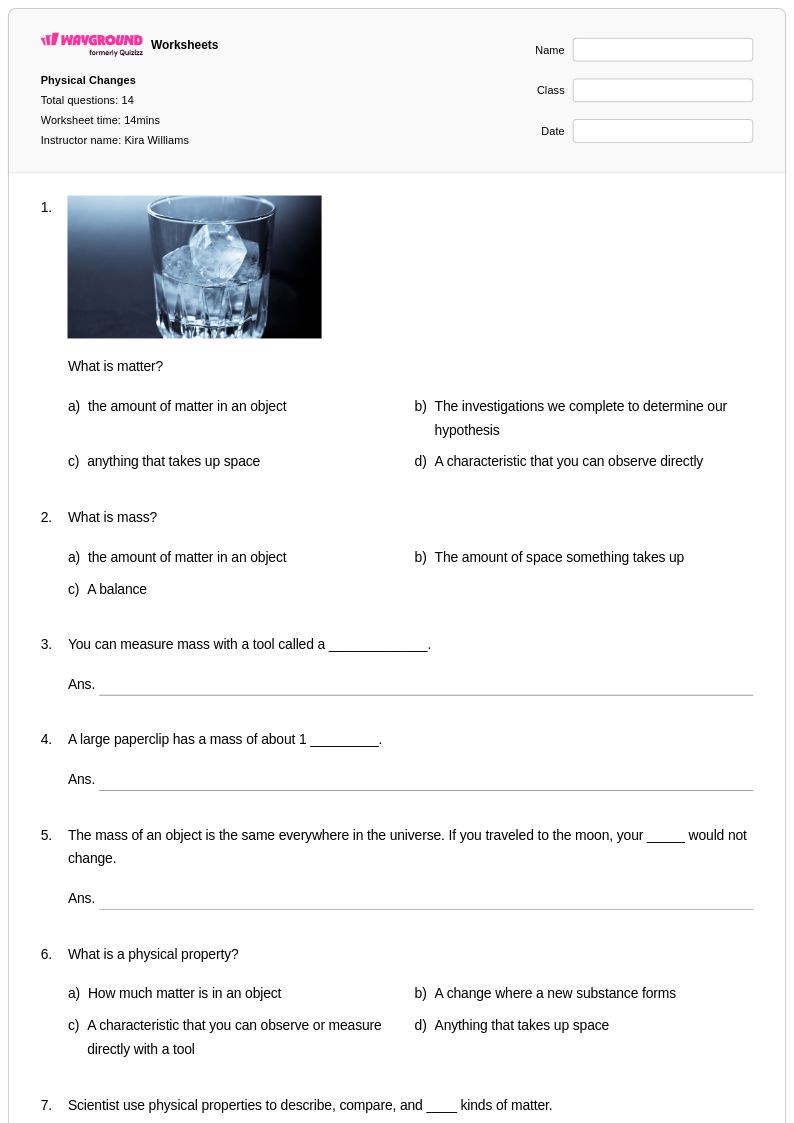
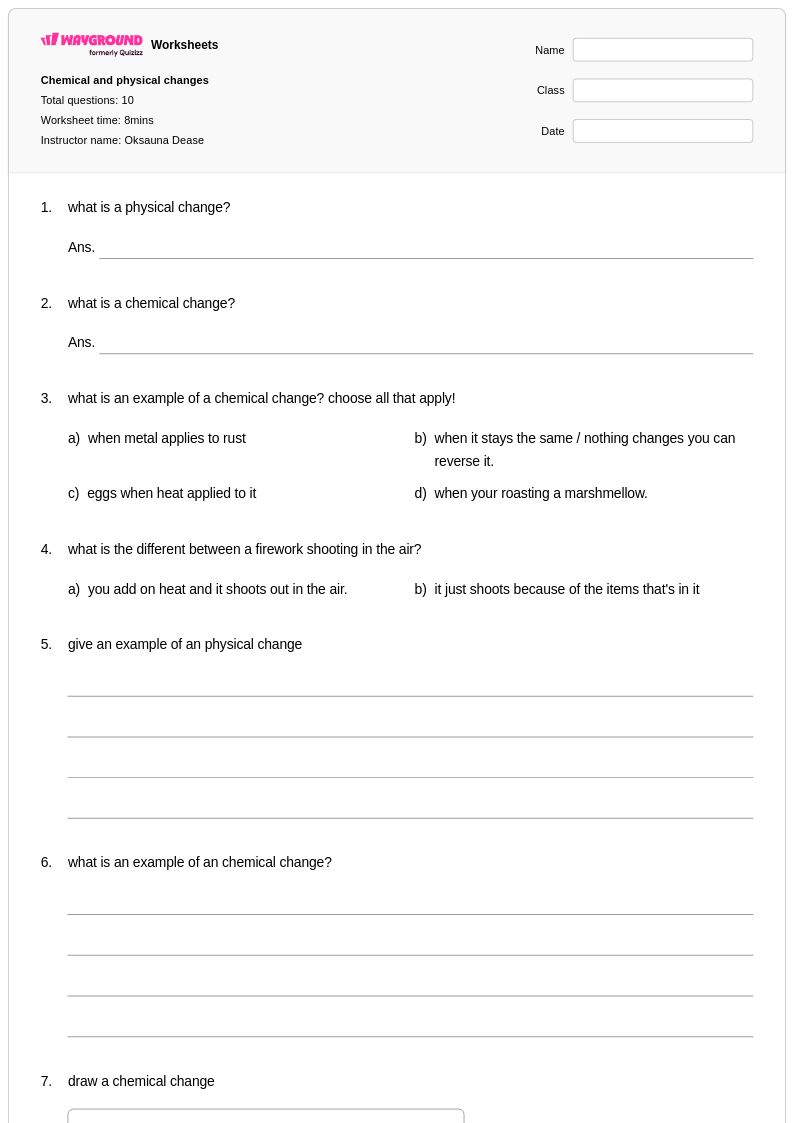
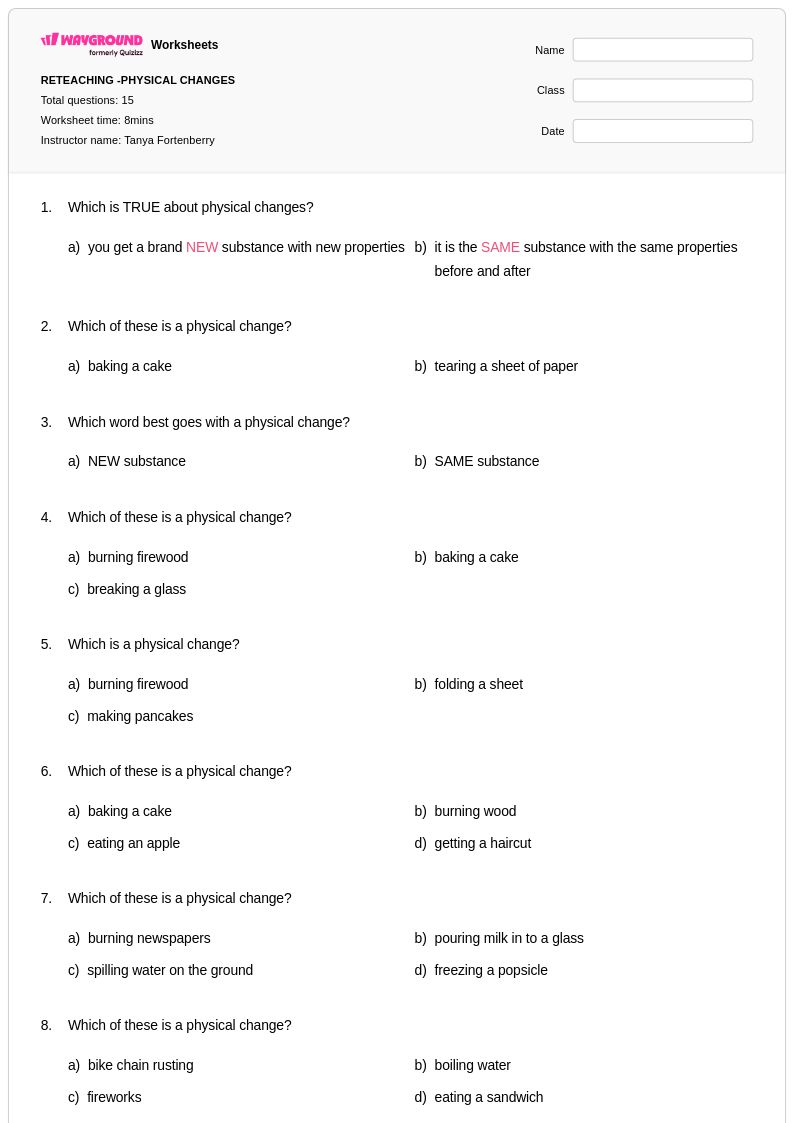
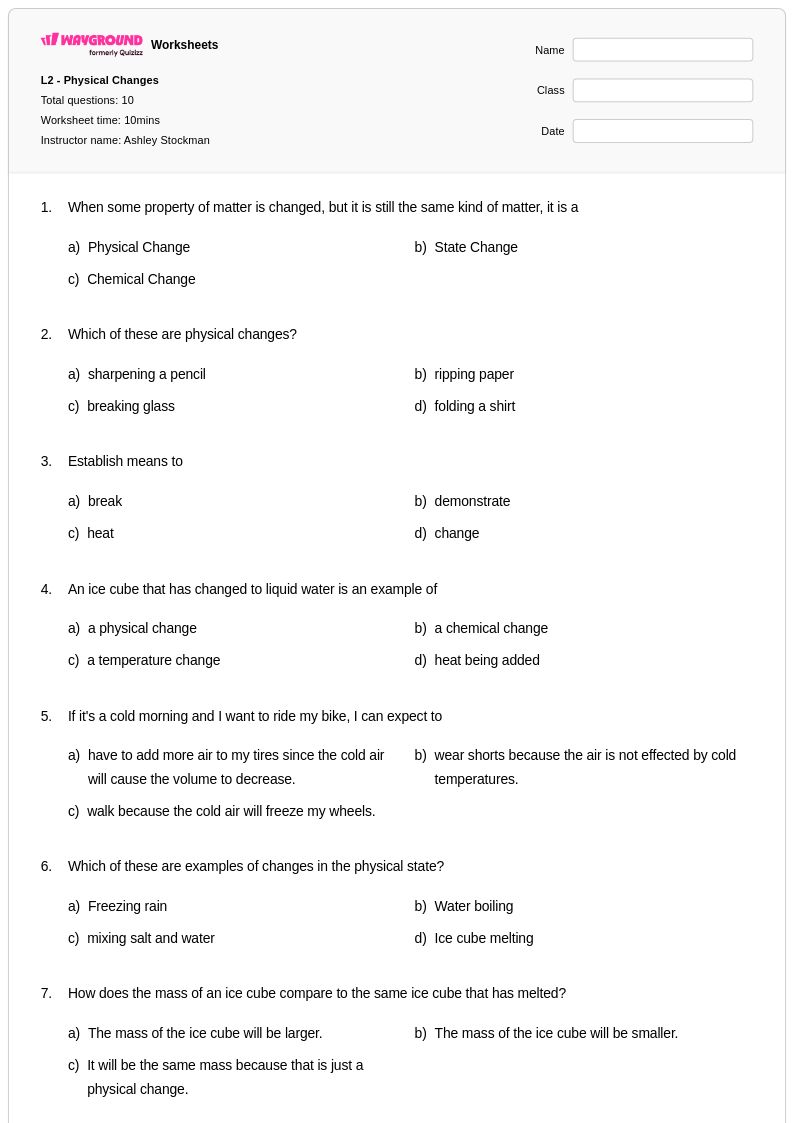
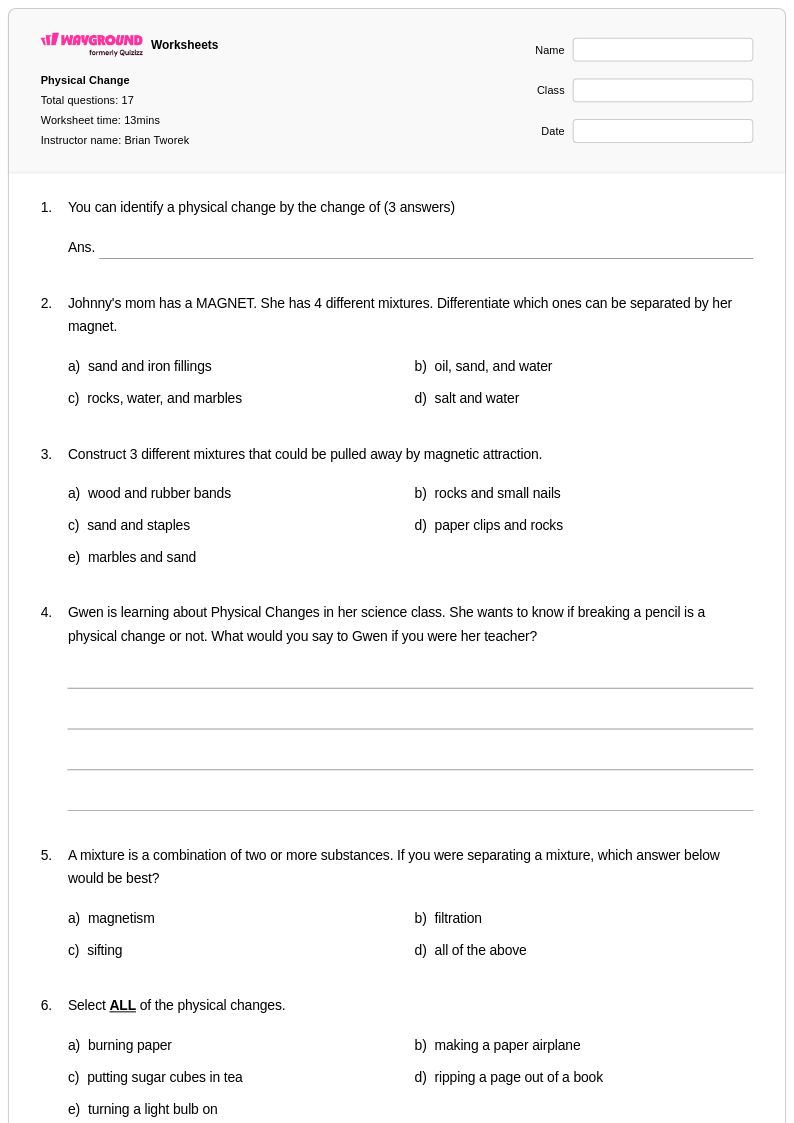
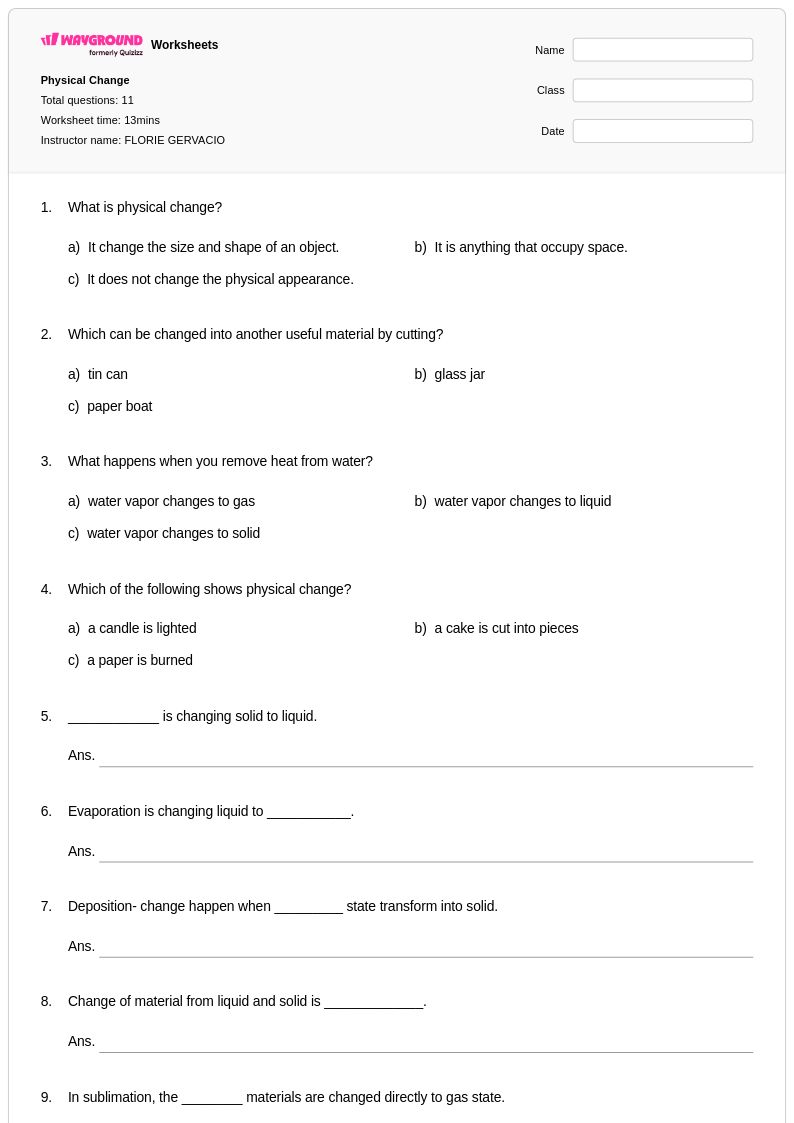
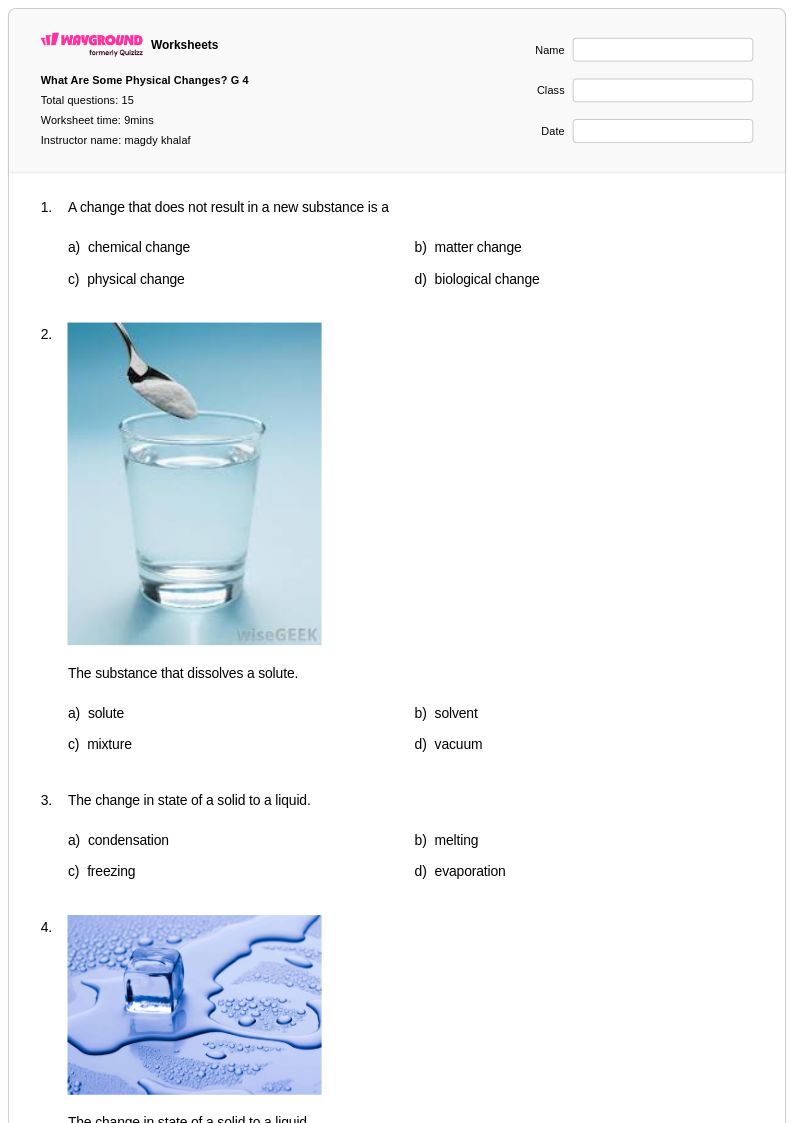
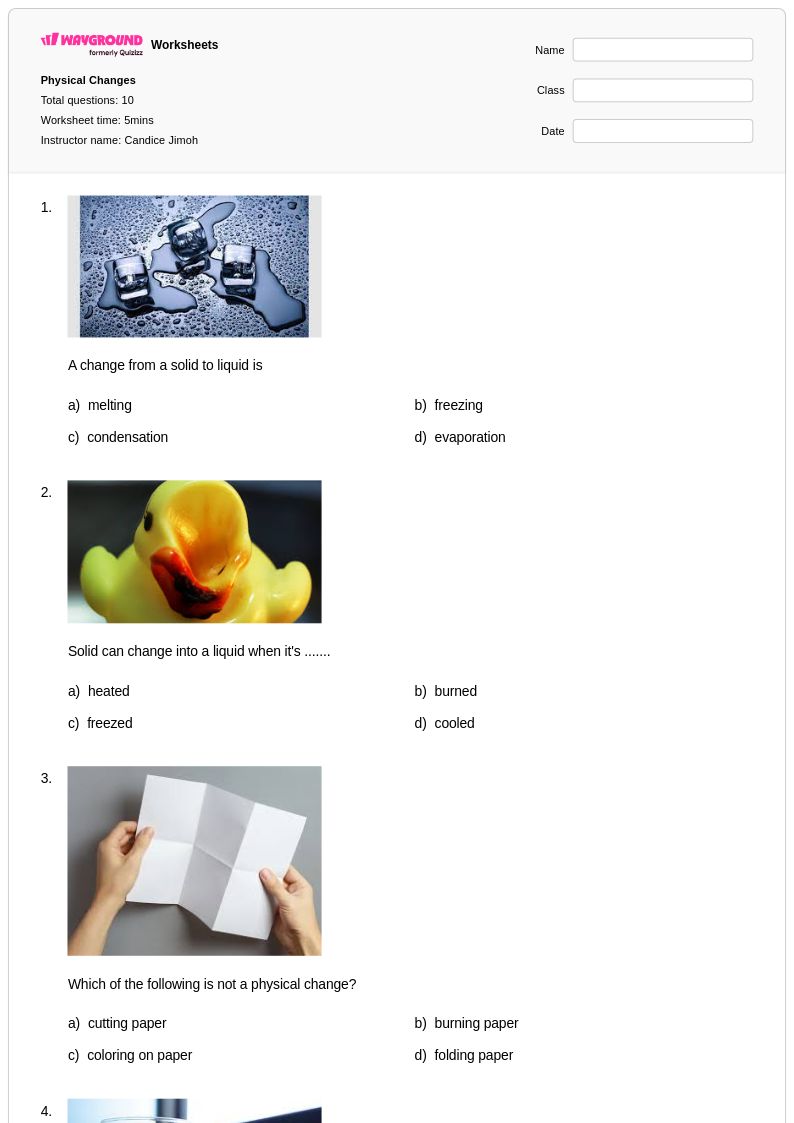
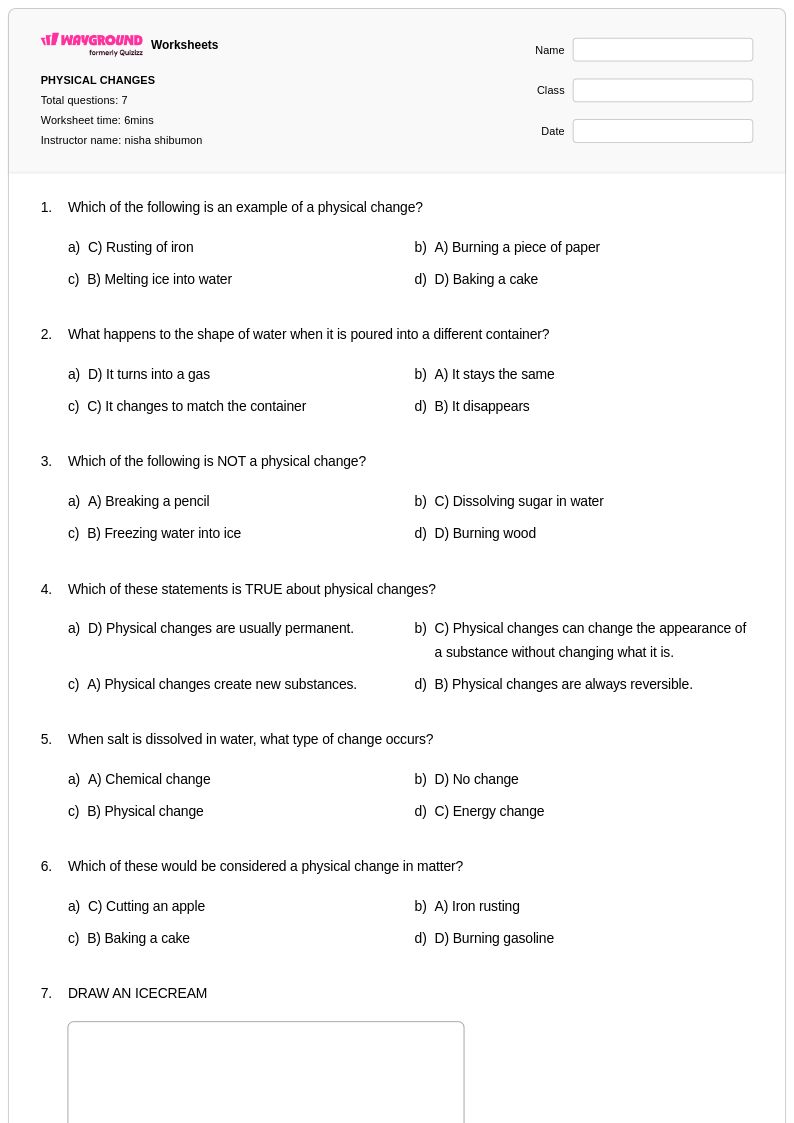
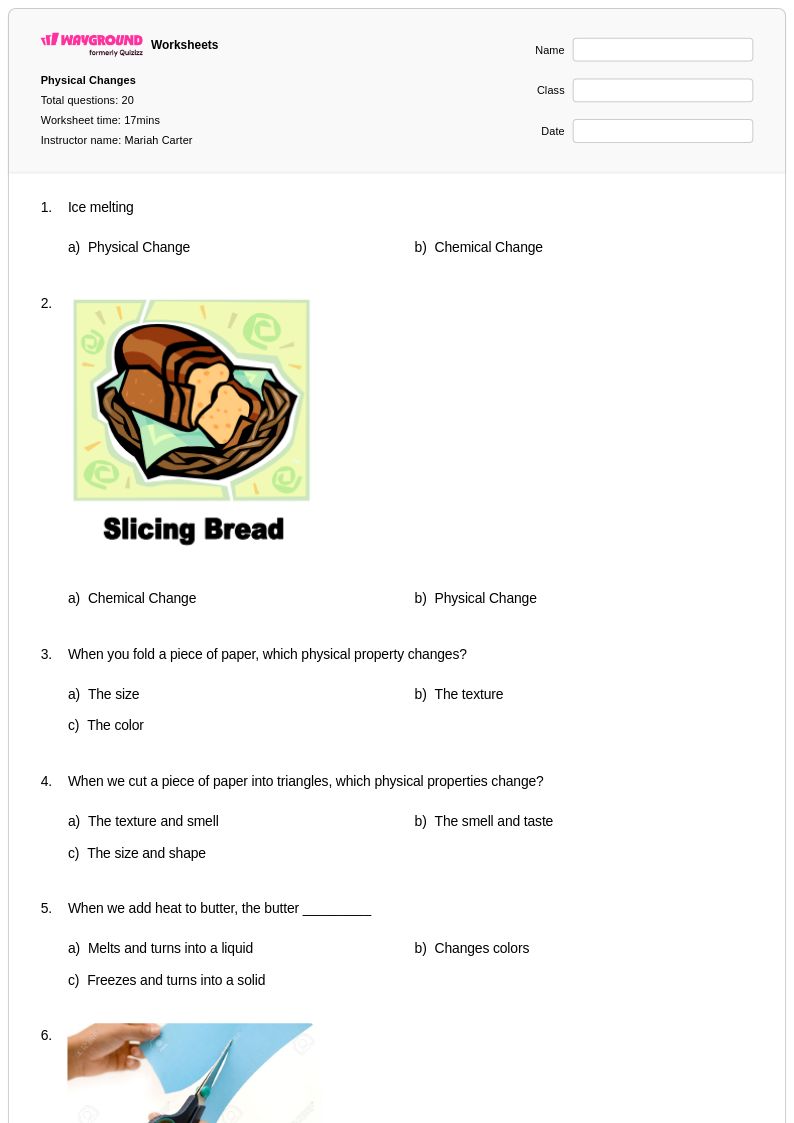
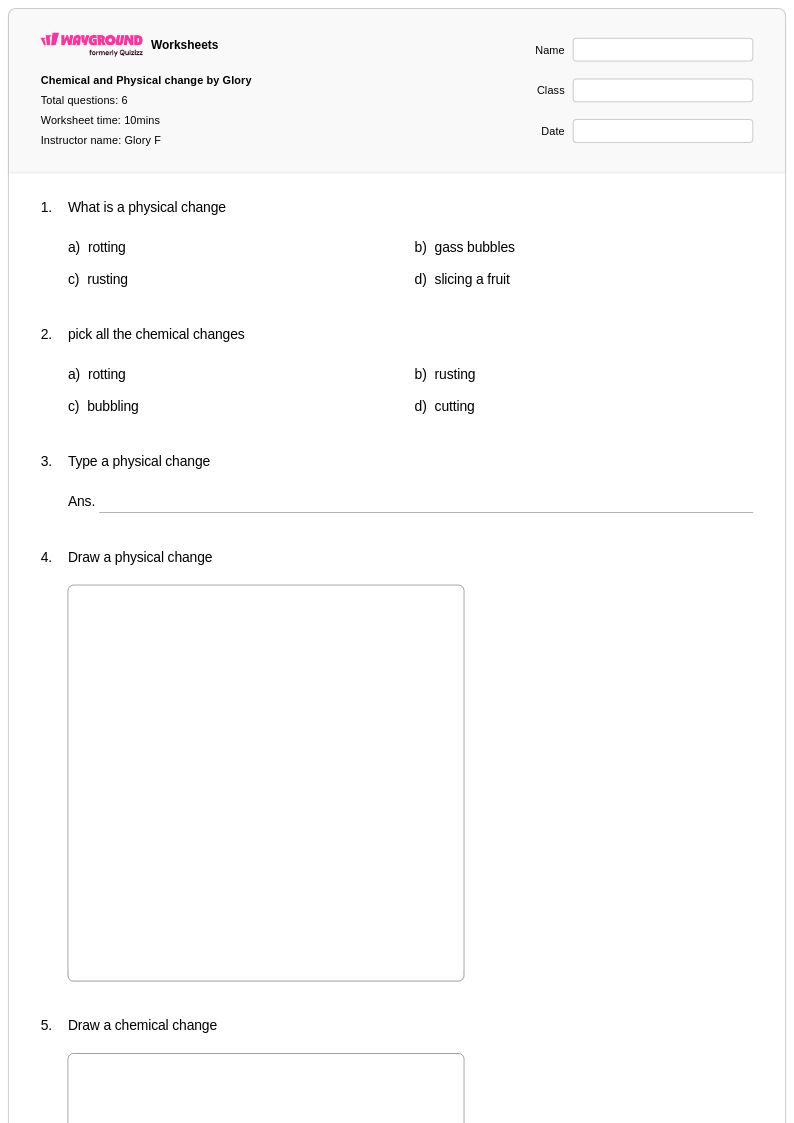
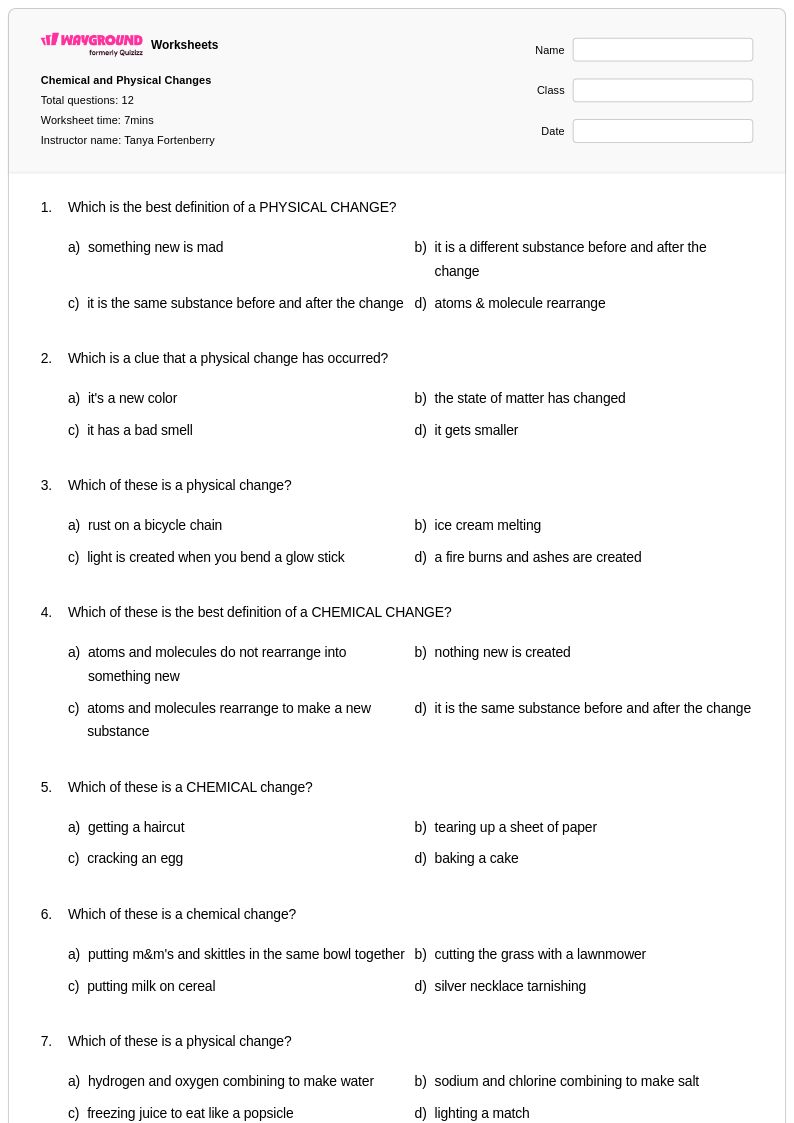
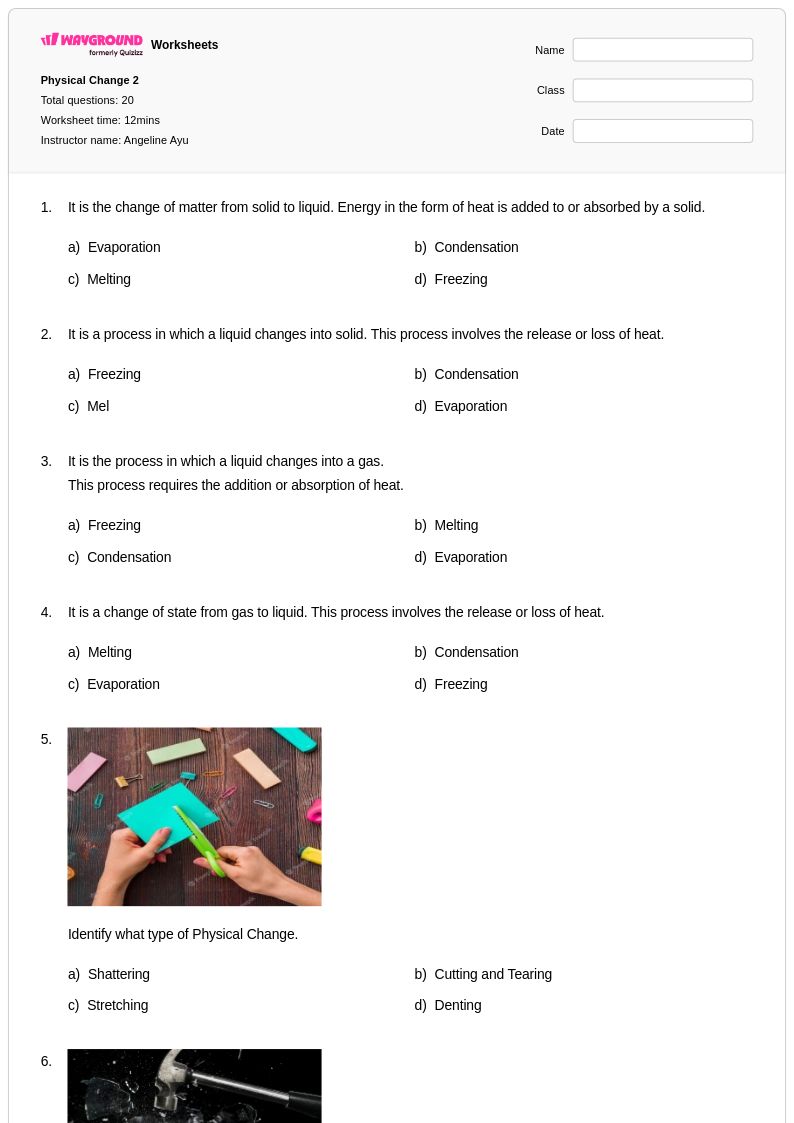
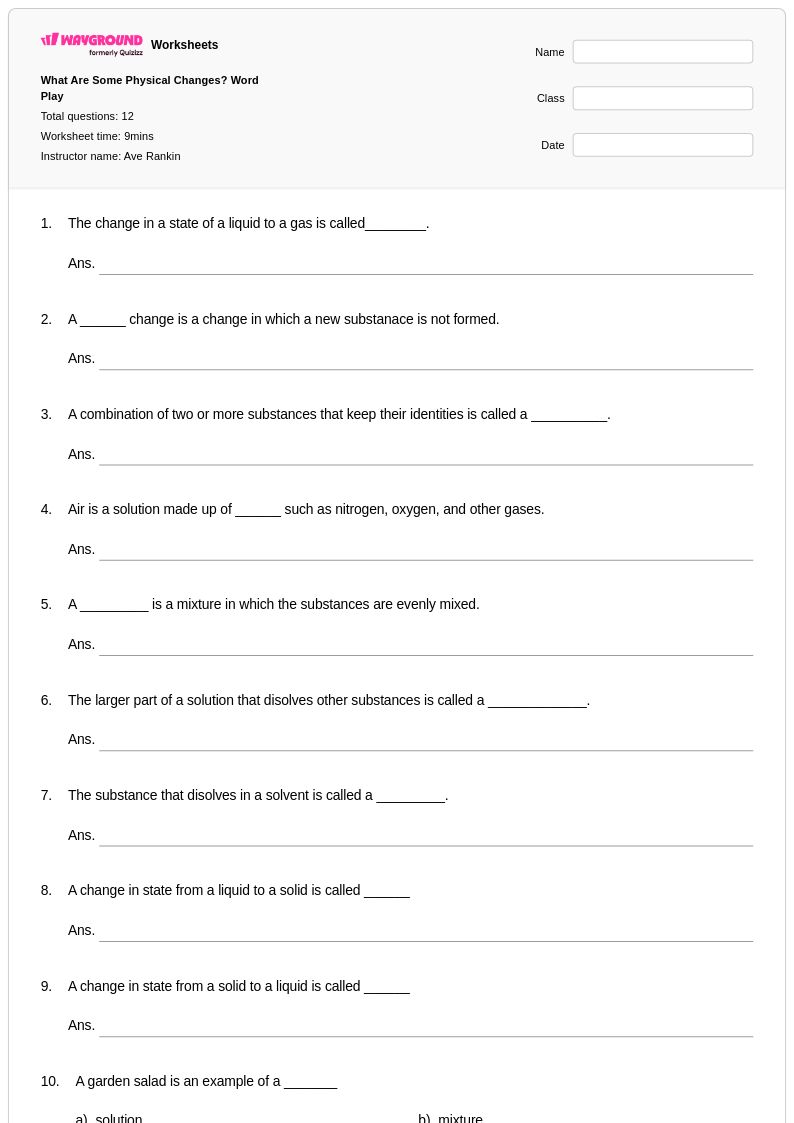
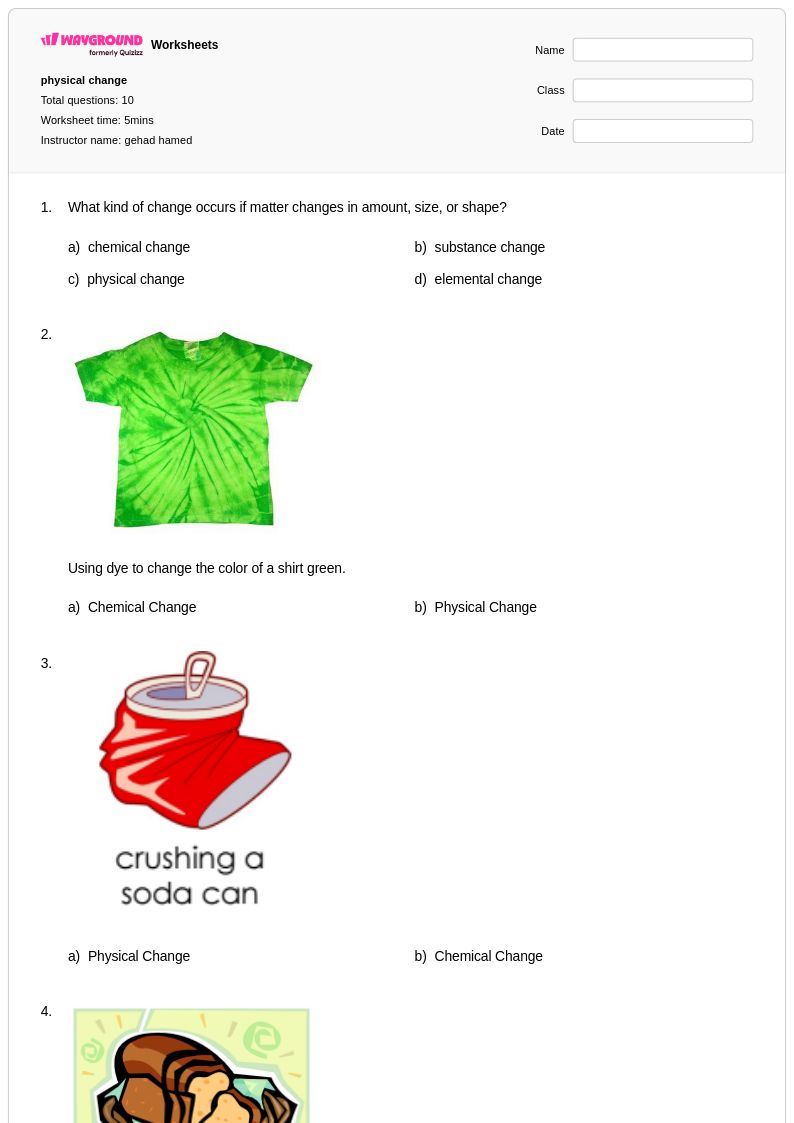
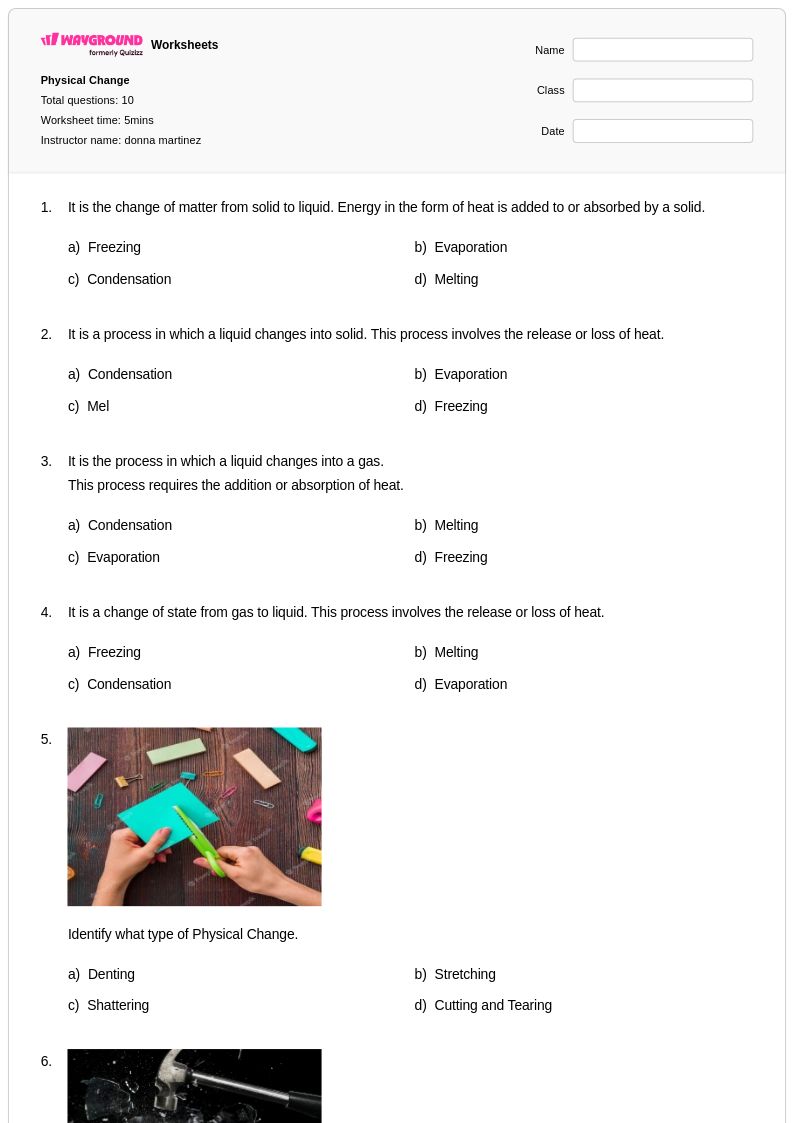
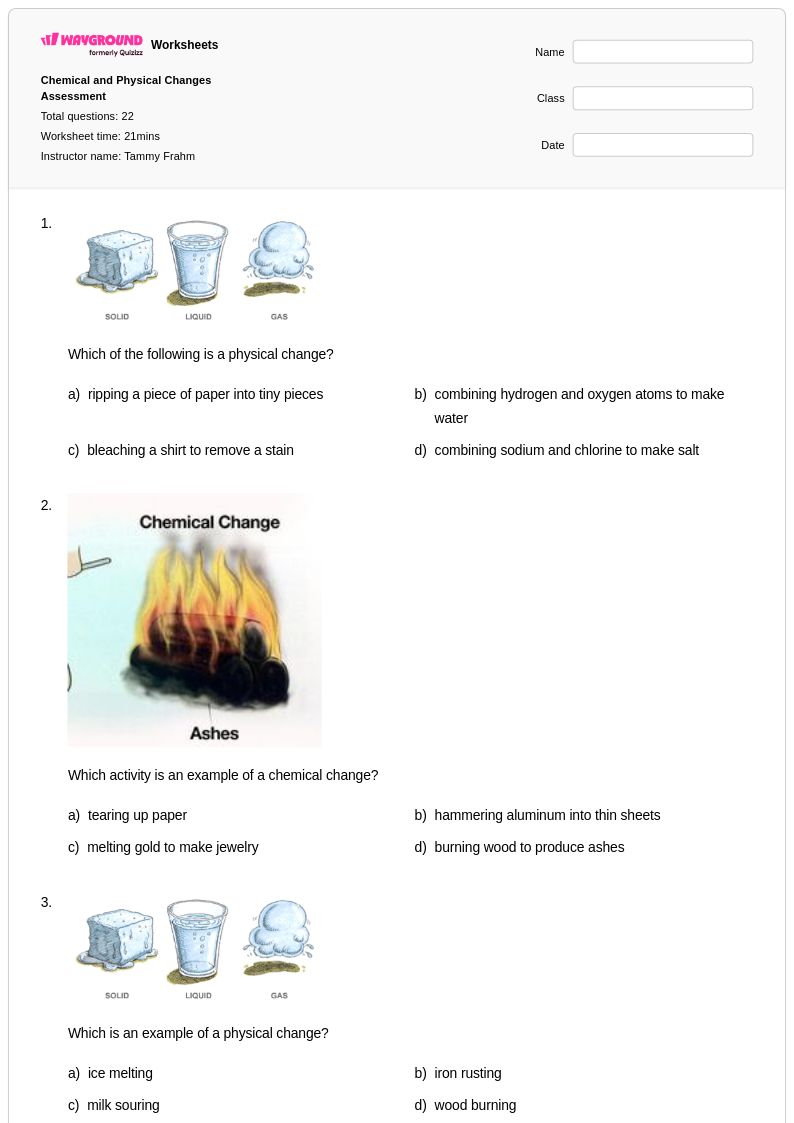
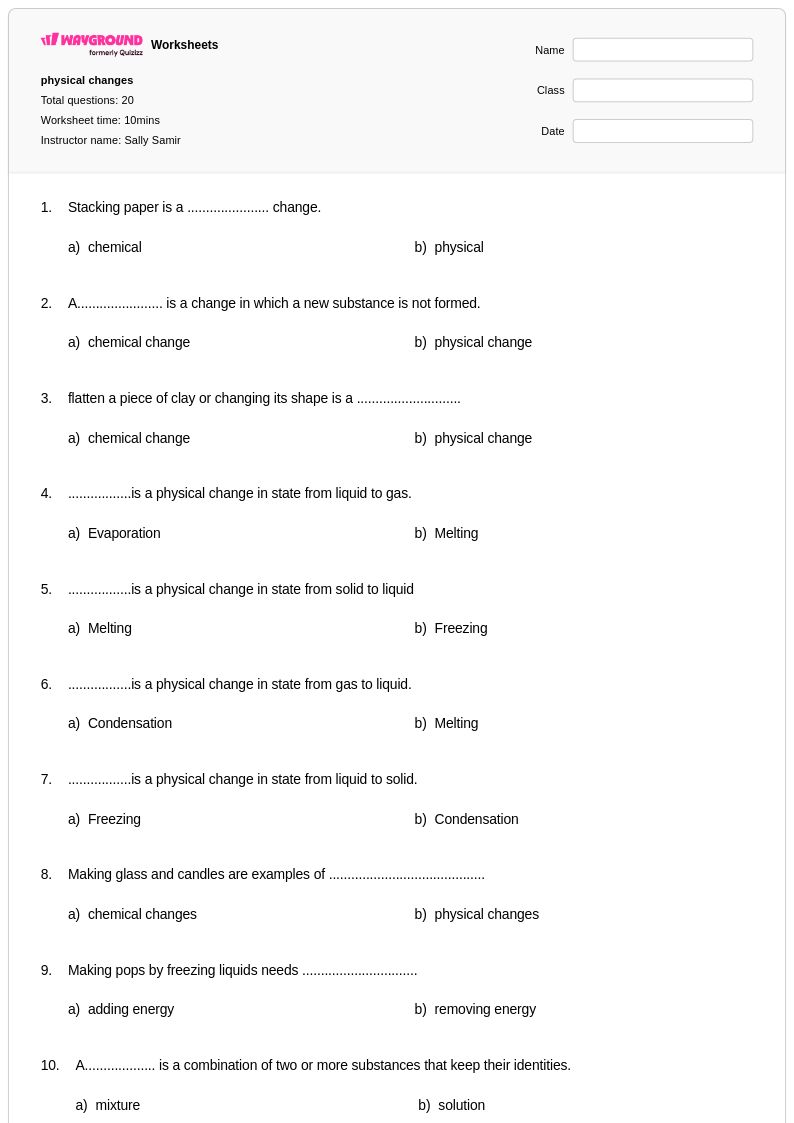
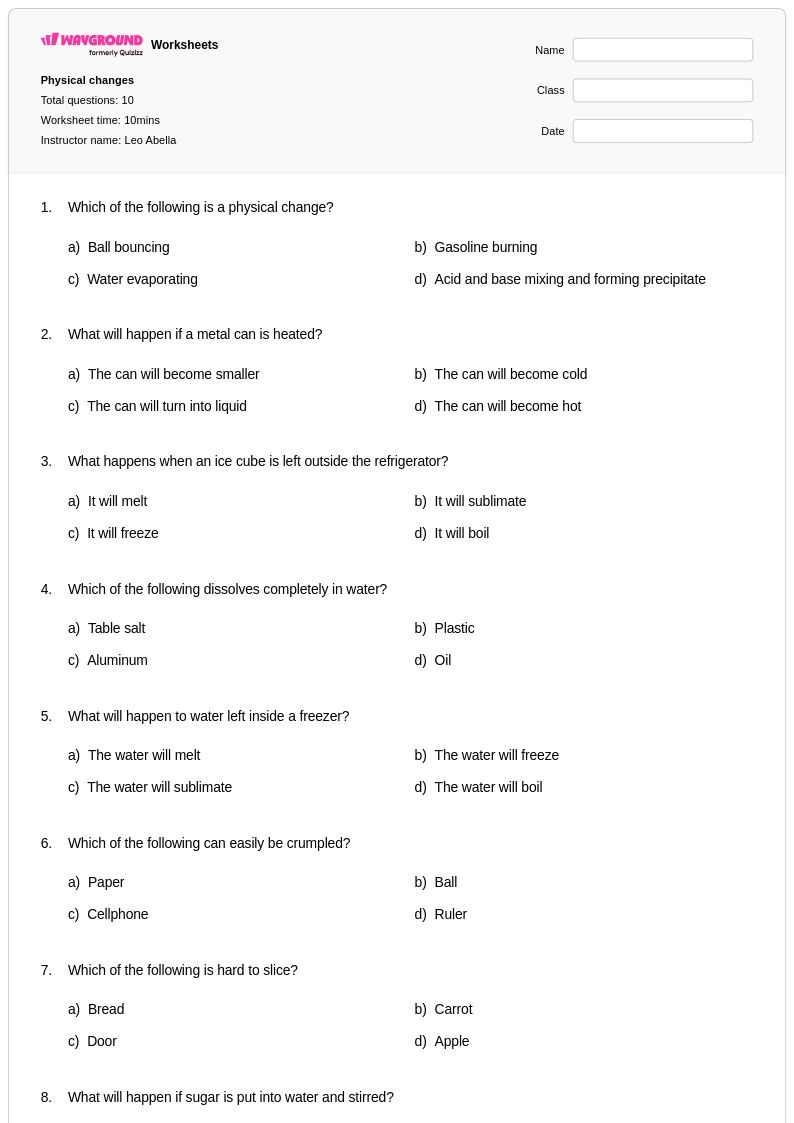
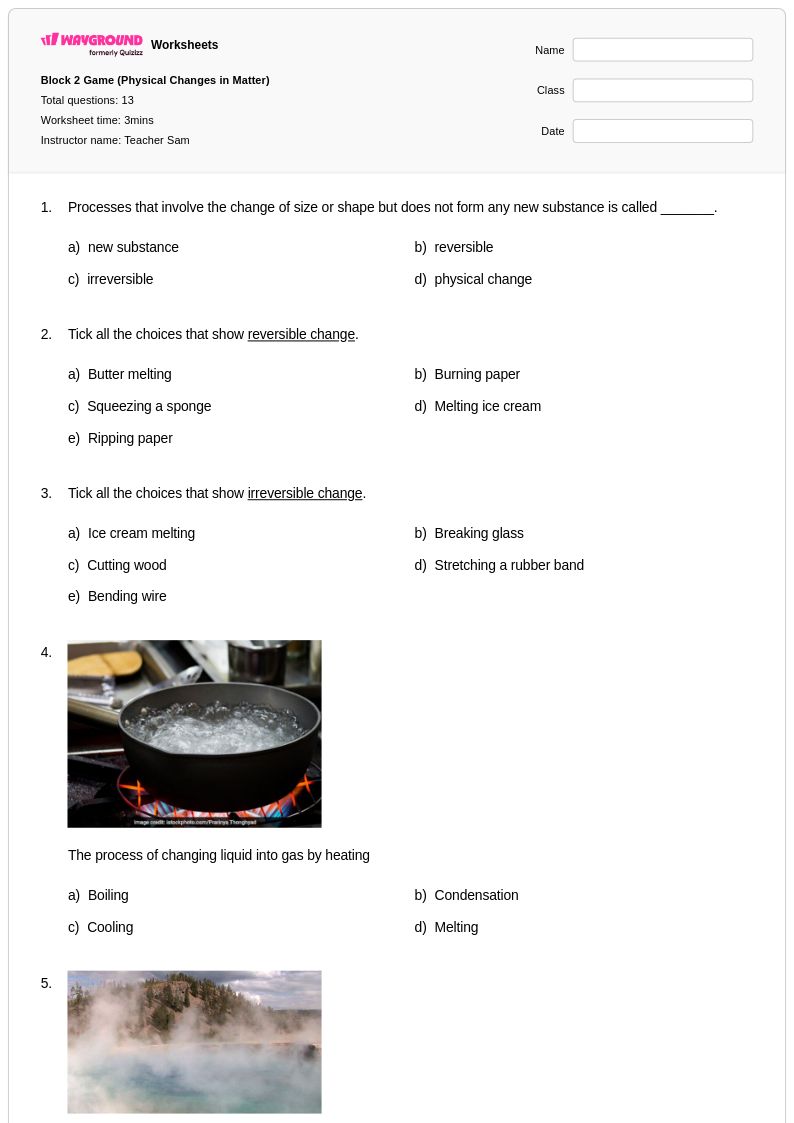
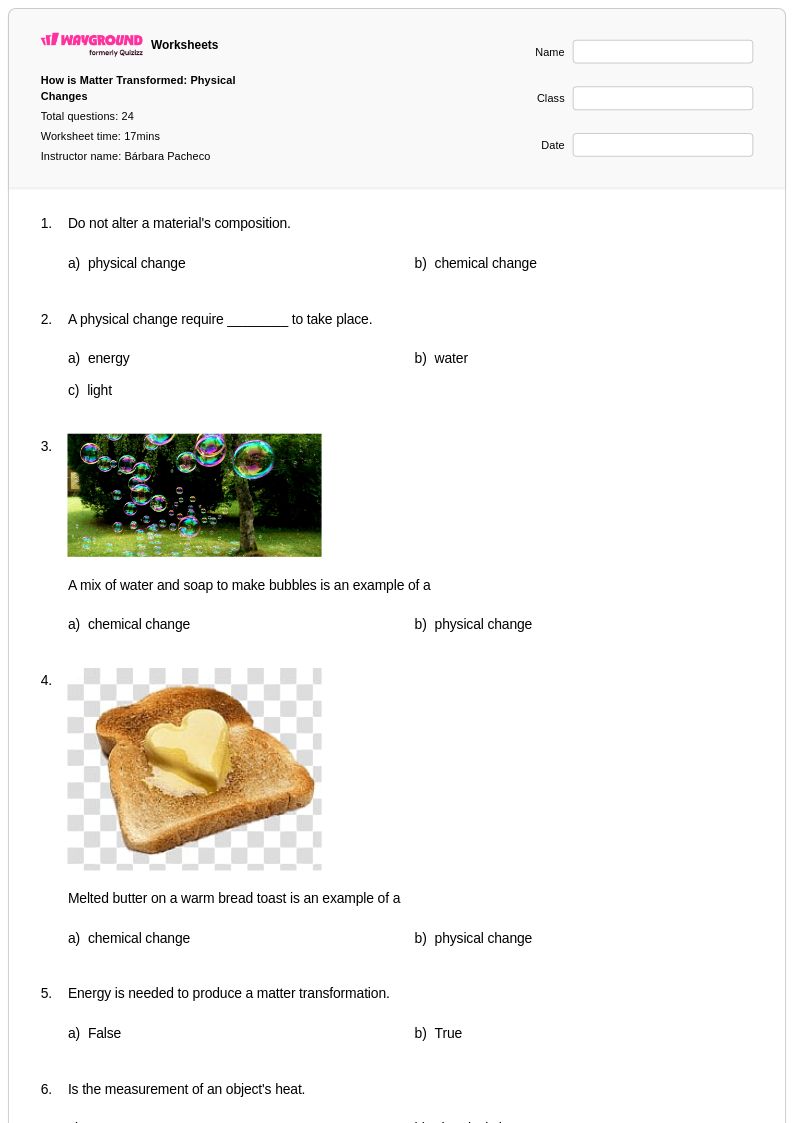
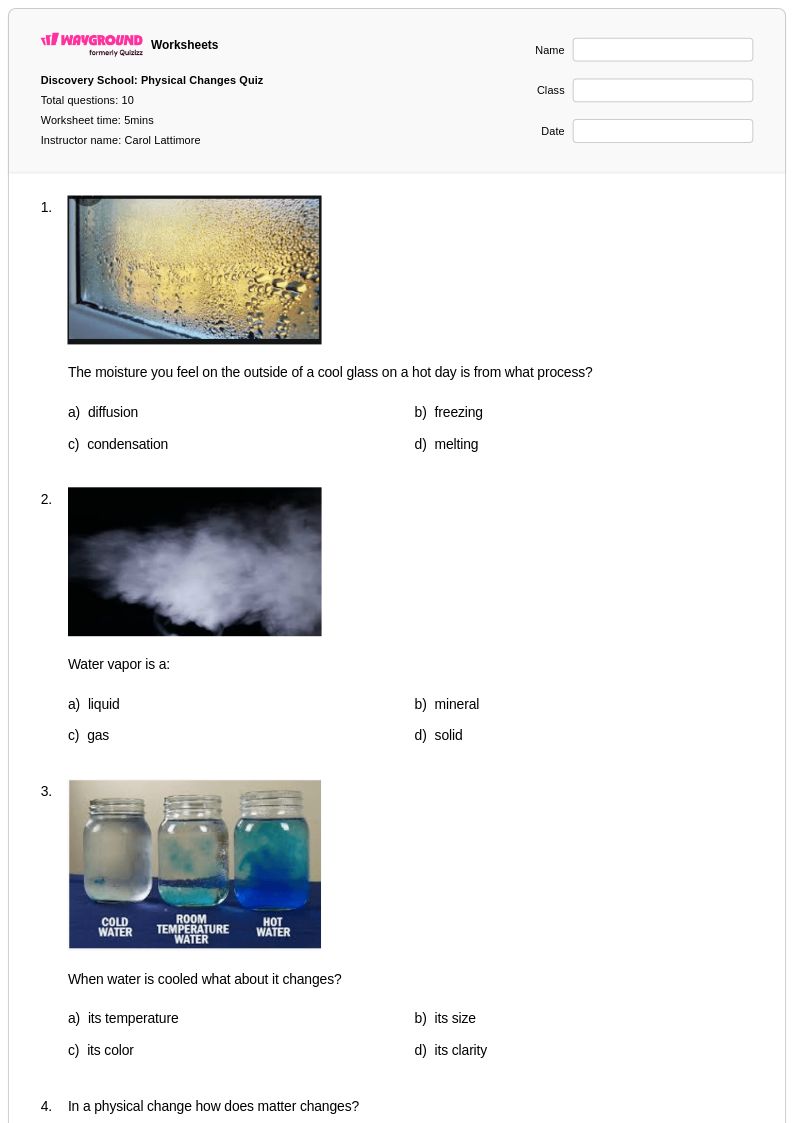
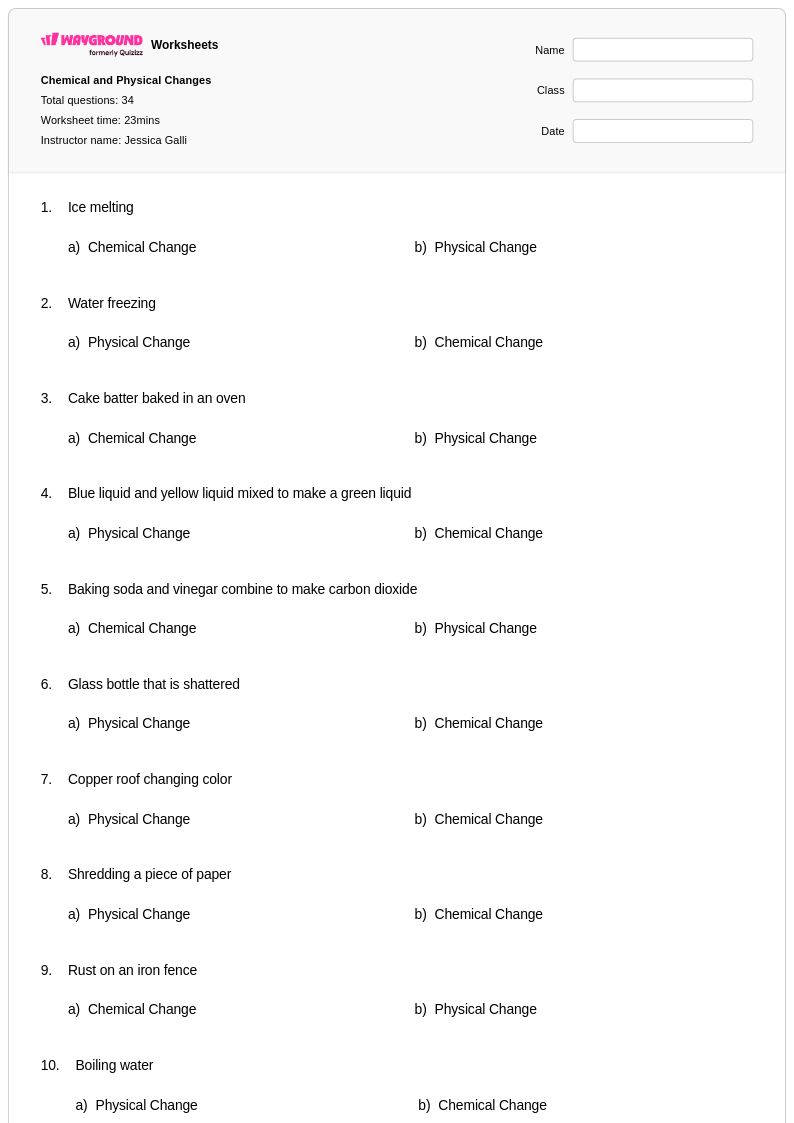
Physical change worksheets for Grade 4 students available through Wayground (formerly Quizizz) provide comprehensive practice opportunities for young learners to master this fundamental chemistry concept. These educational resources focus on helping students distinguish between physical and chemical changes by exploring everyday examples such as melting ice, cutting paper, and mixing sand with water. The worksheets strengthen critical thinking skills as students learn to identify changes that alter a substance's appearance or state without changing its chemical composition. Each printable resource includes varied practice problems that challenge students to observe, classify, and explain physical changes in their environment, with accompanying answer keys that support both independent learning and teacher-guided instruction. These free materials serve as essential tools for reinforcing classroom lessons and building scientific observation skills through hands-on learning experiences.
Wayground (formerly Quizizz) empowers educators with access to millions of teacher-created physical change worksheets specifically designed for Grade 4 science instruction. The platform's robust search and filtering capabilities enable teachers to quickly locate resources that align with their specific curriculum standards and learning objectives, while differentiation tools allow for seamless customization to meet diverse student needs. Teachers can easily modify worksheets to provide appropriate challenge levels for remediation or enrichment purposes, ensuring that all students can engage meaningfully with physical change concepts. The flexible format options include both printable pdf versions for traditional classroom use and digital formats that support modern learning environments, making it simple for educators to integrate these resources into their lesson planning and assessment strategies while providing students with multiple opportunities for skill practice and mastery.
FAQs
How do I teach physical changes vs chemical changes in science class?
Start by establishing a clear rule: a physical change alters the form or appearance of matter without changing its chemical composition, while a chemical change produces a new substance with different properties. Use concrete, familiar examples like cutting paper, melting ice, and dissolving salt to anchor the concept before introducing chemical change counterexamples like burning or rusting. Asking students to justify their classifications — not just identify them — builds the critical thinking needed to distinguish the two reliably.
What are good practice exercises for students learning about physical changes?
Effective practice tasks include classification exercises where students sort a list of events as physical or chemical changes and explain their reasoning. Scenario-based problems that use real-world examples like melting ice, shredding paper, or dissolving salt help students connect the concept to observable phenomena. Moving from basic identification to analysis problems — such as explaining why a change is physical rather than chemical — builds deeper conceptual understanding progressively.
What mistakes do students commonly make when identifying physical changes?
The most common error is confusing dissolving with a chemical change because the original substance seems to disappear. Students need to understand that dissolving is a physical change because the dissolved substance can be recovered and its molecular composition is unchanged. Another frequent misconception is assuming that any change involving energy, such as melting or freezing, must be chemical — teachers should explicitly address that changes of state are physical changes.
How can I differentiate physical change instruction for students at different levels?
For struggling learners, focus on high-frequency, visually obvious examples like cutting, bending, and melting before introducing more ambiguous cases like dissolving. Advanced students benefit from analysis problems that require them to explain why a change is physical at the molecular level, not just identify it by surface features. On Wayground, teachers can apply accommodations such as reduced answer choices for students who need less cognitive load, or enable Read Aloud for students who benefit from audio support, with each setting configured per student without affecting the rest of the class.
How do I use Wayground's physical change worksheets in my classroom?
Wayground's physical change worksheets are available as printable PDFs for traditional classroom use and in digital formats for technology-integrated environments, so they work whether students are in class, in a computer lab, or learning remotely. Teachers can also host worksheets directly as a quiz on Wayground, enabling real-time student responses and instant grading. Each worksheet includes a complete answer key, making them suitable for independent practice, homework, or self-paced review without additional preparation from the teacher.
How do I assess whether students truly understand physical change, not just memorize examples?
Assess understanding by presenting students with unfamiliar scenarios and asking them to classify and justify, rather than simply recall memorized examples. Strong understanding is demonstrated when a student can explain that a physical change is reversible in principle and does not alter molecular composition — not just list examples like melting or cutting. Including complex analysis problems alongside basic identification tasks gives teachers a clearer picture of which students have conceptual understanding versus surface-level familiarity.