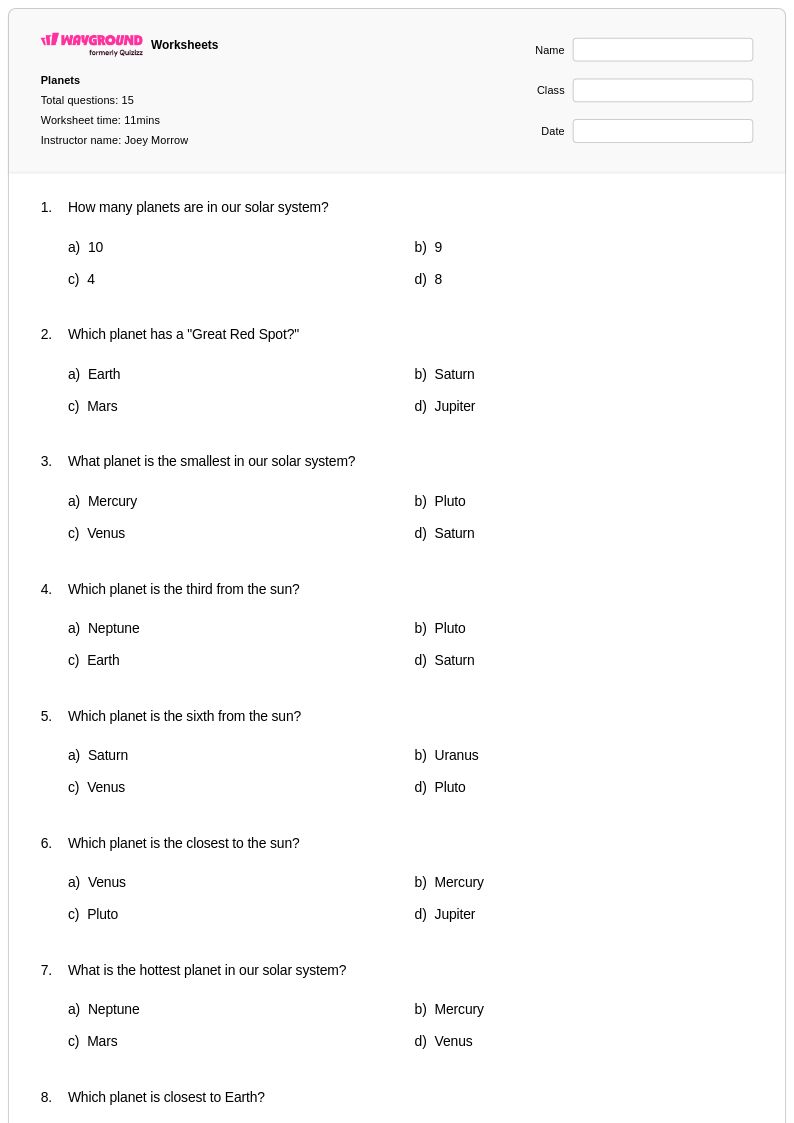
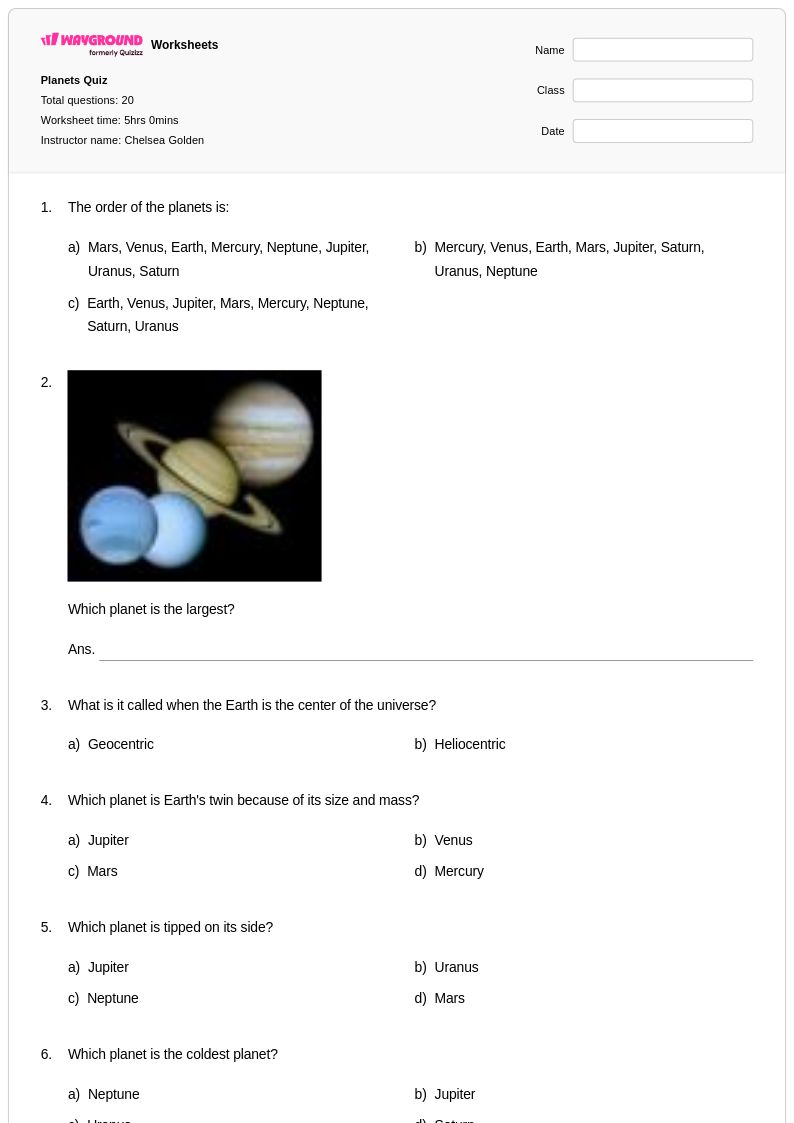
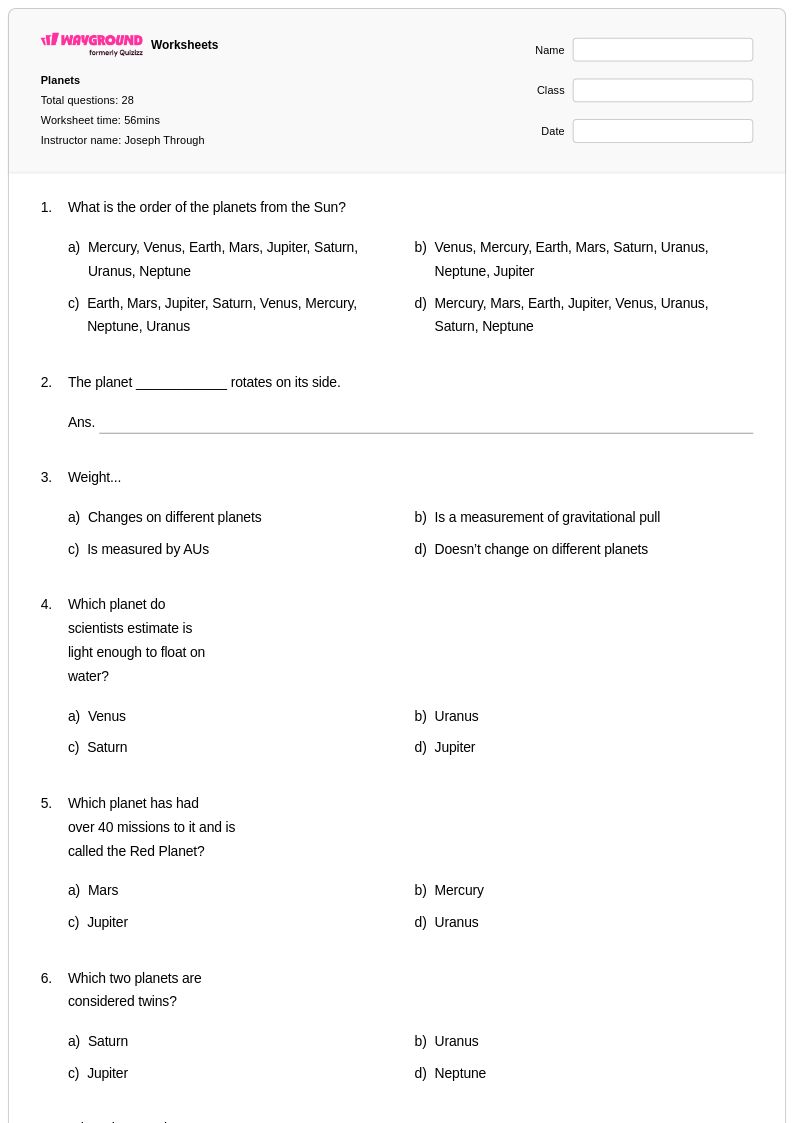
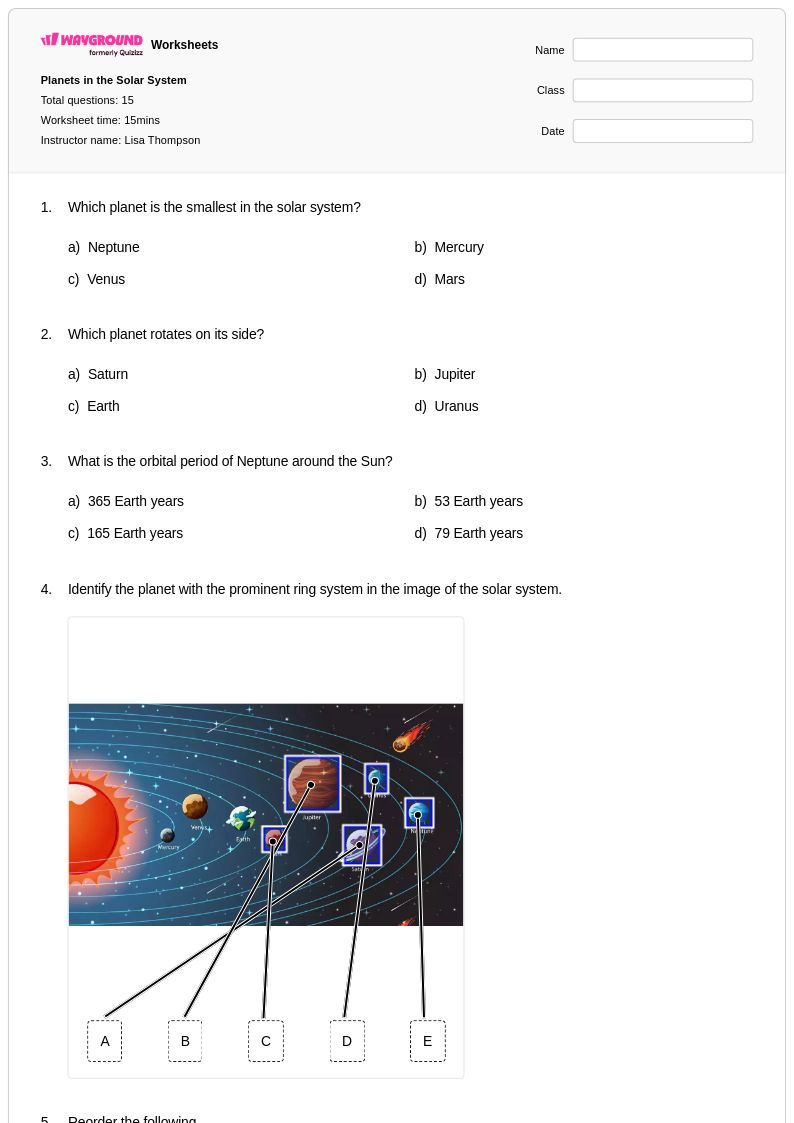
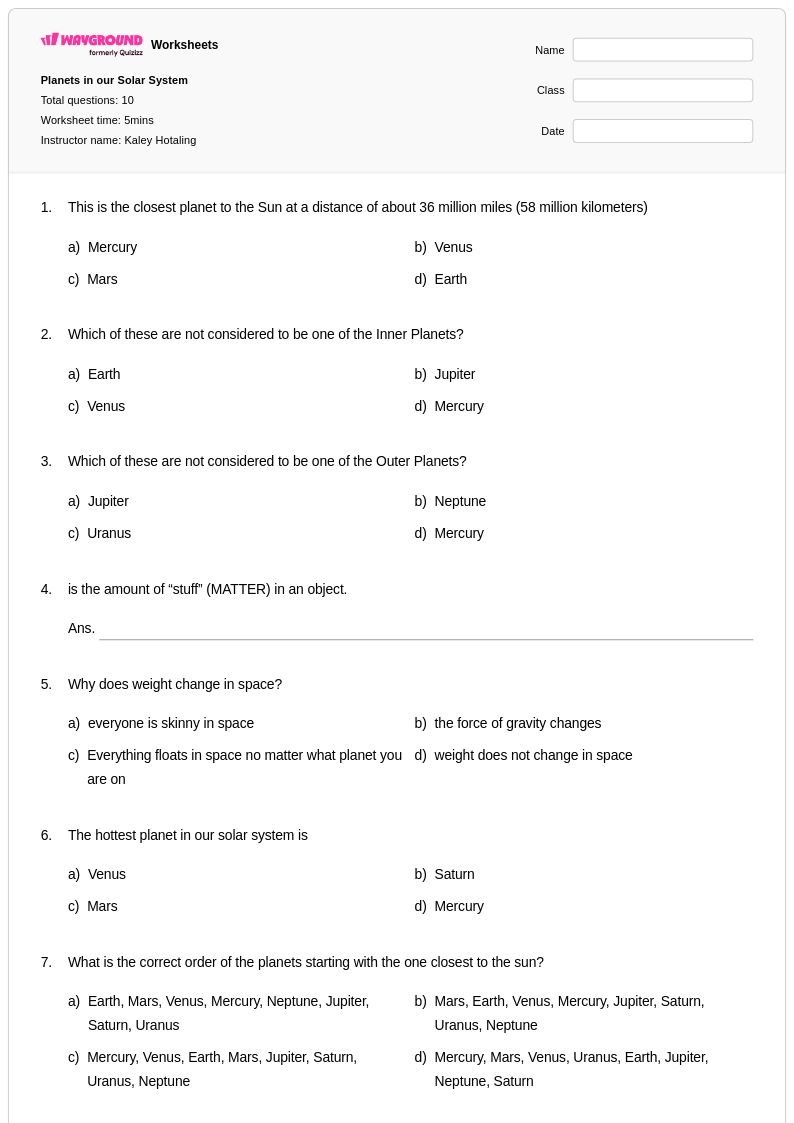
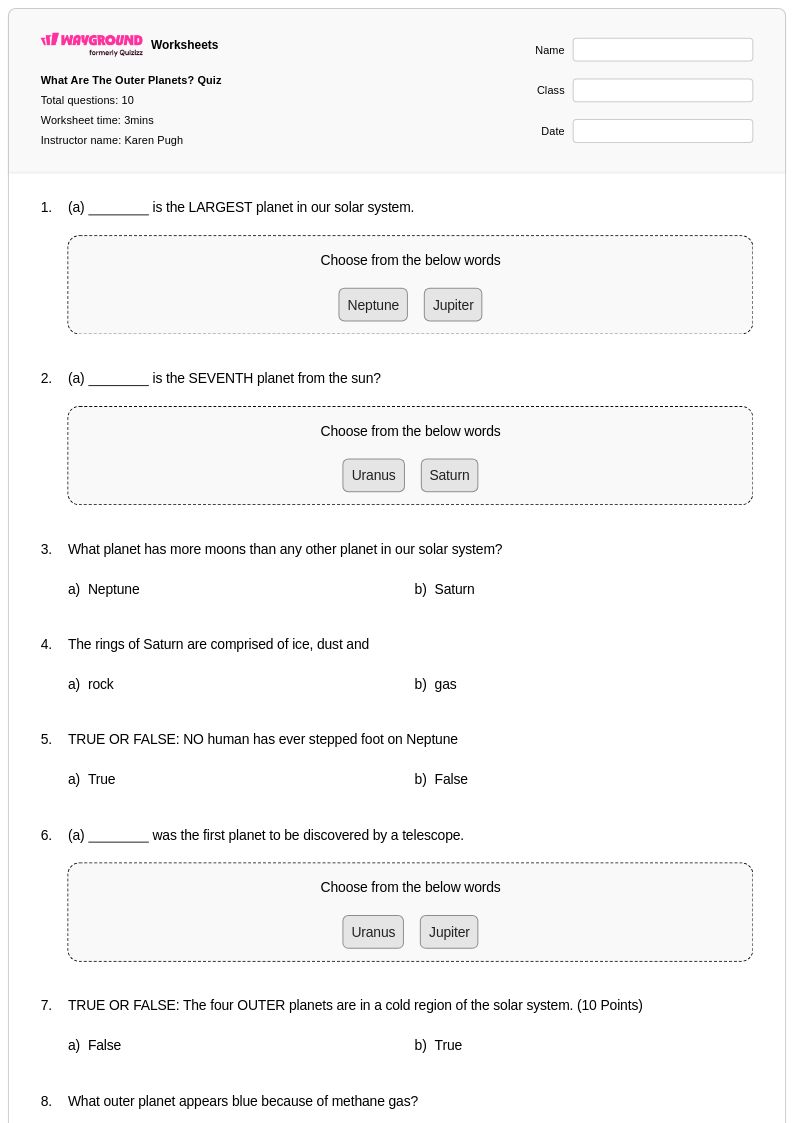
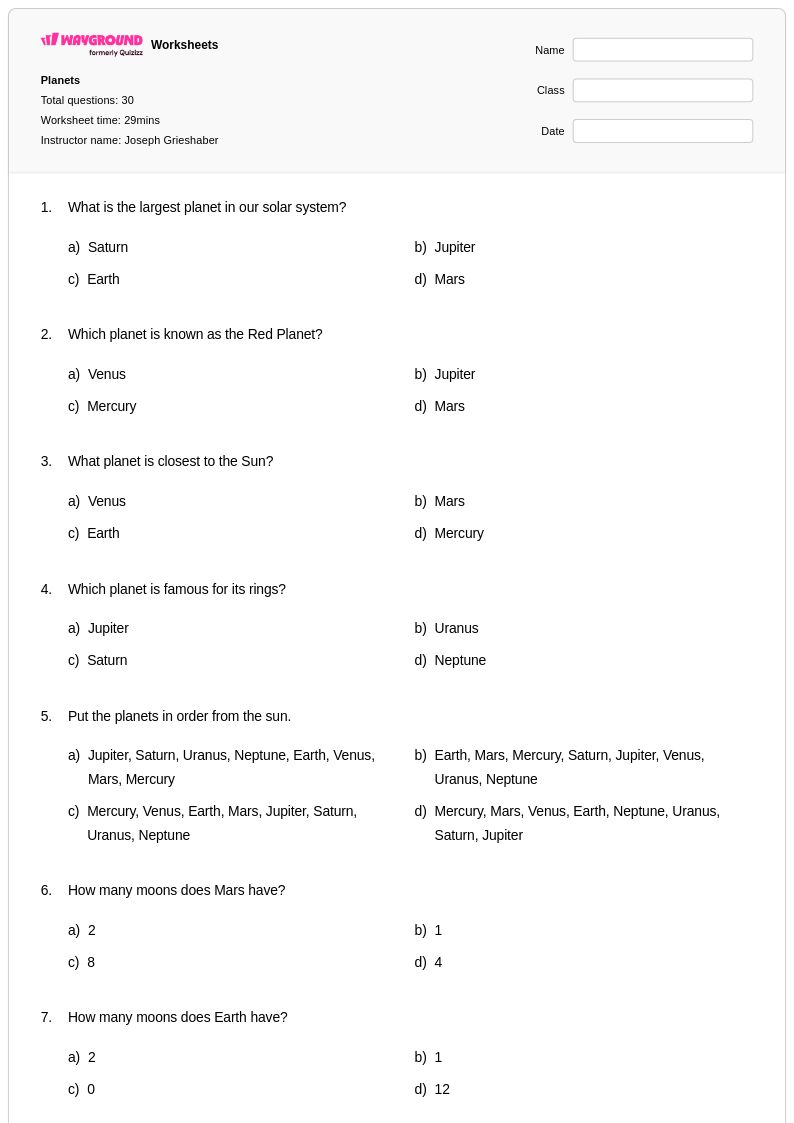
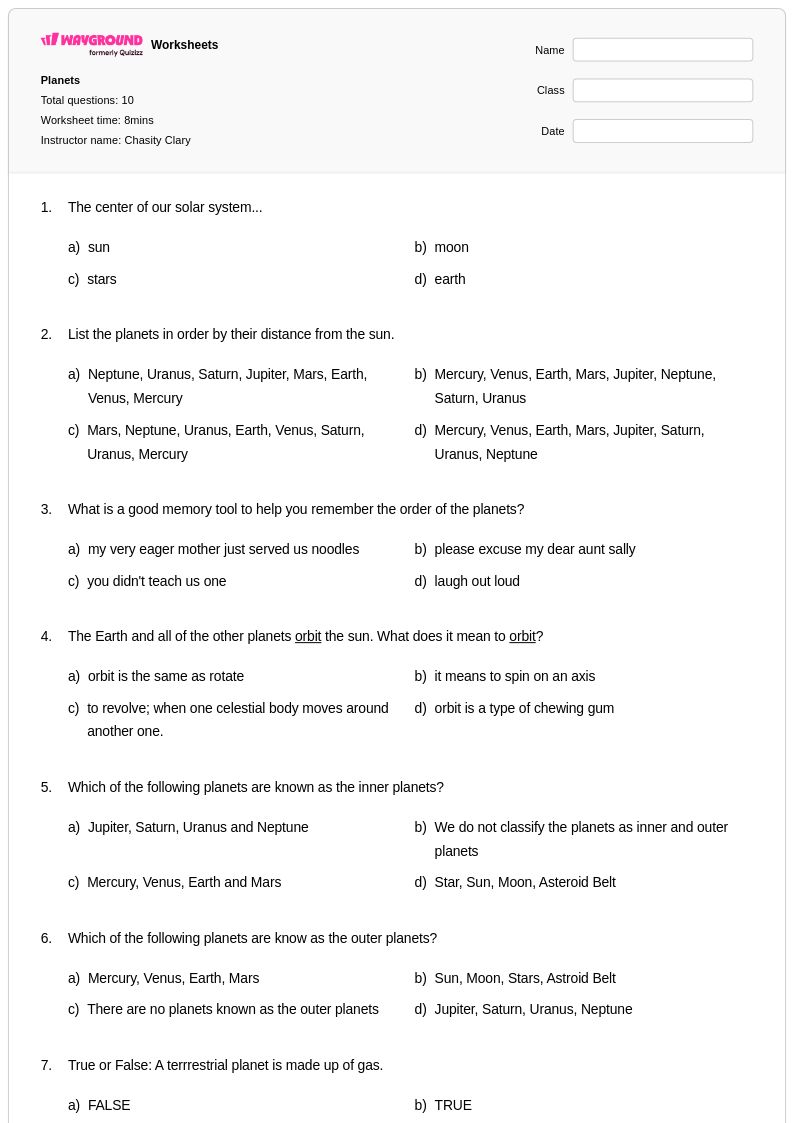
Explore Grade 6 planets worksheets and free printables from Wayground that help students discover our solar system through engaging practice problems and comprehensive answer keys.
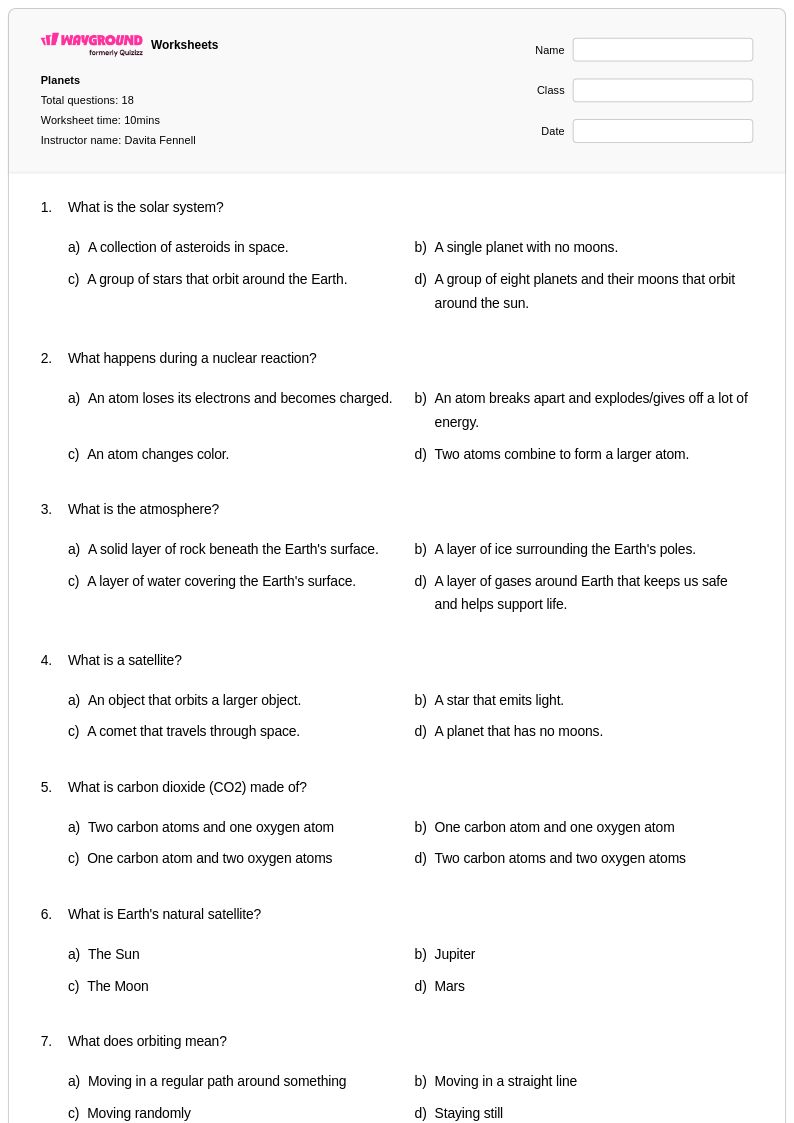
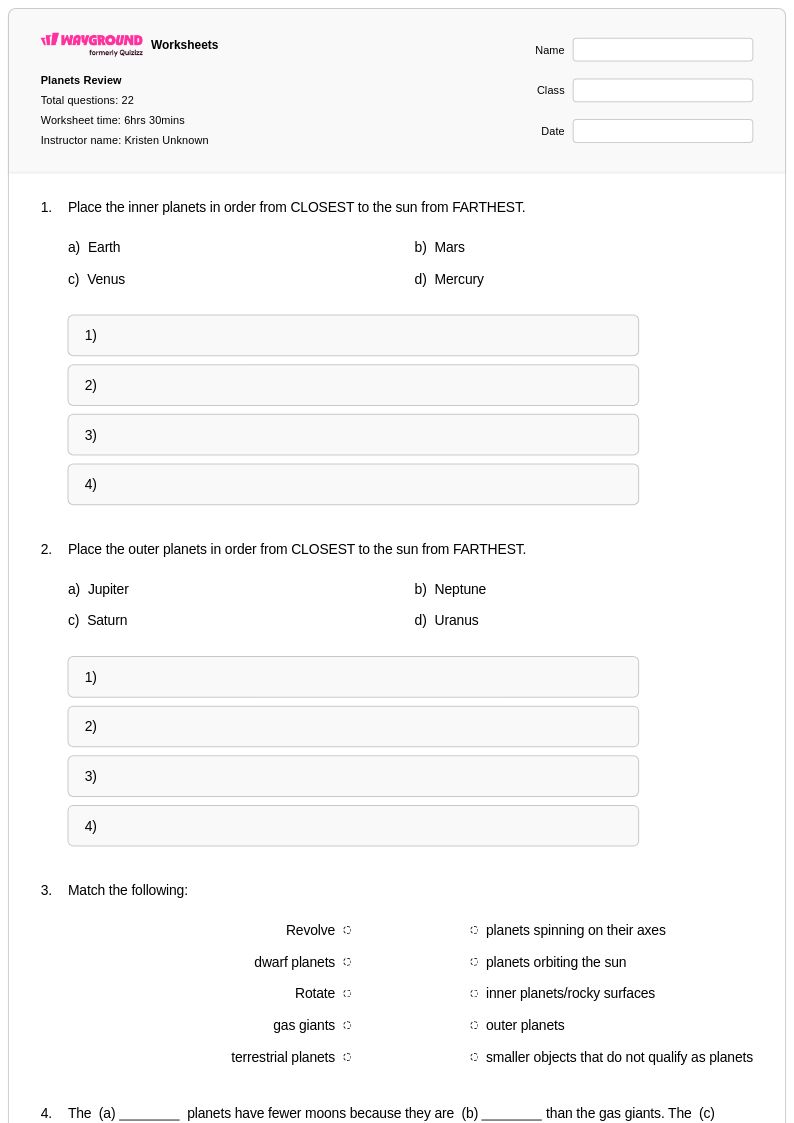
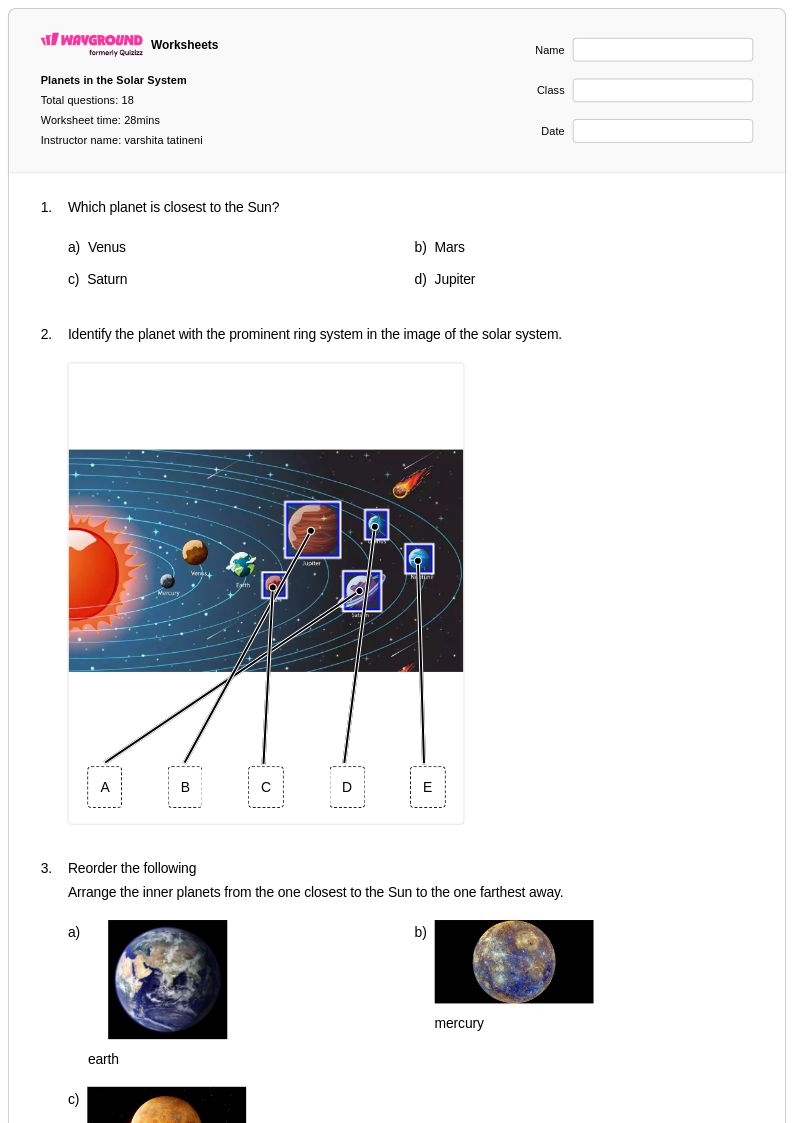
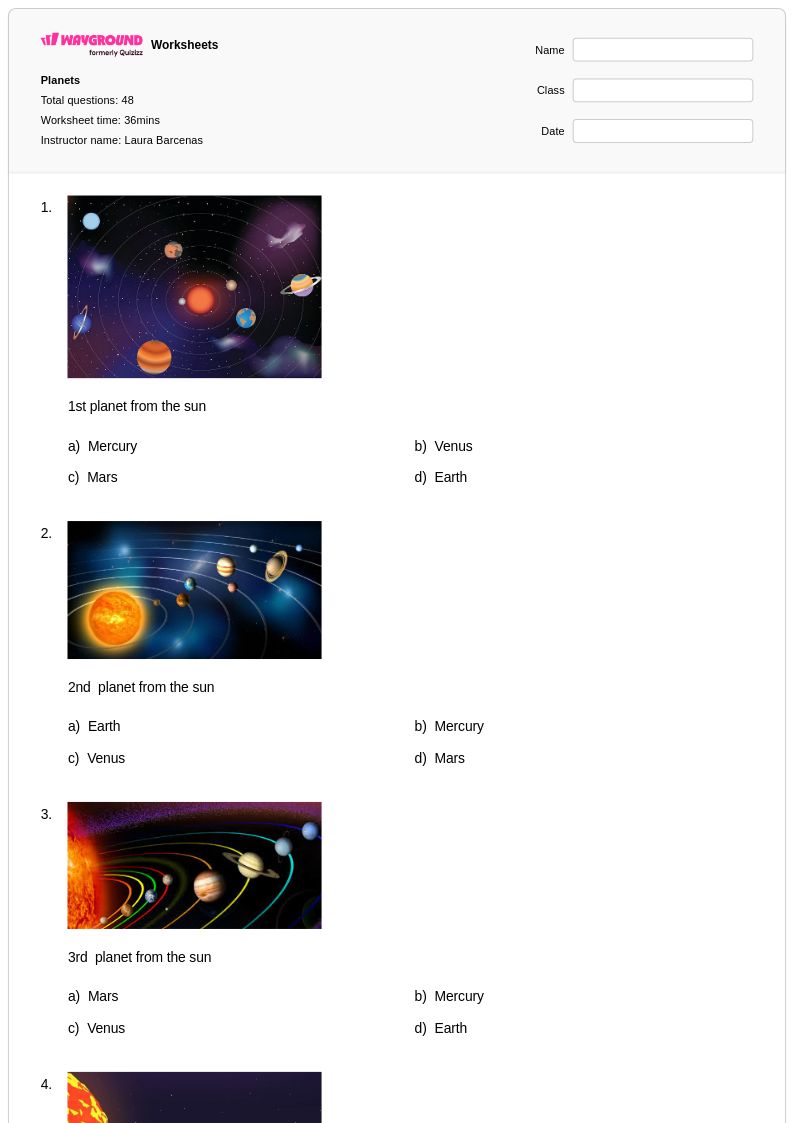
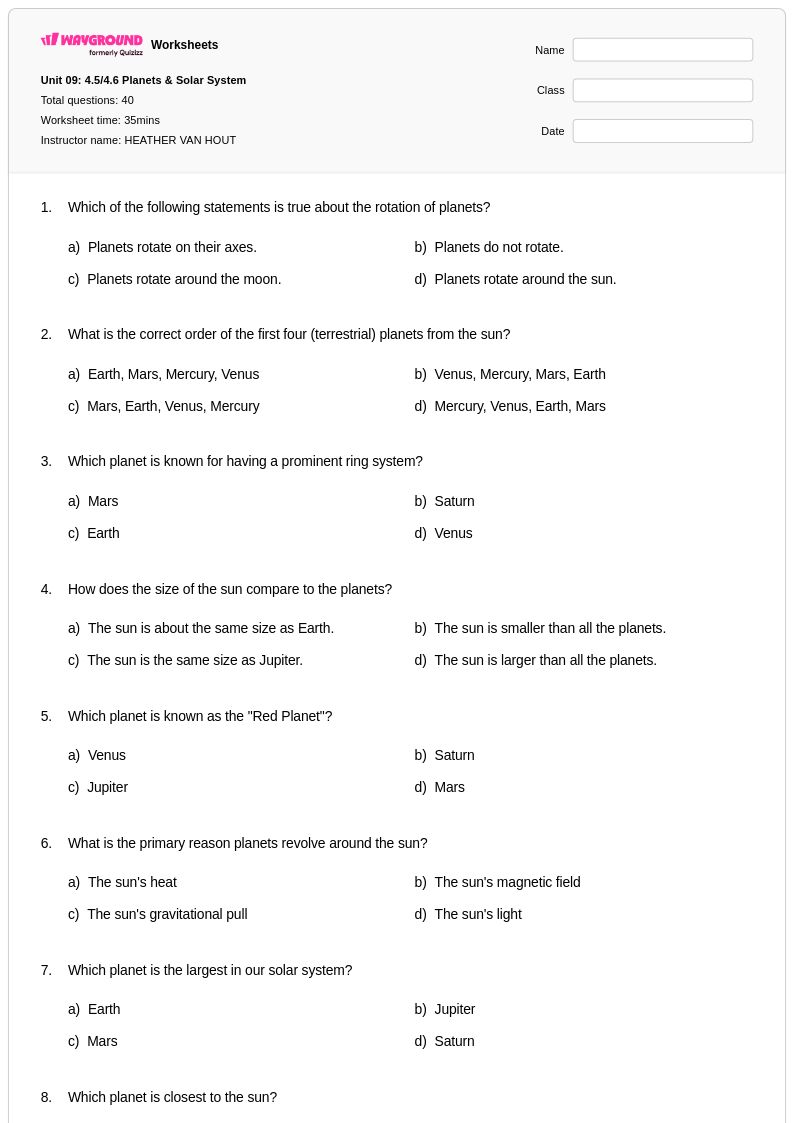
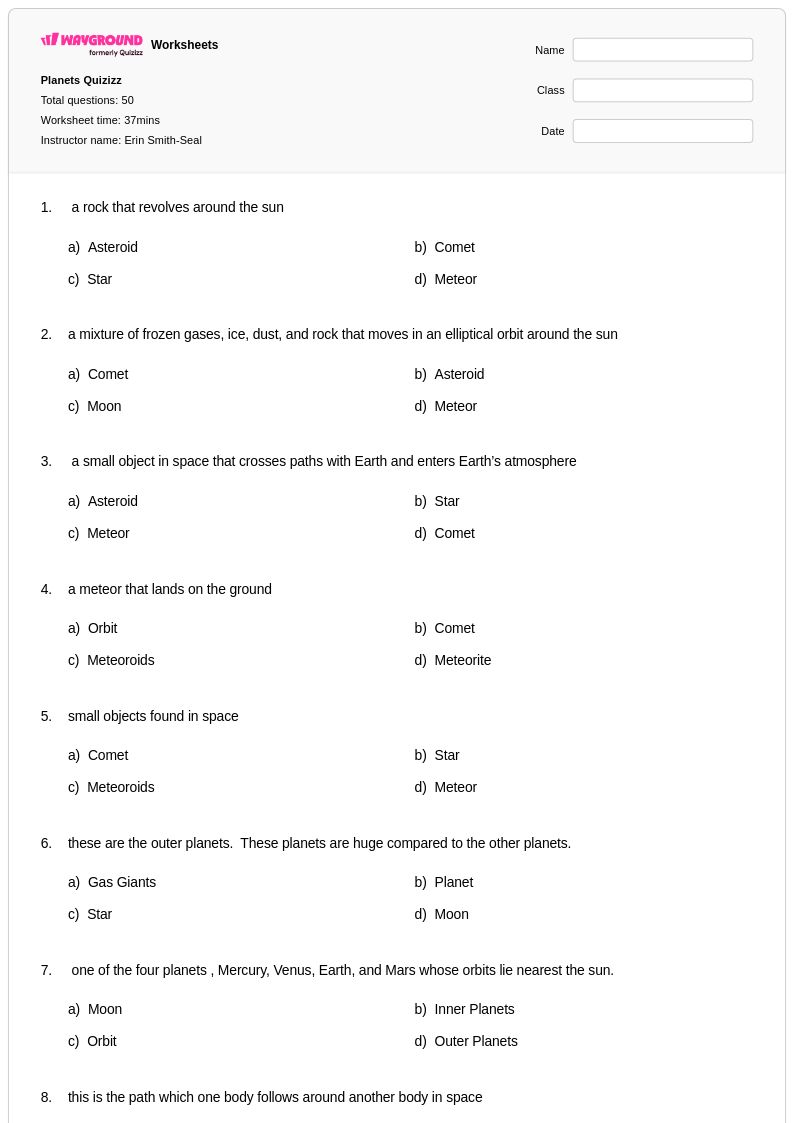
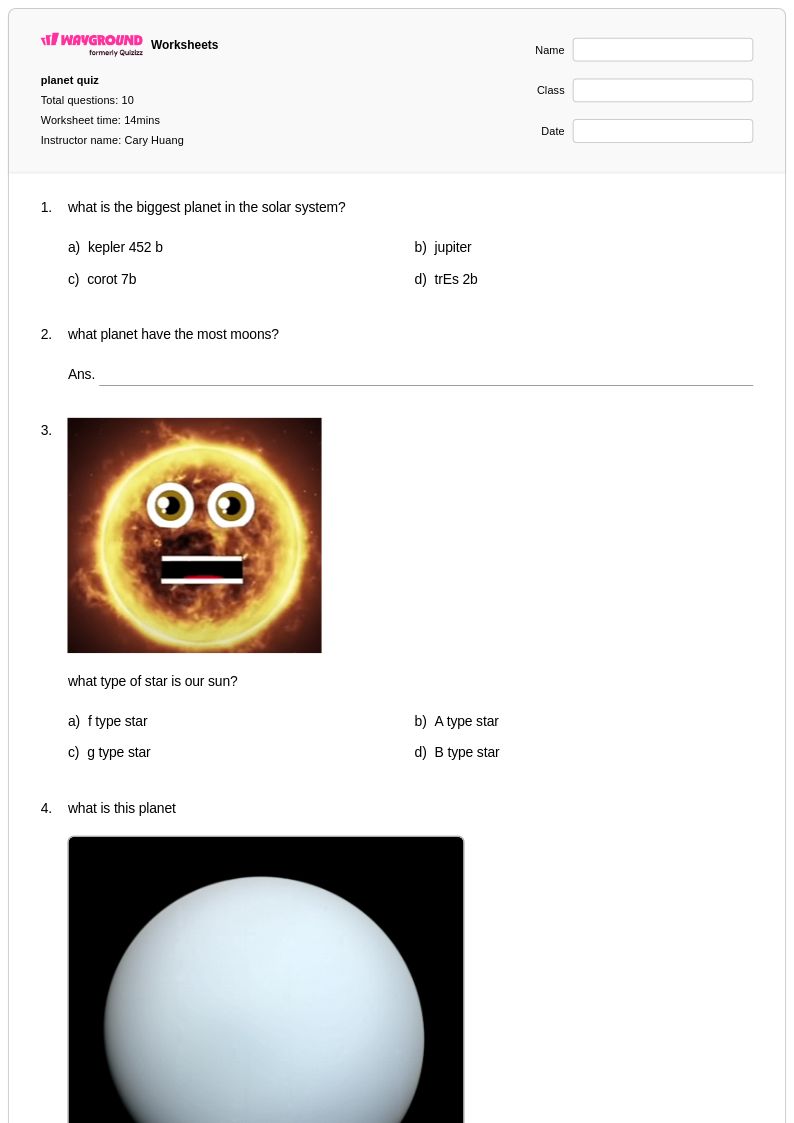
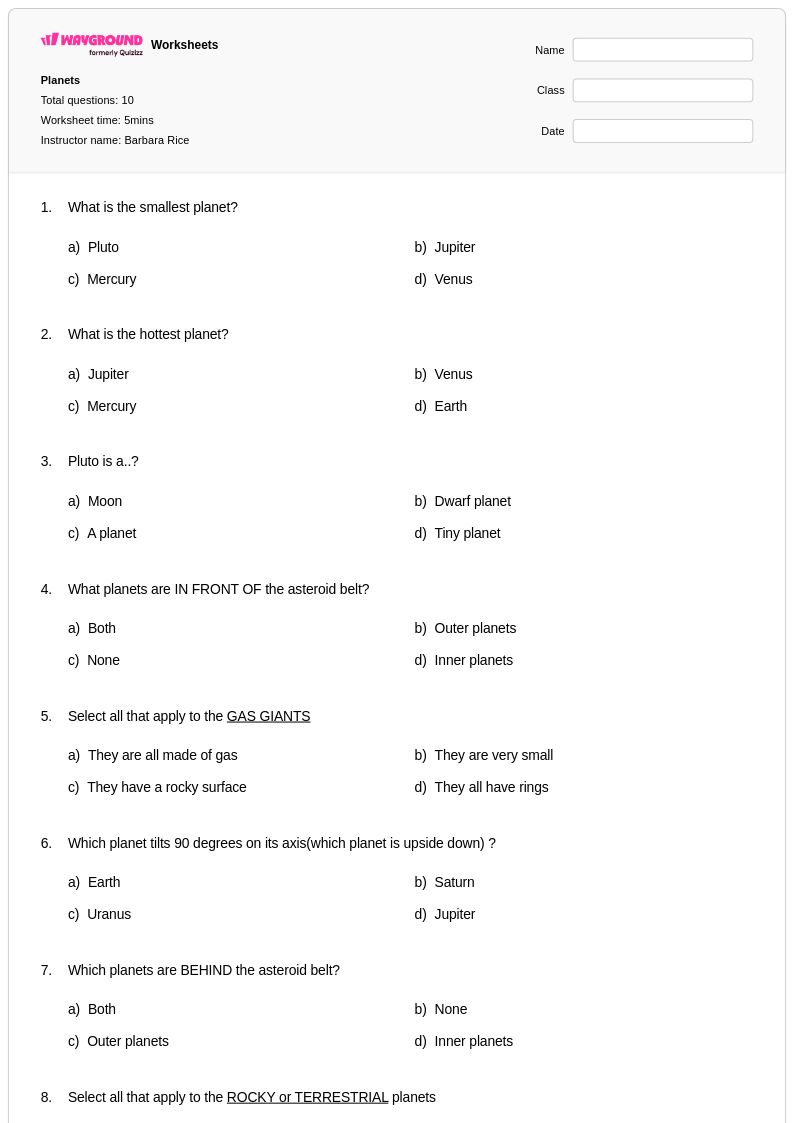
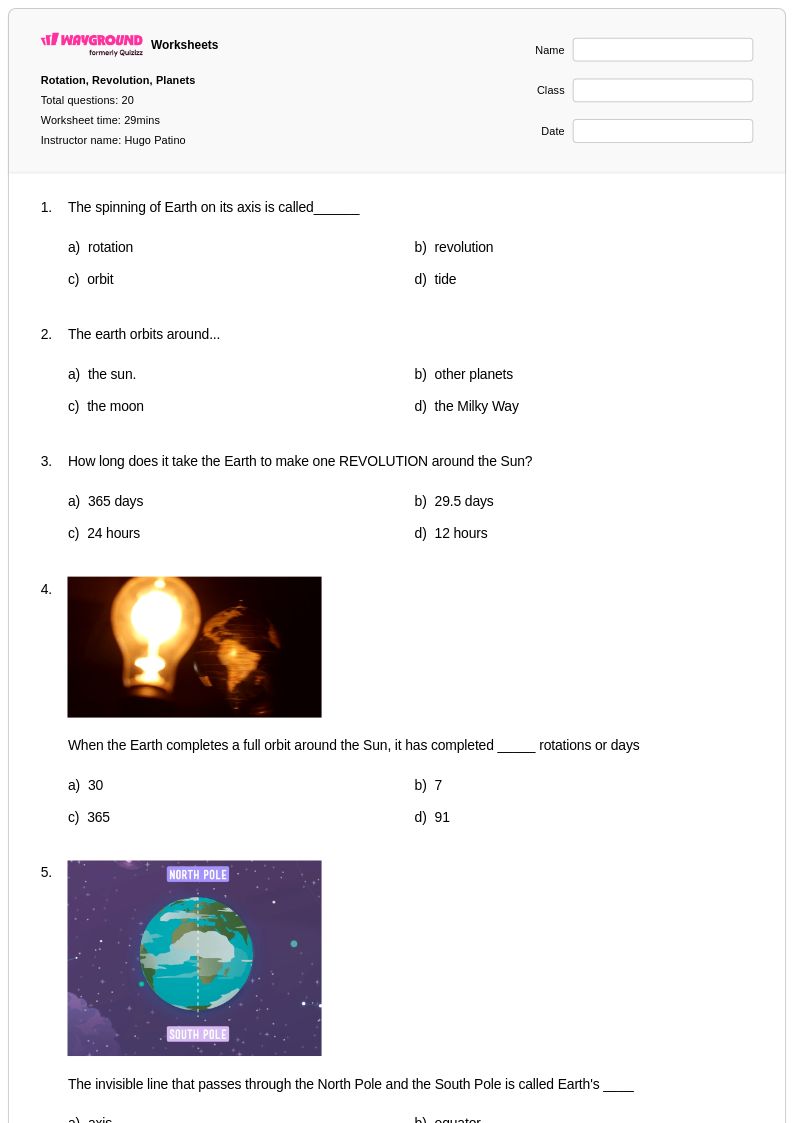
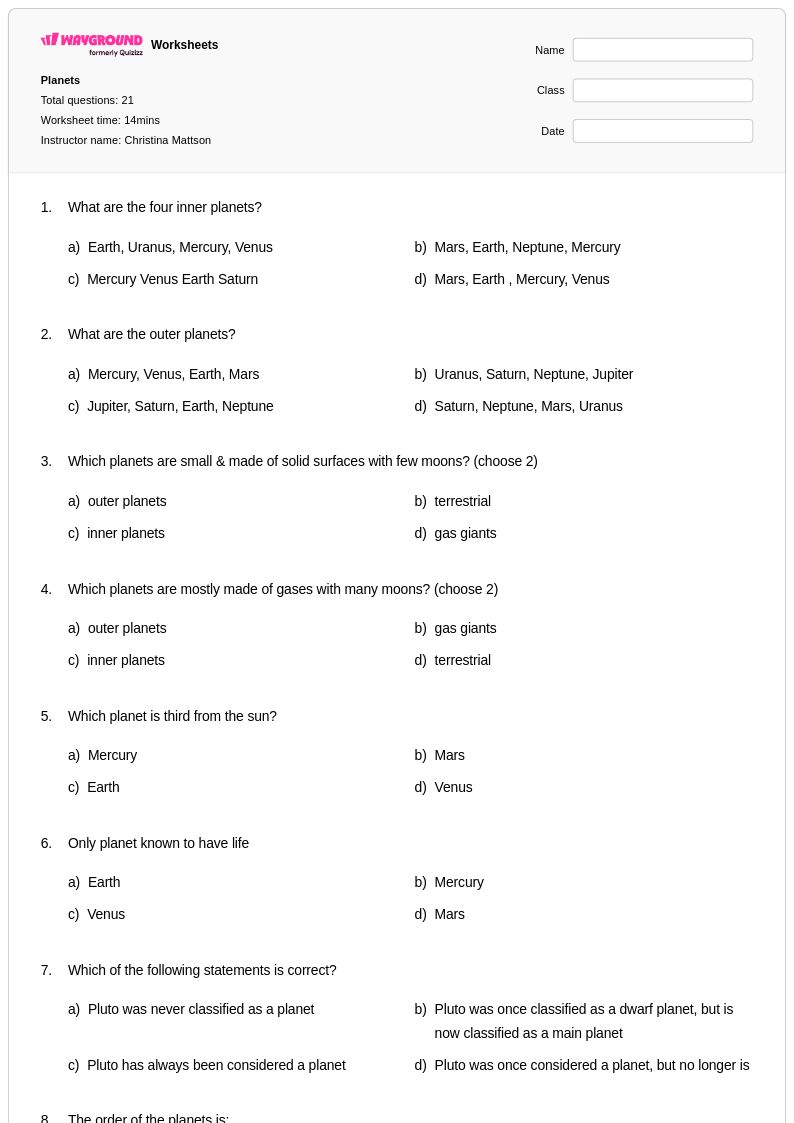
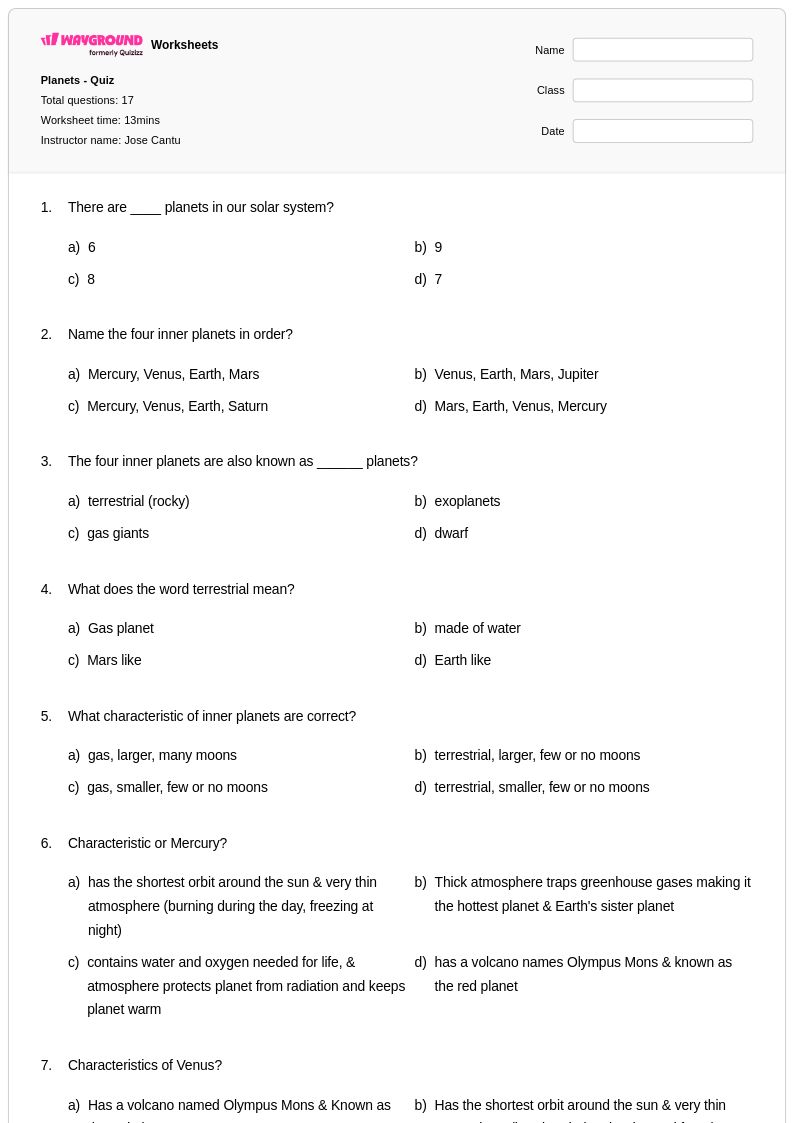
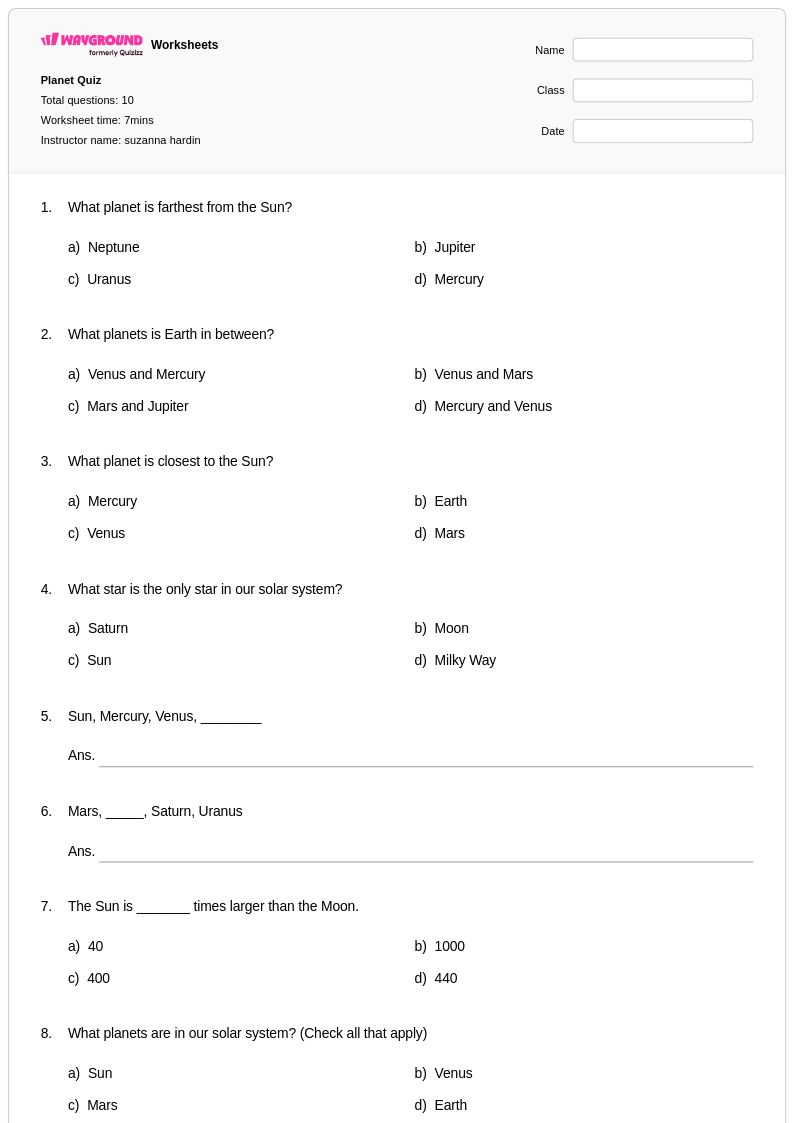
Grade 6 planets worksheets available through Wayground (formerly Quizizz) provide comprehensive educational resources that strengthen students' understanding of our solar system's celestial bodies. These carefully designed worksheets focus on developing critical scientific skills including planetary classification, comparative analysis of planetary characteristics, orbital mechanics, and the relationship between distance from the Sun and planetary properties. Students engage with practice problems that explore topics such as the inner and outer planets, planetary composition, atmospheric conditions, and relative sizes and distances within our solar system. Each worksheet collection includes detailed answer keys that support both independent learning and guided instruction, while the free printables offer flexible implementation options for diverse classroom environments and home study situations.
Wayground (formerly Quizizz) supports educators with an extensive library of millions of teacher-created planetary science resources that streamline lesson planning and enhance student engagement. The platform's robust search and filtering capabilities allow teachers to quickly locate Grade 6 planets worksheets that align with specific curriculum standards and learning objectives, while built-in differentiation tools enable customization for varying skill levels within the classroom. Teachers can access these materials in both printable pdf formats for traditional paper-based activities and digital formats for technology-integrated lessons, providing maximum flexibility for different teaching environments. This comprehensive worksheet collection serves multiple instructional purposes, from initial skill introduction and guided practice to targeted remediation for struggling learners and enrichment opportunities for advanced students, ensuring that all sixth-grade students can develop a solid foundation in planetary science concepts.
FAQs
How do I teach the planets of the solar system to elementary and middle school students?
Start by anchoring instruction in observable comparisons: size, distance from the Sun, and basic composition (rocky vs. gas). Use visual models and scaled diagrams to make abstract distances concrete, since students consistently underestimate how spread out the solar system actually is. Grouping planets into inner rocky planets and outer gas/ice giants gives students a classification framework that supports deeper analysis of each planet's individual characteristics.
What exercises help students practice identifying and comparing planets?
Effective practice tasks include classifying planets by physical properties such as size, mass, and atmospheric composition, as well as calculating and comparing orbital periods and distances from the Sun. Data table activities that ask students to rank planets or identify patterns across multiple characteristics build analytical skills alongside factual knowledge. Worksheets that present planetary data sets and ask students to draw conclusions are especially useful for connecting observation to scientific reasoning.
What mistakes do students commonly make when learning about the planets?
One of the most common errors is confusing the order of planets with their relative size — students often assume the outer planets are only slightly larger than Earth rather than orders of magnitude bigger. Students also frequently misapply the term 'closest to the Sun' as synonymous with 'hottest,' overlooking Venus's atmosphere as the reason it outranks Mercury in surface temperature. Reinforcing the distinction between a planet's position and its environmental conditions directly addresses this persistent misconception.
How do I differentiate planets worksheets for students at different ability levels?
For foundational learners, focus on planet identification, basic ordering, and single-variable comparisons such as size or distance alone. Advanced students can work with multi-variable data analysis, orbital mechanics calculations, or comparative tasks that require synthesizing information across several planetary characteristics. On Wayground, teachers can apply accommodations such as reduced answer choices or read-aloud support to individual students, allowing the same core material to be accessible across a range of learning needs without singling anyone out.
How do I use Wayground's planets worksheets in my classroom?
Wayground's planets worksheets are available as printable PDFs, making them ready for traditional classroom use, as well as in digital formats that support technology-integrated or hybrid learning environments. Teachers can also host any worksheet as a live or assigned quiz directly on Wayground, enabling real-time tracking of student responses. Each worksheet includes a complete answer key, so they work equally well for guided instruction, independent practice, or self-paced review.
How do I assess whether students understand planetary classification and solar system structure?
Look for whether students can apply classification criteria independently rather than just recall planet names in order — a student who understands planetary science should be able to explain why Pluto was reclassified or why Jupiter and Saturn are grouped together. Common gaps show up when students confuse astronomical units with light-years or struggle to interpret scaled data. Short data-analysis tasks and classification challenges with justification prompts are reliable tools for surfacing these gaps before a summative assessment.