Free Printable Weather Fronts Worksheets for Grade 6
Explore Wayground's free Grade 6 weather fronts worksheets and printables that help students master cold fronts, warm fronts, and atmospheric pressure changes through engaging practice problems with complete answer keys.
Explore printable Weather Fronts worksheets for Grade 6
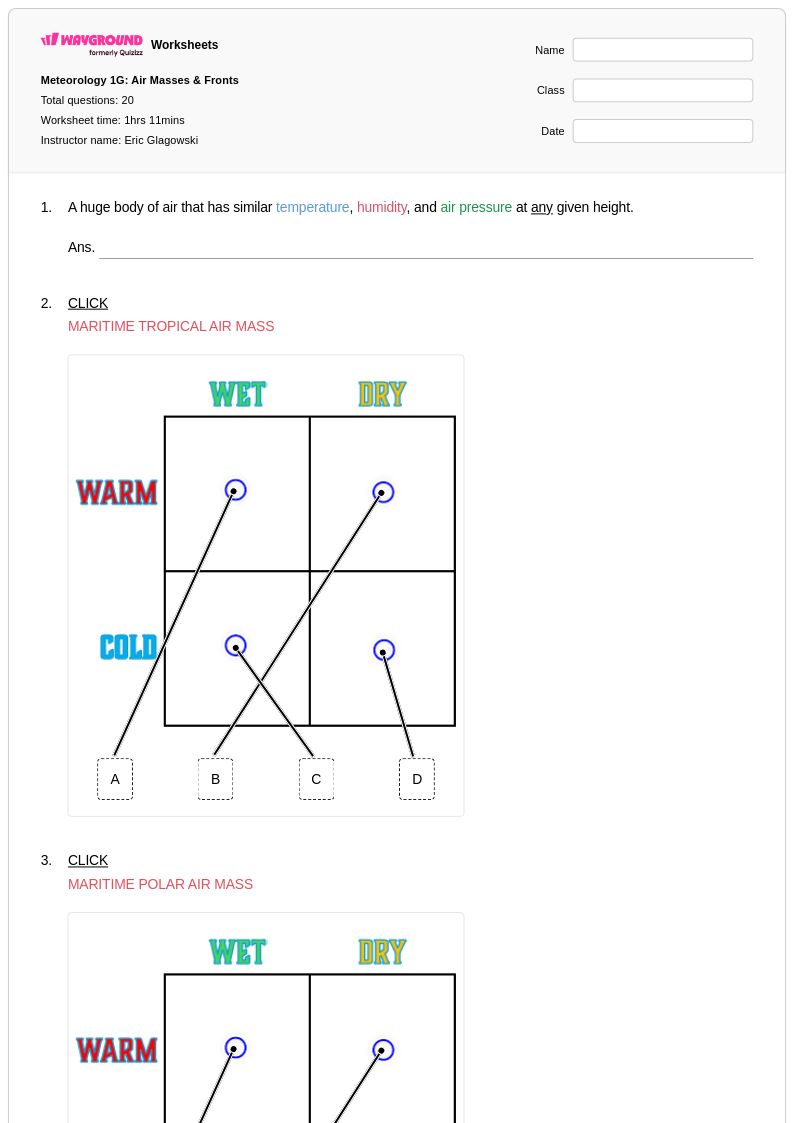
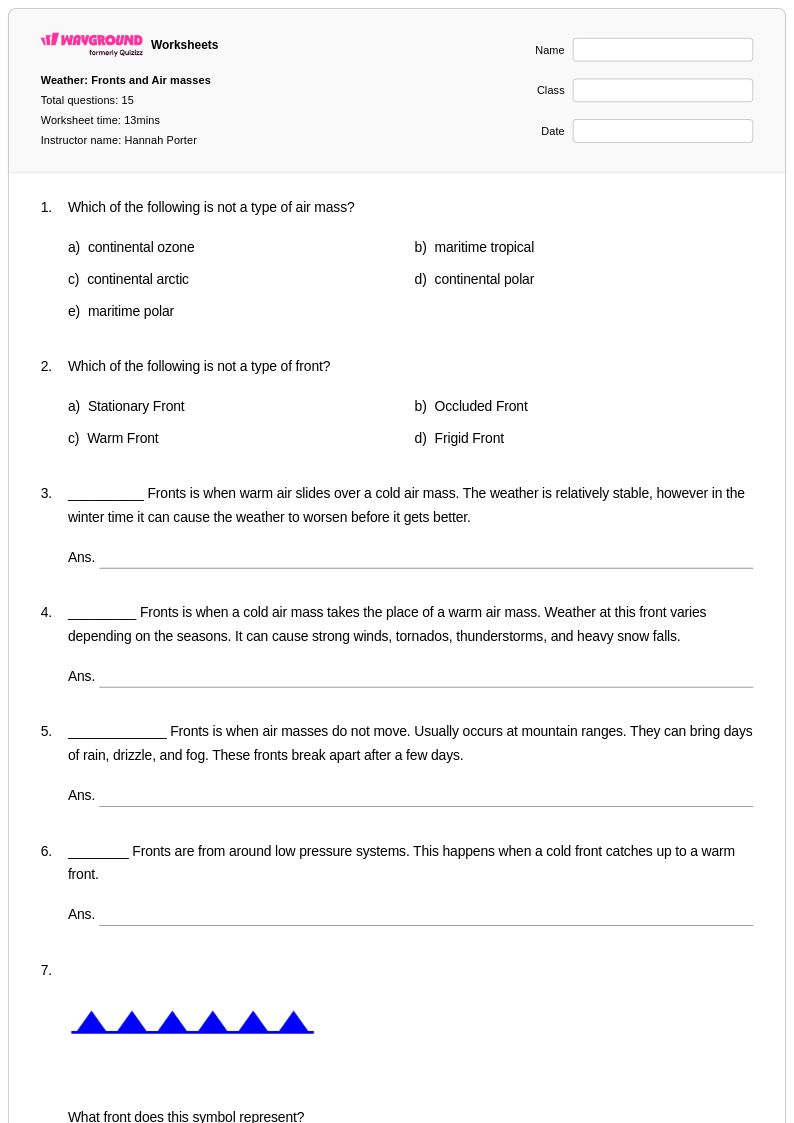
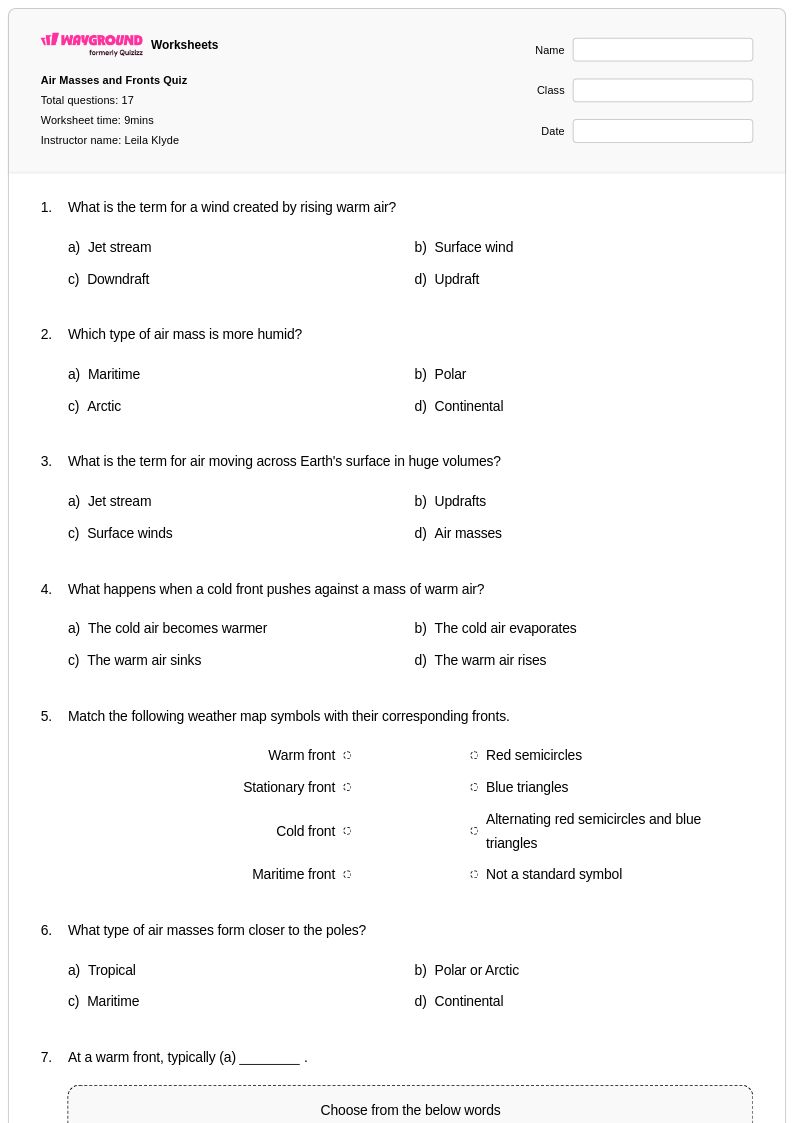
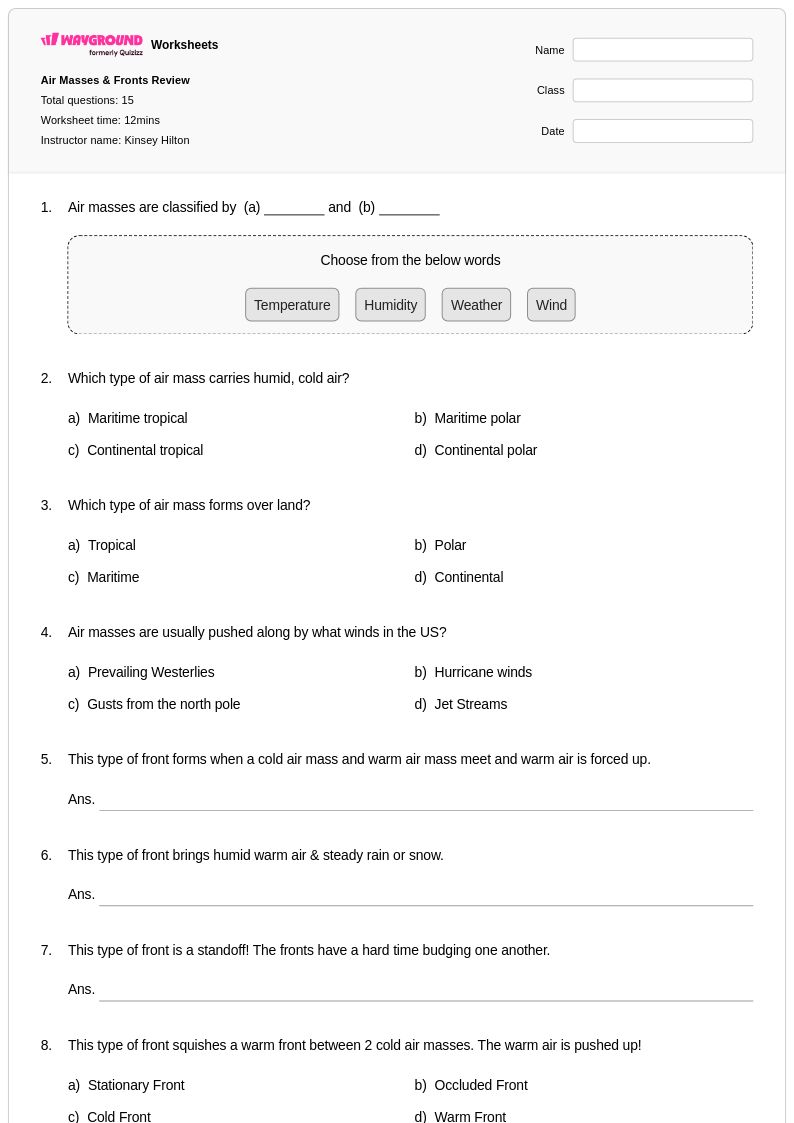
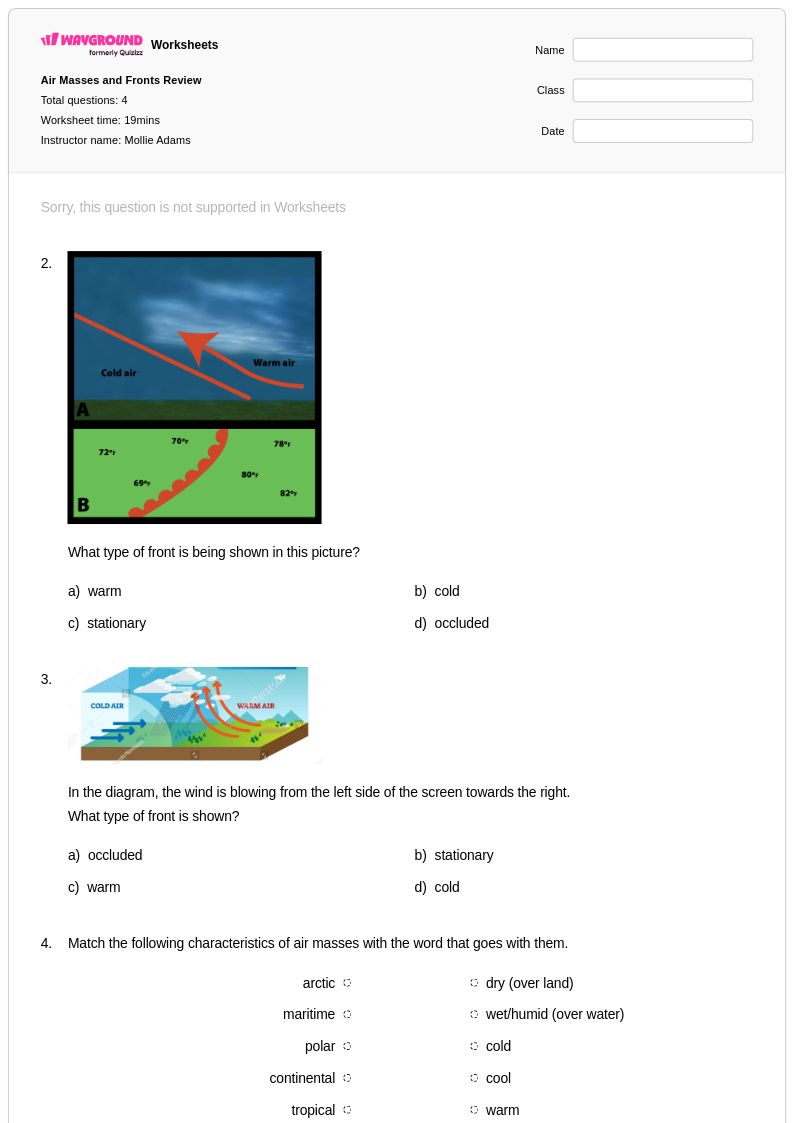
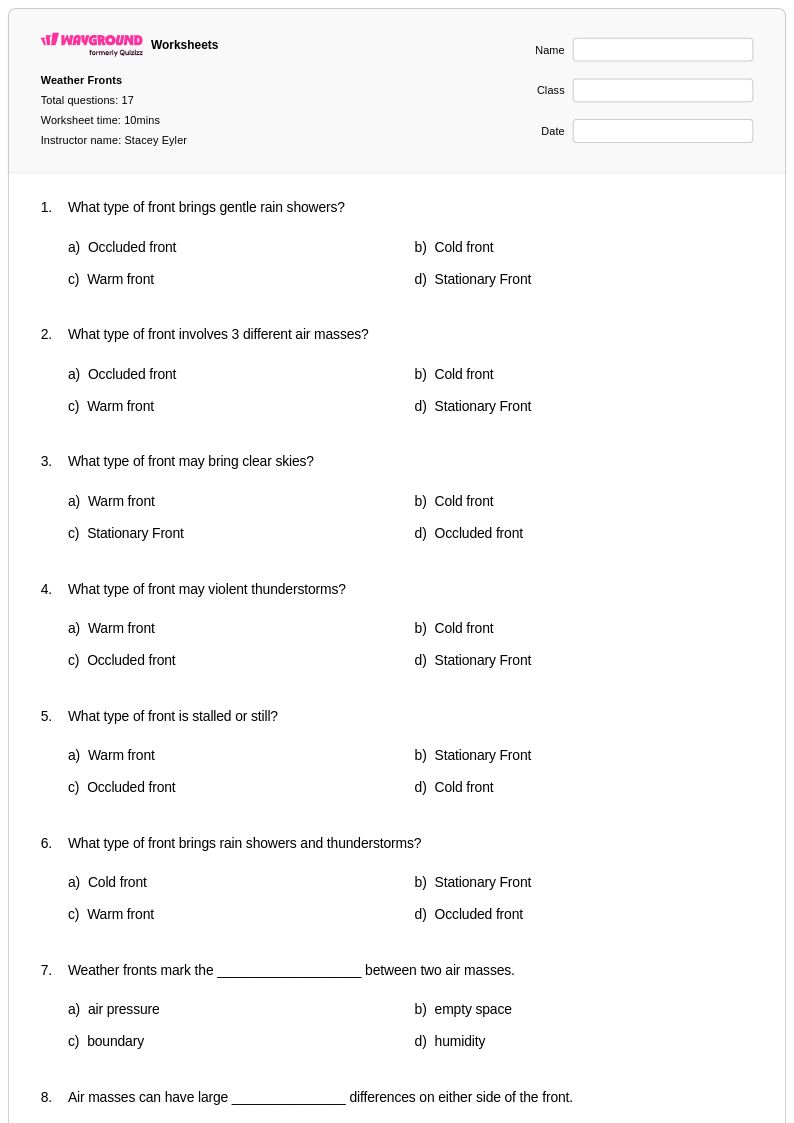
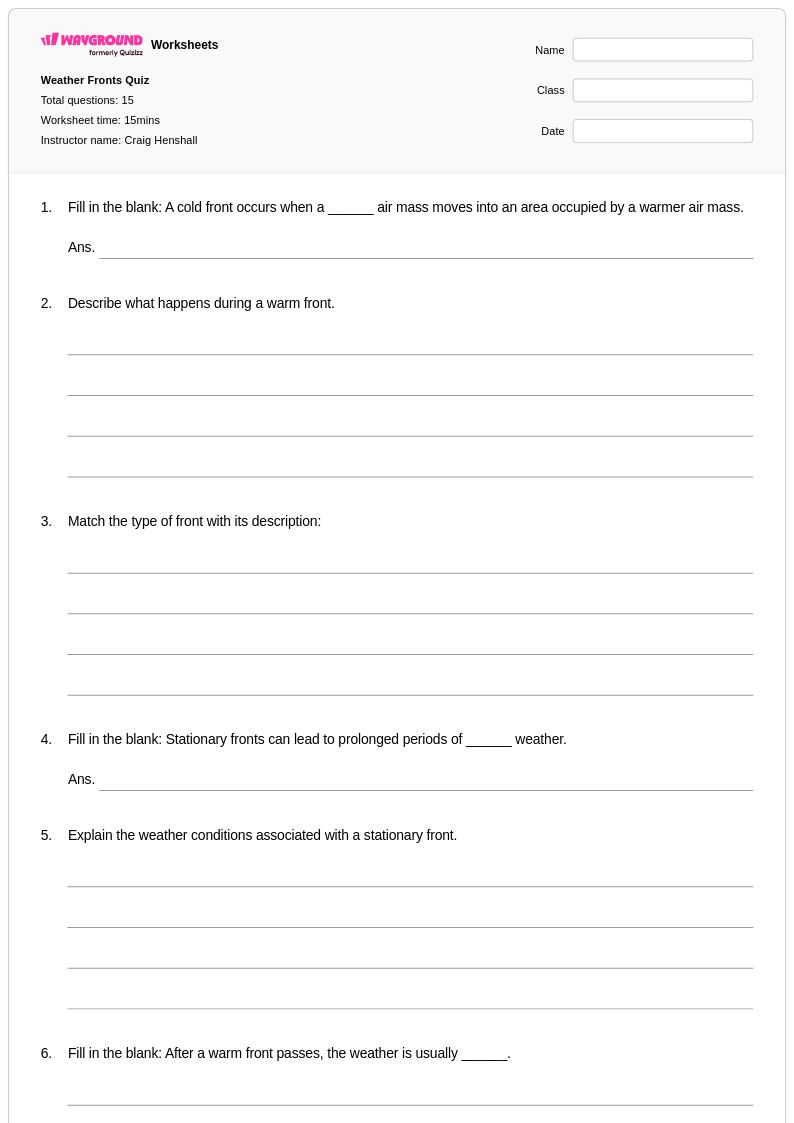
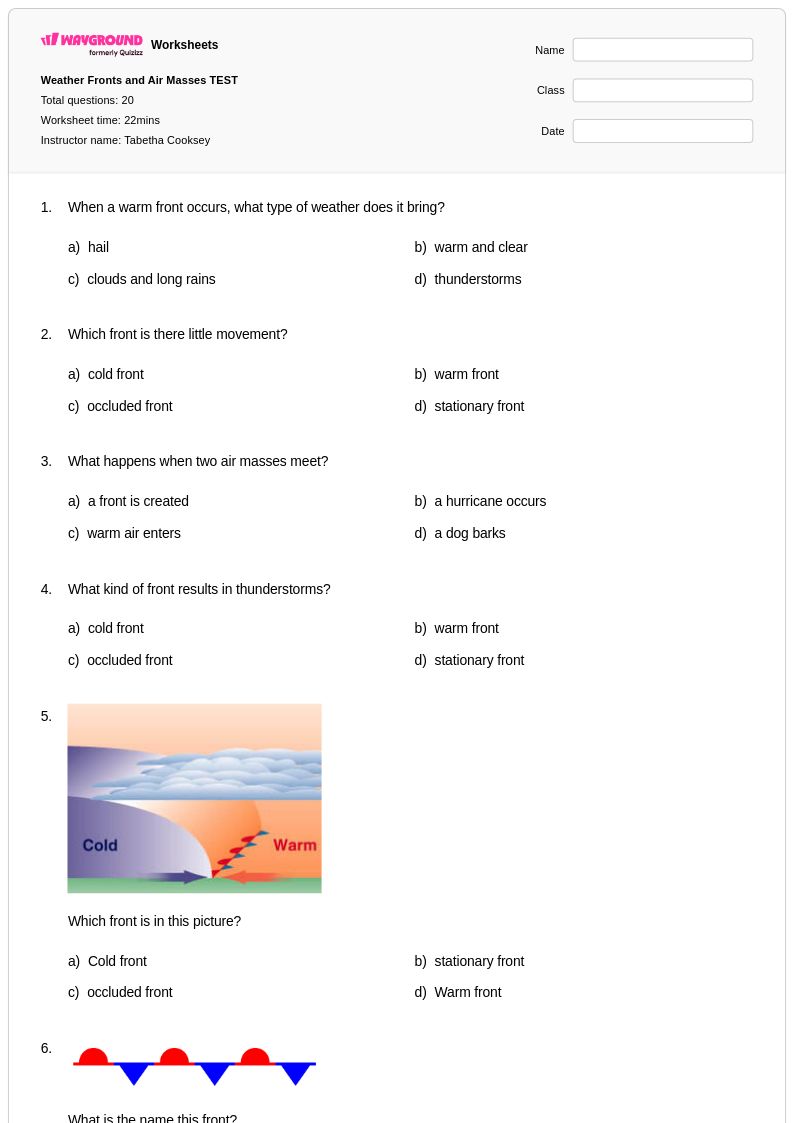
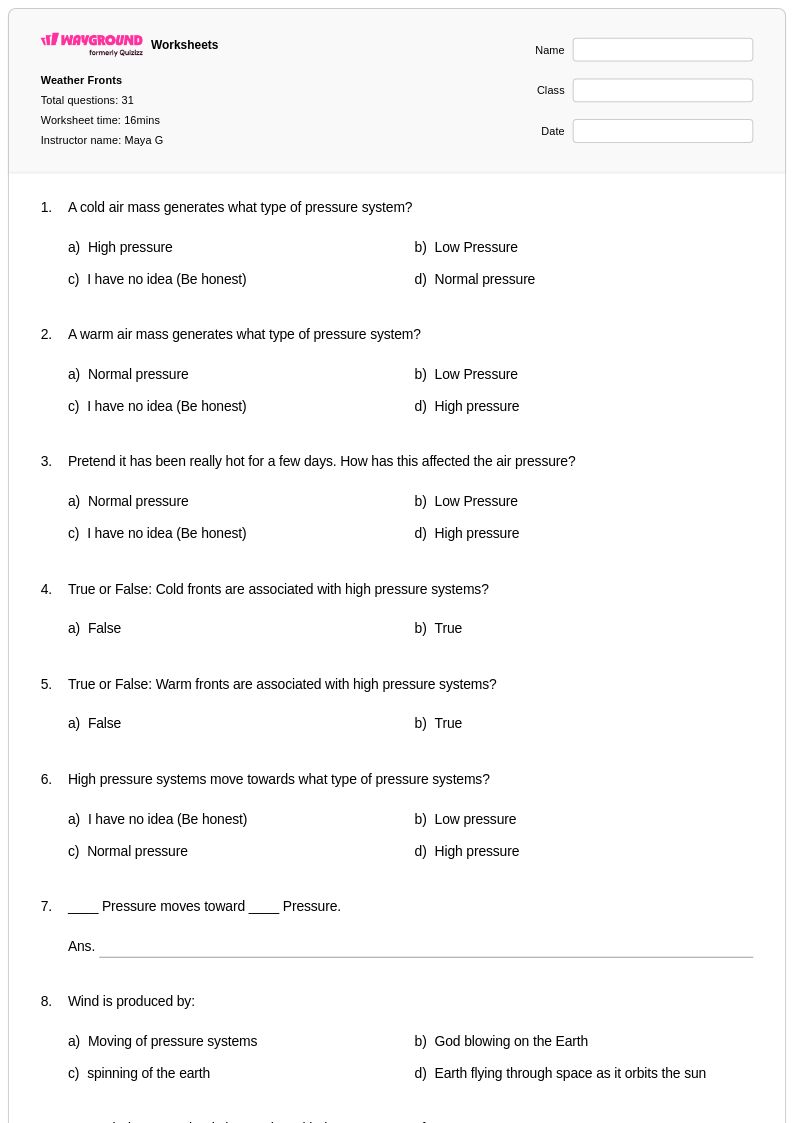
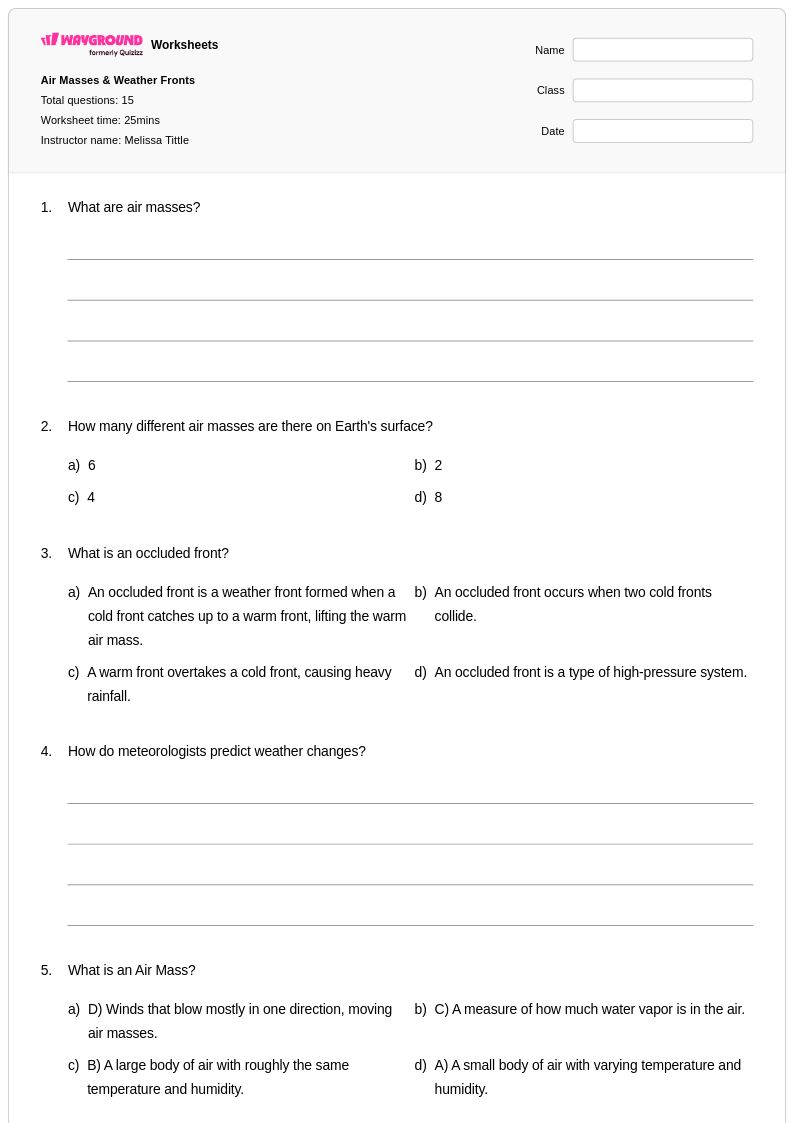
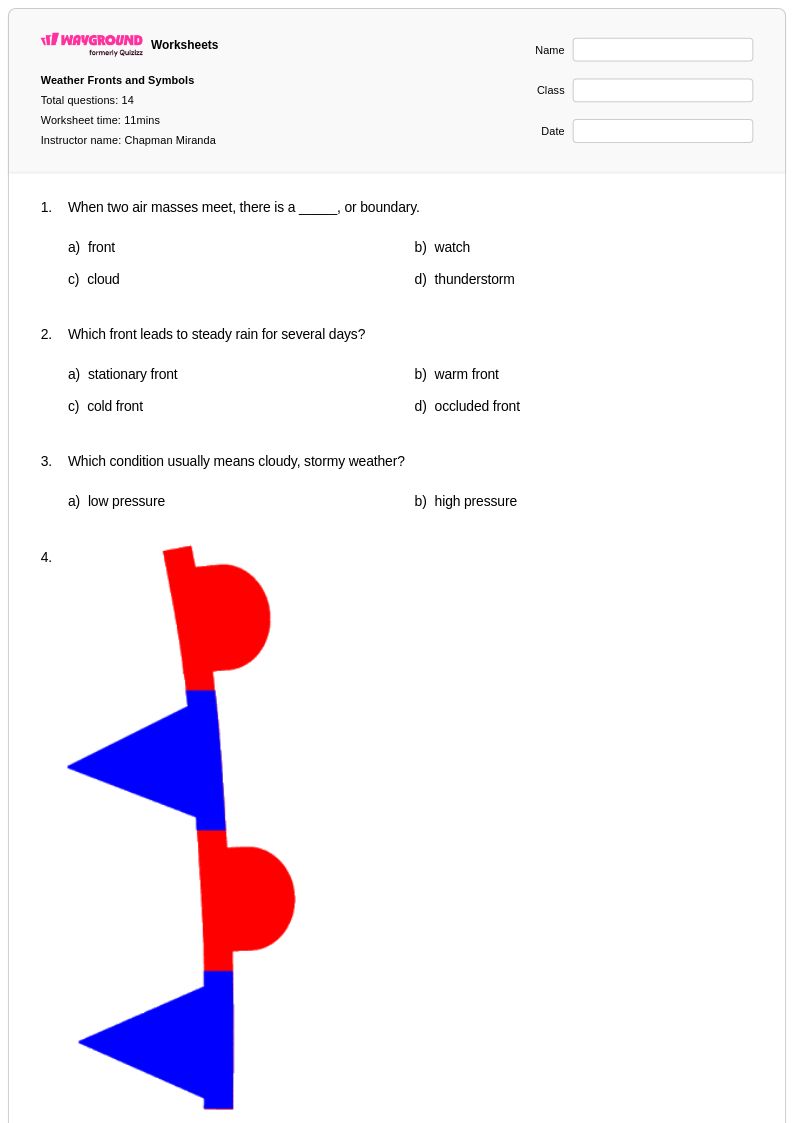
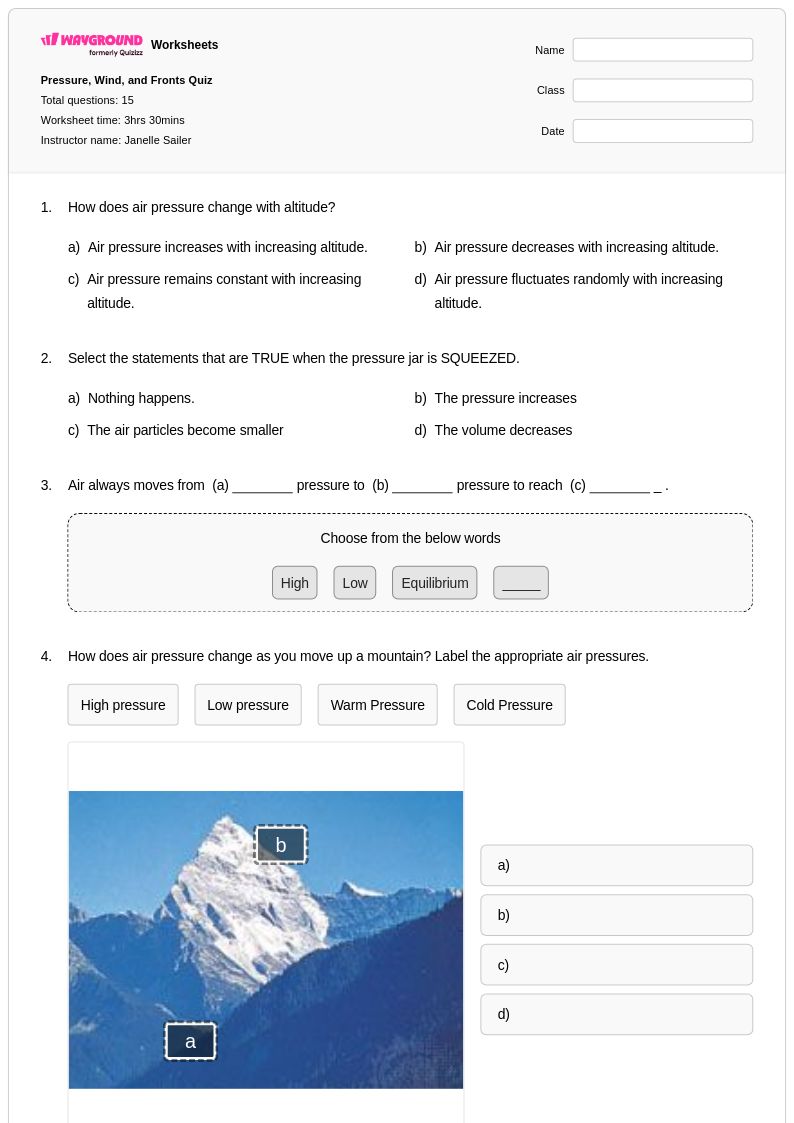
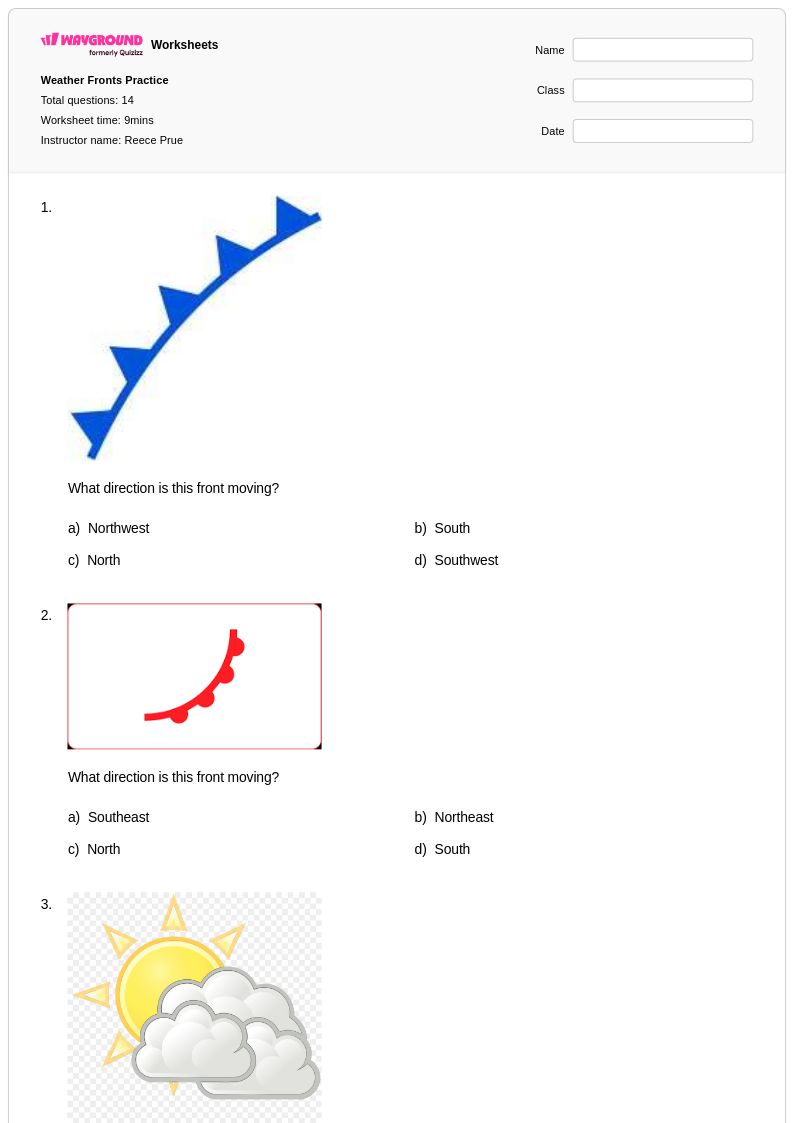
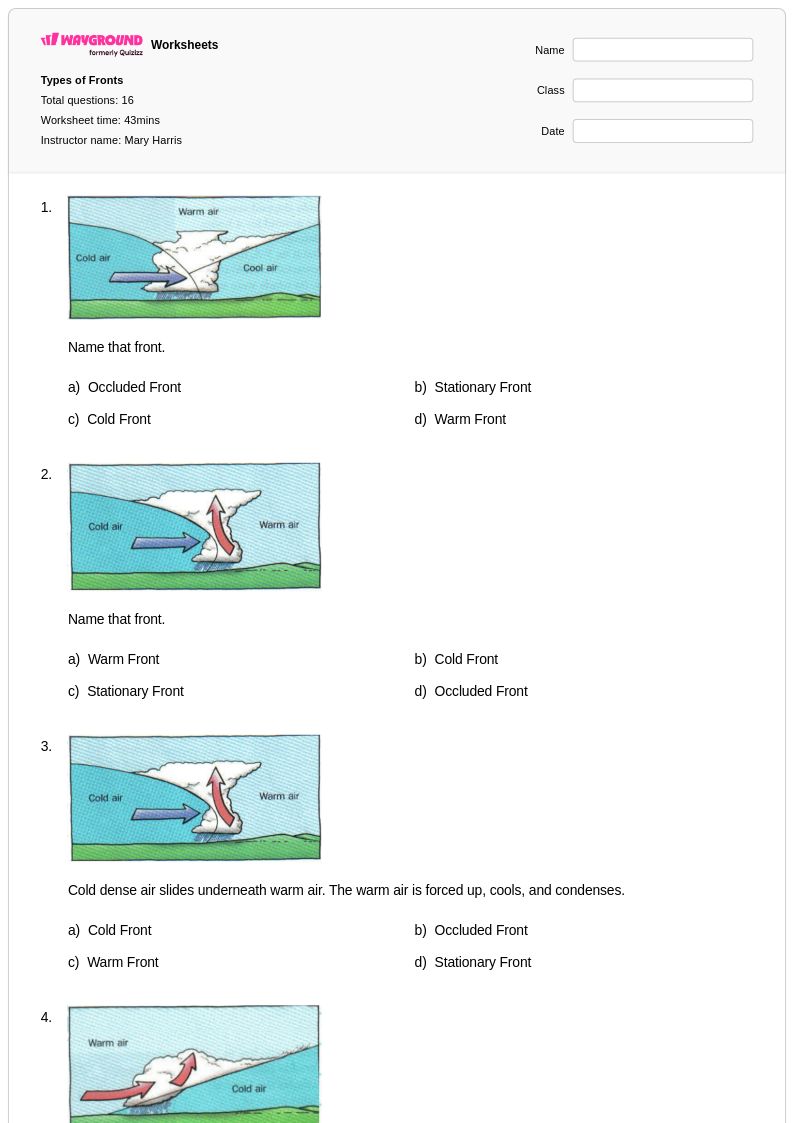
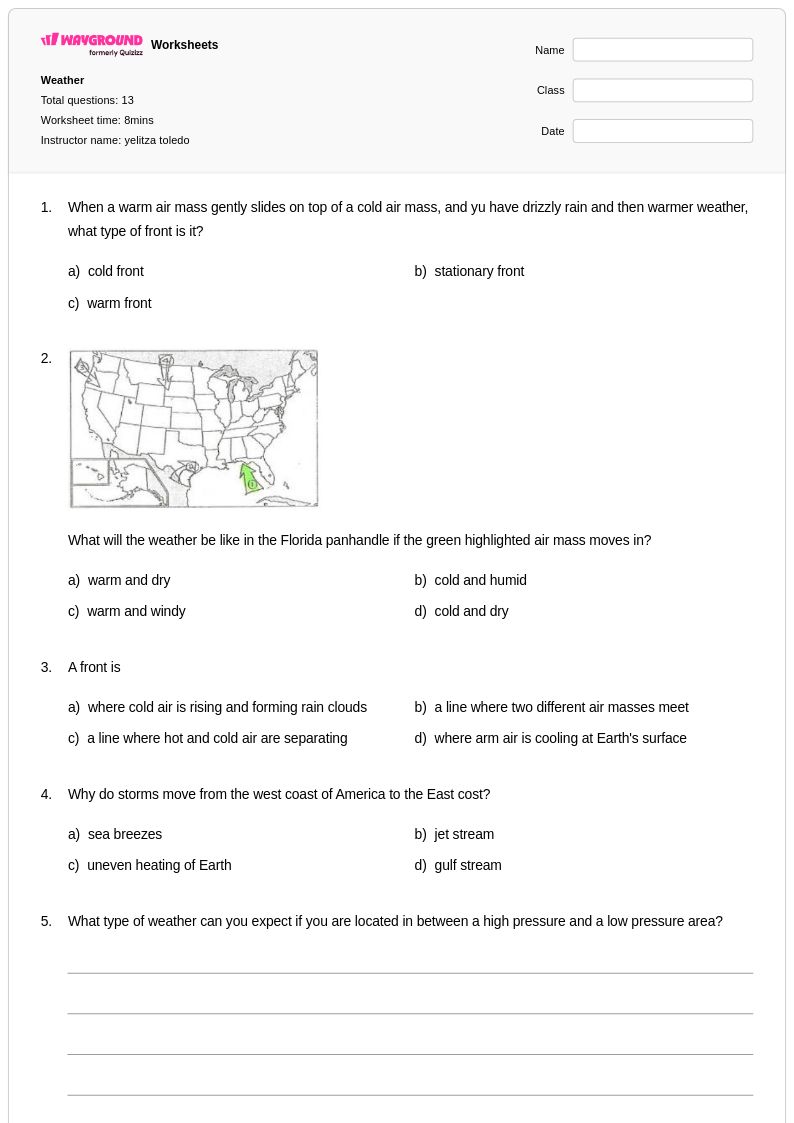
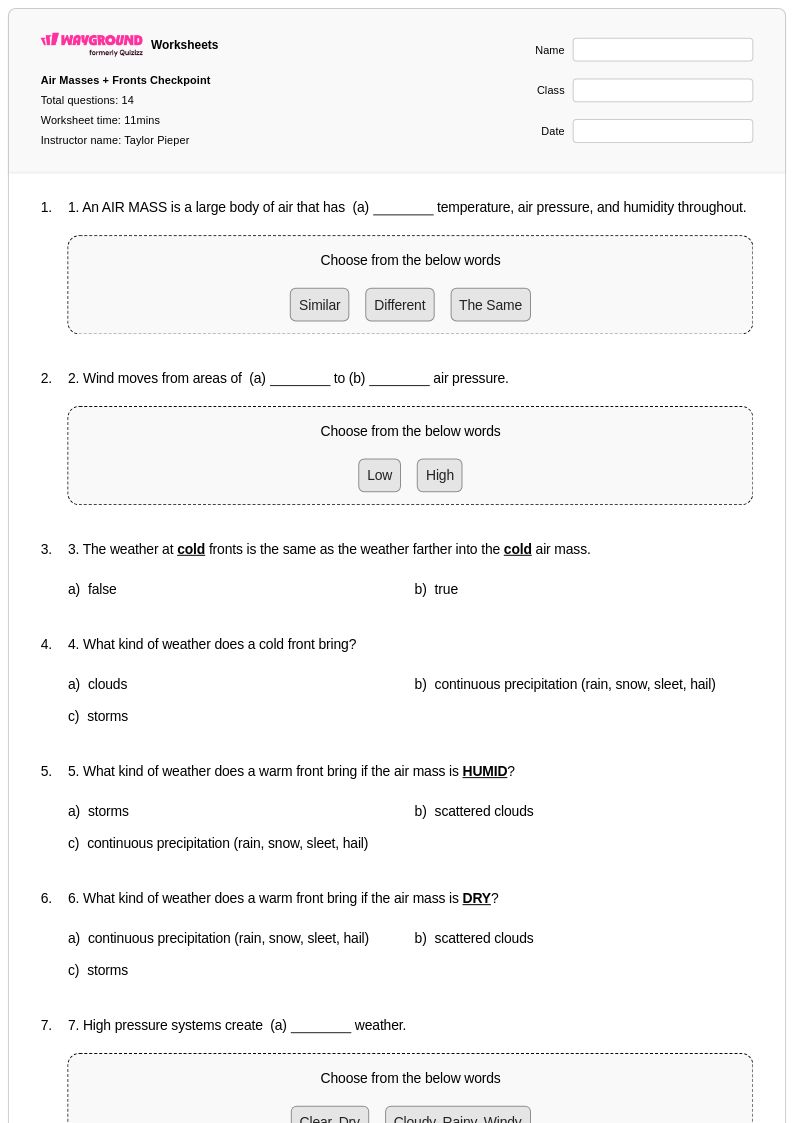
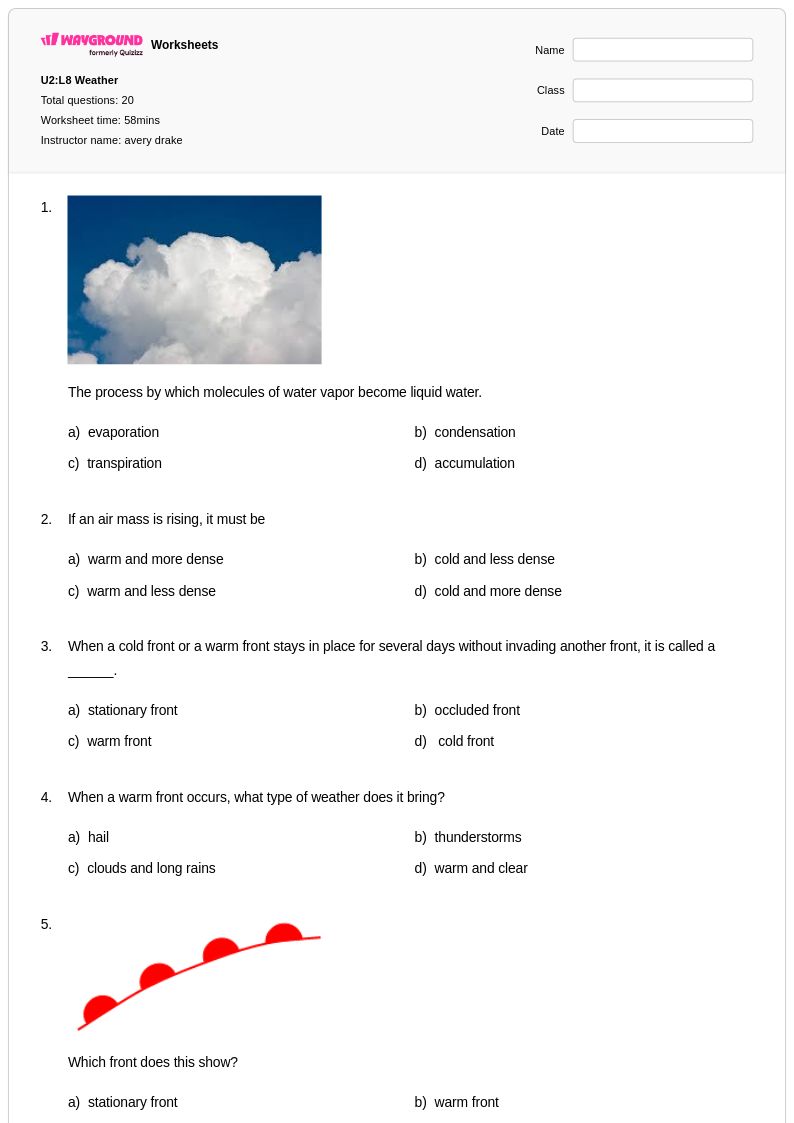
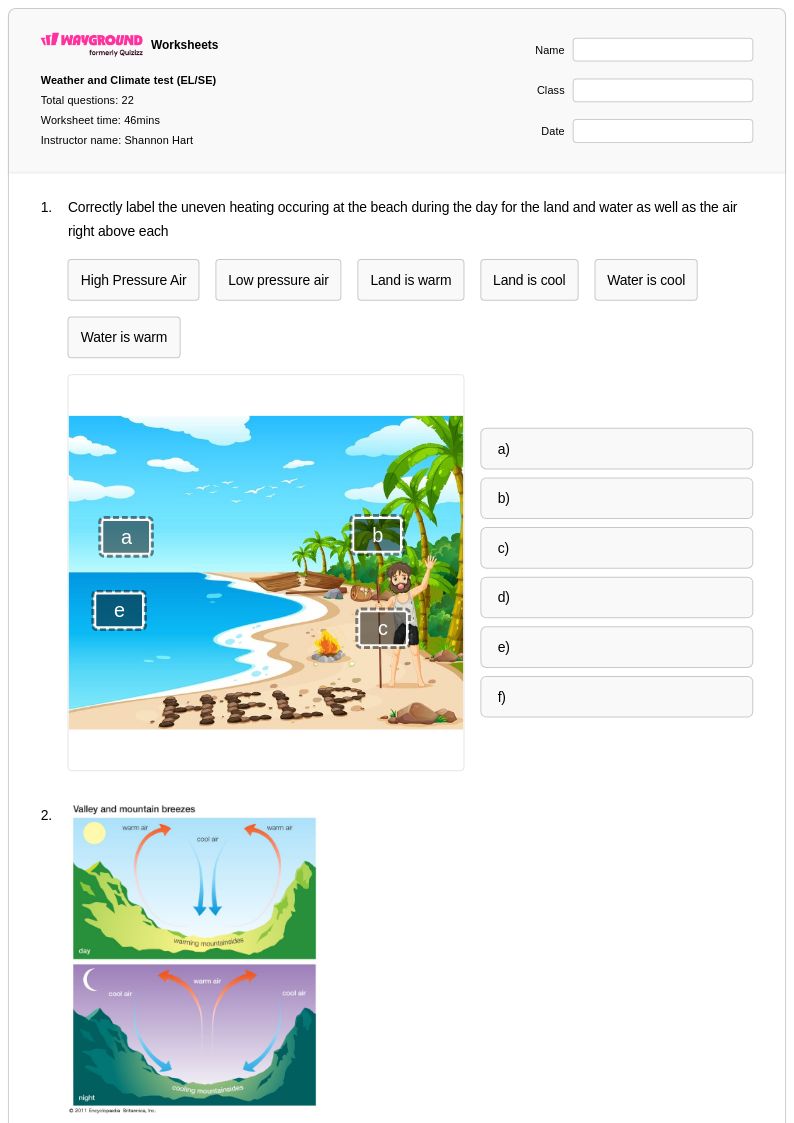
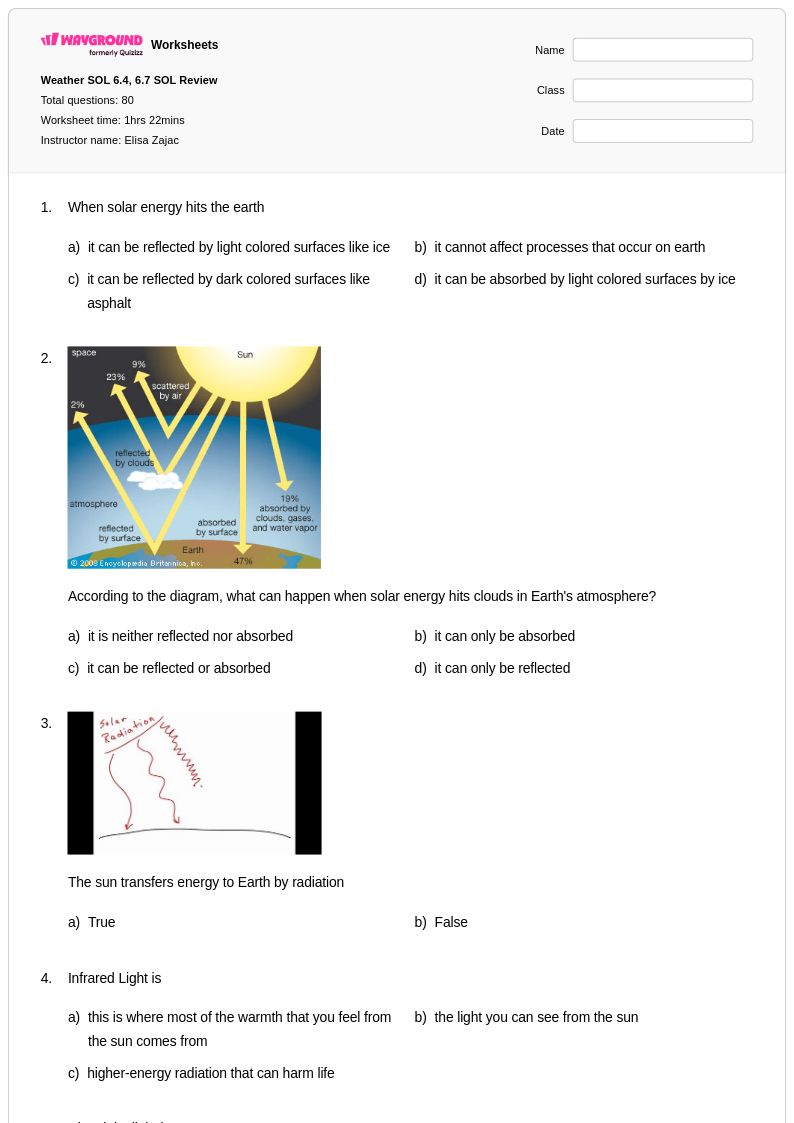
Weather fronts worksheets for Grade 6 students provide comprehensive practice with understanding the dynamic interactions between air masses that create our changing weather patterns. These educational resources strengthen students' ability to identify cold fronts, warm fronts, occluded fronts, and stationary fronts while developing skills in reading weather maps, predicting weather changes, and analyzing atmospheric conditions. The free printables include practice problems that challenge students to interpret meteorological symbols, trace the movement of frontal systems across geographic regions, and connect frontal passages to observable weather phenomena like temperature shifts, precipitation patterns, and wind direction changes. Each worksheet collection comes with a detailed answer key in pdf format, enabling students to check their understanding of complex concepts such as air mass characteristics, frontal boundaries, and the relationship between atmospheric pressure and weather front development.
Wayground, formerly Quizizz, supports educators with an extensive library of millions of teacher-created weather fronts resources that make lesson planning and student assessment more effective and engaging. Teachers can easily search and filter through professionally designed worksheets that align with Grade 6 earth and space science standards, accessing materials in both printable pdf format and interactive digital versions to accommodate diverse classroom needs. The platform's differentiation tools allow educators to customize content difficulty levels, making it simple to provide targeted remediation for struggling students while offering enrichment activities for advanced learners. These flexible resources support systematic skill practice throughout weather and climate units, helping teachers efficiently deliver focused instruction on atmospheric science concepts while providing students with varied opportunities to master the identification and analysis of weather front systems.
FAQs
How do I teach weather fronts to middle school students?
Start by grounding students in the concept of air masses before introducing frontal boundaries. Use weather maps to show where cold, warm, occluded, and stationary fronts appear, and have students trace how each front moves over time. Connecting frontal types to observable outcomes like temperature drops, precipitation, and wind shifts helps students build predictive thinking rather than just memorizing definitions.
What's the best way to help students practice reading weather maps with fronts?
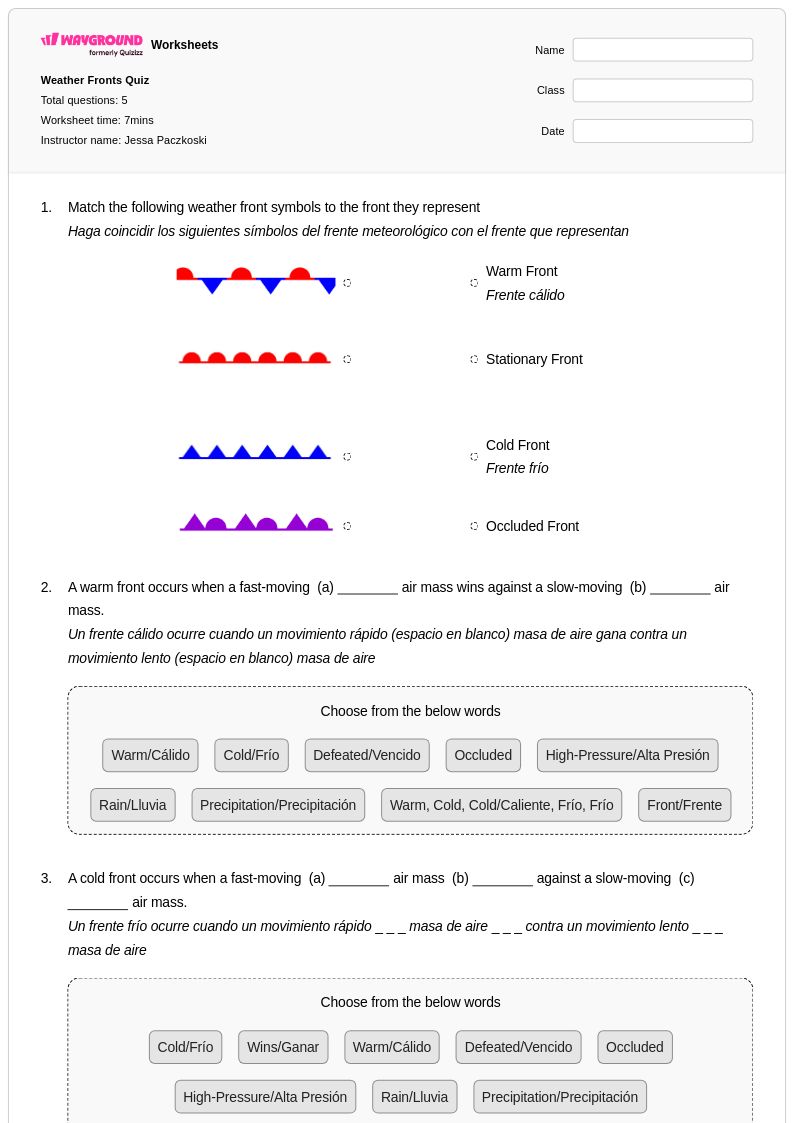
Worksheet exercises that ask students to identify front types from standard meteorological symbols, then predict the weather conditions ahead of and behind each front, are highly effective for building map literacy. Practice problems that involve analyzing atmospheric pressure changes alongside frontal positions reinforce the connection between pressure systems and frontal movement, which is a core skill in Earth science.
What mistakes do students commonly make when learning about weather fronts?
The most common misconception is confusing which air mass is advancing in a cold versus warm front — students often mix up which side of the boundary experiences warming or cooling. Another frequent error is treating occluded fronts as simply a combination of cold and warm fronts without understanding the lifting mechanism involved. Students also tend to overlook the role of atmospheric pressure when predicting weather changes associated with frontal passage.
How can I differentiate weather fronts instruction for students at different skill levels?
For students who need additional support, reduce the complexity of weather maps used in practice and focus on cold and warm fronts before introducing occluded and stationary fronts. For advanced learners, assign problems that require synthesizing pressure data, wind direction, and frontal movement to generate a full weather forecast. On Wayground, teachers can apply accommodations such as read aloud, reduced answer choices, and extended time to individual students, allowing the rest of the class to work with default settings without disruption.
How do I use Wayground's weather fronts worksheets in my classroom?
Wayground's weather fronts worksheets are available as printable PDFs for traditional classroom use and in digital formats for technology-integrated environments, including the option to host them as a quiz directly on Wayground. Each worksheet includes a complete answer key, making them suitable for guided instruction, independent practice, homework, or formative assessment. The digital format is particularly useful for remote or hybrid settings where students need interactive access to weather map activities.
How do weather fronts connect to broader Earth science standards?
Weather fronts are a central concept in understanding atmospheric dynamics and are directly tied to standards covering air mass interactions, precipitation patterns, and climate systems. Teaching fronts well requires students to apply prior knowledge of temperature, density, and pressure, making it an effective integrating topic across physical and Earth science. Instruction on frontal systems also builds the analytical foundation students need for understanding severe weather events and long-term climate patterns.