Free Printable Plural and Possessive Forms Worksheets for Grade 2
Grade 2 plural and possessive forms free worksheets and printables help students master grammar rules through engaging practice problems with comprehensive answer keys available as downloadable PDFs.
Explore printable Plural and Possessive Forms worksheets for Grade 2
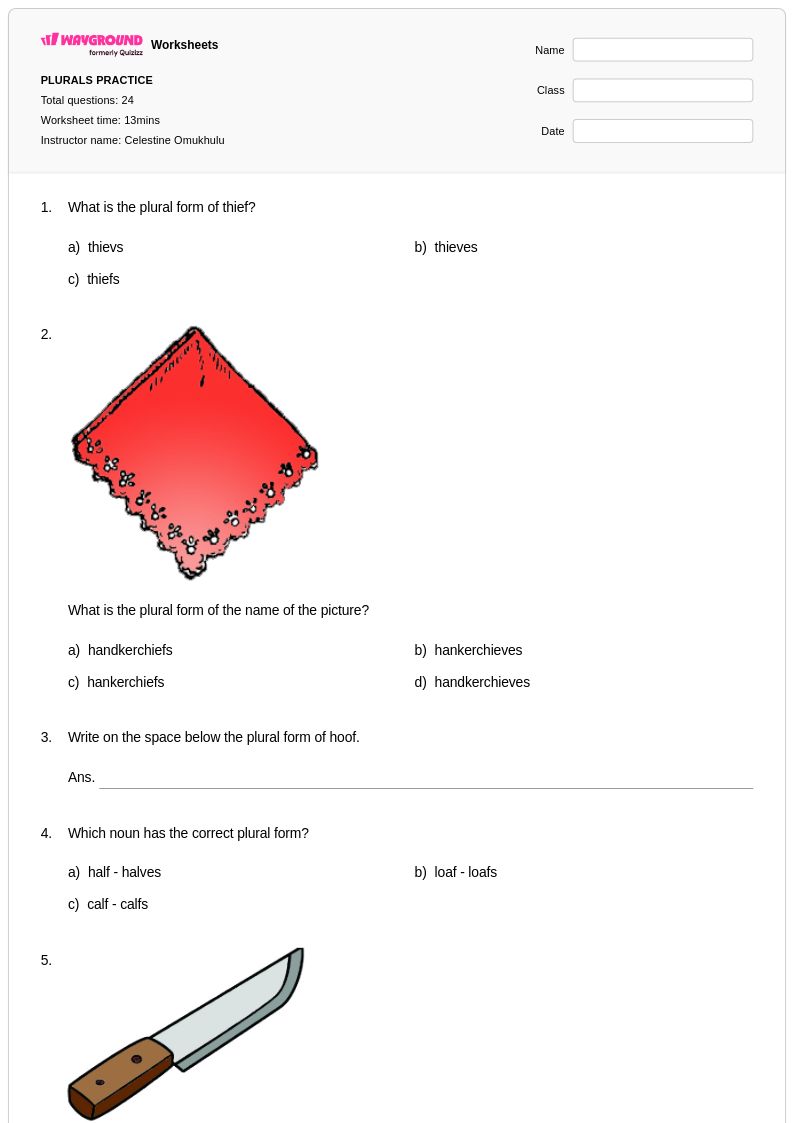
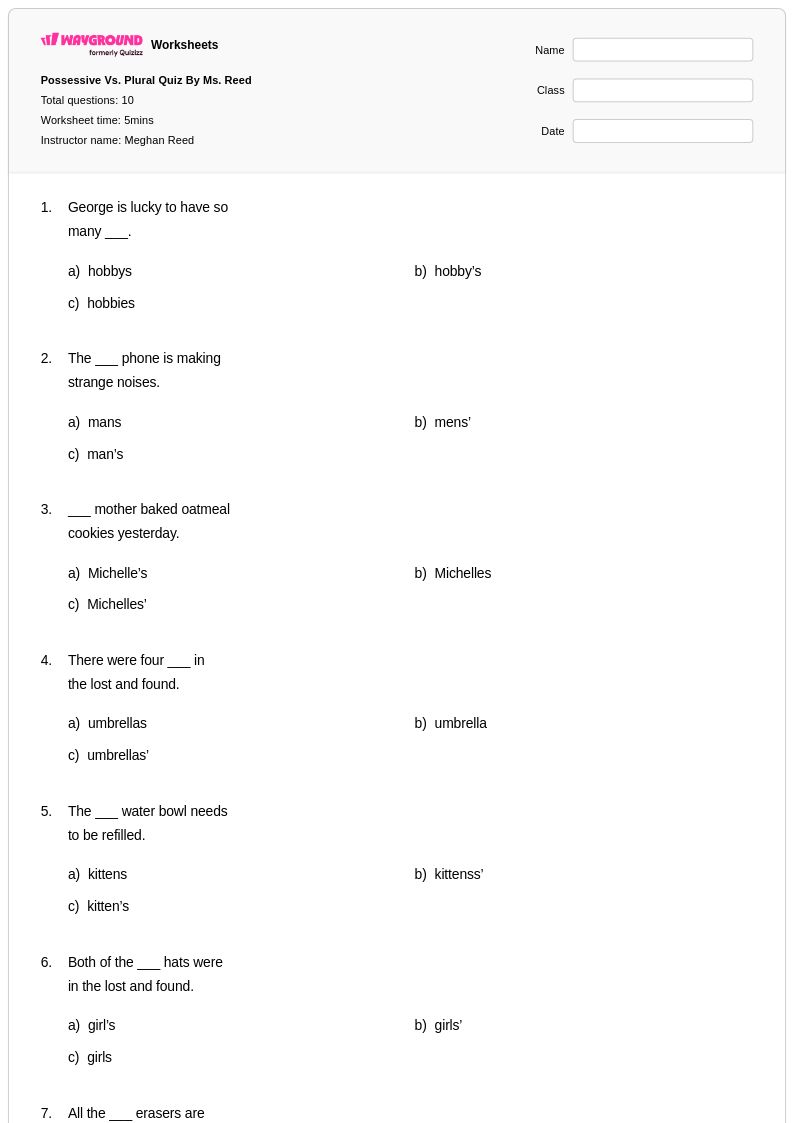
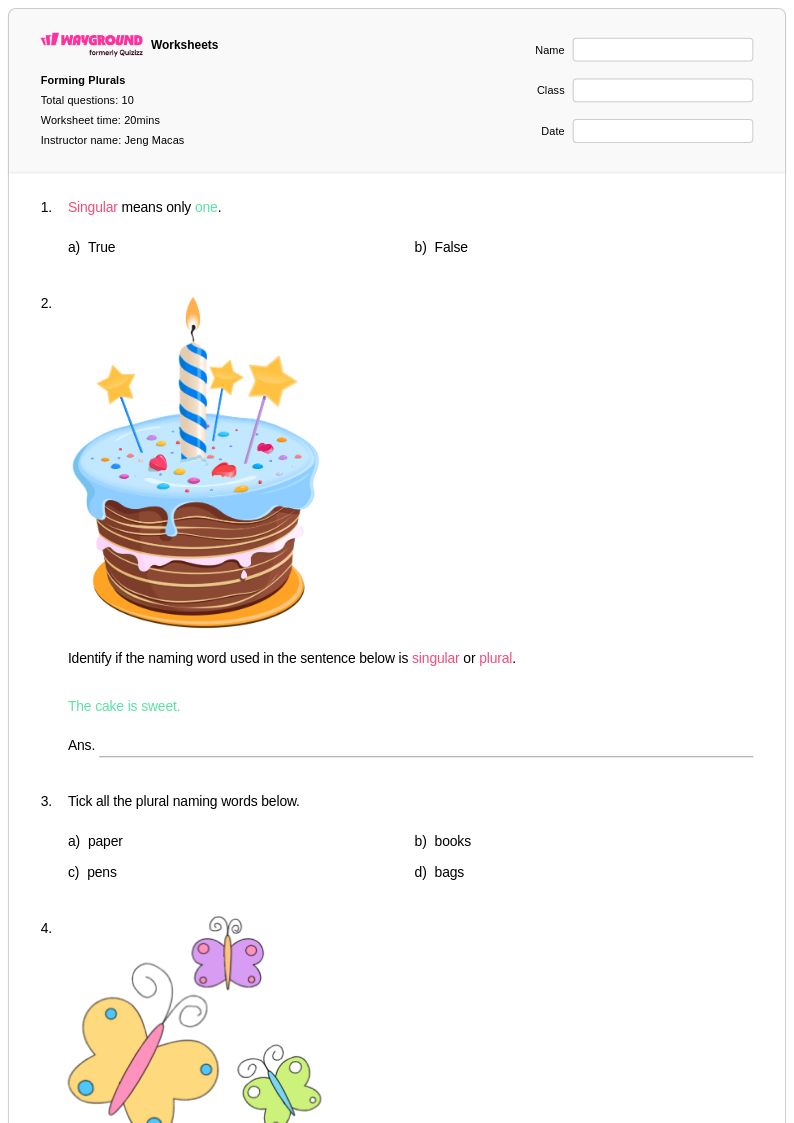
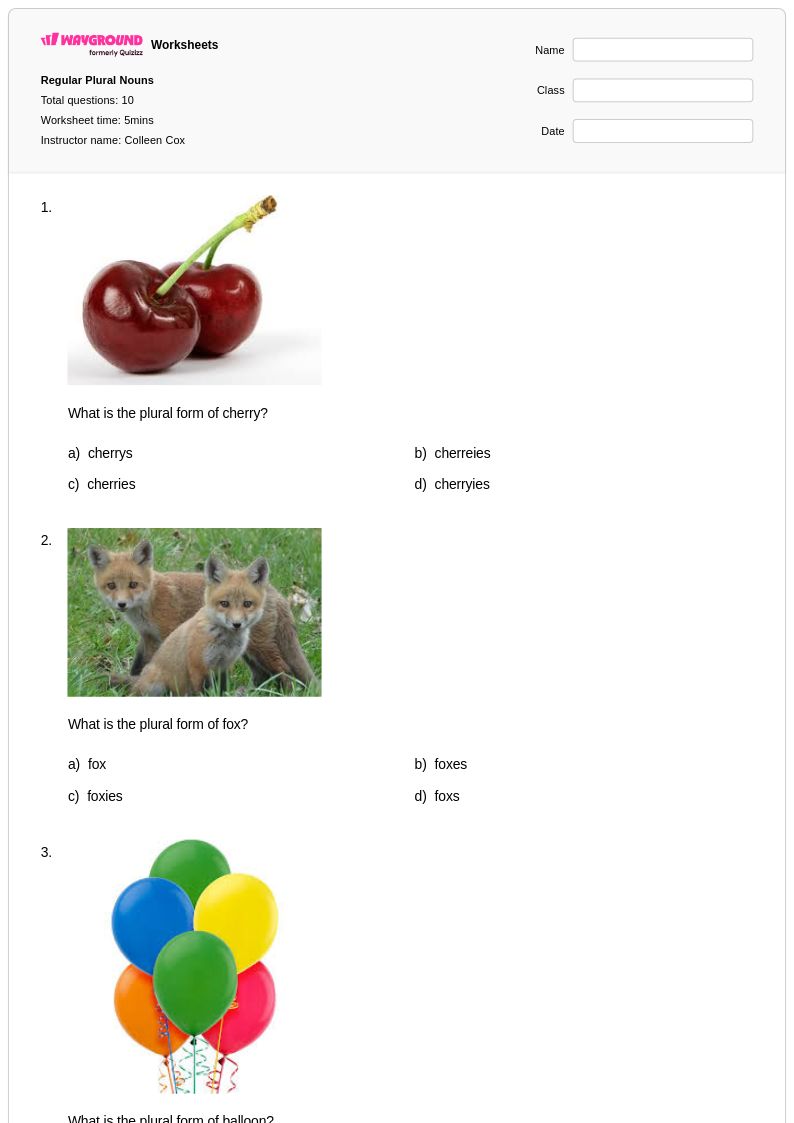
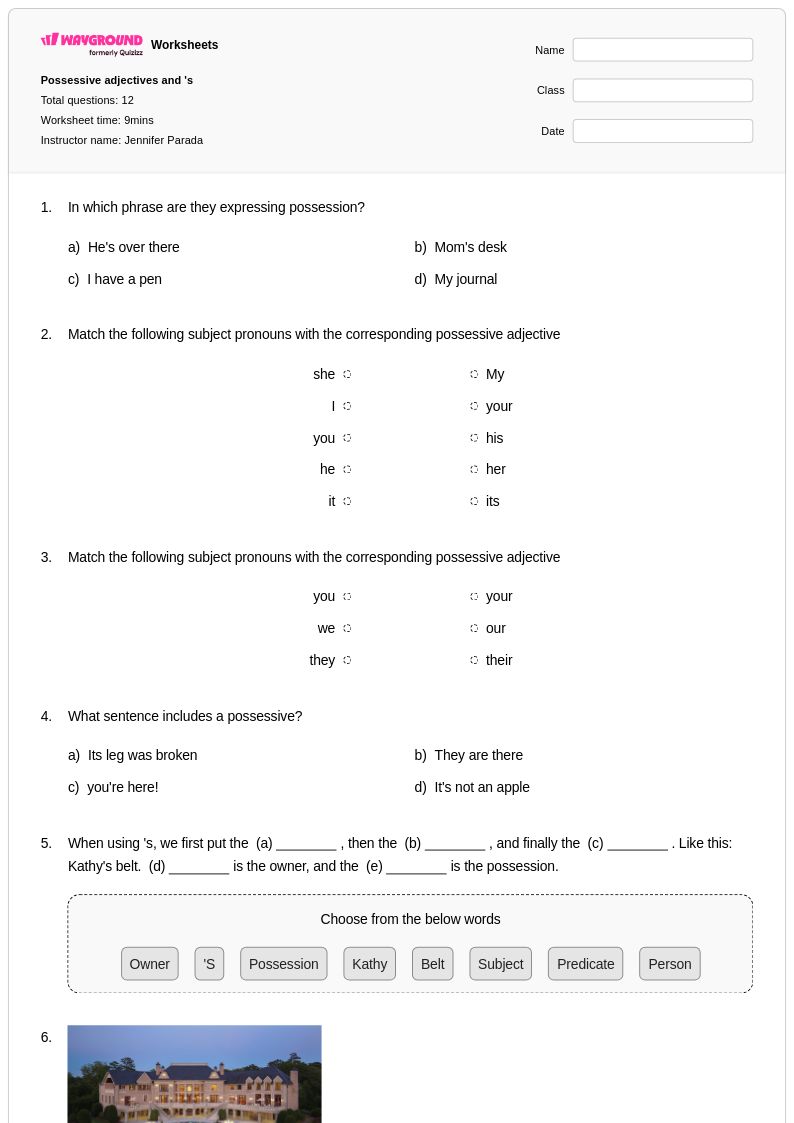
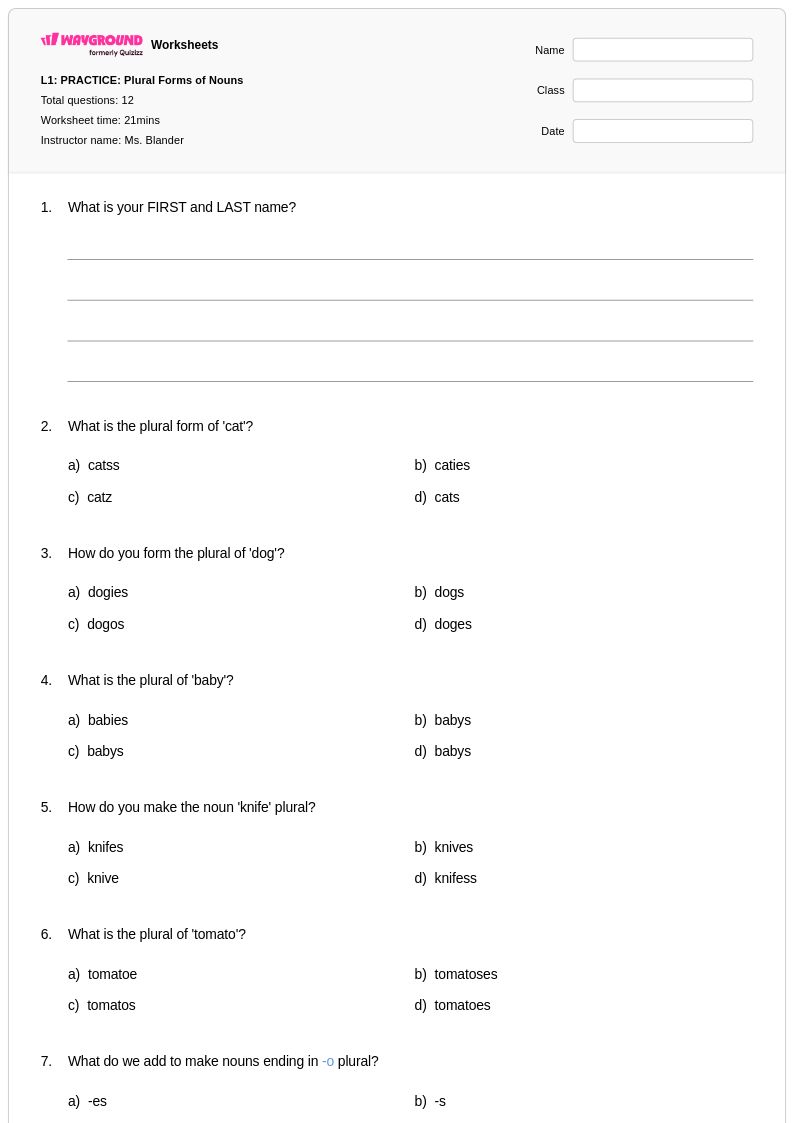
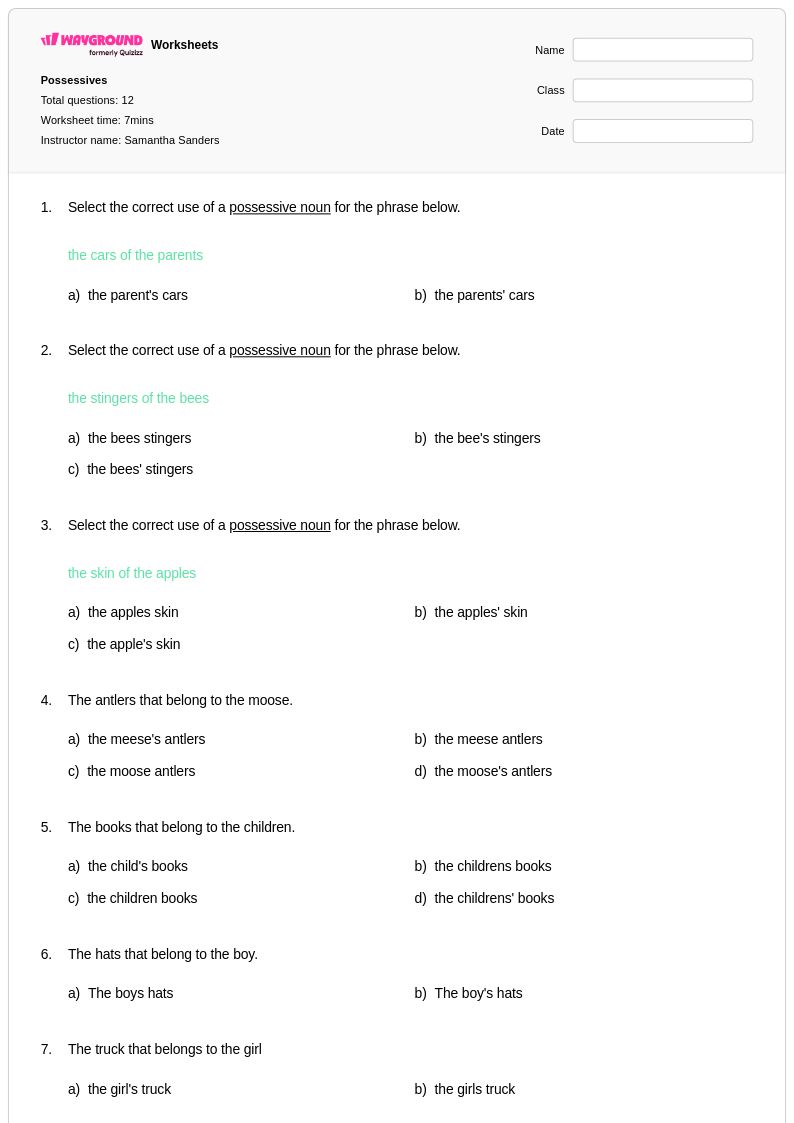
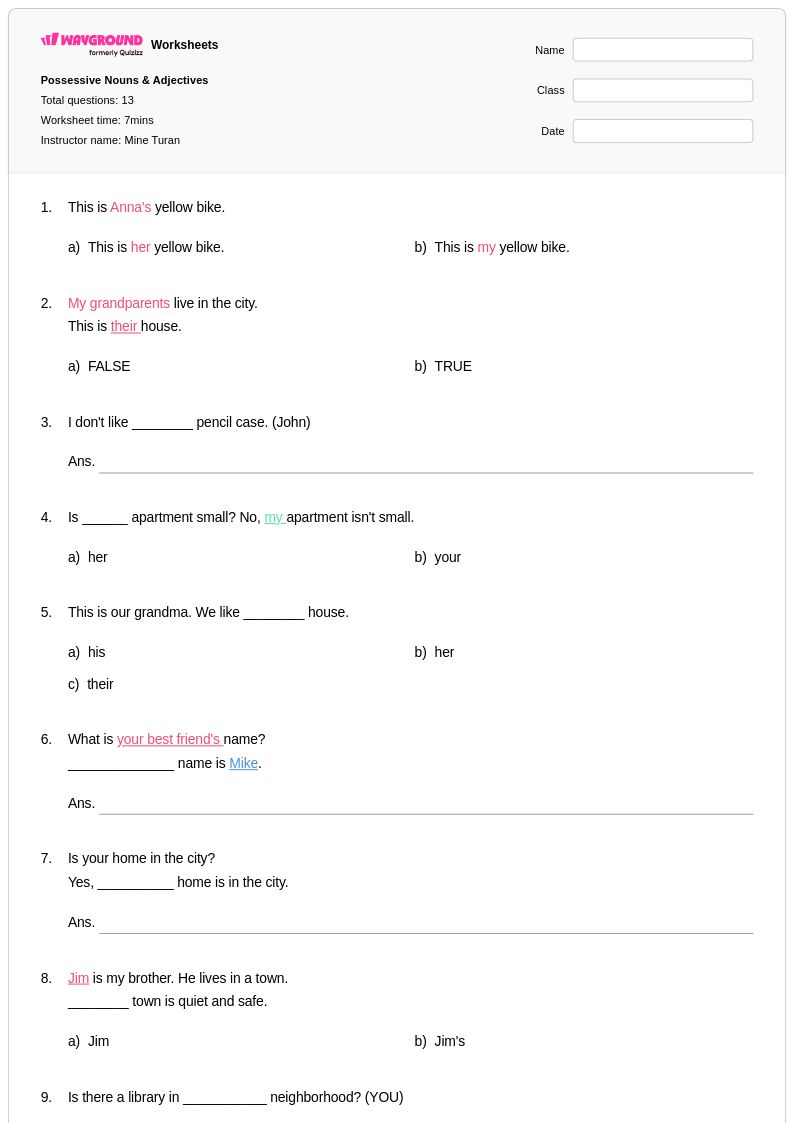
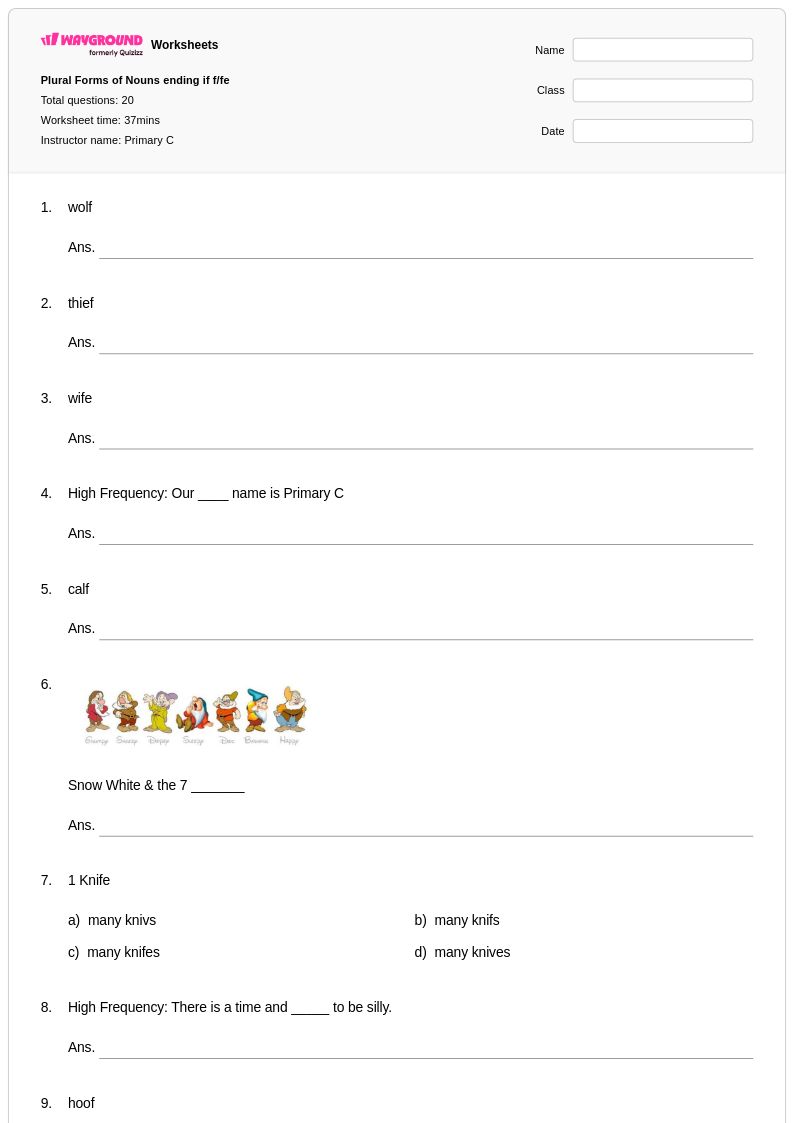
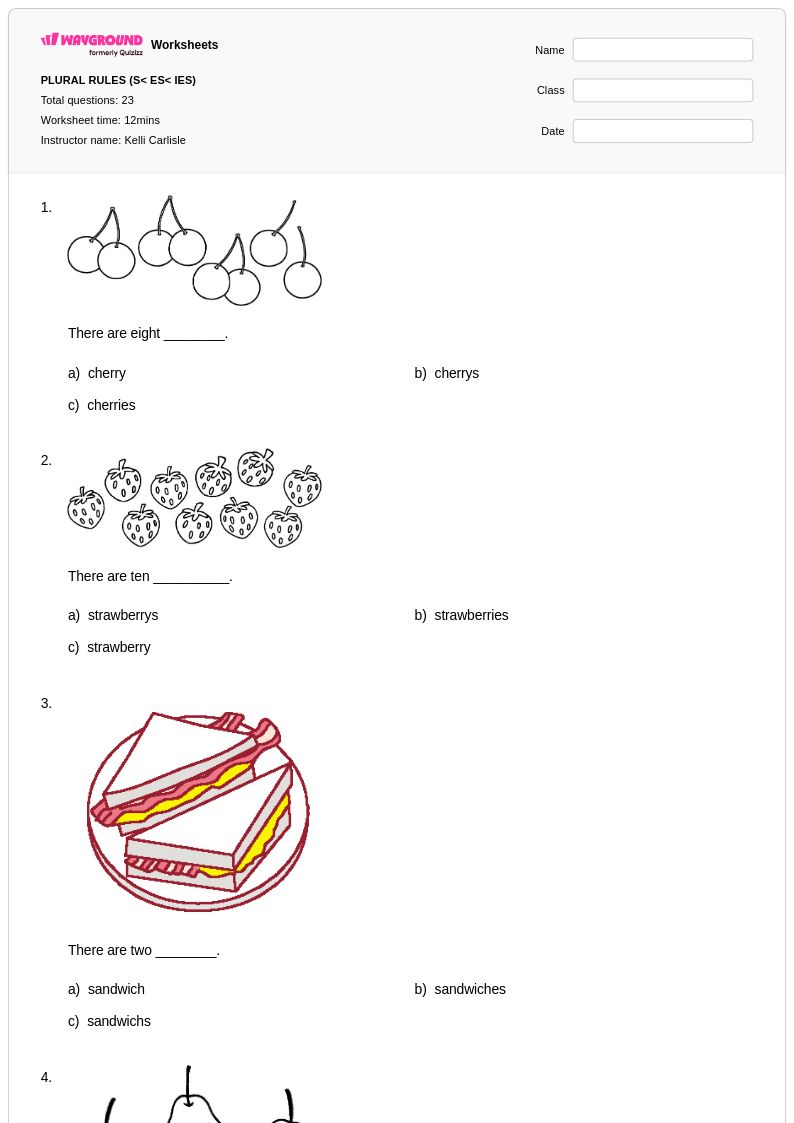
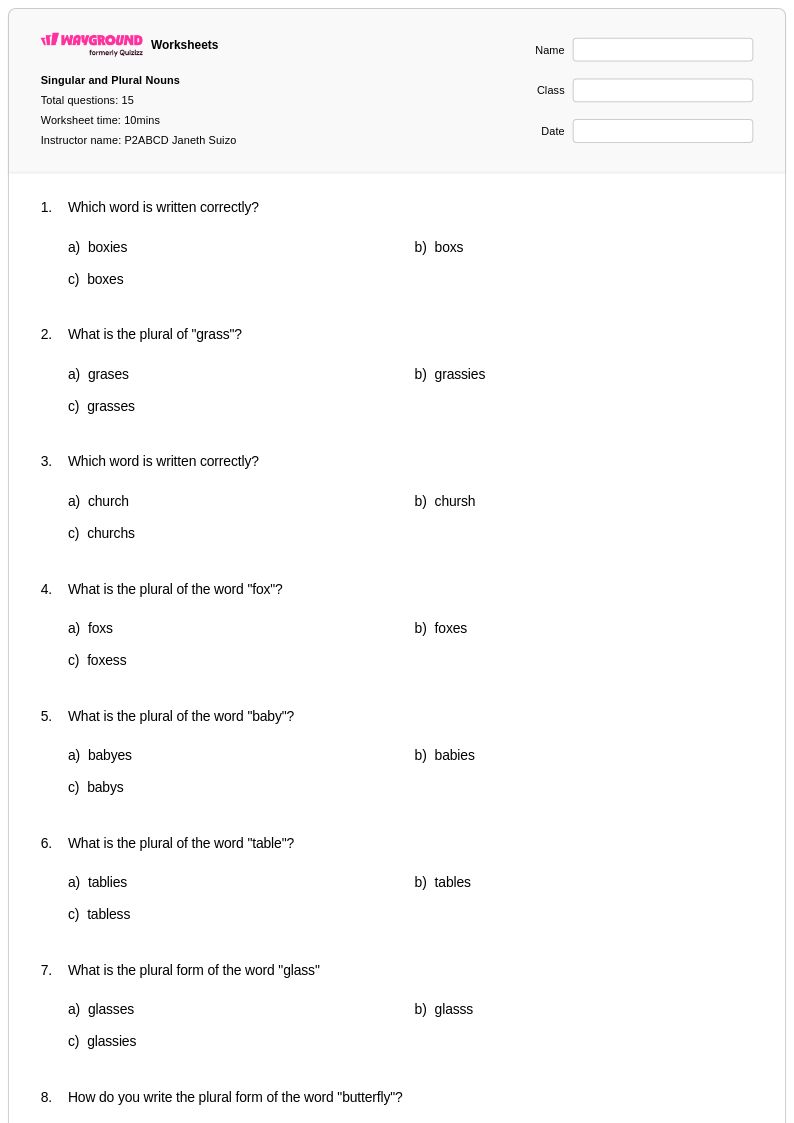
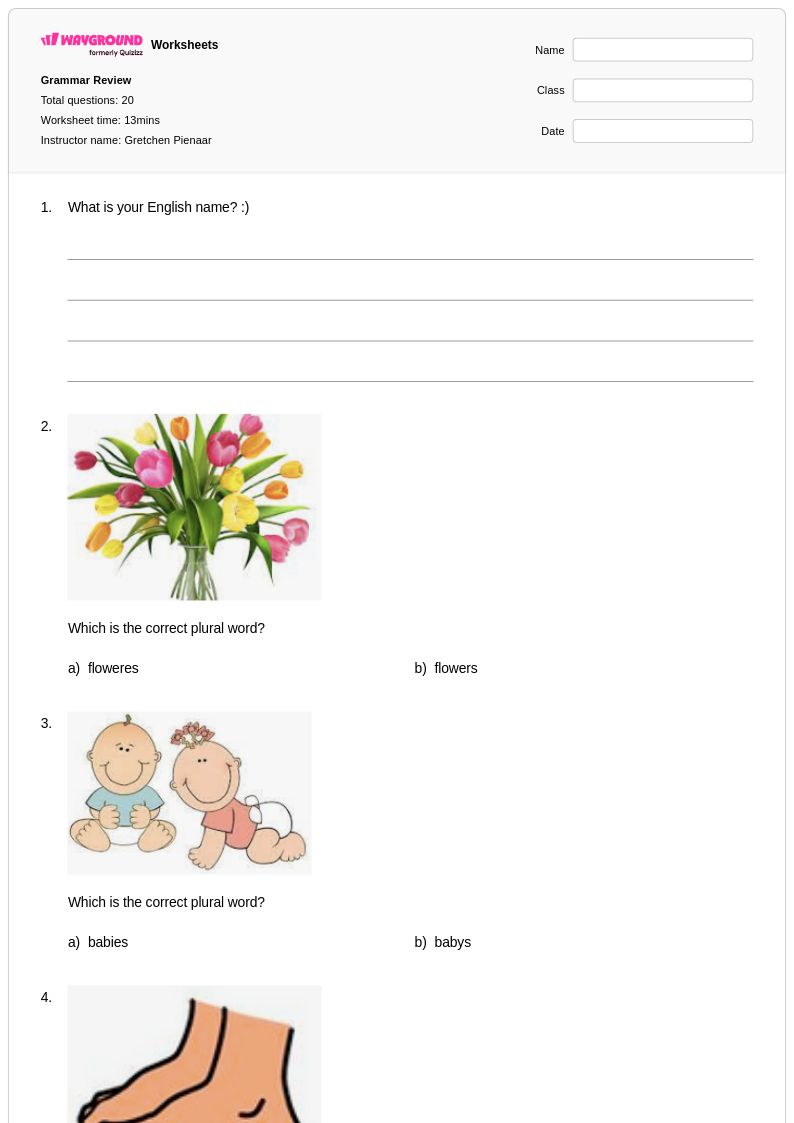
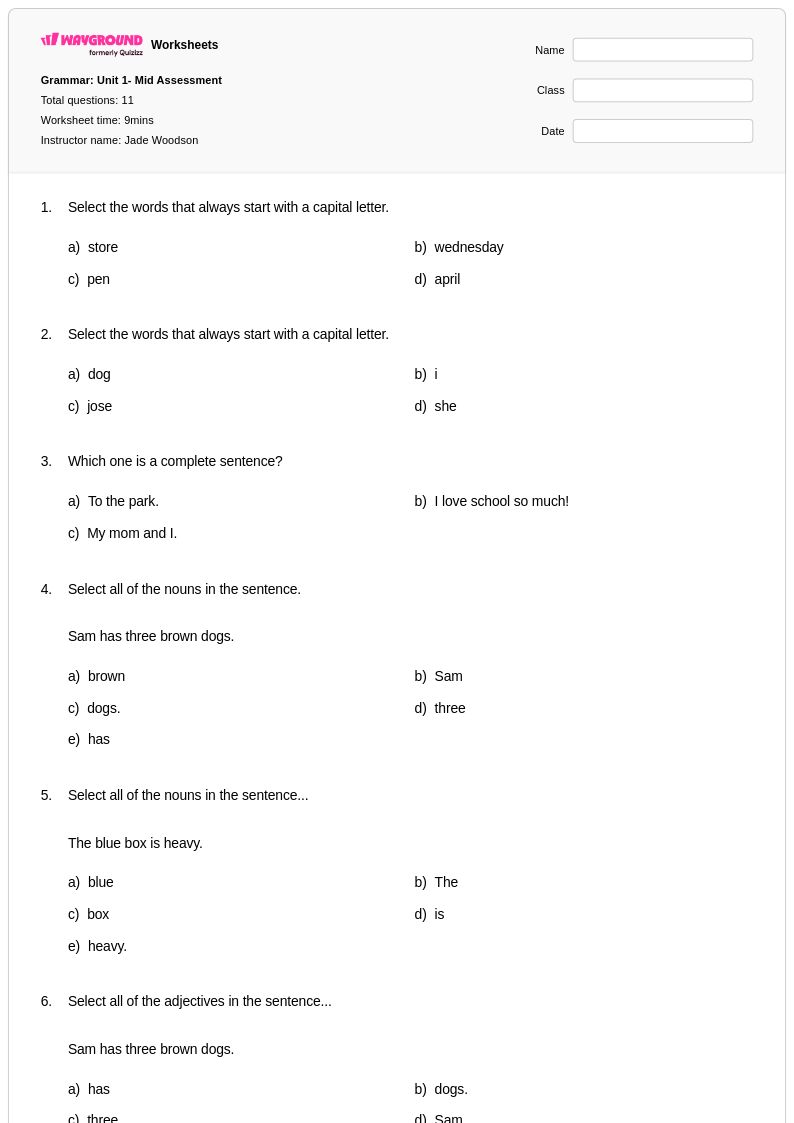
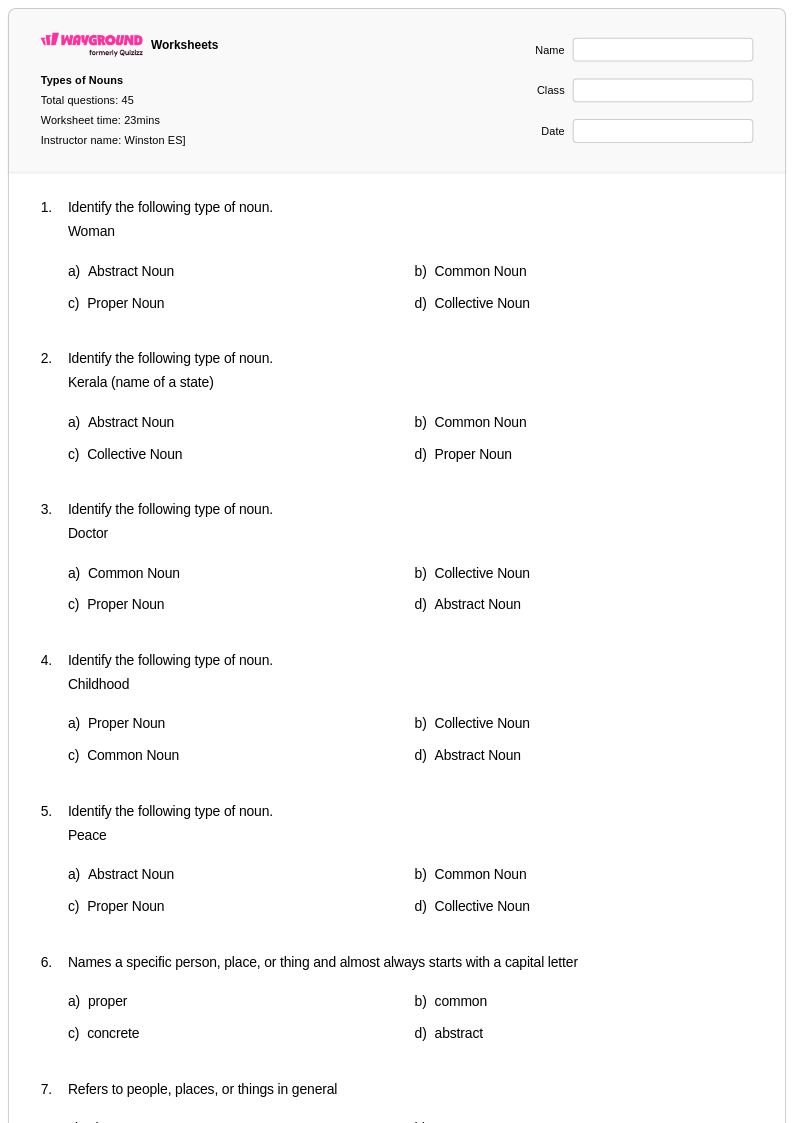
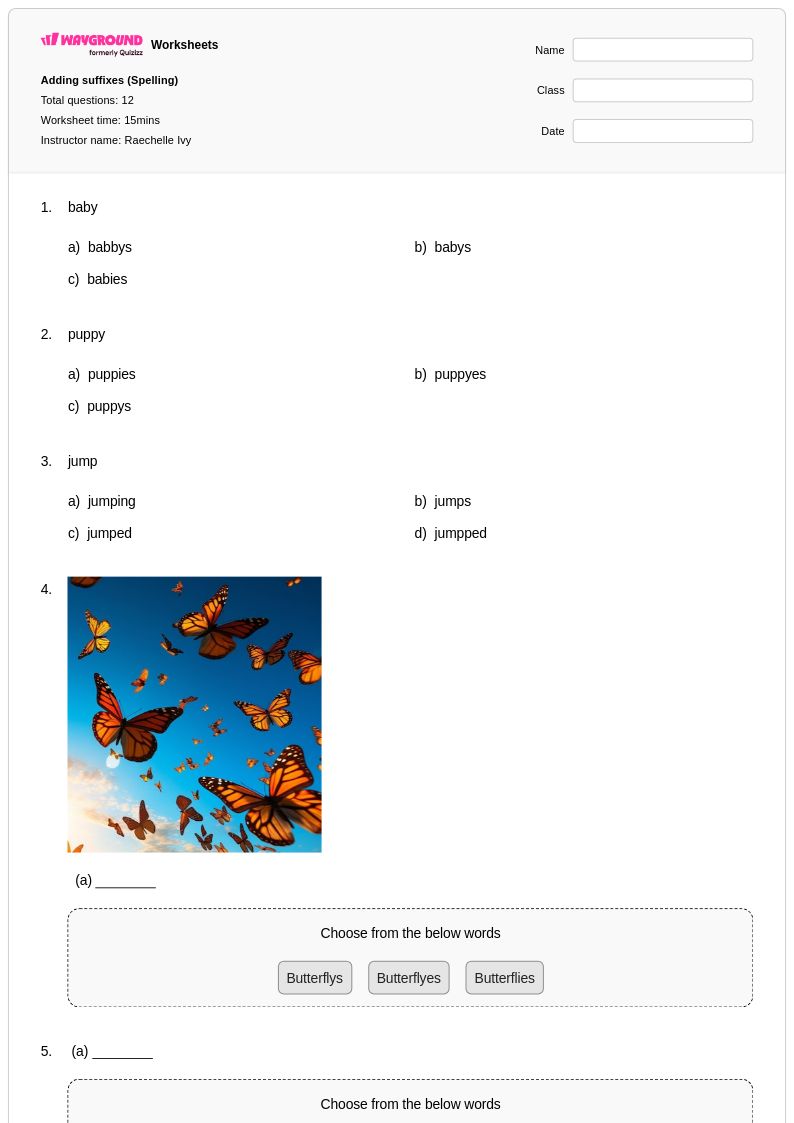
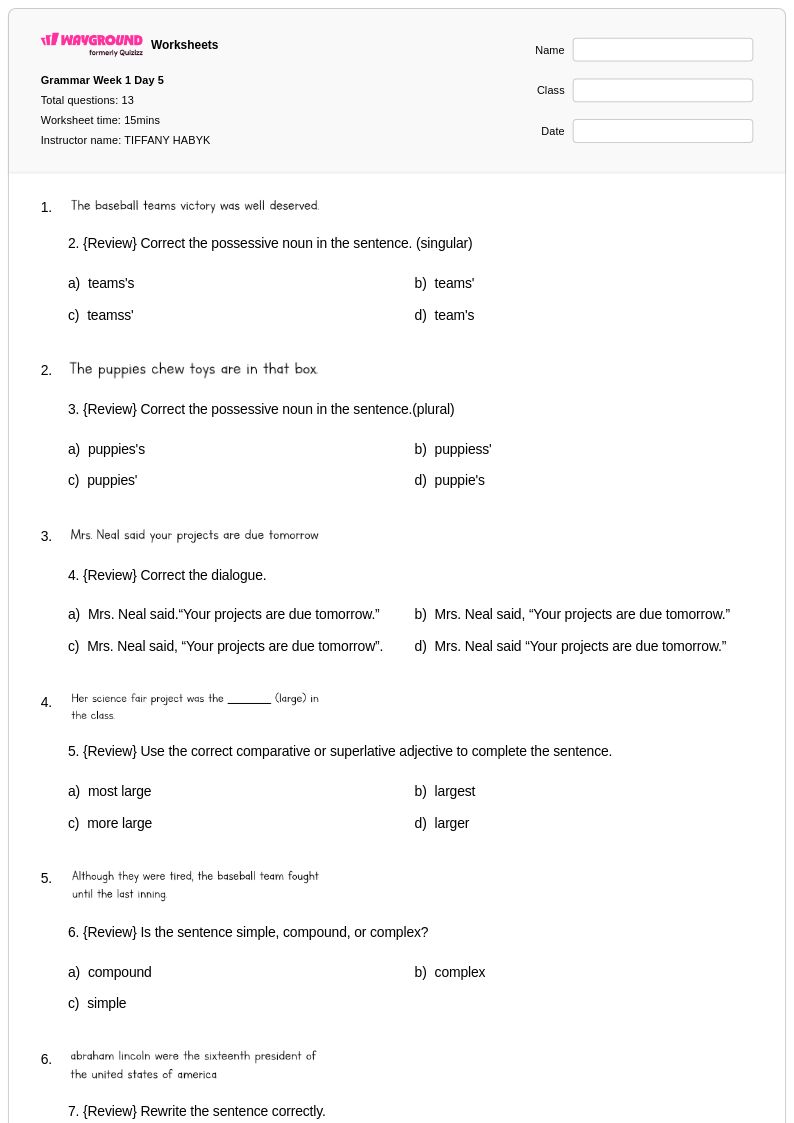
Grade 2 plural and possessive forms worksheets available through Wayground (formerly Quizizz) provide essential foundational practice for young learners developing their understanding of how words change to show quantity and ownership. These carefully designed printables target the critical distinction between adding -s or -es to create plurals versus using apostrophes to indicate possession, skills that form the bedrock of proper written communication. Each worksheet collection includes comprehensive answer keys and offers systematic practice problems that guide second-grade students through recognizing when cats means more than one cat versus cat's showing something belongs to the cat. These free resources strengthen students' ability to identify and correctly use both plural and possessive forms through engaging exercises that build confidence in grammar and mechanics fundamentals.
Wayground (formerly Quizizz) supports educators with millions of teacher-created resources specifically designed for plural and possessive instruction, featuring robust search and filtering capabilities that allow teachers to quickly locate materials aligned with grade-level standards and learning objectives. The platform's differentiation tools enable teachers to customize worksheets for varying skill levels within their Grade 2 classrooms, while flexible formatting options provide both printable pdf versions for traditional paper-based practice and digital formats for interactive learning experiences. These comprehensive collections facilitate effective lesson planning by offering systematic skill practice opportunities, targeted remediation for students struggling with apostrophe placement, and enrichment activities that challenge advanced learners to apply plural and possessive rules in increasingly complex contexts.
FAQs
How do I teach plural and possessive forms to students who keep confusing them?
The most effective approach is to teach plural and possessive forms as distinct systems before introducing them together. Start with plural rules — adding -s, -es, and irregular forms — until students are fluent, then introduce possessive apostrophes as a separate layer. Once both are solid independently, use side-by-side comparison exercises that require students to identify which form is needed in context, reinforcing that plurals signal quantity while possessives signal ownership.
What exercises help students practice forming plurals correctly?
Effective plural practice should move from recognition to production: begin with sorting exercises where students categorize words by their plural rule (words ending in -s, -es, -ies, or irregular forms), then progress to fill-in-the-blank and sentence rewriting tasks. Including irregular plurals such as 'child/children' and 'mouse/mice' early prevents students from over-applying the standard -s rule, which is one of the most persistent errors at this stage.
What mistakes do students most commonly make with possessive apostrophes?
The most common errors are placing the apostrophe after the -s in singular possessives (writing 'the dog's' correctly but then writing 'the cat's' as 'the cats'') and confusing possessive 'its' with the contraction 'it's.' Students also frequently add an apostrophe to plural nouns that are not possessive — for example, writing 'the dog's' when they simply mean more than one dog. Targeted practice that isolates each error type and requires students to explain their reasoning helps break these patterns.
How do I help students tell the difference between a plural noun and a possessive noun in a sentence?
Teach students a two-question test: First, ask 'Is there more than one?' — if yes, a plural ending without an apostrophe is likely correct. Second, ask 'Does something belong to it?' — if yes, a possessive apostrophe is needed. Sentence-level practice where students apply this test to ambiguous examples, such as 'the teachers lounge' versus 'the teachers arrived,' builds the habit of reading for meaning before selecting a form.
How do I use Wayground's plural and possessive forms worksheets in my classroom?
Wayground's plural and possessive forms worksheets are available as free printable PDFs for traditional classroom use and in digital formats for technology-integrated environments, including the option to host them as a quiz directly on Wayground. Teachers can use the printable versions for whole-class instruction, independent seat work, or homework, while the digital format supports self-paced practice and immediate feedback. Each worksheet includes a detailed answer key, reducing preparation time and making it straightforward to review work with students or use the exercises for formative assessment.
How can I differentiate plural and possessive forms practice for students at different skill levels?
For students who are still developing foundational skills, reduce cognitive load by focusing on one rule at a time — plural formation before possessive constructions — and use exercises with visual supports or word banks. For advanced students, move toward open-ended writing tasks that require correct use of both forms in context. On Wayground, teachers can apply individual accommodations such as reduced answer choices or read-aloud support for students who need additional scaffolding, without affecting the experience of the rest of the class.