Free Printable Plural Possessives Worksheets for Grade 1
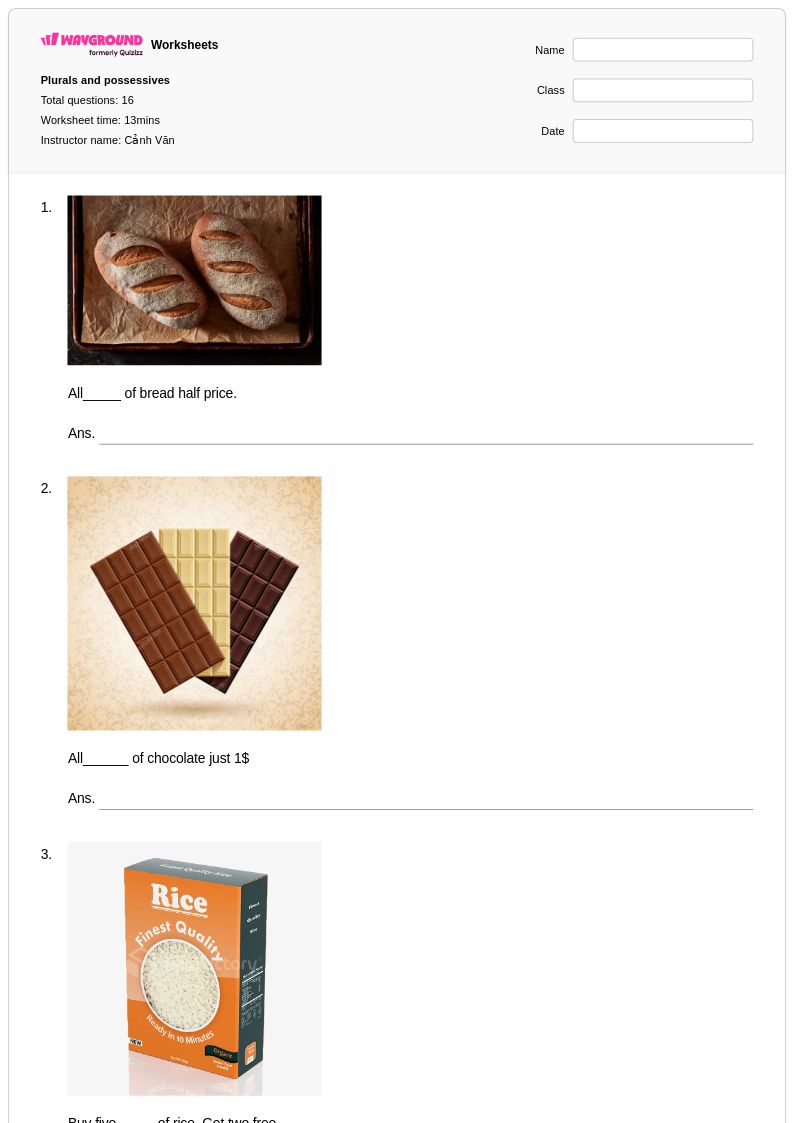
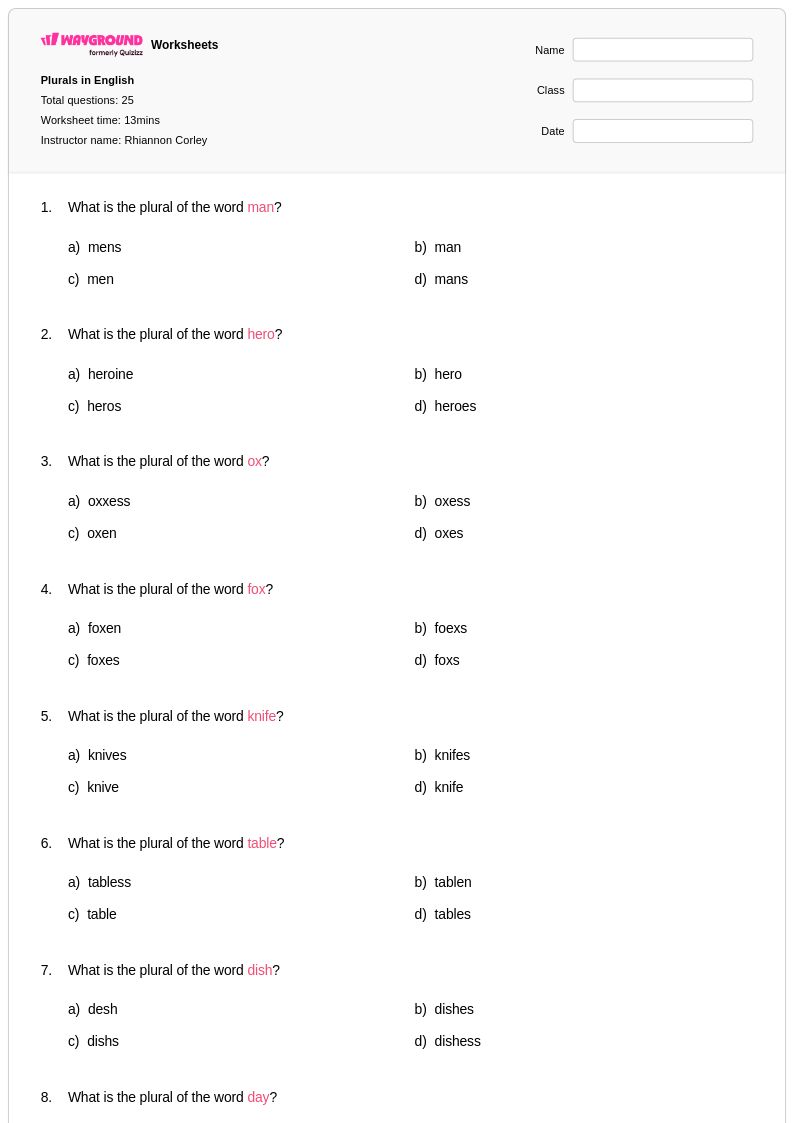
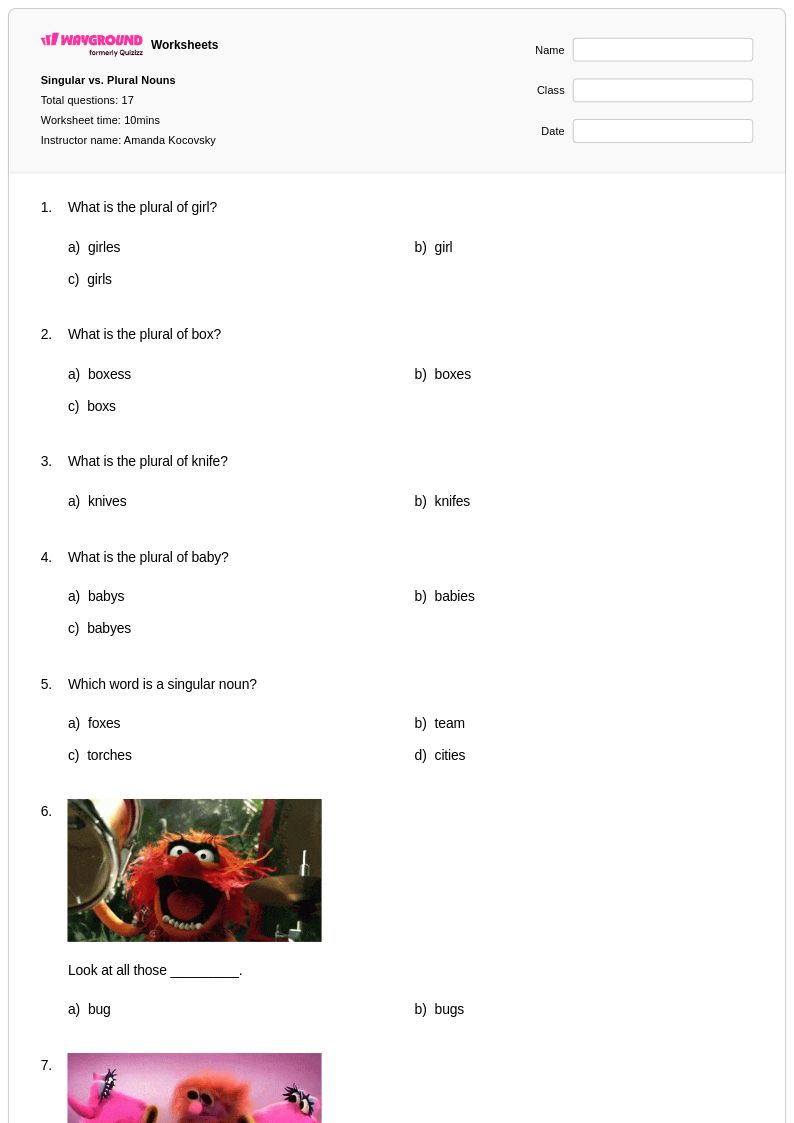
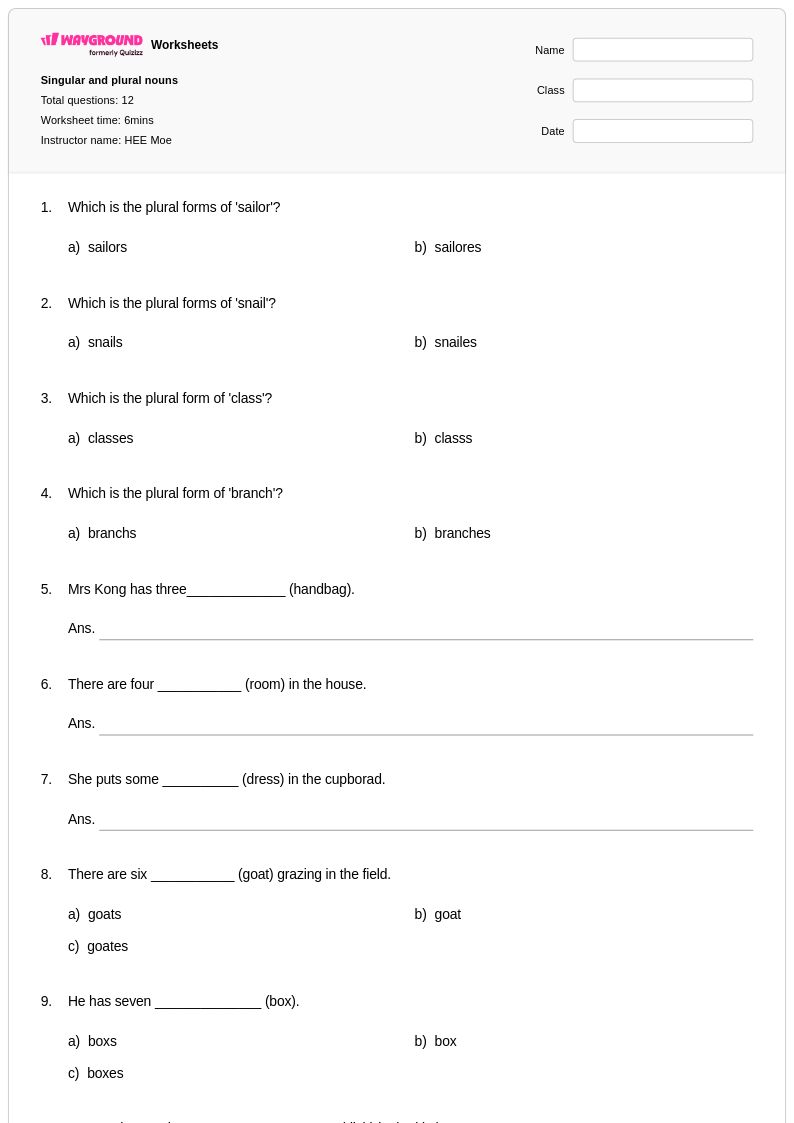
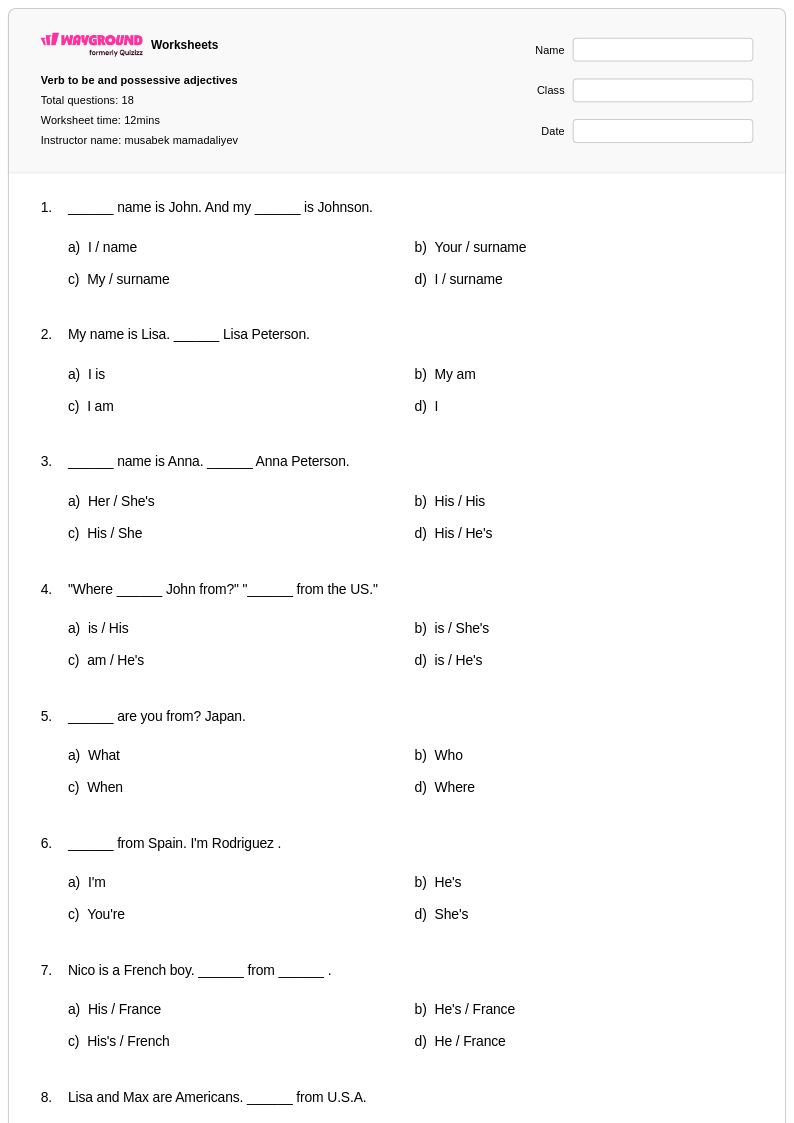
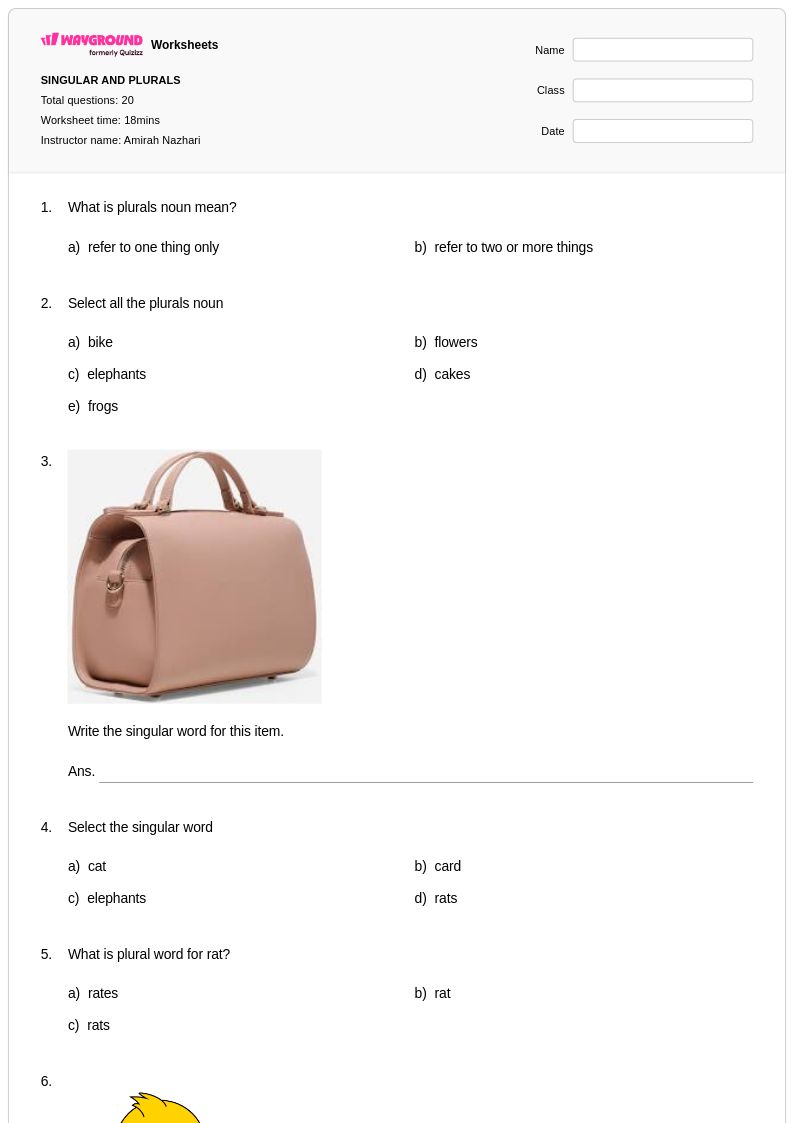
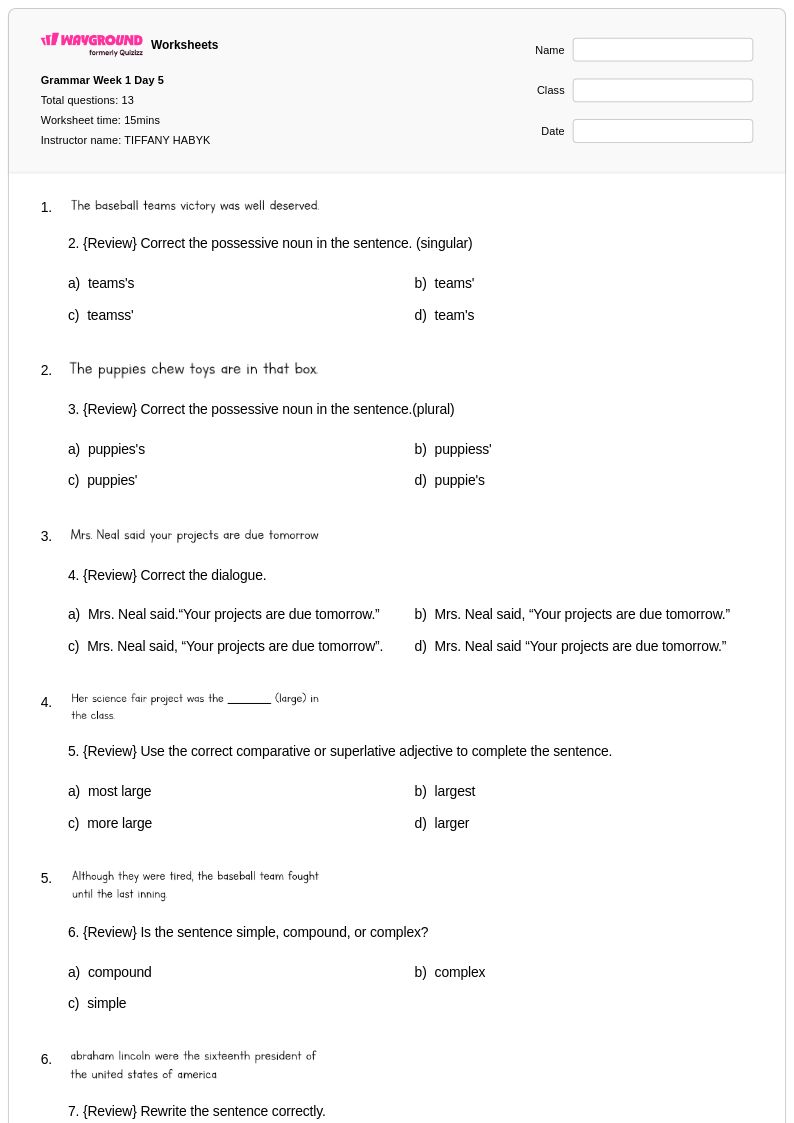
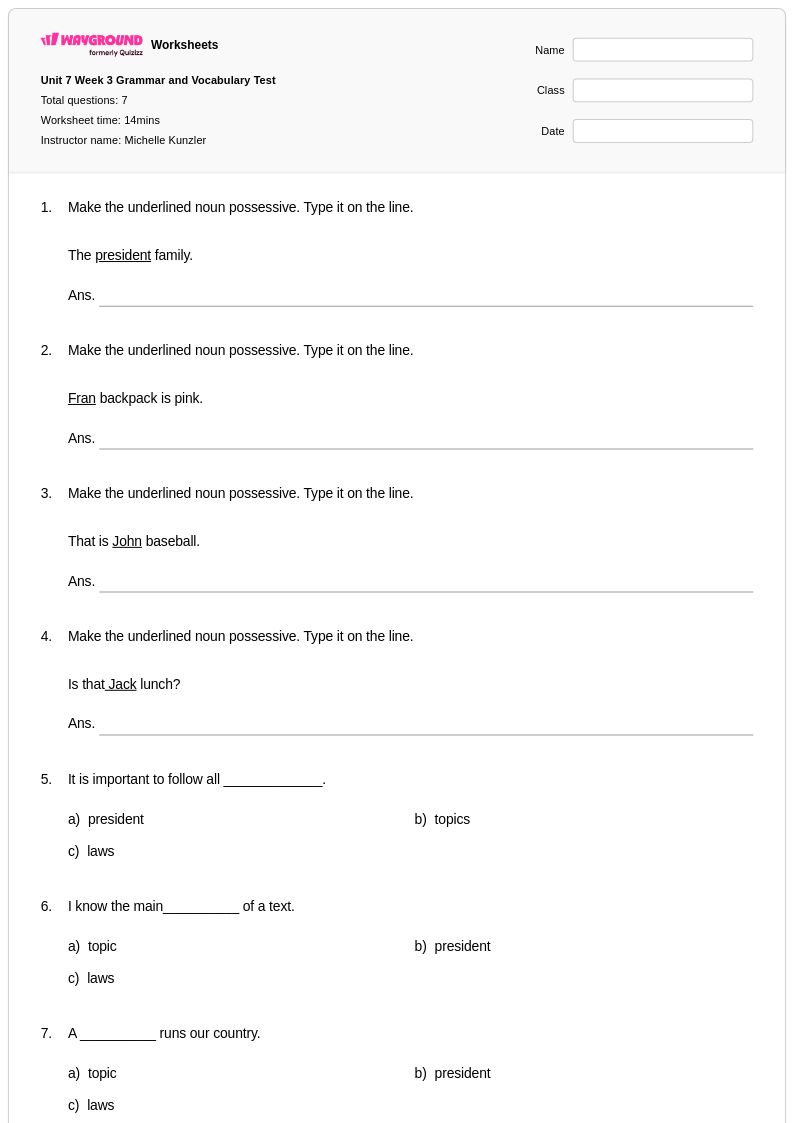
Wayground's free Grade 1 plural possessives worksheets provide printable PDF practice problems with answer keys to help young students master using possessive pronouns with multiple owners.
Explore printable Plural Possessives worksheets for Grade 1
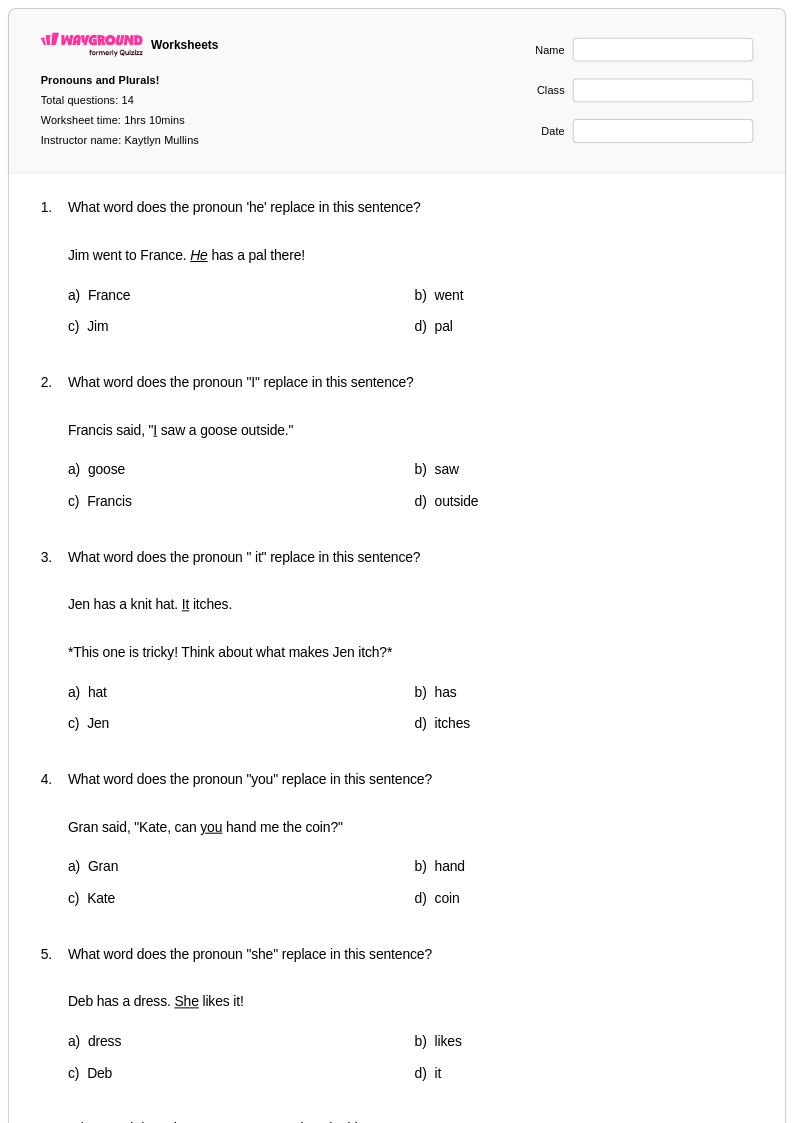
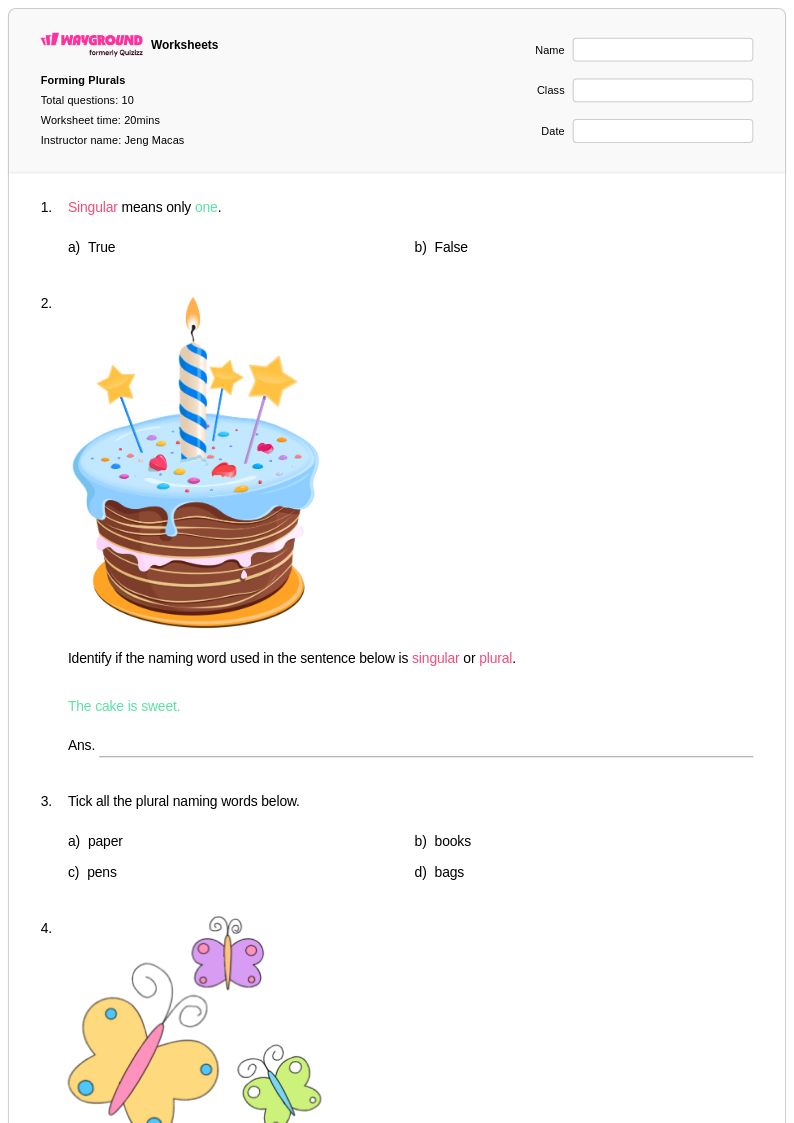
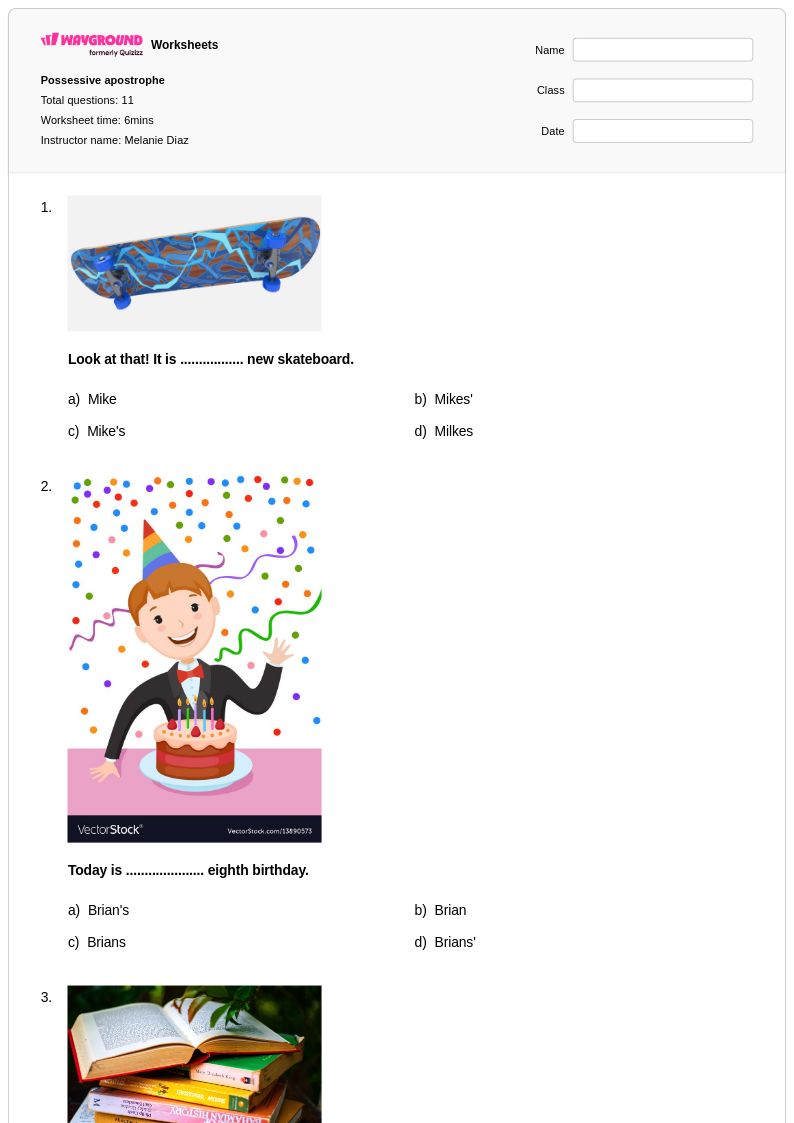
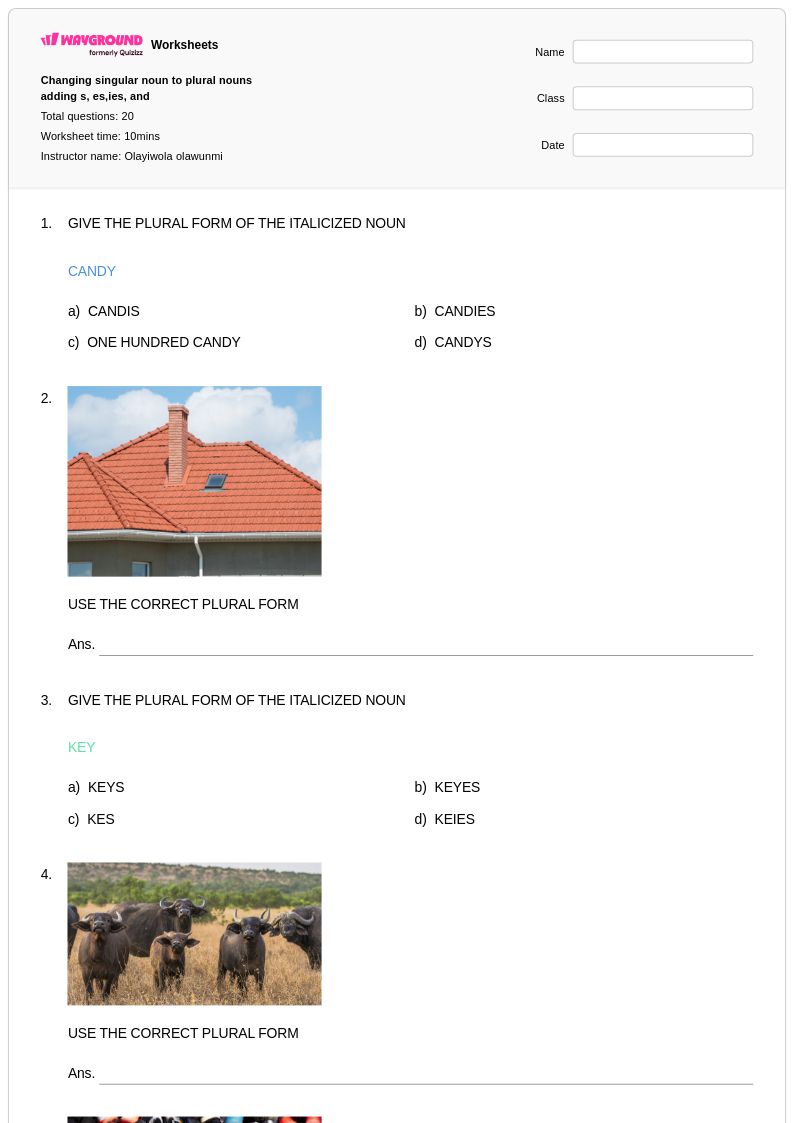
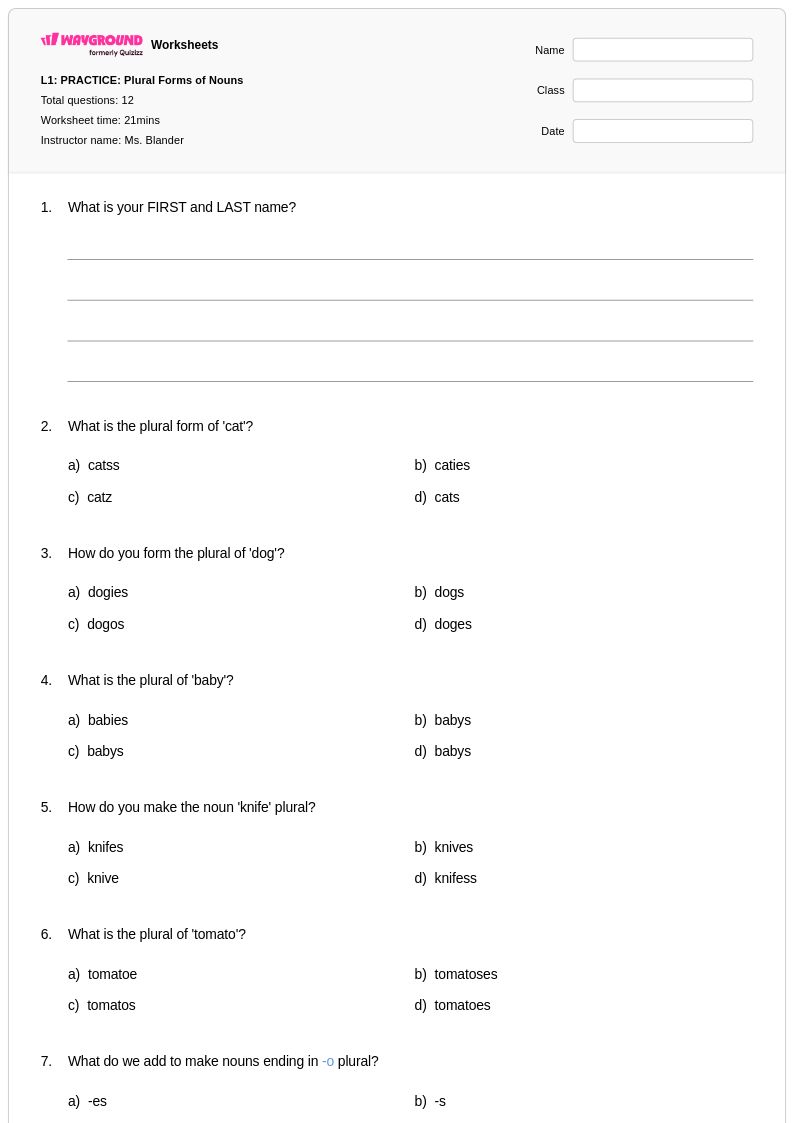
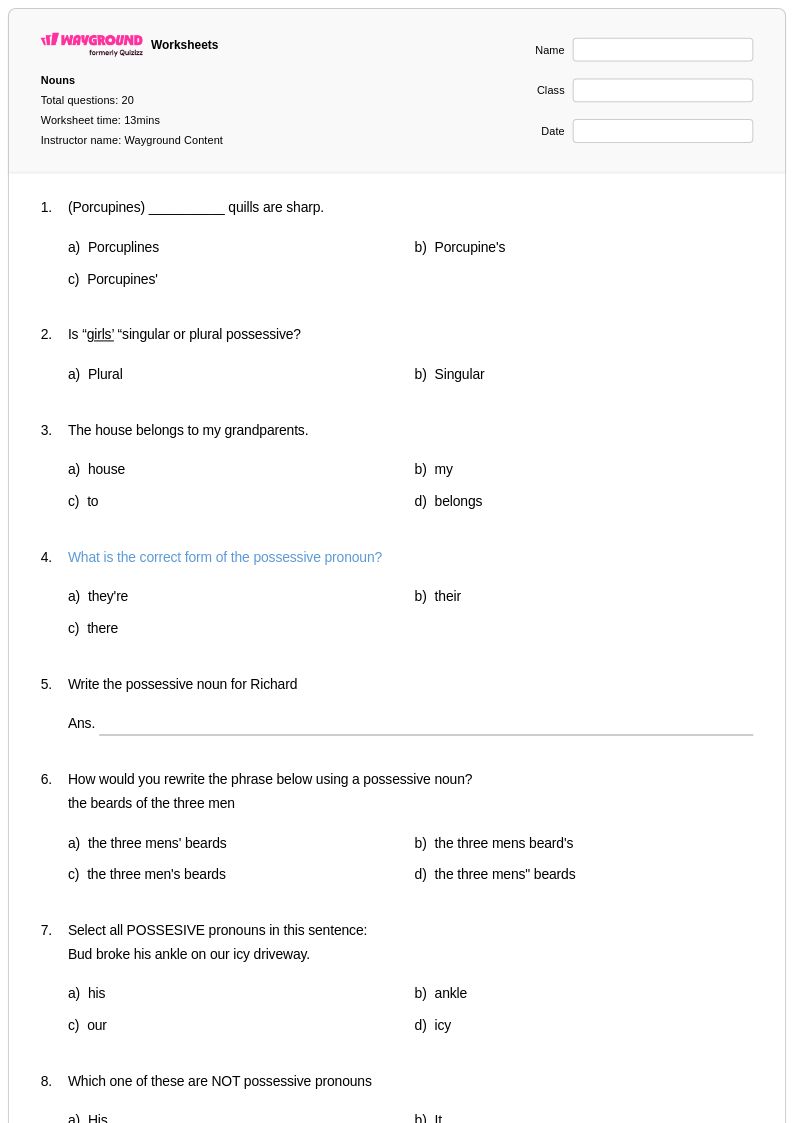
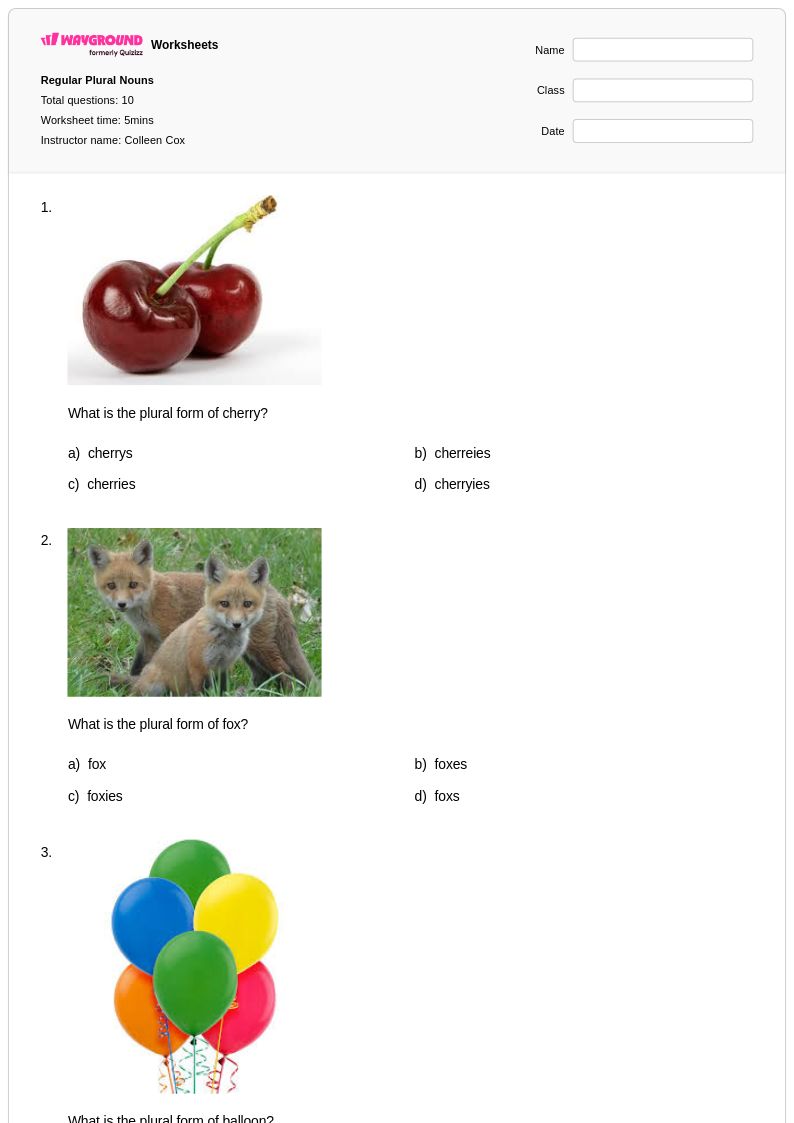
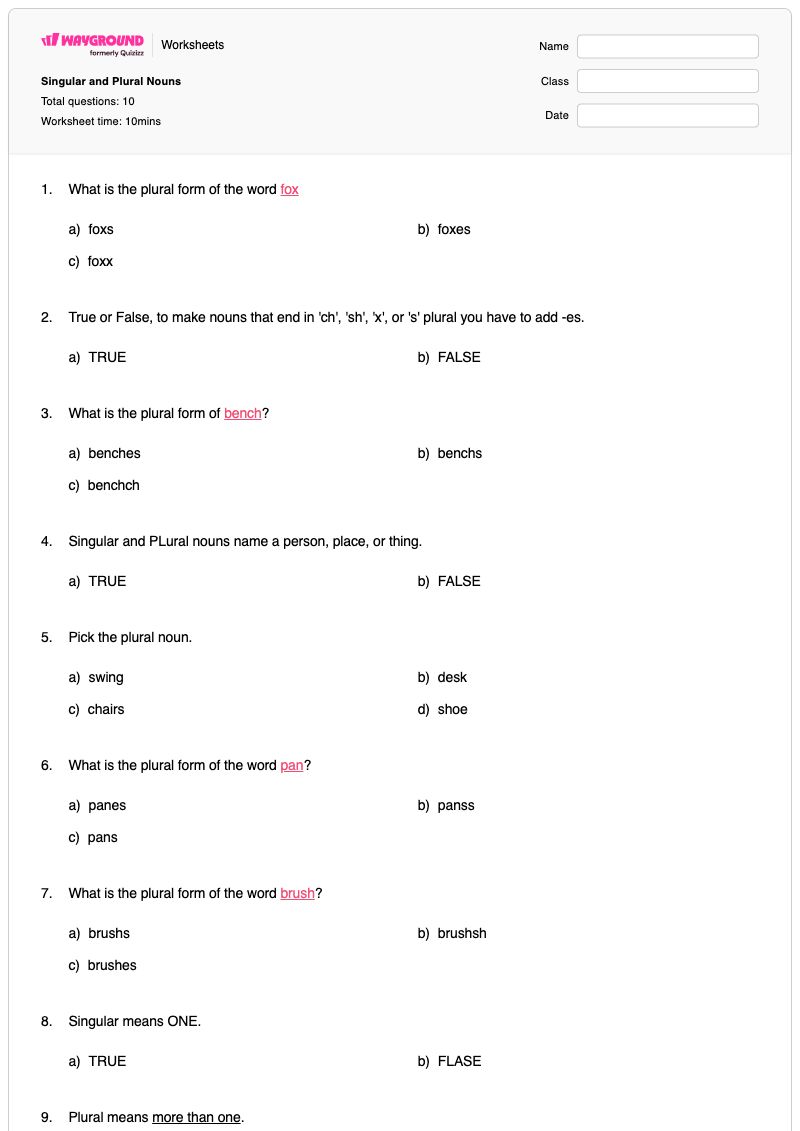
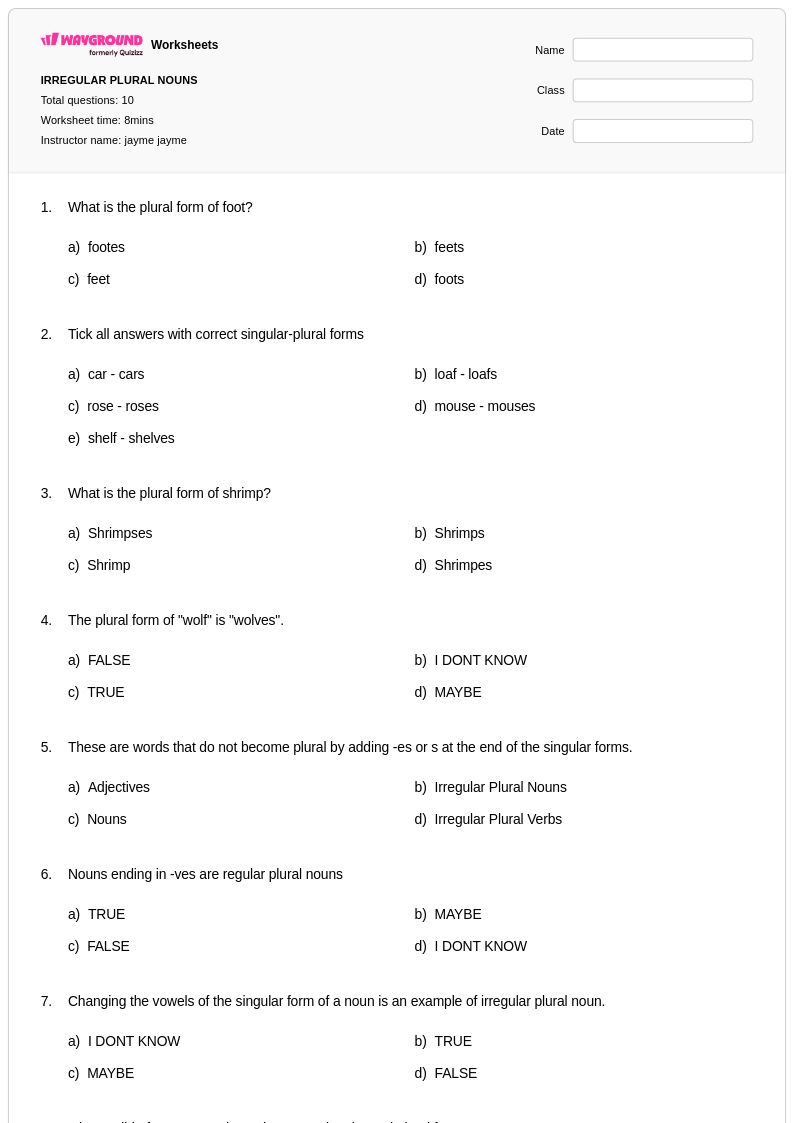
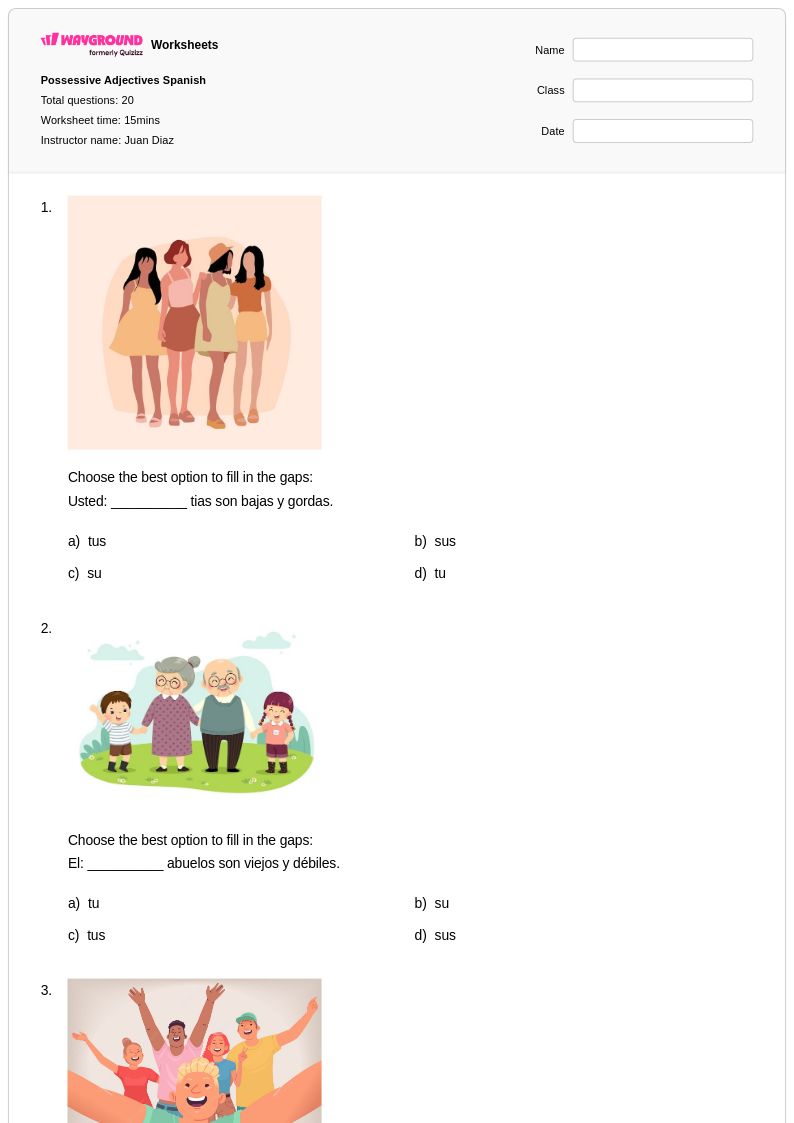
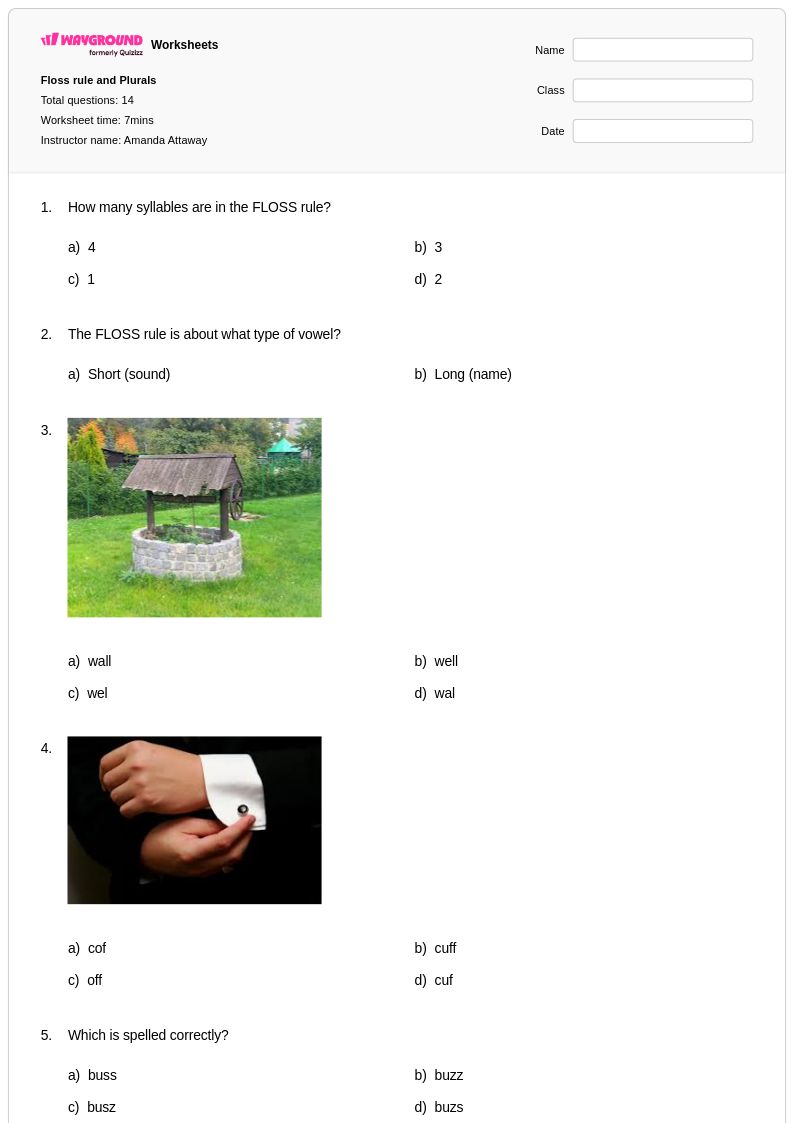
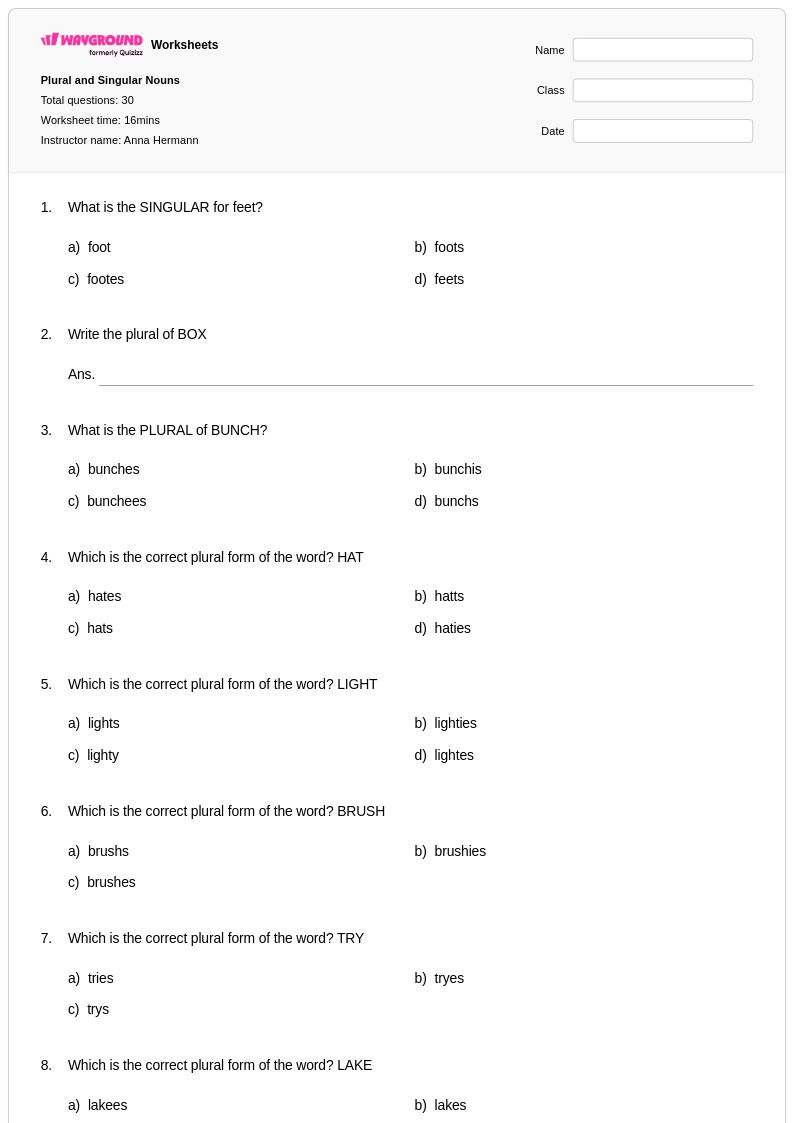
Plural possessives worksheets for Grade 1 students through Wayground (formerly Quizizz) provide essential foundation-building practice for young learners beginning to understand ownership concepts in English grammar. These carefully designed printables help first graders distinguish between singular and plural possessive forms, teaching them when and how to use apostrophes correctly with words that already end in 's'. Students work through engaging practice problems that reinforce the difference between "the cat's toy" and "the cats' toys," building critical reading and writing skills through hands-on exercises. Each worksheet includes a comprehensive answer key, making it easy for educators to assess student progress and identify areas where additional support may be needed, while the free pdf format ensures accessibility for all classroom environments.
Wayground (formerly Quizizz) empowers teachers with an extensive collection of millions of teacher-created resources specifically designed for plural possessive instruction at the Grade 1 level. The platform's robust search and filtering capabilities allow educators to quickly locate worksheets that align with specific learning standards and match their students' developmental needs. Teachers can easily customize these materials for differentiation, adapting content for both remediation and enrichment activities while maintaining focus on core possessive pronoun concepts. Available in both printable and digital formats, these resources seamlessly integrate into lesson planning whether for whole-class instruction, small group work, or individual skill practice, giving educators the flexibility to support diverse learning styles and classroom configurations while ensuring every student masters these fundamental grammar concepts.
FAQs
How do I teach plural possessives to students who keep confusing them with regular plurals?
The most effective approach is to first ensure students can reliably form regular plurals before introducing the possessive layer. Then teach the two core rules explicitly: for regular plurals ending in -s, add only an apostrophe after the s (e.g., 'the teachers' lounge'); for irregular plurals that do not end in -s, add an apostrophe and s (e.g., 'the children's toys'). Using color-coded charts and sorting activities where students categorize words before applying the apostrophe rule helps cement the distinction.
What exercises best help students practice plural possessives?
The most effective practice combines three exercise types: sentence completion (fill in the correct plural possessive form), error correction (identify and fix apostrophe mistakes in given sentences), and original writing prompts that require students to generate plural possessives in context. This variety prevents rote memorization and pushes students to apply the rules flexibly, which is where the skill genuinely solidifies.
What mistakes do students most commonly make with plural possessives?
The most frequent error is placing the apostrophe before the s in regular plural possessives, writing 'teacher's lounge' instead of 'teachers' lounge,' which signals confusion between singular and plural possession. A second common mistake is treating irregular plurals like 'children' or 'men' as if they follow the regular rule, omitting the s entirely and writing 'children' instead of 'children's.' Students also frequently confuse possessive forms with simple plurals, adding apostrophes where none are needed.
How do I differentiate plural possessives practice for students at different skill levels?
For students still building foundational skills, begin with regular plural possessives only and use sentence frames to reduce cognitive load. Advanced students can move directly into error correction with irregular plurals and open-ended writing tasks. On Wayground, teachers can apply accommodations at the individual student level, including reduced answer choices for students who need support and extended time settings, without other students in the class being affected.
How can I use Wayground's plural possessives worksheets in my classroom?
Wayground's plural possessives worksheets are available as printable PDFs for traditional classroom use and in digital formats for technology-integrated or hybrid learning environments. Teachers can also host them as a quiz directly on Wayground, enabling real-time student responses and immediate feedback. All worksheets include answer keys, so they work equally well for guided instruction, independent practice, or self-assessment.
How do I assess whether students have truly mastered plural possessives versus just memorizing examples?
True mastery shows when students can correctly apply possessive rules to unfamiliar nouns they have not seen in practice, including irregular plurals like 'geese' or 'alumni.' A reliable assessment strategy is to present novel nouns in error-correction or sentence-writing tasks rather than recognition-style multiple choice. If students consistently stumble on irregular plurals while handling regular ones correctly, targeted remediation on the apostrophe-plus-s rule for non-s plurals is needed before moving on.