Free Printable Political Parties Worksheets for Grade 7
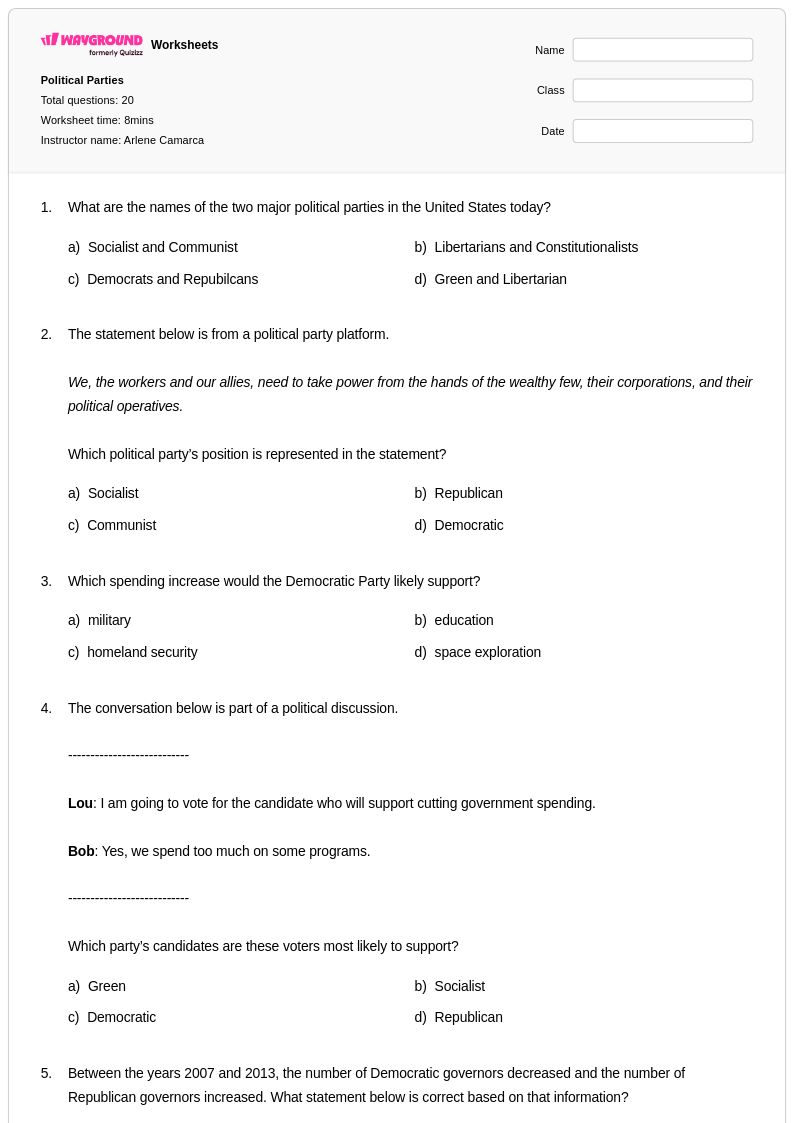
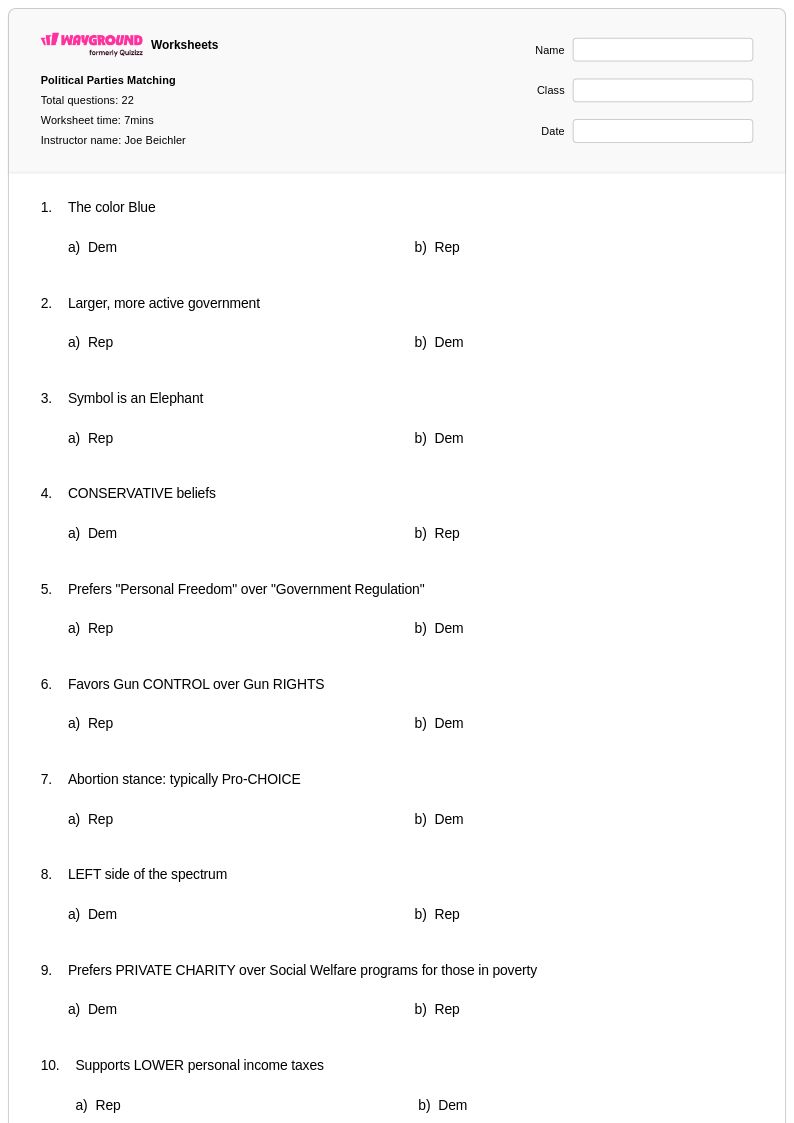
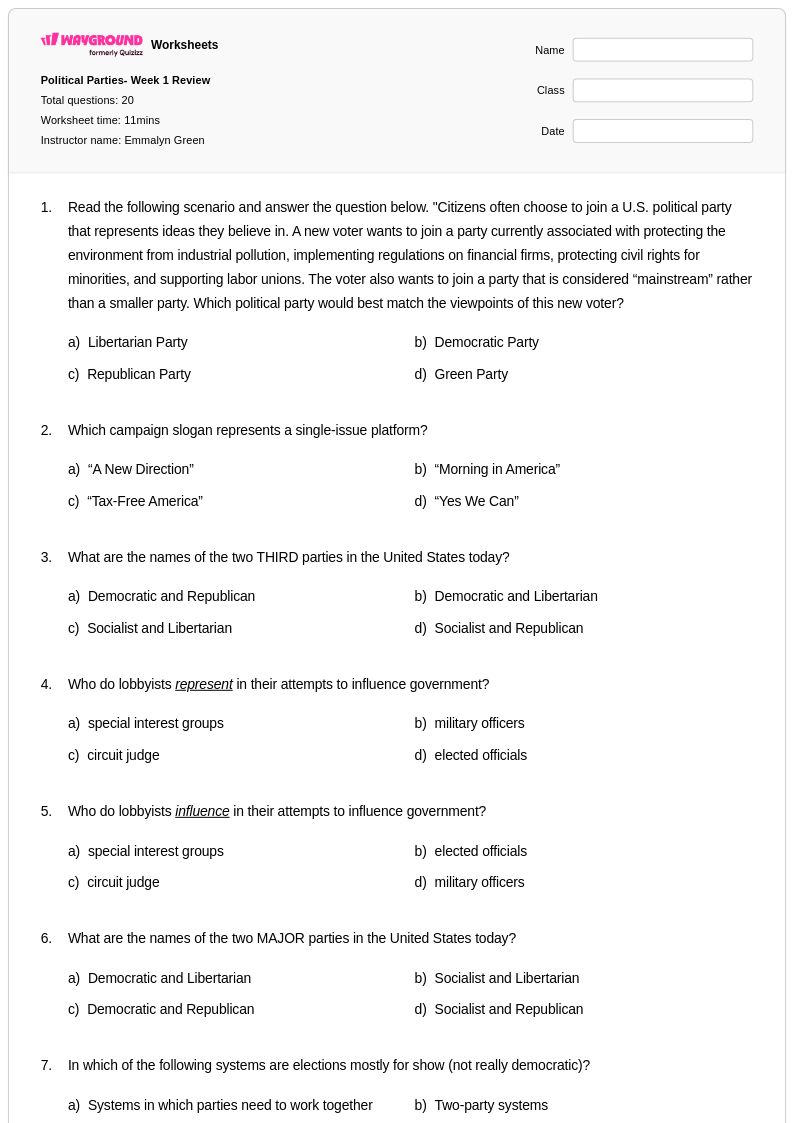
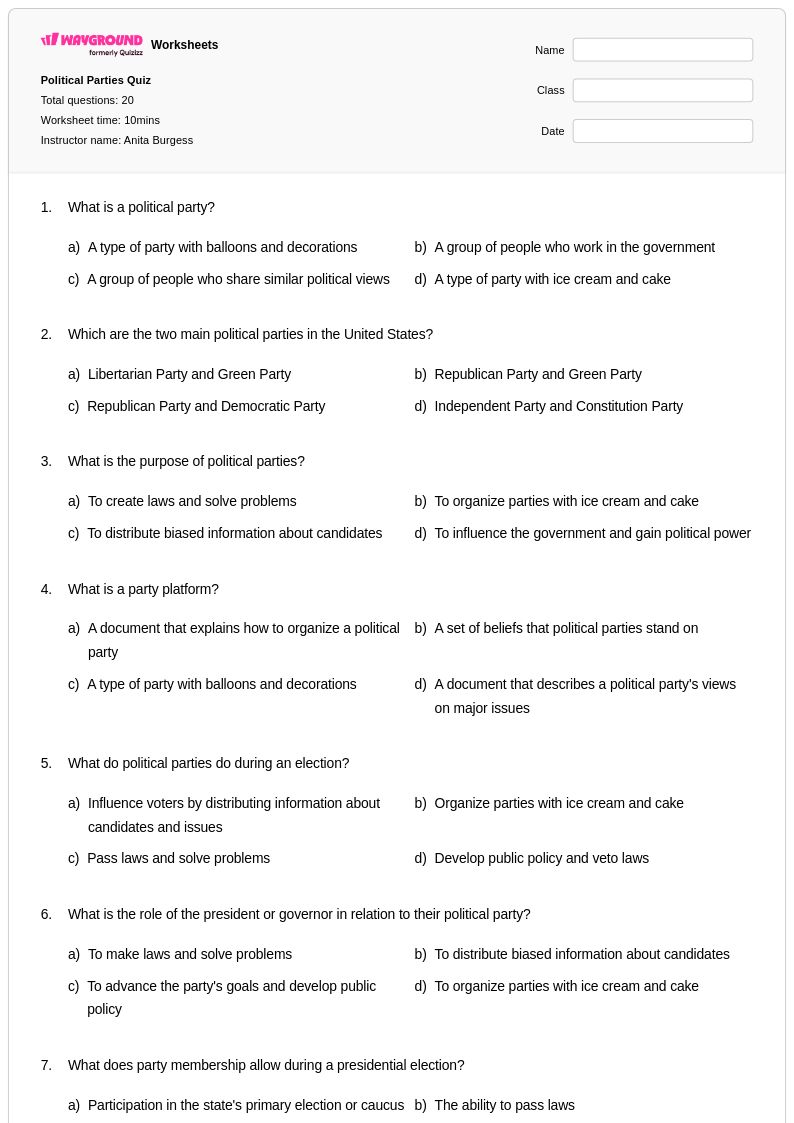
Grade 7 political parties worksheets from Wayground help students explore the role and function of political parties in American democracy through engaging printables, practice problems, and comprehensive answer keys.
Explore printable Political Parties worksheets for Grade 7
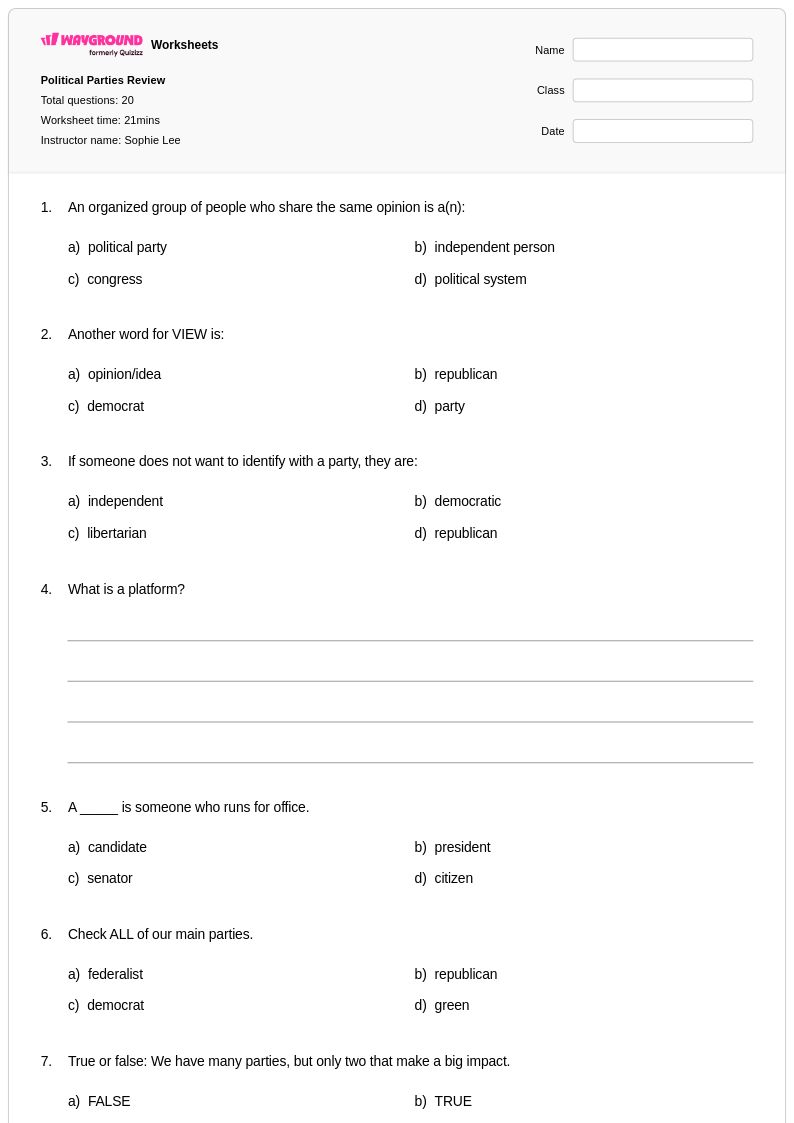
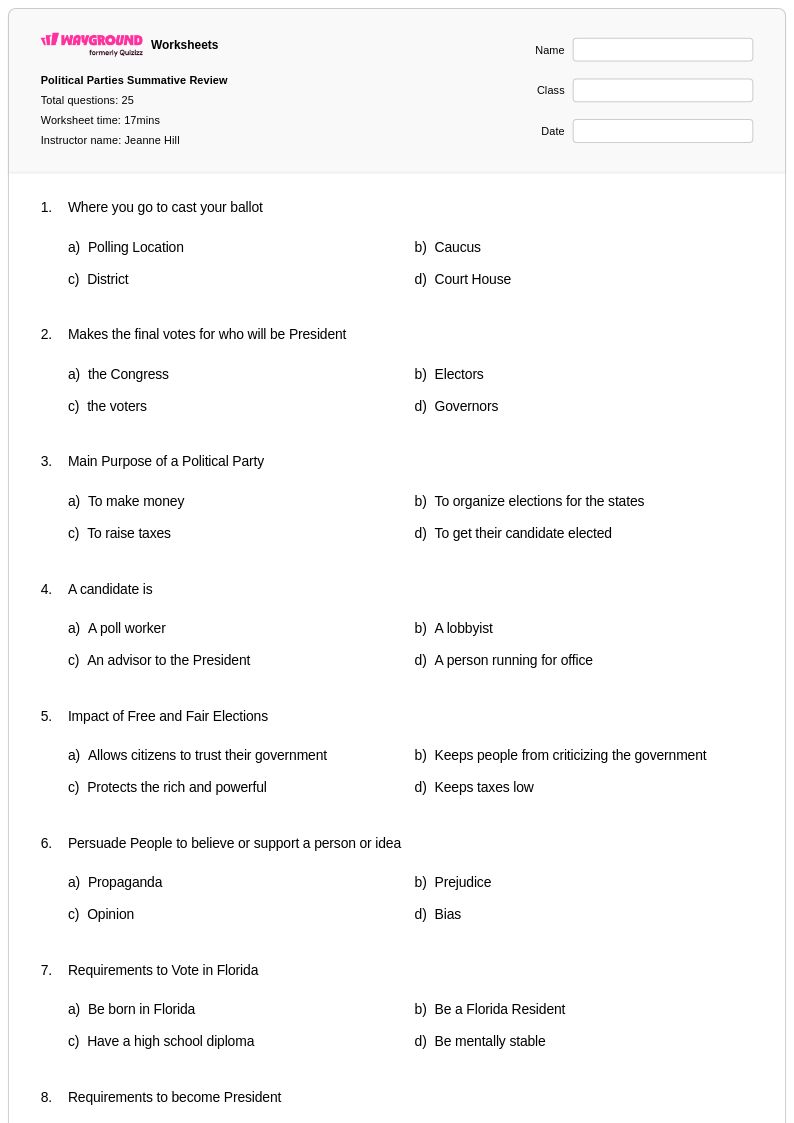
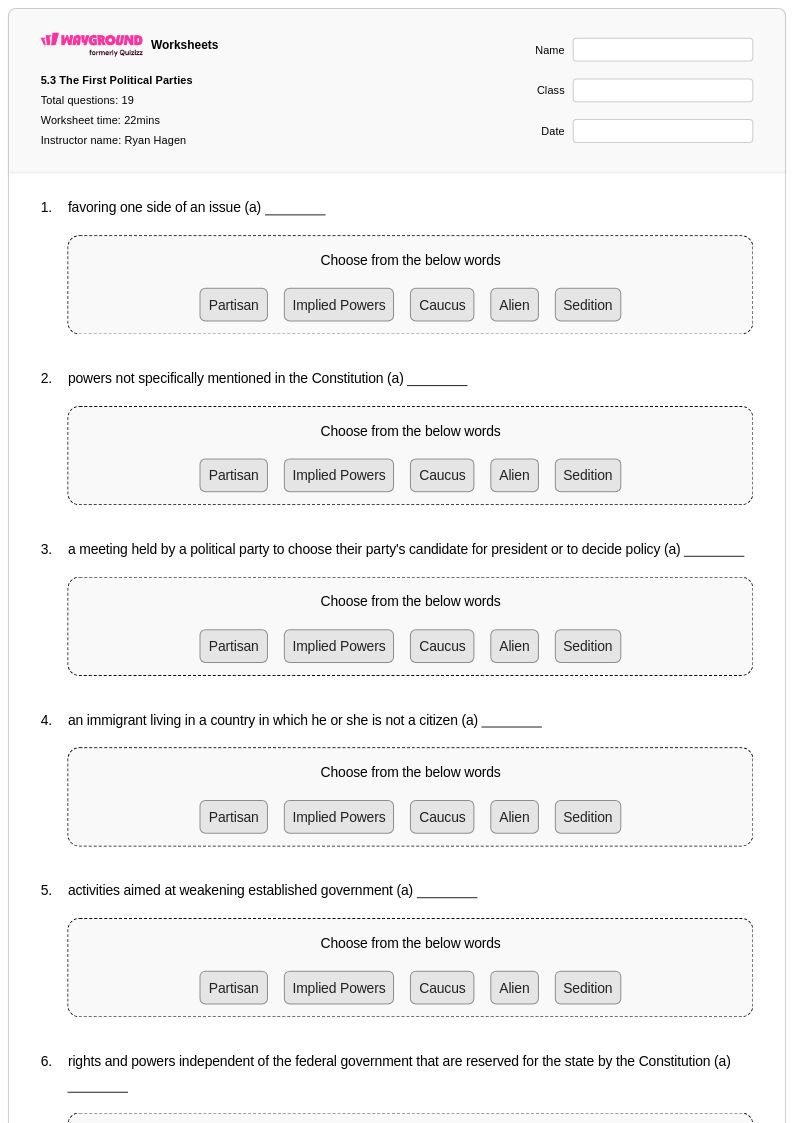
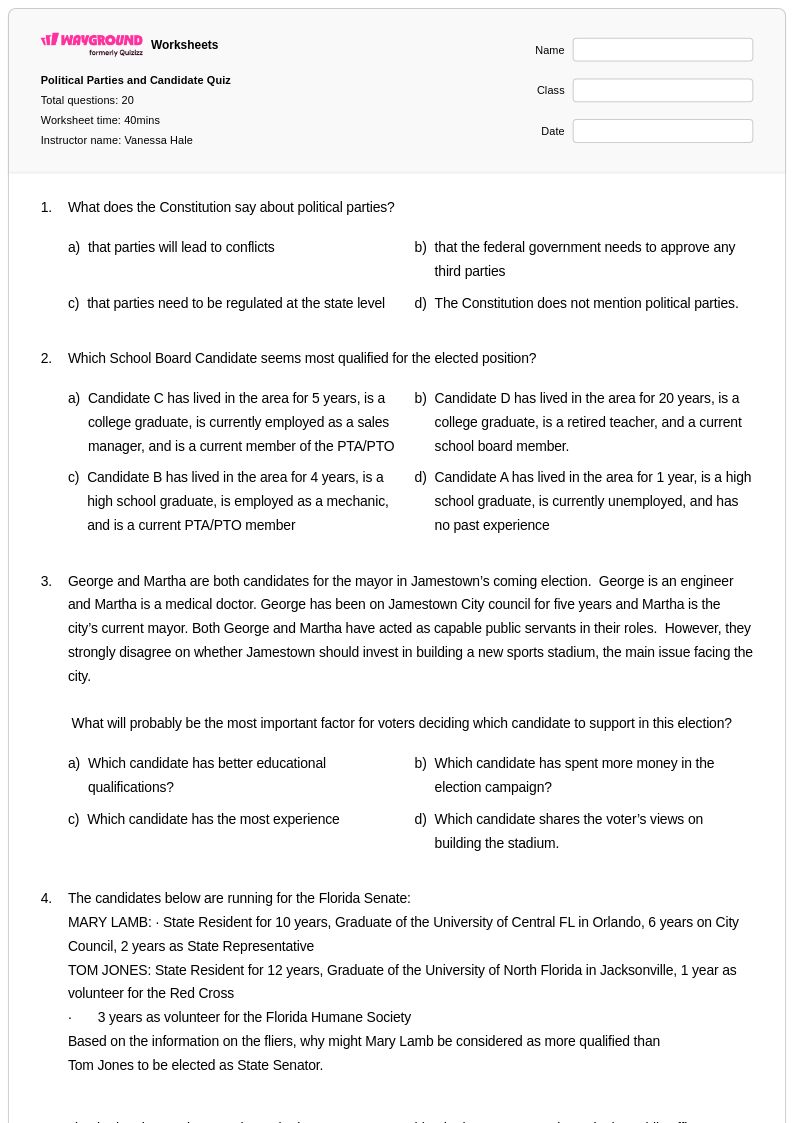
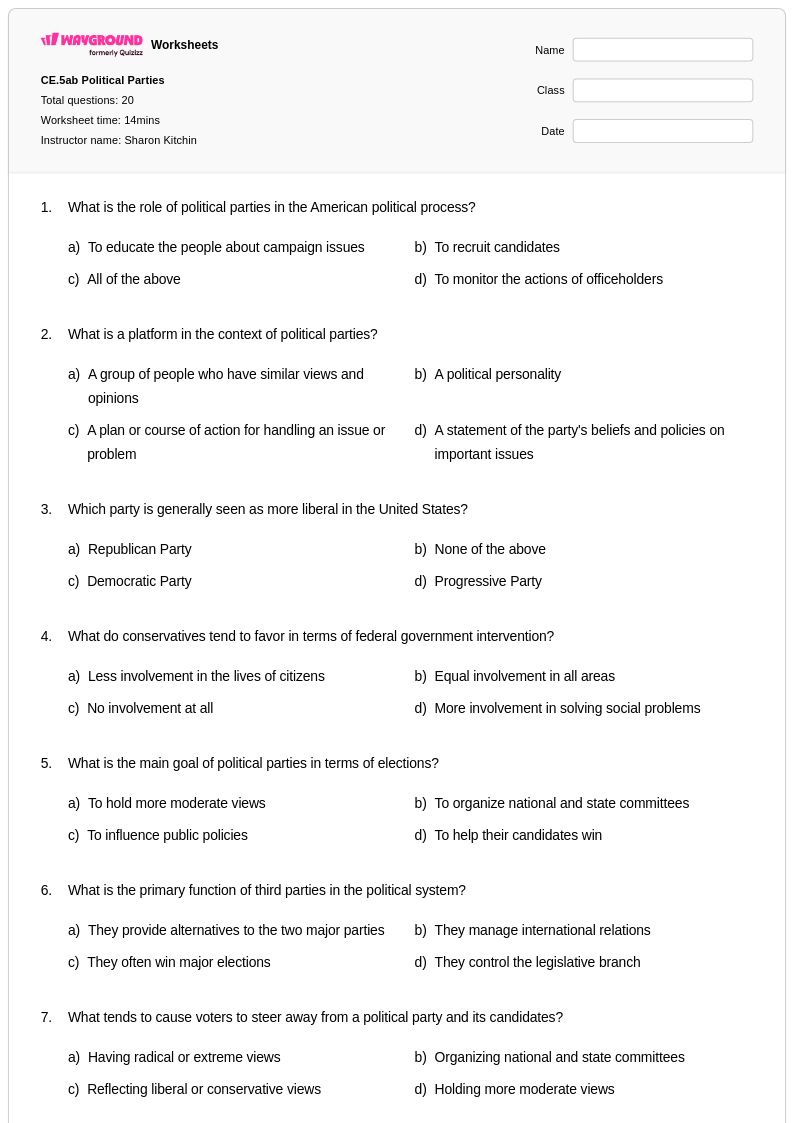
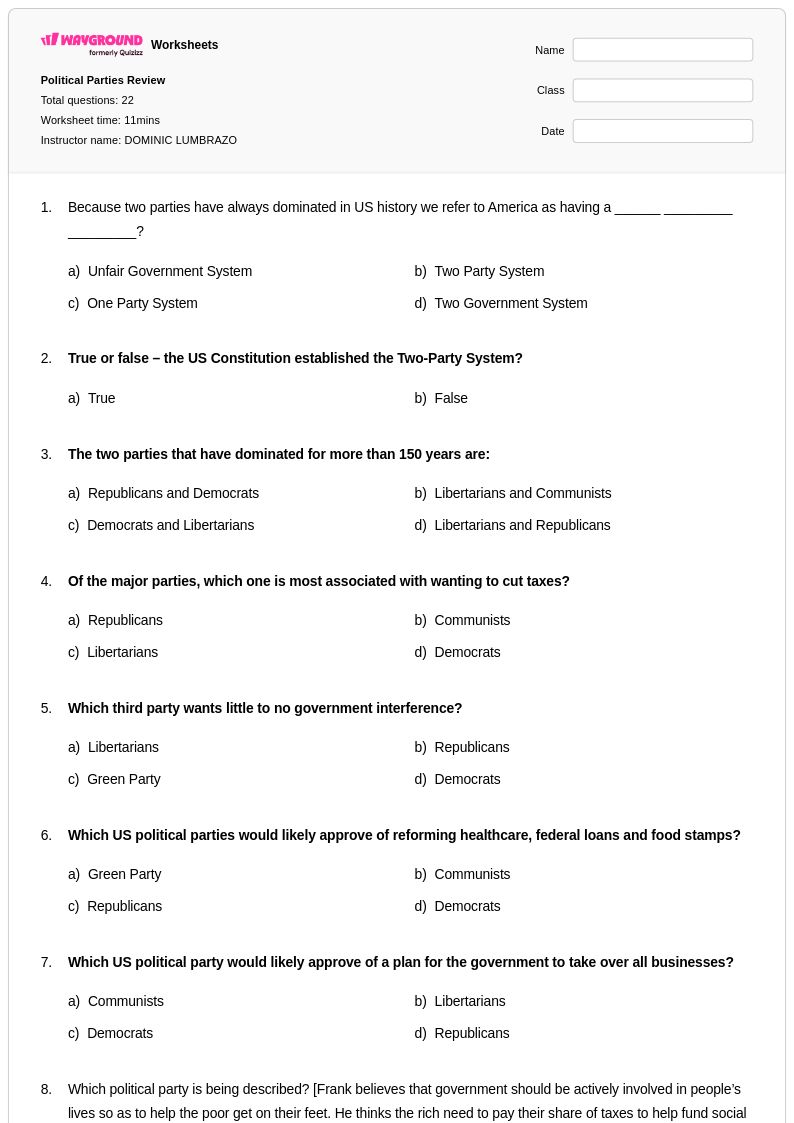
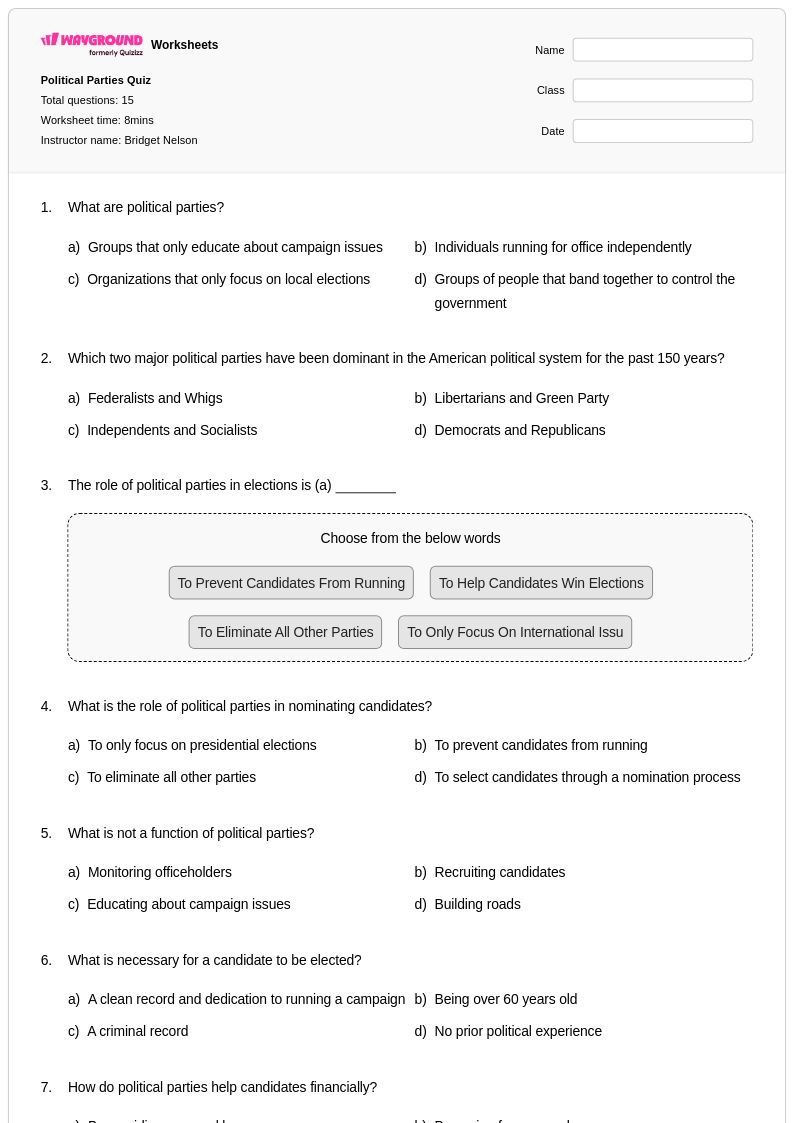
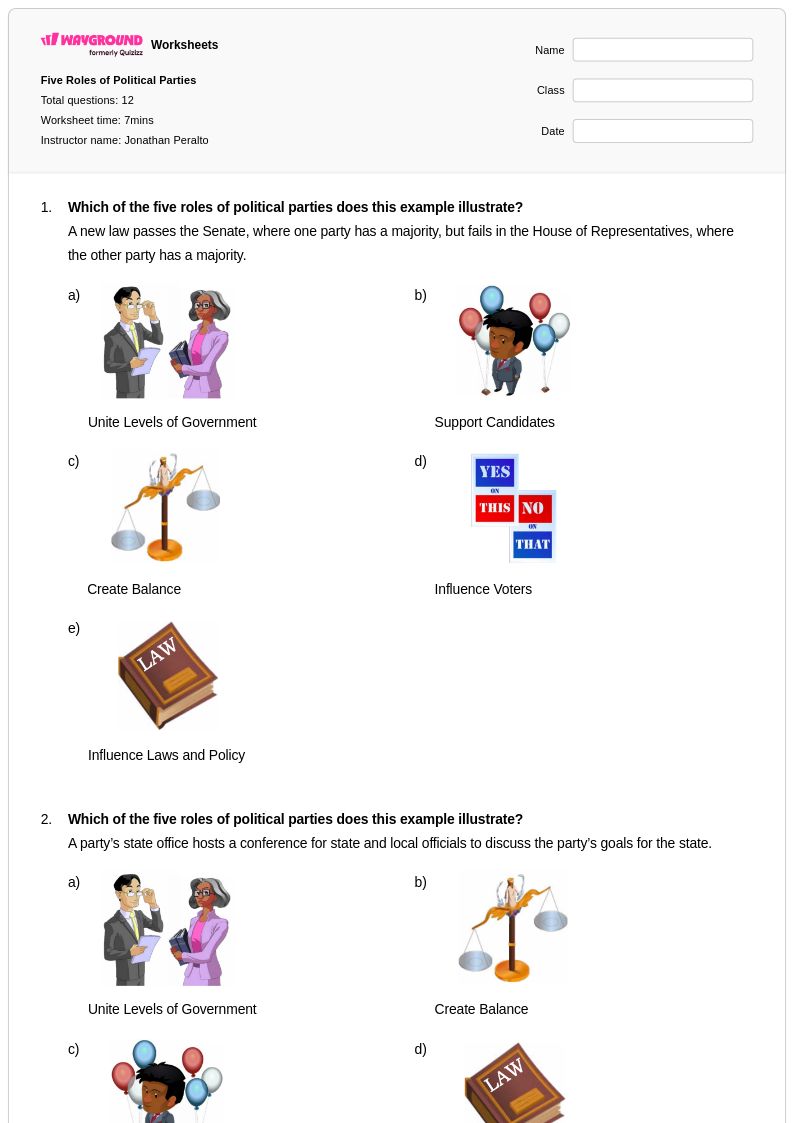
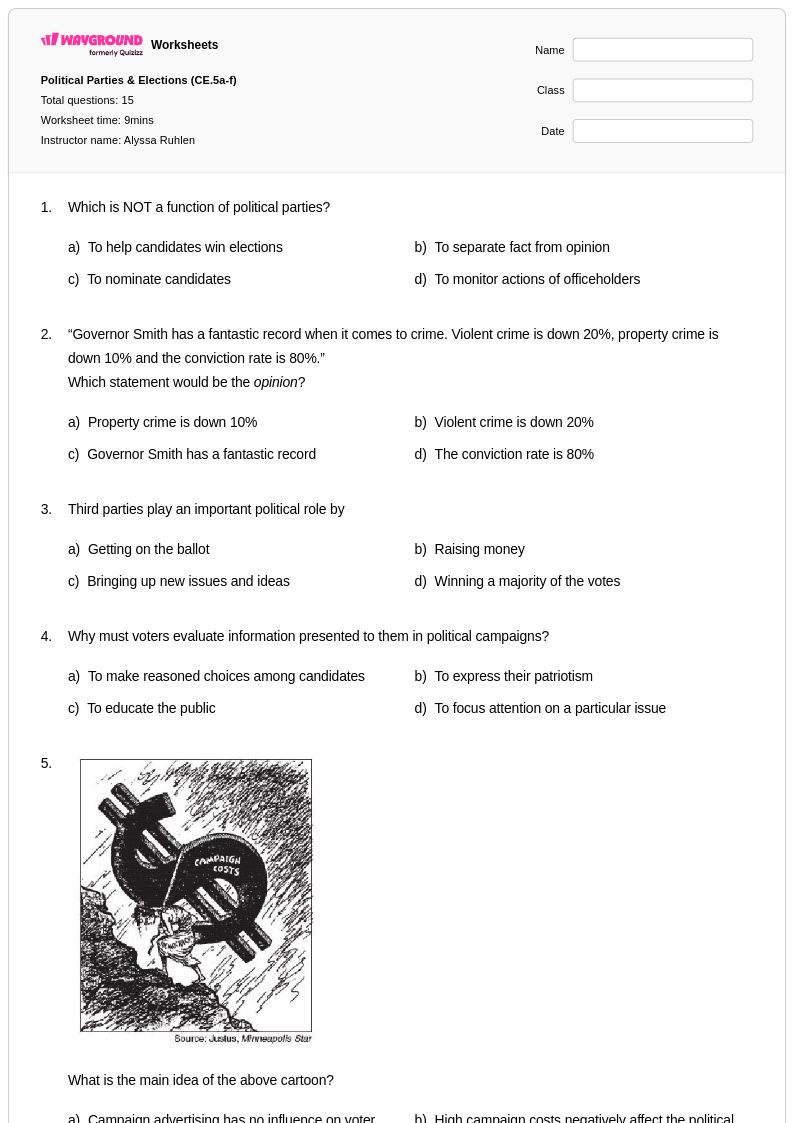
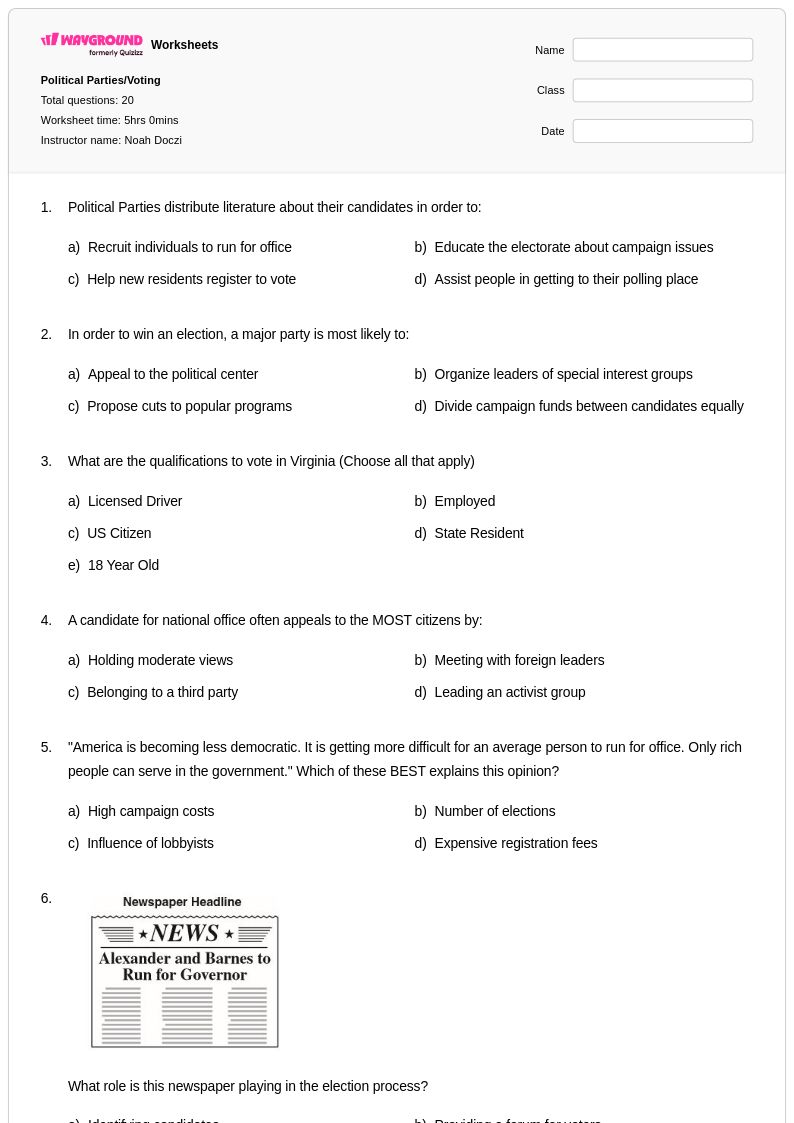
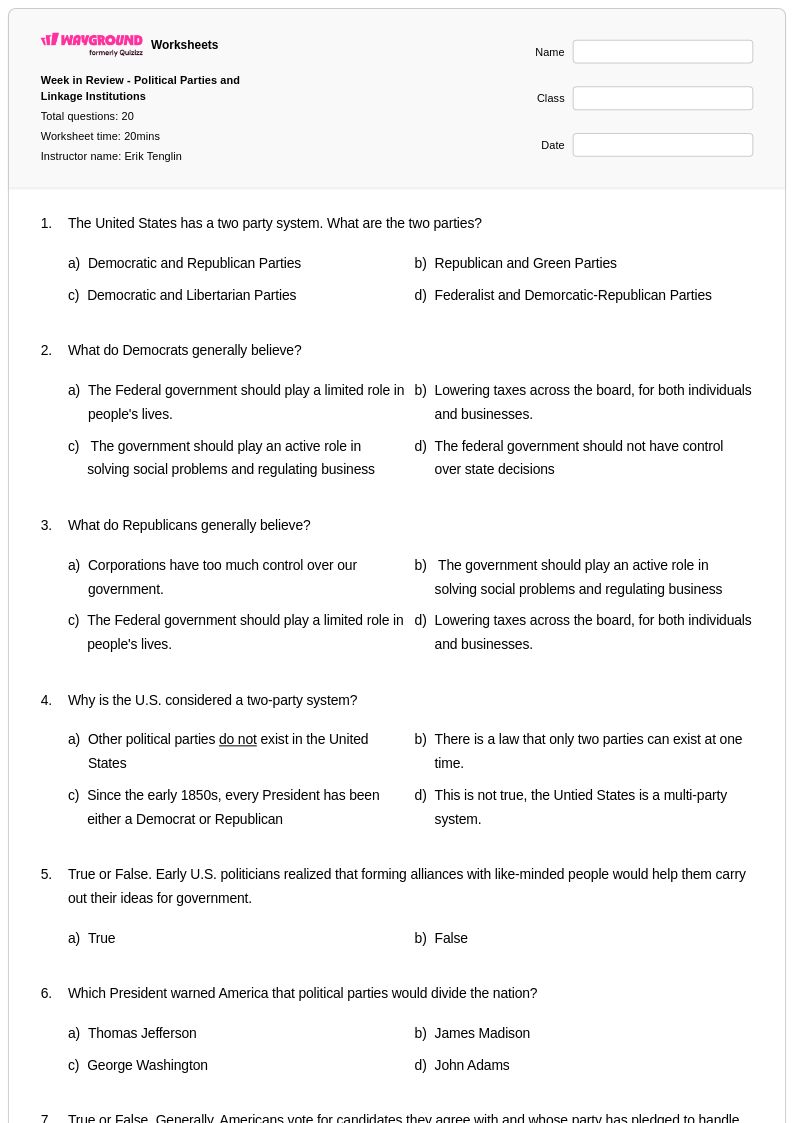
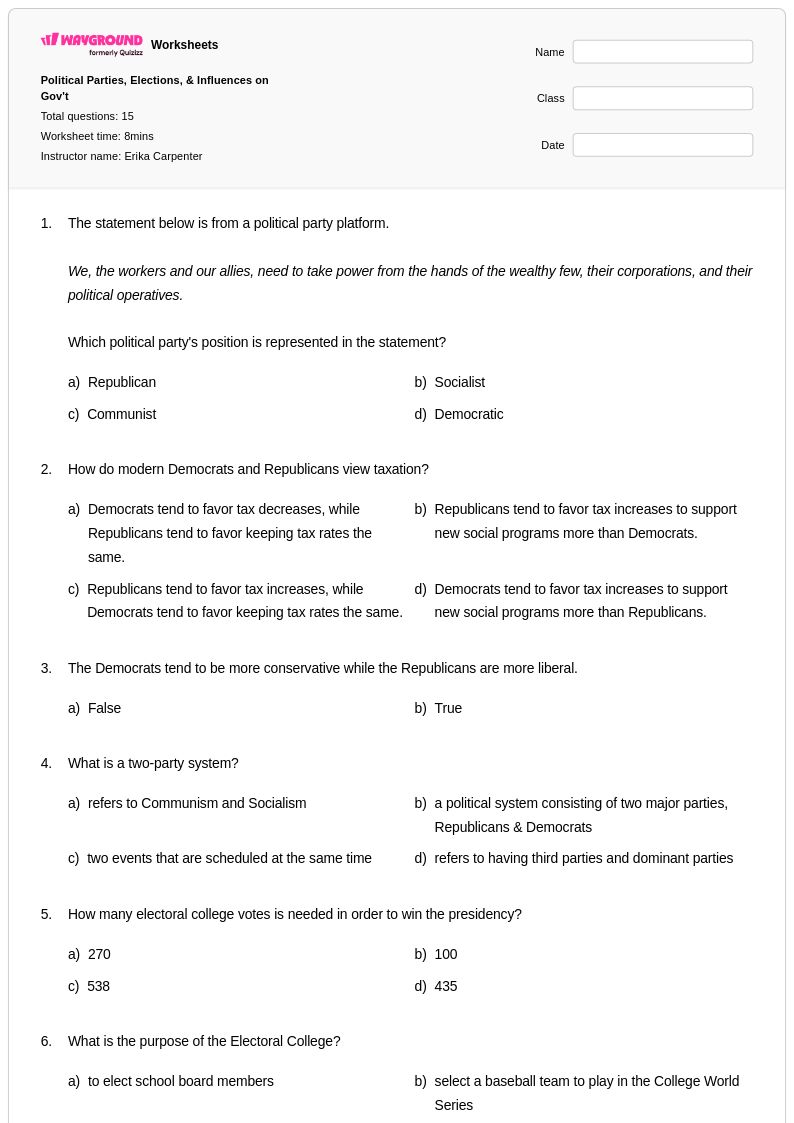
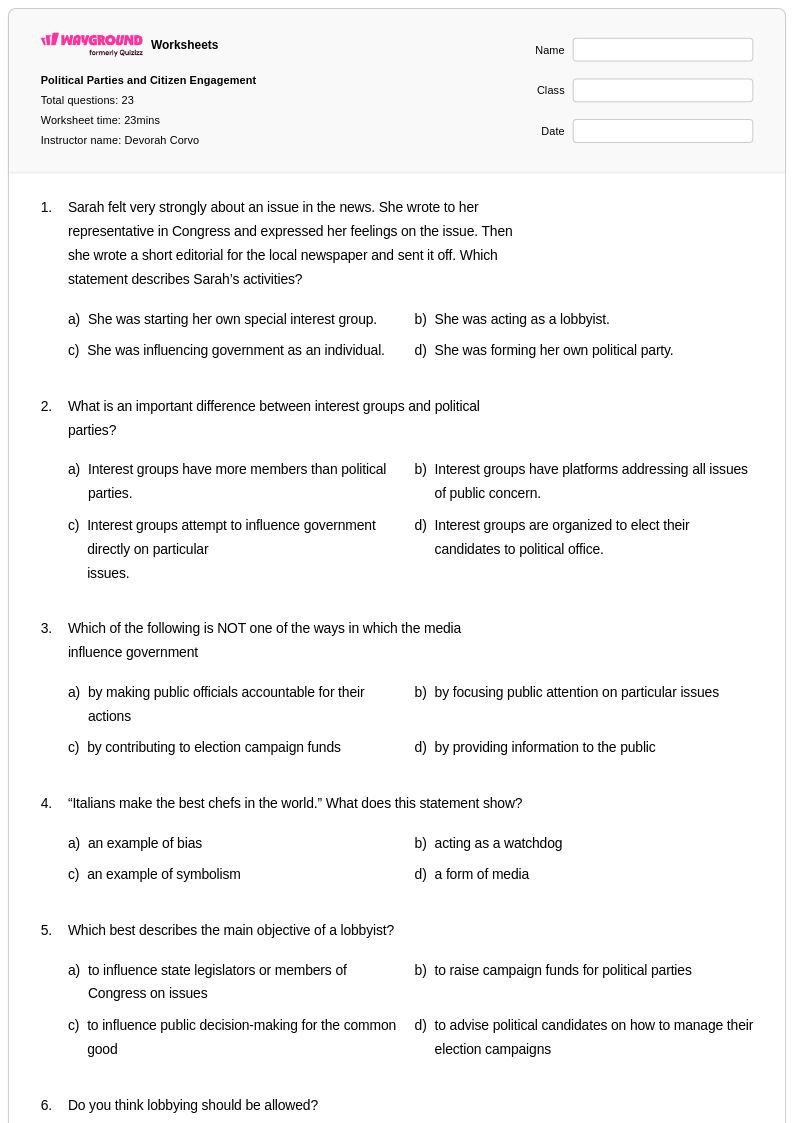
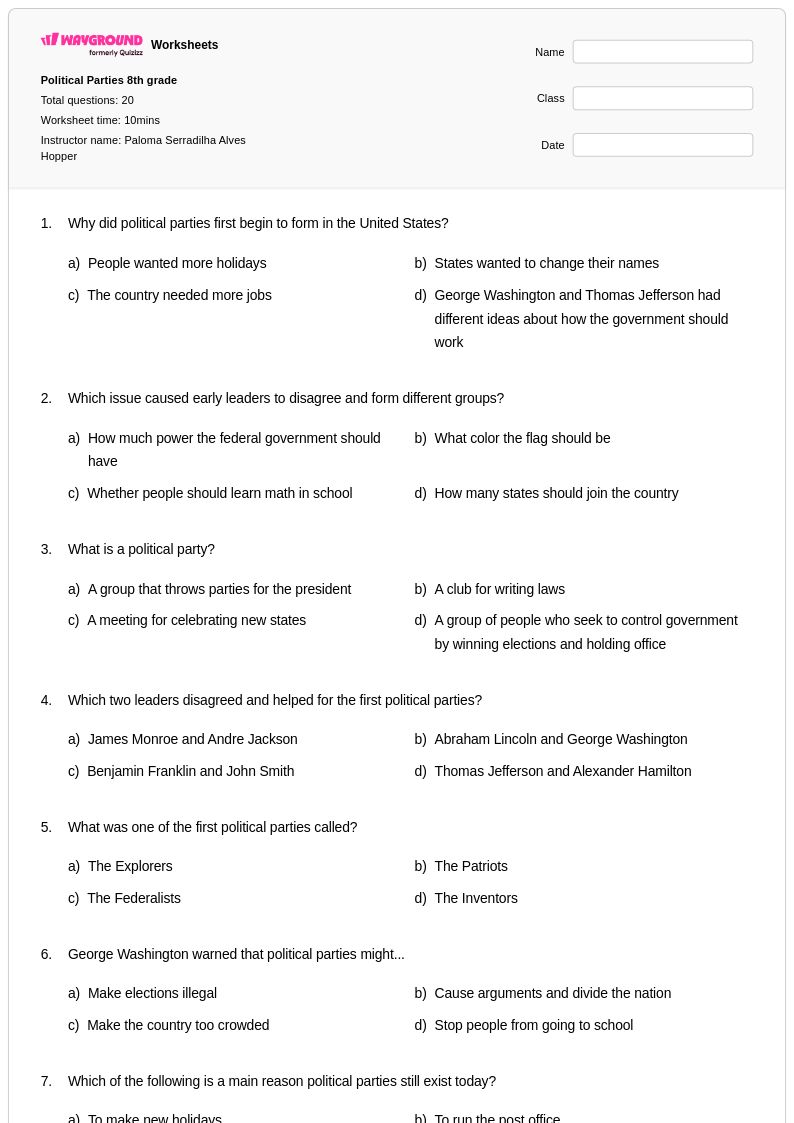
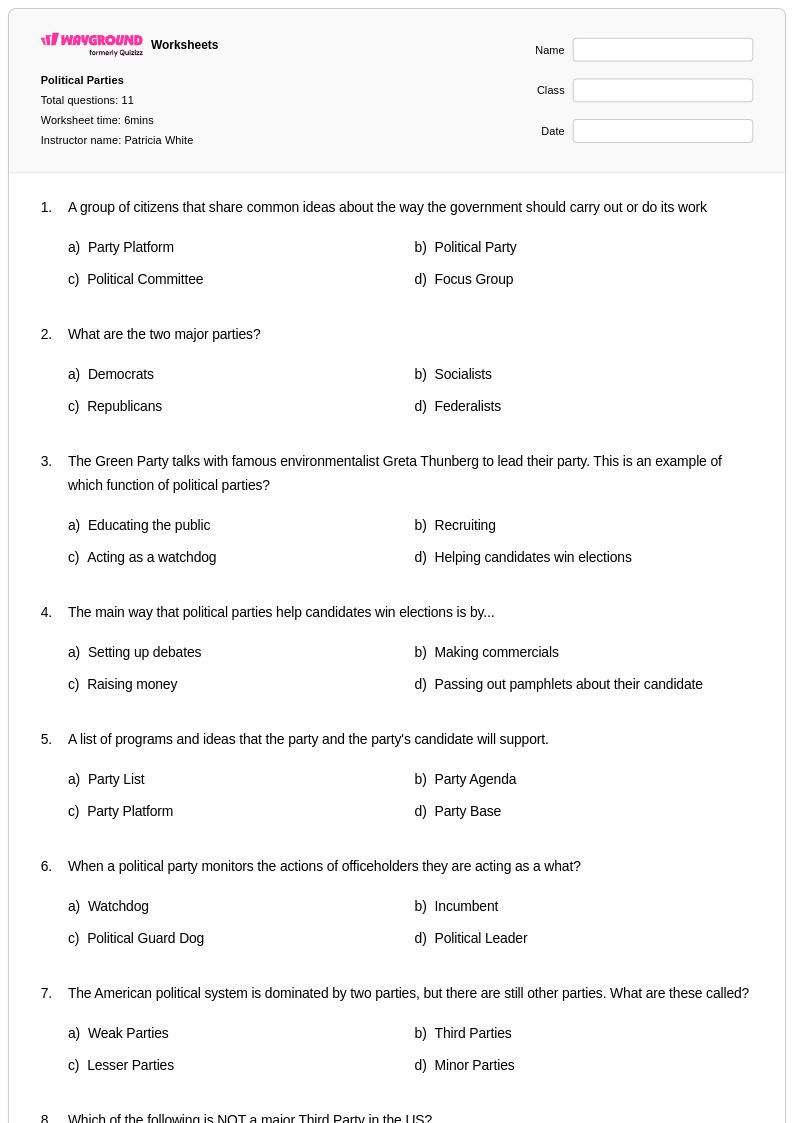
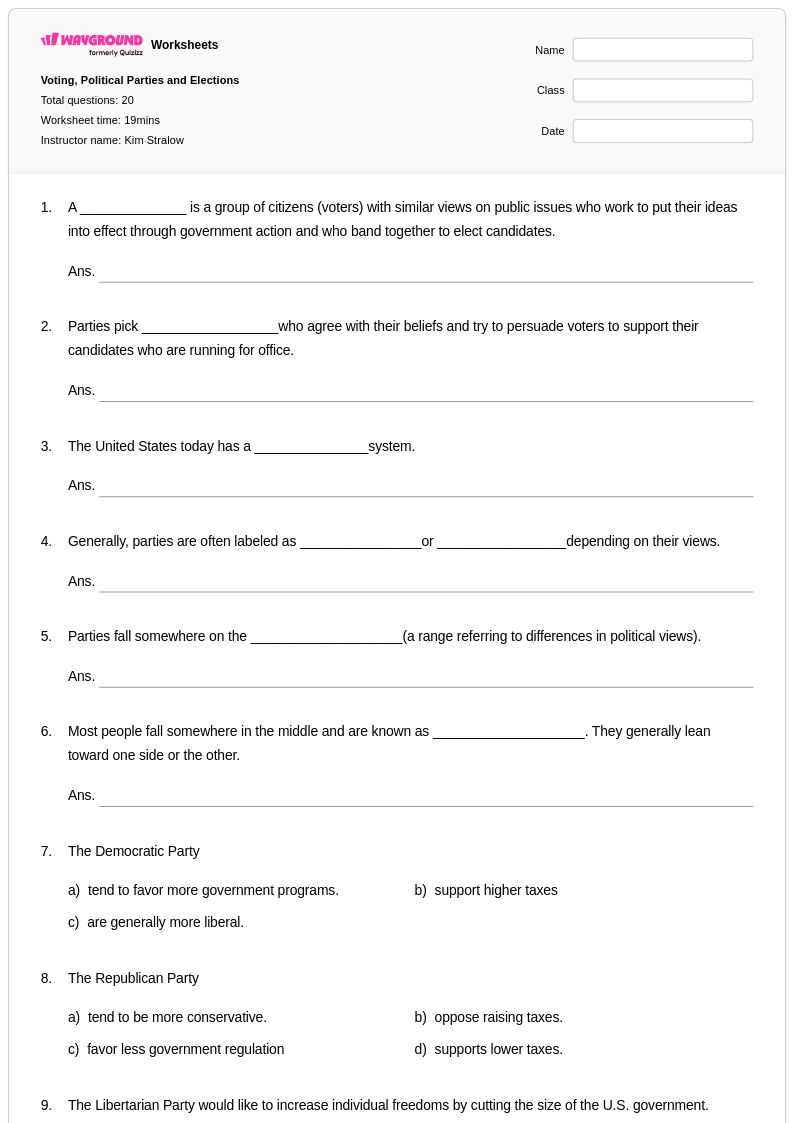
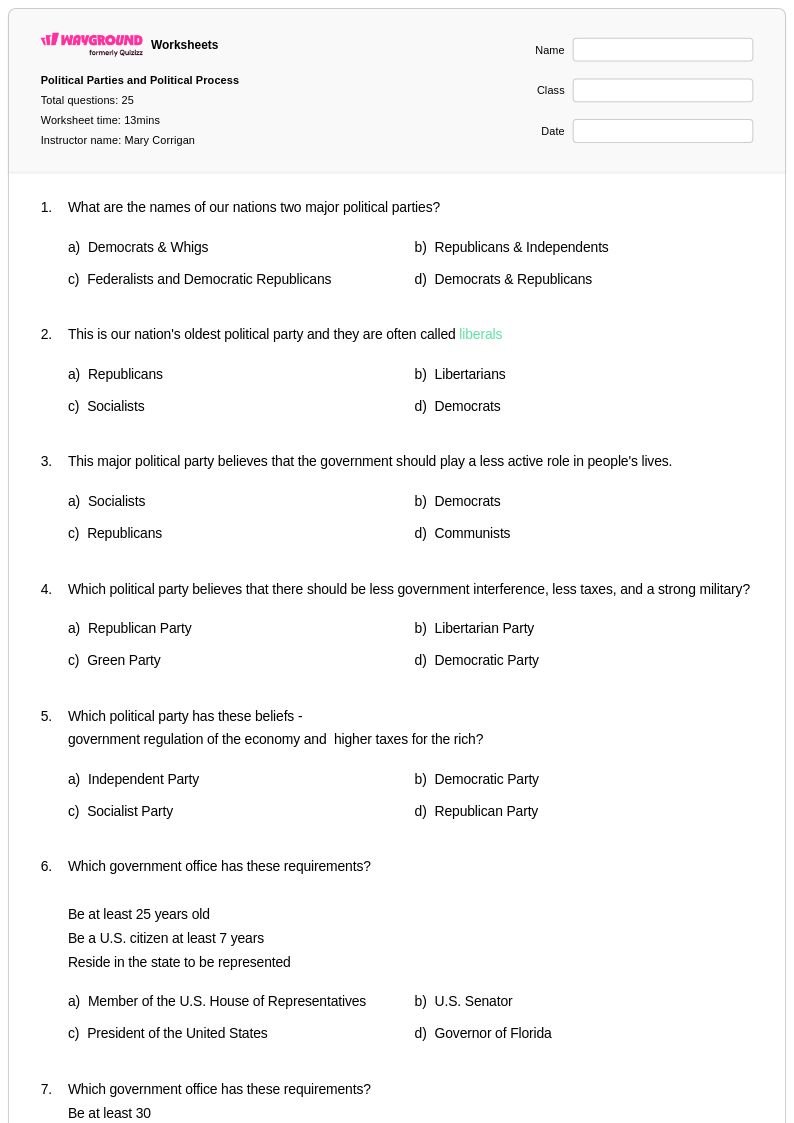
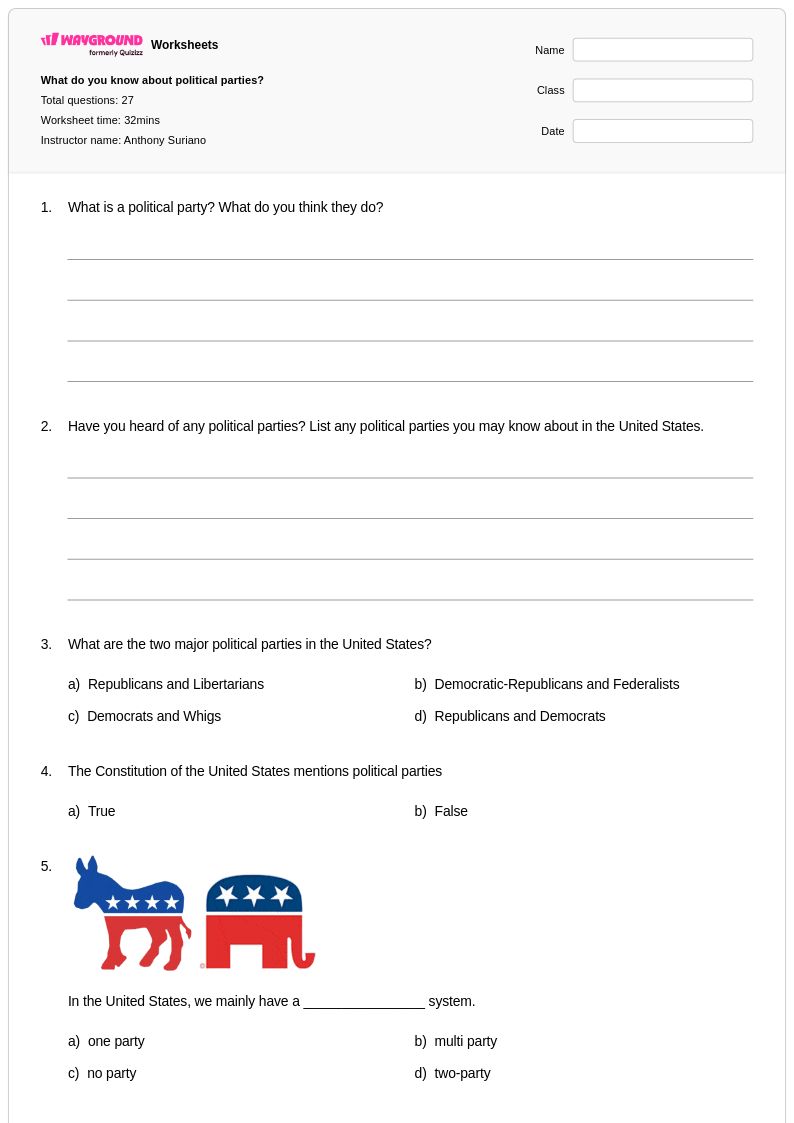
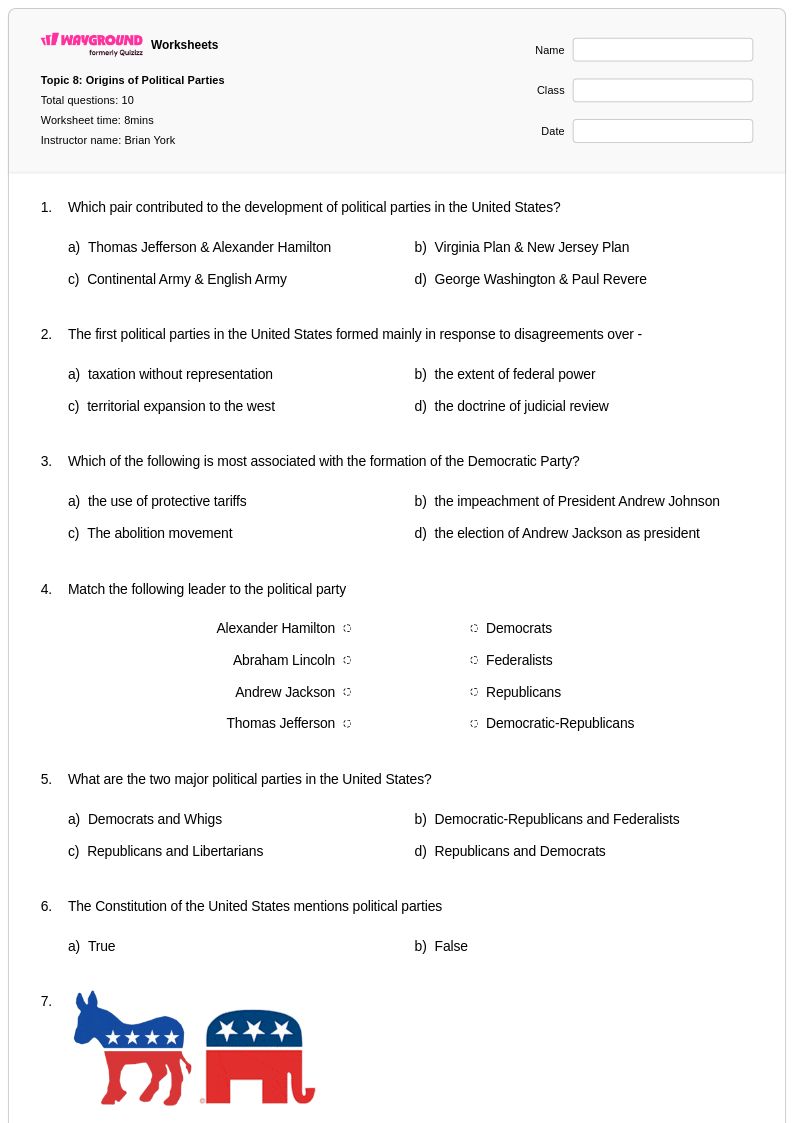
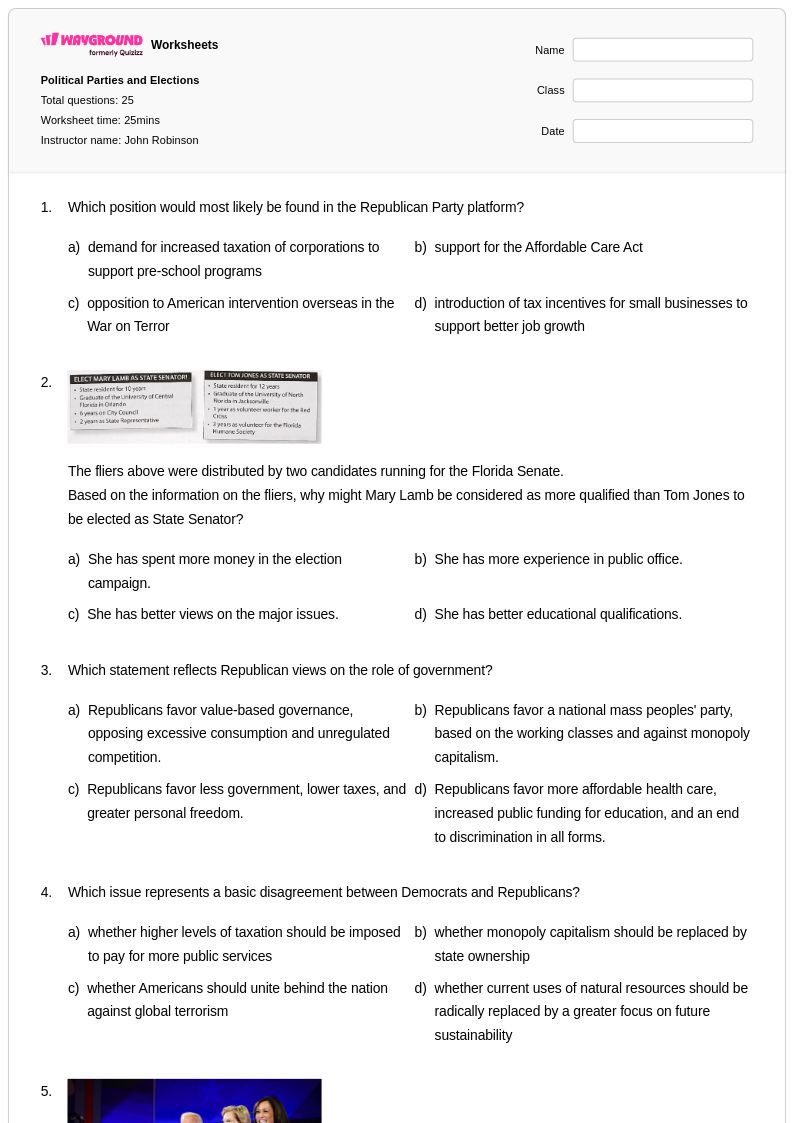
Political parties worksheets for Grade 7 students available through Wayground provide comprehensive coverage of America's two-party system, third parties, and the fundamental role political organizations play in democratic governance. These educational resources strengthen critical thinking skills by guiding students through the historical development of major political parties, their platforms and ideologies, and how they influence elections and policy-making at local, state, and national levels. Students engage with practice problems that explore party nomination processes, primary elections, and the ways political parties mobilize voters and shape public opinion. Each worksheet includes detailed answer key materials and is designed as free printables that teachers can easily incorporate into civics lessons, helping seventh graders understand how political parties serve as vital links between citizens and their government.
Wayground's extensive collection of political parties educational materials draws from millions of teacher-created resources, offering educators powerful search and filtering capabilities to locate content that aligns with state social studies standards and specific curriculum requirements. Teachers can access both printable pdf formats and interactive digital versions, allowing for flexible implementation across diverse classroom settings and learning preferences. The platform's differentiation tools enable educators to customize worksheets for varying skill levels, supporting both remediation for students who need additional reinforcement of basic political concepts and enrichment activities for advanced learners ready to analyze complex party dynamics. This comprehensive approach to political parties education helps teachers efficiently plan engaging lessons while providing students with multiple opportunities to practice identifying party differences, understanding electoral processes, and developing informed perspectives on civic participation.
FAQs
How do I teach political parties to middle and high school students?
Start by grounding students in the core functions of political parties: organizing voter preferences, nominating candidates, and shaping policy platforms. From there, move into comparative analysis by having students examine the platforms of major parties side by side, identifying where they agree and diverge on key issues. Connecting party history to current events helps students see party evolution as an ongoing process rather than a fixed structure, which builds more durable civic understanding.
What exercises help students practice understanding political party systems?
Effective practice exercises include platform analysis tasks where students read excerpts from party documents and identify core ideological positions, as well as cause-and-effect activities tracing how party decisions influence legislation and elections. Sequencing tasks that map the historical evolution of major U.S. parties reinforce timeline skills alongside content knowledge. Worksheets that ask students to evaluate how the two-party system shapes candidate selection are particularly strong for building critical thinking in a civics context.
What common misconceptions do students have about political parties?
A frequent misconception is that political parties are official government institutions, when in fact they are private organizations that operate within the electoral system. Students also often conflate a party's platform with its actual legislative record, not recognizing that internal divisions and coalitions can prevent platform goals from becoming policy. Another common error is assuming the two-party system is constitutionally mandated rather than a product of electoral structure and historical consolidation.
How do political parties worksheets connect to civics standards?
Political parties worksheets align with civics standards that require students to understand the structures and functions of democratic government, including how citizens participate in the political process. Standards at the middle and high school level commonly address party systems, electoral processes, and the role of organized groups in shaping public policy. Worksheets that cover party formation, ideology, and campaign strategy directly support these benchmarks while giving teachers a flexible, standards-aligned resource.
How can I use Wayground's political parties worksheets in my classroom?
Wayground's political parties worksheets are available as printable PDFs for traditional in-class use and in digital formats for technology-integrated learning environments, giving teachers flexibility for homework assignments, in-class activities, or remediation support. Teachers can also host worksheets as a quiz directly on Wayground, making it easy to gather student responses and assess comprehension in real time. Each worksheet includes a detailed answer key, reducing prep time and supporting consistent grading.
How can I differentiate political parties instruction for students with different learning needs?
For students who struggle with complex text, breaking down party platform excerpts into shorter passages and pairing them with guided questions helps make content more accessible. On Wayground, teachers can apply accommodations such as Read Aloud, which delivers audio support for students who benefit from hearing questions read to them, and reduced answer choices, which lowers cognitive load for selected students without signaling any difference to the rest of the class. Extended time settings can also be configured per student for assessments, ensuring equitable access across diverse learners.