Free Printable Producer and Consumer Worksheets for Grade 6
Grade 6 students explore producer and consumer relationships through free printable worksheets and practice problems that help identify organisms' roles in ecosystems, complete with answer keys and PDF resources.
Explore printable Producer and Consumer worksheets for Grade 6
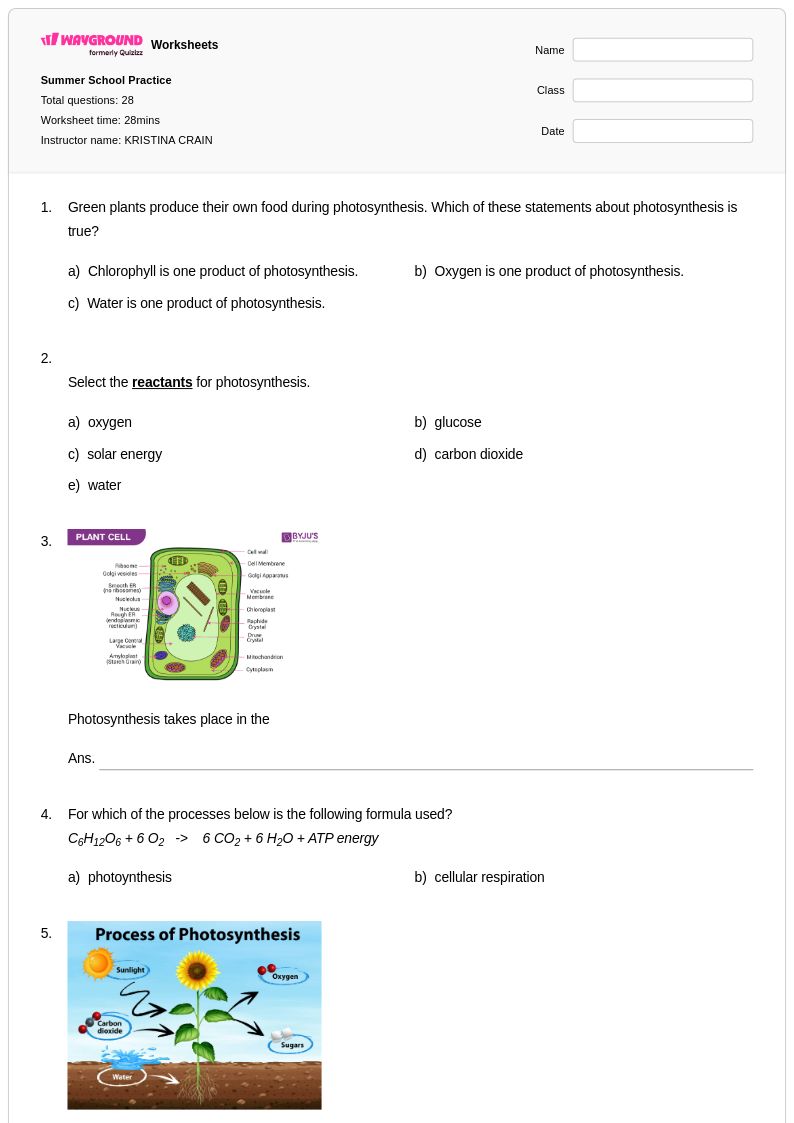
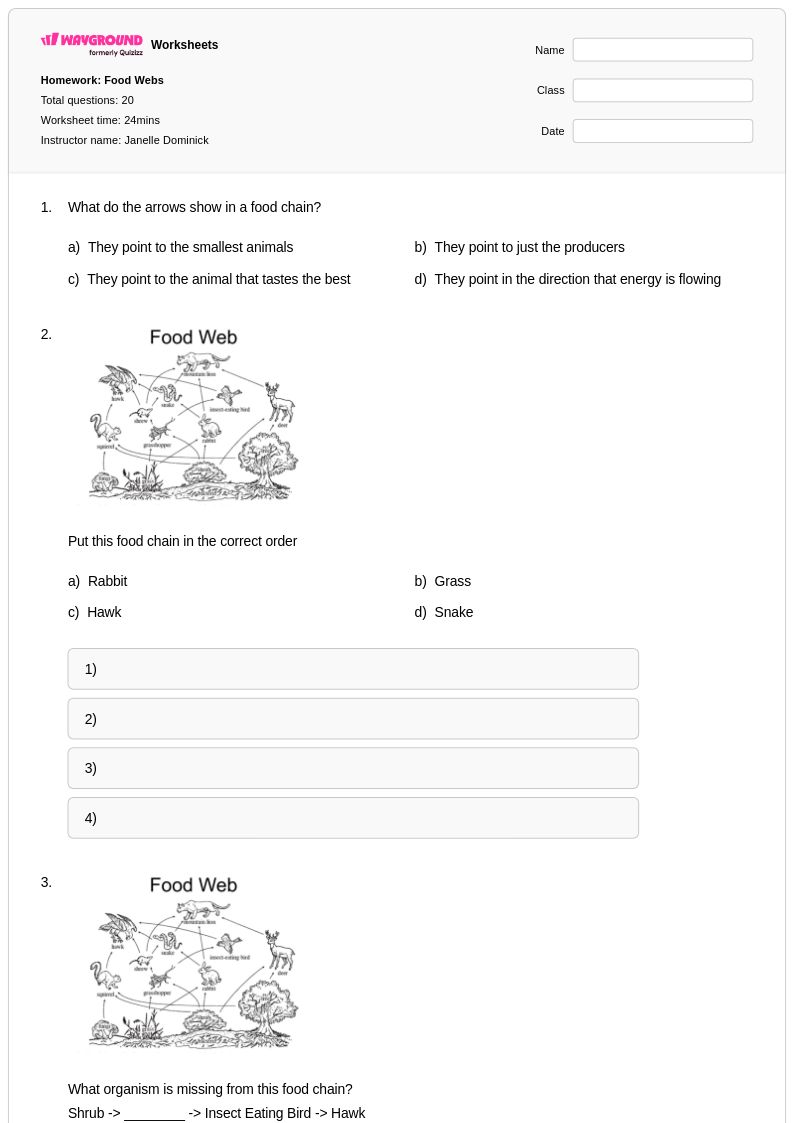
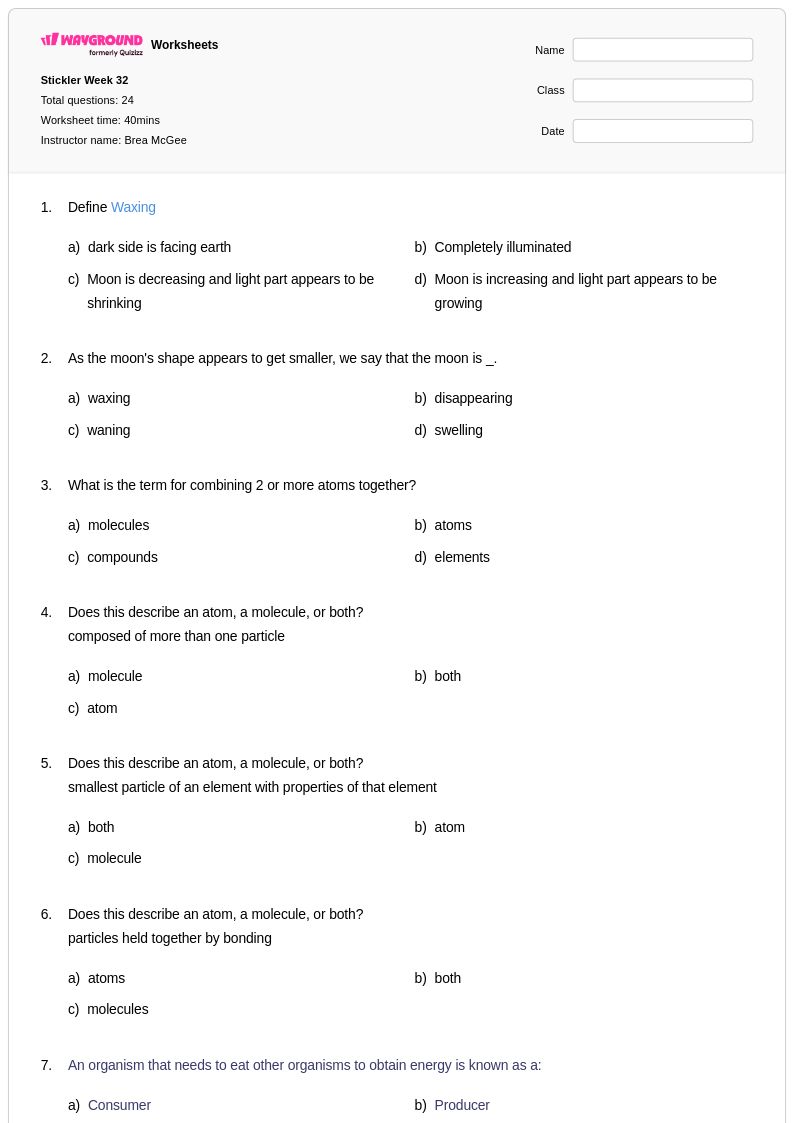
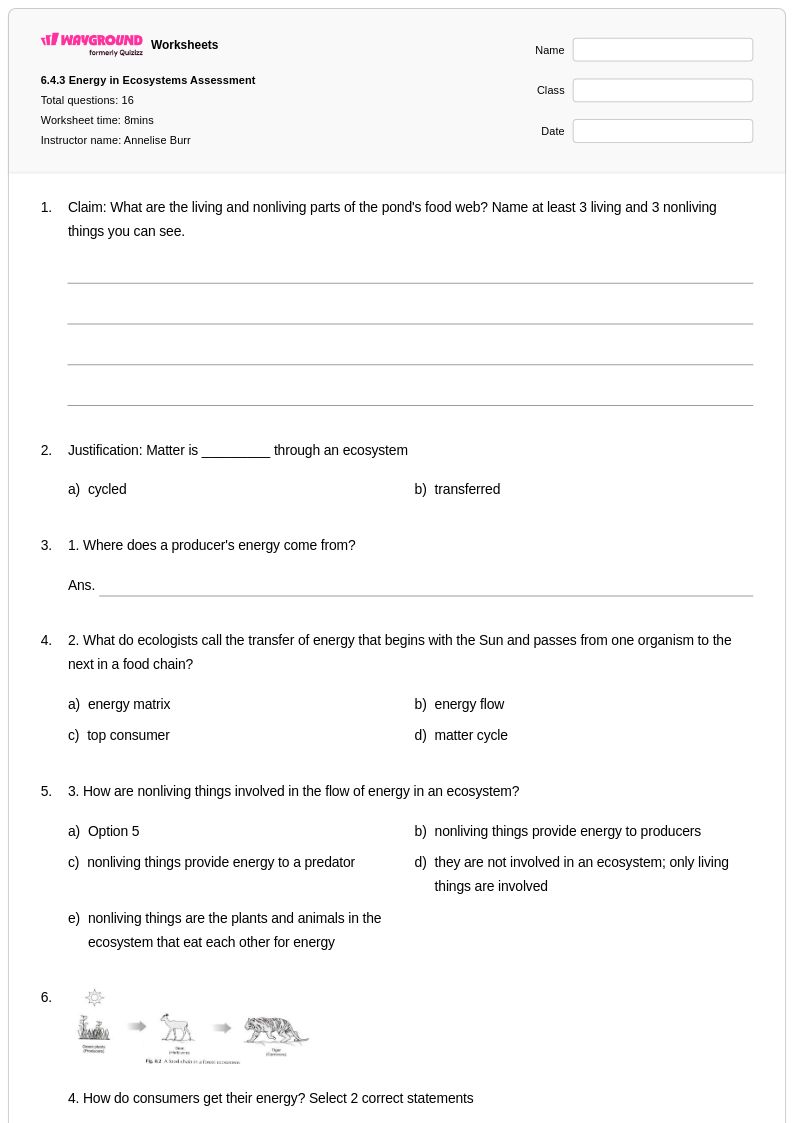
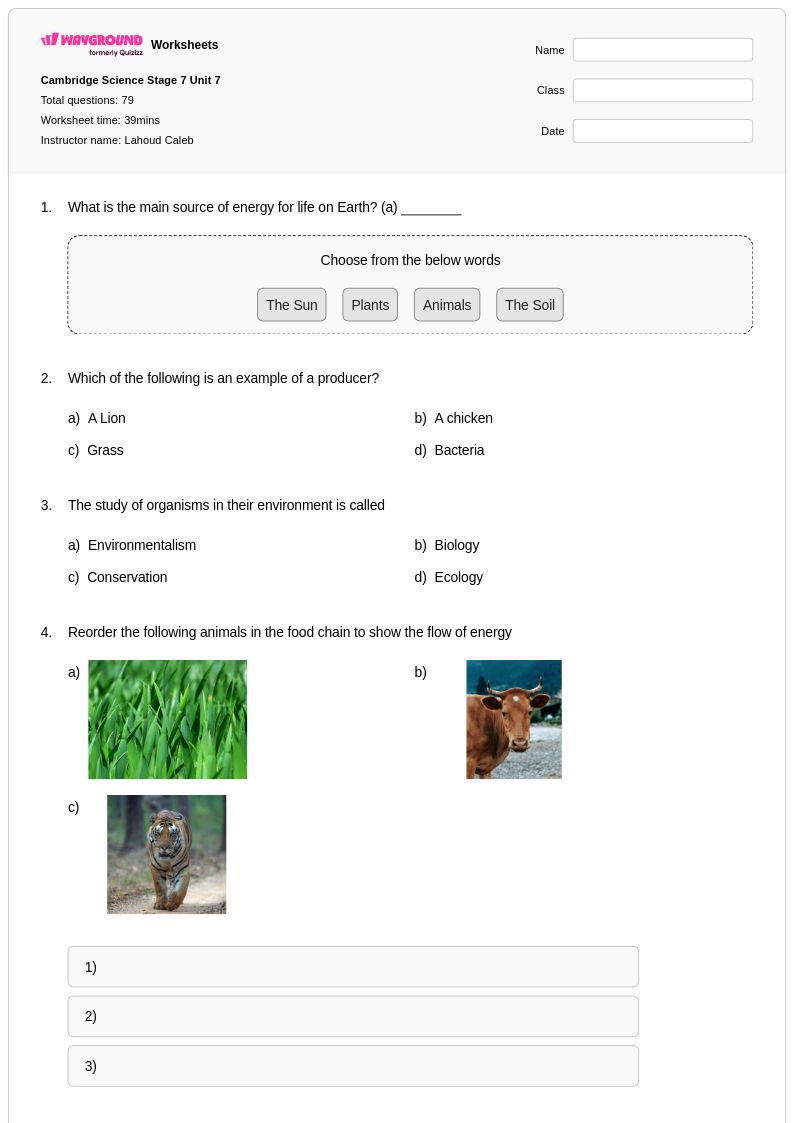
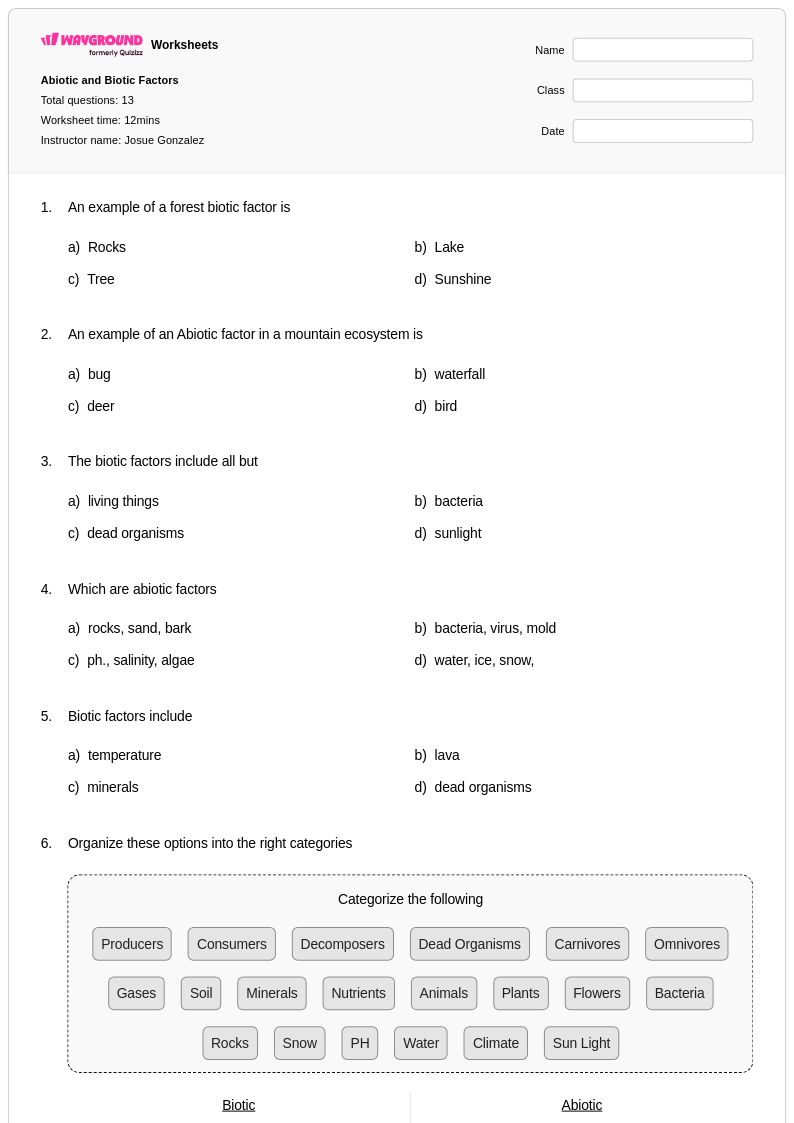
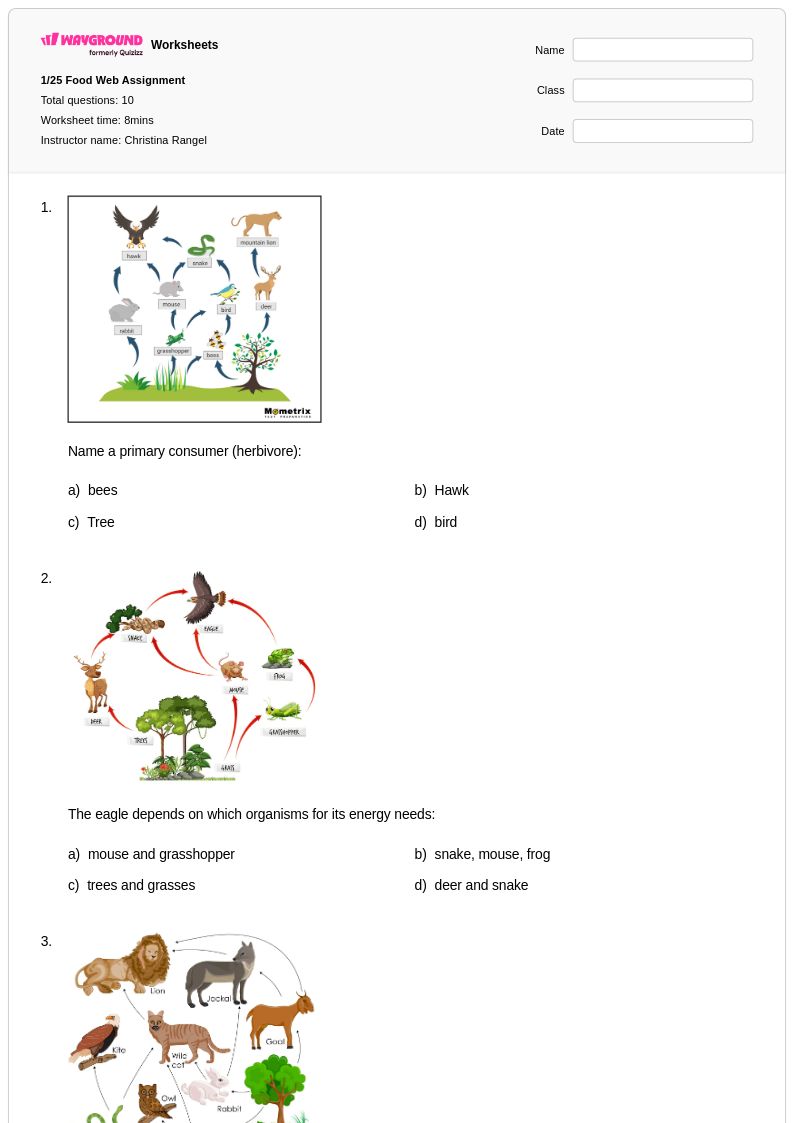
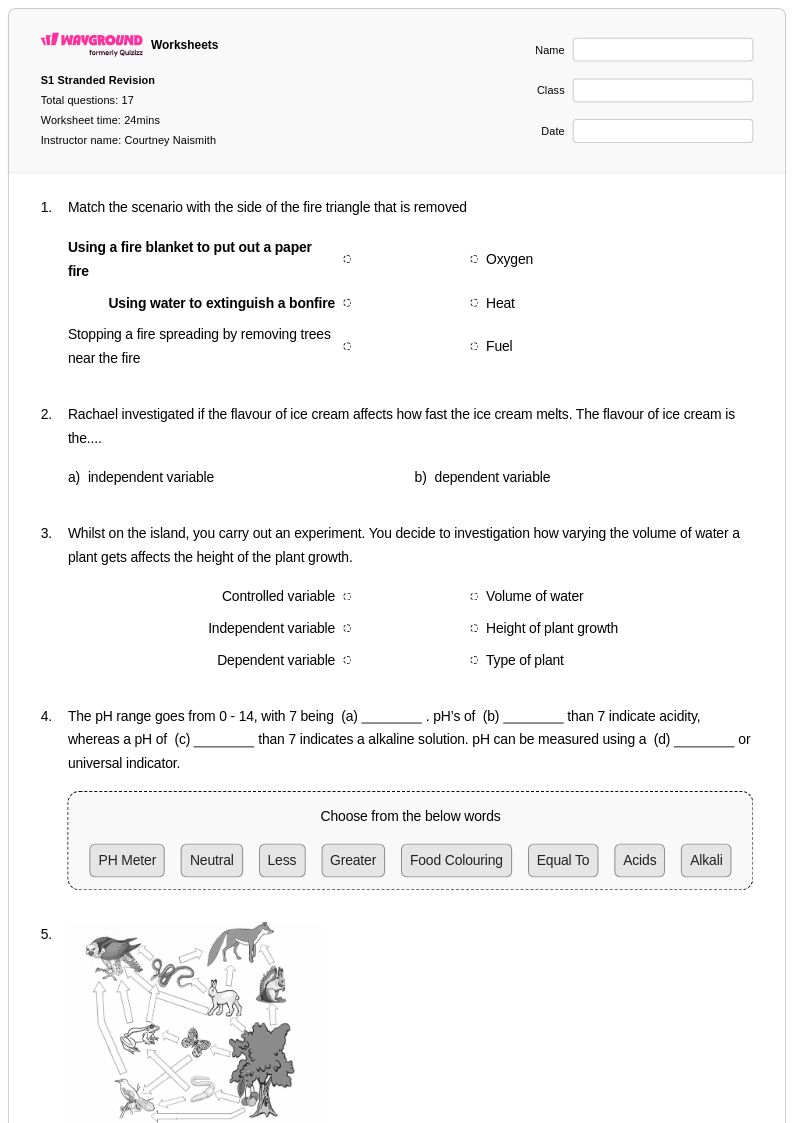
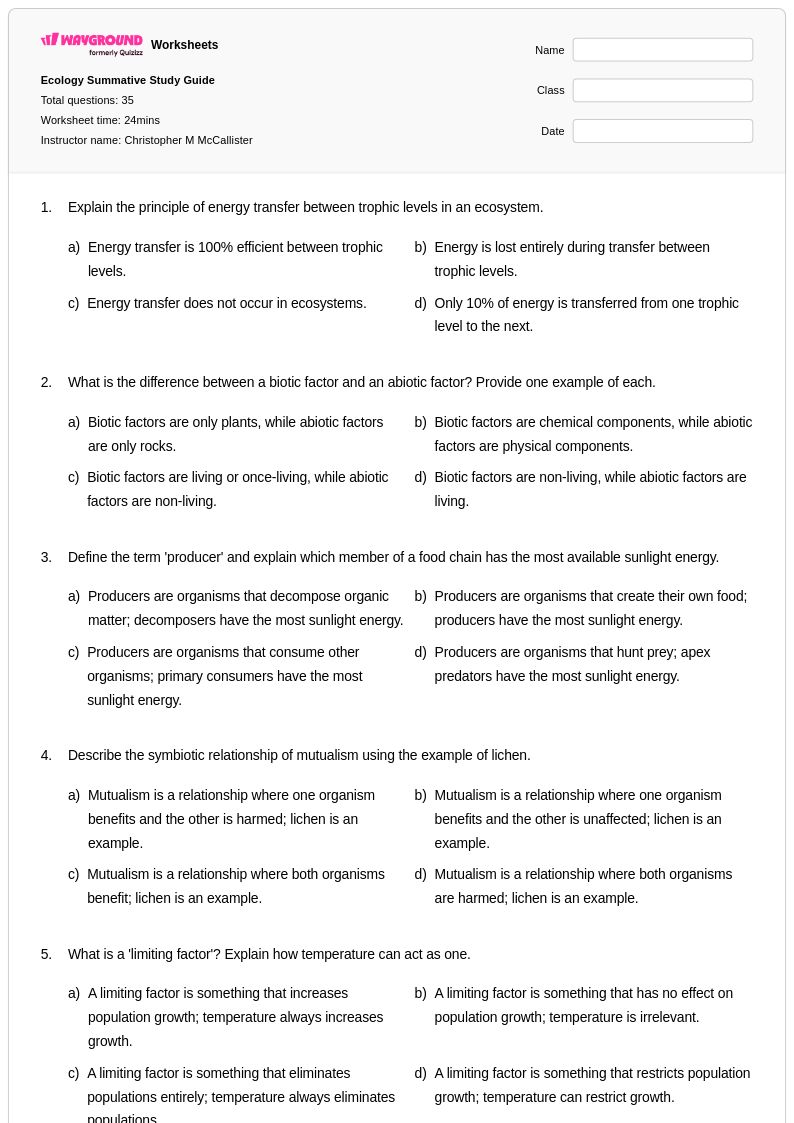
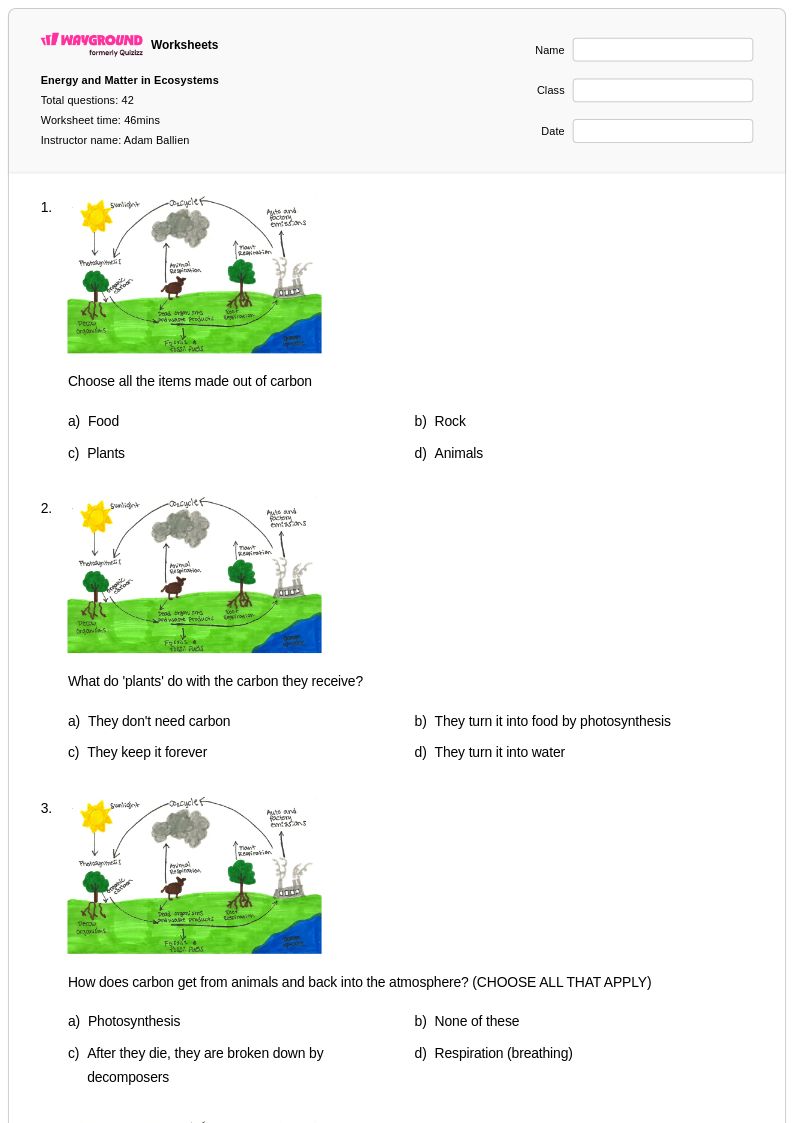
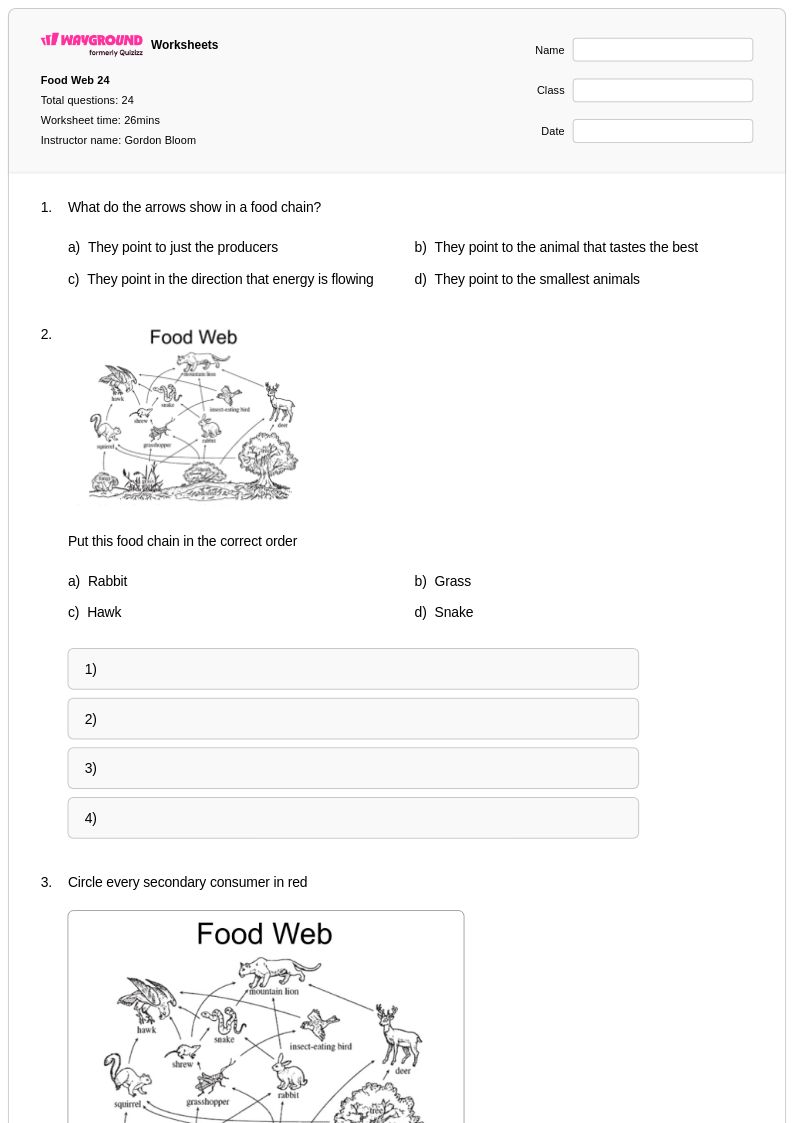
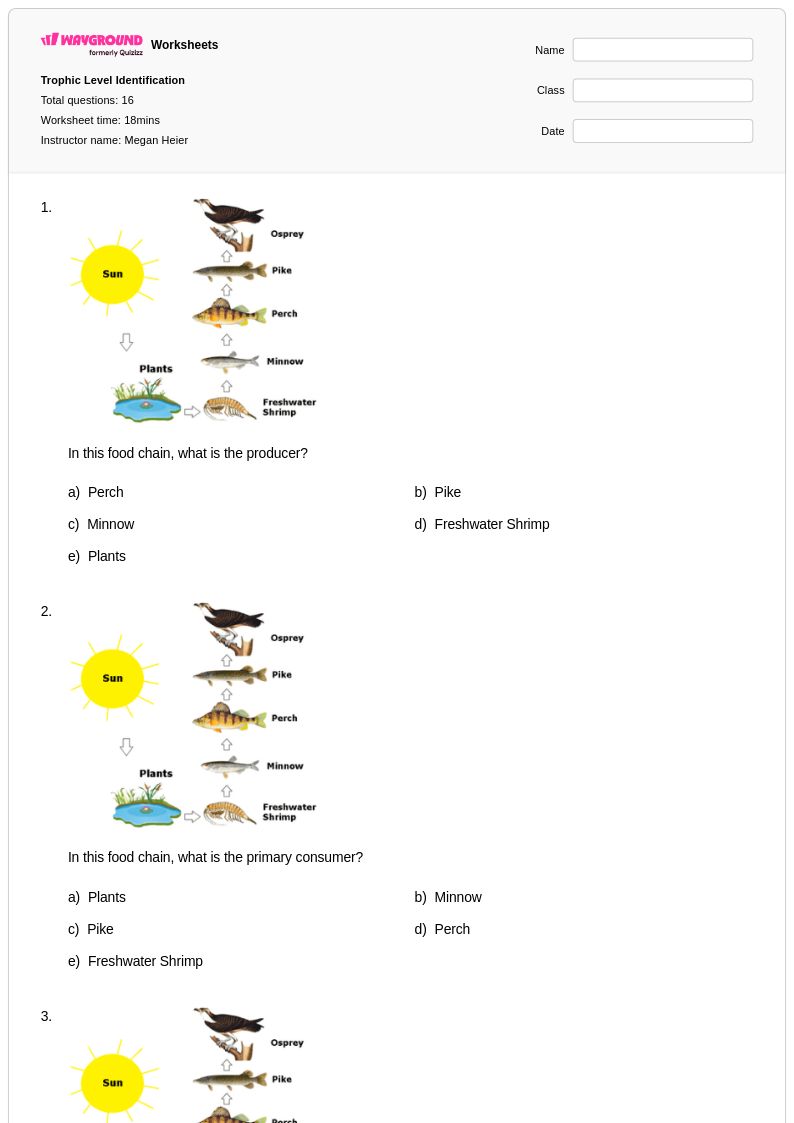
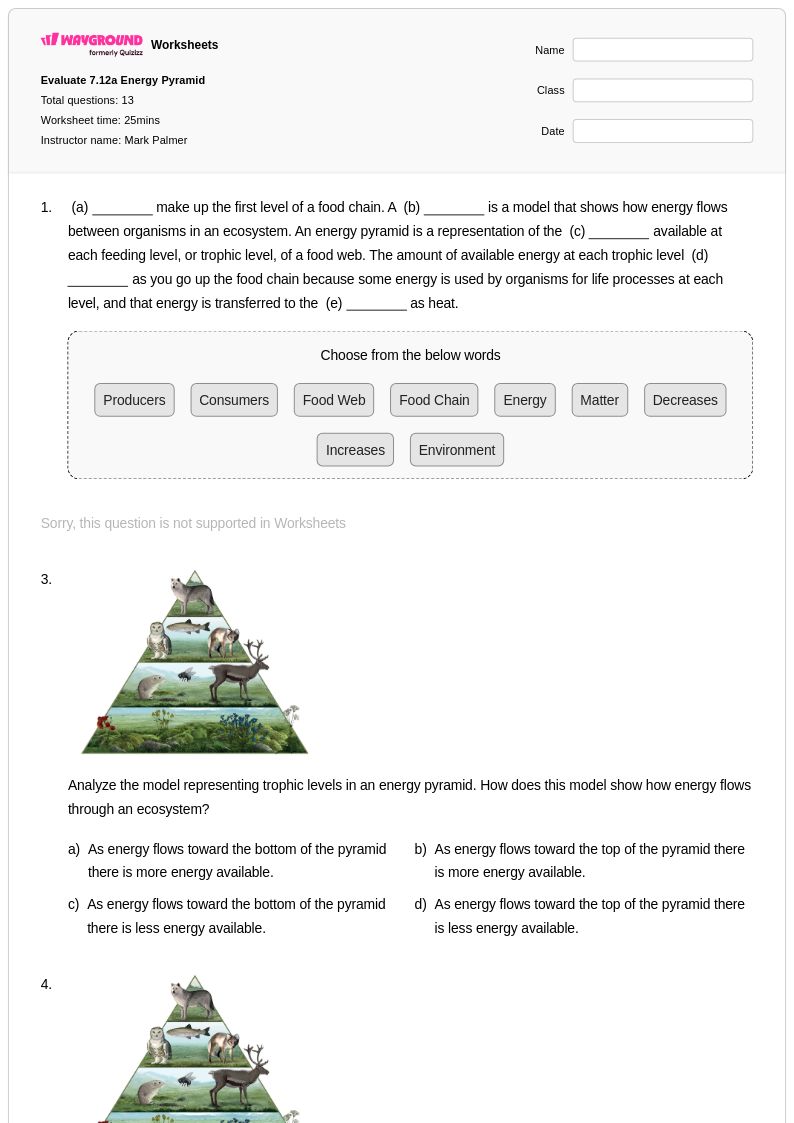
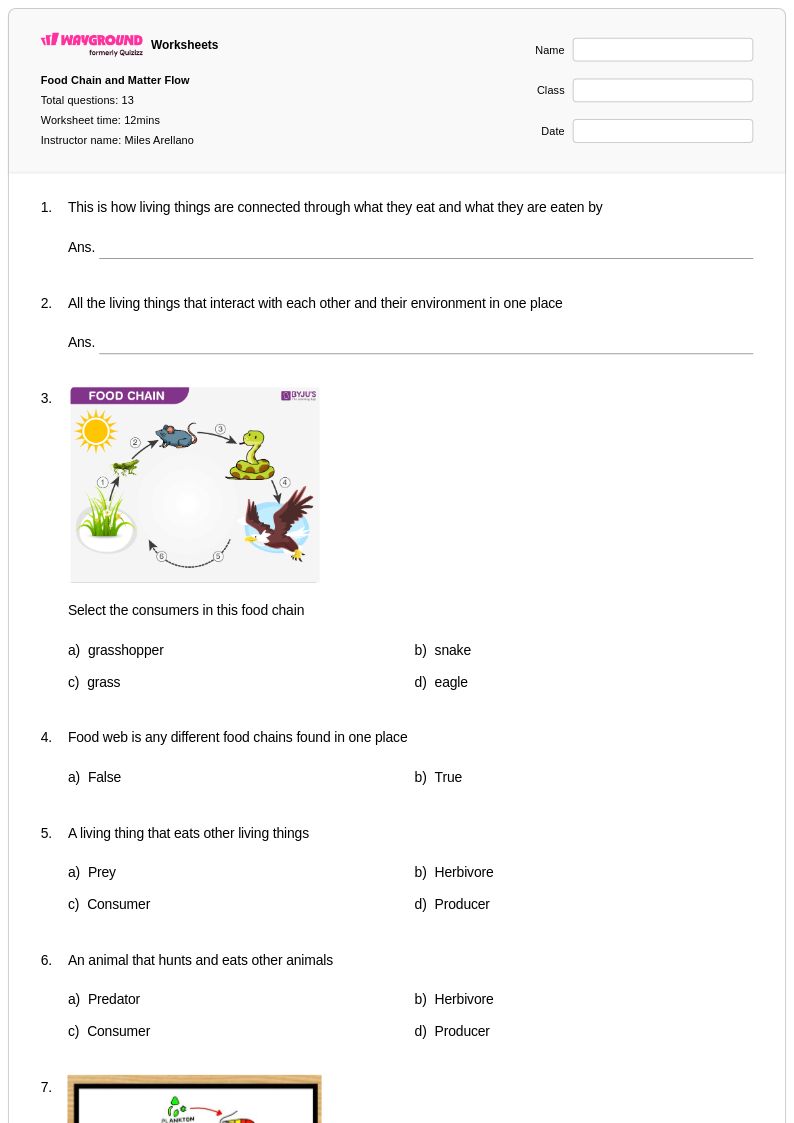
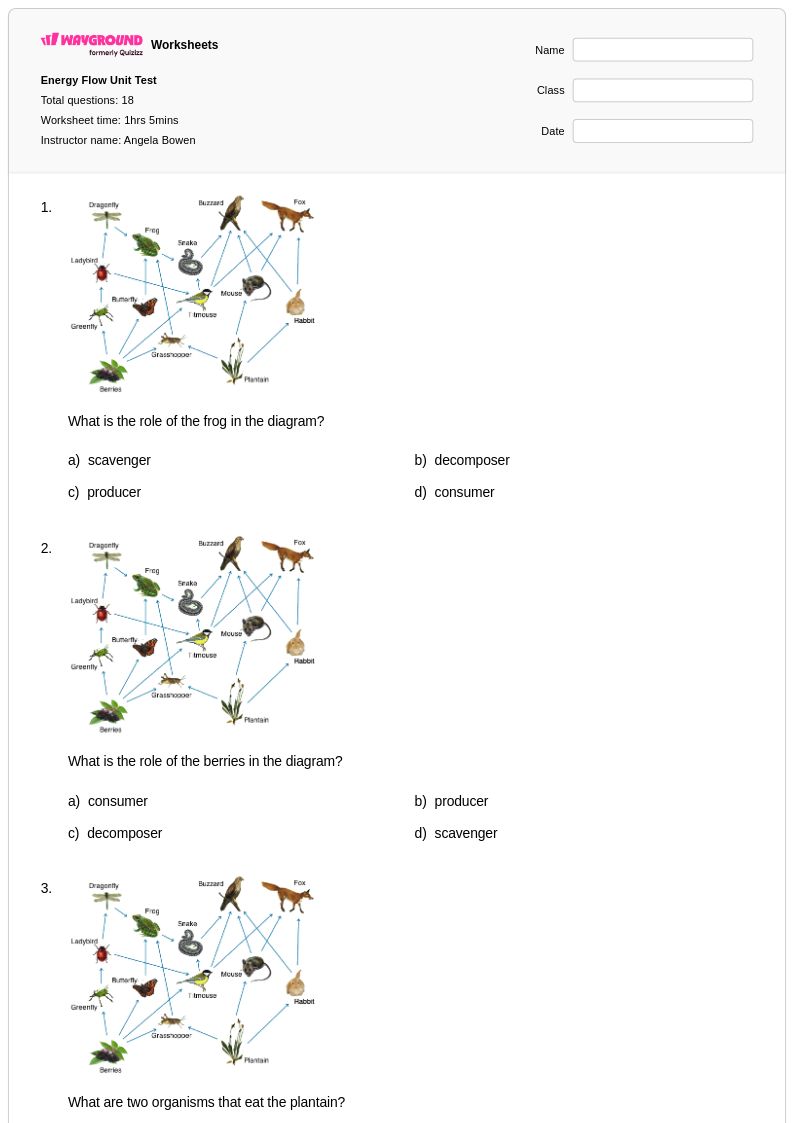
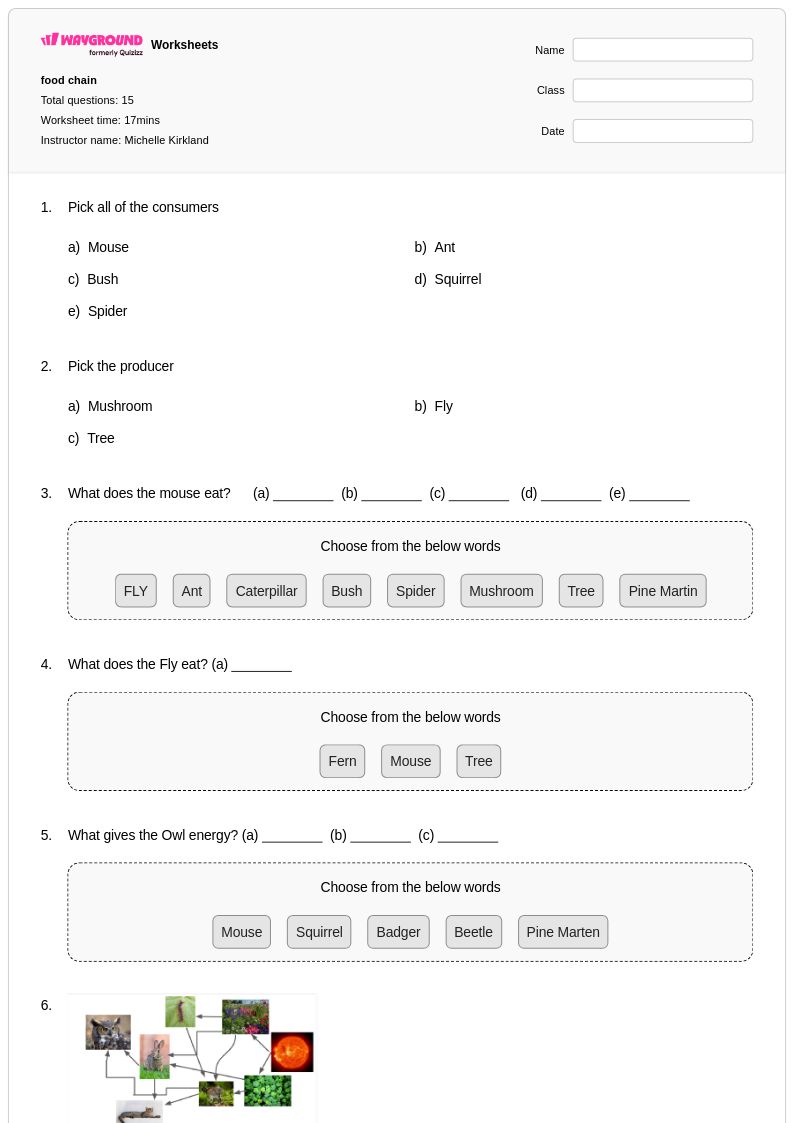
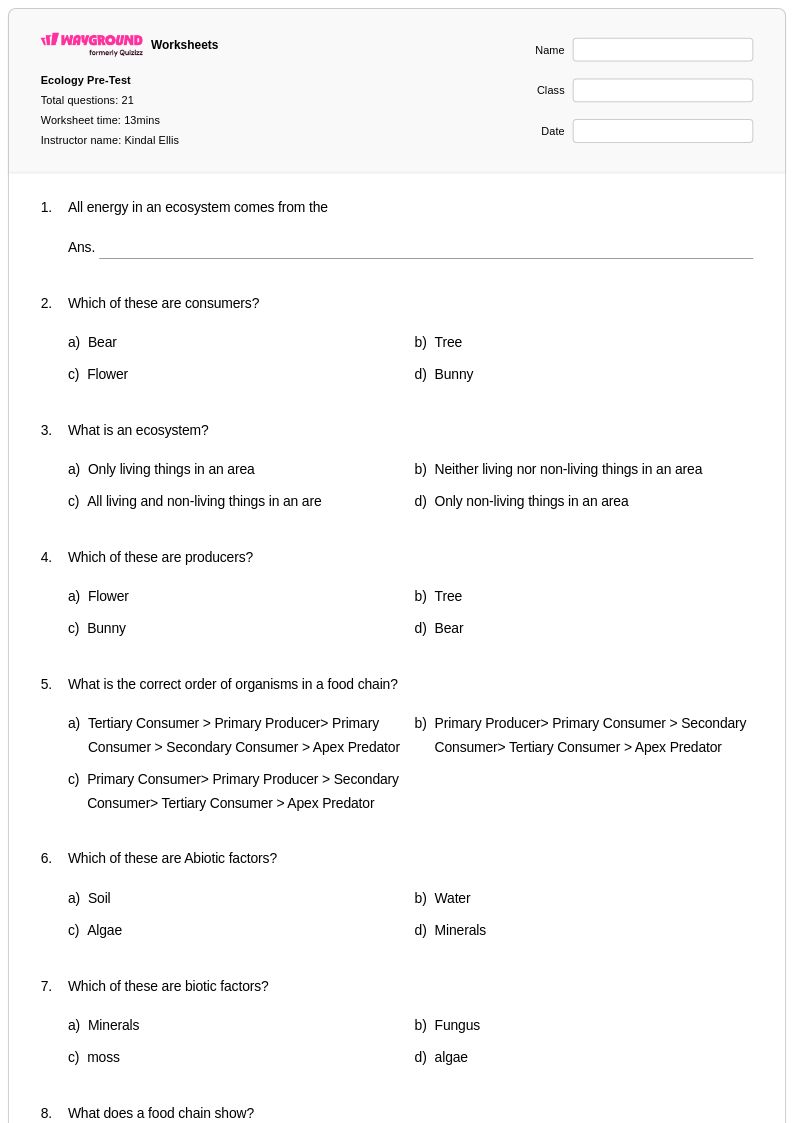
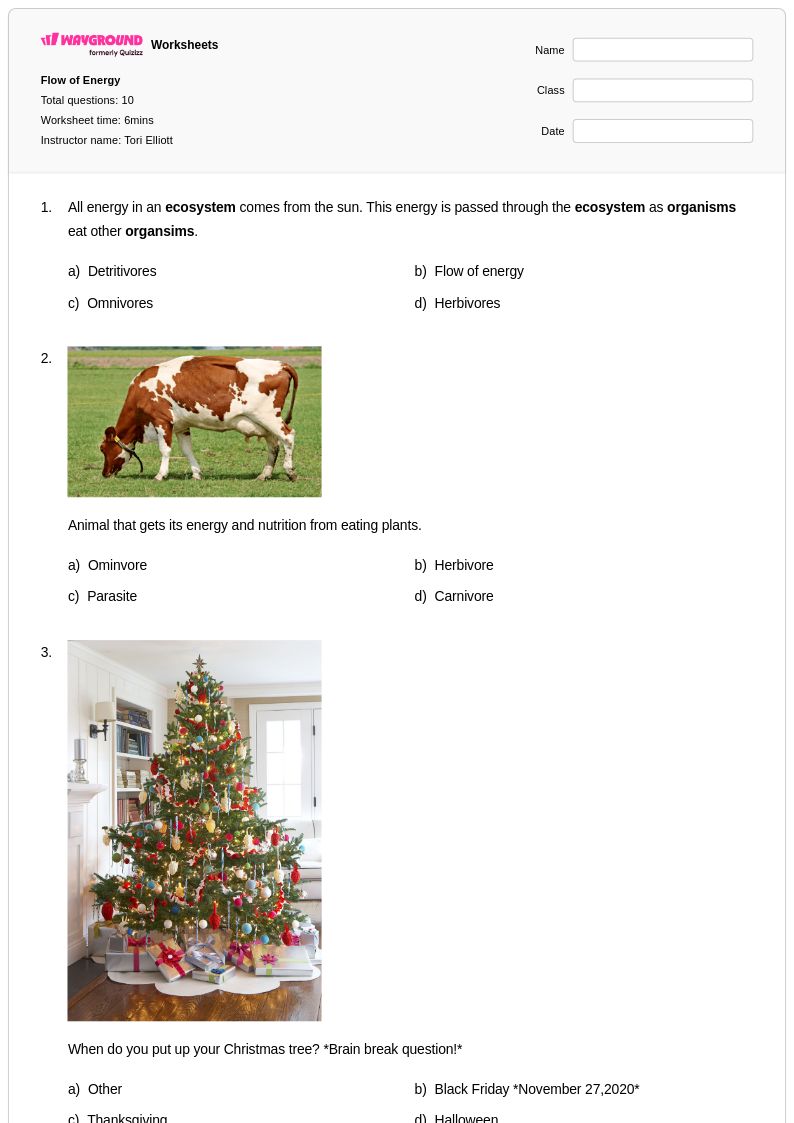
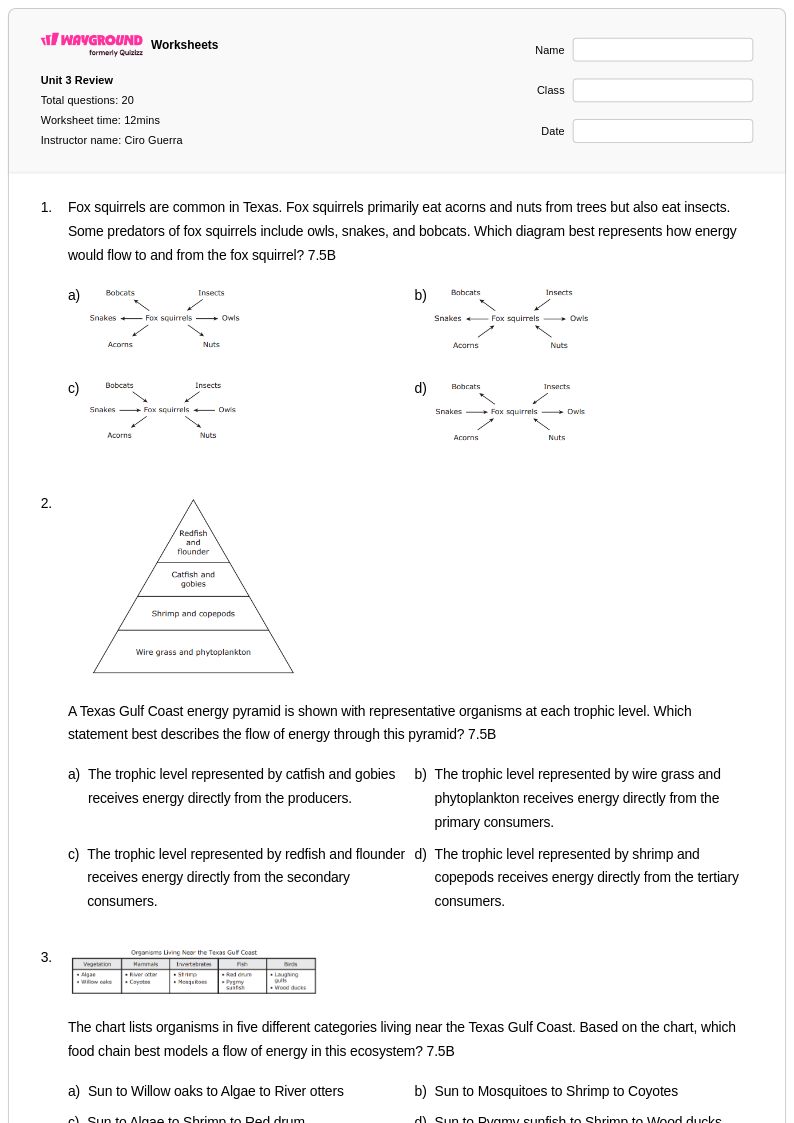
Producer and consumer relationships form the foundation of ecological understanding in Grade 6 science curricula, and Wayground's comprehensive worksheet collection helps students master these critical ecosystem concepts. These expertly designed worksheets guide students through identifying primary producers like plants and algae, understanding different consumer levels including herbivores, carnivores, and omnivores, and analyzing how energy flows through food chains and webs. Each worksheet includes detailed answer keys that support both independent learning and classroom instruction, while the free printable format ensures accessibility for all educators. Students engage with practice problems that challenge them to classify organisms, trace energy transfer pathways, and predict the effects of changes in producer and consumer populations within various ecosystems.
Wayground's extensive library contains millions of teacher-created resources specifically focused on producer and consumer dynamics, offering educators unparalleled flexibility in lesson planning and student assessment. The platform's advanced search and filtering capabilities allow teachers to locate worksheets that align perfectly with state science standards and specific learning objectives, while differentiation tools enable customization for diverse learning needs and ability levels. Whether accessed as digital resources for online instruction or downloaded as PDF printables for traditional classroom use, these materials support effective remediation for struggling students and provide enrichment opportunities for advanced learners. The comprehensive collection empowers teachers to reinforce essential ecological concepts through varied practice formats, ensuring students develop a solid understanding of how producers and consumers interact to maintain ecosystem balance and energy flow.
FAQs
How do I teach the difference between producers and consumers to students?
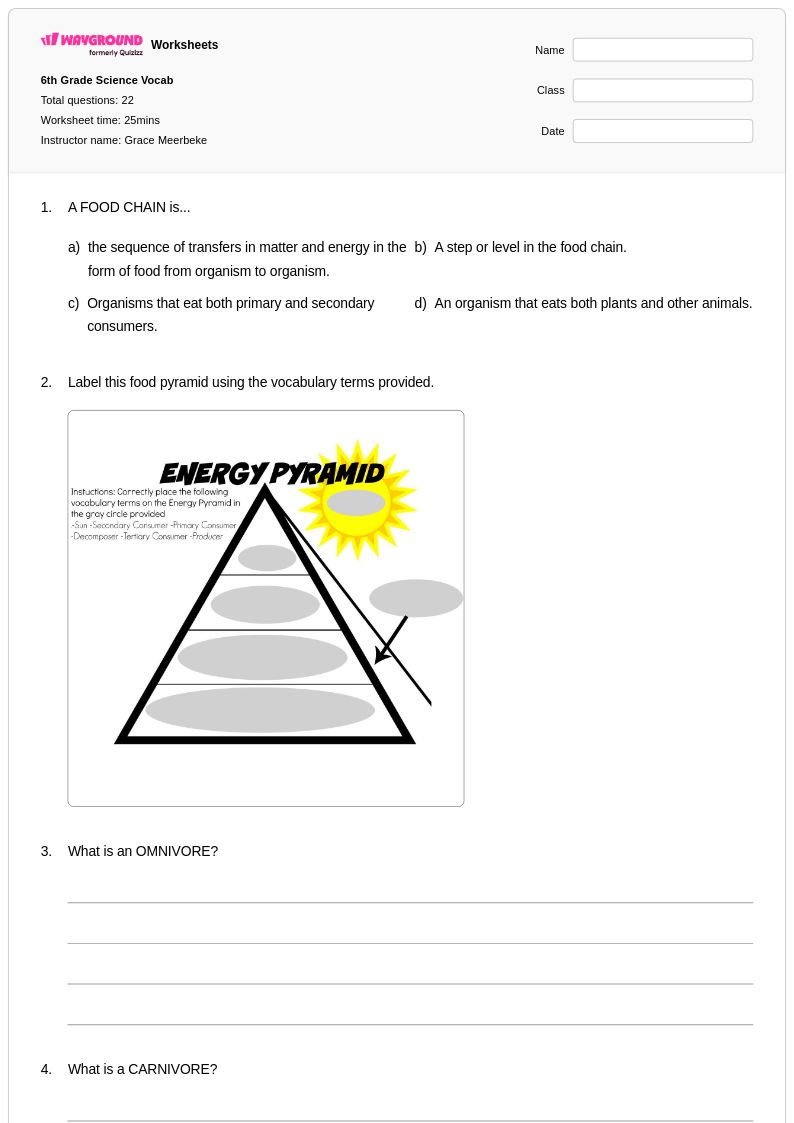
Start by grounding students in the concept of energy acquisition: producers like plants and algae make their own food through photosynthesis, while consumers must obtain energy by feeding on other organisms. Introduce consumer tiers sequentially — primary consumers eat producers, secondary consumers eat primary consumers, and tertiary consumers sit at the top of the food chain. Using real ecosystem examples, such as a pond or forest food web, helps students visualize these relationships before moving to classification exercises and food web analysis.
What exercises help students practice identifying producers and consumers?
Effective practice exercises include organism classification tasks where students sort a list of organisms into producers, primary consumers, secondary consumers, and tertiary consumers. Food web diagram activities that ask students to trace energy flow between trophic levels reinforce these distinctions in context. Progressing from single-organism identification to full food web analysis builds both foundational understanding and higher-order thinking about ecosystem energy dynamics.
What mistakes do students commonly make when learning about producers and consumers?
A frequent misconception is that all animals are the same type of consumer — students often overlook the distinction between primary, secondary, and tertiary consumers and what those levels actually represent. Some students also confuse decomposers with consumers, not recognizing that decomposers occupy a separate ecological role. Another common error is assuming that producers always appear as large plants, when algae and phytoplankton are equally important producers in aquatic ecosystems.
How can I use producer and consumer worksheets to assess student understanding?
Producer and consumer worksheets work well as formative assessments because classification tasks and food web questions reveal whether students can correctly apply trophic level concepts rather than simply recall definitions. Answer-key-supported worksheets allow students to self-check and identify their own errors, making them useful for both guided practice and independent review. Teachers can also analyze patterns in student mistakes — such as consistent misclassification of omnivores — to inform reteaching decisions.
How do I use Wayground's producer and consumer worksheets in my classroom?
Wayground's producer and consumer worksheets are available as printable PDFs for traditional classroom use and in digital formats for technology-integrated lessons, accommodating a range of teaching environments and student preferences. Teachers can host worksheets as a quiz directly on Wayground, and each worksheet includes a complete answer key to support both teacher grading and independent student learning. Wayground also offers differentiation tools and flexible customization options, so teachers can modify existing worksheets or build new ones to address varying skill levels — from remediation to enrichment.
How do I differentiate producer and consumer instruction for students at different levels?
For struggling students, reduce complexity by focusing first on the producer versus consumer binary before introducing consumer tiers. Advanced learners can be challenged with food web analysis tasks that require them to predict the impact of removing one organism from an ecosystem. On Wayground, teachers can apply individual accommodations such as read aloud support or reduced answer choices for selected students, while the rest of the class works with standard settings — all without singling anyone out.