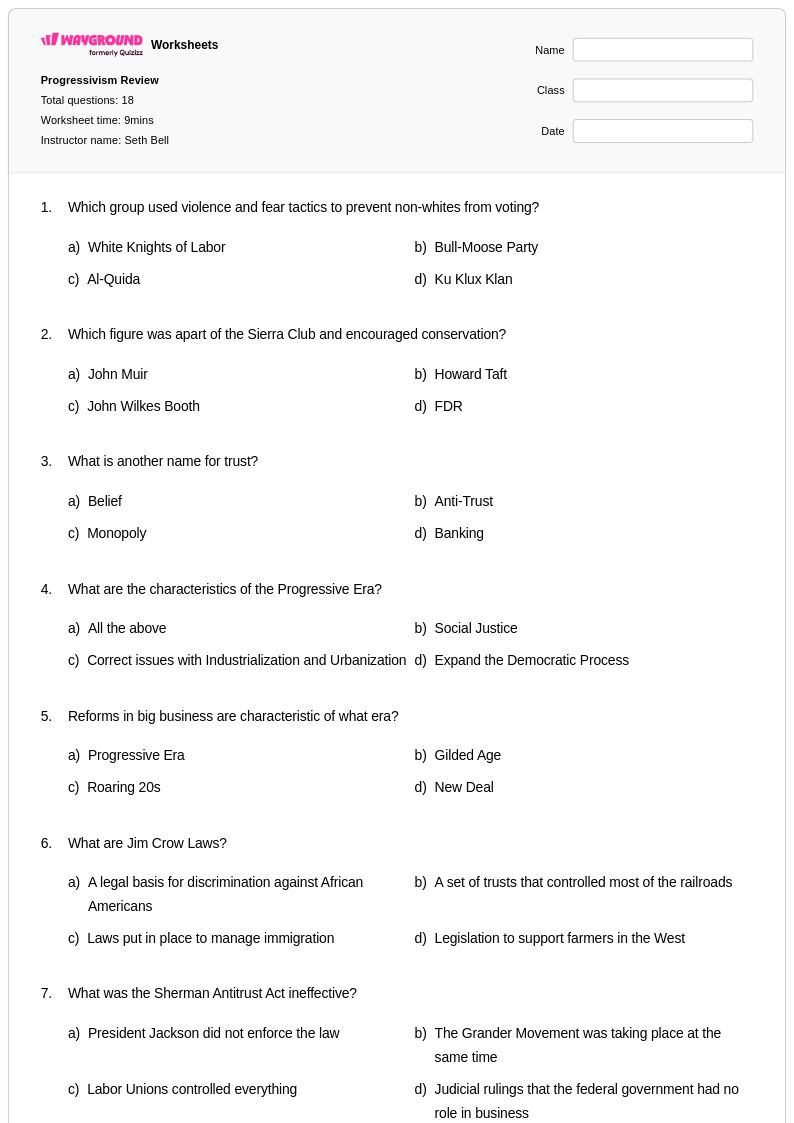
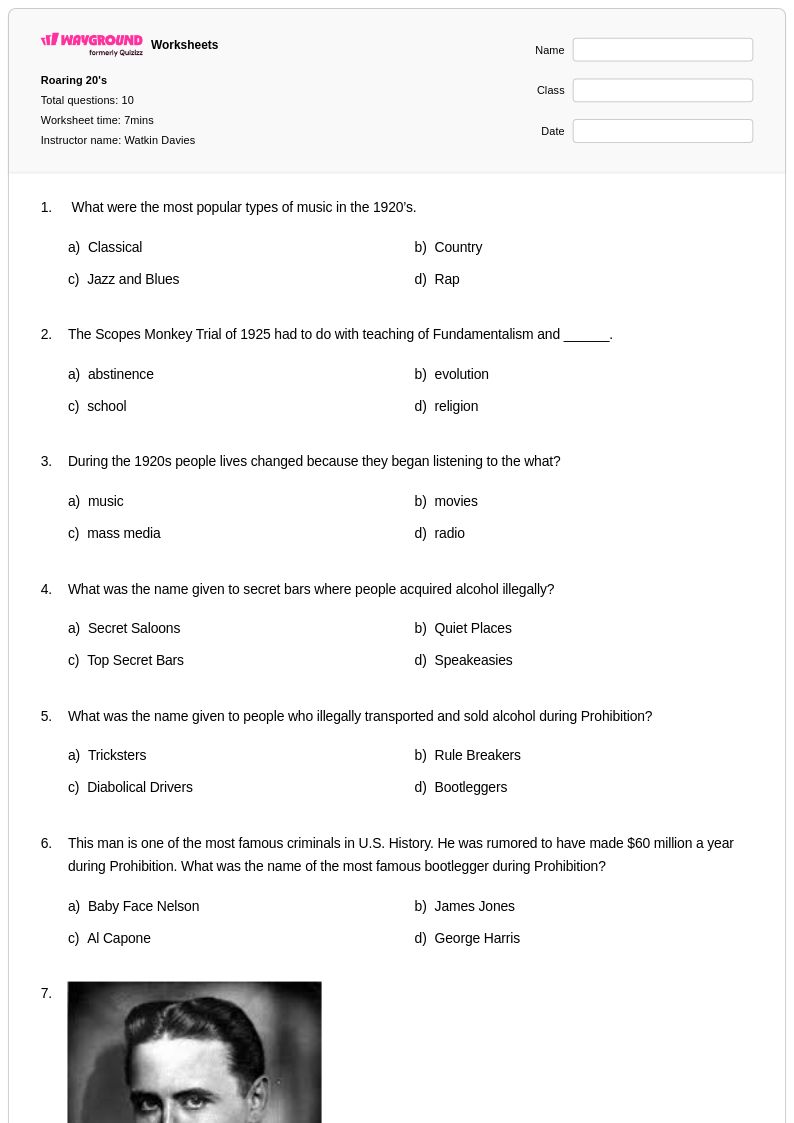
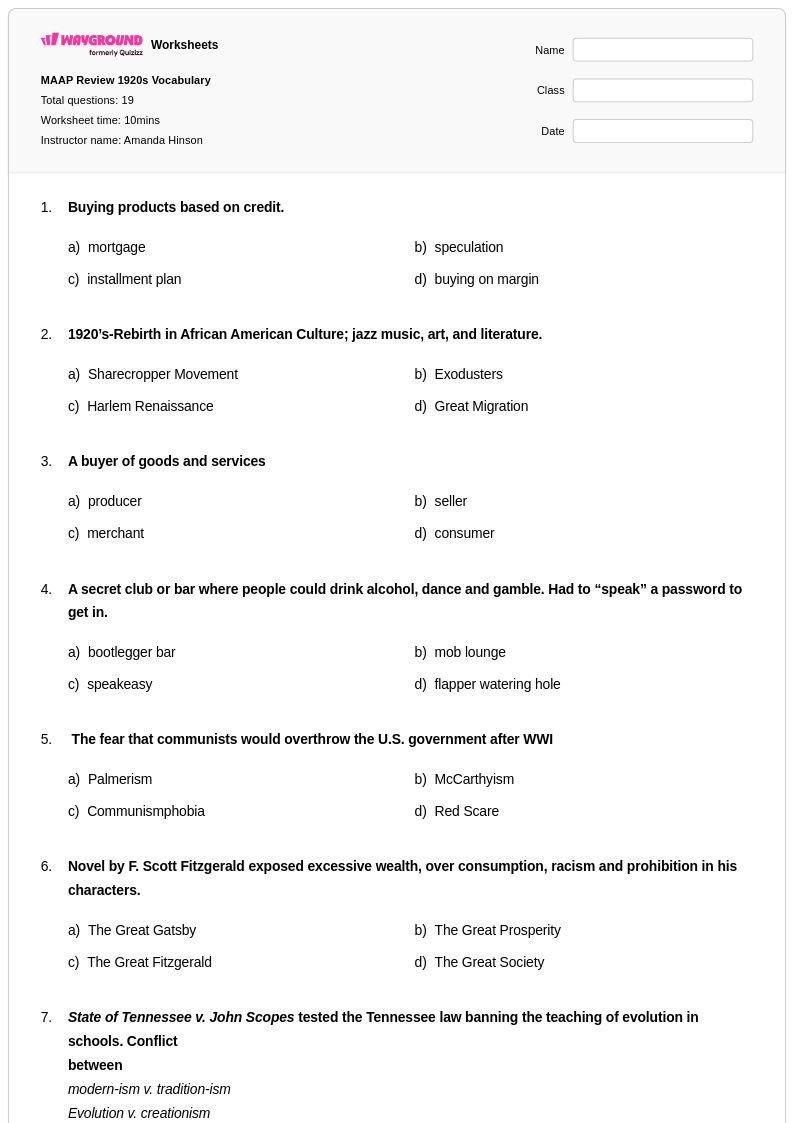
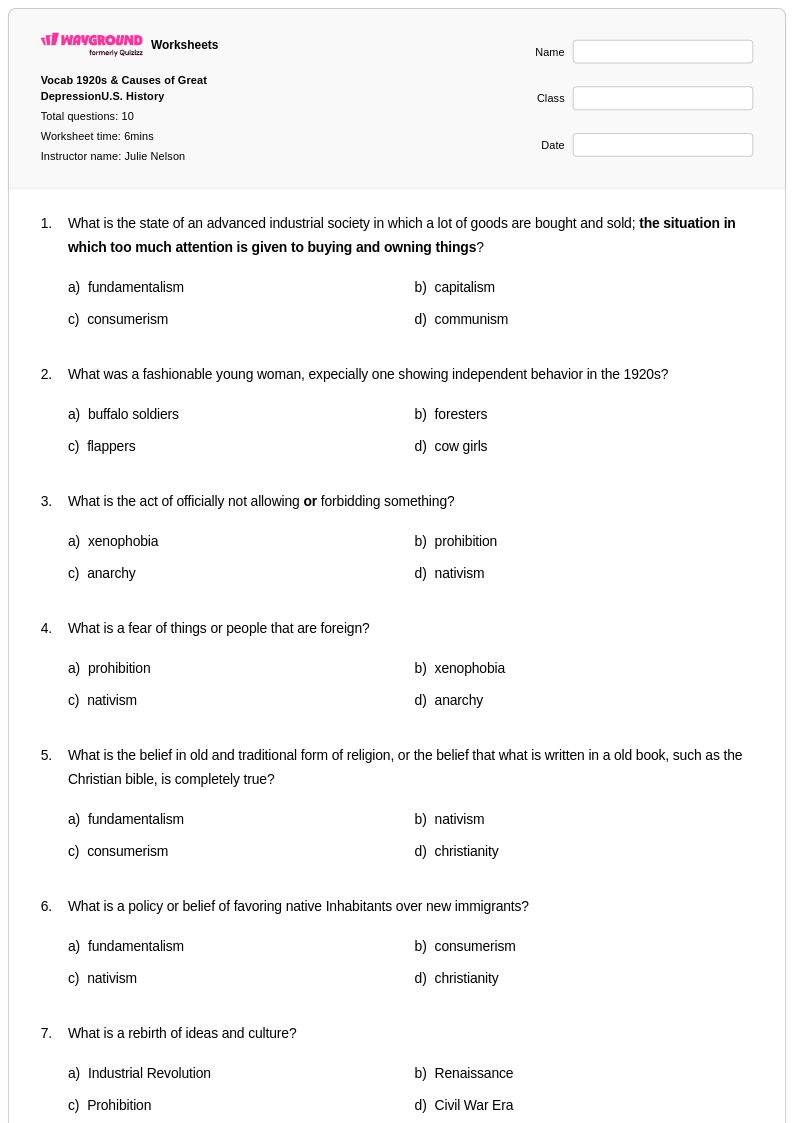
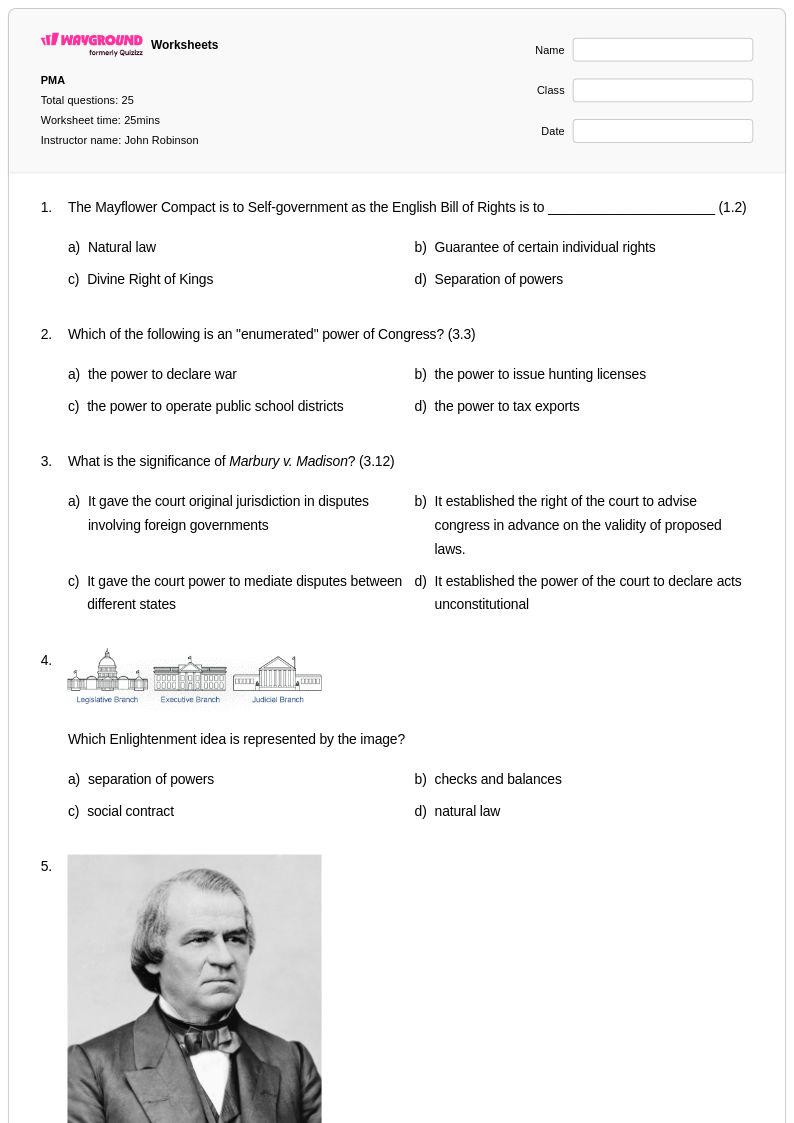
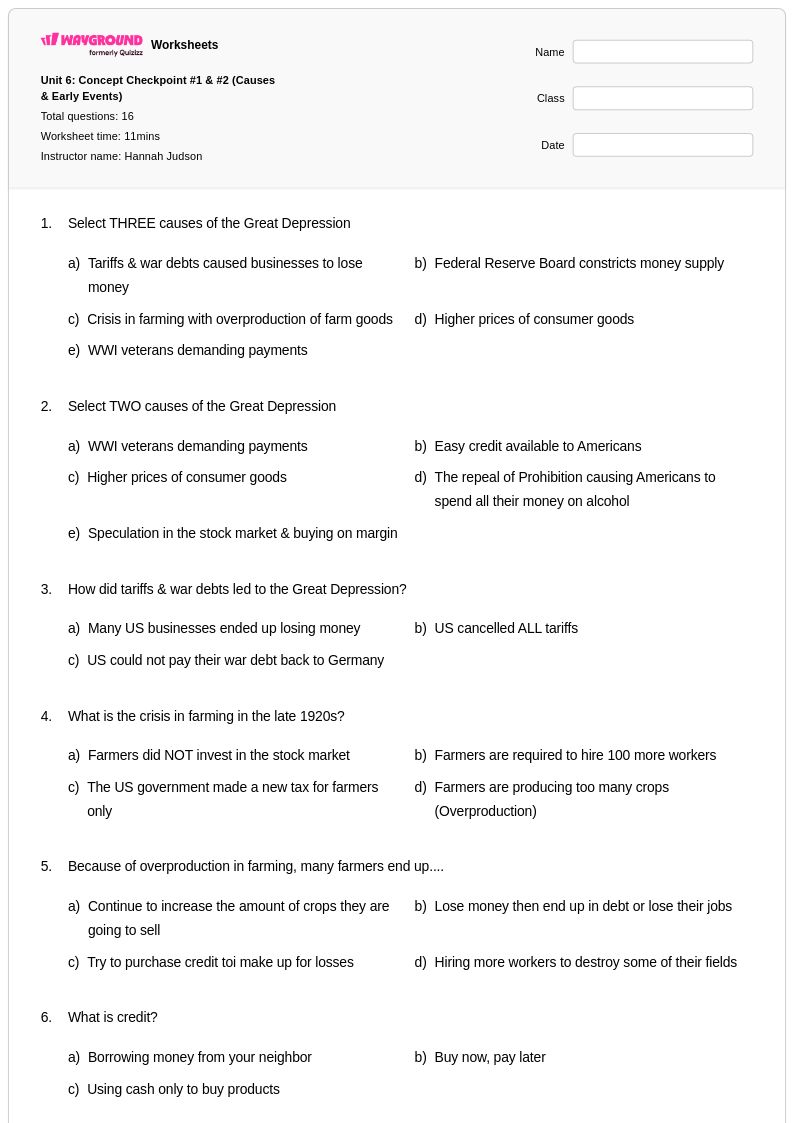
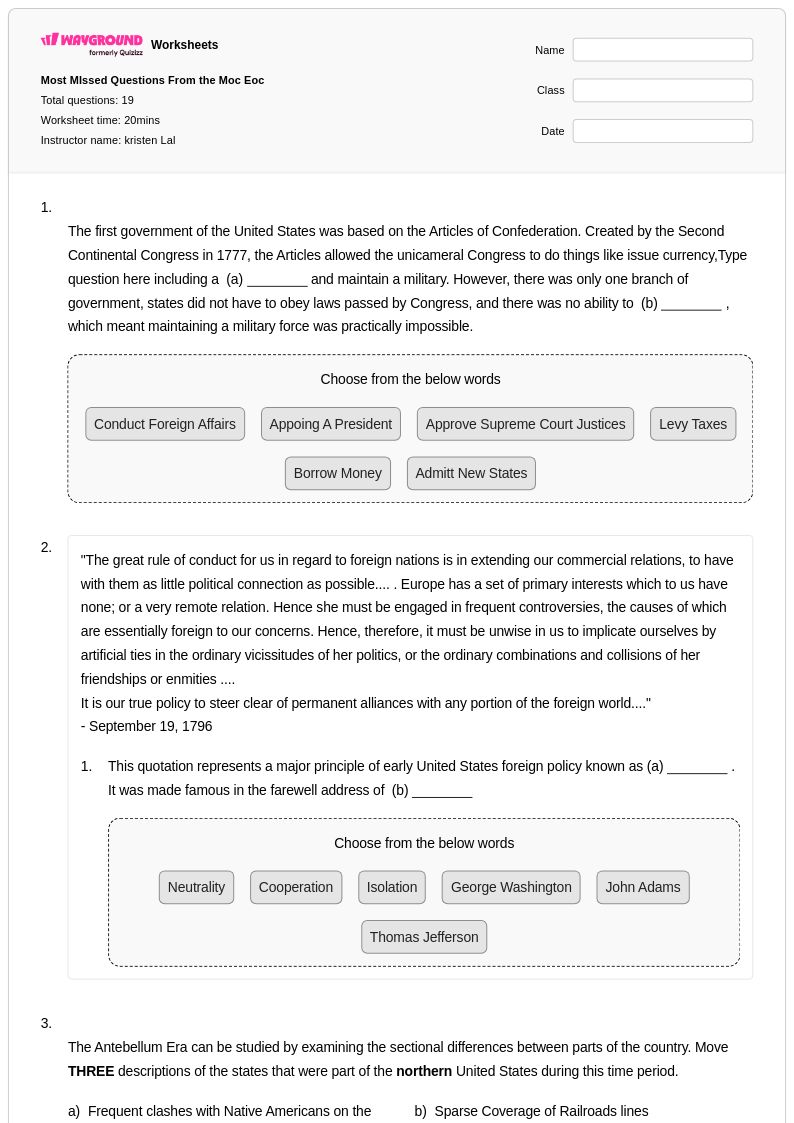
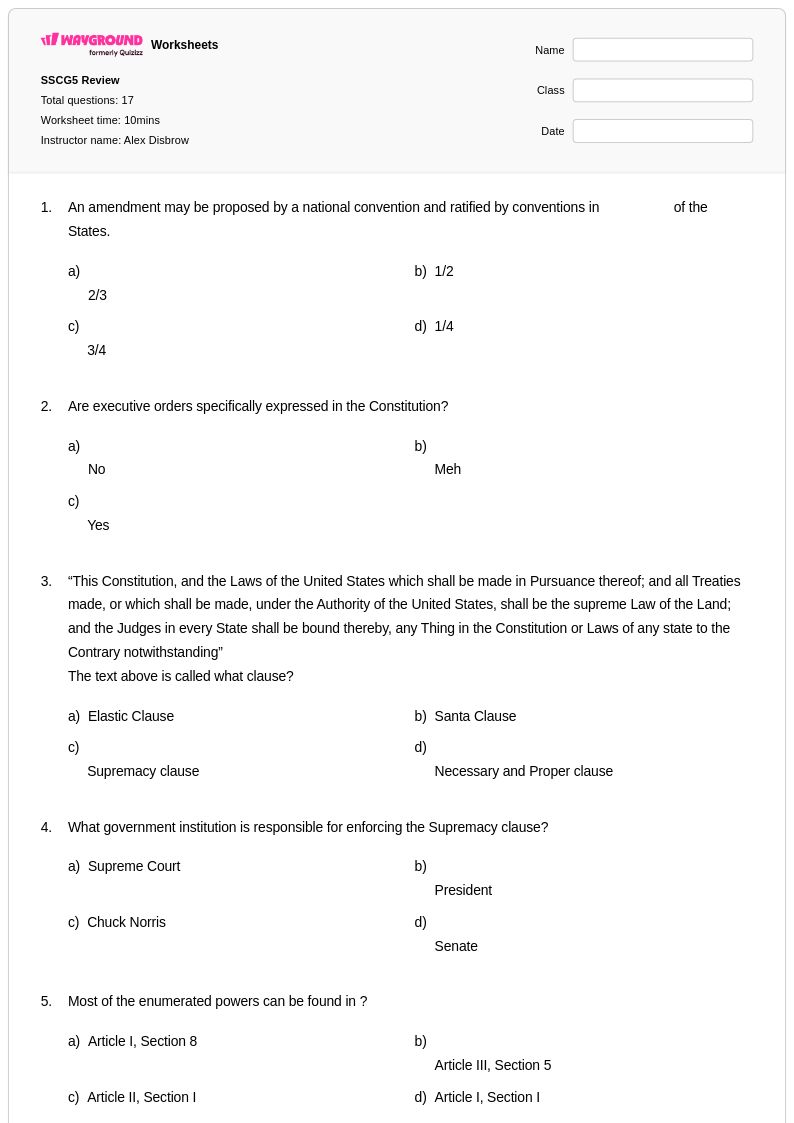
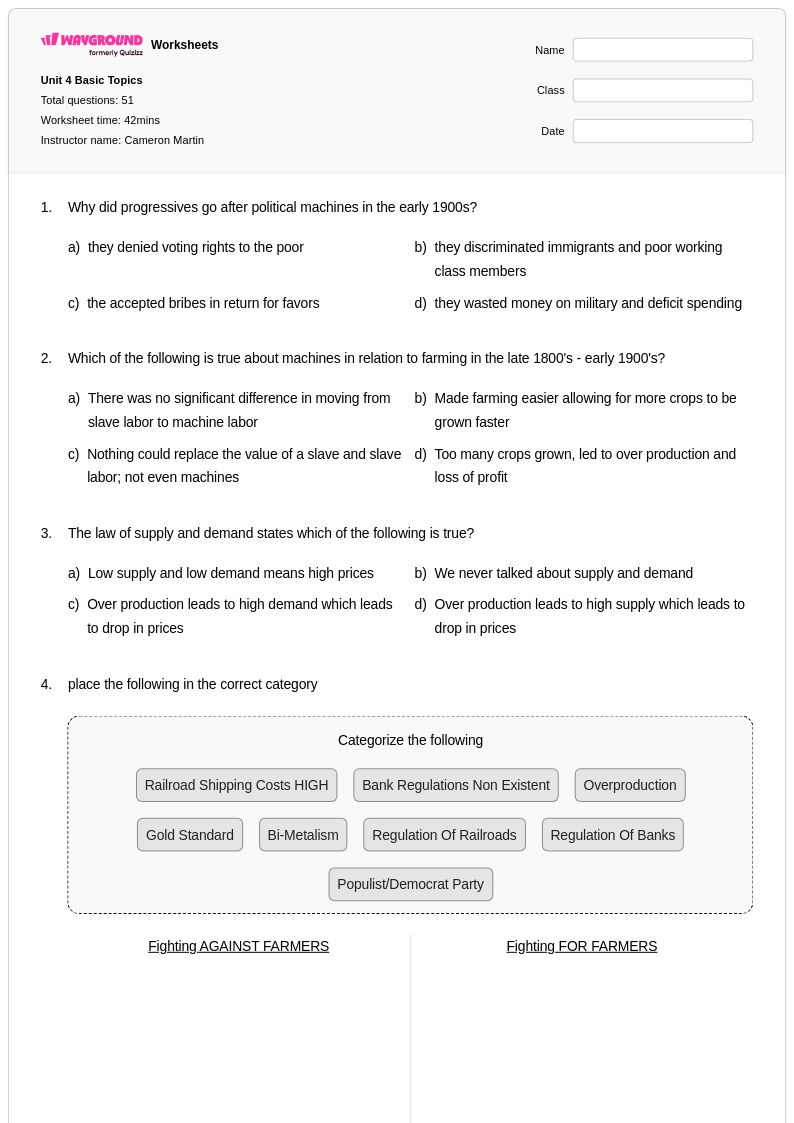
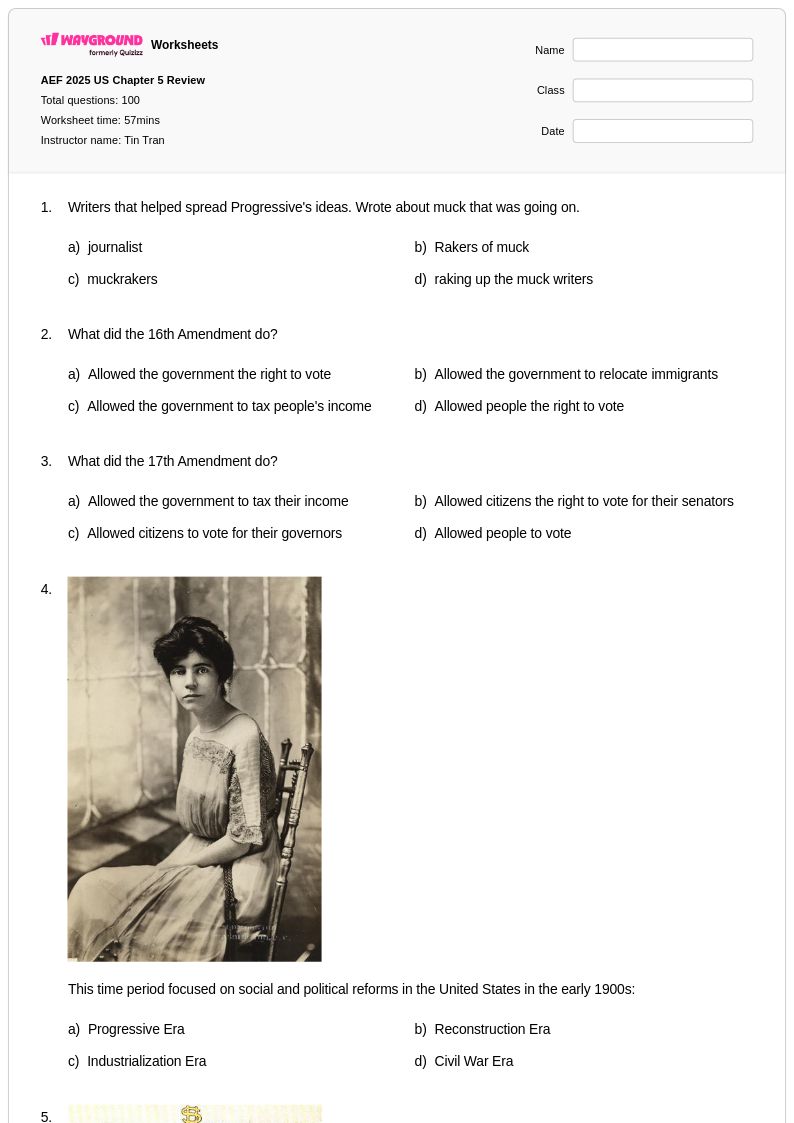
Grade 9 Prohibition worksheets and printables help students explore the causes, effects, and eventual repeal of America's ban on alcohol through engaging practice problems and comprehensive answer keys available as free PDF downloads.
Explore printable Prohibition worksheets for Grade 9
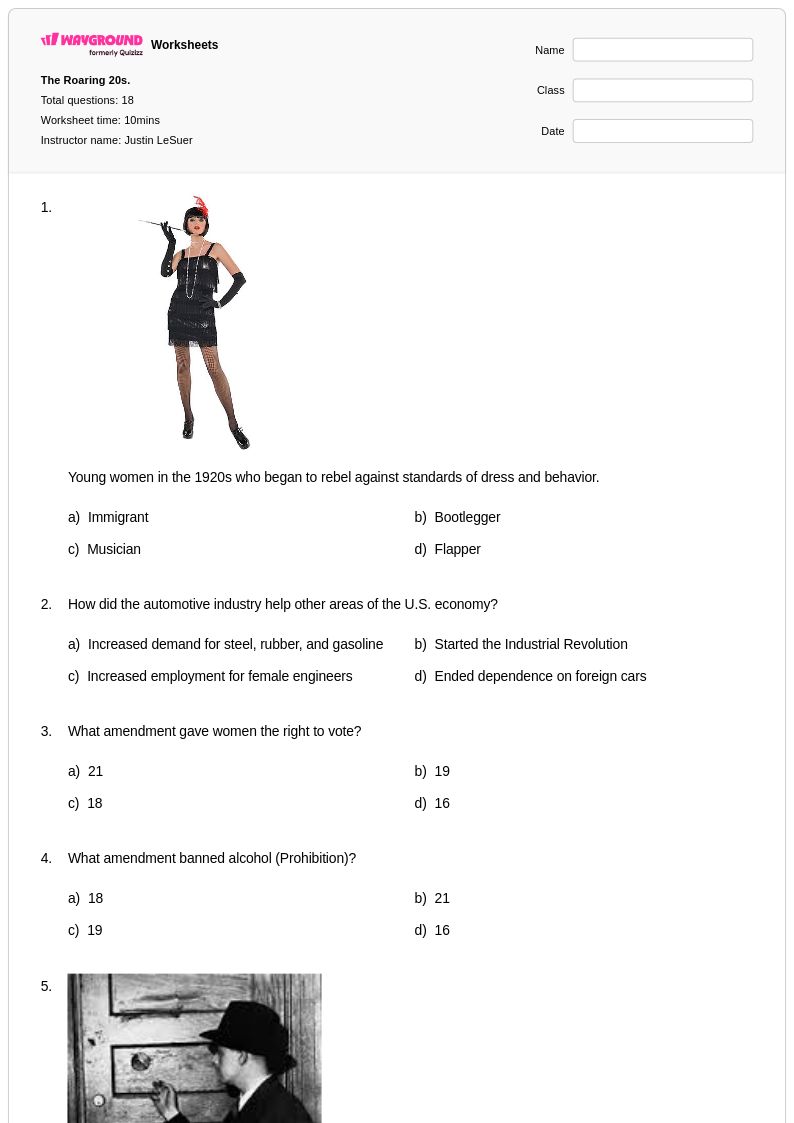
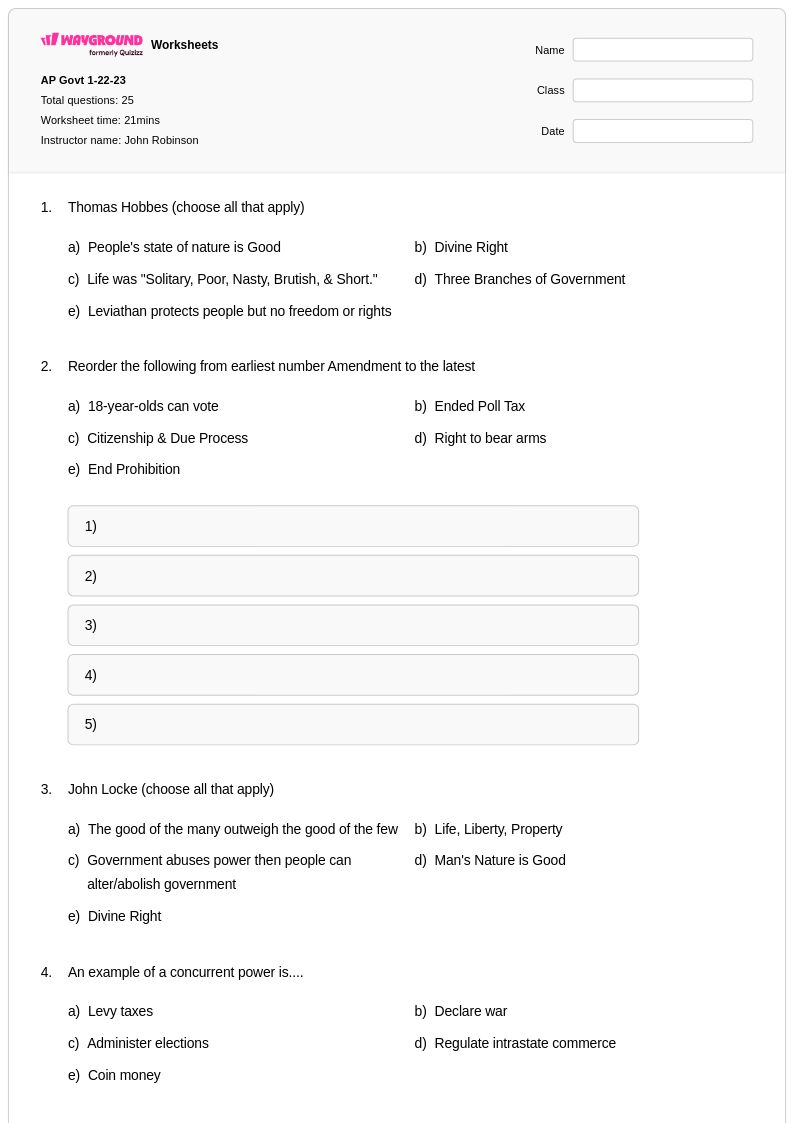
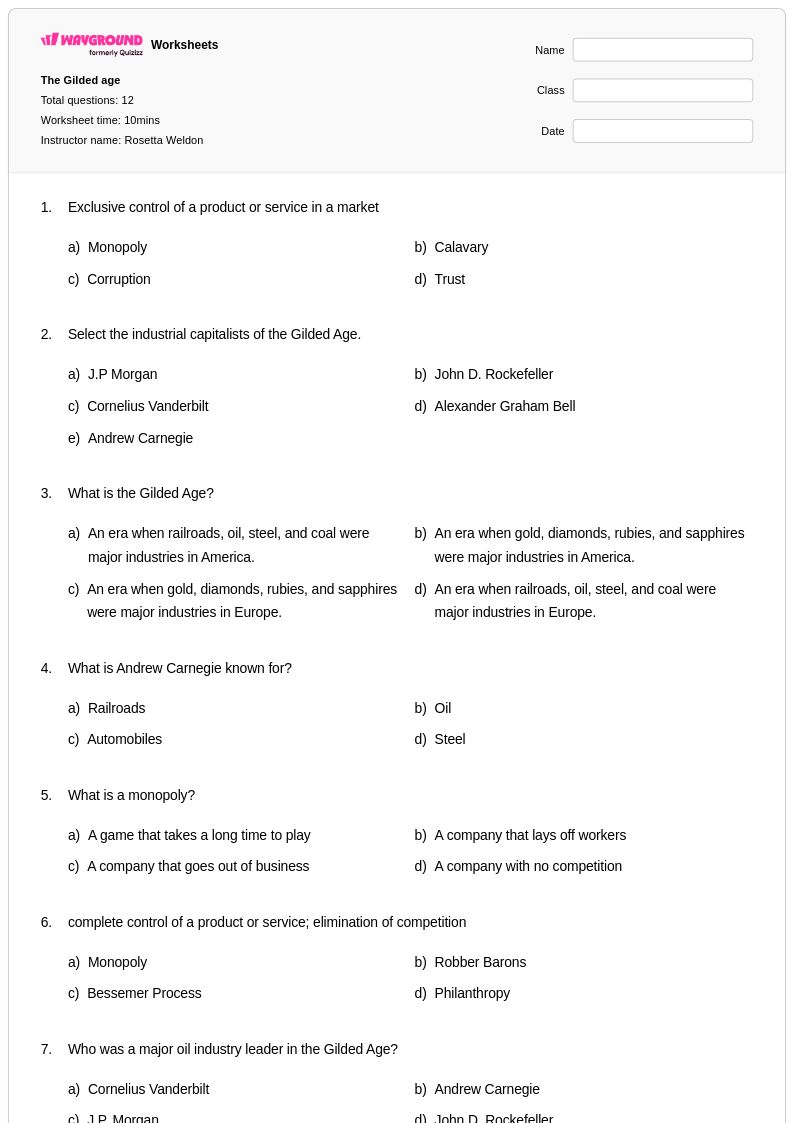
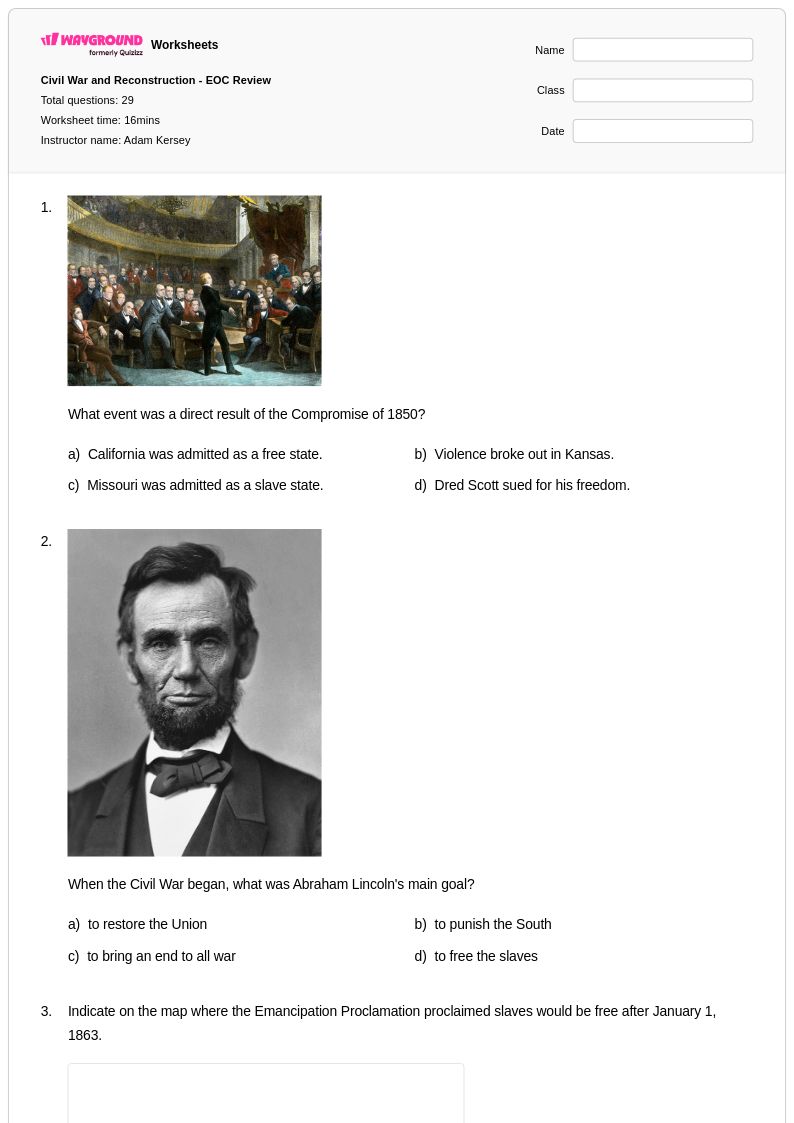
Prohibition worksheets for Grade 9 students provide comprehensive exploration of one of America's most significant social experiments between 1920 and 1933. These educational resources guide ninth-grade learners through the complex causes, implementation, and consequences of the Eighteenth Amendment, helping students analyze primary source documents, examine the rise of organized crime, and evaluate the economic and social impacts of banning alcohol production and sales. Through carefully designed practice problems and analytical exercises, students develop critical thinking skills while investigating topics such as the temperance movement, bootlegging, speakeasies, and key figures like Al Capone. Each worksheet collection includes detailed answer keys and is available as free printables in pdf format, enabling teachers to assess student comprehension of this pivotal period in American social history.
Wayground (formerly Quizizz) empowers educators with an extensive library of millions of teacher-created Prohibition worksheets specifically designed for Grade 9 U.S. History instruction. The platform's robust search and filtering capabilities allow teachers to quickly locate resources that align with state and national social studies standards, while differentiation tools enable customization for diverse learning needs and abilities. Whether delivered as printable pdf handouts for traditional classroom use or accessed through digital formats for remote learning, these worksheets support flexible lesson planning across various instructional models. Teachers can seamlessly integrate these resources into their curriculum for initial skill practice, targeted remediation of struggling learners, or enrichment activities for advanced students, ensuring comprehensive coverage of Prohibition's lasting impact on American society and governance.
FAQs
How do I teach Prohibition to middle or high school students?
Teaching Prohibition effectively means grounding students in the temperance movement before introducing the Eighteenth Amendment, then tracing the chain of unintended consequences including the rise of speakeasies, bootlegging, and organized crime. Primary source analysis works especially well here — political cartoons, newspaper editorials, and government documents give students multiple perspectives on why the policy ultimately failed. Framing Prohibition as a case study in cause and effect helps students connect the legislation to its repeal through the Twenty-First Amendment.
What topics should a Prohibition worksheet cover?
A well-designed Prohibition worksheet should address the temperance movement, the passage and provisions of the Eighteenth Amendment, the social and economic consequences of banning alcohol, and the emergence of organized crime and law enforcement challenges during the 1920s and early 1930s. Strong worksheets also ask students to evaluate multiple perspectives on the policy, compare intended versus actual outcomes, and connect Prohibition's failure to the ratification of the Twenty-First Amendment in 1933.
What common mistakes do students make when learning about Prohibition?
Students frequently oversimplify Prohibition as a straightforward failure without engaging with why it was implemented or who supported it, which leads to shallow historical analysis. Many also conflate the temperance movement with Prohibition itself, missing the decades-long social and political campaign that preceded the Eighteenth Amendment. Another common error is treating organized crime as a cause of Prohibition rather than a consequence, which reverses the historical relationship entirely.
How can I use Prohibition worksheets to build critical thinking skills?
Prohibition is an ideal topic for cause-and-effect reasoning, perspective-taking, and evaluating unintended consequences, all of which are transferable critical thinking skills. Worksheets that ask students to analyze primary sources, weigh competing arguments about the policy, or map the social and political ripple effects of the Eighteenth Amendment push beyond recall into genuine historical interpretation. Pairing these exercises with classroom discussion about the tension between moral legislation and individual liberty deepens student engagement with the material.
How do Wayground's Prohibition worksheets work in my classroom?
Wayground's Prohibition worksheets are available as printable PDFs for traditional classroom use and in digital formats for technology-integrated learning environments, including the option to host them as a quiz directly on Wayground. Each worksheet includes a complete answer key, which streamlines grading and supports meaningful classroom discussion. The platform's search and filtering tools let teachers quickly locate materials aligned to specific curriculum standards, and differentiation settings allow teachers to adapt content for students with varying ability levels or accommodation needs.
How do I differentiate Prohibition instruction for students with different learning needs?
Wayground supports several built-in accommodation tools that are useful when teaching a content-heavy topic like Prohibition. Teachers can enable Read Aloud for students who struggle with complex historical text, reduce answer choices to lower cognitive load for students who need scaffolding, and assign extended time on a per-student basis. These settings can be applied individually without notifying other students, so differentiation happens seamlessly within the same assignment.