
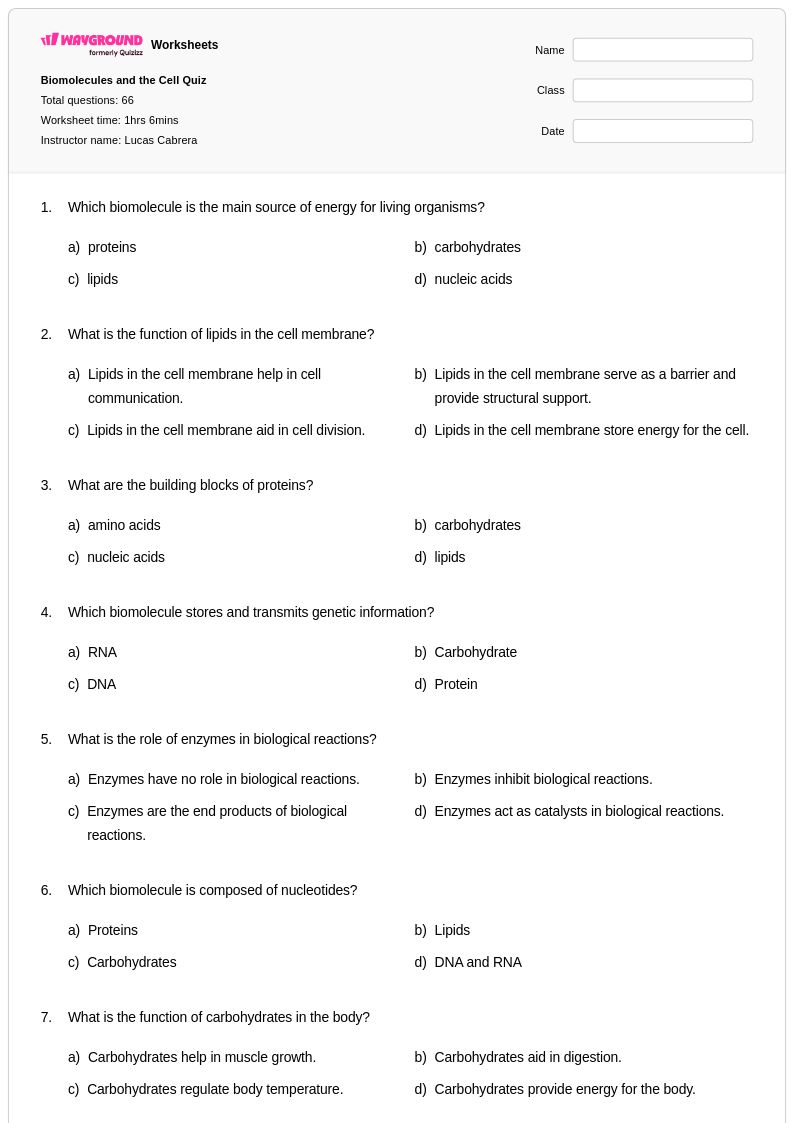
66 Q
10th
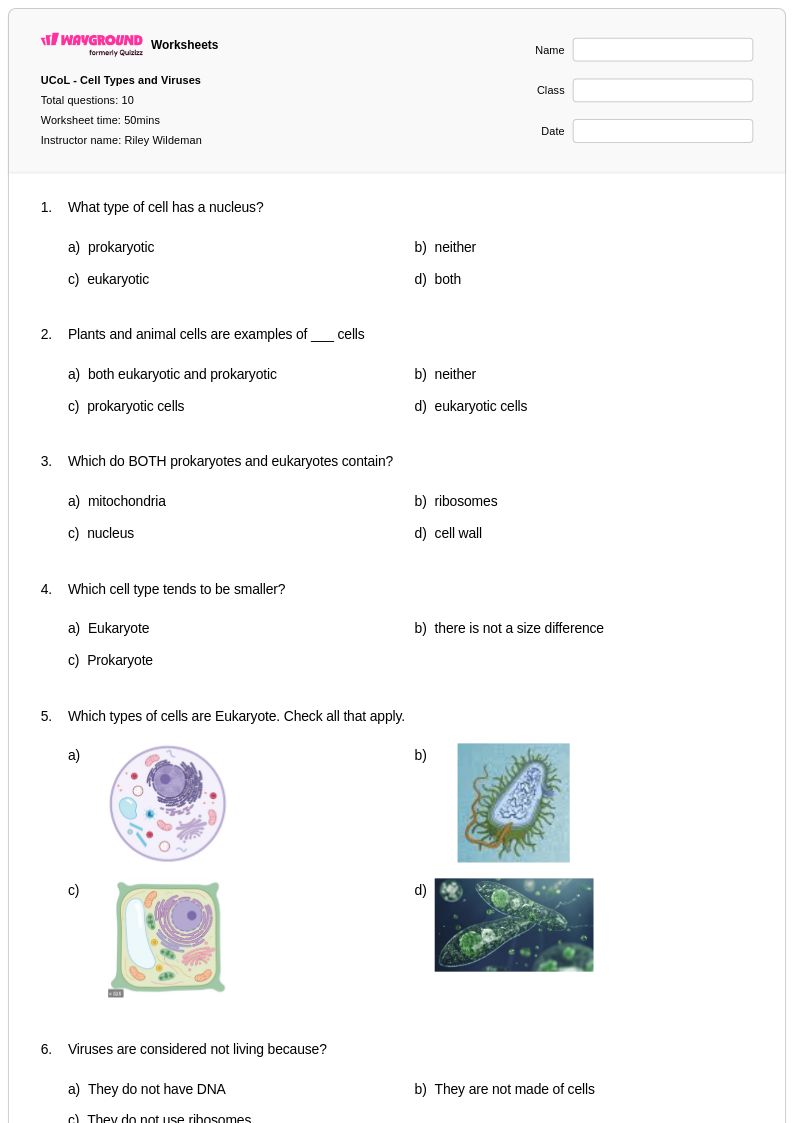
10 Q
9th - 12th
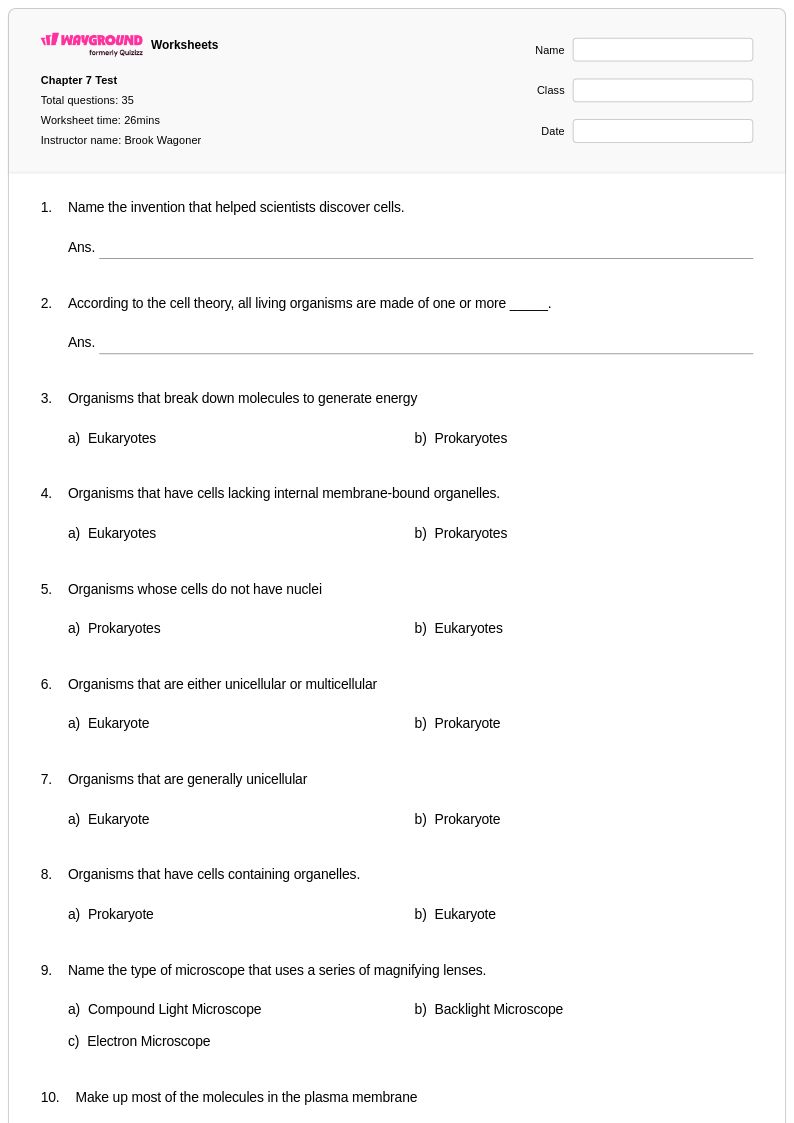
35 Q
10th
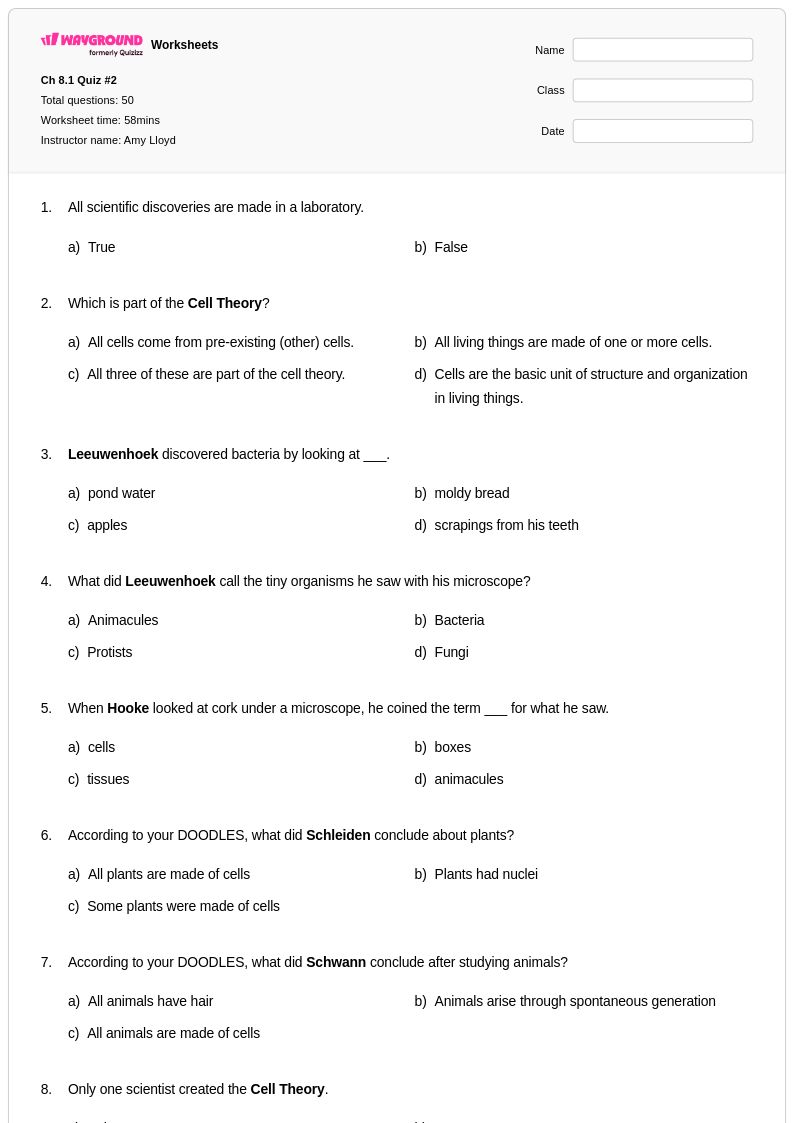
50 Q
9th - Uni

10 Q
9th - 12th
20 Q
10th
49 Q
9th - 12th
45 Q
10th
18 Q
9th - 12th
13 Q
9th - 12th
37 Q
9th - Uni
14 Q
5th - 12th
18 Q
9th - Uni
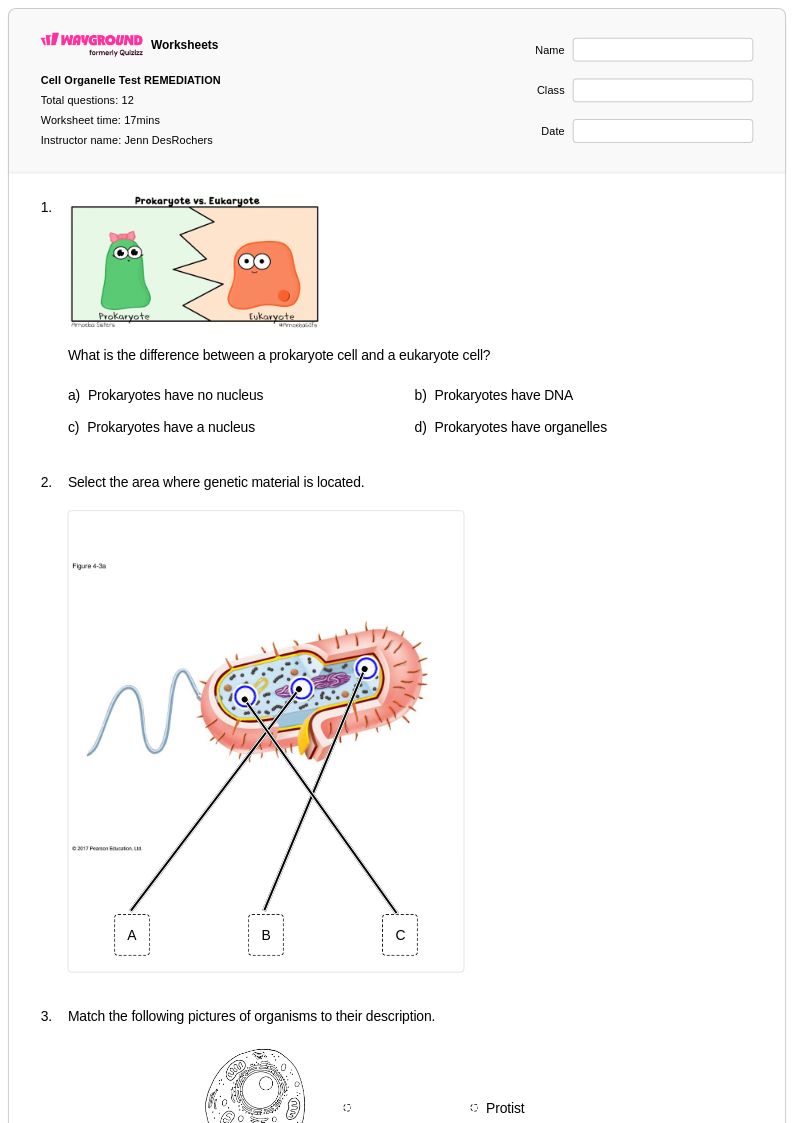
12 Q
9th - 12th
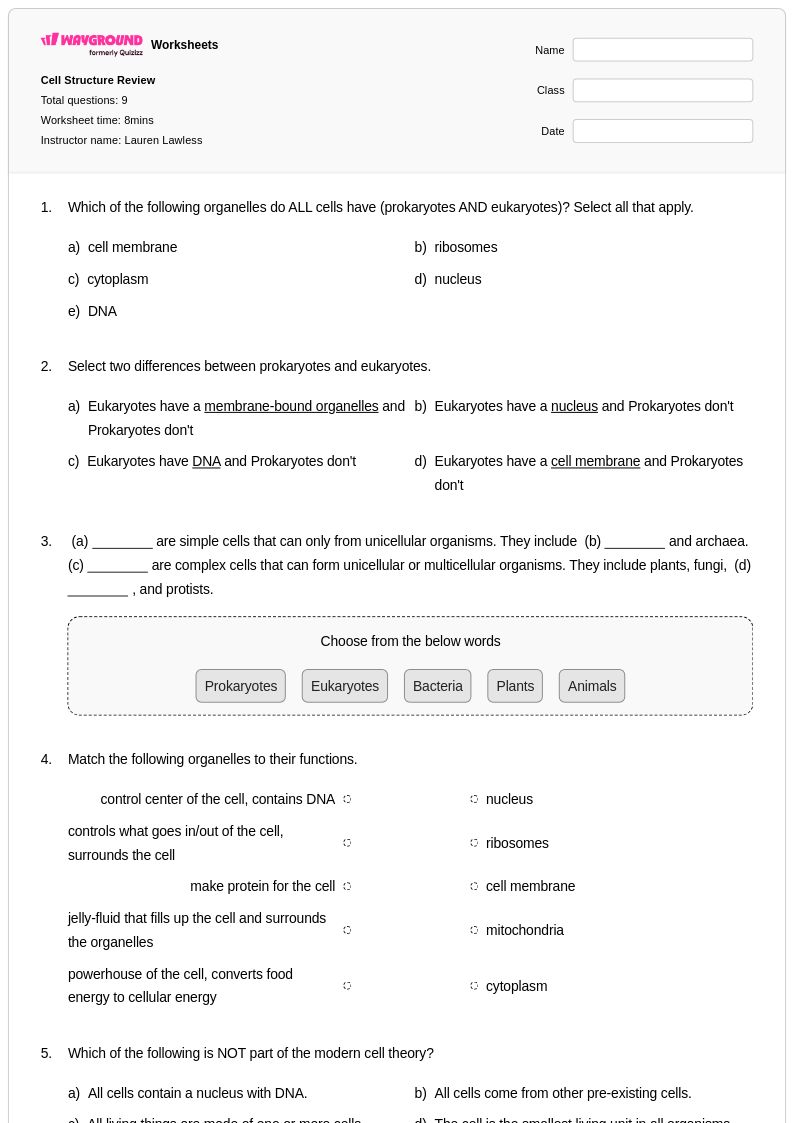
9 Q
9th - 12th
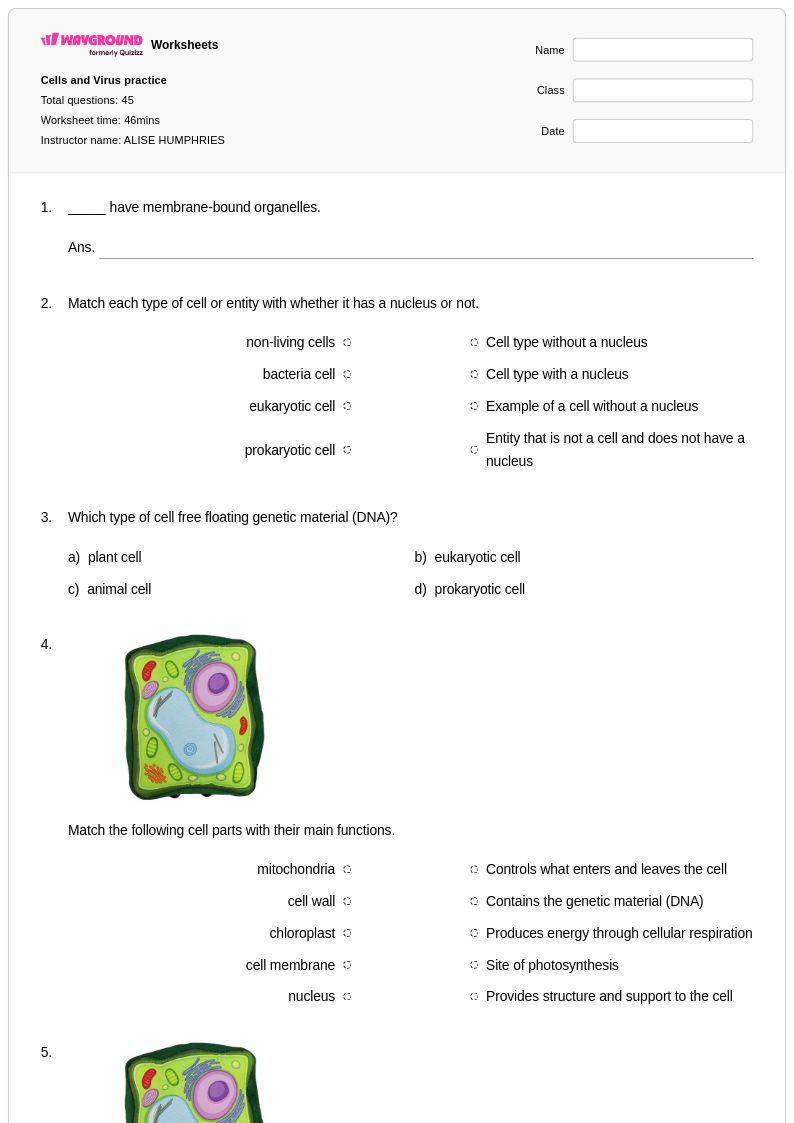
45 Q
9th - 12th
129 Q
9th - 12th
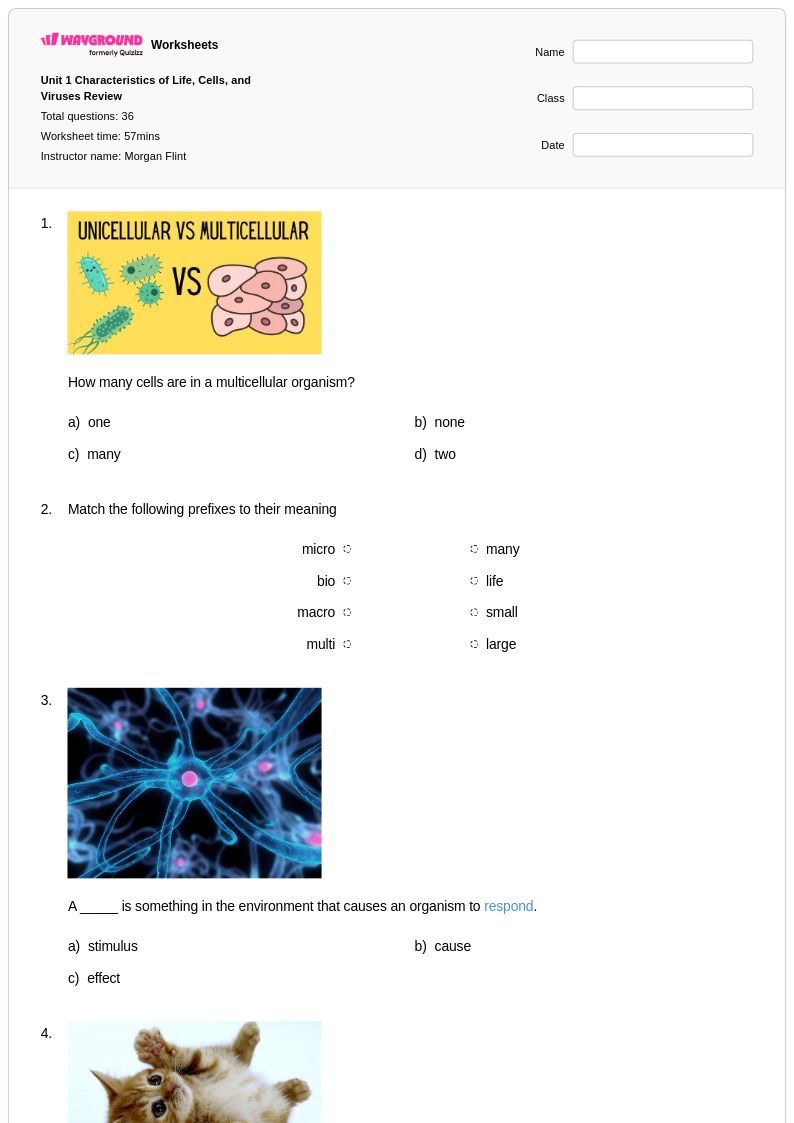
36 Q
9th - 12th
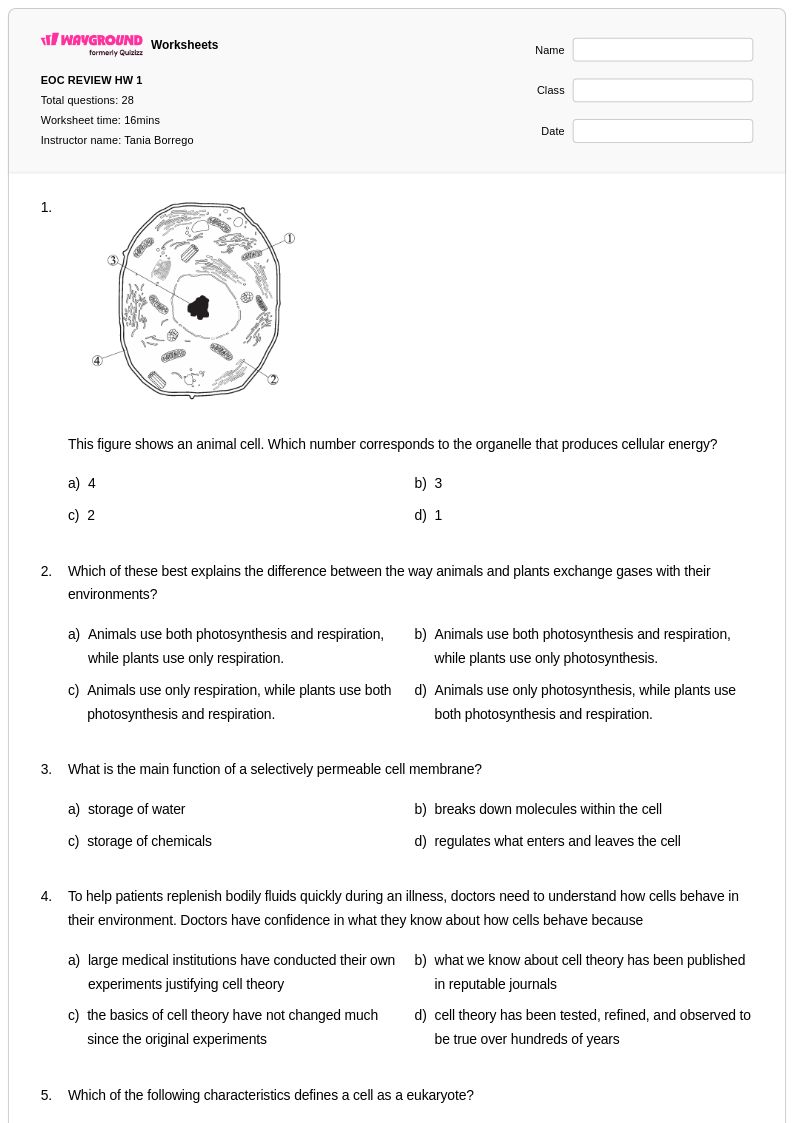
28 Q
9th - 12th
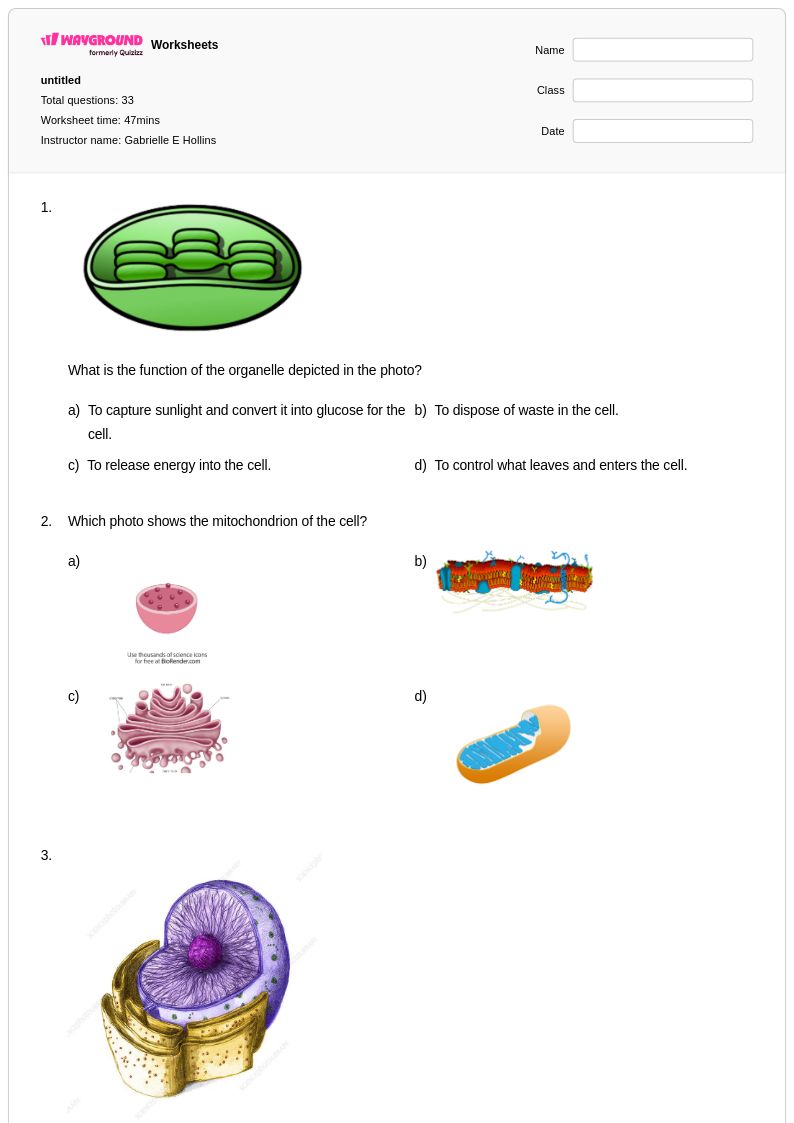
33 Q
9th - 12th
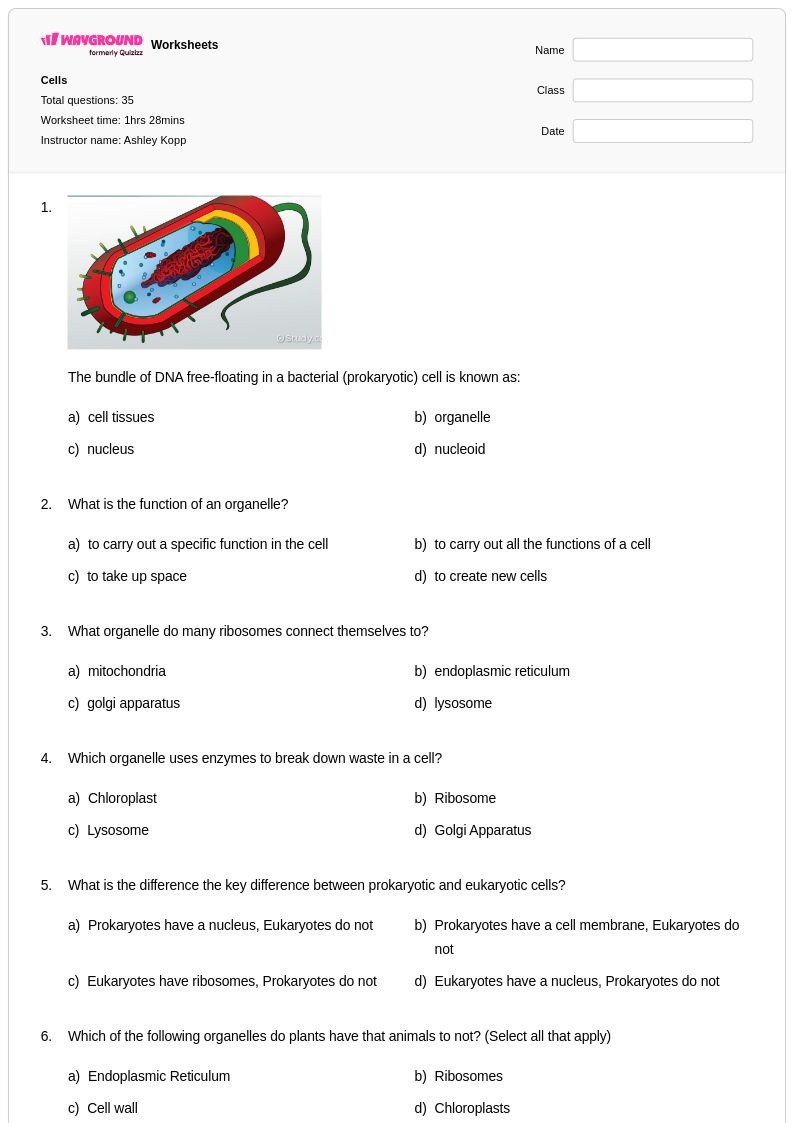
35 Q
10th
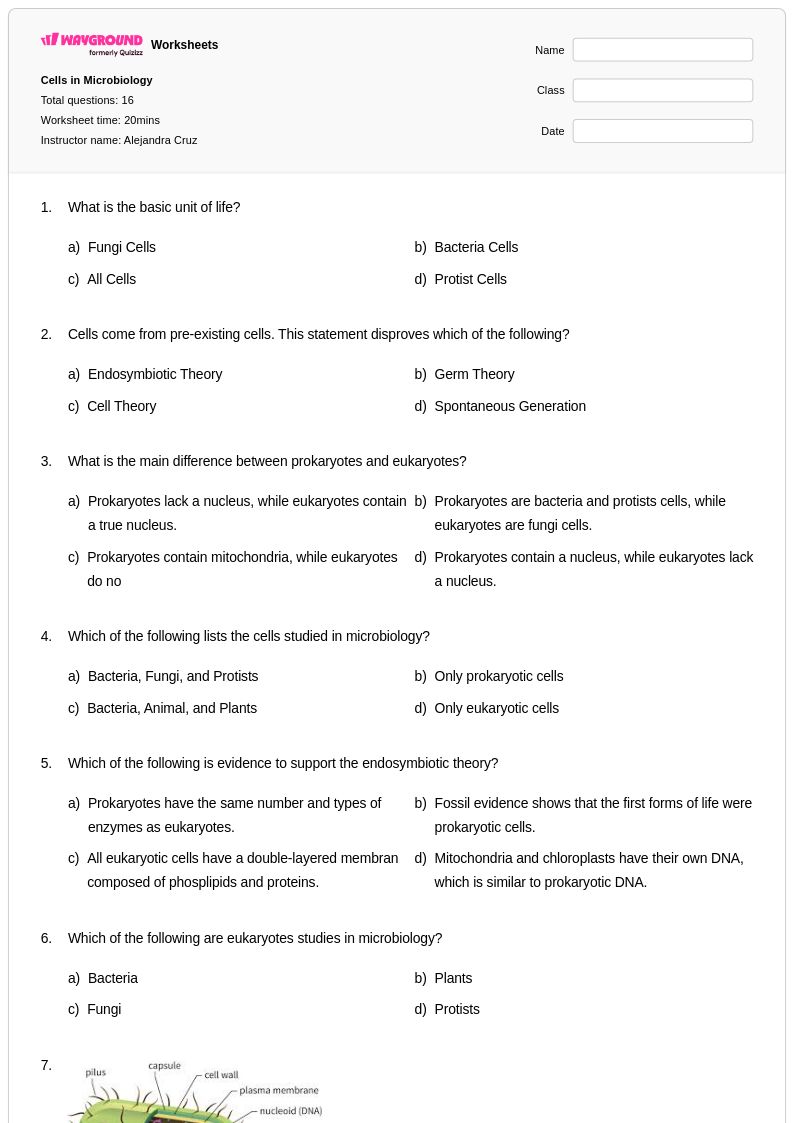
16 Q
10th - 12th
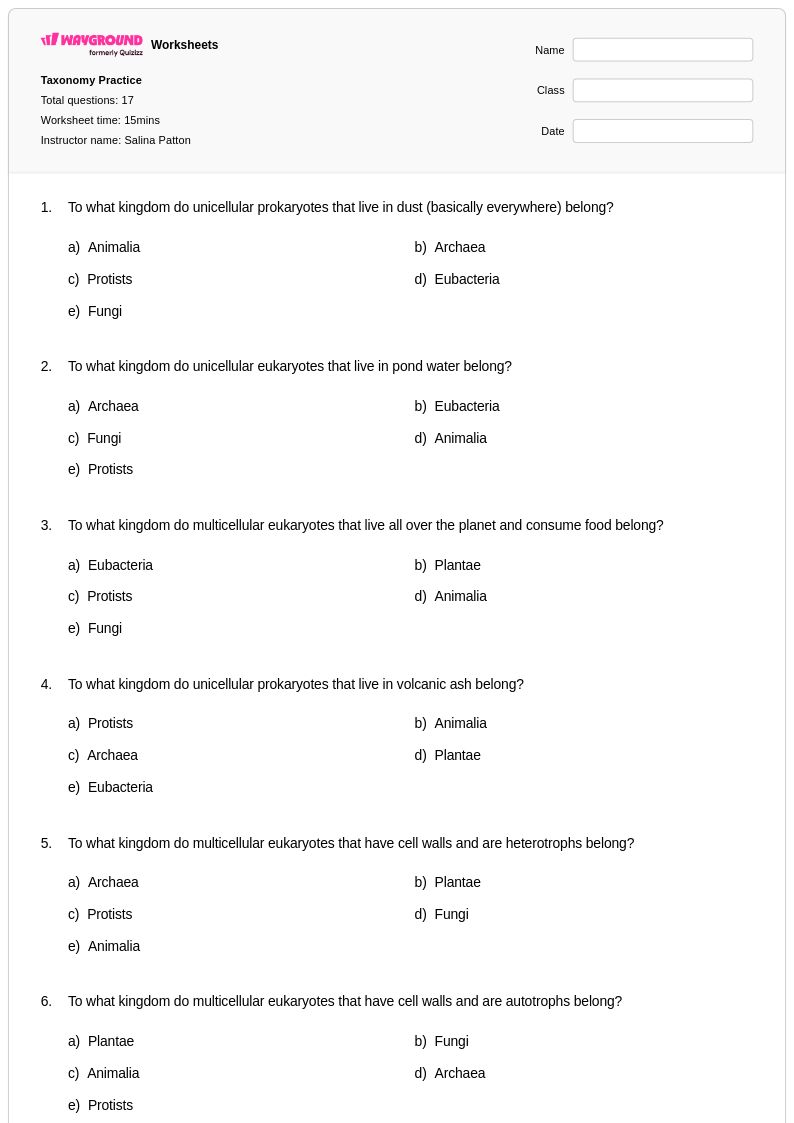
17 Q
9th - 12th
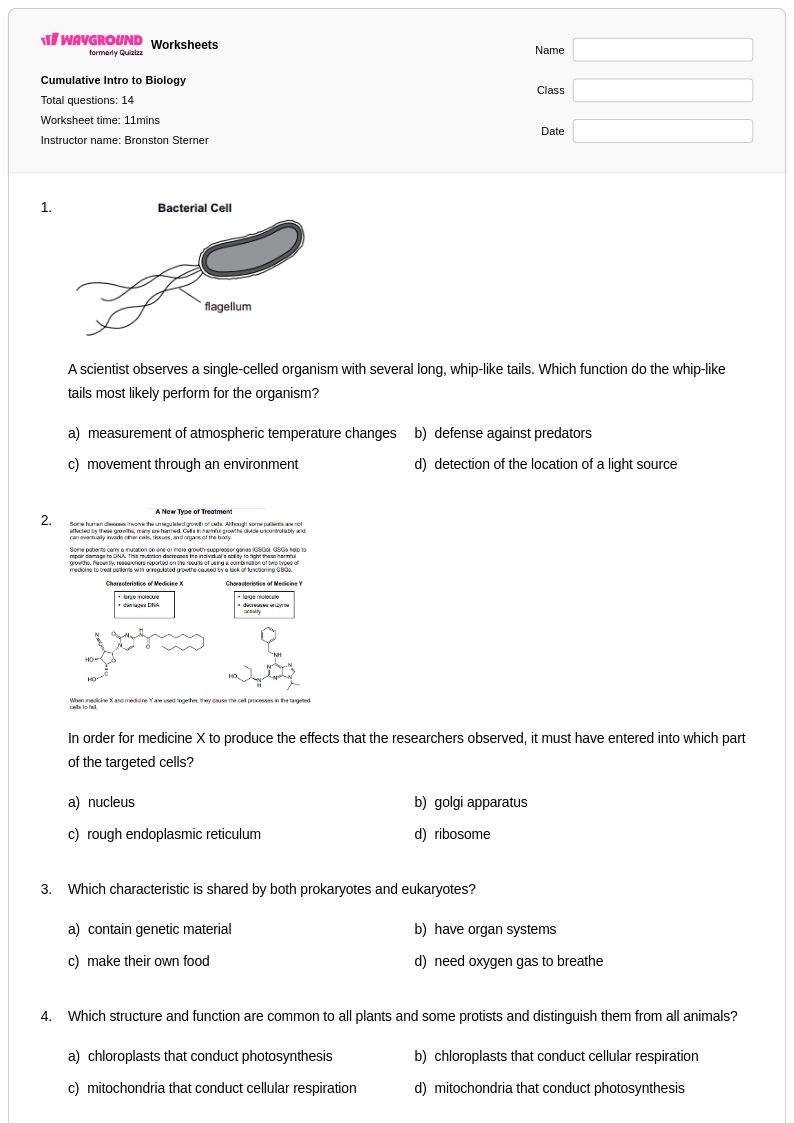
14 Q
10th
Explore Prokaryotes and Eukaryotes Worksheets by Grades
Explore Other Subject Worksheets for grade 10
Explore printable Prokaryotes and Eukaryotes worksheets for Grade 10
Prokaryotes and eukaryotes represent one of the most fundamental distinctions in biology, and Grade 10 worksheets from Wayground (formerly Quizizz) provide comprehensive practice materials to help students master these essential cellular concepts. These expertly designed worksheets strengthen critical thinking skills by guiding students through detailed comparisons of prokaryotic and eukaryotic cell structures, organizational complexity, and evolutionary relationships. Students engage with practice problems that reinforce their understanding of membrane-bound organelles, genetic material organization, and metabolic processes that distinguish bacteria and archaea from plants, animals, fungi, and protists. Each worksheet includes a comprehensive answer key and is available as free printables in convenient pdf format, enabling students to develop confidence in identifying cellular characteristics and applying taxonomic principles.
Wayground (formerly Quizizz) supports Grade 10 biology teachers with millions of teacher-created worksheet resources specifically focused on prokaryotes and eukaryotes, featuring robust search and filtering capabilities that align with state and national science standards. The platform's differentiation tools allow educators to customize worksheets based on individual student needs, accommodating various learning levels within the same classroom through flexible modifications of content complexity and question formats. These resources are available in both printable pdf versions and interactive digital formats, providing teachers with versatile options for lesson planning, targeted remediation of misconceptions about cellular organization, enrichment activities for advanced learners, and systematic skill practice that builds toward more complex topics like cell division and molecular biology. The comprehensive collection ensures that teachers can effectively address diverse learning objectives while maintaining rigorous academic standards in cellular biology instruction.
FAQs
How do I teach the difference between prokaryotes and eukaryotes?
What exercises help students practice comparing prokaryotic and eukaryotic cells?
What mistakes do students commonly make when learning about prokaryotes and eukaryotes?
How can I use prokaryotes and eukaryotes worksheets to assess student understanding?
How do I use Wayground's prokaryotes and eukaryotes worksheets in my classroom?
How do I differentiate prokaryotes and eukaryotes instruction for students at different levels?