
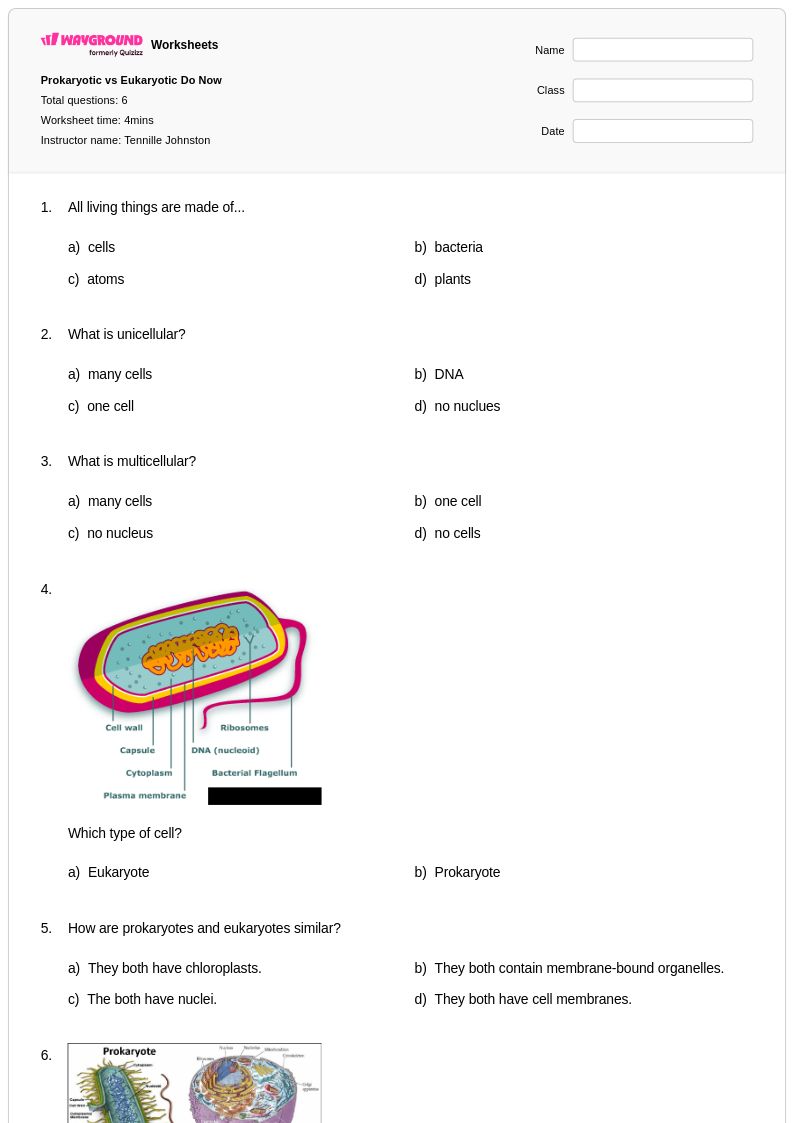
6 Q
3rd - 12th

30 Q
3rd

62 Q
3rd
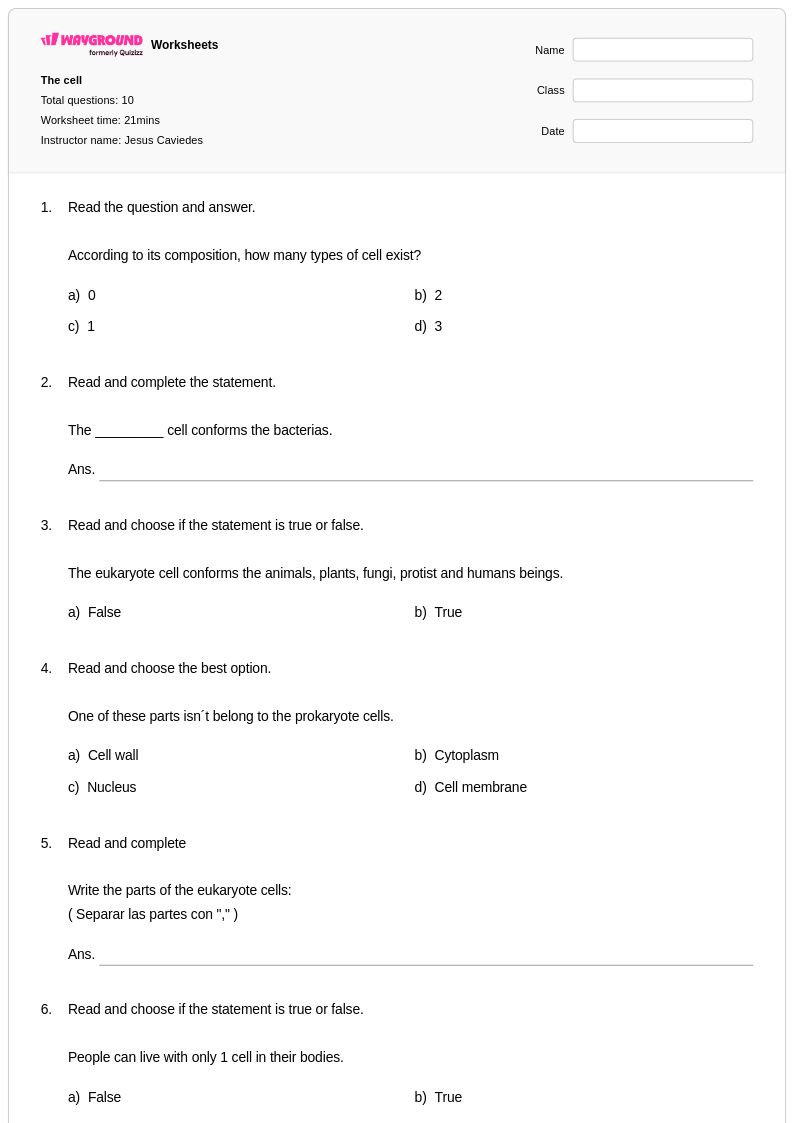
10 Q
3rd - 5th
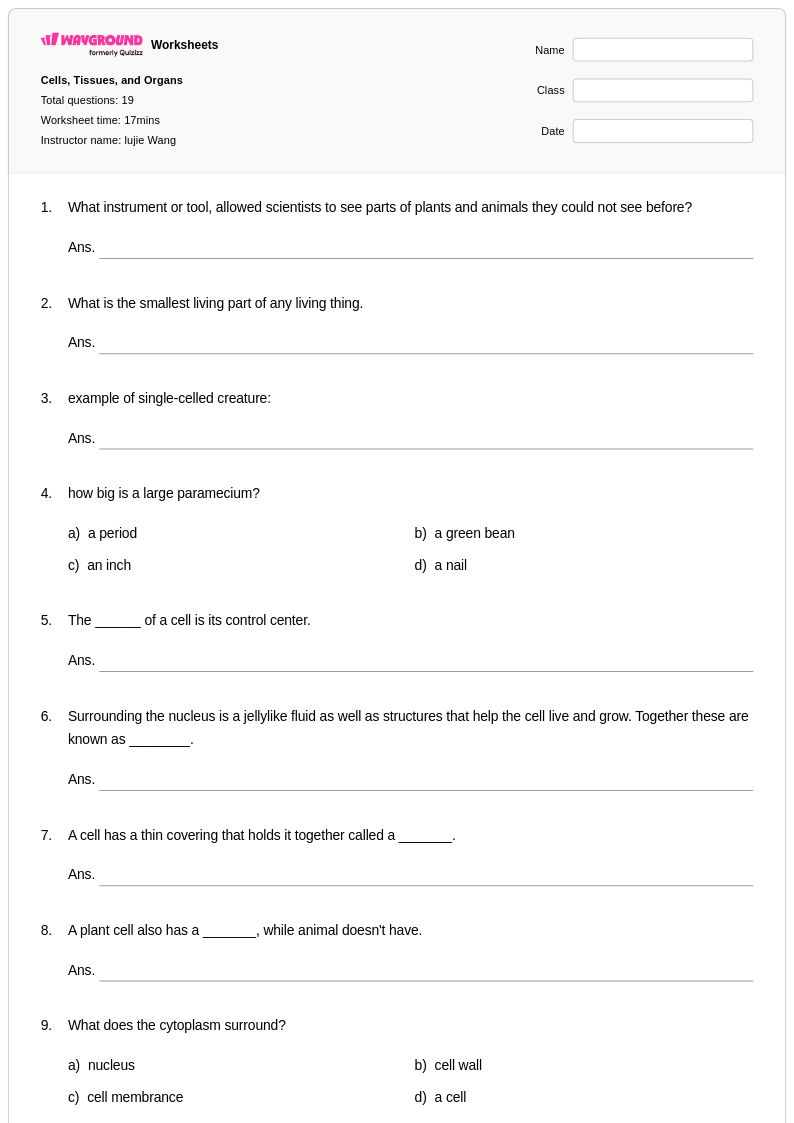
19 Q
3rd
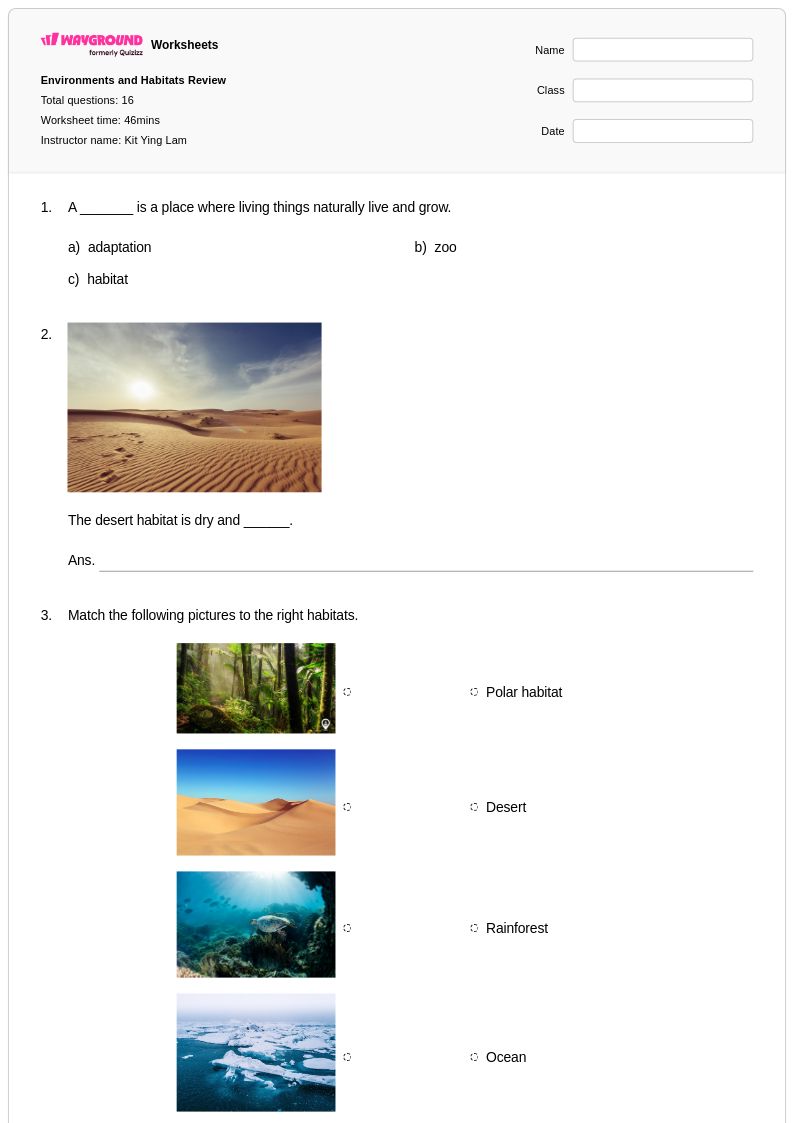
16 Q
2nd - Uni
24 Q
3rd
10 Q
3rd - 7th
13 Q
3rd
10 Q
1st - 5th
10 Q
1st - 5th

10 Q
3rd
13 Q
1st - 5th
12 Q
3rd
10 Q
3rd
26 Q
1st - 5th
10 Q
3rd
7 Q
3rd
10 Q
3rd
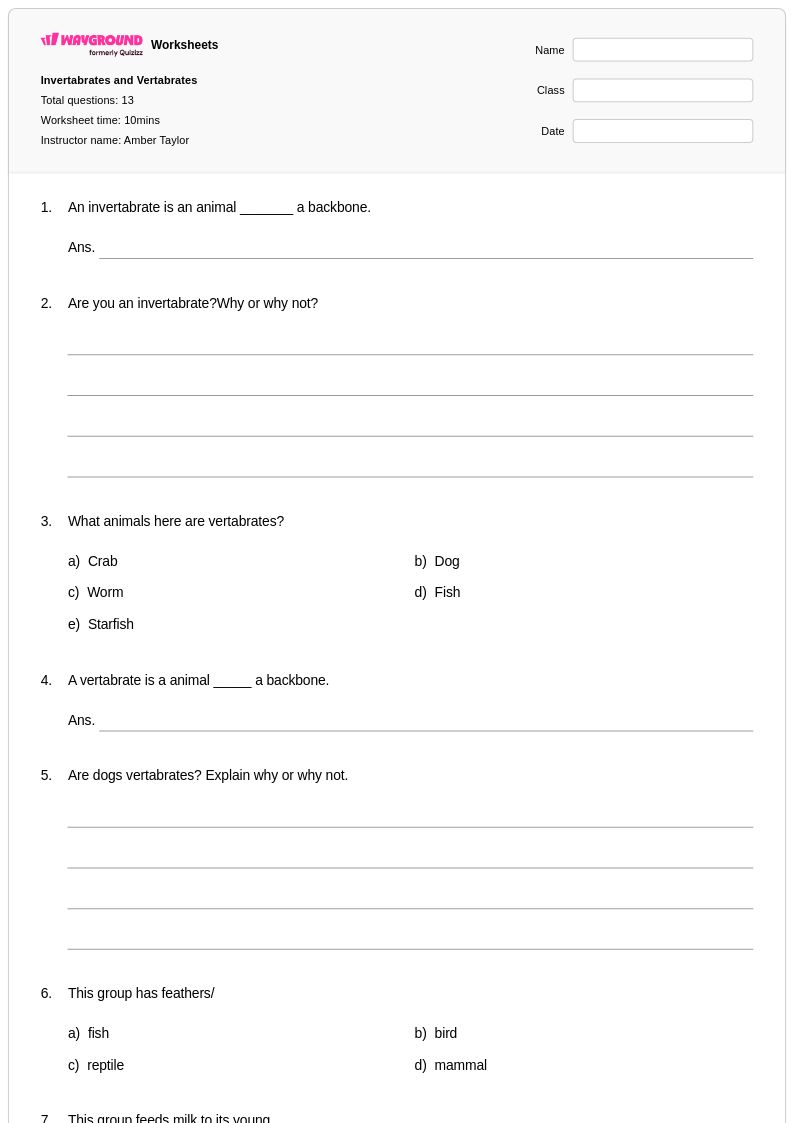
13 Q
2nd - 5th
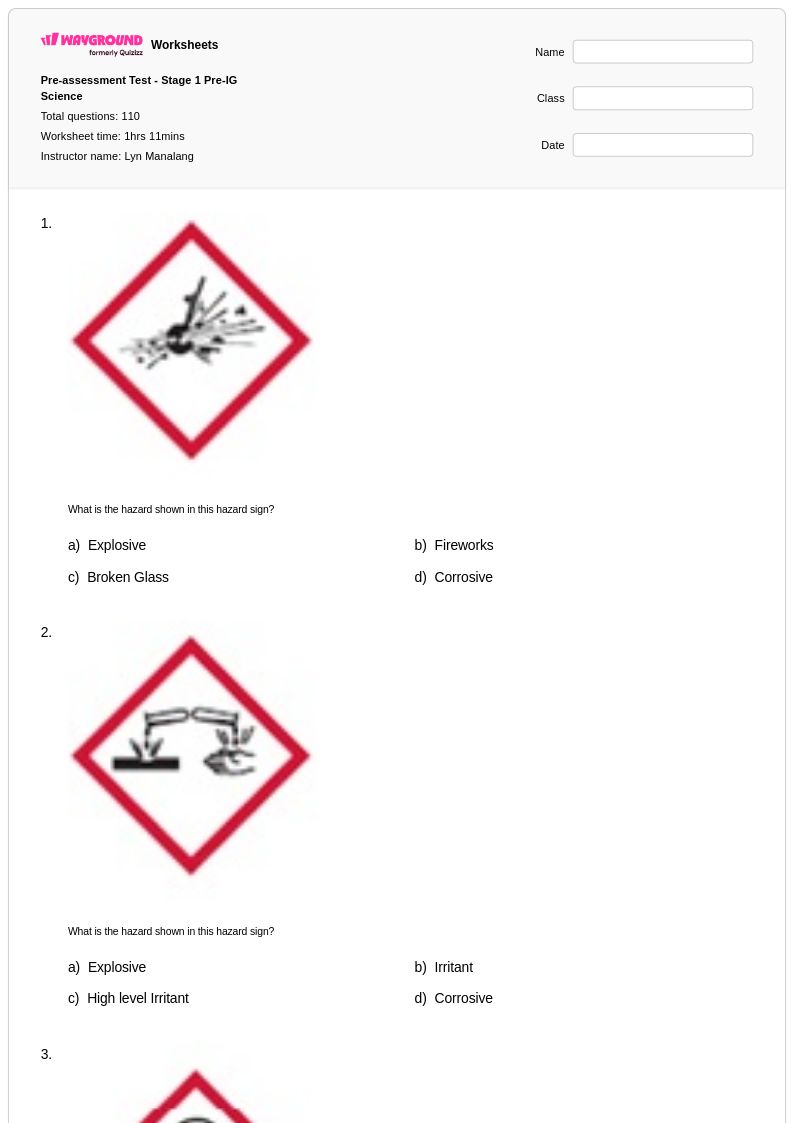
110 Q
2nd - 10th
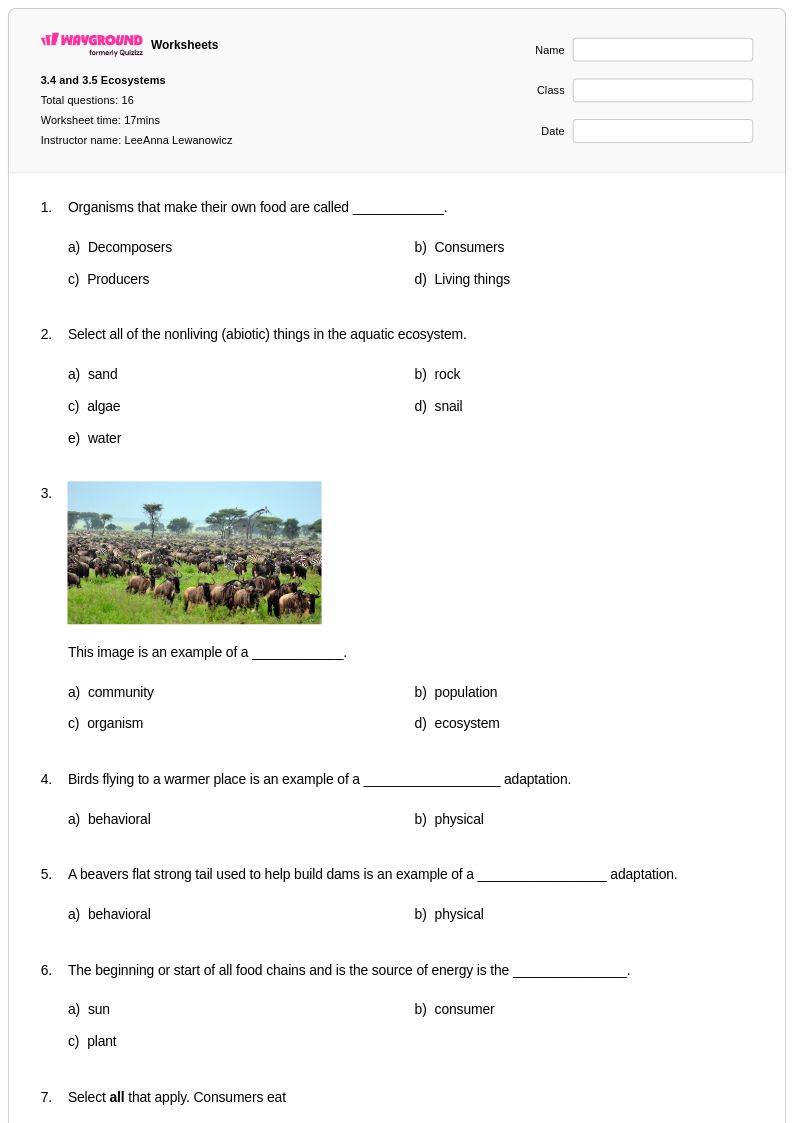
16 Q
3rd
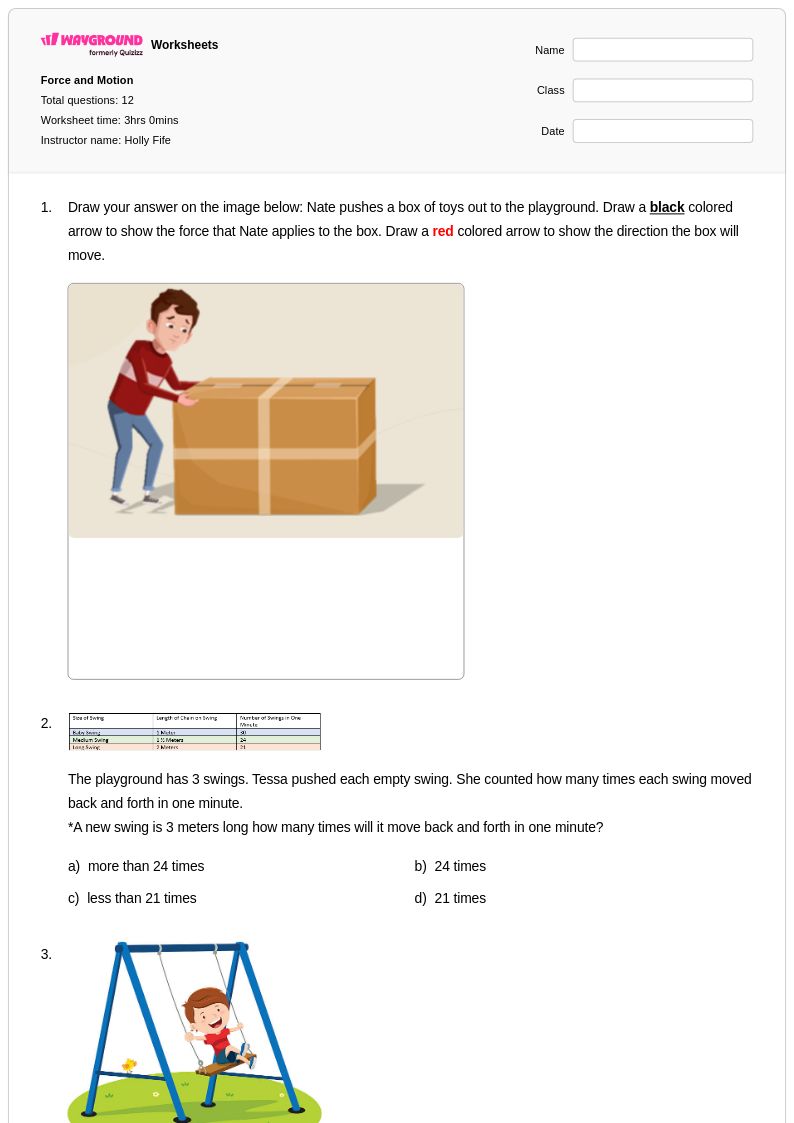
12 Q
3rd
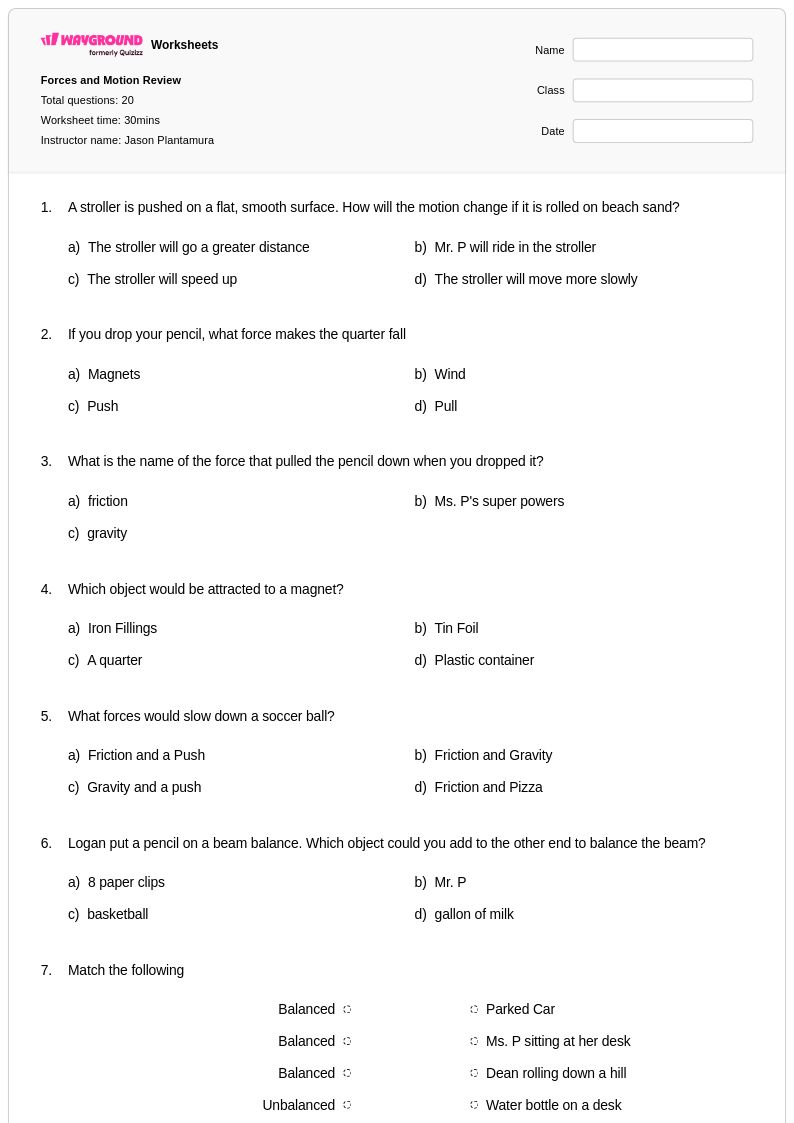
20 Q
3rd
Explore Prokaryotes and Eukaryotes Worksheets by Grades
Explore Other Subject Worksheets for grade 3
Explore printable Prokaryotes and Eukaryotes worksheets for Grade 3
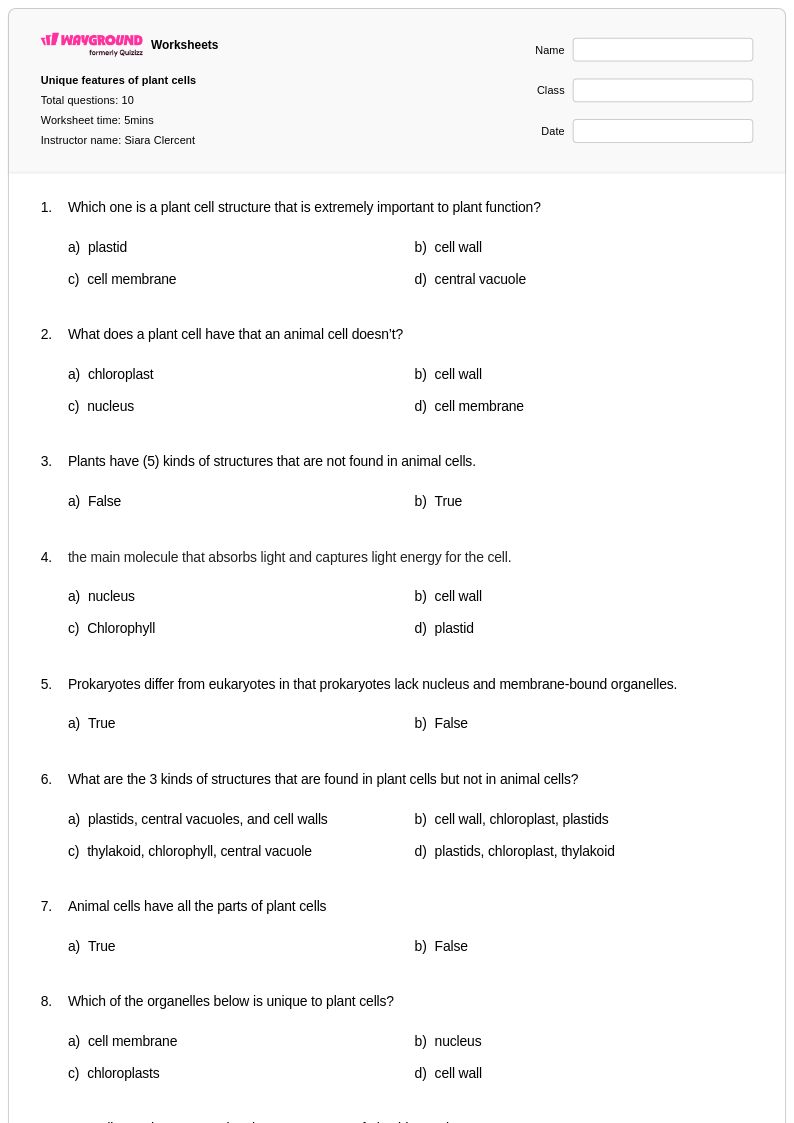
Prokaryotes and eukaryotes worksheets for Grade 3 students available through Wayground (formerly Quizizz) introduce young learners to the fundamental differences between these two major cell types in an age-appropriate manner. These educational resources help third-grade students develop essential scientific observation skills while building foundational knowledge about cellular structures that will serve them throughout their science education journey. The worksheets feature engaging activities that teach students to identify basic characteristics of prokaryotic cells, such as bacteria, versus eukaryotic cells found in plants, animals, and fungi, with each printable resource including comprehensive answer keys to support both independent study and classroom instruction. Students work through carefully designed practice problems that reinforce key concepts through visual comparisons, simple diagrams, and hands-on activities, with all materials available as free pdf downloads to ensure accessibility for diverse learning environments.
Wayground (formerly Quizizz) empowers educators with an extensive collection of millions of teacher-created resources specifically designed to make complex cellular biology concepts accessible to elementary students. The platform's robust search and filtering capabilities allow teachers to quickly locate prokaryotes and eukaryotes worksheets that align with grade-level standards and match their specific instructional needs, whether planning initial concept introduction lessons or designing targeted remediation activities for struggling learners. Teachers can easily customize these digital and printable materials to accommodate different learning styles and academic levels within their classrooms, utilizing built-in differentiation tools to provide appropriate challenges for advanced students while offering additional support scaffolding for those requiring extra practice. The flexibility of accessing materials in both interactive digital formats and traditional pdf printables ensures seamless integration into any teaching approach, from whole-class instruction to individual skill practice sessions, making cellular biology education both effective and engaging for Grade 3 students.
FAQs
How do I teach the difference between prokaryotes and eukaryotes?
What exercises help students practice comparing prokaryotic and eukaryotic cells?
What mistakes do students commonly make when learning about prokaryotes and eukaryotes?
How can I use prokaryotes and eukaryotes worksheets to assess student understanding?
How do I use Wayground's prokaryotes and eukaryotes worksheets in my classroom?
How do I differentiate prokaryotes and eukaryotes instruction for students at different levels?