
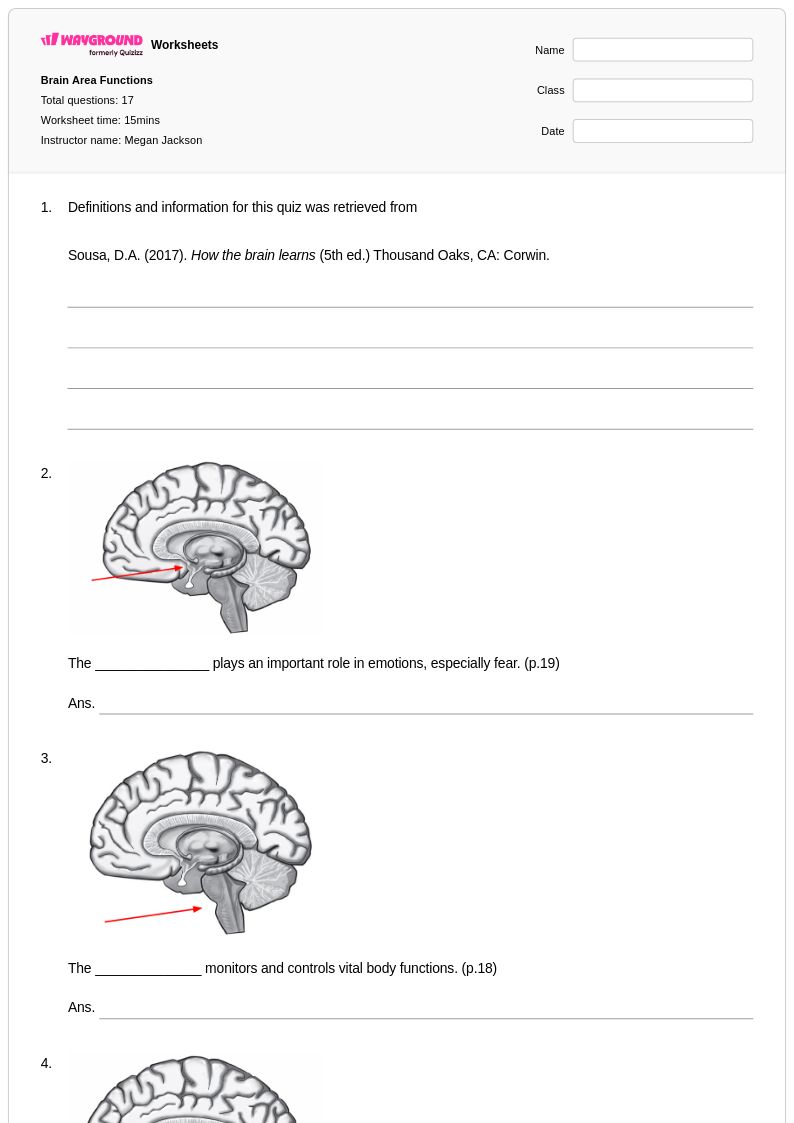
17 Q
KG - 5th
7 Q
3rd
10 Q
3rd
7 Q
3rd - 5th
8 Q
2nd - 12th
10 Q
3rd - 6th
8 Q
2nd - Uni
20 Q
1st - 5th
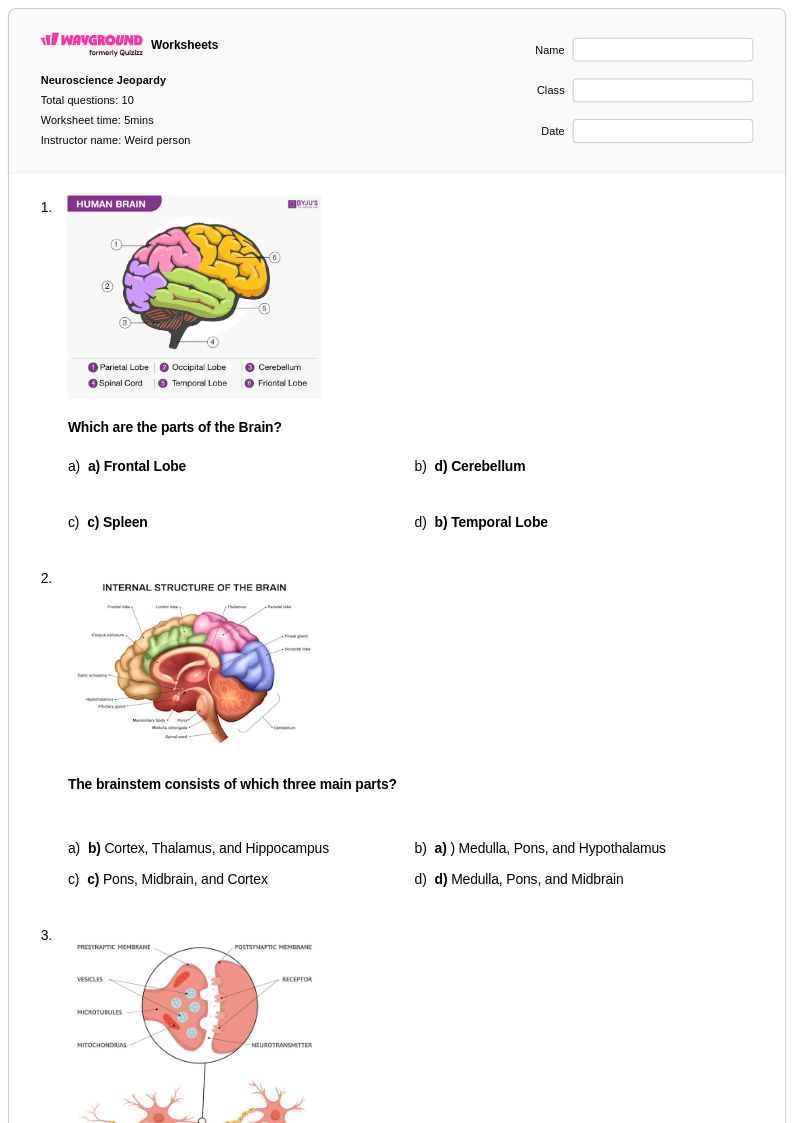
10 Q
1st - 5th
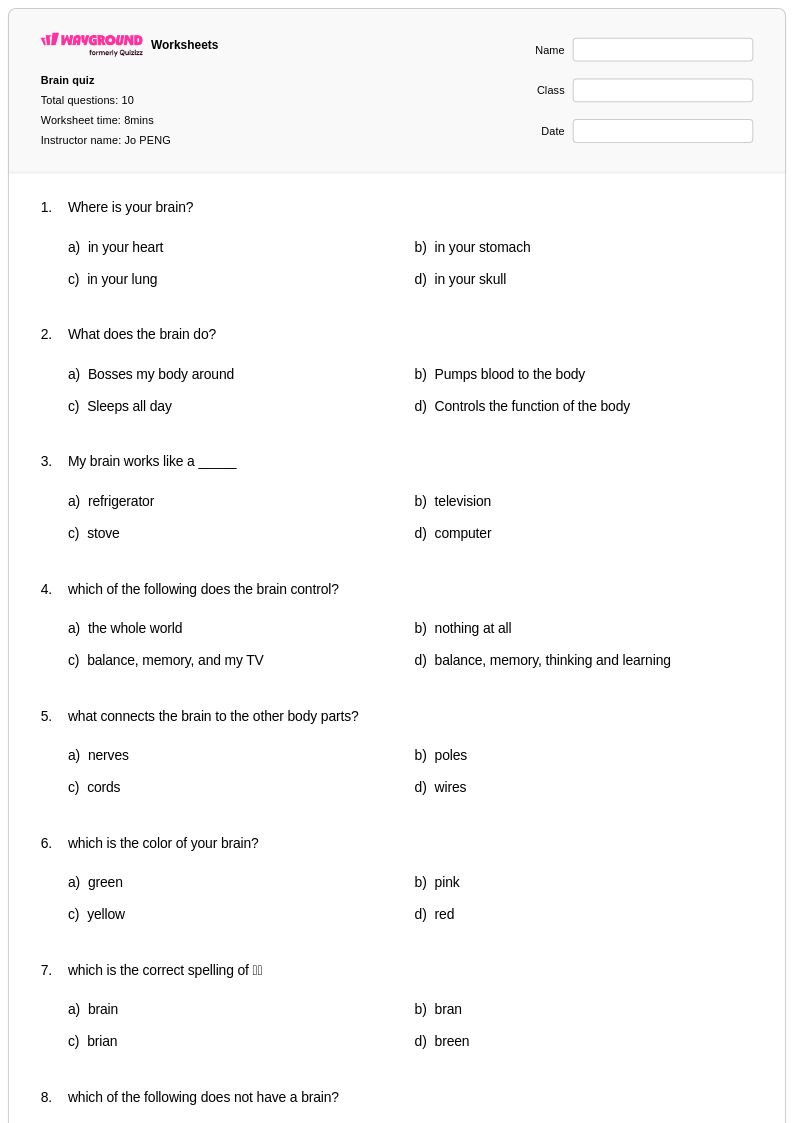
10 Q
KG - 4th
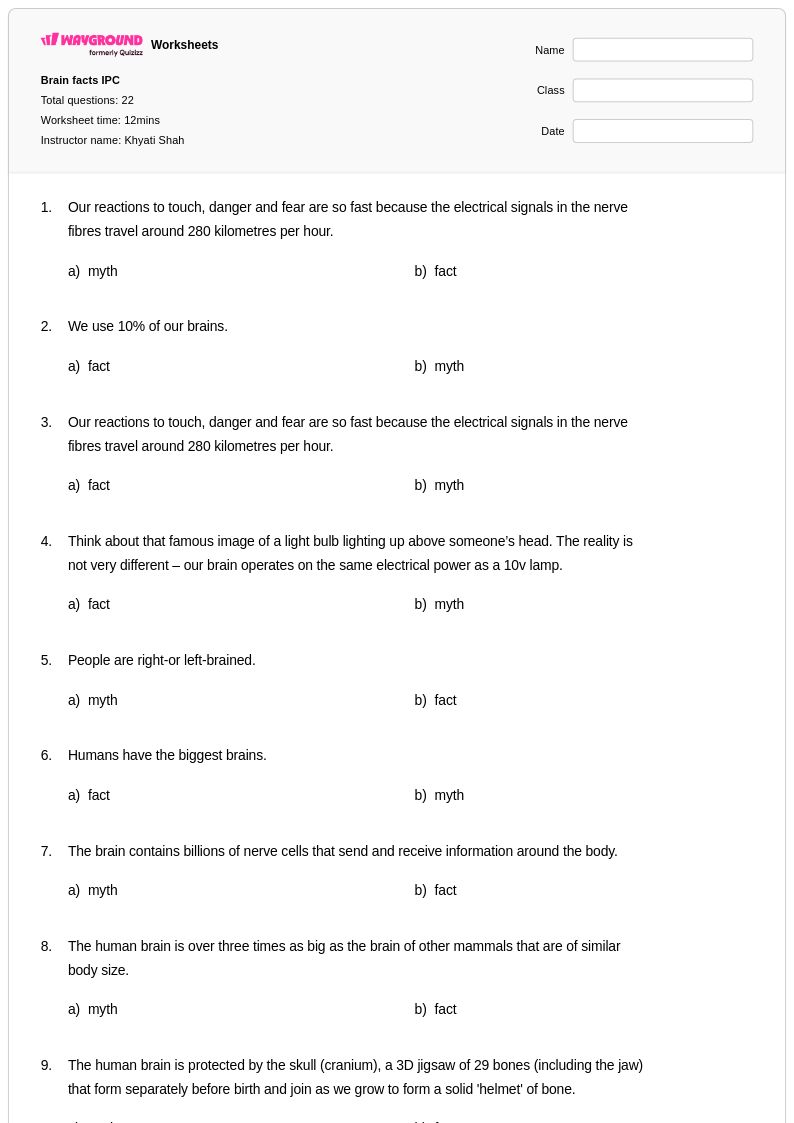
22 Q
3rd
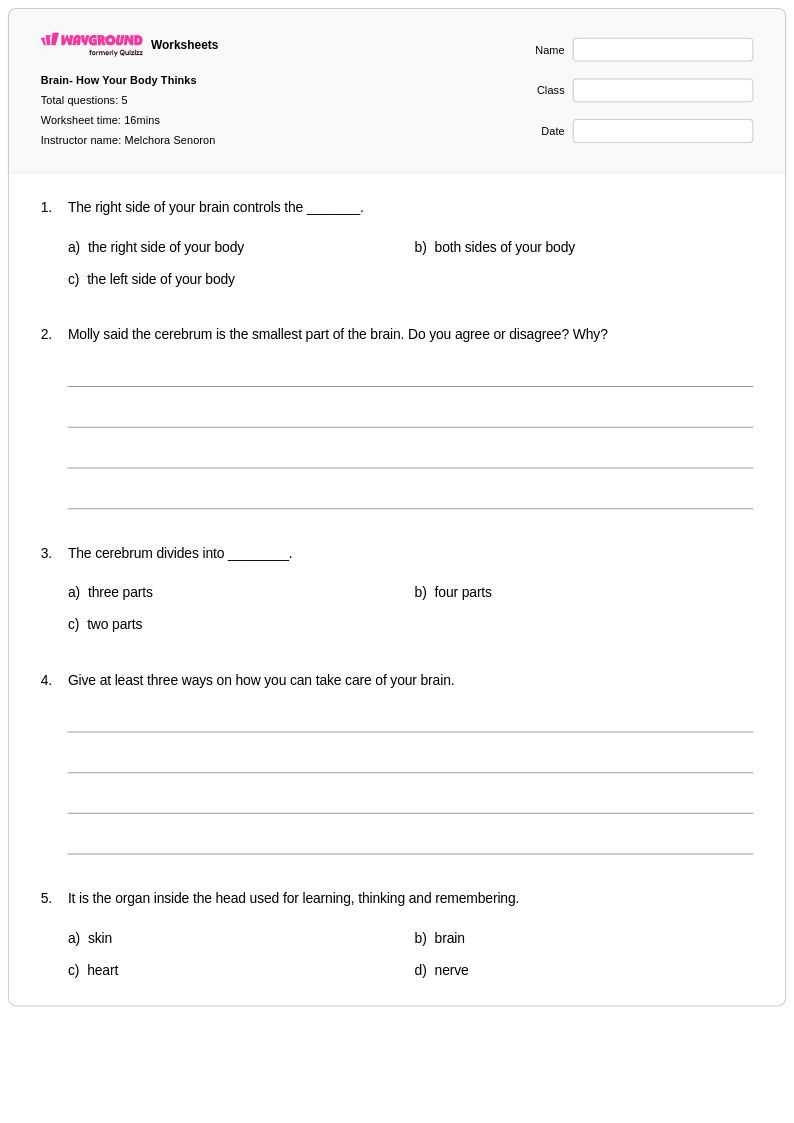
5 Q
2nd - 3rd
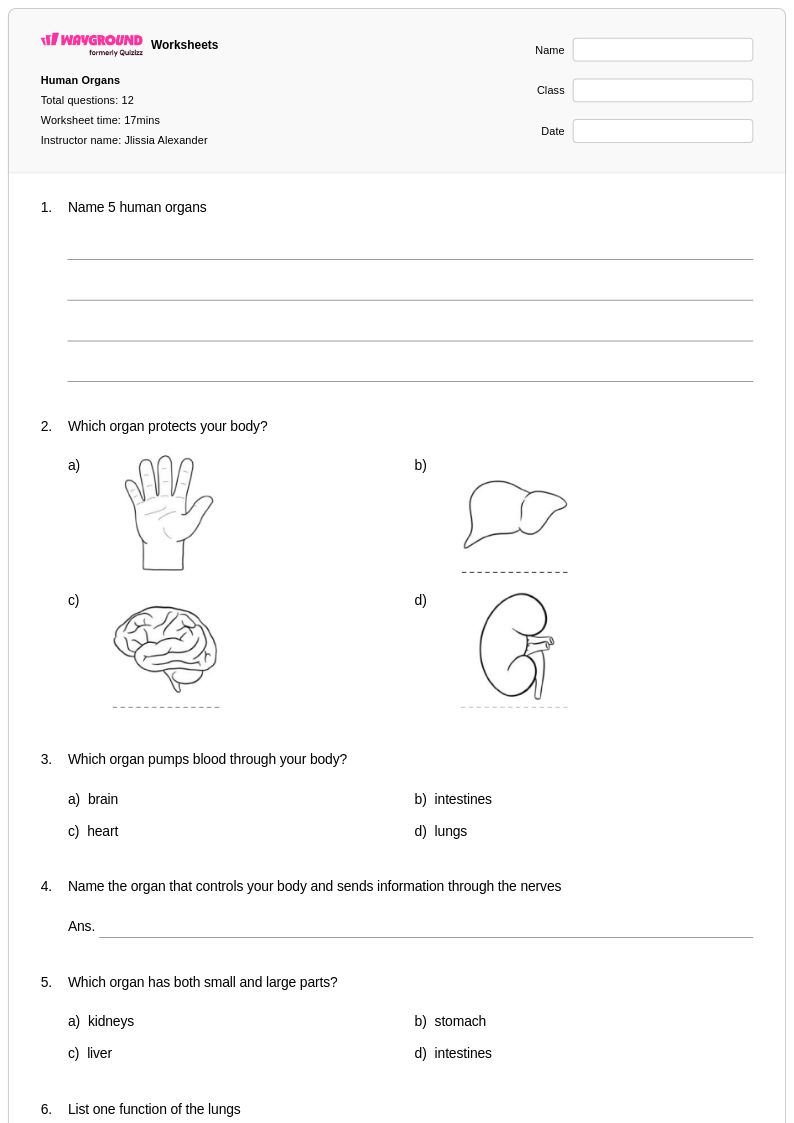
12 Q
3rd
10 Q
3rd - 5th
8 Q
3rd - 5th
26 Q
3rd - 5th
10 Q
3rd - 5th
15 Q
3rd - 5th
7 Q
3rd
12 Q
3rd
10 Q
3rd
5 Q
3rd
16 Q
3rd
7 Q
3rd
Explore Other Subject Worksheets for grade 3
Explore printable Brain worksheets for Grade 3
Brain worksheets for Grade 3 students available through Wayground (formerly Quizizz) provide young learners with engaging, age-appropriate activities that introduce fundamental concepts about the human brain and nervous system. These educational resources focus on helping third-grade students understand basic brain anatomy, recognize the brain's role as the body's control center, and explore how the brain connects to the five senses and motor functions. The worksheets strengthen critical thinking skills through interactive diagrams, labeling exercises, and simple experiments that demonstrate brain-body connections. Teachers can access comprehensive answer keys alongside each worksheet, ensuring accurate assessment and efficient grading. These free printables include practice problems that encourage students to observe, predict, and analyze how the brain influences daily activities, making complex scientific concepts accessible through hands-on learning experiences delivered in convenient PDF format.
Wayground (formerly Quizizz) empowers educators with an extensive collection of teacher-created brain worksheets specifically designed for Grade 3 science instruction, drawing from millions of high-quality educational resources developed by classroom professionals. The platform's robust search and filtering capabilities allow teachers to quickly locate materials that align with specific learning standards and accommodate diverse student needs through built-in differentiation tools. These brain-focused worksheets can be easily customized to match individual classroom requirements and are available in both printable PDF format for traditional paper-based activities and digital formats for technology-integrated lessons. This flexibility supports comprehensive lesson planning while providing valuable resources for targeted remediation, skill-building practice, and enrichment opportunities that help students develop a solid foundation in understanding brain function and its connection to human behavior and learning.
FAQs
How do I teach brain anatomy to students effectively?
What exercises help students practice identifying brain regions and their functions?
What common mistakes do students make when learning about the brain?
How can I differentiate brain anatomy worksheets for students with different learning needs?
How do I use Wayground's brain worksheets in my classroom?