Free Printable Pure Substances Worksheets for Grade 2
Explore Wayground's free Grade 2 pure substances worksheets and printables that help young students identify and classify different materials through engaging practice problems with complete answer keys.
Explore printable Pure Substances worksheets for Grade 2
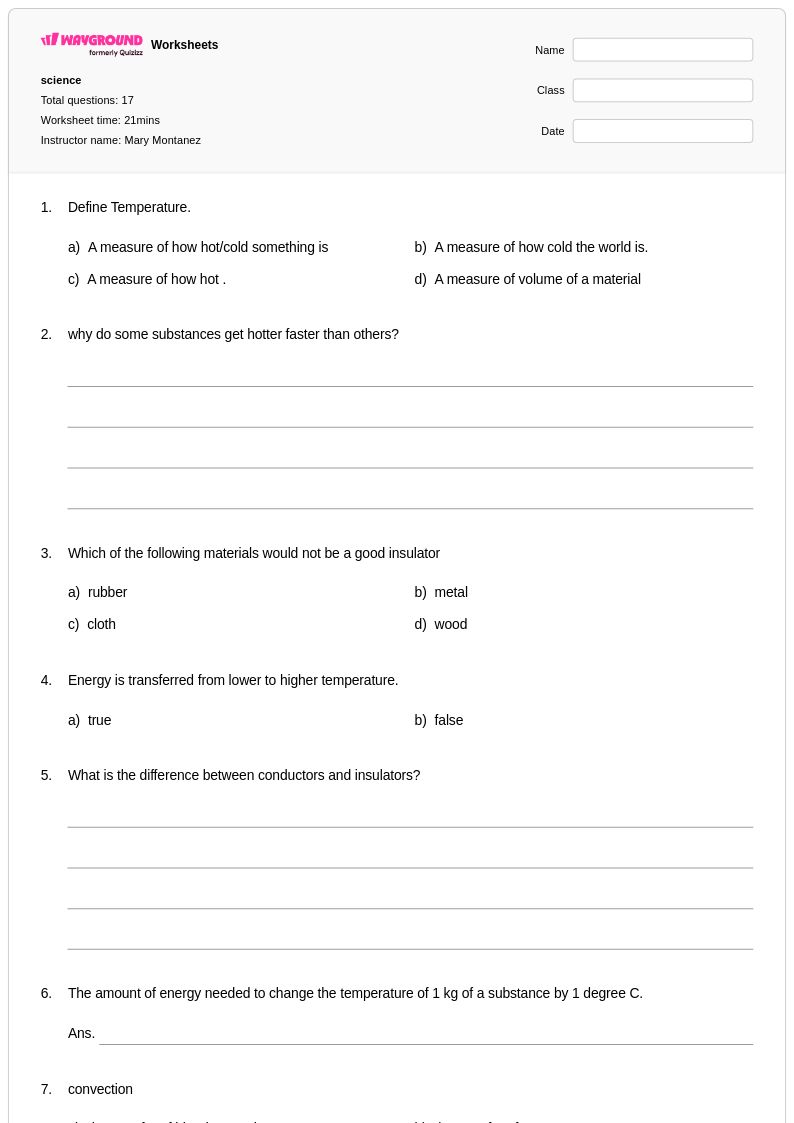
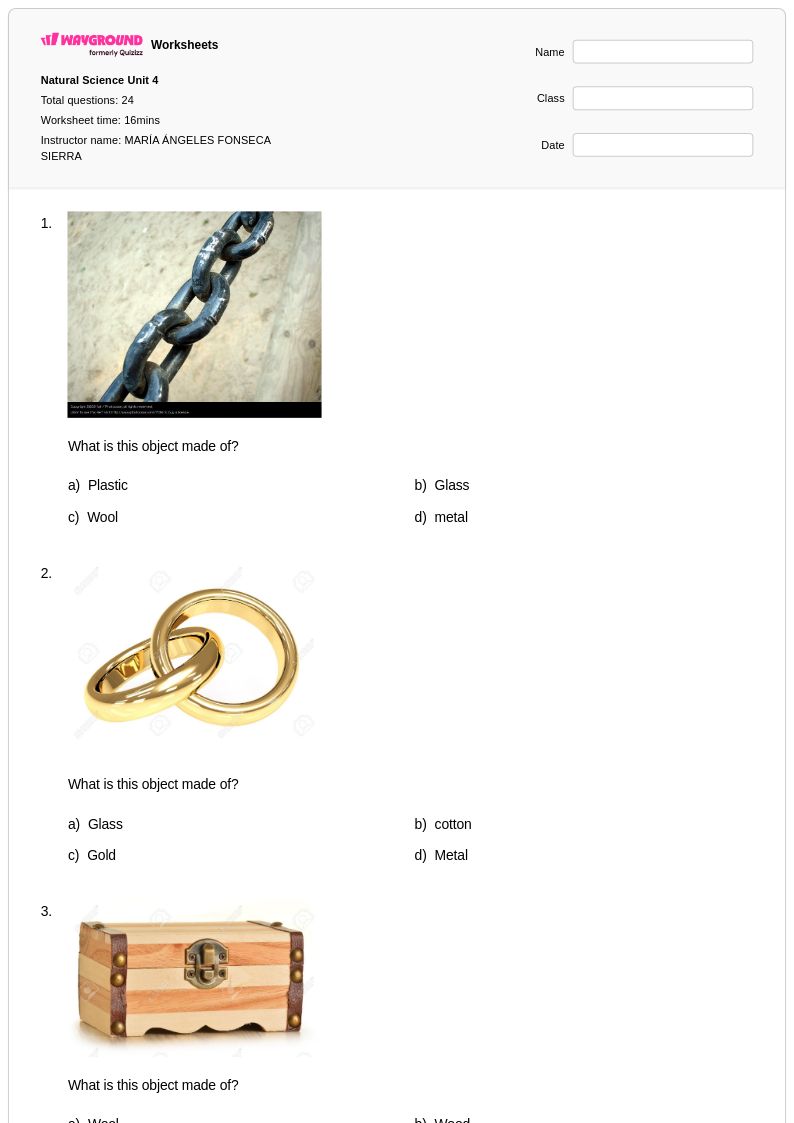
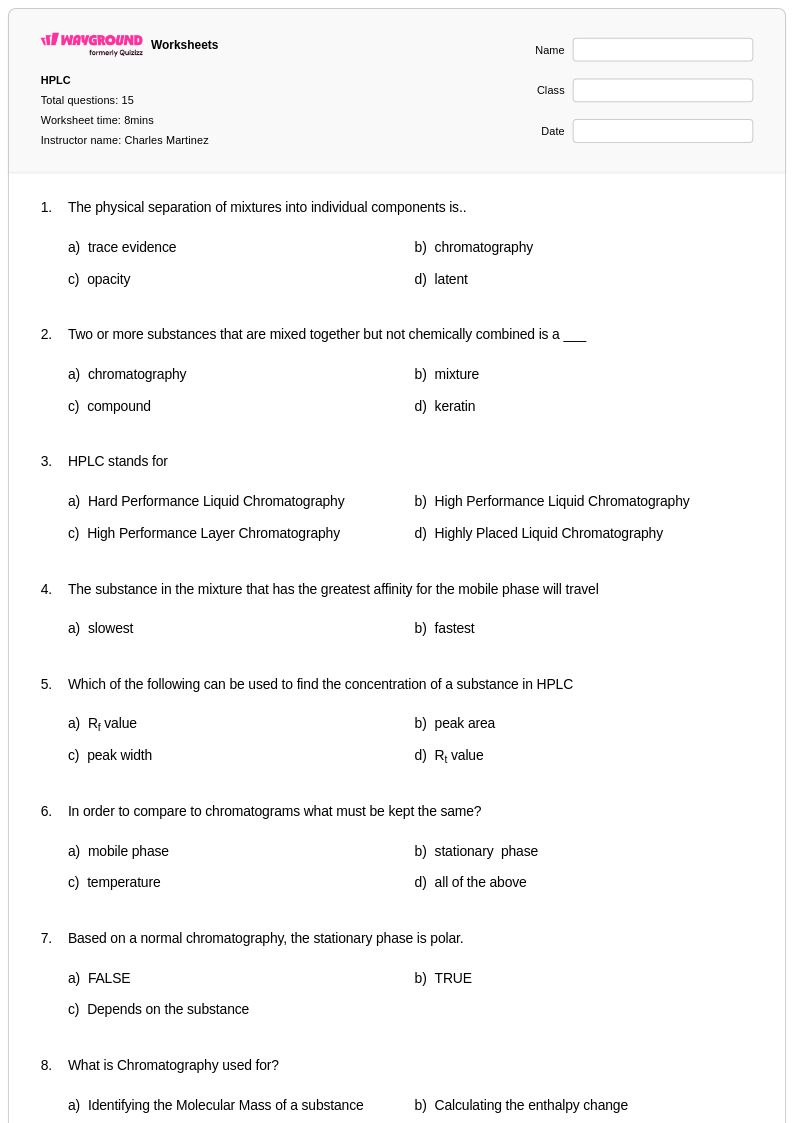
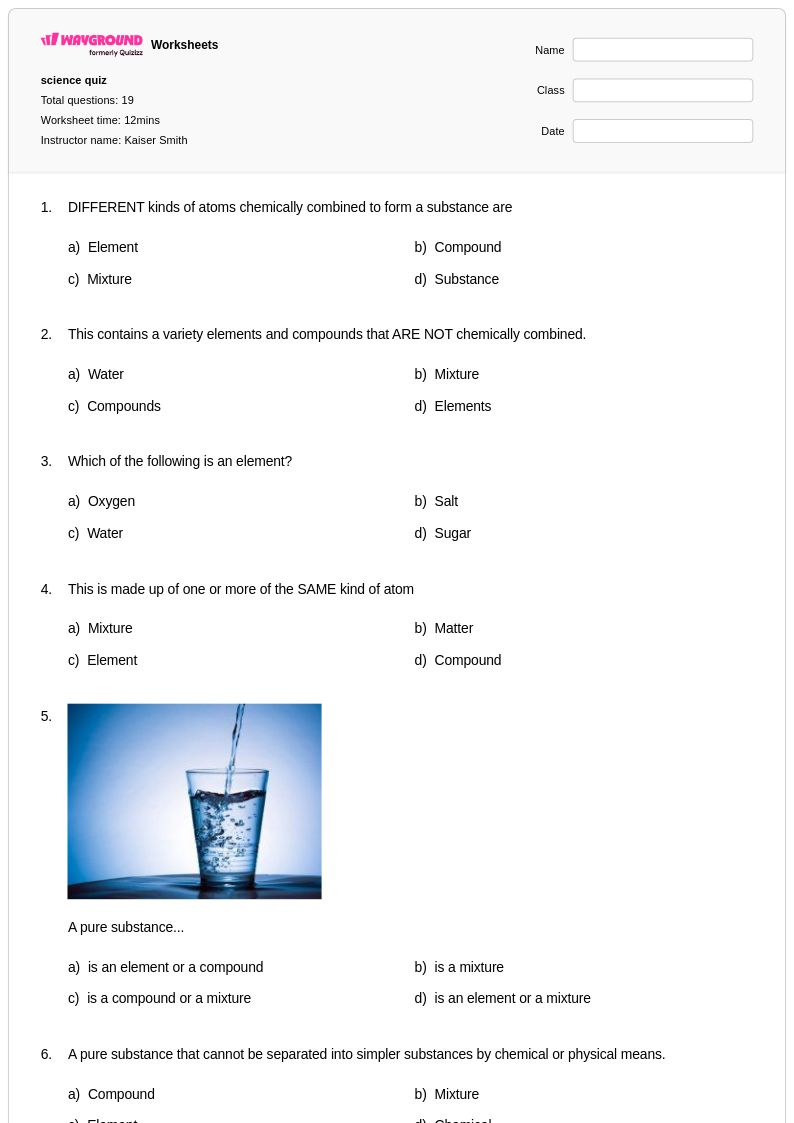
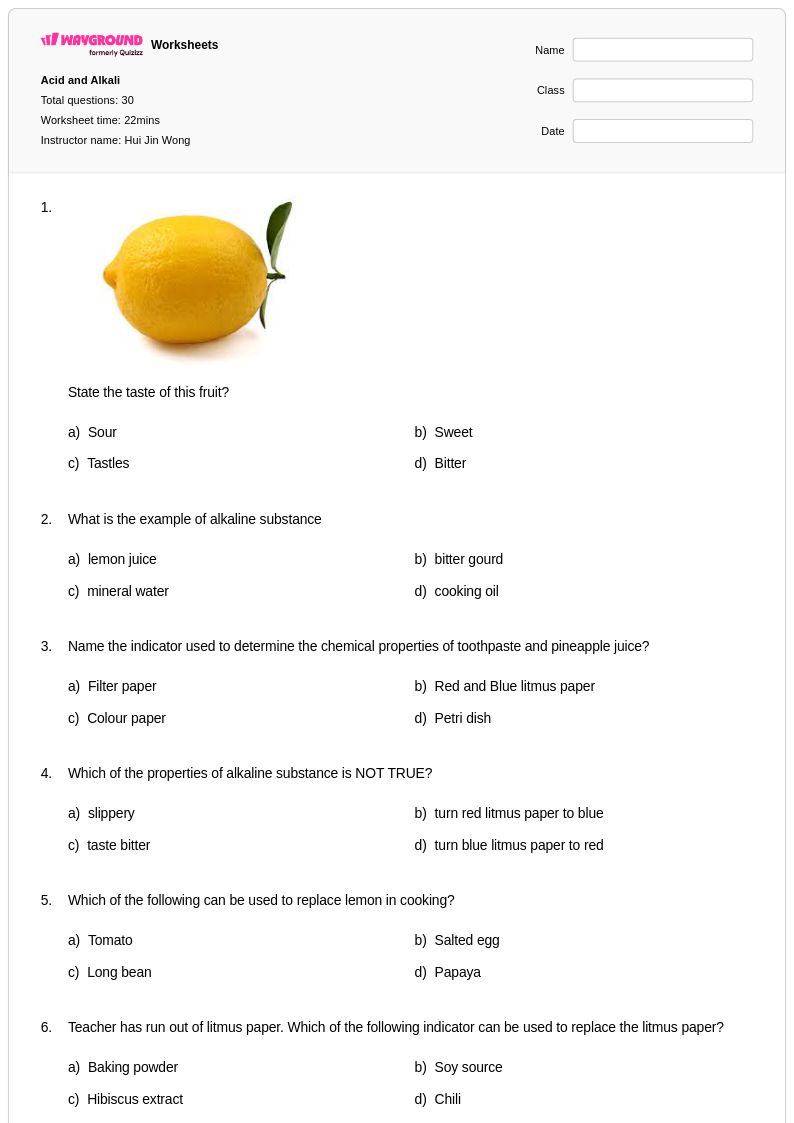
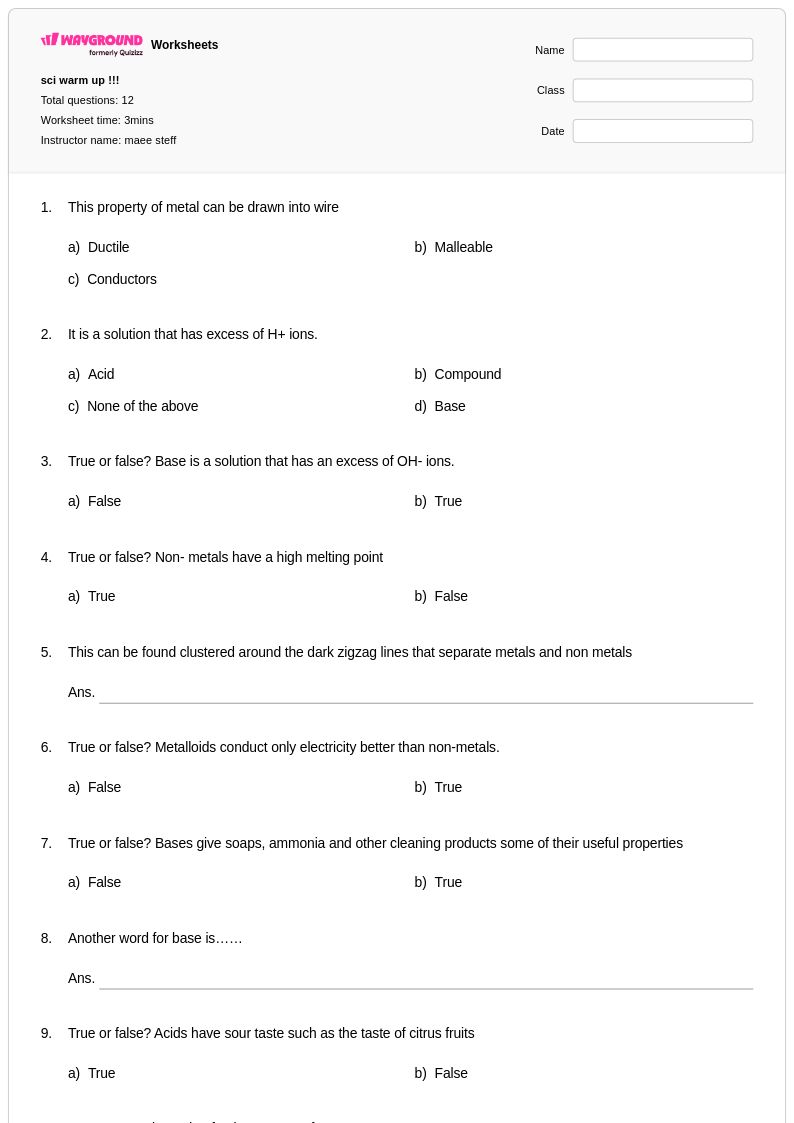
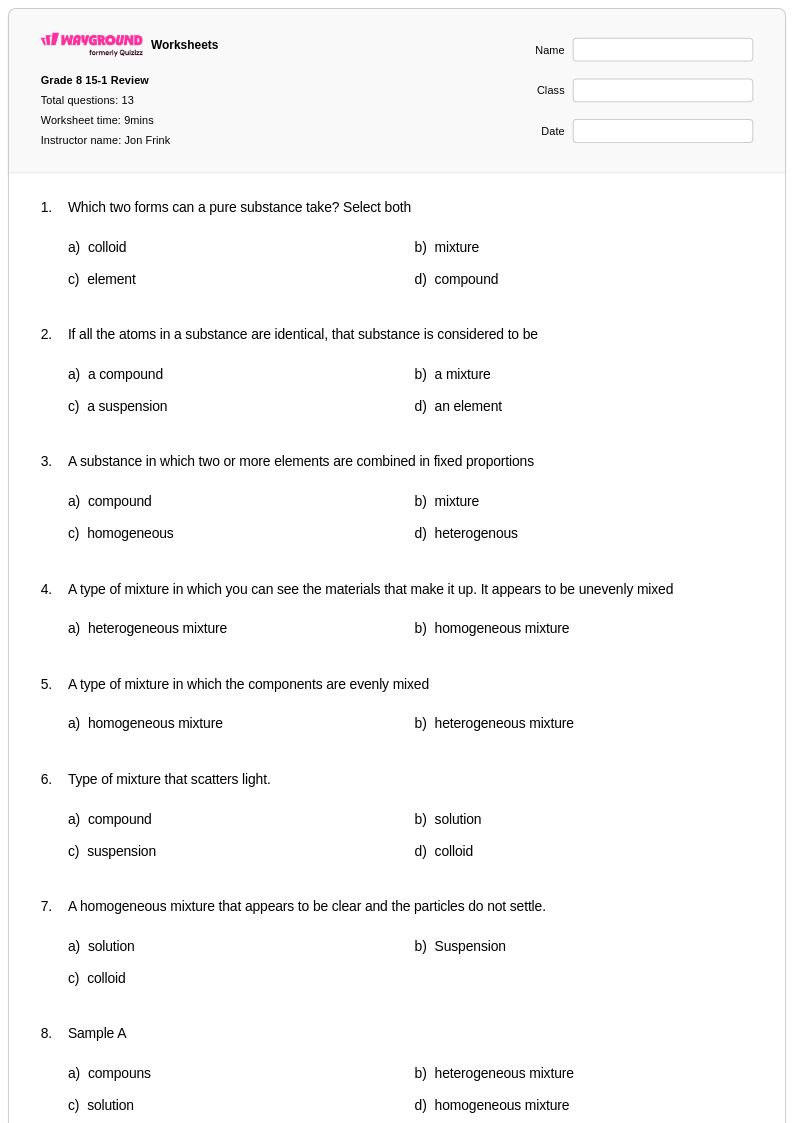
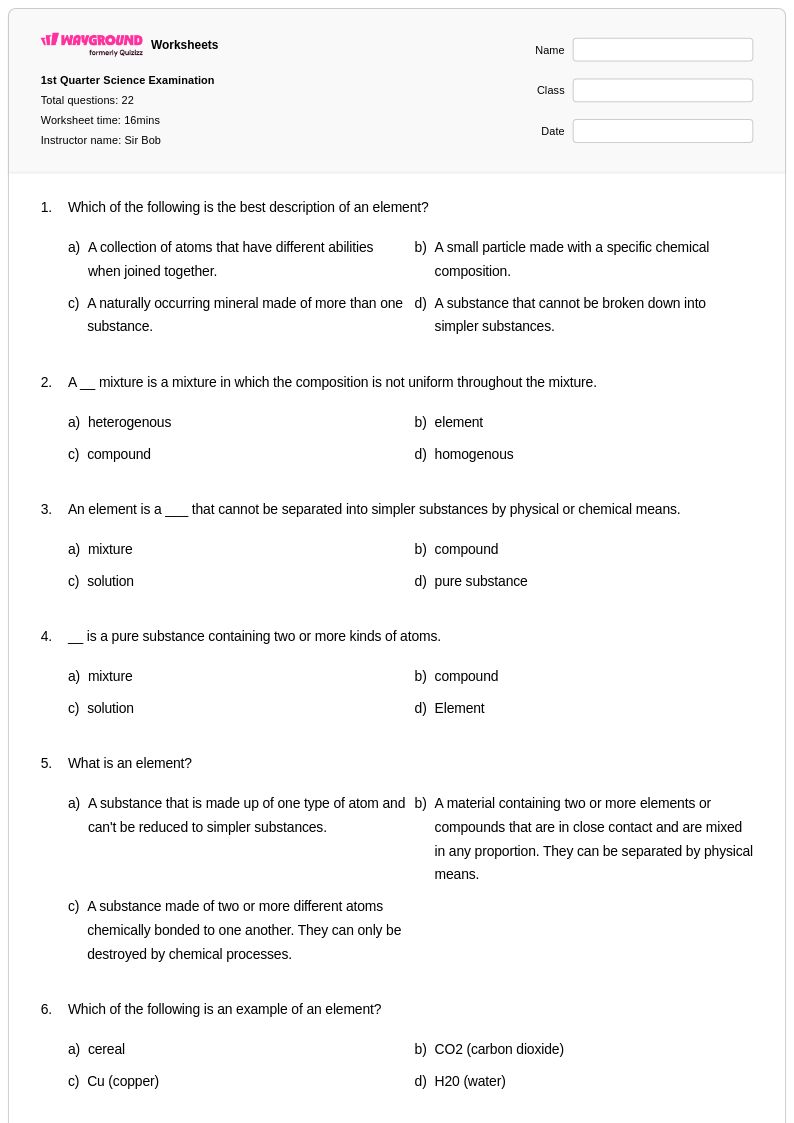
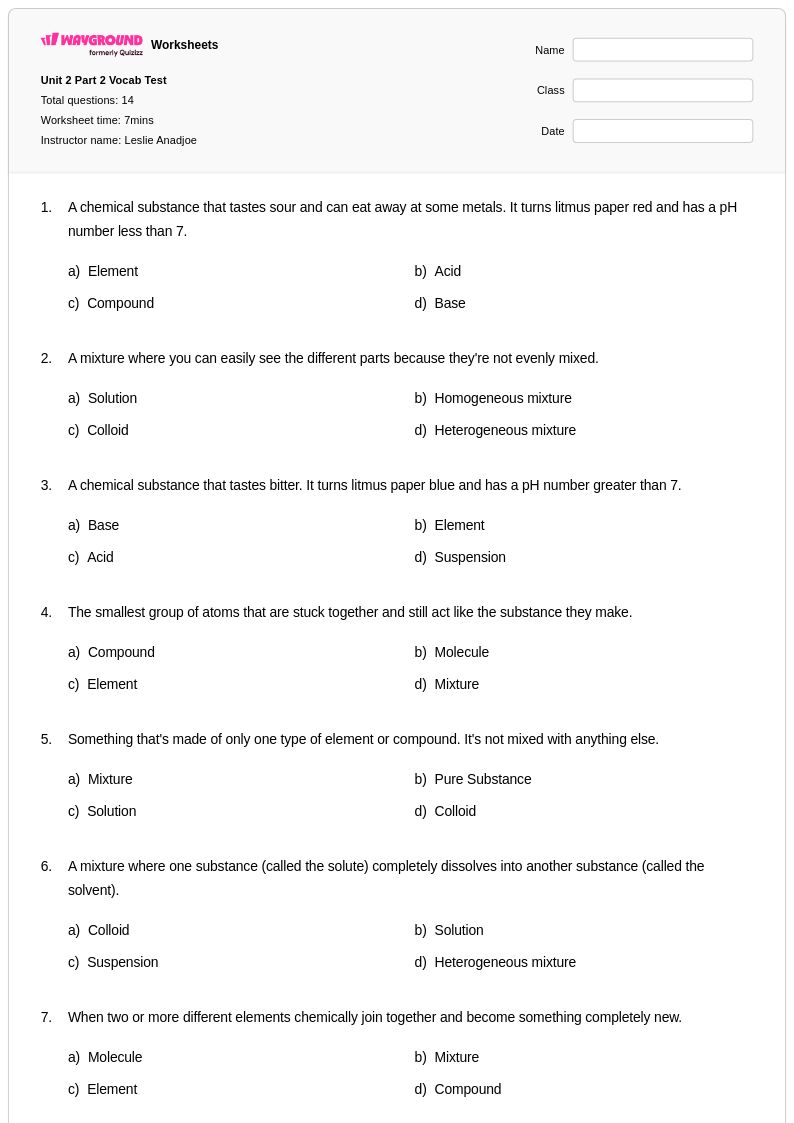
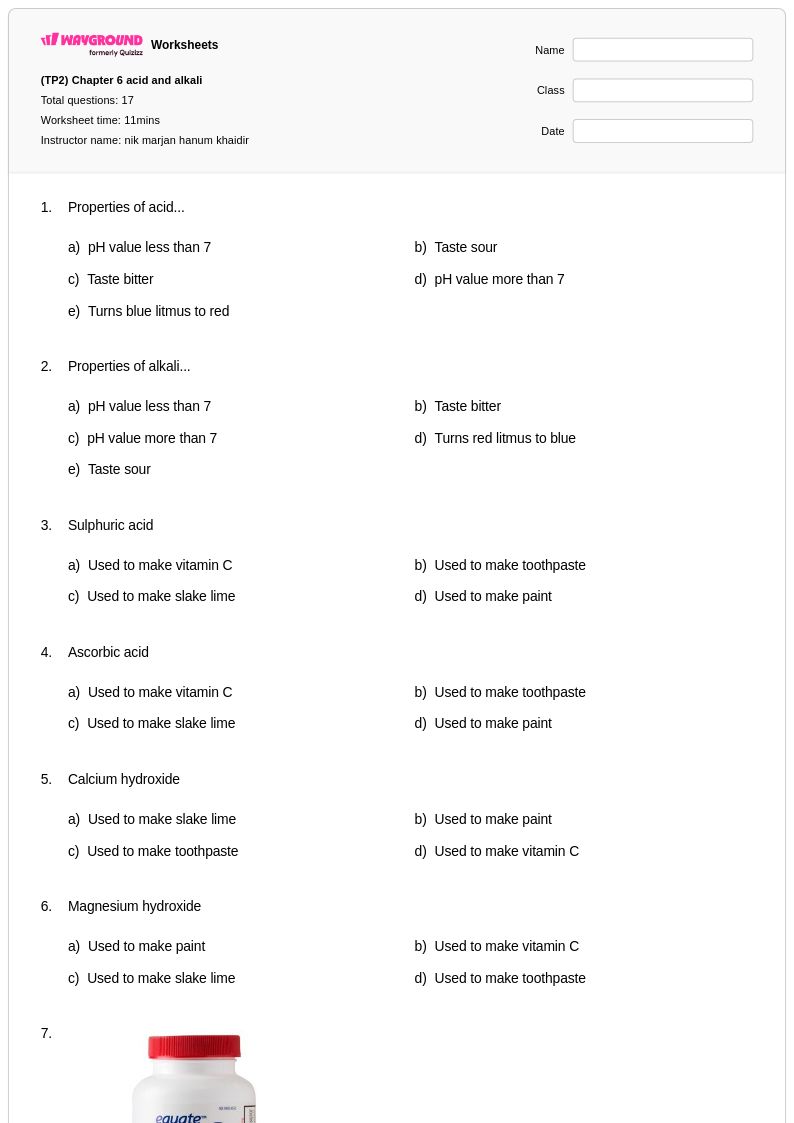
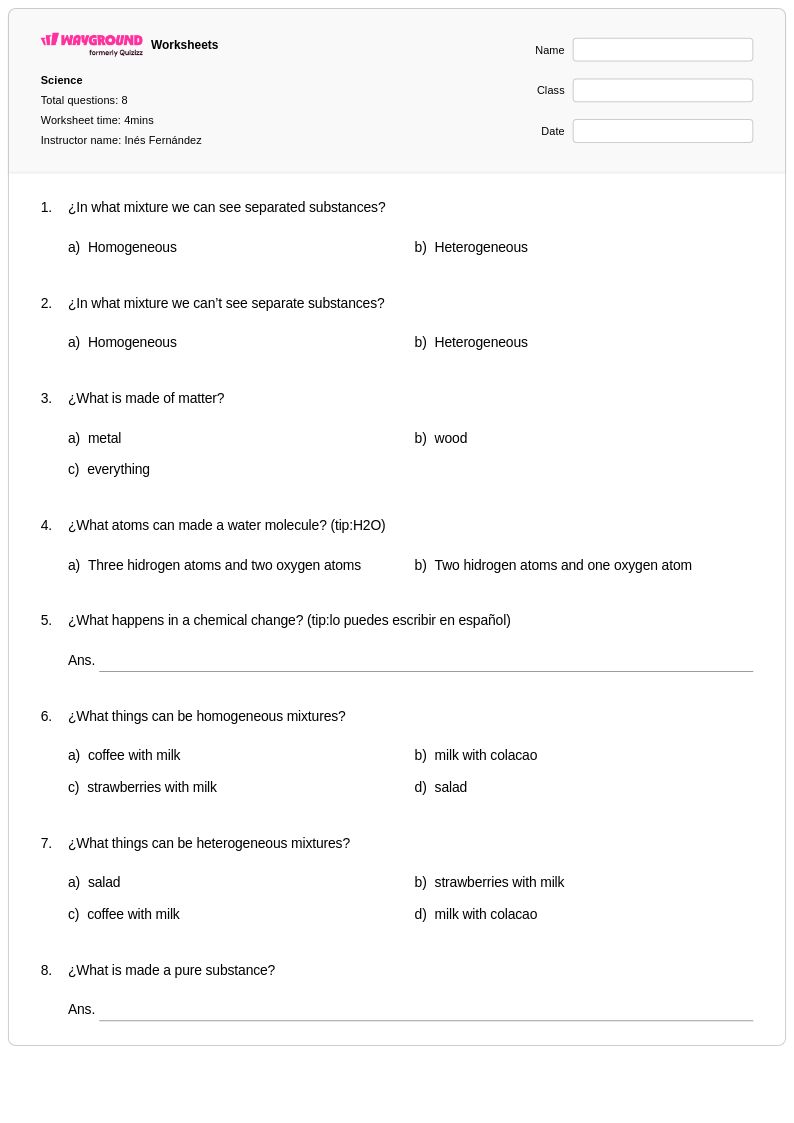
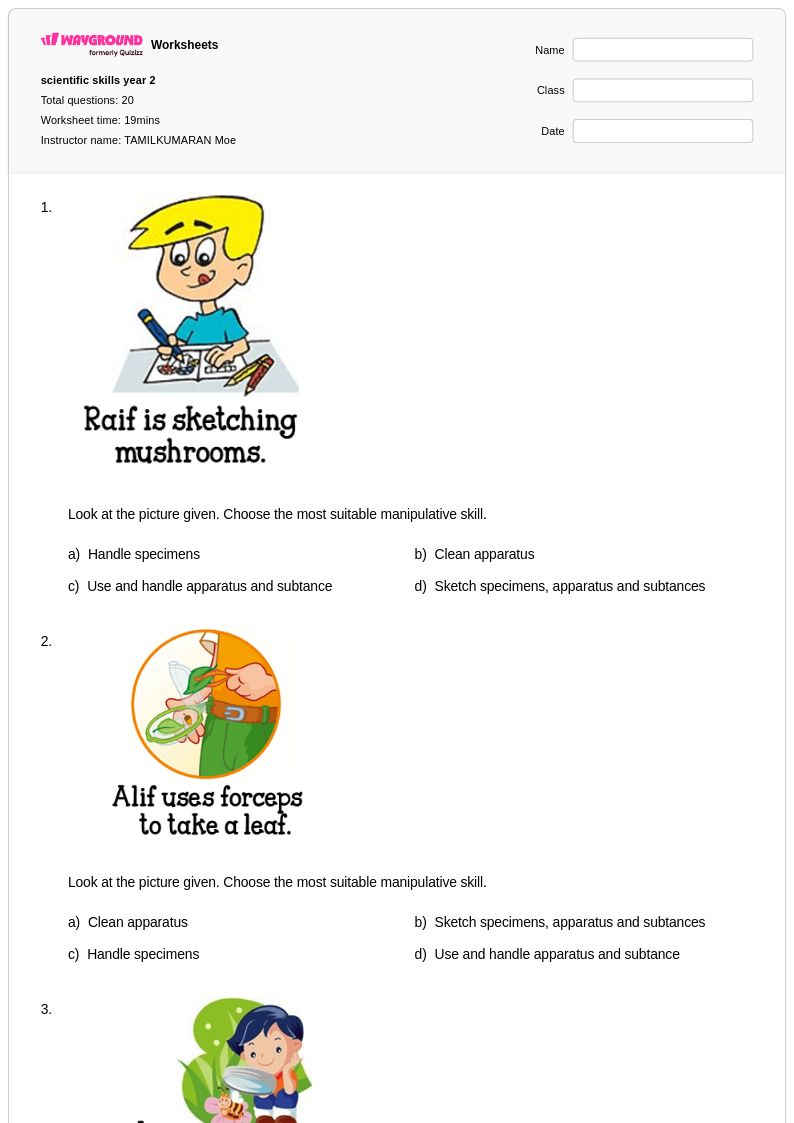
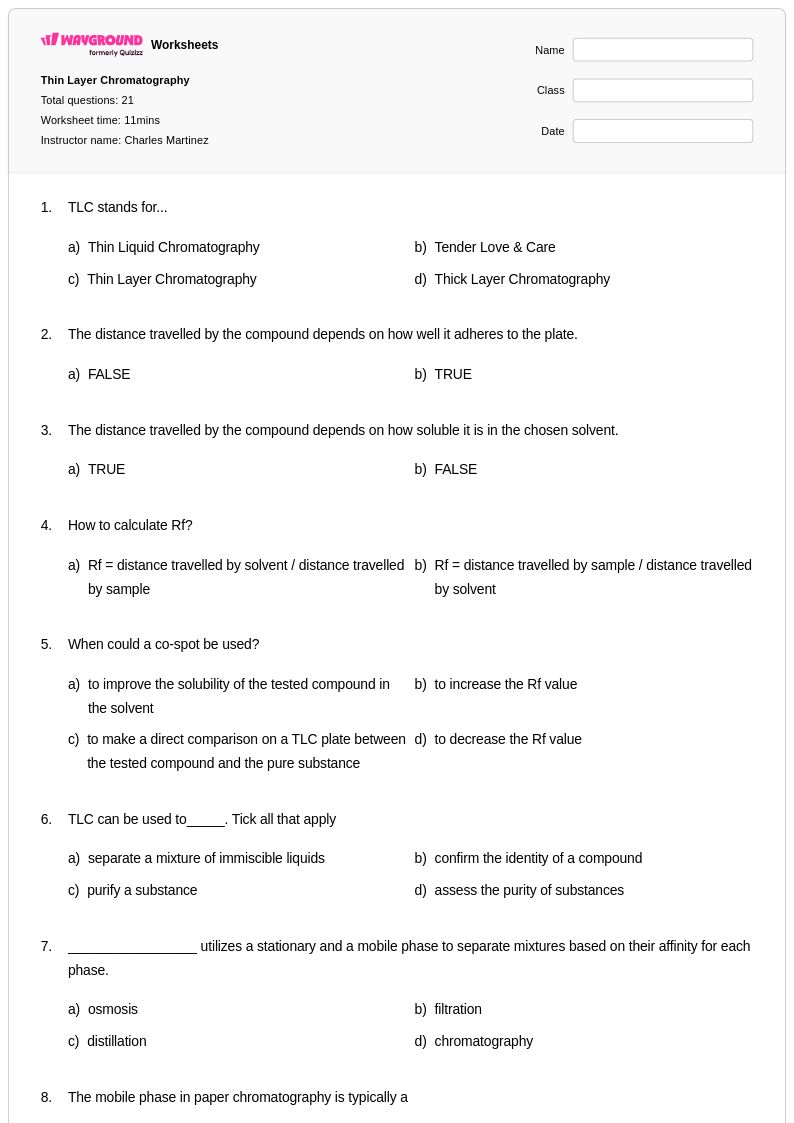
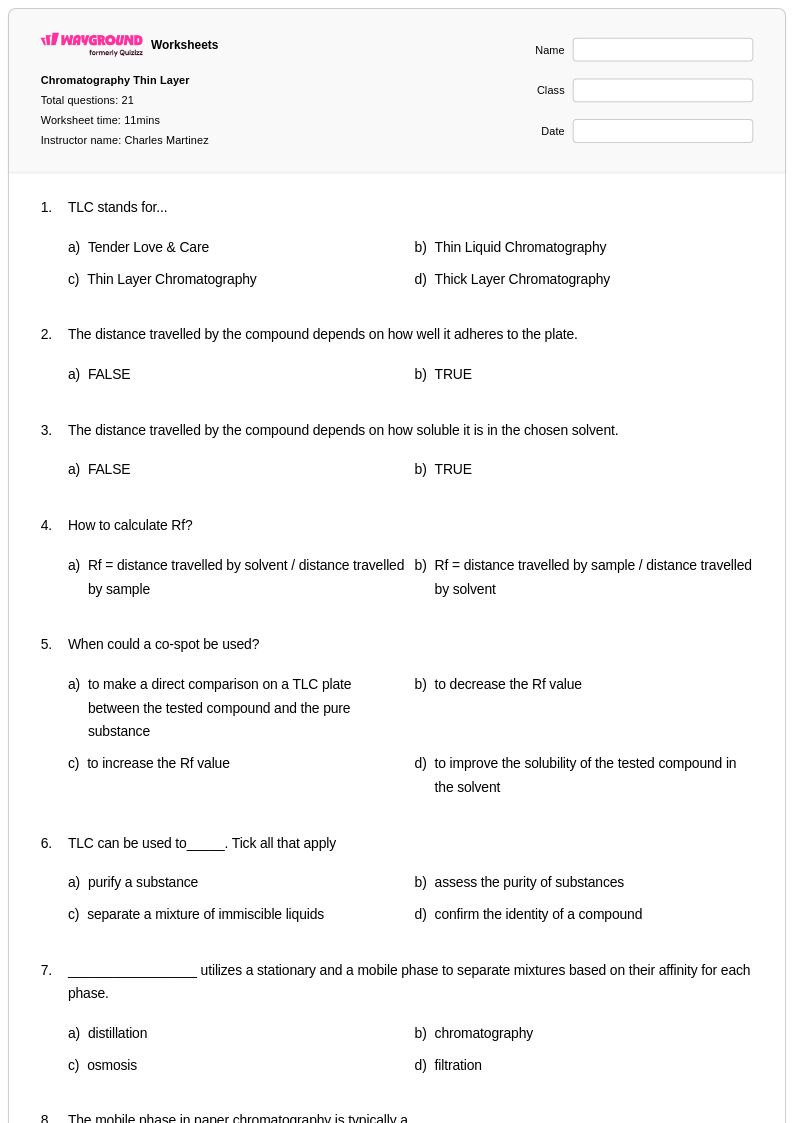
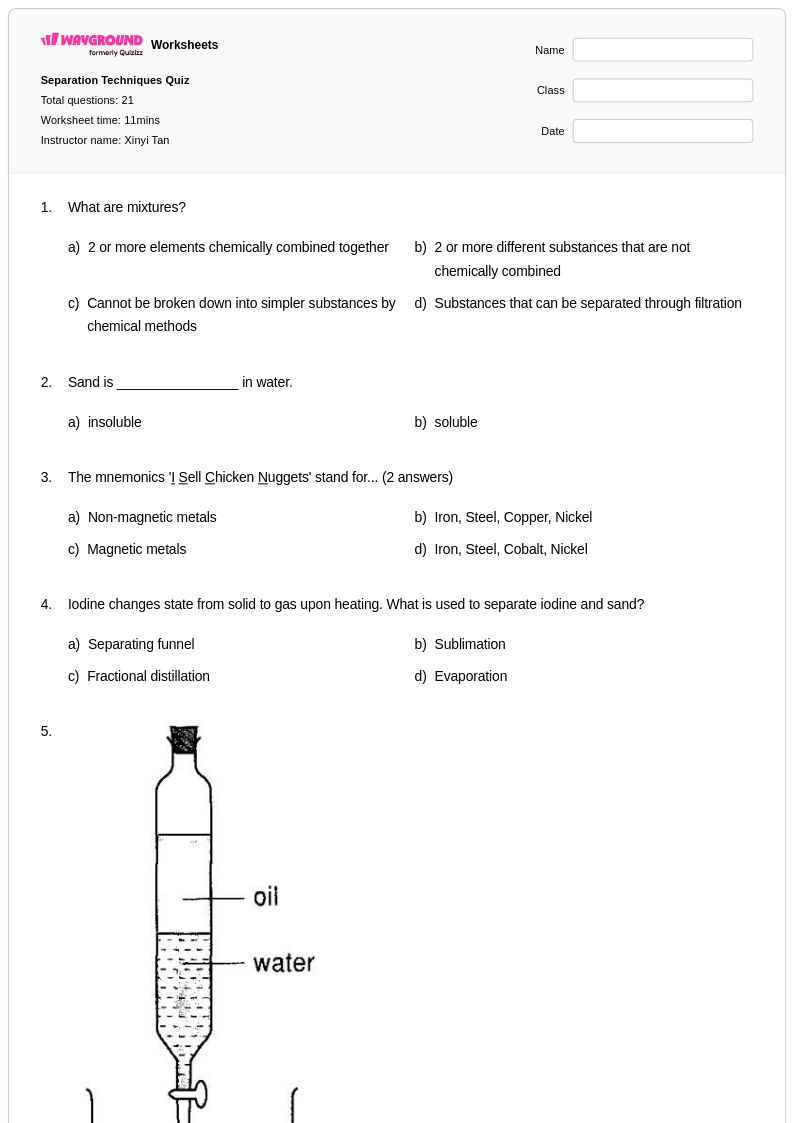
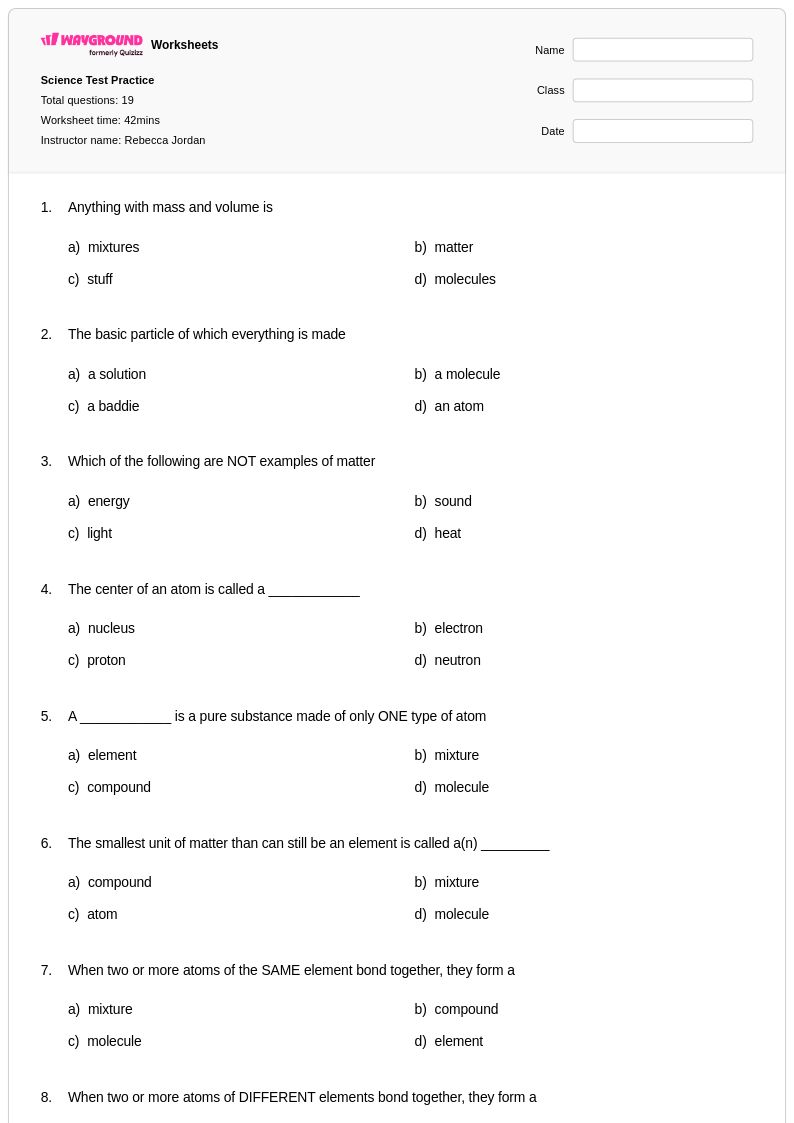
Pure substances worksheets for Grade 2 students available through Wayground (formerly Quizizz) introduce young learners to the fundamental chemistry concept that matter exists in distinct, uniform forms. These carefully designed educational materials help second-grade students develop critical observation and classification skills as they explore the difference between pure substances and mixtures through age-appropriate activities and visual examples. The worksheets strengthen scientific thinking by guiding students to identify everyday materials like water, salt, and gold as pure substances while distinguishing them from combinations of different materials. Teachers can access comprehensive practice problems that build foundational knowledge, complete with answer keys that facilitate efficient grading and provide immediate feedback opportunities. These free printable resources transform abstract chemistry concepts into concrete learning experiences that align perfectly with early elementary science curricula.
Wayground (formerly Quizizz) empowers educators with an extensive collection of teacher-created pure substances worksheets, drawing from millions of resources specifically designed to meet Grade 2 learning objectives and standards alignment requirements. The platform's robust search and filtering capabilities enable teachers to quickly locate materials that match their students' diverse learning needs, while built-in differentiation tools support both remediation for struggling learners and enrichment opportunities for advanced students. These chemistry worksheets are available in both printable PDF formats for traditional classroom use and digital formats for interactive learning experiences, providing the flexibility teachers need for various instructional settings. The comprehensive customization options allow educators to modify content, adjust difficulty levels, and tailor practice problems to specific lesson plans, making these resources invaluable for systematic skill development, targeted intervention, and ongoing assessment in elementary science education.
FAQs
How do I teach pure substances to chemistry students?
Start by establishing the distinction between pure substances and mixtures before narrowing the focus to elements versus compounds. Use particle diagrams to make the abstract concept of uniform composition visible, and connect chemical formulas to the idea that a compound always contains the same ratio of elements. Building from classification to properties helps students develop a systematic framework rather than memorizing isolated facts.
What exercises help students practice identifying pure substances?
Particle diagram analysis is one of the most effective practice formats because it requires students to interpret visual representations of matter at the molecular level rather than simply recalling definitions. Practice problems that ask students to classify substances using chemical formulas, physical properties, and separation techniques reinforce multiple entry points to the same concept. Scaffolded problem sets that progress from simple element identification to compound analysis and real-world examples build confidence alongside skill.
What mistakes do students commonly make when learning about pure substances?
The most frequent misconception is confusing 'pure' in everyday language with 'pure substance' in chemistry — students often assume purified water or clean air qualifies, when a mixture can still be highly pure in the colloquial sense. Students also struggle to distinguish compounds from mixtures, particularly when both contain more than one type of atom. A targeted misconception is assuming that all particle diagrams showing a single type of molecule must represent an element rather than recognizing that compounds also have uniform composition.
How do pure substances worksheets connect to broader chemistry standards?
Pure substances serve as a foundational concept in chemistry because understanding element and compound classification underpins later study of chemical reactions, bonding, and stoichiometry. Worksheets that address molecular structure and chemical formulas in the context of pure substances directly support standards related to the structure and properties of matter. Mastery of this concept also prepares students to interpret phase diagrams, solubility rules, and reaction equations more accurately.
How do I use Wayground's pure substances worksheets in my classroom?
Wayground's pure substances worksheets are available as free printable PDFs for traditional classroom use and in digital formats for technology-integrated environments, including the option to host them as a quiz directly on Wayground. Teachers can use the search and filtering tools to find materials aligned to specific chemistry standards and learning objectives. For students who need additional support, Wayground's accommodation features — such as read aloud, reduced answer choices, and extended time — can be applied individually so that differentiation happens without disrupting the rest of the class.
How can I differentiate pure substances instruction for students at different levels?
For struggling students, begin with visual classification tasks using particle diagrams before introducing symbolic representations like chemical formulas. Advanced learners can be challenged with scenarios that require them to predict properties of unknown pure substances based on molecular structure or to distinguish between pure substances and near-homogeneous mixtures. On Wayground, teachers can adjust worksheet difficulty and apply individual accommodations — including read aloud and reduced answer choices — so each student engages with content at an appropriate level without singling anyone out.