
10 Q
11th - 12th
19 Q
11th - Uni
6 Q
Uni
16 Q
10th - 12th
15 Q
11th
16 Q
12th
26 Q
9th - 12th
10 Q
Uni
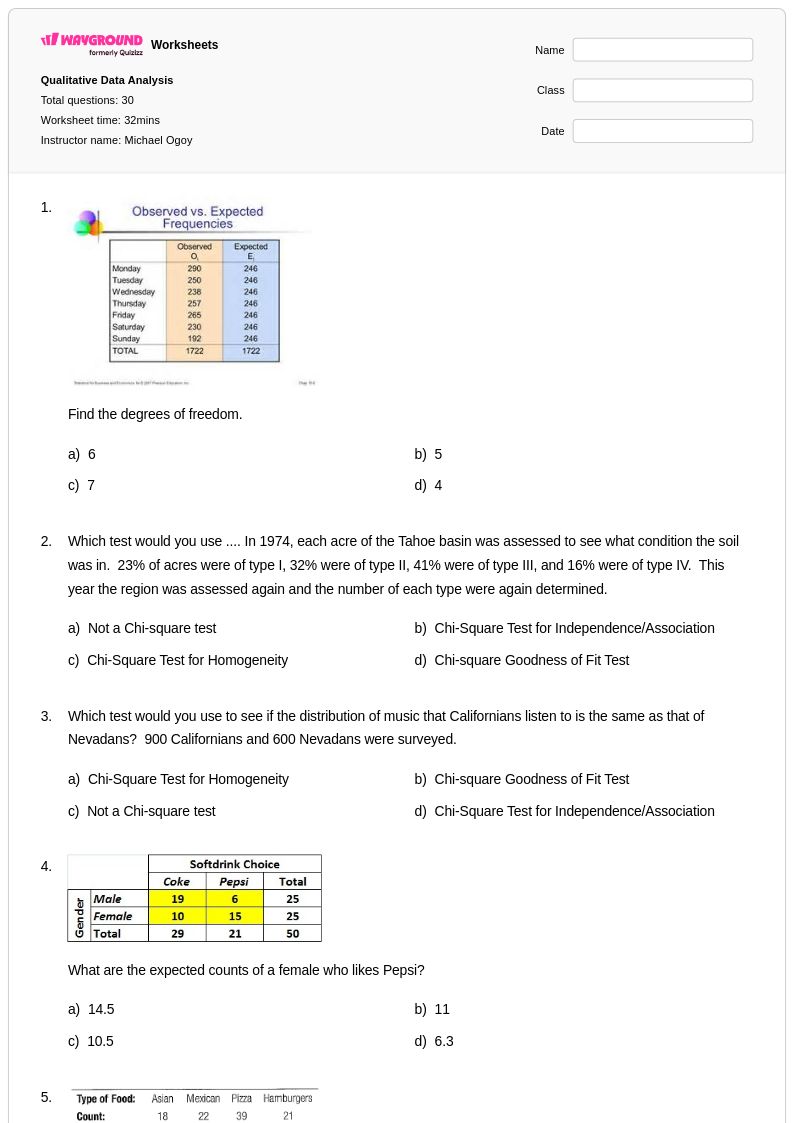
30 Q
11th
22 Q
10th
21 Q
8th - 12th
30 Q
11th - 12th
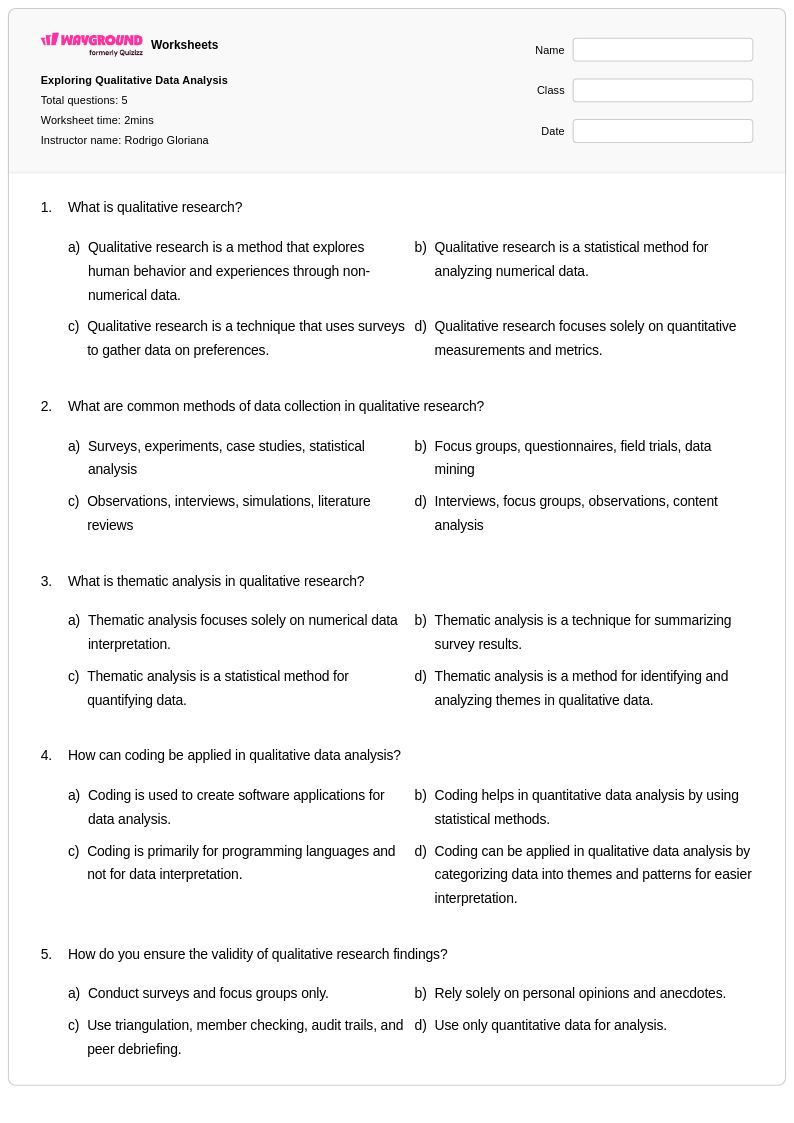
5 Q
Uni
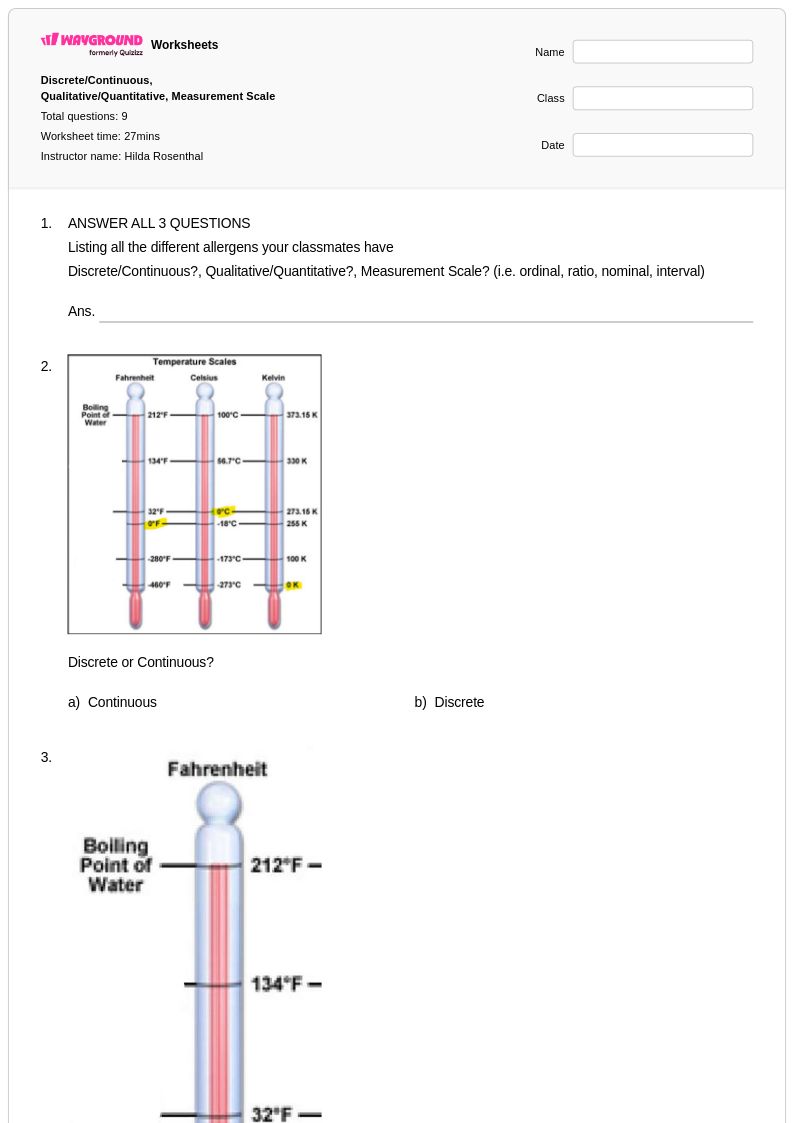
9 Q
Uni
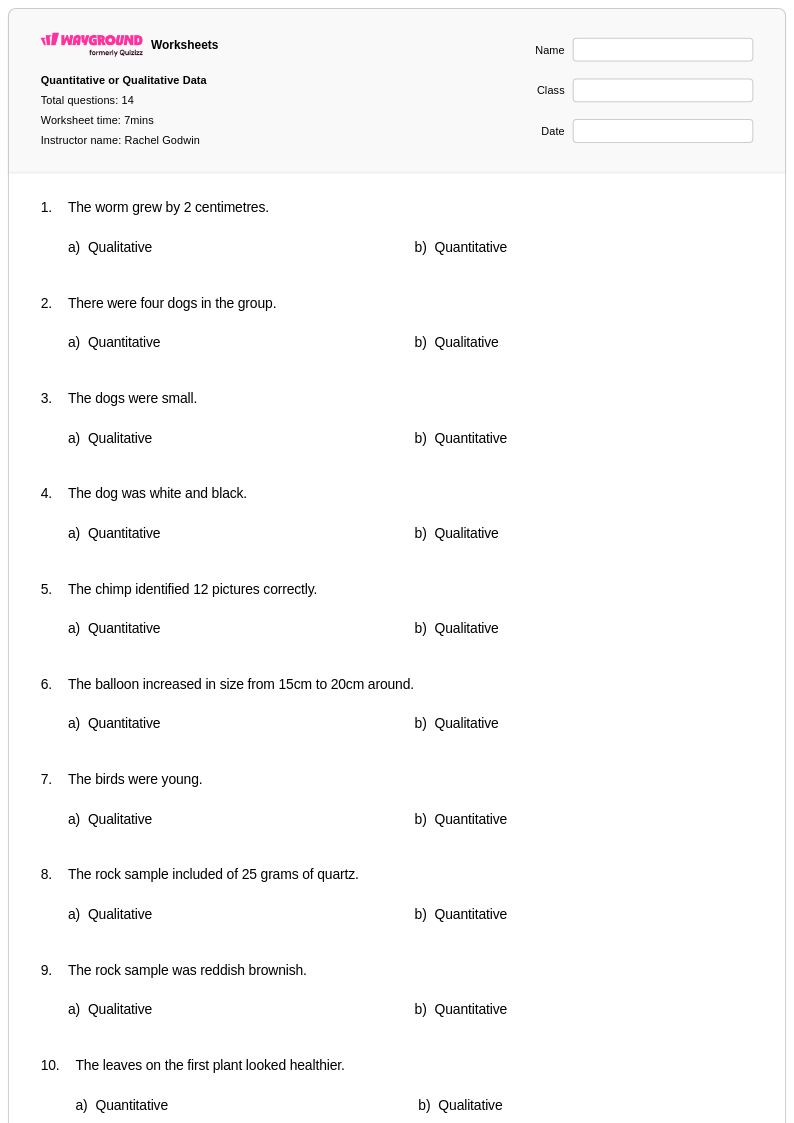
14 Q
4th
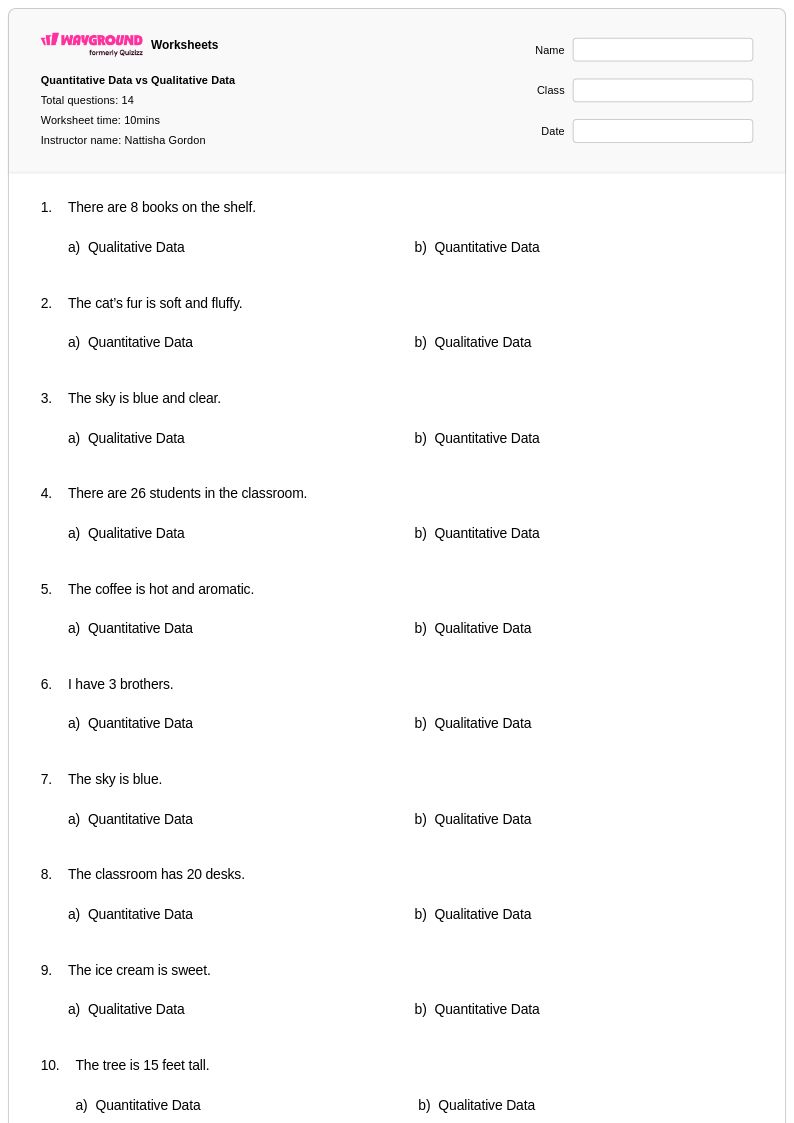
14 Q
8th
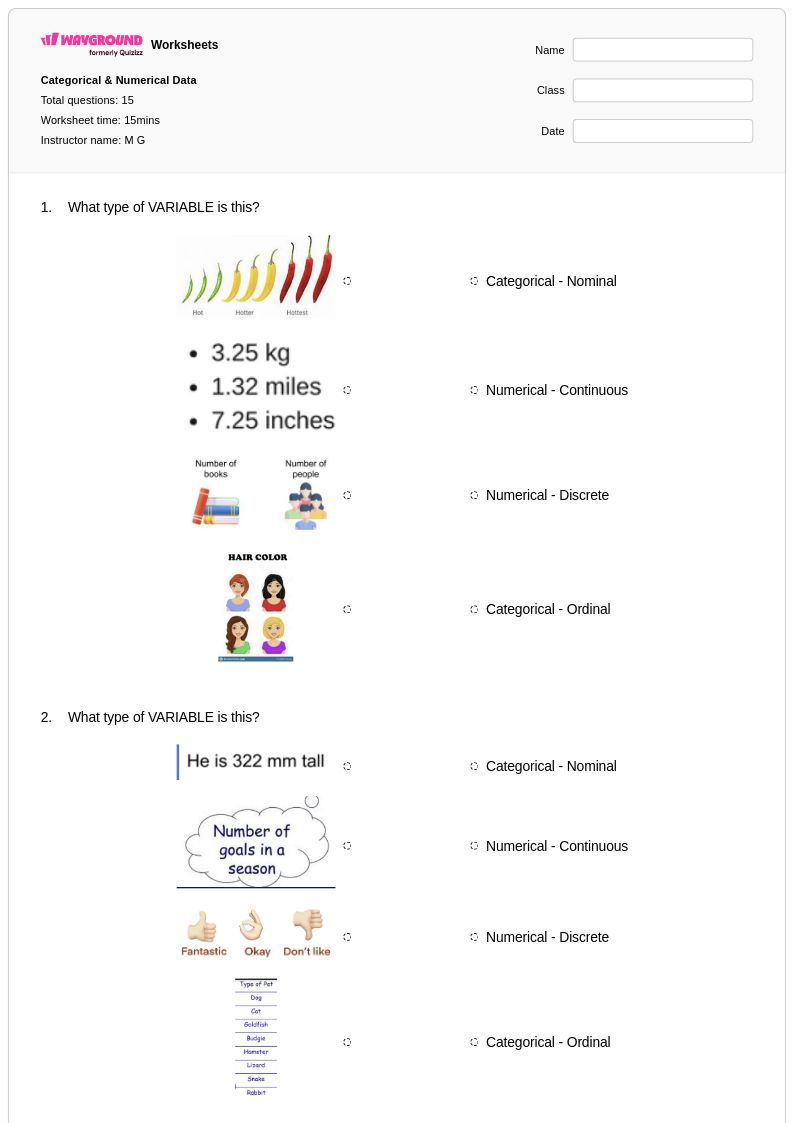
15 Q
6th - 8th
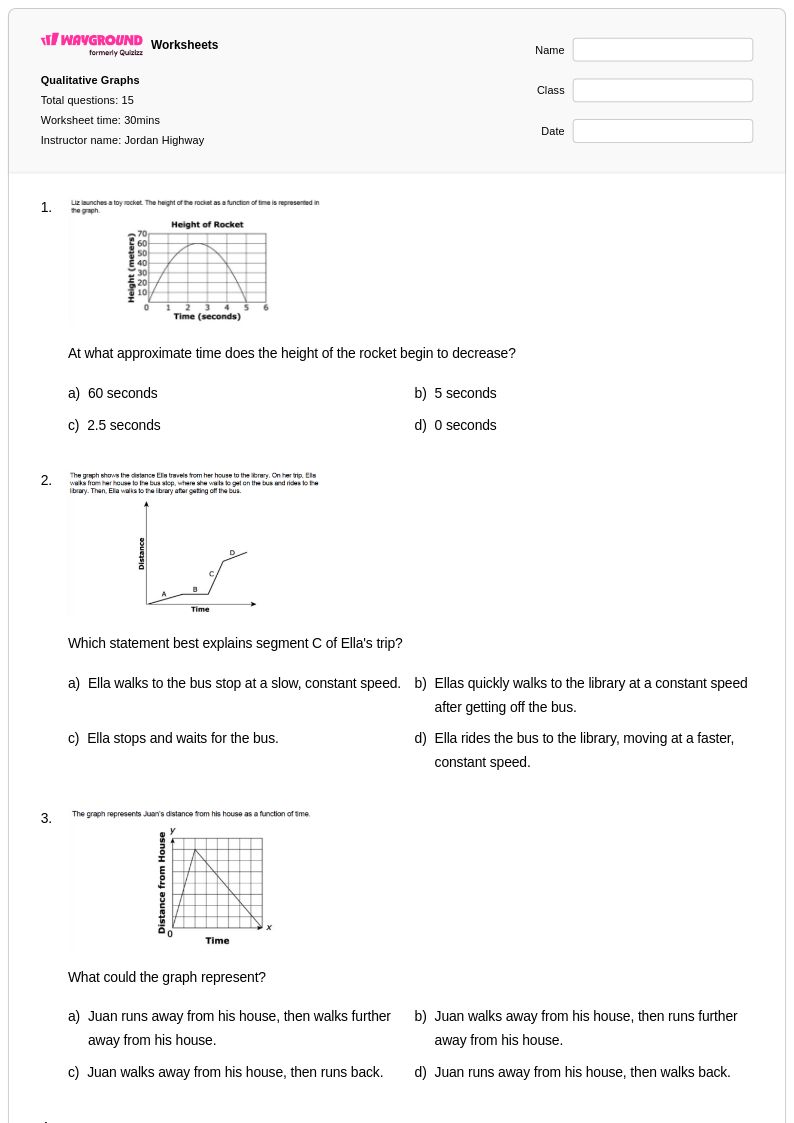
15 Q
8th
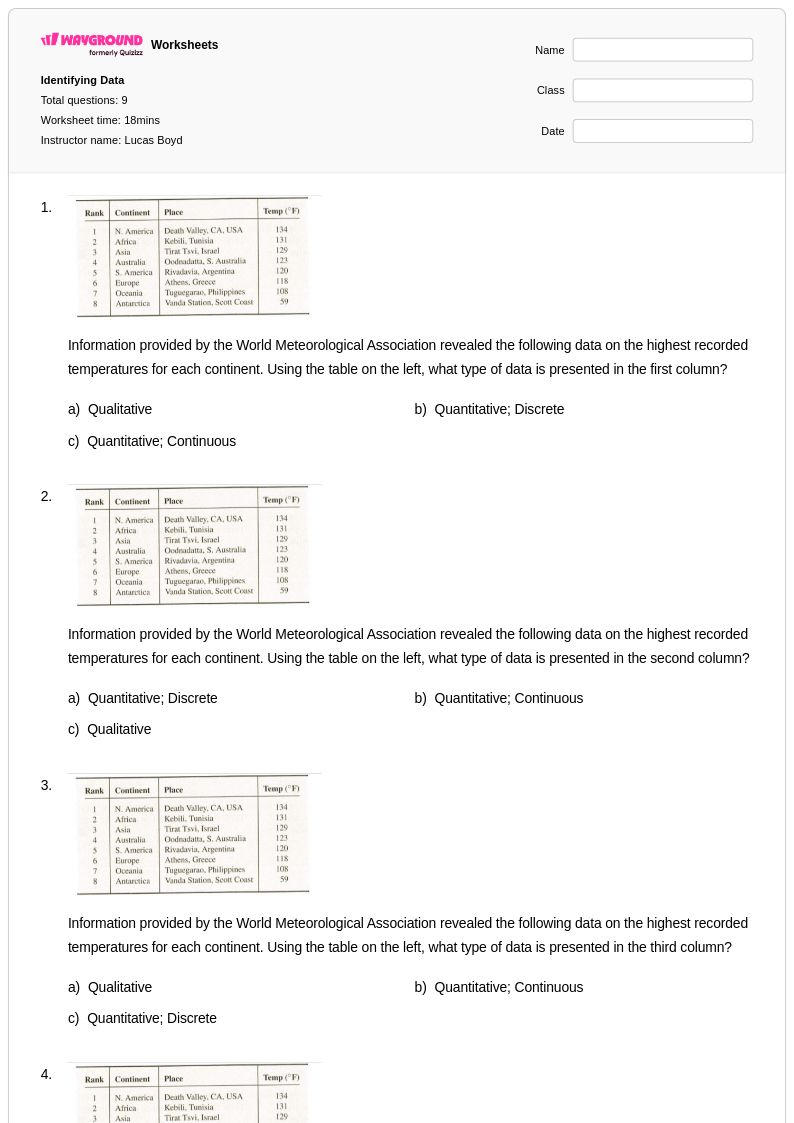
9 Q
9th - 12th
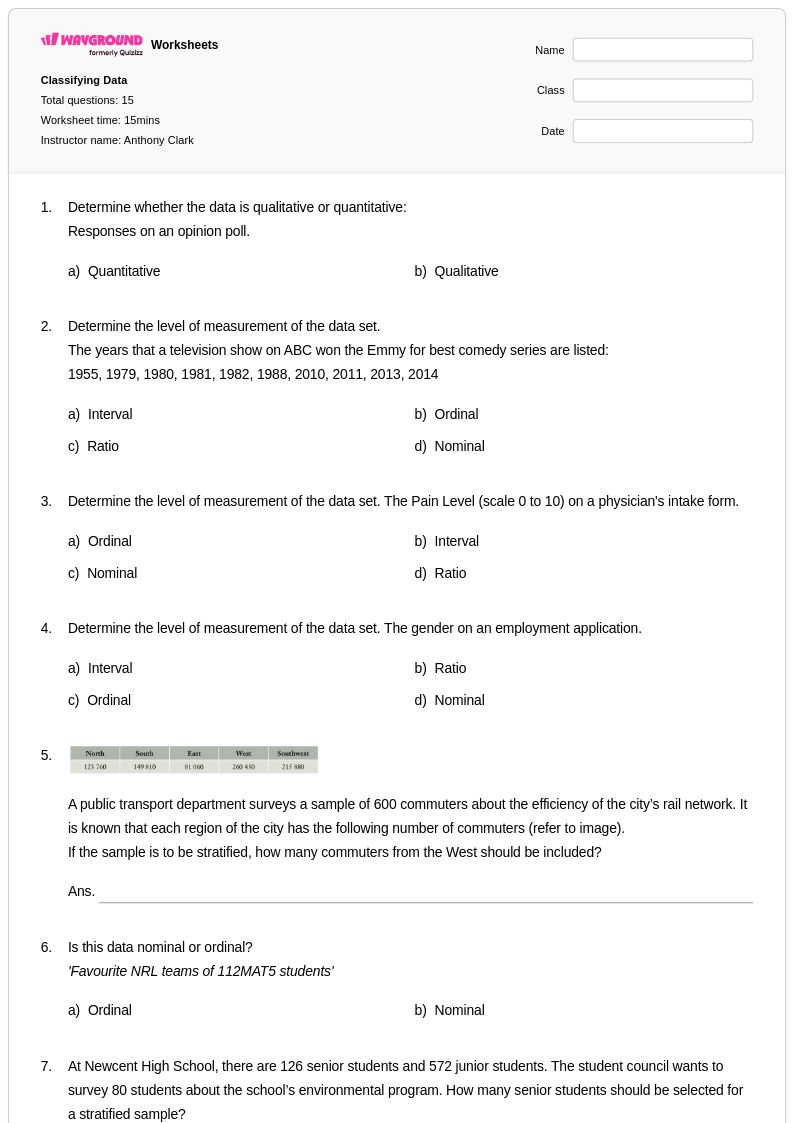
15 Q
12th - Uni
11 Q
11th
10 Q
12th
20 Q
9th - 12th
17 Q
Uni - University
Explore Other Subject Worksheets for kindergarten
Explore printable Qualitative Data worksheets for Kindergarten
Qualitative data worksheets for kindergarten students available through Wayground (formerly Quizizz) provide essential foundational experiences in organizing and interpreting non-numerical information. These carefully designed printables introduce young learners to the fundamental concepts of sorting, categorizing, and comparing attributes such as color, shape, size, and texture through engaging visual exercises and hands-on activities. The worksheets strengthen critical thinking skills by encouraging students to observe patterns, make classifications, and draw simple conclusions from pictorial data representations. Each free resource includes comprehensive practice problems that guide kindergarteners through the process of collecting qualitative information about their environment, from favorite pets to preferred snacks, while answer keys support educators in facilitating meaningful discussions about student discoveries and reasoning processes.
Wayground (formerly Quizizz) empowers teachers with millions of educator-created qualitative data resources specifically tailored for kindergarten mathematics instruction, featuring robust search and filtering capabilities that streamline lesson planning and curriculum alignment. The platform's extensive collection supports differentiated instruction through customizable worksheets that can be modified to meet diverse learning needs, whether for remediation with struggling students or enrichment activities for advanced learners. Teachers benefit from flexible formatting options, including downloadable pdf versions for traditional classroom use and interactive digital formats for technology-enhanced learning environments. These comprehensive tools enable educators to seamlessly integrate qualitative data practice into daily instruction, supporting skill development through systematic practice while maintaining alignment with early childhood mathematics standards and developmental milestones.
FAQs
What do kindergarteners learn about qualitative data?
How do I teach sorting and classifying to kindergarteners?
What activities help kindergarteners practice with qualitative data?
How can I tell if my kindergarten students understand sorting?
How can I use this kindergarten worksheet in my classroom?
How does sorting in kindergarten connect to the math curriculum?