
Recommended Topics for you

8 Q
8th
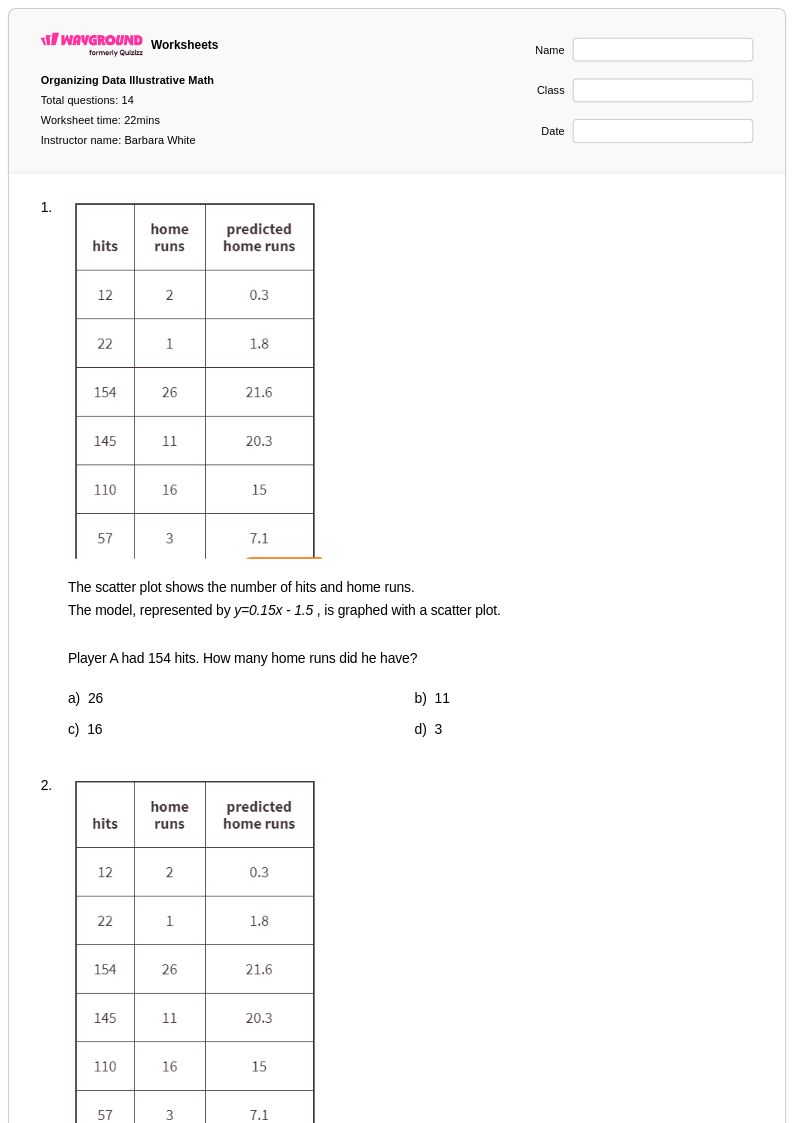
14 Q
8th
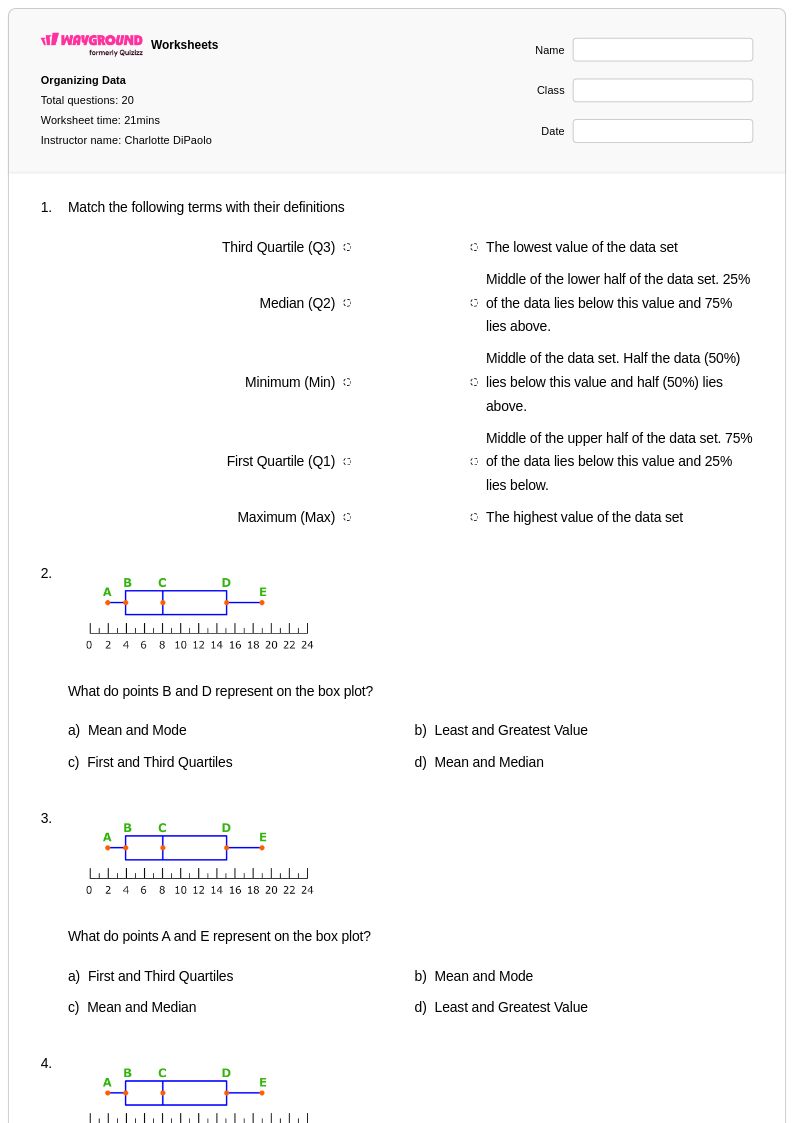
20 Q
9th - 12th
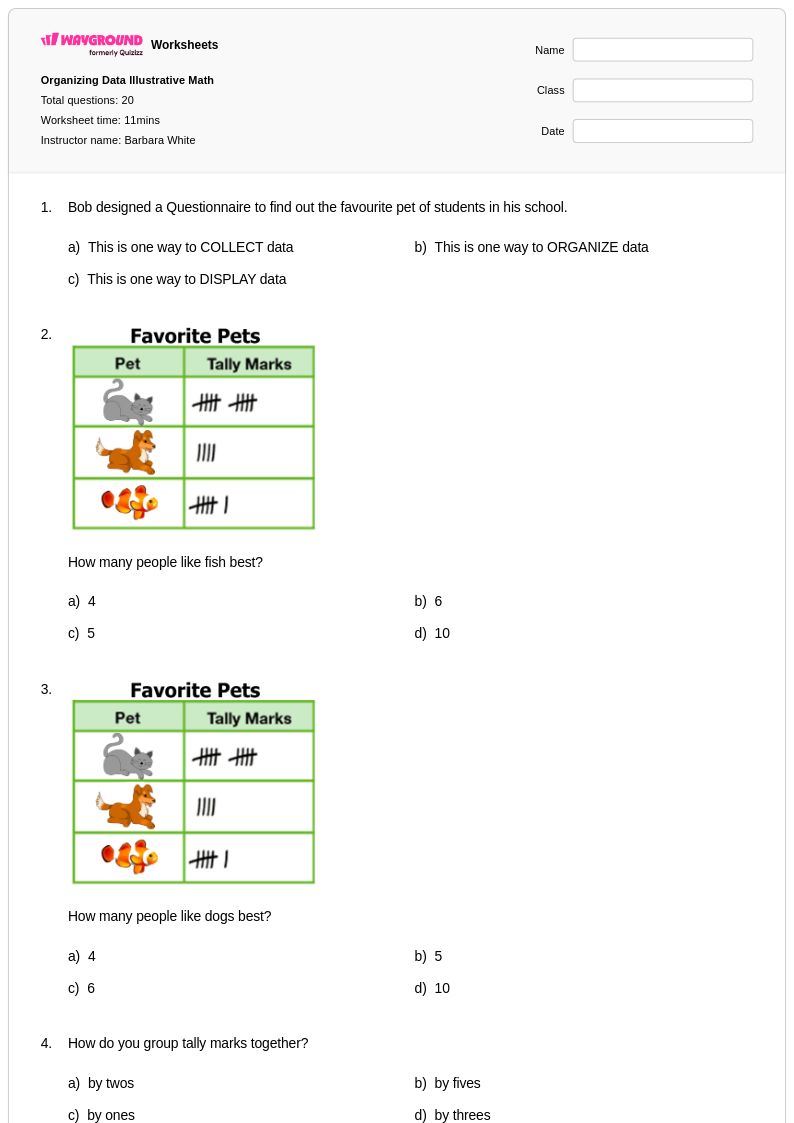
20 Q
4th
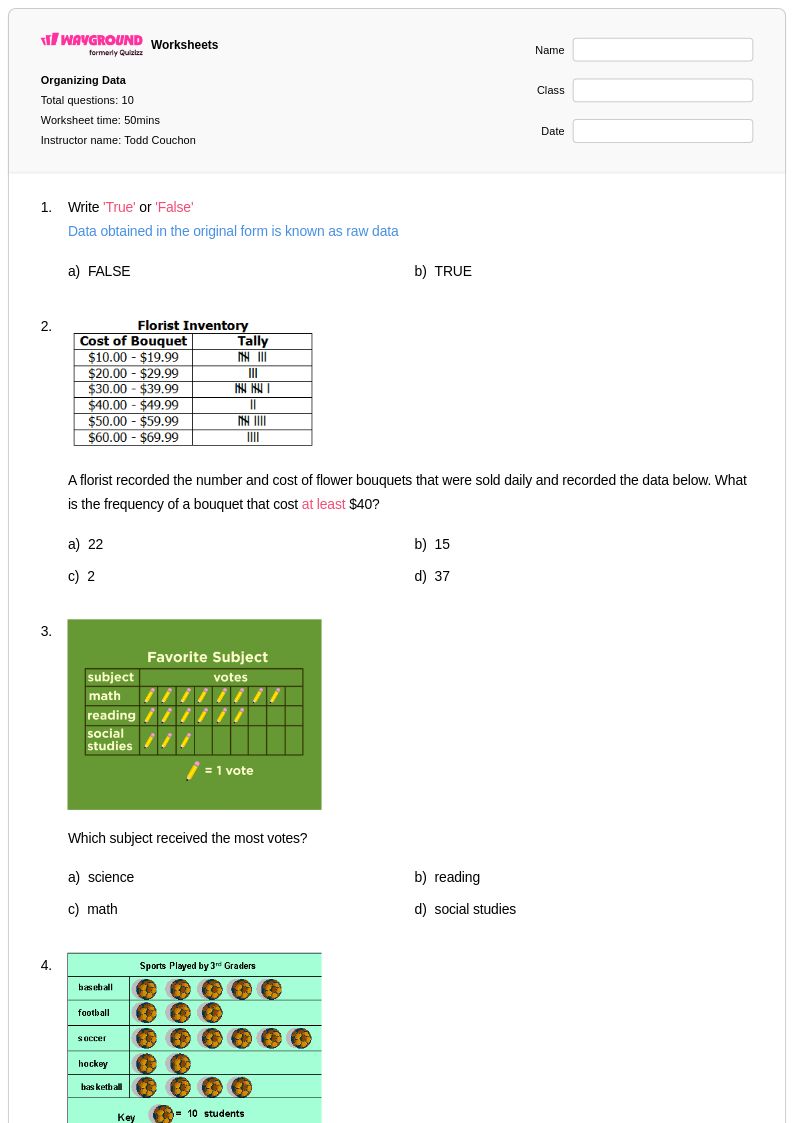
10 Q
8th
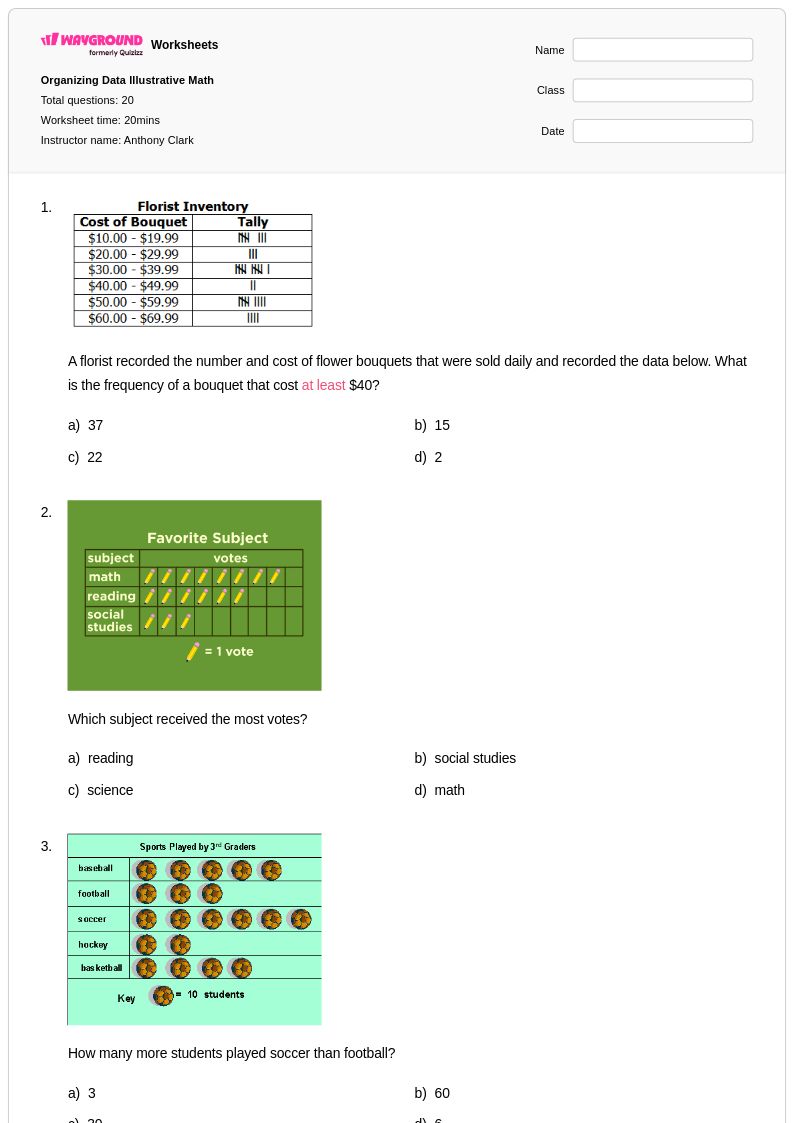
20 Q
8th - Uni
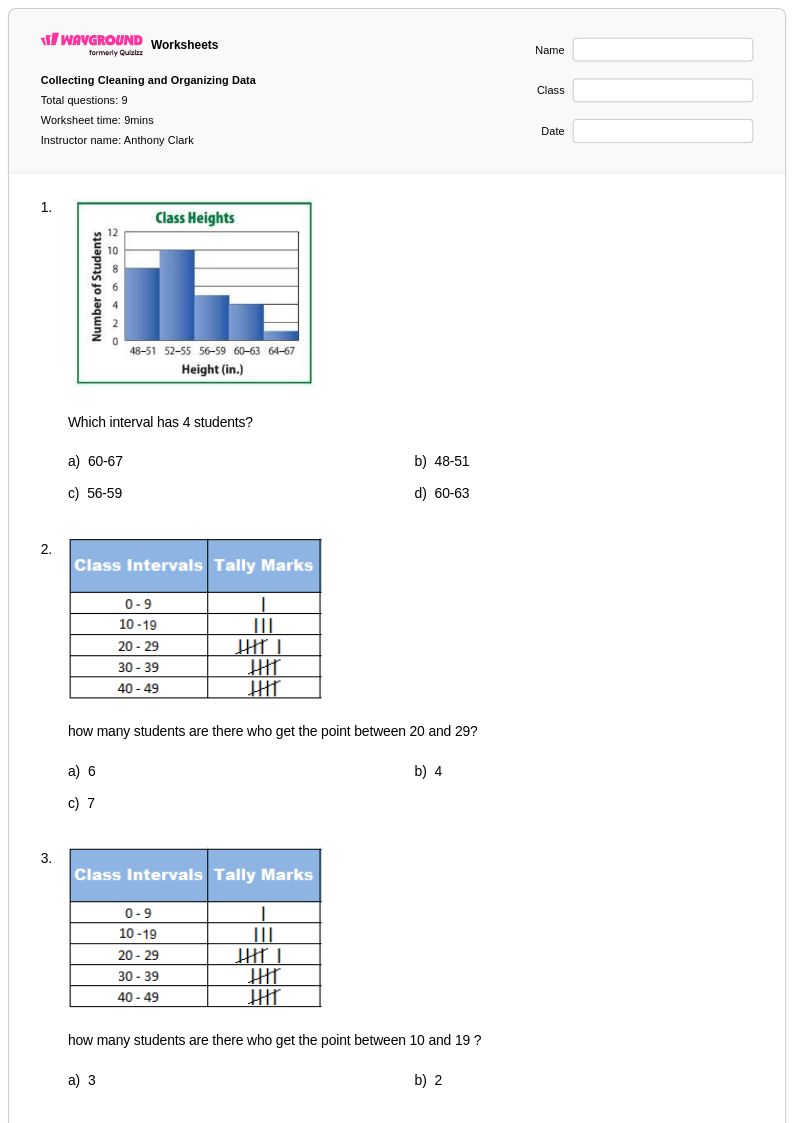
9 Q
7th - Uni
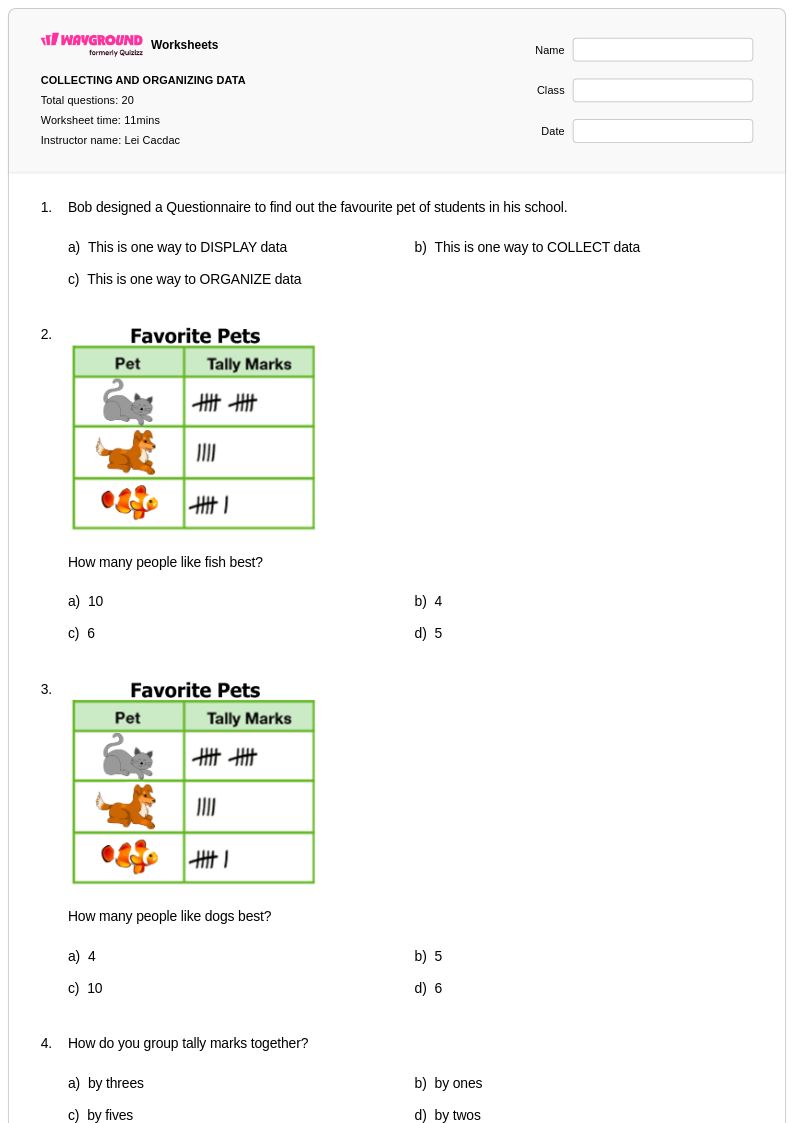
20 Q
4th
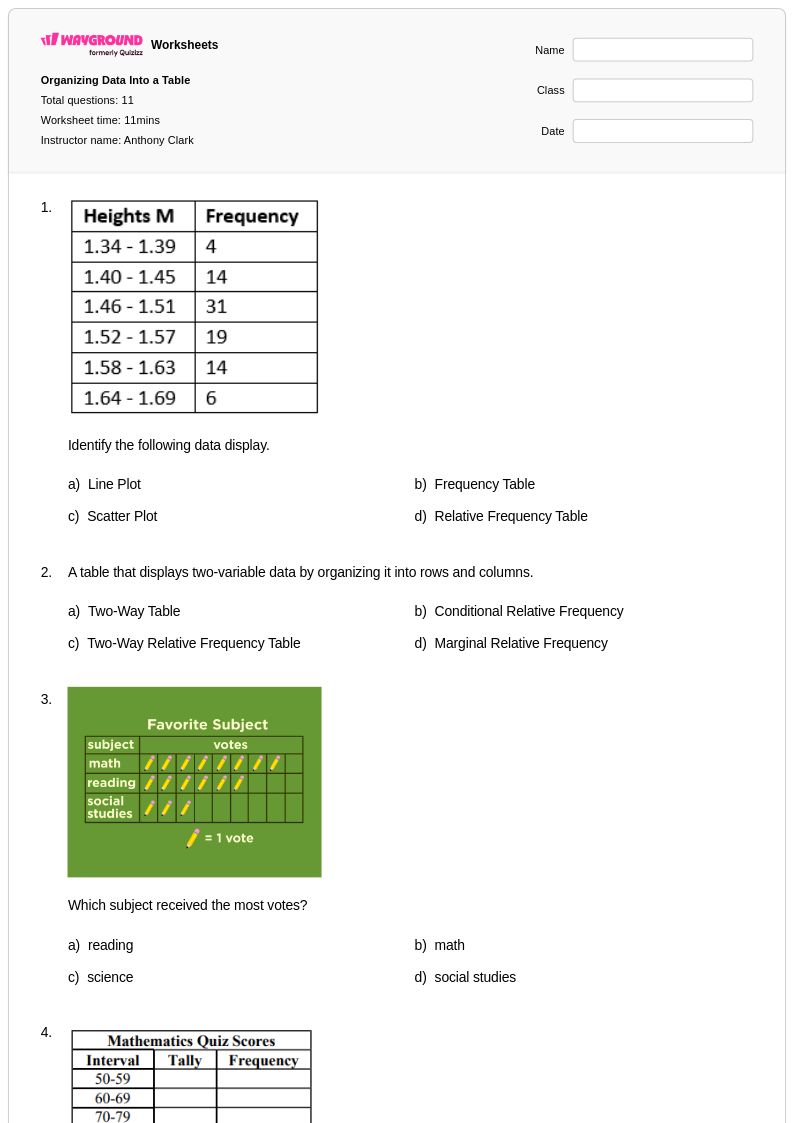
11 Q
8th - Uni
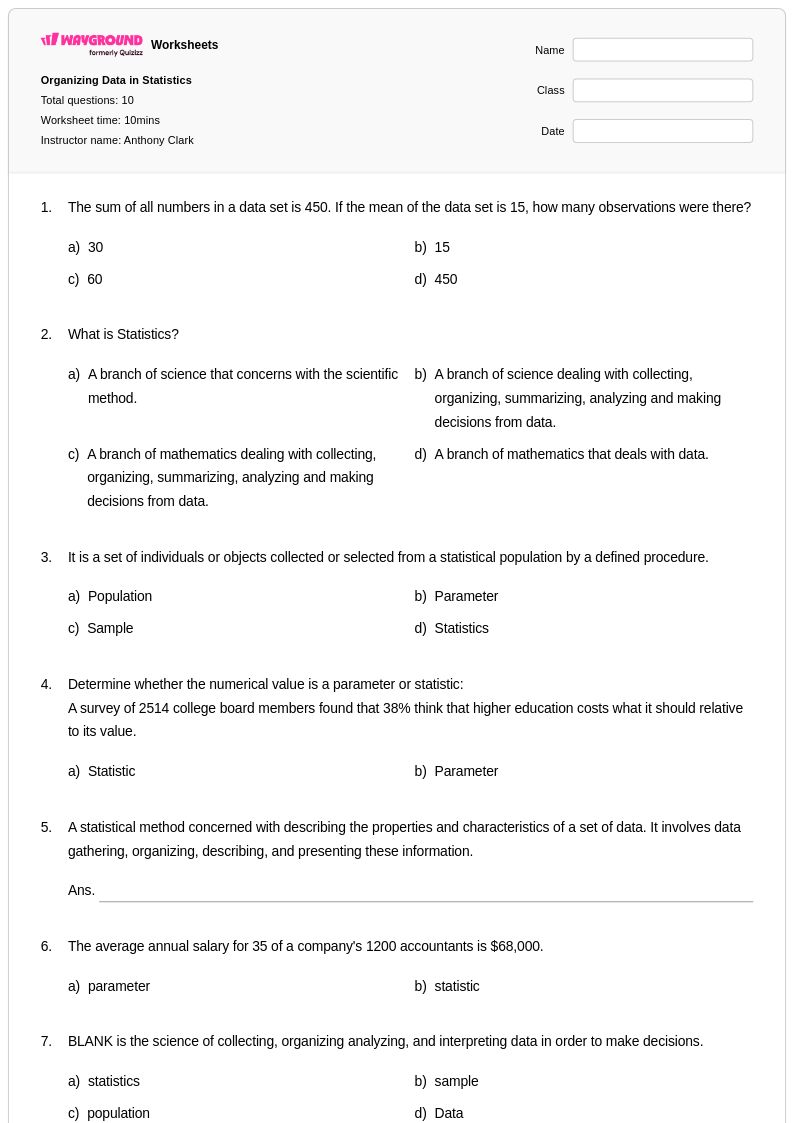
10 Q
12th - Uni
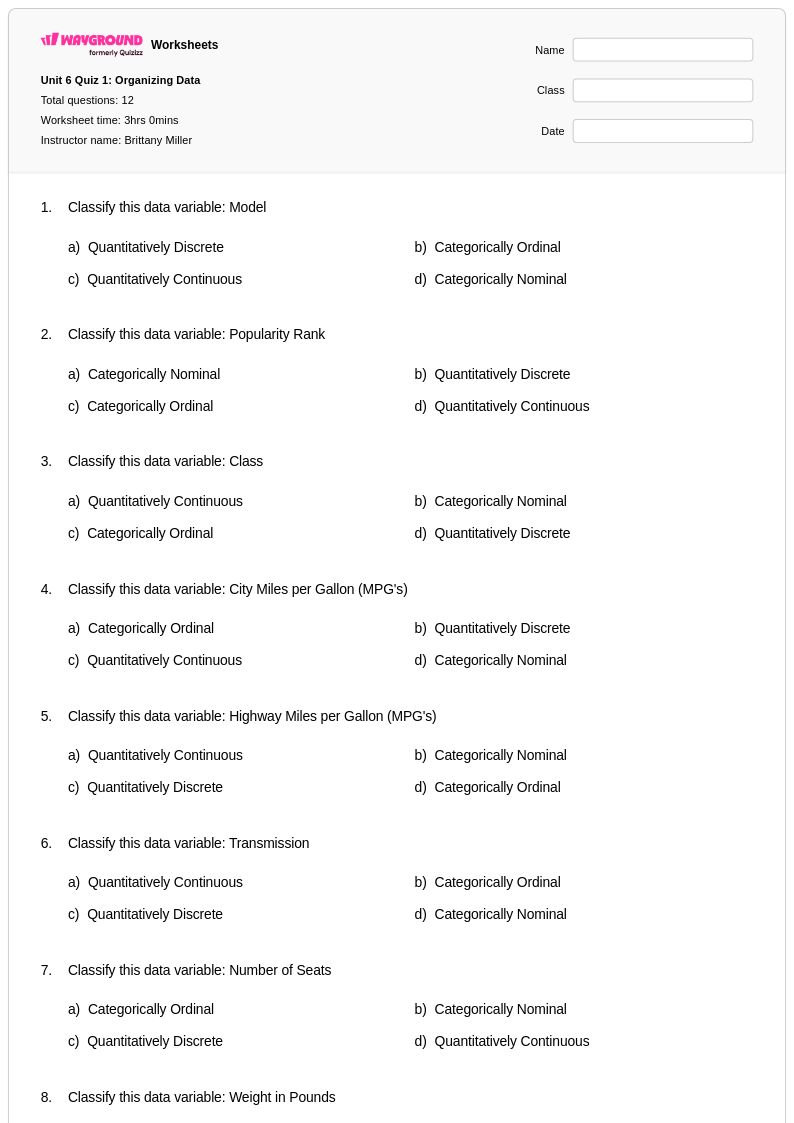
12 Q
11th - 12th
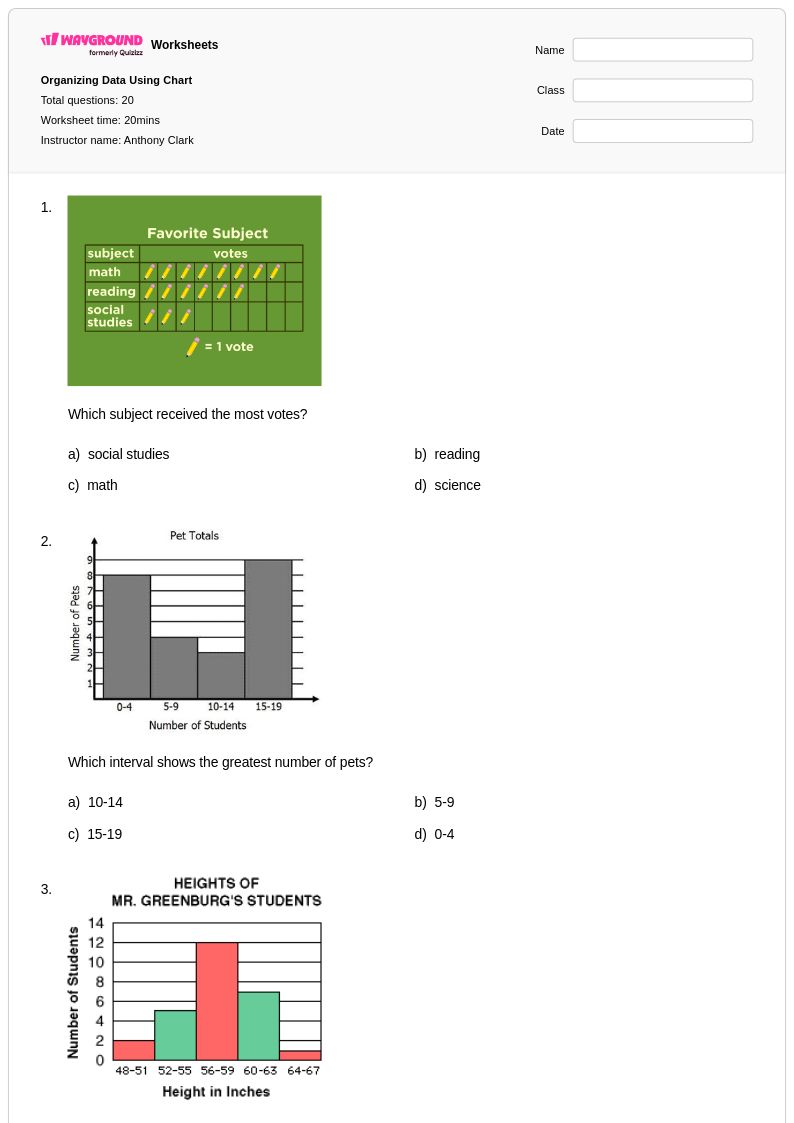
20 Q
6th - Uni
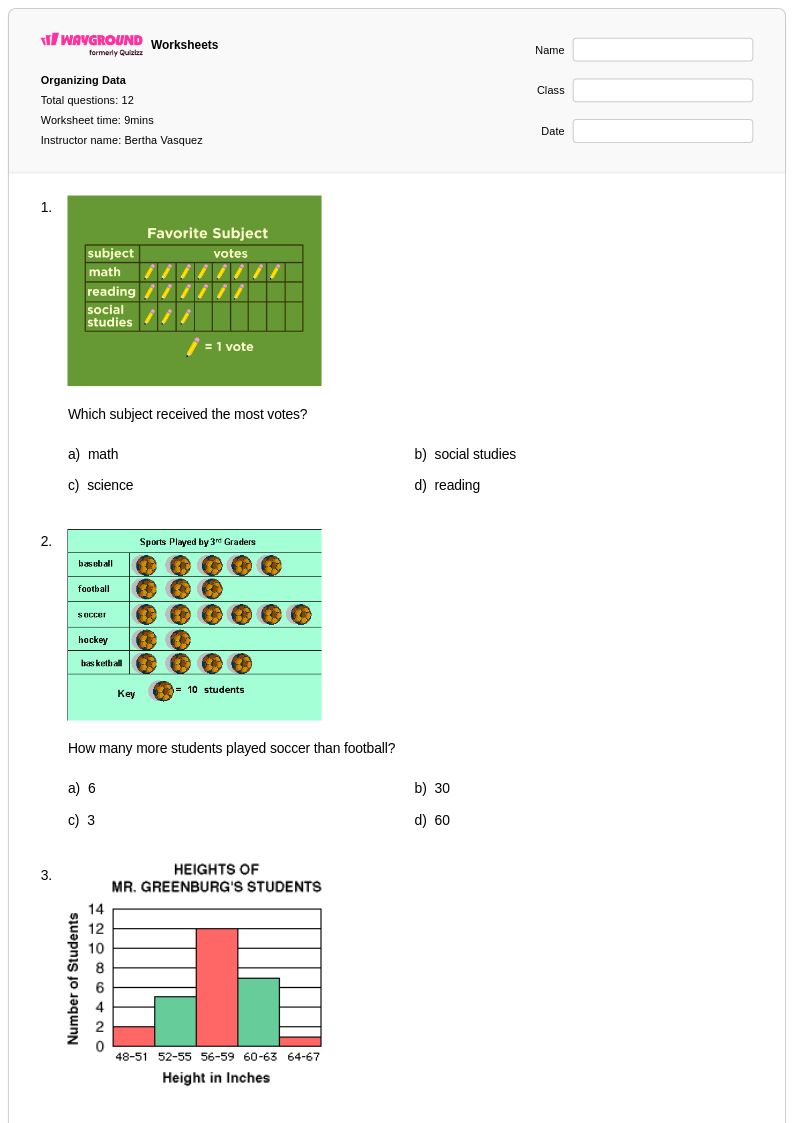
12 Q
5th
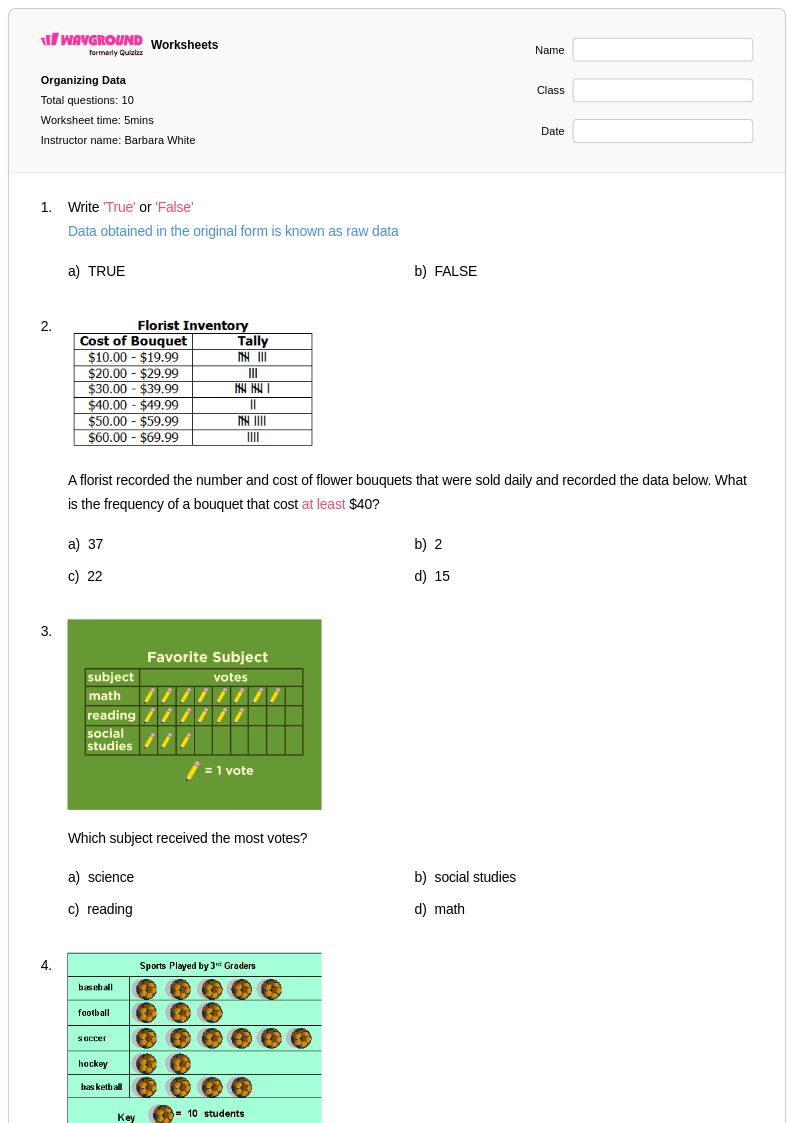
10 Q
8th
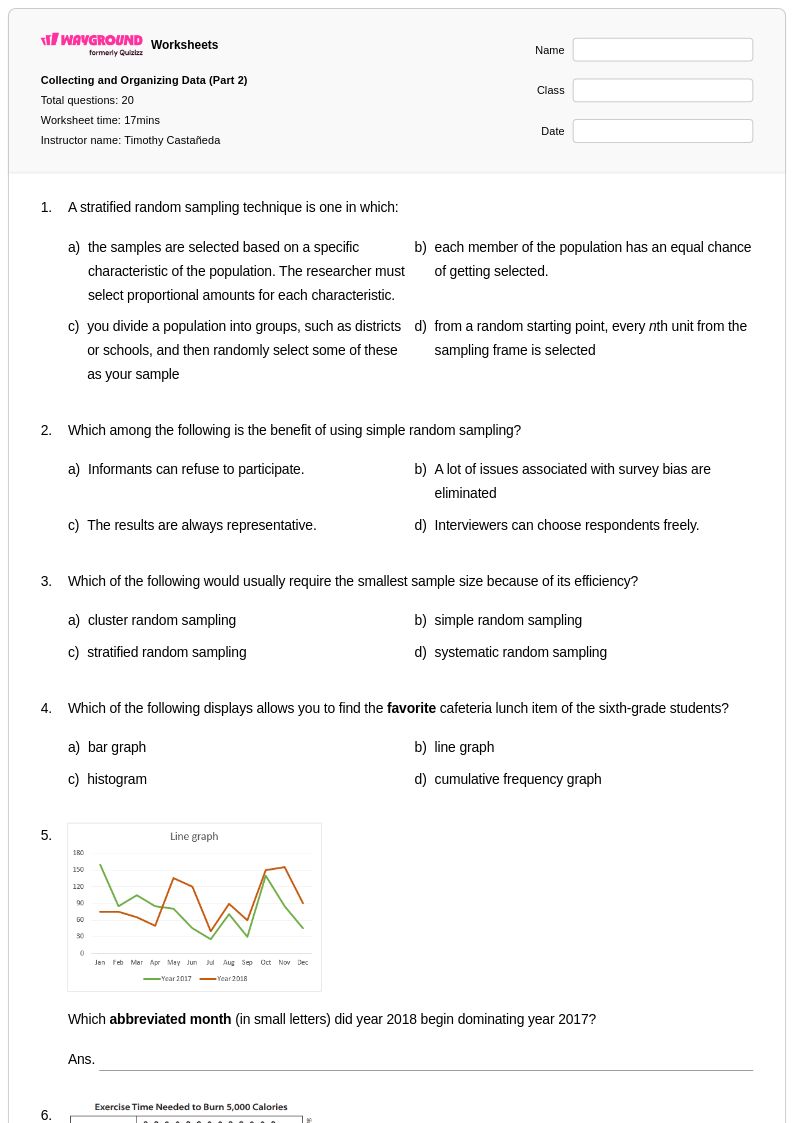
20 Q
11th
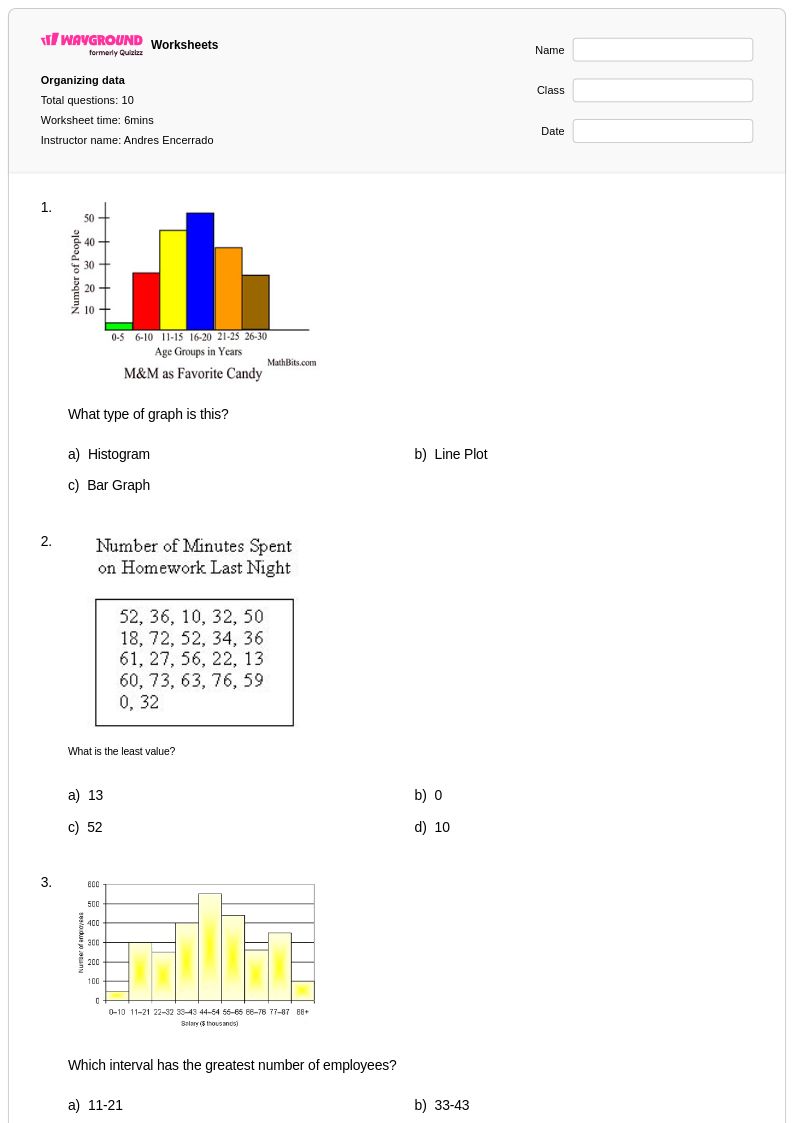
10 Q
KG - PD
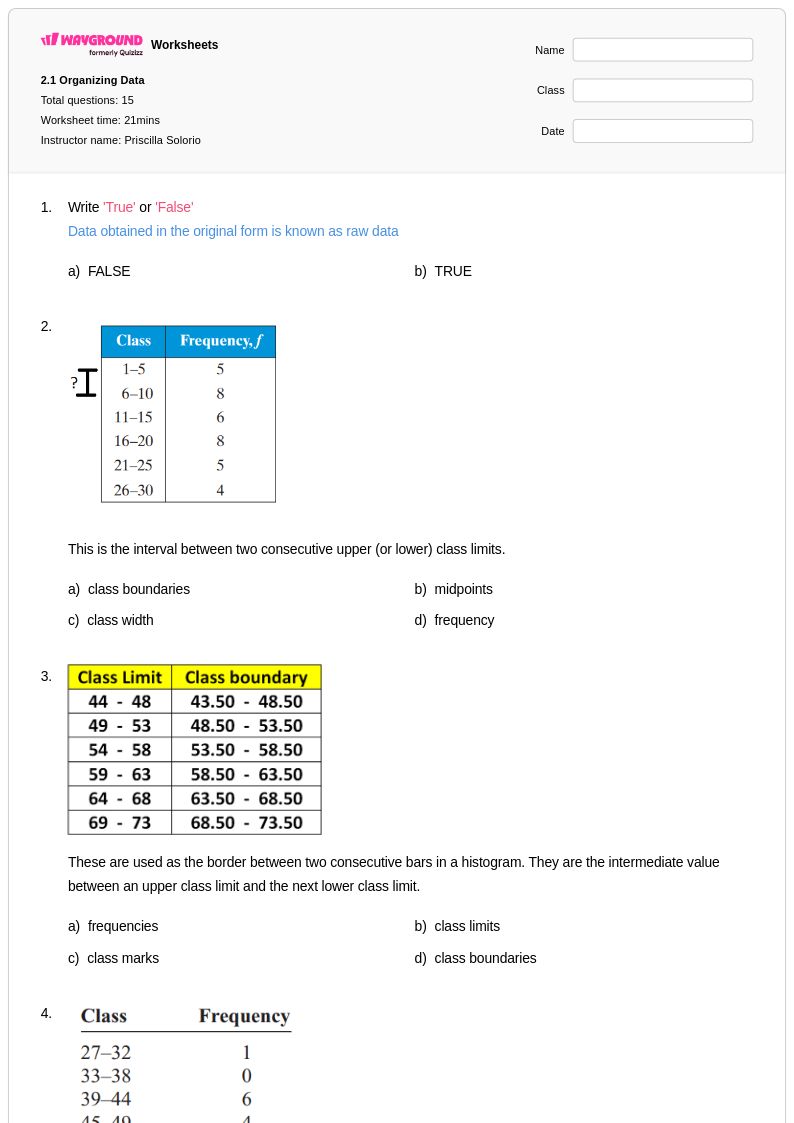
15 Q
12th
20 Q
7th - Uni
19 Q
5th - Uni
10 Q
9th - 12th
10 Q
9th - 10th
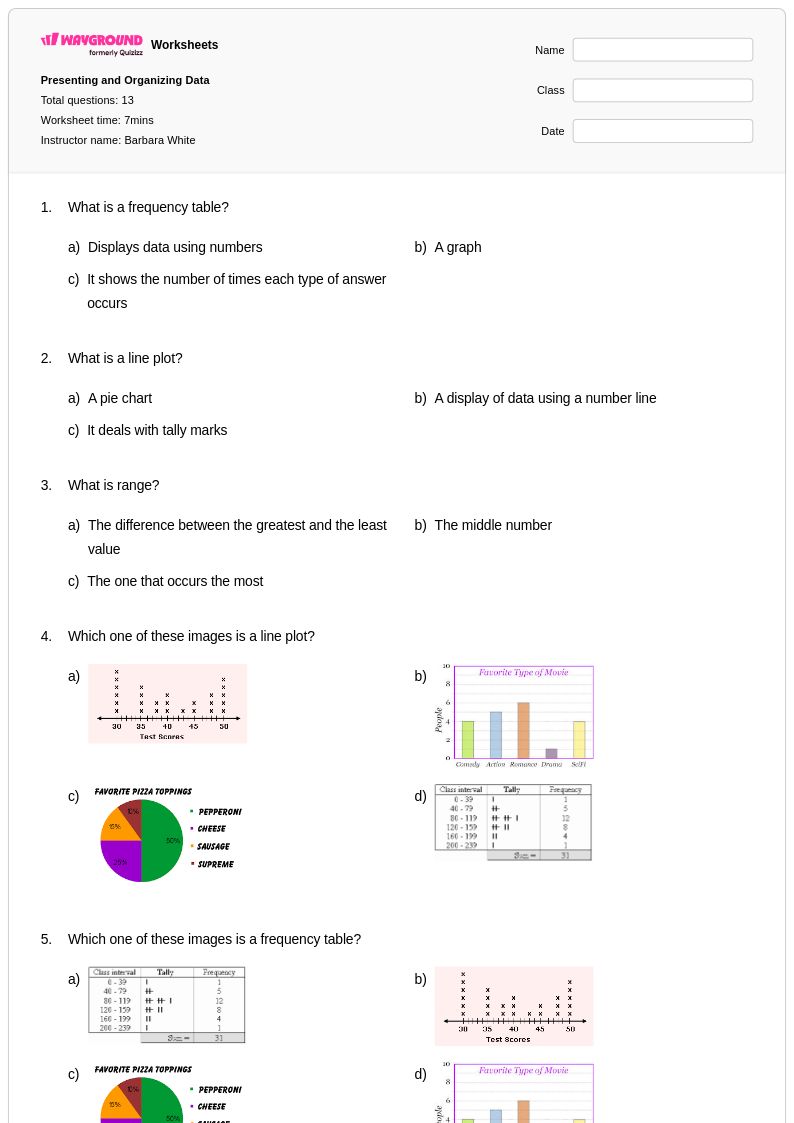
13 Q
6th
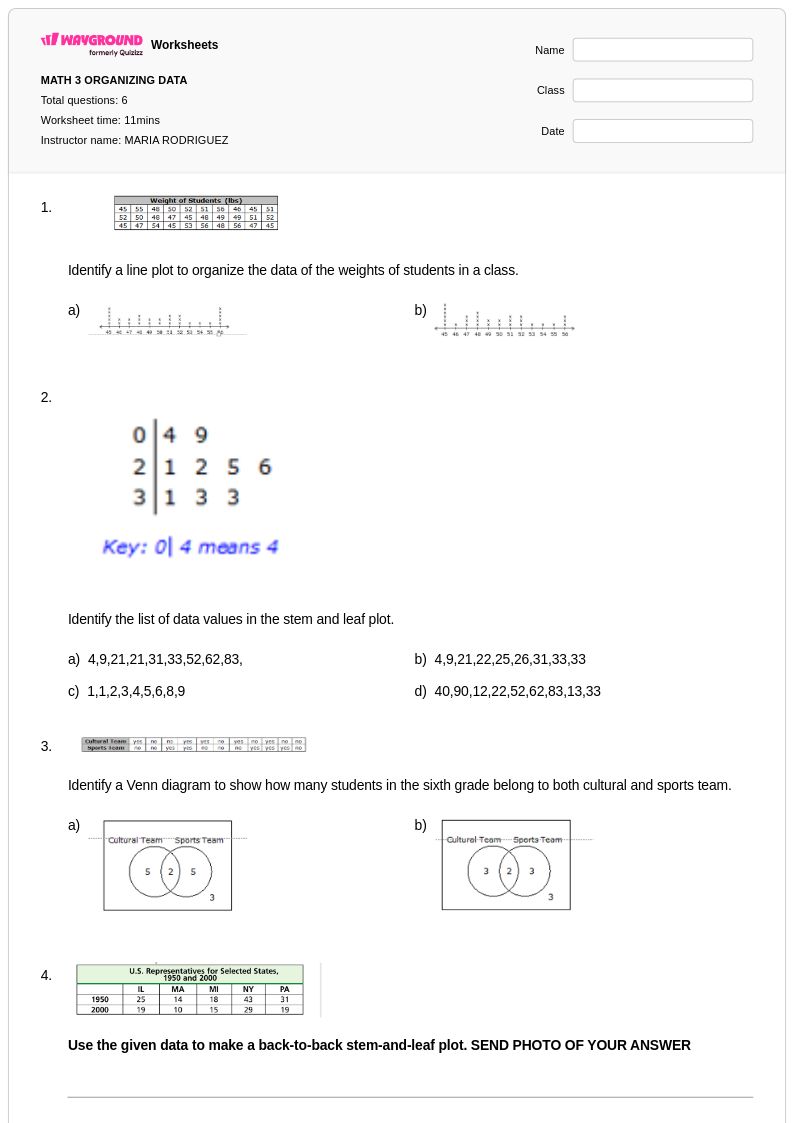
6 Q
8th - 9th
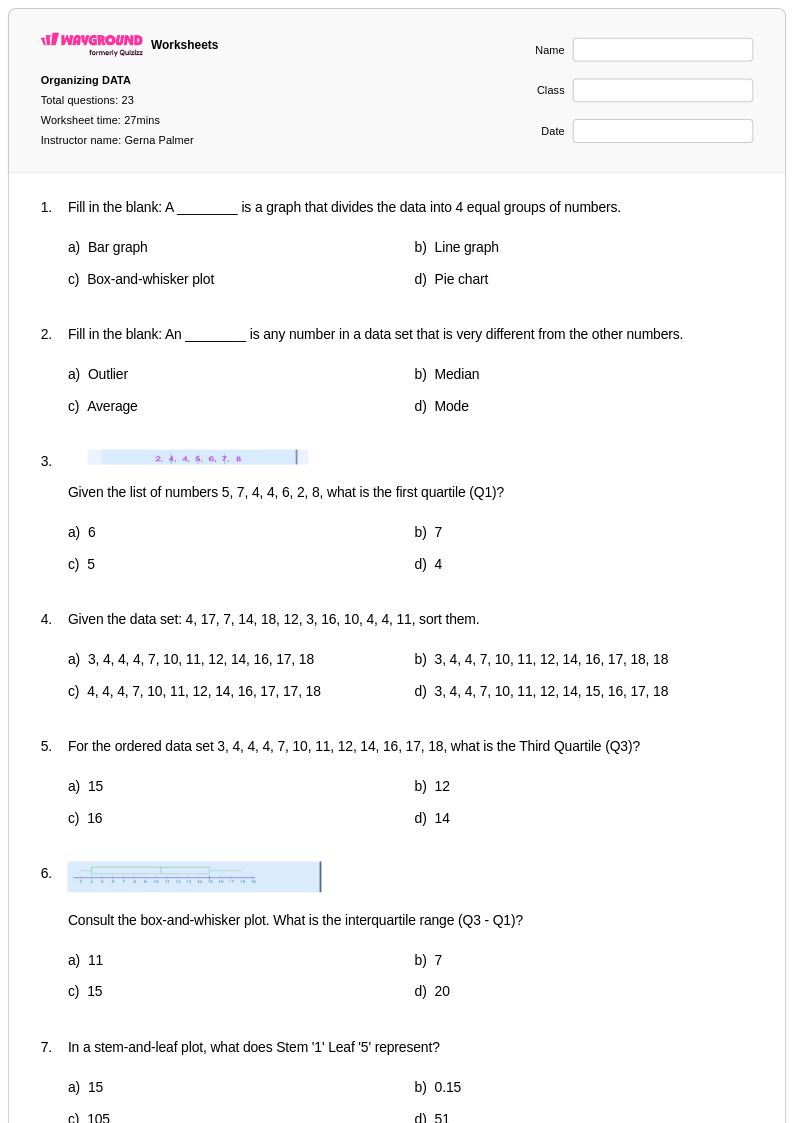
23 Q
8th
Explore Organizing Data Worksheets for kindergarten by Topic
Explore Other Subject Worksheets for kindergarten
Explore printable Organizing Data worksheets for Kindergarten
Organizing data worksheets for kindergarten students through Wayground (formerly Quizizz) introduce young learners to fundamental mathematical thinking by teaching them how to sort, categorize, and arrange information in meaningful ways. These carefully designed practice problems help kindergarteners develop critical analytical skills as they learn to group objects by color, size, shape, or other attributes, creating the foundation for more advanced data interpretation concepts. The comprehensive collection includes free printable activities that guide students through hands-on sorting exercises, simple graphing tasks, and basic data collection projects, all supported by detailed answer keys that enable teachers and parents to provide effective feedback and track student progress.
Wayground (formerly Quizizz) empowers educators with access to millions of teacher-created organizing data resources specifically tailored for kindergarten mathematics instruction. The platform's robust search and filtering capabilities allow teachers to quickly locate age-appropriate worksheets that align with curriculum standards and match their students' developmental needs. These versatile materials are available in both printable pdf format and interactive digital versions, providing flexibility for classroom instruction, homework assignments, and differentiated learning approaches. Teachers can easily customize existing worksheets or create new variations to support remediation for struggling learners, provide enrichment opportunities for advanced students, and ensure consistent skill practice across diverse learning environments.
FAQs
How do I introduce sorting and categorizing to kindergarteners?
What are good sorting activities for kindergarten students?
What shows that a kindergartener understands how to organize data?
How can I use these kindergarten sorting worksheets?
What do kindergarteners learn about data in the curriculum?