Free Printable Reading a Map Worksheets for Grade 3
Discover free Grade 3 reading a map worksheets and printables from Wayground that help students master essential map skills through engaging practice problems, complete with answer keys and downloadable PDFs.
Explore printable Reading a Map worksheets for Grade 3
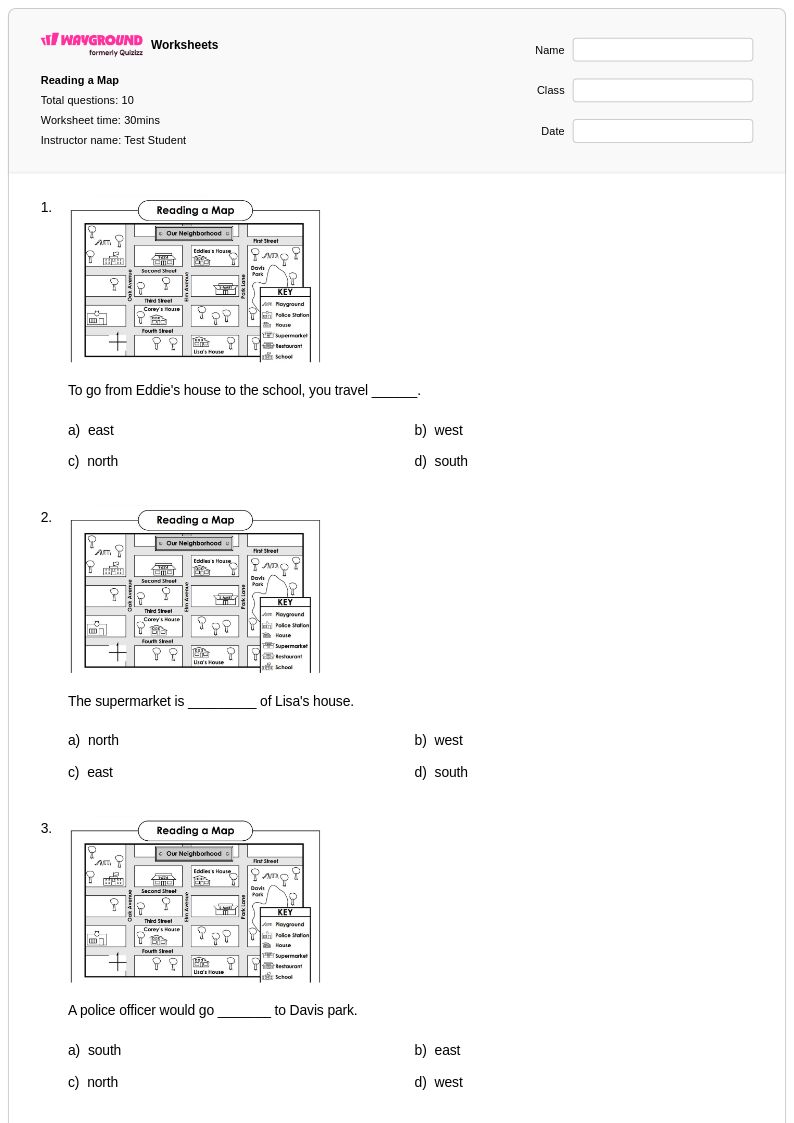
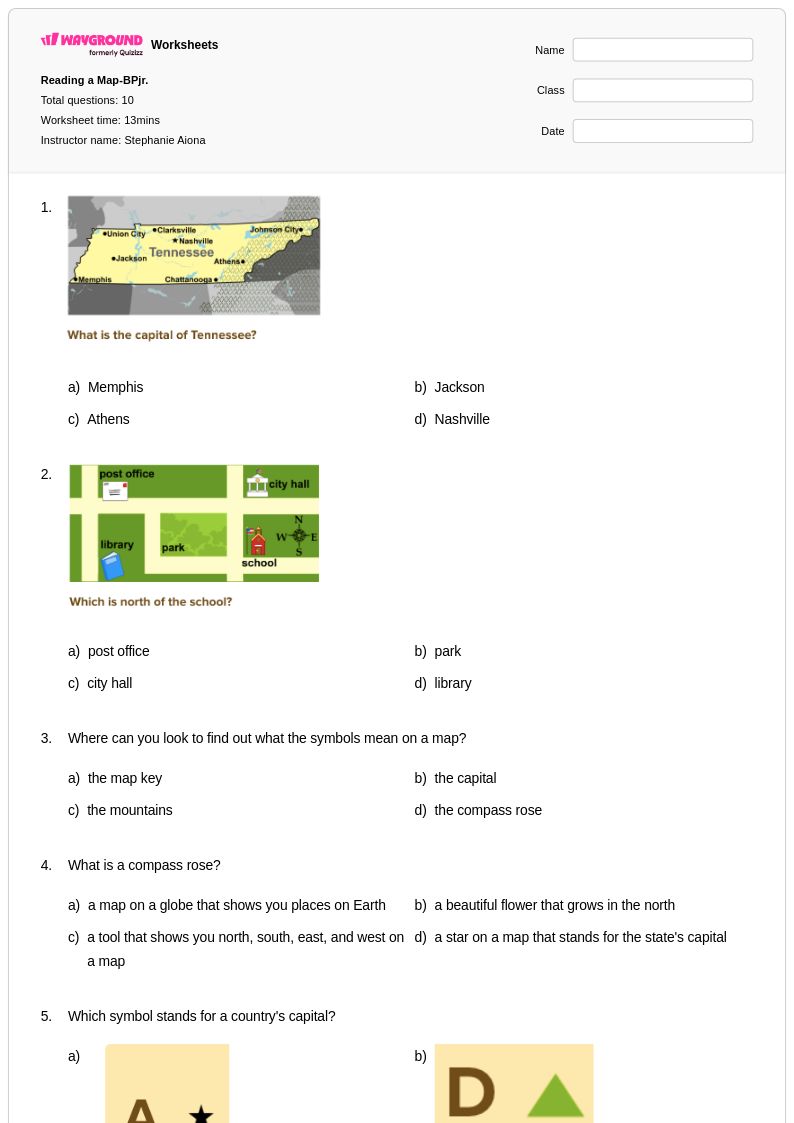
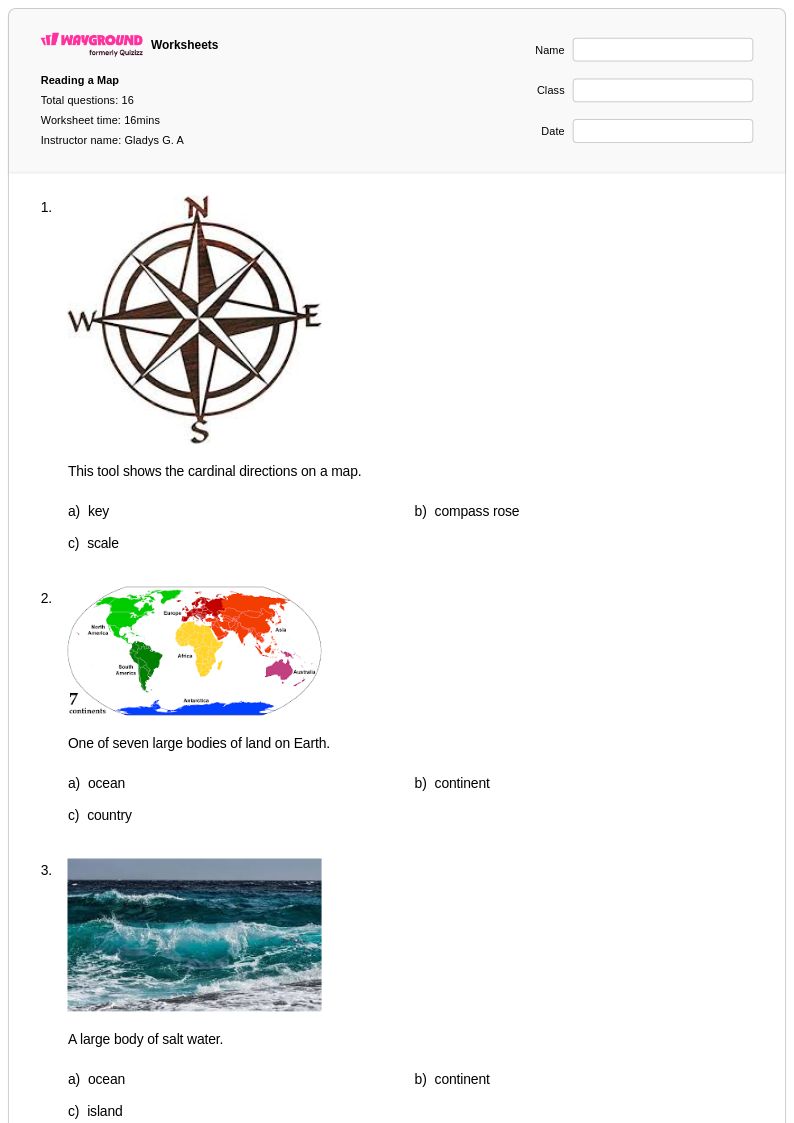
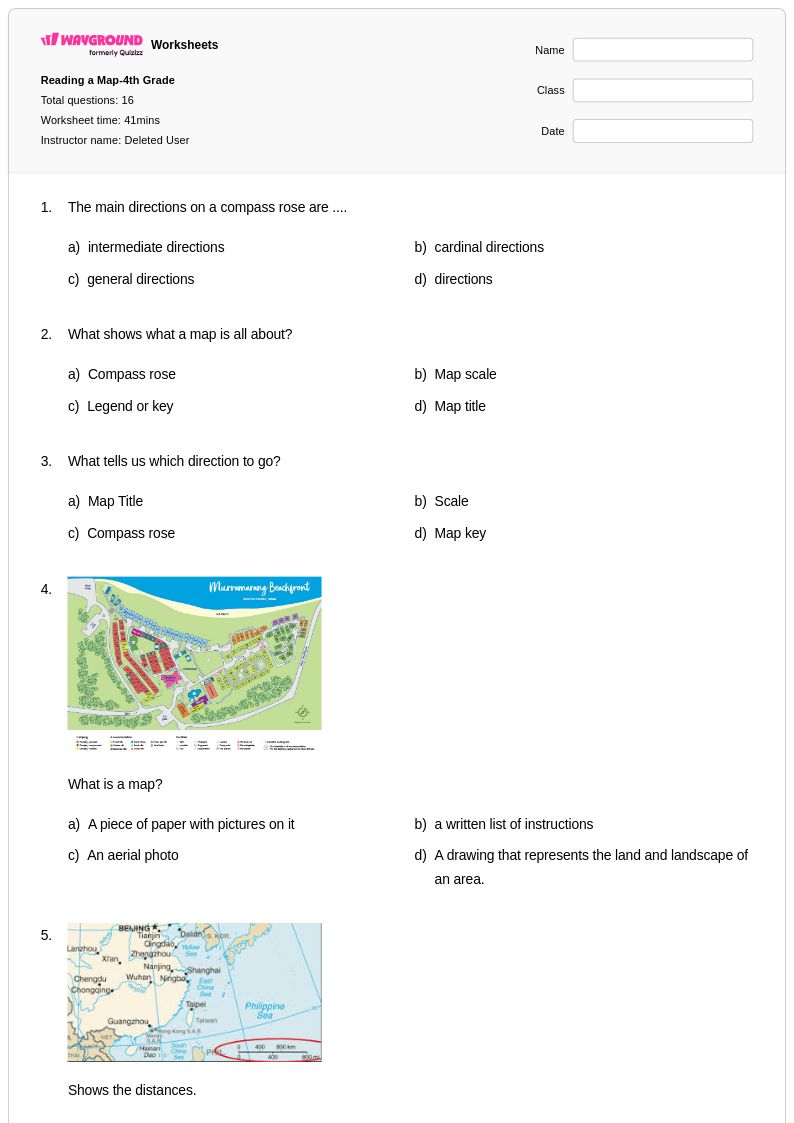
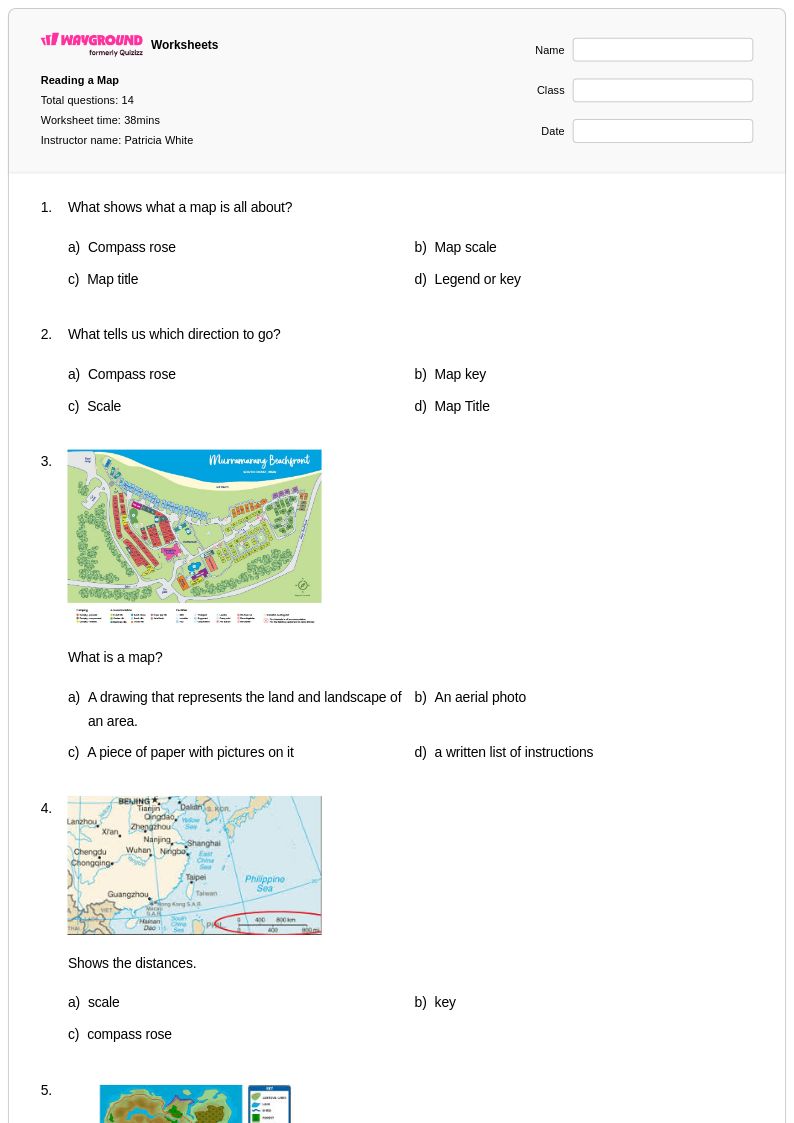
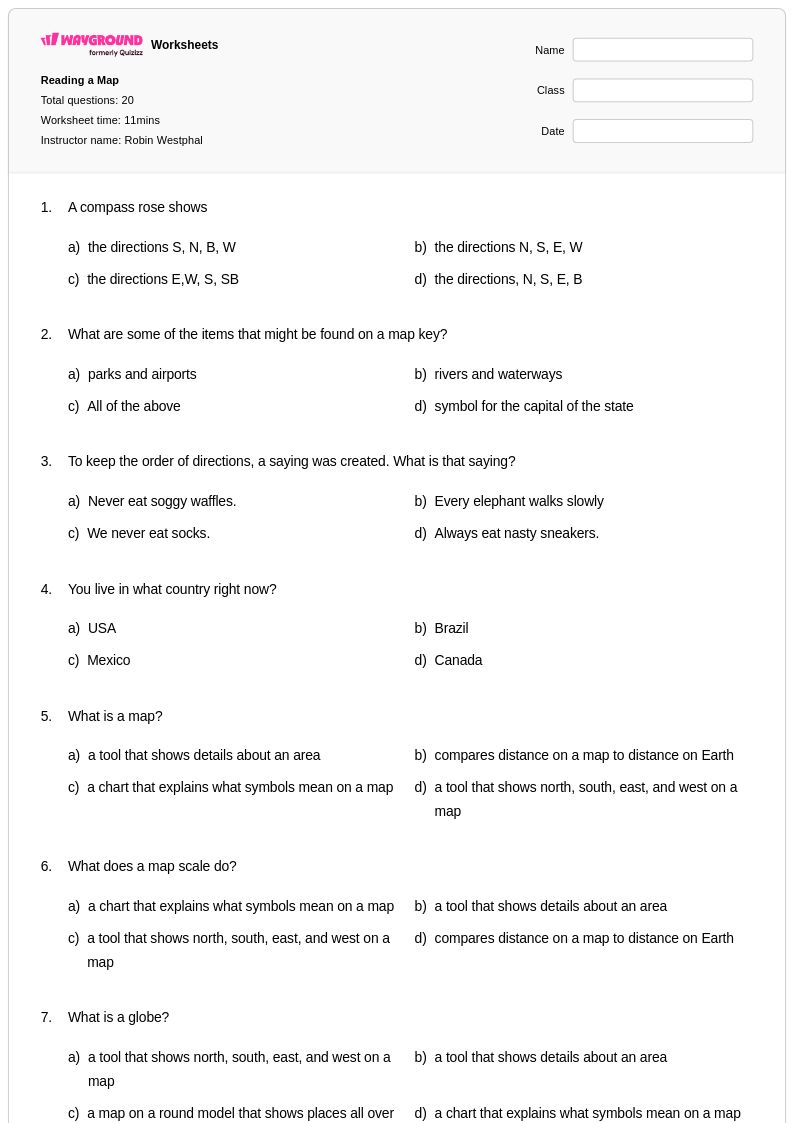
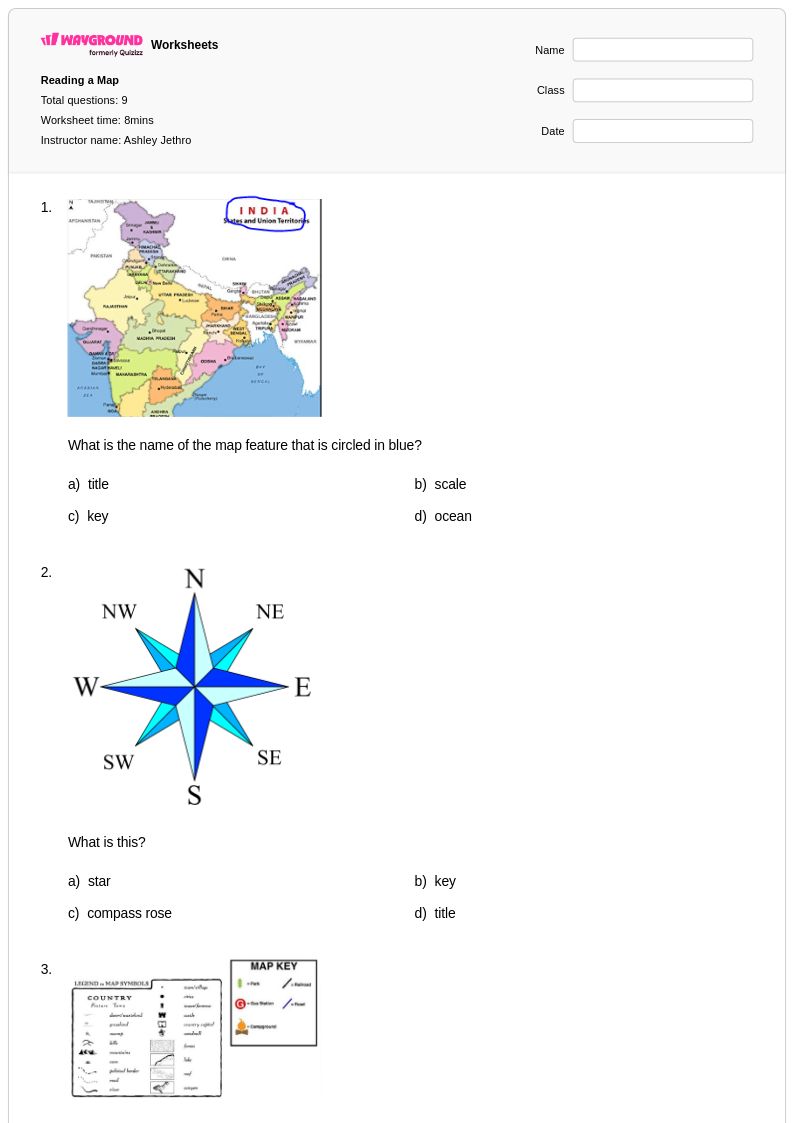
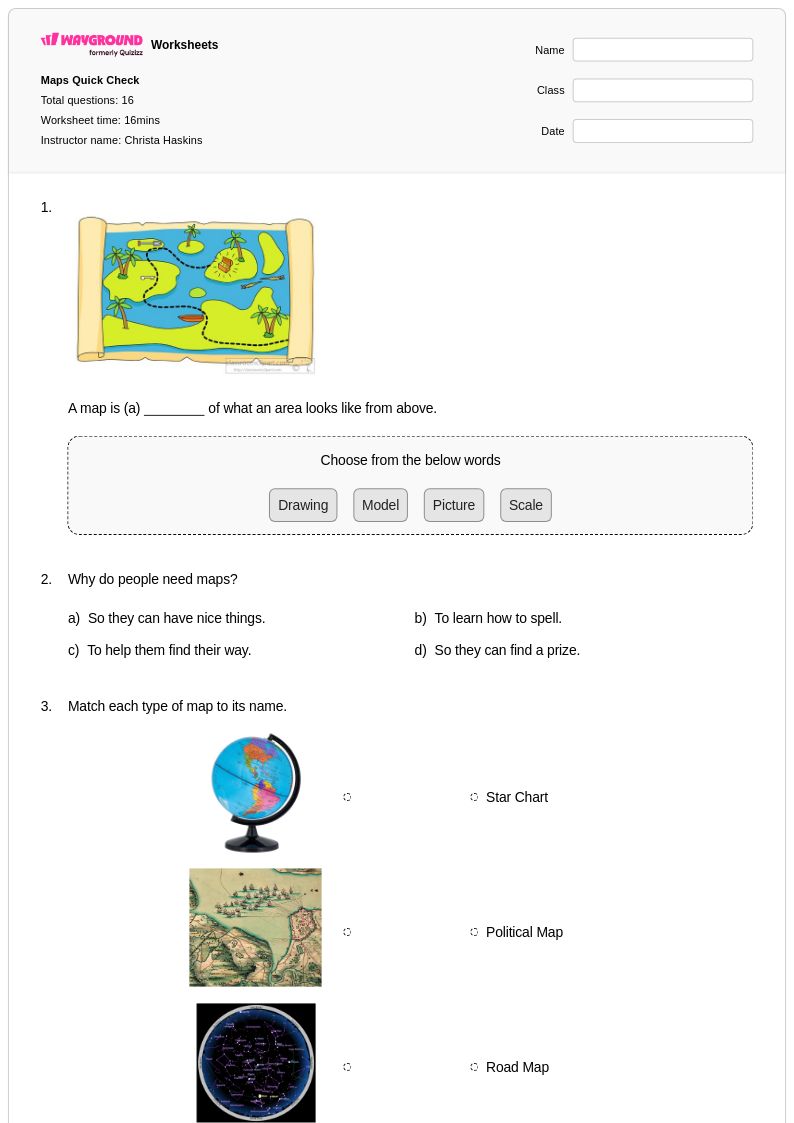
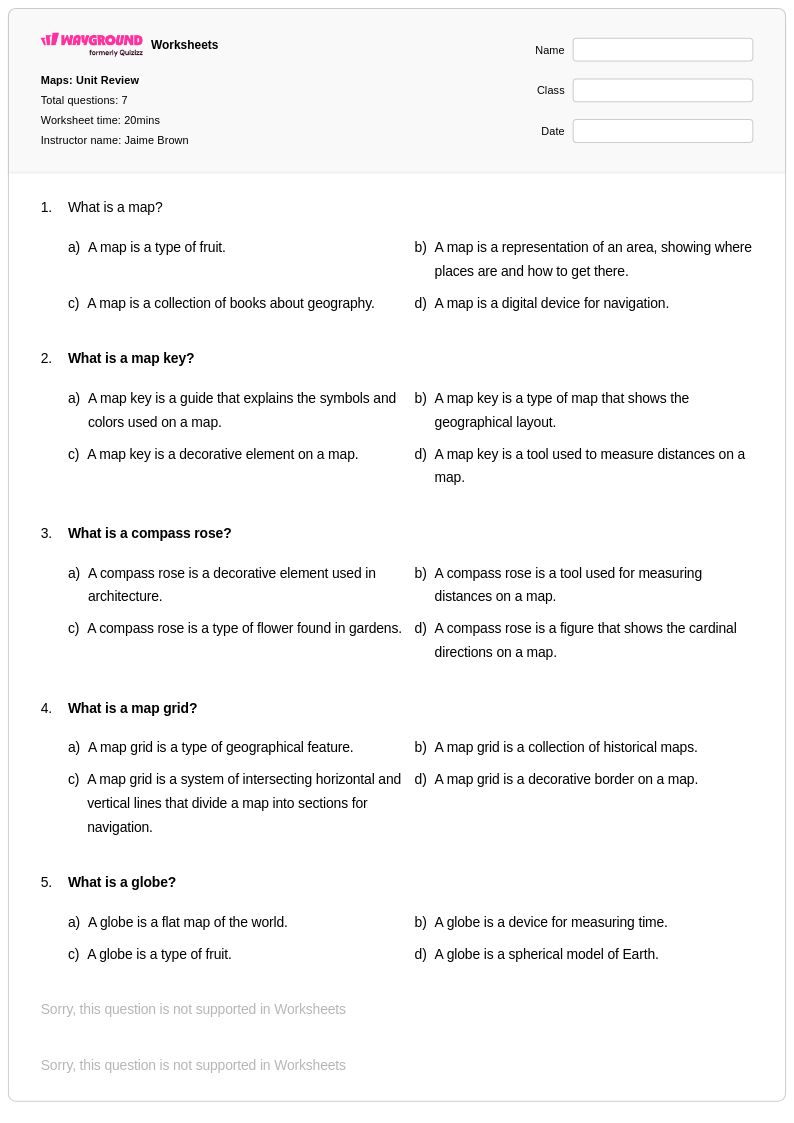
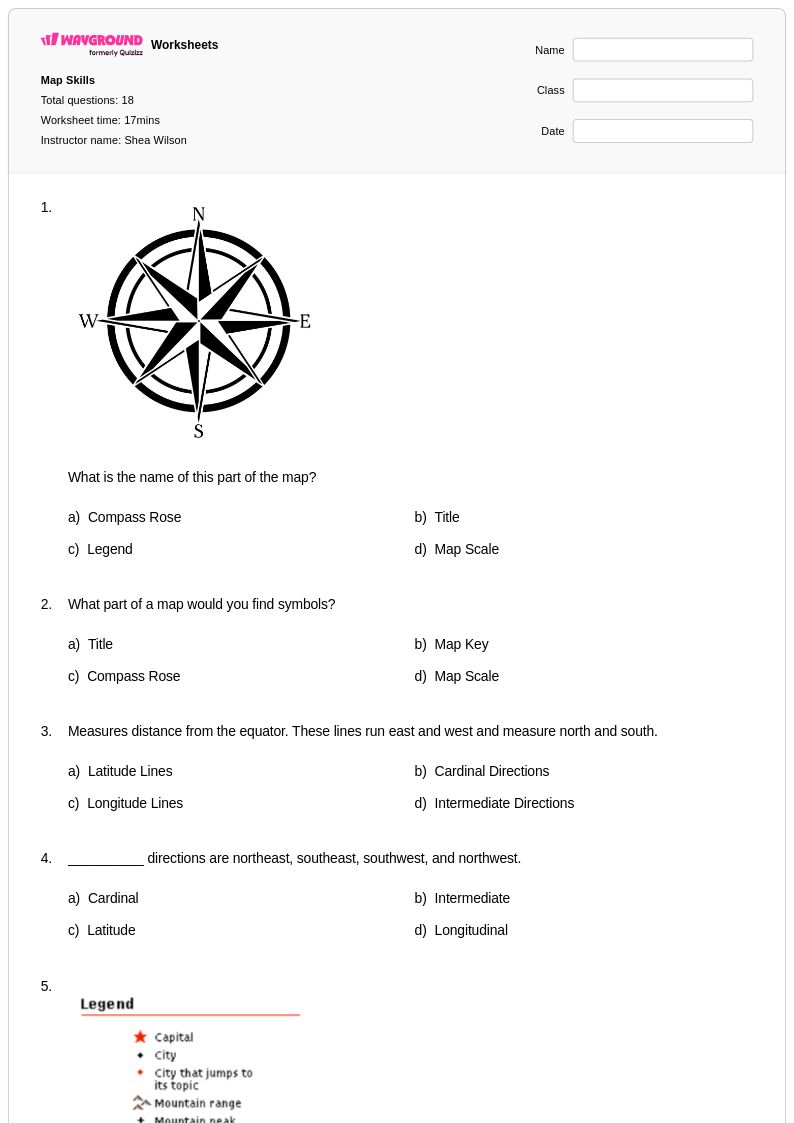
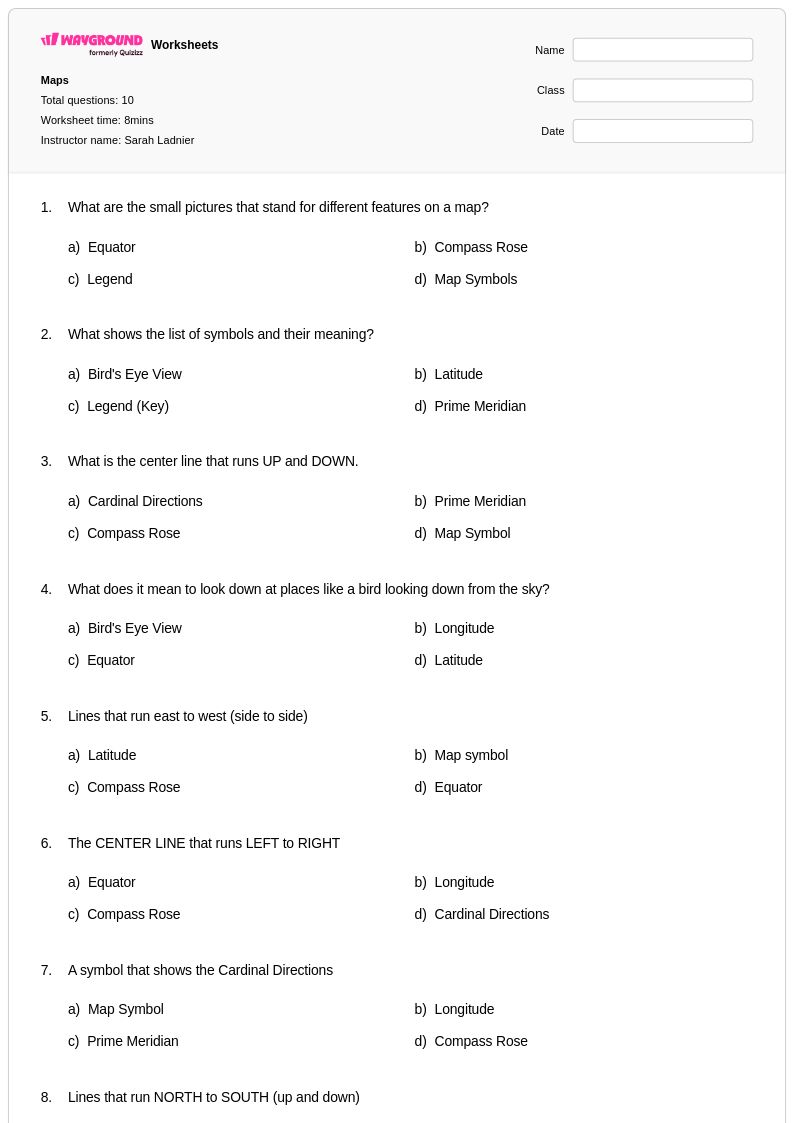
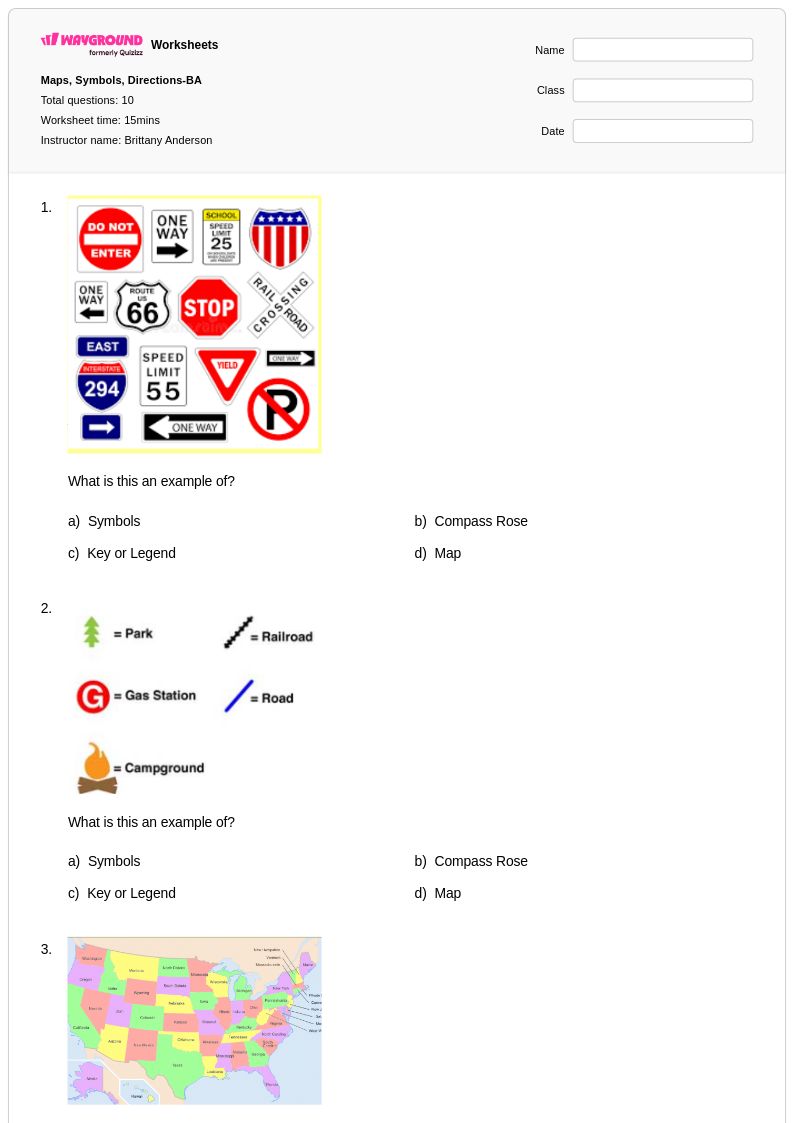
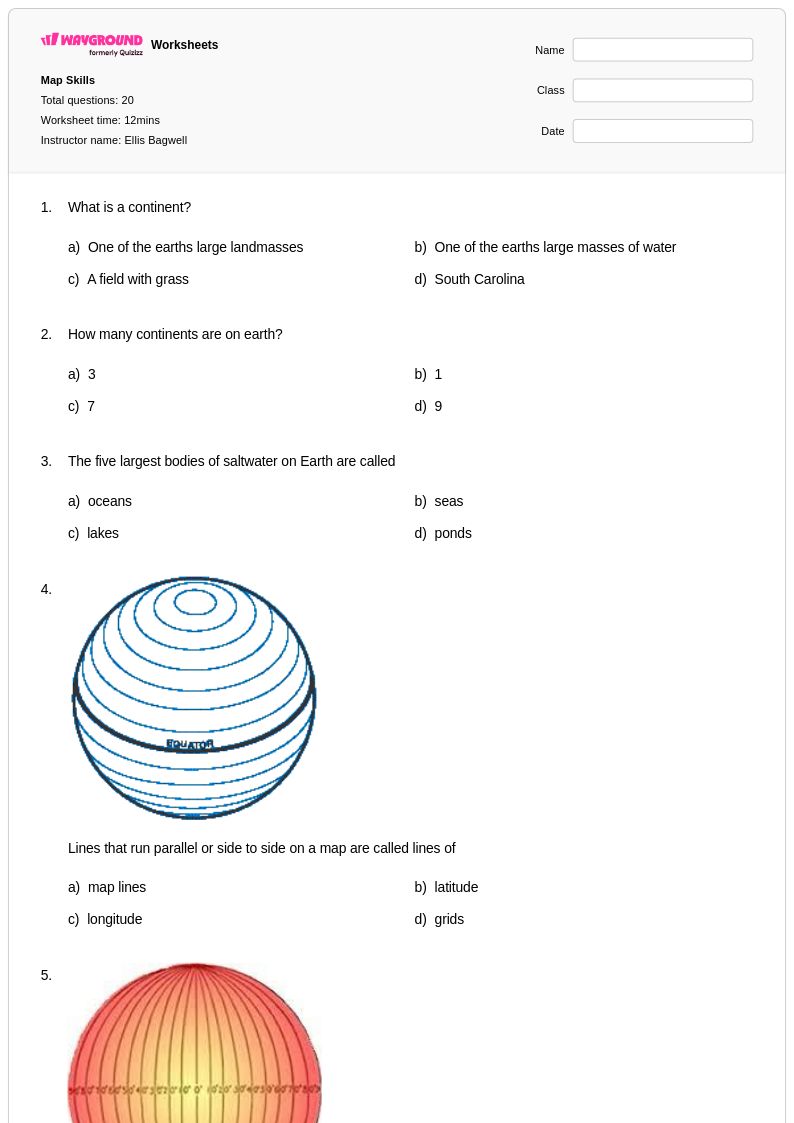
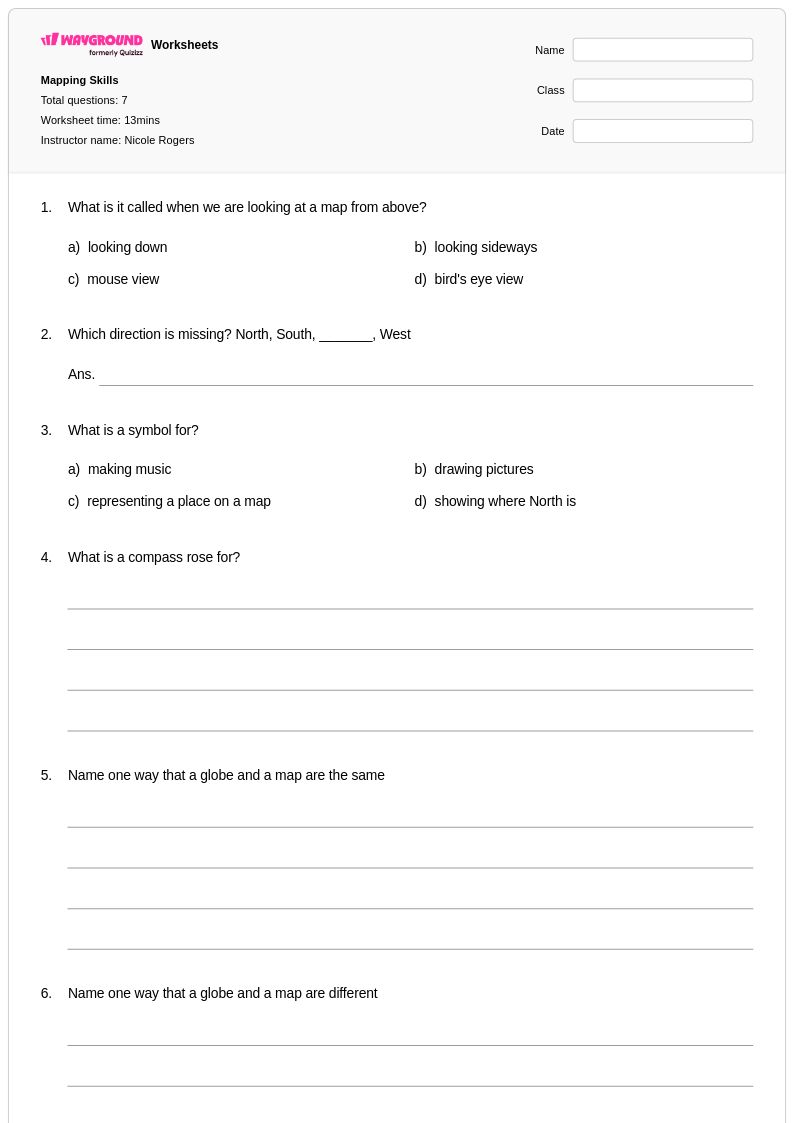
Reading a map worksheets for Grade 3 students available through Wayground (formerly Quizizz) provide essential foundational skills that help young learners navigate and interpret geographical information with confidence. These carefully designed practice problems introduce third-grade students to fundamental map reading concepts including compass directions, map symbols, legends, and basic scale understanding. The comprehensive collection strengthens spatial reasoning abilities while teaching students to locate places, identify geographical features, and understand how maps represent real-world locations. Each free printable worksheet includes an answer key to support independent learning and self-assessment, with pdf formats ensuring easy classroom distribution and home practice opportunities.
Wayground (formerly Quizizz) empowers educators with millions of teacher-created resources specifically designed for Grade 3 map reading instruction, featuring robust search and filtering capabilities that allow teachers to quickly locate worksheets aligned with state geography standards. The platform's differentiation tools enable instructors to customize materials for diverse learning needs, from remediation activities for struggling students to enrichment exercises that challenge advanced learners. Teachers can access these resources in both printable and digital formats, including downloadable pdf versions, making lesson planning more efficient whether for in-person or remote instruction. The extensive worksheet library supports systematic skill development through varied practice opportunities, helping educators assess student progress in map reading while providing targeted interventions where needed.
FAQs
How do I teach map reading skills to students?
Start by introducing the five key map elements: title, legend, compass rose, scale, and grid. Begin with simple political maps before progressing to physical and topographic maps, giving students repeated exposure to interpreting symbols, measuring distance using scale, and identifying cardinal and intermediate directions. Scaffolding these skills in sequence helps students build spatial reasoning gradually rather than being overwhelmed by complex cartographic information all at once.
What exercises help students practice reading a map?
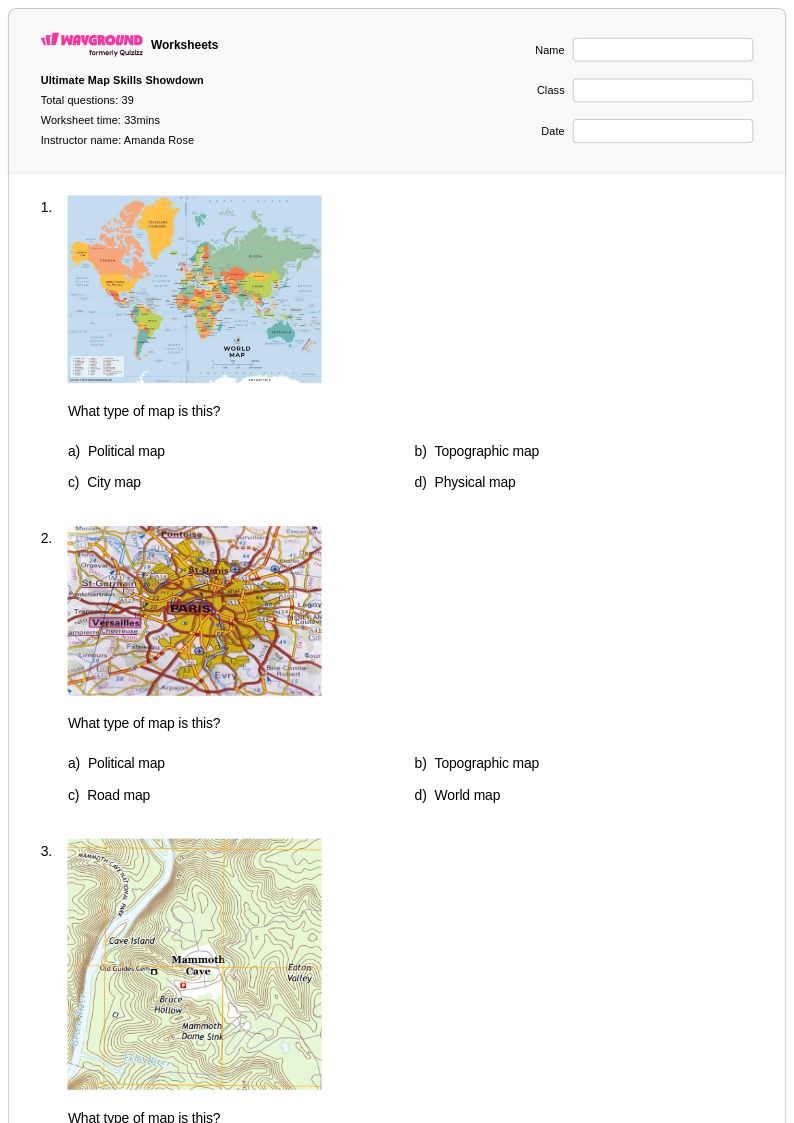
Effective map reading practice includes exercises where students decode legend symbols to identify features, calculate real-world distances using a map scale, locate places using grid coordinates, and trace routes using directional language. Worksheets that incorporate political, physical, and topographic maps side by side help students understand how different map types represent the same geographic information in different ways, reinforcing versatility in spatial interpretation.
What mistakes do students commonly make when reading a map?
A frequent error is ignoring the map scale, leading students to misjudge distances or assume all maps are drawn at the same proportion. Students also confuse cardinal and intermediate directions, especially when the compass rose is rotated or absent. Another common misconception is treating the legend as optional, causing students to misidentify physical features, boundaries, or thematic data that are only defined there.
How do I differentiate map reading instruction for diverse learners?
For students who struggle with visual complexity, reduce the number of map features introduced at one time and use large-print or high-contrast maps. On Wayground, teachers can enable Read Aloud so questions and directions are read to students with decoding difficulties, and can apply reduced answer choices to lower cognitive load for selected students. Extended time settings are also available per student, ensuring that those who need more processing time can complete map activities without penalization.
How do I use Wayground's reading a map worksheets in my classroom?
Wayground's reading a map worksheets are available as printable PDFs for traditional classroom use and in digital formats for technology-integrated learning environments, accommodating a range of instructional setups and student preferences. Teachers can also host the worksheets as a quiz directly on Wayground, making it easy to assign map reading practice as a formative assessment, a station activity, or independent work. Answer keys are included with every worksheet, enabling quick grading and immediate student feedback.
How do I assess whether students can accurately read a map?
Look for students' ability to correctly interpret legend symbols, apply scale to calculate distances, use the compass rose to describe relative location, and identify geographic features on both physical and thematic maps. Common assessment tasks include asking students to plan a route using directional language, identify elevation changes on a topographic map, or compare data across a thematic map. Errors in these tasks typically reveal whether gaps exist in symbol literacy, spatial reasoning, or scale comprehension.