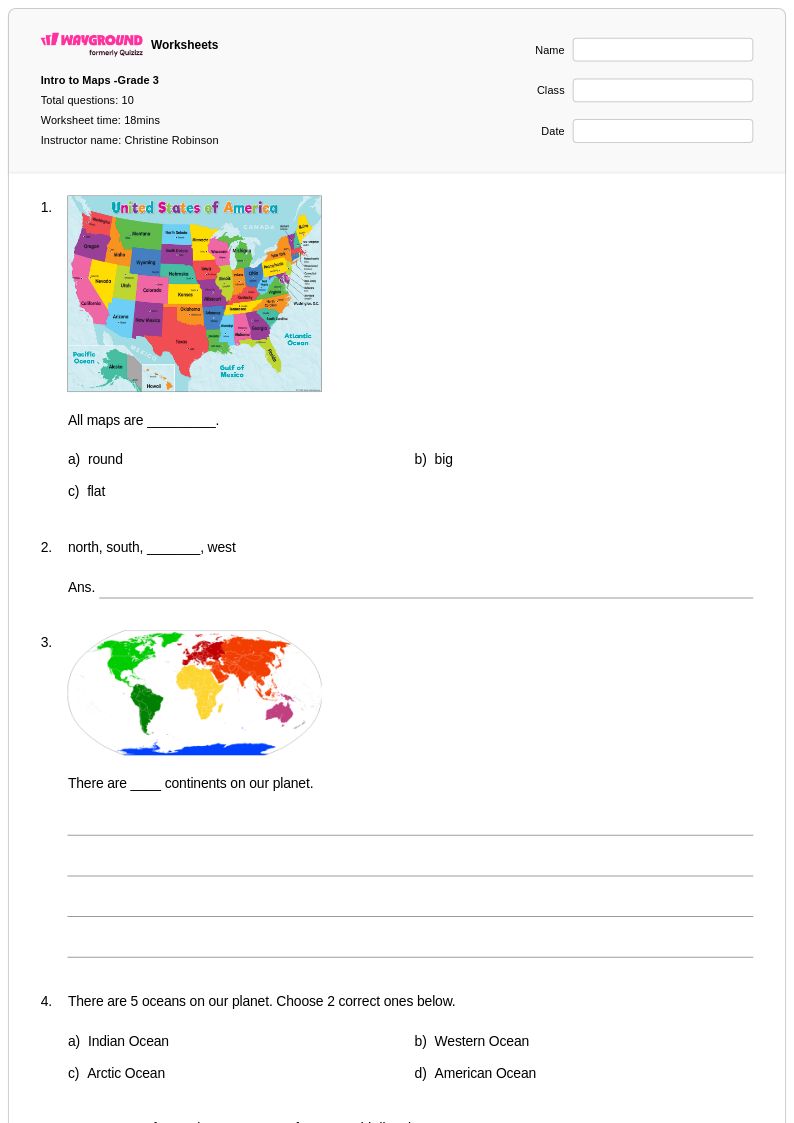
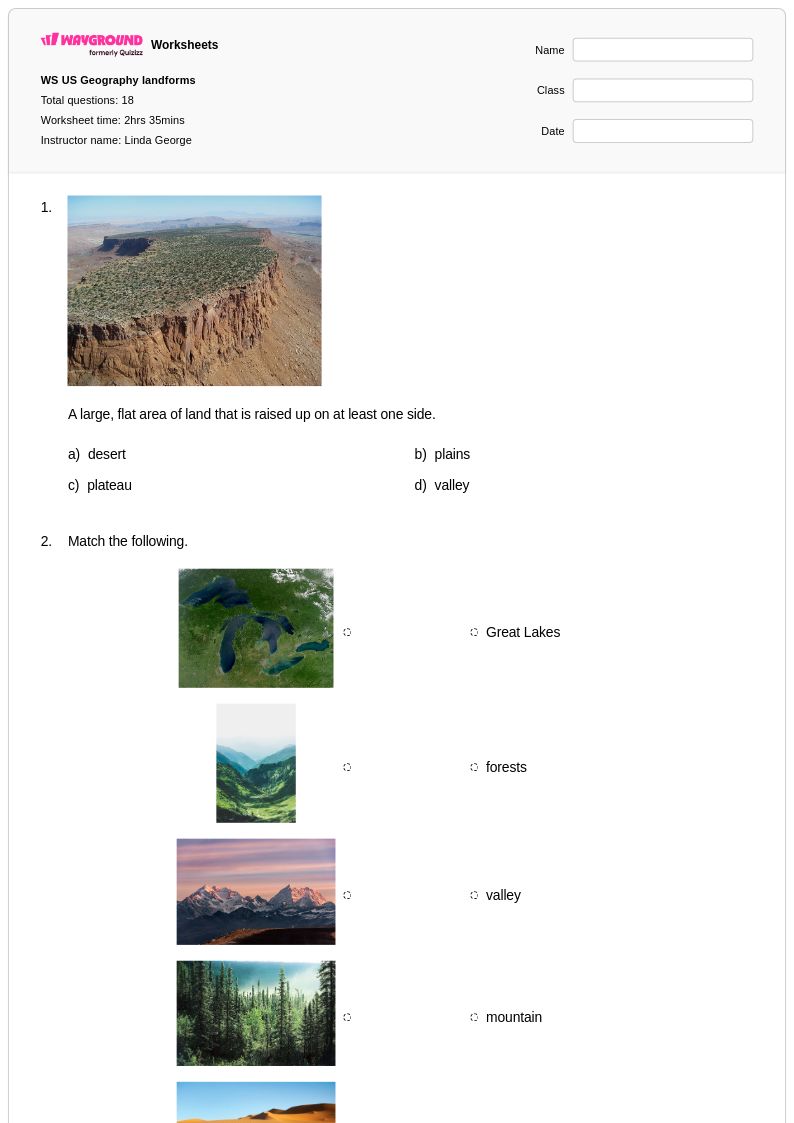
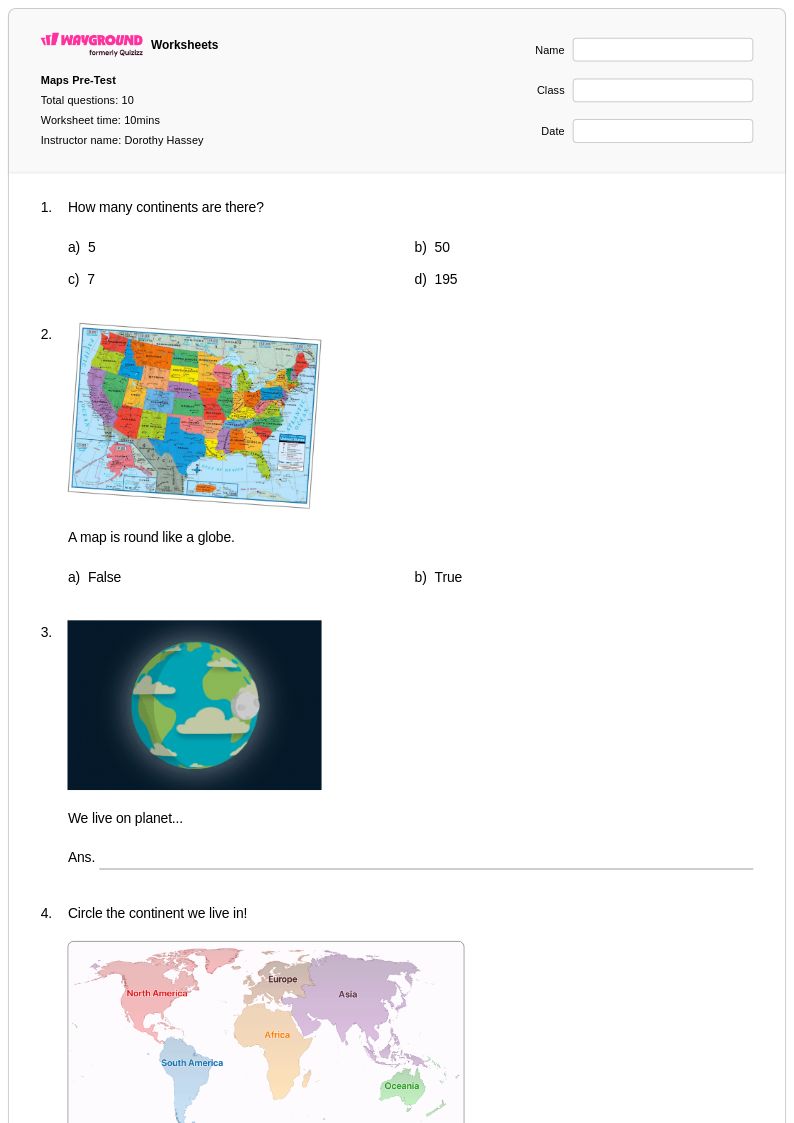
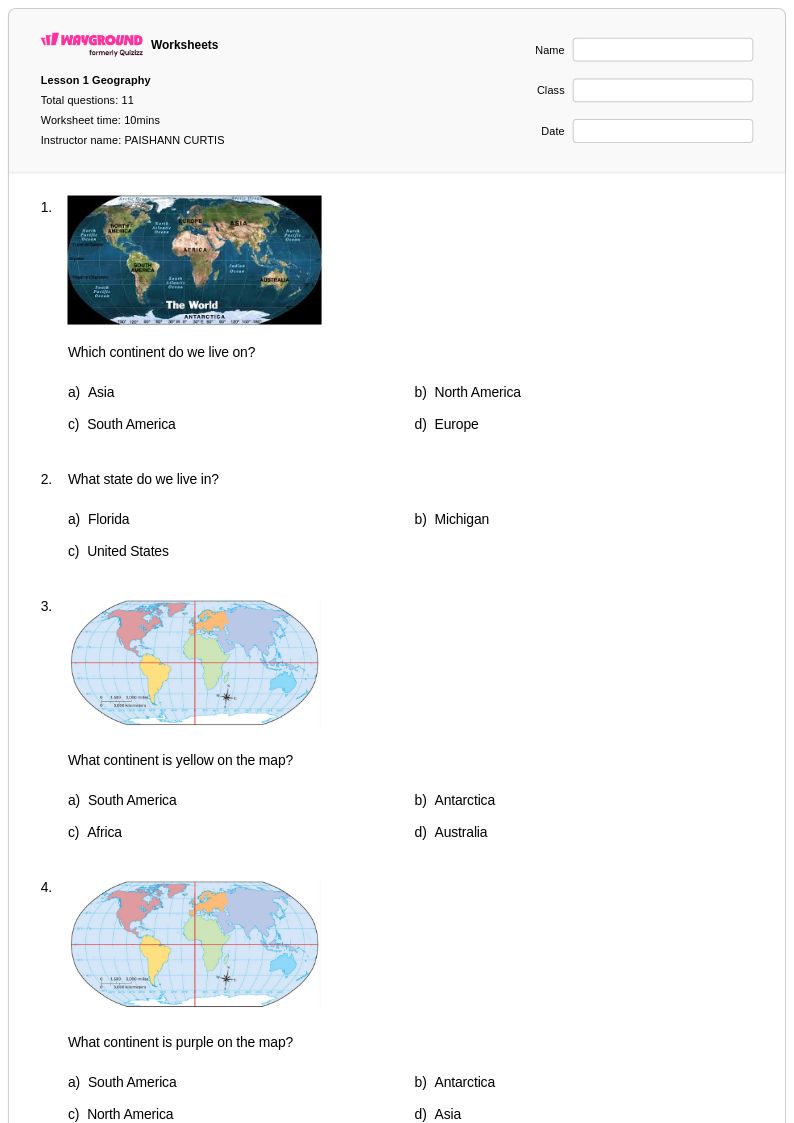
Free Printable United States Map Worksheets for Grade 3
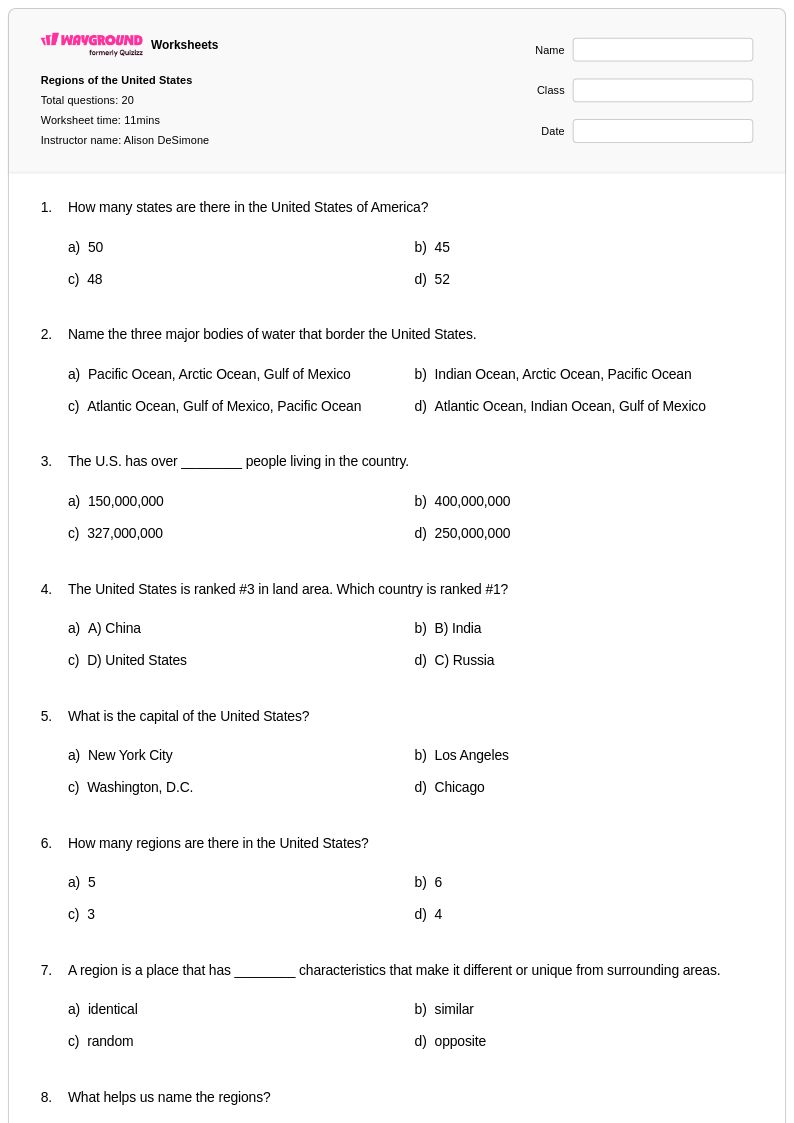
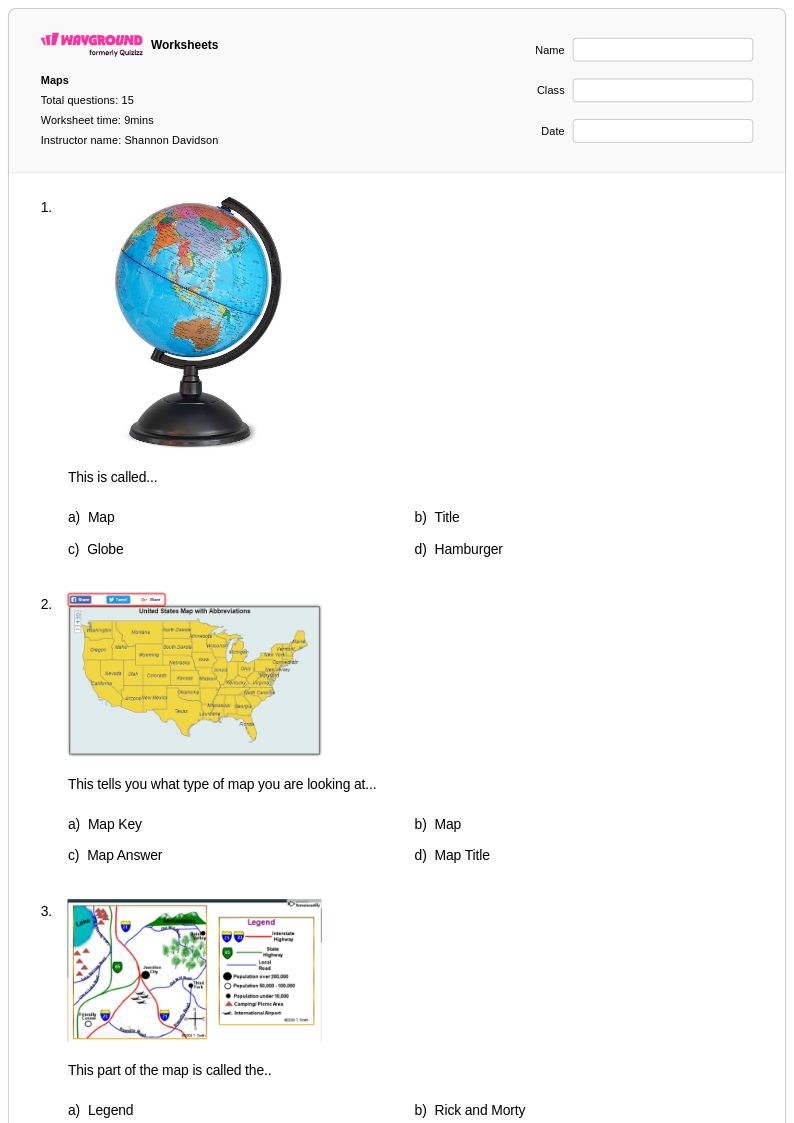
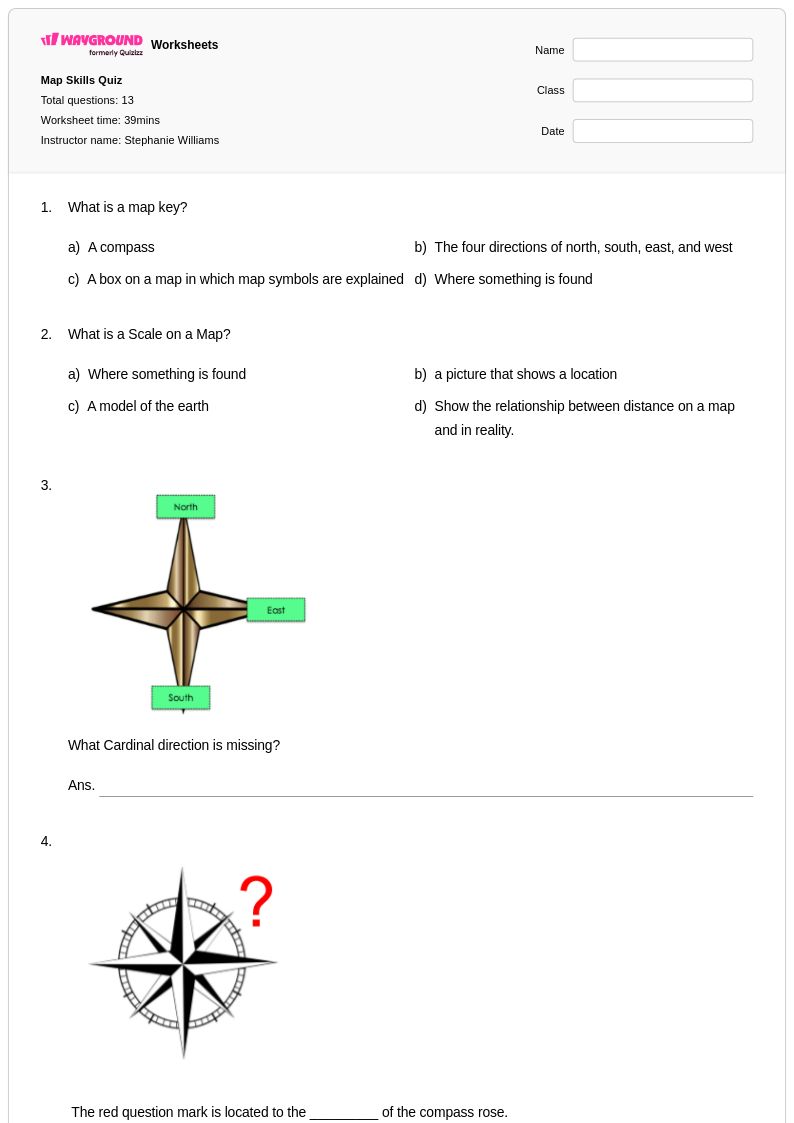
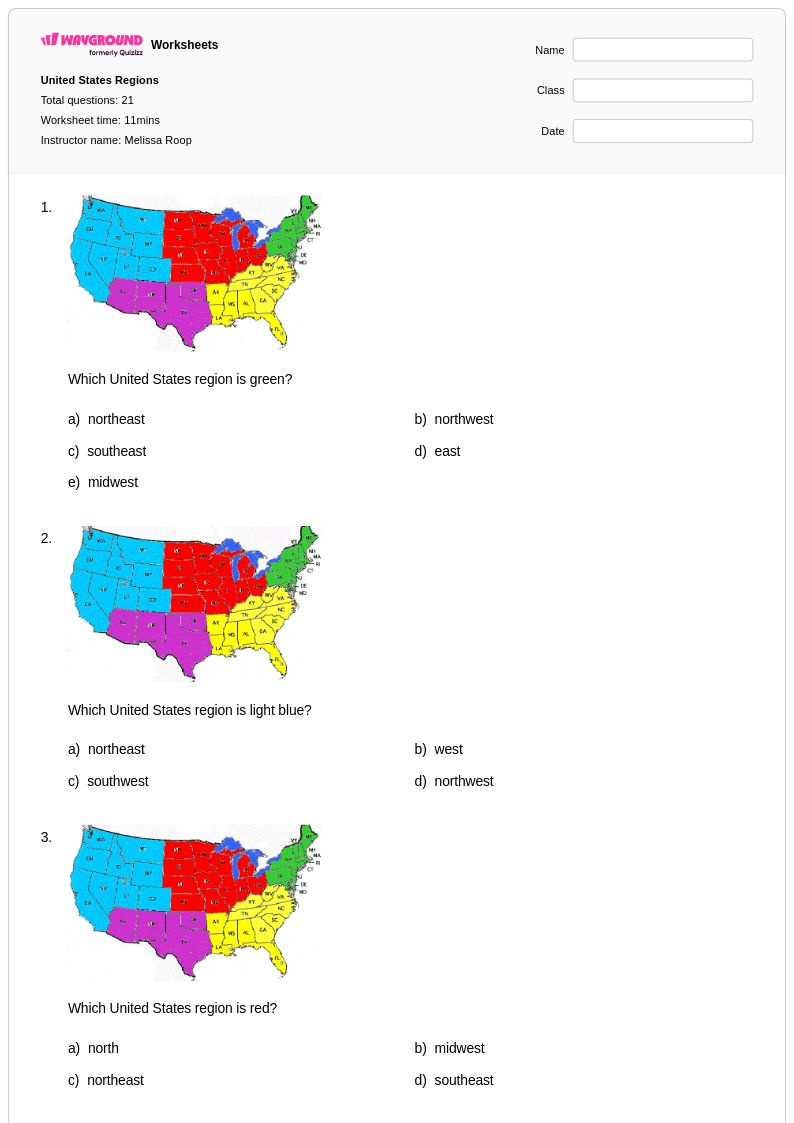
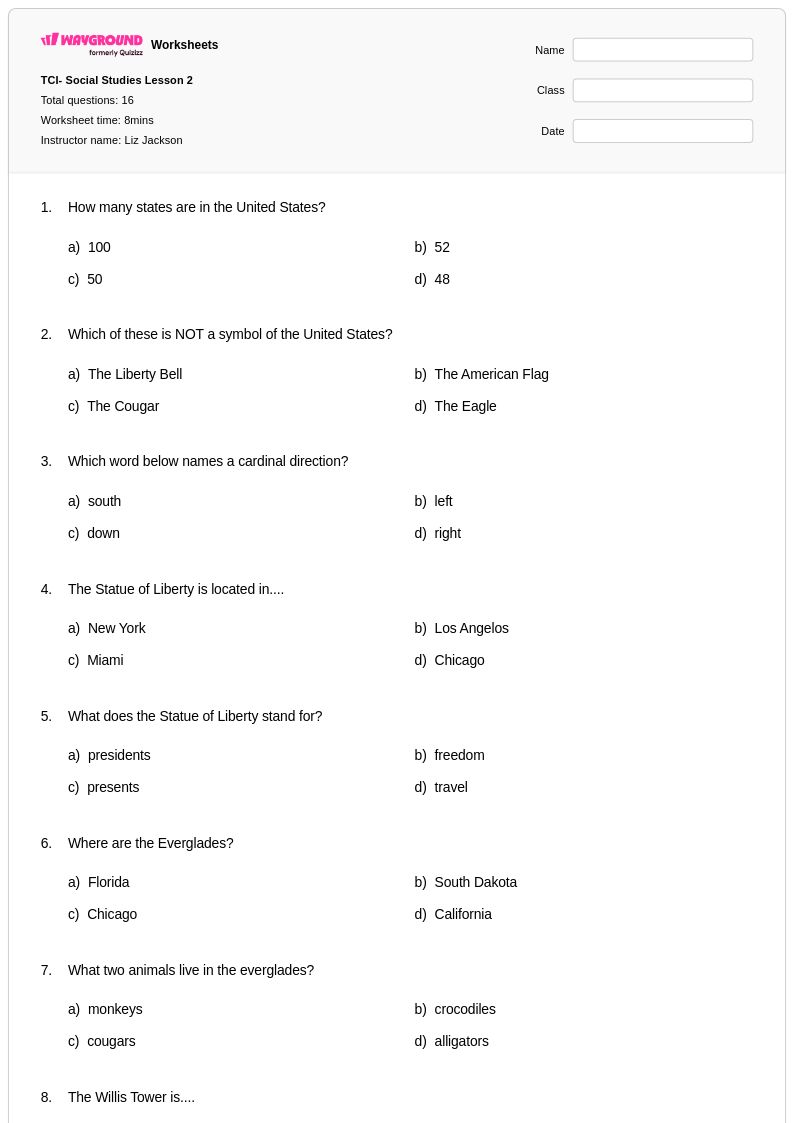
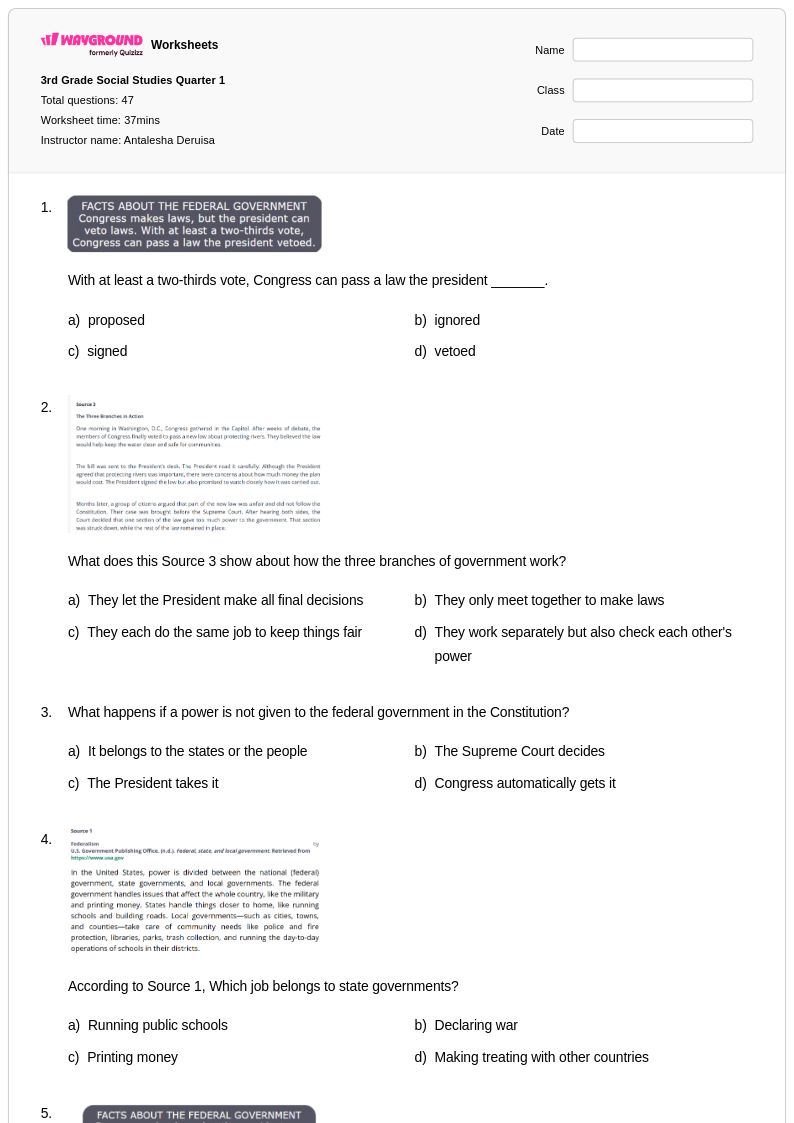
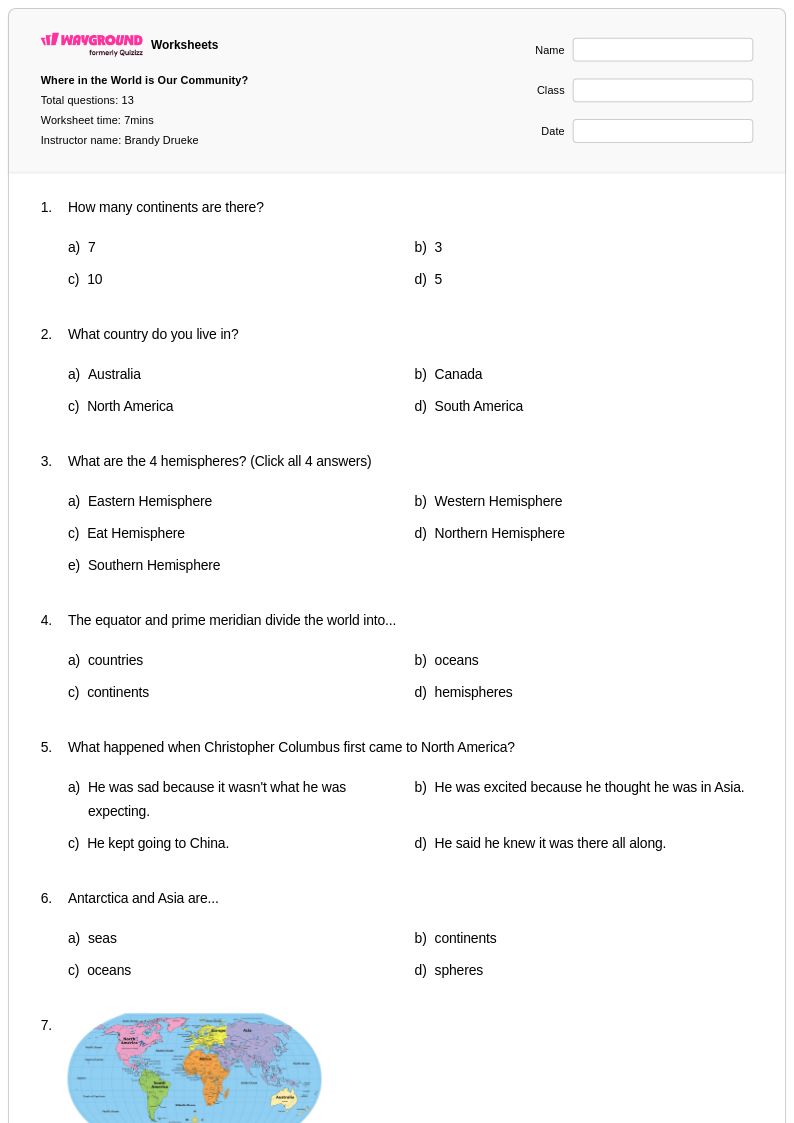
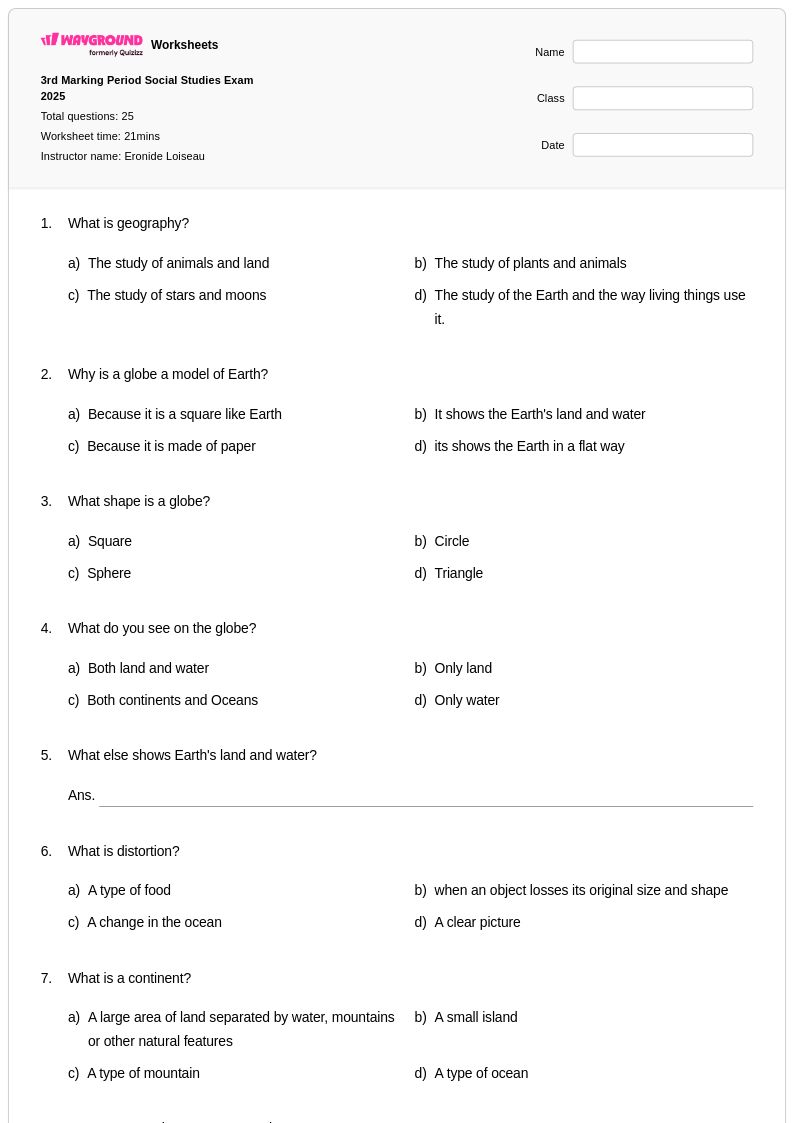
Grade 3 United States Map worksheets help students explore American geography through engaging printables and practice problems that build map skills, with free PDF downloads and answer keys available.
Explore printable United States Map worksheets for Grade 3
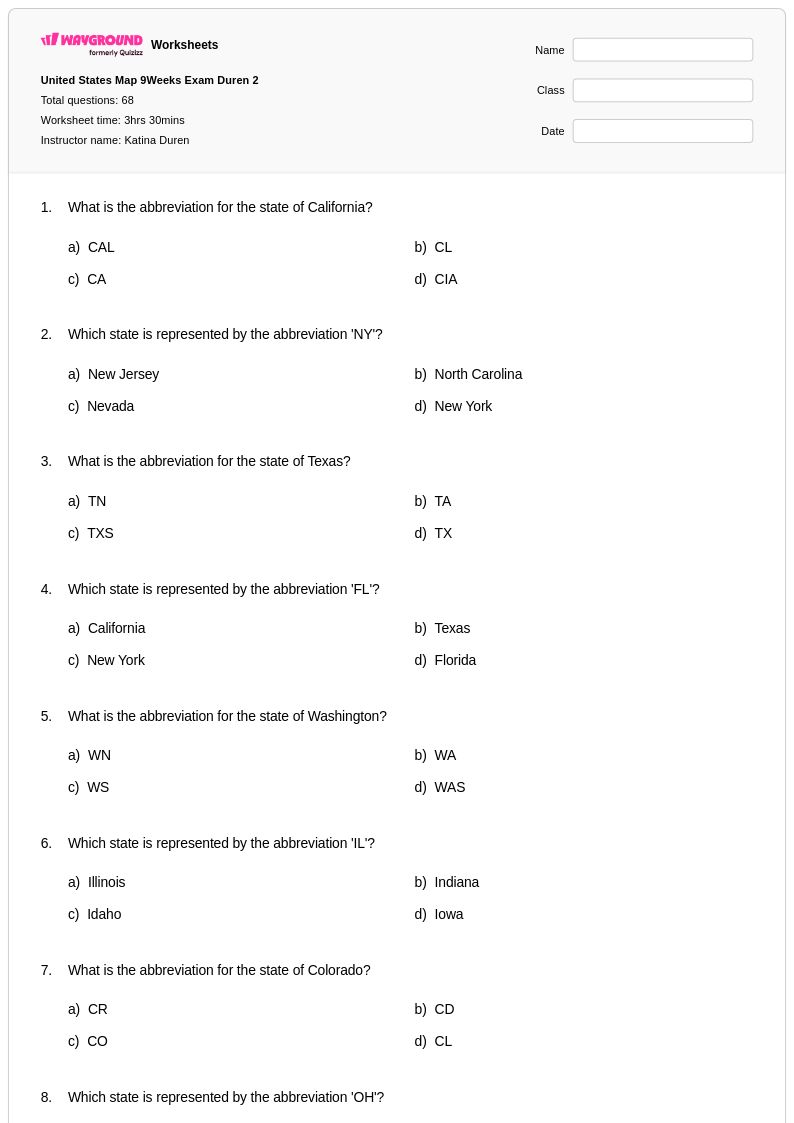
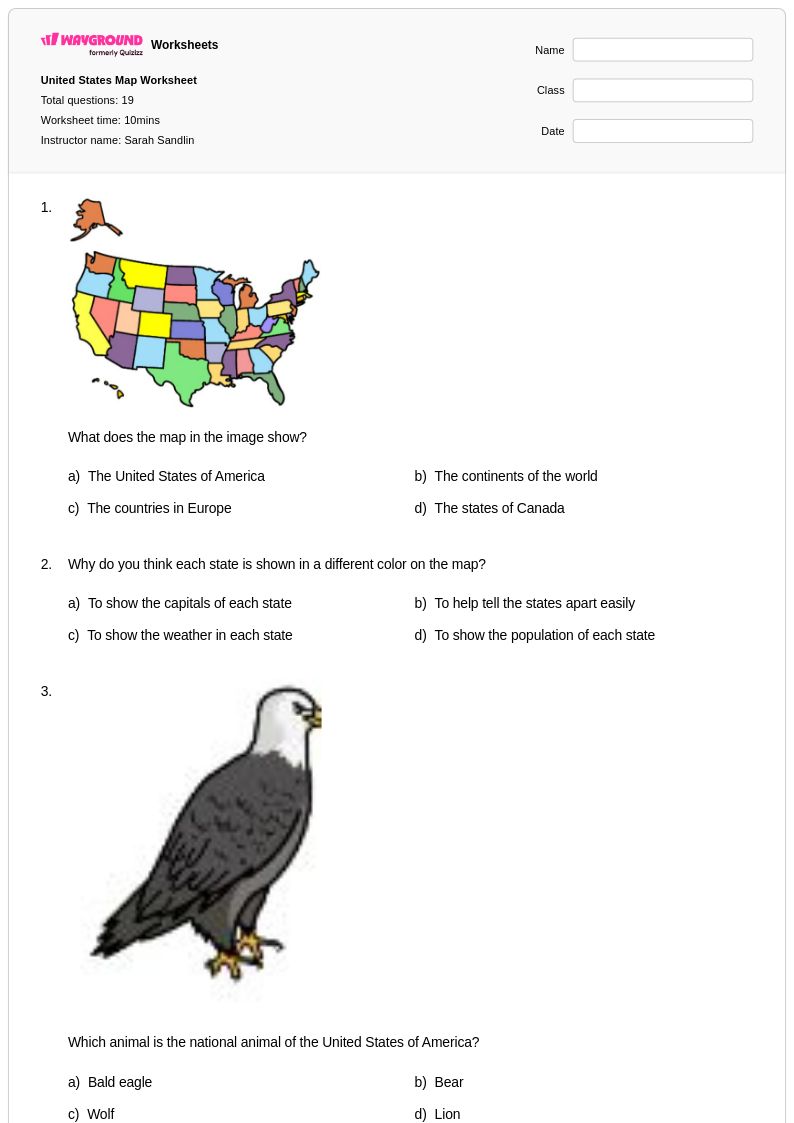
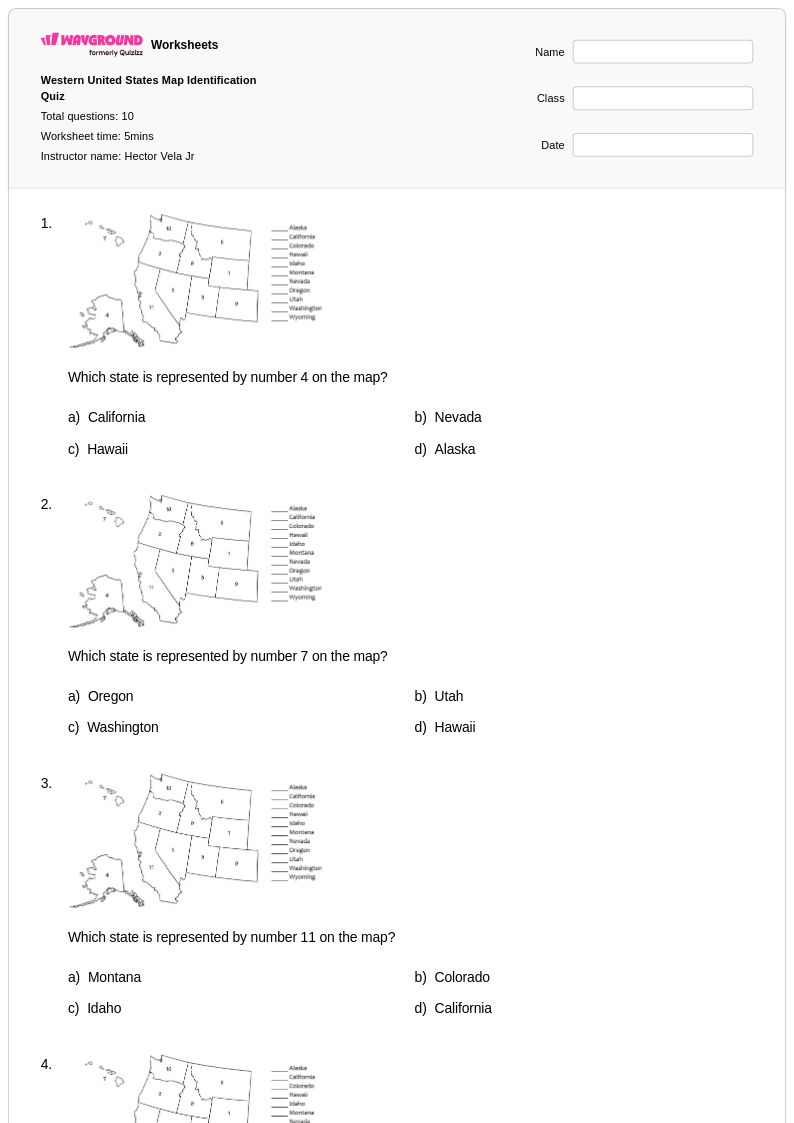
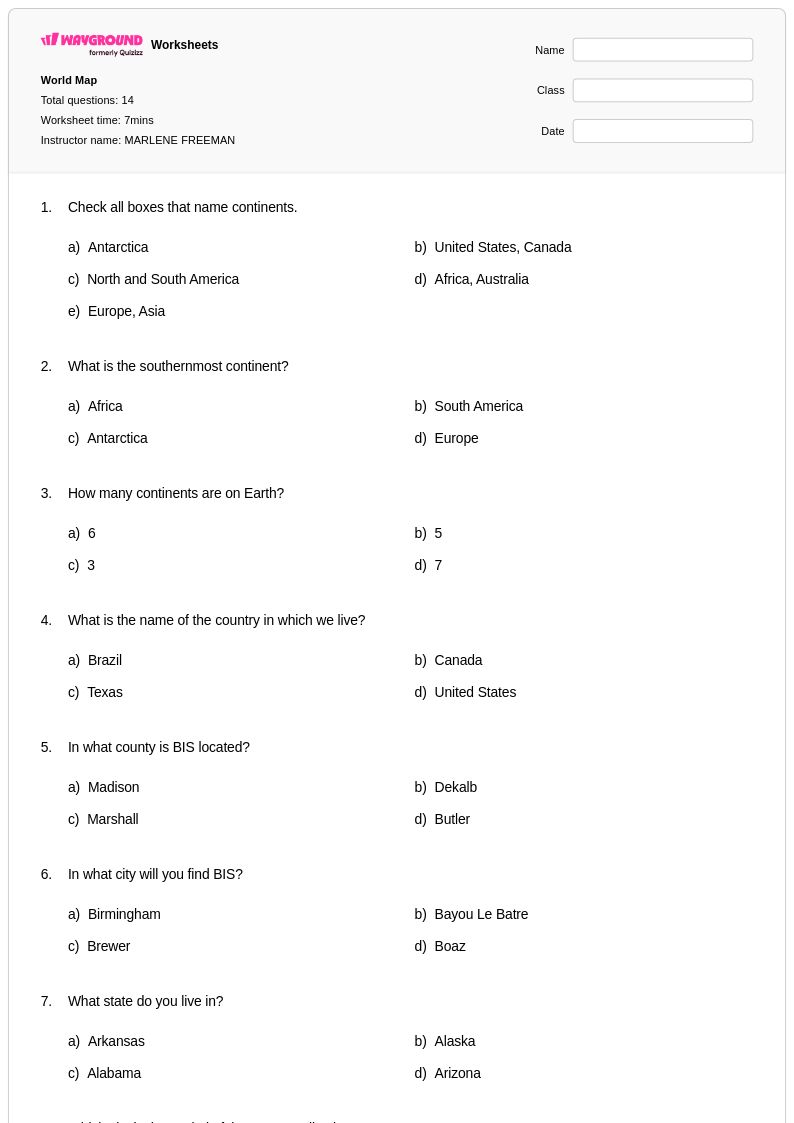
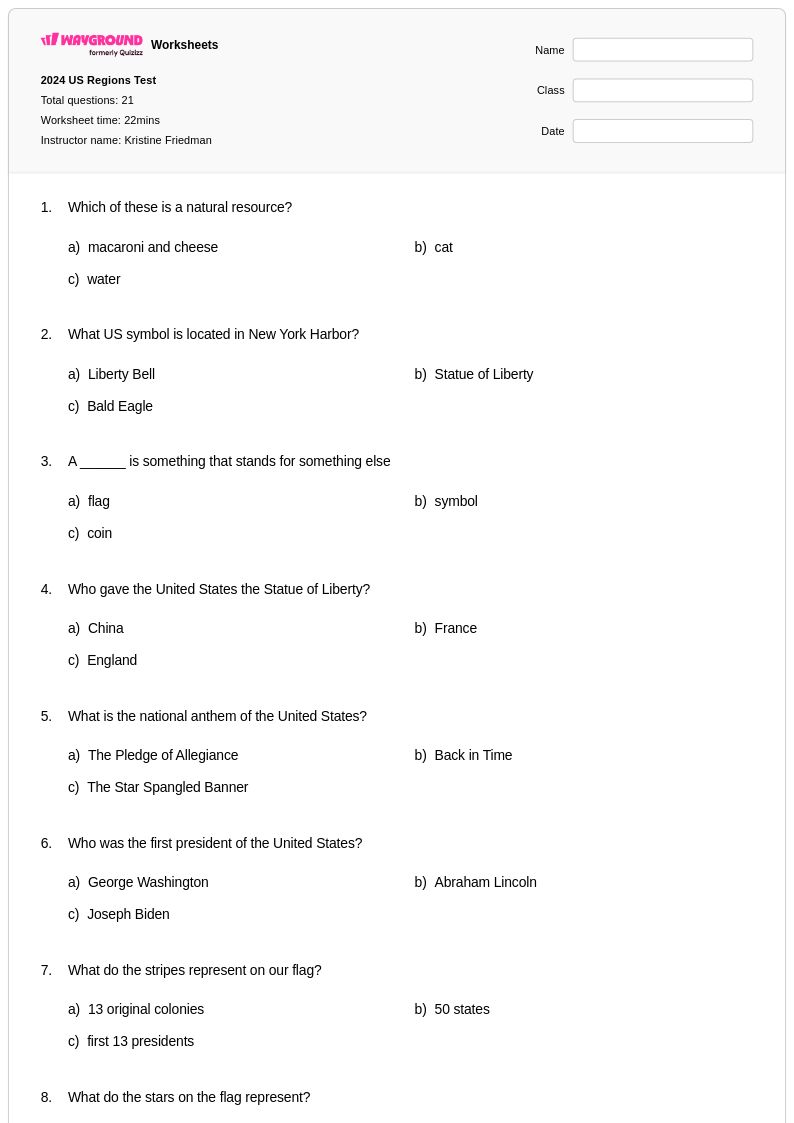
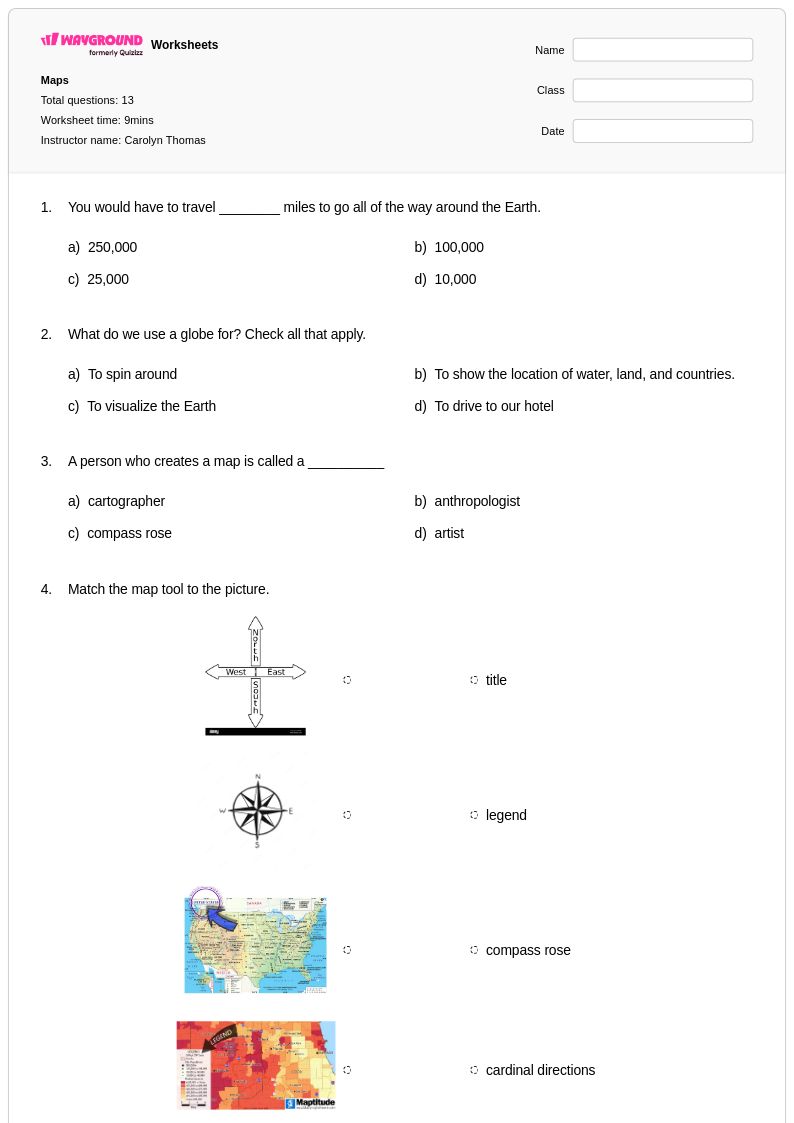
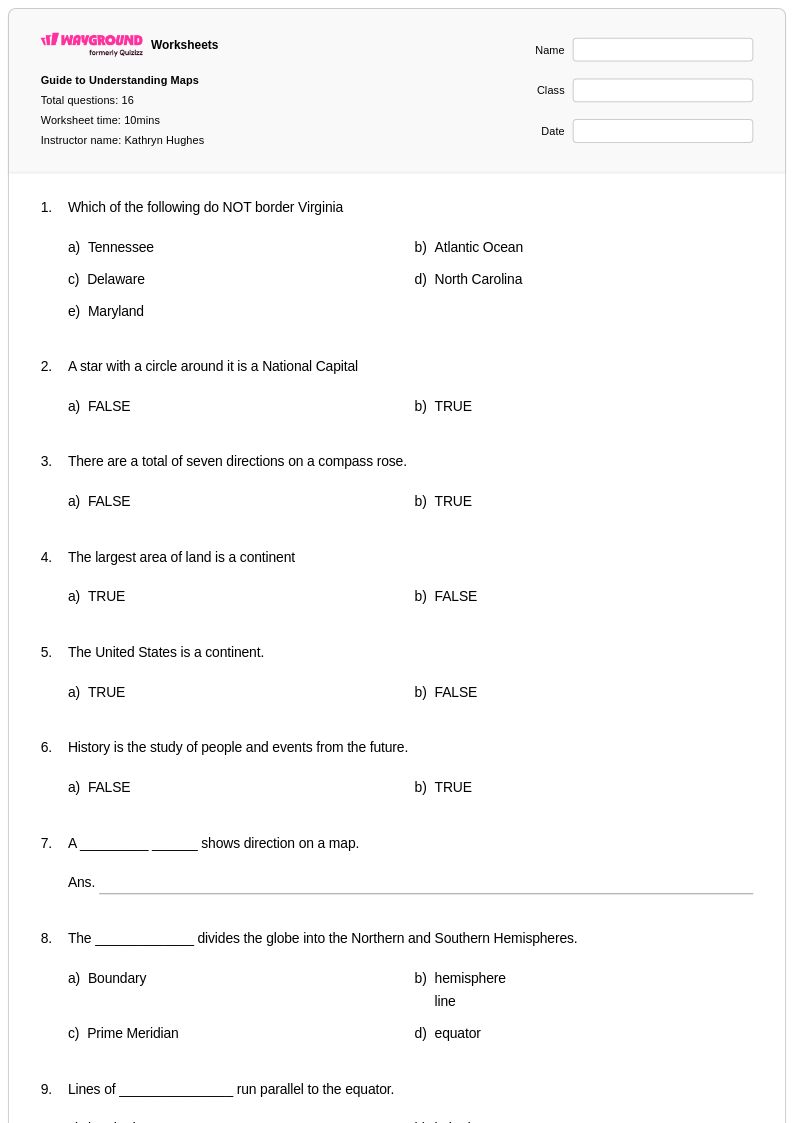
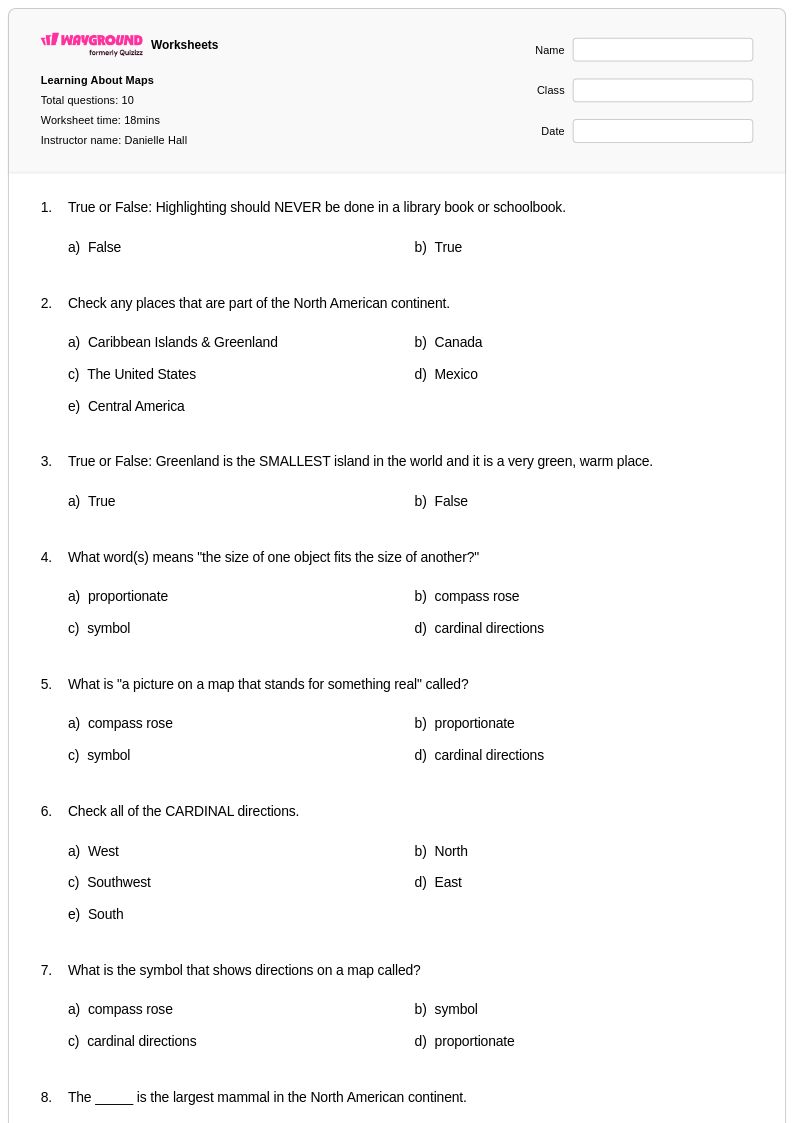
United States Map worksheets for Grade 3 students available through Wayground (formerly Quizizz) provide essential geographic literacy foundation by helping young learners identify states, capitals, major cities, and geographic features across America. These comprehensive printables strengthen spatial reasoning skills, directional understanding, and regional awareness while building familiarity with state names, abbreviations, and locations that form the cornerstone of elementary social studies education. Students engage with practice problems that range from basic state identification to more complex exercises involving neighboring states, cardinal directions, and geographic landmarks, with each worksheet including a detailed answer key to support independent learning and immediate feedback. The free pdf format ensures accessibility for both classroom instruction and home practice, allowing educators to seamlessly integrate map skills into their geography curriculum.
Wayground (formerly Quizizz) empowers teachers with millions of educator-created United States Map resources that streamline lesson planning and provide targeted skill practice for Grade 3 geography instruction. The platform's robust search and filtering capabilities enable teachers to quickly locate worksheets aligned with state standards and differentiated for various learning levels, from basic state recognition to advanced geographic relationship understanding. Teachers can customize these printable and digital materials to match their specific classroom needs, whether for whole-group instruction, small group remediation, or individual enrichment activities. The extensive collection supports diverse teaching approaches through flexible formatting options, allowing educators to deliver consistent geography practice that builds students' confidence with American geography while meeting varied learning styles and academic requirements throughout the school year.
FAQs
How do I teach students to read and interpret a United States map?
Start by introducing the political map, having students locate and label all 50 states before moving to capitals and regional groupings. Once students are comfortable with basic identification, layer in physical geography concepts such as major mountain ranges, river systems, and coastlines. Using blank outline maps for repeated practice is one of the most effective strategies for building long-term retention of state locations and geographic relationships.
What activities help students practice U.S. state identification and geography?
Blank map labeling exercises are the cornerstone of U.S. geography practice, requiring students to recall state names, capitals, and boundaries from memory. Supplement these with map-reading tasks that ask students to identify geographic regions, climate zones, or major landforms to build spatial reasoning alongside memorization. Rotating between political and physical map formats ensures students develop a well-rounded understanding of American geography.
What mistakes do students commonly make when learning U.S. geography?
Students frequently confuse states that share similar shapes or border one another, particularly in the Northeast where states are small and densely packed. Mixing up state capitals is also common, especially for states like Indiana (Indianapolis) and Illinois (Springfield), where students often default to the largest city instead. Another persistent error is conflating physical regions with political boundaries, such as assuming the Midwest and the Great Plains are identical regions.
How can I differentiate U.S. map instruction for students at different skill levels?
For students just beginning, focus on the contiguous 48 states using word banks and partially labeled maps to reduce cognitive load before removing scaffolds. More advanced students can work with unlabeled maps that require independent recall, or tackle tasks involving geographic analysis such as comparing population density across regions. On Wayground, teachers can apply accommodations such as reduced answer choices or read-aloud support to individual students, allowing differentiated practice within the same assignment without disrupting the rest of the class.
How do I use Wayground's United States Map worksheets in my classroom?
Wayground's United States Map worksheets are available as printable PDFs for traditional classroom use and in digital formats for technology-integrated environments, giving teachers flexibility regardless of their classroom setup. Teachers can also host worksheets as an interactive quiz directly on Wayground, making them suitable for in-class review sessions or independent student practice. Both formats include complete answer keys, so grading and feedback are straightforward whether students are working on paper or on a device.
How do I help students who struggle to remember the locations of U.S. states?
Repeated low-stakes retrieval practice, such as daily blank map quizzes covering a small set of states at a time, is far more effective than one-time exposure. Grouping states by region and teaching each cluster before combining them helps students build a mental framework rather than memorizing 50 isolated locations. Connecting states to cultural landmarks, historical events, or student-relevant context also strengthens geographic memory over time.