Explore Wayground's free relative dating worksheets and printables that help students master geological time sequencing, rock layer analysis, and Earth's history through engaging practice problems with comprehensive answer keys.
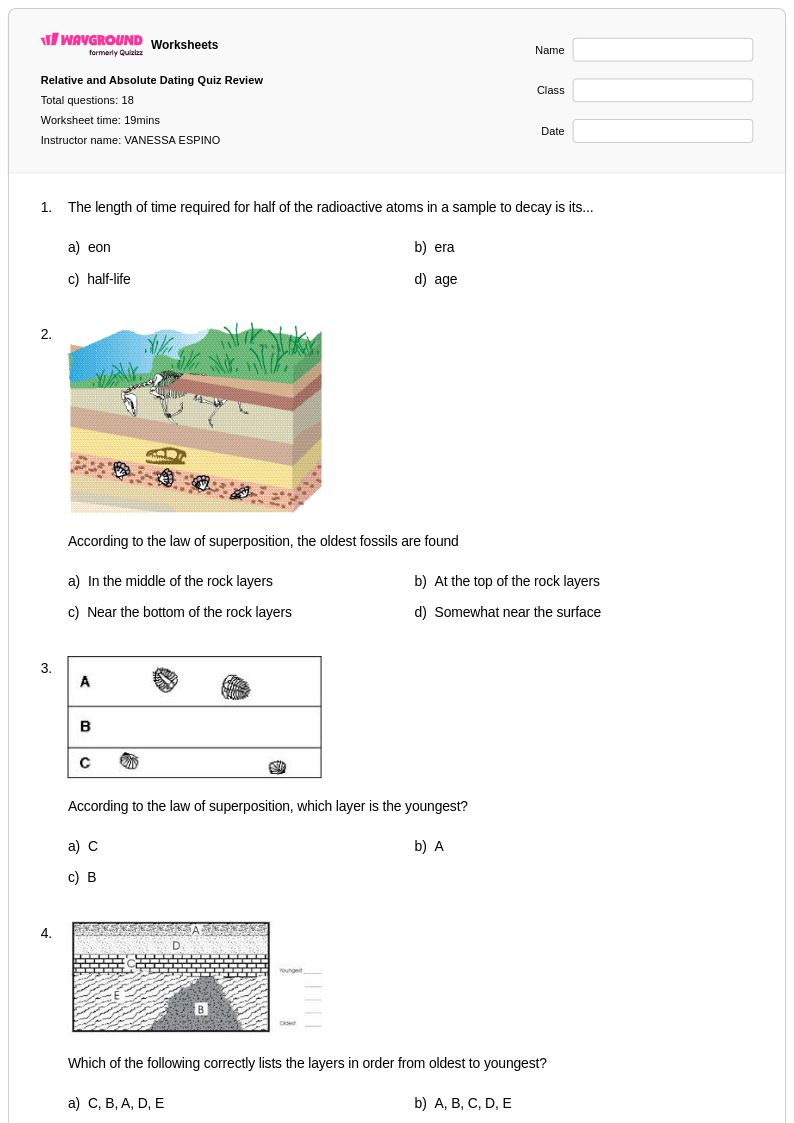
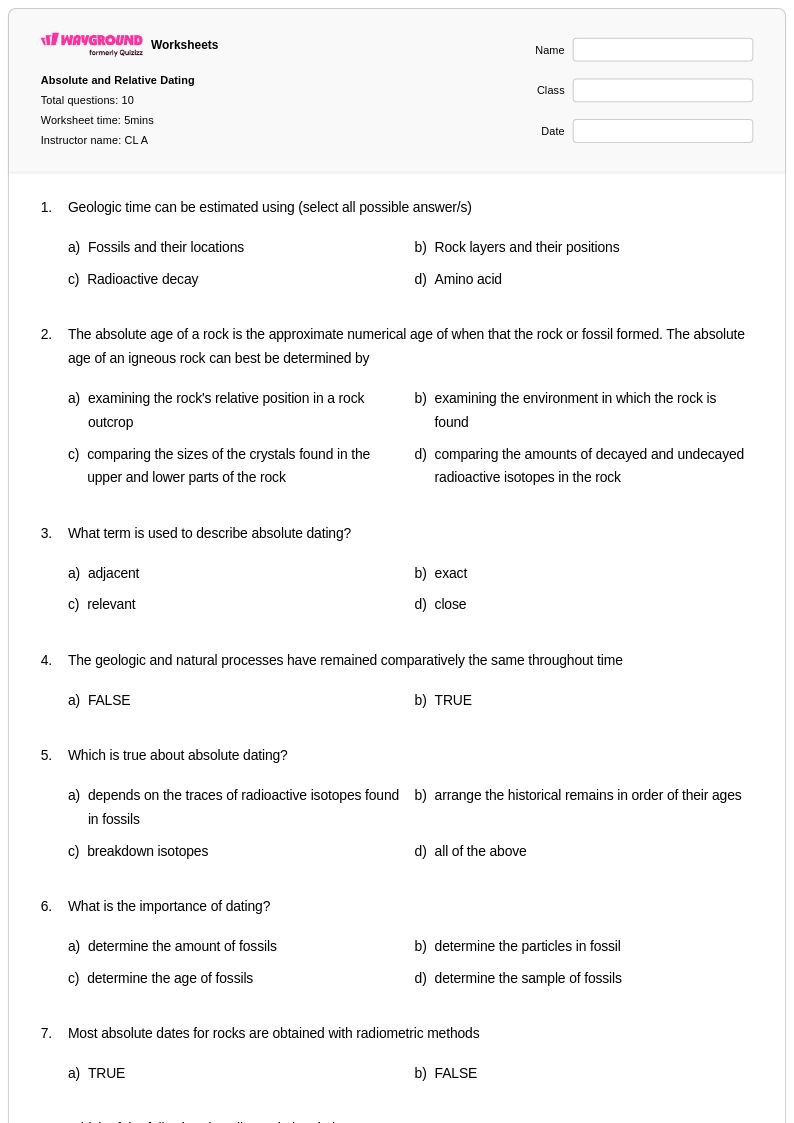
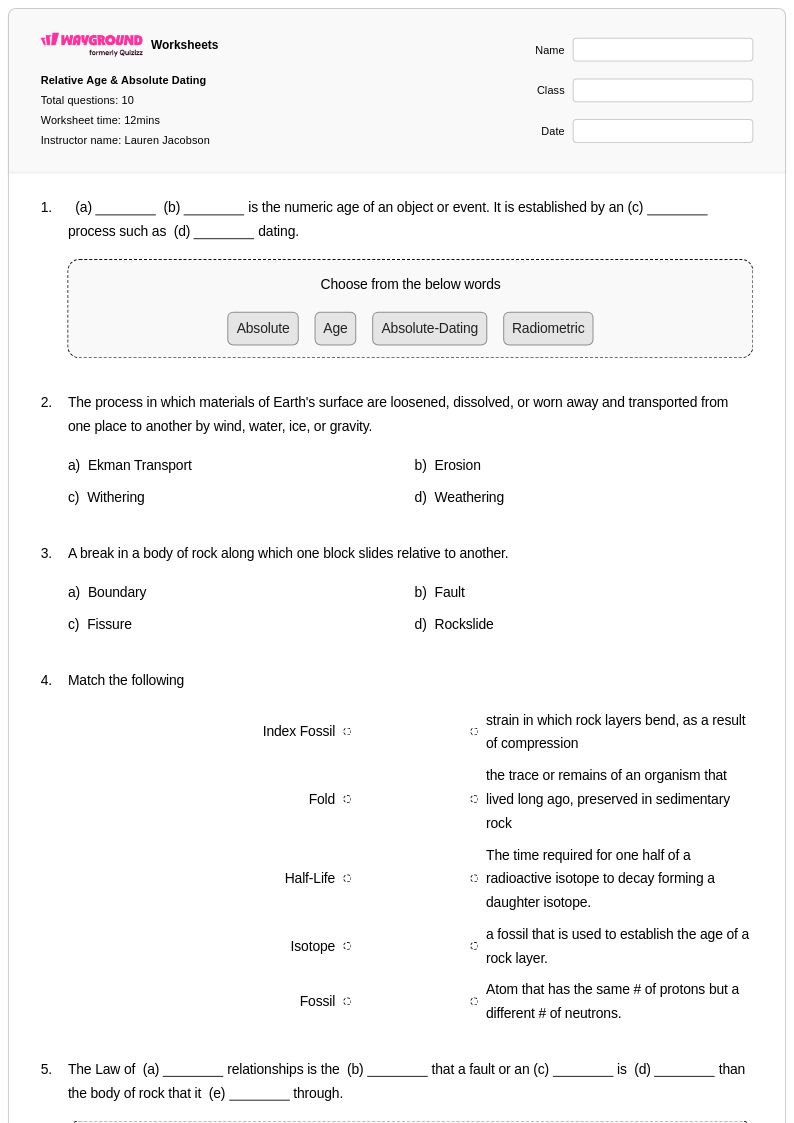
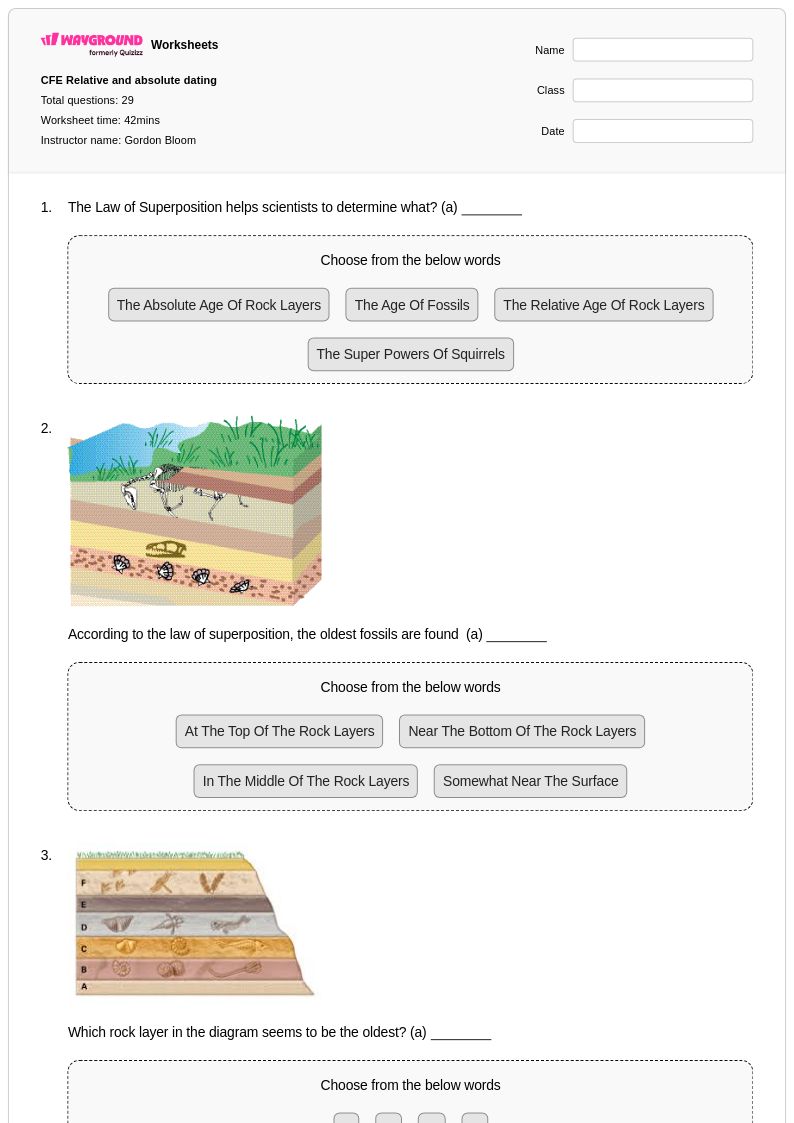
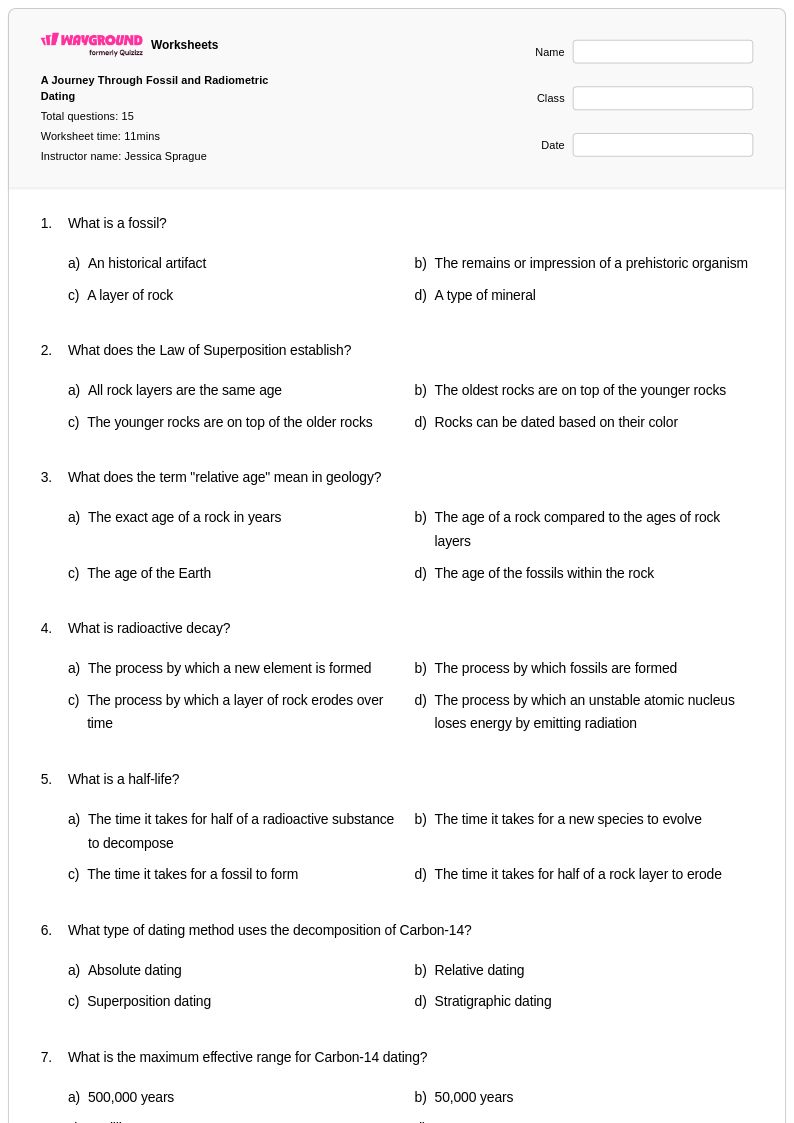
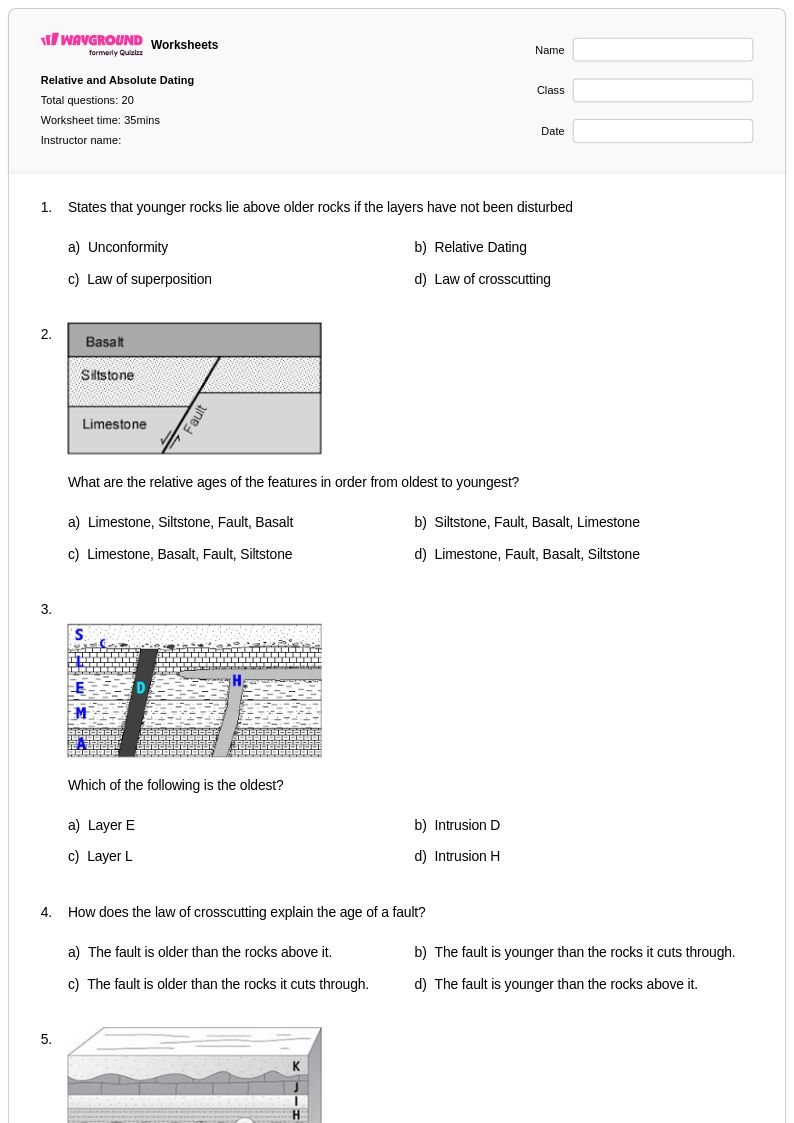
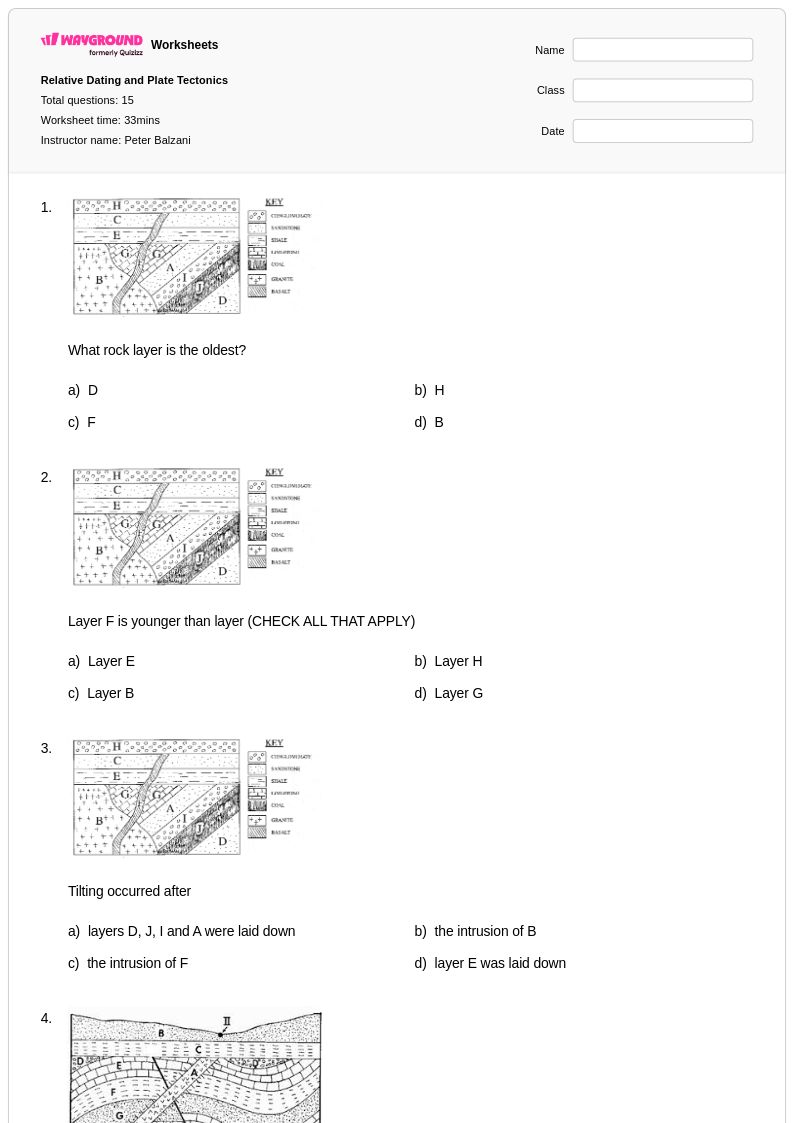
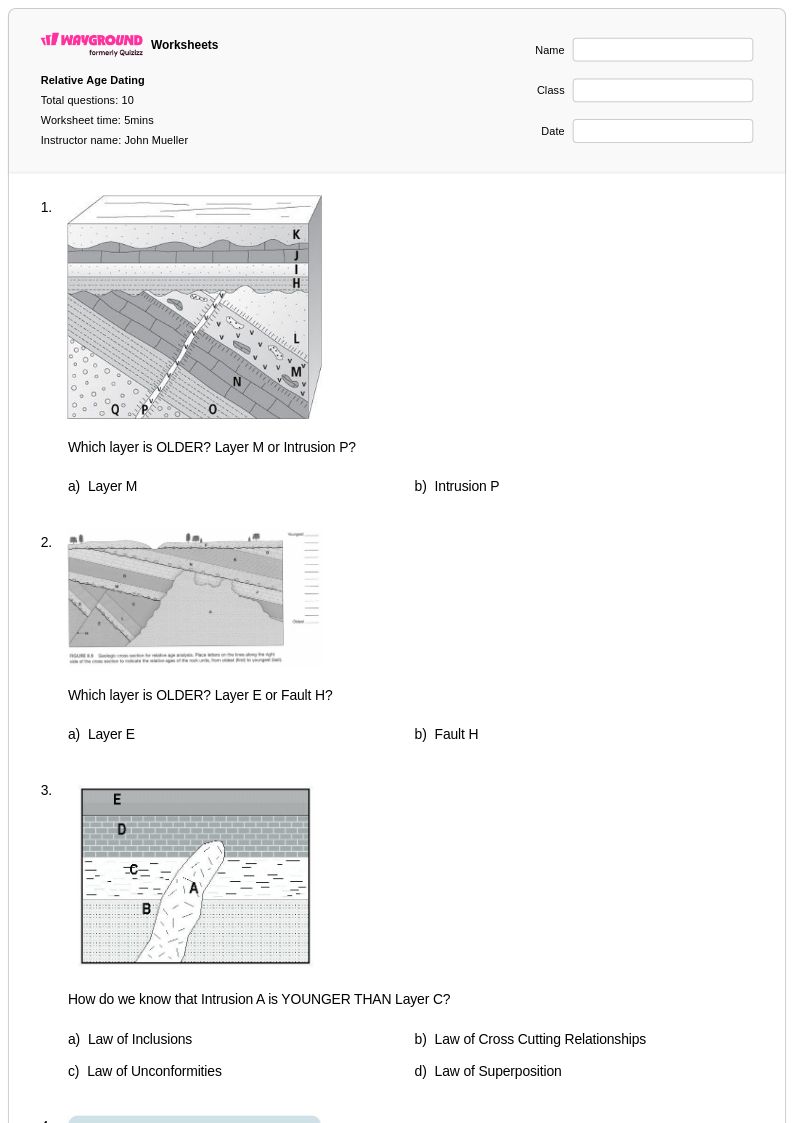
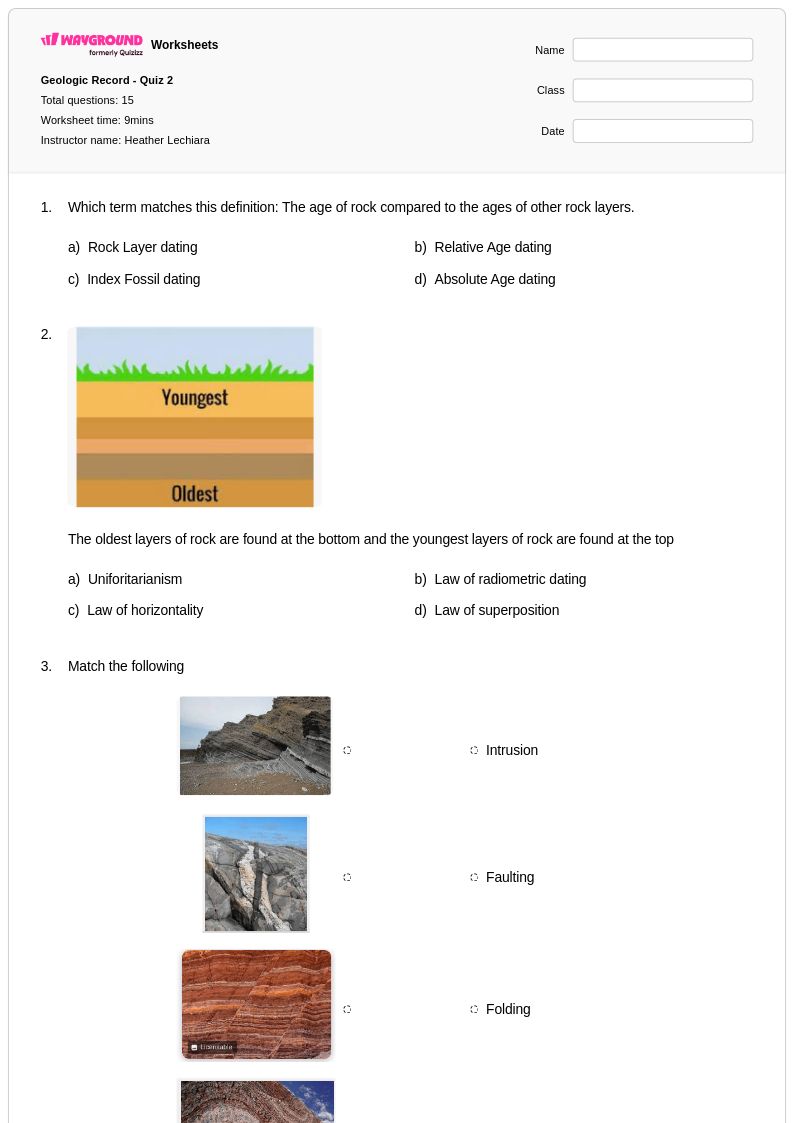
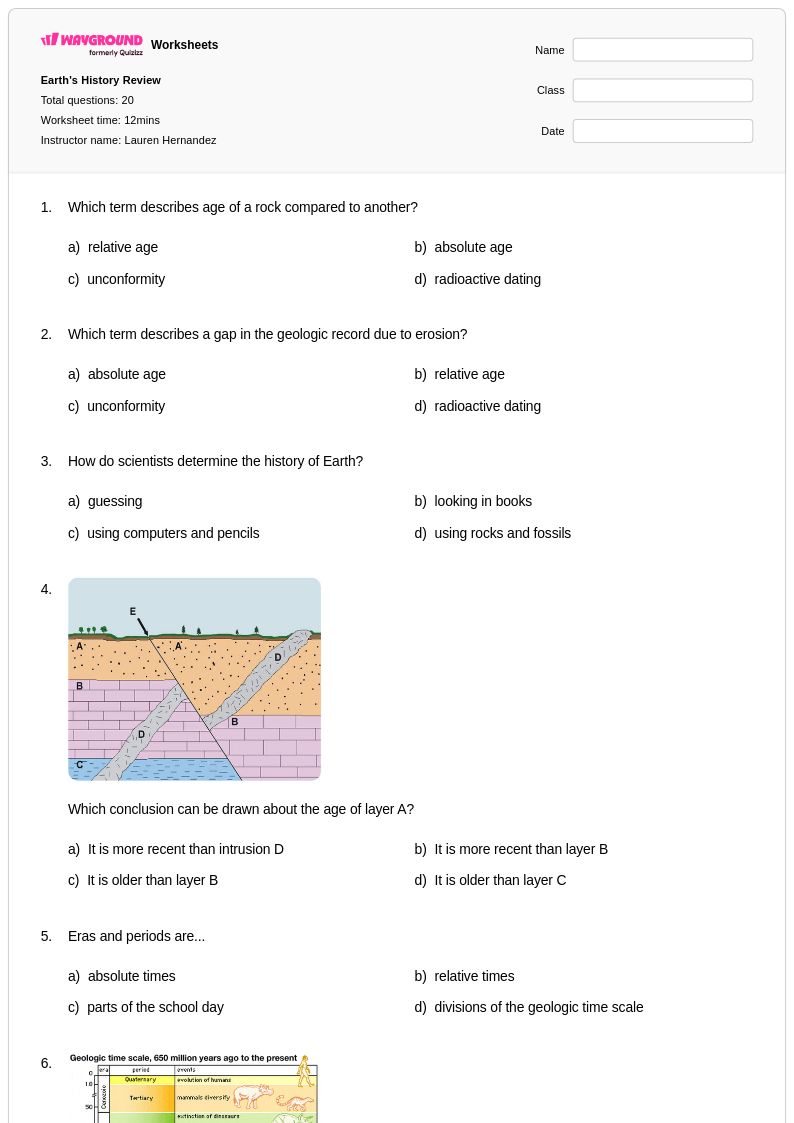
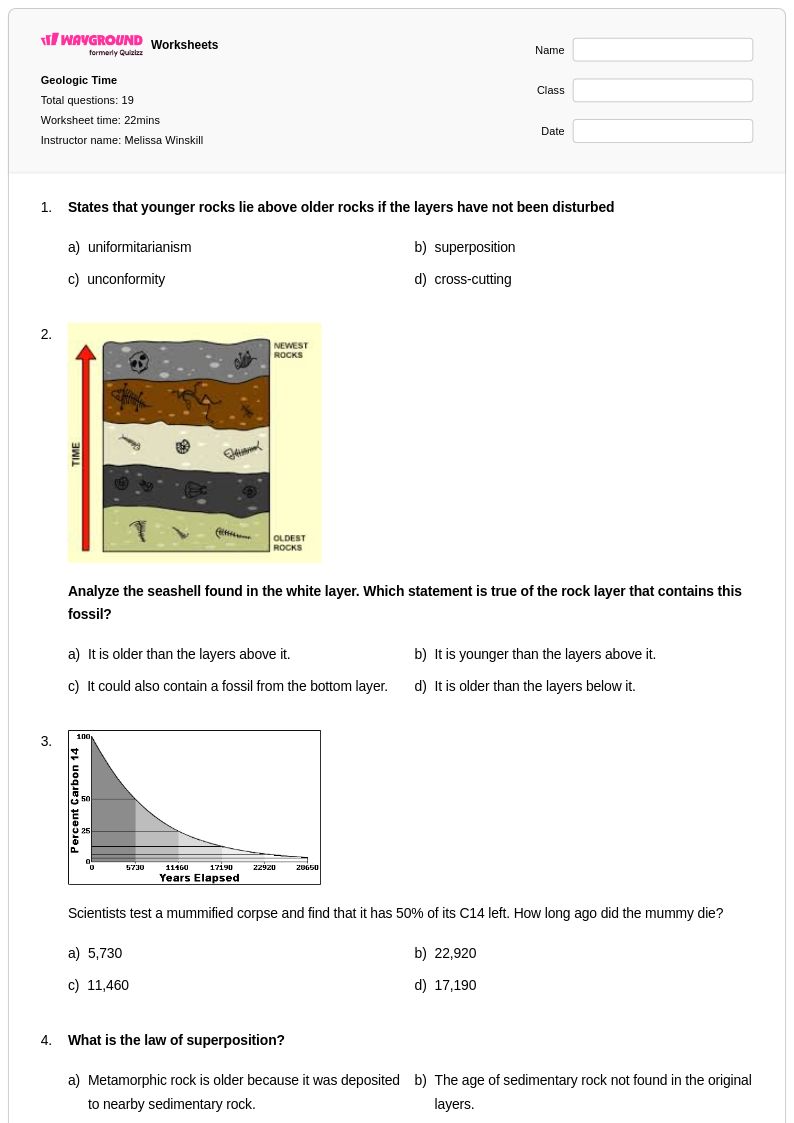
Relative dating worksheets available through Wayground (formerly Quizizz) provide comprehensive educational resources that help students master the fundamental principles of determining the chronological order of geological events and rock formations. These expertly designed materials focus on core concepts including the law of superposition, cross-cutting relationships, fossil succession, and stratigraphic correlation, enabling students to develop critical analytical skills essential for understanding Earth's geological history. The collection features diverse practice problems that challenge learners to interpret geological cross-sections, analyze sedimentary sequences, and apply relative dating principles to real-world scenarios, with accompanying answer keys and free printable formats that support both classroom instruction and independent study.
Wayground (formerly Quizizz) empowers educators with an extensive library of millions of teacher-created relative dating resources, featuring robust search and filtering capabilities that allow instructors to quickly locate materials aligned with specific learning standards and curriculum requirements. The platform's sophisticated differentiation tools enable teachers to customize worksheets for varying ability levels, while the availability of both printable pdf formats and interactive digital versions provides maximum flexibility for diverse learning environments. These comprehensive features streamline lesson planning by offering ready-to-use materials for skill practice, targeted remediation for struggling students, and enrichment activities for advanced learners, ensuring that educators can effectively address the complex conceptual challenges inherent in teaching geological time and Earth's structural history.
FAQs
How do I teach relative dating to middle or high school students?
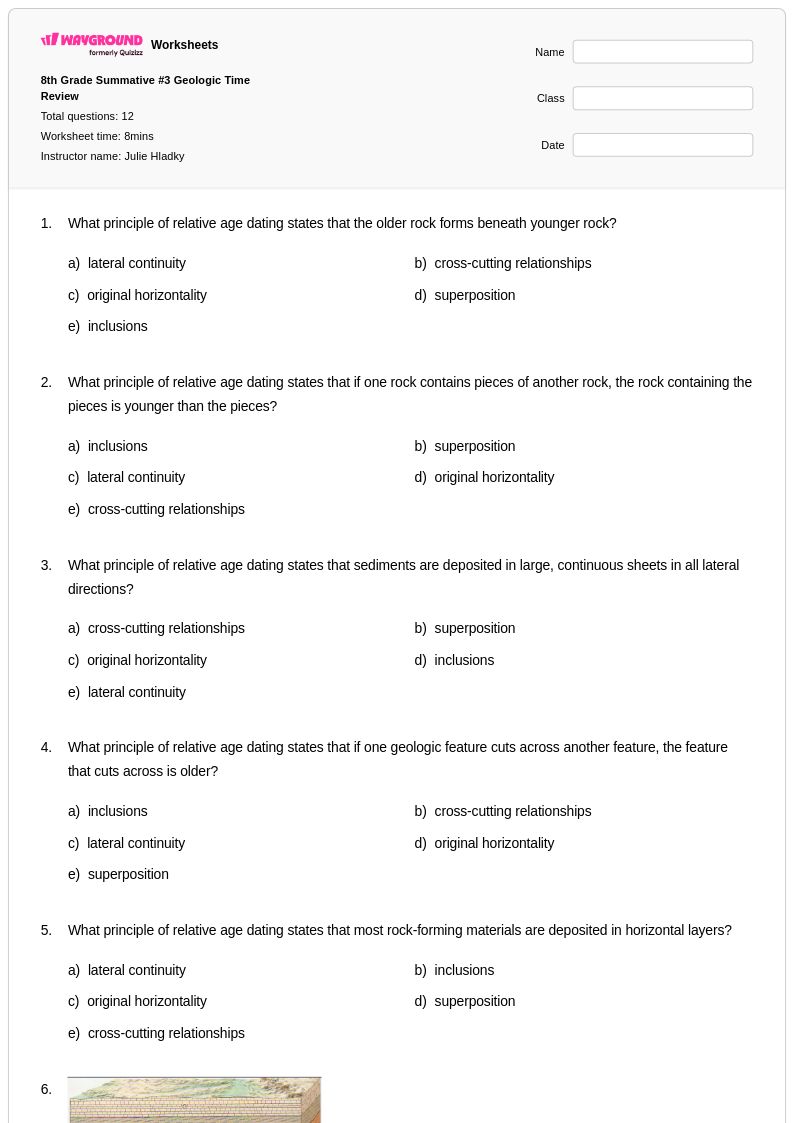
Teaching relative dating effectively starts with building students' understanding of the core principles in sequence: the law of superposition, cross-cutting relationships, original horizontality, and fossil succession. Use visual geological cross-sections early so students can practice interpreting rock layers before applying formal terminology. Connecting these principles to real-world examples, such as canyon formations or sedimentary outcrops, helps students understand why relative dating matters before introducing absolute dating methods.
What practice exercises help students learn relative dating principles?
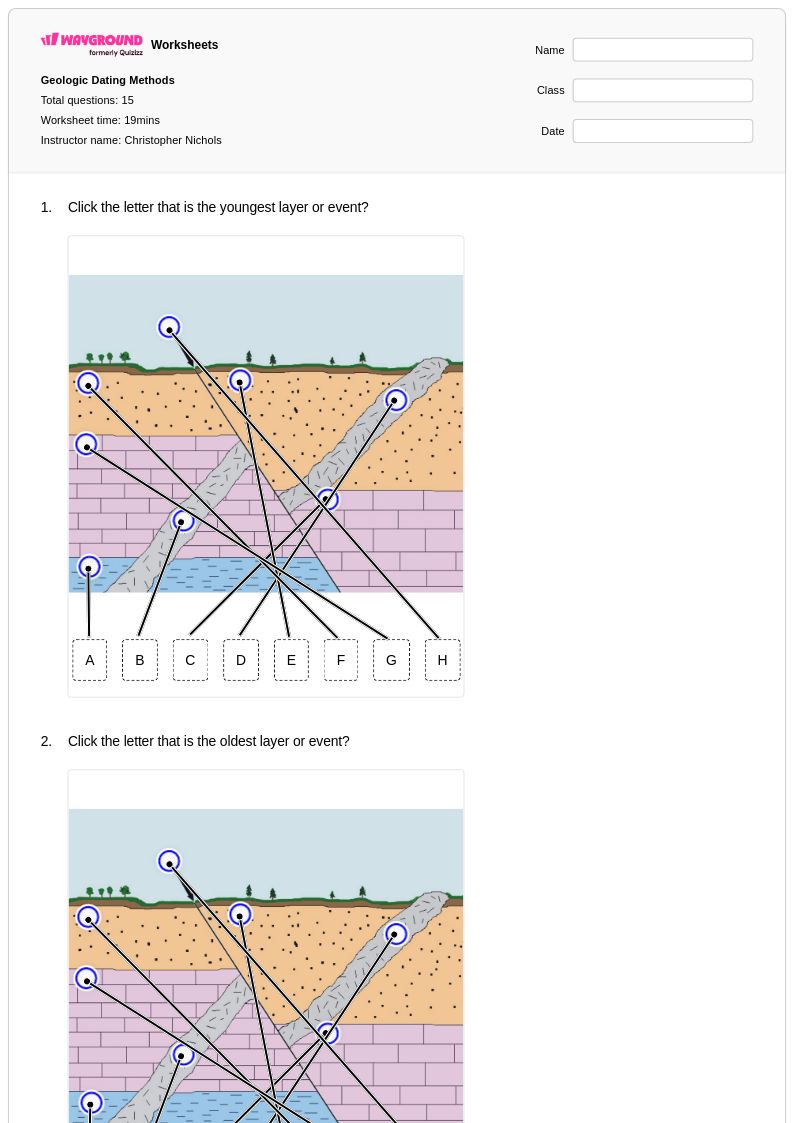
The most effective practice exercises for relative dating require students to analyze labeled geological cross-sections and sequence rock layers or events from oldest to youngest. Problems that combine multiple principles, such as identifying an intrusion that cuts across existing strata while also applying superposition, push students to integrate concepts rather than apply rules in isolation. Practice problems that use fossil index zones or stratigraphic correlation across multiple columns add an additional layer of analytical challenge appropriate for high school Earth science.
What mistakes do students commonly make when applying relative dating principles?
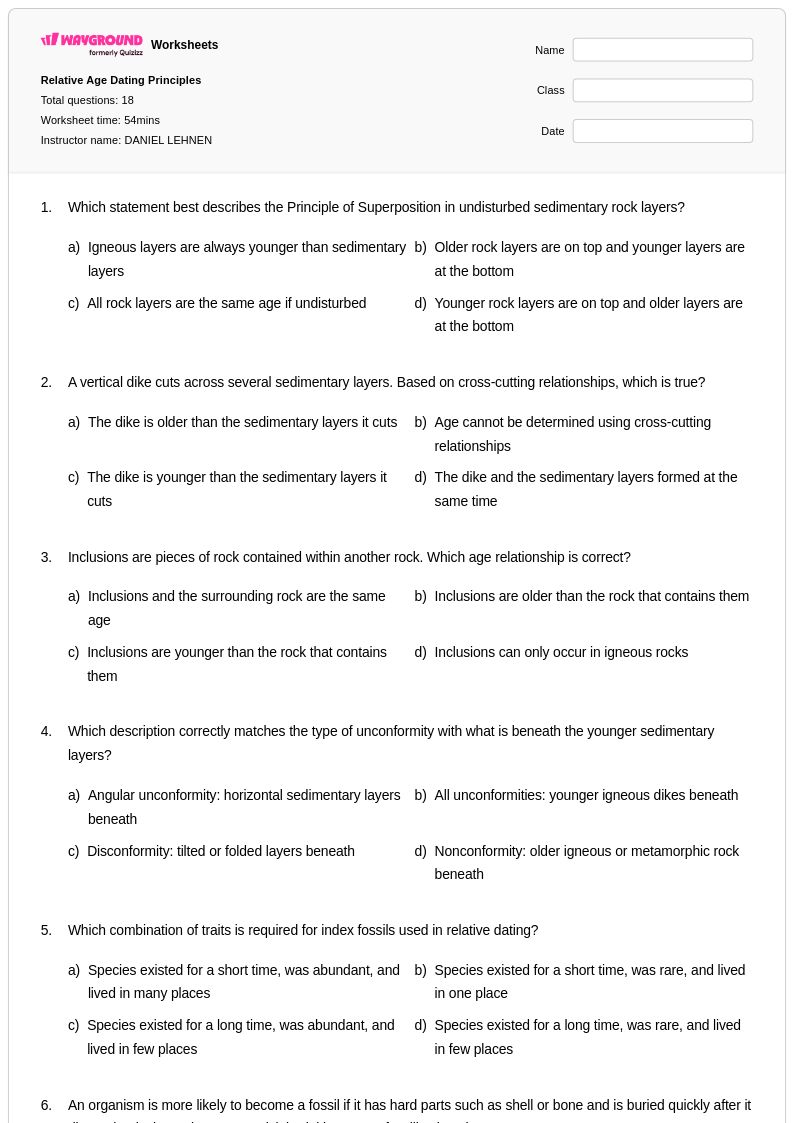
One of the most common errors is misapplying the law of superposition to tilted or folded strata, where students assume the visible top layer is always youngest without accounting for tectonic disturbance. Students also frequently confuse cross-cutting relationships, struggling to identify which feature, such as a fault or igneous intrusion, came after the surrounding rock. A third persistent misconception is treating relative dating as equivalent to absolute dating, so explicitly contrasting the two methods early in instruction helps prevent this confusion from taking hold.
How can I differentiate relative dating instruction for students at different skill levels?
For struggling students, simplify geological cross-sections to two or three clearly distinct layers and focus on one principle at a time before combining them. Advanced learners benefit from multi-column stratigraphic correlation problems that require them to match rock layers across separate locations using index fossils. On Wayground, teachers can apply accommodations such as reduced answer choices and read-aloud support to individual students during digital practice sessions, while the rest of the class receives standard settings without any notification.
How do I use Wayground's relative dating worksheets in my classroom?
Wayground's relative dating worksheets are available as printable PDFs for traditional classroom use and in digital formats for technology-integrated environments, making them flexible for in-person, hybrid, or independent study settings. Teachers can also host the worksheets as a quiz directly on Wayground, enabling them to track student responses and identify where misconceptions are occurring in real time. Each worksheet includes a complete answer key, reducing prep time and making them practical for both initial instruction and targeted review.
How does relative dating differ from absolute dating, and should I teach both together?
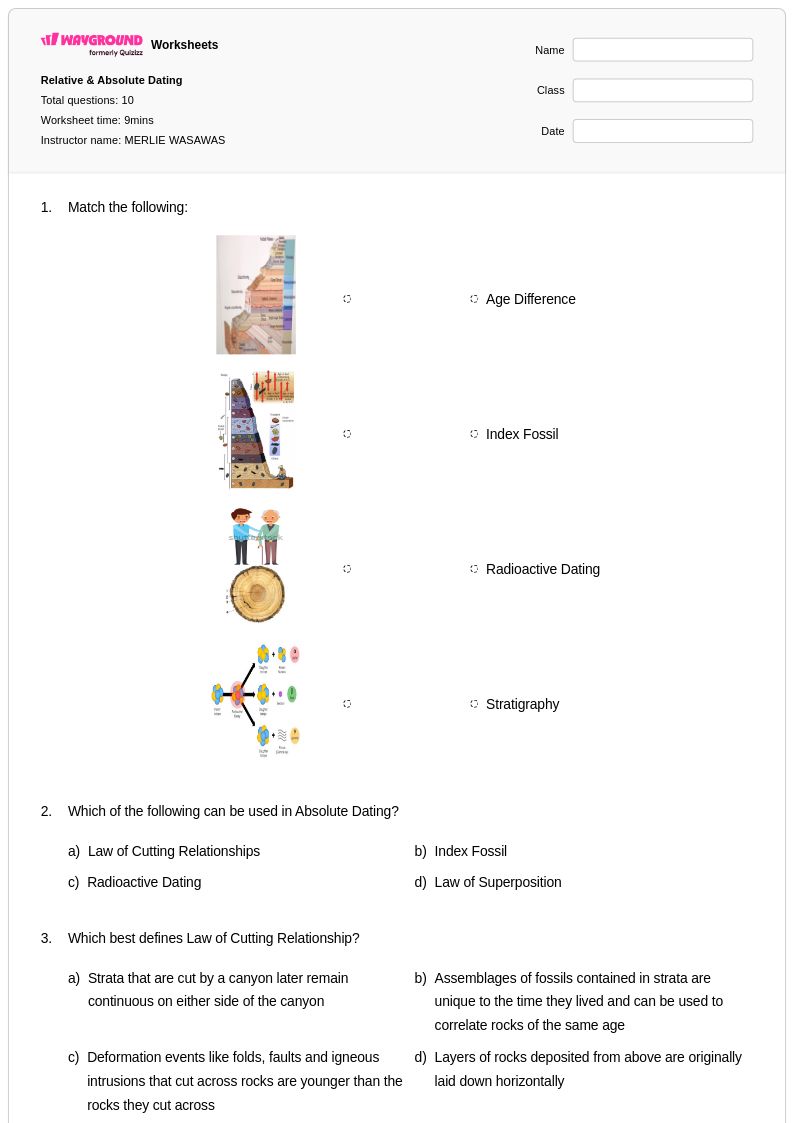
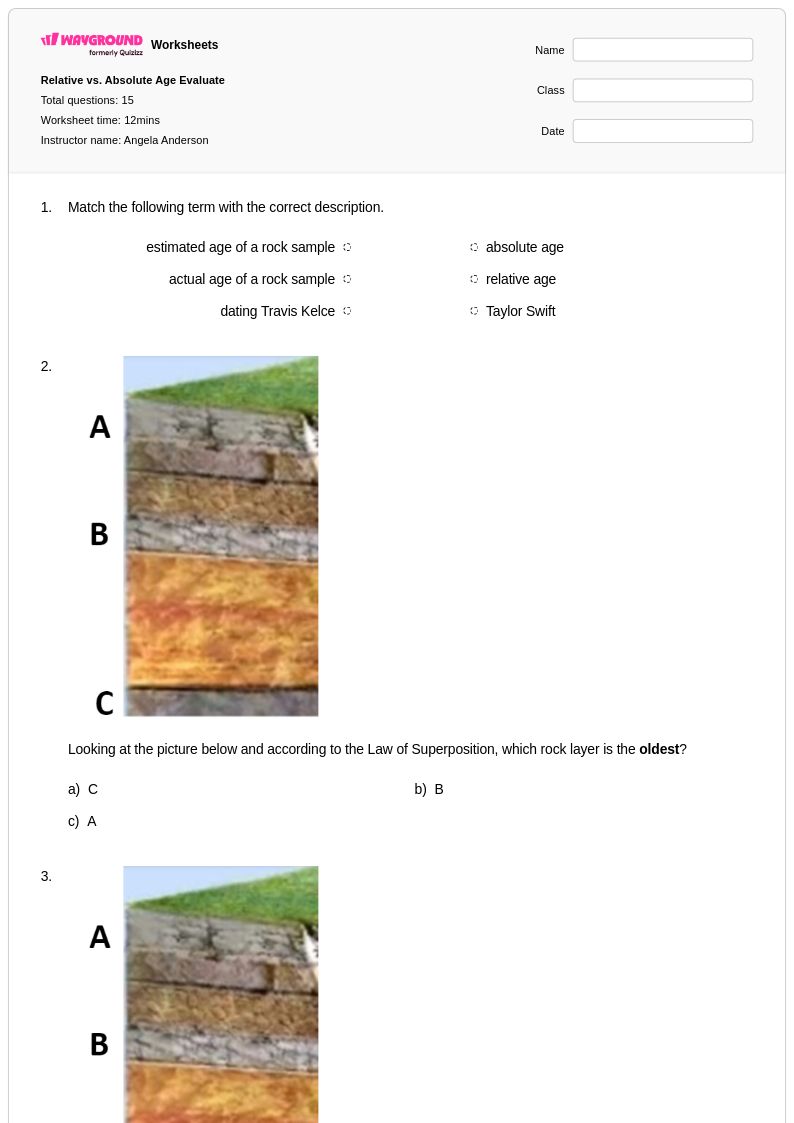
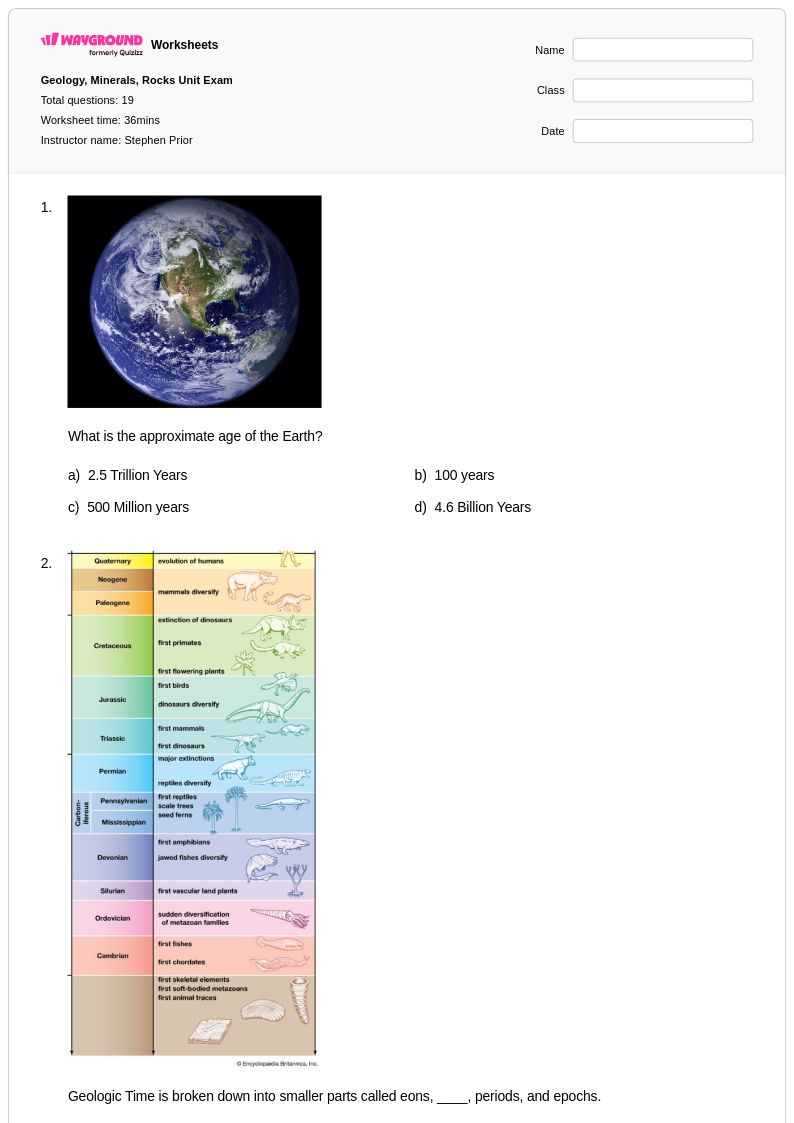
Relative dating establishes the chronological order of geological events without assigning specific ages, while absolute dating uses radiometric techniques to assign numerical age estimates in years. Teaching relative dating first is the stronger pedagogical sequence because it builds the foundational logic of stratigraphic analysis that students need before working with decay rates or isotopic ratios. Introducing both too early can cause students to conflate the two approaches, so most Earth science curricula treat relative dating as a prerequisite unit.