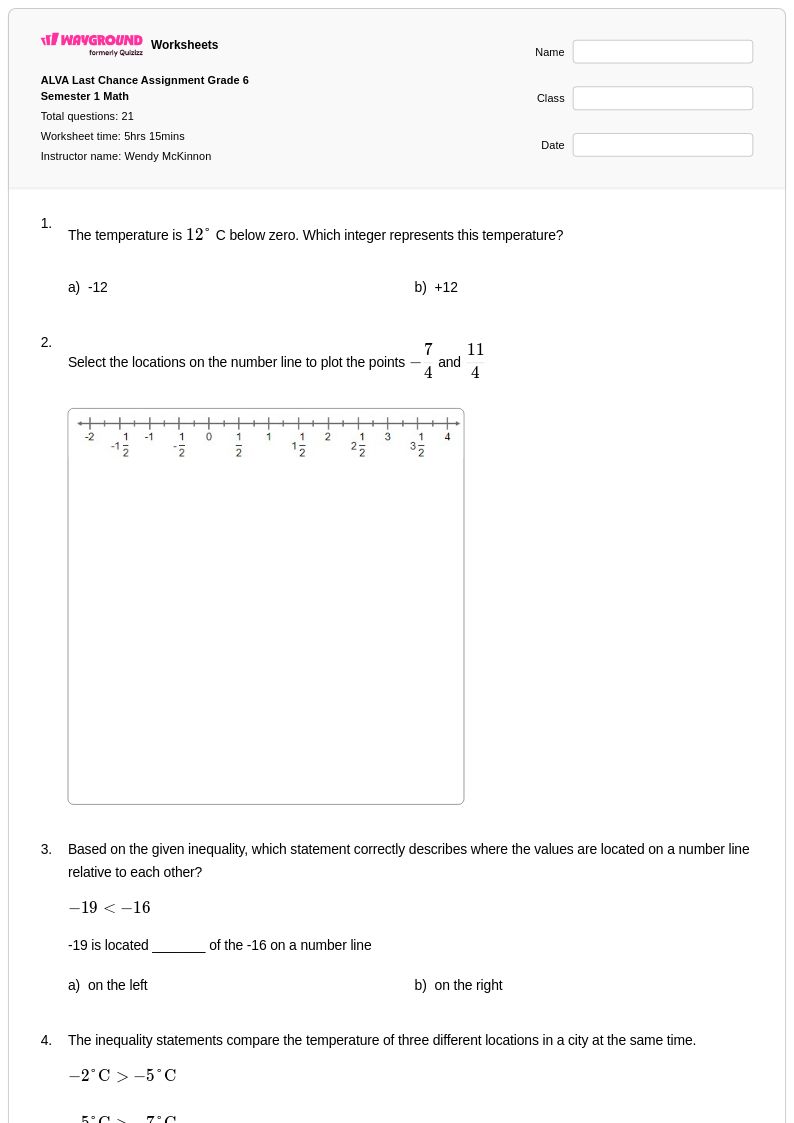
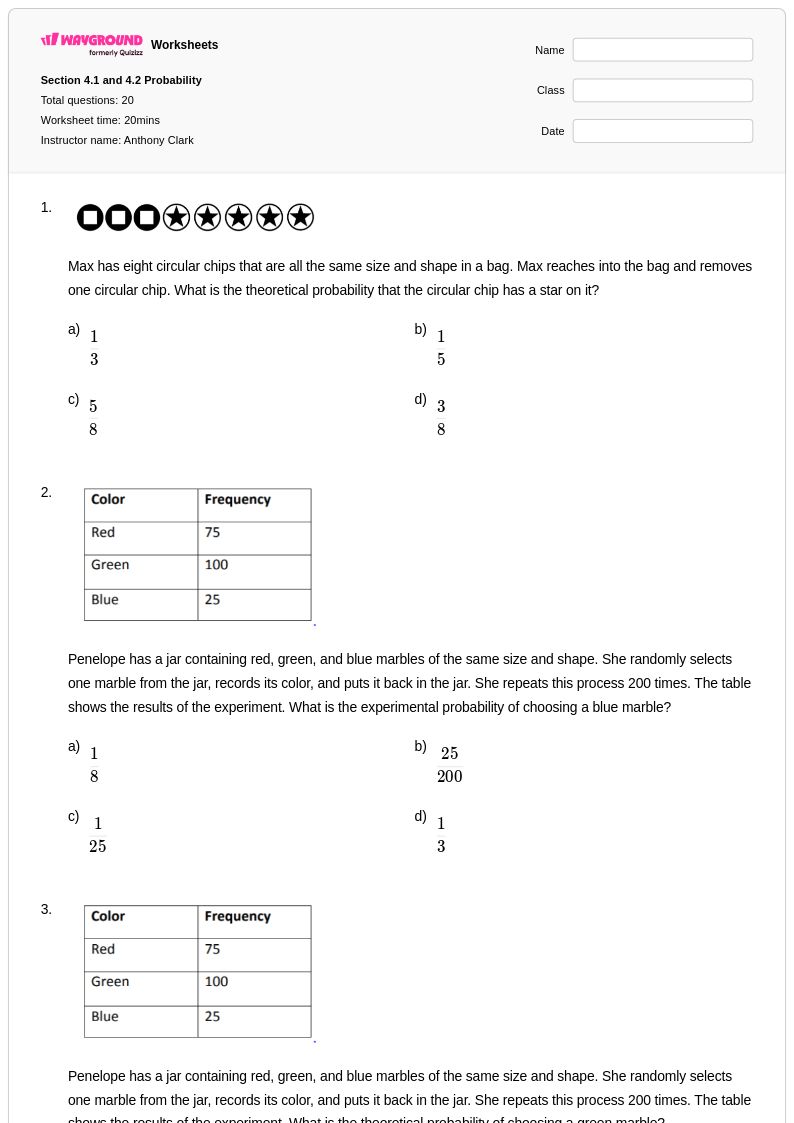
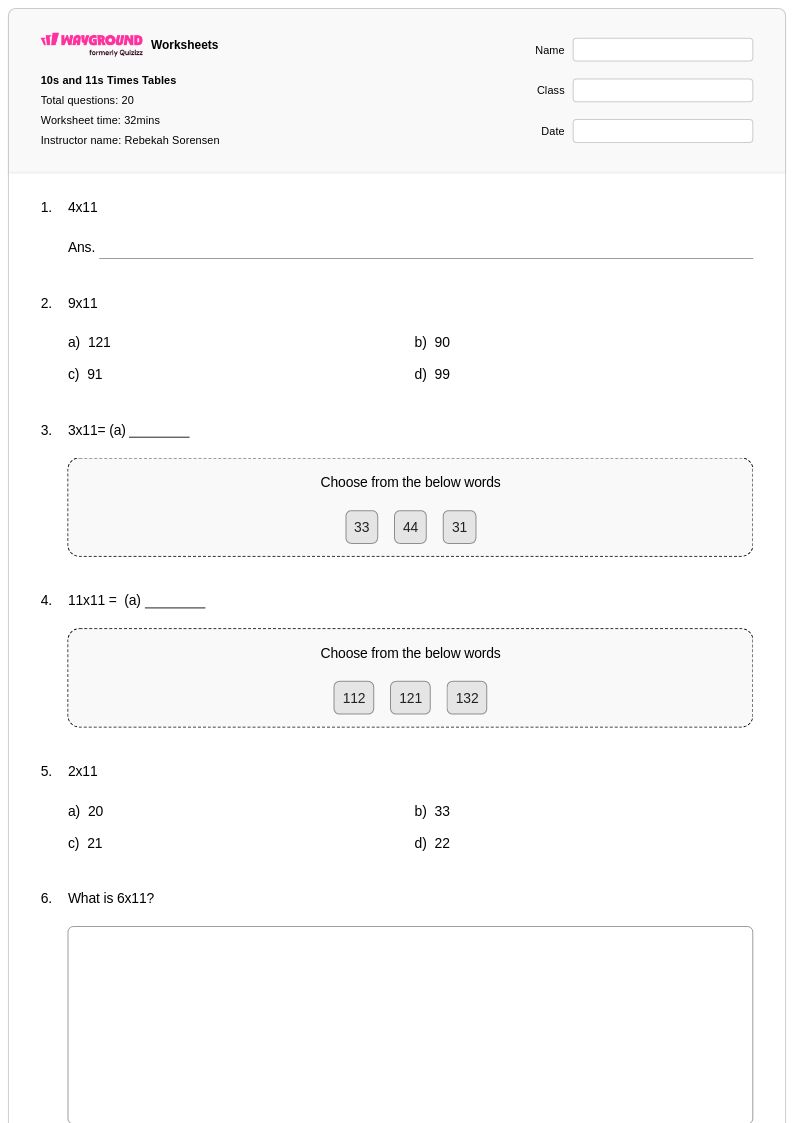
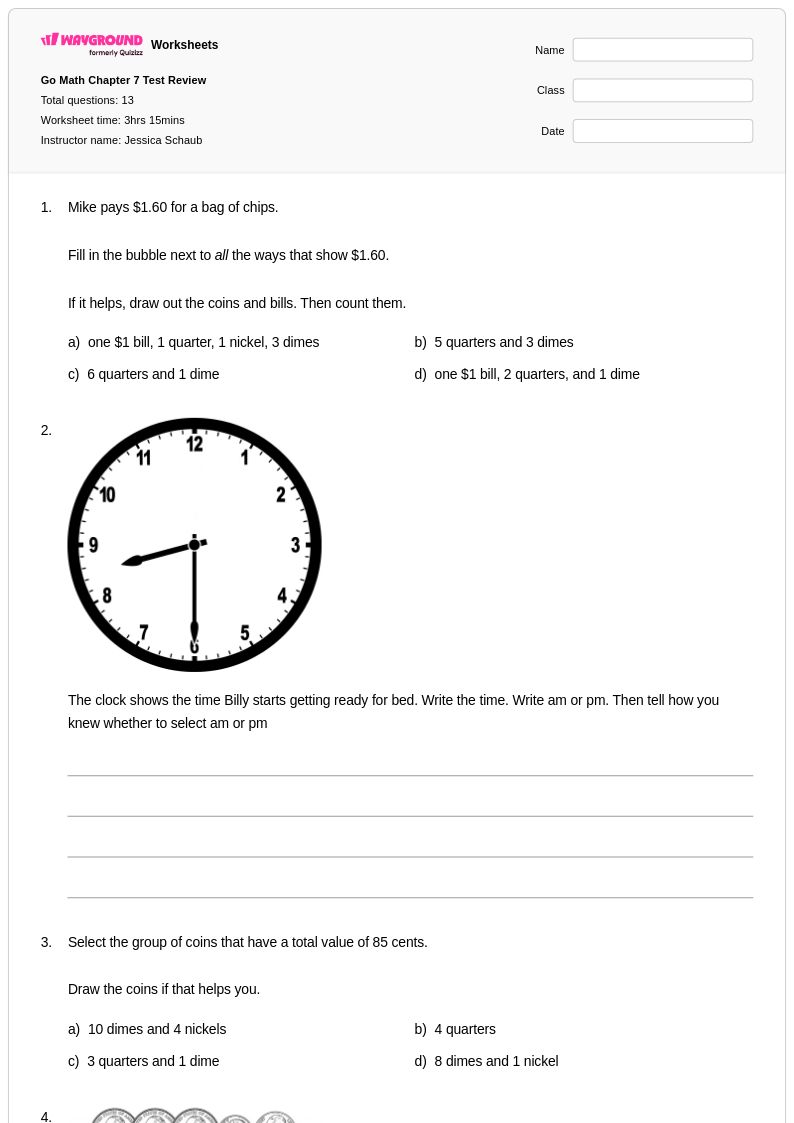
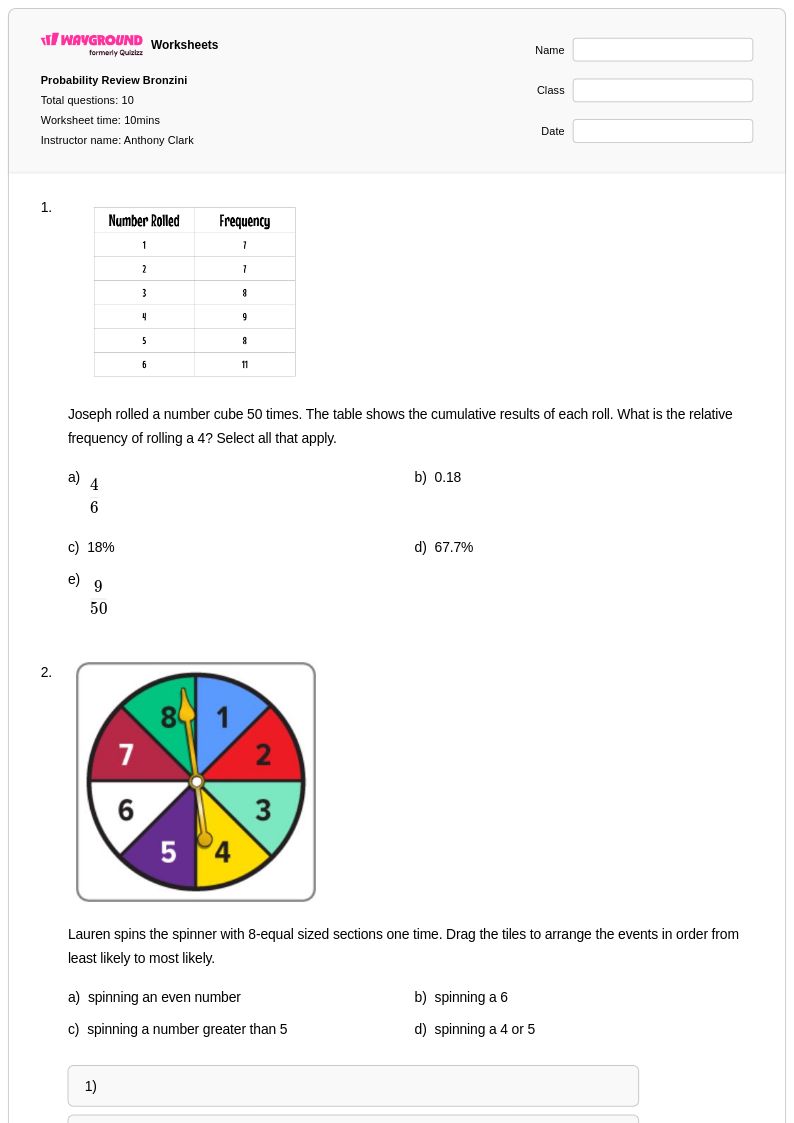
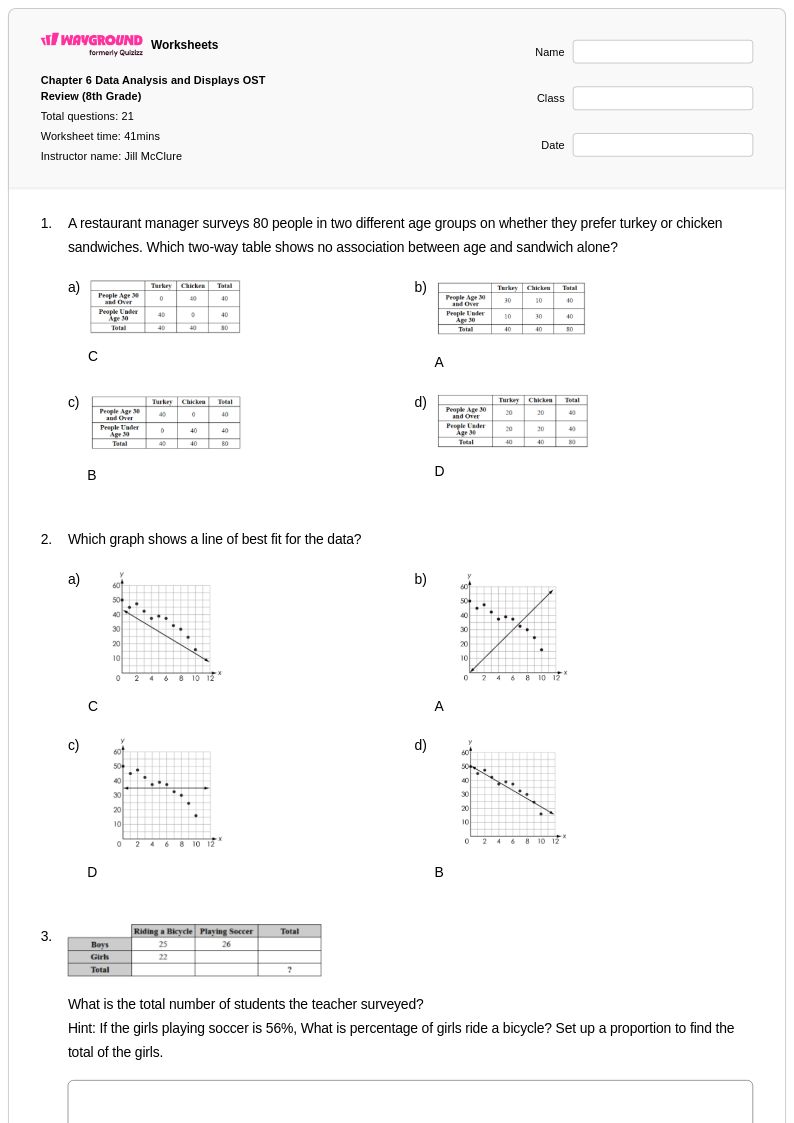
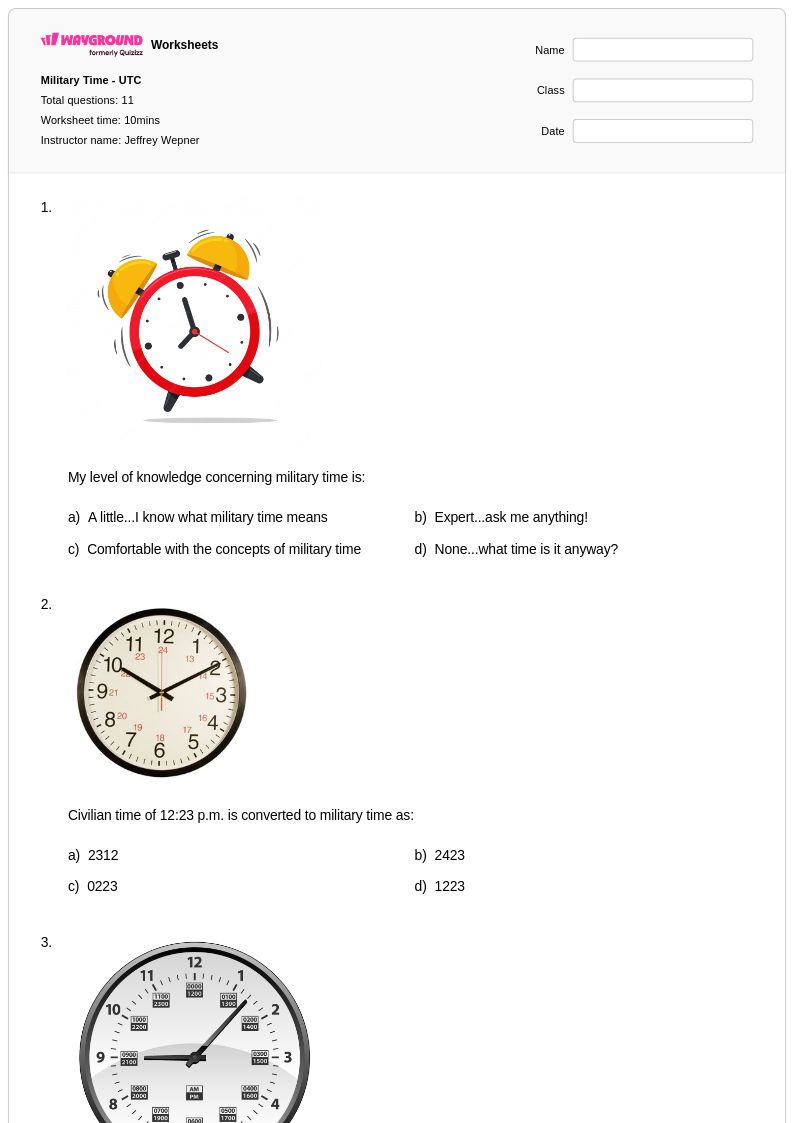
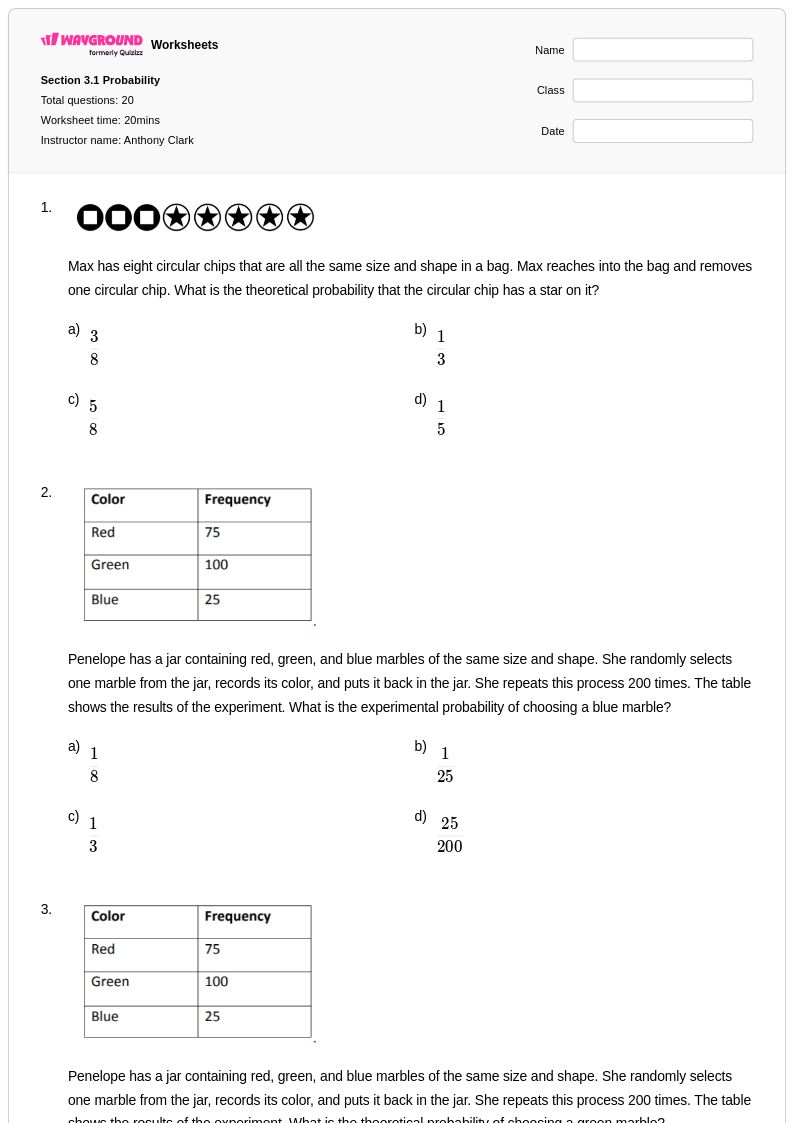
Explore Wayground's free relative time worksheets and printables that help students master comparing and calculating time relationships through engaging practice problems with comprehensive answer keys.
Relative time worksheets available through Wayground (formerly Quizizz) provide students with comprehensive practice in understanding temporal relationships and chronological reasoning skills. These educational resources focus on developing students' ability to compare events, calculate time intervals, and understand concepts such as "before," "after," "earlier," "later," and duration between specific moments or periods. The worksheets strengthen critical mathematical thinking by challenging learners to work with time sequences, elapsed time calculations, and comparative time analysis through engaging practice problems. Each worksheet collection includes detailed answer keys and is available as free printables in convenient pdf format, making it easy for educators to integrate these resources into their mathematics instruction.
Wayground (formerly Quizizz) supports teachers with an extensive collection of relative time worksheet resources drawn from millions of teacher-created materials that have been carefully curated and organized for educational effectiveness. The platform's robust search and filtering capabilities allow educators to quickly locate worksheets that match specific learning objectives and skill levels, while built-in differentiation tools enable teachers to customize content for diverse student needs. These flexible resources are available in both printable pdf format and interactive digital versions, providing versatility for various classroom environments and teaching approaches. Teachers can efficiently use these worksheets for lesson planning, targeted skill practice, remediation support for struggling learners, and enrichment activities for advanced students, all while ensuring alignment with mathematical standards and learning progressions.
FAQs
How can I teach the concept of relative time?
Start with concrete, familiar sequences like the school day schedule (recess is before lunch, math is after recess). Use timelines to visually map events, helping students see the relationship between 'earlier' and 'later'. Gradually introduce word problems that require students to calculate durations between two points in time without a clock.
What kind of exercises help students practice relative time?
Effective practice moves from simple vocabulary (before/after) to complex calculations. Use exercises that ask students to order events, calculate elapsed time from word problems, and compare the duration of different activities. Scenarios involving schedules, travel, or historical timelines provide practical context.
What are common mistakes students make when learning relative time?
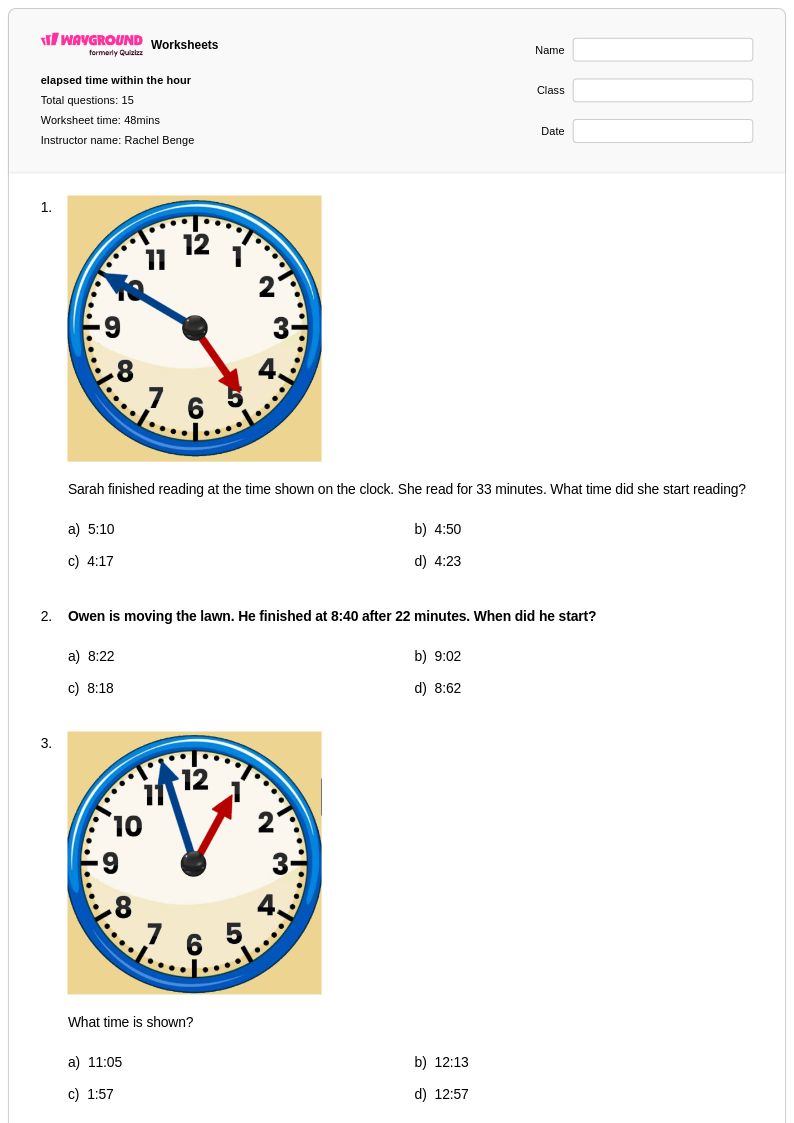
Students often struggle with calculating elapsed time that crosses the hour (e.g., 2:45 PM to 3:15 PM). They may also misinterpret temporal language, confusing the order of events described in word problems. Another common issue is difficulty converting between units of time, such as minutes and hours, within a single problem.
How do I use this relative time worksheet with my class?
You can assign this worksheet in multiple ways to fit your classroom. Host it as an interactive digital quiz on the Wayground platform for instant feedback, or download the printable PDF for offline practice. Every worksheet includes a complete answer key for easy grading.
How does understanding relative time fit into the math curriculum?
Aligned with Common Core principles, the concept of relative time builds progressively. In early grades, students learn basic temporal words. By third and fourth grade, they calculate elapsed time. In later grades, this skill becomes a foundation for solving multi-step word problems and understanding rates, such as speed, which are expressed as distance over time.
How can I adapt this worksheet for different learners?
For students needing support, use Wayground's digital accommodations like 'Read Aloud' for word problems or 'Reduced answer choices' to lower cognitive load. For the printable version, you can use the worksheet-level tools to create a version with a dyslexia-friendly font or increased font size and spacing to improve readability.