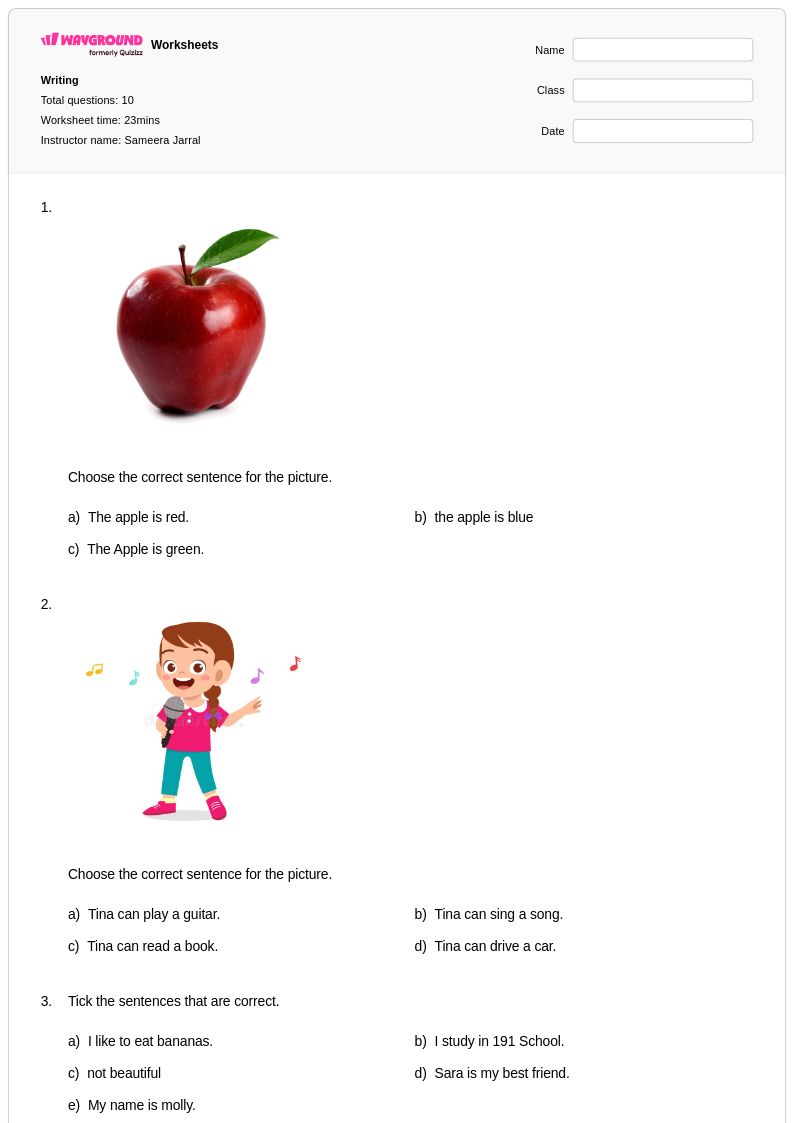
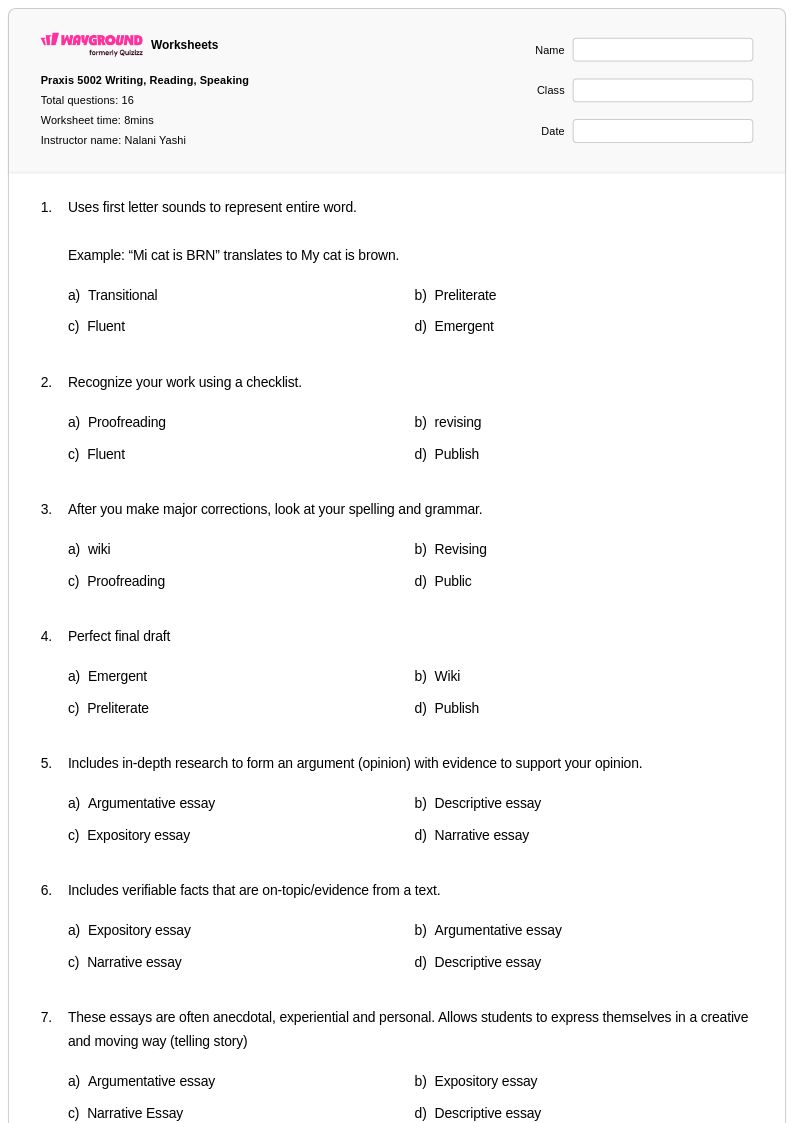
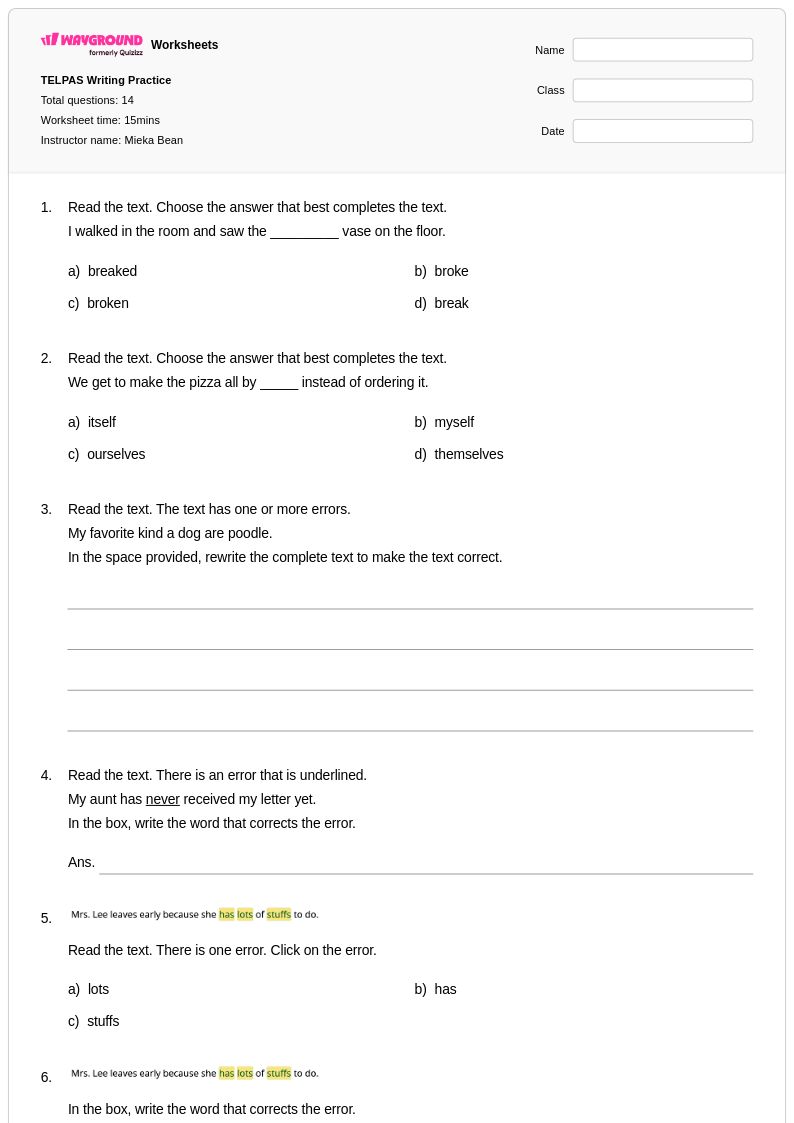
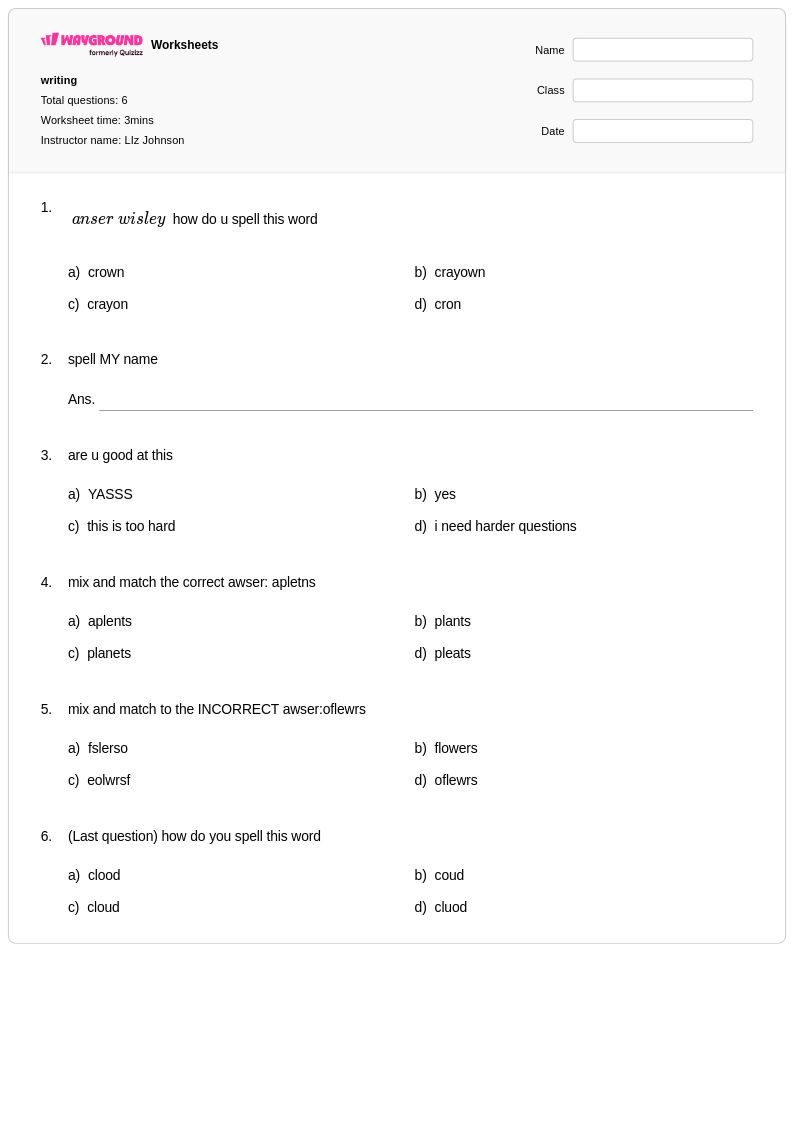
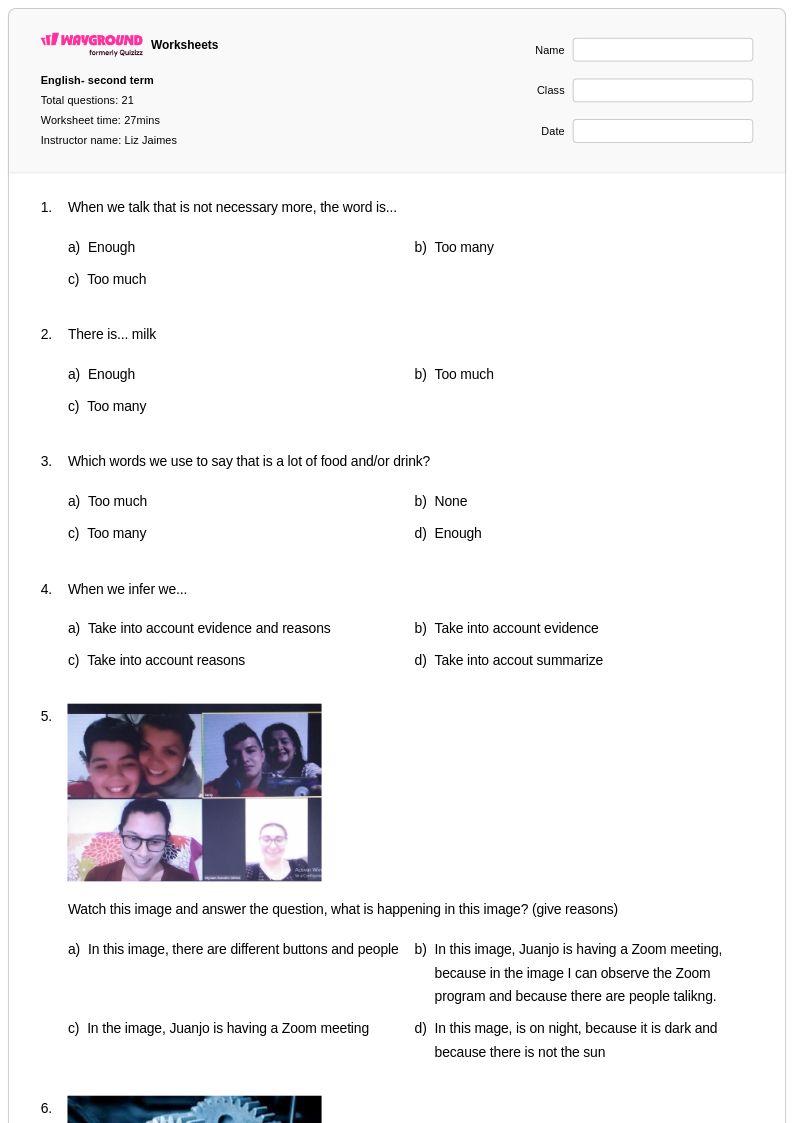
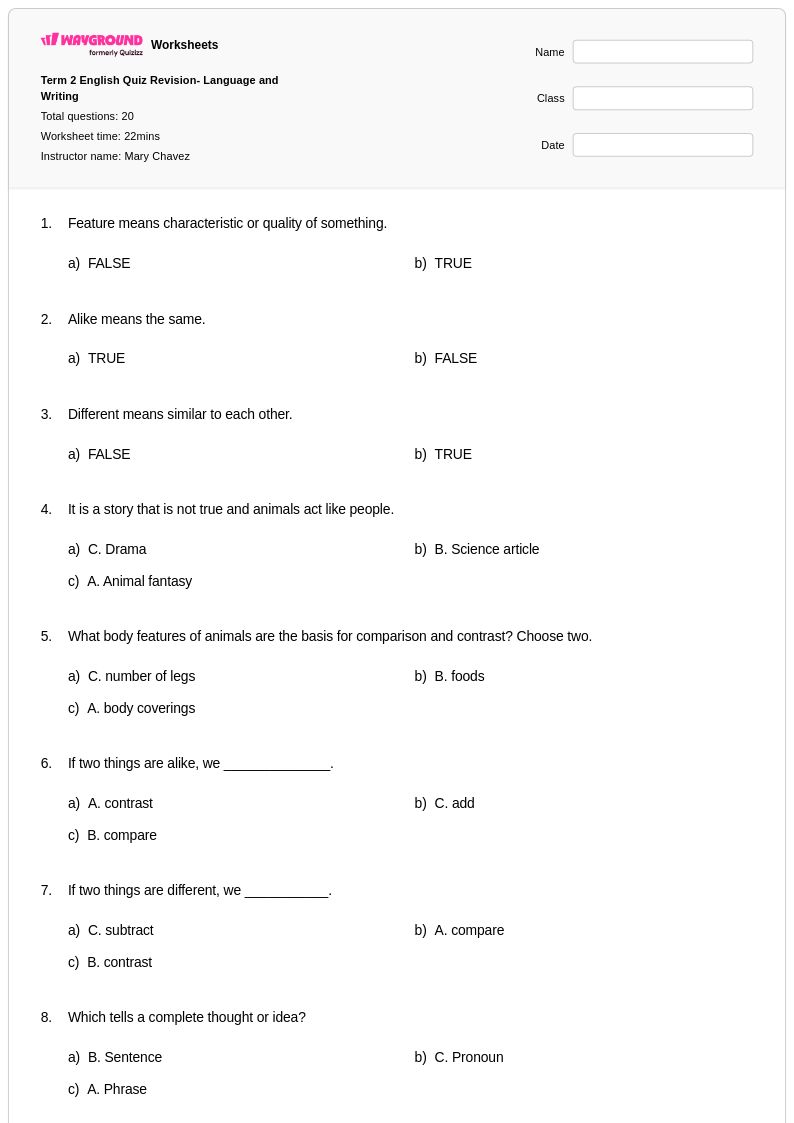
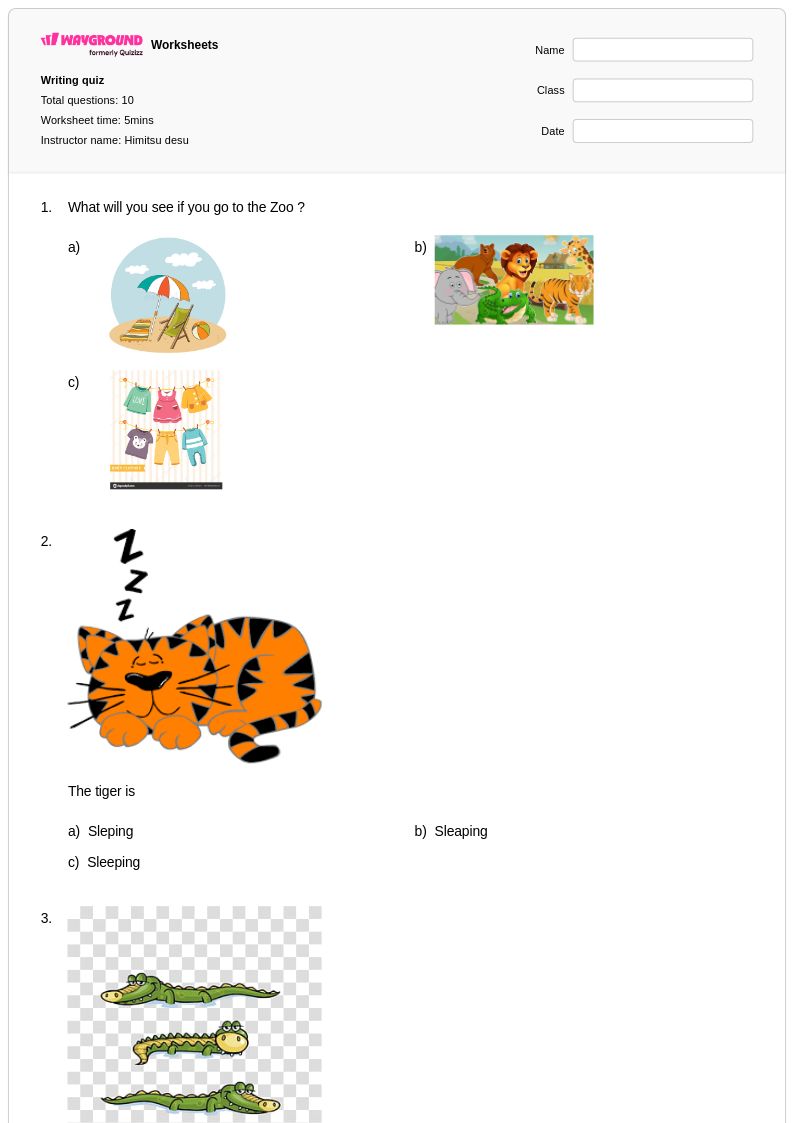
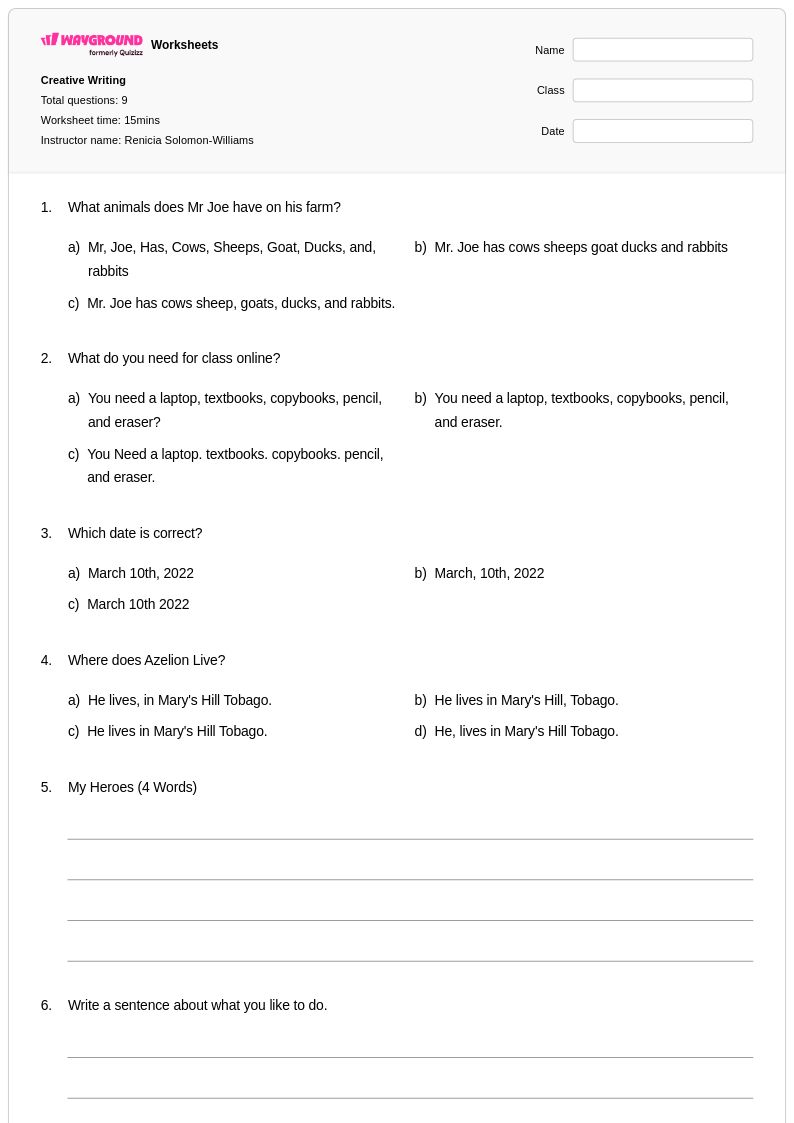
Free Printable Revising Writing Worksheets for Grade 1
Grade 1 revising writing worksheets and printables help young students learn to improve their first drafts through guided practice problems, complete with free PDF downloads and answer keys.
Explore printable Revising Writing worksheets for Grade 1
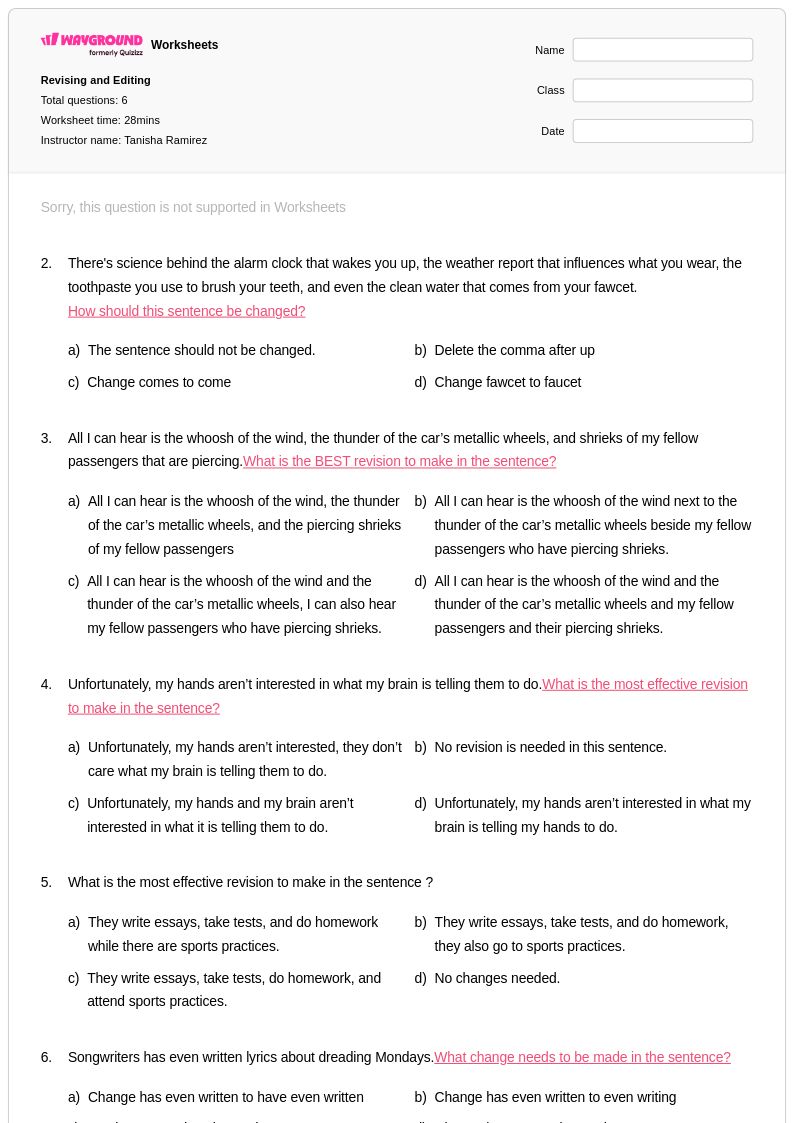
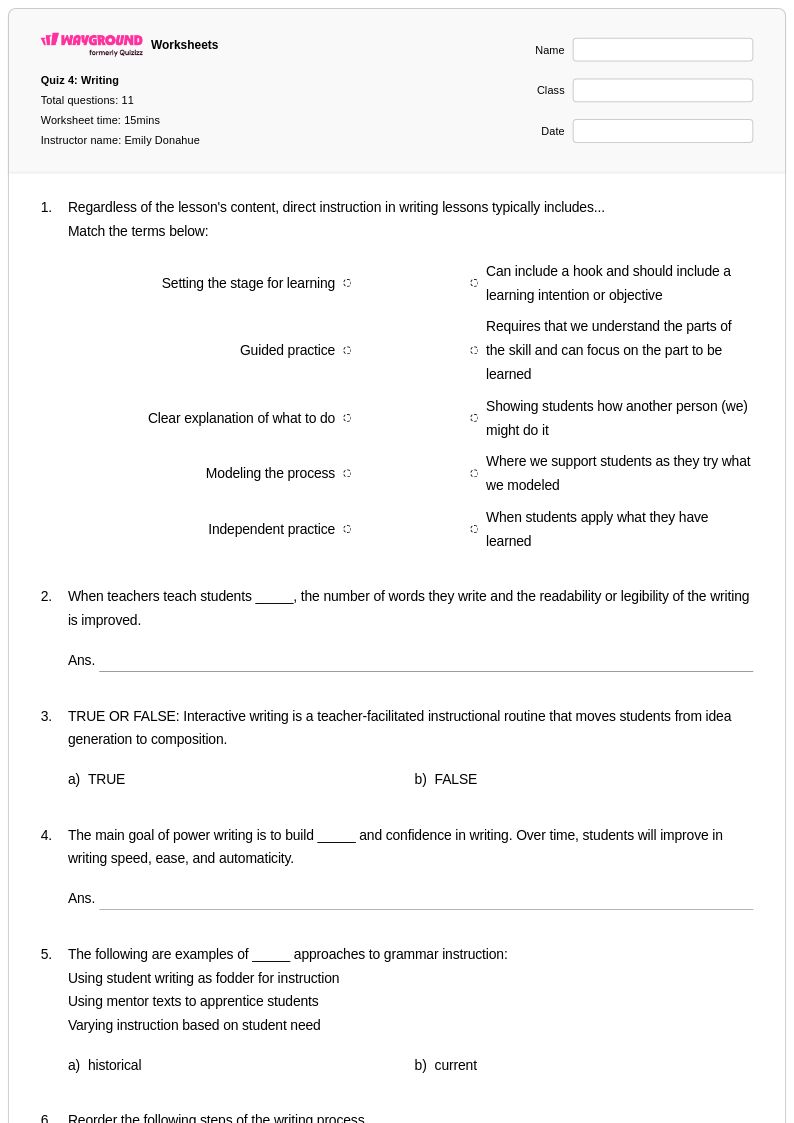
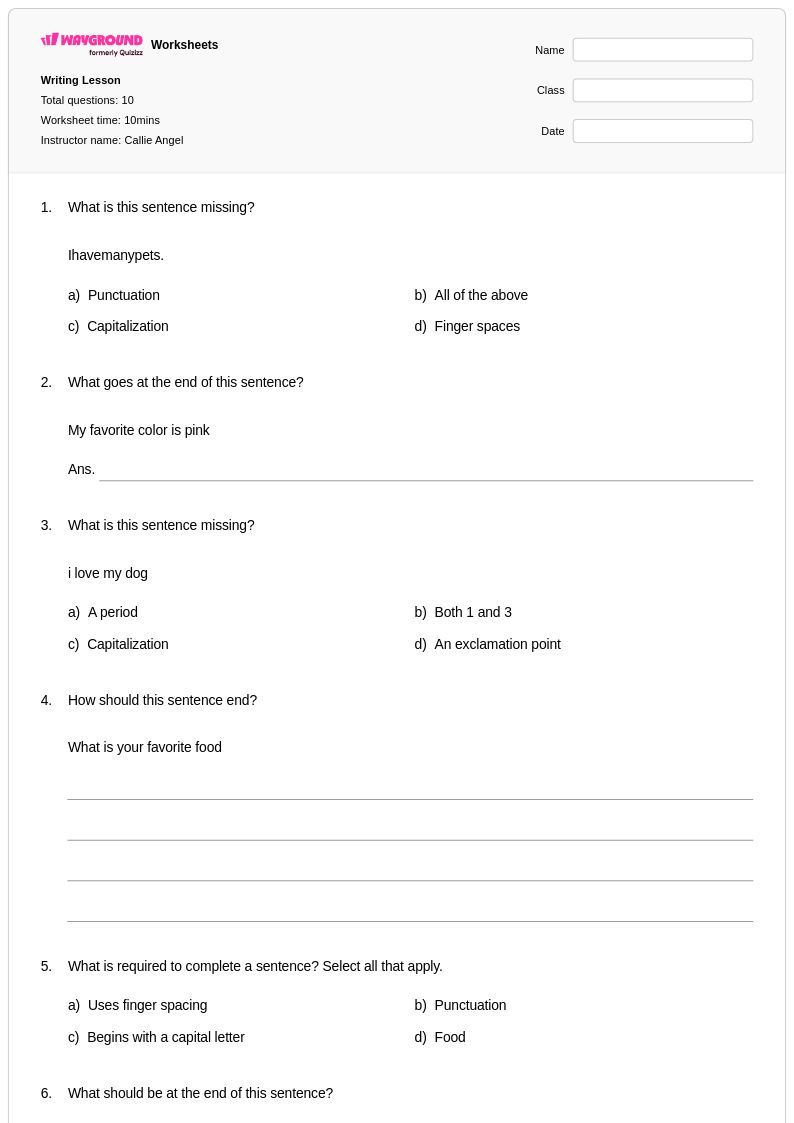
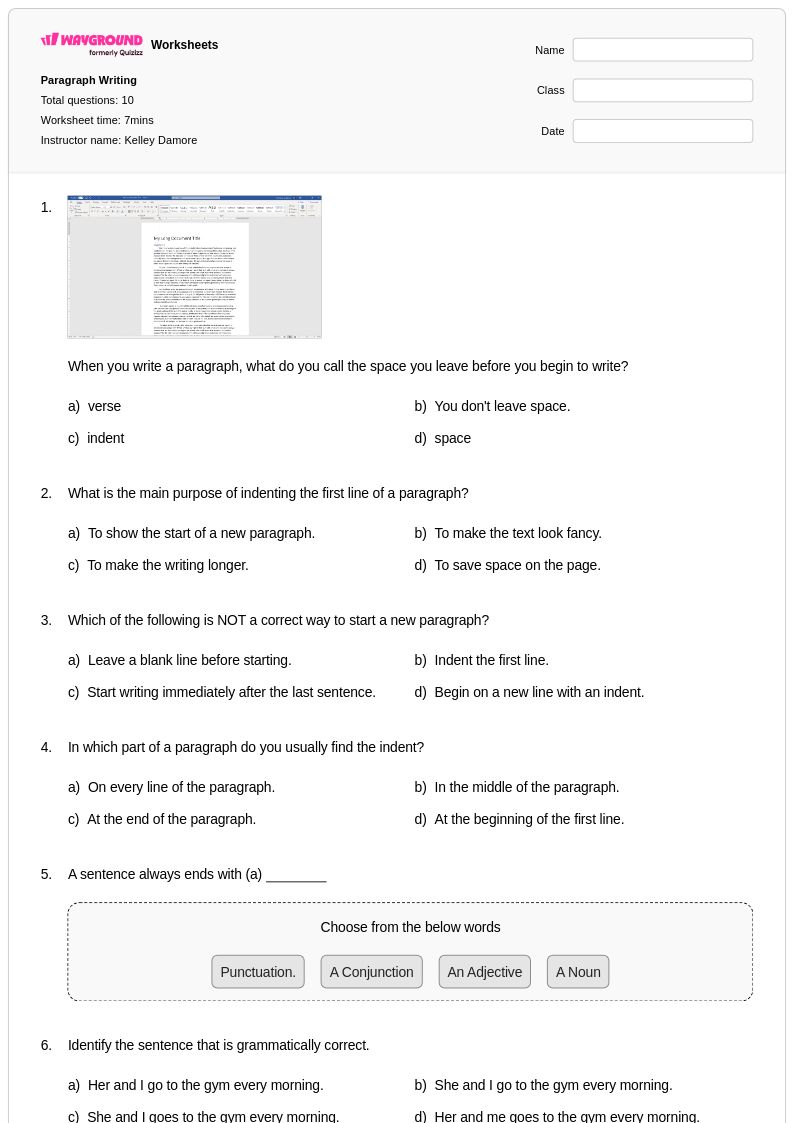
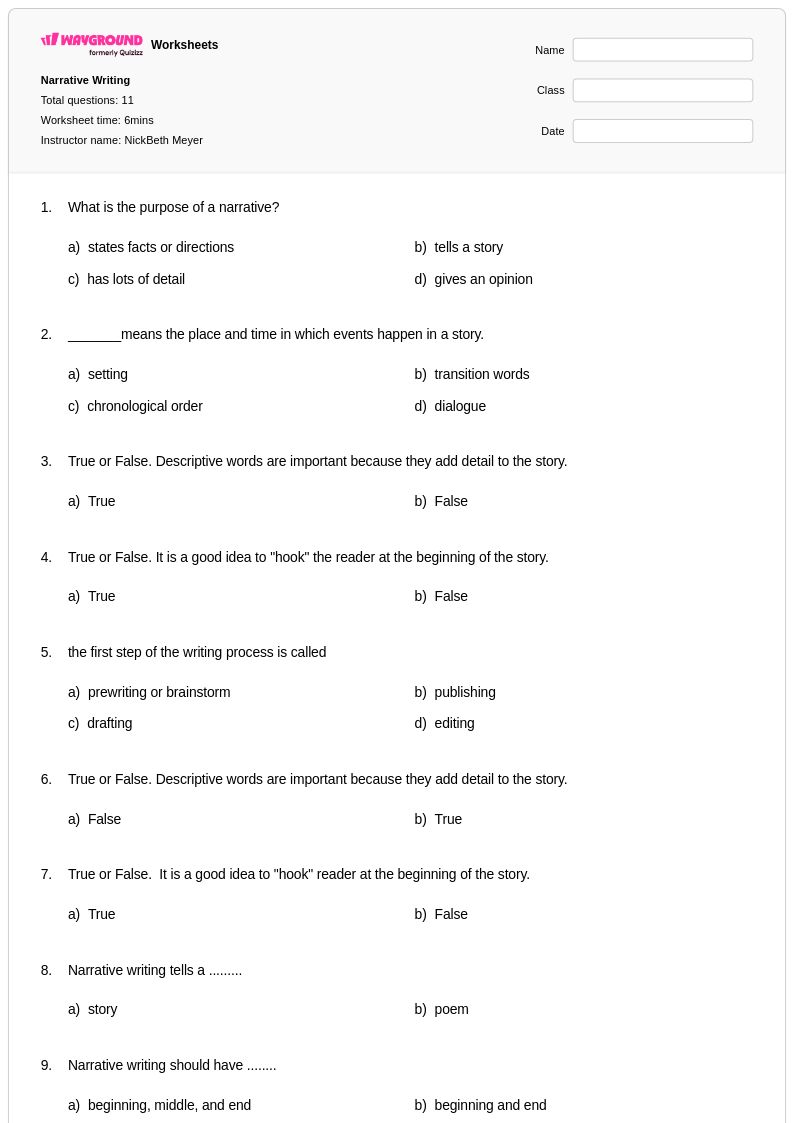
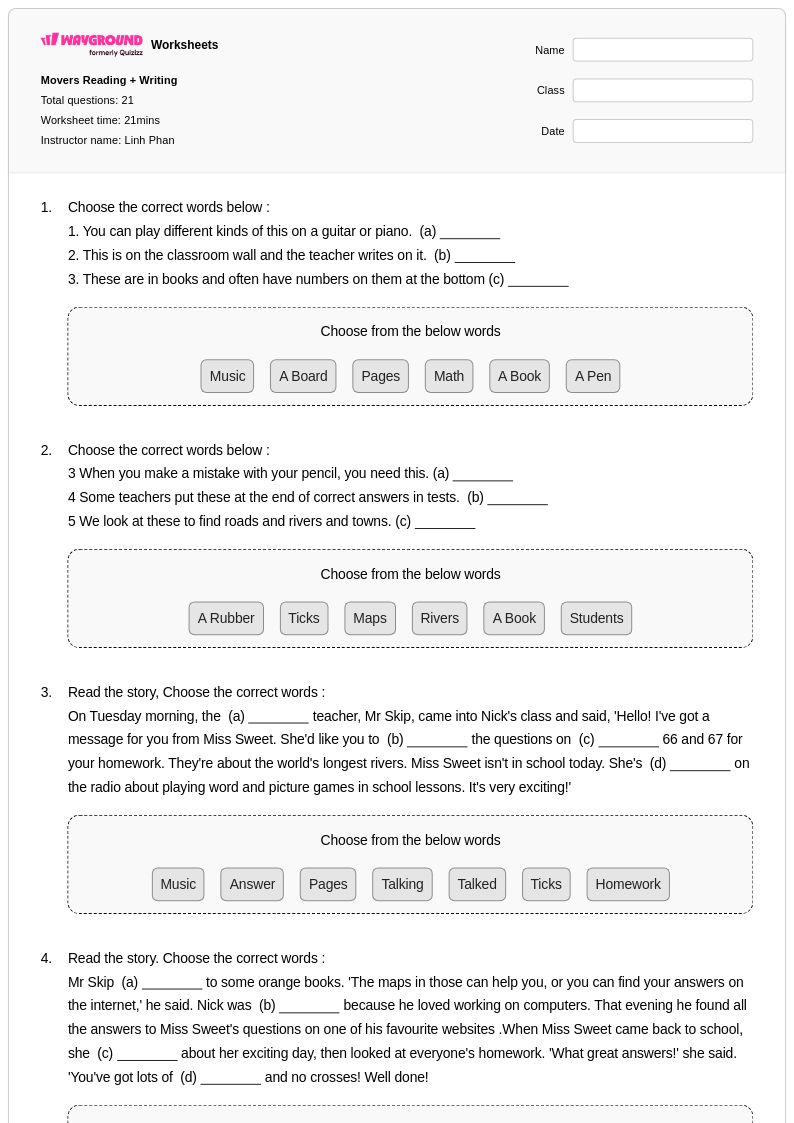
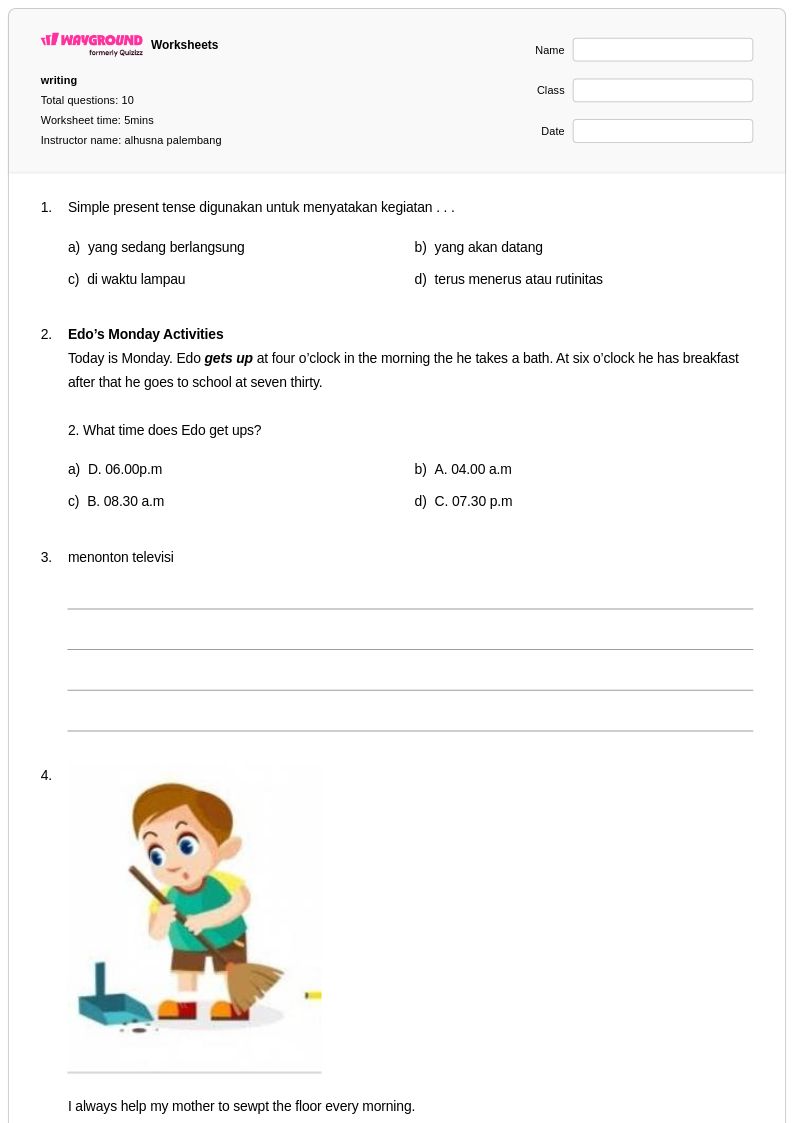
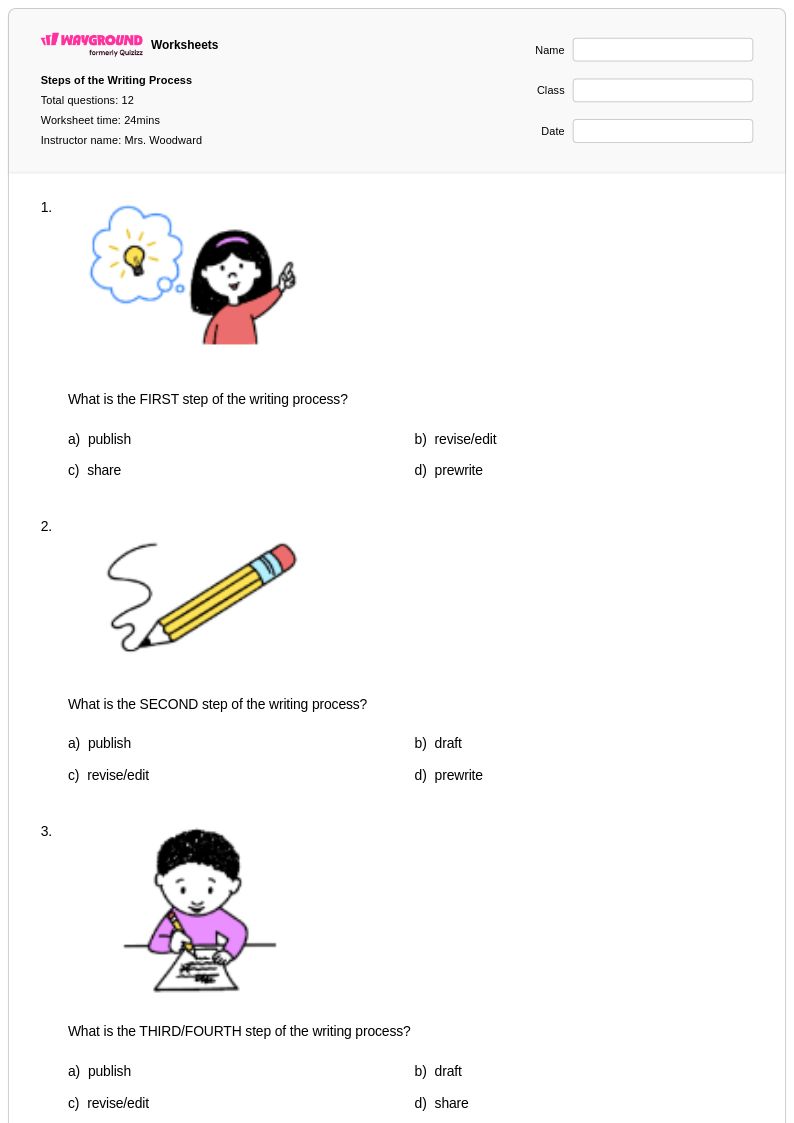
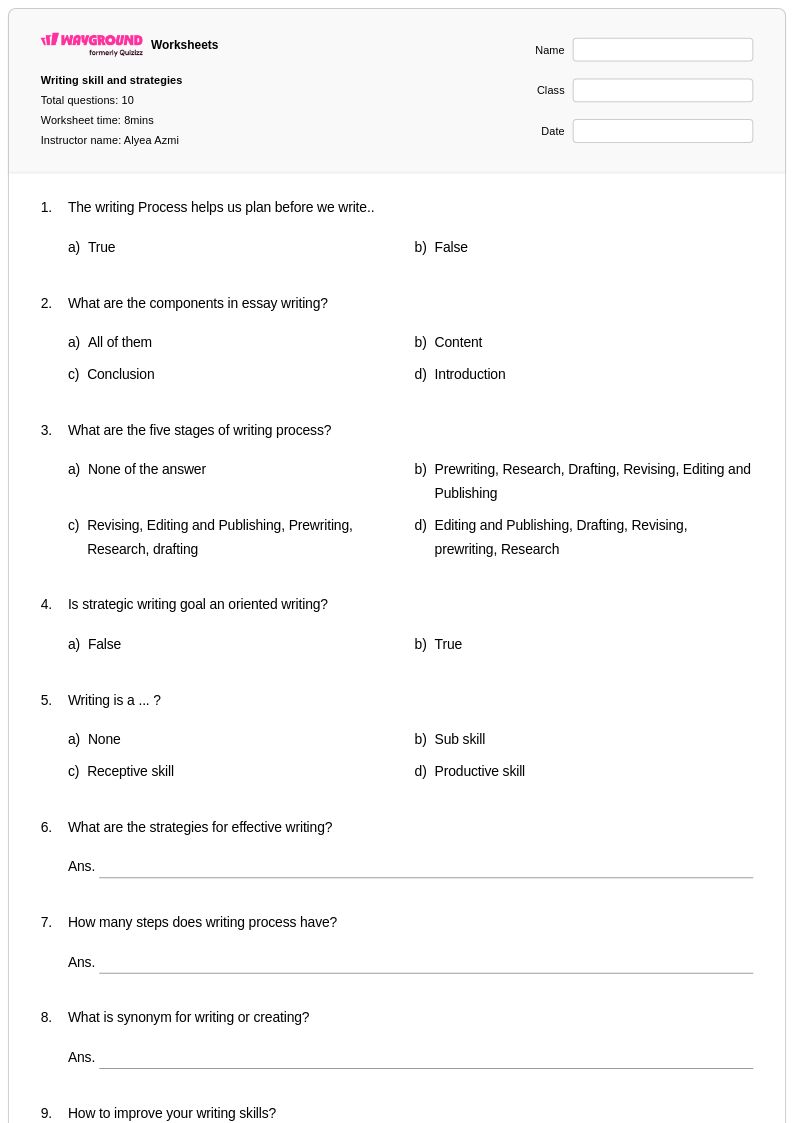
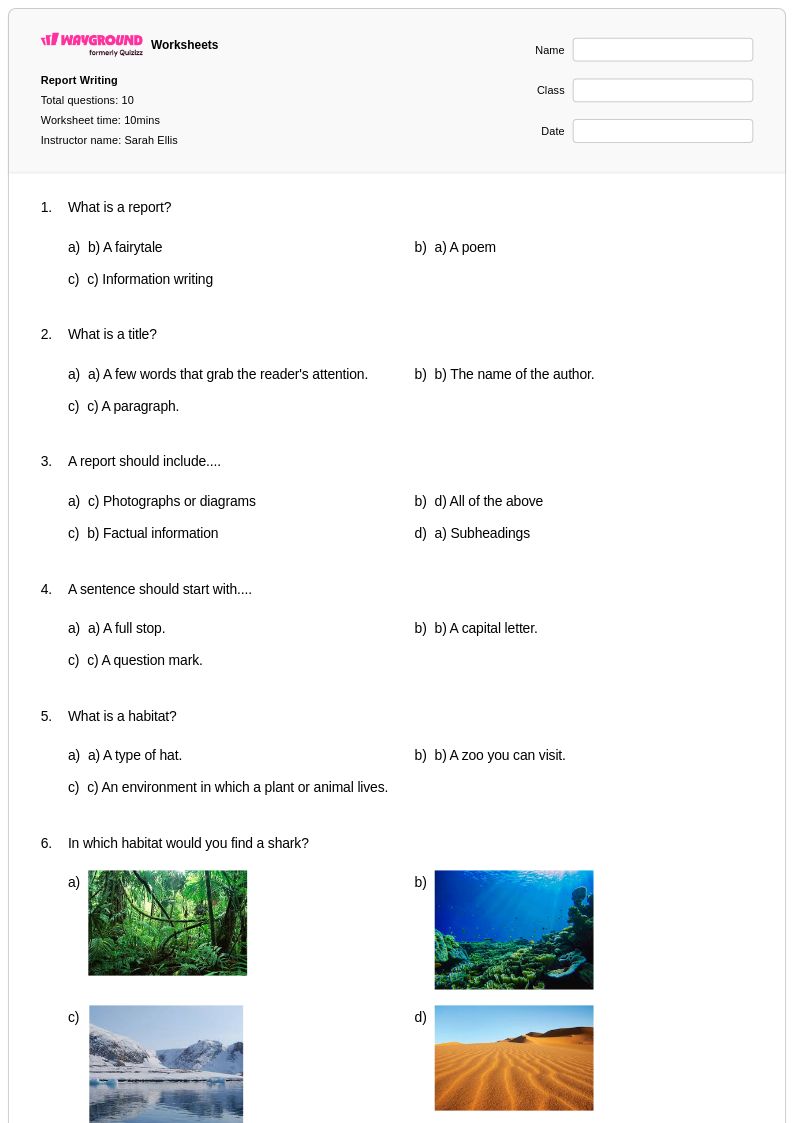
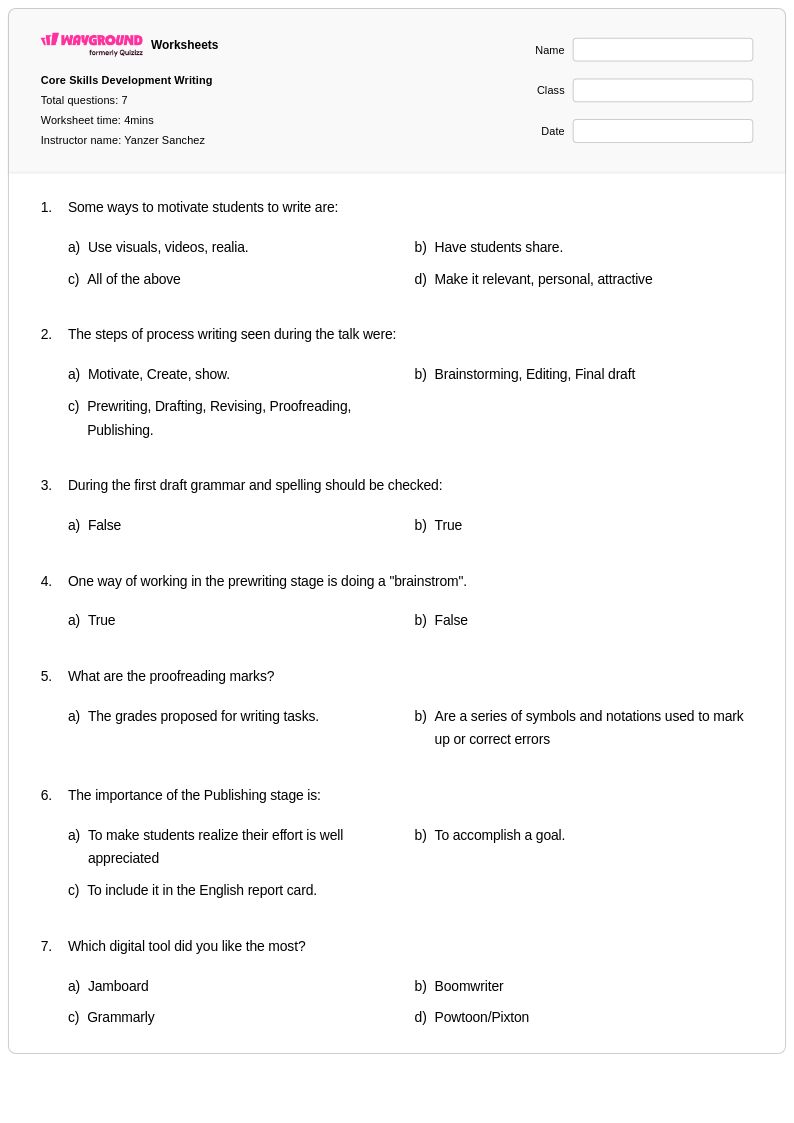
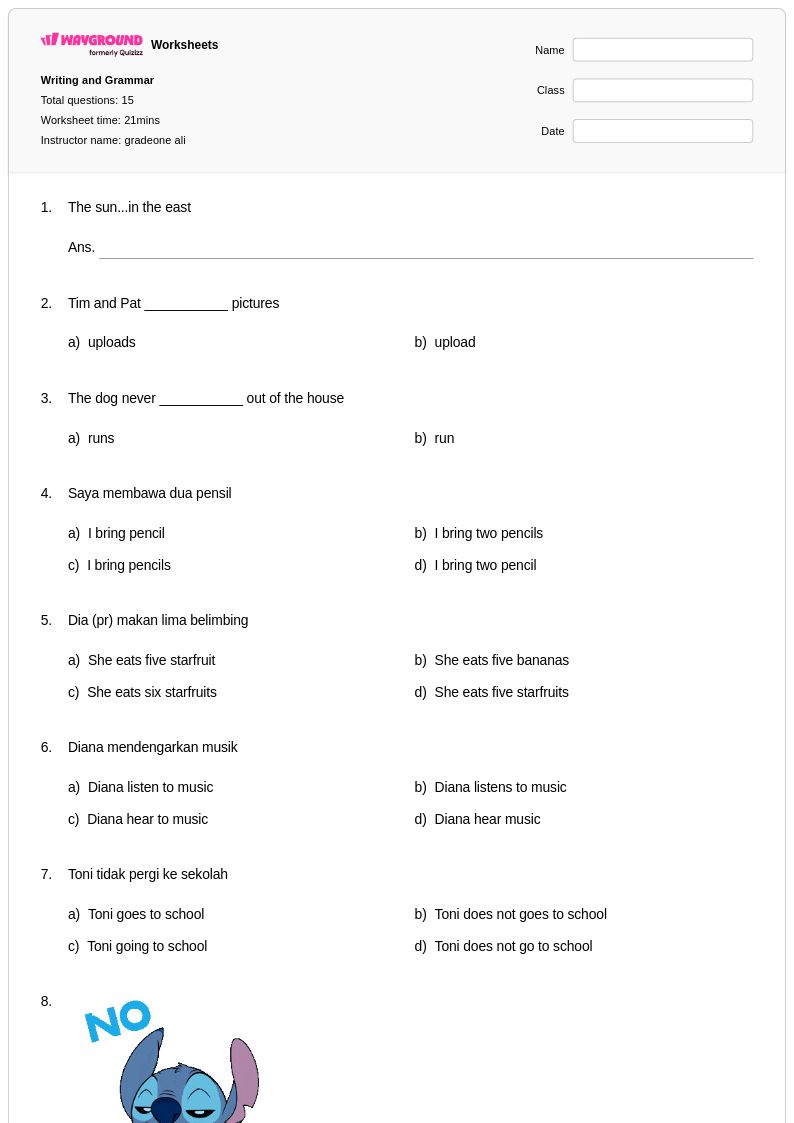
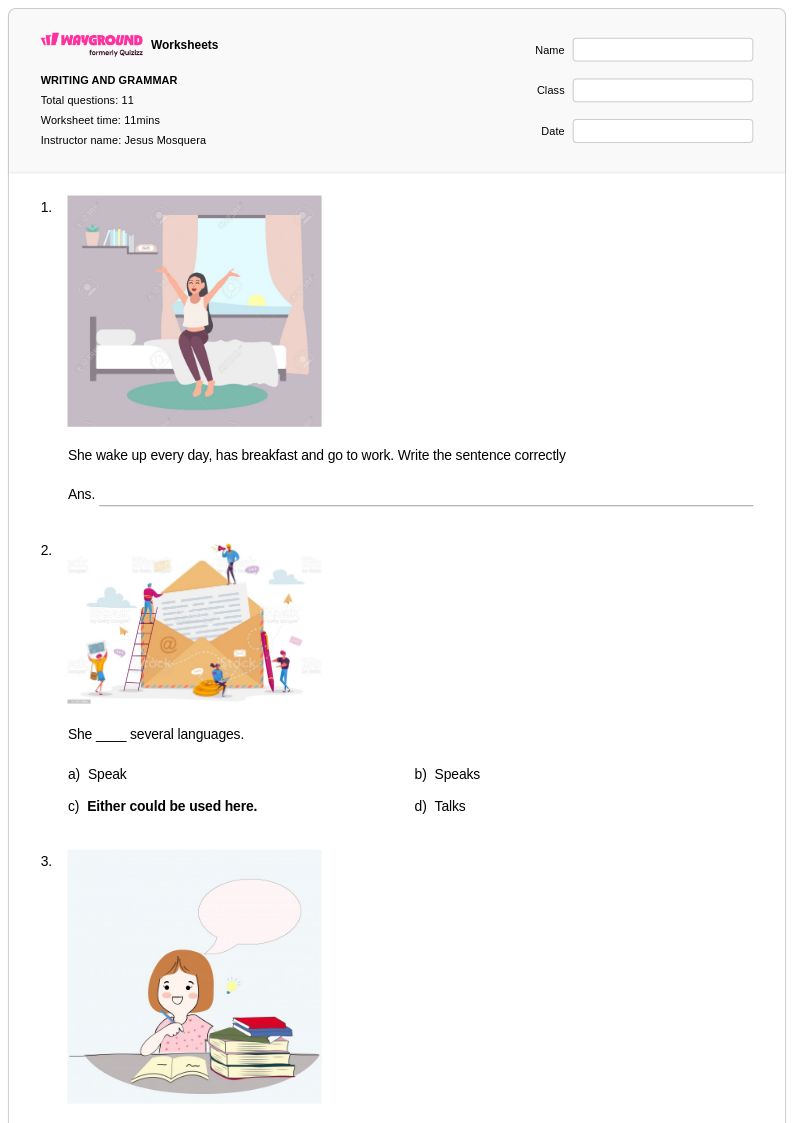
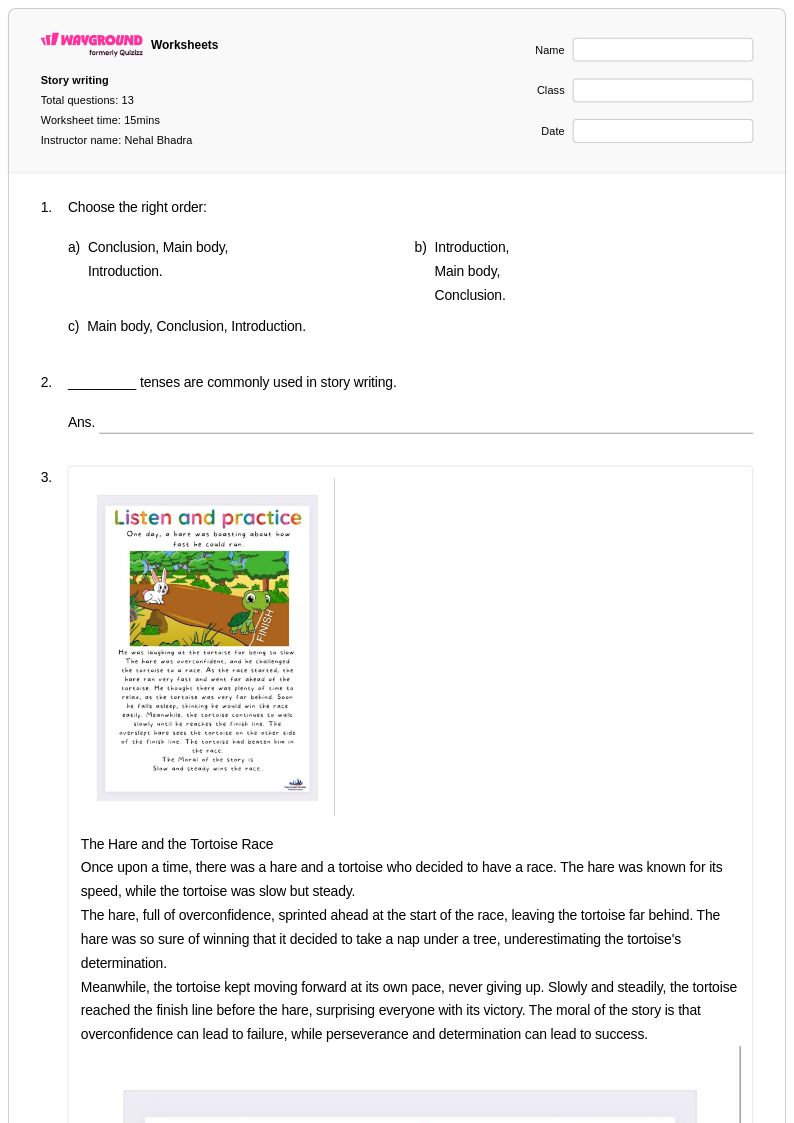
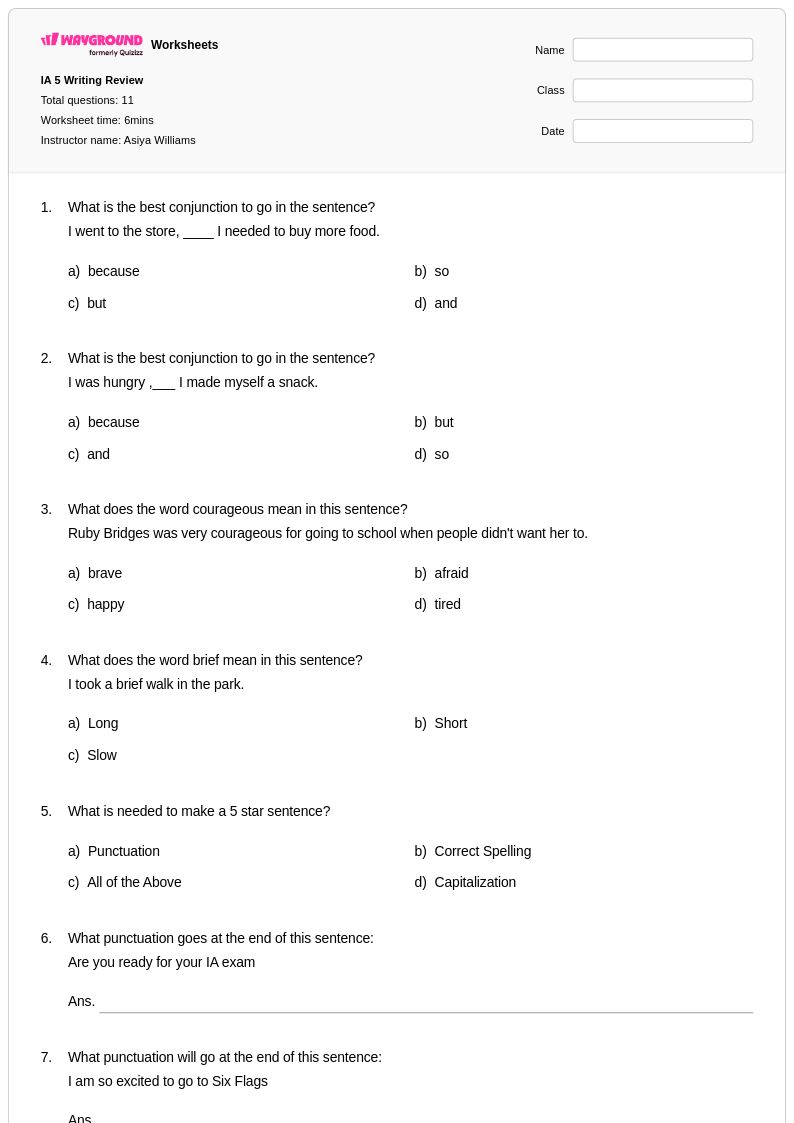
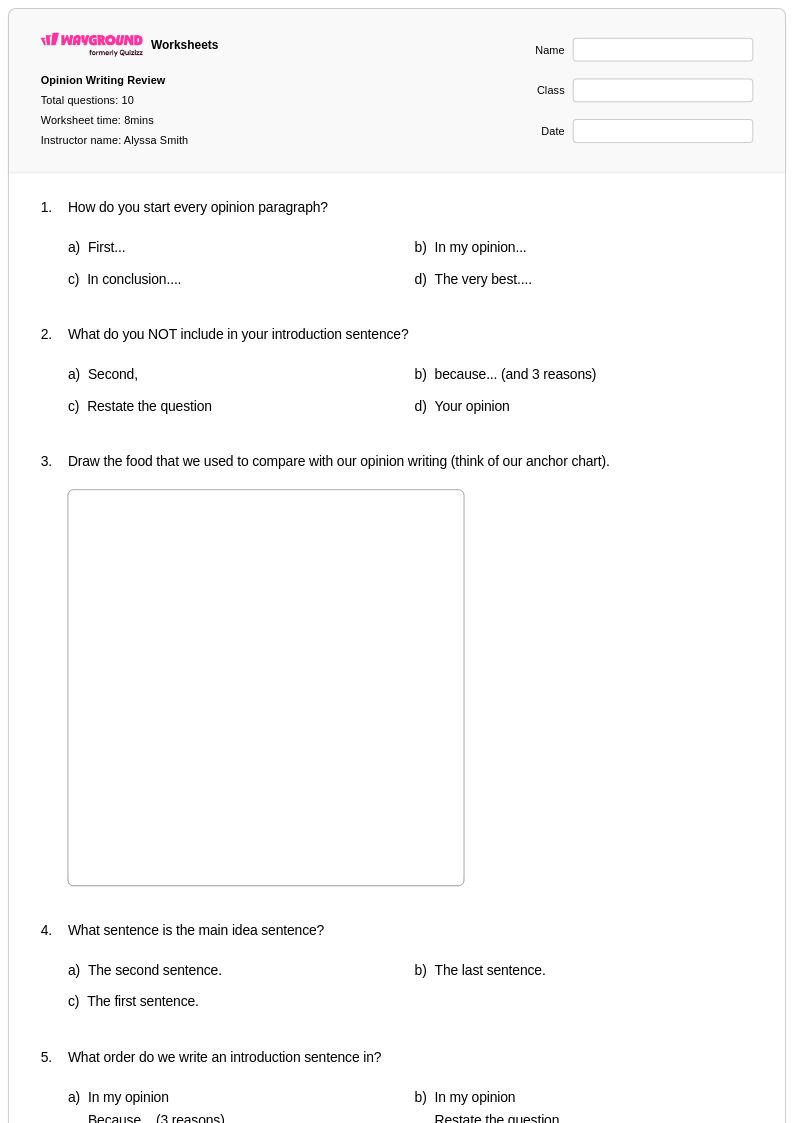
Revising writing worksheets for Grade 1 students through Wayground (formerly Quizizz) introduce young learners to the essential skill of improving their written work through careful review and correction. These foundational worksheets guide first-grade students through age-appropriate revision strategies, including checking for missing words, correcting simple spelling errors, adding descriptive details, and ensuring sentences make sense. The practice problems focus on developing students' ability to read their own writing critically while building confidence in making constructive changes to their work. Each worksheet includes an answer key to support both independent practice and guided instruction, with free printables available in convenient pdf format that teachers can easily distribute for classroom activities or homework assignments.
Wayground's extensive collection features millions of teacher-created resources specifically designed to support Grade 1 writing instruction, with robust search and filtering capabilities that help educators quickly locate materials aligned with their curriculum standards and learning objectives. The platform's differentiation tools enable teachers to customize worksheets based on individual student needs, whether providing additional scaffolding for emerging writers or offering enrichment activities for advanced learners. These revising writing resources are available in both printable and digital formats, including downloadable pdf files, making them versatile for various instructional settings from traditional classrooms to remote learning environments. Teachers can seamlessly integrate these materials into their lesson planning for targeted skill practice, remediation sessions, or enrichment activities that strengthen students' fundamental understanding of the revision process.
FAQs
How do I teach students to revise their own writing effectively?
Effective revision instruction begins with helping students understand that revision is distinct from proofreading — it involves evaluating structure, clarity, and impact, not just correcting errors. Teachers can model the revision process using think-alouds, showing students how to ask questions like 'Does this paragraph stay on topic?' or 'Is my word choice as precise as it could be?' Structured revision checklists and guided practice with sample texts help students internalize these habits before applying them independently to their own work.
What are the most effective exercises for practicing revision skills?
The most effective revision practice exercises present students with intentionally weak or underdeveloped passages and ask them to improve specific elements such as paragraph organization, sentence variety, word choice, or transitions. Targeted tasks — rather than open-ended rewrites — build discrete skills more efficiently because students can focus on one revision strategy at a time. Comparing an original passage to a revised version and explaining what changed and why also deepens students' understanding of the rationale behind revision decisions.
What mistakes do students commonly make when revising their writing?
The most common mistake students make is treating revision as light proofreading — fixing spelling and punctuation while leaving structural or clarity problems untouched. Students also frequently struggle to cut redundant content because they conflate word count with quality. Another persistent error is revising at the sentence level before confirming that paragraph-level organization is sound, which means students often polish writing that still lacks coherence at a higher level.
How can I help students tell the difference between revising and editing?
Revising addresses higher-order concerns — reorganizing ideas, strengthening arguments, improving clarity and coherence, and refining word choice — while editing addresses surface-level errors like grammar, punctuation, and spelling. Teaching students to separate these stages prevents them from getting stuck on comma placement before they have confirmed that their argument actually makes sense. A useful classroom strategy is to mandate a 'revision-only pass' before any editing is permitted, reinforcing the distinction through structured practice.
How do I differentiate revision practice for students at different writing levels?
For students who are still developing basic writing fluency, revision practice should focus on concrete, lower-stakes tasks such as replacing vague words with specific ones or combining short choppy sentences. More advanced writers benefit from higher-order revision work such as evaluating argument structure, eliminating redundancy, and analyzing tone and audience. On Wayground, teachers can apply accommodations such as reduced answer choices or Read Aloud support for individual students who need additional scaffolding, while the rest of the class works with standard settings.
How do I use Wayground's revising writing worksheets in my classroom?
Wayground's revising writing worksheets are available as printable PDFs for traditional classroom use and in digital formats for technology-integrated environments, so teachers can deploy them as in-class activities, homework assignments, or remediation sessions without reformatting materials. Teachers can also host worksheets as a quiz directly on Wayground, enabling real-time progress tracking. Each worksheet includes a detailed answer key that explains the rationale behind effective revision choices, making them useful for both independent student practice and whole-class instruction.