Free Printable Rhetorical Devices Worksheets for Grade 7
Grade 7 rhetorical devices worksheets from Wayground help students master persuasive language techniques through engaging printables, practice problems, and comprehensive answer keys for effective English learning.
Explore printable Rhetorical Devices worksheets for Grade 7
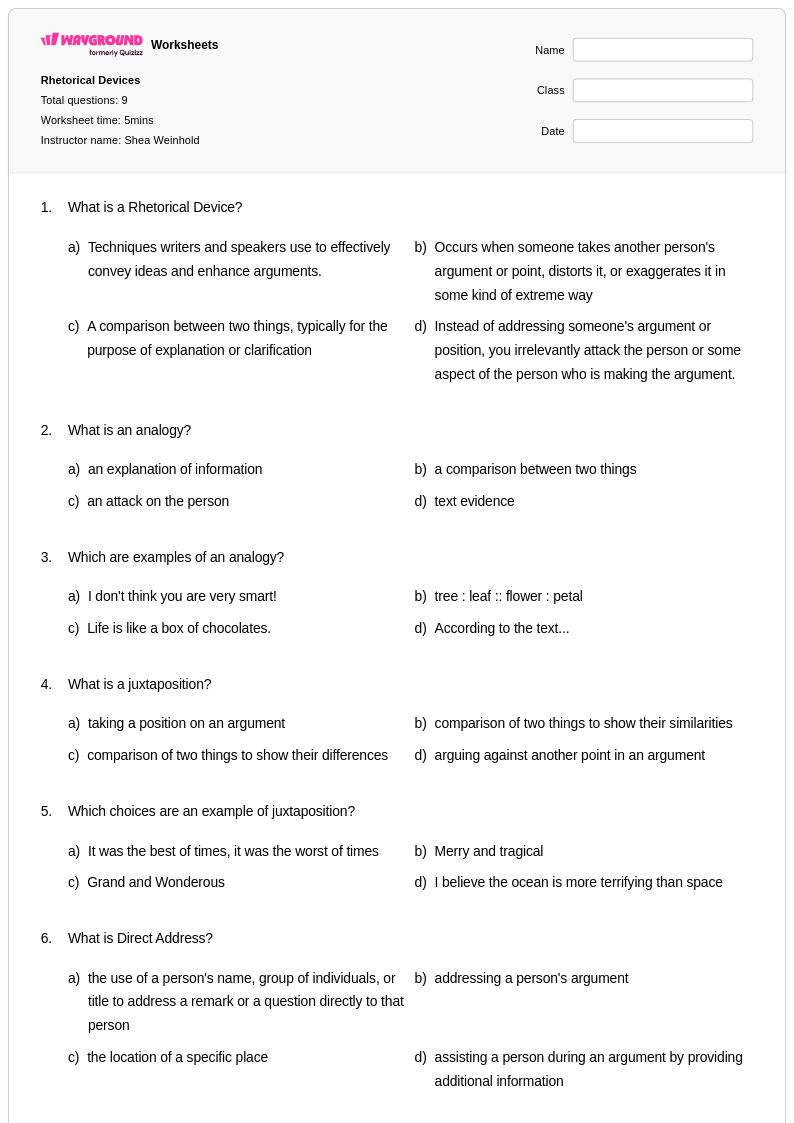
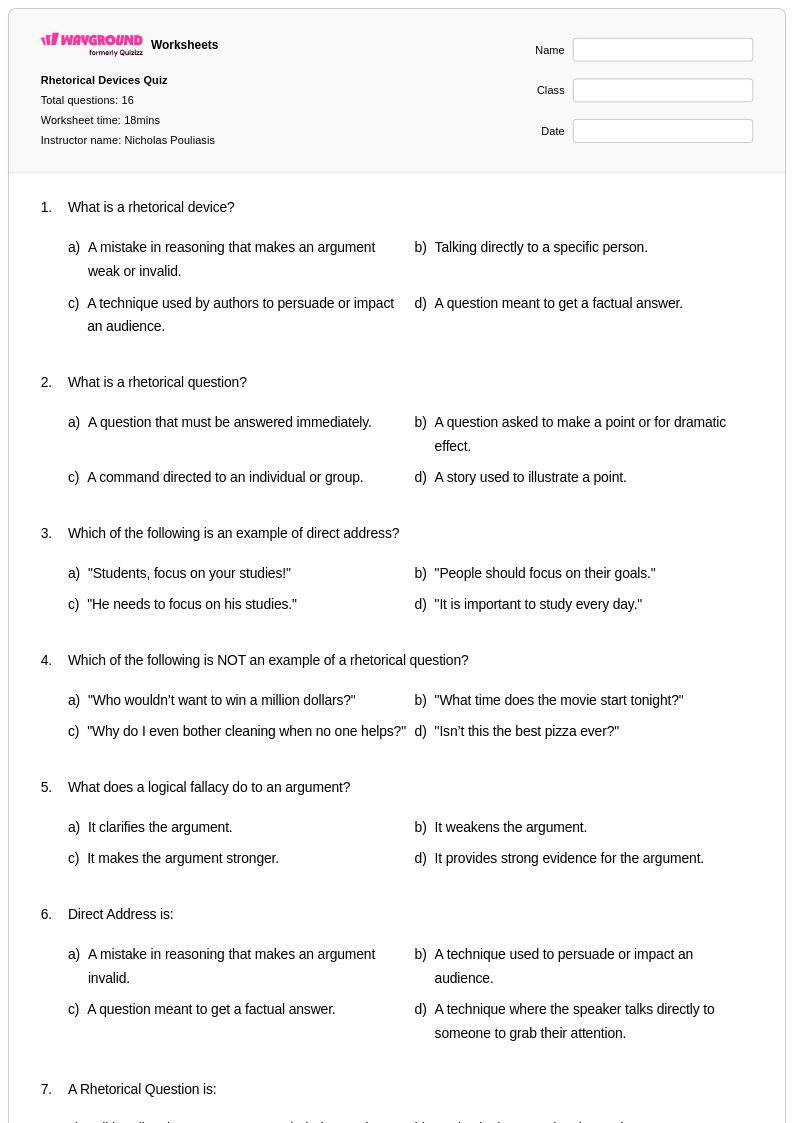
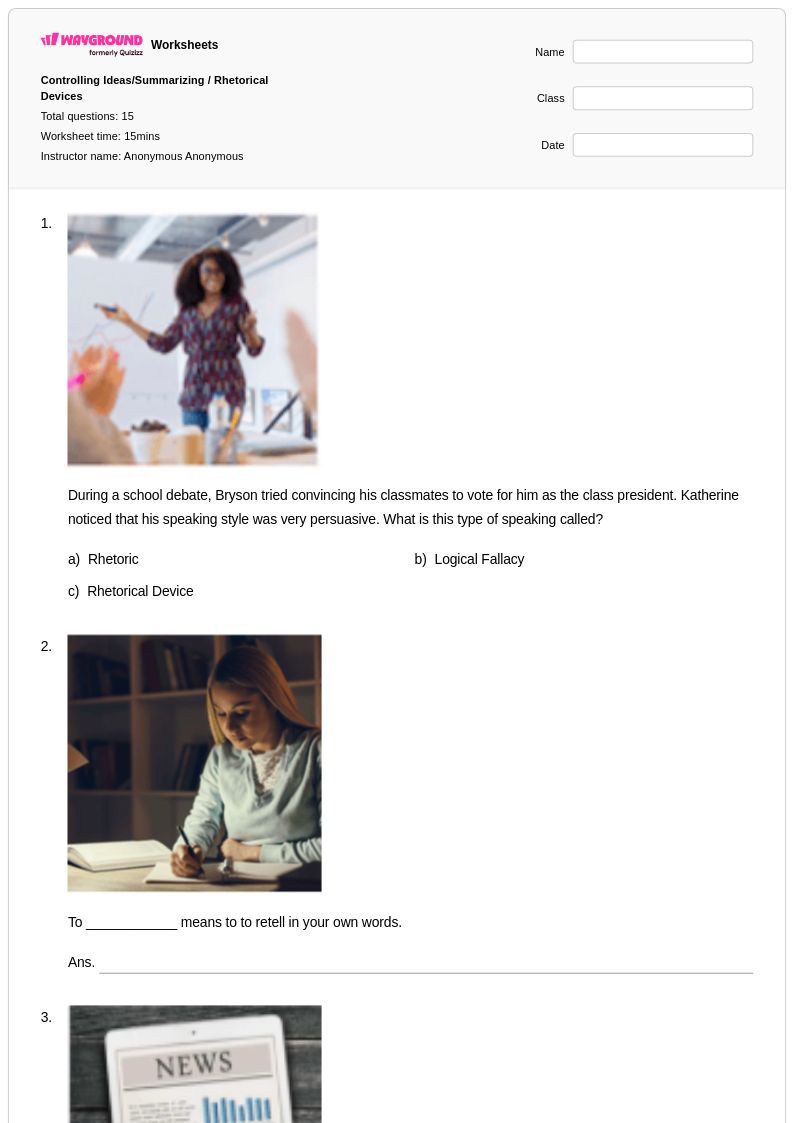
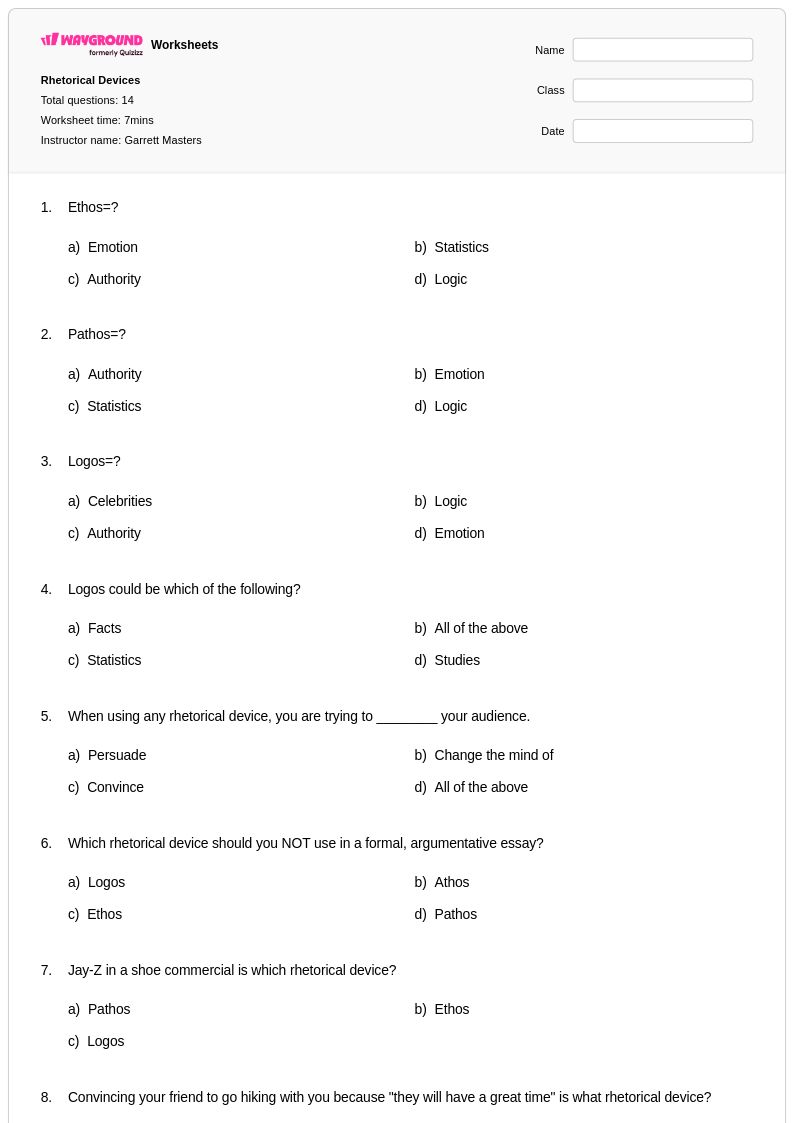
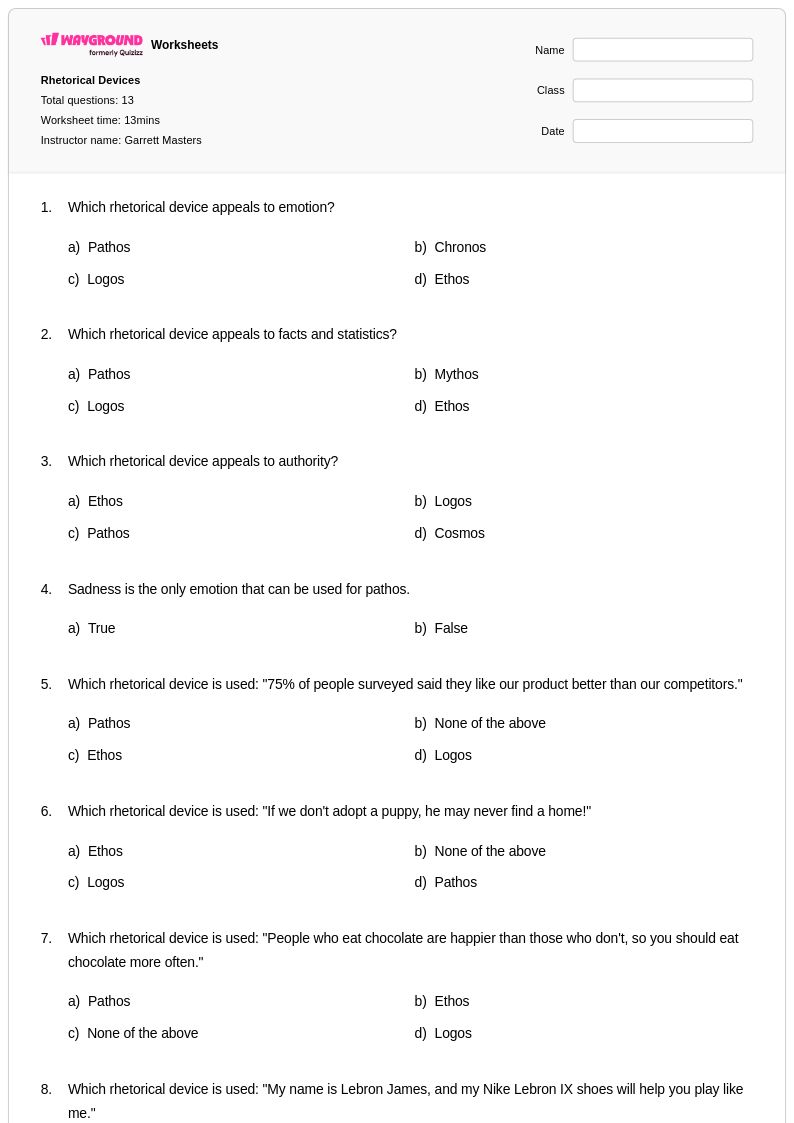
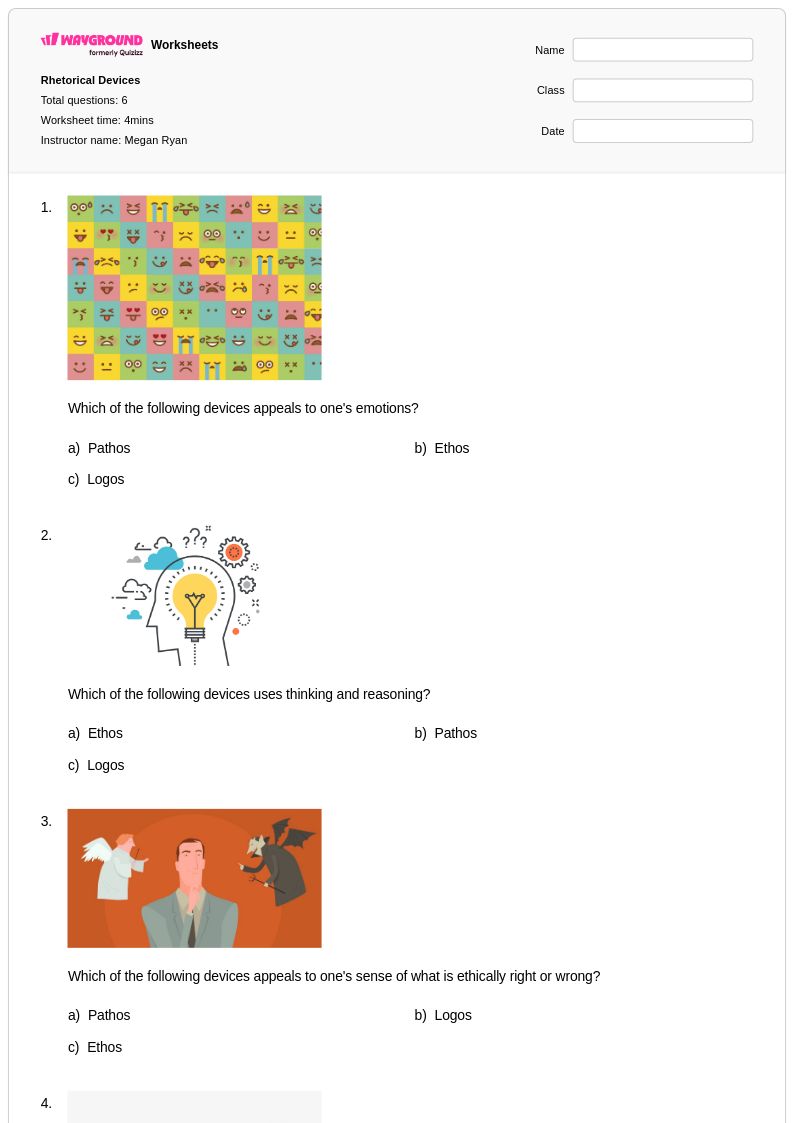
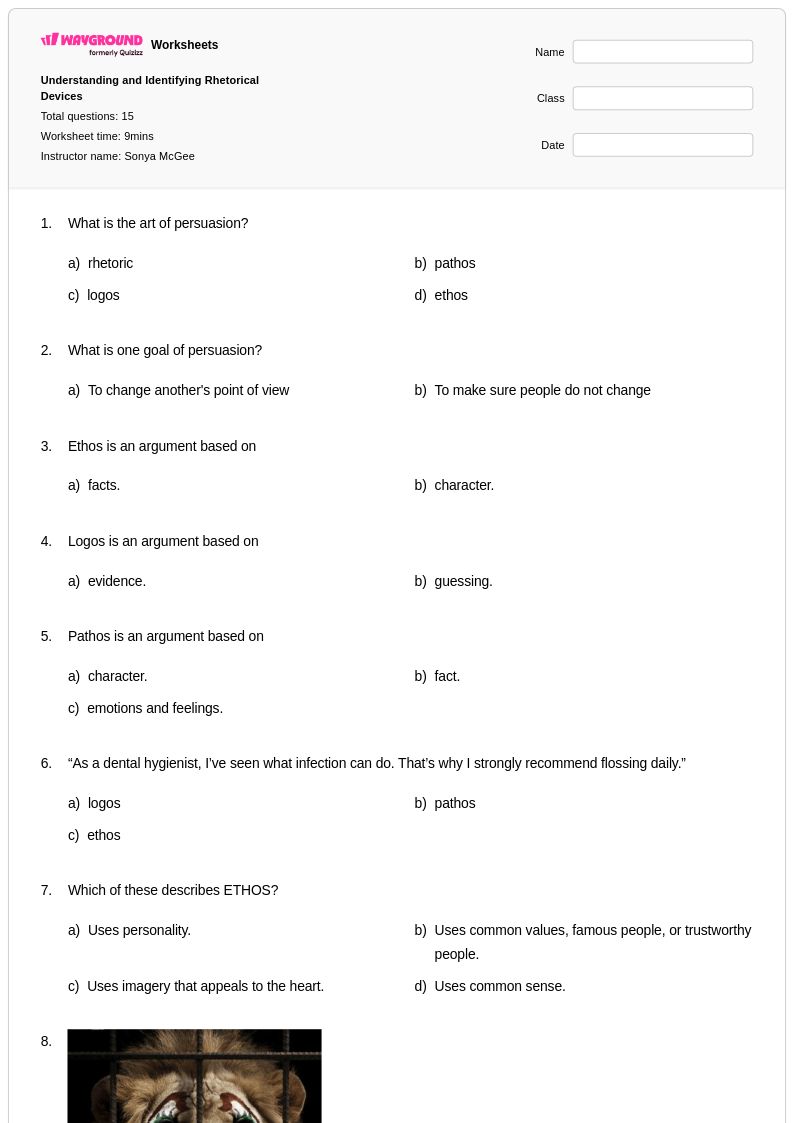
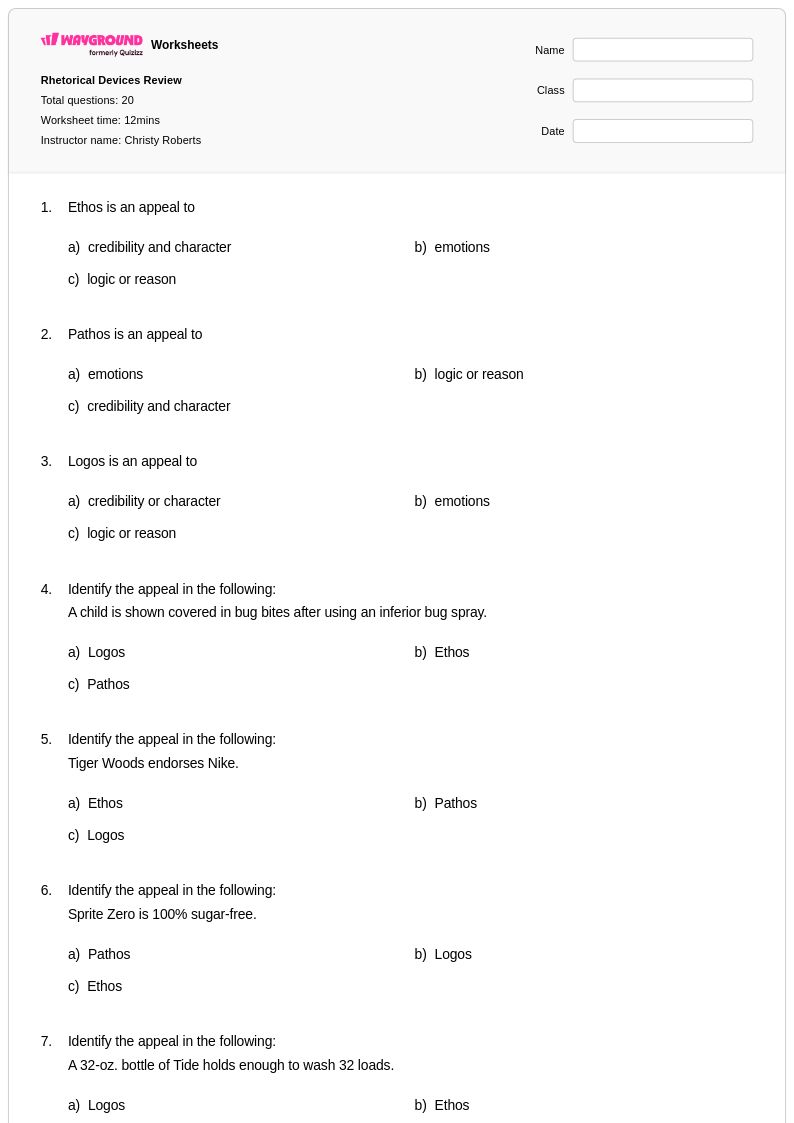
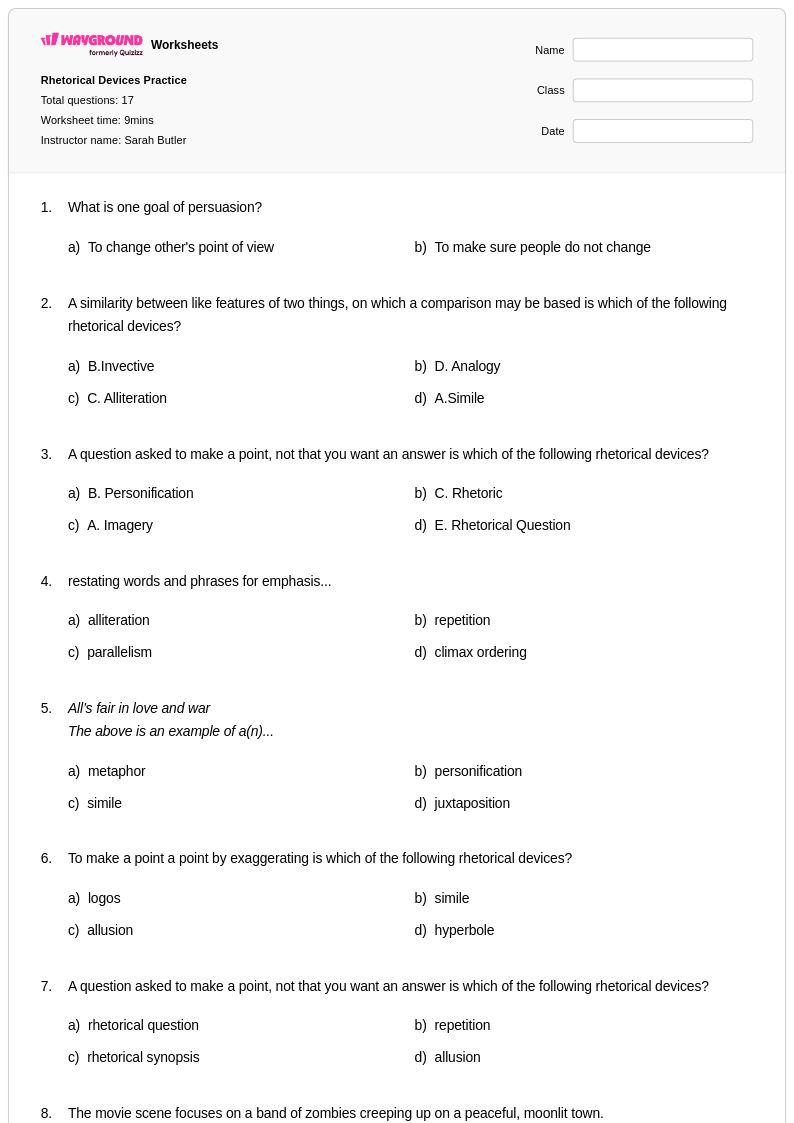
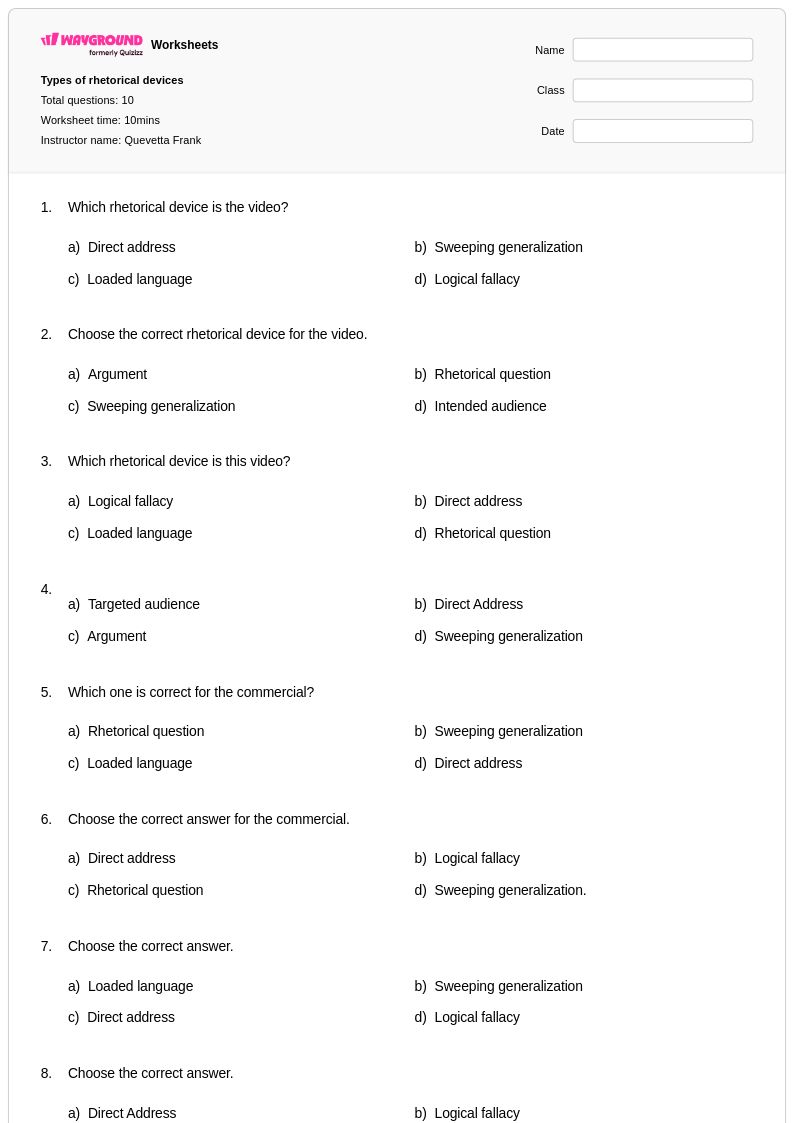
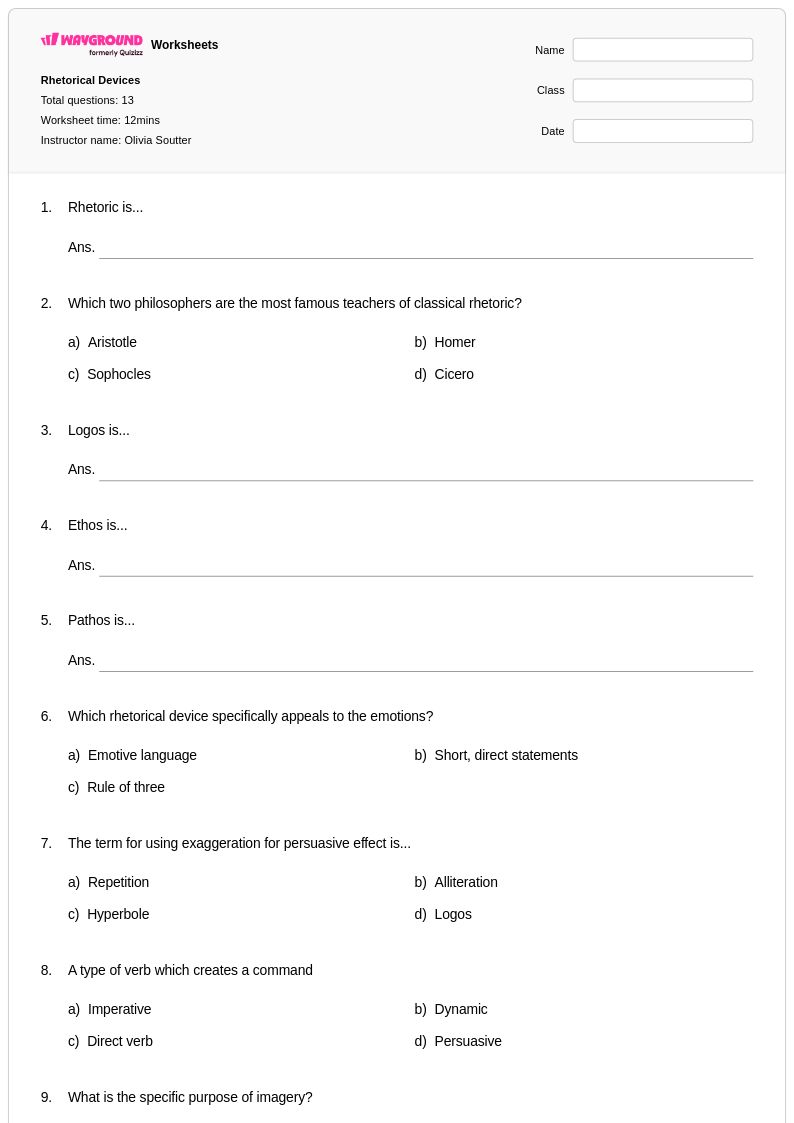
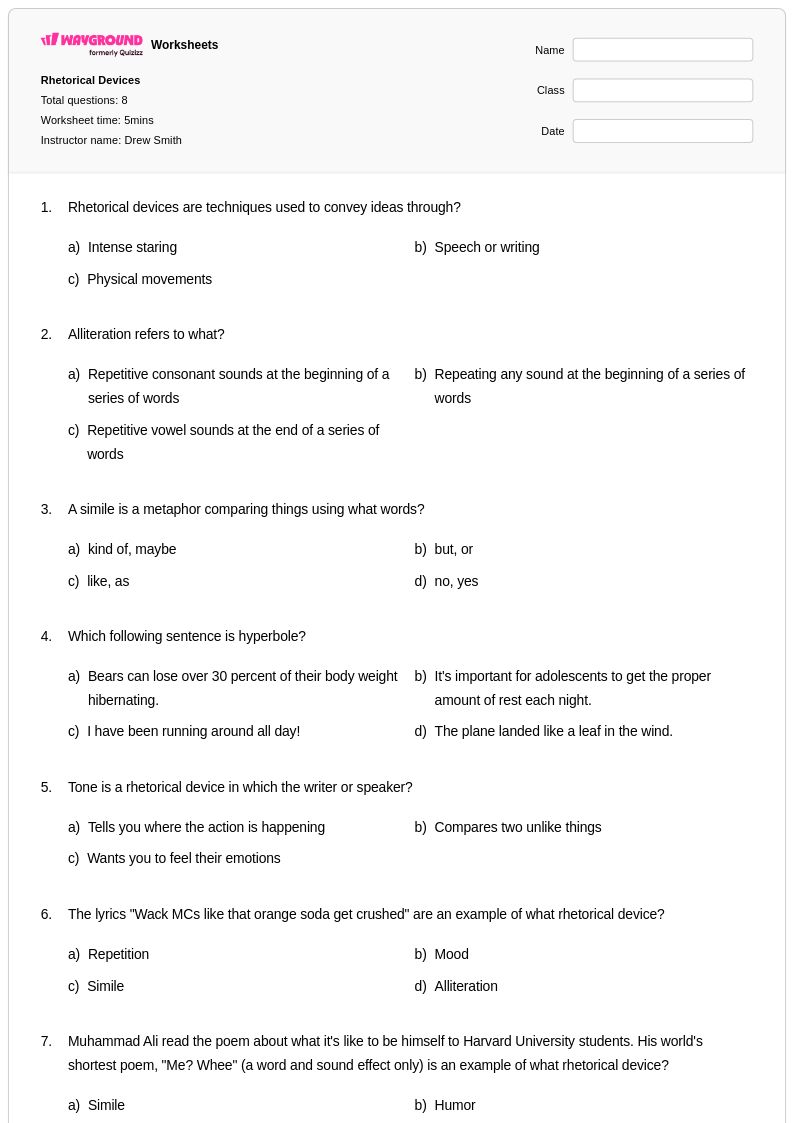
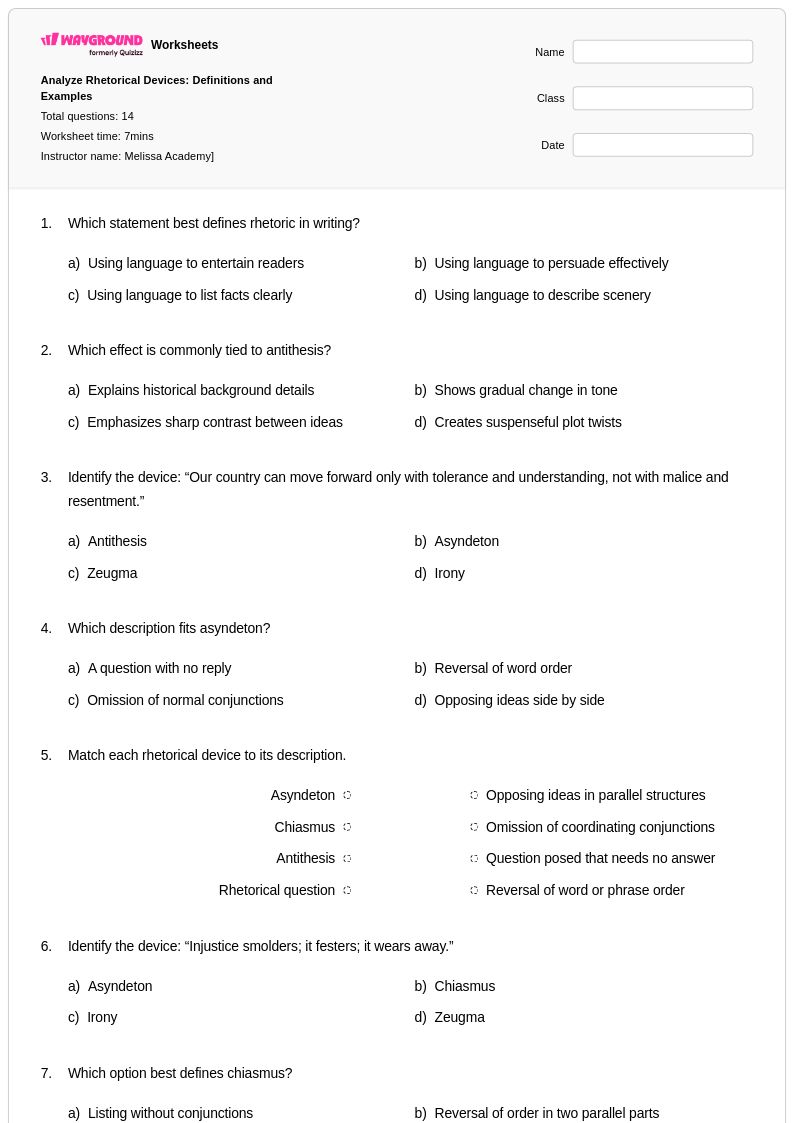
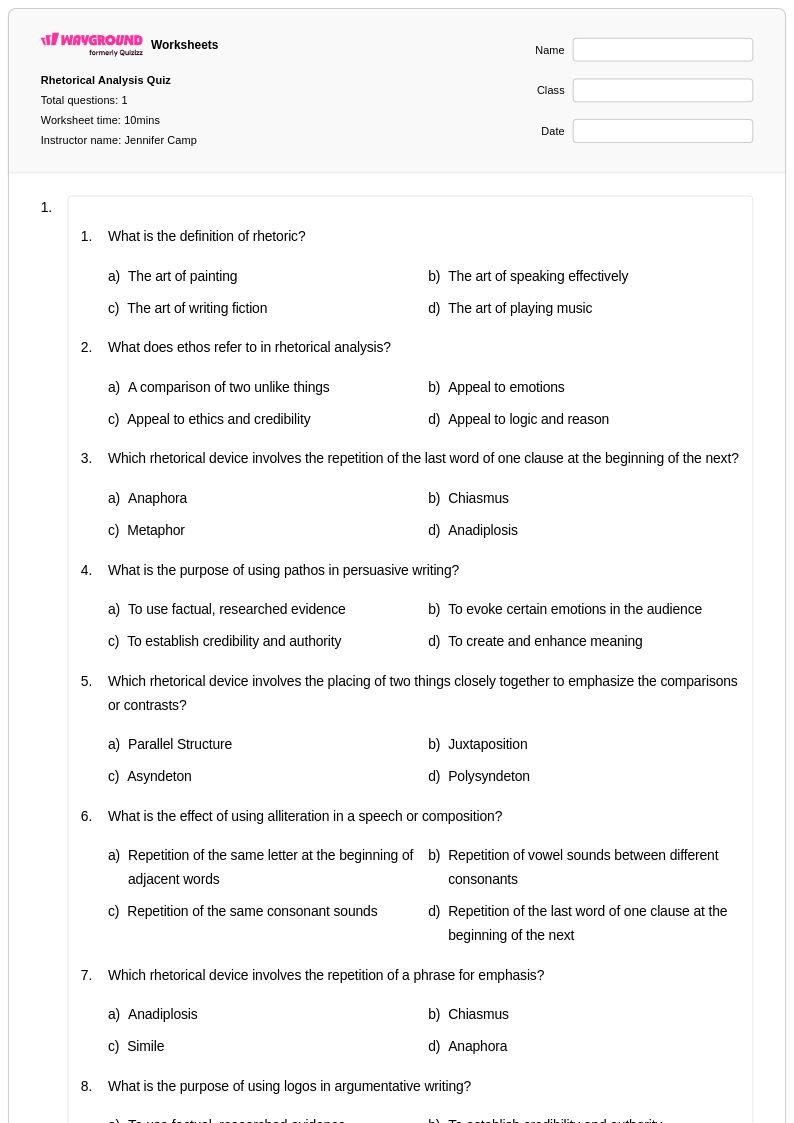
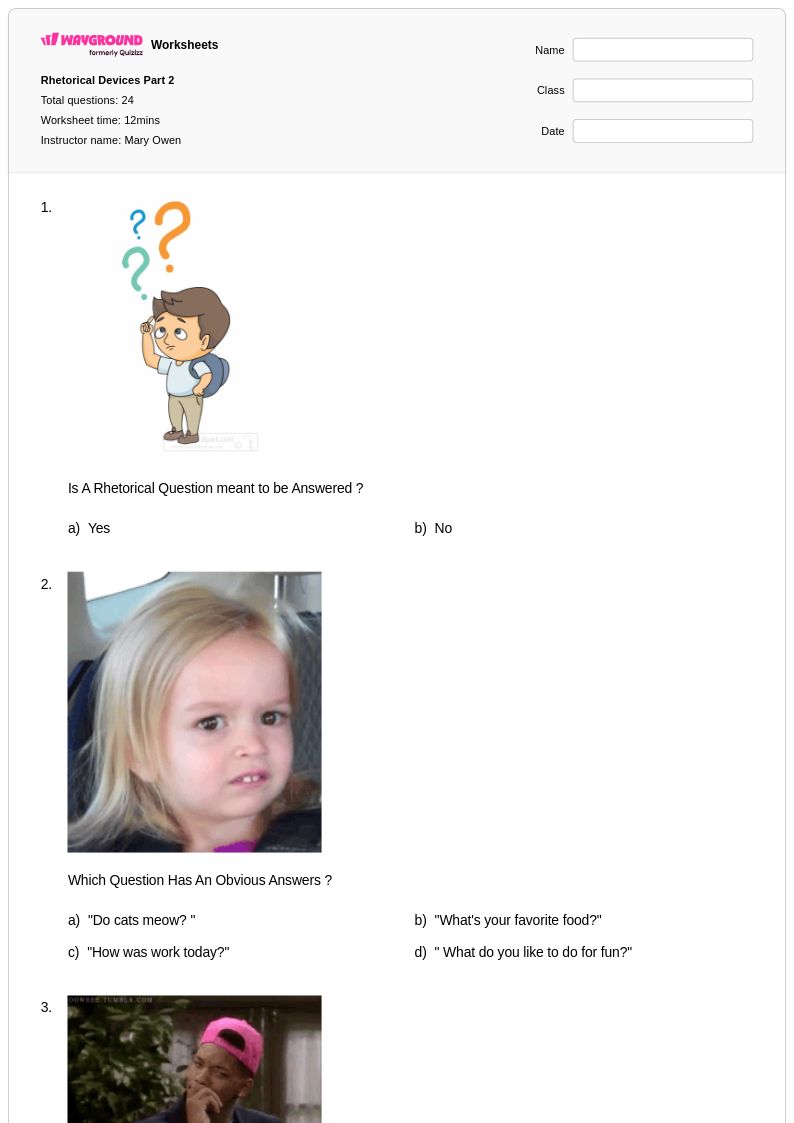
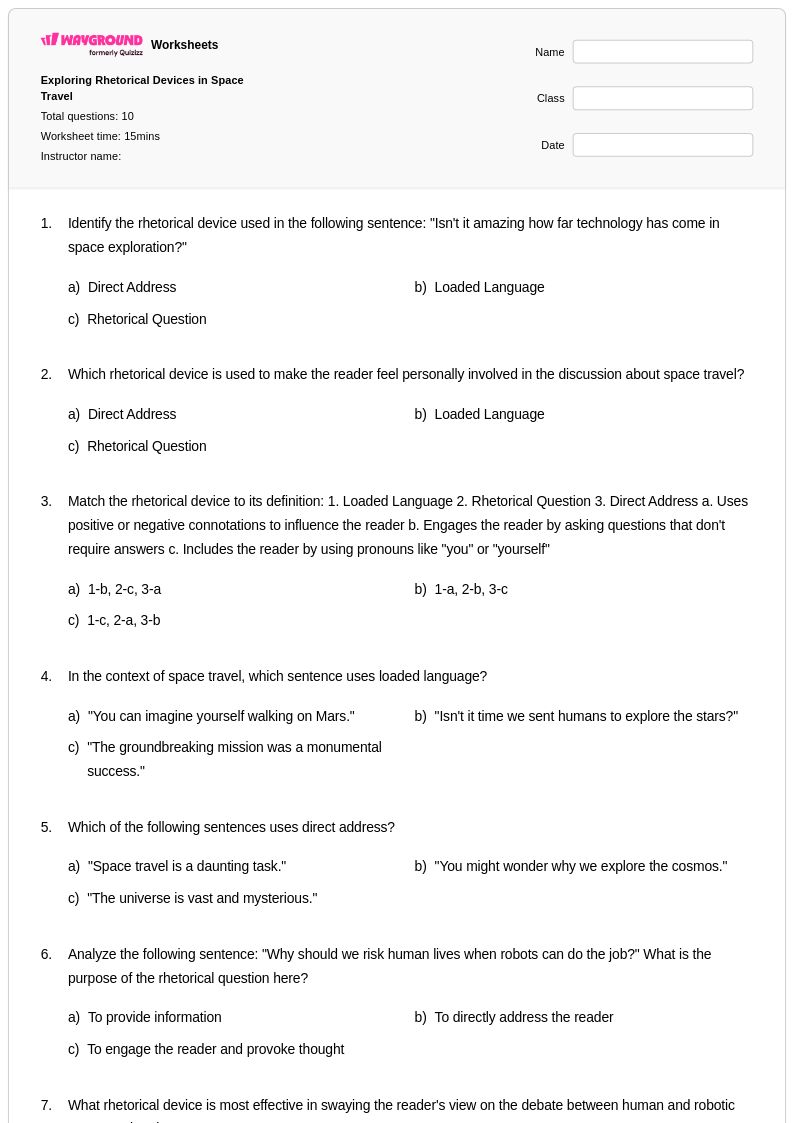
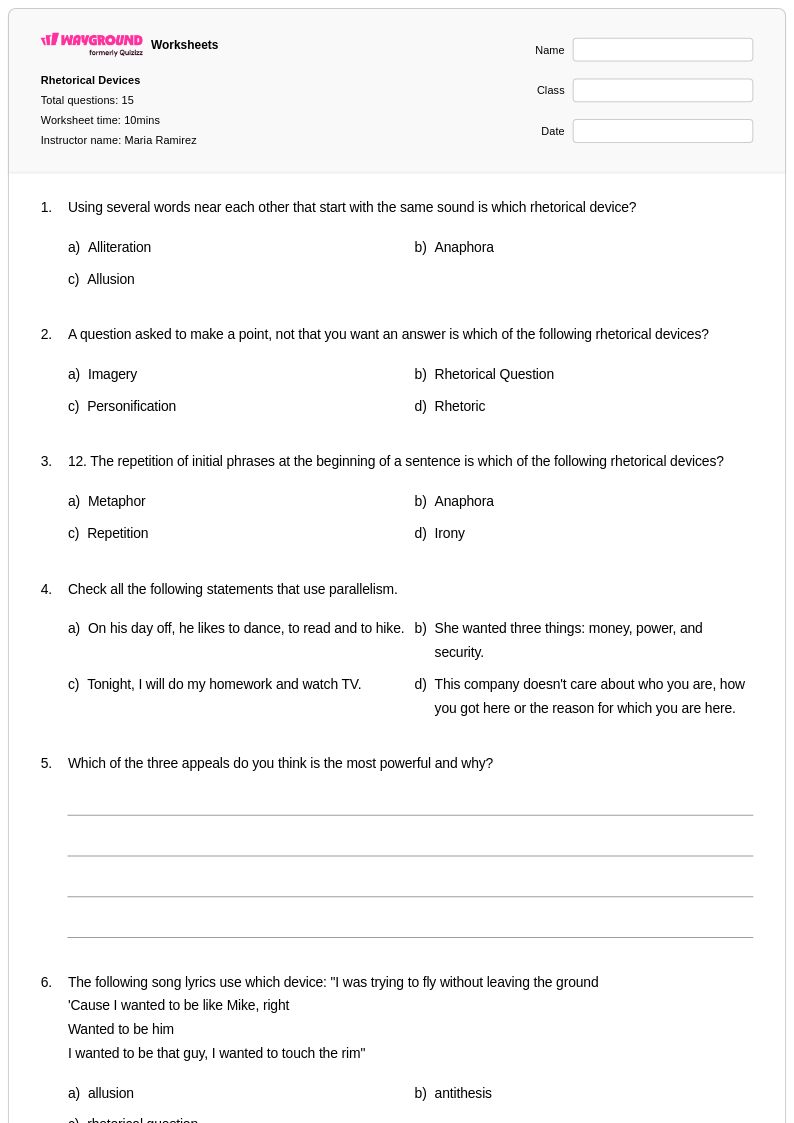
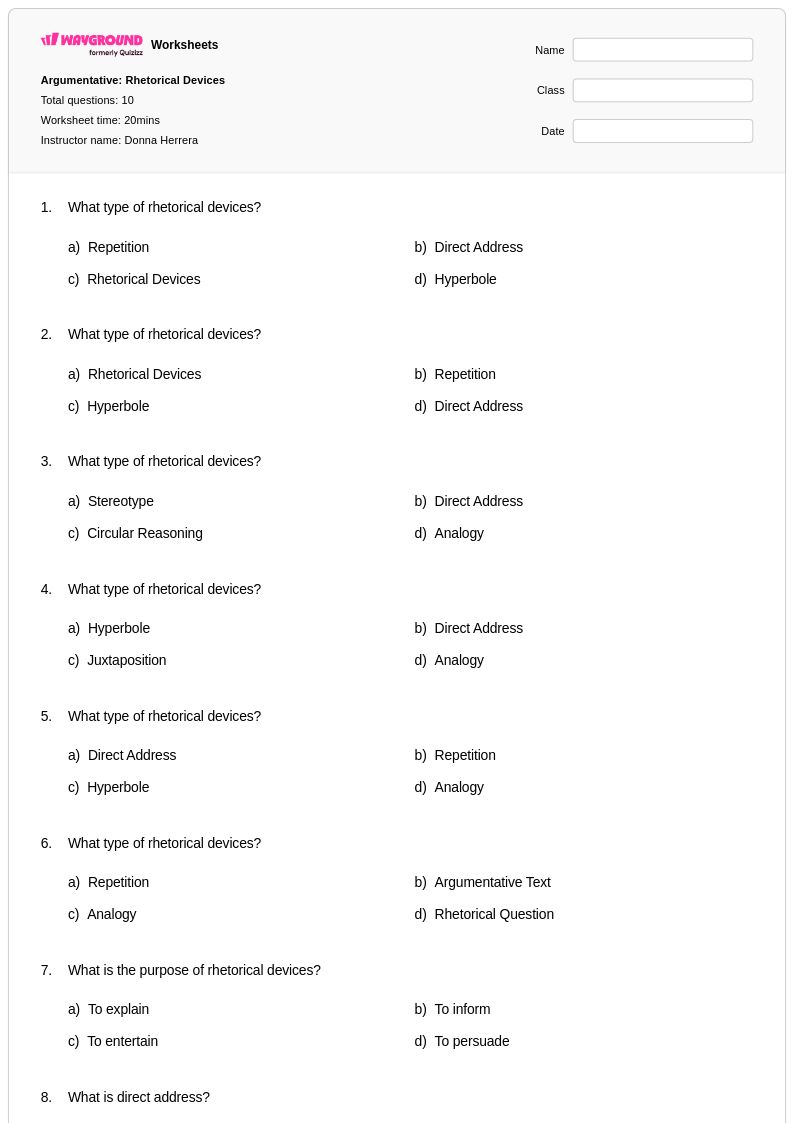
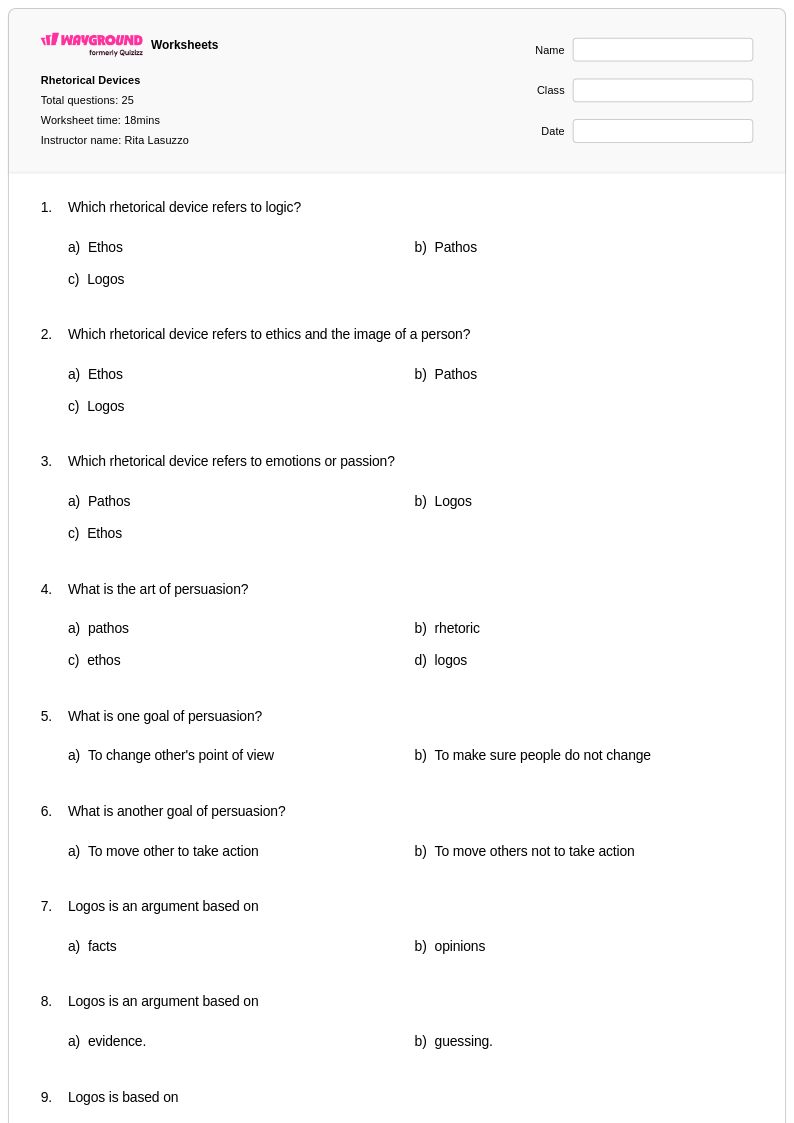
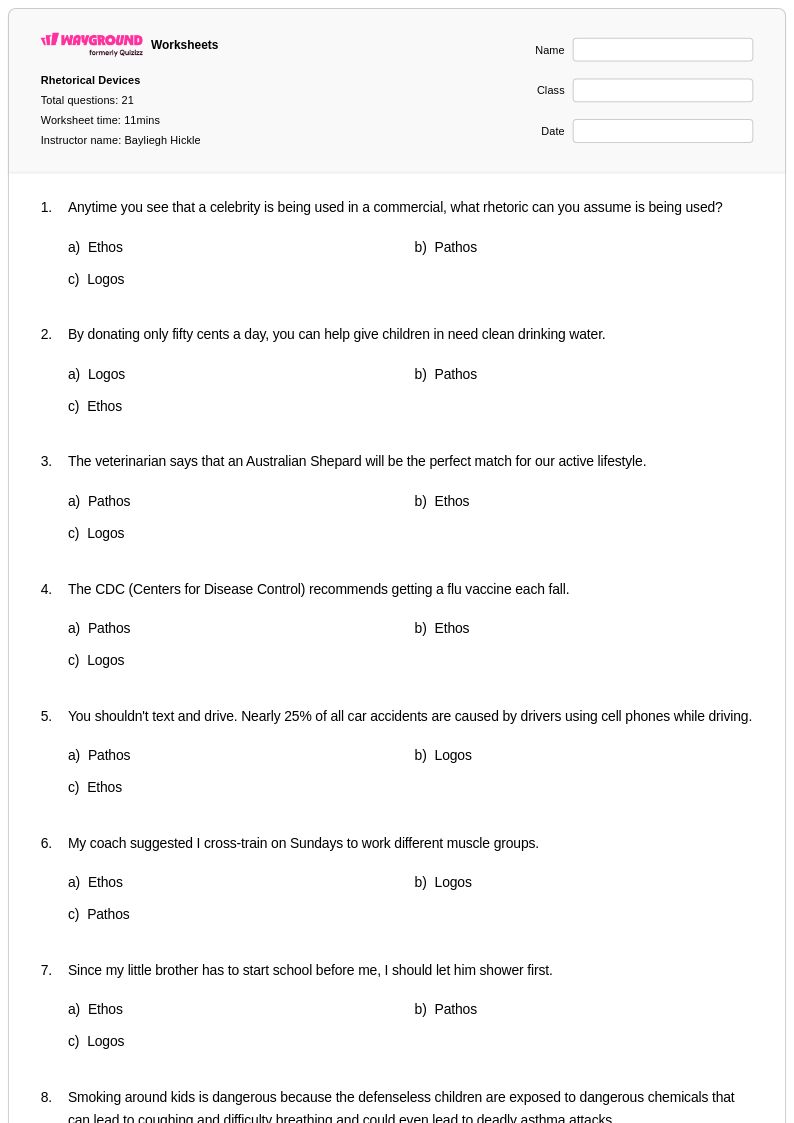
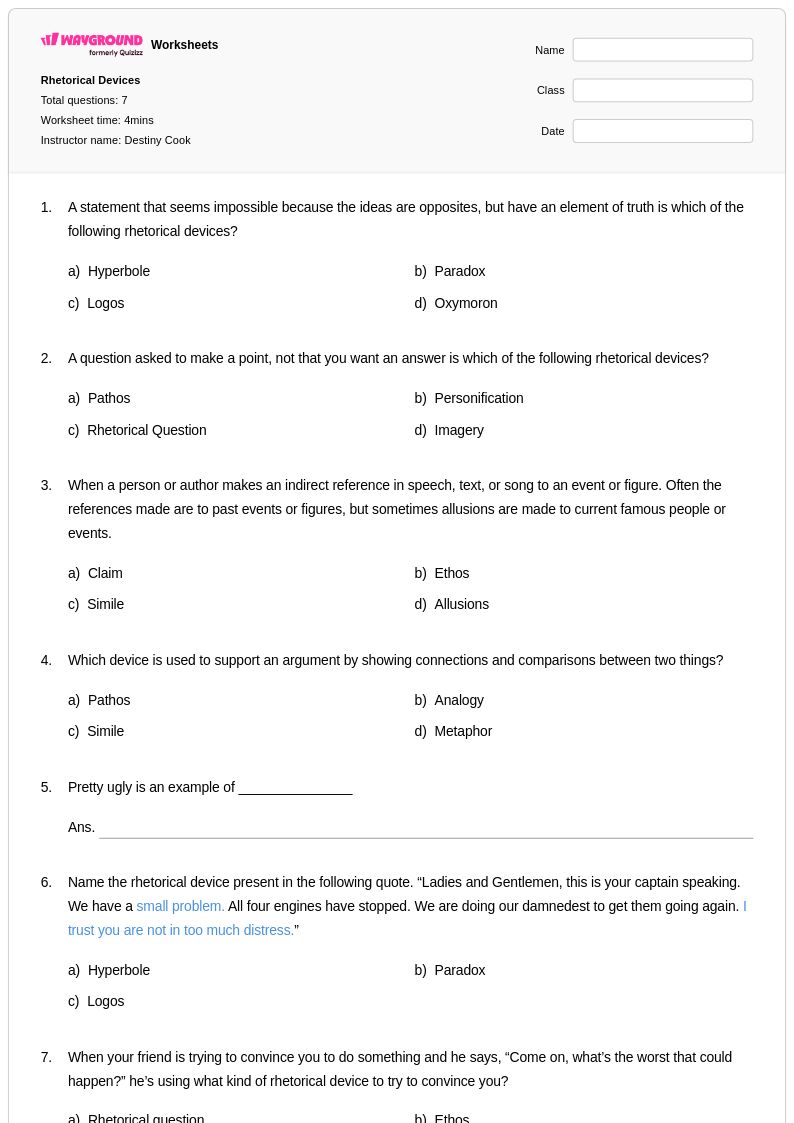
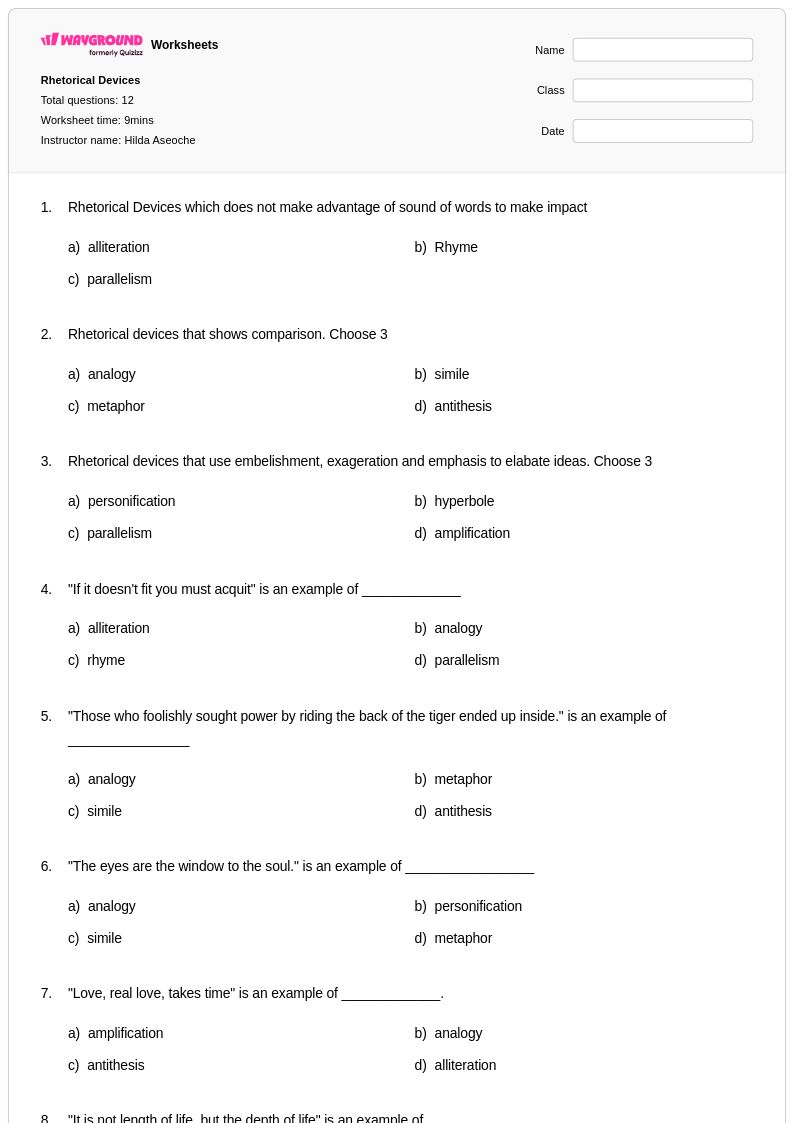
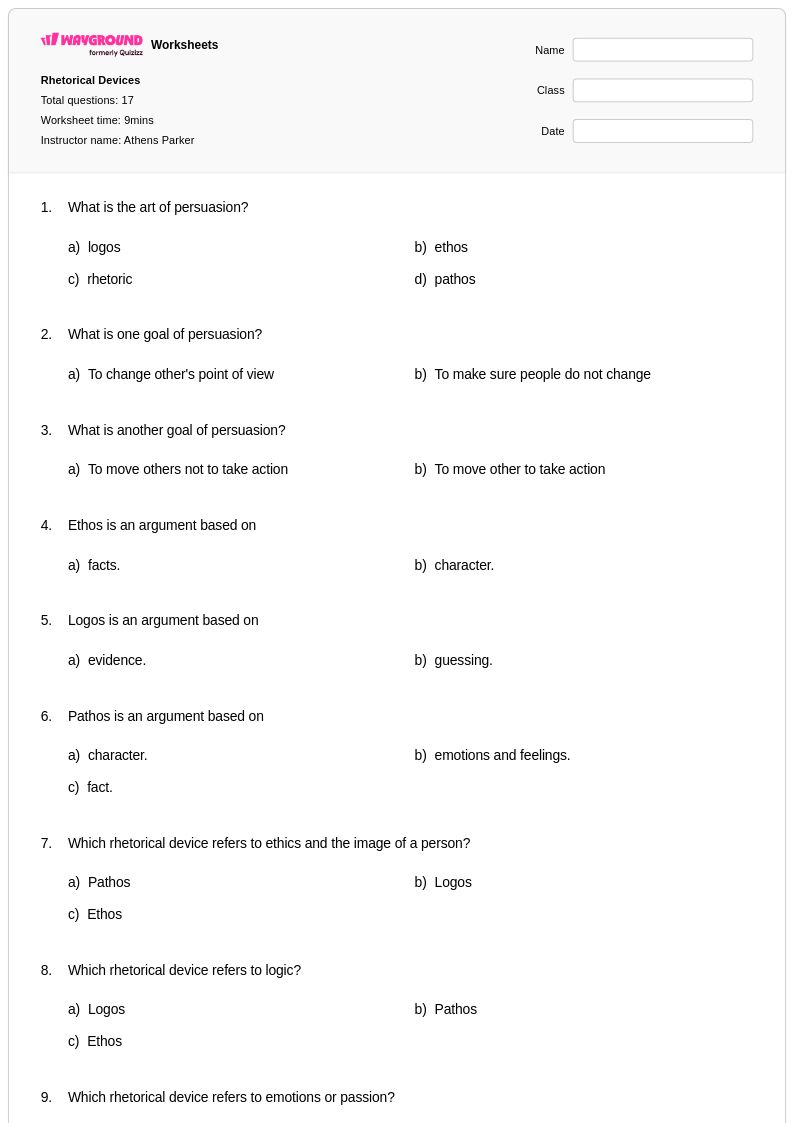
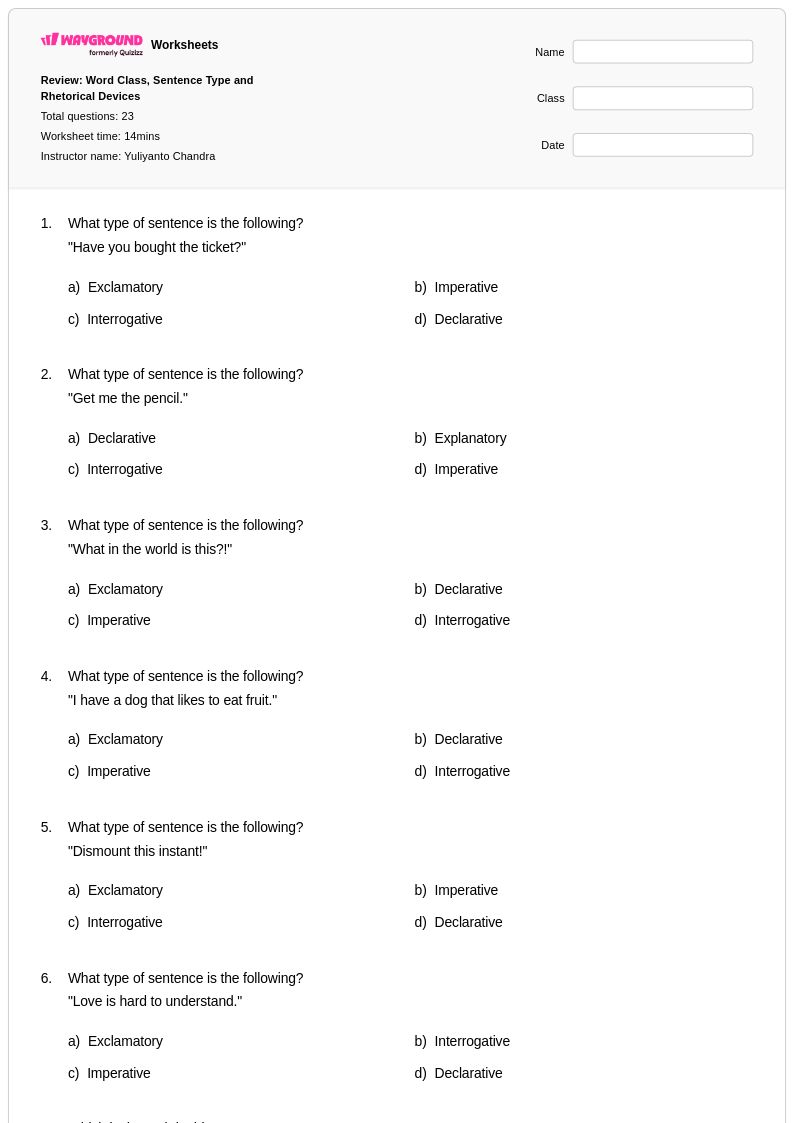
Grade 7 rhetorical devices worksheets available through Wayground (formerly Quizizz) provide comprehensive practice with persuasive language techniques that form the foundation of effective communication and critical analysis. These expertly crafted worksheets guide seventh-grade students through identifying, analyzing, and applying key rhetorical devices including ethos, pathos, logos, repetition, rhetorical questions, and appeals to emotion within various text types. Students strengthen their ability to recognize how authors and speakers use these powerful tools to influence audiences, building essential skills for both literary analysis and their own persuasive writing. Each worksheet includes detailed answer keys and practice problems that scaffold learning from basic identification exercises to complex analysis tasks, with free printables available in convenient PDF format for seamless classroom integration.
Wayground (formerly Quizizz) empowers educators with millions of teacher-created rhetorical devices resources that streamline lesson planning and differentiated instruction for Grade 7 English classrooms. The platform's robust search and filtering capabilities allow teachers to quickly locate worksheets aligned with specific curriculum standards, while built-in differentiation tools enable customization based on individual student needs and learning levels. These comprehensive collections are available in both printable PDF format and interactive digital versions, providing flexibility for various teaching environments and learning preferences. Teachers can efficiently support remediation for struggling learners, provide enrichment opportunities for advanced students, and deliver targeted skill practice that reinforces rhetorical device recognition and analysis across multiple text types and difficulty levels.
FAQs
How do I teach rhetorical devices to students?
Start by introducing the three classical appeals — ethos, pathos, and logos — using short, familiar texts like advertisements or political speeches where the appeals are obvious. Once students can identify these broad categories, introduce specific devices such as parallelism, repetition, and rhetorical questions within those same texts. Scaffolding from recognition to analysis to application helps students internalize how rhetorical choices create persuasive effect rather than treating devices as isolated vocabulary terms.
What exercises help students practice identifying rhetorical devices?
Identification exercises using authentic persuasive texts — speeches, op-eds, or advertisements — are the most effective practice format because they show devices functioning in real context. Students benefit from tasks that ask them not just to name a device but to explain why the writer used it and what effect it creates for the audience. Progressing from annotating teacher-selected passages to independently analyzing student-chosen texts builds both recognition skills and analytical confidence.
What mistakes do students commonly make when analyzing rhetorical devices?
The most common error is labeling a device without connecting it to rhetorical purpose — students write 'this is an example of pathos' without explaining how it builds audience trust or emotional investment. Students also frequently confuse ethos and logos, particularly when a speaker uses credentials to support a logical argument. Another recurring mistake is treating rhetorical devices as decorative rather than strategic, which can be corrected by consistently asking students to explain what the writer was trying to achieve with each choice.
How do I help struggling students understand the difference between ethos, pathos, and logos?
Anchor each appeal to a concrete, relatable scenario before applying it to formal texts — for example, ethos is 'why should I trust you?', pathos is 'how does this make me feel?', and logos is 'does the evidence add up?' Using a three-column sorting activity where students categorize short excerpts by appeal type provides low-stakes repetition that builds fluency before moving to full-text analysis. Color-coding annotations by appeal type is another strategy that makes abstract distinctions visually concrete for students who struggle with the conceptual overlap.
How can I use rhetorical devices worksheets in my classroom?
Rhetorical devices worksheets on Wayground are available as printable PDFs for traditional classroom use and in digital formats for technology-integrated environments, making them flexible for independent practice, small group work, or whole-class instruction. Digital versions can also be hosted as a quiz on Wayground, allowing teachers to assign them for real-time or asynchronous assessment. The included answer keys support both teacher-led correction and independent student review, making the worksheets practical for homework, bell-ringers, or targeted remediation sessions.
How do I assess whether students can apply rhetorical devices in their own writing?
The most reliable assessment is a short writing task with a clear persuasive purpose — ask students to write a paragraph arguing a position and require them to label at least two rhetorical devices they used deliberately. This reveals whether students understand devices as tools rather than as post-hoc labels. Peer review with a structured checklist focused on audience impact, rather than just device identification, further reinforces the connection between technique and effect.