
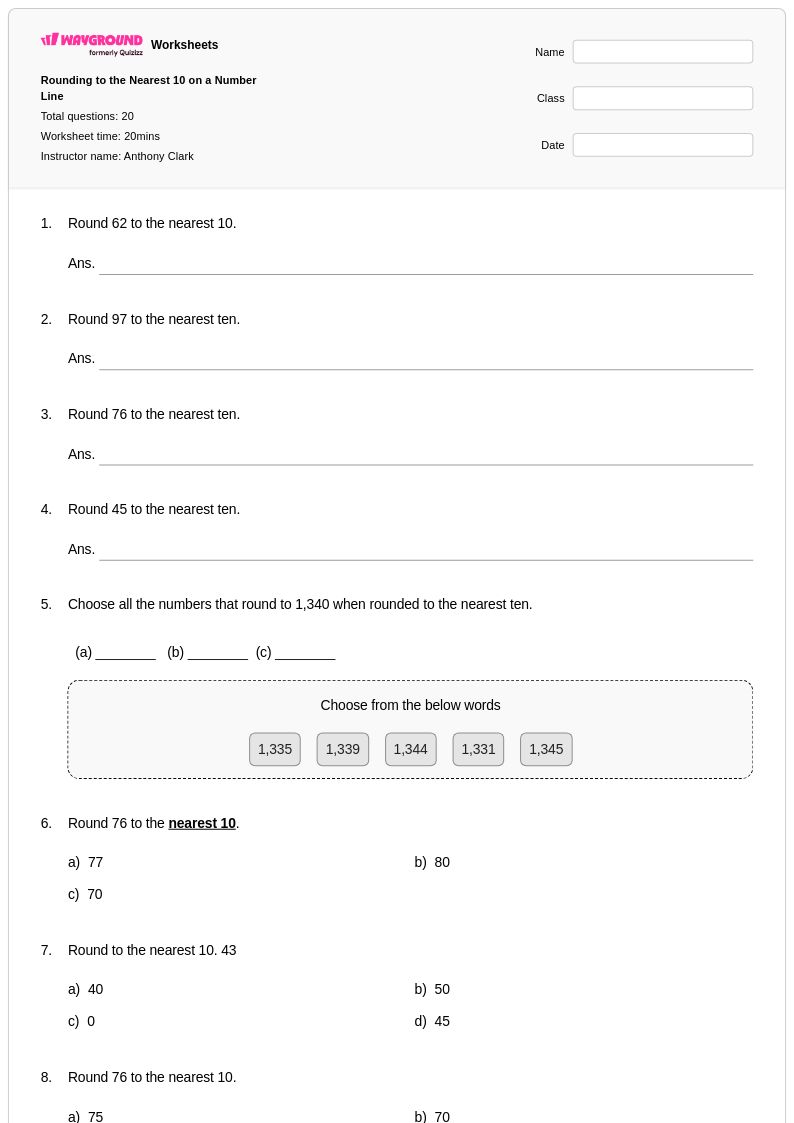
20 Q
3rd - Uni
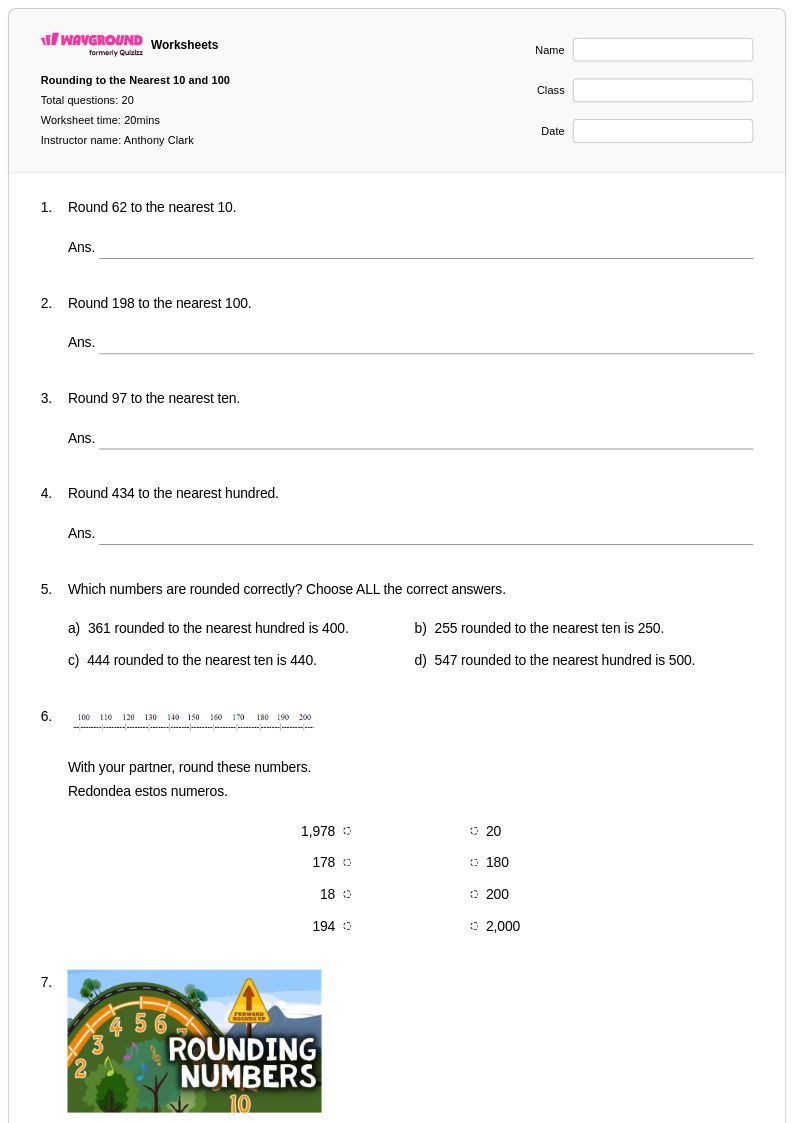
20 Q
3rd - Uni
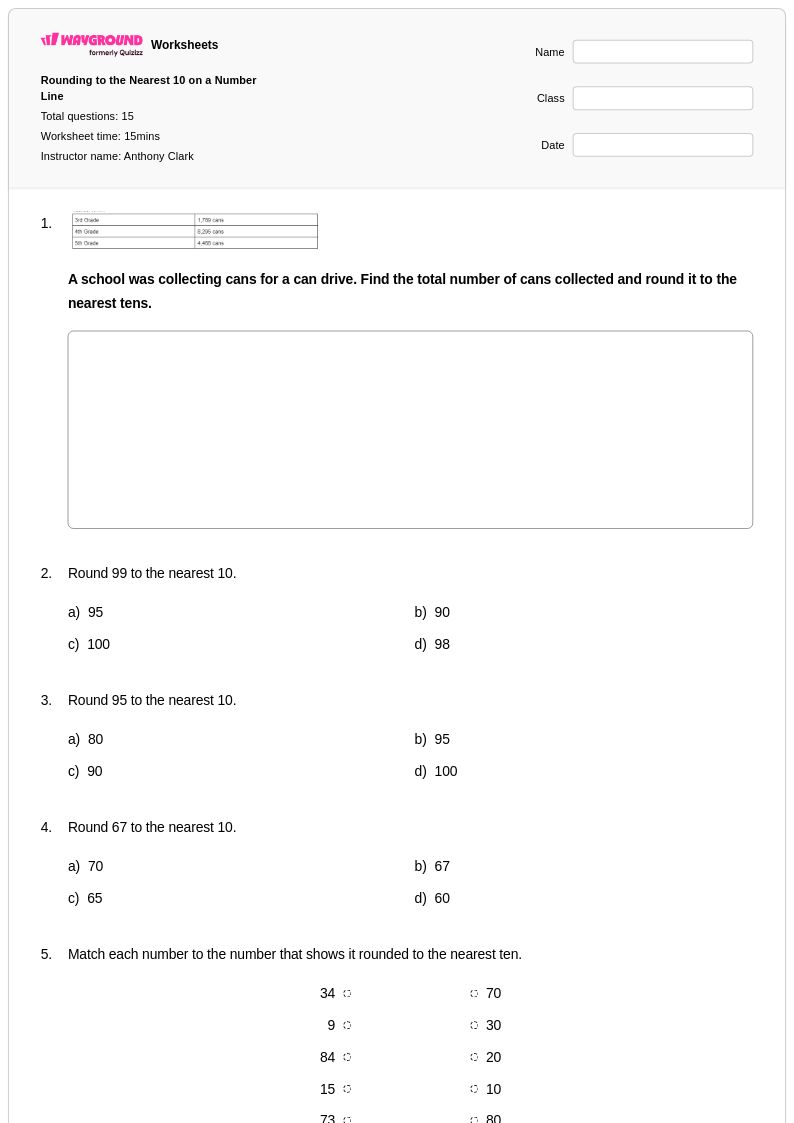
15 Q
3rd - Uni
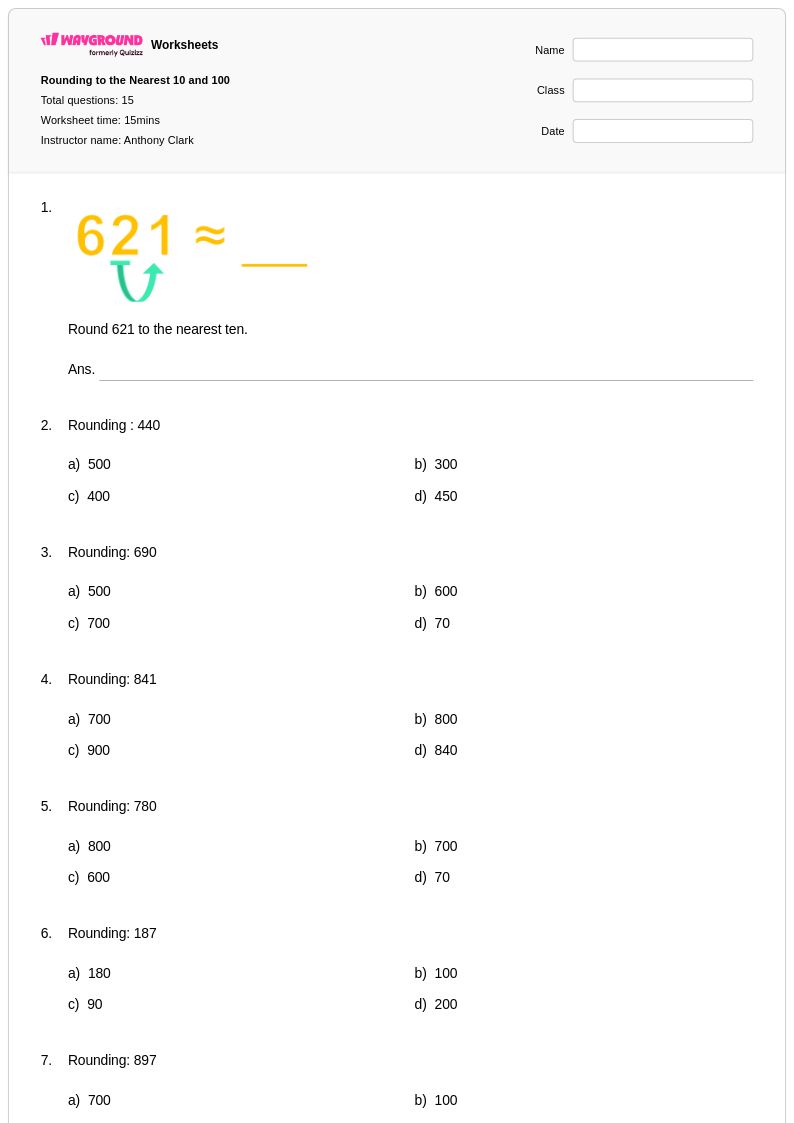
15 Q
3rd - Uni
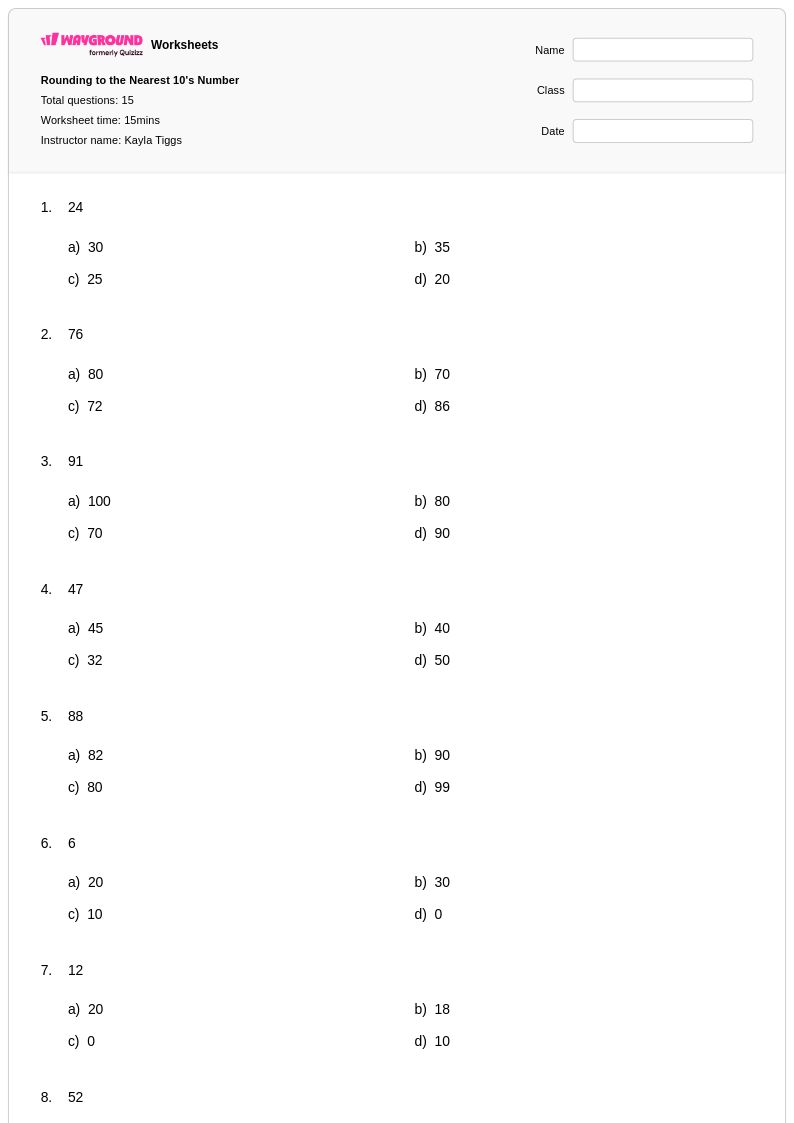
15 Q
3rd - 5th
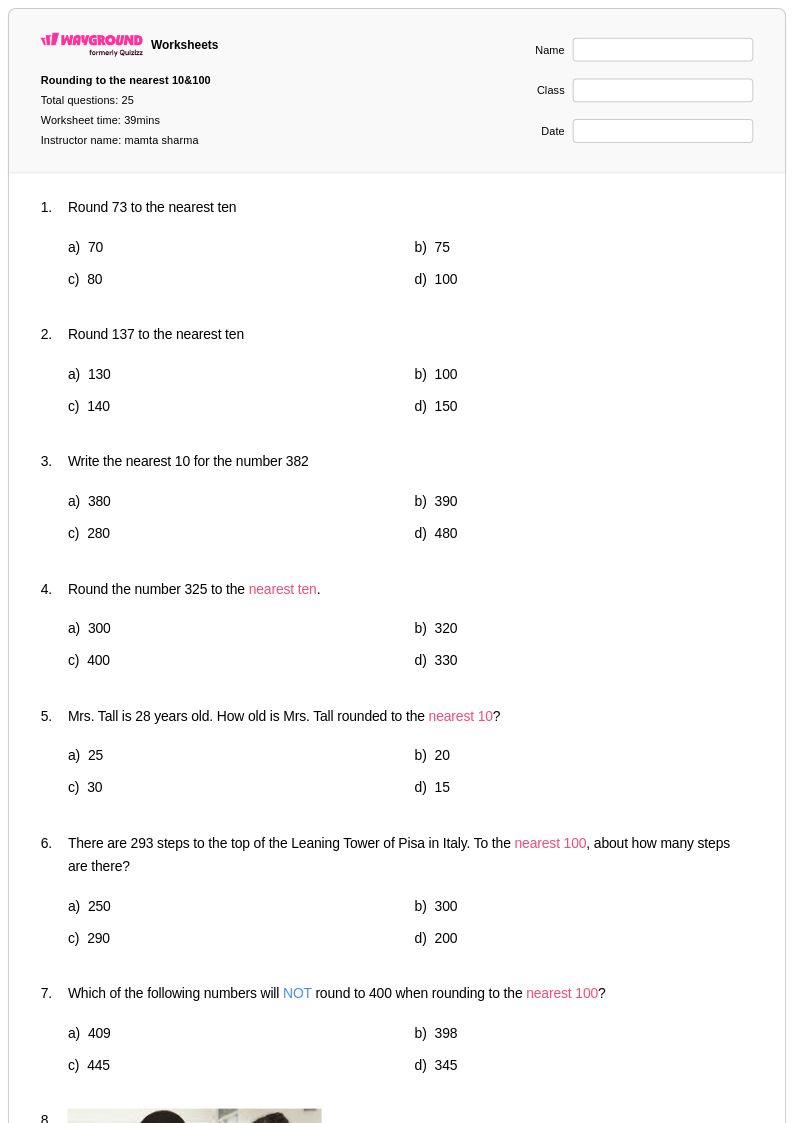
25 Q
1st - 5th
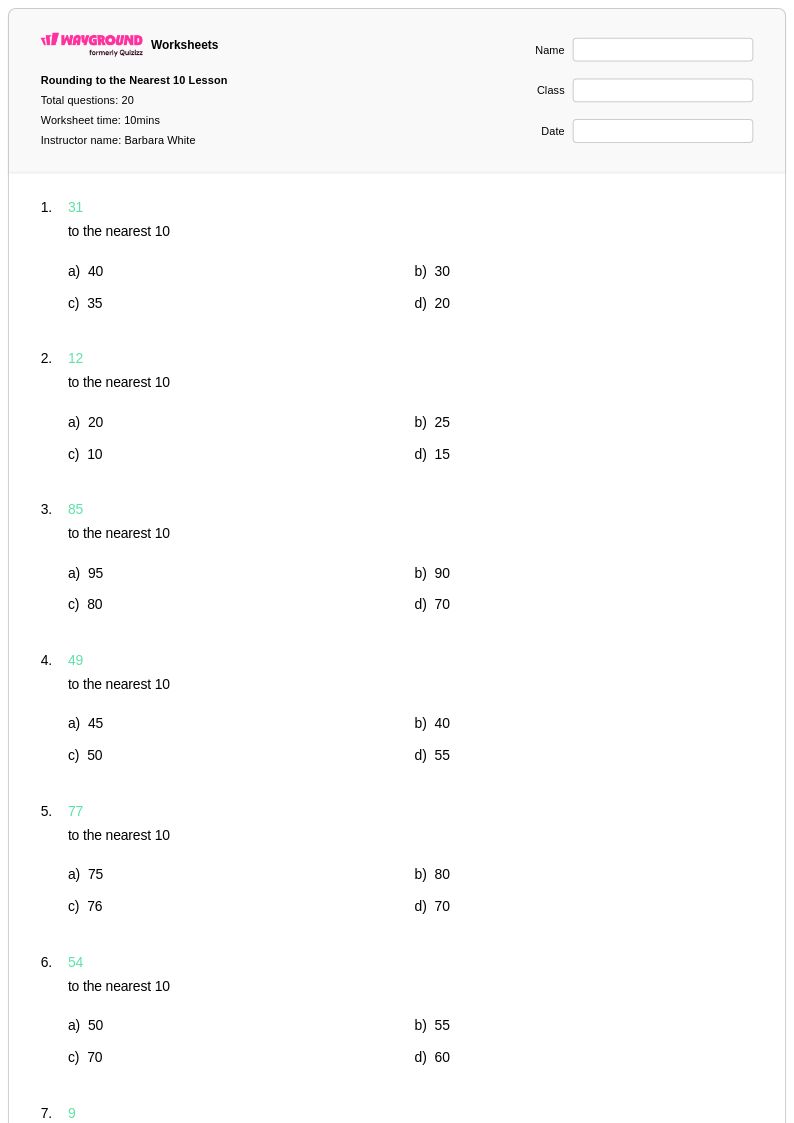
20 Q
5th
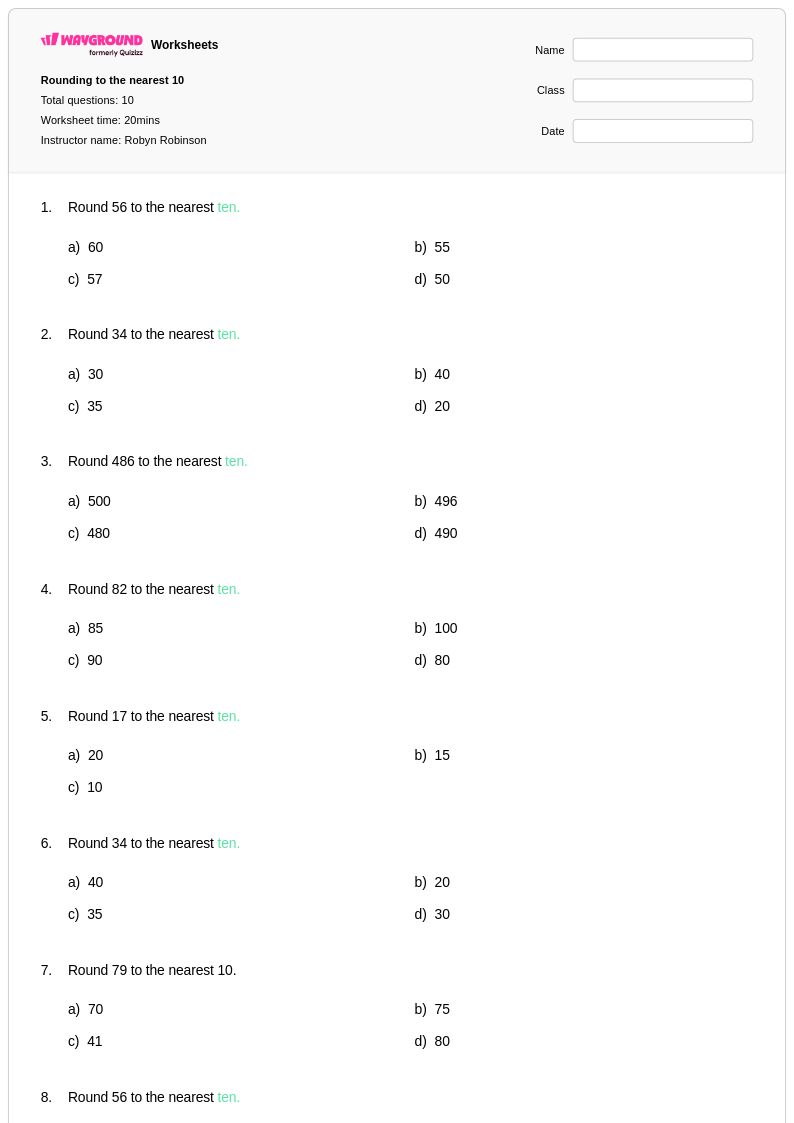
10 Q
2nd - 5th
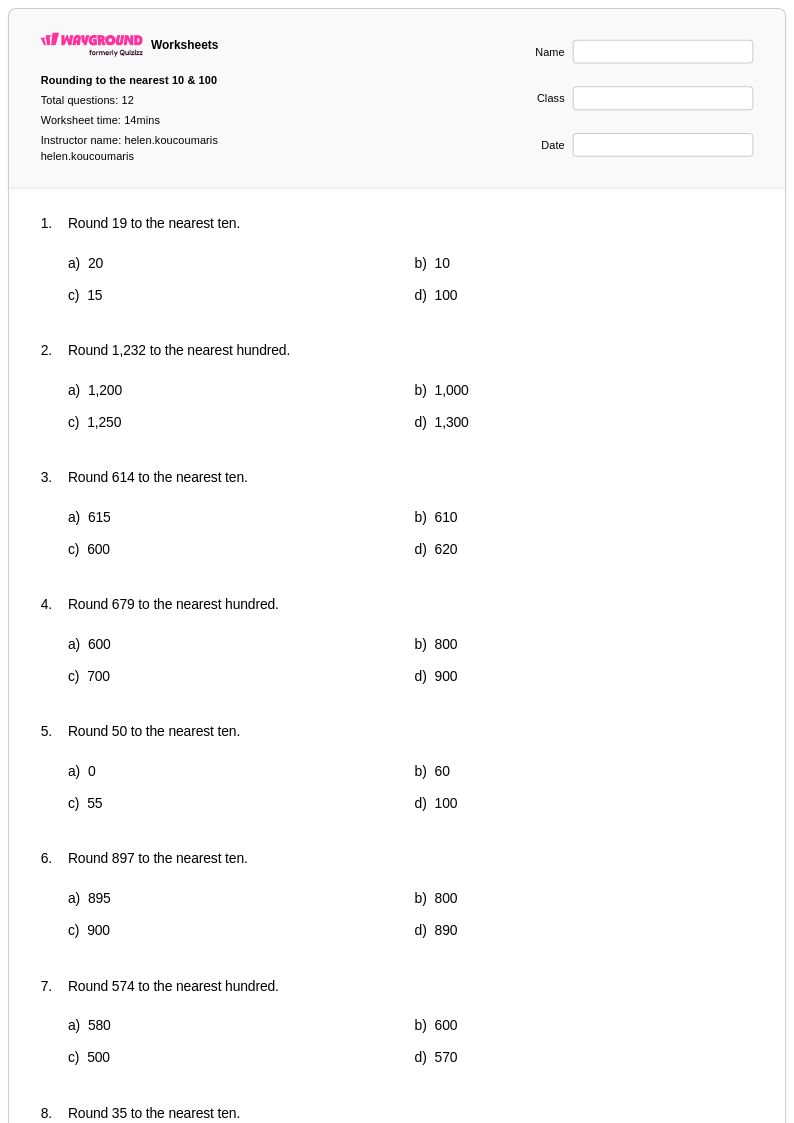
12 Q
1st - 5th
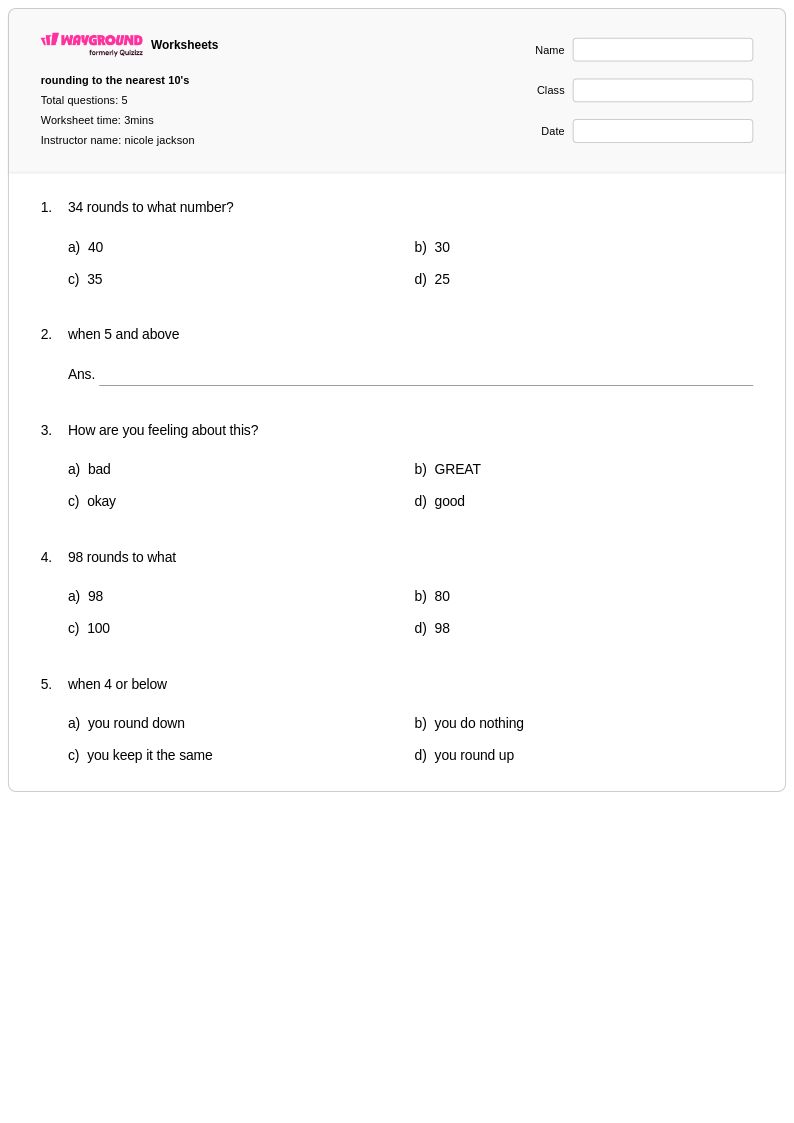
5 Q
4th - 6th
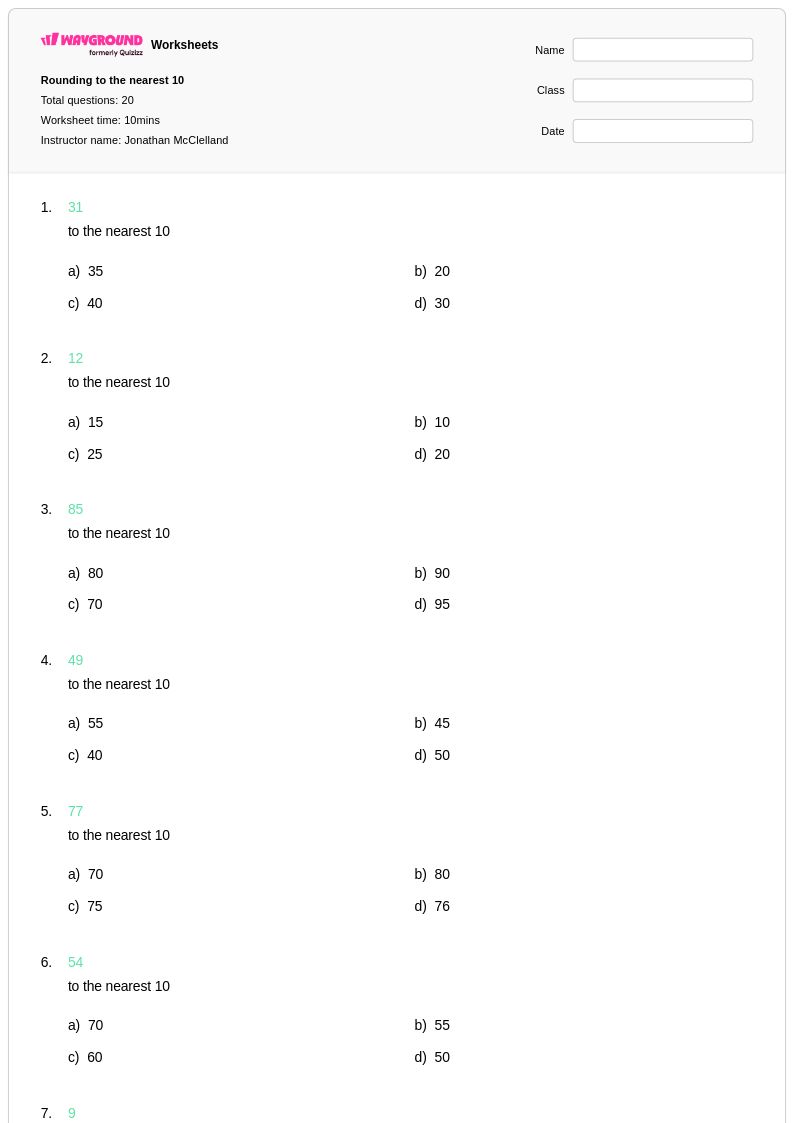
20 Q
5th
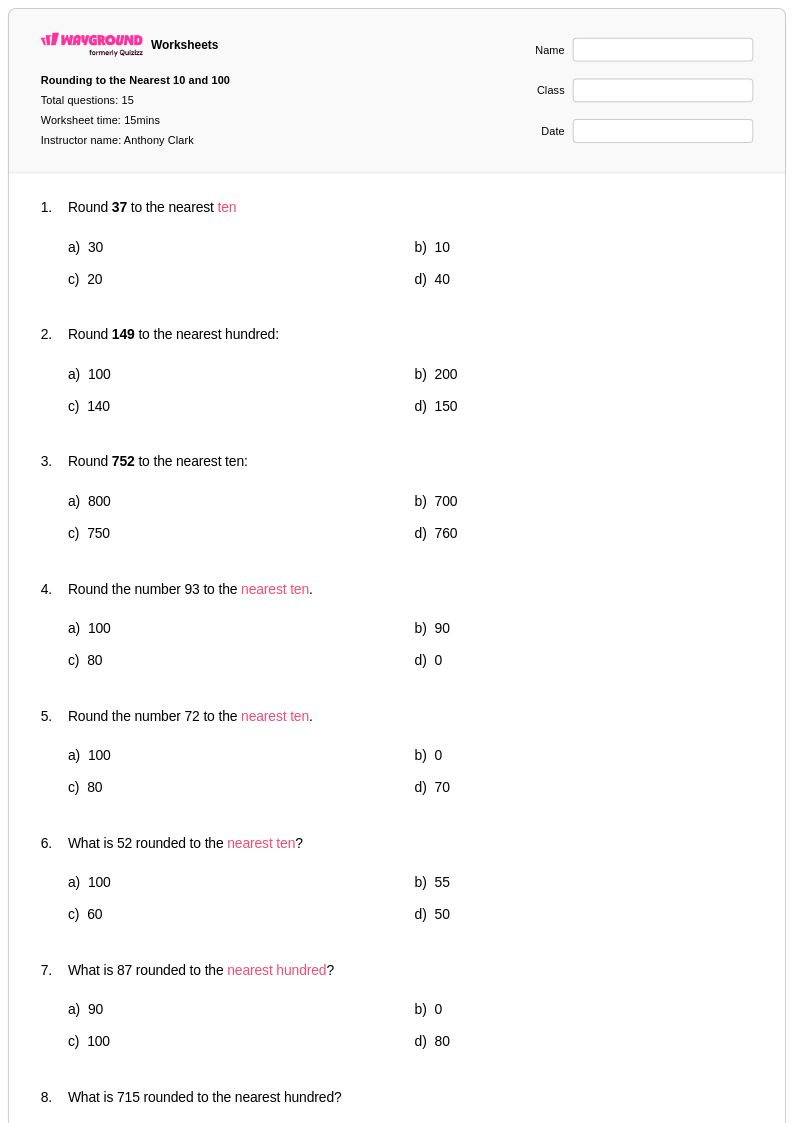
15 Q
3rd - Uni
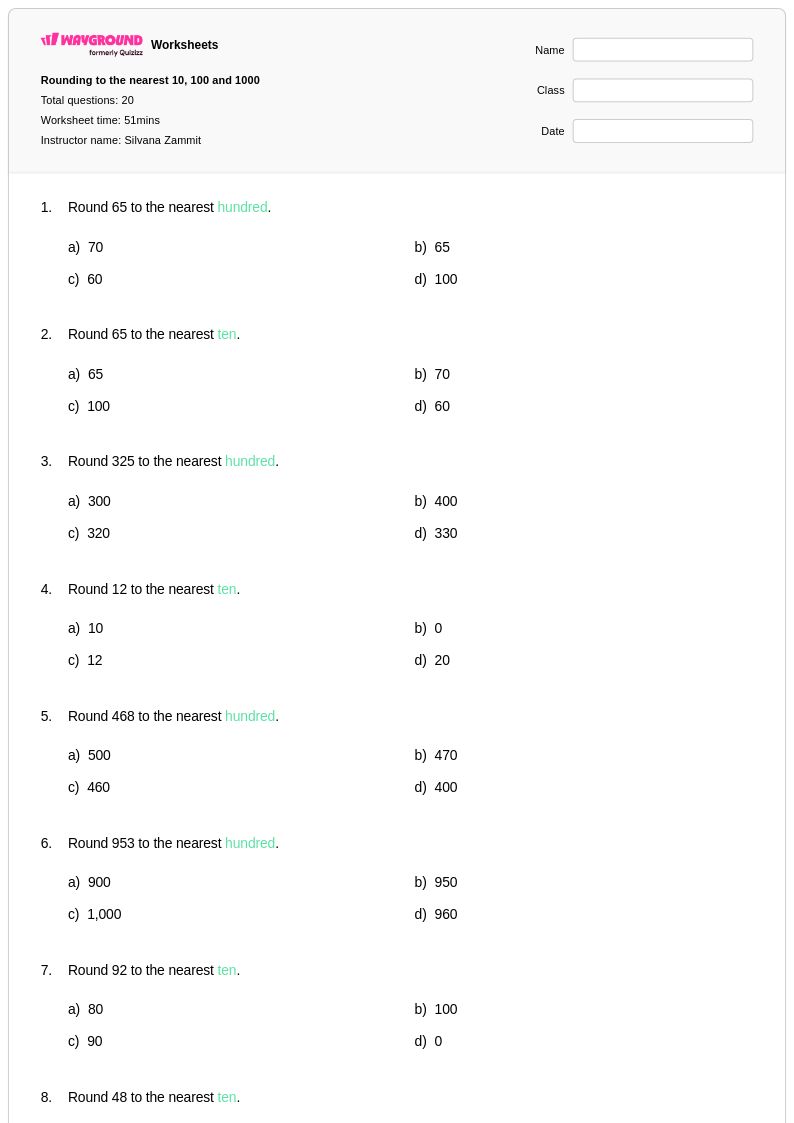
20 Q
5th
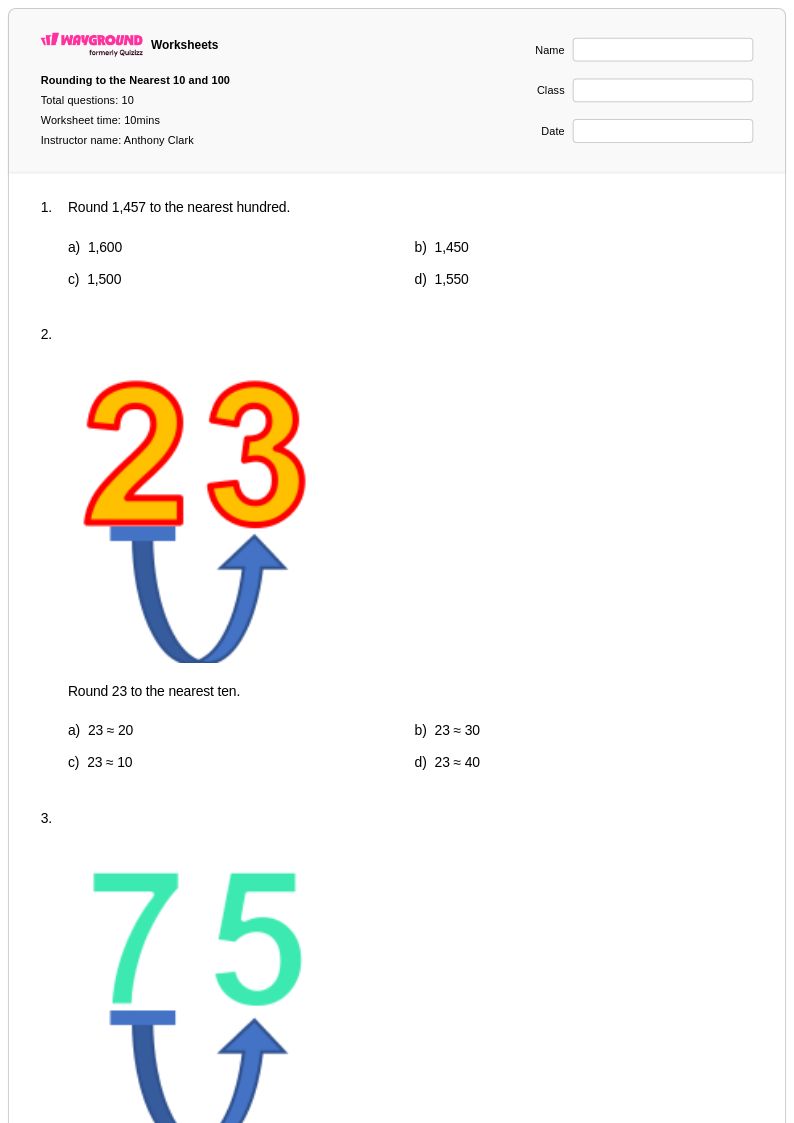
10 Q
3rd - Uni
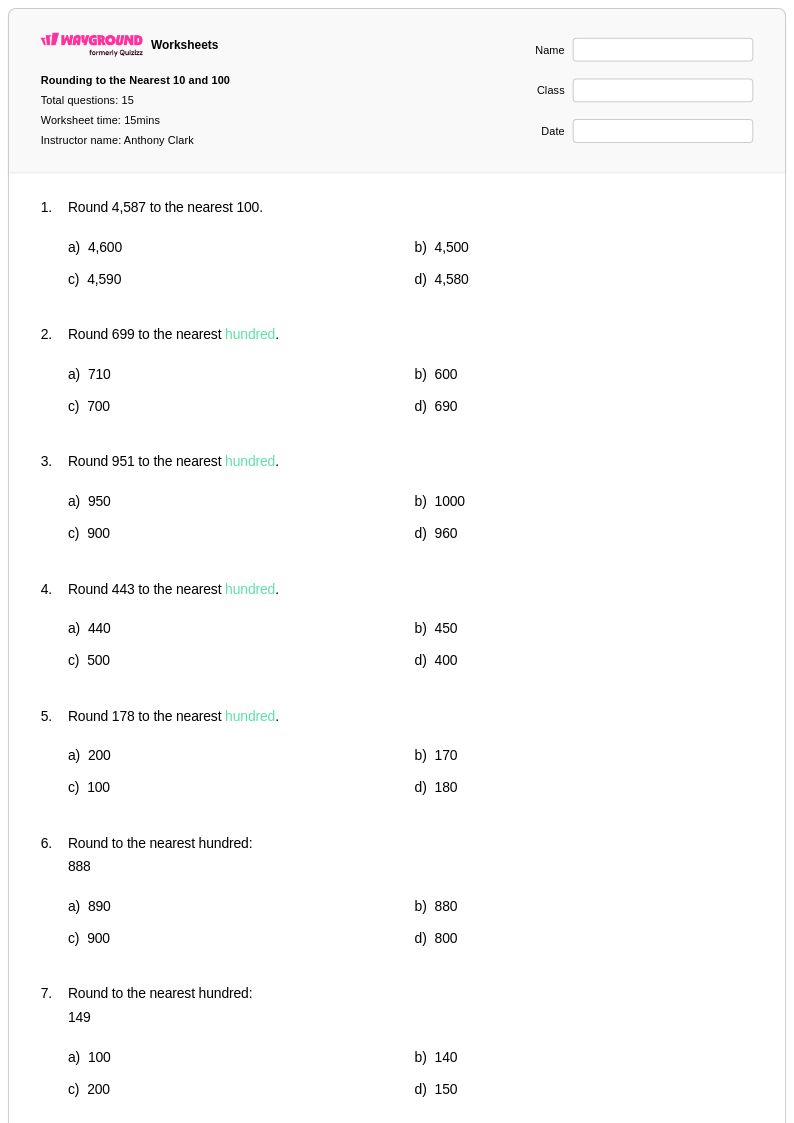
15 Q
3rd - Uni
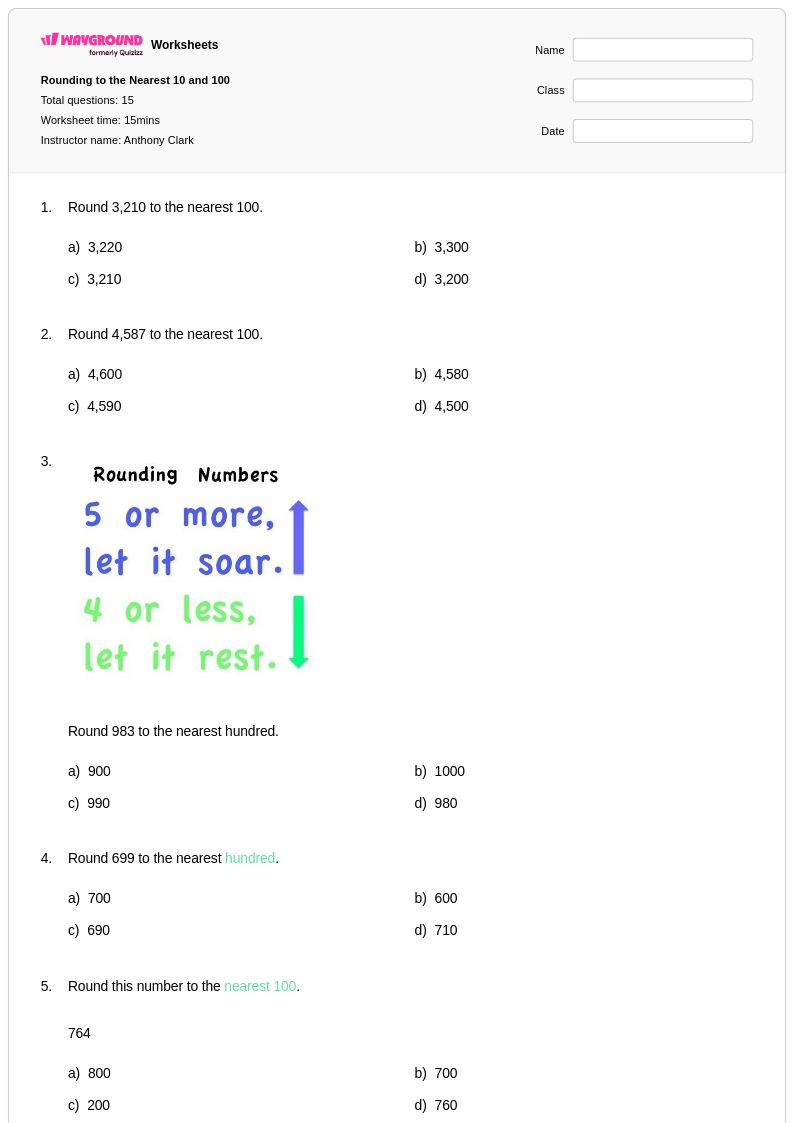
15 Q
3rd - Uni
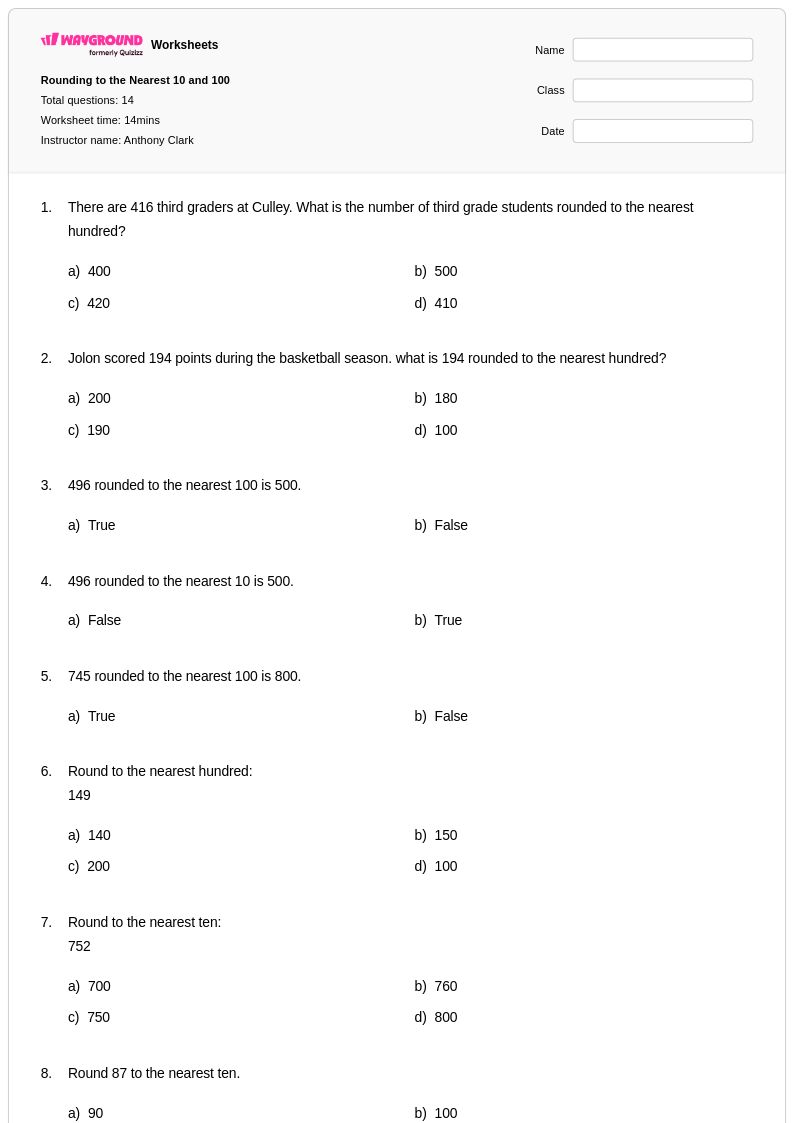
14 Q
3rd - Uni
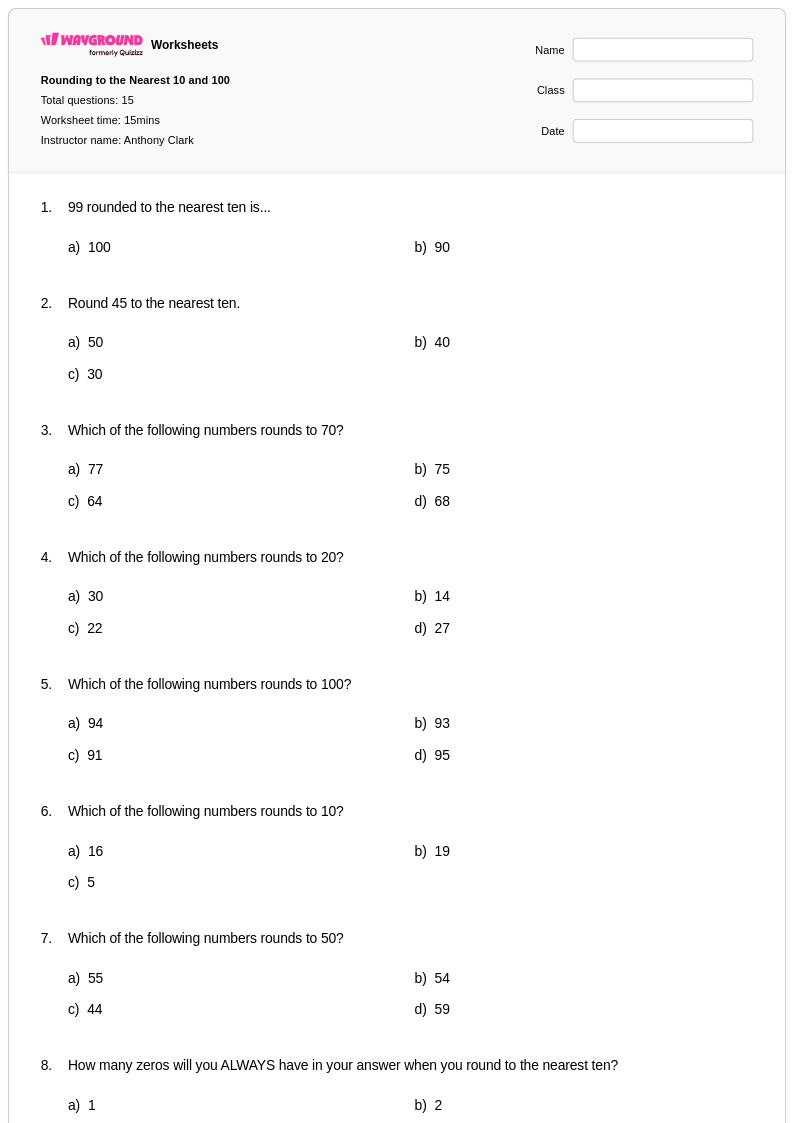
15 Q
3rd - Uni
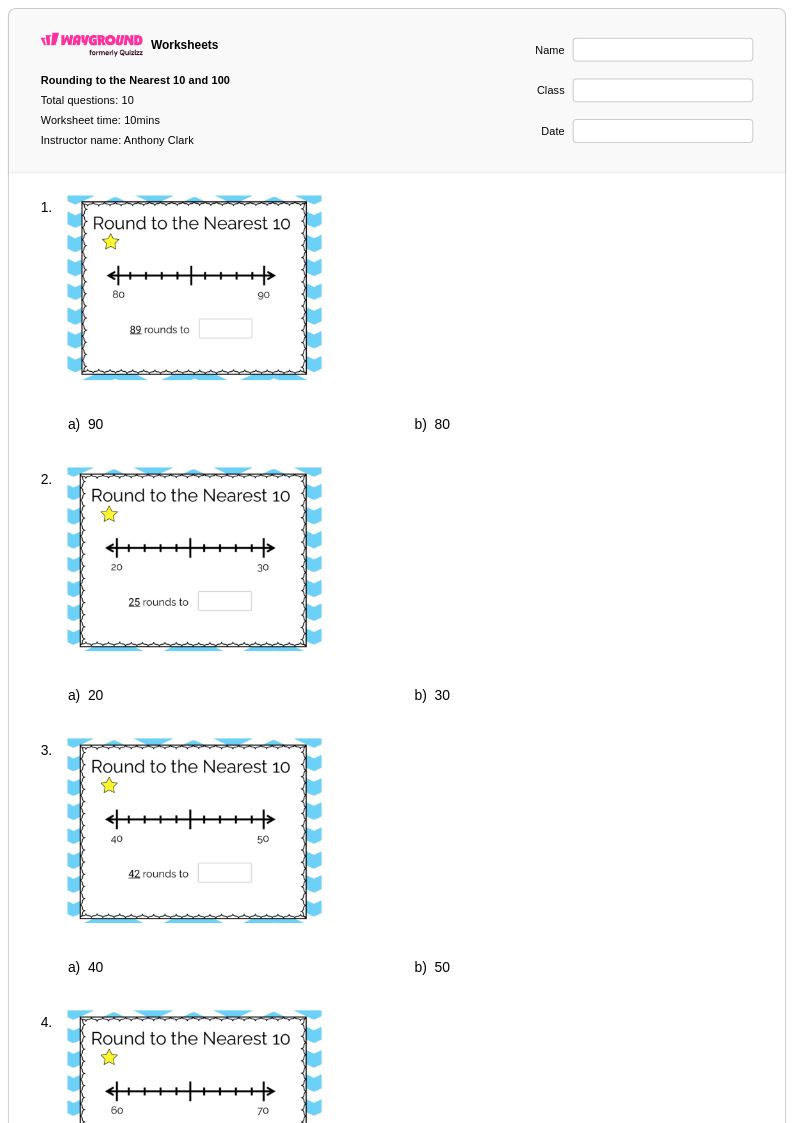
10 Q
3rd - Uni
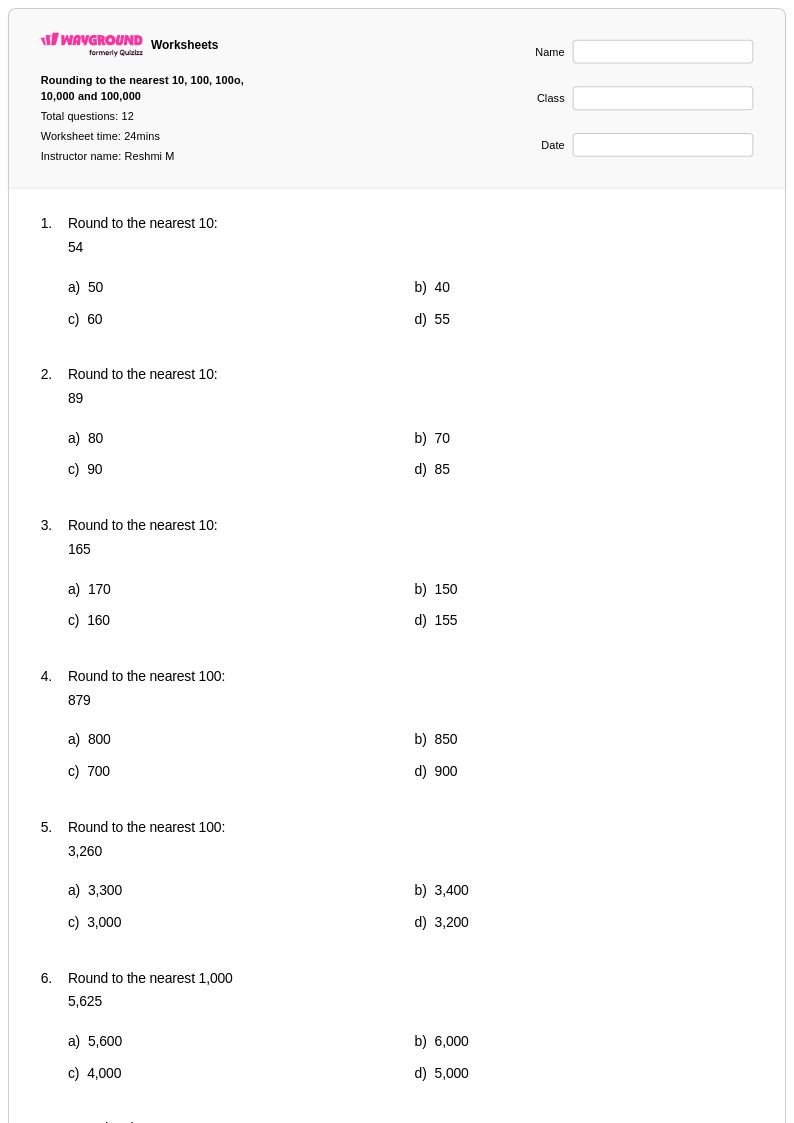
12 Q
5th
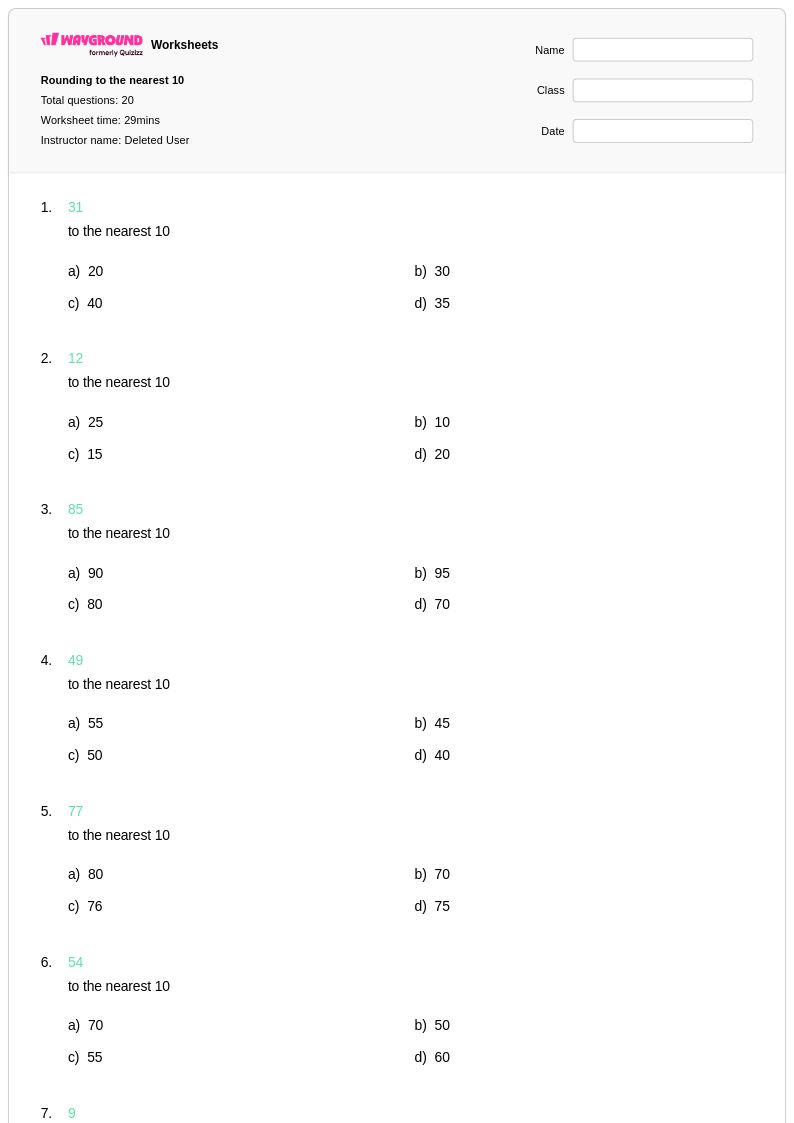
20 Q
4th - Uni
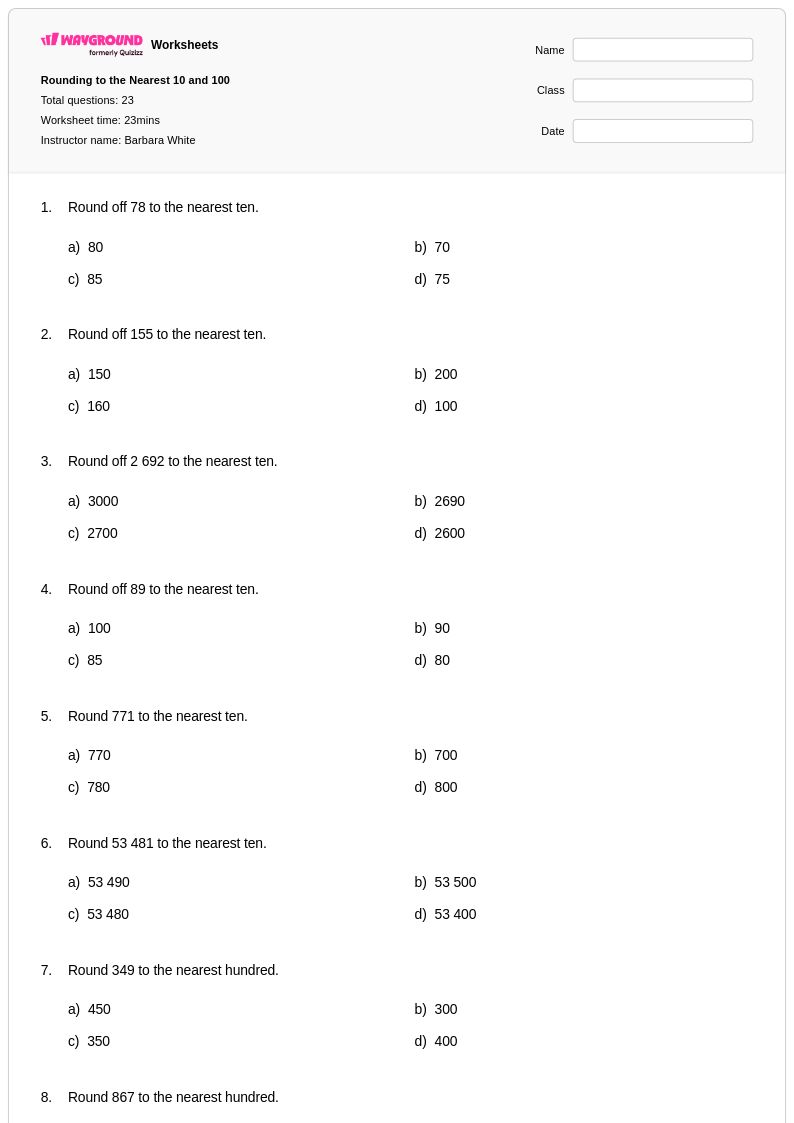
23 Q
3rd - 6th
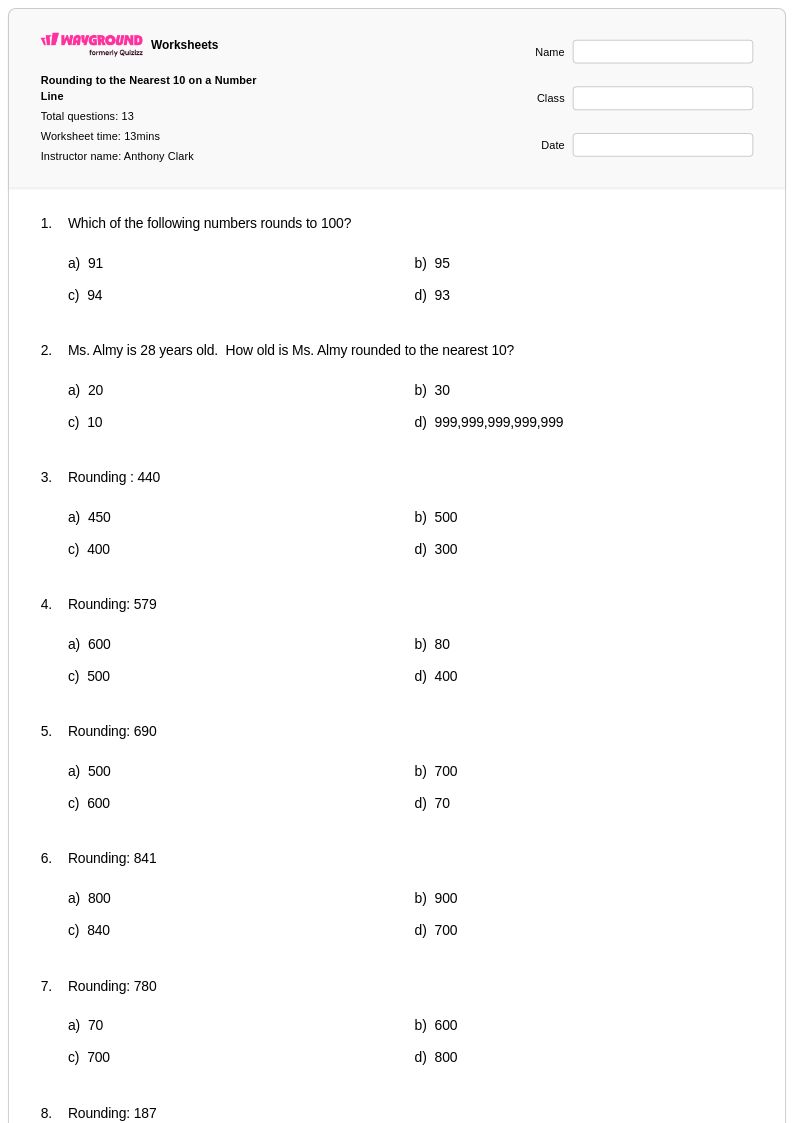
13 Q
3rd - Uni
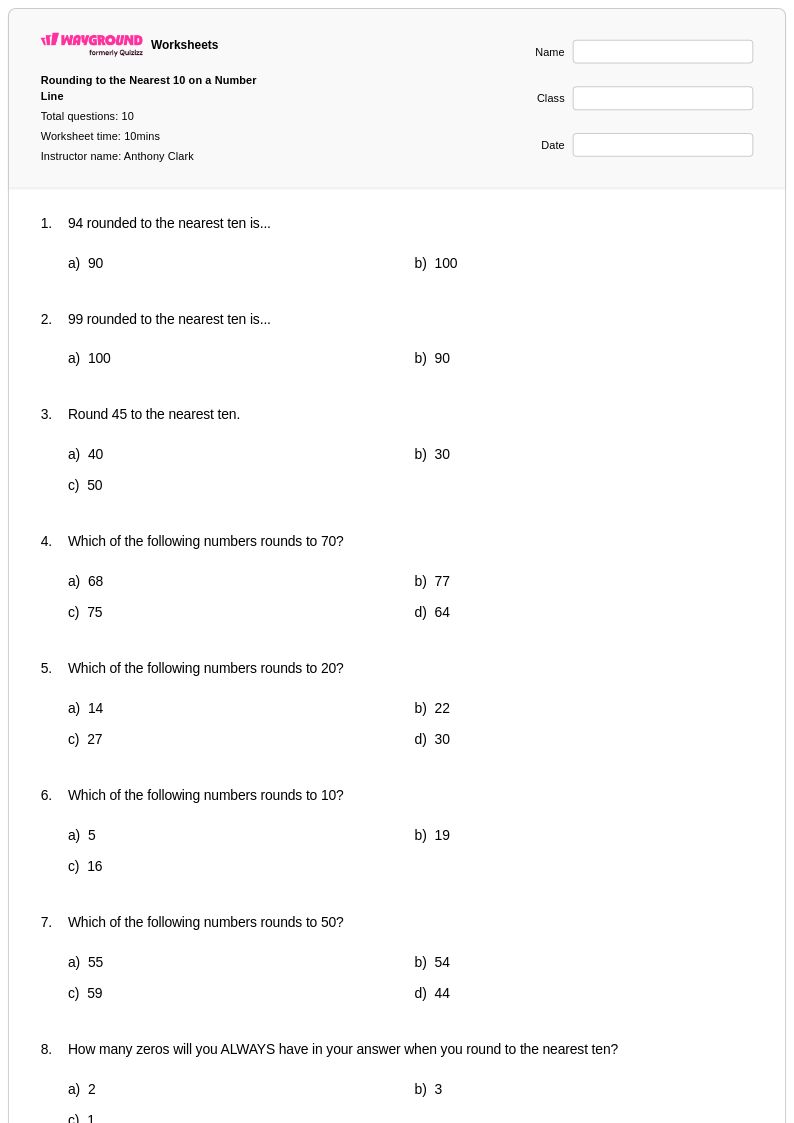
10 Q
3rd - Uni
Explore Other Subject Worksheets for grade 5
Explore printable Rounding to the Nearest 10 worksheets for Grade 5
Rounding to the nearest 10 worksheets for Grade 5 students available through Wayground provide essential practice in developing fundamental number sense skills that form the foundation of mathematical reasoning. These comprehensive printables focus on helping fifth-grade students master the systematic process of identifying which multiple of 10 a given number is closest to, reinforcing critical concepts about place value, number relationships, and estimation strategies. Each worksheet includes carefully structured practice problems that progress from basic two-digit numbers to more complex three and four-digit scenarios, allowing students to build confidence while strengthening their computational fluency. The collection features answer keys and free pdf downloads that enable teachers to quickly assess student understanding and provide immediate feedback on this cornerstone mathematical skill.
Wayground's extensive library of teacher-created resources offers educators millions of expertly designed worksheets specifically aligned to Grade 5 mathematics standards for rounding concepts. The platform's robust search and filtering capabilities allow teachers to quickly locate materials that match their specific instructional needs, whether for initial skill introduction, targeted remediation, or advanced enrichment activities. These versatile worksheet collections support differentiated instruction through customizable features that accommodate diverse learning styles and ability levels, with both printable pdf formats for traditional classroom use and digital versions for interactive learning environments. Teachers can seamlessly integrate these resources into their lesson planning to provide systematic skill practice, conduct formative assessments, and ensure students develop the number sense competencies essential for success in more advanced mathematical concepts.
FAQs
How is rounding to the nearest 10 relevant for 5th graders?
How does this worksheet support 5th grade math standards?
What rounding practice is appropriate for 5th grade?
What does a 5th grader's difficulty with rounding whole numbers indicate?
How can I use this Grade 5 rounding worksheet?