Free Printable Scientific Figures Worksheets for Grade 11
Grade 11 scientific figures worksheets from Wayground help students master significant digits, precision, and accuracy through comprehensive printables, practice problems, and answer keys that strengthen measurement skills in science.
Explore printable Scientific Figures worksheets for Grade 11
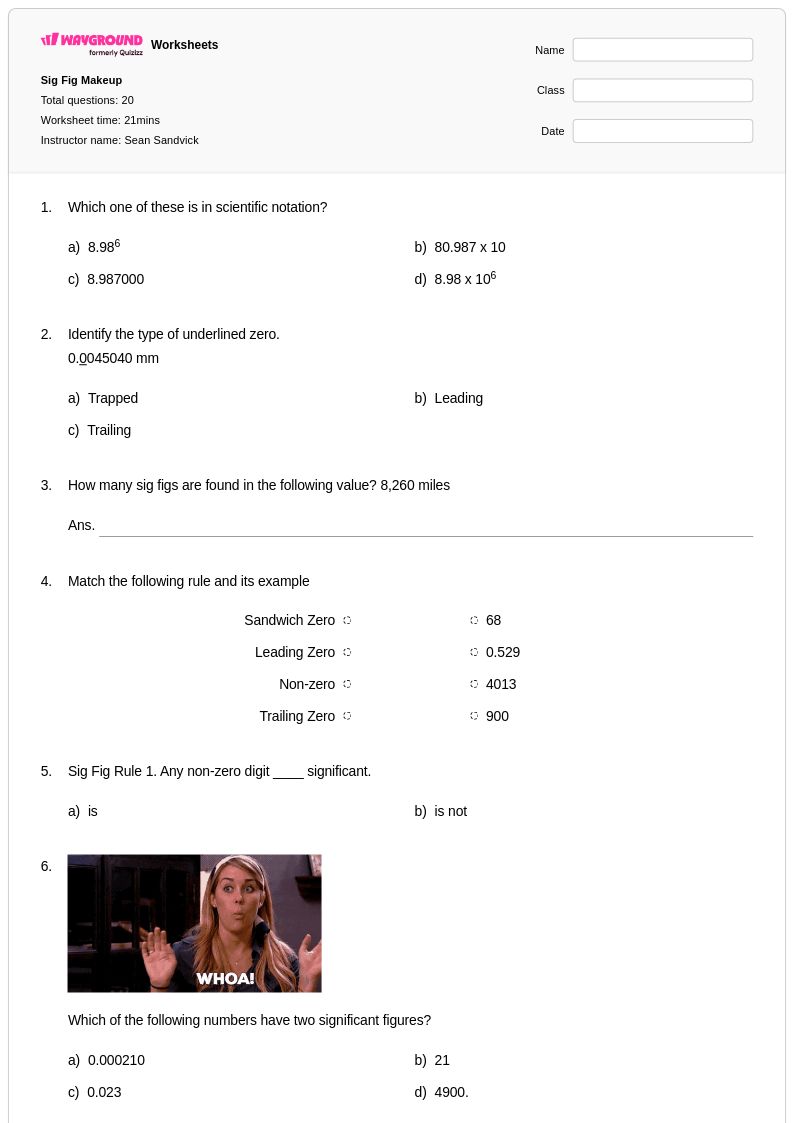
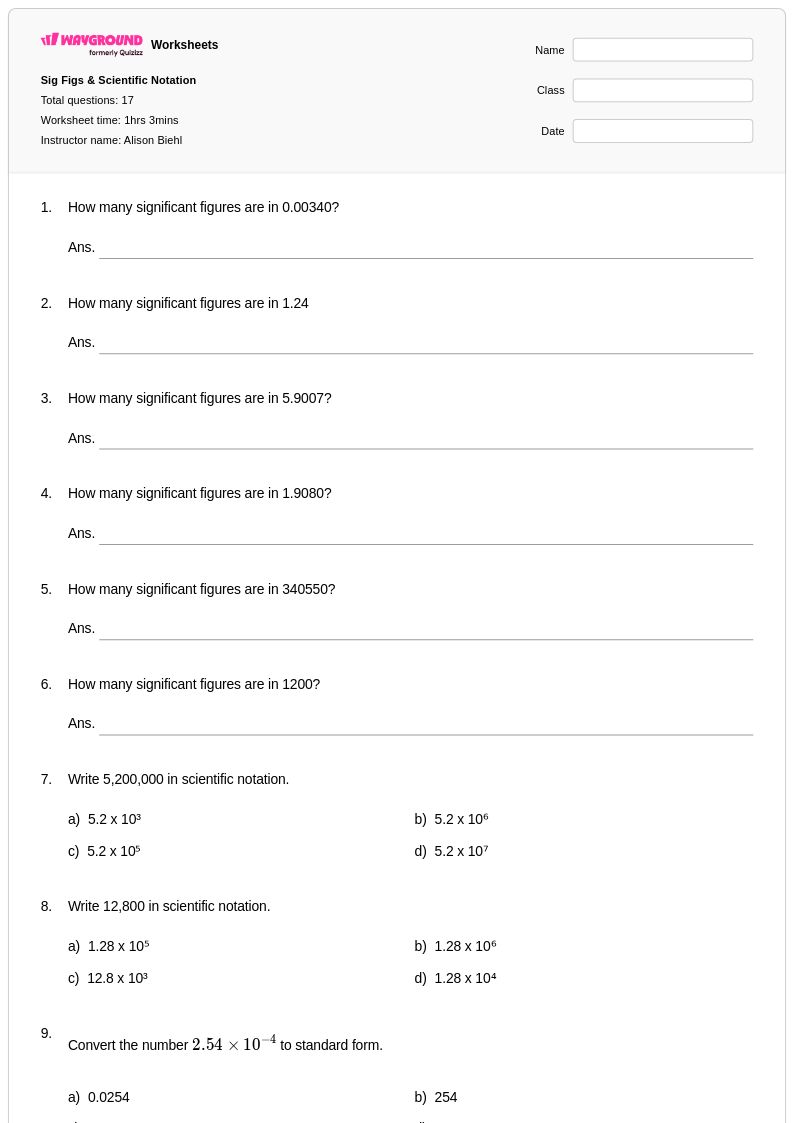
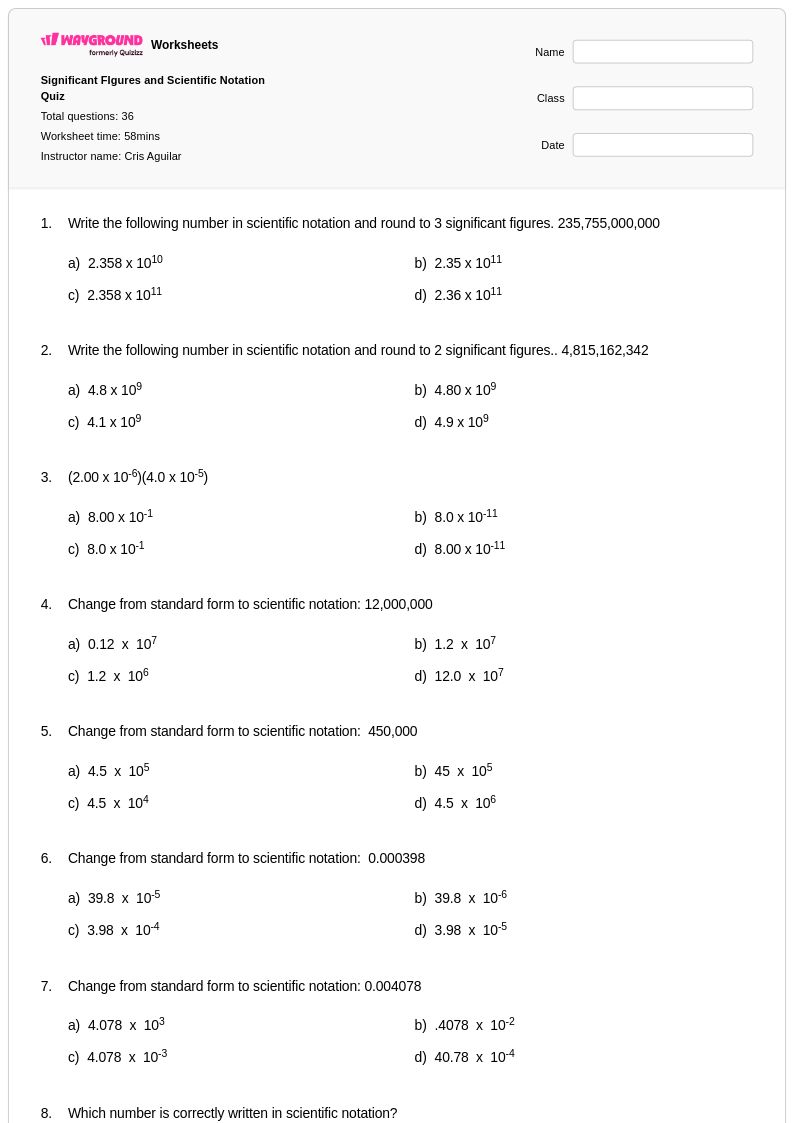
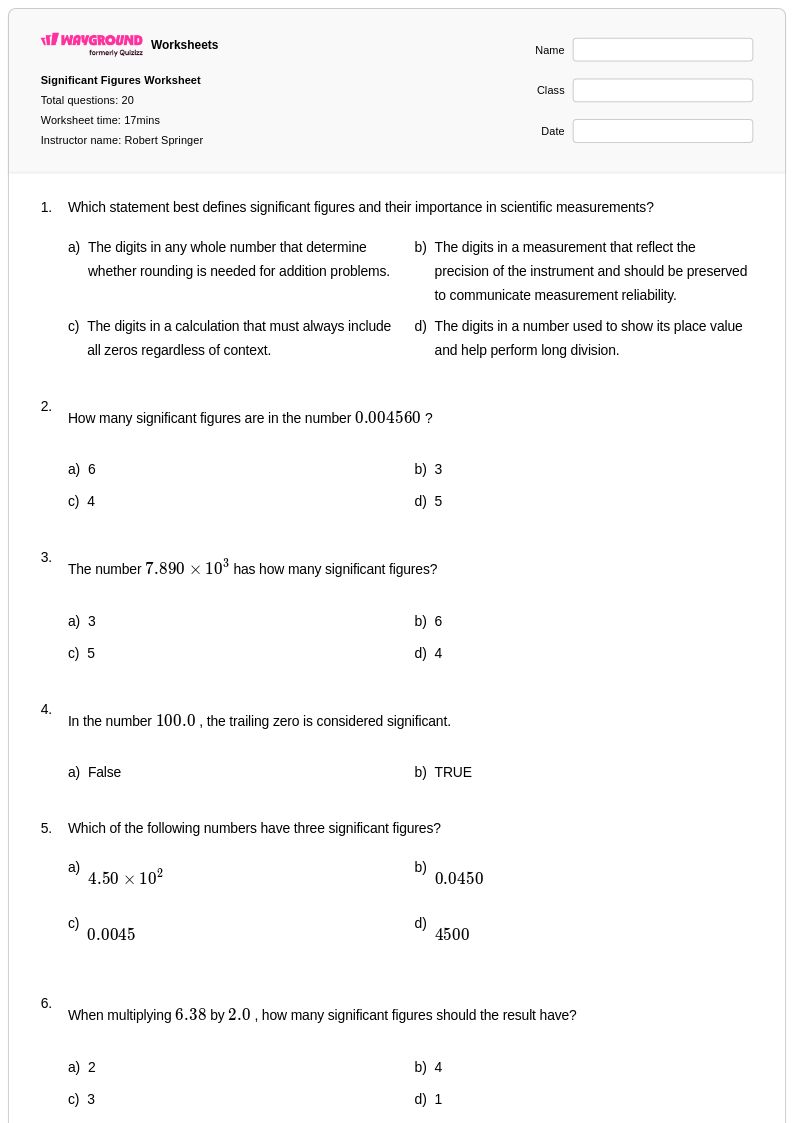
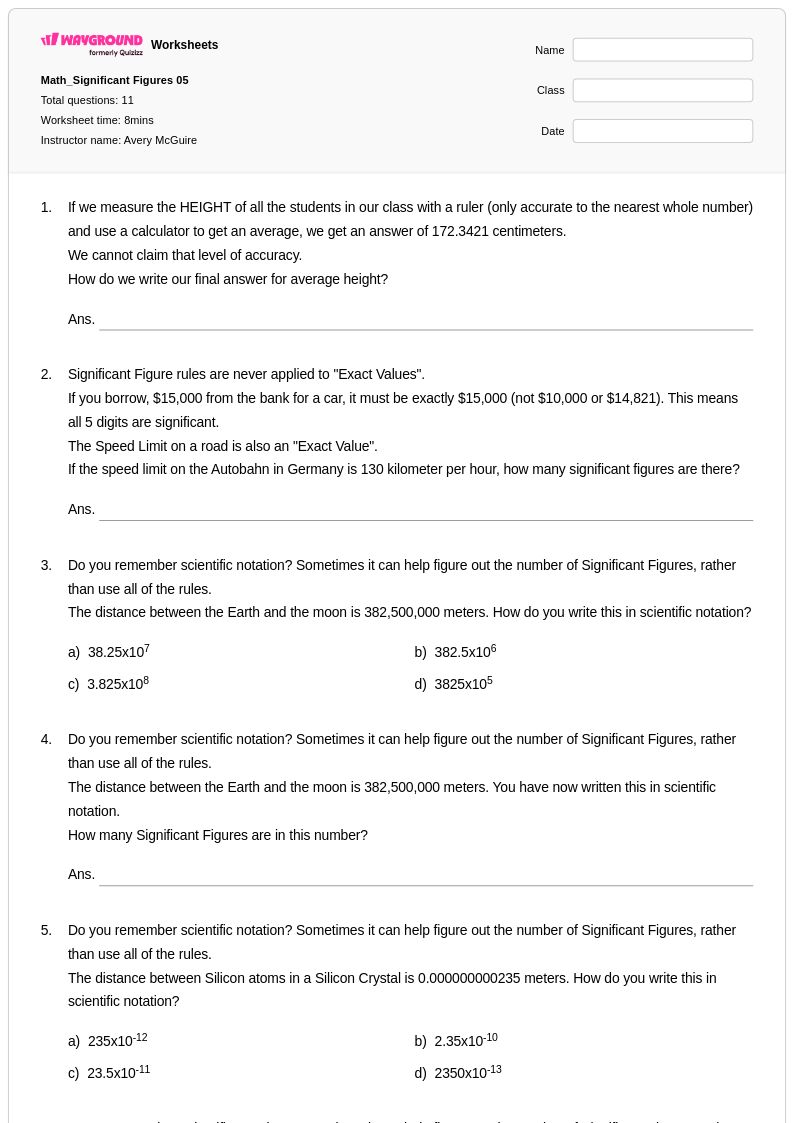
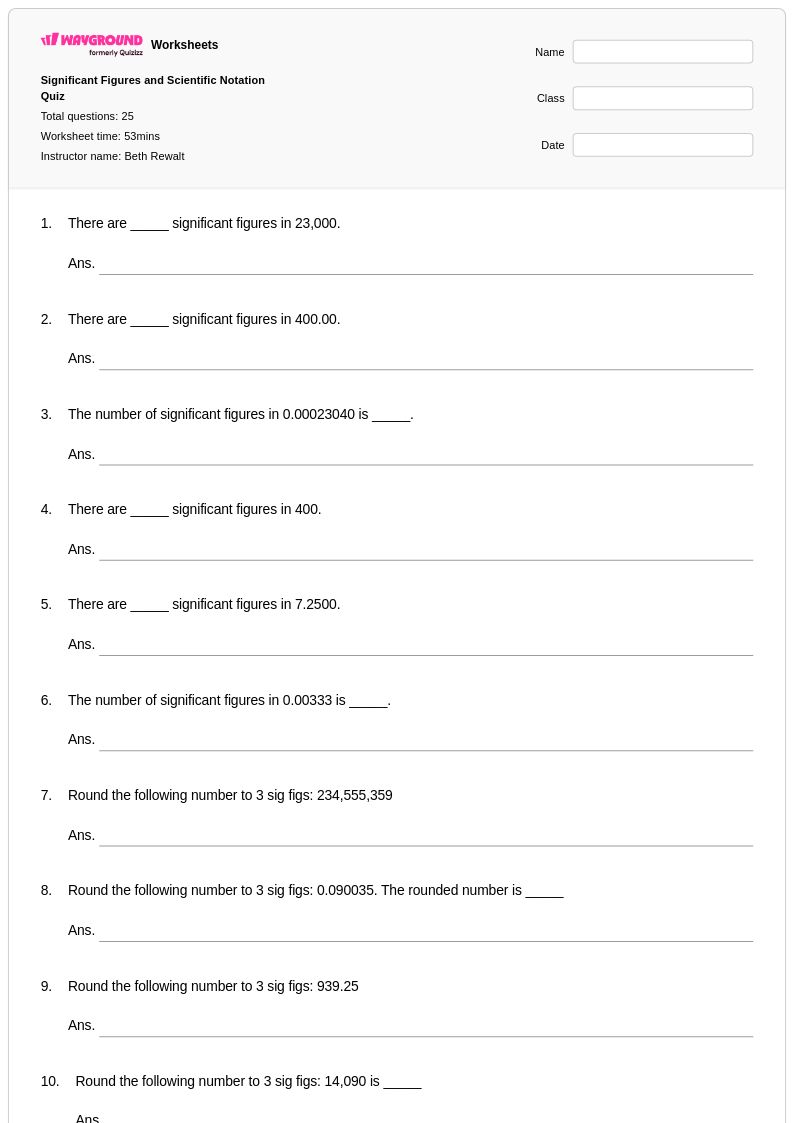
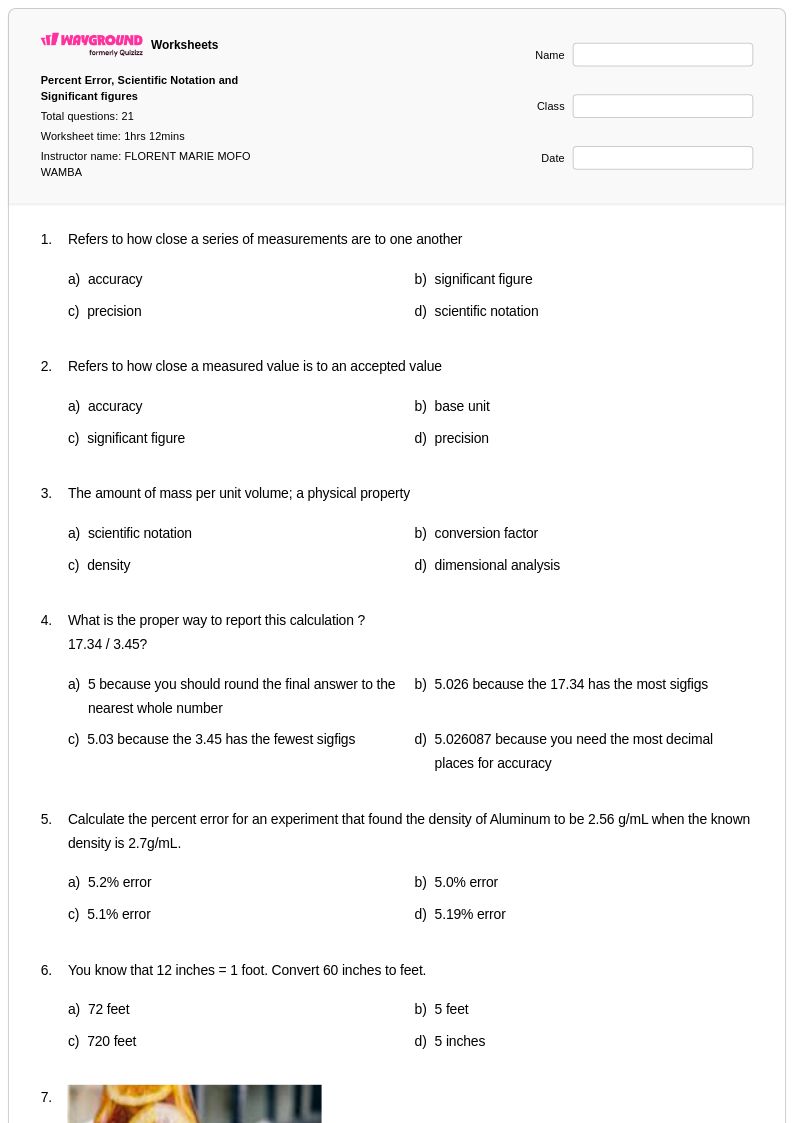
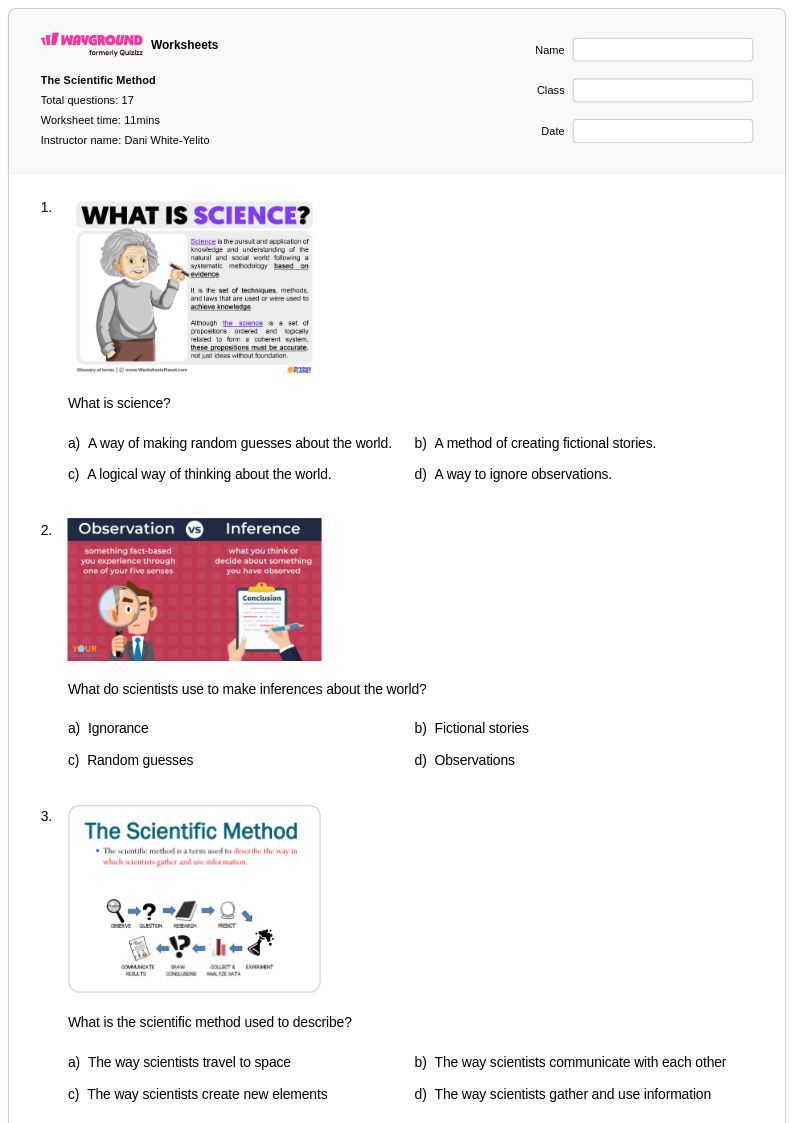
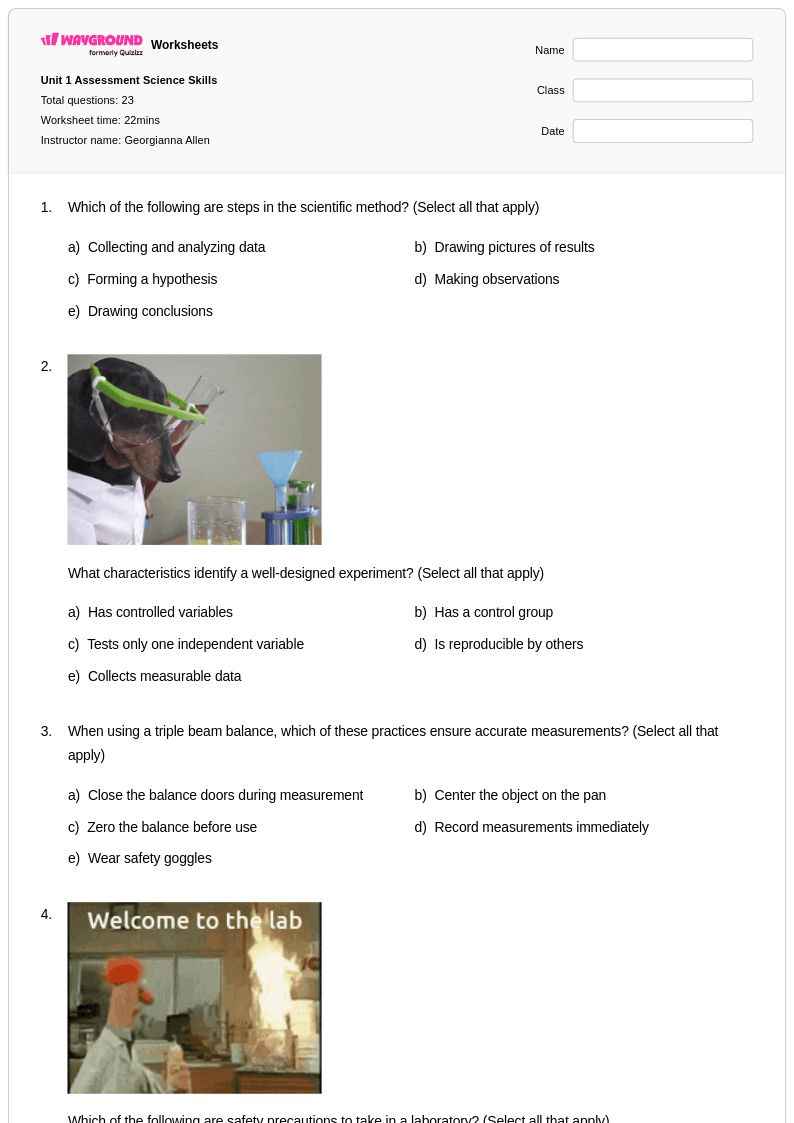
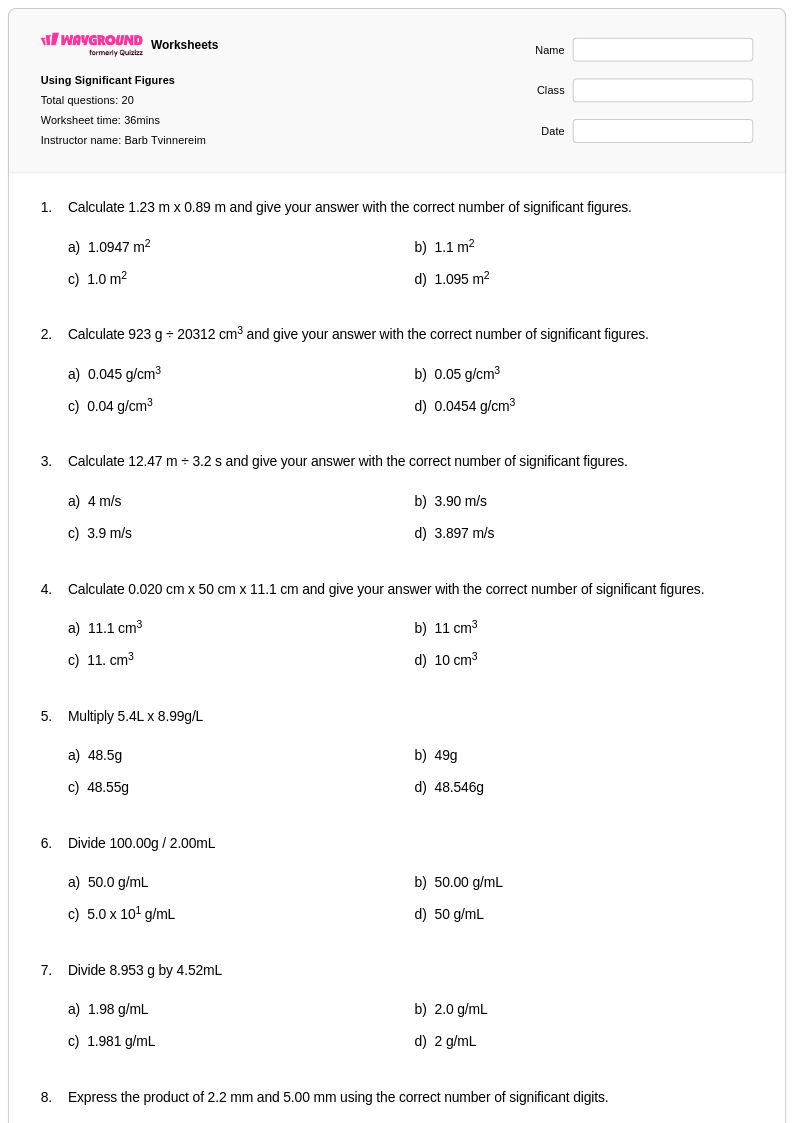
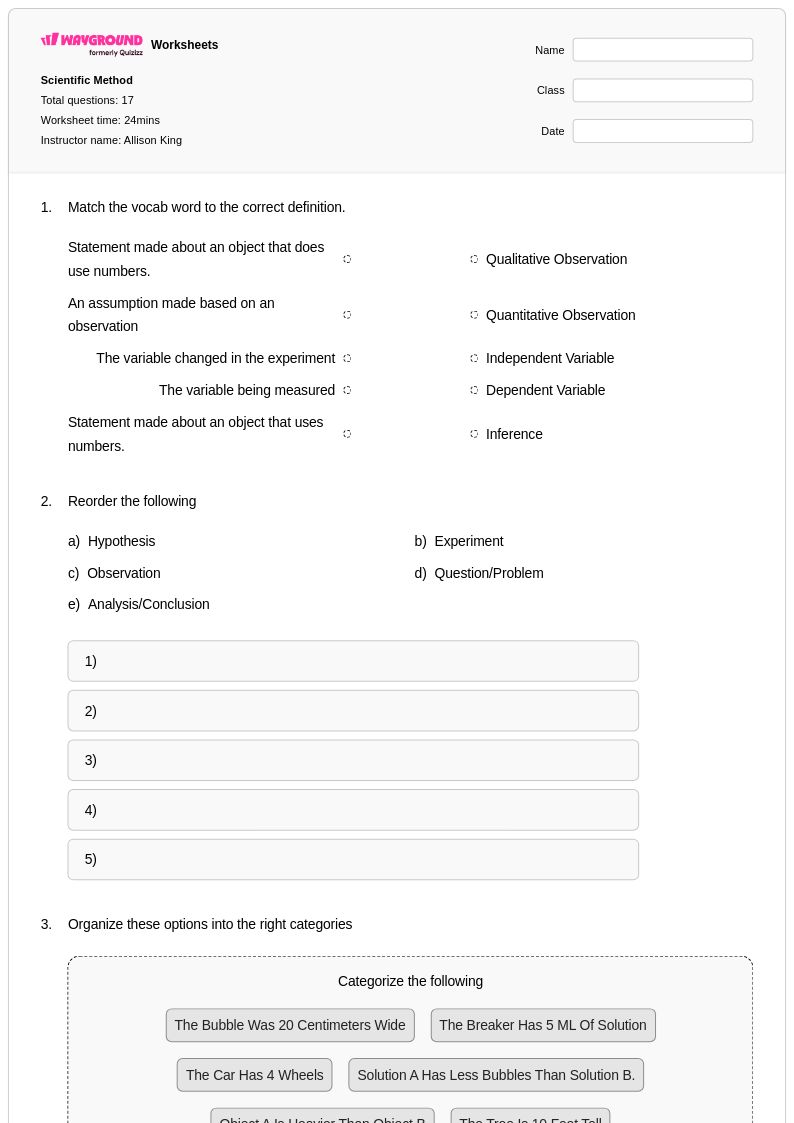
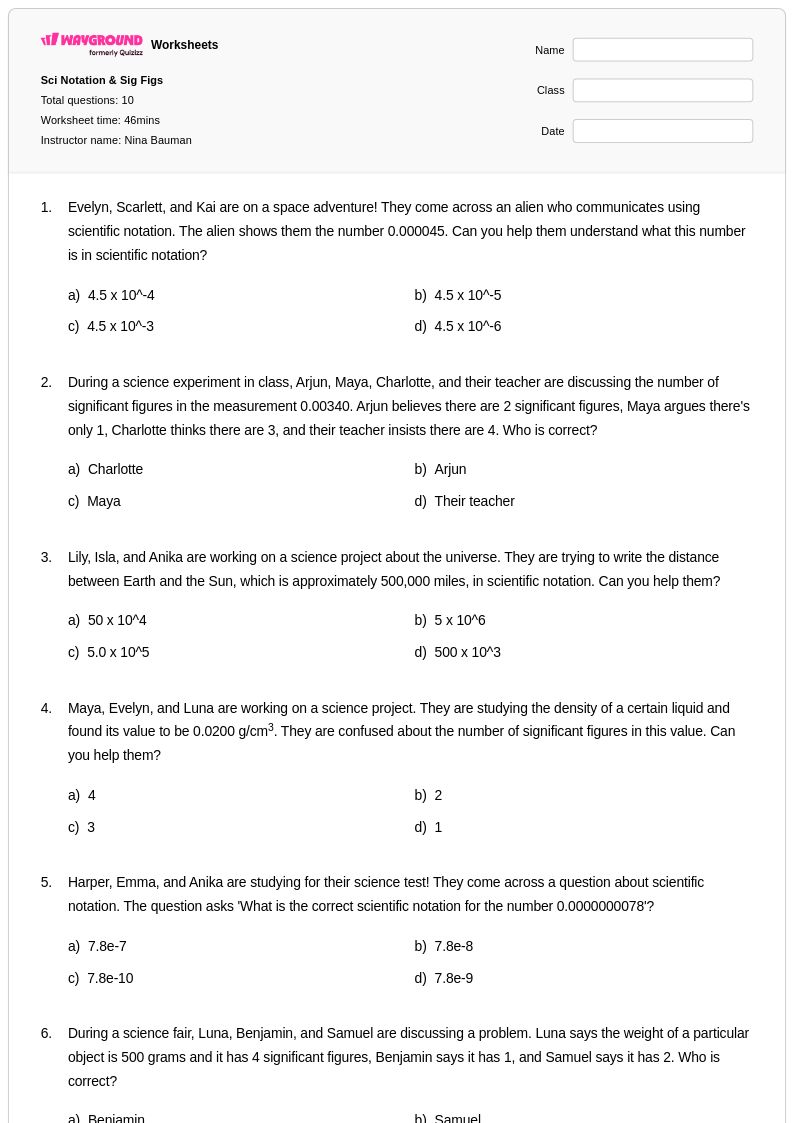
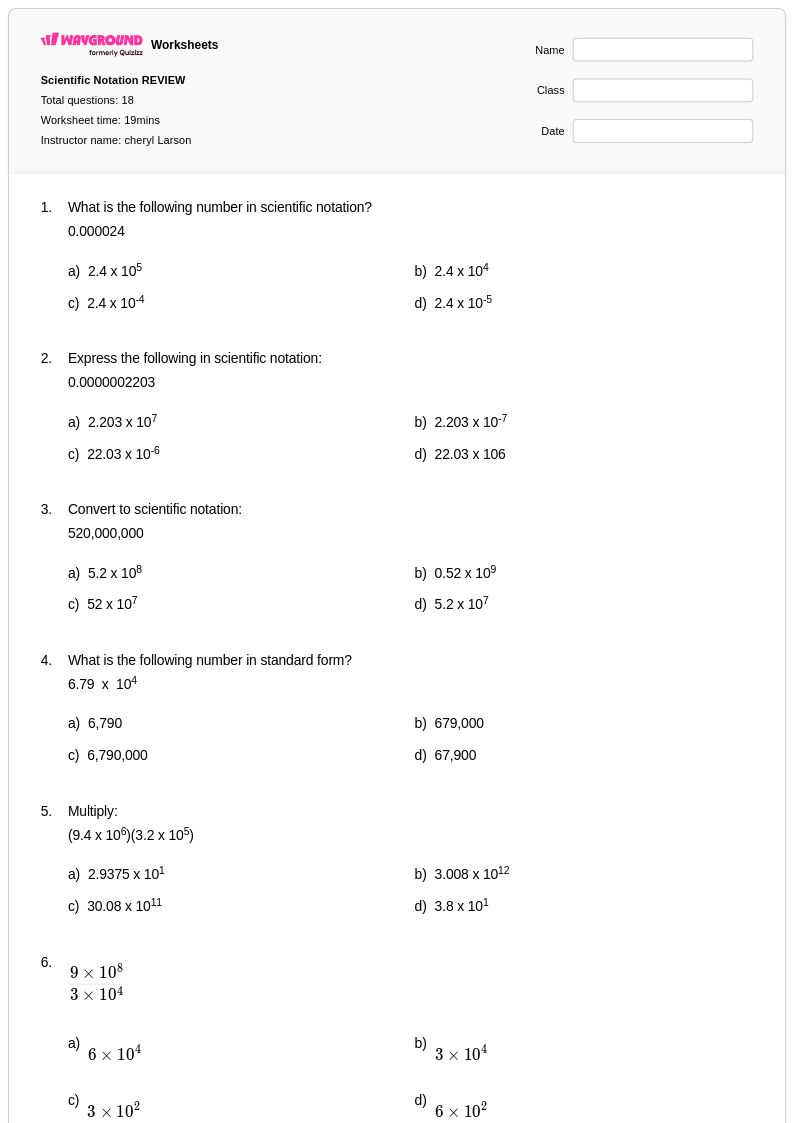
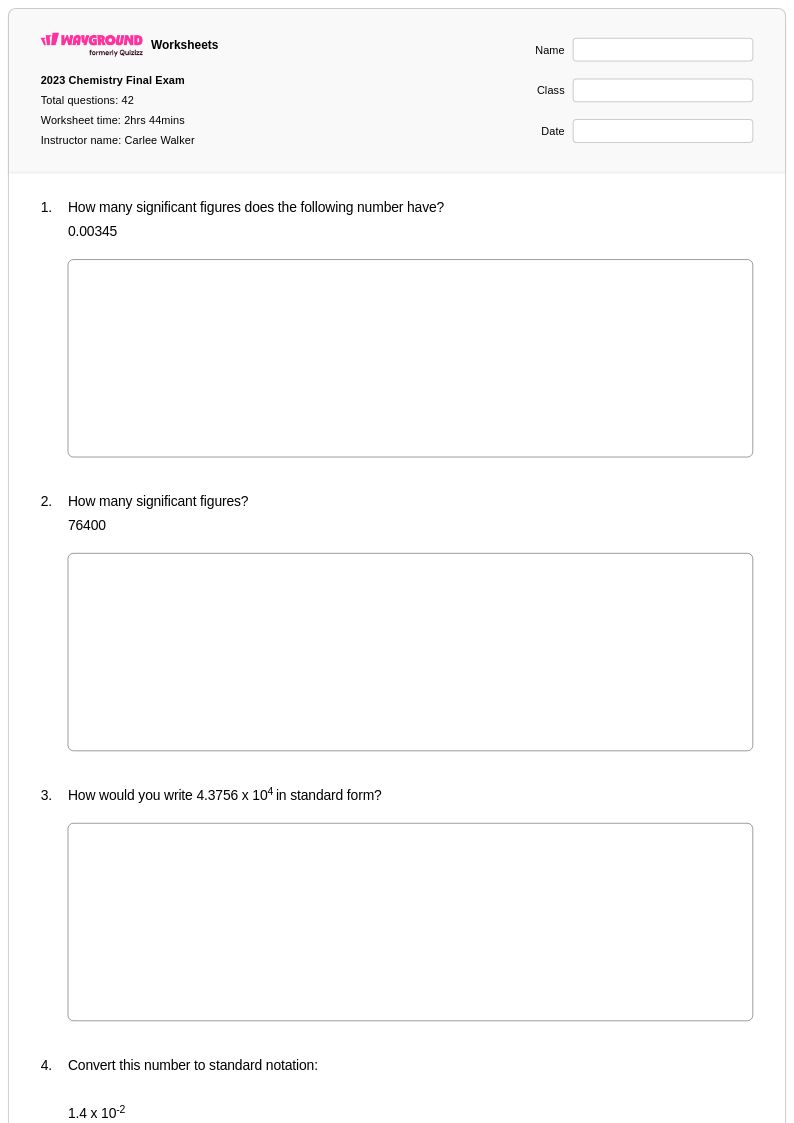
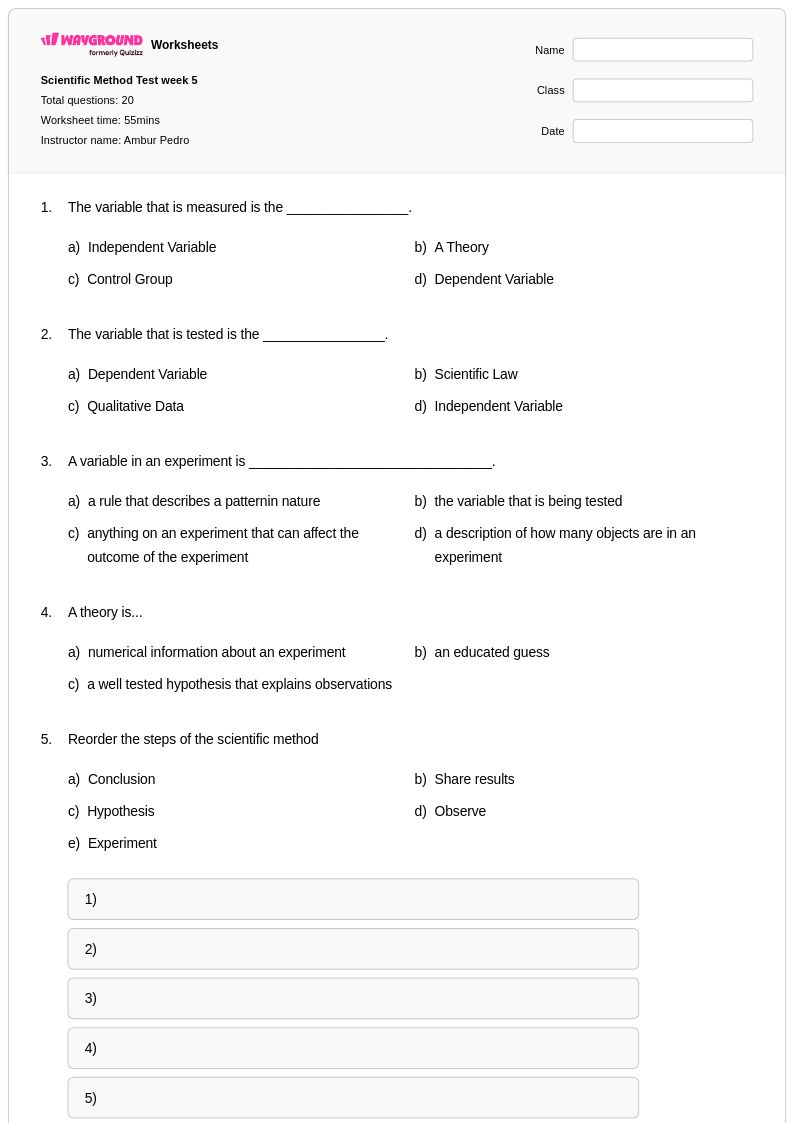
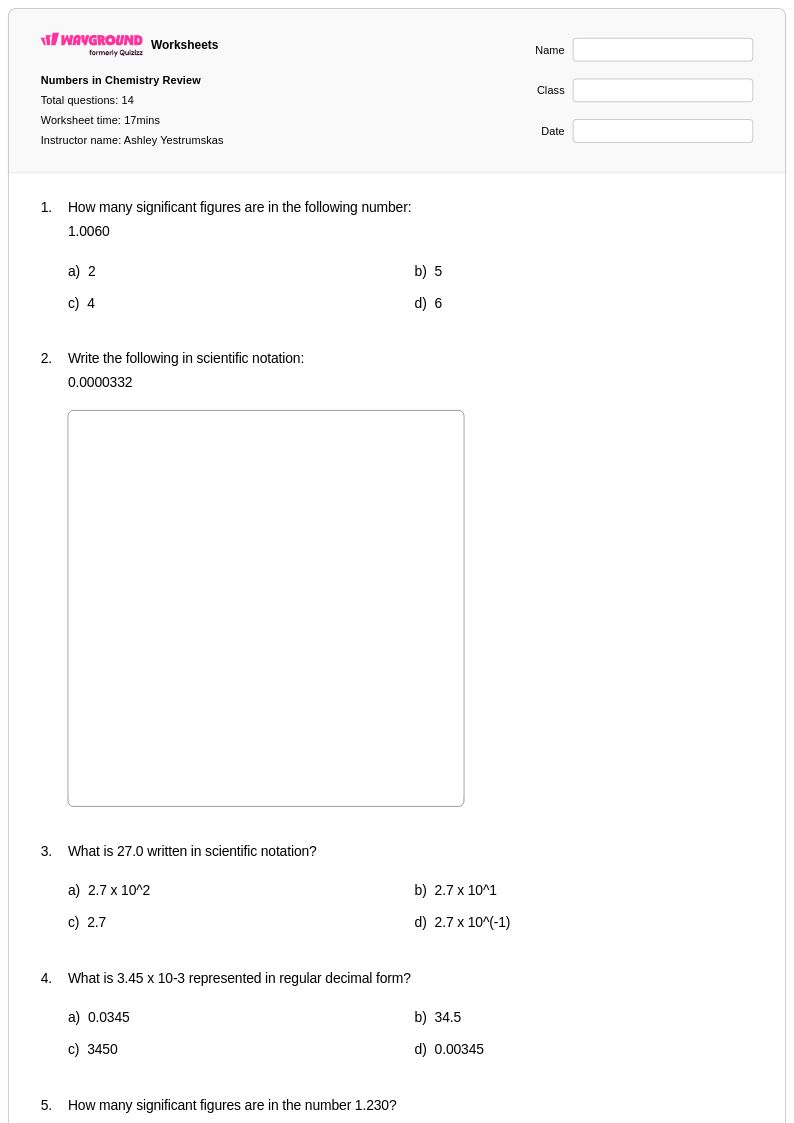
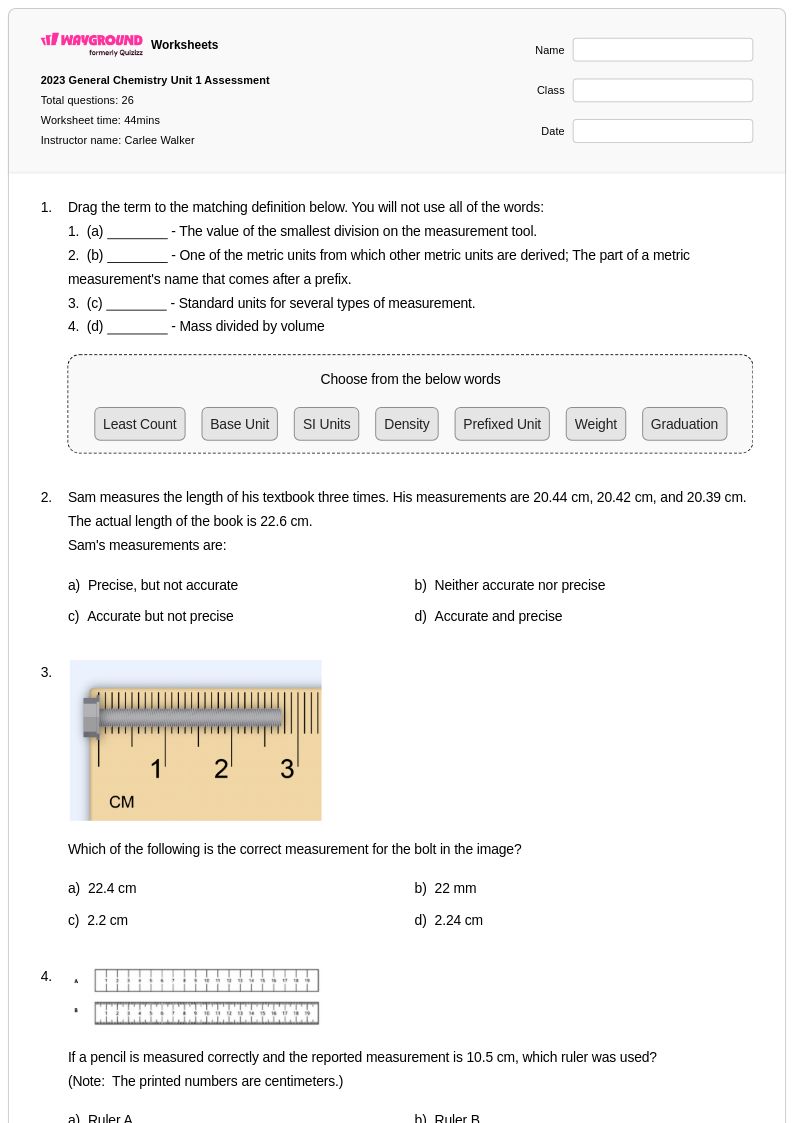
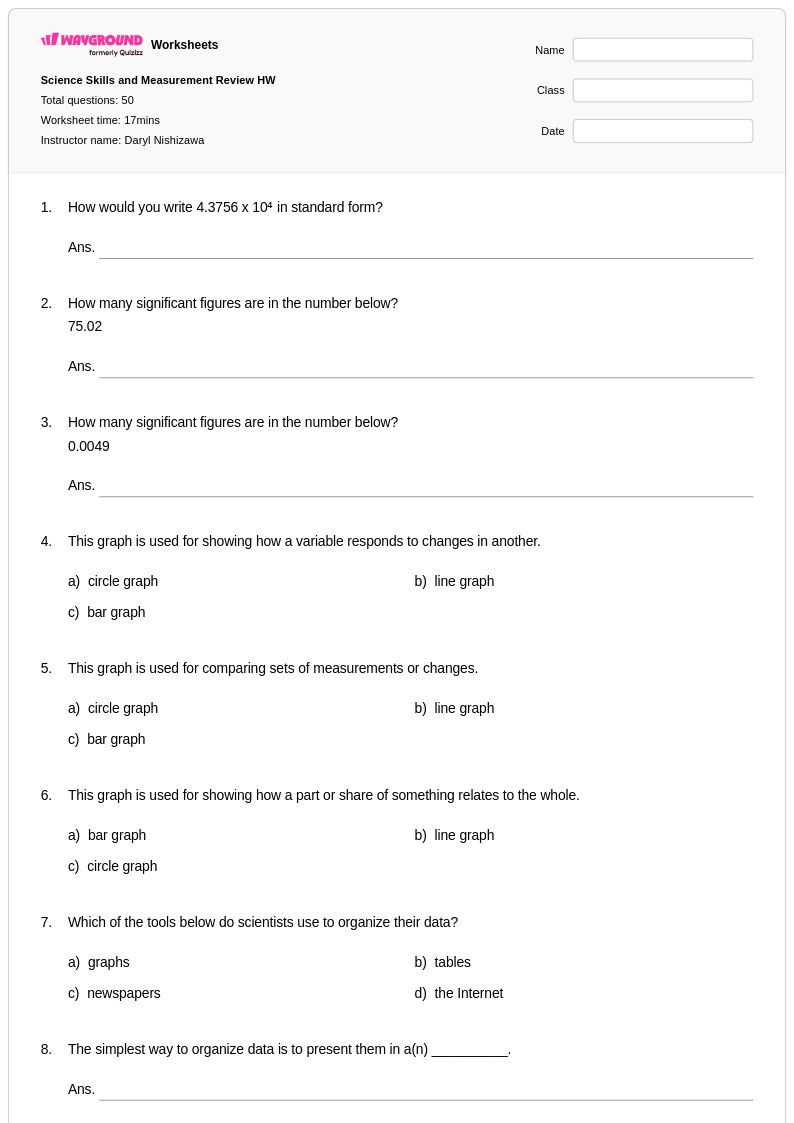
Scientific figures worksheets for Grade 11 students available through Wayground (formerly Quizizz) provide comprehensive practice in understanding and applying the principles of significant digits, precision, and accuracy in scientific measurements. These expertly designed worksheets strengthen essential skills including identifying the number of significant figures in given measurements, performing calculations while maintaining proper significant figure rules, rounding results appropriately, and distinguishing between precision and accuracy in experimental data. Students engage with practice problems that range from basic significant figure identification to complex multi-step calculations involving addition, subtraction, multiplication, and division of measured values. Each worksheet collection includes detailed answer keys and explanations, and educators can access these valuable resources as free printables in convenient pdf format to support both classroom instruction and independent study.
Wayground (formerly Quizizz) empowers teachers with access to millions of carefully curated, teacher-created worksheet resources specifically designed for Grade 11 scientific figures instruction. The platform's advanced search and filtering capabilities allow educators to quickly locate materials that align with curriculum standards and match their students' specific learning needs. Teachers benefit from robust differentiation tools that enable customization of worksheet difficulty levels, problem types, and content focus areas to address diverse learning styles and academic abilities. These scientific figures worksheets are available in both printable and digital formats, including downloadable pdf versions, making them ideal for flexible lesson planning, targeted remediation sessions, enrichment activities, and structured skill practice. The comprehensive nature of these resources supports educators in developing students' quantitative reasoning abilities and prepares them for advanced scientific coursework where precise measurement and calculation skills are fundamental.
FAQs
How do I teach significant figures to students who keep losing track of which digits count?
The most effective approach is to teach significant figures through a set of explicit, ordered rules: non-zero digits always count, zeros between non-zero digits always count, and trailing zeros only count when a decimal point is present. Have students annotate each digit in a measurement before attempting any calculation, building the habit of identification before operation. Connecting each rule to a real measurement context, such as a graduated cylinder reading or a triple-beam balance, helps students see why precision conventions exist rather than memorizing rules in isolation.
What exercises help students practice significant figures effectively?
Students benefit most from a progression that starts with identification exercises on isolated values, then moves to rounding practice, and finally to multi-step calculations that require tracking significant figures through addition, subtraction, multiplication, and division. Practice problems should mix measurement types, including decimal values, scientific notation, and whole-number measurements with ambiguous zeros, so students learn to apply rules flexibly. Worksheets that provide step-by-step answer key explanations are especially useful because they let students diagnose exactly where their reasoning broke down.
What mistakes do students commonly make with significant figures?
The most persistent error is mishandling zeros: students frequently count leading zeros as significant and ignore trailing zeros after a decimal point, which reverses the actual rules. A second common mistake is applying multiplication and division rounding rules to addition and subtraction problems, where the rule is based on decimal places rather than the total count of significant digits. Students also tend to round at each intermediate step in a multi-step calculation rather than carrying extra digits through and rounding only the final answer, which compounds rounding error.
How do I use Wayground's scientific figures worksheets in my classroom?
Wayground's scientific figures worksheets are available as printable PDFs for traditional classroom use and in digital formats for technology-integrated environments, giving teachers flexibility to assign them as in-class practice, homework, or lab follow-up activities. Teachers can also host the worksheets as a quiz directly on Wayground, which allows for streamlined digital administration and immediate scoring. Both formats include complete answer keys so teachers can use them for self-paced review or guided instruction without additional preparation.
How do I differentiate significant figures instruction for students at different skill levels?
For students still building foundational understanding, start with single-rule identification problems on whole numbers before introducing decimals or scientific notation. Advanced students can be challenged with multi-step laboratory-style calculations where they must determine the correct number of significant figures for each operation type within the same problem. On Wayground, teachers can apply accommodations such as reduced answer choices for students who need lower cognitive load, or enable Read Aloud so that students with reading difficulties can still access the mathematical content independently.
Why do significant figures matter in a science class, and how do I explain that to students?
Significant figures communicate the precision of a measurement, which means they tell other scientists how reliable and exact a reported value actually is. A measurement written as 3.50 g signals greater precision than one written as 3.5 g, even though the numeric values are close, because it indicates the instrument could resolve to the hundredths place. Teaching students this distinction helps them understand that in science, the way a number is written carries meaning beyond its face value, which is foundational for lab work, data analysis, and scientific communication.