Free Printable Self Awareness Worksheets for Grade 8
Grade 8 self awareness printable worksheets and practice problems help students develop crucial introspective skills through engaging social studies activities, complete with answer keys and free PDF downloads from Wayground.
Explore printable Self Awareness worksheets for Grade 8
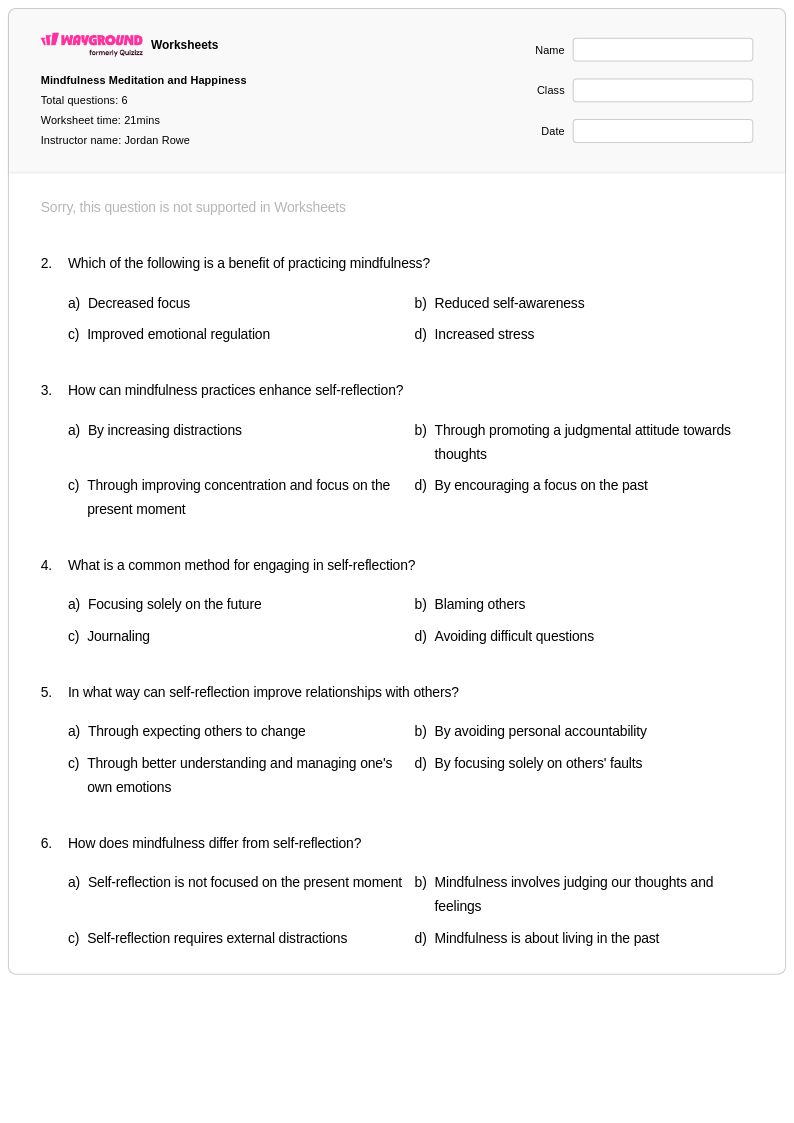
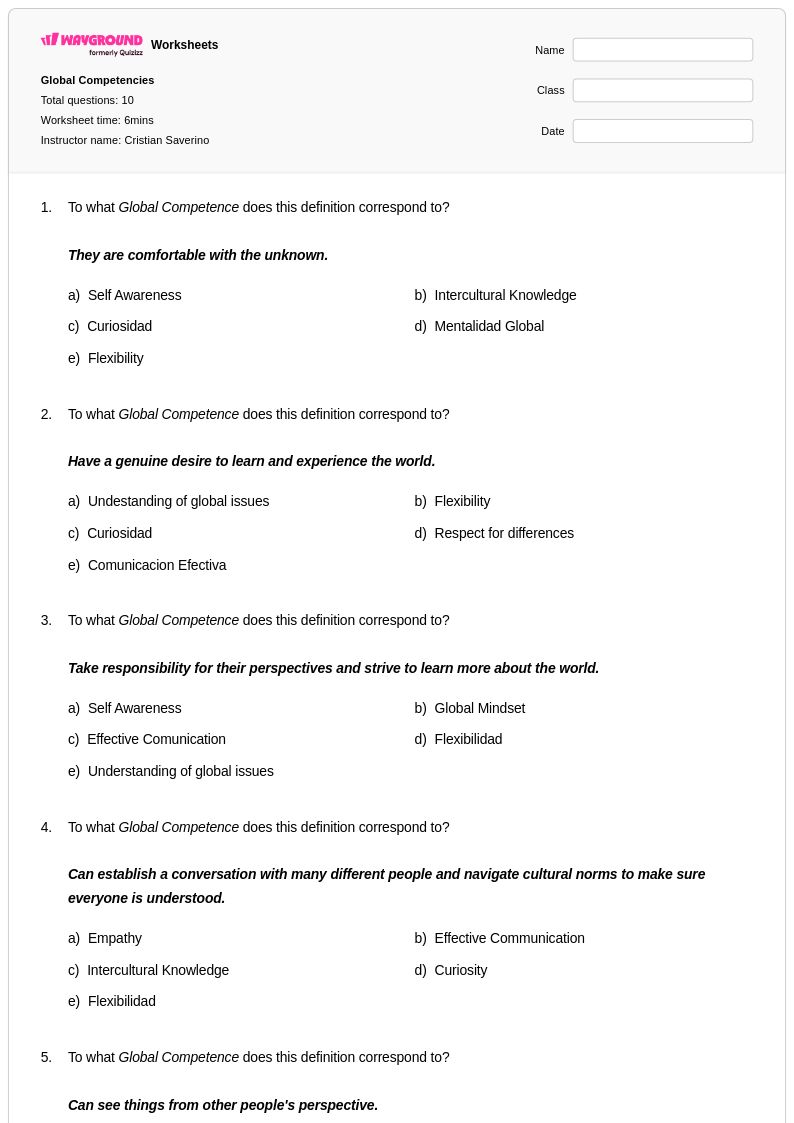
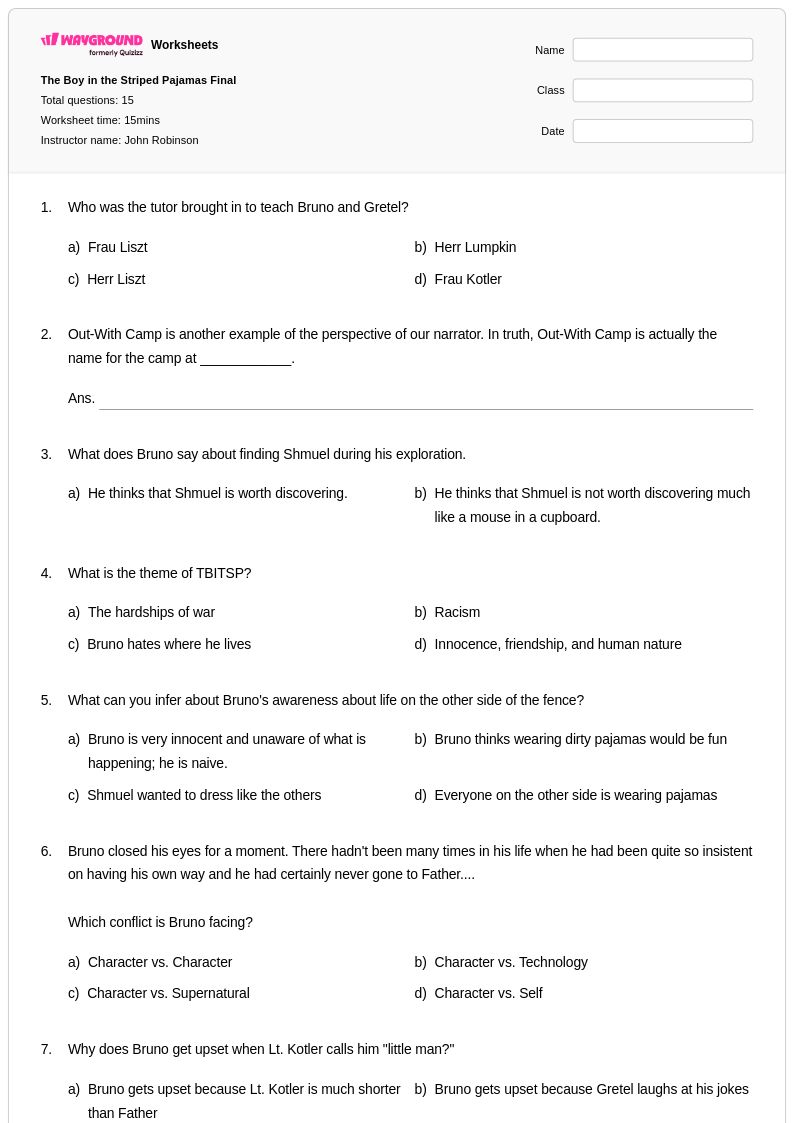
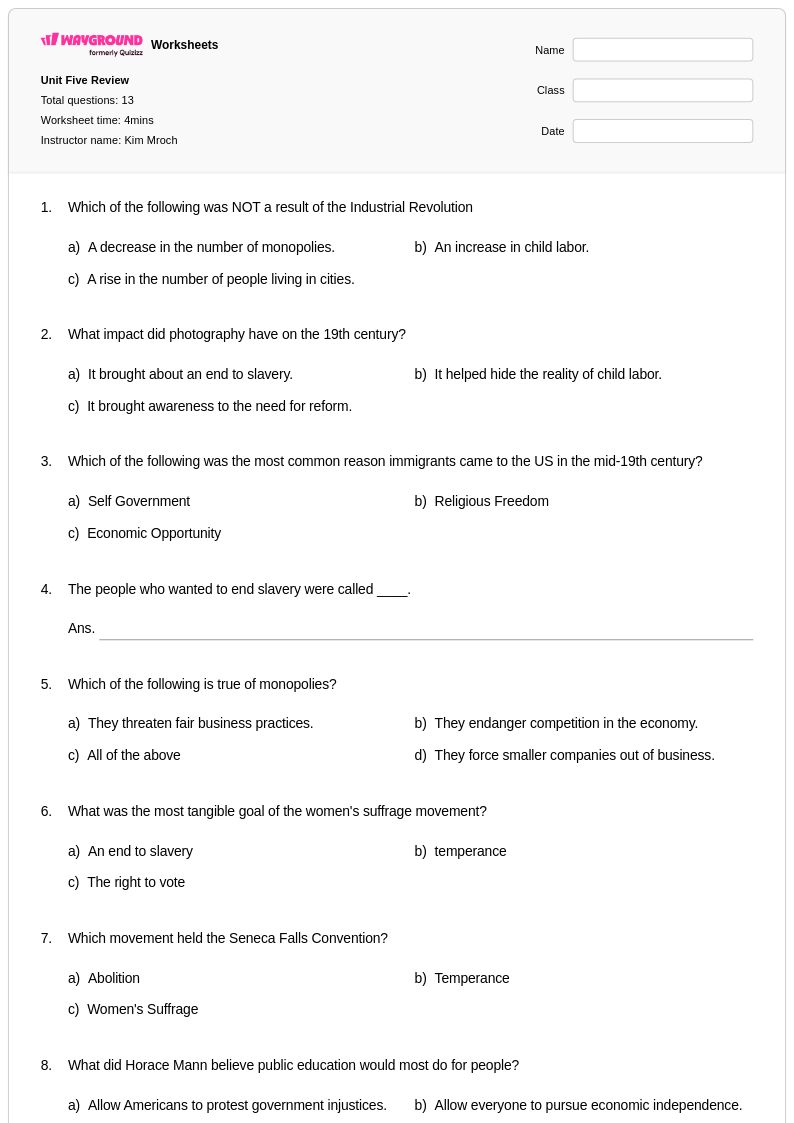
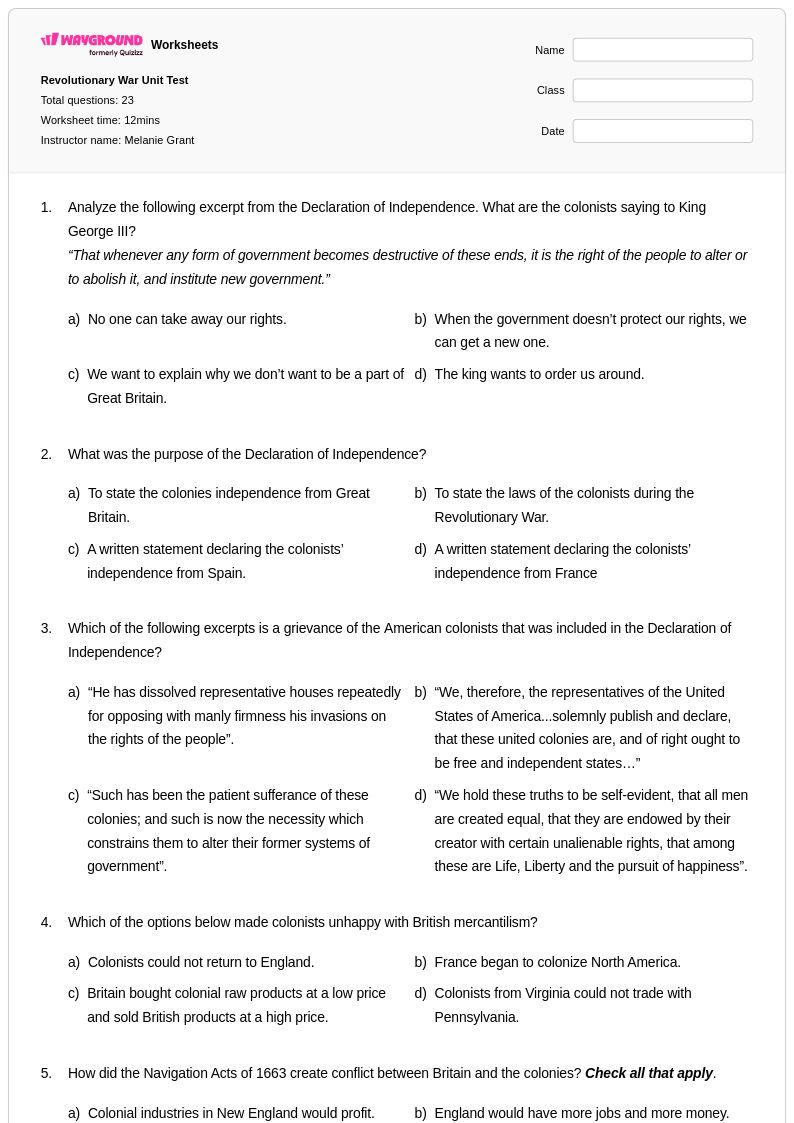
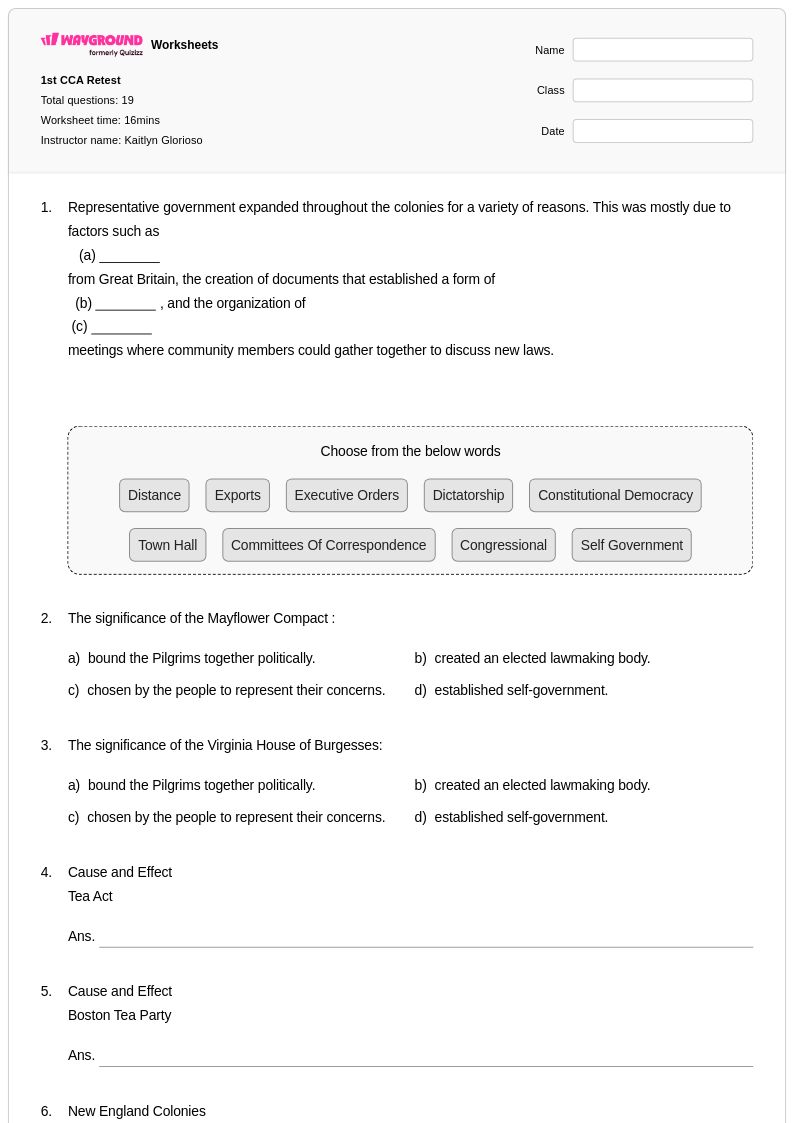
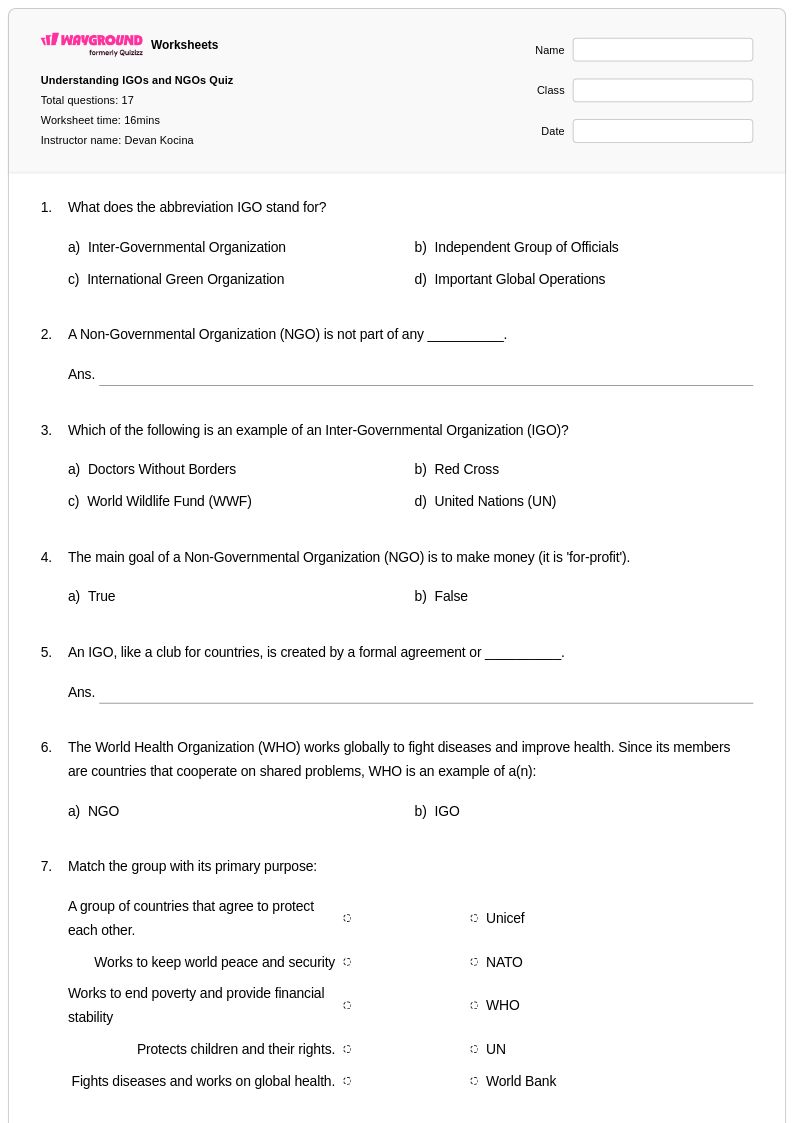
Self awareness worksheets for Grade 8 students available through Wayground (formerly Quizizz) provide comprehensive resources designed to help middle school students develop crucial introspective and emotional intelligence skills. These carefully crafted materials guide eighth graders through structured activities that encourage them to examine their personal strengths, weaknesses, values, and emotional responses in various social situations. The worksheets strengthen essential skills including honest self-reflection, identifying personal triggers and motivations, recognizing individual learning styles, and understanding how their actions affect others. Each worksheet collection includes detailed answer keys to support both independent learning and teacher-guided instruction, with free printable options available in convenient PDF format for easy classroom distribution and practice problems that challenge students to apply self-awareness concepts to real-world scenarios.
Wayground (formerly Quizizz) empowers educators with an extensive library of millions of teacher-created self awareness resources specifically aligned with Grade 8 social studies standards and developmental needs. The platform's robust search and filtering capabilities allow teachers to quickly locate worksheets that target specific aspects of self awareness, from emotional regulation to personal goal-setting, while differentiation tools enable customization for diverse learning abilities and styles within the classroom. These comprehensive collections are available in both printable and digital formats, including downloadable PDFs that seamlessly integrate into existing lesson plans for immediate implementation. Teachers utilize these versatile resources for targeted skill practice, remediation support for students struggling with self-reflection concepts, and enrichment activities that challenge advanced learners to explore deeper aspects of personal awareness and social emotional growth.
FAQs
How do I teach self-awareness to students in the classroom?
Teaching self-awareness works best through structured reflection activities that prompt students to examine their emotions, personal strengths, and behavioral patterns in concrete terms. Effective strategies include guided journaling, emotion-mapping exercises, and scenario-based discussions where students analyze how their thoughts and responses affect others. Building in regular, low-stakes reflection time helps students develop the habit of introspection rather than treating self-awareness as a one-time lesson.
What kinds of exercises help students practice self-awareness skills?
Effective self-awareness practice includes activities where students identify their communication styles, evaluate their decision-making processes, and reflect on how they respond to social situations. Worksheets that prompt students to list personal strengths, recognize growth areas, and connect their feelings to specific behaviors give structure to what can otherwise feel like an abstract concept. Repeated exposure to these reflective prompts across different contexts deepens students' understanding over time.
What common mistakes do students make when developing self-awareness?
A frequent error is conflating self-awareness with self-criticism — students often default to listing weaknesses rather than recognizing genuine strengths alongside areas for growth. Another common issue is surface-level reflection, where students give socially acceptable answers rather than honest ones, particularly in group settings. Teachers can address this by establishing psychological safety in the classroom and using private written reflection before any whole-class sharing.
How does self-awareness connect to social studies curriculum?
Self-awareness is a foundational SEL competency that directly supports social studies goals around civic responsibility, interpersonal relationships, and community participation. When students understand how their own biases, values, and emotional responses shape their perspectives, they become more critical thinkers about social issues and more empathetic participants in collaborative learning. This connection makes self-awareness worksheets a natural complement to units on identity, culture, and community.
How do I use Wayground's self-awareness worksheets in my classroom?
Wayground's self-awareness worksheets are available as printable PDFs for traditional classroom use and in digital formats for technology-integrated environments, giving teachers flexibility in how they assign and collect student work. Teachers can also host these materials as a quiz on Wayground, enabling real-time progress monitoring. The included answer keys support both independent student reflection and structured classroom discussions about personal development and social responsibility.
How can I differentiate self-awareness activities for students with different needs?
On Wayground, teachers can apply student-level accommodations including Read Aloud for students who need questions read to them, reduced answer choices to lower cognitive load, and extended time for students who need additional processing time during reflective tasks. These settings can be assigned to individual students while the rest of the class receives standard settings, and they carry over across future sessions without requiring repeated setup. This makes it straightforward to support diverse learners during self-awareness activities without singling out individual students.

![US - Colonization [Middle and Southern] 21-22 - Dapat dicetak Self-awareness Worksheets Grade 8 - Quizizz](https://quizizz-static.s3.amazonaws.com/_media/worksheets-new/612bd43aa13f14001d82a533-us-colonization-middle-and-southern-21-22)