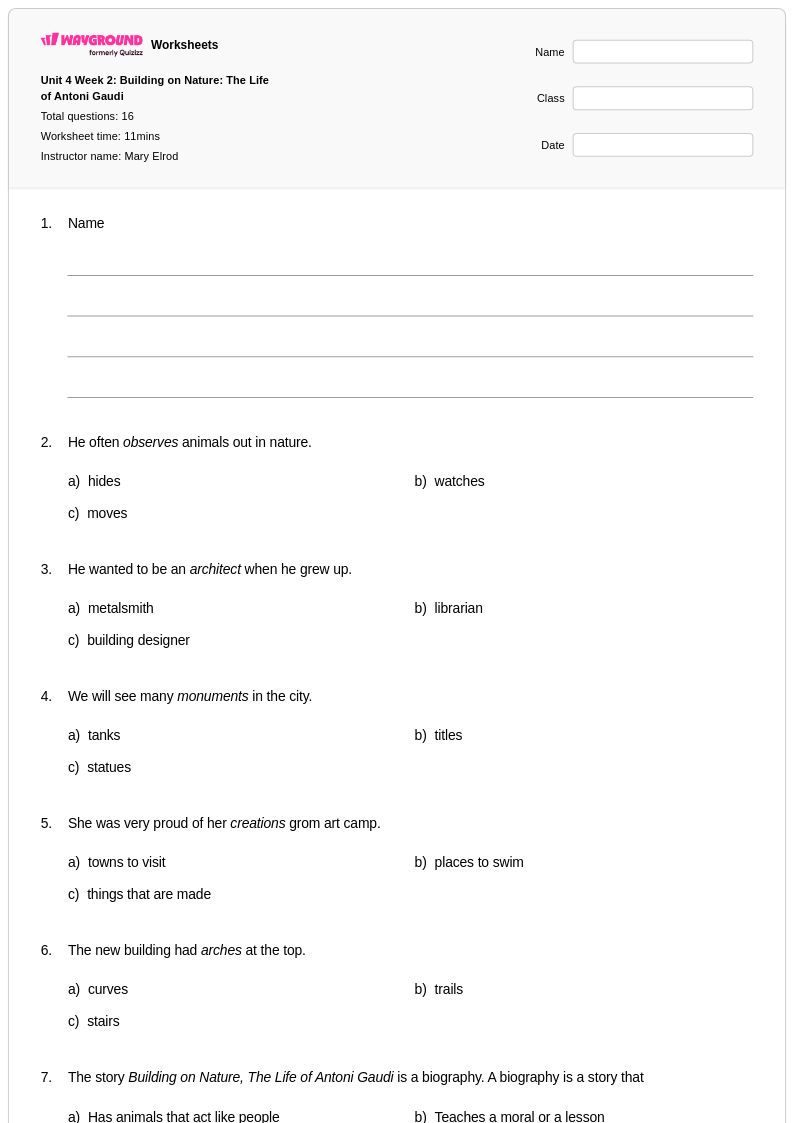
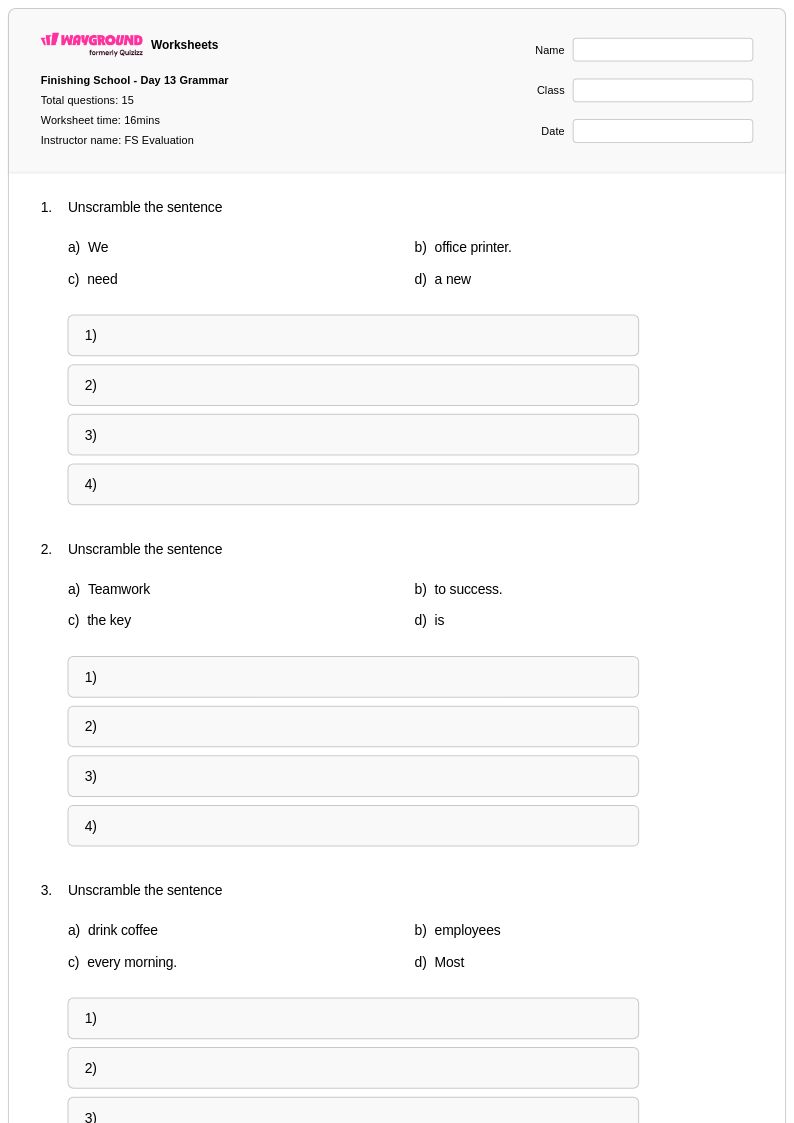
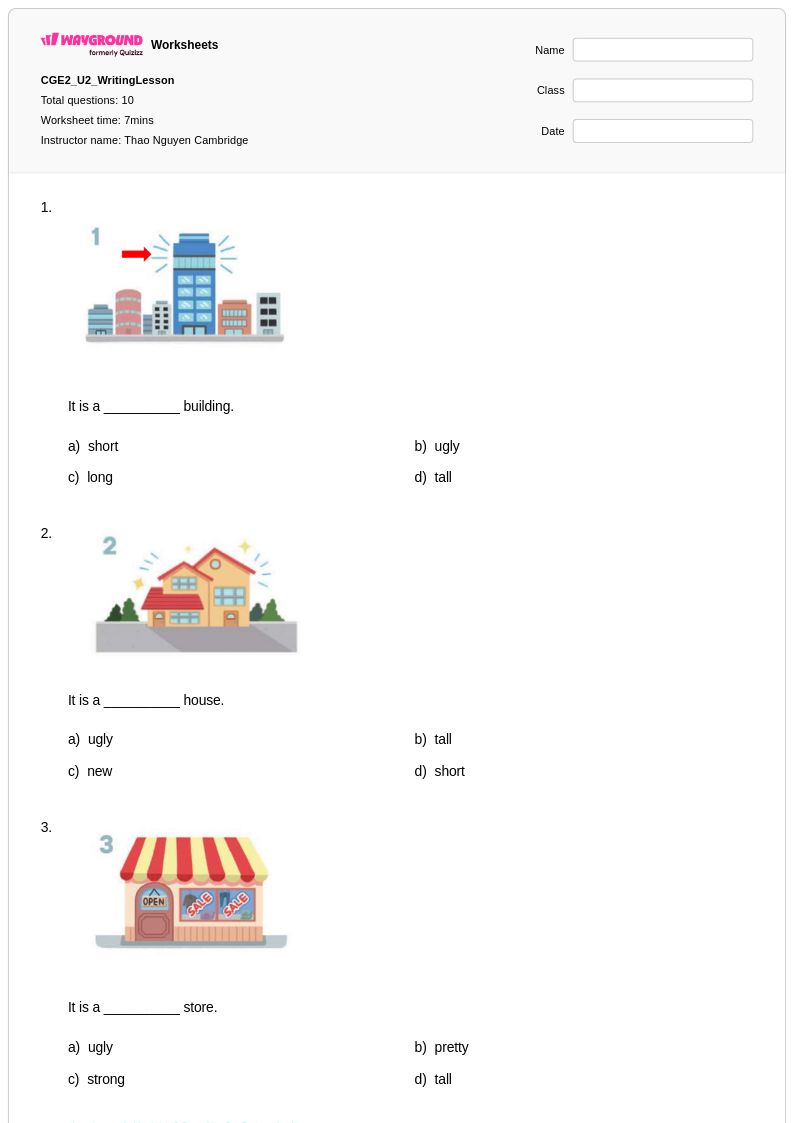
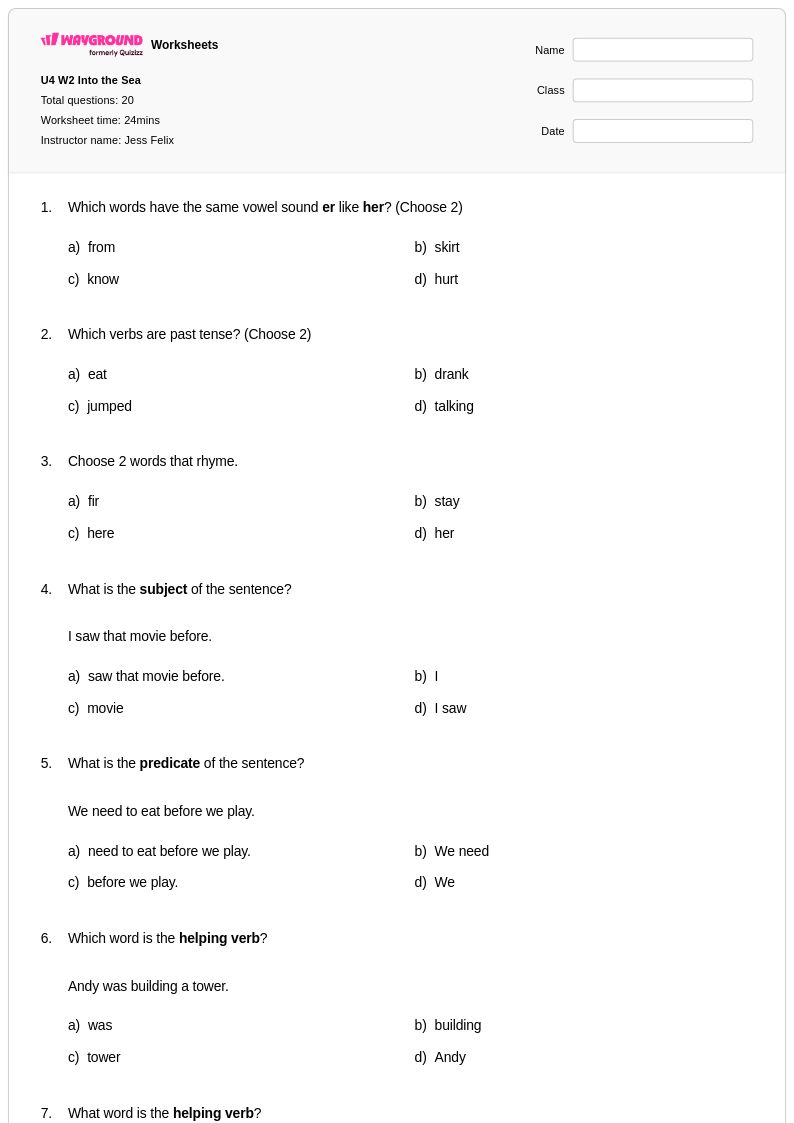
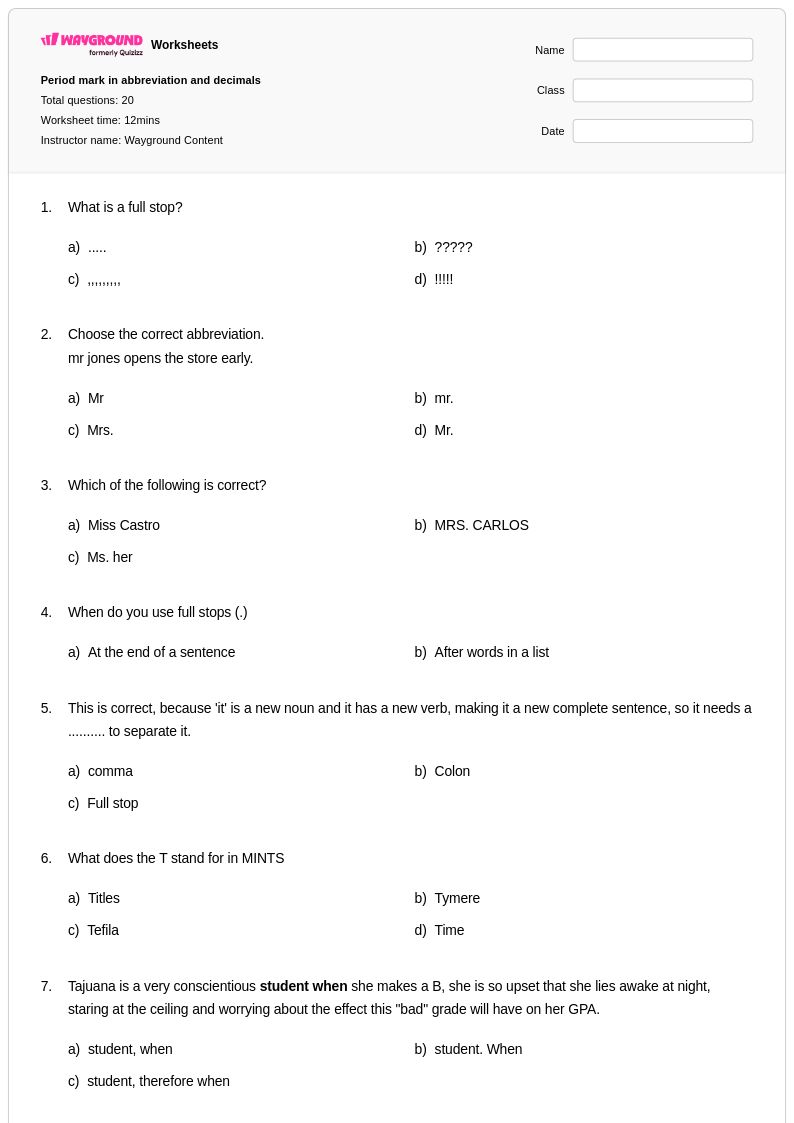
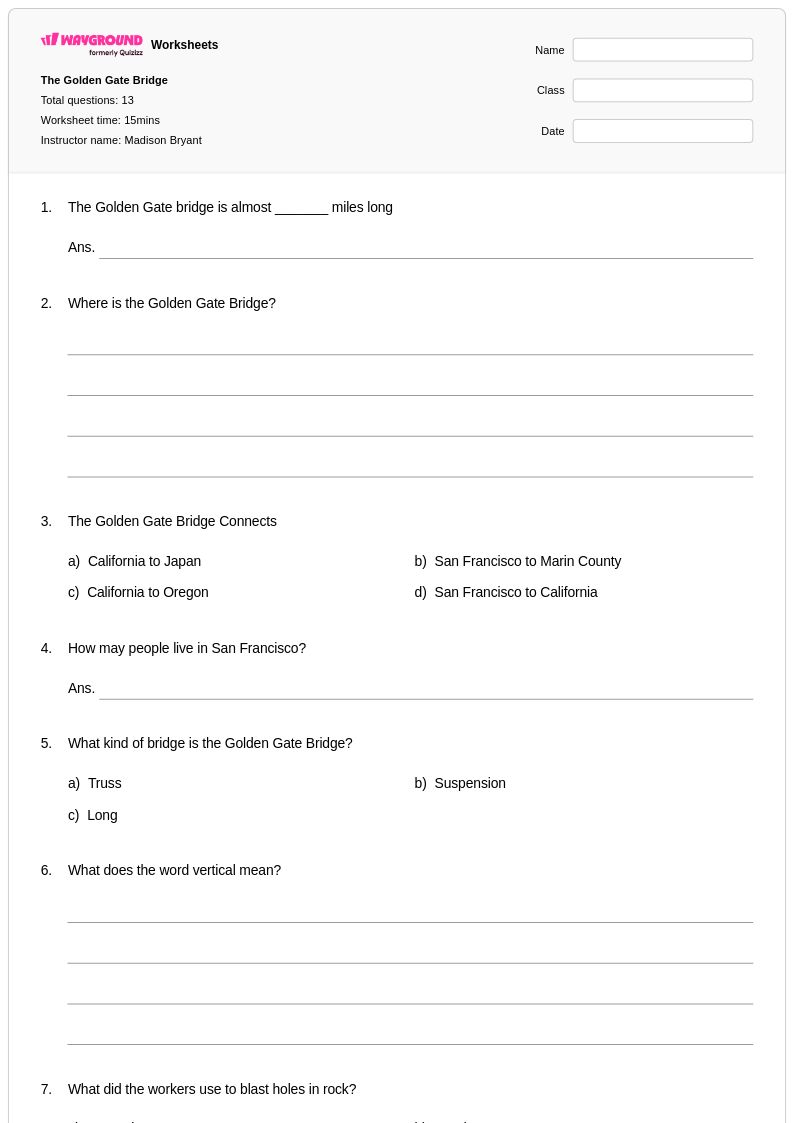
Free Printable Sentence Building Worksheets for Grade 2
Enhance Grade 2 students' sentence building skills with our free printable worksheets and practice problems, complete with answer keys to support foundational grammar development.
Explore printable Sentence Building worksheets for Grade 2
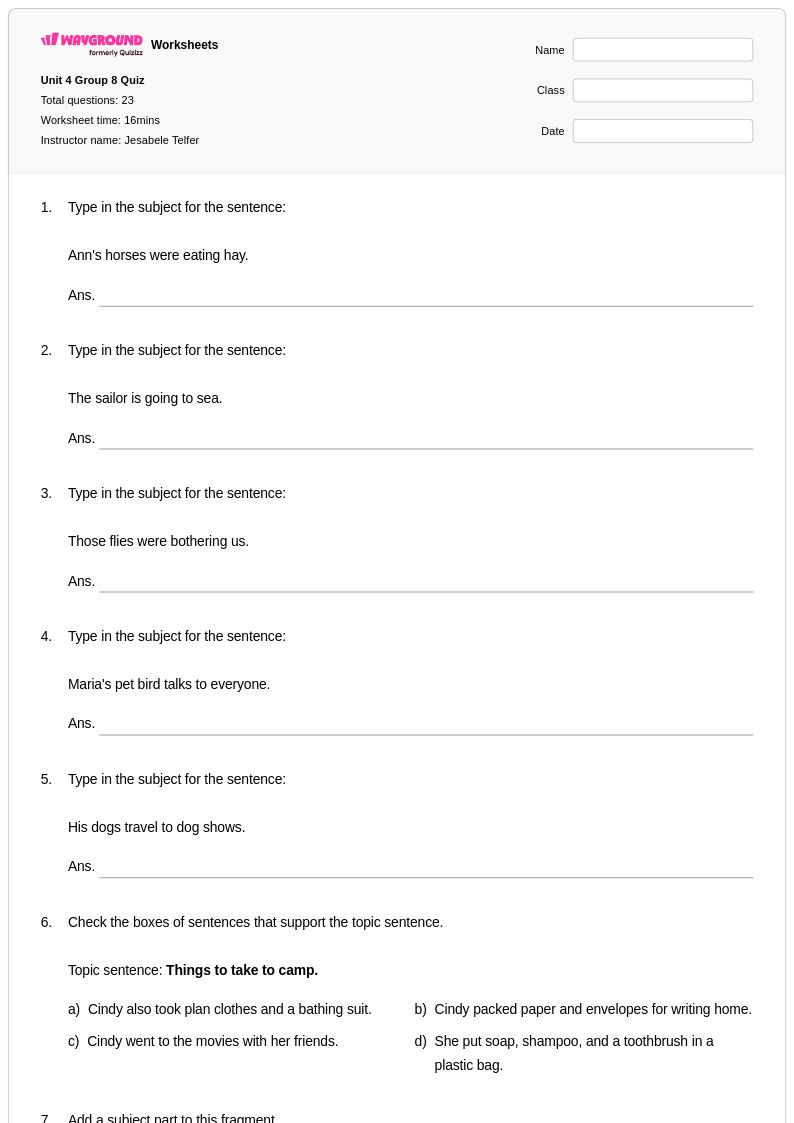
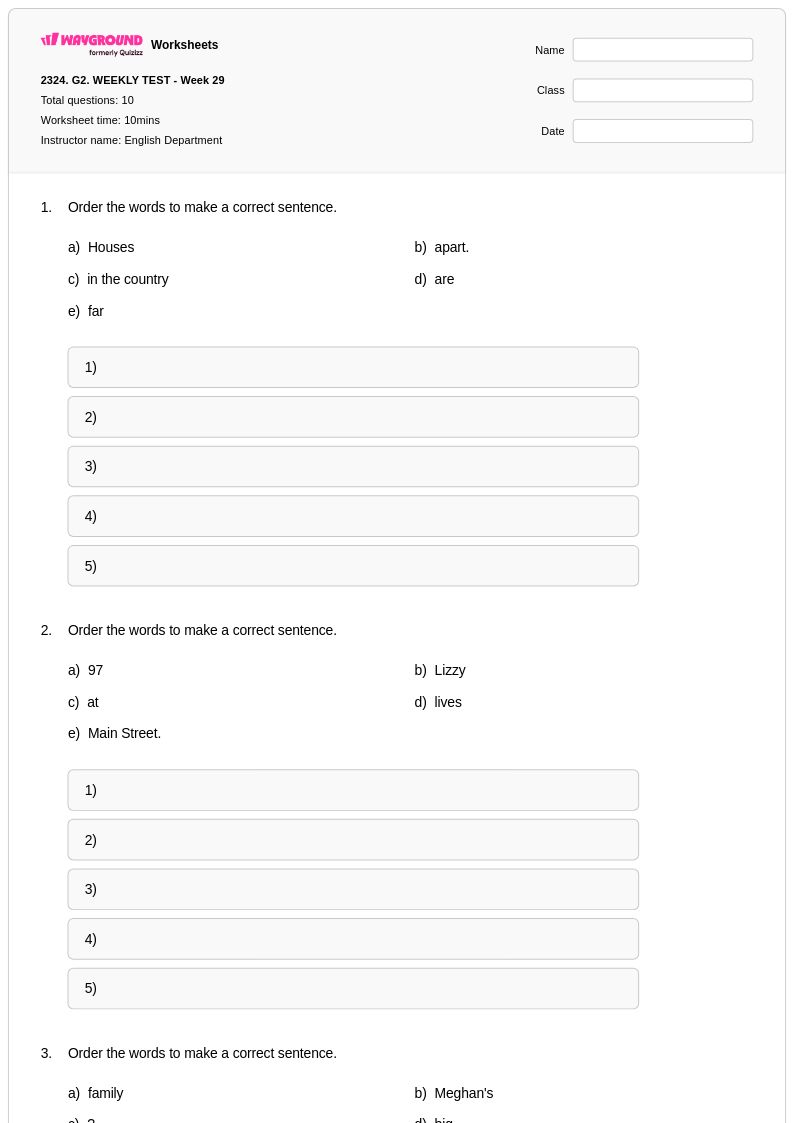
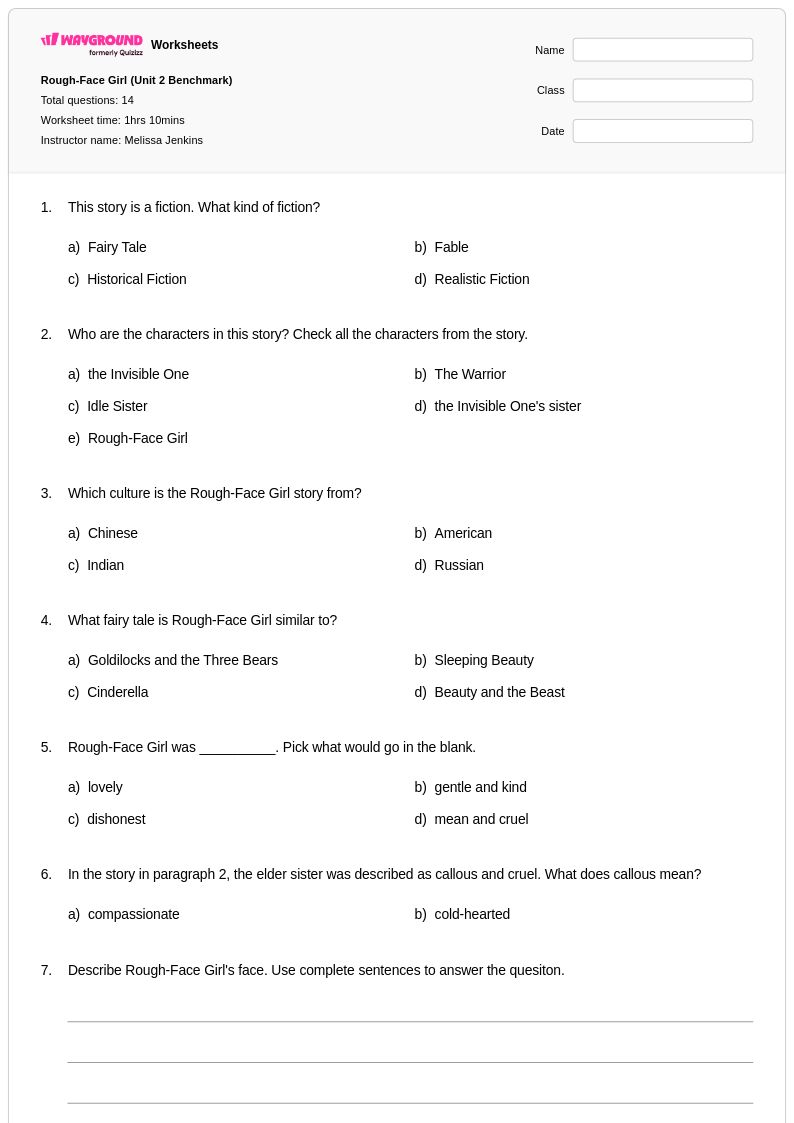
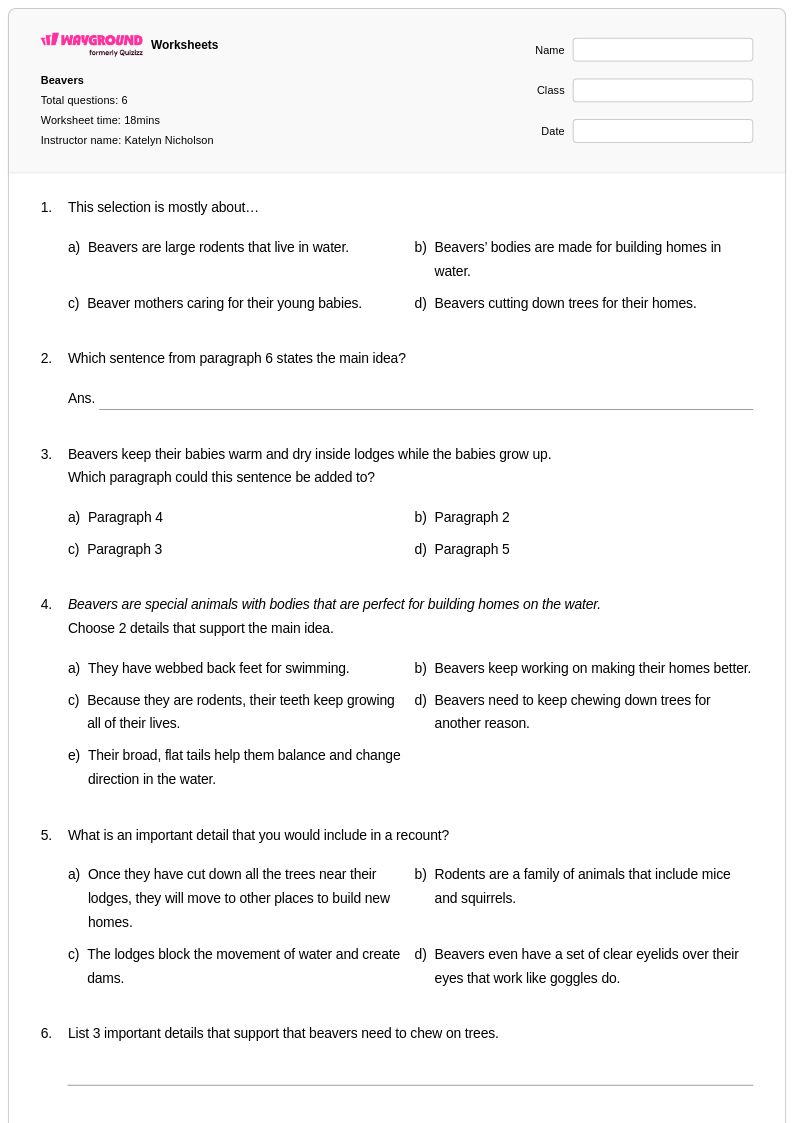
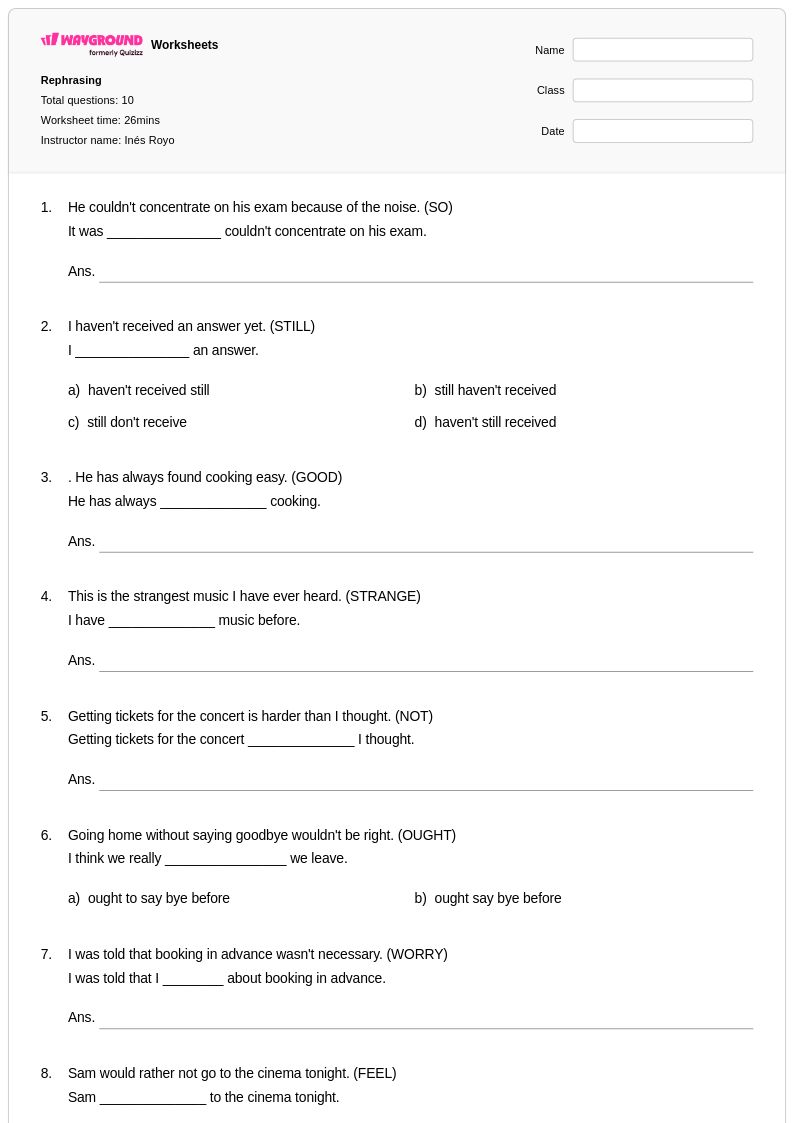
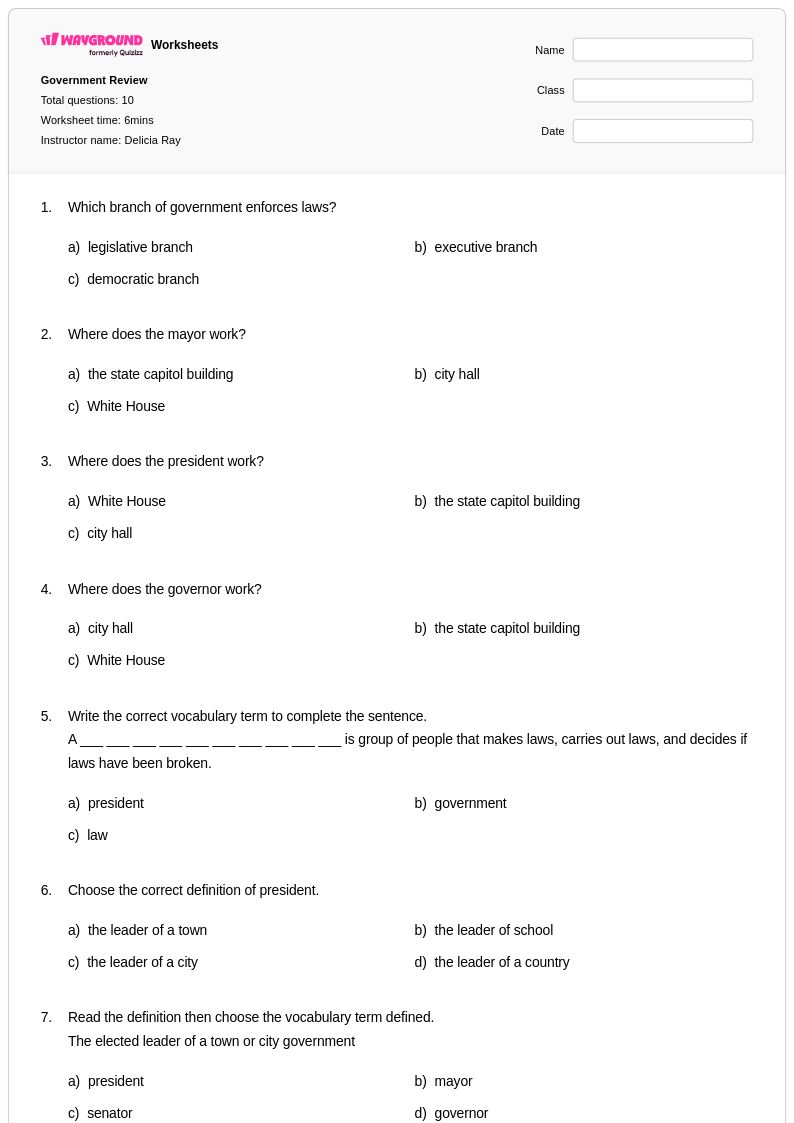
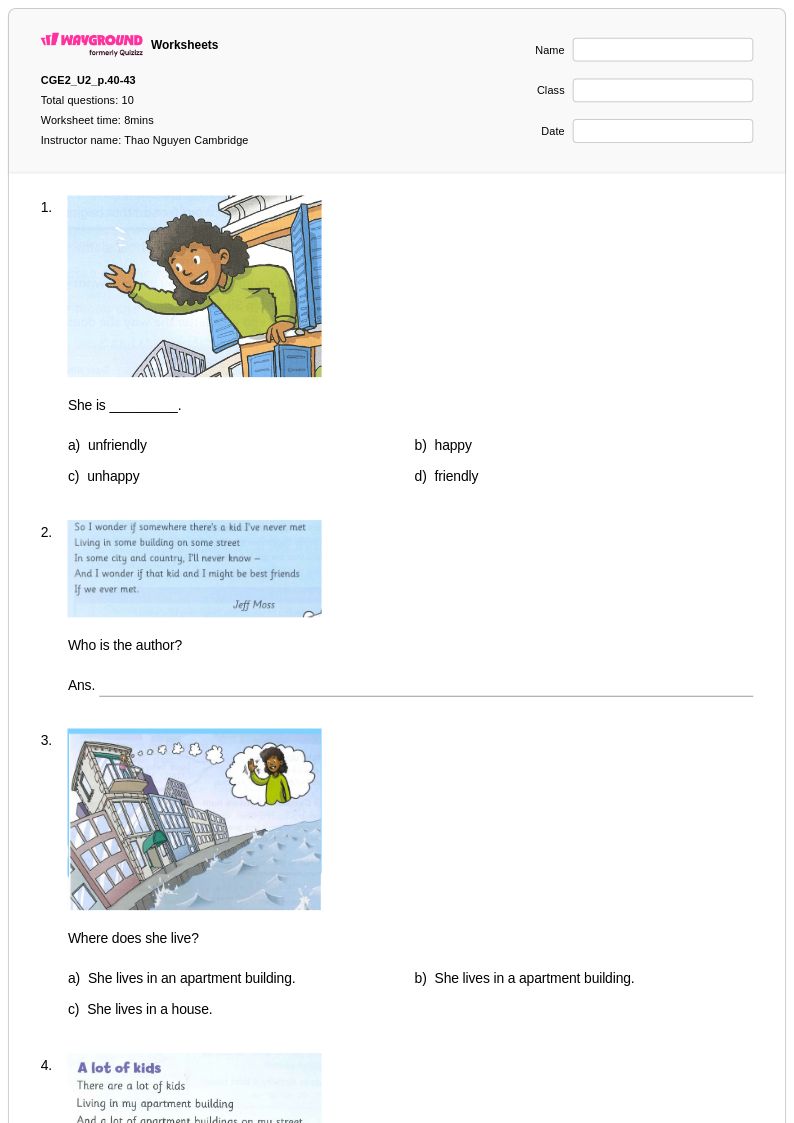
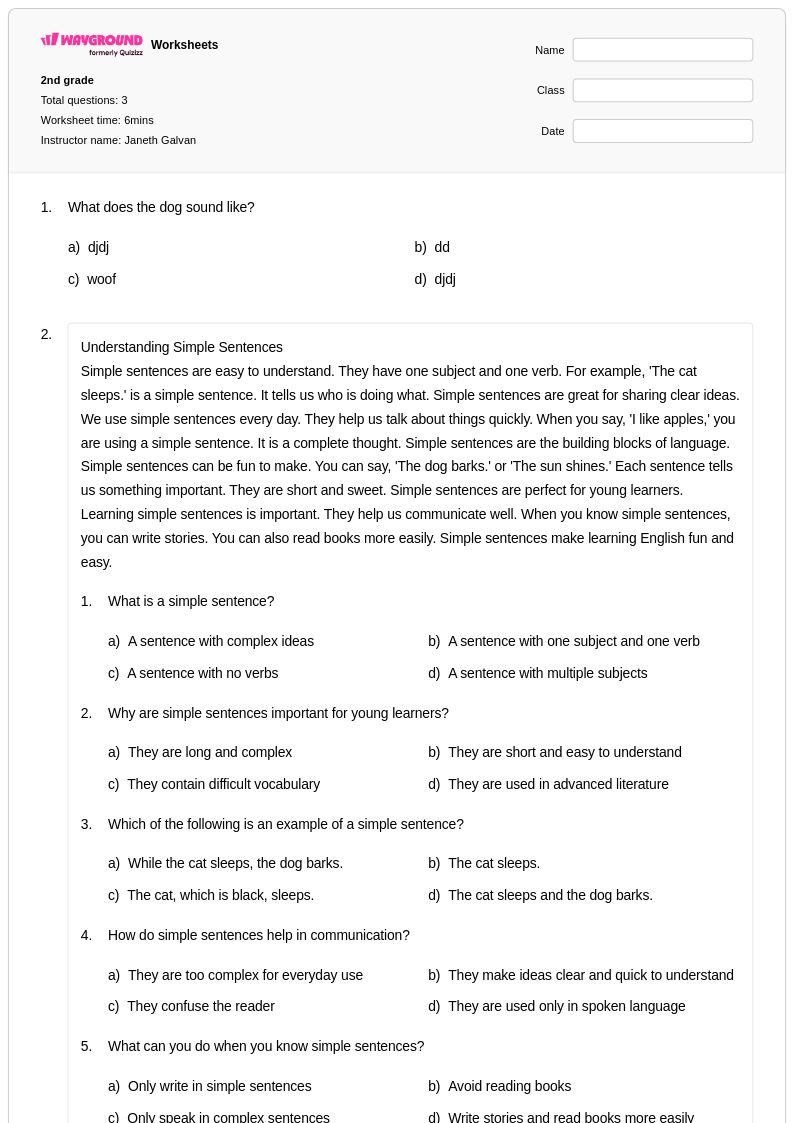
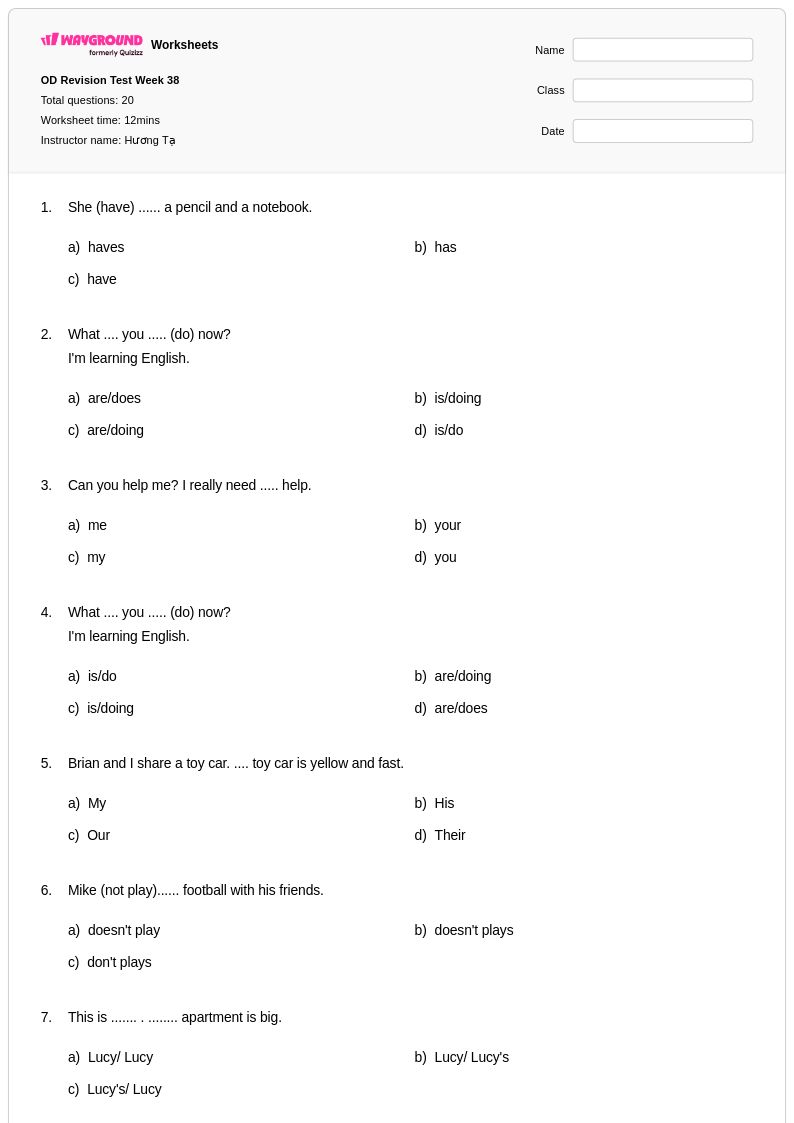
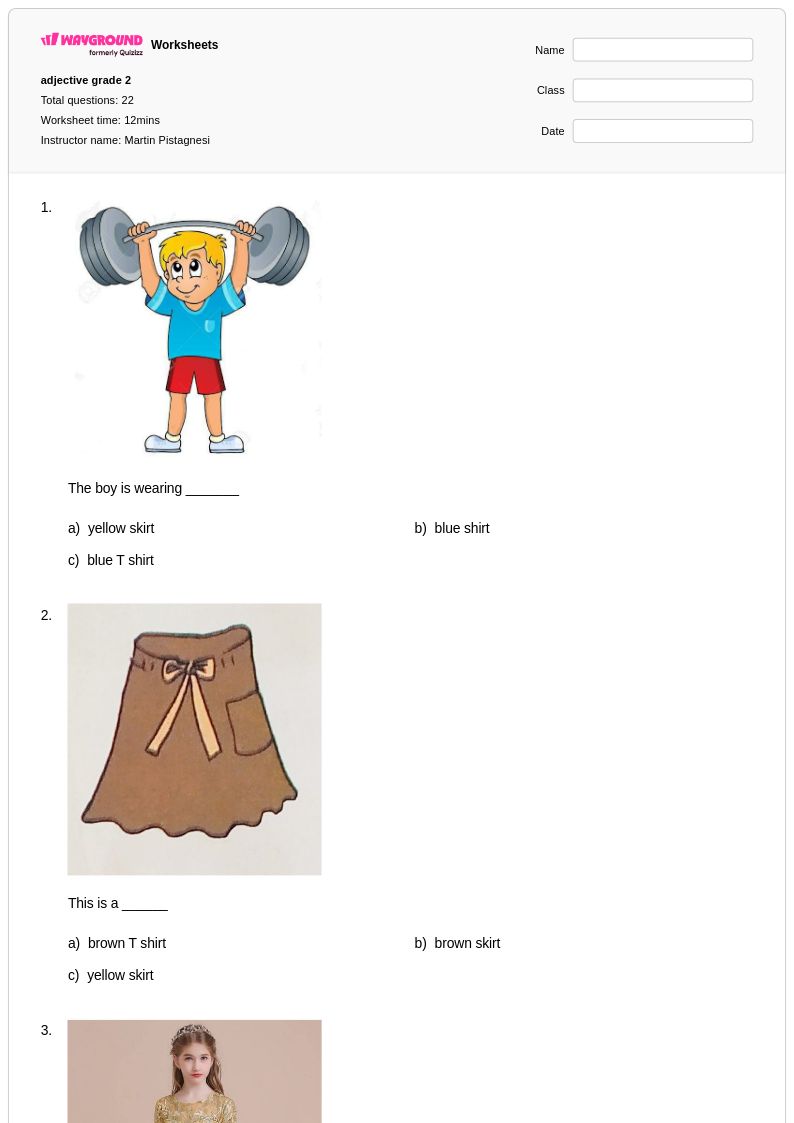
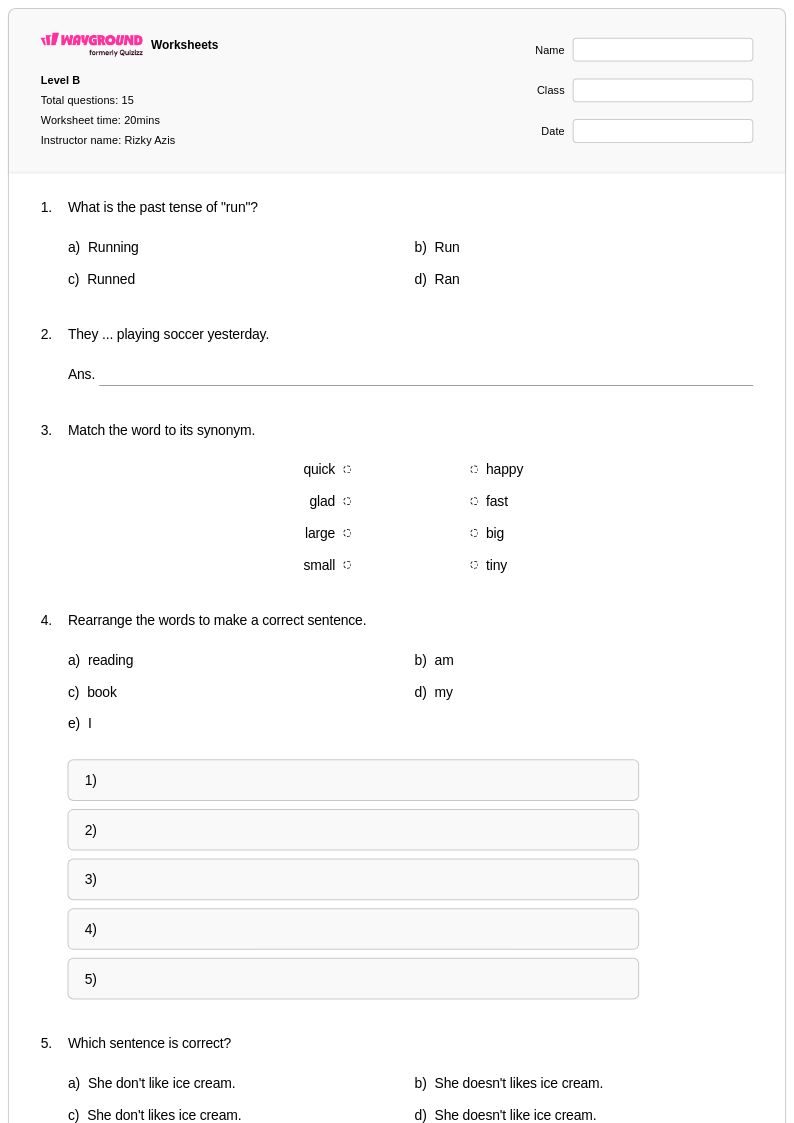
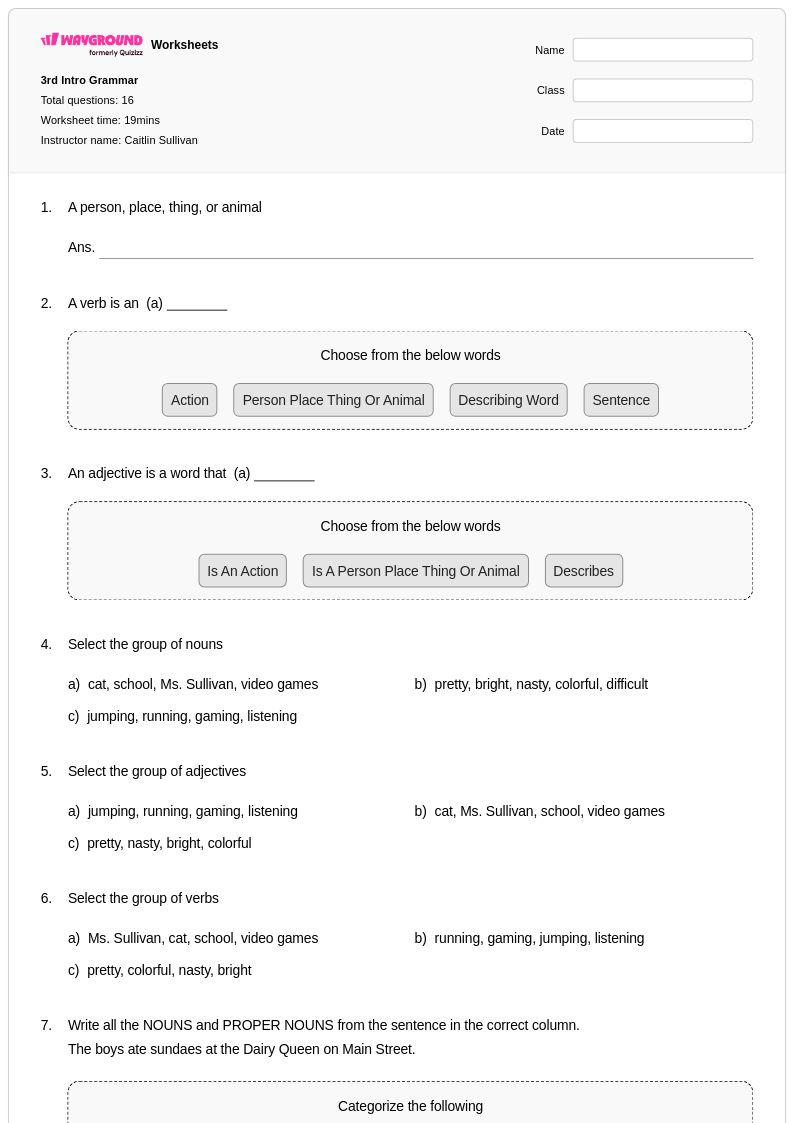
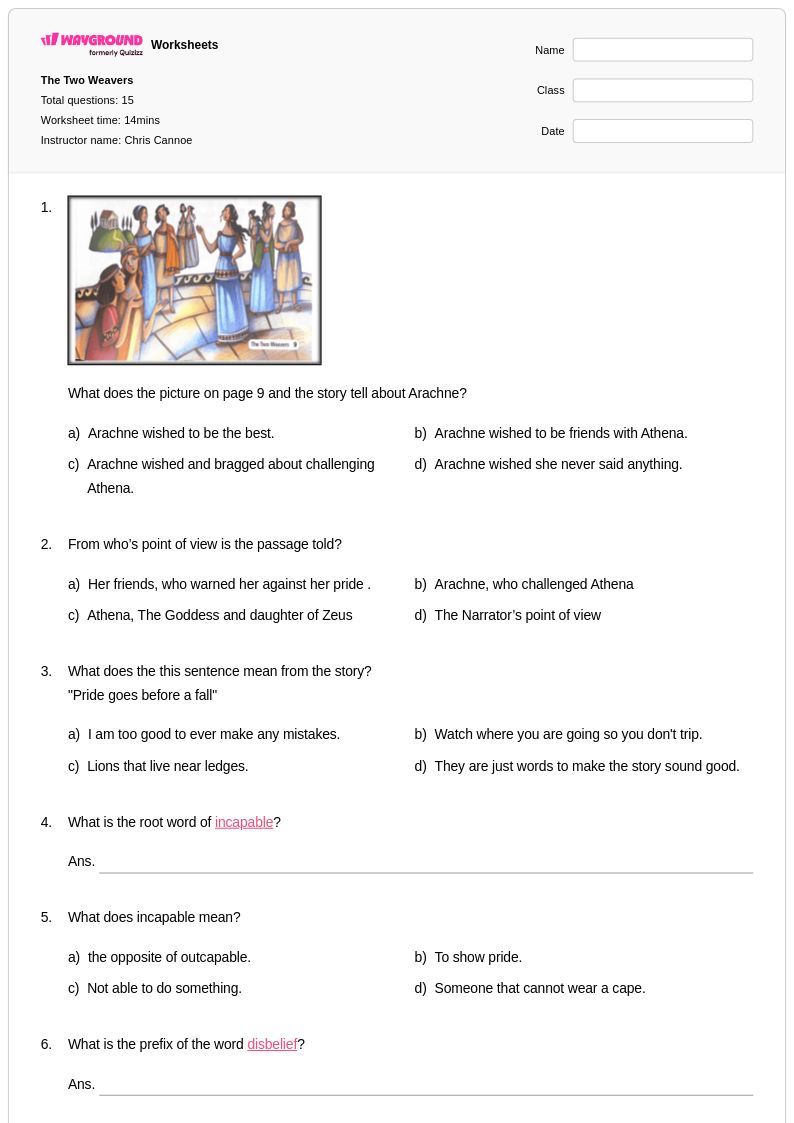
Sentence building worksheets for Grade 2 students available through Wayground (formerly Quizizz) provide essential practice in constructing clear, grammatically correct sentences while developing foundational writing skills. These comprehensive printables focus on teaching young learners how to combine words meaningfully, understand proper word order, and recognize the basic components that make complete sentences. Students work through carefully designed practice problems that guide them from simple subject-predicate combinations to more complex sentence structures, building confidence in their ability to express ideas clearly. Each worksheet includes an answer key to support independent learning and self-assessment, while the free pdf format ensures easy access for both classroom instruction and home practice.
Wayground's extensive collection of teacher-created sentence building resources offers educators millions of differentiated materials specifically designed to meet diverse Grade 2 learning needs. The platform's robust search and filtering capabilities allow teachers to quickly locate worksheets aligned with specific curriculum standards, while customization tools enable modification of existing materials to match individual student abilities and learning objectives. These digital and printable resources support flexible lesson planning, targeted skill remediation, and enrichment activities that challenge advanced learners. Teachers can seamlessly integrate these sentence building worksheets into daily instruction, homework assignments, or assessment preparation, ensuring students receive consistent practice with fundamental grammar and mechanics concepts essential for developing strong written communication skills.
FAQs
How do I teach sentence building to elementary students?
Start by explicitly teaching the two core components of every sentence: a subject (who or what the sentence is about) and a predicate (what the subject does or is). Use sentence frames and mentor sentences to model correct structure before asking students to construct their own. Gradually introduce sentence combining tasks so students practice expanding simple sentences into compound and complex ones using conjunctions like 'because,' 'but,' and 'so.' Repeated, low-stakes writing practice with immediate feedback accelerates skill development.
What exercises help students practice sentence building?
Effective practice exercises include sentence unscrambling (rearranging words into correct order), sentence combining (merging two short sentences into one using conjunctions), sentence expanding (adding details to a bare-bones sentence), and error correction tasks where students identify and fix incomplete or run-on sentences. These exercise types target different aspects of sentence structure and give students varied entry points into the same core skill.
What mistakes do students commonly make when building sentences?
The most frequent errors are sentence fragments (a group of words missing a subject, a verb, or a complete thought) and run-on sentences (two or more independent clauses joined without proper punctuation or conjunctions). Students also frequently misplace modifiers, producing sentences where the descriptive phrase attaches to the wrong noun. Confusing subject-verb agreement, especially with collective nouns or compound subjects, is another persistent error pattern worth addressing explicitly in instruction.
How can I use sentence building worksheets to differentiate instruction?
Differentiation works best when the task complexity is adjusted to match student readiness. Struggling writers benefit from sentence frames or word banks that reduce the cognitive load of generating language from scratch, while on-level students can practice sentence combining and expansion independently. Advanced learners can be challenged with tasks that require them to manipulate syntax deliberately, such as front-loading adverbial phrases or embedding relative clauses. On Wayground, teachers can apply accommodations such as read aloud support or reduced answer choices to individual students without alerting the rest of the class.
How do I use Wayground's sentence building worksheets in my classroom?
Wayground's sentence building worksheets are available as printable PDFs, making them easy to distribute for in-class work or homework, and in digital formats that work in technology-integrated environments. Teachers can also host the worksheets as interactive quizzes directly on the Wayground platform, allowing students to complete them on a device and receive immediate feedback. Each worksheet includes a complete answer key, which supports both teacher-led correction and student self-assessment.
At what grade level should students begin formal sentence building instruction?
Formal sentence building instruction typically begins in first and second grade, when students are introduced to the concept of a complete sentence with a subject and predicate. Instruction intensifies in grades 3 through 5 as students learn to write compound and complex sentences. Middle school instruction shifts toward sentence variety and stylistic control, though targeted remediation on foundational structure remains necessary for many students well into secondary grades.