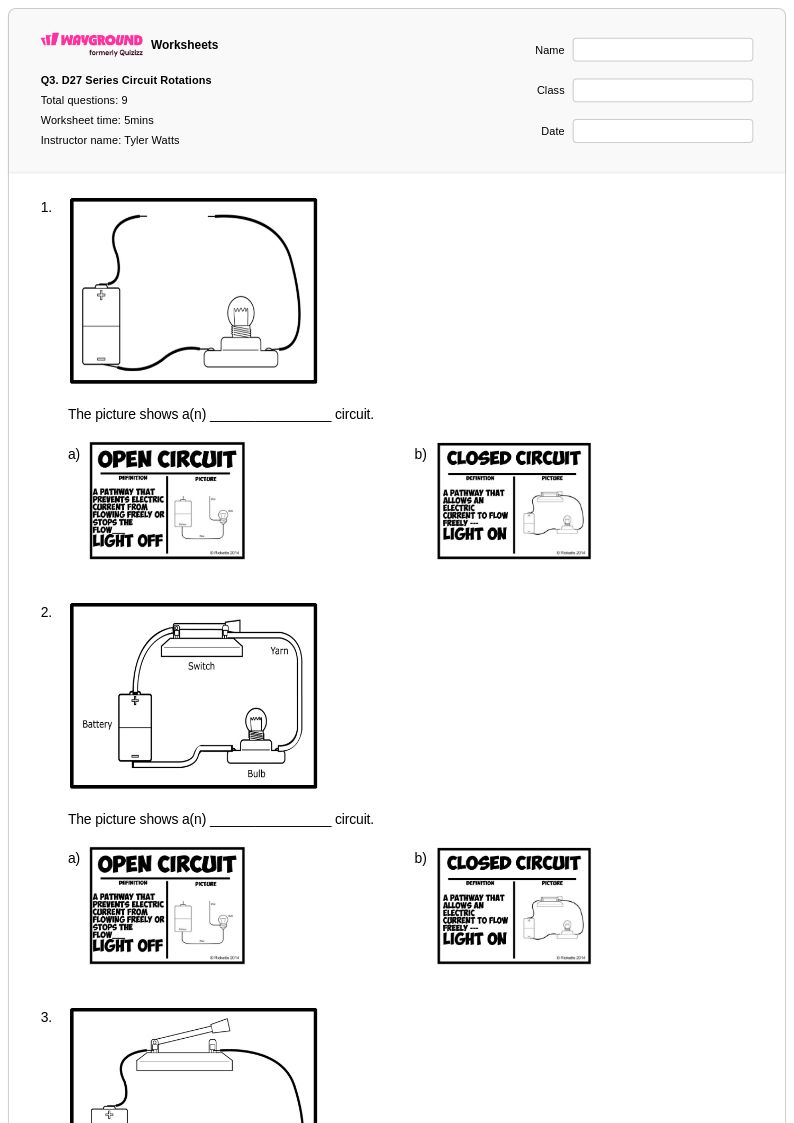
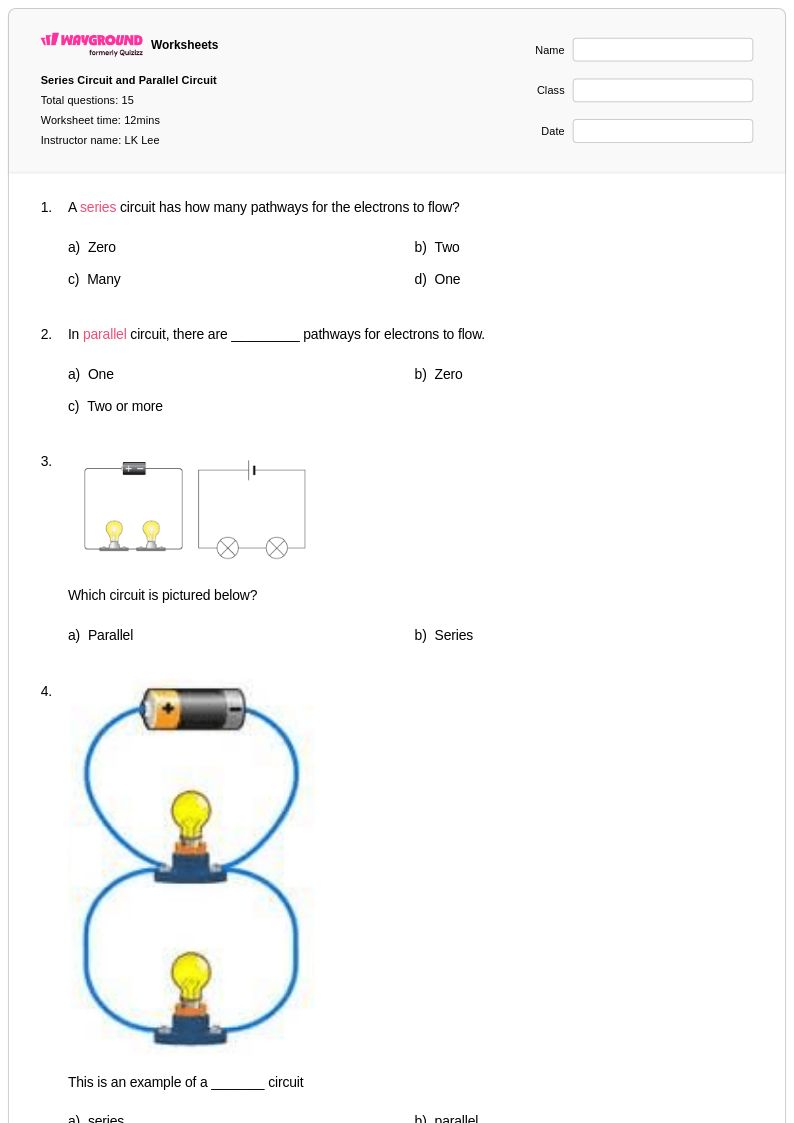
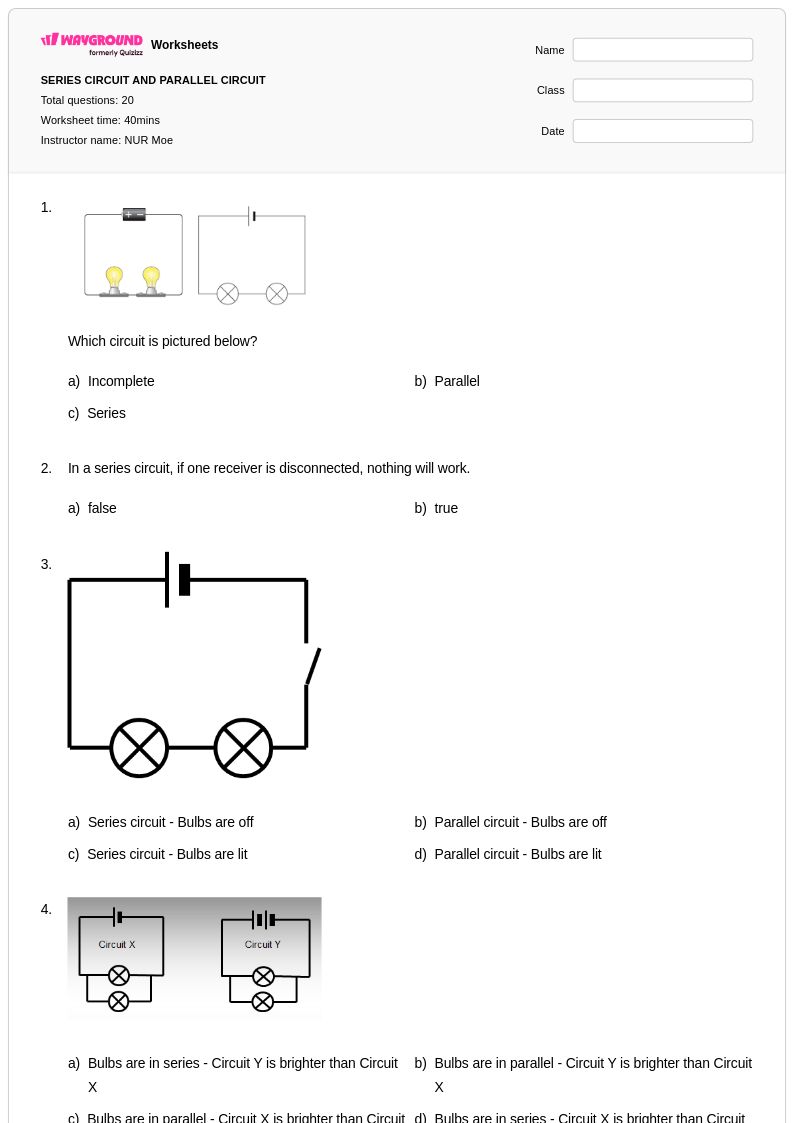
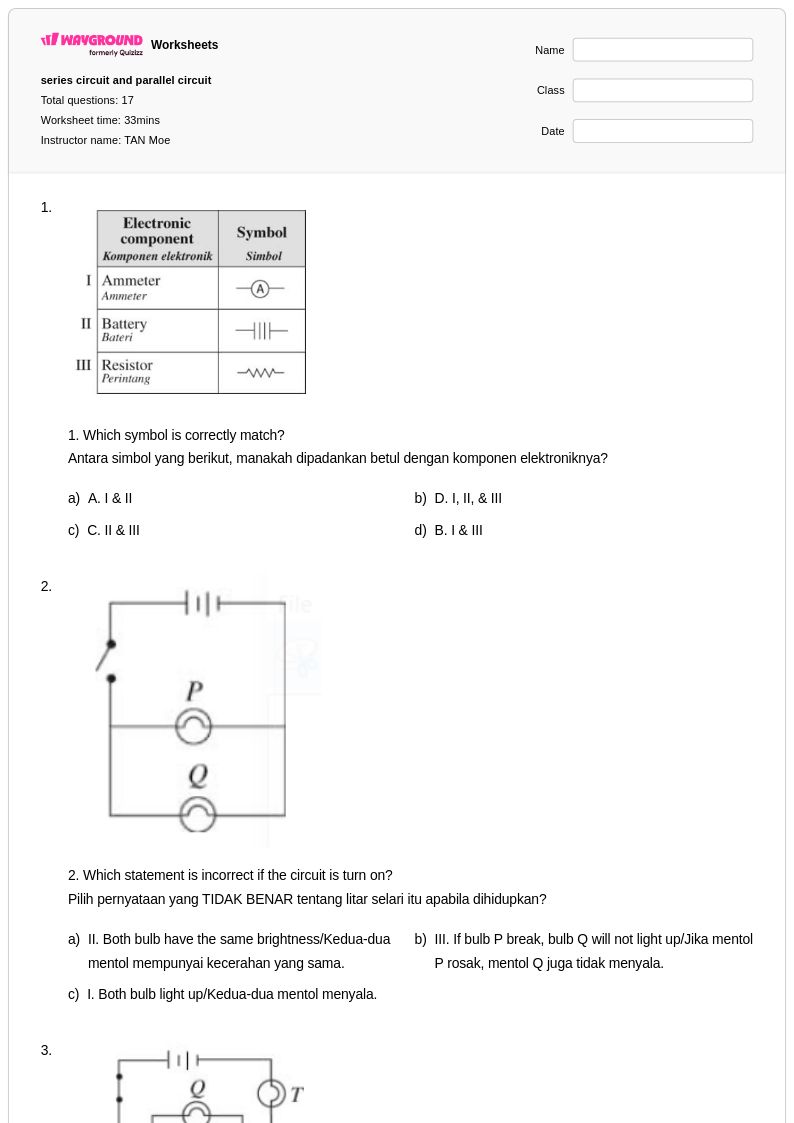
Free Printable Series Circuit Worksheets for Grade 8
Explore Wayground's comprehensive collection of Grade 8 series circuit worksheets featuring free printables, practice problems, and answer keys to help students master electrical connections and current flow concepts.
Explore printable Series Circuit worksheets for Grade 8
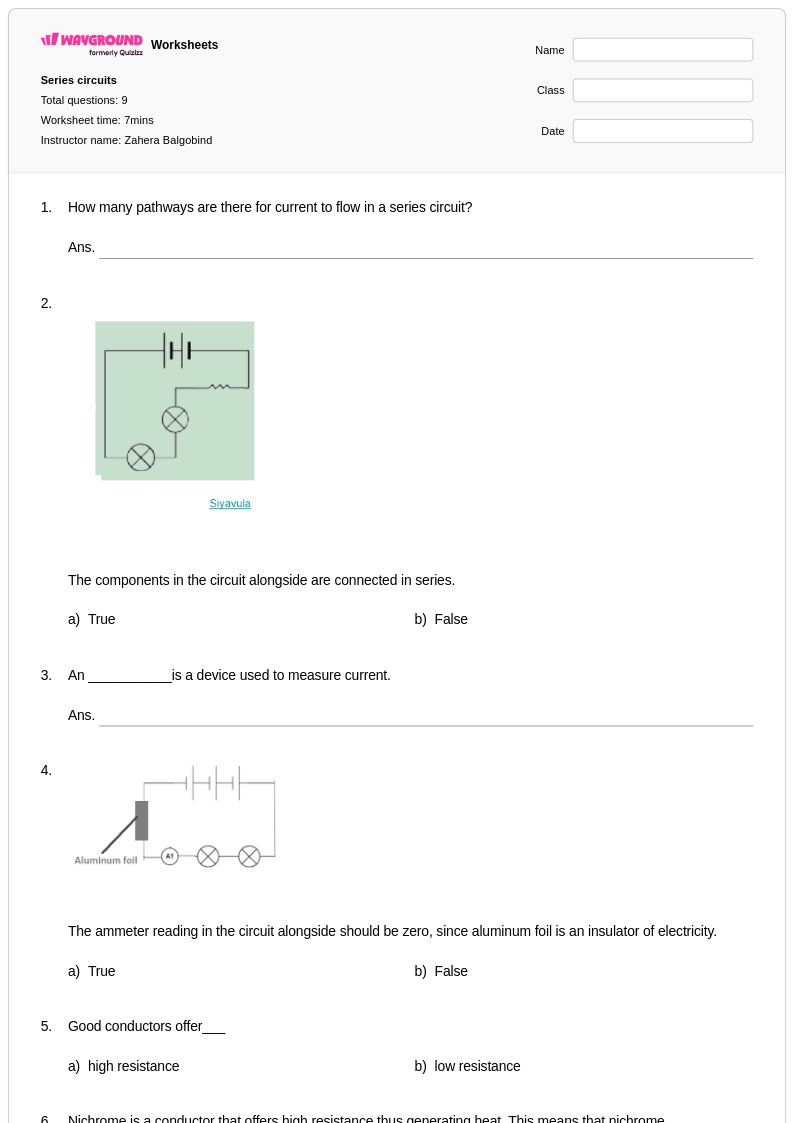
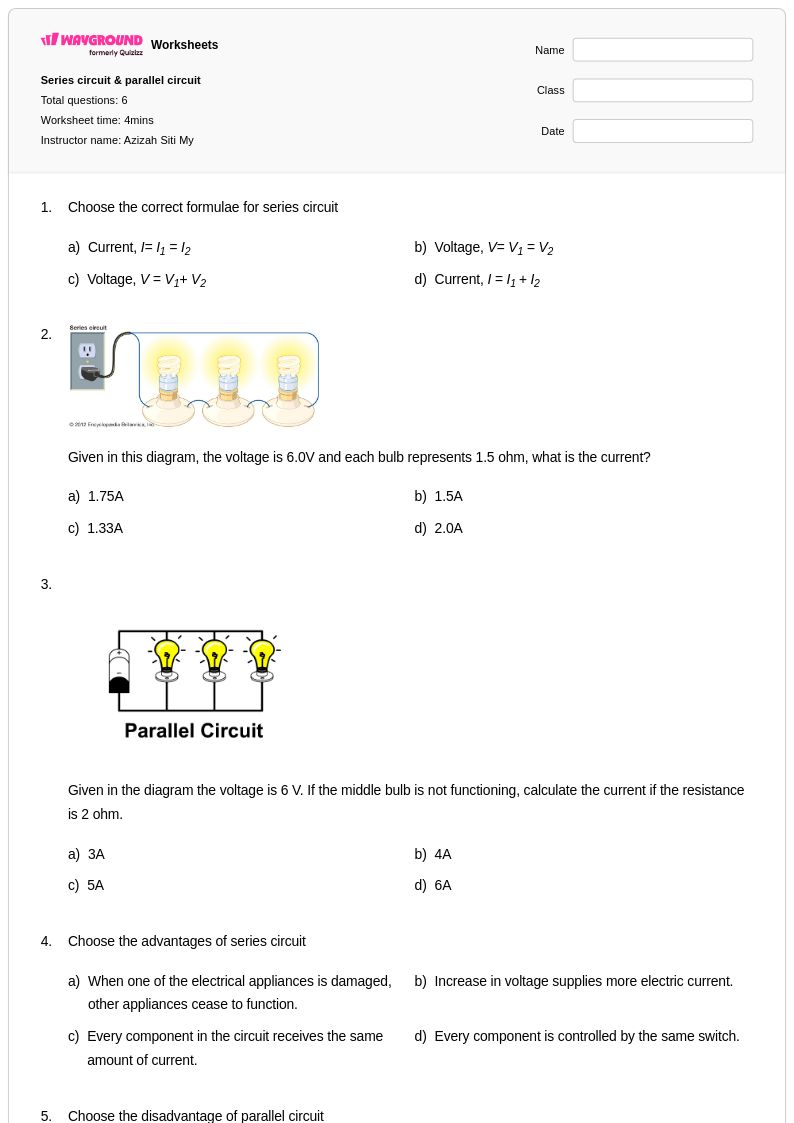
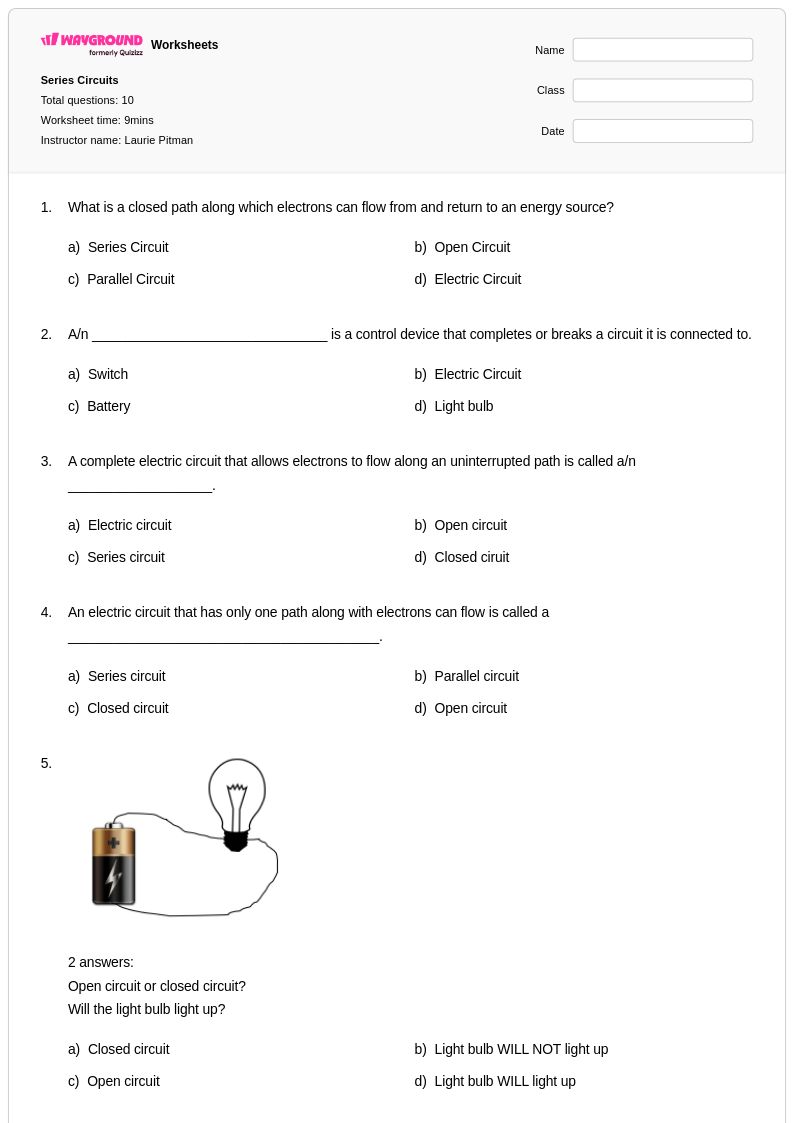
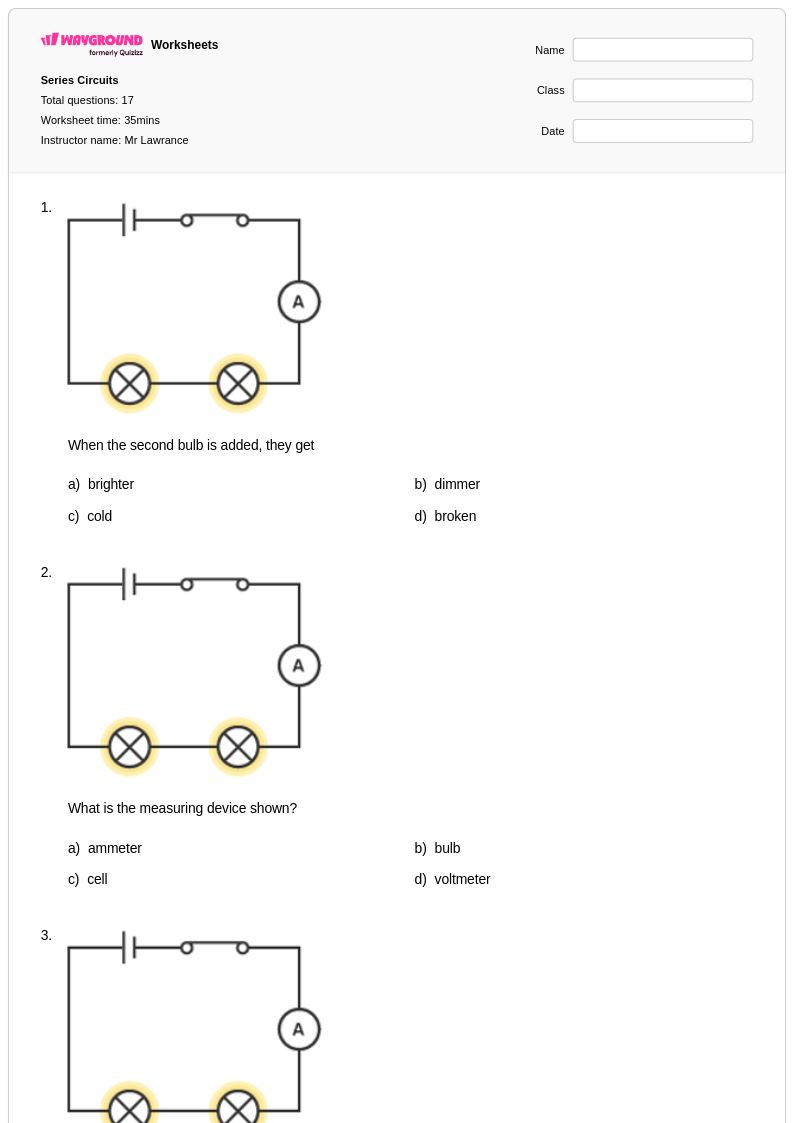
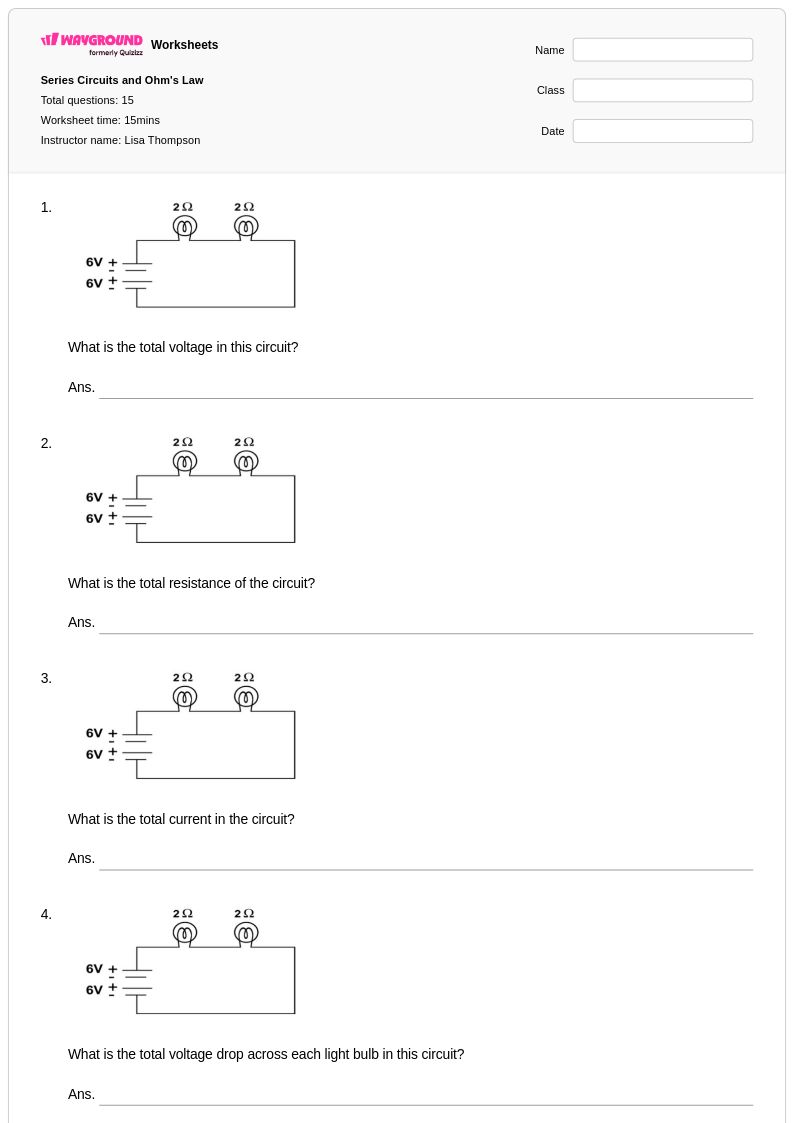
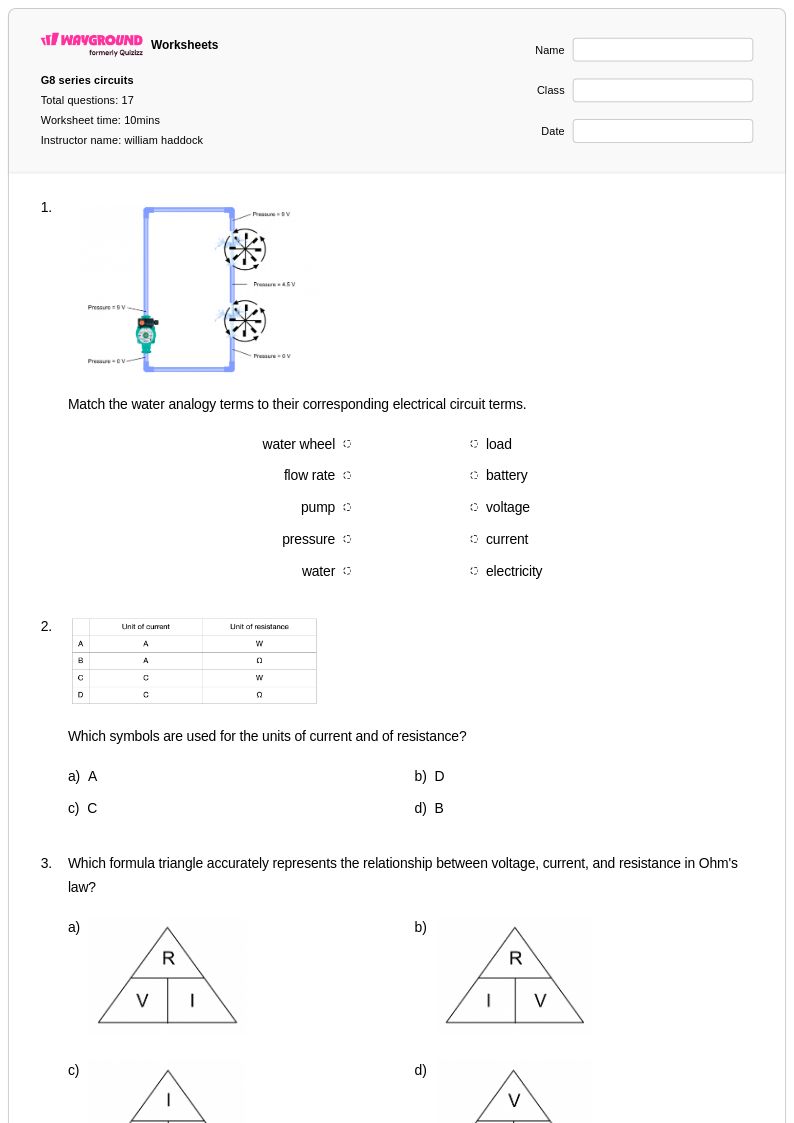
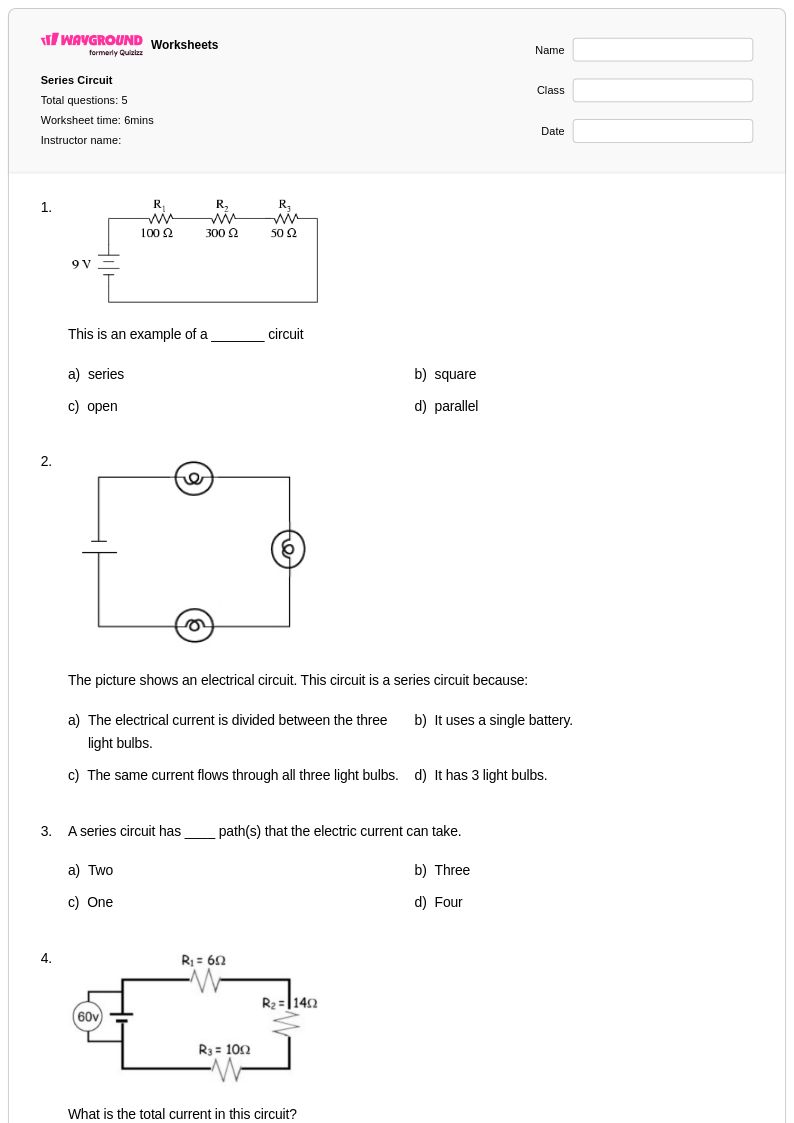
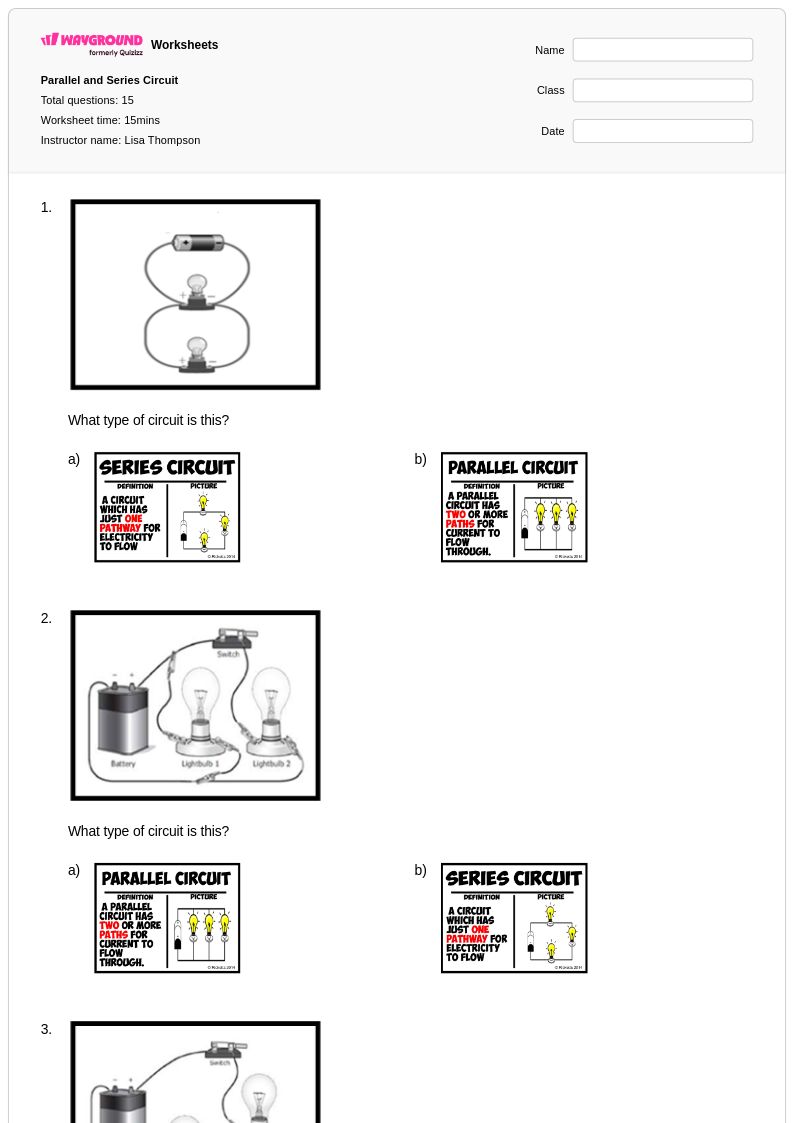
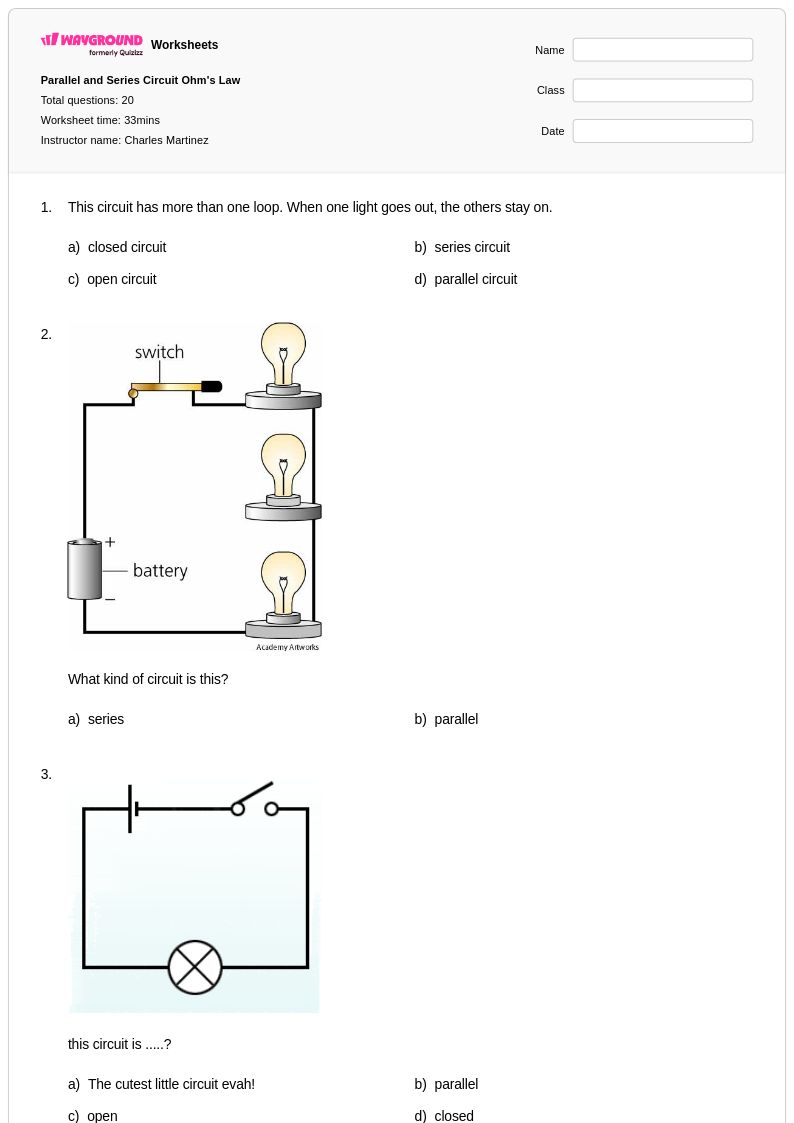
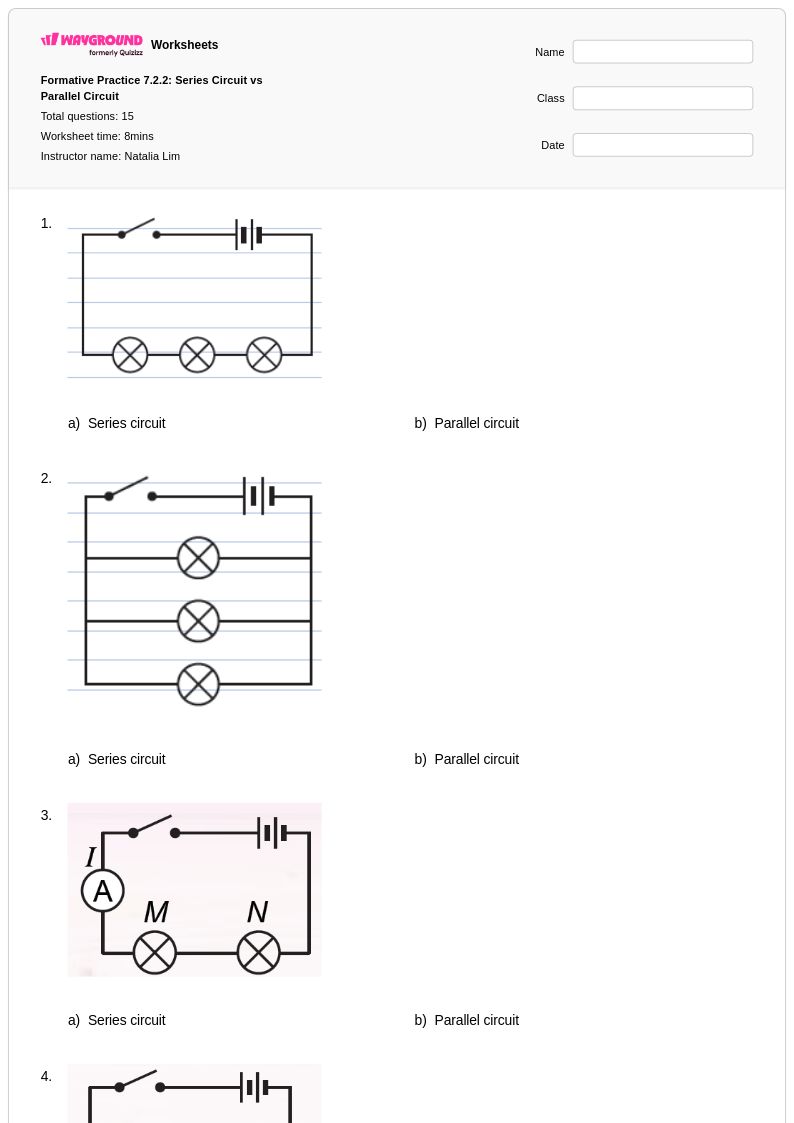
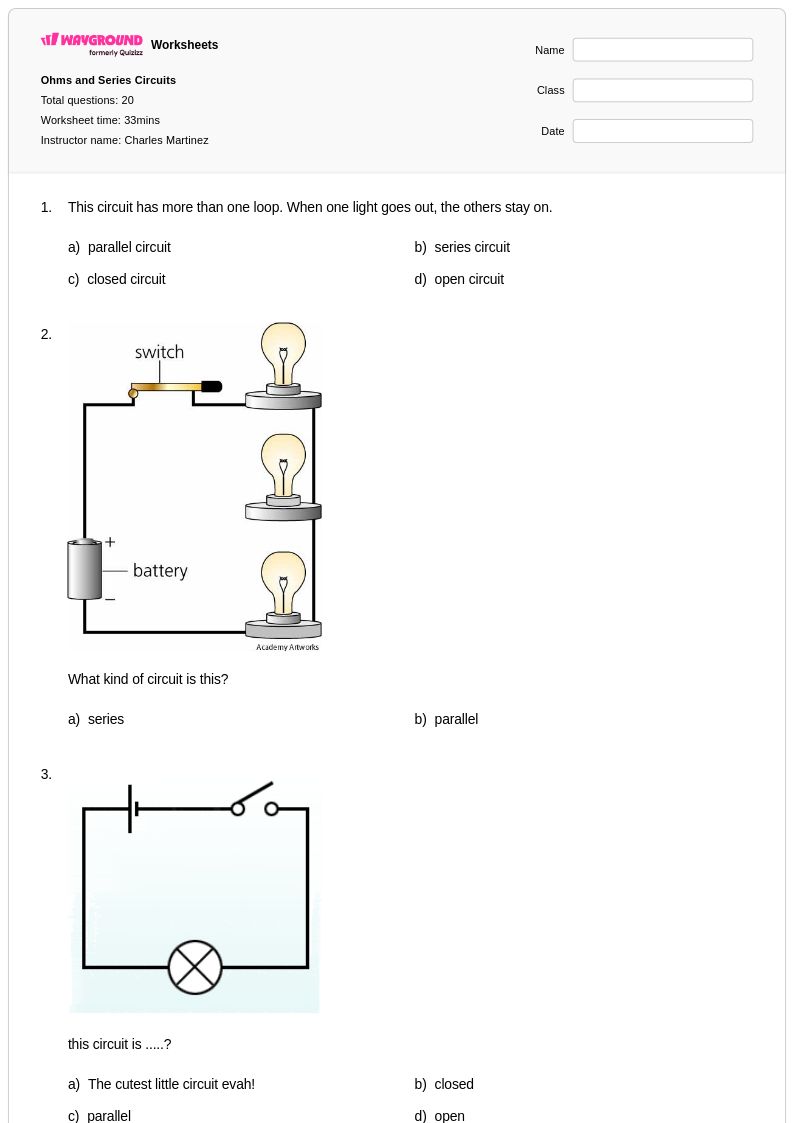
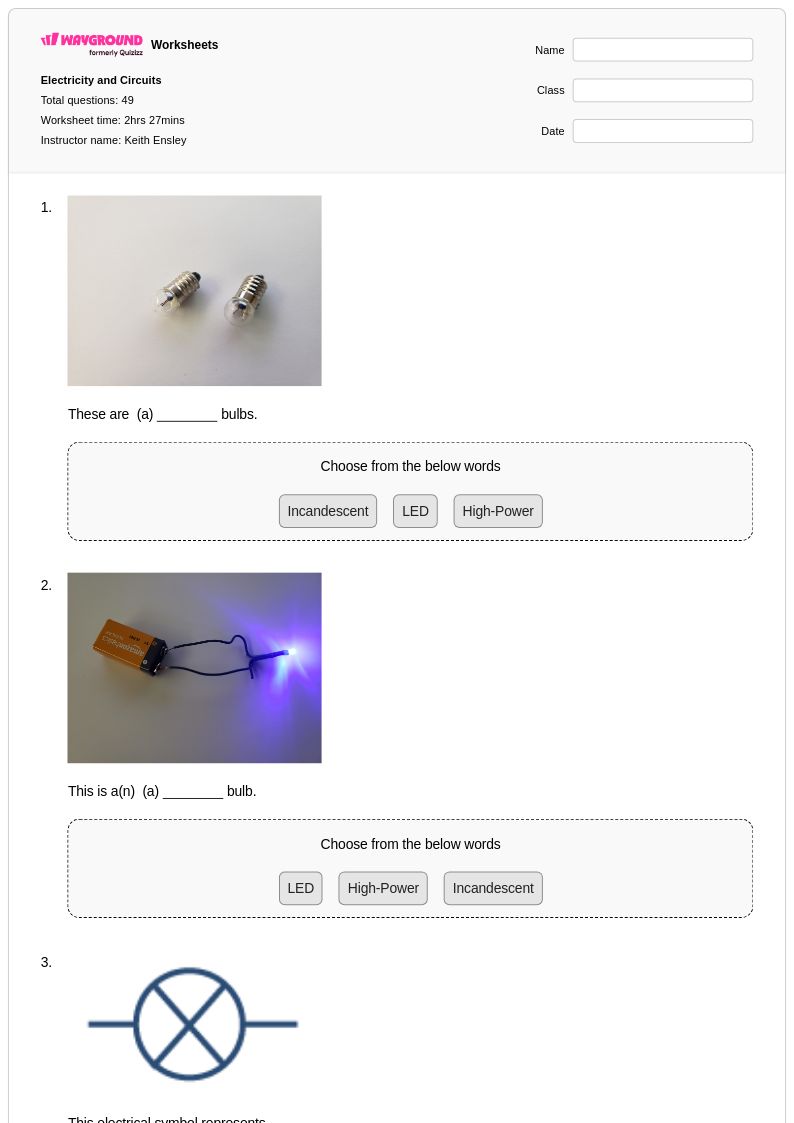
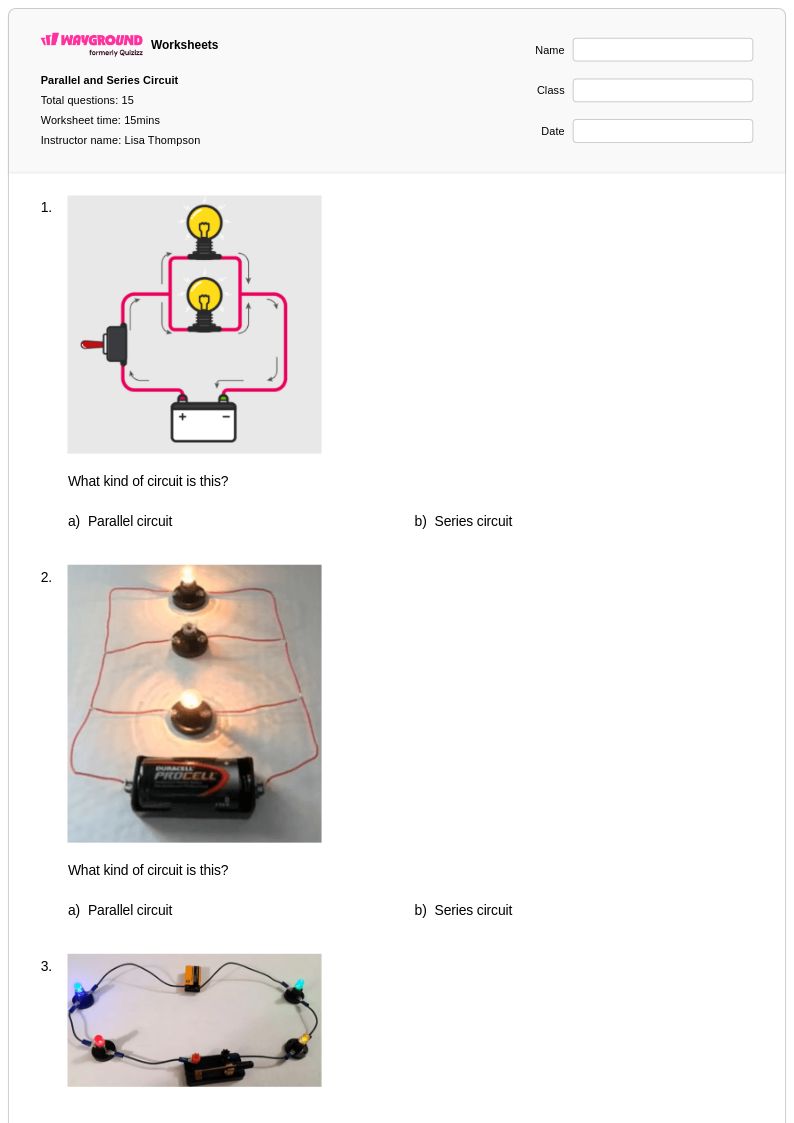
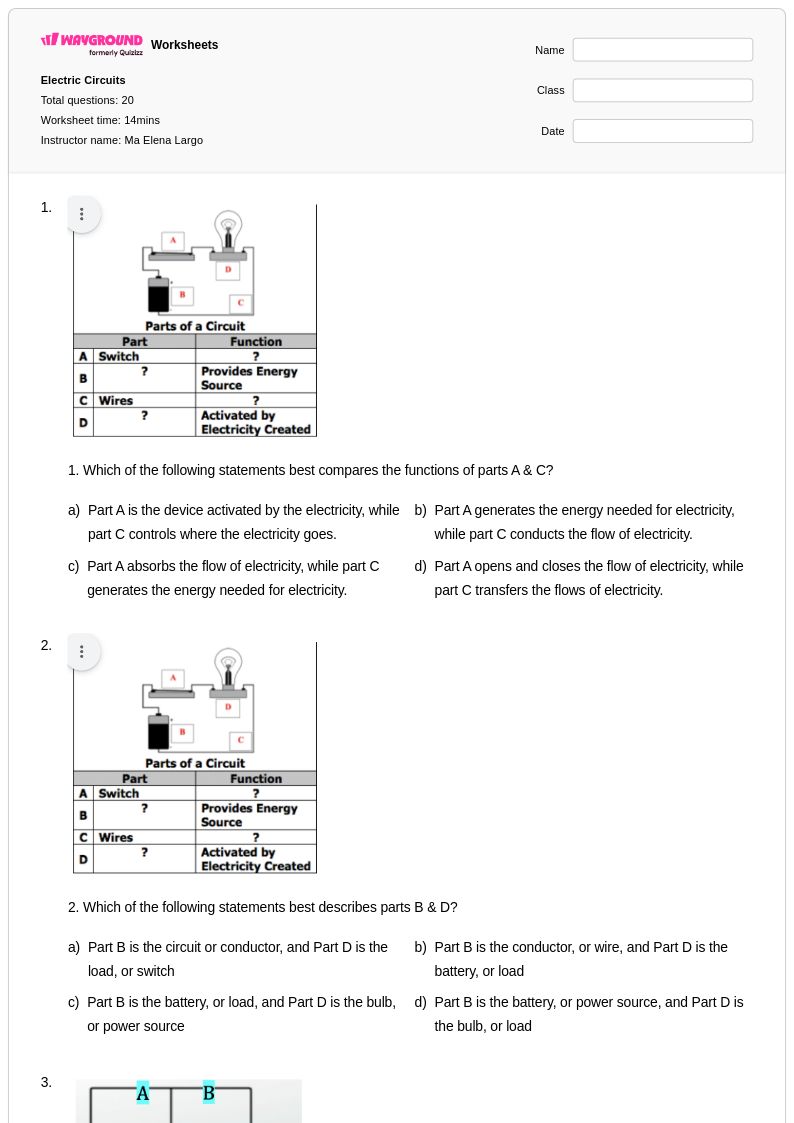
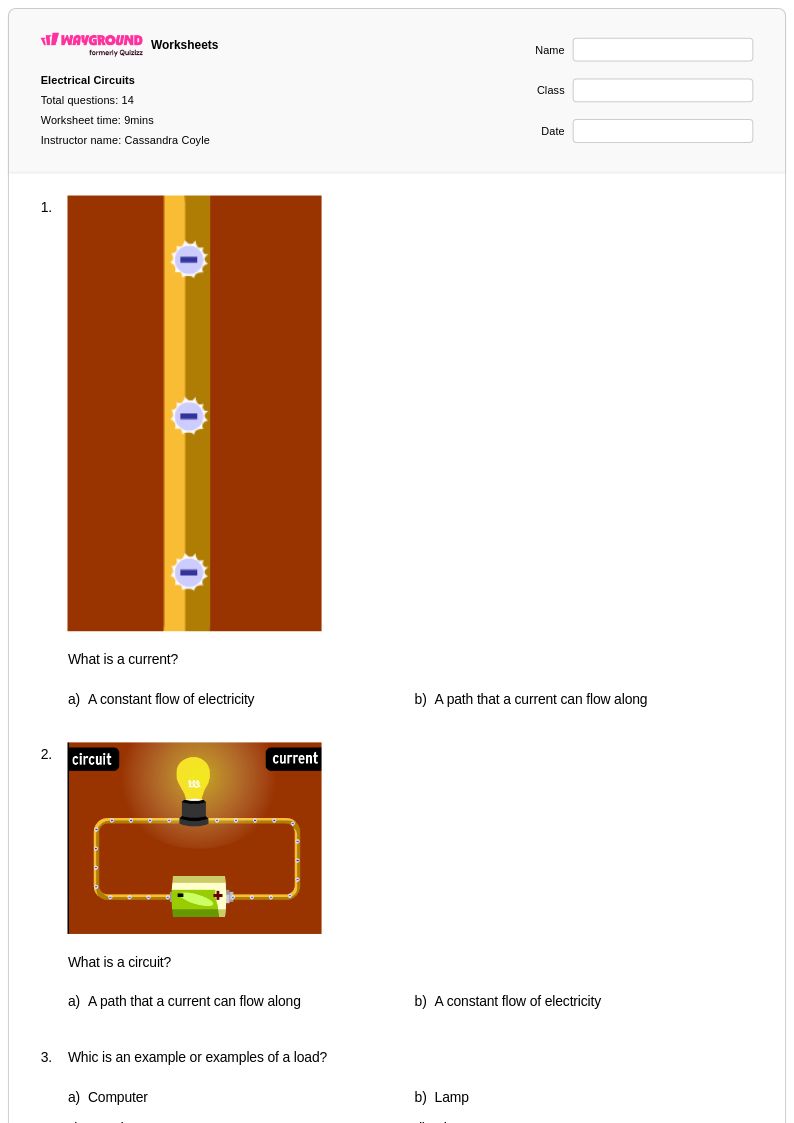
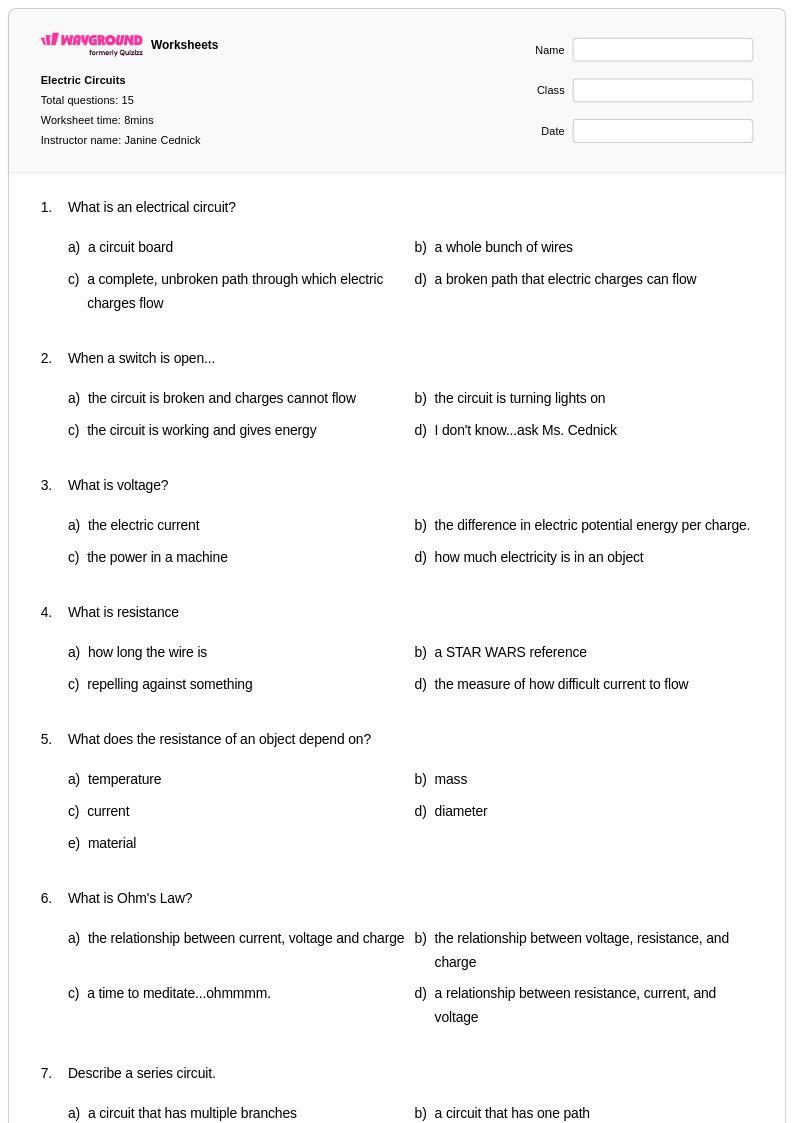
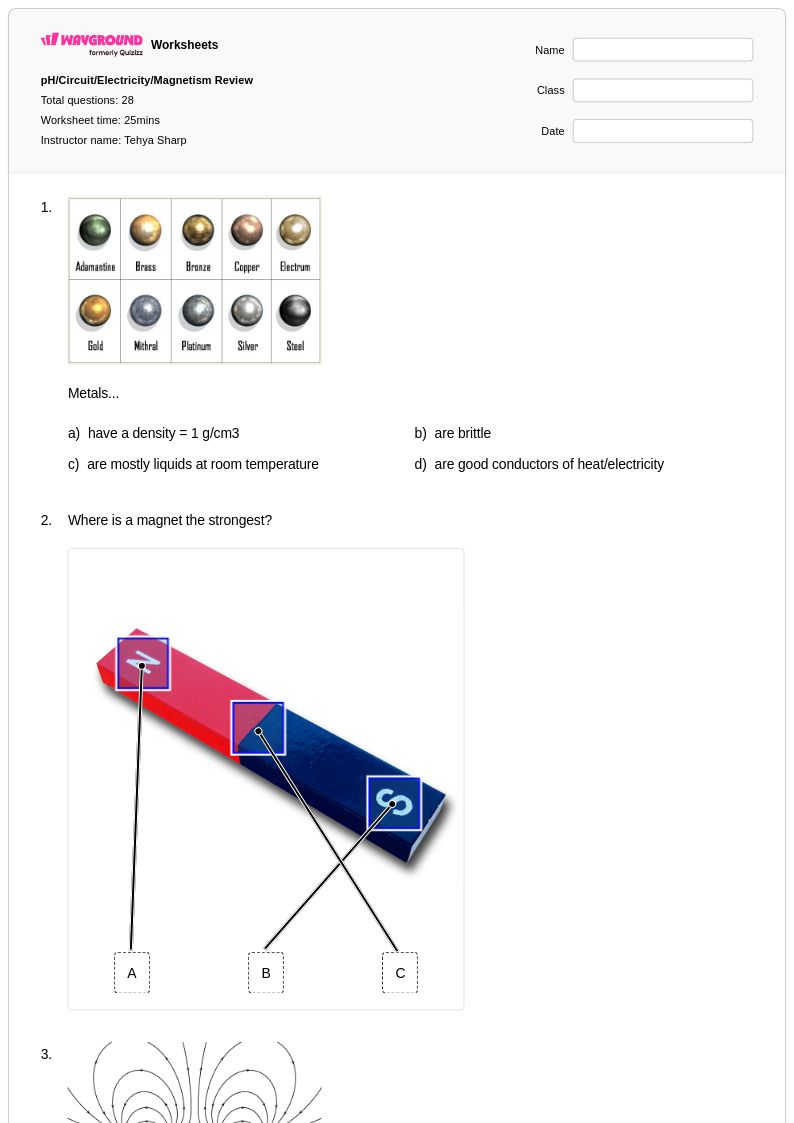
Series circuit worksheets for Grade 8 students through Wayground (formerly Quizizz) provide comprehensive coverage of fundamental electrical circuit concepts where current flows through a single pathway. These expertly designed resources strengthen students' understanding of how electrical components connect in sequence, enabling them to analyze voltage distribution, current flow, and resistance calculations within series configurations. The worksheet collections include detailed practice problems that guide students through measuring voltage drops across individual components, calculating total resistance using Ohm's law, and predicting circuit behavior when components are added or removed. Each printable resource comes with a complete answer key, making these free educational materials invaluable for both classroom instruction and independent study as students master the mathematical and conceptual foundations of series circuit analysis.
Wayground (formerly Quizizz) supports science educators with millions of teacher-created worksheet resources specifically aligned to Grade 8 circuit instruction standards and learning objectives. The platform's robust search and filtering capabilities allow teachers to quickly locate series circuit materials that match their specific instructional needs, whether for initial concept introduction, skill reinforcement, or advanced problem-solving practice. Teachers can customize these printable and digital pdf worksheets to accommodate diverse learning levels within their classrooms, utilizing built-in differentiation tools to provide appropriate challenge levels for struggling learners and advanced students alike. This extensive collection streamlines lesson planning while offering targeted resources for remediation sessions, enrichment activities, and ongoing skill practice that builds students' confidence in analyzing and constructing series electrical circuits.
FAQs
How do I teach series circuits to students?
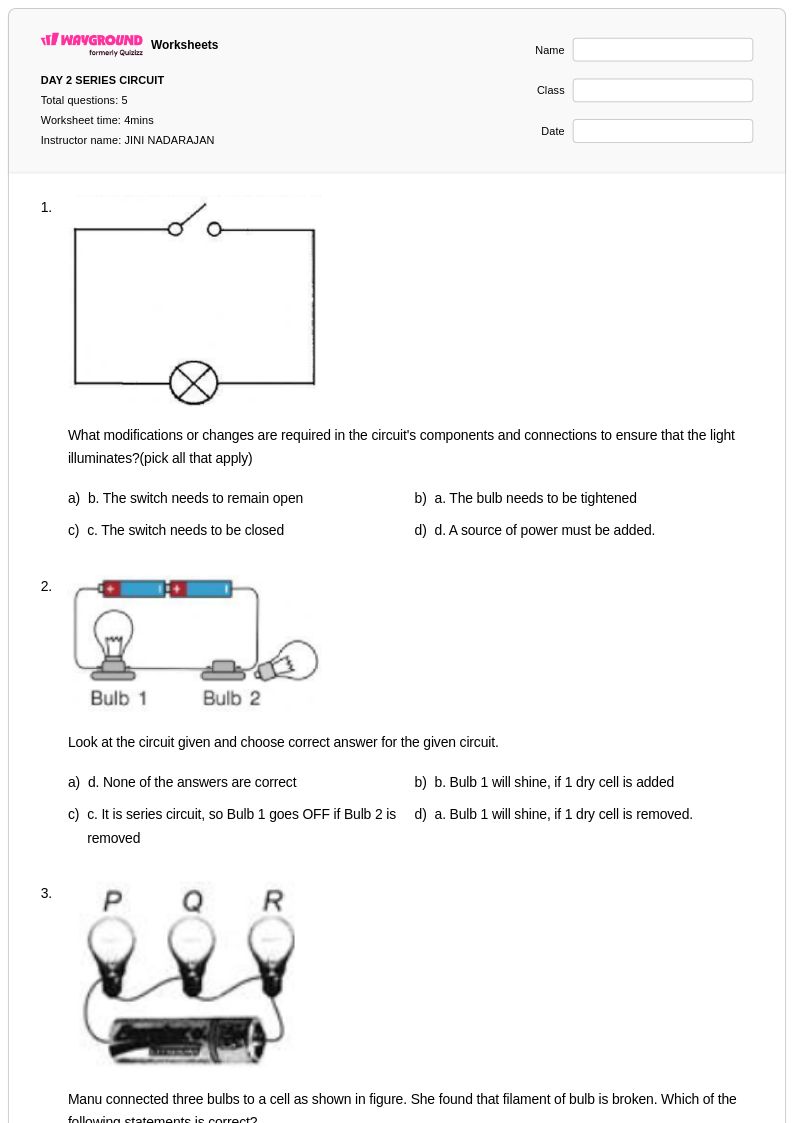
Start by establishing the core rule: in a series circuit, all components share a single continuous path, so the same current flows through every component. Build from this by introducing voltage distribution and resistance calculations before moving to component removal scenarios. Physical demonstrations or diagrams showing what happens when one bulb goes out in a series string help students internalize why the whole circuit fails, making abstract formulas more concrete.
What practice problems help students understand series circuits?
The most effective series circuit practice problems ask students to calculate total resistance using the additive formula (R_total = R1 + R2 + R3...), determine current using Ohm's Law, and find the voltage drop across individual components. Problems that require students to predict what happens when a resistor is added or removed reinforce the interdependence of components in a series path. Scaffolding these from single-variable to multi-step problems builds fluency systematically.
What mistakes do students commonly make when working with series circuits?
The most common error is assuming voltage stays constant across all components, when in reality voltage divides proportionally based on resistance. Students also frequently confuse series and parallel circuit rules, misapplying parallel formulas to series problems. A third persistent misconception is that removing one component only affects that component, rather than breaking the entire circuit path.
How is series circuit different from parallel circuit, and how do I teach the distinction?
In a series circuit, components share one path, so current is identical throughout but voltage divides across components. In a parallel circuit, components have separate branches, so voltage is identical but current divides. Teaching the distinction works best when students analyze the same circuit scenario under both configurations and compare results, making the consequences of each arrangement tangible rather than definitional.
How can I use Wayground's series circuit worksheets in my classroom?
Wayground's series circuit worksheets are available as printable PDFs for traditional classroom use and in digital formats for technology-integrated environments, including the option to host them as a quiz directly on Wayground. This flexibility makes them suitable for in-class practice, homework assignments, lab preparation, and independent study. Each worksheet includes a complete answer key, so teachers can use them for formative assessment or self-paced review without additional preparation.
How do I support struggling students on series circuit problems?
Struggling students typically need series circuit concepts broken into smaller procedural steps: first identify what is known, then select the correct formula, then substitute values. On Wayground, teachers can apply accommodations such as reduced answer choices to lower cognitive load for selected students, or enable Read Aloud so question text is read to students who need it. These settings can be assigned per student without affecting the rest of the class.