Free Printable Periodic Phenomena Worksheets for Grade 8
Explore Wayground's comprehensive Grade 8 periodic phenomena worksheets featuring free printables and practice problems with answer keys to help students master wave patterns, oscillations, and cyclical motion in physics.
Explore printable Periodic Phenomena worksheets for Grade 8
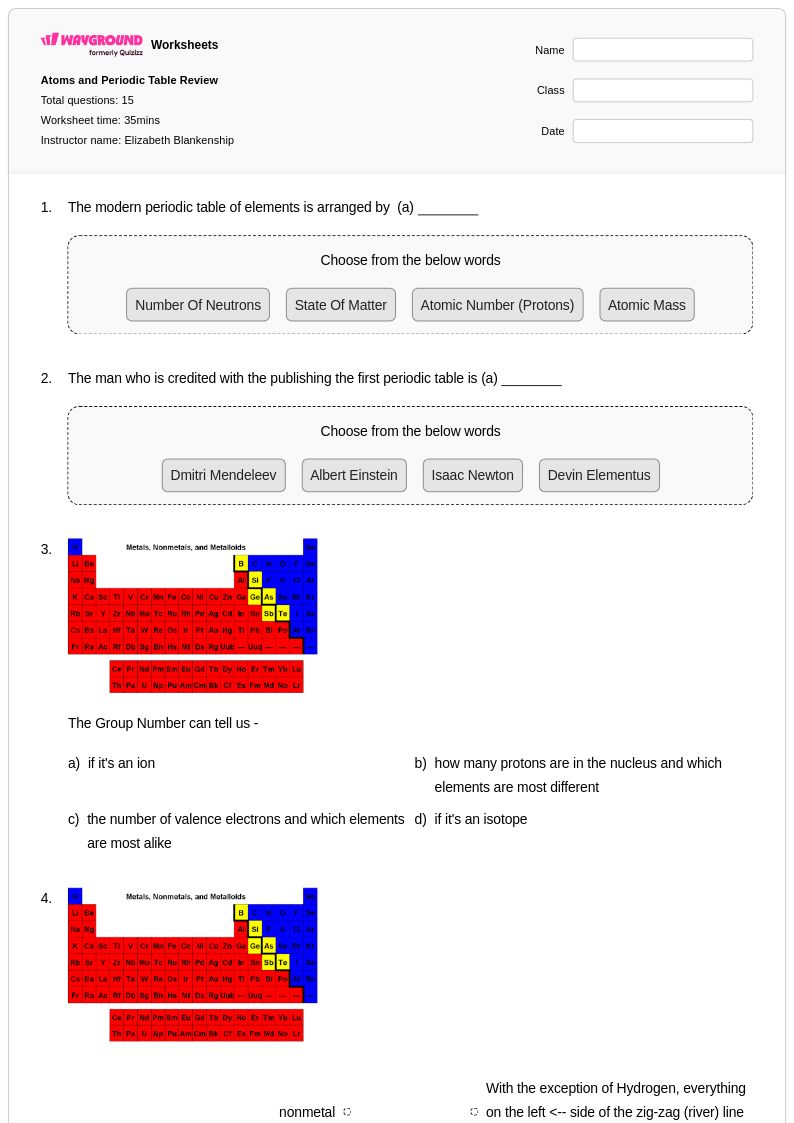
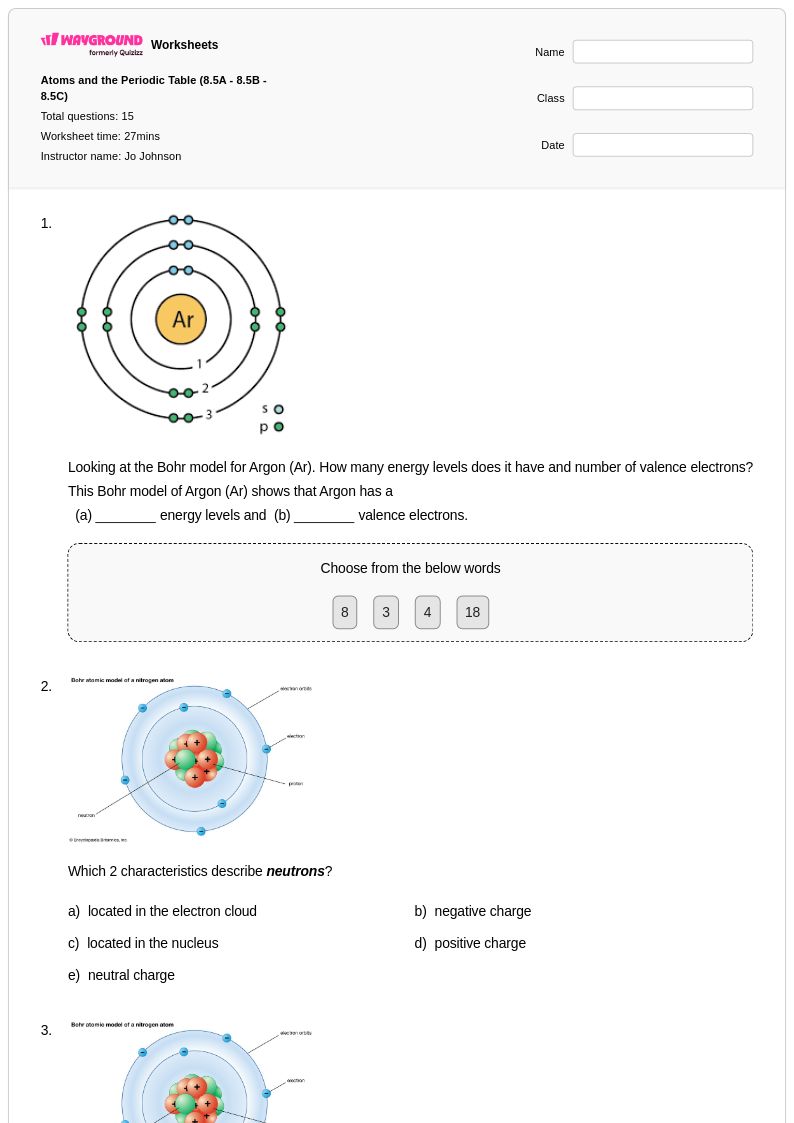
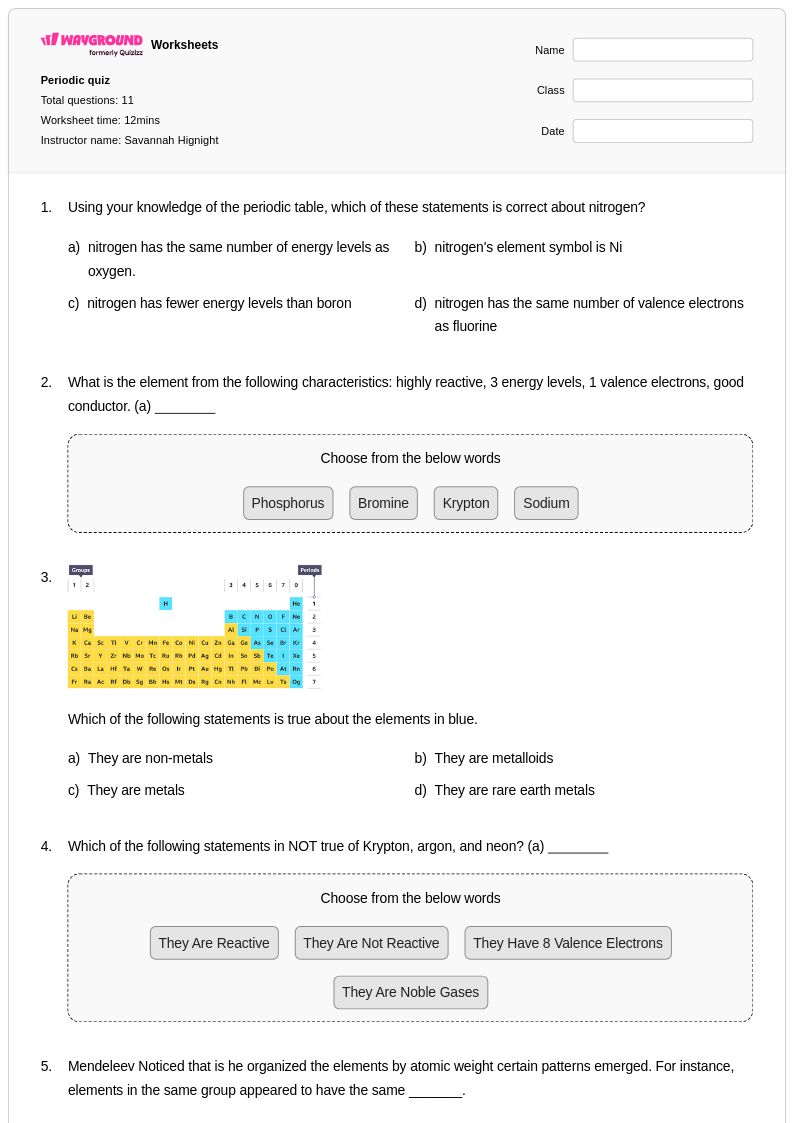
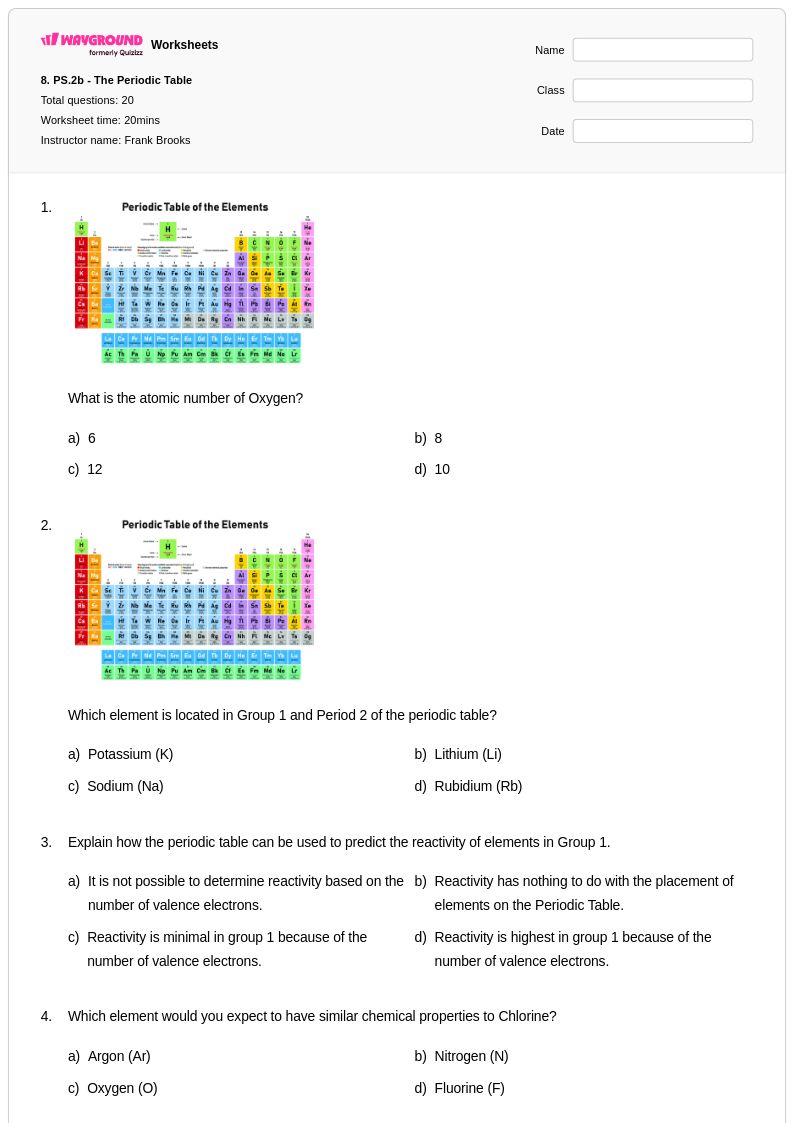
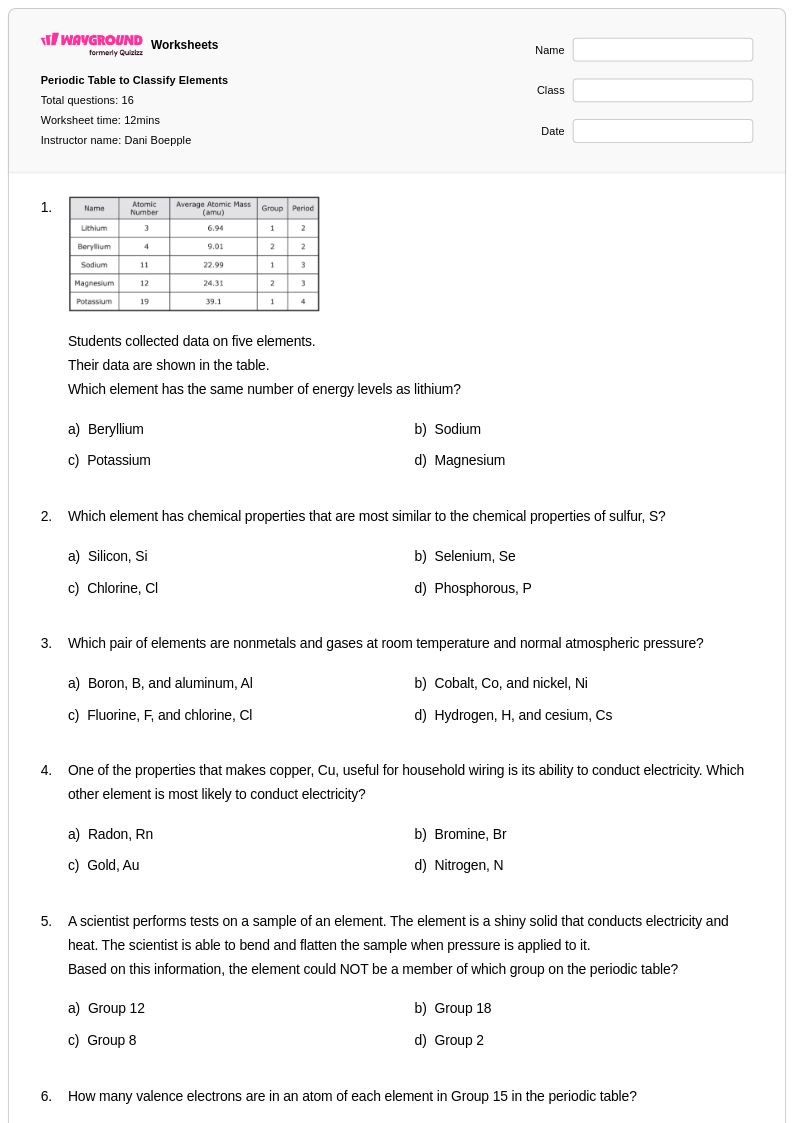
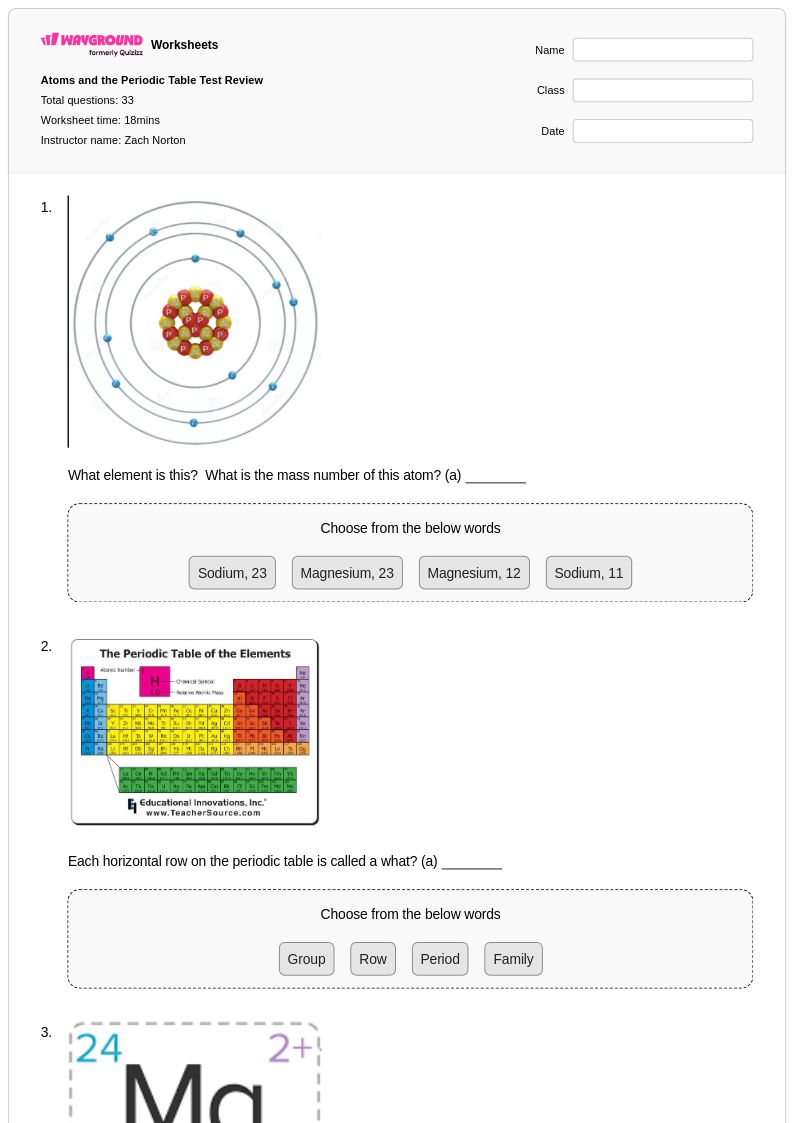
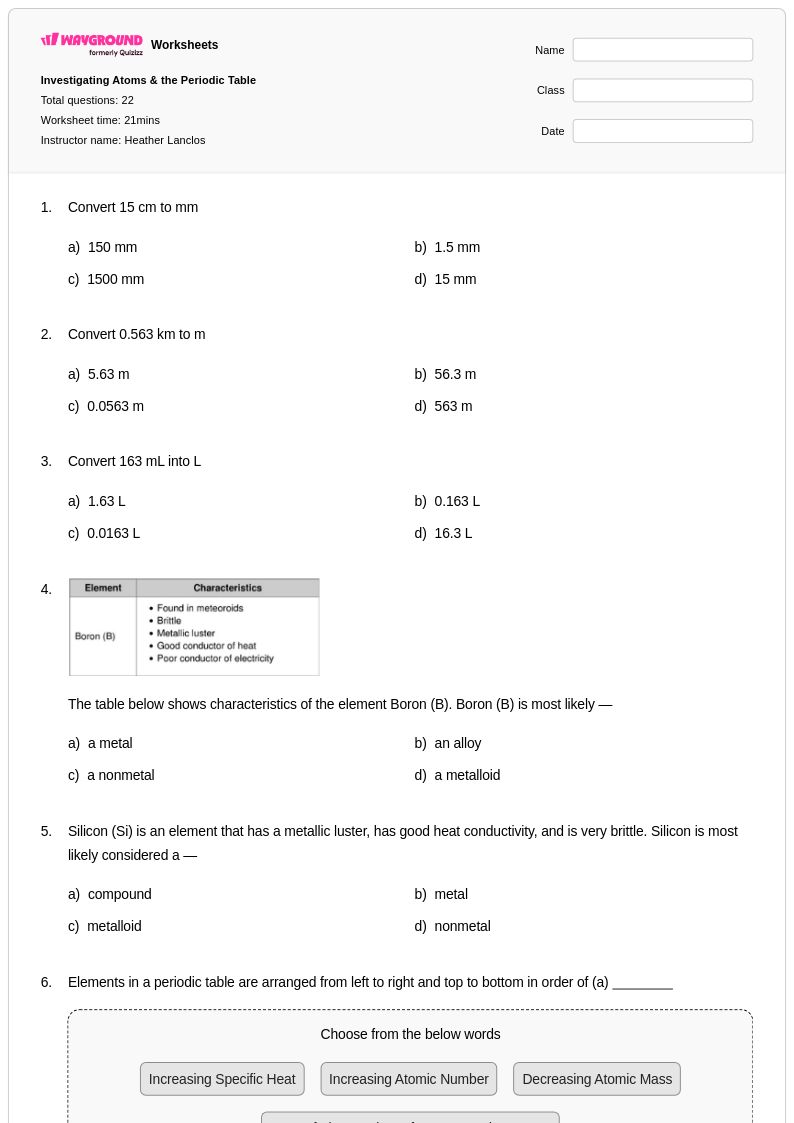
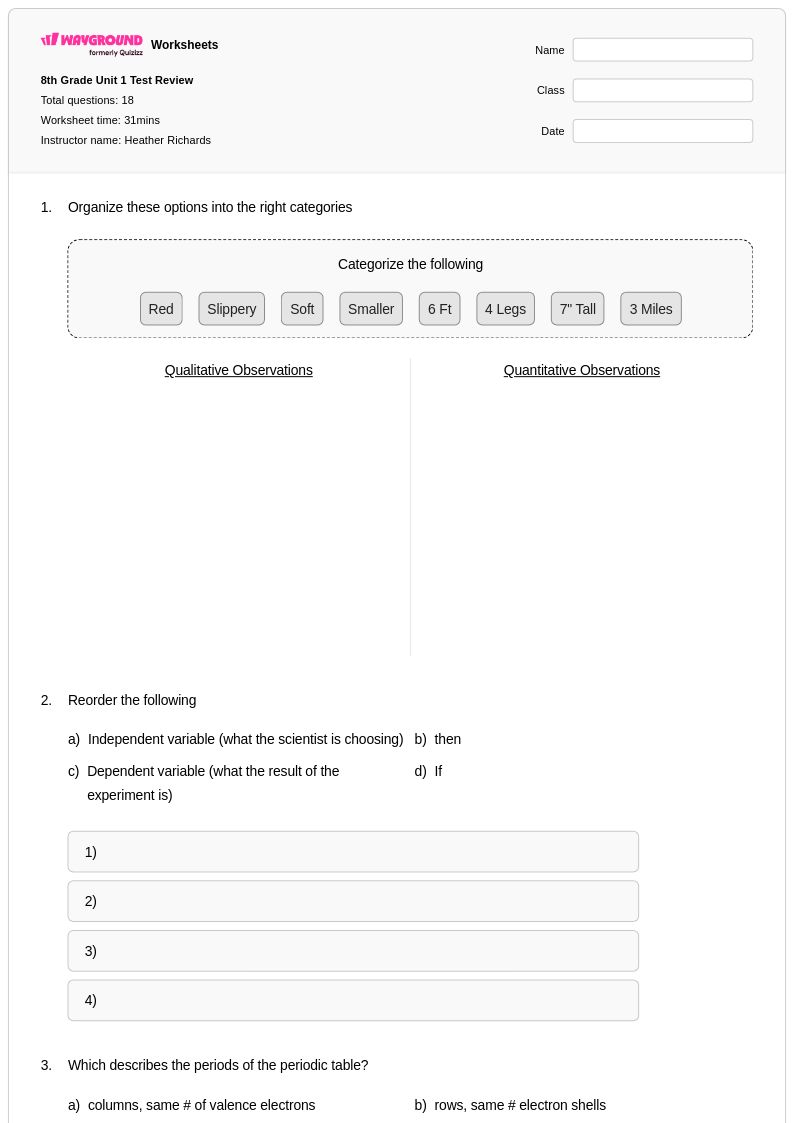
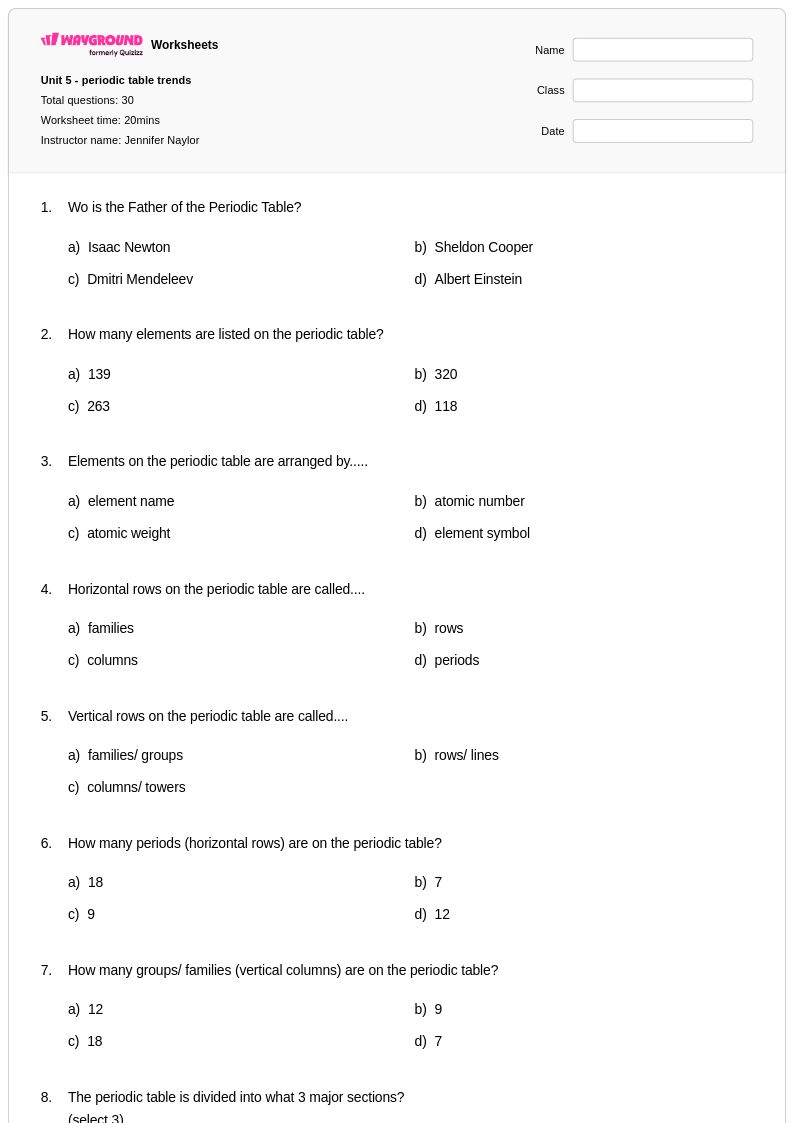
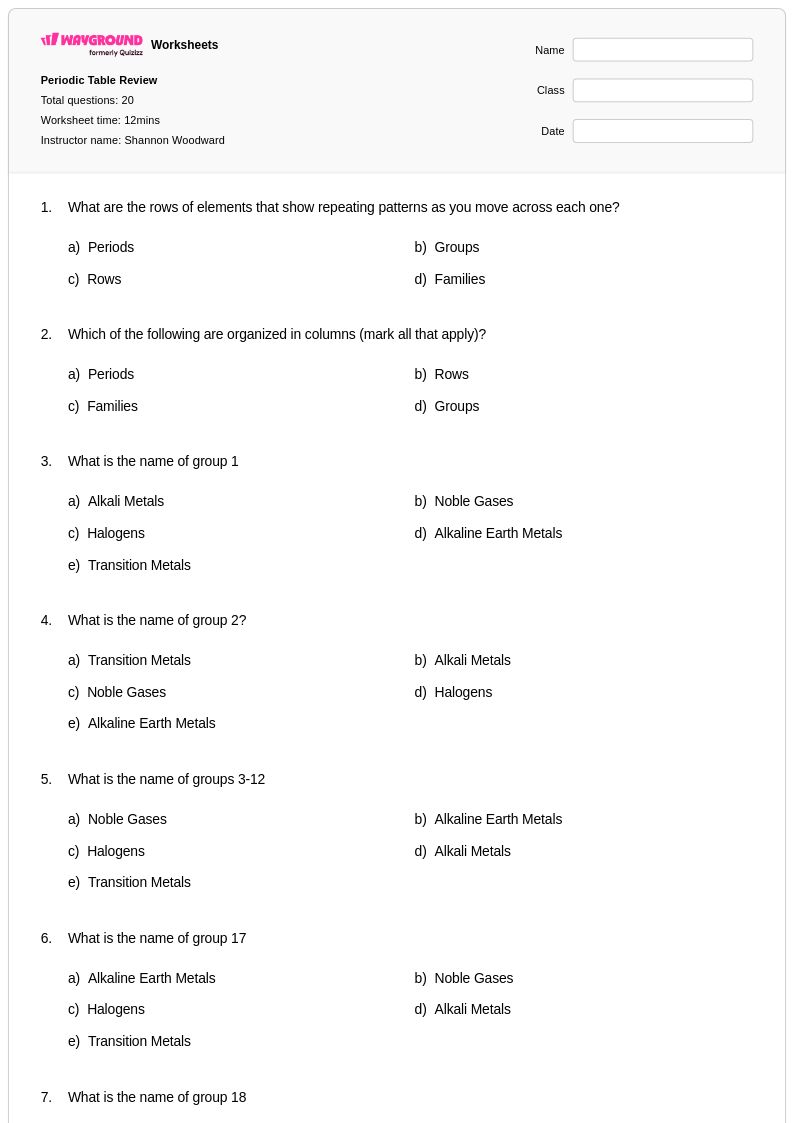
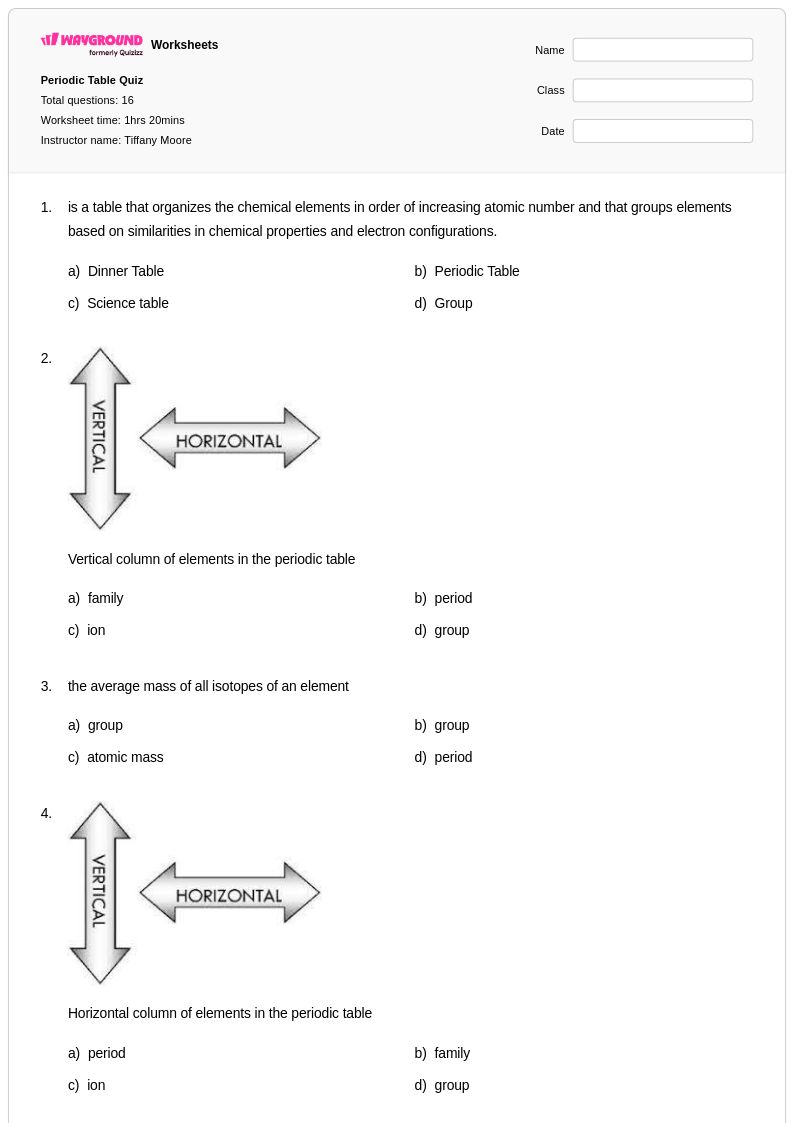
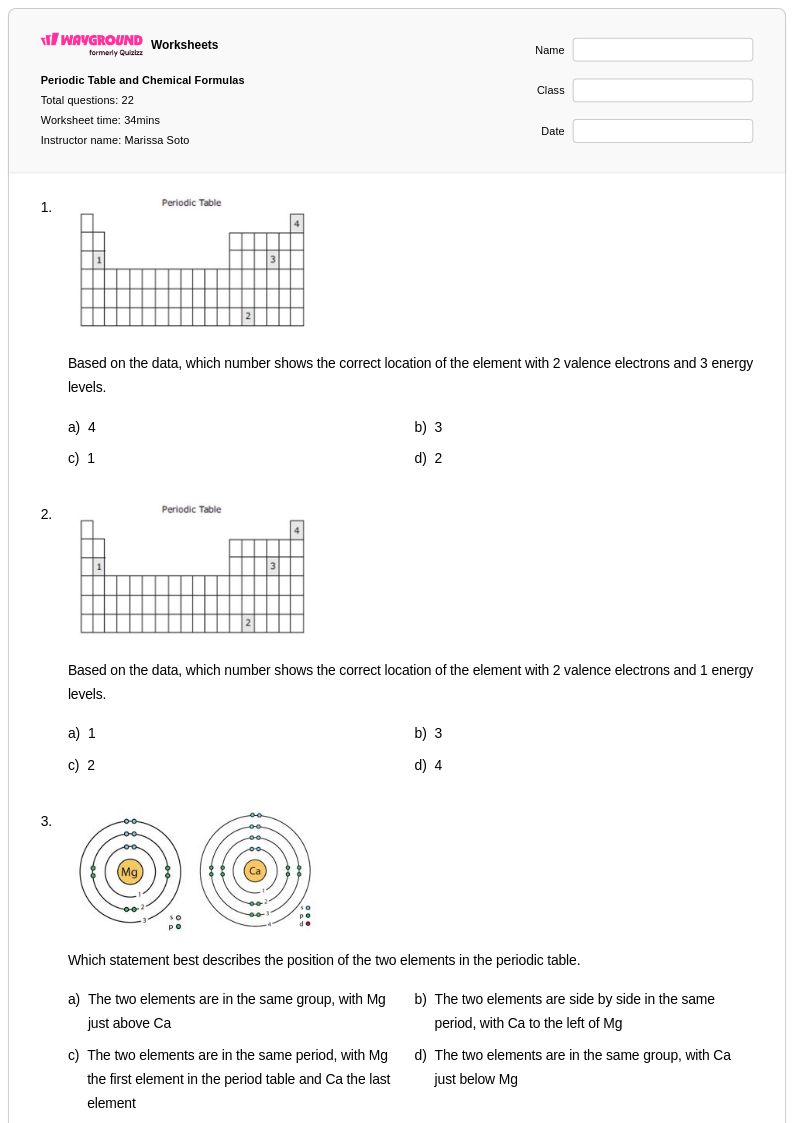
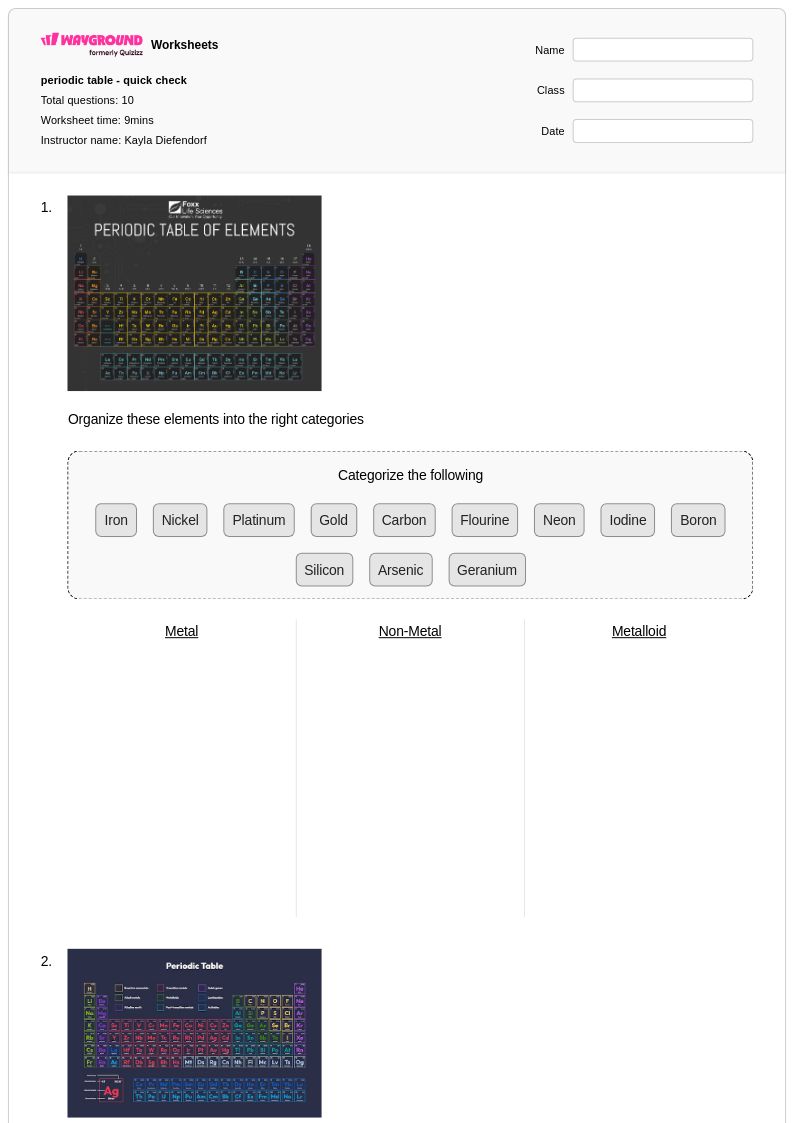
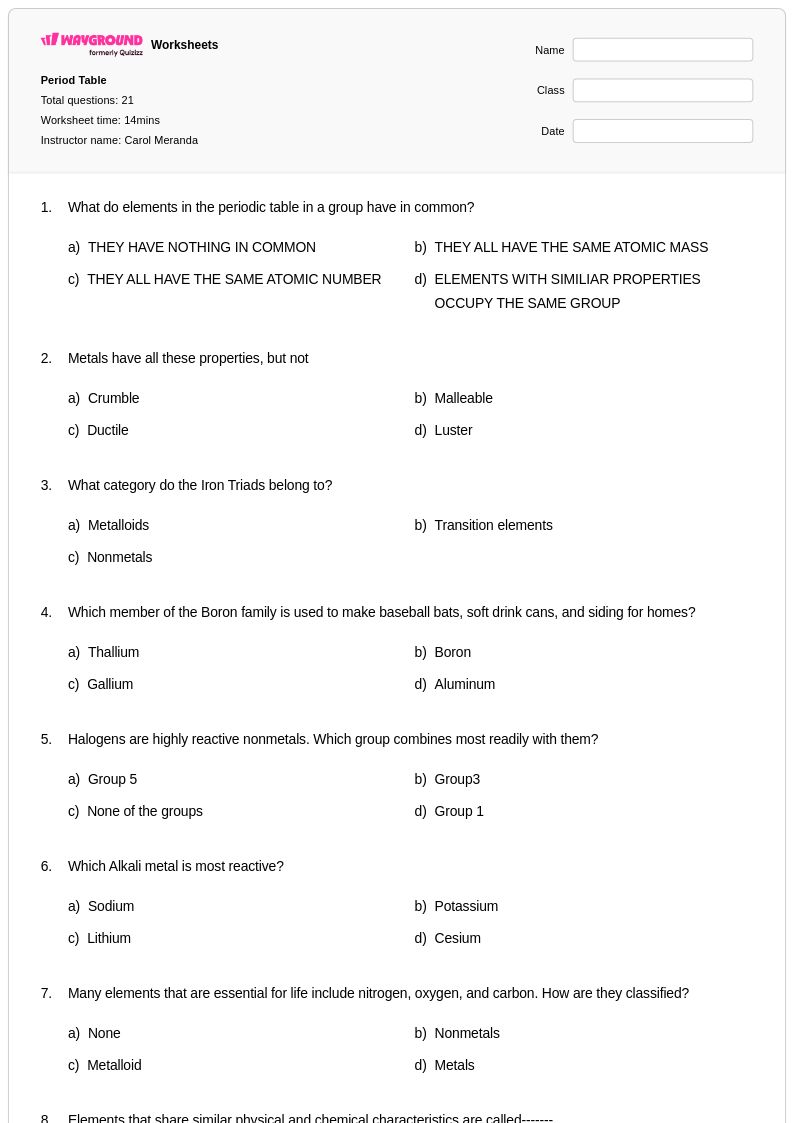
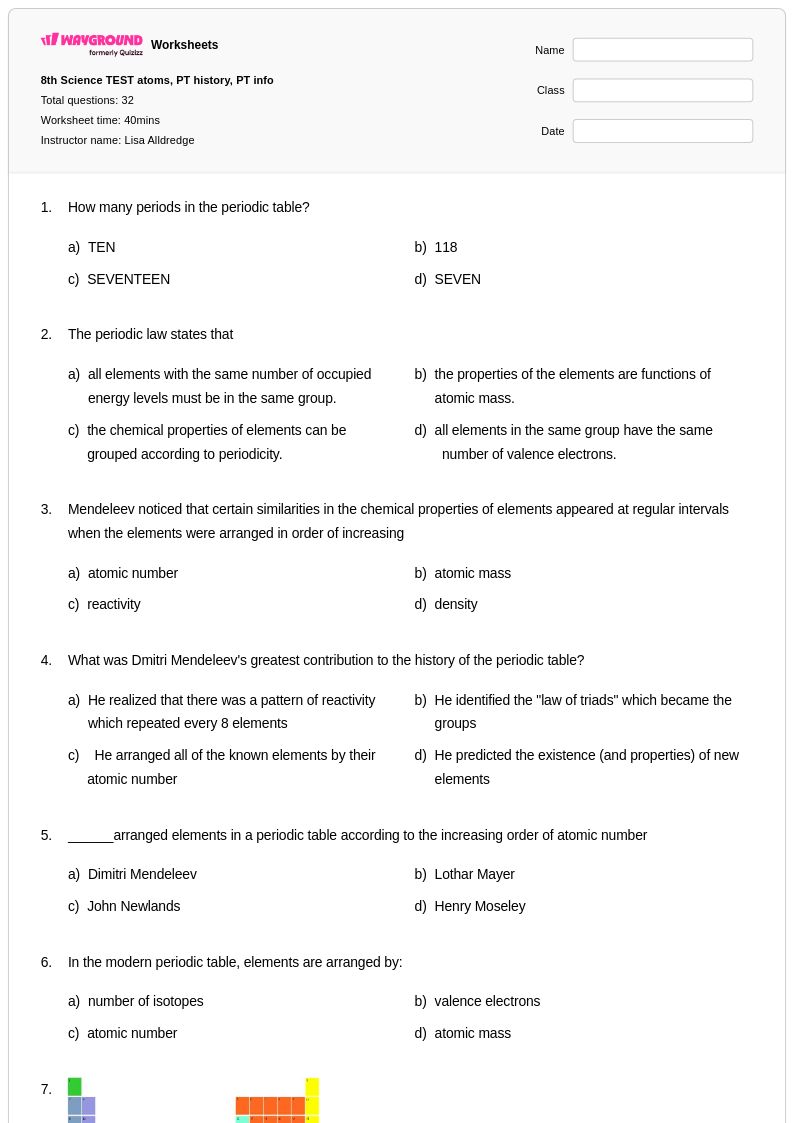
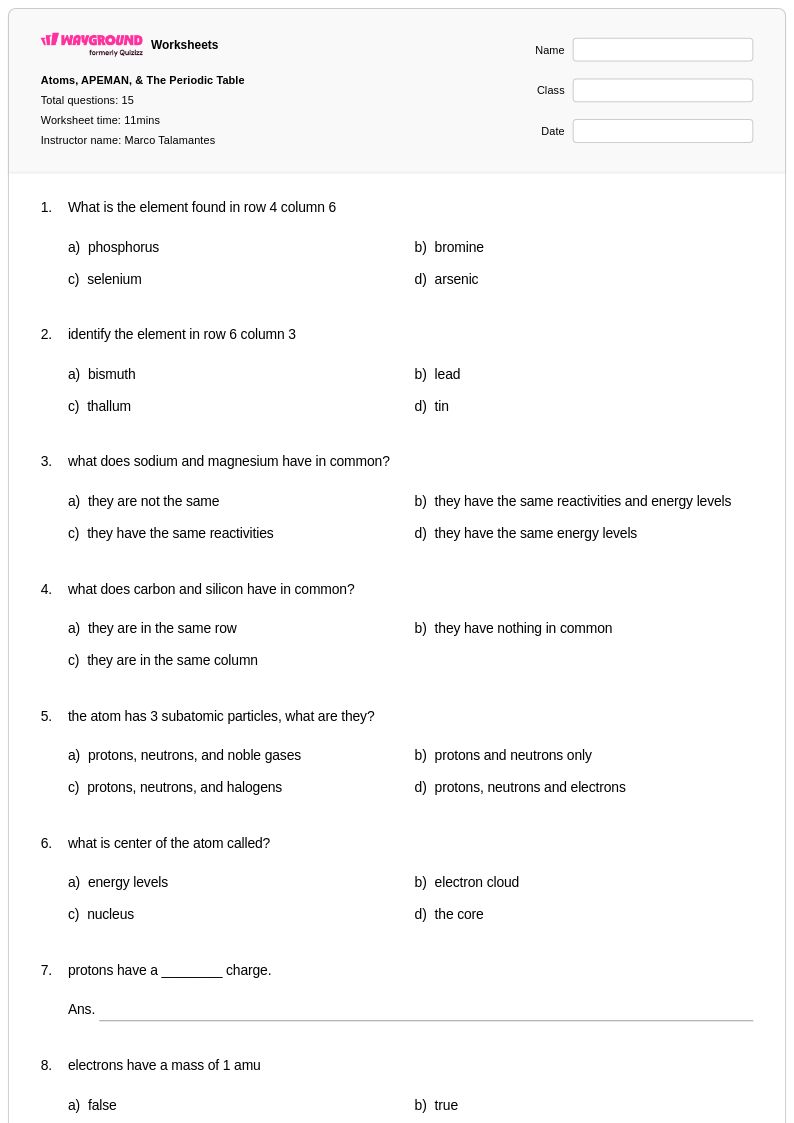
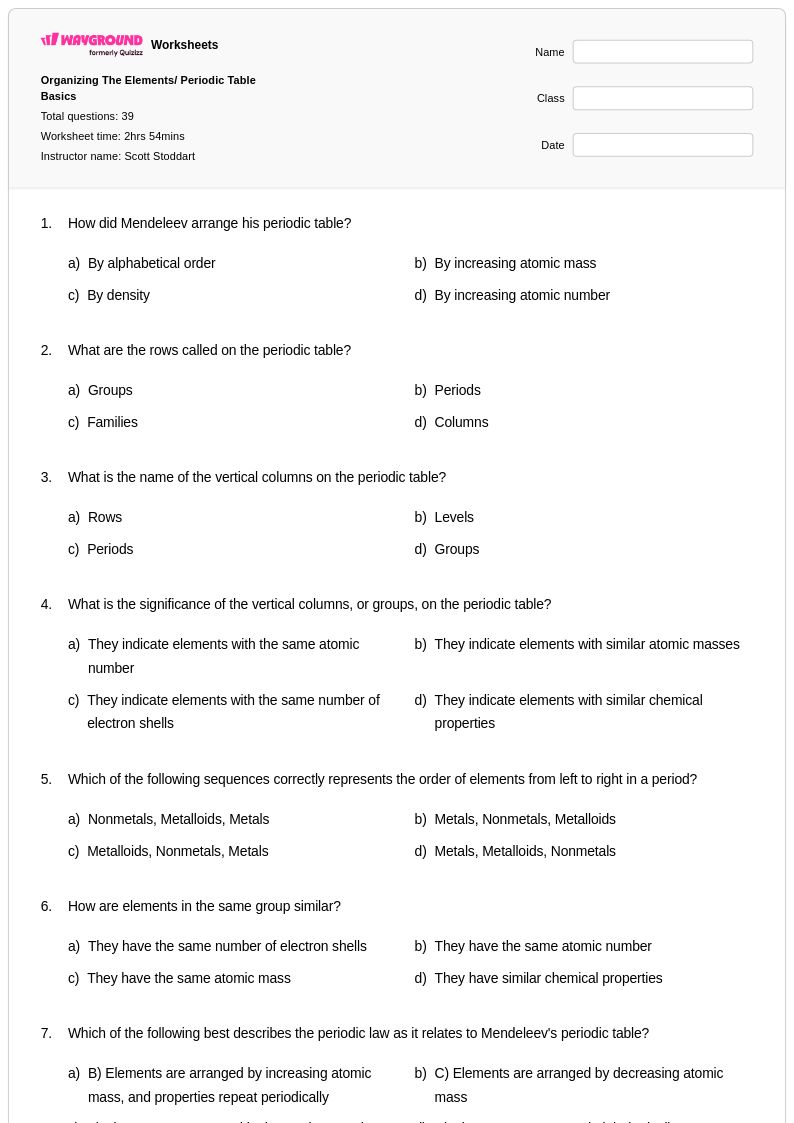
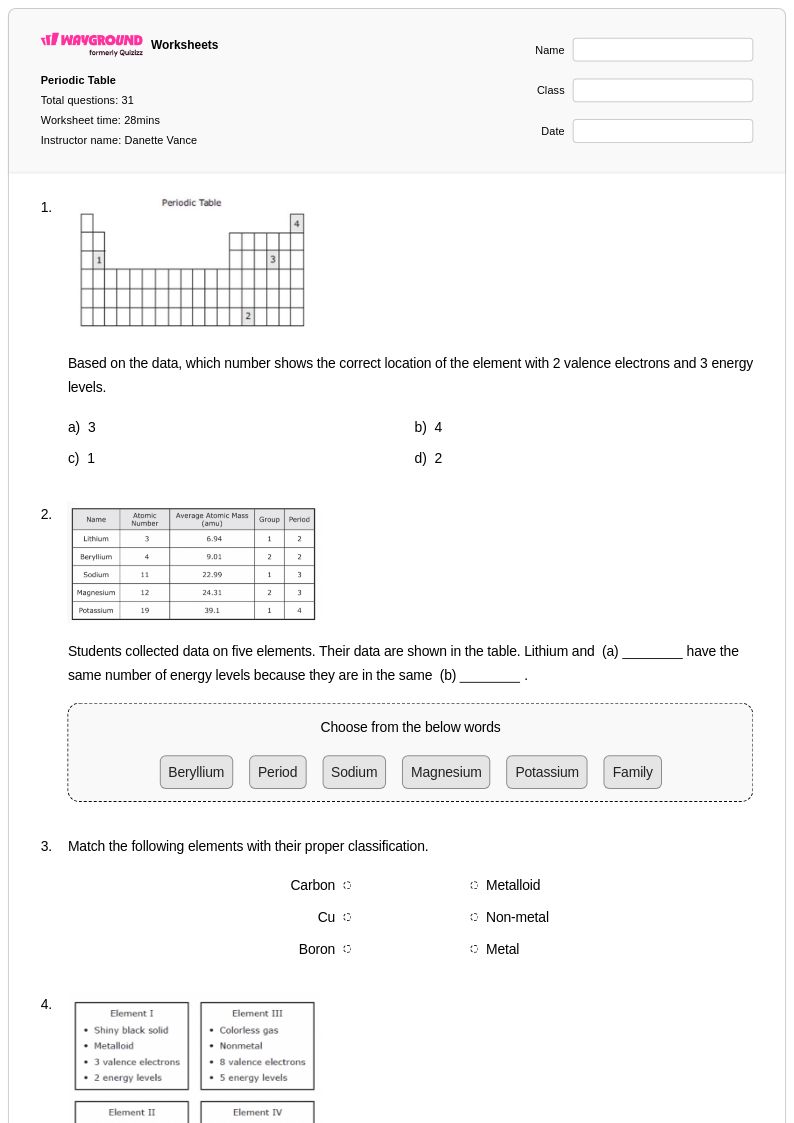
Periodic phenomena worksheets for Grade 8 students available through Wayground (formerly Quizizz) provide comprehensive practice with recurring patterns and cycles that appear throughout the natural world. These educational resources help students master fundamental concepts including wave properties, oscillations, pendulum motion, and seasonal changes while developing critical analytical skills for identifying, measuring, and predicting periodic behavior. The worksheet collections feature detailed practice problems that guide students through calculating periods, frequencies, and amplitudes, with accompanying answer keys that support independent learning and self-assessment. Available as free printable pdf resources, these materials strengthen students' ability to interpret graphs of periodic motion, analyze data patterns, and apply mathematical relationships to real-world phenomena such as sound waves, light cycles, and tidal movements.
Wayground (formerly Quizizz) empowers educators with millions of teacher-created periodic phenomena worksheets specifically designed for Grade 8 science instruction, featuring robust search and filtering capabilities that allow teachers to quickly locate materials aligned with their curriculum standards and learning objectives. The platform's differentiation tools enable instructors to customize worksheet difficulty levels and content focus areas, supporting both remediation for struggling learners and enrichment opportunities for advanced students. Teachers can access these resources in flexible formats including printable pdf versions for traditional classroom use and digital formats for interactive learning experiences, streamlining lesson planning while providing targeted skill practice. The comprehensive collection supports effective instruction by offering varied problem types and assessment formats that help educators identify student misconceptions, track progress in understanding periodic relationships, and reinforce essential physics concepts through systematic practice and application.
FAQs
How do I teach periodic phenomena in a physics class?
Start by grounding students in the core vocabulary: period, frequency, amplitude, and wavelength. Use concrete physical demonstrations like pendulums or spring-mass systems before moving to mathematical relationships such as T = 1/f. Once students can identify these properties in real systems, progress to wave interference and simple harmonic motion to build conceptual depth before introducing formal problem-solving.
What exercises help students practice oscillations and wave calculations?
Effective practice combines conceptual identification with quantitative problem-solving. Students should work through pendulum period calculations, frequency-wavelength conversions, and graph-based analysis of displacement-time plots. Scaffolded problem sets that begin with single-variable calculations and build toward multi-step wave interference problems help students develop fluency before assessments.
What mistakes do students commonly make when learning periodic phenomena?
The most common error is confusing period and frequency — students often invert the T = 1/f relationship or apply it inconsistently under pressure. A second persistent misconception is treating amplitude as a factor in period calculations for simple harmonic motion, which it is not for ideal pendulums and spring systems. Students also frequently misread phase relationships on wave diagrams, conflating constructive and destructive interference.
How do I differentiate periodic phenomena instruction for students at different skill levels?
For struggling students, reduce problem complexity by isolating one variable at a time and providing labeled wave diagrams before requiring students to interpret unlabeled ones. For advanced learners, introduce phase shift analysis, superposition problems, and resonance scenarios. On Wayground, teachers can apply accommodations such as reduced answer choices or read-aloud settings to individual students, while the rest of the class receives standard settings without disruption.
How can I use periodic phenomena worksheets to assess student understanding formatively?
Use short exit-ticket style problems targeting a single concept — such as calculating frequency from a period given in a graph — to quickly identify gaps before moving to the next lesson. Periodic phenomena lend themselves well to error-analysis tasks where students identify and correct a flawed calculation, which reveals deeper conceptual understanding than straightforward computation alone.
How do I use Wayground's periodic phenomena worksheets in my classroom?
Wayground's periodic phenomena worksheets are available as printable PDFs for traditional classroom use and in digital formats for technology-integrated learning environments, making them suitable for in-person, hybrid, or remote instruction. Teachers can also host any worksheet as a live quiz directly on Wayground, enabling real-time student response tracking and immediate feedback without additional setup.