
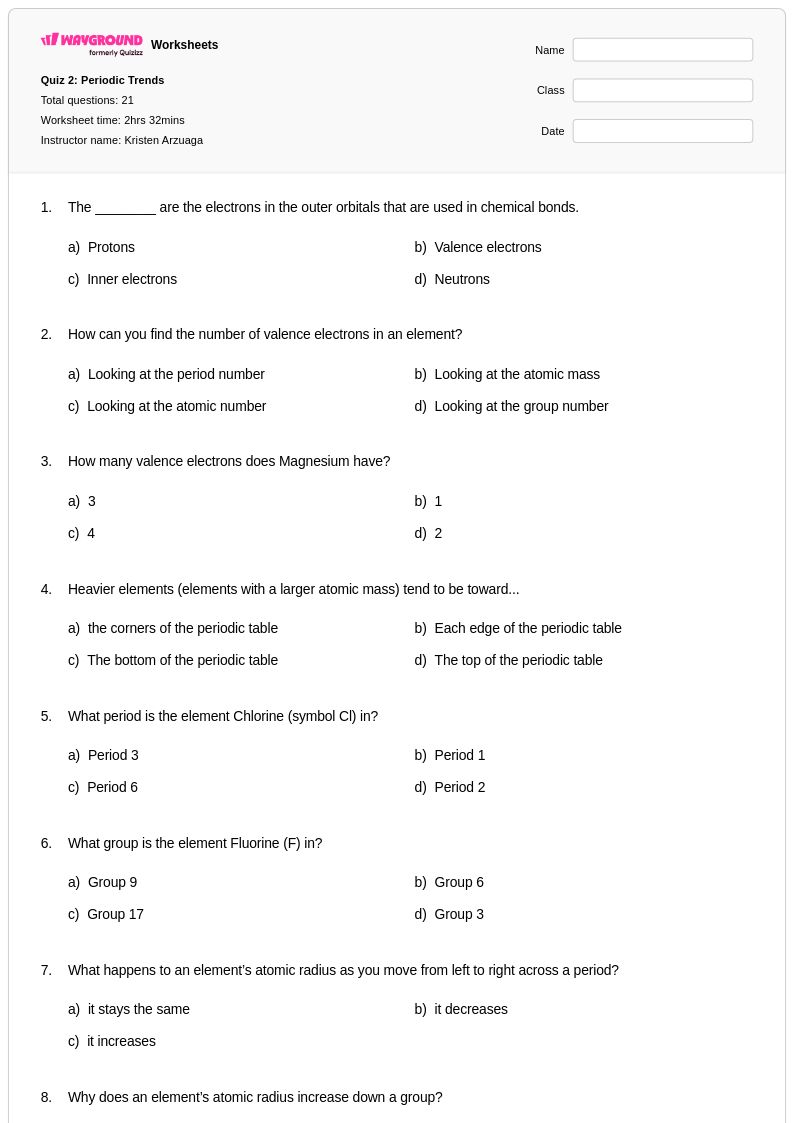
21 Q
10th
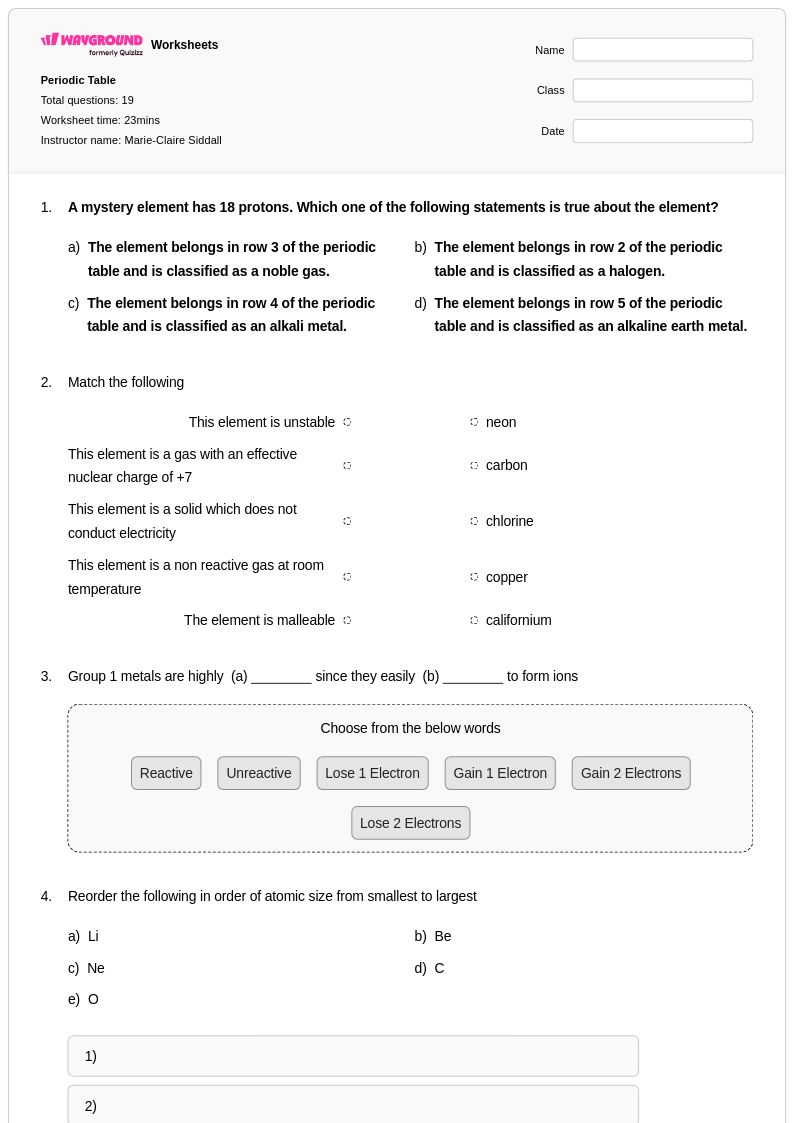
23 Q
10th
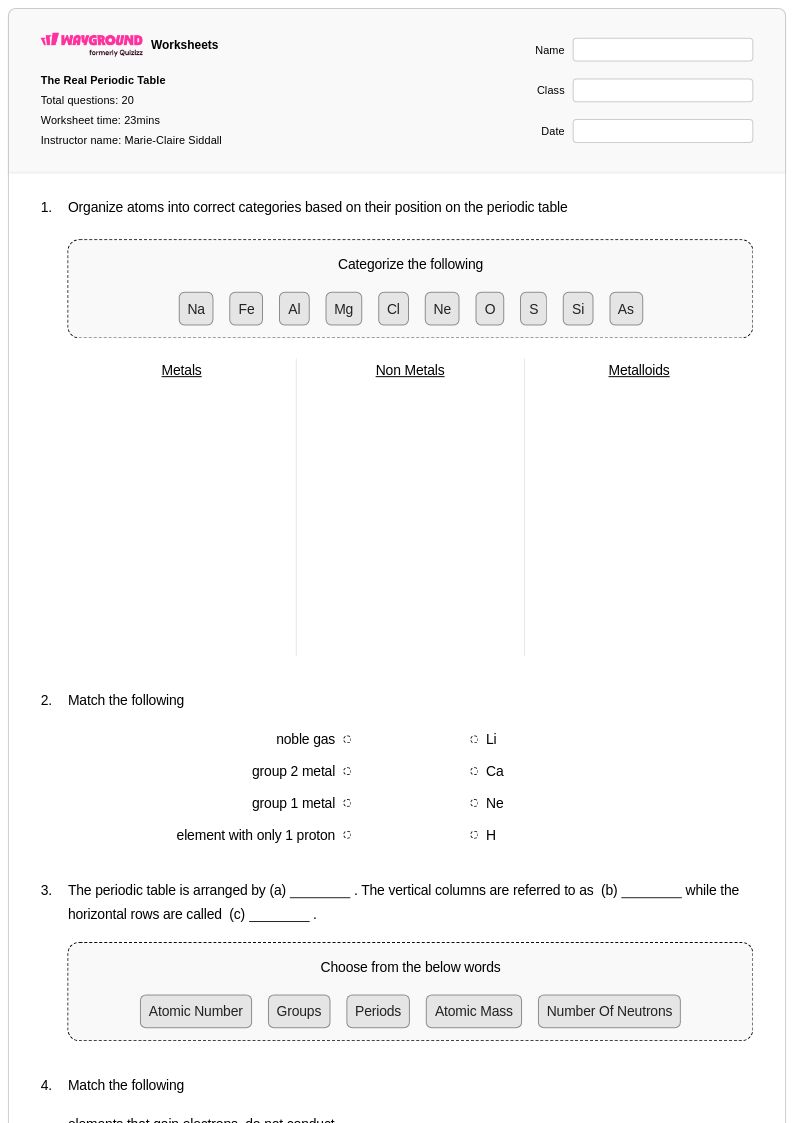
20 Q
10th
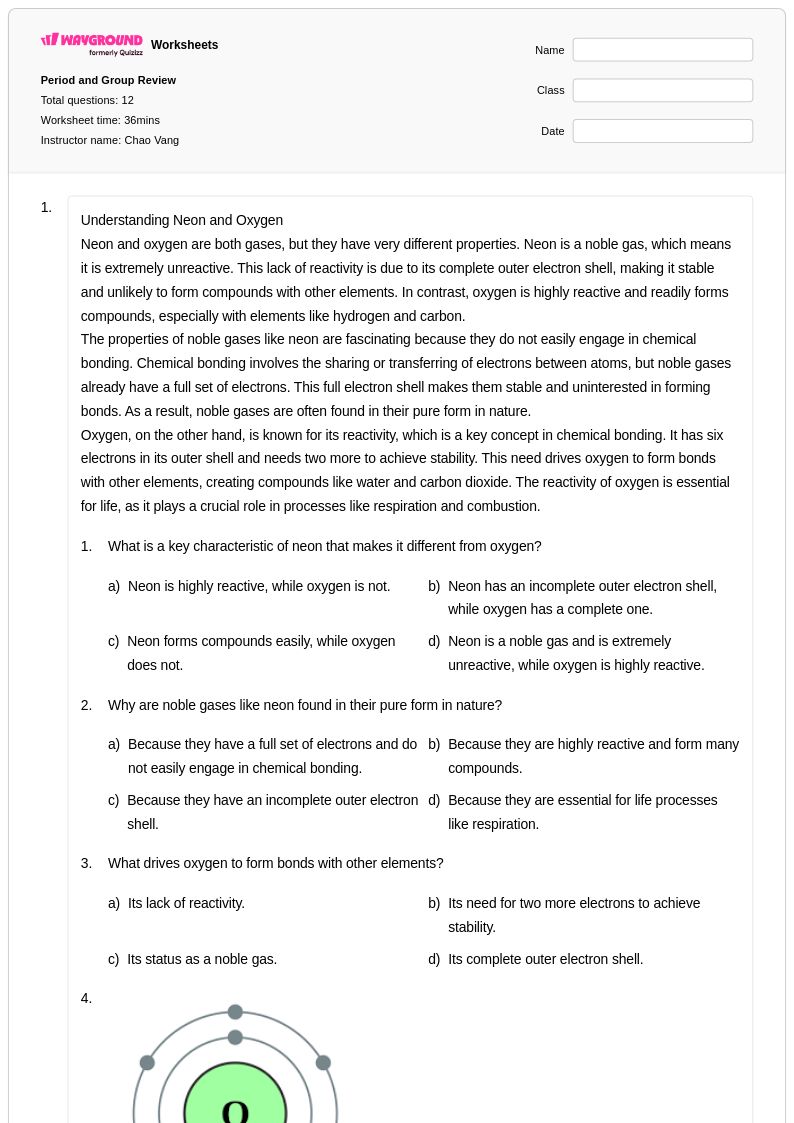
23 Q
10th
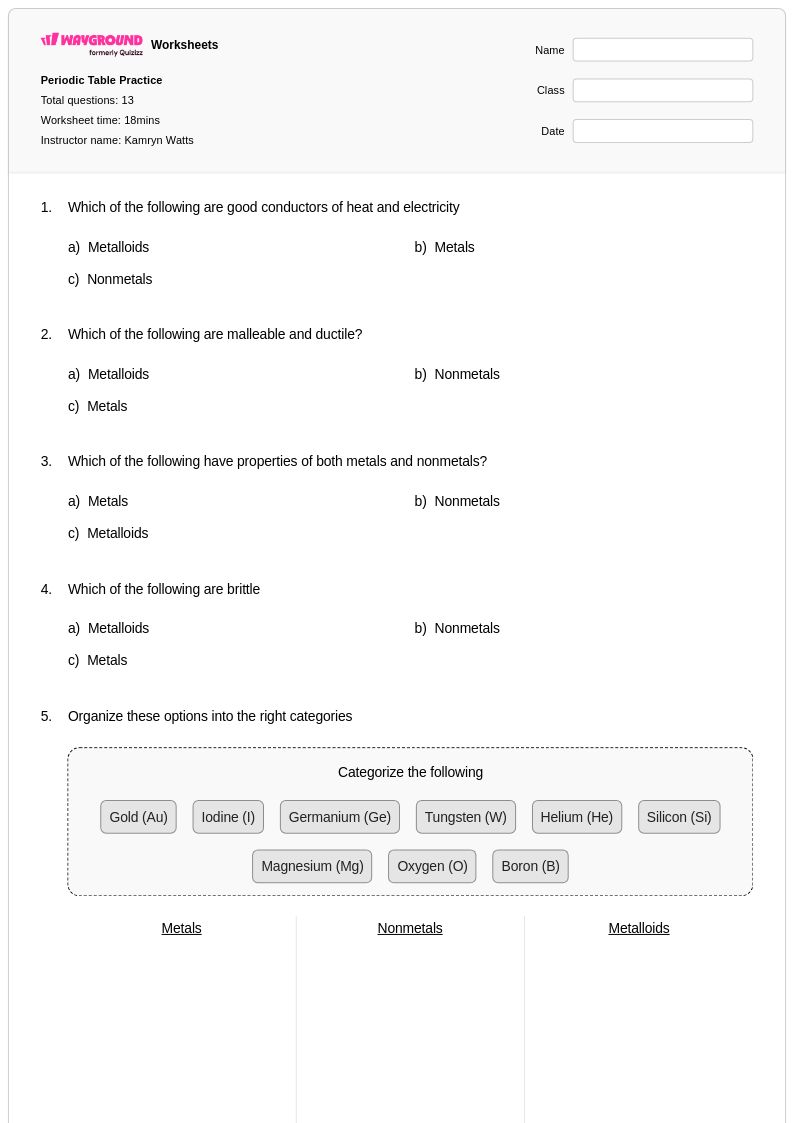
13 Q
9th - 12th
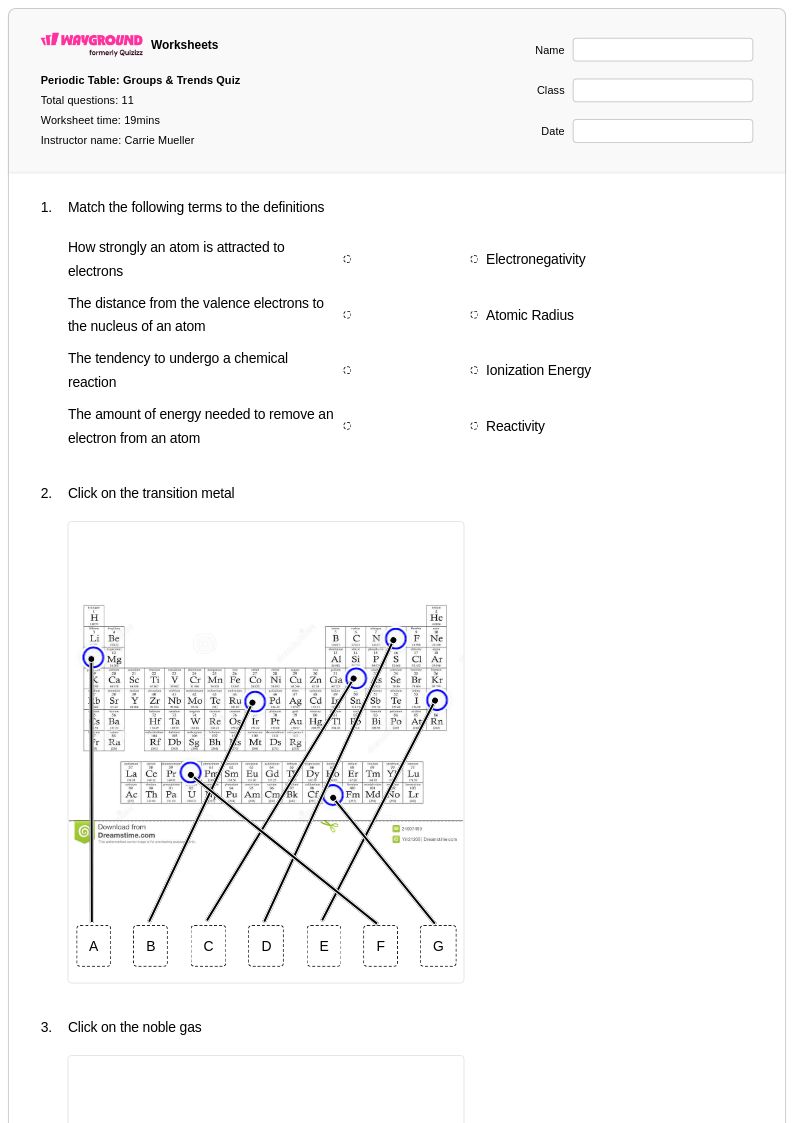
11 Q
10th
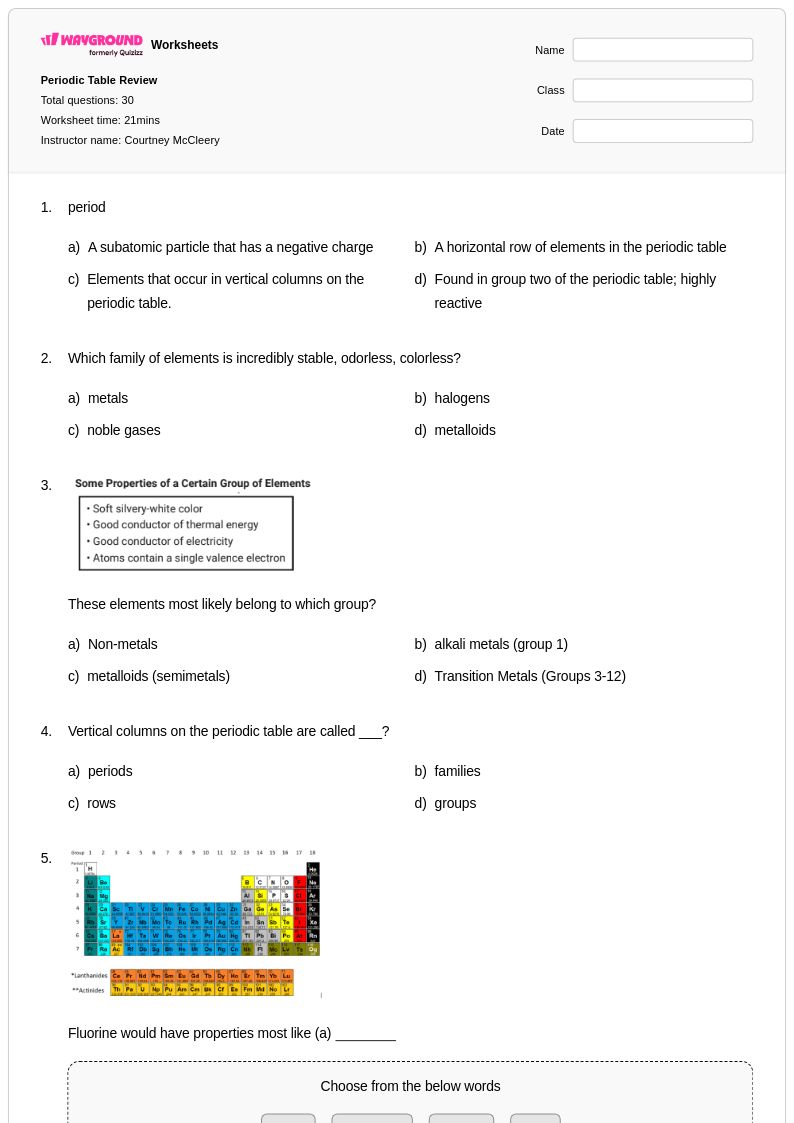
30 Q
10th
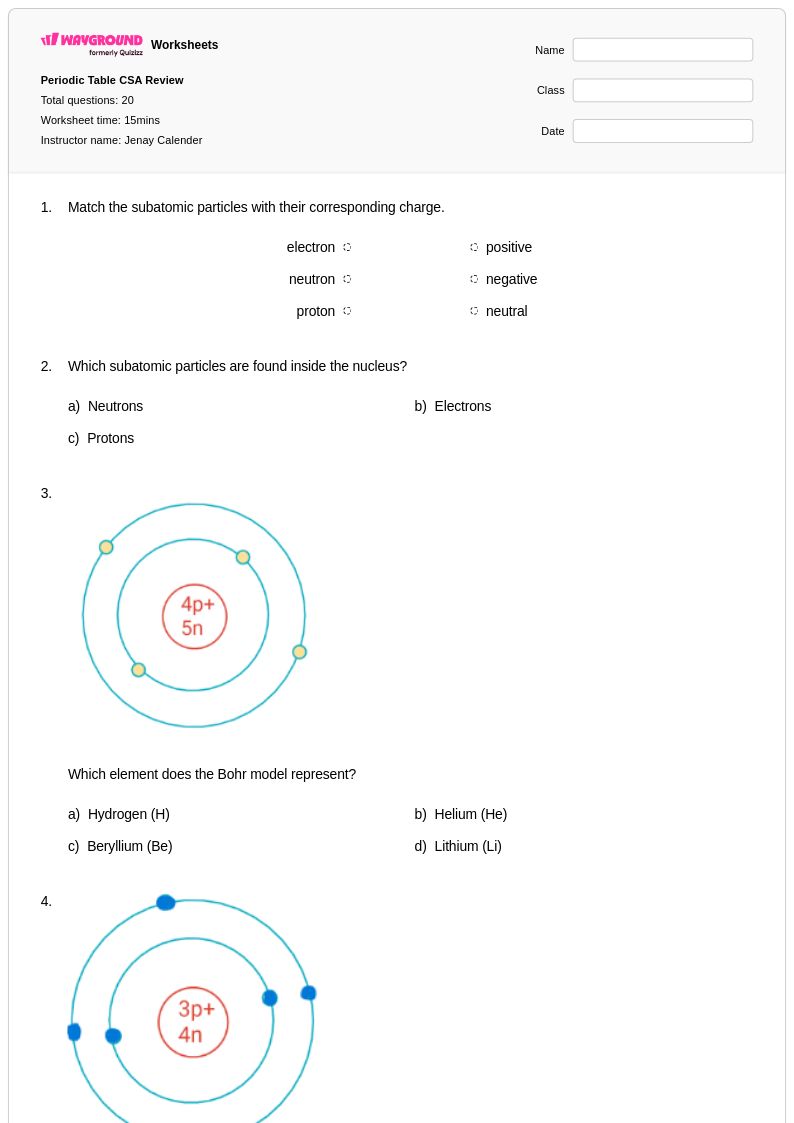
20 Q
10th
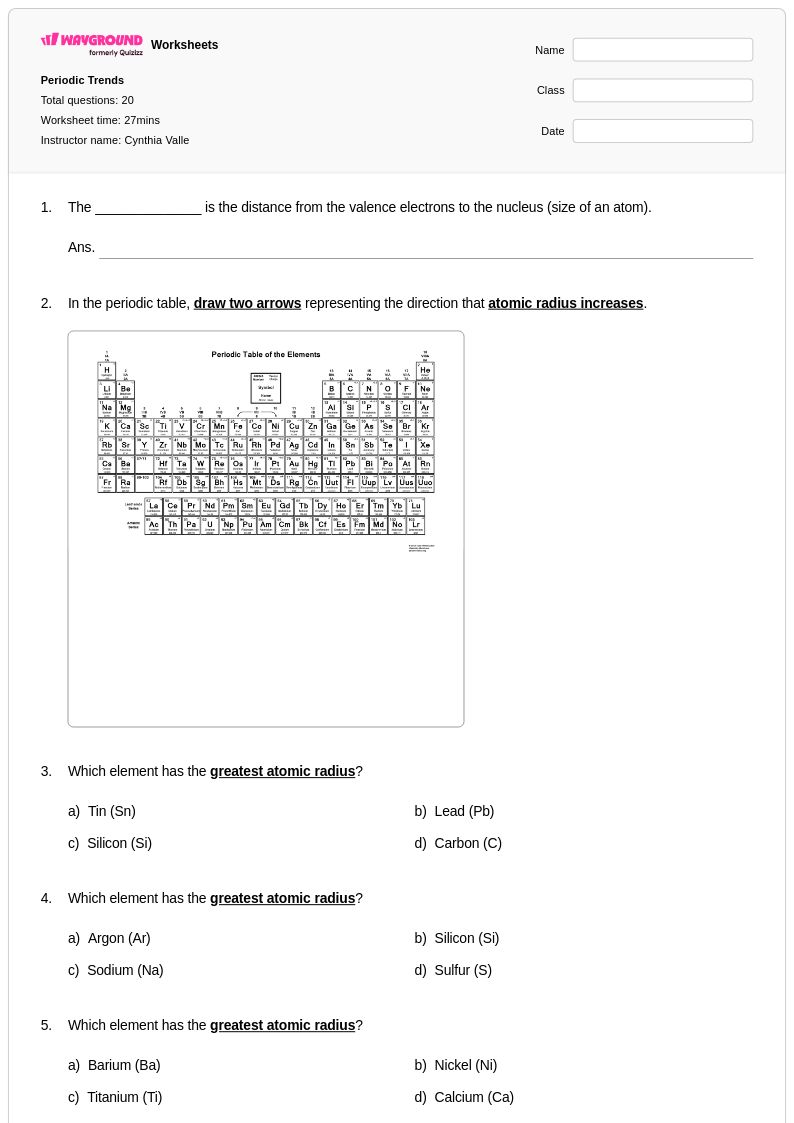
20 Q
10th
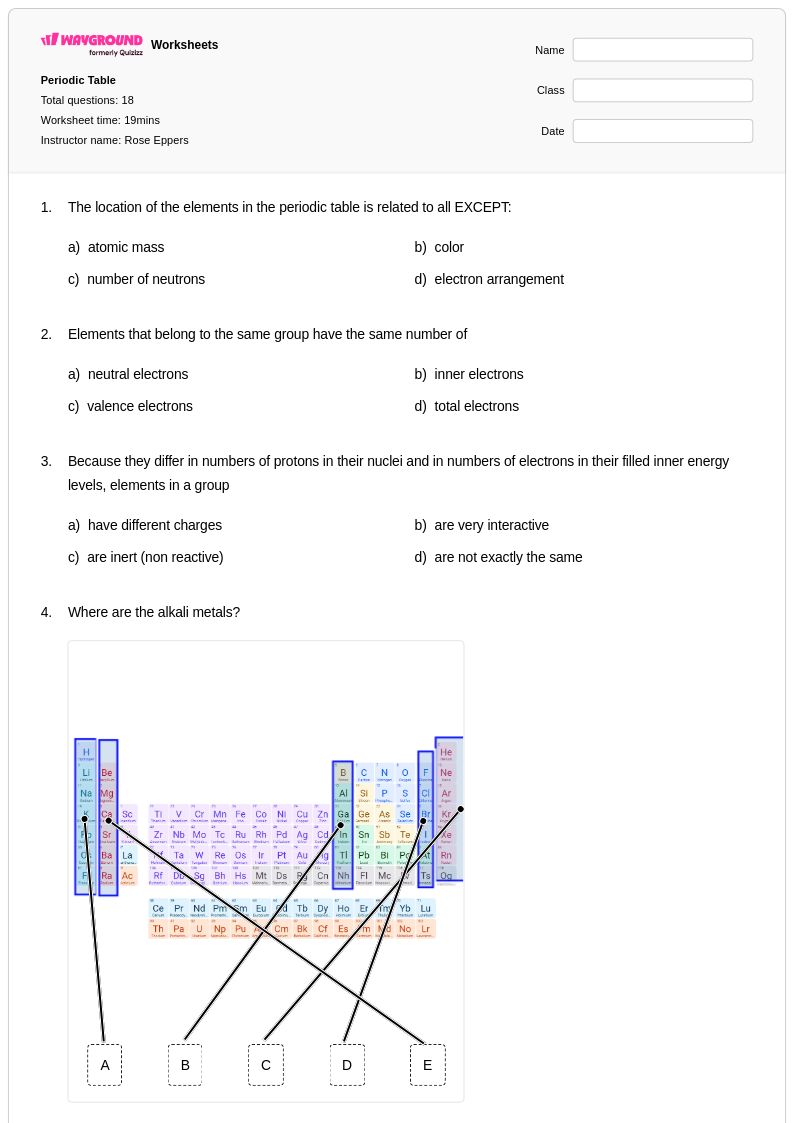
18 Q
10th
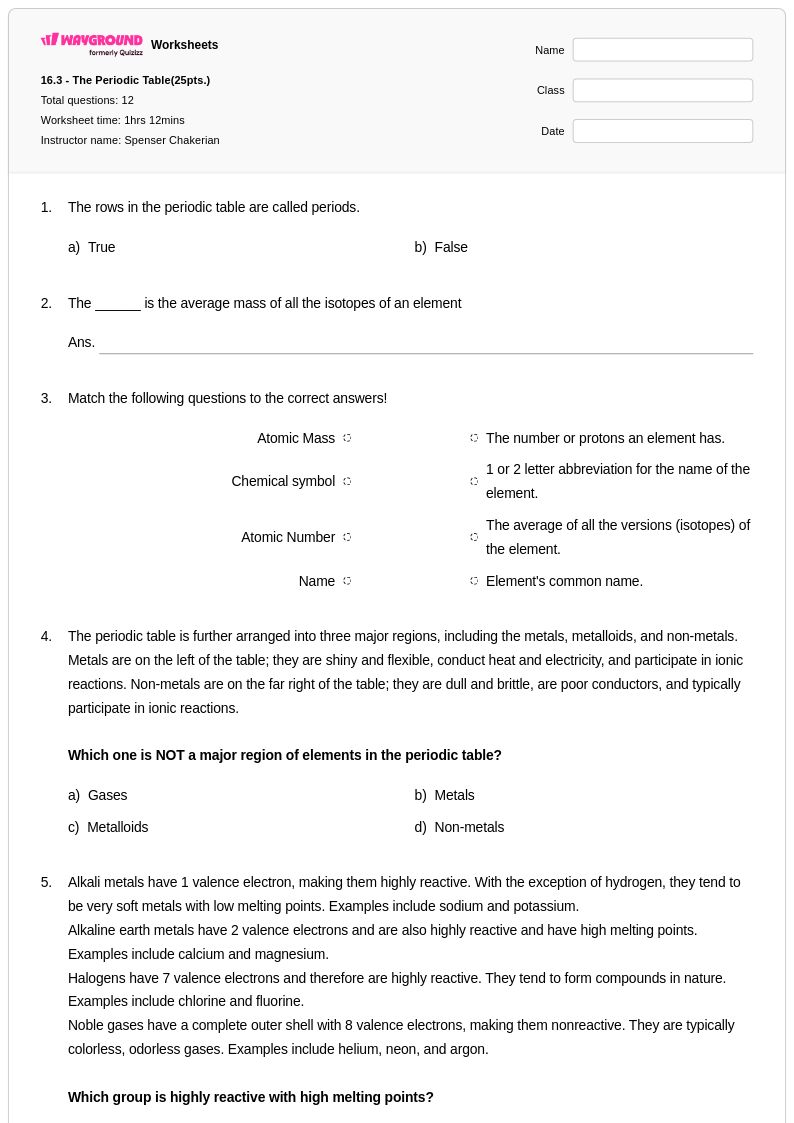
12 Q
9th - 12th
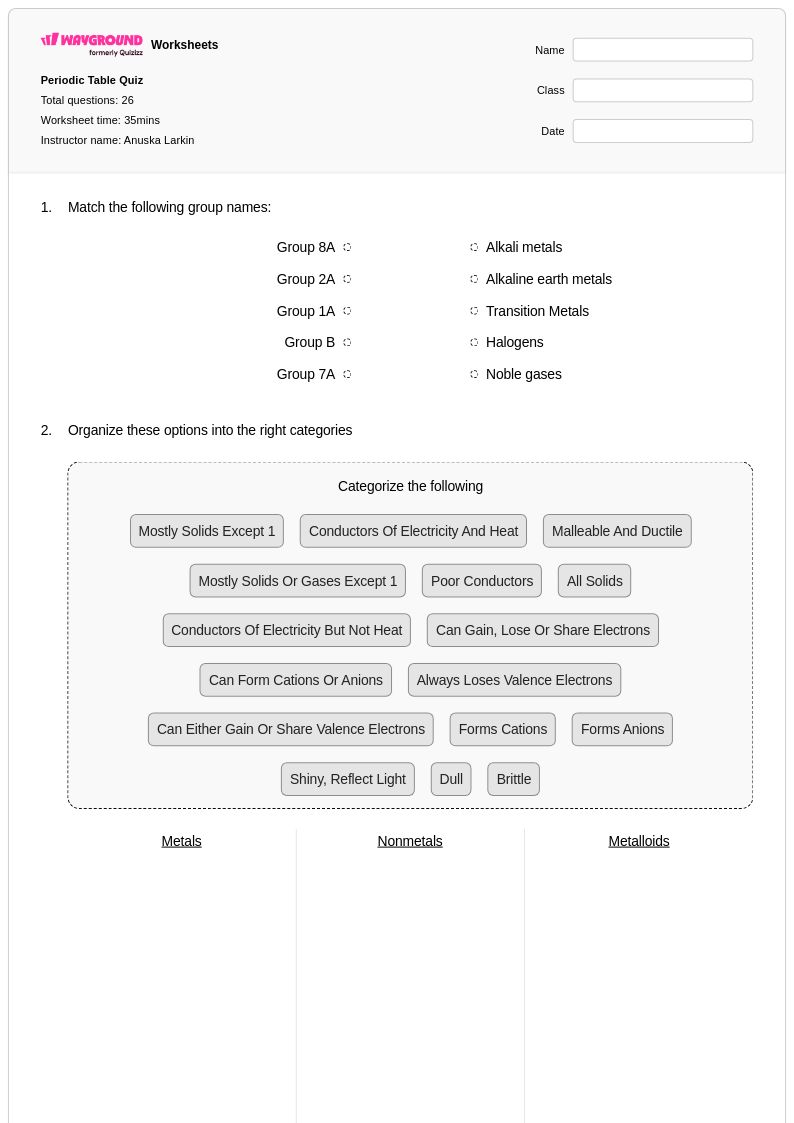
31 Q
10th
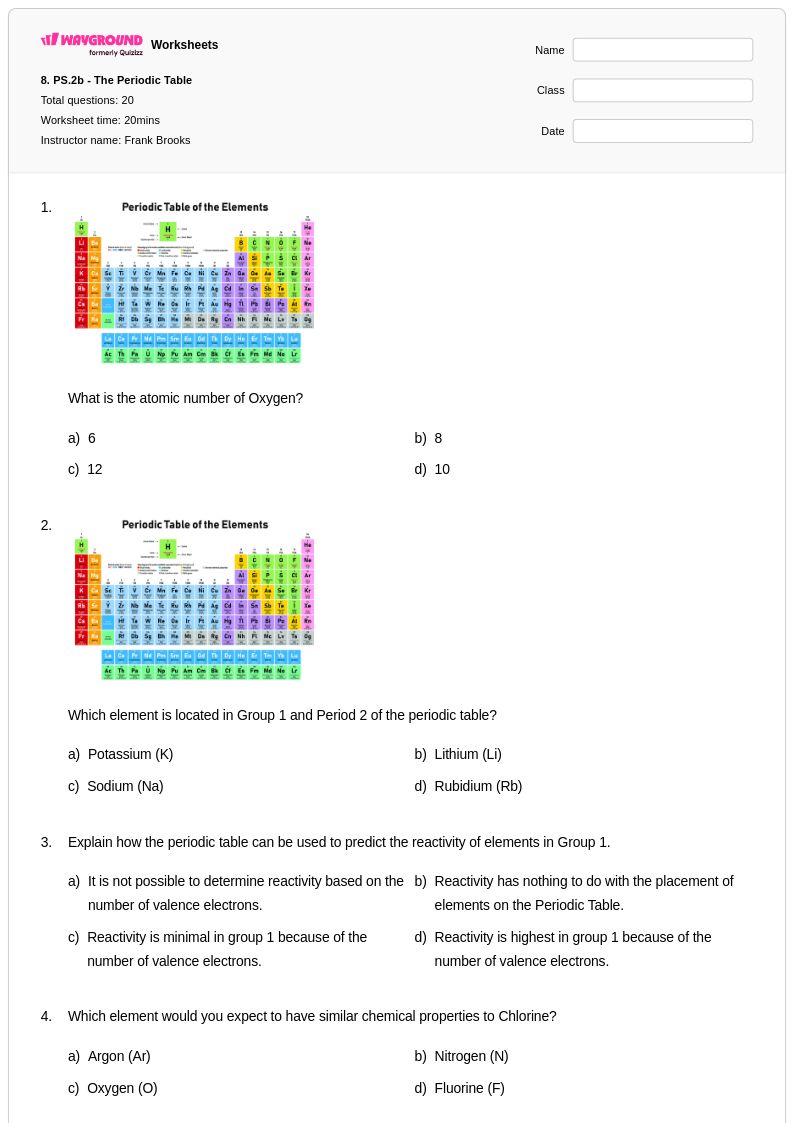
20 Q
8th - Uni
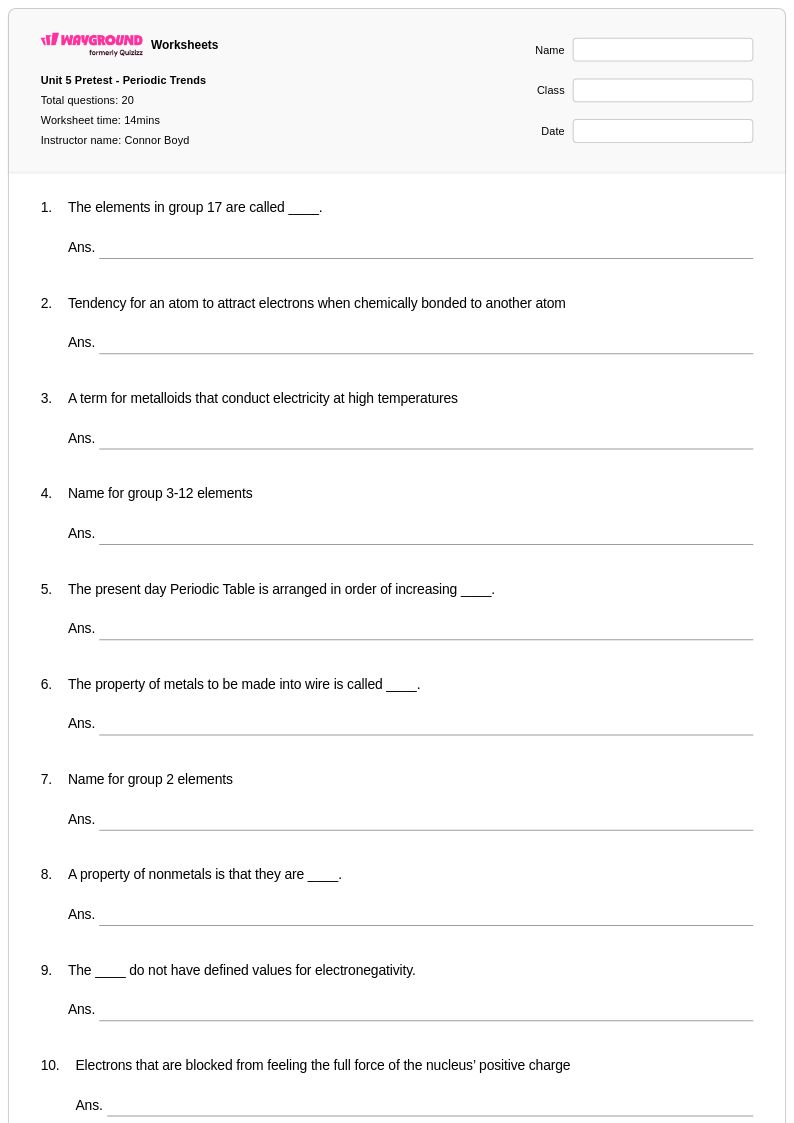
20 Q
10th
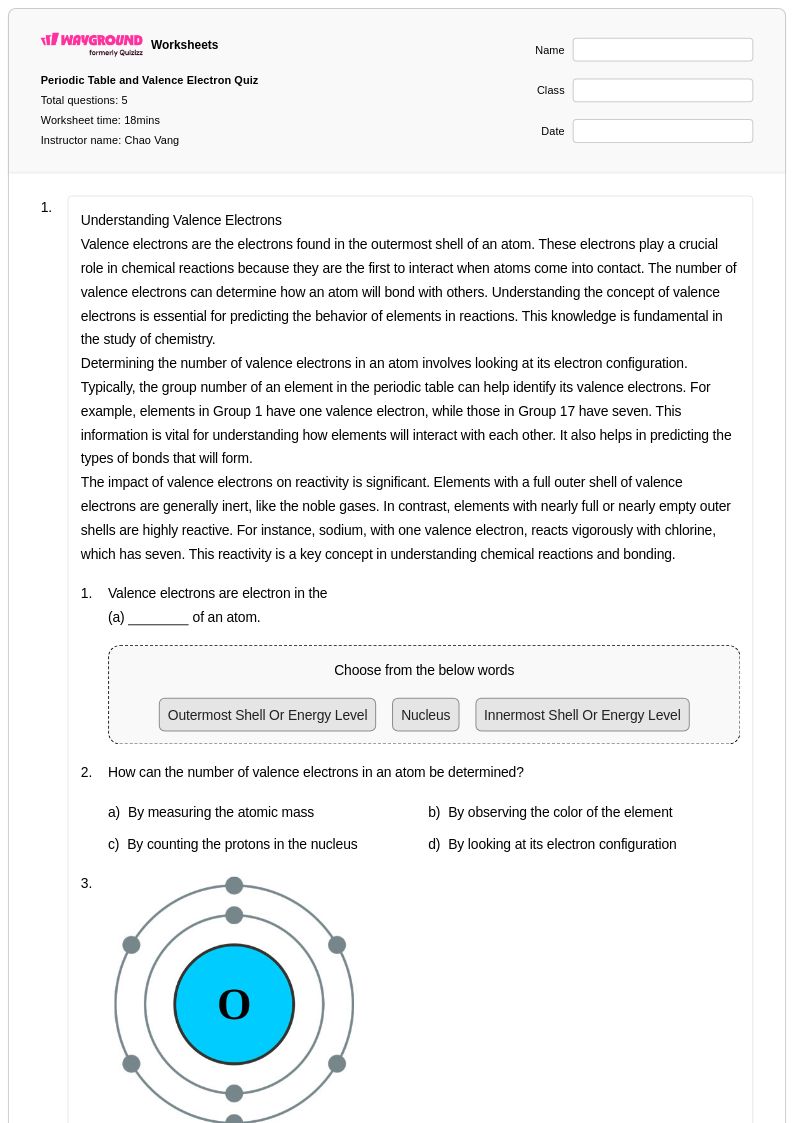
14 Q
9th - 12th
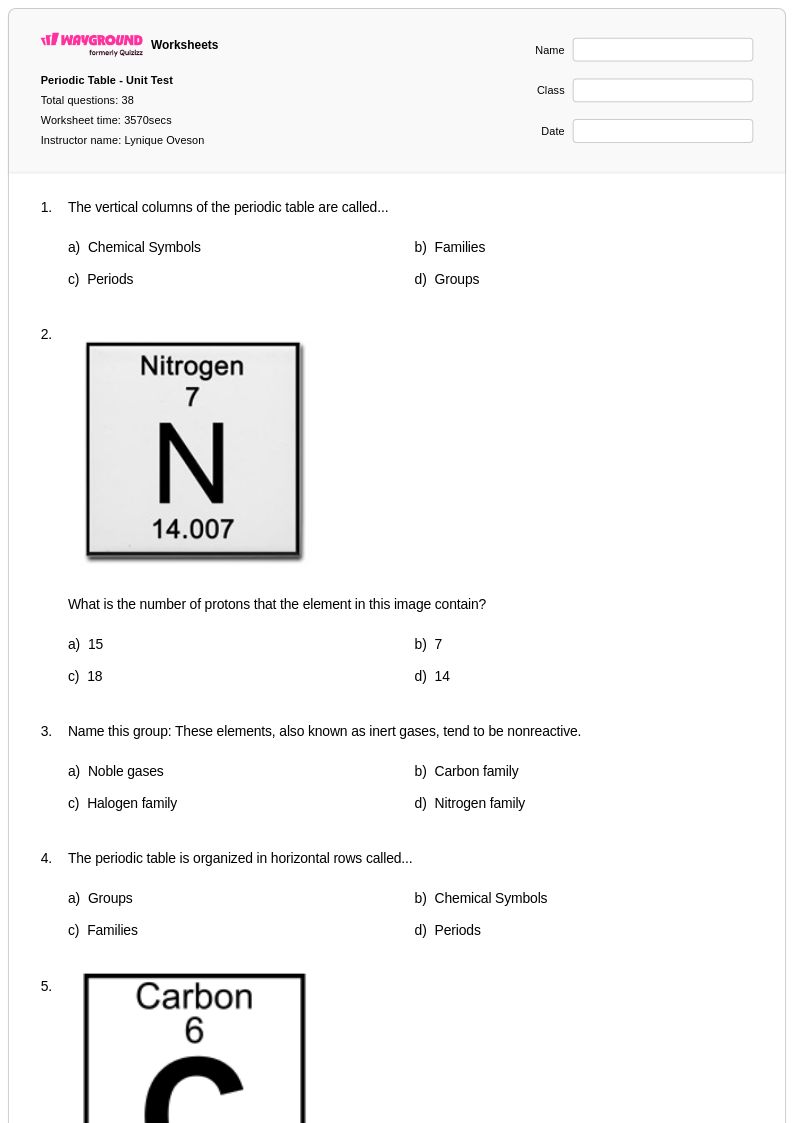
38 Q
9th - 12th
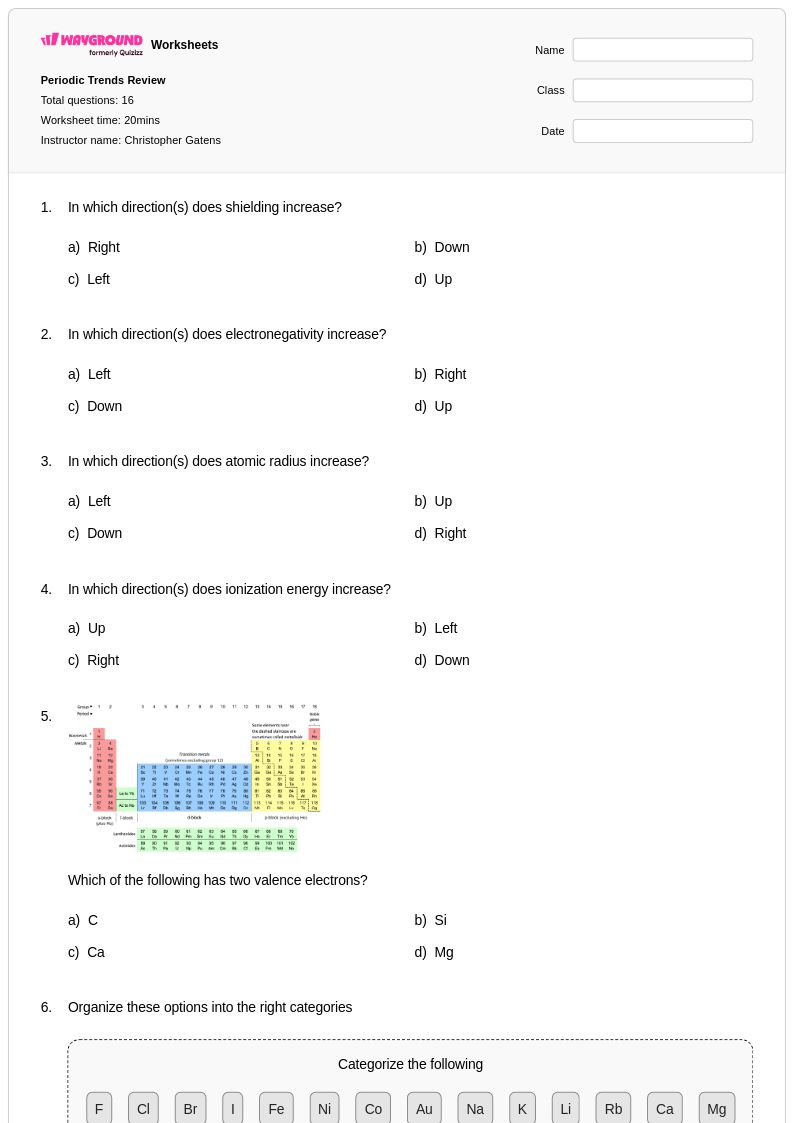
16 Q
9th - 12th
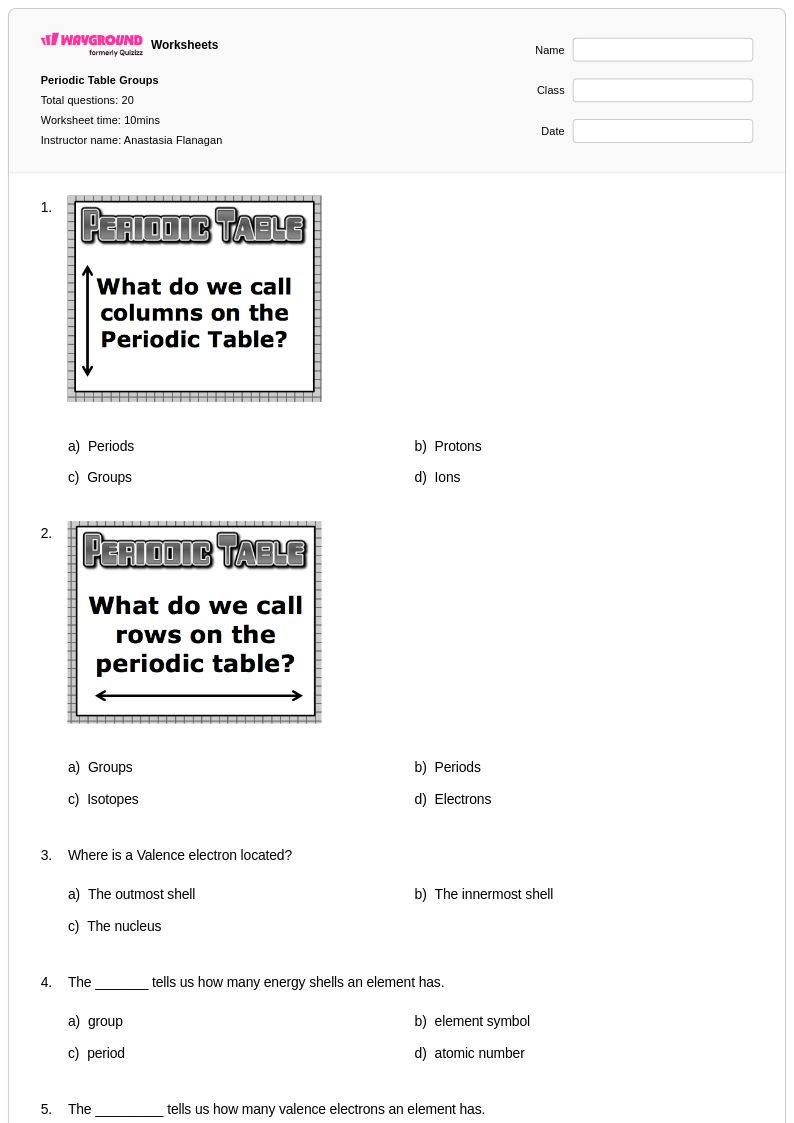
20 Q
9th - 10th
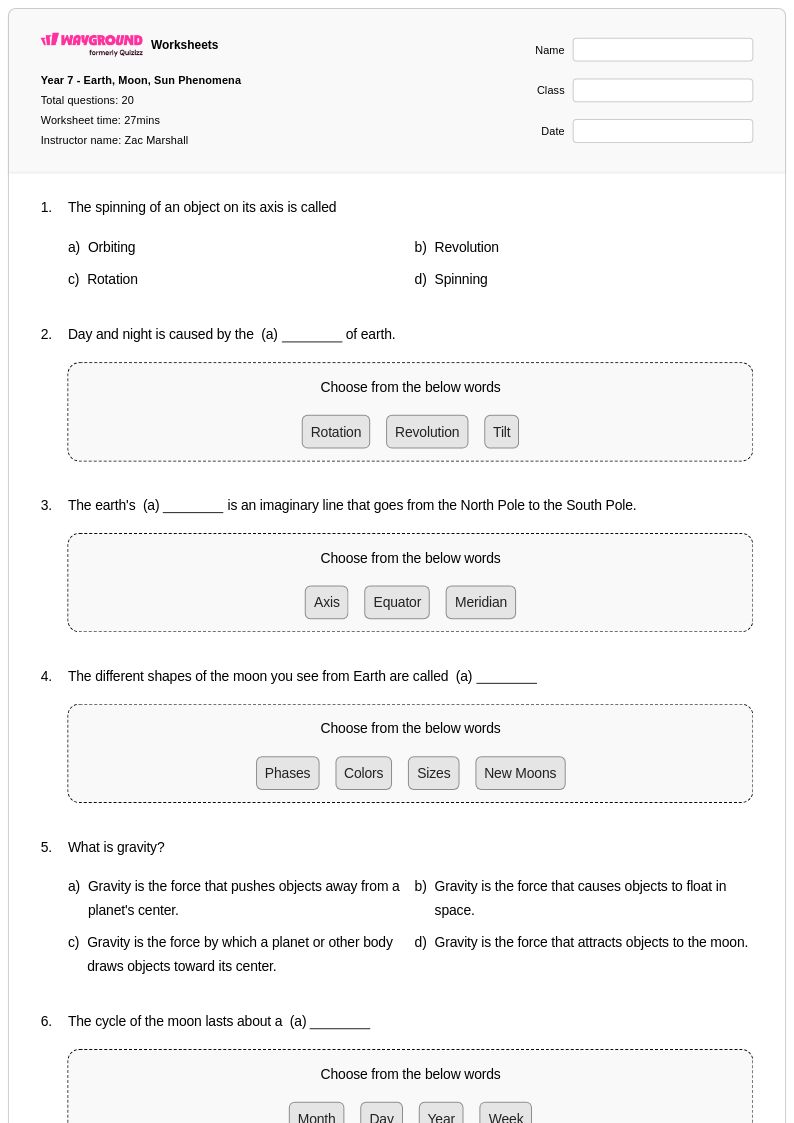
20 Q
9th - 12th
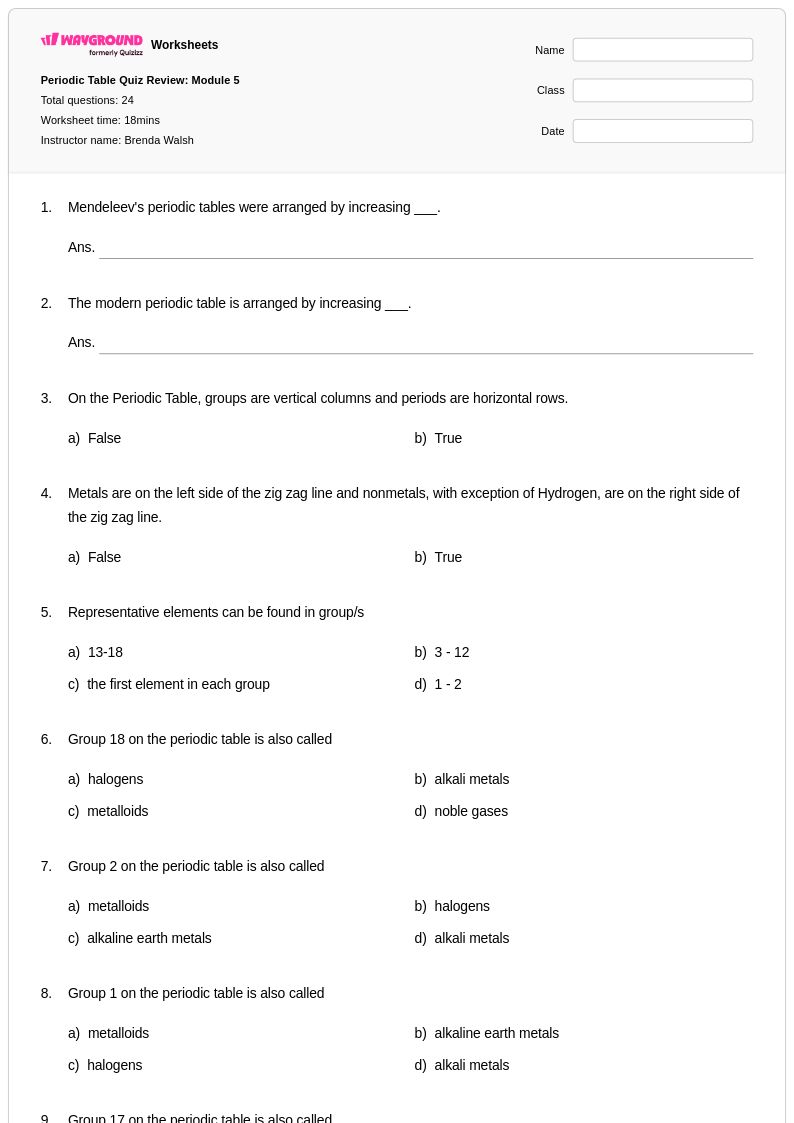
24 Q
10th - 12th
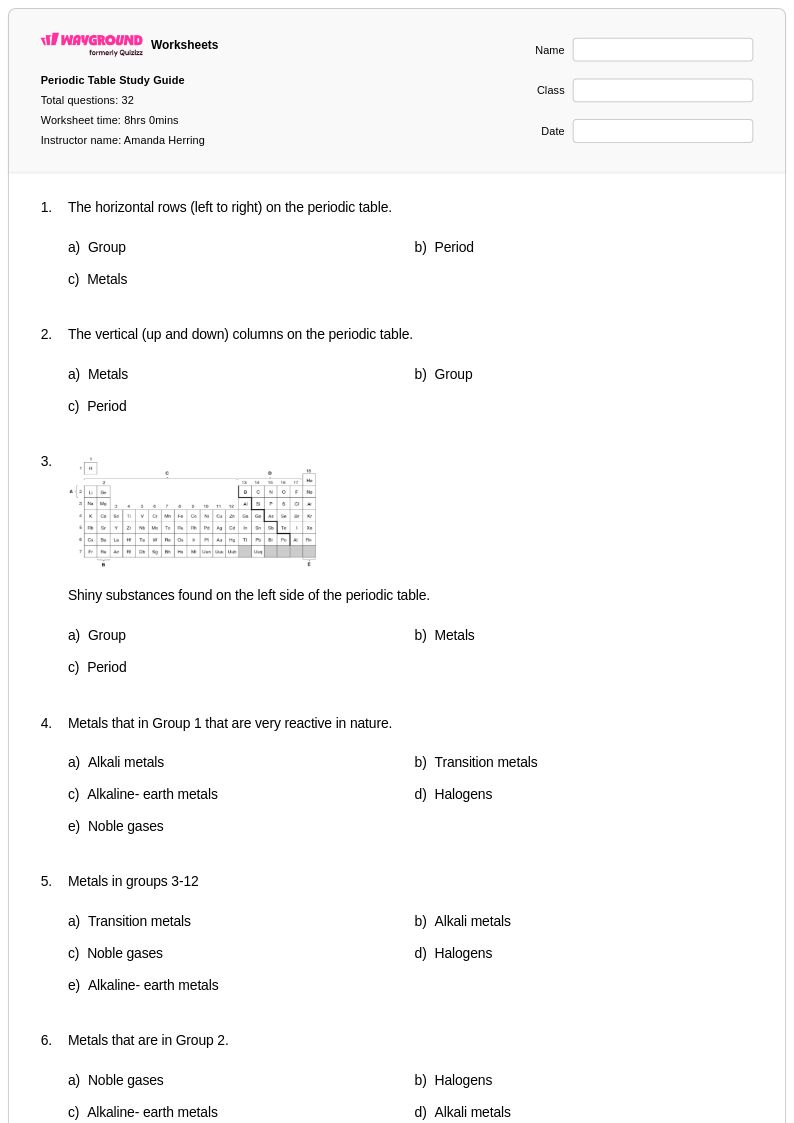
32 Q
9th - 12th
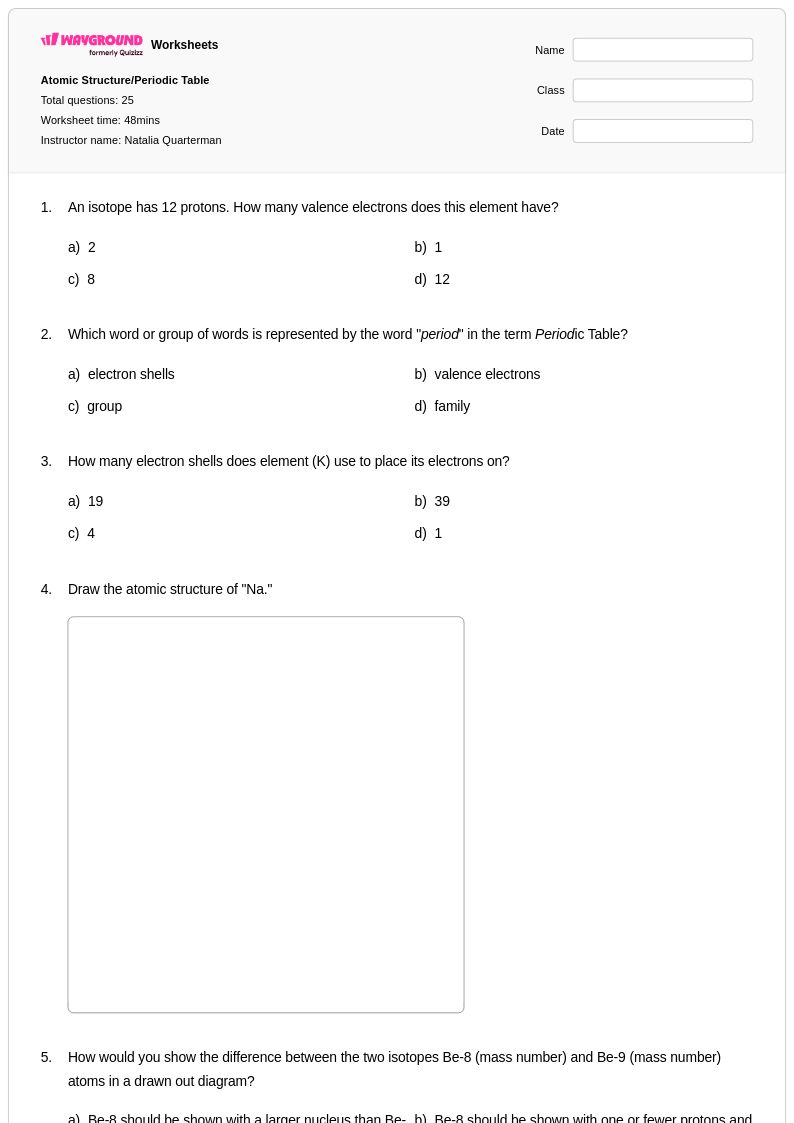
25 Q
10th
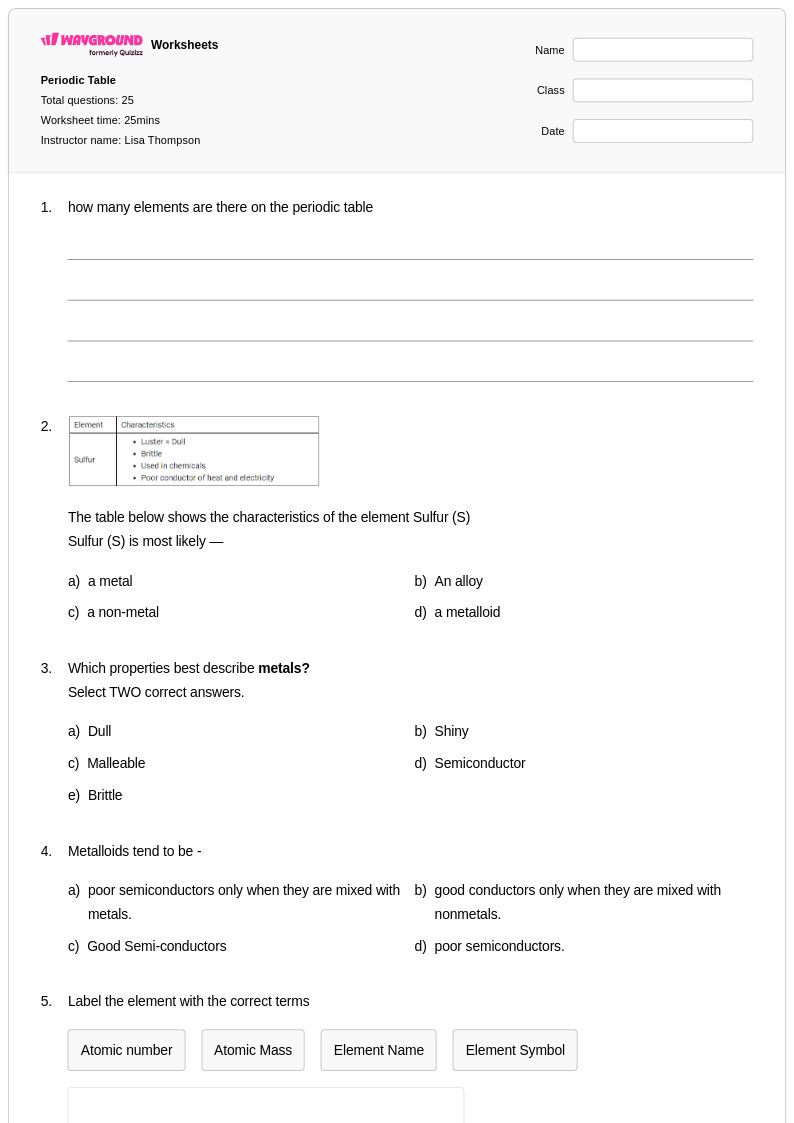
25 Q
6th - Uni
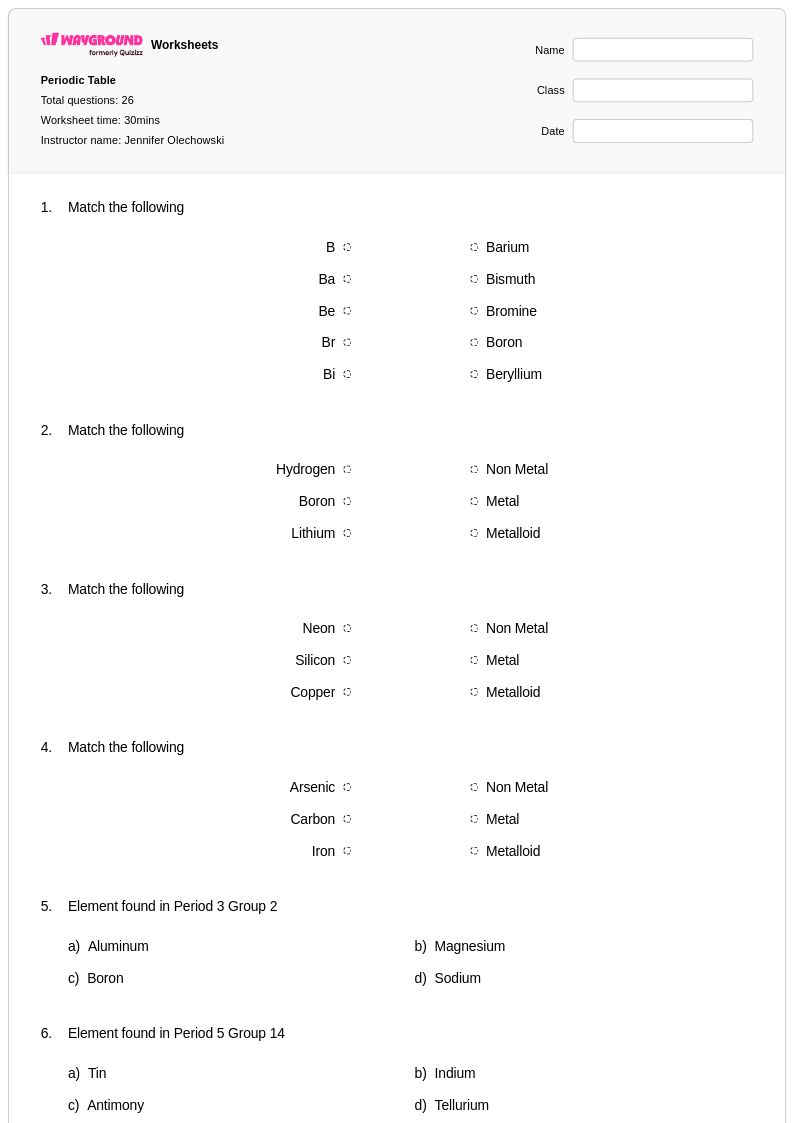
26 Q
9th - 12th
Explore Periodic Phenomena Worksheets by Grades
Explore Other Subject Worksheets for grade 10
Explore printable Periodic Phenomena worksheets for Grade 10
Periodic phenomena worksheets for Grade 10 physics students available through Wayground (formerly Quizizz) provide comprehensive coverage of oscillatory motion, wave behavior, and cyclical patterns in physical systems. These expertly designed resources strengthen students' understanding of fundamental concepts including simple harmonic motion, pendulum dynamics, wave properties such as frequency and amplitude, and the mathematical relationships governing periodic systems. Each worksheet collection includes detailed practice problems that guide students through analyzing sinusoidal functions, calculating period and frequency relationships, and interpreting graphical representations of oscillatory motion. The accompanying answer key materials support both independent study and classroom instruction, while free printable pdf formats ensure accessibility for diverse learning environments and homework assignments.
Wayground (formerly Quizizz) empowers educators with millions of teacher-created periodic phenomena resources that streamline lesson planning and enhance student engagement in Grade 10 physics curricula. The platform's robust search and filtering capabilities allow teachers to quickly locate worksheets aligned with specific learning standards and differentiate instruction based on individual student needs. Customization tools enable educators to modify existing materials or create personalized practice sets, while both digital and printable pdf formats provide flexibility for various classroom configurations and remote learning scenarios. These comprehensive worksheet collections support targeted remediation for struggling students, enrichment opportunities for advanced learners, and systematic skill practice that reinforces mastery of periodic motion concepts, wave mechanics, and mathematical modeling of cyclical phenomena in physics.
FAQs
How do I teach periodic phenomena in a physics class?
What exercises help students practice oscillations and wave calculations?
What mistakes do students commonly make when learning periodic phenomena?
How do I differentiate periodic phenomena instruction for students at different skill levels?
How can I use periodic phenomena worksheets to assess student understanding formatively?
How do I use Wayground's periodic phenomena worksheets in my classroom?