Free Printable Newton's Third Law of Motion Worksheets for Grade 10
Grade 10 Newton's Third Law of Motion worksheets from Wayground help students master action-reaction principles through comprehensive printables, practice problems, and answer keys in convenient PDF format.
Explore printable Newton's Third Law of Motion worksheets for Grade 10
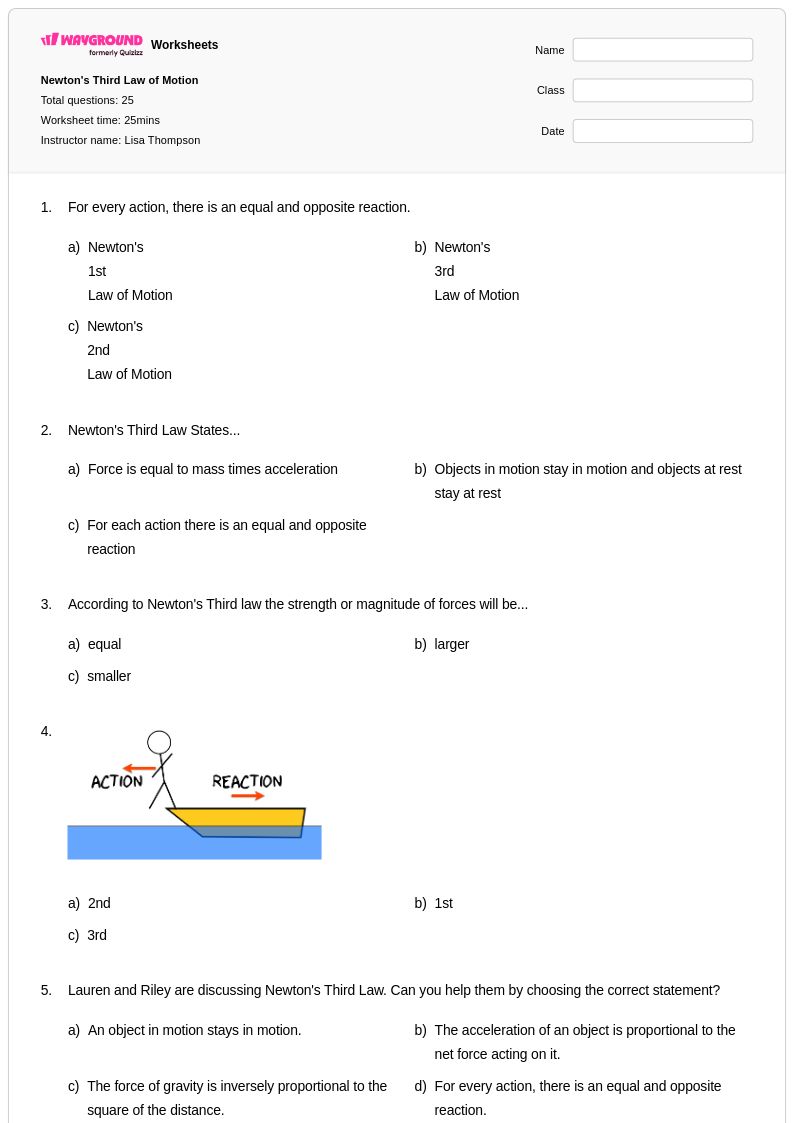
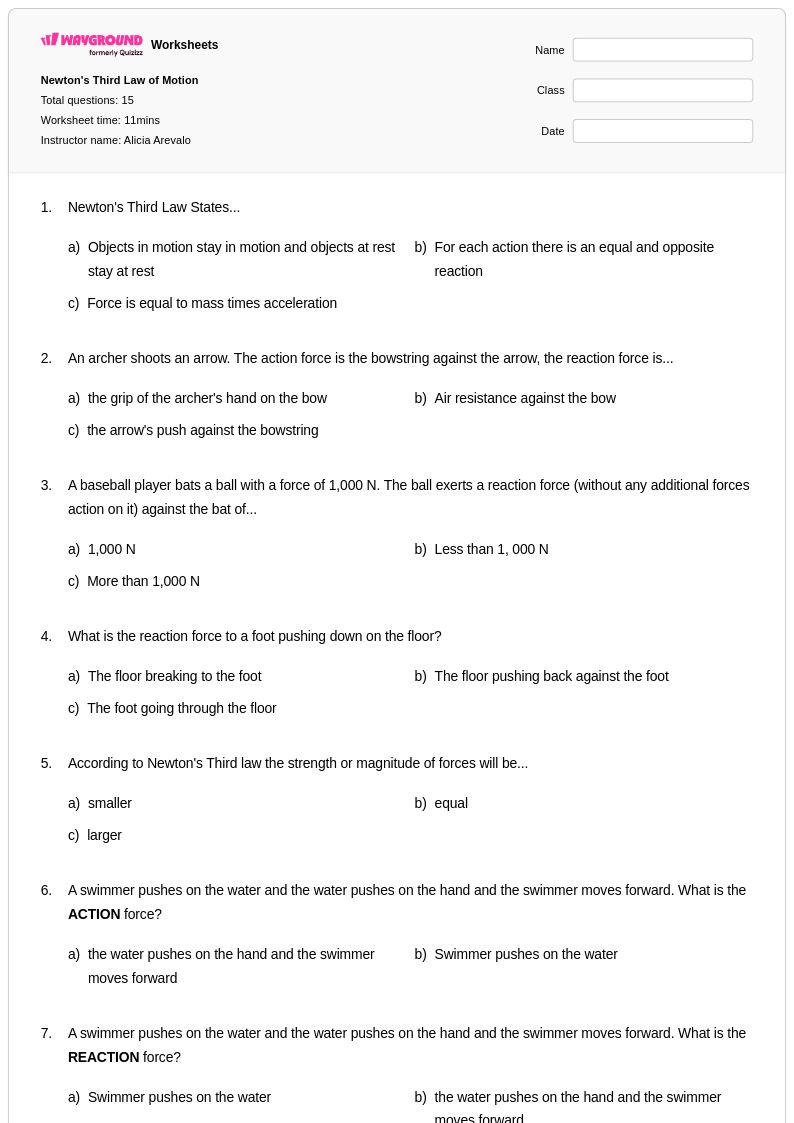
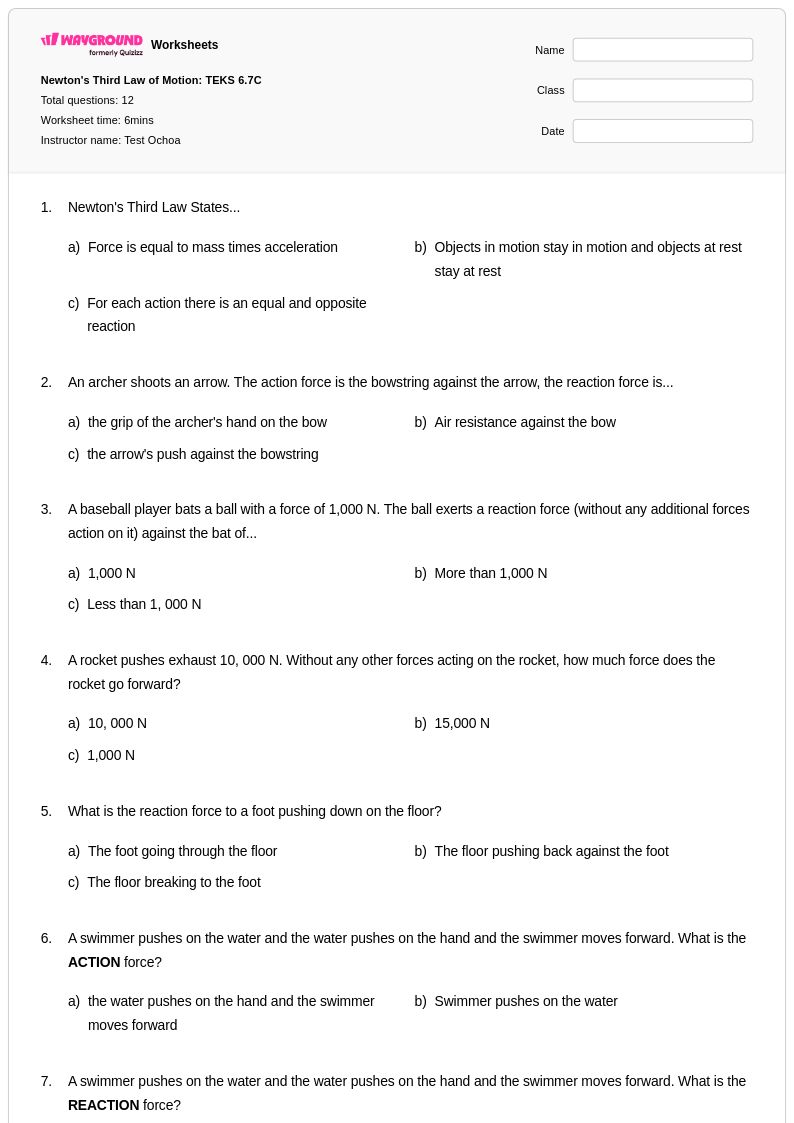
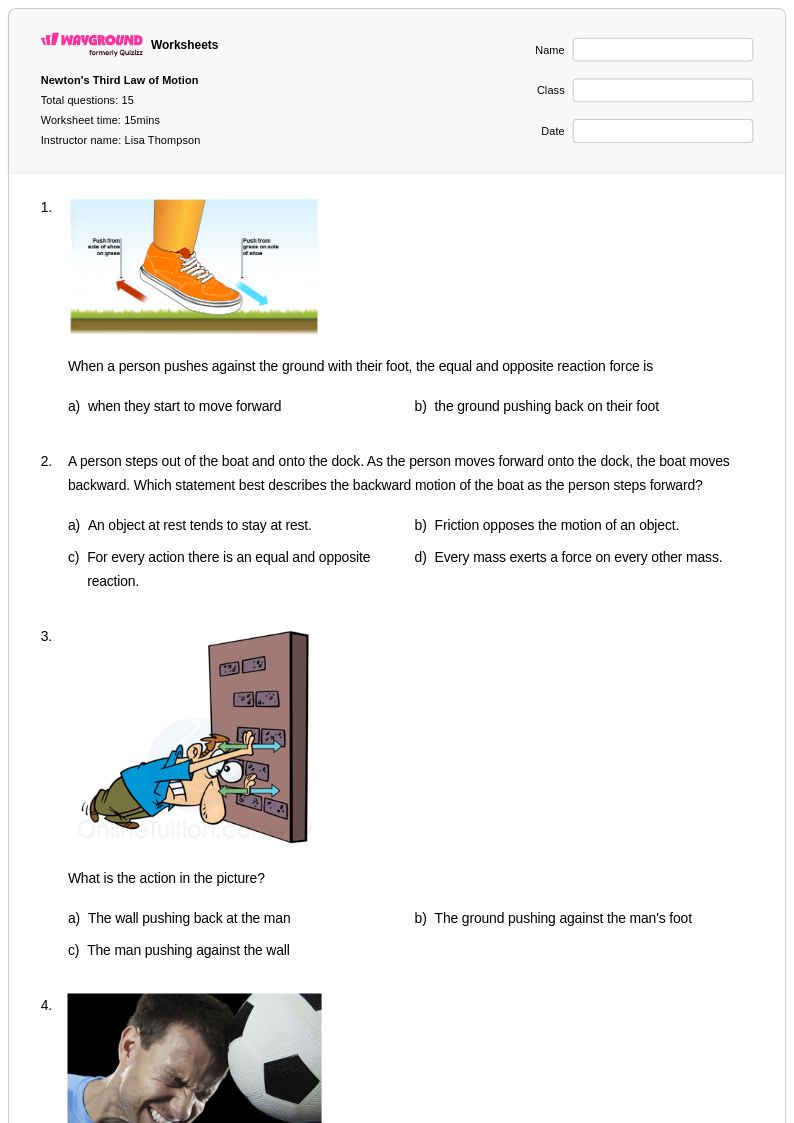
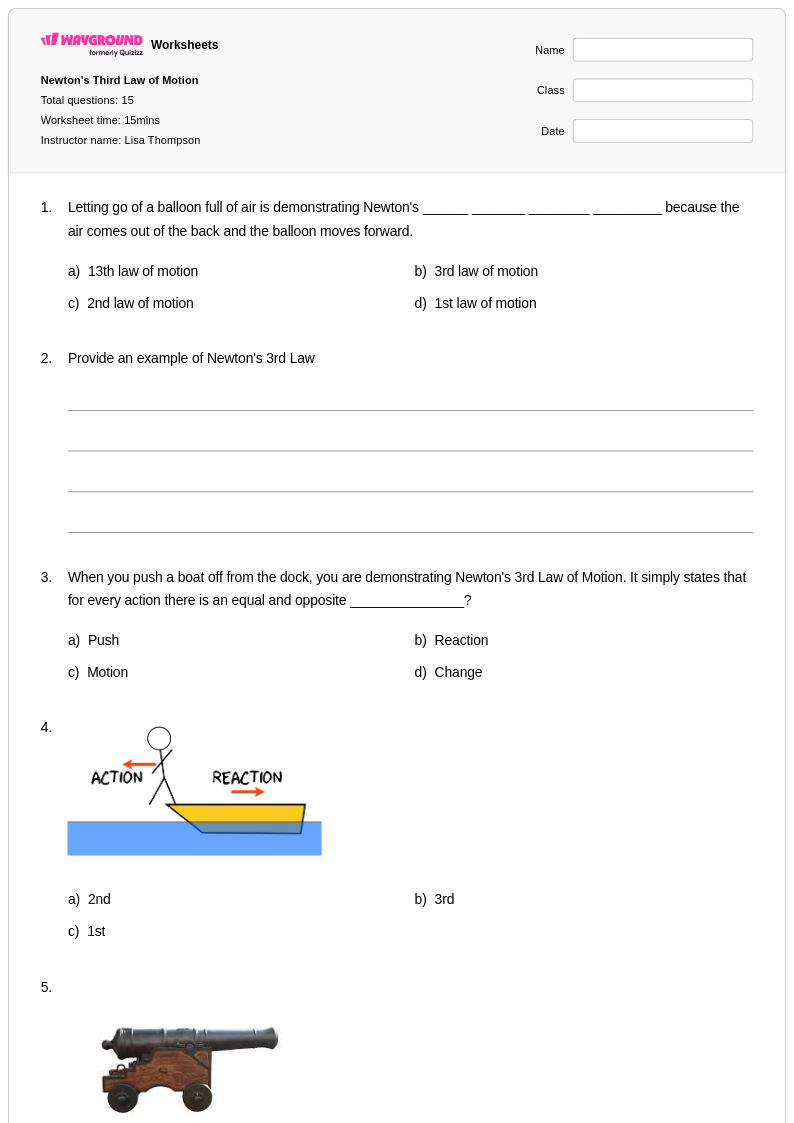
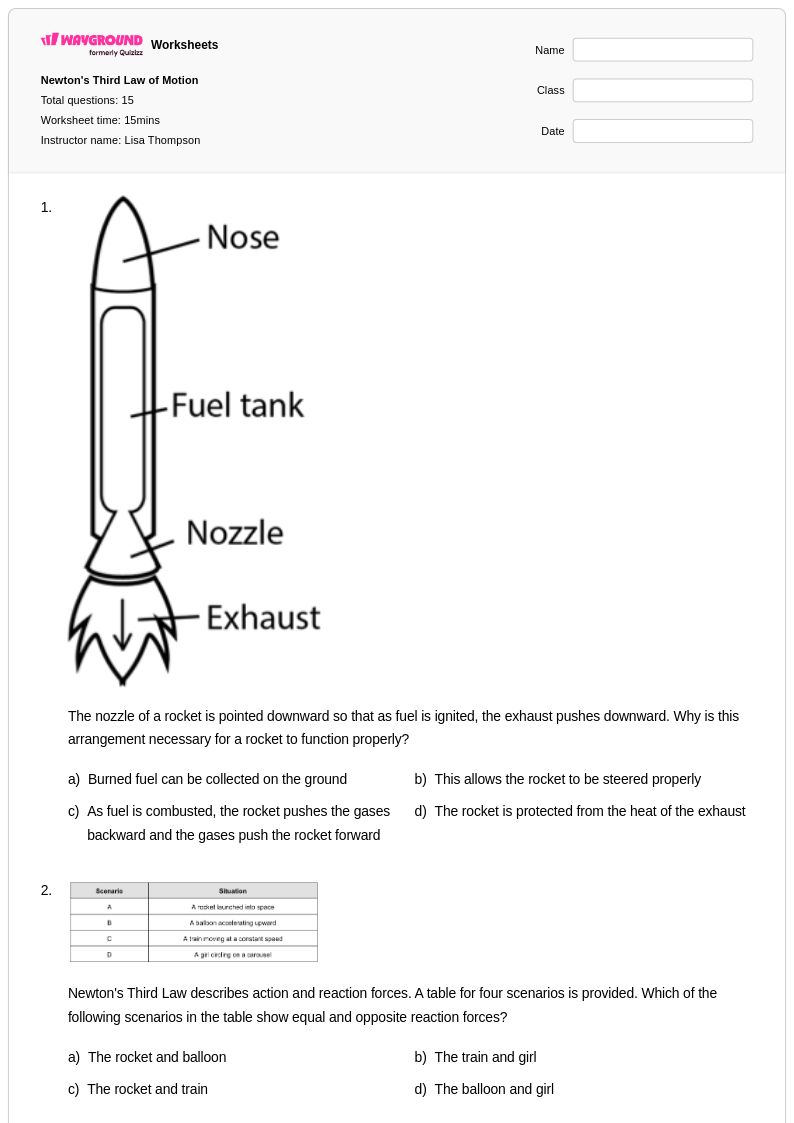
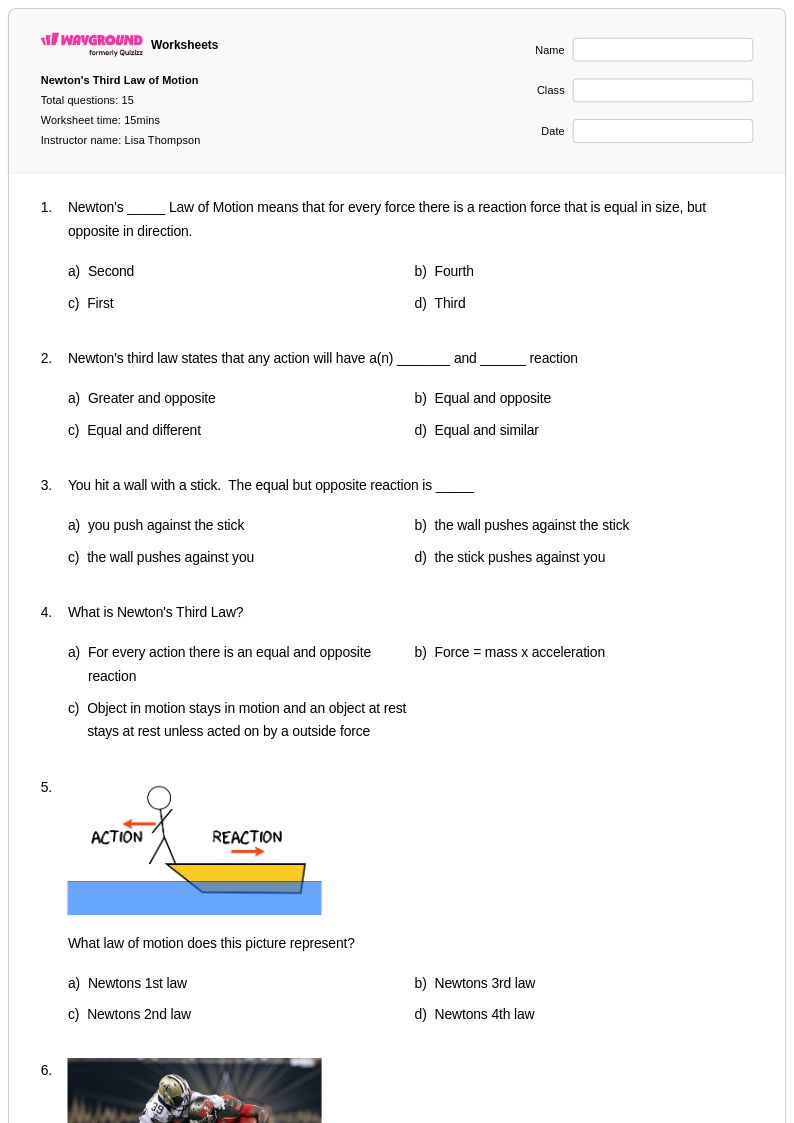
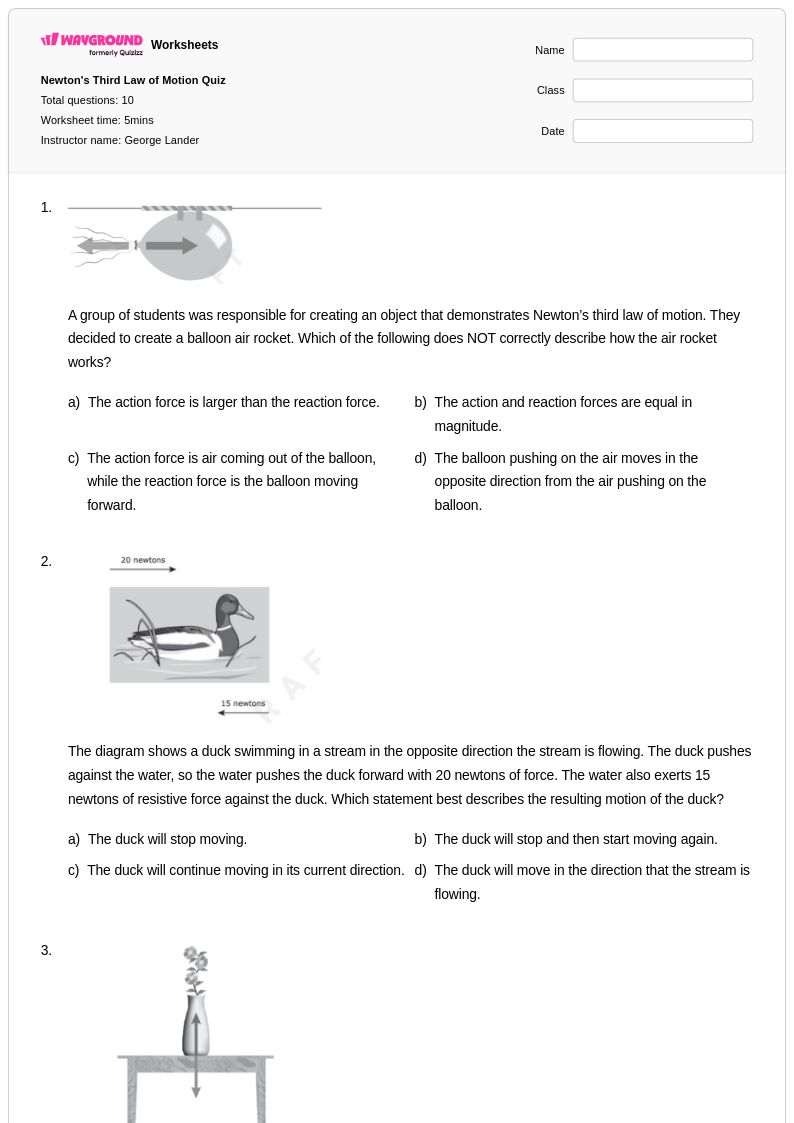
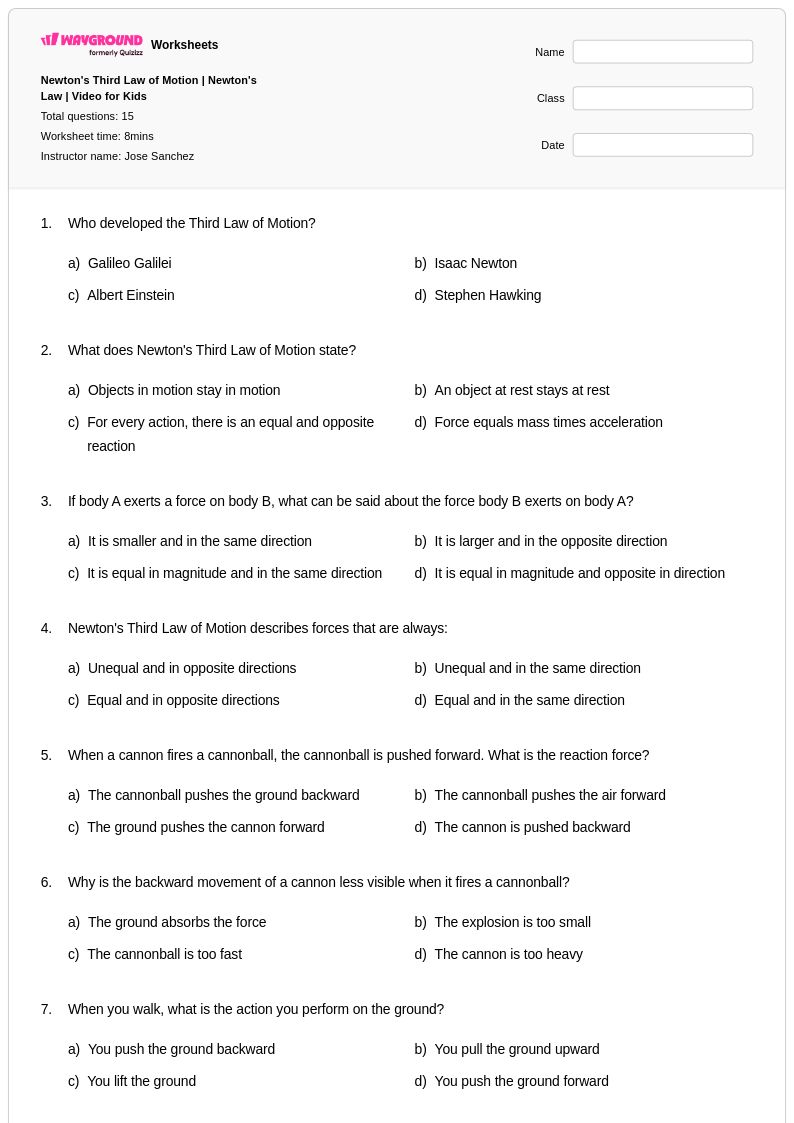
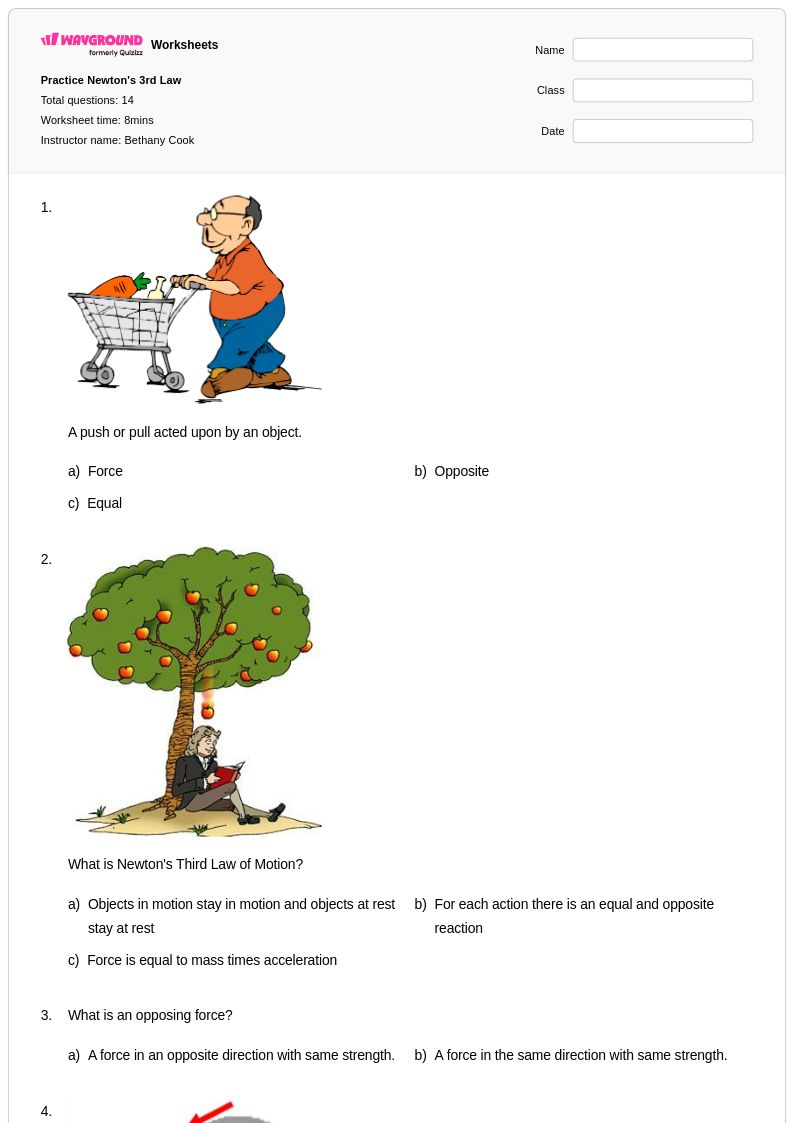
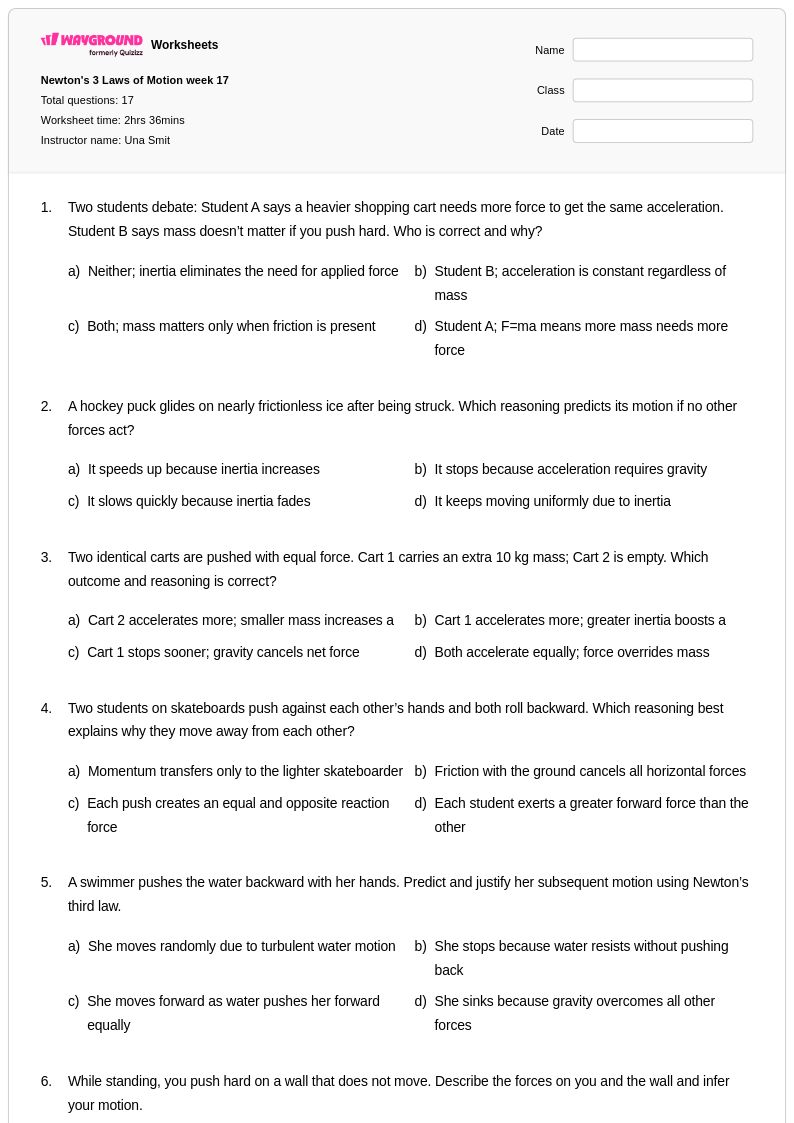
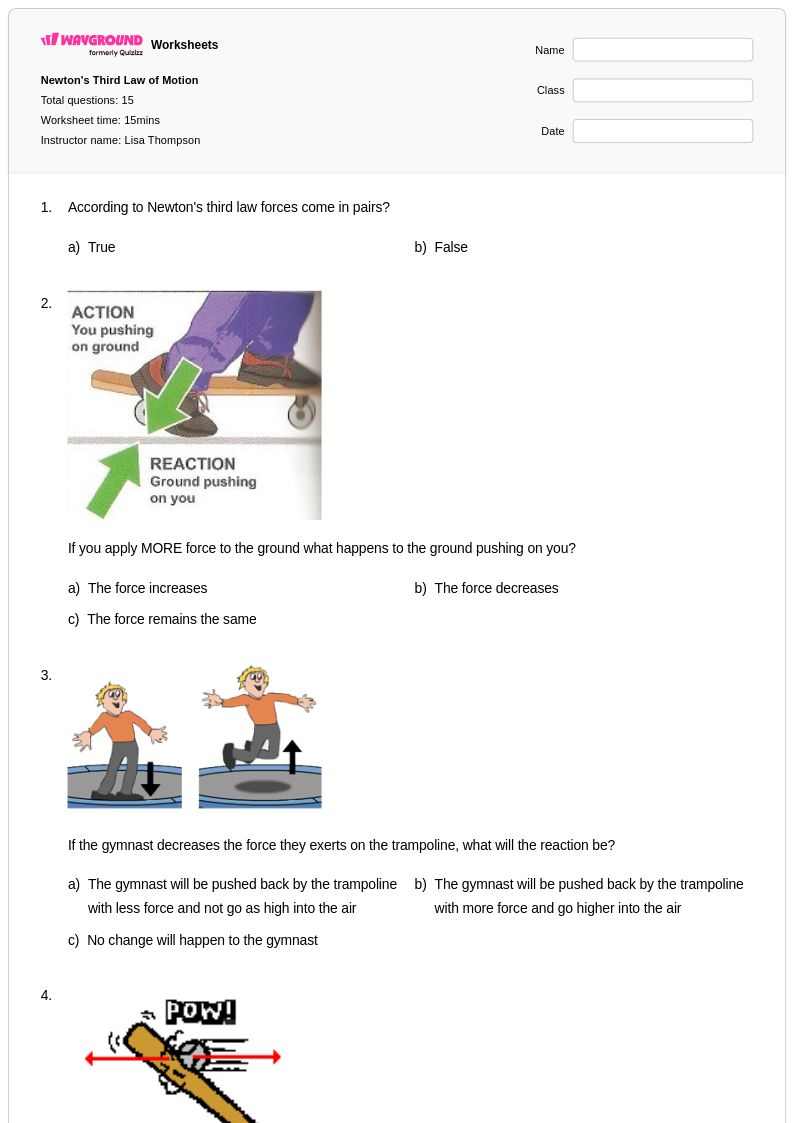
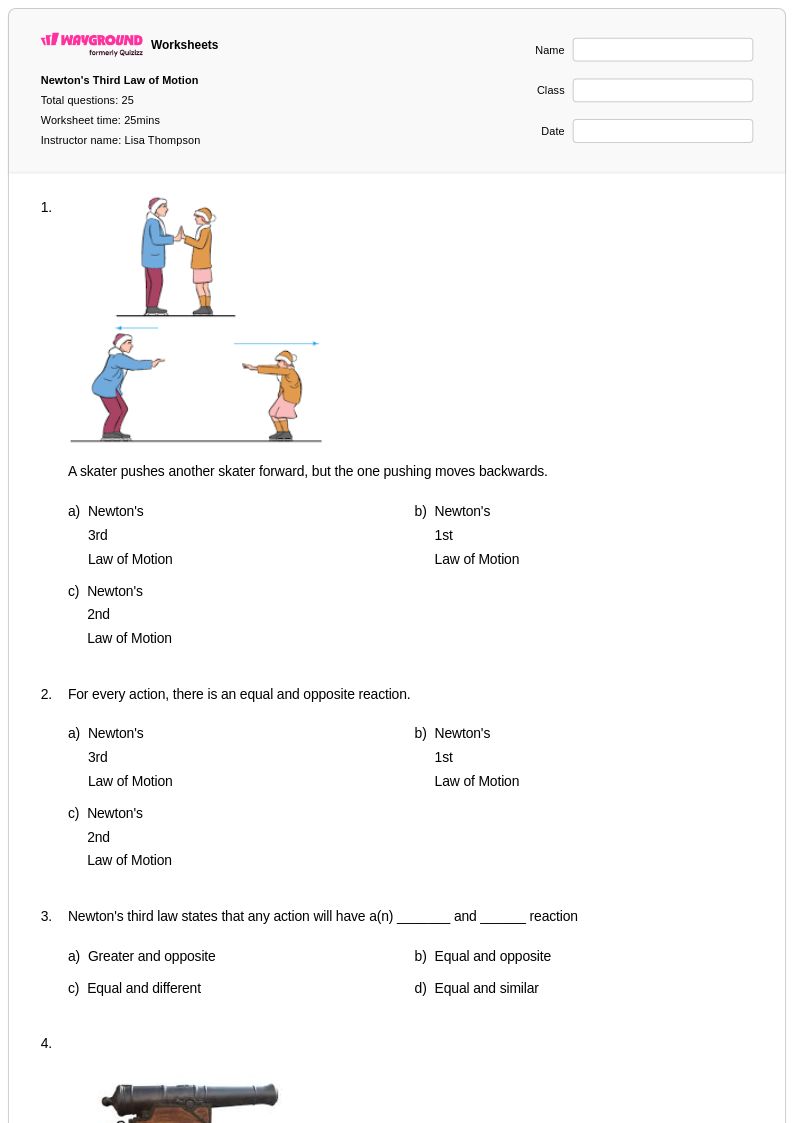
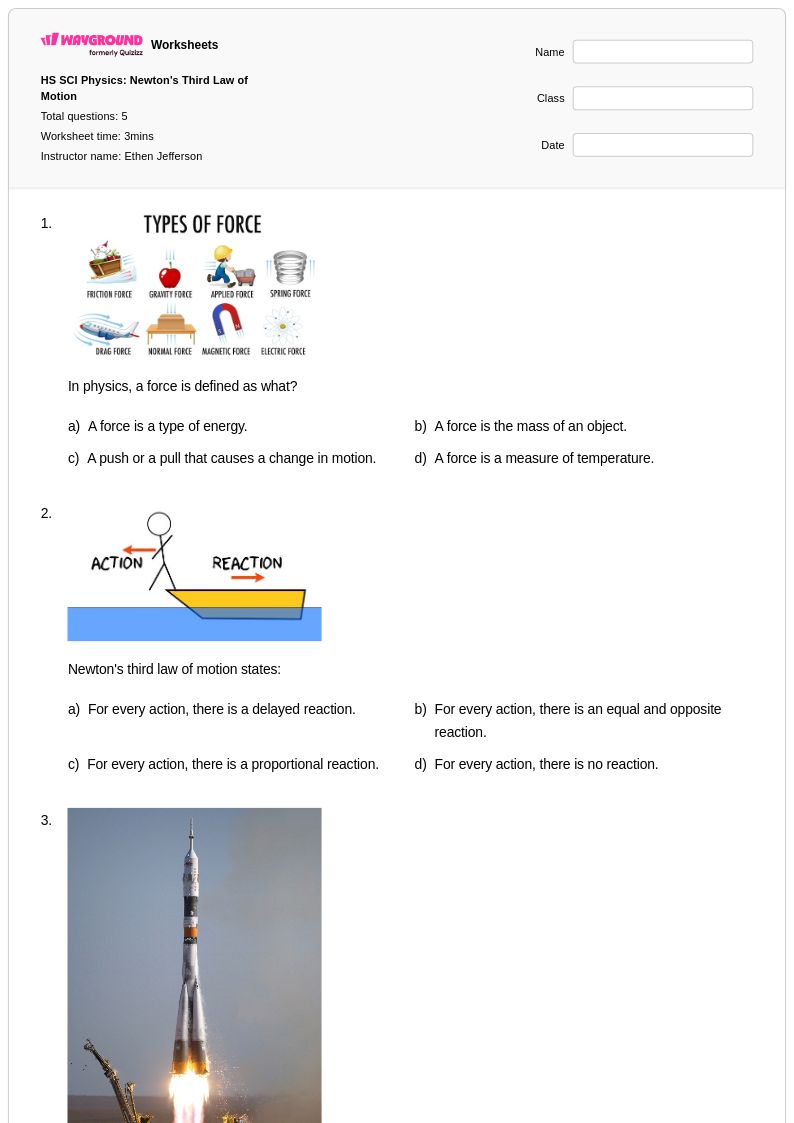
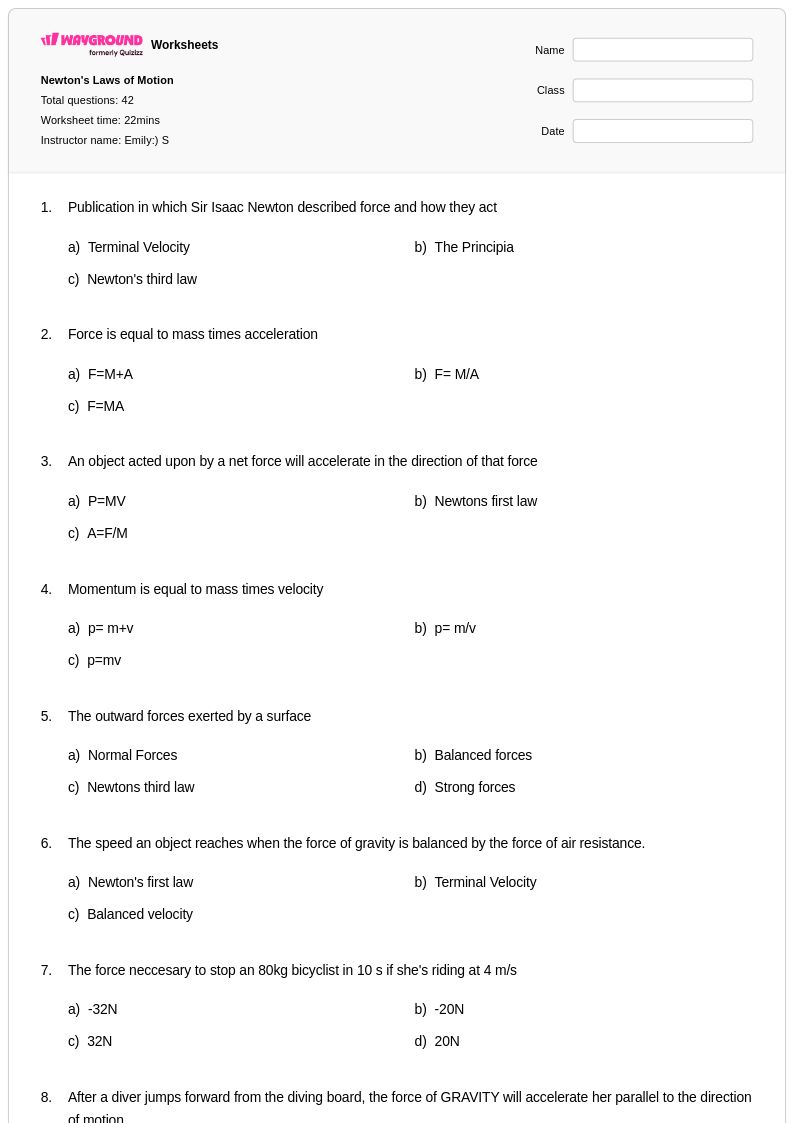
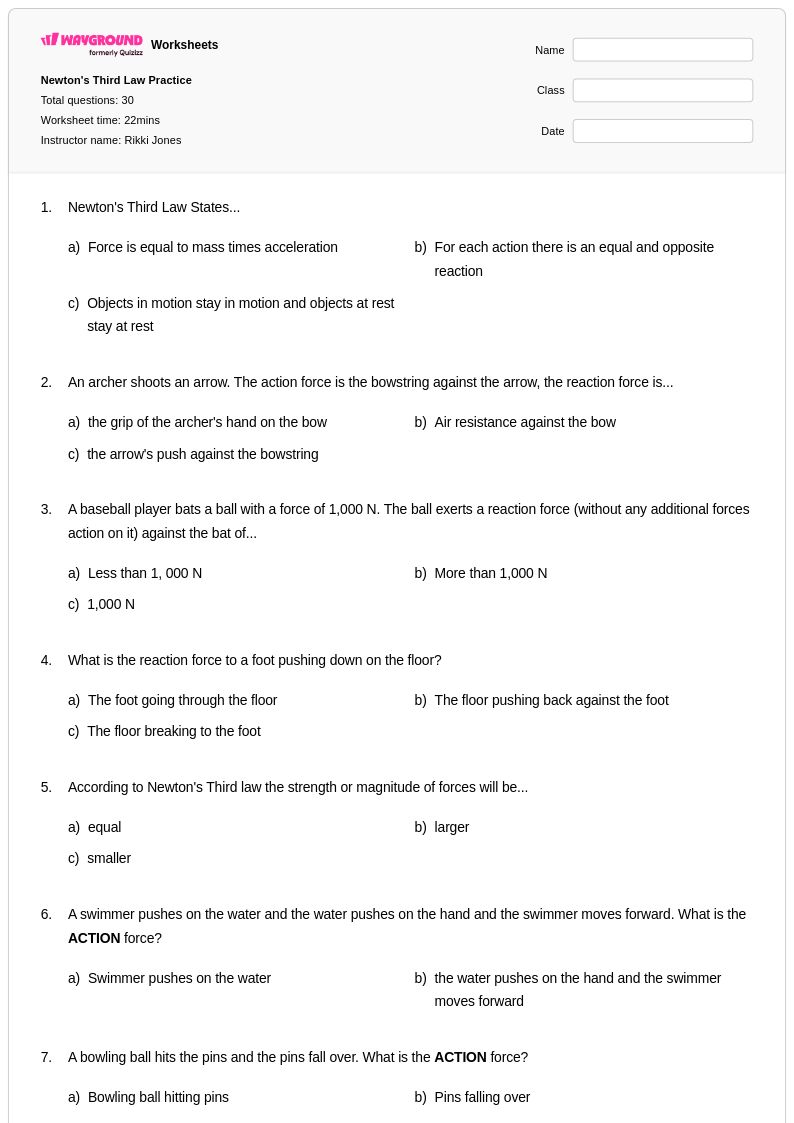
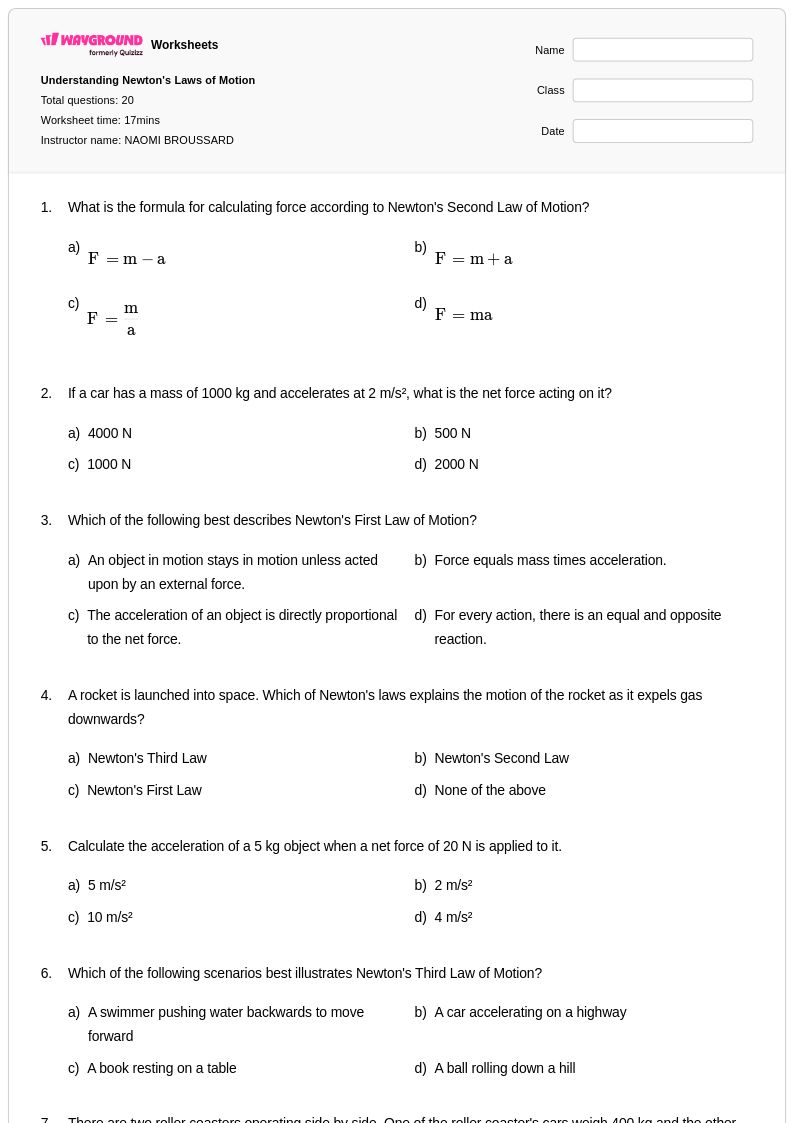
Newton's Third Law of Motion worksheets for Grade 10 students available through Wayground provide comprehensive practice with one of physics' most fundamental principles. These educational resources help students master the concept that for every action there is an equal and opposite reaction, strengthening their ability to identify force pairs, analyze interactions between objects, and solve complex physics problems involving momentum and equilibrium. The worksheet collection includes diverse practice problems that challenge students to apply Newton's Third Law to real-world scenarios, from rocket propulsion to collision dynamics, with accompanying answer keys that support independent learning and self-assessment. Teachers can access these free printables in convenient pdf format, making it easy to distribute materials for classroom instruction, homework assignments, or exam preparation.
Wayground's extensive library draws from millions of teacher-created resources, offering educators powerful search and filtering capabilities to locate Newton's Third Law worksheets that align with specific curriculum standards and learning objectives. The platform's differentiation tools enable teachers to customize materials for varying skill levels within Grade 10 physics classes, supporting both remediation for struggling learners and enrichment opportunities for advanced students. Available in both printable and digital formats, these worksheets provide flexible options for traditional classroom settings, remote learning environments, or hybrid instruction models. This comprehensive approach to resource delivery helps physics educators efficiently plan lessons, reinforce key concepts through targeted skill practice, and ensure all students develop a solid understanding of action-reaction force pairs and their applications in mechanical systems.
FAQs
How do I teach Newton's Third Law of Motion to students who confuse action-reaction pairs with balanced forces?
The key distinction is that action-reaction force pairs act on different objects, while balanced forces act on the same object. A common classroom strategy is to use paired scenarios — for example, a person pushing against a wall — and explicitly ask students to name both the object exerting the force and the object receiving it. Having students draw separate free-body diagrams for each object in the interaction helps make this distinction concrete and prevents the most common misconception.
What exercises help students practice identifying action-reaction force pairs?
Practice problems that place students in real-world contexts — such as a swimmer pushing off a pool wall, a rocket expelling gas, or two skaters pushing each other — are especially effective for building fluency with Newton's Third Law. Exercises that require students to name both forces in a pair, state the direction of each, and identify which object each force acts on reinforce the full structure of the law rather than surface-level recognition. Problems that also ask students to calculate magnitudes using Newton's Second Law help bridge conceptual and quantitative understanding.
What mistakes do students commonly make when applying Newton's Third Law?
The most frequent error is assuming that because action and reaction forces are equal in magnitude, they must cancel out — students often conclude incorrectly that nothing can accelerate as a result. Another common mistake is failing to identify the correct object pairs, such as treating the weight of an object and the normal force as an action-reaction pair when they are actually balanced forces on the same object. Targeted practice problems that highlight these distinctions explicitly can help students self-correct these persistent errors.
How can I use Newton's Third Law worksheets to differentiate instruction for students at different skill levels?
For students who are still building foundational understanding, start with qualitative problems that ask them to identify and describe force pairs before introducing any calculations. More advanced students can work through quantitative problems that integrate Newton's Second and Third Laws together, requiring them to calculate net force and predict acceleration. On Wayground, teachers can apply accommodations such as reduced answer choices or read-aloud support for individual students, so the same worksheet set can serve a range of learners without requiring separate lesson plans.
How do I use Newton's Third Law of Motion worksheets from Wayground in my classroom?
Wayground's Newton's Third Law worksheets are available as printable PDFs for traditional classroom use and in digital formats for technology-integrated environments, giving teachers flexibility based on their setting. Teachers can also host worksheets as a quiz directly on Wayground, which supports real-time assignment and progress tracking. The included answer keys make these worksheets practical for independent student work, homework, or formative assessment without requiring additional preparation time.